Sights in East London
▲The East End
Immediately east of The City (and Liverpool Street Station), London’s East End is a vibrant neighborhood with great eateries, lively markets, and interesting street art. It’s also known as “Banglatown” for its Bangladeshi communities and curry houses along Brick Lane. Anchoring the area is Old Spitalfields Market, filled with merchants and creative food counters (see here and here).
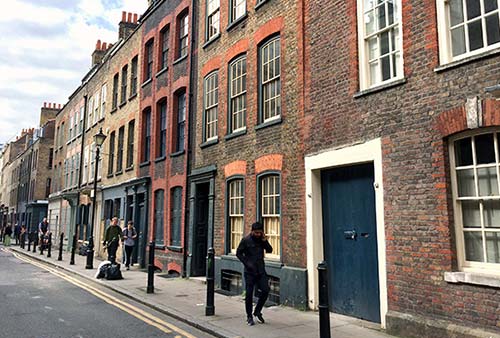
In medieval times, this was the less desirable end, in part because it was downwind from the noxious hide-tanning district. London’s east/west disparity was exacerbated in Victorian times, when the wind carried the pollution of a newly industrialized London. It was during this time that Jack the Ripper terrorized this neighborhood.
This area has also long been the city’s arrival point for new immigrants, from the French Protestant Huguenots (late 16th century), to Ashkenazi Jews (late 19th century), to Bangladeshi refugees (1970s). This mixing of cultures—along with a spirit of redevelopment—has given this area a wonderful energy that’s well worth exploring.
▲Museum of the Home
This low-key but well-organized museum is housed in an 18th-century almshouse north of Liverpool Street Station. Its 11 rooms are each furnished as a living room from a different age, from 1600 to 2000, and each is very well described. The museum also has a café and terrace garden.
Cost and Hours: Free, donation suggested, fee for some exhibits and events, Tue-Sun 10:00-17:00, closed Mon, last entry one hour before closing, garden open April-Oct, 136 Kingsland Road, +44 20 7739 9893, www.museumofthehome.org.uk.
Getting There: Take the Tube to Liverpool Street, then ride the bus 10 minutes north (bus #149 or #26—leave station through Bishopsgate exit and head left a few steps to find stop; hop off at the Pearson Street stop, just after passing the brick museum on the right). Or take the East London line on the Overground to the Hoxton stop, which is right next to the museum.
Sights on the South Bank
▲Jubilee Walkway
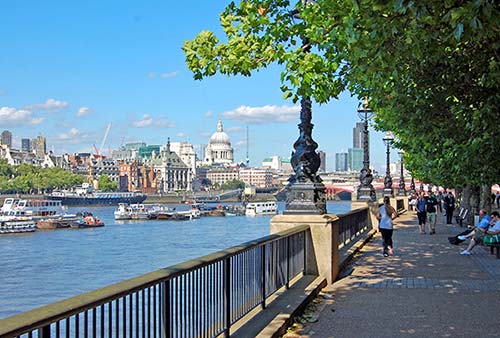
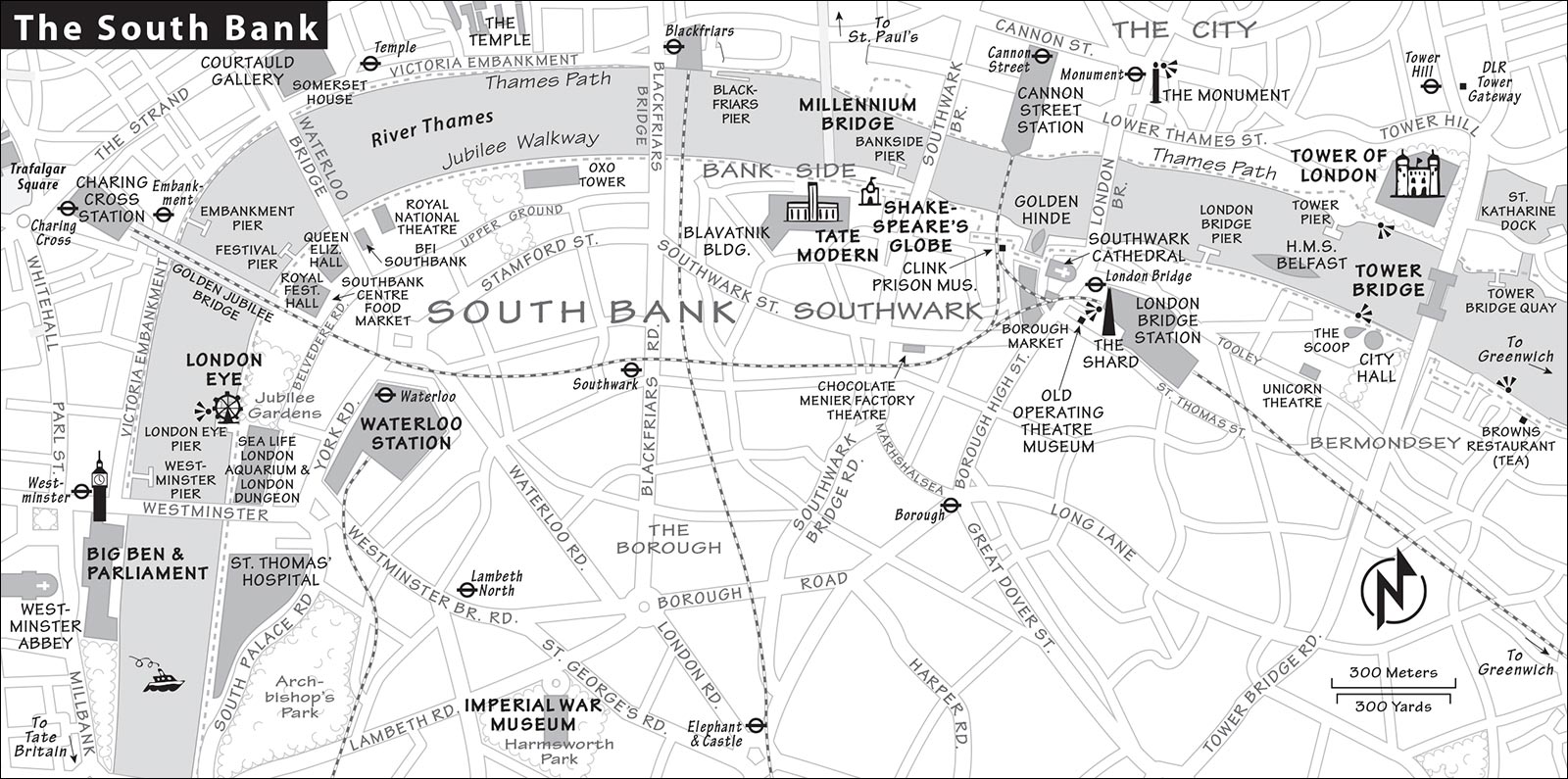
This riverside path is a popular pub-crawling pedestrian promenade that stretches all along the South Bank, offering grand views of the Houses of Parliament and St. Paul’s. On a sunny day, this is the place to see Londoners out strolling. The Walkway hugs the river except just east of London Bridge, where it cuts inland for a couple of blocks. It has been expanded into a 60-mile “Greenway” circling the city, including the 2012 Olympics site.
▲▲London Eye
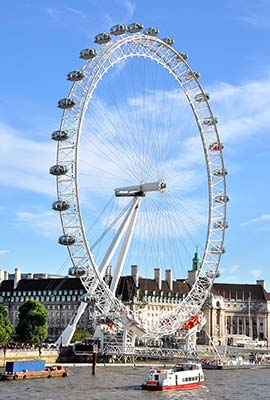
This giant Ferris wheel, towering above London opposite Big Ben, is one of the world’s highest observational wheels and London’s answer to the Eiffel Tower. Riding it is a memorable experience, even though the price is borderline outrageous. Whether you ride or not, the wheel is a sight to behold.
Twenty-eight people ride in each of its 32 air-conditioned capsules (representing the boroughs of London) for the 30-minute rotation (you go around only once). From the top of this 443-foot-high wheel—the second-highest public viewpoint in the city—even Big Ben looks small. Built to celebrate the new millennium, the Eye has become a permanent fixture on the London skyline and inspired countless other cities to build their own wheels.
Cost and Hours: £40, cheaper online and even cheaper booked weeks in advance; family ticket (only online) and combo-ticket with Madame Tussauds and other attractions available; daily 10:00-20:30 or later, Sept-May generally 11:00-18:00, check website for latest schedule, these are last-ascent times, Tube: Waterloo or Westminster. Thames boats come and go from London Eye Pier at the foot of the wheel.
Advance Tickets: Your best bet for this crowded and popular sight is to prebook at www.londoneye.com once you know when you’ll be visiting. Then simply head straight for the ticket-holders line, show the ticket on your phone, and line up to board.
Crowd-Beating Tips: The London Eye is busiest between 11:00 and 17:00, especially on weekends year-round and every day in July and August. If you have your heart set on riding, keep an eye on the website as the date approaches—if tickets are going fast, buy one (they can sell out). Even if you buy in advance, you may wait 30-45 minutes to board your capsule. The more expensive Fast Track ticket saves you a bit of time, but you may still have to wait so it’s probably not worth the extra cost.
▲▲Imperial War Museum
This impressive museum covers the wars and conflicts of the 20th and 21st centuries. It’s overloaded with artifacts, all thoughtfully explained, but its real strength is the way it pauses to introduce real people whose lives were impacted by war (often women and people of color, whose stories are too often ignored in many “war museums”). Rather than glorify war, the museum explores the human toll and raises provocative questions about one of civilization’s more uncivilized, persistent traits. Allow plenty of time, as this powerful museum can be engrossing.
Cost and Hours: Free, donation suggested, daily 10:00-18:00, Tube: Lambeth North or Elephant & Castle; buses #3, #12, and #159 from Westminster area; +44 20 7416 5000, www.iwm.org.uk.
Visiting the Museum: Displays unfold chronologically as you work your way up from floor to floor. From the entrance, head downstairs to Level 0—the bottom of the atrium—and gaze up at notable battle machines. The Spitfire plane flew in the Battle of Britain. This floor’s exhibit, the First World War, details how war transformed into a “dastardly slaughter”: machine guns, trench warfare, cannons lobbing three-foot shells, and deadly chemical gas. To simulate the wartime experience, you’ll walk through a reconstructed trench, with a tank rearing overhead.
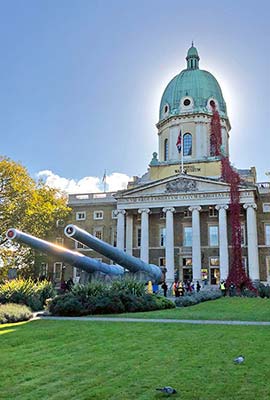
On Level 1, the Second World War displays the humble wooden fishing boat Tamzine, which evacuated troops stranded on the beach at Dunkirk (in northern France) across the Channel back to Britain. Other exhibits capture “The Blitz”—aerial bombardment, night after night, by Nazi Luftwaffe planes, starting in summer 1940—and a typical wartime home where you’ll see an actual Enigma machine, which the Nazis used to send encoded messages. Stirring newsreel footage shows the reaction to the war’s end in various countries, both the victors and the defeated
Level 2’s Holocaust Galleries employ powerful profiles of individuals—mainly Jews—who were targeted by Hitler. Also on this level is Peace and Security, 1945-2014, where you’re greeted by a casing of the bomb that was dropped on Hiroshima—setting the tone for an eclectic assortment of artifacts that tries to capture the post-WWII years, including an actual chunk of the Berlin Wall and twisted 9/11 wreckage from the Twin Towers.
Levels 3 and 4 generally have temporary exhibits shedding light on why humans fight.
SOUTHWARK
Southwark (SUTH-uck) is the core of the tourist’s South Bank. For centuries, this is where Londoners would go to escape the rules and decency of the city and let their hair down. Bearbaiting, brothels, rollicking pubs, and theater—you name the desire, and it could be fulfilled just across the Thames. A run-down warehouse district through the 20th century, it’s been gentrified with classy restaurants, office parks, pedestrian promenades, major sights (such as the Tate Modern and Shakespeare’s Globe), and a colorful collection of lesser sights. The area is easy on foot and a scenic—though circuitous—way to connect the Tower of London with St. Paul’s.
▲▲Tate Modern
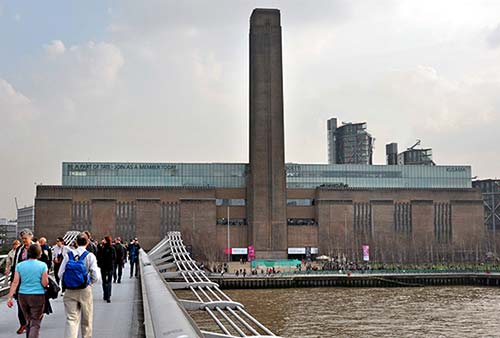
This striking museum fills the decommissioned Bankside power station across the river from St. Paul’s. Its powerhouse collection encompasses more than 100 years of art, ranging from early modernist works to the very latest in painting, sculpture, photography, film, and performance.
Cost and Hours: Free, donation suggested, fee for special exhibits; open daily 10:00-18:00, last Fri of every month until 22:00, especially crowded on weekends; view restaurant on top floor; across the Millennium Bridge from St. Paul’s; Tube: Southwark, London Bridge, St. Paul’s, Mansion House, or Blackfriars plus a 10-15-minute walk; or connect by Tate Boat museum ferry from Tate Britain—see here; +44 20 7887 8888, downloadable map at www.tate.org.uk.
Tours: Free 45-minute guided tours generally run at 12:00 and 13:00 (Natalie Bell Building) and 14:00 (Blavatnik Building); free 10-minute gallery talks take place on occasion (see info desk for details).
Visiting the Museum: Besides the art it houses, the Tate Modern’s display space is a sight in and of itself. The museum has two buildings, and the art is displayed in both: The Natalie Bell Building (a.k.a. the Boiler House) with older works (roughly 1900-1950s), and the Blavatnik Building (a.k.a. the Switch House), which picks up from about 1960 and beyond. The buildings are connected by two skybridges. To get orien-Tate-d, consider buying the £2 map on the ground floor or study the floor plans printed on the walls next to the escalators.
Starting in the Boiler House, stroll down the ramp to the Turbine Hall, the site of a former electricity-generating powerhouse that was refurbished and reopened as a museum in 2000. The Tate Modern routinely commissions contemporary artists to create installations for this vast hall. Head upstairs for a mix of themed exhibits pulled from the permanent collection (called “Collection Displays”) and temporary exhibits (some free, some requiring special admission). Because the museum’s collections are loosely organized by themes, paintings by Picasso, for example, may be scattered in different rooms on different levels. Keep an eye out for old masters of Modernism (Matisse, Kandinsky), mid-20th century innovators (Pollock, Miró), and the vanguard of globalism and new media in the 21st century (Holzer, Kapoor). Look past the painted canvases to appreciate the museum’s many installations: Entire rooms are given over to single artists to create multimedia displays. Across the bridge, in the Switch House, are several more floors of exhibition space, with changing themed exhibitions, performance art, experimental film, and interactive sculpture incorporating light and sound.
▲▲Shakespeare’s Globe
This replica of the original Globe Theatre was built, half-timbered and thatched, as it was in Shakespeare’s time. (It was the first thatched roof constructed in London since they were outlawed after the Great Fire of 1666.) It serves as a working theater by night and offers tours by day. The original Globe opened in 1599, debuting Shakespeare’s play Julius Caesar. The Globe originally accommodated 2,200 seated and another 1,000 standing. Today, slightly smaller and leaving space for reasonable aisles, the theater holds 800 seated and 600 groundlings.
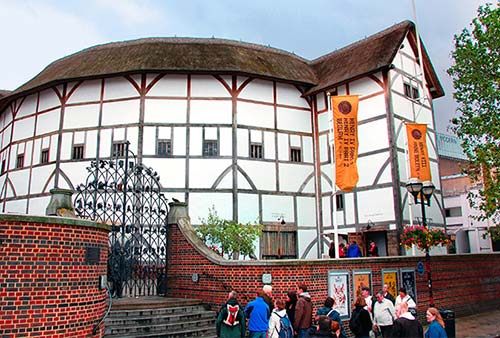
Its promoters brag that the theater melds “the three A’s”—actors, audience, and architecture—with each contributing to the play. The working theater hosts authentic performances of Shakespeare’s plays with actors in period costumes, modern interpretations of his works, and some works by other playwrights. (For details on attending a play, see here.)
The complex’s smaller Sam Wanamaker Playhouse—an indoor, horseshoe-shaped Jacobean theater—allows the show to go on in the winter, when it’s too cold for performances in the outdoor Globe. Seating fewer than 350, the playhouse is more intimate and sometimes uses authentic candle lighting for period performances. While the Globe mainly presents Shakespeare’s works, the playhouse tends to focus on the works of his contemporaries (Jonson, Marlow, Fletcher) and some new plays.
Touring the Globe: Tours depart from the box office every half hour and last about two hours (£25, £17 for kids 5-15, £2.50 fee online; half the tour spots are bookable in advance, the other half are sold same-day; schedule can change—check online; first tour generally departs daily at 10:00 during outdoor theater season—April-mid-Oct; last tour generally departs at 16:00, but can be earlier if shows are scheduled; shorter hours off-season; Tube: Mansion House or London Bridge plus a 10-minute walk, or a short walk across the Millennium Bridge from St. Paul’s Cathedral; +44 20 7902 1400, www.shakespearesglobe.com).
Eating: The $$$ Swan at the Globe café offers a sit-down restaurant (for lunch and dinner, reservations recommended, +44 20 7928 9444), a drinks-and-plates bar, and a sandwich-and-coffee cart.
▲Southwark Cathedral
While made a cathedral only in 1905, this has been the neighborhood church since the 13th century, and comes with some interesting history. The enthusiastic docents give impromptu tours if you ask.
Cost and Hours: Free, £3 map serves as photo permit, daily 8:30-18:00, Tube: London Bridge, +44 20 7367 6700, www.cathedral.southwark.anglican.org.
Music: The cathedral hosts evensong Sun at 15:00, Tue-Fri at 17:30, and some Sat at 16:00; organ recitals are Mon at 13:15 and music recitals Tue at 15:15 (call or check website to confirm times).
▲Old Operating Theatre Museum and Herb Garret
Climb a tight and creaky wooden spiral staircase to a church attic where you’ll find a garret used to dry medicinal herbs, a fascinating exhibit on Victorian surgery, cases of well-described 19th-century medical paraphernalia, and a special look at “anesthesia, the defeat of pain.” Then you stumble upon Britain’s oldest operating theater, where limbs were sawed off way back in 1821.
Cost and Hours: £7.50, Thu-Sun 10:30-17:00, closed Mon-Wed, 9a St. Thomas Street, Tube: London Bridge, +44 20 7188 2679, https://oldoperatingtheatre.com.
Sights in West London
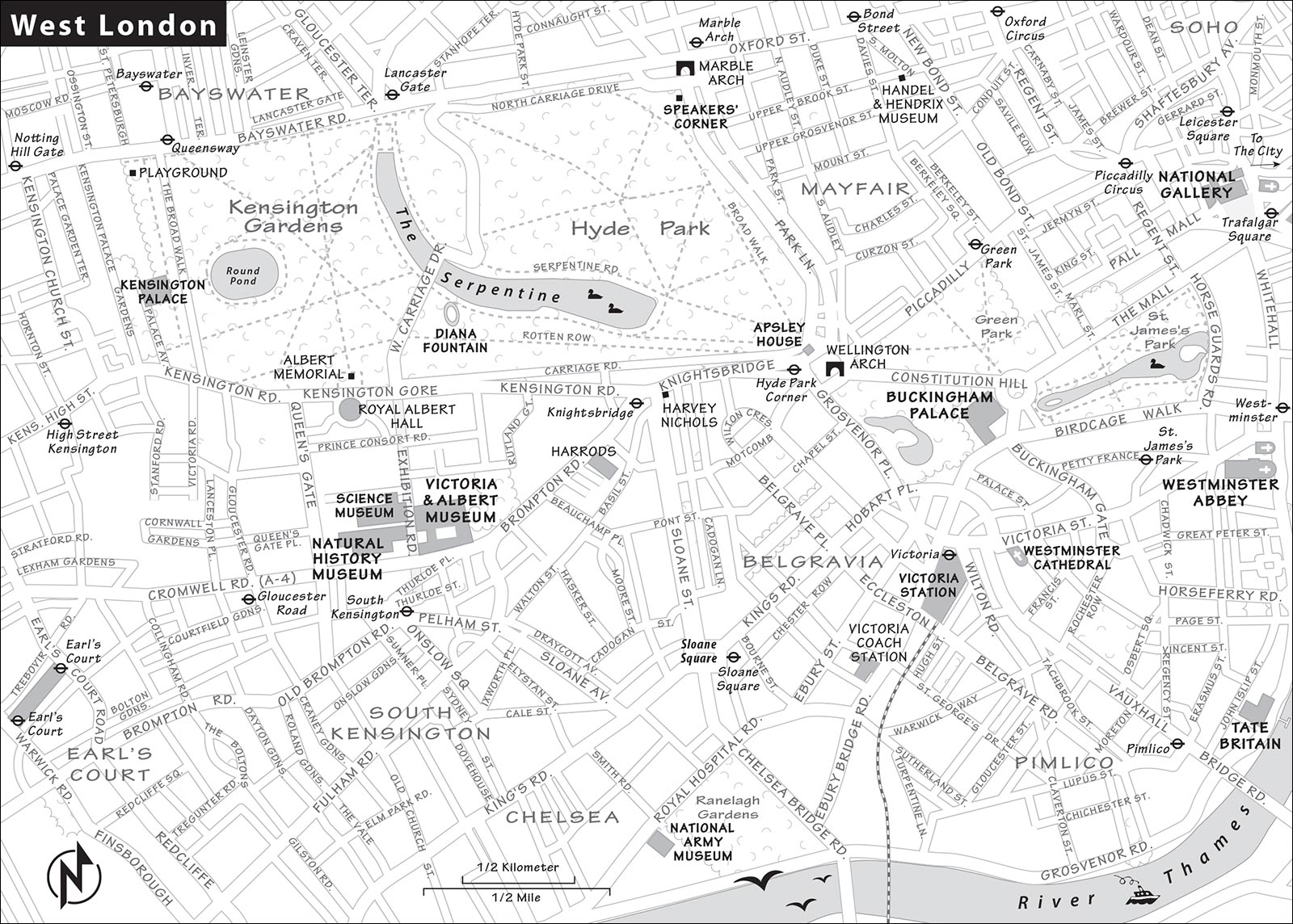
▲▲Tate Britain
One of Europe’s great art houses, Tate Britain specializes in British painting from the 16th century through modern times. The museum has a good representation of William Blake’s religious sketches, the Pre-Raphaelites’ naturalistic and detailed art, Gainsborough’s aristocratic ladies, and the best collection anywhere of J. M. W. Turner’s swirling works.
Cost and Hours: Free, donation suggested, fee for special exhibits; daily 10:00-18:00, first Fri of every month until 22:00, last entry 45 minutes before closing; free tours generally daily; on the Thames, south of Big Ben and north of Vauxhall Bridge, Tube: Pimlico, Tate Boat museum ferry goes directly to the museum from Tate Modern—see here; +44 20 7887 8888, www.tate.org.uk.
Tours: Free guided tours are generally offered a few times daily; check the website for details.
Visiting the Museum: Be aware that this collection is characterized by constant churn—which pieces are on display, and where, changes all the time. Considering that, it’s worth checking out the Tate’s website for a current guide to what’s on display.
1700-1800—Art Blossoms: With peace at home (under three King Georges), a strong overseas economy, and a growing urban center in London, England’s artistic life began to bloom. As the English grew more sophisticated, so did their portraits. Painters branched out into other subjects, capturing slices of everyday life (find William Hogarth’s unflinchingly honest portraits, and Thomas Gainsborough’s elegant, educated women).
1800-1850—The Industrial Revolution: Newfangled inventions were everywhere, but along with technology came factories coating towns with soot, urban poverty, regimentation, and clock-punching. Many artists rebelled against “progress” and the modern world. They escaped the dirty cities to commune with nature. Or they found a new spirituality in intense human emotions, expressed in dramatic paintings of episodes from history. In rooms dedicated to the 1800s, you may see a number of big paintings devoted to the power of nature.
1837-1901—The Victorian Era: In the world’s wealthiest nation, the prosperous middle class dictated taste in art. They admired paintings that were realistic (showcasing the artist’s talent and work ethic), depicting slices of everyday life. Some paintings tug at the heartstrings, with scenes of parting couples, the grief of death, or the joy of families reuniting.
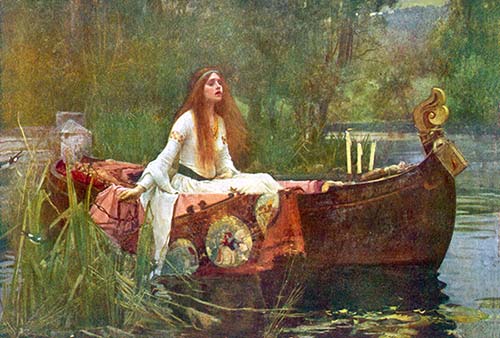
Overdosed with the gushy sentimentality of their day, a band of 20-year-old artists—including Sir John Everett Millais, Dante Gabriel Rossetti, and William Holman Hunt—said “Enough!” and dedicated themselves to creating less saccharine art (the Pre-Raphaelites). Like the Impressionists who followed them, they donned their scarves, barged out of the stuffy studio, and set up outdoors, painting trees, streams, and people, like scientists on a field trip. Still, they often captured nature with such a close-up clarity that it’s downright unnatural.
British Impressionism: Realistic British art stood apart from the modernist trends in France, but some influences drifted across the Channel (Rooms 1890 and 1900). John Singer Sargent (American-born) studied with Parisian Impressionists, learning the thick, messy brushwork and play of light at twilight. James Tissot used Degas’ snapshot technique to capture a crowded scene from an odd angle. And James McNeill Whistler (born in America, trained in Paris, lived in London) composed his paintings like music—see some of his paintings’ titles.
1900-1930—British Modernism: After World War I, artists expressed the horror of war. At the same time, British art mirrored many of the trends and “-isms” pioneered in Paris. You’ll see Cubism like Picasso’s, abstract art like Mondrian’s, and so on. But British artists also continued the British tradition of realistic paintings of people and landscapes.
1930-1950—World War II: Even as two world wars whittled down the powerful British Empire, it remained a major cultural force. If British painters were less than avant-garde, their sculptors were cutting edge. Henry Moore’s statues—mostly female, mostly reclining—capture the human body in a few simple curves, with minimal changes to the rock itself. Francis Bacon has become Britain’s best-known 20th-century painter, exemplifying the angst of the early post-WWII years. His deformed half-humans/half-animals express the existential human predicament of being caught in a world not of your making, isolated and helpless to change it.
1950-2000—Modern World: No longer a world power, Britain in the Swinging ’60s became a major exporter of pop culture. British art’s traditional strengths—realism, portraits, landscapes, and slice-of-life scenes—were redone in the modern style. Look for works by David Hockney, Lucian Freud, Bridget Riley, and Gilbert and George.
Clore Gallery: Walking through J.M.W. Turner’s life’s work, you can watch his style evolve from clear-eyed realism to hazy proto-Impressionism (1775-1851). You’ll also see how Turner dabbled in different subjects: landscapes, seascapes, Roman ruins, snapshots of Venice, and so on. Usually one room is dedicated to John Constable (1776-1837), who painted the English landscape as it was—realistically, without idealizing it.
▲National Army Museum
This museum tells the story of the British army from 1415 through the Bosnian conflict and Iraq, and how it influences today’s society. The five well-signed galleries are neatly arranged by theme—“Army,” “Battle,” “Soldier,” “Society,” and “Insight”—with plenty of interactive exhibits for kids. History buffs appreciate the carefully displayed artifacts, from 17th-century uniforms to Wellington’s battle cloak. Other highlights of the collection include the skeleton of Napoleon’s horse, Lawrence of Arabia’s silk robe, and Burberry’s signature trench coat (originally designed for WWI soldiers).
Cost and Hours: Free, donation suggested; Wed-Sun 10:00-17:30, closed Mon-Tue; Royal Hospital Road, Chelsea, Tube: 10-minute walk from Sloane Square, exit the station and head south on Lower Sloane Street, turn right on Royal Hospital Road, the museum is two long blocks ahead on the left, +44 20 7730 0717, www.nam.ac.uk.
HYDE PARK AND NEARBY
▲Apsley House (Wellington Museum)
Having beaten Napoleon at Waterloo, Arthur Wellesley, the First Duke of Wellington, was once the most famous man in Europe. He was given a huge fortune, with which he purchased London’s ultimate address, Number One London. His refurbished mansion offers a nice interior, a handful of world-class paintings, and a glimpse at the life of the great soldier and two-time prime minister. The highlight is the large ballroom, the Waterloo Gallery, decorated with Anthony van Dyck’s Charles I on Horseback (over the main fireplace), Diego Velázquez’s earthy Water-Seller of Seville (to the left of Van Dyck), and Jan Steen’s playful Dissolute Household (to the right). Just outside the door, in the Portico Room, is a large portrait of the Duke of Wellington by Francisco Goya. The place is well described by the included audioguide, which has sound bites from the current Duke of Wellington (who still lives at Apsley).
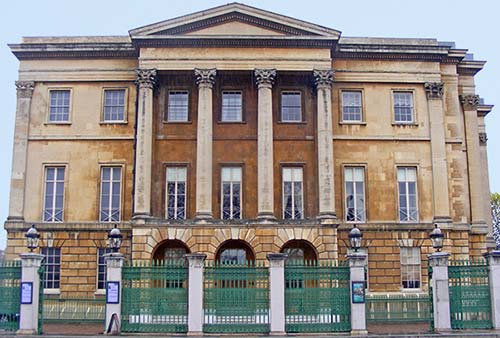
Cost and Hours: £13, includes audioguide; Wed-Sun 11:00-17:00, closed Mon-Tue, shorter hours Nov-March, open only Sat-Sun in Jan-March; 20 yards from Hyde Park Corner Tube station, +44 20 7499 5676 or +44 370 333 1181, www.english-heritage.org.uk.
▲Hyde Park and Speakers’ Corner
London’s “Central Park,” originally Henry VIII’s hunting grounds, has more than 600 acres of lush greenery, Santander Cycles rental stations, the huge man-made Serpentine Lake (with rental boats and a lakeside swimming pool), the royal Kensington Palace (described next), and the ornate Neo-Gothic Albert Memorial across from the Royal Albert Hall (for more about the park, see www.royalparks.org.uk/parks/hyde-park). The western half of the park is known as Kensington Gardens. The park is huge—study a Tube map to choose the stop nearest to your destination.

On Sundays, from just after noon until early evening, Speakers’ Corner offers soapbox oratory at its best (northeast corner of the park, Tube: Marble Arch). Characters climb their stepladders, wave their flags, pound emphatically on their sandwich boards, and share what they are convinced is their wisdom. Regulars have resident hecklers who know their lines and are always ready with a verbal jab or barb. “The grass roots of democracy” is actually a holdover from when the gallows stood here and the criminal was allowed to say just about anything he wanted to before he swung. I dare you to raise your voice and gather a crowd—it’s easy to do.
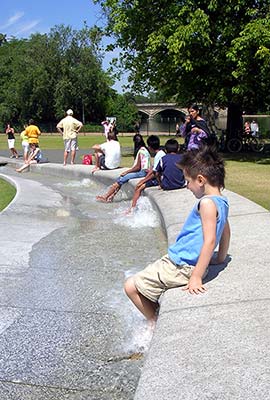
The Princess Diana Memorial Fountain honors the “People’s Princess,” who once lived in nearby Kensington Palace. The low-key circular stream, great for cooling off your feet on a hot day, is in the south-central part of the park, near the Albert Memorial and Serpentine Gallery (Tube: Knightsbridge). A similarly named but different sight, the Diana, Princess of Wales Memorial Playground, in the park’s northwest corner, is loads of fun for kids (Tube: Queensway).
Kensington Palace
For nearly 150 years (1689-1837), Kensington—sitting primly on its pleasant parkside grounds—was the royal residence. Queen Victoria, who was born and grew up here, moved to Buckingham Palace when she took the crown at age 18, and that’s where monarchs have lived ever since. But lesser royals continued to bunk at Kensington: Princess Diana during and after her marriage to then-Prince Charles (1981-1997) and, more recently, Will and Kate before they moved to the suburbs of Windsor in 2022. However—as many disappointed visitors discover—none of these more recent apartments are open to the public. Instead, a visit here includes some historic state rooms (including the ones where Victoria spent her childhood), as well as changing temporary exhibits. Garden enthusiasts enjoy popping into the secluded Sunken Garden, 50 yards from the exit. A statue of Princess Diana was unveiled here in 2021, on what would have been her 60th birthday. While there’s lots of history here, it’s not very well told, and this sight is best appreciated by royalists and completists.
Cost and Hours: £25.40, daily 10:00-18:00, Nov-Feb until 16:00, last entry one hour before closing, a long 10-minute stroll through Kensington Gardens from either High Street Kensington or Queensway Tube stations, +44 844 482 7788, www.hrp.org.uk.
▲▲▲Victoria and Albert Museum
The world’s top collection of decorative arts encompasses 2,000 years of art and design (ceramics, stained glass, fine furniture, clothing, jewelry, carpets, and more), displaying a surprisingly interesting and diverse assortment of crafts from the West, as well as Asian and Islamic cultures. There’s much to see, including Raphael’s tapestry cartoons, Leonardo da Vinci’s notebooks, the huge Islamic Ardabil Carpet (4,914 knots in every 10 square centimeters), a cast of Trajan’s Column that depicts the emperor’s conquests, and pop culture memorabilia, including the jumpsuit Mick Jagger wore for the Rolling Stones’ 1972 world tour.
Cost and Hours: Free, donation suggested, fee for some special exhibits, daily 10:00-17:45, may stay open Fri until 22:00, free tours daily, on Cromwell Road in South Kensington, Tube: South Kensington, from the Tube station a long tunnel leads directly to museum, +44 20 7942 2000, www.vam.ac.uk.
Visiting the Museum: In the Grand Entrance lobby, look up into the rotunda to see the 1 Dale Chihuly chandelier, epitomizing the spirit of the V&A’s collection—beautiful manufactured objects that demonstrate technical skill and innovation, wedding the old with the new, and blurring the line between arts and crafts.
Now look up to the balcony (above the shop) and see the pointed arches of the 2 Hereford Screen, a 35-by-35-foot, eight-ton rood screen (built for the Hereford Cathedral’s sacred altar area). It looks medieval, but it was created with the most modern materials the Industrial Revolution could produce. George Gilbert Scott (1811-1878), who built the screen, redesigned much of London in the Neo-Gothic style, restoring old churches such as Westminster Abbey, renovating the Houses of Parliament, and building new structures like St. Pancras Station and the Albert Memorial—some 700 buildings in all.
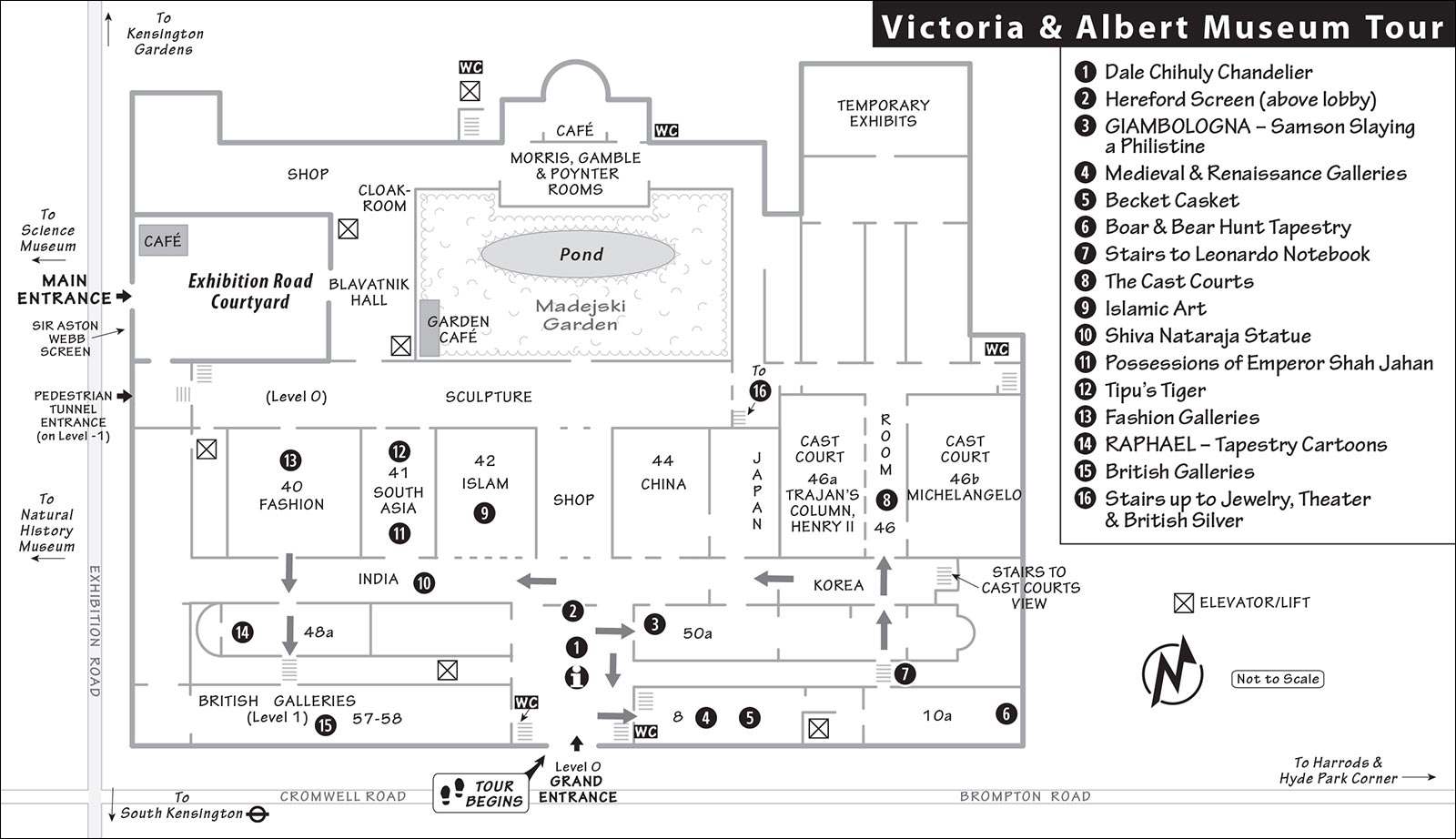
The V&A has (arguably) the best collection of Italian Renaissance sculpture outside Italy. One prime example is 3 Samson Slaying a Philistine by Giambologna (c. 1562), carved from a single block of marble, which shows the testy Israelite warrior rearing back, brandishing the jawbone of an ass, preparing to decapitate a man who’d insulted him.
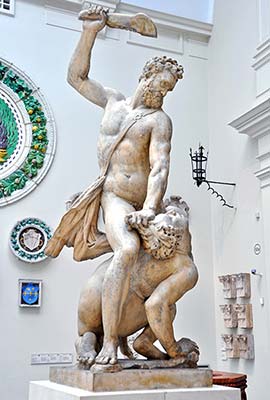
The 4 Medieval and Renaissance Galleries display 1,200 years of decorative arts, showing how the mix of pagan-Roman and medieval-Christian elements created modern Europe. In Room 8 is a glass case displaying the blue-and-gold shoebox-sized 5 Becket Casket, which contains the mortal remains (or relics) of St. Thomas Becket, who was brutally murdered. The enamel-and-metal work box is a specialty of Limoges, France. In Room 10a, you’ll run right into the 6 Boar and Bear Hunt Tapestry. Though most medieval art depicted the Madonna and saints, this colorful wool tapestry—woven in Belgium—provides a secular slice of life.
Two floors up, you’ll see the tiny, pocket-size 7 notebook by Leonardo da Vinci (Codex Forster I, 1487-1490 & 1505), which dates from years when he was living in Milan and Florence, exploring subjects such as hydraulic engineering and measuring solids. The book’s contents are all over the map: meticulous sketches of cubes, triangles, and various objects together with mathematical calculations. The adjacent computer lets you scroll through three of his notebooks and even flip his backwards handwriting to make it readable.
Back on level 0, find two huge courts, Rooms 46a and 46b, labeled 8 The Cast Courts. These plaster-cast versions of famous statues allowed 19th-century art students who couldn’t afford a rail pass to study the classics. In Room 46a, you’ll see a copy of the world’s grandest column from antiquity in two pieces: Trajan’s Column (the original rises 140 feet and is decorated with a spiral relief of 2,500 figures trumpeting the exploits of the Roman Emperor Trajan). In Room 46b, Michelangelo’s David steals the show, but he is surrounded by other great works from throughout Michelangelo’s career.
Head down to Room 42 for 9 Islamic art, reflecting both religious influences and a sophisticated secular culture. Many Islamic artists expressed themselves with beautiful but functional objects, such as the 630-square-foot Ardabil Carpet (1539-1540), which likely took a dozen workers years to make. Also in the room are more ceramics and glazed tile—all covered top to bottom in similarly complex patterns. The intricate interweaving, repetition, and unending lines suggest the complex, infinite nature of God (Allah).
In the hallway (technically “Room” 47b) is a glass case with a statue of 10 Shiva Nataraja, one of the hundreds, if not thousands, of godlike incarnations of Hinduism’s eternal being, Brahma. As long as Shiva keeps dancing, the universe will continue. In the adjoining Room 41, a glass case in the center of the room contains 11 possessions of Emperor Shah Jahan, including a wine cup (made of white nephrite jade, 1657), cameo portrait, and thumb ring. Shah Jahan—or “King of the World”—ruled the largest empire of the day, covering northern India, Pakistan, and Afghanistan. At the far end of Room 41 is the huge wood-carved 12 Tipu’s Tiger, a life-size robotic toy, once owned by an oppressed Indian sultan. When you turned the crank, the Brit’s left arm would flail, and both he and the tiger would roar through organ pipes. (The mechanism still works.)
In Room 40, 13 fashion galleries display centuries of English fashion, from ladies’ underwear, hoop skirts, and rain gear to high-society evening wear, men’s suits, and more. Across the hall are 14 Raphael’s tapestry cartoons. The V&A owns seven of these full-size designs (approximately 13 by 17 feet, done in tempera on paper, now mounted on canvas). The cartoons were sent to factories in Brussels, cut into strips (see the lines), and placed on the looms.
Upstairs, Room 57 is the heart of the 15 British Galleries, which covers the era of Queen Elizabeth I. Find rare miniature portraits—a popular item of the day—including Hilliard’s oft-reproduced Young Man Among Roses miniature, capturing the romance of a Shakespeare sonnet. Back in the Grand Entrance lobby, climb the staircase to level 2 to see 16 jewelry, theater artifacts, silver, and more.
▲▲Natural History Museum
Across the street from the Victoria and Albert, this mammoth museum is housed in a giant and wonderful Victorian, Neo-Romanesque building. It was built in the 1870s specifically for the huge collection (50 million specimens). Exhibits are wonderfully explained, with lots of creative, interactive displays. It covers everything from life (“creepy crawlies,” human biology, our place in evolution, and awe-inspiring dinosaurs) to earth science (meteors, volcanoes, and earthquakes).
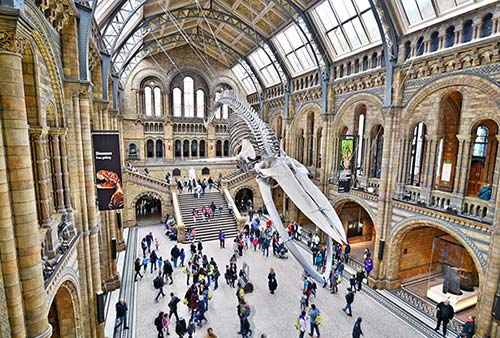
Cost and Hours: Free, donation suggested, fee for special exhibits, consider prebooking online to save time in line, daily 10:00-18:00, helpful £1 map, long tunnel leads directly from South Kensington Tube station to museum (follow signs), +44 20 7942 5000, exhibit info and reservations +44 20 7942 5011, www.nhm.ac.uk.
▲Science Museum
Next door to the Natural History Museum, this sprawling wonderland for curious minds is kid-perfect, with themes such as measuring time, exploring space, climate change, the evolution of modern medicine, and the Information Age. It offers hands-on fun, with trendy technology exhibits, a state-of-the-art IMAX theater (shows—£12, £10 for kids, family ticket available), the Garden—a cool play area for children up to age seven, plus several other pay-to-enter attractions, including Wonderlab kids area (£11, £9 for kids). Look for the family “What’s On” brochure and ask about tours and demonstrations at the info desk.
Cost and Hours: Free, donation suggested, consider prebooking online to save time in line, daily 10:00-18:00, may close Mon-Tue in winter, last entry 45 minutes before closing, Exhibition Road, Tube: South Kensington, +44 333 241 4000, www.sciencemuseum.org.uk.
Sights in Greater London
EAST OF LONDON
▲▲Greenwich
This borough of London is an easy, affordable boat trip or DLR (Docklands Light Railway) journey from downtown. Along with majestic, picnic-perfect parks are the stately trappings of Britain’s proud nautical heritage (the restored Cutty Sark clipper, the over-the-top-ornate retirement home for sailors at the Old Royal Naval College, and the comprehensive National Maritime Museum). It’s also home to the Royal Observatory Greenwich, with a fine museum on how Greenwich Mean Time came to be and a chance to straddle the Eastern and Western hemispheres at the prime meridian. Boasting several top-notch museums (including some free ones), Greenwich is worth considering and easy to combine with a look at the Docklands (described later). See the “Greenwich” map above for a good walking route to lace the sights together.
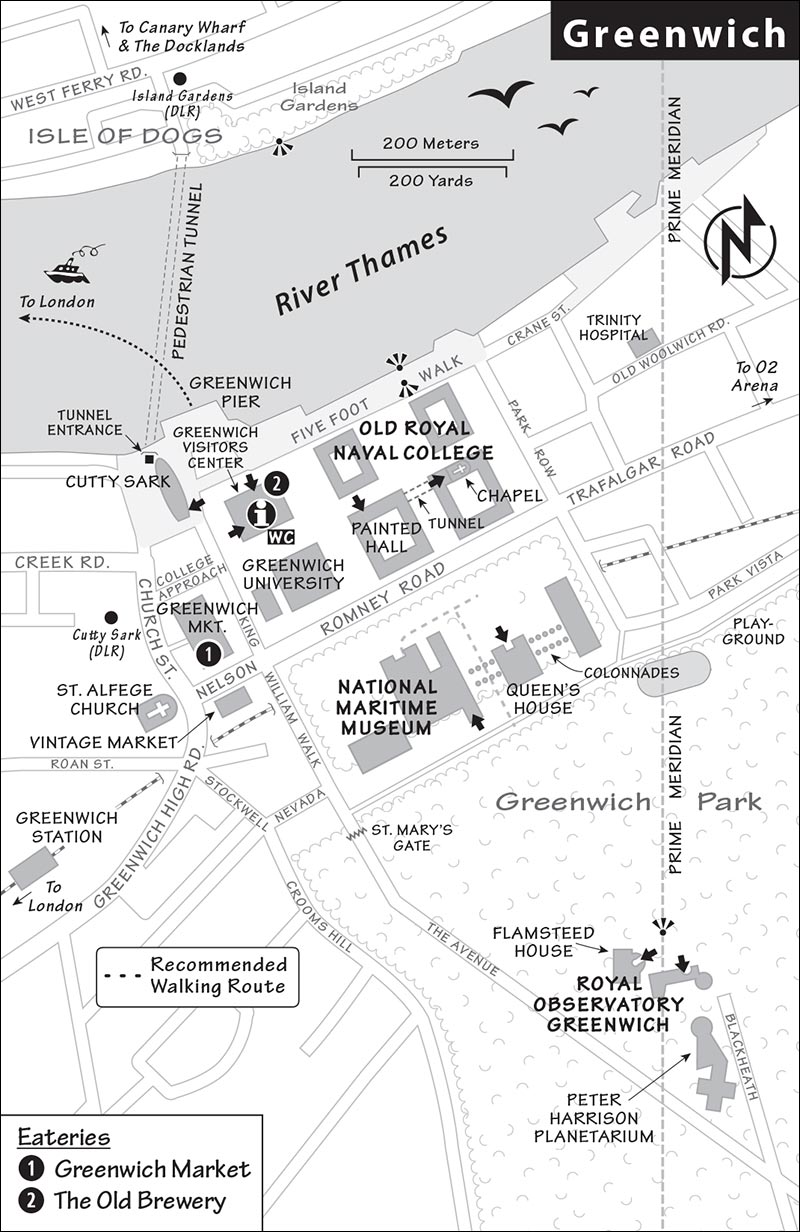
Getting There: For maximum efficiency and sightseeing, take the boat there for the scenery and commentary, and take the DLR back to avoid late-afternoon boat crowds (this plan also allows you to stop at the Docklands on the way home).
Various tour boats—with commentary and open-deck seating (2/hour, 20-75 minutes)—and faster Thames Clippers (every 20-30 minutes, 20-55 minutes) depart from several piers in central London. Thames Clippers also connects Greenwich to the Docklands’ Canary Wharf Pier (2-3/hour, 15 minutes).
Docklands Light Railway (DLR) runs from the Bank-Monument Station to Cutty Sark Station in central Greenwich; it’s one stop before the main—but less central—Greenwich Station (departs at least every 10 minutes, 20-minute ride, all in Zone 2).
Or, catch bus #188 from Russell Square near the British Museum (about an hour to Greenwich).
Eating: Greenwich’s parks are picnic-perfect, especially around the National Maritime Museum and Royal Observatory. Greenwich Market offers an international variety of tasty food stalls. $$$ The Old Brewery, in the Greenwich Visitors Center, is a gastropub decorated with all things beer.
Markets: The Greenwich Market is an entertaining mini Covent Garden, located in the middle of the block between the Cutty Sark DLR station and the Old Royal Naval College. Monday, Wednesday, and weekends specialize in arts and crafts; Tuesday and Thursday are for antiques; and Friday offers the whole shebang (open daily 10:00-17:30, www.greenwichmarketlondon.com).
▲▲Cutty Sark
When first launched in 1869, the Scottish-built Cutty Sark was the last of the great China tea clippers and the queen of the seas. She was among the fastest clippers ever built, the culmination of centuries of ship design. With 32,000 square feet of sail—and favorable winds—she could travel 300 miles in a day. But as a new century dawned, steamers began to outmatch sailing ships for speed, and by the mid-1920s the Cutty Sark was the world’s last operating clipper ship.
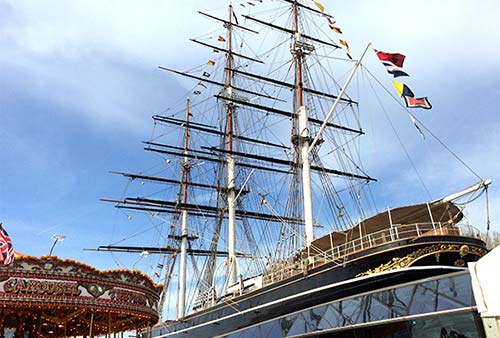
In 2012, the ship was restored and reopened with a spectacular new glass-walled display space. Displays explore the Cutty Sark’s 140-year history and the cargo she carried—everything from tea to wool to gunpowder—as she raced between London and ports all around the world.
Cost and Hours: £18, kids ages 4-15—£9, free for kids 4 and under, £25 combo-ticket with Royal Observatory; daily 10:00-17:00, last entry 45 minutes before closing; download Cutty Sark audioguide via Smartify app; reservations +44 20 8312 6608, www.rmg.co.uk/cutty-sark.
Old Royal Naval College
Despite the name, these grand structures were built in 1692 as a veterans’ hospital to house disabled and retired sailors who’d served their country. In 1873, the hospital was transformed into one of the world’s most prestigious universities for training naval officers. Today, the buildings host university students, music students, business conventions, concerts, and film crews drawn to the awe-inspiring space.
▲Painted Hall
Originally intended as a dining hall for pensioners, this sumptuously painted room was deemed too glorious (and, in the winter, too cold) for that purpose. So almost as soon as it was completed, it became simply a showcase for visitors. Impressive as it is, the admission is quite steep to see gigantic paintings by an artist you’ve never heard of, featuring second-rate royals. But those who appreciate artistic spectacles and picking out lavish details will find it worthwhile.
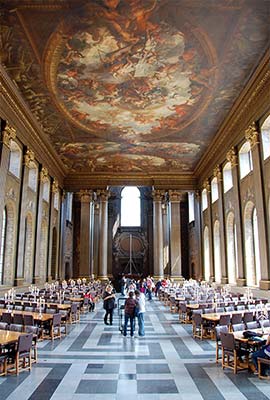
Cost and Hours: £13.50, £1 cheaper online in advance, daily 10:00-17:00, sometimes closed for private events, www.ornc.org. Ticket includes audioguide and 30-minute talk describing the Painted Hall (begins every 30 minutes); and a 45-minute guided tour of the Old Royal Naval College grounds (departs from the Greenwich Visitors Center at the top of each hour).
▲National Maritime Museum
Great for anyone interested in the sea, this excellent, modern museum holds everything from a giant working paddlewheel to the uniform Admiral Horatio Nelson wore when he was killed at Trafalgar. A big glass roof tops three levels of slick, thoughtfully presented, kid-friendly exhibits about all things seafaring.
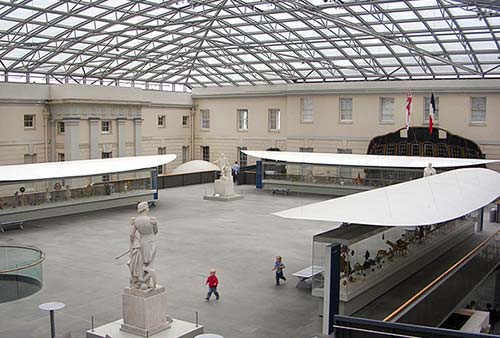
Cost and Hours: Free, daily 10:00-17:00, may close later in summer, +44 20 8858 4422, www.rmg.co.uk/national-maritime-museum. The museum hosts frequent family-oriented events—singing, treasure hunts, and storytelling—particularly on weekends; ask at the desk. Listen for announcements alerting visitors to free tours on various topics. A 45-minute Treasures Tour (£3.50) departs daily at 12:00 and 14:00.
▲▲Royal Observatory Greenwich
Located on the prime meridian (0° longitude), this observatory is famous as the point from which all time and distances on our planet are measured. It was here that astronomers studied the heavens in order to help seafarers navigate. In the process, they used the constancy of the stars to establish standards of measurement for time and distance used by the whole world.
Cost and Hours: £16, £25 combo-ticket with Cutty Sark, advance timed-entry ticket recommended, daily 10:00-17:00, may close later in summer, +44 20 8858 4422, reservations +44 20 8312 6608, www.rmg.co.uk/royal-observatory.
Visiting the Observatory: A visit here gives you a taste of the sciences of astronomy, timekeeping, and seafaring—and how they all meld together—along with great views over Greenwich and the distant London skyline. In the courtyard, you can snap a selfie straddling the famous prime meridian line in the pavement. In the museums, there’s the original 1600s-era observatory and several early telescopes. You’ll see the famous clocks from the 1700s that first set the standard of global time, as well as more recent timekeeping devices.
The state-of-the-art, 120-seat Peter Harrison Planetarium offers entertaining and informative shows several times a day where they project a view of the heavens onto the interior of the dome (£10, shows about every 45 minutes during observatory open times, no morning shows on school days, check schedule on the observatory’s website). As these shows can sell out, consider getting tickets in advance online. Most shows are family-oriented, with early shows intended for young children.
Queen Elizabeth Olympic Park
London refashioned this park—the biggest new park to open in the city in a century—from the site of the 2012 Olympic Games. You’ll find miles of parkland trails and waterways, kids’ play areas, an array of sporting venues (London Aquatics Centre, Lee Valley VeloPark, Copper Box Arena), quirky sculptures, and places to eat. The park is huge—bigger than Hyde Park/Kensington Gardens. It’s also quite beautiful, laced with canals and tributaries of the River Lea.
Cost and Hours: Free and always open, +44 800 0722 110, www.queenelizabetholympicpark.co.uk [URL inactive].
Getting There: From central London by Tube, it’s a 30-minute ride to the Stratford station. Follow exits toward Queen Elizabeth Olympic Park and Westfield Stratford City. Outside the Tube exit, take another escalator up to “The Street” (which is actually the outdoor part of the Westfield shopping center), bear left at the digital fountain past the line of restaurants, cross the street at The Cow pub, and the park is directly ahead of you, across the road.
Visiting the Park: The best overview of the park is along a 500-yard-long berm called the Greenway, which sits at the park’s southern perimeter, or at the Knight’s Bridge (toward the park’s northern edge), looking south back over the buildings. The easiest landmark to head for is the View Tube, just outside the park—a covered shelter with a free lookout tower, café, WC, and maps. There’s also the hard-to-miss, red, 350-foot viewing tower called the Orbit, which was designed as an Eiffel-Tower-like landmark and has been compared to a giant hookah. The Orbit also hosts the world’s longest, tallest, and transparent tunnel slide (£17 includes Orbit entrance, plus one ride).
▲The Docklands
Nestled around a hairpin bend in the Thames, this area was London’s harbor and warehouse district back in the 19th century, when Britannia ruled the waves. Today, glittering new skyscrapers rise from those historic canals and docks.
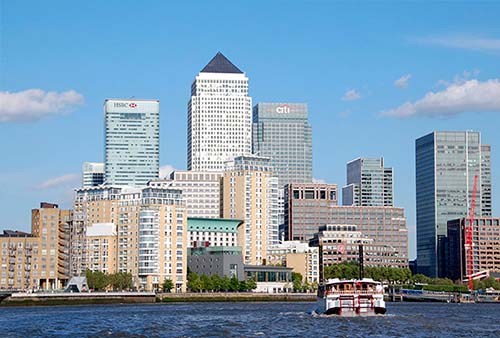
The heart of the Docklands is the Isle of Dogs, a marshy peninsula in the river’s curve. But don’t expect Jolly Olde England here. The Docklands is more about businesspeople in suits, creatively planned parks, art-filled plazas, and chain restaurants. Even so, traces of its rugged dockworker past survive. You’ll see canals, former docks, brick warehouses, and a fine history museum. Most impressive of all, there’s not a tourist in sight.
WEST OF LONDON
Because these two sights are in the same general direction, you can visit both in one day. Take the train from London Waterloo to Hampton Court Palace, then taxi to Kew Gardens (£35-45, about 30 minutes). If you’re on a tight budget, the transit connection between Hampton Court and Kew is long but doable: Take bus #R68 from Hampton Court Station to the West Park Road stop (about one hour), then walk about a half-mile to the Kew Gardens gate (walk up West Park Road to, then through, the Kew Gardens train station).
▲▲Kew Gardens
For a fine riverside park and a palatial greenhouse jungle to swing through, take the Tube or the boat to every botanist’s favorite escape, Kew Gardens. While to most visitors the Royal Botanic Gardens of Kew are simply a delightful opportunity to wander among 50,000 different types of plants, to the hardworking organization that runs them, the gardens are a way to promote the understanding and preservation of the botanical diversity of our planet.
Cost and Hours: £21.50, cheaper online and after 16:00, kids 4-15—£5, kids under 4—free; Mon-Thu 10:00-19:00, Fri-Sun until 20:00, closes earlier Sept-March—check schedule online, glasshouses close at 17:30 in high season—earlier off-season; free one-hour orientation tours daily at 11:00 and 13:30, plus seasonal tours at 12:30; +44 20 8332 5655, www.kew.org.
Getting There: By Tube, ride to Kew Gardens, then pass through the tunnel under the tracks, which deposits you in a little community of plant-and-herb shops, a two-block walk straight ahead to Victoria Gate (the main garden entrance). Boats also run to Kew Gardens from Westminster Pier (April-Oct; see here).
Eating: Kew Gardens has two large self-service cafeterias on-site. Near the Palm House in the eastern part of the park is the fine $$ Orangery, with lots of seating both inside and out. Farther west, near the Temperate House, is the $$ Pavilion, a modern, boxy building with a Costa Rican menu.
Visiting the Gardens: Pick up a map brochure and check at the gate for a monthly listing of the best blooms. Garden lovers could spend days exploring Kew’s 300 acres. For a quick visit, spend a fragrant hour wandering through three buildings: The Palm House, a hot and humid Victorian world of iron, glass, and tropical plants that was built in 1844; a Waterlily House that Monet would swim for; and the Princess of Wales Conservatory, a meandering modern greenhouse with many different climate zones growing countless cacti, bug-munching carnivorous plants, and more. Check out the Treetop Walkway, a 200-yard-long scenic steel walkway that puts you high in the canopy 60 feet above the ground.
▲▲Hampton Court Palace
Fifteen miles up the Thames from downtown, the 500-year-old palace of Henry VIII, William and Mary, and other royals is worth ▲▲▲ for palace aficionados. The stately brick-and-stone palace stands overlooking the Thames and includes some fine Tudor halls and Georgian-era rooms, all made engaging by a sharp, well-produced, included audioguide.
Cost and Hours: £26, family ticket available, daily 10:00-17:30, Feb-March until 16:00, last entry one hour before closing—but you’ll need 2-3 hours to see the place; café, +44 20 3166 6000, www.hrp.org.uk.
Getting There: From London’s Waterloo Station, take a South West train. The train will drop you on the far side of the river from the palace—just walk across the bridge (2/hour, 35 minutes). Consider arriving at or departing from the palace by boat (connections with London’s Westminster Pier, see here); it’s a relaxing and scenic three- to four-hour cruise past two locks and a fun new/old riverside mix.
Background: Hampton Court was originally the palace of Henry VIII’s minister and right-hand-man, Cardinal Thomas Wolsey. When Wolsey realized Henry VIII was experiencing a little palace envy, he gave the mansion to his king...clever guy. The Tudor palace was also home to Elizabeth I and Charles I. Later, when William and Mary moved in, they renovated about one-third of the palace (with help from Christopher Wren).
Visiting the Palace: Use the free map to find your way to the audioguide tour routes. Red-vested docents throughout the complex are happy to answer questions.
Henry VIII’s apartments feature a breathtaking Great Hall, with a marvelous hammerbeam ceiling, precious Abraham tapestries that kept this huge room warm and cozy, and a portrait of Henry VIII’s family. His private balcony looks down into the stunning Chapel Royal. His kitchens could keep 600 schmoozing courtiers well fed. At the end of the kitchens, dip into the Chapel Royal for a closer look at the wood-carved decor and the starry-sky-and-gold-beam ceiling.
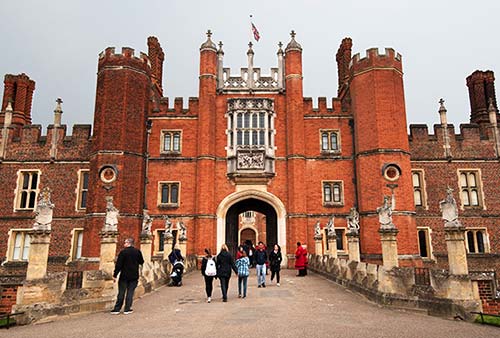
The “Young Henry VIII’s Story” exhibit introduces you to the dashing, athletic, young Henry VIII from the perspective of Henry himself, his first wife Catherine of Aragon, and his right-hand man, Thomas Wolsey. At the end of the Young Henry VIII section, stairs lead up to William III’s apartments, from about 150 years after Henry’s time.
Before leaving, stroll in the gardens. Don’t miss the easy-to-overlook entrance (immediately on the right) to William and Mary’s walled privy garden, like a mini-Versailles.
NORTH OF LONDON
The Making of Harry Potter: Warner Bros. Studio Tour London
While you can visit several real-life locations where the Harry Potter movies were filmed, there’s only one way to see imaginary places like Hogwarts’ Great Hall, Diagon Alley, Dumbledore’s office, and #4 Privet Drive: Visit the Warner Bros. Studio in Leavesden 20 miles northwest of London. Attractions include the actual sets, costumes, and props used for the films; video interviews with the actors and filmmakers; and exhibits about how the films’ special effects were created. The visit culminates with a stroll down Diagon Alley and a room-sized 1:24-scale model of Hogwarts.
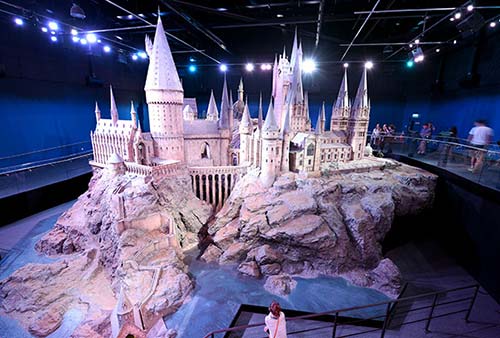
Plan Ahead: It’s essential to buy a ticket far in advance (entry possible only with reserved time slot). Allow about three hours at the studio, plus nearly three hours to get there and back.
Cost and Hours: £51.50, purchase timed-entry ticket online in advance, kids ages 5 to 15—£40, family ticket available; opening hours flex with season—first tour at 9:00 or 10:00, last tour as early as 14:30 or as late as 18:30, multimedia guide—£5.25, café, +44 800 640 4550, www.wbstudiotour.co.uk.
Getting There: Take the frequent train from London Euston to Watford Junction (£13-20 round-trip, about 5/hour, 20 minutes), then catch the Mullany’s Coaches shuttle bus (instantly recognizable by its bright paint job) to the studio tour (2-4/hour, 15 minutes, fare included with studio ticket). Detailed driving directions are available on the website.
More direct (and more expensive), Golden Tours runs multiple daily buses between three London locations (Victoria Station, Baker Street, or King’s Cross) and the studio (price includes round-trip bus and studio entrance: adults—£94, kids—£89, £45 for round-trip bus only; reserve ahead at www.goldentours.com).
Shopping in London
Most stores are open Monday through Saturday from roughly 9:00 or 10:00 until 17:00 or 18:00, with a late night on Wednesday or Thursday (usually until 19:00 or 20:00). Many close on Sundays. Large department stores stay open later during the week (until about 21:00 Mon-Sat) with shorter hours on Sundays. If you’re looking for bargains, visit one of the city’s many street markets.
SHOPPING STREETS
The best and most convenient shopping streets are in the West End and West London (roughly between Soho and Hyde Park). You’ll find midrange shops along Oxford Street (running east from Tube: Marble Arch), and fancier shops along Regent Street (stretching south from Tube: Oxford Circus to Piccadilly Circus) and Knightsbridge (where you’ll find Harrods and Harvey Nichols; Tube: Knightsbridge). Other streets are more specialized, such as Jermyn Street for old-fashioned men’s clothing (just south of Piccadilly) and Charing Cross Road for books. Floral Street, connecting Leicester Square to Covent Garden, is lined with boutiques.
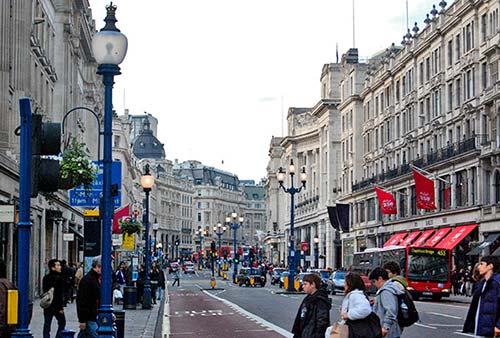
Another fine street, which runs between Oxford Street and Marylebone Road, is Marylebone High Street (ending near Regent’s Park and Madame Tussauds). It feels quainter and less ritzy than some of the streets described above, and it’s fun to browse for its combination of high-end chain stores, local one-off shops, art concept stores, clothing boutiques, and sleek home decor...all under handsome red-brick turreted townhouses. Along this street is the unique Daunt Books, filling an old townhouse with titles organized geographically (for details, see here).
FANCY DEPARTMENT STORES
Harrods
Harrods is London’s most famous and touristy department store. With more than four acres of retail space covering seven floors, it’s a place where some shoppers could spend all day. (To me, it’s still just a department store.) Big yet classy, Harrods has everything from elephants to toothbrushes (Mon-Sat 10:00-21:00, Sun 11:30-18:00, Brompton Road, Tube: Knightsbridge, +44 20 7730 1234, www.harrods.com).
Harvey Nichols
Once Princess Diana’s favorite and later Princess Kate’s, “Harvey Nick’s” remains the department store du jour (Mon-Sat 10:00-20:00, Sun 11:30-18:00, near Harrods, 109 Knightsbridge, Tube: Knightsbridge, +44 20 7235 5000, www.harveynichols.com). The store’s fifth floor is a veritable food fest, with a gourmet grocery store, a fancy bar, an outdoor terrace, and a lively café.
Fortnum & Mason
Once the official department store of Queen Elizabeth II, Fortnum & Mason embodies old-fashioned, British upper-class taste. While some feel it is too stuffy, you won’t find another store with the same storybook atmosphere. With rich displays and deep red carpet, Fortnum’s feels classier and more relaxed than Harrods (Mon-Sat 10:00-20:00, Sun 11:30-18:00, elegant tea served in their Diamond Jubilee Tea Salon—see here, 181 Piccadilly, Tube: Green Park, +44 20 7734 8040, www.fortnumandmason.com).
Liberty
Designed to make well-heeled shoppers feel at home, this half-timbered, mock-Tudor emporium is a 19th-century institution that thrives today. Known for its gorgeous “Liberty Print” floral fabrics, well-stocked crafts department, and castle-like interior, this iconic shop was a favorite of writer Oscar Wilde, who called it “the chosen resort of the artistic shopper” (Mon-Sat 10:00-20:00, Sun 12:00-18:00, Great Marlborough Street at Regent Street, Tube: Oxford Circus, +44 20 3893 3062, www.libertylondon.com).
STREET MARKETS
Those who appreciate antiques, artisan goods, and a fine bargain love London’s street markets. There’s good early-morning market activity somewhere any day of the week. The most rewarding markets—which combine lively stalls and a colorful neighborhood with cute and characteristic shops of their own—are Portobello Road and Camden Lock Market. Hagglers will enjoy the no-holds-barred bargaining encouraged in London’s street markets. Greenwich (a quick DLR ride from central London) also has its share of great markets, especially lively on weekends. Warning: Markets attract two kinds of people—tourists and pickpockets.
Portobello Road Market (Notting Hill)
Classic, famous, quirky, and a bit dated, Portobello Road stretches for several blocks through the delightful Notting Hill neighborhood. Charming streets lined with pastel-painted houses and offbeat antique shops are enlivened on Fridays and Saturdays with 2,000 additional stalls (8:00-19:00), plus food, live music, and more. (The best strategy is to come on Friday; most stalls are open, with half the crowds of Saturday.) The first stretch, closest to Notting Hill Gate, is more touristy (the “The Travel Book Shop” you pass is a souvenir shop, not the actual Notting Hill movie location). But after a few blocks, as you go under the A-40 overpass, things become more local; you’ll see “The Canopy,” an outdoor vintage fashion mall, and the highest concentration of food stands. While Portobello Road is best on Fridays and Saturdays, you can enjoy this street’s shops most other days as well (Tube: Notting Hill Gate, https://visitportobello.com).
Camden Lock Market (Camden Town)
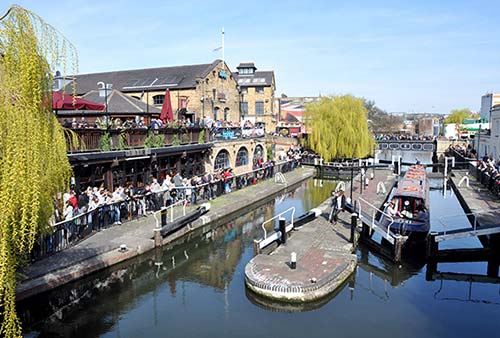
This huge, trendy arts-and-crafts market is divided into three areas, each with its own vibe (but all of them fresh and funky). The whole complex sprawls around an old-fashioned, still-functioning lock (used mostly for leisure boats) and its retro-chic, yellow-brick industrial buildings. The main market, set alongside the picturesque canal, features a mix of shops and stalls selling boutique crafts and artisanal foods. The market on the opposite side of Chalk Farm Road is edgier, with cheap food stalls, lots of canalside seating, and punk crafts. The Stables, a sprawling, incense-scented complex, is decorated with fun statues of horses and squeezed into tunnels under the old rail bridge just behind the main market. It’s a little lowbrow and wildly creative, with cheap clothes, junk jewelry, and loud music (daily 10:00-18:00, some businesses open later, busiest on weekends, www.camdenmarket.com).
Leadenhall Market (The City)
One of London’s oldest, Leadenhall Market stands on the original Roman center of town. Today, cheese and flower shops nestle between pubs, restaurants, and boutiques, all beneath a beautiful Victorian arcade (Harry Potter fans may recognize it as Diagon Alley). This is not a “street market” in the true sense, but more a hidden gem in the midst of London’s financial grind (hours vary, generally Mon-Fri 10:00-18:00; Tube: Monument, Bank, or Liverpool; off Gracechurch Street near Leadenhall Street and Fenchurch; http://leadenhallmarket.co.uk).
East End Markets
These East End markets are busiest and most interesting on Sundays. See the map on here for locations.
Petticoat Lane Market: Just a block from Spitalfields Market, this line of stalls sits on the otherwise dull, glass-skyscraper-filled Middlesex Street; adjoining Wentworth Street is grungier and more characteristic. Expect budget clothing, leather, shoes, watches, jewelry, and crowds (Sun 9:00-15:00, sometimes later; smaller food-focused market Mon-Fri on Wentworth Street only; no market Sat; Middlesex Street and Wentworth Street).
Spitalfields Market: This huge, mod-feeling market hall combines a shopping mall with old brick buildings and sleek modern ones, all covered by a giant glass roof. The shops, stalls, and a rainbow of restaurant options are open every day, tempting you with a wide variety of eateries, crafts, trendy clothes, bags, and an antique-and-junk market (Sun-Fri 10:00-18:00—but vendors begin shutting down around 17:00, Sat from 11:00; from the Tube stop, take Bishopsgate West exit, turn left, walk to Brushfield Street, and turn right; www.spitalfields.co.uk).
Truman Markets: Housed in the former Truman Brewery on Brick Lane, this cluster of markets is in the heart of the “Banglatown” Bangladeshi community. Of the East End market areas, these are the grittiest and most avant-garde. From the north end of Spitalfields Market, head east (right) across Commercial Street. Follow Hanbury Street two and a half blocks to reach, on your left, the Upmarket Food Hall, which puts a roof over a diverse, well-priced assortment of street-food-style vendors (Sat 11:00-17:30, Sun 10:00-18:00). From here it’s half a block up Brick Lane to the underground Vintage Market, with what claims to be London’s largest assortment of retro retailers (daily 11:00-18:00, www.vintage-market.co.uk). Continue on Brick Lane, following the crowds, into the Backyard Market, with stylish clothing, arts, and crafts (Sat 11:00-18:00, Sun 10:00-17:00). Surrounding shops and eateries, including a fun courtyard of food trucks tucked off Brick Lane, are open all week.
Brick Lane Market: If you leave the Truman Brewery complex and continue north along Brick Lane, the action flows into a more casual assortment of food and arts stands and street performers called the Brick Lane Market (best on Sun 10:00-17:00). This spans several short blocks, from about Buxton Street to Bethnal Green Road—a five-minute walk. Continuing another 10 minutes north, then turning right onto Columbia Road, takes you to the next market.
Columbia Road Flower Market: This colorful shopping street is made even more lively by the Sunday-morning commotion of shouting flower vendors (Sun 8:00-14:00, www.columbiaroad.info). Halfway up Columbia Road, be sure to loop left up little Ezra Street, with characteristic eateries, boutiques, and antique vendors.
West End Markets
Covent Garden Market: Originally the convent garden for Westminster Abbey, the iron-and-glass market hall hosted a produce market until the 1970s (earning it the name “Apple Market”). Now it’s a mix of fun shops, eateries, markets, and a more modern-day Apple Store on the corner. Mondays are for antiques, while arts and crafts dominate the rest of the week. Yesteryear’s produce stalls are open daily 10:00-18:00, and on Thursdays, a food market brightens up the square (Tube: Covent Garden, +44 20 7420 5856, www.coventgardenlondonuk.com).
Jubilee Hall Market: This market features antiques on Mondays (5:00-17:00); a general market Tuesday through Friday (10:30-19:00); and arts and crafts on Saturdays and Sundays (10:00-18:00). It’s located on the south side of Covent Garden (+44 20 7379 4242, www.jubileemarket.co.uk).
Entertainment in London
London bubbles with top-notch entertainment seven days a week: plays, movies, concerts, exhibitions, walking tours, shopping, and children’s activities. For the best list of what’s happening and a look at the latest London scene, check TimeOut.com/london. The free monthly London Planner (https://londonplanner.com) covers sights, events, and plays, though generally not as well as the Time Out website.
THEATER (A.K.A. “THEATRE”)
London’s theater scene rivals Broadway’s in quality and often beats it in price. Choose from 200 offerings—Shakespeare, musicals, comedies, thrillers, sex farces, cutting-edge fringe, revivals starring movie celebs, and more. London does it all well.
Seating Terminology: Just like at home, London’s theaters sell seats in a range of levels—but the Brits use different terms: stalls (ground floor), dress circle (first balcony), upper circle (second balcony), balcony (sky-high third balcony), and slips (cheap seats on the fringes). Discounted tickets are called “concessions” (abbreviated as “conc” or “s”). “Restricted view” seats can be a bargain, but you won’t be able to see all (or even most) of the stage. For floor plans of the various theaters, see TheatreMonkey.com.
Big West End Shows
Nearly all big-name shows are hosted in the theaters of the West End, clustering around Soho (especially along Shaftesbury Avenue) between Piccadilly and Covent Garden. With a centuries-old tradition of pleasing the masses, they present London theater at its grandest.
Well-known musicals may draw the biggest crowds, but the West End offers plenty of other crowd-pleasers, from revivals of classics to cutting-edge works by the hottest young playwrights. These productions tend to have shorter runs than famous musicals. Many productions star huge-name celebrities—London is a magnet for movie stars (both British and American) who want to stretch their acting chops.
You’ll see the latest offerings advertised all over the city. The Official London Theatre Guide, a free booklet that’s updated every two weeks, is a handy tool (find it at hotels, box offices, and the City of London TI). On the Official London Theatre website (https://officiallondontheatre.com) you can find theater news, read reviews, and buy tickets (including discounted tickets, as well as same-day tickets through TKTS).
Most performances are nightly except Sunday, usually with two or three matinees a week. The few shows that run on Sundays are mostly family fare (such as The Lion King).
Buying Tickets for West End Shows
For many visitors, it makes sense to simply buy tickets in London. Most shows have tickets available on short notice—likely at a discount. But if your time in London is limited—or you have your heart set on a particular show that’s likely to sell out (usually the newest shows, and especially on weekends)—you can buy peace of mind by booking tickets from home.
Advance Tickets: It’s generally cheapest to buy your tickets directly from the theater, either through its website or the theater box office. In some cases, a theater will reroute you to a third-party ticket vendor such as Ticketmaster. You can have your tickets emailed to you or pick them up before show time at will call. Note that many third-party websites sell all kinds of London theater tickets, but these generally charge higher prices and fees. It’s best to try the show’s website or theater box office first.
Discount Tickets from TKTS: This famous same-day-ticket outlet, found online at https://officiallondontheatre.com/tkts and in a booth at Leicester Square, sells discounted tickets for many shows (25-50 percent off, £3/ticket service charge). TKTS offers a wide variety of shows on any given day, although they may not always have the hottest shows in town. Tickets go on sale online at midnight the night before a performance, and new tickets become available throughout the day, so it pays to check back. You can also buy tickets in person at the kiosk, where the staff may have creative ideas for how to get the best seat or the best price (Mon-Sat 10:30-18:00, possibly longer hours—more like 10:00-19:00—at busy times, shorter hours on Sun).
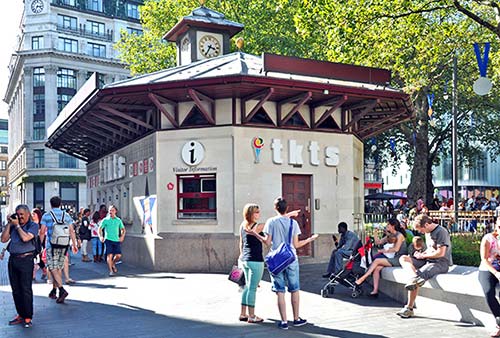
Take note: The real TKTS booth (with its prominent sign) is a freestanding kiosk at the south edge of Leicester Square, behind the Shakespeare statue. Several dishonest outfits nearby advertise “official half-price tickets”—avoid these, where you’ll rarely pay anything close to half-price.
Tickets at the Theater Box Office: Even if a show is “sold out,” there’s usually a way to get a seat. Many theaters offer various discounts or “concessions”: same-day tickets, cheap returned tickets, standing-room, matinee, senior or student standby deals, and more. Start by checking the show’s website, then call the box office or simply drop by (many theaters are right in the tourist zone).
Same-day tickets (called “day seats”) can be an excellent deal. These tickets (usually £25 or less) often are in the nosebleed rows or have a restricted view—but sometimes they’re front-row seats. Some same-day tickets are available only in person when the box office opens (typically at 10:00; for popular shows, people start lining up well before then). Increasingly, theaters sell these tickets online, or as “rush tickets” through the TodayTix app. Very popular shows don’t bother with “day seats,” but a few distribute tickets through a lottery. The more popular the show, the lower your chances are, but it’s fun to give it a shot. Look up details on each show’s website.
Another strategy is to show up at the box office shortly before show time (best on weekdays) and—before paying full price—ask about cheaper options. Last-minute return tickets are often sold at great prices as curtain time approaches.
For a helpful guide to cheap and last-minute tickets, including “day seats”—with recent user reports on how early you need to show up—consult www.theatremonkey.com/day-seat-finder; also check www.londontheatretickets.org or TimeOut.com/london/theatre.
Booking Through Other Agencies: Although booking through a middleman such as your hotel or a ticket agency is quick and easy (and may be your last resort for a sold-out show), prices are greatly inflated. Ticket agencies and third-party websites are often just scalpers with an address. If you do buy from an agency, choose one who is a member of the Society of Ticket Agents and Retailers (look for the STAR logo—short for “secure tickets from authorized retailers”). These legitimate resellers normally add a maximum 25 percent booking fee to tickets.
Scalpers (or “Touts”): As at any event, you’ll find scalpers hawking tickets outside theaters. And, just like at home, those people may either be honest folk whose date just happened to cancel at the last minute...or they may be unscrupulous thieves selling forgeries. London has many of the latter.
Theater Beyond the West End
Tickets for lesser-known shows tend to be cheaper (figure £15-30), in part because most of the smaller theaters are government subsidized. Remember that plays don’t need a familiar title or famous actor to be a worthwhile experience—read up on the latest offerings online; Time Out’s website is a great place to start. Major noncommercial theaters include the National Theatre, Barbican Centre, Royal Court Theatre, Menier Chocolate Factory, and Bridge Theatre. The Royal Shakespeare Company performs at various theaters around London.
Shakespeare’s Globe
To see Shakespeare in a replica of the theater for which he wrote his plays, attend a play at the Globe. In this round, thatched-roof, open-air theater, the plays are performed much as Shakespeare intended—under the sky, with no amplification.
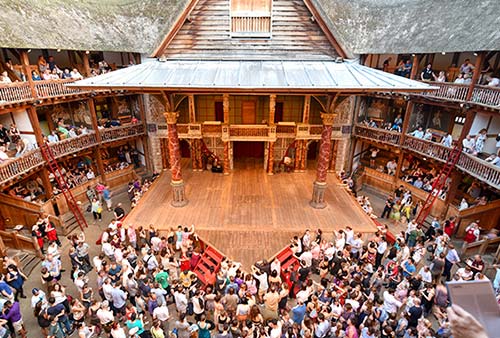
The play’s the thing from mid-April through mid-October (usually Tue-Sat 14:00 and 19:30, Sun 13:00 and/or 18:30, tickets can be sold out months in advance). You’ll pay £5 to stand and £25-68 to sit, usually on a backless bench (only a few rows and the pricier Gentlemen’s Rooms have seats with backs, a £2.50 cushion can be a good investment; dress for the weather, £5 blankets are available). Note: While this is a wonderful theater-going experience, the seating is significantly less comfy than most venues—even for the pricier seats.
The £5 “groundling” or “yard” tickets—which are open to rain—are most fun. Scurry in early to stake out a spot on the stage’s edge, where the most interaction with the actors occurs. You’re a crude peasant. You can lean your elbows on the stage, munch a snack (yes, you can bring in food—but bag size is limited), or walk around. I’ve never enjoyed Shakespeare as much as here, performed as it was meant to be in the “wooden O.” If you can’t get a ticket, consider waiting around. Plays can be long, and many groundlings leave before the end. Hang around outside and beg or buy a ticket from someone leaving early (groundlings are allowed to come and go). A few non-Shakespeare plays are also presented each year. If you can’t attend a show, you can take a guided tour of the theater and museum by day (see here).
In winter—when the outdoor Globe is closed—you can still enjoy plays at the indoor Sam Wanamaker Playhouse. Plays are usually performed using only candlelight, with candelabras suspended from the ceiling. It feels intimate (about 350 seats) and is, in its own way, just as impressive as the Globe. The Playhouse season is designed to complement the Globe’s summer season—Shakespeare, Shakespearean-era plays, new works by up-and-coming playwrights, and early-music concerts—though a few summer performances may take place here. At the Playhouse, the cheap standing seats are not down below, as in the Globe, but up above, in the upper galleries.
Buying Tickets: Tickets for plays at the Globe or Playhouse are available online (www.shakespearesglobe.com, £2.50 booking fee) and at the box office (Mon-Fri 11:00-18:00, Sat from 10:00, Sun 10:00-17:00, open one hour later on performance days, New Globe Walk entrance, box office +44 20 7401 9919). If tickets are sold out, don’t despair: Returns are common, so keep checking online for your preferred dates (especially the day before or day of). Better yet, try calling around noon the day of the performance to see if the box office expects any returned tickets. If so, they’ll advise you to show up a little more than an hour before the show, when these tickets are sold (first-come, first-served).
Getting There: The theater is on the South Bank, directly across the Thames over the Millennium Bridge from St. Paul’s Cathedral (Tube: Mansion House or London Bridge). The Globe is inconvenient for public transport, but during theater season a regular supply of black cabs waits nearby, or you could try to order an Uber.
Outdoor and Fringe Theater
In summer, enjoy Shakespearean drama and other plays under the stars at the Open Air Theatre, in leafy Regent’s Park in north London. Dine on the grounds before the show by preordering a picnic supper or hot food, or bring your own picnic—check website for details (tickets from £25, season runs mid-May-mid-Sept; book at https://openairtheatre.com or—for an extra booking fee—call +44 333 400 3562; grounds open 1.5 hours before performances; 10-minute walk north of Baker Street Tube, near Queen Mary’s Gardens within Regent’s Park; detailed directions and more info on website).
London’s rougher evening-entertainment scene is thriving. Choose from a wide range of fringe theater and comedy acts (find posters in many Tube stations, or search for “fringe theater” on TimeOut.com; tickets start as cheap as £5-10).
CONCERTS AT CHURCHES
For easy, cheap, or free concerts in historic churches, attend a lunch concert, especially:
• St. Bride’s Church, with free half-hour lunch concerts twice a week at 13:15 (usually Tue and Fri—confirm in advance, +44 20 7427 0133, www.stbrides.com).
• Temple Church, also in The City, with free organ recitals weekly (Wed at 13:15, www.templechurch.com).
• St. Dunstan-in-the-West, on Fleet Street, hosts free 45-minute concerts; you’re welcome to bring a bag lunch (most Wed between 13:15-14:00—confirm at www.stdunstaninthewest.org).
• St. James’s at Piccadilly, with 50-minute concerts some Mon, Wed, and Fri at 13:10 (pay what you will, info +44 20 7734 4511, www.sjp.org.uk).
• St. Martin-in-the-Fields offers concerts on Fri at 13:00; check online for schedule (£10, +44 20 7766 1100, www.stmartin-in-the-fields.org).
St. Martin-in-the-Fields also hosts fine evening concerts by candlelight (£9-35, several nights a week at 19:00 or 19:30) and live folk and jazz in its underground Café in the Crypt (£8-22, Wed, doors at 19:00).
Evensong services are held at several churches, including St. Paul’s Cathedral (see here), Westminster Abbey (see here), Southwark Cathedral (see here), and St. Bride’s Church (Sun at 17:30).
Free organ recitals are usually held on Sunday at 17:00 in Westminster Abbey (30 minutes, +44 20 7222 5152). Many other churches have free concerts; ask at the TI or check the Facebook page for the New London Organ Concerts Guide.
SUMMER EVENINGS ALONG THE SOUTH BANK
If you’re visiting London in summer, consider hitting the South Bank neighborhood after hours.
Take a trip around the London Eye while the sun sets over the city (the wheel spins until late—last ascent at 20:30 or later in summer). Then cap your night with an evening walk along the pedestrian-only Jubilee Walkway, which runs east-west along the river. It’s where Londoners go to escape the heat. This pleasant stretch of the walkway—lined with pubs and casual eateries—goes from the London Eye past Shakespeare’s Globe to Tower Bridge (you can walk in either direction).
If you’re in the mood for a movie, take in a flick at the BFI Southbank, located just across the river, alongside Waterloo Bridge. Run by the British Film Institute, the state-of-the-art theater shows mostly classic films, as well as art cinema (Tube: Waterloo or Embankment, check www.bfi.org.uk for schedules and prices).
Farther east along the South Bank is The Scoop—an outdoor amphitheater next to City Hall. It’s a good spot for movies, concerts, dance, and theater productions throughout the summer—with Tower Bridge as a scenic backdrop. These events are free, nearly nightly, and family-friendly. For the latest event schedule, see https://londonbridgecity.co.uk and click on “What’s On” (next to City Hall, Riverside, The Queen’s Walkway, Tube: London Bridge).
SPORTING EVENTS
Tennis, cricket, rugby, football (soccer), and horse races all take place within an hour of the city. In summer Wimbledon draws a half-million spectators (www.wimbledon.com), while big-name English Premier League soccer clubs—including Chelsea, Arsenal, Tottenham Hotspur, and West Ham United—take the pitch in London to sell-out crowds (www.premierleague.com). The two biggest horse races of the year take place in June: the Royal Ascot Races (www.ascot.com) near Windsor and the Epsom Derby (www.thejockeyclub.co.uk) in Surrey are both once-in-a-lifetime experiences.
Securing tickets to anything sporting-related in London can be difficult—and expensive. Check the official team or event website several months in advance; tickets can sell out within minutes of going on sale to the general public. Third-party booking companies such as SportsEvents 365 (www.sportsevents365.com) and Ticketmaster (www.ticketmaster.co.uk) often have tickets to popular events at a premium price—a godsend for die-hard fans. Many teams also offer affordable, well-run stadium tours—check your favorite side’s official website for details. Even if you can’t attend a sports event in person, consider cheering on the action in a London pub.
Sleeping in London
London is an expensive city for lodging. Focus on choosing the right neighborhood, which is as important as selecting the right hotel. I’ve picked a handful of my favorite neighborhoods (Victoria Station, South Kensington, Earl’s Court, Bayswater, Notting Hill, and North London) and recommend a range of options for each. Because comfort (and charm) come at a price in London, I’ve also listed big, modern, good-value chain hotels scattered throughout the city, along with hostels, dorms, and apartment rental information.
Looking for Hotel Deals Online: Given London’s high hotel prices, it’s worth searching for a deal. You’ll generally get the best offer by booking directly with one of my recommended properties (not through a third-party website). For more options, browse these accommodation discount sites: LondonTown.com (an informative site with a discount booking service), LondonBB.com (central B&Bs), LastMinute.com, VisitLondon.com, and EuroCheapo.com.
VICTORIA STATION NEIGHBORHOOD
The streets behind Victoria Station teem with accommodations. It’s a safe, surprisingly tidy, and decent area without a hint of the trashy, touristy glitz of the streets immediately surrounding the station. I’ve divided these accommodations into two broad categories: Belgravia, west of the station, feels particularly posh, with designer cupcake shops on every other corner. Pimlico, to the east, feels more lived-in (though still quite nice) and is dotted with colorful eateries. All of my recommended hotels are within a five-minute walk of the Victoria Tube, bus, and train stations. Especially in summer, request a quiet back room; many of these B&Bs lack air-conditioning and may front busy streets.
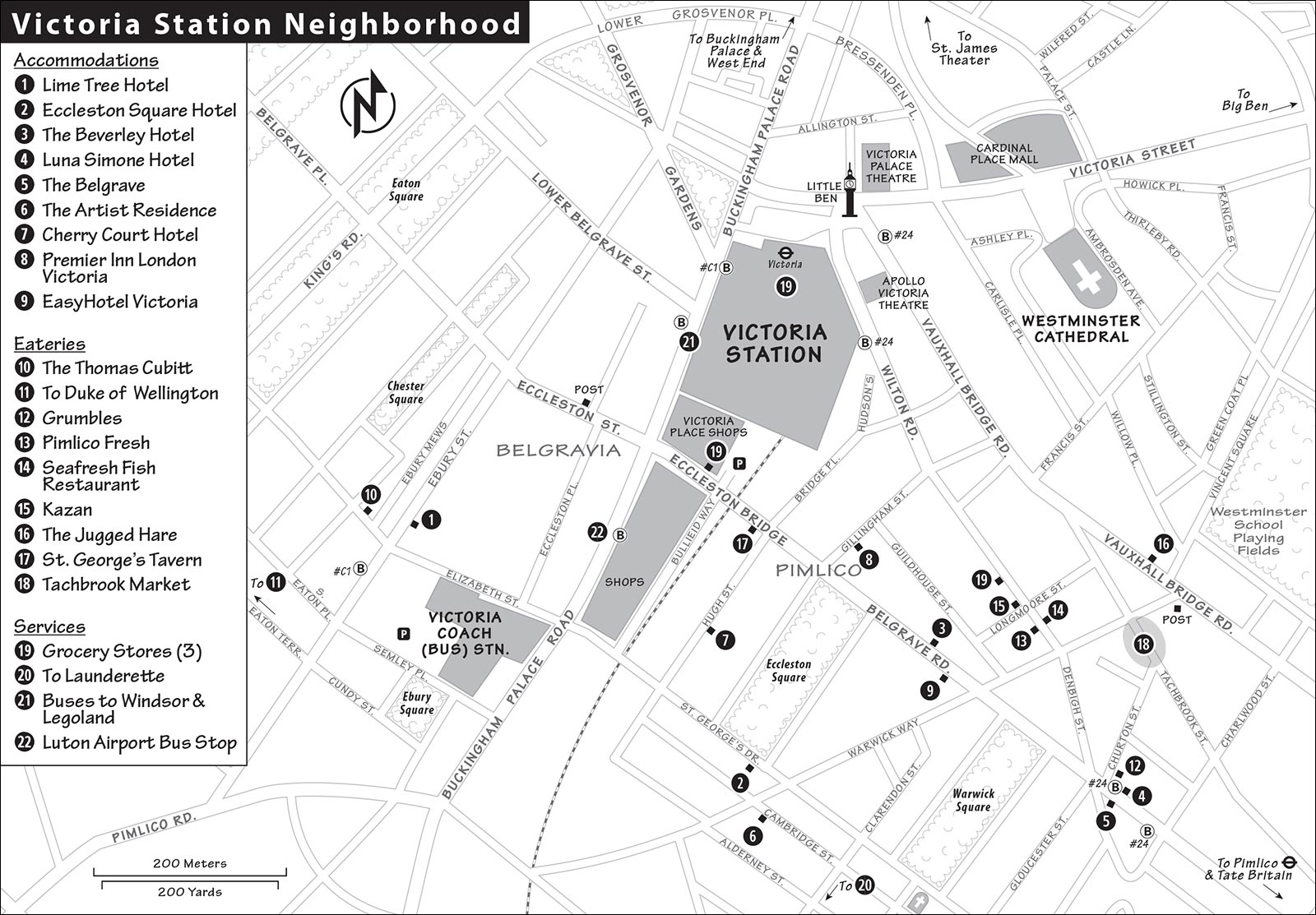
Laundry: The nearest laundry option is Pimlico Launderette, about five blocks southwest of Warwick Square (self-service and same-day full service, open Mon-Sat 8:00-19:00, Sun until 18:00, last self-wash one hour before closing; 3 Westmoreland Terrace—go down Clarendon Street, turn right on Sutherland, and look for the launderette on the left at the end of the street; +44 20 7821 0637).
Parking: The pricey 400-space Semley Place NCP parking garage is just west of Victoria Coach Station at Buckingham Palace Road and Semley Place (+44 845 050 7080, www.ncp.co.uk). Victoria Station car park is cheaper but a quarter of the size; check here first, but don’t hold your breath (entrance on Eccleston Bridge between Buckingham Palace Road and Bridge Place, +44 345 222 4224, www.apcoa.co.uk).
West of Victoria Station (Belgravia)
In Belgravia, the prices are a bit higher and your neighbors include some of the world’s wealthiest people. My recommended hotel here, the Lime Tree, sits on tranquil Ebury Street, two blocks over from Victoria Station (or a slightly shorter walk from the Sloane Square Tube stop). There is some street noise, so light sleepers should request a room in the back.
$$$$ Lime Tree Hotel has 26 spacious, stylish, comfortable rooms; flowery, posh-feeling public spaces; the inviting Buttery restaurant, where breakfast is served; and a delightful garden with a bar in the back (135 Ebury Street, +44 20 7730 8191, www.limetreehotel.co.uk, info@limetreehotel.co.uk, Charlotte). You can cut the walk from Victoria Station to nearly nothing by taking a short ride on frequent bus #C1 (leaves from Buckingham Palace Road side of Victoria Station and drops you off on corner of Ebury and Elizabeth streets).
East of Victoria Station (Pimlico)
This area feels a bit less genteel than Belgravia, but it’s still plenty inviting, with eateries and grocery stores. Most of these hotels are on or near Warwick Way, the main drag. Don’t be overly impressed by higher prices; of these options, the Luna Simone and Cherry Court are both well run and two of my favorite good-value accommodations in all of London. Generally, the best Tube stop for this neighborhood is Victoria (though the Pimlico stop works equally well for the Luna Simone). Handy bus #24 runs right through the middle of Pimlico—stopping in front of the places on Belgrave Road—and connects the Tate Britain to the south with Victoria Station, the Houses of Parliament, Trafalgar Square, the British Museum, and much more to the north.
$$$$ Eccleston Square Hotel is a splurge with professional polish. Its 39 stylish, high-tech rooms are located on a less busy side street, facing a small park (air-con, elevator, 37 Eccleston Square, +44 20 3503 0694, www.ecclestonsquarehotel.com, stay@ecclestonsquarehotel.com).
$$$ The Beverley Hotel, at the lower end of this price range, has 14 tidy, well-equipped, modern rooms that feel upscale for the price (air-con, 13 Belgrave Road, +44 20 7630 1884, www.thebeverleylondon.com, info@thebeverleylondon.com).
$$$ Luna Simone Hotel rents 36 fresh, spacious rooms with modern bathrooms. It’s traditional and smartly managed, run for more than 50 years by twins Peter and Bernard, and Bernard’s son Mark. They still enjoy their work, and do it with a personal touch. Prices include a full English breakfast in their convivial cellar breakfast room (RS%, family rooms, 47 Belgrave Road near the corner of Charlwood Street, +44 20 7834 5897, www.lunasimonehotel.com, stay@lunasimonehotel.com).
$$$ The Belgrave has a big, stylish, glittery lobby and 72 chain-like rooms; while impersonal, it can be affordable considering the location and amenities (air-con, elevator, 80 Belgrave Road, +44 20 7828 8661, www.the-belgrave.com, info@the-belgrave.com).
$$$ The Artist Residence is a boutique hotel with 10 cozy and unique rooms decorated with art and quirky furnishings. It’s in a peaceful location about a six-minute walk from Victoria Station. The café-bar downstairs is a popular hangout for both locals and visitors (52 Cambridge Street, +44 20 3019 8610, www.artistresidence.co.uk/our-hotels/london, london@artistresidence.co.uk).
$ Cherry Court Hotel, run by the friendly and industrious Patel family, rents 12 very small but bright and well-designed rooms with firm mattresses in a central location. Considering London’s sky-high prices, this is an extraordinary budget choice (family rooms, fruit-basket breakfast in room, air-con, laundry, 23 Hugh Street, +44 20 7828 2840, www.cherrycourthotel.co.uk, info@cherrycourthotel.co.uk, Neha answers emails and offers informed restaurant advice).
If considering chain hotels, the fine $$$ Premier Inn London Victoria is in this area (82 Eccleston Square, www.premierinn.com).
“SOUTH KENSINGTON,” SHE SAID, LOOSENING HIS CUMMERBUND
To stay on a quiet street so classy it doesn’t allow hotel signs, make “South Ken” your London home. This upscale area has plenty of colorful restaurants and easy access to the Victoria and Albert and Natural History museums; shoppers like being a short walk from Harrods and the designer shops of King’s Road and Chelsea. When I splurge, I splurge here. The South Kensington Tube stop gives you access to both the handy Piccadilly and Circle/District lines, making it easy to get virtually anywhere in London; it’s also easy to reach from Heathrow. For locations, see the “West London Neighborhoods” map.
$$$$ Number Sixteen, for well-heeled travelers, packs over-the-top class into its 41 artfully imagined rooms, plush designer-chic lounges, and tranquil garden. It’s in a labyrinthine building, with boldly modern decor—perfect for an urban honeymoon (air-con, elevator, 16 Sumner Place, +44 20 7589 5232, www.firmdalehotels.com/hotels/london [URL inactive], sixteen@firmdale.com).
$$$$ The Pelham Hotel, a 52-room business-class hotel with crisp service and a pricey mix of pretense and style, is genteel, with low lighting and a pleasant drawing room and library among the many perks (air-con, elevator, fitness room, 15 Cromwell Place, +44 20 7589 8288, www.pelhamhotel.co.uk, reservations.thepelham@starhotels.com).
$$$$ The Egerton House Hotel, located in a pair of red-brick Victorian townhouses, is as British as it gets. Their 23 rooms are opulent and comfortable with hardwood furnishings, some with a view of the garden. Afternoon tea is served next to an open fireplace, and the bar pours British cocktails, shaken or stirred (air-con, elevator, laundry, 17 Egerton Terrace, +44 20 7589 2412, https://egertonhousehotel.com, bookeg@rchmail.com).
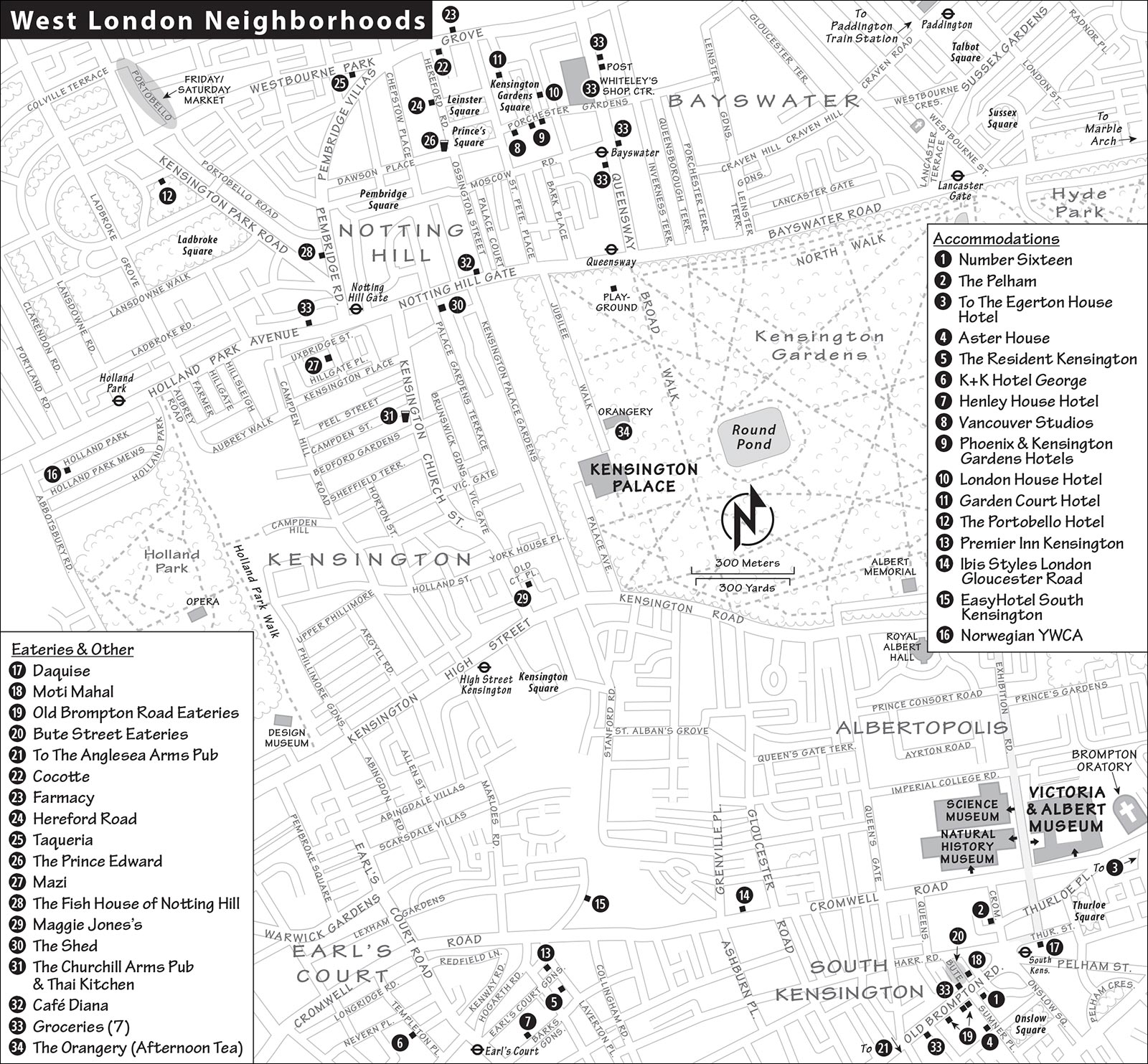
$$$ Aster House, in a lovely Victorian townhouse, is run with care by kind Leonie, who’s been welcoming my readers for years (I call it “my home in London”). It’s a stately and sedate place, with 13 comfy rooms, a cheerful lobby, and a lounge. Enjoy breakfast or just kick back in the whisper-elegant Orangery, a glassy greenhouse (air-con, 3 Sumner Place, +44 20 7581 5888, www.asterhouse.com, asterhouse@gmail.com).
NEAR EARL’S COURT
This neighborhood—a couple of Tube stops farther from South Kensington on the Piccadilly and Circle/District lines—is a nice compromise between local-feeling and accessible to travelers. It has a stately residential feel, and a high concentration of high-capacity, relatively expensive hotels. Solo travelers might consider one of the several quality chains here. The main drag that runs in front of the Tube station—Earl’s Court Road—is lined with easy chain eateries. For locations, see the “West London Neighborhoods” map.
$$$$ The Resident Kensington is on a residential block a short walk from Earl’s Court Tube station. It’s professionally run and thoughtfully appointed; each of the 65 rooms has a small, efficient kitchenette (air-con, elevator, 25 Courtfield Gardens, +44 20 7244 2255, www.residenthotels.com/kensington, kensington.reception@residenthotels.com).
$$$$ K+K Hotel George occupies a grand Georgian building on a quiet street just behind the Earl’s Court Tube station. With spacious public areas, a wellness center, and 154 well-appointed rooms, it feels polished and professional (air-con, elevator, 1 Templeton Place, +44 20 7598 8700, www.kkhotels.com, hotel.george@kkhotels.com).
$$$ Henley House Hotel is smaller and more warmly run than the others listed here, with 21 rooms in a modern, red-and-black color scheme. It fills a handsome brick townhouse overlooking a garden, a half-block from the Tube stop (discounts for longer stays, air-con, elevator, 30 Barkston Gardens, +44 20 7370 4111, www.henleyhousehotel.com, reservations@henleyhousehotel.com, Roberta).
BAYSWATER AND NOTTING HILL
From the core of the tourist’s London, vast Hyde Park spreads west, eventually becoming Kensington Gardens. Along the northern edge of the park sits Bayswater, with a cluster of good-value, reasonably priced accommodations in an area that’s sleepy and very “homely” (Brit-speak for cozy). Your money will go further here than in most parts of central London—though the area can feel a bit sterile, and the hotels tend to be impersonal.
The Queensway Tube stop, while a couple of blocks from my recommendations, is handiest as it sits on the Central Line. I’ve also listed a place in the adjacent Notting Hill area (to the west)—just one Tube stop away. For locations, see the “West London Neighborhoods” map.
Bayswater
Most of my Bayswater accommodations flank a peaceful, tidy park called Kensington Gardens Square (not to be confused with the much bigger Kensington Gardens adjacent to Hyde Park). One block east is the bustling street Queensway, a multicultural festival of commerce and eateries popular with young international travelers.
$$$ Vancouver Studios has 50 modern, tastefully furnished rooms that come with fully equipped kitchenettes, or you can pay for a continental breakfast. It’s nestled between Kensington Gardens Square and Prince’s Square and offers a more personal welcome than the others listed here. They have their own cozy coffee shop/bar and a tranquil garden patio out back (laundry, 30 Prince’s Square, +44 7754 286 145, www.vancouverstudios.co.uk, info@vancouverstudios.co.uk).
$$$ Phoenix Hotel offers spacious, stately public spaces and 125 modern-feeling rooms with classy decor. While rates can vary wildly, it’s a good choice if you can get a deal (elevator, 1 Kensington Gardens Square, +44 20 7229 2494, www.phoenixhotel.co.uk, reservations@phoenixhotel.co.uk).
$$ London House Hotel has 103 modern, cookie-cutter rooms at reasonable prices (family rooms, air-con, elevator, 81 Kensington Gardens Square, +44 20 7243 1810, www.londonhousehotels.com, reservations@londonhousehotels.com).
$$ Kensington Gardens Hotel, with the same owners as the Phoenix Hotel, laces 17 rooms together in a tall, skinny building (breakfast served at Phoenix Hotel, 9 Kensington Gardens Square, +44 20 7243 7600, www.kensingtongardenshotel.co.uk, info@kensingtongardenshotel.co.uk).
$ Garden Court Hotel is understated, with 40 simple, dated rooms (family rooms, air-con in some rooms, elevator, 30 Kensington Gardens Square, +44 20 7229 2553, www.gardencourthotel.co.uk, info@gardencourthotel.co.uk).
Notting Hill
Just west of Bayswater (Tube: Notting Hill Gate), spreading out from the northwest tip of Kensington Gardens, this area is famous for two things: It’s the site of the colorful Portobello Road Market (see here), and was the setting of the 1999 Hugh Grant/Julia Roberts film of the same name.
$$$$ The Portobello Hotel, classy and personable, is on a quiet, upscale-feeling residential street in the heart of the neighborhood. Its 21 rooms and beautiful lobby/lounge are a tasteful mix of funky and elegant—both the style and location give it an urban-fresh feeling (air-con, laundry, elevator, 22 Stanley Gardens, +44 20 7727 2777, www.portobellohotel.com, stay@portobellohotel.com).
NORTH LONDON
These hotels are north of Regent Street, a long walk or quick Tube or bus ride from the lively Soho area and Hyde Park. These are my closest hotels to the center of London, and some of my most expensive. The wide streets and grand homes (including Sherlock Holmes’) give this area an elegant aura...which is only slightly compromised by the hordes of tourists flocking through to reach Madame Tussauds.
$$$$ Charlotte Street Hotel, in the Fitzrovia neighborhood close to the British Museum, is higher-end than most of my listings. This plush place has inviting public spaces and 52 bright, elegant rooms (connecting family rooms, air-con, elevator, 15 Charlotte Street, Tube: Tottenham Court Road, +44 20 7806 2000, www.charlottestreethotel.com, reservations@charlottestreethotel.com).
$$$$ The Mandeville Hotel, at the center of the action just one block from Bond Street Tube station, has a genteel British vibe, with high ceilings, tasteful art, just-vibrant-enough colors, and 142 rooms. It’s a worthy splurge for its amenities and location, especially if you score a good deal (air-con, elevator, Mandeville Place, +44 20 7935 5599, www.mandeville.co.uk, info@mandeville.co.uk).
Near Covent Garden
These two hotels—pricey for what you get, but oh so central—are a short walk from Covent Garden, in the heart of the action.
$$$ The Fielding Hotel is simple but offers a good location on a quiet lane. They rent 25 tight but tidy and comfortable rooms (plus two apartments), serve no breakfast, and have almost no public spaces (family rooms, air-con, 4 Broad Court off Bow Street, Tube: Covent Garden, +44 20 7836 8305, www.thefieldinghotel.co.uk, reservations@thefieldinghotel.co.uk, well run by Sajaad).
$$ Seven Dials Hotel’s 42 no-nonsense rooms are plain and fairly tight, but they’re also clean and incredibly well located (some, but not all, have air-con). Since doubles here all cost the same, request a larger room when you book (family rooms, elevator, no breakfast, 7 Monmouth Street, Tube: Leicester Square or Covent Garden, +44 20 240 0823, www.sevendialshotel.co.uk, sevendialshotel@gmail.com, run by friendly and hardworking Hanna).
OTHER SLEEPING OPTIONS
Big, Good-Value, Modern Hotels
If you can score a double under £130 (often possible with promotional rates) and don’t mind a modern, impersonal, American-style hotel, one of these can be a decent value in pricey London (for details on chain hotels, see here).
I’ve listed a few of the dominant chains, along with a quick rundown on their more convenient London locations. Quality can vary wildly, so check online reviews. Some of these branches sit on busy streets in dreary train-station neighborhoods. While I wouldn’t necessarily rule these out, ask for a quieter room, and use common sense when exploring after dark.
I’ve focused on affordable options here. Pricier London hotel chains include Millennium/Copthorne, Grange, Firmdale, Thistle, InterContinental/Holiday Inn, Radisson, Hilton, Marriott, and Red Carnation.
$$$ Premier Inn has more than 70 hotels in greater London. Convenient locations include a branch inside London County Hall (next to the London Eye), at Southwark/Borough Market (near Shakespeare’s Globe, 34 Park Street), Southwark/Tate Modern (15 Great Suffolk Street), Leicester Square (1 Leicester Place), Victoria (82 Eccleston Square—see the “Victoria Station Neighborhood” map, earlier), and Kensington/Earl’s Court (11 Knaresborough Place—see the “West London Neighborhood” map, earlier). In North London, three branches cluster between King’s Cross St. Pancras and the British Museum: King’s Cross, St. Pancras, and Euston. Just east of the museum is the Holborn location (27 Red Lion Street; for all four locations see the “North London Neighborhood” map, later). Avoid the Tower Bridge location, south of the bridge and a long walk from the Tube—but London City Tower Hill, north of the bridge on Prescot Street (see map on here), works fine (www.premierinn.com).
$$ Motel One, the German chain that specializes in affordable style, has a branch at Tower Hill, a 10-minute walk north of the Tower of London (24 Minories—see map on here, +44 20 7481 6420, www.motel-one.com, london-towerhill@motel-one.com).
$$ Travelodge has close to 70 locations in London, including King’s Cross (200 yards in front of King’s Cross Station, Gray’s Inn Road) and Euston (1 Grafton Place). Other handy locations are King’s Cross Royal Scot, Marylebone, Covent Garden, Liverpool Street, Southwark, and Farringdon; www.travelodge.co.uk. For the King’s Cross and Euston locations, see the “North London Neighborhood” map.
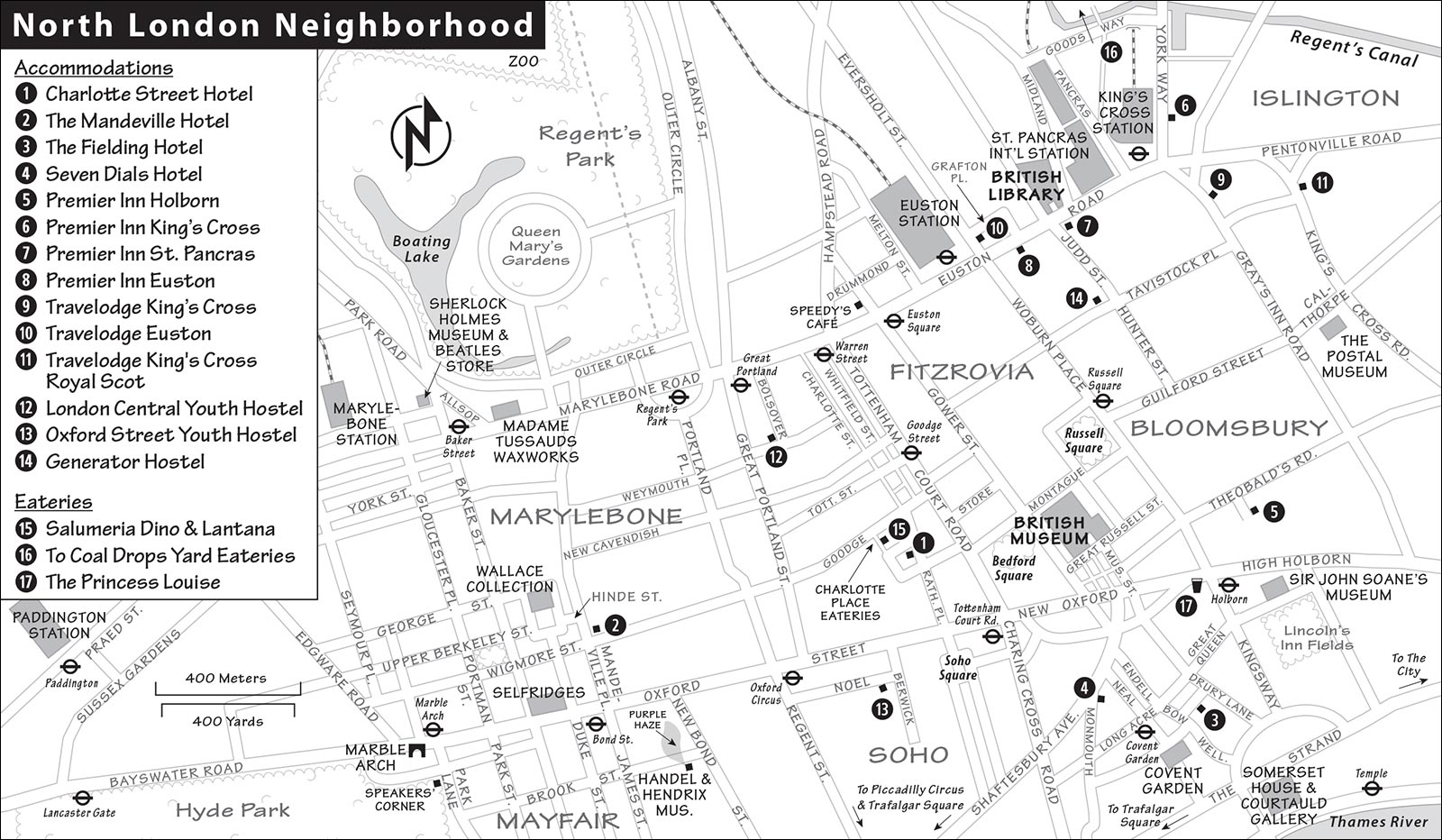
$$ Ibis, the budget branch of the AccorHotels group, has a few dozen options across the city, with a handful of locations convenient to London’s center, including London Blackfriars (49 Blackfriars Road) and London City Shoreditch (5 Commercial Street). The more design-focused Ibis Styles has branches near Earl’s Court (47 Lillie Road), South Kensington (110 Cromwell Road—see map on here), and Southwark, with a theater theme (43 Southwark Bridge Road; ibis.accorhotels.com).
$ EasyHotel has a unique business model inspired by its parent company, the easyJet budget airline. The generally tiny, super-efficient, no-frills rooms feel popped out of a plastic mold, down to the prefab ship’s head-type “bathroom pod.” Rates can be surprisingly low—but you’ll pay pricey add-on fees for TV use, Wi-Fi, luggage storage, and daily cleaning (breakfast, if available, comes from a vending machine). It’s only a good deal if you book far enough ahead to get a good price and skip the many extras. Locations include Victoria (34 Belgrave Road—see map on here), South Kensington (14 Lexham Gardens—see map on here), and Paddington (10 Norfolk Place); www.easyhotel.com.
$ Hub by Premier Inn—the budget chain’s no-frills, pod-style division—offers extremely small rooms (just a little bigger than the bed) in convenient locations for low prices (as affordable as £69). They have a beautifully located branch right in the heart of Soho but tucked down a quieter back street (www.premierinn.com/gb/en/hub.html).
Hostels
Hostels can slash accommodation costs while meeting your basic needs. The following places are open 24 hours, have private rooms as well as dorms, and come with Wi-Fi.
¢ London Central Youth Hostel is the flagship of London’s hostels, with all the latest in security and comfortable efficiency. Families and travelers of any age will feel welcome in this wonderful facility. You’ll pay the same price for any bed—so try to grab one with a bathroom (families welcome to book an entire room, book long in advance; between Oxford Circus and Great Portland Street Tube stations at 104 Bolsover Street—see map on here, +44 345 371 9154, www.yha.org.uk, londoncentral@yha.org.uk).
¢ Oxford Street Youth Hostel is right in the shopping and clubbing zone in Soho (14 Noel Street—see map on here, Tube: Oxford Street, +44 345 371 9133, www.yha.org.uk, oxfordst@yha.org.uk).
¢ Generator Hostel is a brightly colored, hip hostel with a shuffleboard bar and a DJ spinning the hits. It’s in a renovated building tucked behind a busy street halfway between King’s Cross and the British Museum (37 Tavistock Place—see map on here, Tube: Russell Square, +44 20 7388 7666, http://staygenerator.com, ask.london@generatorhostels.com).
¢ St. Christopher’s Inn, a cluster of three hostels south of the Thames near London Bridge, has cheap dorm beds; one branch (the Oasis) is for women only. All have loud and friendly bars attached (must be over 18 years old, 161 Borough High Street, Tube: Borough or London Bridge, reservations +44 20 8600 7500, www.st-christophers.co.uk).
¢ St. Paul’s Youth Hostel, near St. Paul’s Cathedral, is modern, friendly, well run, and a bit scruffy (36 Carter Lane, Tube: St. Paul’s, +44 345 371 9012, www.yha.org.uk, stpauls@yha.org.uk).
¢ Norwegian YWCA (Norsk K.F.U.K.) is open to all Norwegian women and to non-Norwegian women under 30. (Men must be under 30 with a Norwegian passport.) Located on a quiet street near Holland Park in the Kensington area, it offers an open-face Norwegian ambience (private rooms available, 52 Holland Park—see map on here, Tube: Holland Park, +44 20 7727 9346, www.kfukhjemmet.org.uk, kontor@kfukhjemmet.org.uk).
Apartment Rentals
Consider this option if you’re traveling as a family, traveling in a group, or staying several days. Websites such as Airbnb and VRBO let you correspond directly with property owners or managers, or consider OneFineStay.com (stylish, contemporary flats—most of them part-time residences—in desirable London neighborhoods) or SuperCityUK.com (chic, comfortable aparthotels and serviced apartments). Other options include Cross-Pollinate.com, Coach House Rentals (www.chsrentals.com), VisitApartmentsLondon.co.uk, HomeFromHome.co.uk, and APlaceLikeHome.co.uk.
Eating in London
Far from the dated stereotypes of dreary British food, London is one of Europe’s great food cities. Whether it’s dining well with the upper crust, sharing hearty pub fare with mates, or venturing to a fringe neighborhood to try the latest hotspot or street food at a market, dining out is an essential part of the London experience. The sheer variety of foods—from every corner of Britain’s former empire and beyond—is astonishing.
CENTRAL LONDON
Central London is absolutely packed—with both locals and tourists—and restaurants overflow, even on a “quiet” night. On weekends and later in the evenings, sidewalks and even the streets become congested with people out barhopping and clubbing. If you’re looking for peace and quiet and a calm meal, avoid Friday and Saturday evenings here and come early on other nights.
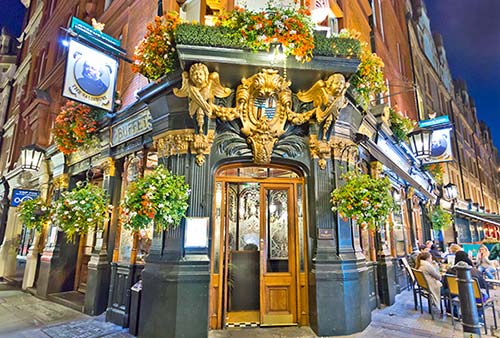
Many popular chain restaurants permeate this area (for a description of some reliable chains, see here). There’s no need to clutter up my listings and maps with these—like Starbucks or McDonald’s, you can count on seeing them wherever you go.
Heart of Soho
With its many theaters, reputation as a rollicking nightspot, and status as the place where budding restaurateurs stake their claim on London’s culinary map, the Soho neighborhood is a magnet for diners. As it’s close to London’s must-sees and -dos, you could find yourself eating here a lot (convenient for dinner after a day of sightseeing, or before going to the theater). Even if Soho isn’t otherwise on your radar, make a point to dine here at least once.
$$$ Andrew Edmunds Restaurant is a tiny candlelit space where you’ll want to hide your guidebook and not act like a tourist. This little place—with a loyal clientele—is the closest I’ve found to Parisian quality in a cozy restaurant in London. The extensive wine list, modern European cooking, and creative seasonal menu are worth the splurge (daily, come early or call ahead, request ground floor rather than basement, 46 Lexington Street, +44 20 7437 5708, www.andrewedmunds.com).
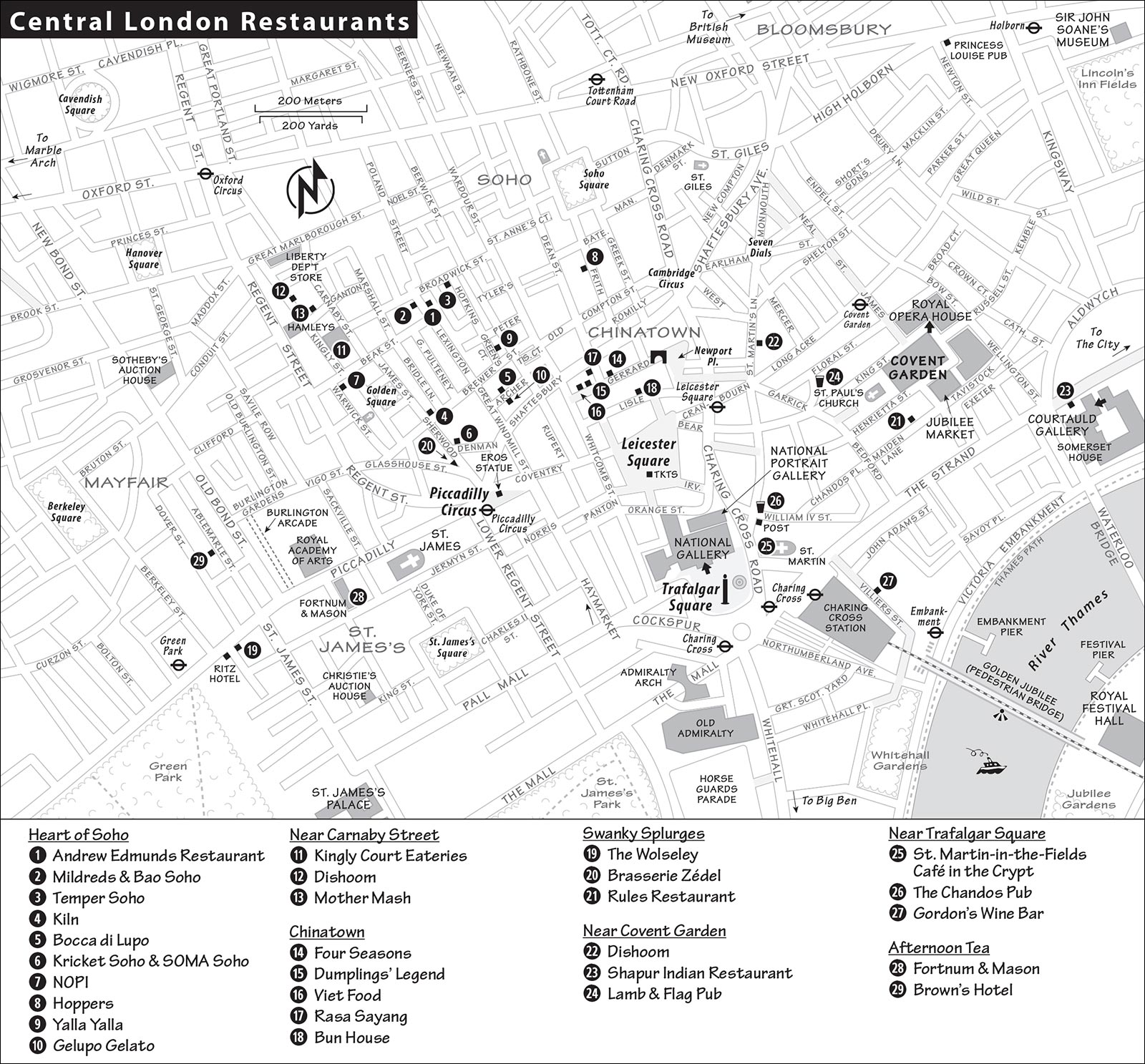
$$ Mildreds, a vegetarian restaurant across from Andrew Edmunds, has a creative, fun menu and a tight, high-energy interior filled with happy herbivores (daily, vegan options, 45 Lexington Street, +44 20 7494 1634).
$$$ Bao Soho is a minimalist eatery selling top-quality Taiwanese cuisine, specializing in delicate and delectable steamed-bun sandwiches (portions are small so order more than one). This is a popular spot, often with a line across the street; try to arrive early or late (daily, 53 Lexington Street). Another Bao is located in the East End, near the Shoreditch High Street Tube station (1 Redchurch Street).
$$$ Temper Soho pleases well-heeled carnivores. From the nondescript office-block entrance, you’ll descend to a cozy, stylish cellar filled with rich smoke from meat grilling on open fires. The portions are small and pricey (order multiple courses), but meat lovers willing to pay leave satisfied (daily, 25 Broadwick Street, +44 20 3879 3834, https://temperrestaurant.com/temper-soho).
$$$ Kiln invigorates the taste buds with the explosive flavors of northern Thailand. Squeeze along the long, stainless-steel counter—peering into the wood-fired kilns where the frantic staff does all the cooking—or grab a table in the cramped cellar dining room. The menu skews slightly to the adventurous (i.e., organ meat and strong sauces and curries), with delicious results (daily, 58 Brewer Street).
$$$ Bocca di Lupo, a stylish and popular option, serves half and full portions of classic regional Italian food. Dressy but with a fun energy, it’s a place where you’ll be glad you made a reservation. The counter seating, on cushy stools with a view into the lively open kitchen, is particularly memorable, or you can take a table in the snug, casual back end (daily, 12 Archer Street, +44 20 7734 2223, www.boccadilupo.com).
$$$ Kricket Soho serves upmarket “Indian-inspired cooking” a few steps from Piccadilly Circus. Opt for the tight, stylish, unpretentious main floor (with counter seating surrounding an open kitchen) or the dining room in the cellar. The small-plates menu is an education in Indian cuisine, with kulchas (miniature naan breads with toppings), kheer (rice pudding), and KFC—Keralan fried chicken (daily, 12 Denman Street, +44 20 7734 5612). Waiting for a table at Kricket, or fancy an Indian-inspired cocktail after your meal? Look next door at #14 for the almost hidden entrance to SOMA Soho (a bar run by Kricket). They pour innovative, well-priced drinks in their secluded cellar bar.
$$$$ NOPI is one of a handful of restaurants run by London celebrity chef Yotam Ottolenghi. The main floor seats diners at traditional tables; the cellar features communal tables looking into the busy kitchen. The cuisine is typical of Ottolenghi’s masterful Eastern Mediterranean cooking, with an emphasis on seasonal produce. If you want to splurge in Soho, do it here (closed Sun, 21 Warwick Street, +44 20 7494 9584, www.ottolenghi.co.uk).
$$ Hoppers is an easy entry into Sri Lankan cuisine—reminiscent of Indian but with more tropical flourishes. You’ll be glad the menu comes with a glossary of key terms—for example, hopper (a spongy yet firm rice-and-coconut pancake, shaped like a bowl), kari (Tamil for “curry”), and roti (flatbread). Be adventurous, and seek the waitstaff’s advice (daily, 49 Frith Street, +44 20 3319 8110).
$$ Yalla Yalla is a bohemian-chic hole-in-the-wall serving up high-quality Lebanese street food—hummus, baba ghanoush, tabbouleh, and shawarmas. Eat in the cramped and cozy interior or at one of the few outdoor tables (daily, may close at 22:00 on slow days, 1 Green’s Court—just north of Brewer Street, +44 20 7287 7663).
Gelato: Across the street from Bocca di Lupo (listed earlier) is its sister gelateria, Gelupo, with a wide array of ever-changing but always creative and delicious dessert favorites. Take away or enjoy their homey interior (daily, 7 Archer Street, +44 20 7287 5555).
Near Carnaby Street
The area south of Oxford Circus between Regent Street and Soho Gardens entices hungry shoppers with attention-grabbing, gimmicky restaurants that fill the niche between chains and upscale eateries. Stroll along Ganton, Carnaby, Kingly, and Great Marlborough streets for something that fits your budget and appetite, or consider these.
Kingly Court, with three levels of international restaurants overlooking a convivial courtyard, is a handy place to comparison-shop for a meal. Favorites include Le Bab, serving elevated kebabs, and Señor Ceviche, with Peruvian raw fish fare (long hours daily, enter at 9 Kingly Street or 49 Carnaby Street).
$$$ Dishoom, the super-popular Indian restaurant (see full listing later, under “Near Covent Garden”) has a branch on Kingly Street, with the same top-notch fare and the same long lines (long hours daily, 22 Kingly Street, +44 20 7420 9322).
$$ Mother Mash is a bangers-and-mash version of a fish-and-chips shop. Choose your mash, meat, and gravy and enjoy this simple, satisfying, and thoroughly British meal (daily, 26 Ganton Street, +44 20 7494 9644).
Chinatown
Chinatown is just next door to Soho. These listings straddle the two districts.
On the Main Drag, near the Archways: The intersecting main streets of Chinatown—Wardour Street and Gerrard Street, with the ornamental archways—are lined with touristy, interchangeable Chinese joints. $$ Four Seasons is a cheap, reliable, traditional standby (12 Gerrard Street, +44 20 7287 0900; second location at 23 Wardour). A bit more appealing is $$ Dumplings’ Legend. The draw here is their dumplings—particularly siu long bao (soup dumplings), which you can see being made fresh through the glassed-in kitchen as you enter (no reservations; on pedestrian main drag, 15 Gerrard Street, +44 20 494 1200). Other options worth considering include $$$ Viet Food, featuring tapas-style Vietnamese small plates with a busy chef in the window (34 Wardour Street); $$ Rasa Sayang, a hole-in-the-wall serving Malaysian wok dishes (5 Macclesfield Street); and $$ Bun House, appreciated for their steamed and fluffy bao buns (26 Lisle Street). Don’t let the line scare you—most people are there to get takeaway.
Swanky Splurges in Central London
$$$$ The Wolseley is the grand 1920s showroom of a long-defunct British car. The last Wolseley drove out with the Great Depression, but today this old-time bistro bustles with formal waiters serving traditional Austrian and French dishes in an elegant black-marble-and-chandeliers setting fit for its location next to the Ritz. Although the food can be unexceptional, prices are reasonable considering the grand presentation and setting. Reservations are a must (cheaper soup, salad, and sandwich “café menu” available in all areas of restaurant, daily, 160 Piccadilly, +44 20 7499 6996, www.thewolseley.com). They’re popular for their fancy cream tea or afternoon tea (details later, under “Taking Tea in London”).
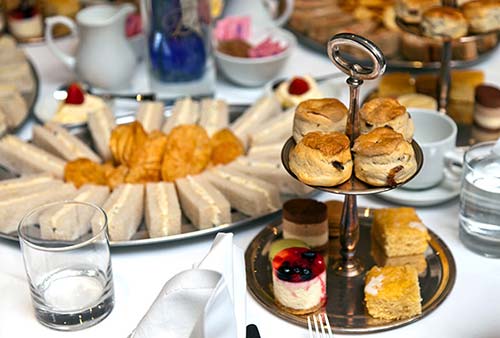
$$$ Brasserie Zédel is the former dining hall of the old Regent Palace Hotel, the biggest hotel in the world when built in 1915. Climbing down the stairs from street level, you’re surprised by a gilded grand hall that feels like a circa 1920 cruise ship, filled with a boisterous crowd enjoying big, rich French food—old-fashioned brasserie dishes. With vested waiters, fast service, and paper tablecloths, it’s great for a group of friends. After 21:30, the lights dim, the candles are lit, and it gets more romantic with live jazz (daily, with nightly £20 plats du jour, 20 Sherwood Street, +44 20 7734 4888, www.brasseriezedel.com). Across the atrium is the hotel’s original Bar Américain (with a 1930s vibe) and the Crazy Coqs venue—busy with “Live at Zédel” music, theater, comedy, and literary events.
$$$$ Rules Restaurant, established in 1798, is as traditional as can be—extremely British, classy yet comfortable. It’s a big, stuffy place, where you’ll eat in a plush Edwardian atmosphere with formal service and plenty of game on the menu. (A warning reads, “Game birds may contain lead shot.”) This is the place to dress up and splurge for classic English dishes (daily, between the Strand and Covent Garden at 34 Maiden Lane, +44 20 7836 5314, www.rules.co.uk).
Near Covent Garden
Covent Garden bustles with people and touristy eateries. The area feels overrun, but if you must eat around here, you have some good choices.
$$$ Dishoom, a small chain, is London’s hotspot for upscale Indian cuisine. The dishes seem familiar, but the flavors are a revelation. Confusingly, the Covent Garden location—one of the first—is billed as “New Dishoom” after a renovation (in keeping with the Indian tradition of “new”-ing refurbished movie houses). People line up early (starting around 17:00) for a seat, either on the bright, rollicking, brasserie-like ground floor or in the less-appealing basement. Reservations are possible only until 17:45. With its oversized reputation, long lines of tourists, and multiple locations, it’s easy to think it’s overrated. But the food is simply phenomenal (long hours daily, 12 Upper St. Martin’s Lane, +44 20 7420 9320, www.dishoom.com). Other locations include near King’s Cross Station, Carnaby Street (listed earlier), Kensington (several blocks west of the Royal Albert Hall), and Shoreditch.
$$$ Shapur Indian Restaurant is a well-respected place serving classic Indian dishes from many regions, fine fish, and a tasty and filling thali combination platter (including a vegetarian version). It’s small, low energy, and dressy, with good service (Mon-Sat from 15:00, closed Sun, next to Somerset House at 149 Strand, +44 20 7836 3730, Syed Khan).
$$ Lamb and Flag is a survivor—a spit-and-sawdust pub serving traditional grub (like meat pies) two blocks off Covent Garden, yet seemingly a world away. Here since 1772, this pub was a favorite of Charles Dickens and is now a hit with local workers. At lunch, it’s all food. In the evening, the ground floor is for drinking and the food service is upstairs (long hours daily, 33 Rose Street, go up the narrow alley from Floral Street, +44 20 7497 9504).
Near Trafalgar Square
$$ St. Martin-in-the-Fields Café in the Crypt is just right for a tasty meal on a monk’s budget—maybe even on a monk’s tomb. You’ll dine sitting on somebody’s gravestone in an ancient crypt. Their enticing buffet line is kept stocked all day, serving breakfast, lunch, and dinner (hearty traditional desserts, free jugs of water). You’ll find the café directly under St. Martin-in-the-Fields, facing Trafalgar Square—enter through the glass pavilion next to the church (generally daily until 19:30, profits go to the church, Tube: Charing Cross, +44 20 7766 1158). On Wednesday evenings you can dine to the music of a live folk or jazz band (doors open at 19:00, food available until 21:00, band plays until 22:00; see here). While here, check out the concert schedule for the busy church upstairs (or visit www.stmartin-in-the-fields.org).
$$ The Chandos Pub’s Opera Room floats amazingly apart from the tacky crush of tourism around Trafalgar Square. Look for it opposite the National Portrait Gallery (corner of William IV Street and St. Martin’s Lane) and climb the stairs—to the left or right of the pub entrance—to the Opera Room. This is a fine Trafalgar rendezvous point and wonderfully local pub. They serve sandwiches and a better-than-average range of traditional pub meals for around £12-14—meat pies and fish-and-chips are their specialty. The ground-floor pub is stuffed with regulars and offers snugs (private booths) and more serious beer drinking. To eat on that level, order upstairs and carry it down (kitchen open daily, Fri until 18:00, order and pay at the bar, 29 St. Martin’s Lane, Tube: Leicester Square, +44 20 7836 1401).
$$ Gordon’s Wine Bar is a candlelit 15th-century wine cellar filled with dusty old bottles, faded British memorabilia, and nine-to-fivers. At the bar, order food (cheese and meat platters and other cold dishes) and consider the many varieties of wine and port available by the glass (this place is passionate about port—even the house port is excellent). The low carbon-crusted vaulting deeper in the back seems to intensify the Hogarth-painting atmosphere. Although it’s crowded—often downright packed with people sitting at shared tables—you can normally find a spot. When sunny, the crowd spills out onto the tight parkside patio, where they have table service (daily, 2 blocks from Trafalgar Square, bottom of Villiers Street at #47—the door is locked but it’s just around the corner to the right, Tube: Embankment, +44 20 7930 1408).
VICTORIA STATION NEIGHBORHOOD
These restaurants are within a few blocks of Victoria Station. As with the accommodations in this area, I’ve grouped them into east and west of the station (for locations, see the map on here).
Groceries: Inside Victoria Station you’ll find an M&S Simply Food (near the front, by the bus terminus) and a Sainsbury’s Local (at rear entrance, on Eccleston Street). A larger Sainsbury’s is on Wilton Road near Warwick Way, a couple of blocks southeast of the station.
West of Victoria Station (Belgravia)
$$$ The Thomas Cubitt, named for the urban planner who designed much of Belgravia, is a trendy neighborhood gastropub packed with young professionals. It’s pricey, a pinch pretentious, and popular for its modern English cooking. With a bright but slightly cramped interior and fine sidewalk seating, it’s great for a drink or meal. Upstairs is a more refined and pricier restaurant with the same kitchen (food served daily, reservations recommended, 44 Elizabeth Street, +44 20 7730 6060, www.thethomascubitt.co.uk).
$$ Duke of Wellington pub is a classic neighborhood place with forgettable grub, sidewalk seating, and an inviting interior. A bit more lowbrow than my other Belgravia listings, this may be your best local glimpse of ye olde London (food served daily, Sun lunch only, 63 Eaton Terrace, +44 20 7730 1782).
East of Victoria Station (Pimlico)
If you’re looking for a good meal in this area, simply wander Wilton Road, which is lined with an enticing variety of eateries (including several of these choices). Best of all, chains are rare along here.
$$ Grumbles brags it’s been serving “good food and wine at non-scary prices since 1964.” Offering a delicious mix of “modern eclectic French and traditional English,” this unpretentious little place with cozy booths inside (on two levels) and a few nice sidewalk tables is the best spot to eat well in this otherwise workaday neighborhood. Their traditional dishes are their forte (early-bird specials 18:00-19:00, open daily, reservations wise, half a block north of Belgrave Road at 35 Churton Street, +44 20 7834 0149, www.grumblesrestaurant.co.uk).
$ Pimlico Fresh’s breakfasts and lunches feature fresh, organic ingredients, served up with good coffee and/or fresh-squeezed juices. This place is heaven if you need a break from your hotel’s bacon-eggs-beans routine (takeout lunches, vegetarian options; Mon-Fri 7:30-16:30 or later, Sat-Sun from 9:00, 86 Wilton Road, +44 20 7932 0030).
$$$ Seafresh Fish Restaurant is the neighborhood place for plaice—and classic and creative fish-and-chips cuisine. You can either step up to the cheaper $ takeout counter, or eat in—enjoying a white-fish ambience. Though Mario’s father started this place in 1965, it feels like the chippy of the 21st century (daily, takeout from 11:00, 80 Wilton Road, +44 20 7828 0747).
Historic pubs still dot the London cityscape. The only place to see the very oldest-style tavern is at $$$ Ye Olde Cheshire Cheese, which was rebuilt in 1667 (after the Great Fire) from a 16th-century tavern. Imagine this mazelike place, with three separate bars, in the pre-Victorian era: With no bar, drinkers gathered around the fireplaces, while tap boys shuttled tankards up from the cellar (pub grub, pricier meals in the restaurant, open daily, 145 Fleet Street, Tube: Blackfriars, +44 20 7353 6170).
Late-Victorian pubs are more common, such as the lovingly restored $$ Princess Louise, dating from 1897 (open daily, kitchen closes at 18:00, Sun no food and closes at 17:00, 208 High Holborn, see map on here; Tube: Holborn, +44 20 7405 8816). These places are fancy, often with heavily embossed wallpaper ceilings, decorative tile work, fine-etched glass, ornate carved stillions (the big central hutch for storing bottles and glass), and even urinals equipped with a place to set your glass.
London’s best Art Nouveau pub is $$ The Blackfriar (c. 1900-1915), with fine carved capitals, lamp holders, and quirky phrases worked into the decor. While now operated by a chain, it retains its period charm (open daily, outdoor seating, 174 Queen Victoria Street, Tube: Blackfriars, +44 20 7236 5474).
Some of London’s former banks have been repurposed as trendy, lavish pubs, with elegant bars and freestanding stillions, which provide a fine centerpiece. Three such places are $$ The Old Bank of England (closed Sun, 194 Fleet Street, Tube: Temple, +44 20 7430 2255), $$ The Jugged Hare (open daily, 172 Vauxhall Bridge Road—see map on here, Tube: Victoria, +44 20 7614 0134), and $$ The Counting House, with great sandwiches, homemade meat pies, fish, and fresh vegetables (open daily; busy with the buttoned-down 9-to-5 crowd after 12:15, especially Thu-Fri; 50 Cornhill, Tube: Bank, +44 20 7283 7123).
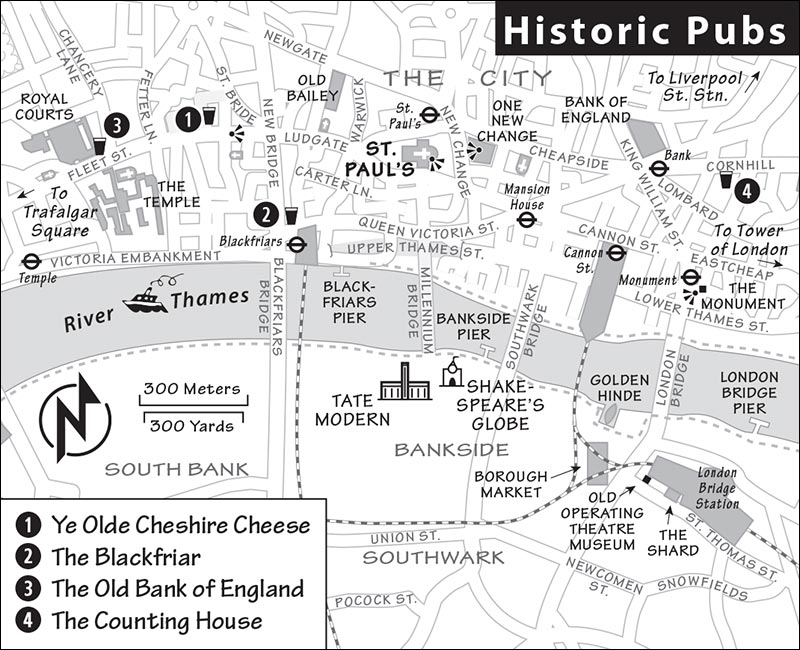
$$$ Kazan offers “Ottoman cuisine”—Turkish-style plates and mezes—in a modern and stylish atmosphere (daily, £19.50 two-course meal before 18:30, 93 Wilton Road, +44 20 7233 7100).
$$ The Jugged Hare, a 10-minute walk from Victoria Station, fills a lavish old bank building, with vaults replaced by kegs of beer and a kitchen. They have a traditional menu and a plush, vivid pub scene good for a meal or just a drink (daily, Sat-Sun until 20:00, 172 Vauxhall Bridge Road, +44 20 7828 1543).
$$ St. George’s Tavern, while part of a chain, is the neighborhood’s most lively pub for an after-work drink or a full meal. They serve dinner from the same menu in three zones: on the sidewalk to catch the sun and enjoy some people-watching (mostly travelers with wheelie bags), in the ground-floor pub, and in a classier downstairs dining room with full table service (daily, corner of Hugh Street and Belgrave Road, +44 20 7630 1116).
$ Tachbrook Market, filling a short traffic-free block near several recommended hotels, is a delightful place to browse a variety of food stalls. Sit on a nearby curb with the locals for a quick lunch. There’s also a row of produce, fish, and meat vendors, making this more local-feeling than most London street markets (Mon-Sat 8:00-18:00, closed Sun, on Tachbrook Street just off Warwick Way).
SOUTH KENSINGTON
These places are close to several recommended hotels and just a couple of blocks from the Victoria and Albert Museum and Natural History Museum (Tube: South Kensington; for locations see the map on here). The Anglesea Arms pub is a bit farther, but well worth the walk.
$$$ Daquise serves elevated Polish cuisine in a sophisticated yet unstuffy atmosphere. With so many chain restaurants around, Daquise is a rare “destination” restaurant (closed Mon, 20 Thurloe Street, +44 20 7589 6117).
Indian: $$ Moti Mahal, with minimalist-yet-upscale ambience and attentive service, serves delicious, mostly Bangladeshi cuisine. Consider chicken jalfrezi if you like spicy, and butter chicken if you don’t (Tue-Fri dinner only, Sat-Sun lunch and dinner, closed Mon, 3 Glendower Place, +44 20 7584 8428).
Old Brompton Road Eateries: This street, just one block from the South Kensington Tube station, is lined with a variety of good eateries open daily. $$$ Go Viet is an elegant yet casual Vietnamese restaurant by chef Jeff Tan. Try the slow-boiled beef bone marrow and chicken pho (at #53, +44 20 7589 6432). $ Bosphorus Kebabs is good for a quick bite of Turkish food (at #59); and $$ Rocca, at #73, is a bright and dressy Italian place with a heated terrace (+44 20 7225 3413).
Bute Street Eateries: Up from Old Brompton Road, this small, inviting side street hosts several popular eateries (reservations smart). $$$ Ceru has a hip vibe and serves Mediterranean food meze-style (at #7, daily, www.cerurestaurants.com). Across the street is the equally good $$$ Eli’s, dishing up a mix of French and North African fusion cuisine (daily, www.elisrestaurant.co.uk). A few steps up the street is $$ Quinta, another fusion place, which has the Guatemalan pupusa, a thick corn tortilla stuffed with a savory filling, as its specialty (closed Mon, https://quintapupusas.com). $$ Mama Pho South is a casual little place with a hardworking staff serving Vietnamese classics to a young crowd (closed Sun, www.cafemamapho.co.uk). To top off your feast, head to $ Oddono’s for big portions of fresh gelato (at #14, daily).
Classic London Pub: $$ The Anglesea Arms, with a great terrace buried in a classy South Kensington residential area, is a destination pub that feels like the classic neighborhood favorite. It’s a thriving and happy place, with a woody ambience. While the food is the main draw, this is also a fine place to just have a beer. Don’t let the crowds here put you off. Behind all the drinkers, in back, is an elegant, mellow step-down dining room a world away from any tourism (meals served daily; heading west from Old Brompton Road, turn left at Onslow Gardens and go down a few blocks to 15 Selwood Terrace; +44 20 7373 7960).
Supermarkets: Tesco Express (50 Old Brompton Road) and Little Waitrose (99 Old Brompton Road) are both open long hours daily.
BAYSWATER, NOTTING HILL, AND NEARBY
These are close to my recommended Bayswater and Notting Hill accommodations (for locations, see the map on here).
Near Bayswater Tube Station
While this neighborhood is a bit humdrum, it has more than its share of great eateries. Several of these might be worth a trip from elsewhere in London, just to dine.
$$ Cocotte is a “healthy rotisserie” restaurant specializing in delectable roast chicken, plus tempting sides and healthy salads (dine in or take away; daily, 95 Westbourne Grove, +44 20 3220 0076).
$$$ Farmacy is focused on organic vegan fare...with a side of pretense. The menu includes earth bowls, meatless burgers and tacos, and superfood smoothies. With an all-natural, woodgrain vibe, it feels like a top-end health food store (daily, 74 Westbourne Grove, +44 20 7221 0705).
$$$ Hereford Road is a cozy, mod eatery tucked away on Leinster Square, serving heavy, meaty English cuisine made with modern panache. Cozy two-person booths face the open kitchen up top; the main dining room is down below under skylights. There are also a few sidewalk tables (Tue-Thu dinner only, Fri-Sun lunch and dinner, closed Mon, reservations smart, 3 Hereford Road, +44 20 7727 1144, www.herefordroad.org).
$$ Taqueria turns out delicious tacos, quesadillas, and other Mexican fare with big, bright, authentic flavors a short walk from my recommended Bayswater accommodations (daily, 141 Westbourne Grove, +44 20 7229 4734). Other tempting places line up along the same block.
$$ The Prince Edward serves good grub in a comfy, family-friendly, upscale-pub setting and at its sidewalk tables (daily, 2 blocks north of Bayswater Road at the corner of Dawson Place and Hereford Road, 73 Prince’s Square, +44 20 7727 2221).
Supermarkets: Queensway is home to several supermarkets, including Sainsbury’s Local and Tesco Express (both next to Bayswater Tube stop; a larger Tesco is near the post office farther along Queensway), and Marks & Spencer (inside Whiteleys Shopping Centre). All open early and close late (except on Sun).
Notting Hill Gate
These are close to the Notting Hill Gate Tube stop.
$$$$ Mazi is a highly regarded Greek restaurant serving refined renditions of classic dishes, including Greek salad, grilled octopus, and loukoumades (doughnuts) in a contemporary, sophisticated setting. Since ordering several small plates can add up, the £24.95 two-course lunch is a fairly good deal (daily, 12 Hillgate Street, +44 20 7229 3794, www.mazi.co.uk).
$ The Fish House of Notting Hill is an old-fashioned and well-loved chippy, with takeaway on the ground floor and a more expensive $$ table service section upstairs (daily 12:00-21:00, 29 Pembridge Road, +44 20 7229 2626).
Supermarkets: Tesco Metro is a half-block from the Notting Hill Gate Tube stop (near intersection with Pembridge Road at 114 Notting Hill Gate).
Near Kensington Gardens
$$$$ Maggie Jones’s has been feeding locals solid English cuisine for more than 50 years. Its countryside antique decor and candlelight make a visit a step back in time. The portions are huge (especially the meat-and-fish pies, their specialty), and prices are a bargain at lunch. You’re welcome to split your main course. The candlelit upstairs is the most romantic, while the basement is lively (daily, reservations recommended, 6 Old Court Place, east of Kensington Church Street, near High Street Kensington Tube stop, +44 20 7937 6462, www.maggie-jones.co.uk).
$$$$ The Shed offers farm-to-table dishes in a rustic-chic setting. Owned by three brothers—a farmer, a chef, and a restaurateur—The Shed serves locally sourced modern English dishes. The portions are hearty, with big, meaty flavors—a change of pace from London’s delicate high-end dining scene. It’s tucked a block off busy Notting Hill Gate (Mon dinner only, Tue-Sat lunch and dinner, closed Sun, reservations smart, 122 Palace Gardens Terrace, +44 20 7229 4024, www.theshed-restaurant.com).
$$ The Churchill Arms Pub and Thai Kitchen is a combo establishment that’s a hit in the neighborhood. It offers good beer and a thriving old-English ambience in front and hearty Thai dishes in an enclosed patio in the back. You can eat the Thai food in the tropical hideaway (table service) or in the atmospheric pub section (order at the counter). Bedecked with flowers on the exterior, it’s festooned with Churchill memorabilia and chamber pots on the inside (including one with Hitler’s mug on it—hanging from the ceiling farthest from Thai Kitchen—sure to cure the constipation of any Brit during World War II). Arrive by 18:00 or after 21:00 to avoid a line (food served daily, 119 Kensington Church Street, +44 20 7727 4242 for pub or +44 20 7792 1246 for restaurant).
$ Café Diana is a healthy little eatery and shisha (hookah) lounge serving sandwiches, salads, and Middle Eastern food. It’s decorated—almost shrine-like—with photos of Princess Diana, who used to drop by for pita sandwiches (long hours daily, cash only, 5 Wellington Terrace, on Bayswater Road, opposite Kensington Palace Garden gates, where Di once lived, +44 20 7792 9606, Abdul).
NORTH LONDON
To avoid the touristy crush right around the British Museum, head a few blocks west to the Fitzrovia area. Here, tiny Charlotte Place is lined with small eateries (including my first two listings); nearby, the much bigger Charlotte Street has several more good options (Tube: Goodge Street). See the map on here for locations.
$ Salumeria Dino serves up hearty £7 sandwiches, pasta, and Italian coffee. Dino, a native of Naples, has run his little shop for more than 30 years and has managed to create a classic-feeling Italian deli (also takeaway cappuccinos, Mon-Sat 8:00-17:00, closed Sun, 15 Charlotte Place, +44 20 7580 3938).
$$ Lantana, next door to Salumeria Dino, is an Australian coffee shop that sells modern soups, sandwiches, and salads in a sleek contemporary setting (Mon-Fri 8:00-18:00, Sat-Sun 9:00-16:00, 13 Charlotte Place, +44 20 7637 3347).
Coal Drops Yard Eateries: Farther north, in the Coal Drops Yard development just behind King’s Cross Station (near the British Library), are branches of the renowned Indian restaurant $$$ Dishoom; the Chinese steamed-bun-filled-roll shop $$$ Bao; and the Sri Lankan place $$ Hoppers (see descriptions under “Central London,” earlier). In each case, the original sprouted in funky digs in Soho and is now expanding into glitzier, more spacious settings around the city—a common life cycle for trendy London restaurants. Coal Drops Yard—a repurposed industrial site on Regent’s Canal—is also simply a fun area to explore.
EAST LONDON
Once known as the place to get authentic Indian and Bangladeshi food, the East End is now where lively restaurants, food trucks, and pop-ups come to get a toehold in an ever-evolving culinary scene.
Spitalfields Market Eateries
A few blocks east of Liverpool Street Station, this cavernous hall is filled with a festival of eateries. The modern part of the market—to the west, closer to the train station—has big, brassy outposts of predictable London chains. It’s much better to focus on the historic, Victorian-age Old Spitalfields Market section, where you’ll find a more interesting array of small, one-off $-$$ eateries and pop-ups that are great for lunch or a snack.
Hours vary, but most places open around 10:00 (11:00 on Sat) and start closing down around 17:00; after 18:00, it’s mostly dead, so don’t wait too late (www.oldspitalfieldsmarket.com [URL inactive]).
Near Spitalfields Market
These places are burrowed in the tight streets near Spitalfields, a couple of blocks east of Liverpool Street Station.
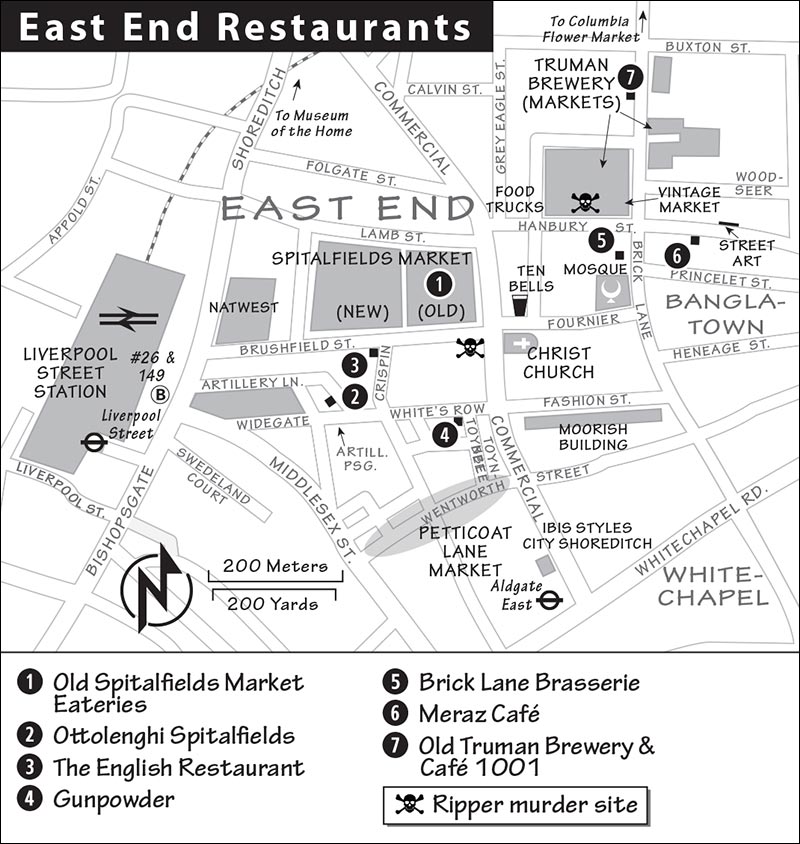
$$$$ Ottolenghi Spitalfields showcases the big flavors of celebrity chef Yotam Ottolenghi’s modern Israeli/Eastern Mediterranean dishes. It’s squeezed along tiny Artillery Lane, one of the East End’s narrowest and most atmospheric streets. Its little shop in front displays its mouthwatering appetizers and desserts, and sells a few Ottolenghi products, such as preserves and cookbooks (breakfast and lunch daily, dinner Mon-Sat, reservations recommended, 50 Artillery Lane, +44 20 7247 1999, www.ottolenghi.co.uk).
$$$$ The English Restaurant, a.k.a. the Market Coffee House and Bar, started out as a Jewish bakery in the 17th century. Located across from Spitalfields Market, it feels traditional for this trendy district, and is perhaps the best place to capture the ambience of the old East End. They serve up traditional British breakfast, lunch, and dinner with a Belgian flair—like updated bread-and-butter pudding—in a snug dining room or a bistro-style bar area (long hours daily, Sun until 17:00, 52 Brushfield Street, +44 20 7247 4110, https://marketcoffeehouseandbar.co.uk).
$$$ Gunpowder—a modern alternative to the traditional curry houses on nearby Brick Lane—offers a short and carefully crafted menu of updated Indian fare in a tight, noisy, cozy brick space (closed Sun, 11 White’s Row).
On and near Brick Lane
Once synonymous with curry houses, historic Brick Lane now has many more options (though curry is still what many come here for).
$$ Brick Lane’s Famous Curry Houses: This “Curry Row” comes with its own subculture—it’s one of the only places in London where curbside hawkers pitch each eatery’s “award-winning” pedigree and are eager to offer a discount. Ultimately, little distinguishes the options along here. Compare menus and deals, and take your pick. For something a notch above, try Brick Lane Brasserie, a white-tablecloth restaurant with Indian and Bangladeshi fare. Enjoy their outdoor seating in the summer (daily, 67 Brick Lane, +44 20 7377 8072). Or head a half-block off Brick Lane to Meraz Café, offering a small, simple menu of Indian, Pakistani, and Bangladeshi dishes and homemade chutney (daily, 56 Hanbury Street, +44 20 7247 6999).
Other Brick Lane Delights: The Old Truman Brewery hosts a fun courtyard of $ food trucks surrounded by prominent street art. Inside the brewery, Café 1001 is a good place for coffee and cheap cafeteria fare.
FOOD MARKETS
In this expensive city, one of the most cost-effective ways to sample local dishes is to graze through a food market. You’ll find English classics (meat pies, bangers and mash, grilled English cheddar cheese sandwiches) and cuisine from every corner of the globe. Most vendors accept credit cards. Keep track of which day of the week the various markets thrive, coordinate your sightseeing accordingly, and suddenly you’re a temporary Londoner. Some of the best food markets in London are south of the Thames.
Borough Market: London’s oldest fruit-and-vegetable market has been serving the Southwark community for more than 800 years. Today, it’s the granddaddy of all London food halls. Whether you’re browsing for a gourmet picnic, a memorable meal, or just a quick between-sights bite—you’ll find it here (Mon-Fri until 17:00, Sat from 8:00; Sun until 15:00 and generally quieter; south of London Bridge, where Southwark Street meets Borough High Street; Tube: London Bridge, +44 20 7407 1002, www.boroughmarket.org.uk).
The main part of the market is a fantastic maze of fruit vendors, cheesemongers, butchers, fishmongers, and prepared food stalls featuring cuisines from virtually everywhere on earth. To get your bearings, wander through until you pop out along Stoney Street, at the far (western) boundary of the market. Leading west from Stoney Street is Park Street, whose 19th-century ambience makes it a popular filming location. At this intersection, notice the colorful pub. Historically, the first trading started at 2:00 in the morning. Workers could knock off by sunrise for a pint here at the specially licensed Market Porter tavern.
Also at this intersection is the fragrant cheese shop at Neal’s Yard Dairy. Across from Park Street, the Ginger Pig is the place for serious English sausage and bacon. Deeper in the heart of the market, look for the red stall of Maria’s Market Café, a colorful eatery popular with market workers.
Southbank Centre Food Market: You’ll find some of the city’s most popular vendors in this weekends-only paradise of street food near the London Eye. Food vendors are wedged between ugly concrete buildings and elevated train tracks, but the selection is enticing and the location is handy (Fri-Sat until 20:00, Sun until 18:00, closed Mon-Thu; immediately behind the Royal Festival Hall at Hayward Gallery—from the river, go around behind the buildings to find it; Tube: Waterloo, or Embankment and cross the Jubilee Bridge; +44 20 3879 9555, www.southbankcentre.co.uk). The market also hosts various festivals throughout the year (German Christmas, coffee, and chocolate are among the favorites).
Ropewalk (Maltby Street Market): This short-but-sweet, completely untouristy food bazaar bustles on weekends under a nondescript rail bridge in the shadow of The Shard. Two dozen vendors fill the narrow passage—about as long as a football field—with a festival of hipster/artisan carts selling a fun array of foods (Sat until 17:00, Sun until 16:00, www.maltby.st). Tucked among the carts are some good sit-down eateries, including Poulet for roast chicken with French flair and Spanish tapas bar Tozino. This area of South London—called Bermondsey—is a lowbrow but emerging neighborhood that’s fun to explore for a slice of youthful, untrampled city. A short walk southeast of Tower Bridge, it has several rustic microbreweries tucked between auto-repair garages.
TAKING TEA IN LONDON
While visiting London, consider partaking in this most British of traditions. While some tearooms—such as the wallet-draining tea service at Claridges and the finicky Fortnum & Mason—require a jacket and tie, most happily welcome tourists in jeans and sneakers (and cost, on average, £37-50). Most tearooms are usually open for lunch and close about 17:00. At all the places listed next, it’s perfectly acceptable for two people to order one afternoon tea and one cream tea and share the afternoon tea’s goodies. At many places, you can spring an extra £10 or so to upgrade to a boozy “champagne tea.” For details on afternoon tea, see here.
Traditional Tea Experiences
$$$ The Wolseley serves a good afternoon tea between their meal service. Split one with your companion and enjoy two light meals at a great price in classic elegance (daily until 18:30, see restaurant listing on here).
$$$$ The Capital Hotel, a luxury hotel a half-block from Harrods, caters to weary shoppers with its intimate five-table, linen-tablecloth tearoom. It’s where the ladies-who-lunch meet to decide whether to buy that Versace gown they’ve had their eye on. Even so, casual clothes, kids, and sharing plates are all OK (daily until 17:30, book ahead—especially on weekends, 22 Basil Street—see the “West London” color map at the back of this book, Tube: Knightsbridge, +44 20 7591 1202, www.capitalhotel.co.uk).
$$$$ Fortnum & Mason department store offers tea at several restaurants within its walls. You can “Take Tea in the Parlour” for a reasonably priced experience (including ice cream and scones; Mon-Sat until 20:00, Sun until 18:00). The pièce de resistance is their Diamond Jubilee Tea Salon, named in honor of Queen Elizabeth II’s 60th year on the throne. At royal prices, consider it dinner (dress up a bit—no shorts, “children must be behaved,” 181 Piccadilly—see the “Central London Restaurants” map, smart to reserve at least a week in advance, +44 20 7734 8040, www.fortnumandmason.com).
$$$$ Brown’s Hotel in Mayfair serves a fancy afternoon tea in its English drawing room (you’re welcome to ask for second helpings of your favorite scones and sandwiches). Said to be the inspiration for Agatha Christie’s At Bertram’s Hotel, the wood-paneled walls and inviting fire set a scene that’s more contemporary-cozy than pinkie-raising classy (daily until 16:30, reservations smart, no casual clothing, 33 Albemarle Street—see the “Central London Restaurants” map, Tube: Green Park, +44 20 7518 4006, www.roccofortehotels.com).
$$$$ The Orangery at Kensington Palace offers an elegant (and expensive) afternoon tea in its bright white hall near William and Kate’s former residence. Check online to see if it’s open after its lengthy renovation, and to find the latest cost and hours (a 10-minute walk through Kensington Gardens from either Queensway or High Street Kensington Tube stations to the orange brick building, about 100 yards from Kensington Palace—see map on here; +44 20 3166 6113, www.hrp.org.uk).
Other Places to Sip Tea
Taking tea is not just for tourists and the wealthy—it’s a true English tradition. If you want the teatime experience but are put off by the price, consider these options, more in the £15-30 range.
$$$ Browns Restaurant at Butler’s Wharf serves an affordable afternoon tea with brioche sandwiches, traditional scones, and sophisticated desserts (daily 15:00-17:00, 26 Shad Thames facing Tower Bridge—see the map on here, +44 20 7378 1700, www.browns-restaurants.co.uk).
At $ Waterstones bookstore you can put together a spread for around £10 in their fifth-floor view café (203 Piccadilly).
Museum Cafés: Many museum restaurants offer a fine inexpensive tea service. For example, the $$$ Wallace Collection serves reasonably priced afternoon tea and cream tea in its atrium (see here). Other museum cafés—including the one at the $$ Victoria and Albert Museum—may not offer a formal “afternoon tea,” but you can assemble your own, à la carte tea and treats in elegant surroundings.
Shop Cafés: You’ll find good-value teas at various cafés in shops and bookstores across London. Most department stores on Oxford Street (including those between Oxford Circus and Bond Street Tube stations) offer an afternoon tea.
London Connections
BY PLANE
London has six airports; I’ve focused my coverage on the two most widely used—Heathrow and Gatwick—with a few tips for using the others (Stansted, Luton, London City, and Southend). For more on flights within Europe, see the “Transportation” section of the Practicalities chapter.
Heathrow Airport
Heathrow Airport is one of the world’s busiest airports. Consider this: 75 million passengers a year on 500,000 flights from 200 destinations traveling on 80 airlines, like some kind of global maypole dance. For Heathrow’s airport, flight, and transfer information, visit the helpful website Heathrow.com (code: LHR).
Heathrow’s terminals are numbered T-2 through T-5. Each terminal is served by different airlines and alliances; for example, T-5 is exclusively for British Air, while T-2 serves mostly Star Alliance flights, such as United and Lufthansa.
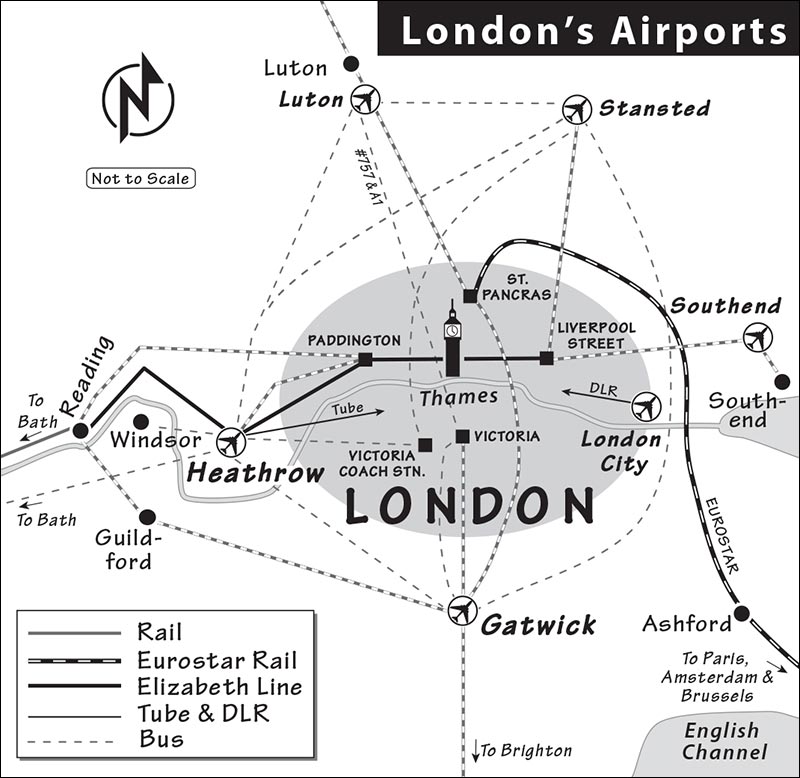
You can walk between T-2 and T-3. From this central hub (called “Heathrow Central”), T-4 and T-5 split off in opposite directions (and are not walkable). The easiest way to travel between the T-2/T-3 cluster and either T-4 or T-5 is by train: either the Elizabeth line or the Heathrow Express (train departs every 15-20 minutes). While the connecting train ride is free, to get through the entry gates you’ll need a ticket from one of the ubiquitous machines (or tap your contactless credit card or Oyster card—you won’t be charged in either case). You can also take a shuttle bus (free, serves all terminals), or the Tube (requires a ticket, serves all terminals).
When flying out of Heathrow, it’s critical to confirm which terminal your flight will use (look at your ticket/boarding pass or check online)—if it’s T-4 or T-5, allow extra time. Taxi drivers generally know which terminal you’ll need based on the airline, but bus drivers may not.
Services: Each terminal has an airport information desk (open long hours daily), car-rental agencies, exchange bureaus, ATMs, a pharmacy, a variety of eateries, and pay baggage storage (long hours daily, www.left-baggage.co.uk). Heathrow offers both free Wi-Fi and pay internet access points.
Getting Between Heathrow and Downtown London
You have several options for traveling the 14 miles between Heathrow Airport and downtown London: Tube (subway, slow and cheap), bus (even slower and almost as cheap, and handy for Victoria Station area), two separate express trains with connecting Tube or taxi (more expensive but efficient), or taxi or car service (most expensive and likely to get stuck in traffic). The one that works best for you will depend on your arrival terminal, your destination in central London, and your budget.
By Tube: The Tube takes you from any Heathrow terminal to downtown London in 50-60 minutes on the Piccadilly Line (6/hour, use contactless credit card or buy ticket, Oyster card, or pass at Tube station machine—see here). Depending on your destination in London, you may need to transfer (for example, if headed to the Victoria Station neighborhood, transfer at Hammersmith to the District line and ride six more stops).
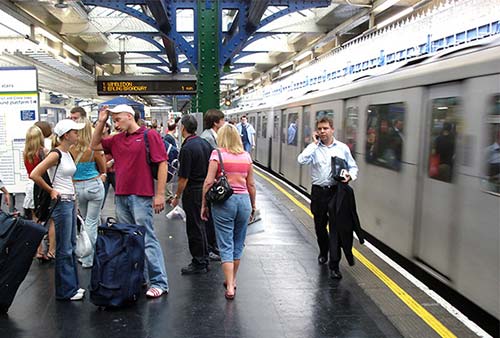
If you’re taking the Tube from downtown London to the airport, note that Piccadilly Line trains don’t stop at every terminal. Trains either stop at T-4, then T-2/T-3 (also called Heathrow Central), in that order; or T-2/T-3, then T-5. When leaving central London on the Tube, allow extra time if going to T-4 or T-5, and check the reader board in the station to make sure that the train goes to the right terminal before you board.
By Bus: Most buses depart from the outdoor common area called the Central Bus Station, a five-minute walk from the T-2/T-3 complex. To connect between T-4 or T-5 and the Central Bus Station, ride the free Elizabeth line or Heathrow Express train or take a shuttle bus.
National Express has regular service from Heathrow’s Central Bus Station to Victoria Coach Station in downtown London, near several of my recommended hotels. While slow, the bus is affordable and convenient for those staying near Victoria Station (£6-9, 3-4/hour, less frequent from Victoria Station to Heathrow, 45-75 minutes depending on time of day, +44 871 781 8181, www.nationalexpress.com). A less frequent National Express bus goes from T-5 directly to Victoria Coach Station.
By Train: The new Elizabeth line runs from Heathrow to central London in 30-40 minutes depending on your terminal and destination. Key stops downtown include Paddington, Bond Street, Tottenham Court Road, Liverpool Street, and Canary Wharf—all of which offer interchanges to major Tube lines (for example, from Paddington, the Circle and District lines connect to Bayswater, South Kensington, and Victoria Station; the District line also reaches Earl’s Court).
The Elizabeth line is faster (but more expensive) than the Tube (£12.80-14.30 one-way, cost varies with payment method and destination; contactless credit card or Oyster card accepted, or buy single fare from ticket machine before leaving terminal; 4/hour from Heathrow Central Station serving T-2/T-3, daily 5:22-24:13; 2/hour from T-4, daily 5:15-23:45; 2/hour from T-5, daily 5:34-24:07; +44 343 22 1234, for more information search “Elizabeth” at www.heathrow.com).
The Heathrow Express train is the quickest option, zipping between Heathrow and London’s Paddington Station in 15-20 minutes. One-way fares are pricey; save by buying ahead (£25 one-way, £37 round-trip, don’t pay more for pointless “business” class, as cheap as £5.50 nonrefundable if purchased online in advance, covered by BritRail pass; 4/hour, daily 5:15-24:00; 15 minutes to Paddington from T-2/T-3, 20 minutes from T-5, for T-4 take free transfer to Heathrow Central; +44 345 600 1515, www.heathrowexpress.com).
All Elizabeth Line and Heathrow Express stations have ticket barriers, which you can enter only with a ticket or with a contactless pay option (required even for free transfers between terminals).
By Car Service: Just Airports offers a private car service between five London airports and the city center (see website for price quote, +44 20 8900 1666, www.justairports.com).
By Taxi or Uber: Taxis from the airport cost £50-100 to west and central London (one hour). For four people traveling together, this can be a reasonable option. Hotels can often line up a cab back to the airport. Uber also offers London airport pickup and drop-off.
Gatwick Airport
Gatwick Airport is halfway between London and the south coast (code: LGW, www.gatwickairport.com). Gatwick has two terminals, North and South, which are easily connected by a free monorail (two-minute trip, runs 24 hours). Note that boarding passes say “Gatwick N” or “Gatwick S” to indicate your terminal. Gatwick Express trains (described next) stop only at Gatwick South. Schedules in each terminal show only arrivals and departures from that terminal.
Getting Between Gatwick and Downtown London: Gatwick Express trains are the best way into London from this airport. Trains shuttle conveniently between Gatwick South and London’s Victoria Station in about 30 minutes. Confirm the latest schedule and price details online in advance (generally £20 one-way, £37 round-trip, at least 10 percent cheaper if purchased online, Oyster cards accepted but no discount offered, 2/hour, daily 5:00-24:00 daily, a few trains as early as 3:30, +44 845 850 1530, www.gatwickexpress.com). If you buy your tickets at the station before boarding, ask about possible group deals. (If you see others in the ticket line, you could suggest buying your tickets together.) When going to the airport, at Victoria Station note that Gatwick Express has its own ticket windows right by the platform (tracks 13 and 14). You’ll also find easy-to-use ticket machines nearby.
A train also runs between Gatwick South and St. Pancras International Station (£12.90, 3-5/hour, 45-60 minutes, www.nationalrail.co.uk—useful for travelers taking the Eurostar train (to Paris, Amsterdam, or Brussels) or staying in the St. Pancras/King’s Cross neighborhood.
While even slower, the bus is a cheap and handy option to the Victoria Station neighborhood. National Express runs a bus from Gatwick directly to Victoria Station (£13, at least hourly, 2.5 hours, www.nationalexpress.com).
London’s Other Airports
Stansted Airport: From Stansted (code: STN, www.stanstedairport.com), you have several options for getting into or out of London. A National Express bus connects the airport and London’s Victoria Station neighborhood (£15-16, typically every 20-30 minutes, 2 hours, runs 24 hours a day, picks up and stops throughout London, ends at Victoria Coach Station or Liverpool Street Station, www.nationalexpress.com). Or you can take the faster, pricier Stansted Express train (£20, as cheap as £10 if booked online, connects to London’s Tube system at Tottenham Hale or Liverpool Street, 2-3/hour, 45 minutes, 5:30-late, www.stanstedexpress.com). Stansted is expensive by cab; figure £100-120 one-way from central London.
Luton Airport: For Luton (code: LTN, www.london-luton.co.uk), the fastest way to get into London is by train to St. Pancras International Station (£19.10 one-way, 1-6/hour, 45-60 minutes—check schedule to avoid slower trains, +44 345 712 5678, www.lutonairportexpress.co.uk [URL inactive] or www.thameslinkrailway.com); from outside the terminal it’s a three-minute ride on Luton DART light rail (£4.90, every 4-7 minutes) to the Luton Airport Parkway Station. DART tickets can be purchased online at LutonDart.com, or if you buy a ticket into the city through a train operator (Thameslink or Luton Airport Express) you can use your printed ticket at the DART ticket barriers (select “Luton Airport” when purchasing your ticket).
National Express bus A1 runs from Luton to Victoria Coach Station (£5-12 one-way, 2-3/hour, 1.5-2 hours, runs 24 hours, www.nationalexpress.com). Green Line express bus #757 runs to Buckingham Palace Road, just south of Victoria Station, and stops en route near the Baker Street Tube station—best if you’re staying near Paddington Station or in North London (£11.50 one-way, 1-2/hour, 1-1.5 hours, runs 24 hours, +44 344 800 4411, www.arrivabus.co.uk/greenline).
London City and Southend Airports: To get into the city center from London City Airport (code: LCY, www.londoncityairport.com [URL inactive]), take the Docklands Light Railway (DLR) to the Bank Tube station, which is one stop east of St. Paul’s on the Central Line (about £7 one-way, covered by Travelcard, a bit cheaper with an Oyster card or contactless pay, 20 minutes, www.tfl.gov.uk/dlr). Some EasyJet flights land farther out, at Southend Airport (code: SEN, https://southendairport.com). Trains connect this airport to London’s Liverpool Street Station (£19 one-way, 3-5/hour, 55 minutes, www.greateranglia.co.uk).
Connecting London’s Airports by Bus
A handy National Express bus runs between Heathrow, Gatwick, Stansted, and Luton airports—easier than cutting through the center of London—although heavy traffic can affect travel times (www.nationalexpress.com).
From Heathrow Airport to: Gatwick Airport (£20, 1-4/hour, about 1.25 hours—but allow at least three hours between flights), Stansted Airport (£17-25, 1-2/hour direct, 1-1.5 hours), Luton Airport (£15-20, roughly hourly, 1 hour).
BY TRAIN
London has a different train station for each region of Britain. There are nine main stations (see the map):
Euston: Serves northwest England, North Wales, and Scotland.
St. Pancras International: Serves north and south England, plus the Eurostar to Paris, Amsterdam, or Brussels (see “Crossing the Channel by Eurostar Train,” later).
King’s Cross: Serves northeast England and Scotland, including York and Edinburgh.
Liverpool Street: Serves east England, including Essex and Harwich.
London Bridge: Serves south England, including Brighton.
Waterloo: Serves south England, including Salisbury and Southampton.
Victoria: Serves Gatwick Airport, Canterbury, Dover, and Brighton.
Paddington: Serves south and southwest England, including Heathrow Airport, Windsor, Bath, Oxford, South Wales, and the Cotswolds.
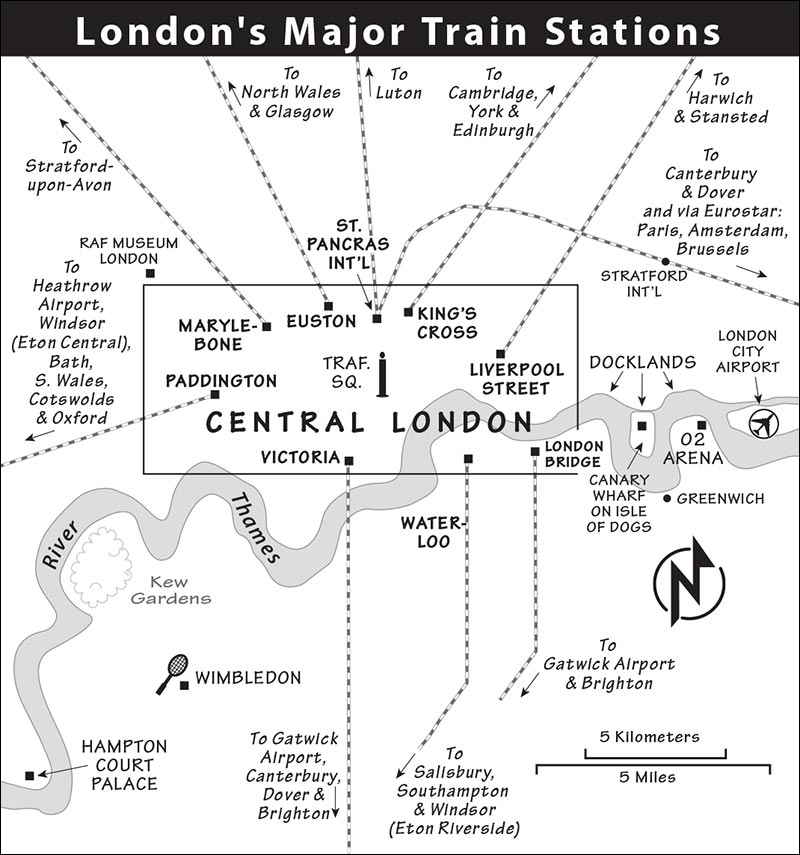
Marylebone: Serves southwest and central England, including Stratford-upon-Avon.
In addition, London has several smaller train stations that you’re less likely to use, such as Charing Cross (serves southeast England, including Dover) and Blackfriars (serves Brighton).
All train stations have schedule information, can make reservations, and can sell tickets for any destination. Most stations offer a baggage-storage service (£15/bag for 24 hours, look for left luggage signs); because of long security lines, it can take a while to check or pick up your bag (www.left-baggage.co.uk). For more details on the services available at each station, see NationalRail.co.uk/stations. UK train and bus info is available at Traveline.info. Remember: To access the platforms—both coming and going—you’ll need to either insert a paper ticket in the turnstile or scan an electronic ticket. For information on tickets and rail passes, see the Practicalities chapter.
London’s convenient public transit can easily whisk you to a wealth of day-trip destinations—often in little more than an hour. Consider a day out to Bath (Roman ruins and Georgian townhouses), Cambridge (venerable university town), Stonehenge via Salisbury (world’s most famous rock group), Canterbury (cathedral), Dover (castle-crowned chalk cliffs), Portsmouth (treasure trove of maritime history), Stratford-upon-Avon (all things Shakespeare), Warwick (medieval castle), Oxford (another classic university town), or Brighton (beach and pier). For details, see the respective chapters in this book.
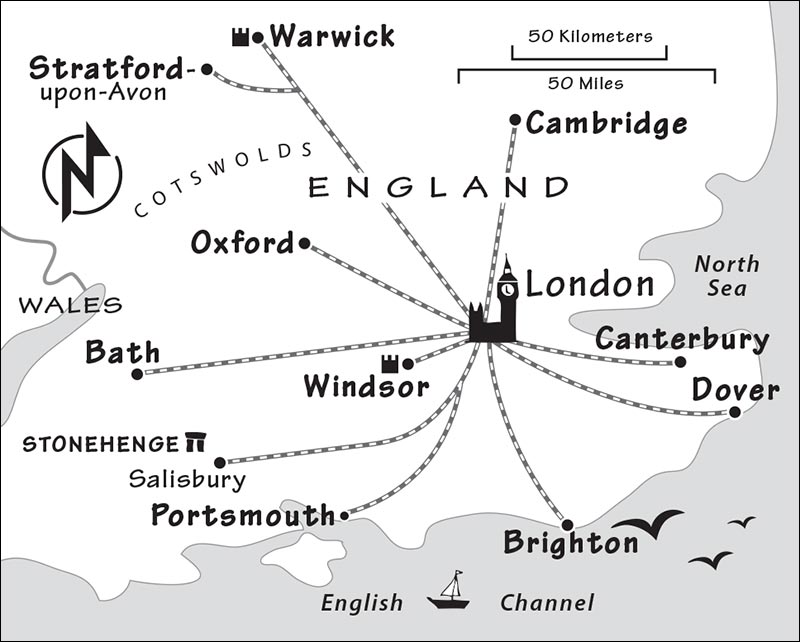
Train Connections from London
To Points West
From Paddington Station to: Windsor (Windsor & Eton Central Station, 2/hour, 35 minutes, easy change at Slough), Bath (2/hour, 1.5 hours), Oxford (3/hour direct, 1 hour, more with transfer), Moreton-in-Marsh (hourly, 1.5 hours), Penzance (hourly, 6 hours, change in Plymouth), Cardiff (2/hour, 2 hours).
To Points North
From King’s Cross Station: York (3/hour, 2 hours), Durham (hourly, 3 hours), Edinburgh (2/hour, 4.5 hours). Trains to Cambridge also leave from here (2/hour, 1 hour).
From Euston Station to: Conwy (2/hour, 3.5 hours, transfer in Chester), Liverpool (2/hour, 2.5 hours, transfer at Liverpool Lime Street Station), Blackpool (hourly, 3 hours, transfer at Preston), Keswick (hourly, 4 hours, transfer to bus at Penrith), Glasgow (1-2/hour, 4.5 hours).
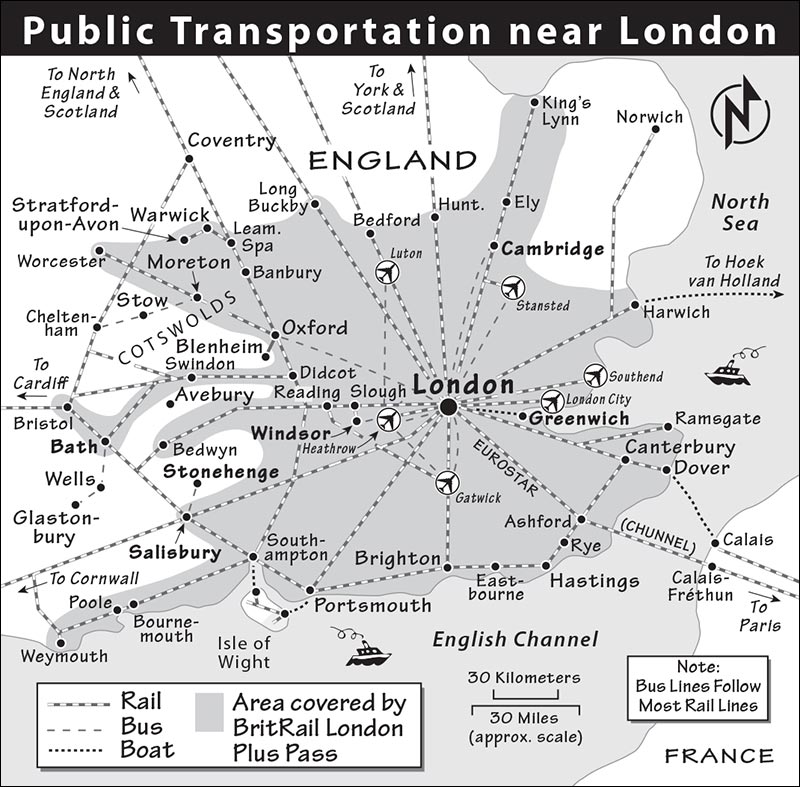
From London’s Other Stations
Trains run between London and Canterbury: St. Pancras International Station to Canterbury West (hourly, 1 hour, more with transfer); Victoria Station to Canterbury East (hourly, 1.5 hours); Charing Cross Station—with stops at Waterloo East and London Bridge—to Canterbury West (hourly, 1.5 hours, more with transfers).
Trains leave for Stratford-upon-Avon from Marylebone Station, located near the southwest corner of Regent’s Park (1-2/hour, 2 hours, transfer in Leamington Spa, Dorridge, or Birmingham Moor).
To Other Destinations: Windsor (to Windsor & Eton Riverside Station, 2/hour, 1 hour, from Waterloo Station), Dover (hourly, 1 hour, direct from St. Pancras International Station; also 1-2/hour, 2 hours, direct from Victoria Station; or hourly, 2 hours, direct from Charing Cross Station), Brighton (3/hour, 1 hour, direct from Victoria Station; 3/hour, 1.5 hours, direct from Blackfriars Station), Portsmouth (3/hour, 2 hours, direct from Waterloo Station, a few with change in Clapham Junction from Victoria Station), Salisbury (2/hour, 1.5 hours, from Waterloo Station).
BY BUS
Buses are slower but considerably cheaper than trains for reaching destinations around Britain and beyond. Most depart from Victoria Coach Station, one long block south of Victoria Station (near many recommended accommodations, Tube: Victoria). Inside the station, you’ll find basic eateries, kiosks, and a helpful information desk stocked with schedules and staff ready to point you to your bus or answer any questions. Watch your bags carefully—thieves thrive at the station.
Ideally you’ll buy your tickets online (for tips on buying tickets and taking buses, see here). But if you must buy one at the station, try to arrive an hour before the bus departs, or drop by the day before. Ticketing machines are scattered around the station (separate machines for National Express/Eurolines and Megabus; you can buy either for today or for tomorrow); there’s also a ticket counter near gate 21. For UK train and bus info, check Traveline.info.
National Express buses go to: Bath (almost hourly, 3 hours), Oxford (2/hour, 2 hours), Cambridge (every 60-90 minutes, 2 hours), Canterbury (almost hourly, 2.5 hours), Dover (5/day, 3 hours), Brighton (hourly, 3 hours), Penzance (5/day, 10 hours, overnight available), Cardiff (hourly, 4 hours), Stratford-upon-Avon (2/day, 3.5 hours), Liverpool (7/day direct, 5.5 hours, overnight available), Blackpool (4/day, 7 hours, overnight available), York (3/day direct, 5.5 hours), Durham (1/day direct, overnight only, 7 hours—train is better), Glasgow (3-4/day direct, 10 hours—train is much better), Edinburgh (2/day direct, 10 hours—go by train instead).
To the Continent: Especially in summer, buses run to destinations all over Europe, including Paris, Amsterdam, Brussels, and Germany (sometimes crossing the Channel by ferry, other times through the Chunnel). For any international connection, you need to check in with your passport one hour before departure. For details, visit NationalExpress.com.
CROSSING THE CHANNEL BY EUROSTAR TRAIN
The Eurostar zips you from downtown London to downtown Paris (about hourly, 2.5 hours), Brussels (6/day, 2 hours), or Amsterdam (4/day, 4 hours; more with transfer in Brussels). The train travels at 190 mph, and the tunnel crossing is a 20-minute, silent, 100 mph nonevent. Your ears won’t even pop.
Eurostar Tickets and Fares: A one-way ticket can vary widely in price. Between London and Paris or Brussels, for instance, you could pay $75-315 (Standard class), $130-375 (Standard Premier), or $430 (Business Premier). For London-Amsterdam on short notice, those rates can go as high as $400-580. Fares depend on how far ahead you reserve and whether you’re eligible for discounts—available for children (under 12), youths (under 26), and adults booking months ahead or purchasing round-trip. You can book tickets up to 4-6 months in advance. Tickets can be exchanged before the scheduled departure ($40-50 change fee applies within 7 days of departure), plus the cost of any price increase, but only Business Premier class allows any refund.
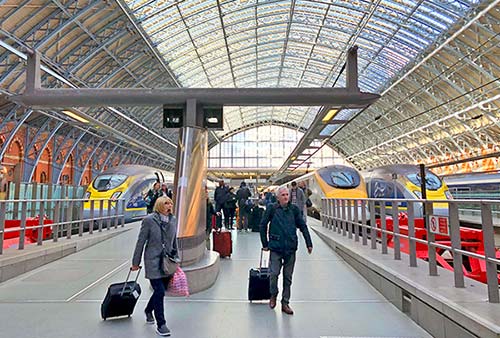
Buy tickets ahead at RickSteves.com/rail or at Eurostar.com (+44 343 218 6186, $10 handling fee to book by phone).
In Britain, tickets are issued only at the Eurostar office in St. Pancras. In continental Europe, you can buy tickets at any major train station in any country or at any travel agency that handles train tickets (expect a booking fee). If you have a Eurail Global Pass, seat reservations are available at Eurostar departure stations, at Eurail.com, or by phone with Eurostar (generally harder to get at other train stations and travel agencies; about $35 in Standard, $40 in Standard Premier, can sell out, no benefit with BritRail or other single-country pass).
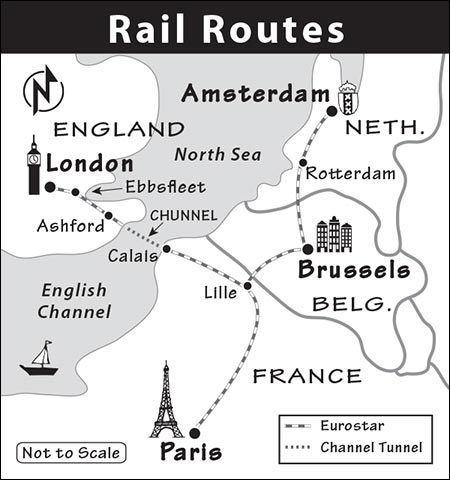
Taking the Eurostar: Trains depart from and arrive at St. Pancras International Station. Gates close 30 minutes before departure: Arrive early to go through security and passport control and locate your gate. Times listed on tickets are local; Britain is one hour earlier than continental Europe. The waiting area has shops, newsstands, horrible snack bars and cafés (get food beforehand), free Wi-Fi, and a currency-exchange booth.
BY CRUISE SHIP
Cruise lines favor two ports: Southampton, 80 miles southwest of London; and Dover, 80 miles southeast of London. Most cruise lines offer transit-only excursion packages into London; below I’ve provided public transport details for do-it-yourselfers.
Southampton Cruise Port: Southampton’s sprawling port has two separate docks for cruise ships, each with two terminals (www.cruisesouthampton.com). To reach London, it’s about a 1.5-hour train ride from Southampton Central Station. First take a taxi or walk 10-15 minutes to the public ferry dock (Town Quay), where you can ride the QuayConnect bus to the train station. From there, trains depart at least every 30 minutes for London’s Waterloo Station.
With time to kill, visit Southampton’s excellent SeaCity Museum, with a beautifully presented exhibit about the Titanic, which set sail from here on April 10, 1912.
Dover Cruise Port: Cruises put in at the Western Docks, with two terminals (www.doverport.co.uk/cruise/tourist-information). It’s a quick taxi ride from either cruise terminal to Dover Priory Station. From there, fast trains link to London’s St. Pancras International Station (hourly, 1 hour). If you have extra time in port, Dover Castle, perched upon chalk cliffs, is well worth a visit for its WWII-era Secret Wartime Tunnels (see the “Dover and Southeast England” chapter).