NORTH YORKSHIRE
Near York • North York Moors • The North Yorkshire Coast
The countryside to the north of York—dubbed “North Yorkshire”—is speckled with pleasant attractions: the house and office of the “real” rural vet James Herriot, the desolately beautiful North York Moors, an eclectic mansion often used in movies, an engaging folk museum, a quirky WWII museum at a former POW camp, a kitschy scenic steam train, and several looming skeletons of destroyed abbeys. On the Yorkshire coast, you’ll find an appealing pair of salty seaside towns. Although none is a top-tier sight in itself, connecting several by car makes for a fine day of sightseeing.
GETTING AROUND NORTH YORKSHIRE
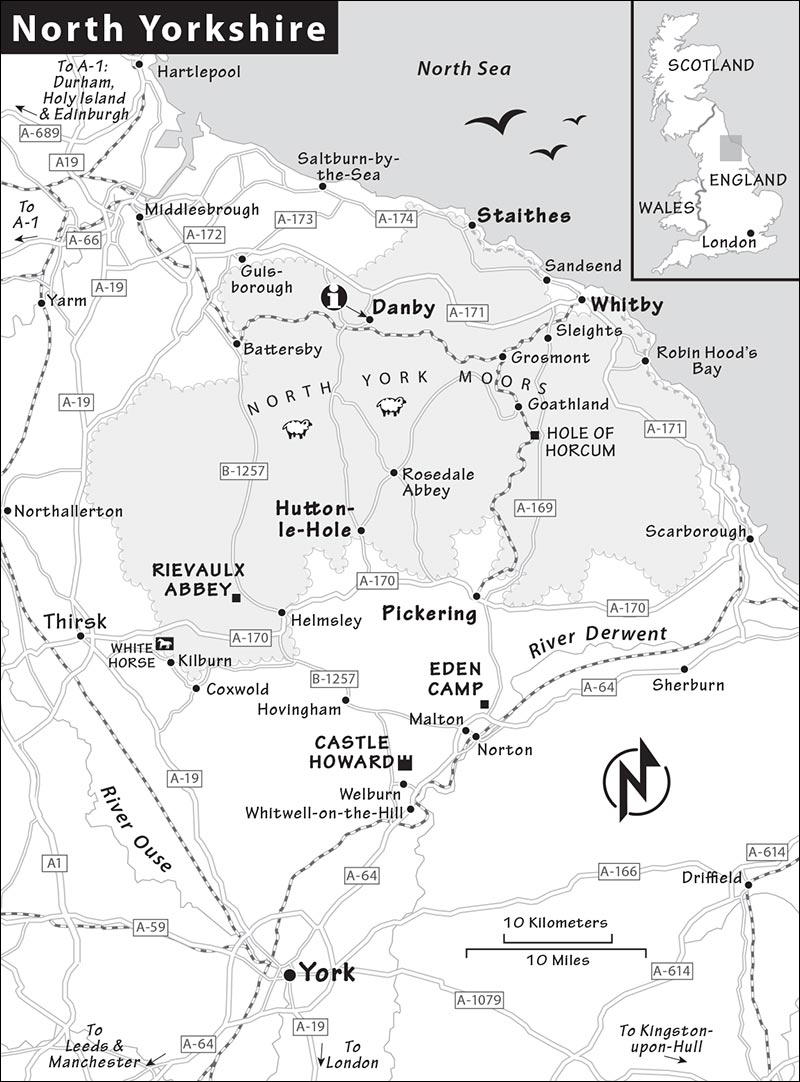
By Car: Driving is the best option—distances are short, the towns are small and easy to navigate, and there are plenty of tempting stopovers along the way. Map out an efficient itinerary before you go.
As you drive, watch out for “wild” pheasants absentmindedly crossing the road. These birds, bred and fed by locals, are left to range freely through the woods...until autumn, when hunting season begins, and the fat, tame, and naive pheasants become easy prey.
By Public Transportation: You can reach most of these destinations by public transportation, but it requires patience (and, in some cases, a long walk from where the bus or train drops you off). York has decent bus connections to Thirsk, Castle Howard, Eden Camp, Pickering, and Whitby. A fun old steam train chugs through the middle of the North York Moors, from Pickering to Grosmont, with some continuing to Whitby.
I’ve listed the major bus and train connections, but as schedules change frequently, always confirm details (the York TI can help). For most connections, you can use the route planners at Transdevbus.co.uk or Traveline.info.
By Tour: Various tour companies offer guided bus excursions from York, focusing on Yorkshire Dales/James Herriot country, the North York Moors, Castle Howard, and more (ask at the York TI).
Near York
The following sights are between York and the North York Moors. With a car, it’s easy to link several of these with a lazy countryside drive. By public transportation, sparse connections limit you to just one or two sights.
▲World of James Herriot
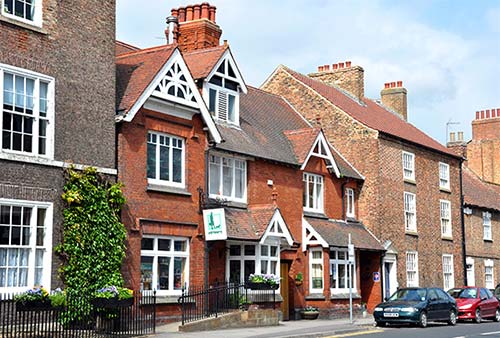
Devotees of the All Creatures Great and Small books, movies, and BBC TV series should visit the folksy veterinarian’s digs in Thirsk, a pleasant market town 23 miles northwest of York. Alfred Wight, once the Thirsk town vet, created the autobiographical character James Herriot. Today, Wight’s home and office have been converted into a museum that painstakingly re-creates the 1940s Skeldale House featured in the novels. The site also explores the development of veterinary science.
Cost and Hours: £8.50, March-Sept 9:30-17:00, Oct-Feb until 16:00, last entry one hour before closing, 23 Kirkgate, just off the main square in Thirsk, +44 1845 524 234, www.worldofjamesherriot.com.
Getting There: Reliance bus #30 or #30X connects York with Thirsk’s main square (nearly hourly Mon-Sat, none on Sun, 1 hour, www.reliancebuses.co.uk). The Thirsk train station is about a mile outside town, making the bus a better option.
Drivers can zip here from York on the A-19 in about 40 minutes and park on the street (first hour free), unless it’s market day. In that case, turn left just before you reach the museum and find the easy pay lot. Approaching Thirsk, keep an eye out on the right side of the road for the White Horse—a gigantic image in the hillside that overlooks the town of Kilburn. The figure was created by a schoolmaster and his students in 1857, who removed the soil to expose the light-colored bedrock.
Visiting the Museum: The museum holds all manner of James Herriot memorabilia, including the original Austin 7 car from the 1980s TV show. Even nonfans will find the slice-of-1940s-life decor fascinating and the trivia intriguing. (For example, Alf Wight named “himself” for his favorite Scottish soccer goalie, James Herriot.) Fans will be tickled by the museum’s reverence for all things Herriot.
In the barn, watch the 15-minute documentary about the original TV series; even the studio sets from the show have been re-created. The interactive children’s section is engaging for adults, too: Try your hand at horse dentistry and find out if you’re strong enough to calve a cow.
Nearby: Die-hard Herriot fans might enjoy exploring the Yorkshire Dales, westward from and much tamer than the North York Moors. Get details about the region—and information about guided tours—at the York TI.
▲Rievaulx Abbey
Rievaulx (ree-VOH) is the sprawling ruins of a 12th-century Cistercian abbey. At its peak in the mid-1100s, as many as 650 monks and lay brothers resided, prayed, and farmed here, tucked away in a gentle, sheep-speckled valley. But by the time Henry VIII suppressed the monasteries in 1536, only 23 monks were left. The place was sold to the earl of Rutland, who dismantled some of the buildings; the rest were left to fall into the graceful ruins you see today. The beautiful and secluded setting protected the abbey’s stones from being completely plundered.
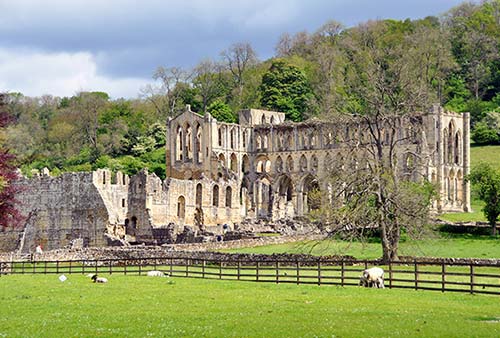
Start with the little museum at the top of the hill, then follow the included audioguide through the ruins. You’ll learn how monastic life changed during the four centuries between the abbey’s founding and its dissolution by Henry VIII.
Cost and Hours: £12.50 weekdays, £14 weekends in summer; cheaper off-season, includes audioguide; generally open mid-Feb-Oct daily 10:00-17:00, off-season Wed-Sun until 16:00; café, picnic tables; pay lot—or park for free against the hedge on the lane out front, +44 1439 798 228, www.english-heritage.org.uk.
Getting There: By car, it’s just a short detour from the A-170. It’s possible, but complicated, to get there by public transportation (bus to Helmsley, then taxi or walk to the abbey)—ask for advice at the York TI.
▲▲Castle Howard
This fine, palatial 300-year-old home (more a manor than a “castle”) is impressive. Taking more than 100 years to complete, it was commissioned in 1699 by Charles Howard, 3rd Earl of Carlisle. Howard chose John Vanbrugh, a playwright with no previous architectural training whatsoever, to design the house. This may explain some of the home’s unique flourishes (like the grand, domed Great Hall—once the main entryway—which might be more at home in a Baroque church). Vanbrugh went on to build the even grander Blenheim Palace near Oxford (which is at least twice as interesting—see here).
After being damaged in a 1940 fire, Castle Howard lay in ruins for years before being refurbished in the 1960s and opened to the public. The Howard family, whose precocious daughters are pictured throughout the place, still lives in one wing—and in winter, when the place is closed to the public, they have the run of the place. Fancy houses run in the family: Another branch of Howards currently resides at Arundel Castle, near England’s south coast (see here).
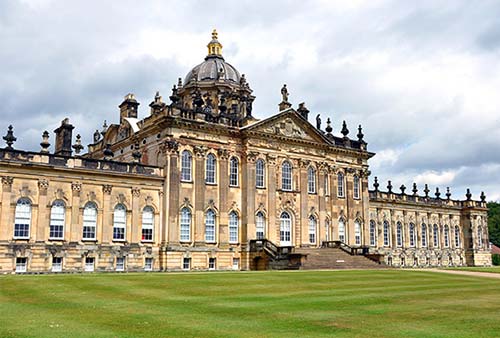
Besides the house and gardens, visitors can enjoy Skelf Island, Castle Howard’s adventure playground for families, with rope bridges, slides, and zip lines, on an island in the castle lake. The grounds also include several other pools, lakes, and fountains, a rose garden, and a quiet wood.
Cost and Hours: £19-27 for manor and grounds, £9-17 for grounds only (includes Skelf Island, prices vary based on day and time, advance booking recommended); grounds open daily 10:00-17:30, until 16:00 in winter, last entry one hour before closing; manor open daily April-Oct 10:30-15:30, closed Nov-March except late Nov-late Dec when it’s decorated for Christmas; cafés and fresh produce store, +44 1653 648 621, www.castlehoward.co.uk.
Getting There: It’s in the countryside, 15 miles northeast of York, near Malton, off the A-64. It’s ideal by car. You can also get here from York via the CastleLine bus (£11 round-trip, Mon-Sat 4/day, none Sun except July-Aug 3/day; 50-75 minutes, leaves from Station Avenue in York; get a voucher on the bus for discounted admission at Castle Howard, www.transdevbus.co.uk).
Visiting the Manor: A little train chugs between the ticket office and the manor, or you can make the long walk, either via the more direct path on the left, or one on the right that has opportunities to pop in and out of a walled garden as you go.
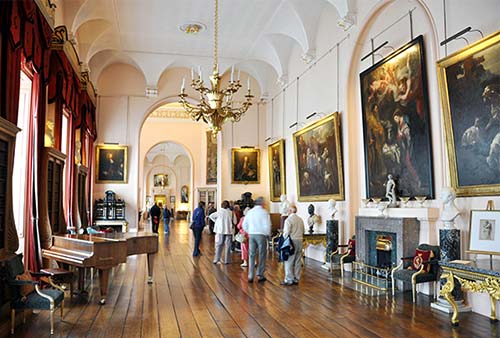
Enter the house through the West Wing to follow the one-way tour route. Chatty docents posted in key rooms explain what you’re seeing. Many of the decorations are “souvenirs” from the Howards’ travels—such as replicas of Roman busts and Greek statues, or paintings that attempt to jam several of a Grand Tour city’s landmarks onto a single canvas, much like a collage postcard.
After climbing the Grand Staircase, you may be able to veer into a series of bedrooms built in the mid-1700s in the Palladian style (constructed later than the other wings, and staider and more subdued than the flashy Baroque you’ll see later). Starting in the 1830s, these bedrooms became the private apartments of George Howard and Lady Georgiana, whose marriage marked the union of two powerful families—the Howards and the Chatsworths. These days, the bedrooms are still used by guests when the house is closed to visitors. From here stretches the Antique Passage, lined with busts, sculptures, tables, and other items collected from Italy during the 4th Earl’s visit there in the 1730s.
The passage leads from the West Wing into the Great Hall, the centerpiece of the house. The gigantic columns and tall arches draw your eye straight up to the highlight of the hall: the 70-foot-tall dome adorned with the work of the Venetian artist Pellegrini. Above the columns are paintings of the four elements (Earth, Fire, Air, and Water). The dome depicts the tale of Apollo’s son Phaeton as he falls from his father’s chariot and plummets to earth. The Great Hall and dome were destroyed in the 1940 fire, so what you see here has been rebuilt.
Now head upstairs to view exhibits on the manor’s restoration after the fire and the various decorating styles of residents throughout the years. Once back downstairs, you’ll continue to the South Front, with an impressive string of rooms built in the early 1700s in the Baroque style. Look up and notice the carved wood molding in these rooms, made from pine trees straight from the grounds.
One room is dedicated to the many movies and TV series filmed in and around the castle, including Brideshead Revisited (both the 1981 TV miniseries and the later 2008 big-screen version, and more recently the Netflix hit Bridgerton).
The Long Gallery leads back through the West Wing and to the chapel. The chapel was renovated in 1870-1875, when the floor was lowered and the ceiling and pillars redone to resemble those in the Royal Chapel at St. James’s Palace in London. The stained-glass windows, showing scenes from the life of Christ, were produced in 1872 by Morris & Co., founded by the artist and designer William Morris.
Eden Camp Modern History Museum
Built as an internment camp for German and Italian POWs during World War II, this is now a museum on Britain’s war experience. Sprawling, cluttered, pleasantly low-tech, and a bit hokey, the exhibits are arrayed in the former prisoner huts. Even though it’s overpromoted and expensive, its earnestness and effectiveness will win over WWII buffs, as it energetically tries to convey the spirit of a country Hitler couldn’t conquer.
Cost and Hours: £15, April-Oct daily 10:00-17:00, closed Nov-March, mess-kitchen cafeteria, +44 1653 697 777, www.edencamp.co.uk.
Getting There: It’s near Malton, 18 miles northeast of York. The Coastliner bus #840/843 from York stops at Eden Camp (www.transdevbus.co.uk).
Visiting Eden Camp: The comprehensive exhibits investigate a wide range topics. Various barracks detail the rise of Hitler, the fury of the Blitz, and the efforts on the home front—such as rationing and the Local Defense Volunteers, affectionately dubbed “Dad’s Army.” Ideally, start at the far end at hut #1 and zigzag your way through the immersive exhibits in numerical order. Don’t miss hut #10, which details the actual purpose of the camp as a prison for captured Nazis and Italians during World War II. Enjoy the quirky handmade items—such as a miniature pair of shoes carved out of bread—created by bored POWs who were killing time.
North York Moors
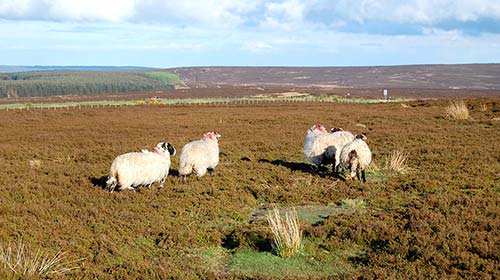
In the lonesome North York Moors, sheep seem to outnumber people. Upon this high, desolate-feeling plateau, with spongy and inhospitable soil, bleating flocks jockey against scrubby heather for control of the terrain. You can almost imagine the mysterious Heathcliff plodding across this countryside (although Wuthering Heights was set 60 miles southwest of here). As you pass through this haunting landscape, crisscrossed by only a few roads, notice how the gloomy brown heather—which blooms purple at summer’s end—is burned back by wardens to clear the way for new growth. The vast undulating expanses of nothingness are punctuated by greener, sparsely populated valleys called dales. Park your car and take a hike across the moors on any small road. You’ll come upon a few tidy villages and maybe even old Roman roads.
For information on the moors, visit NorthYorkMoors.org.uk. Most villages have at least one general store where you can buy a basic brochure suggesting local hikes. Danby Lodge National Park Centre (at the north end) has hiking tips and sells essential maps. Popular walks include a 5.5-mile loop near the Hole of Horcum, the 4.5-mile walk between Goathland and Grosmont, or the brief stroll to the waterfall near Goathland.
GETTING AROUND THE NORTH YORK MOORS
If you’re driving, the easiest route across the moors is the A-169, which roughly parallels the steam-train line north to Grosmont; it passes the Hole of Horcum and comes close to Grosmont before heading northeast to Whitby. To the west, smaller roads head north through Hutton-le-Hole (with its folk museum) and the village of Rosedale Abbey. While less straightforward—you’ll need a good map and an even better navigator—this western zone really gets you deep into the moors.
Those relying on public transportation will primarily use the North Yorkshire Moors Railway (explained next).
Sights on the Moors
These locations are listed roughly from south to north, as you’d approach them coming from York.
Pickering
This functional town, the southern gateway to the North York Moors, is a major crossroads and a proud hub for this region’s meager public transit. The main reason to visit Pickering is to catch the North Yorkshire Moors Railway steam train into the moors. Beyond that, you can browse its Monday market (produce, knickknacks) and consider its rural-life museum (though Ryedale Folk Museum in nearby Hutton-le-Hole is better).
If you still have time on your hands, you might stop by Pickering’s ruined 13th-century Norman castle, built on the site of a wooden fortress from William the Conqueror’s 11th-century heyday. Appreciate its textbook motte-and-bailey (stone fort on a grassy hilltop) design, and climb to the top to understand its strategic location (£8; April-Oct daily 10:00-17:00, closed Nov-March; on the ridge above town, +44 1751 474 989, www.english-heritage.org.uk).
Getting There: Drivers find Pickering on the A-169, 25 miles north of York. You’ll find two-hour parking across from the library, where Ropery Street meets Southgate, and all-day parking on Vivis Lane, a couple of blocks south. Those relying on public transportation can catch Coastliner bus #840 (every 1-2 hours Mon-Sat, limited on Sun, 1.25 hours, leaves from York train station); alternatively, you can shave a few minutes off the trip by taking the train to Malton, then catching bus #840 from there (www.transdevbus.co.uk).
▲North Yorkshire Moors Railway
This 18-mile, one-hour steam-engine ride between Pickering and Grosmont (GROW-mont) runs through some of the best parts of the moors (some trains continue on to the seaside town of Whitby). Even with the small windows and the track situated mostly in a scenic gully, it’s a good ride. You can stop along the way for a walk on the moors (or at the appealing village of Goathland) and catch the next train (£45 day ticket includes hop-on, hop-off privileges and return travel, advance booking recommended; runs daily April-Oct, may run on some weekends in winter—check timetable online, schedule flexes with season but first train generally departs Pickering at 9:20, last train departs Grosmont between 17:00 and 18:30; trip takes about an hour one-way to Grosmont, about 2 hours to Whitby; +44 1751 472 508, www.nymr.co.uk).
▲Hutton-le-Hole
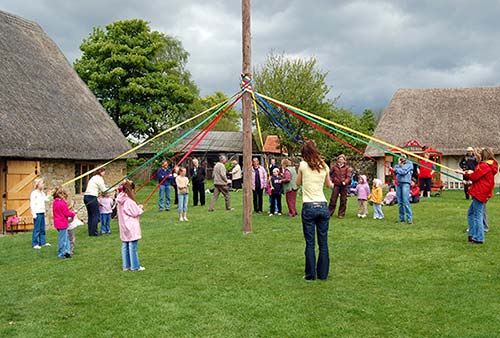
This postcard-pretty town, lining up along a river as if posing for its close-up, is an ideal springboard for a trip into the North York Moors. It has some touristy shops and inviting picnic benches, but Hutton-le-Hole’s biggest attraction is the engaging Ryedale Folk Museum. The museum is most worthwhile during special weekends, when lively costumed docents explain what you’re seeing along the way—check the online schedule or call ahead (£8.25; Sat-Thu 10:00-17:00, Oct-mid-Nov until 16:00, closed Fri year-round and mid-Nov-mid-March; +44 1751 417 367, www.ryedalefolkmuseum.co.uk). This open-air complex illustrates farm life in the moors through reconstructed and furnished historic buildings. The line of shops includes a village store, which served as one-stop shopping (the original Costco) to save locals the long trek into the closest market town. A humble cluster of traditional thatched-roof cottages has a genuine lived-in feeling. If the beds are unmade, notice the “mattress” is made of rope stretched across a frame, which could be tightened for a firmer night’s sleep (giving us the phrase “sleep tight”). A small-scale model of a traditional Yorkshire village features adorable miniature houses. The Harrison Collection holds items representing English domestic life through the centuries, such as an early 1900s gramophone, a late Victorian sewing machine, a two-foot-tall gingerbread mold, and a blanket smoother (like a giant rolling pin).
Getting There: Drivers find it just north of the A-170. From Hutton-le-Hole, you can plunge northward directly into the North York Moors (which begin suddenly as you leave town). Without a car, in summer (July-Aug) the Moorsbus may be running (www.moorsbus.org); otherwise, check the museum website for the latest options.
Rosedale Abbey
A tranquil village on the west side of the moors (north of Hutton-le-Hole), Rosedale Abbey offers a good dose of small-town moor life. Nestled between hills, it also provides pleasing moor views. The drive between Hutton-le-Hole and Rosedale Abbey (and on to Goathland) cuts through some classic North York Moors scenery (look out for sheep wandering right next to the road—and sometimes in it).
The Hole of Horcum
This huge sinkhole was supposedly scooped out by a giant. While not too exciting, it offers a good excuse to get out of your car and appreciate the moorland scenery (at the Saltergate car park along the A-169).
Goathland
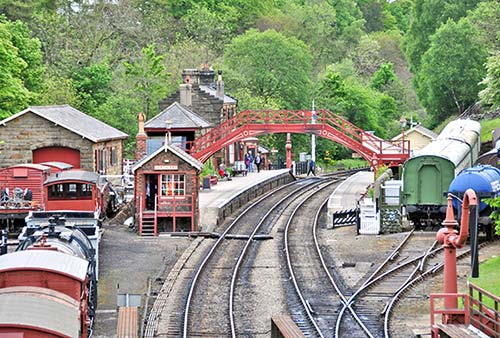
This village, huddled along a babbling brook, is worth considering for a sleepy stopover, either on the steam-train trip or for drivers (it’s an easy detour from the A-169). Movie buffs enjoy Goathland’s train station, which was used to film scenes at “Hogsmeade Station” for the early Harry Potter movies (for more on Harry Potter sights, see here). Brits also know and love Goathland as the setting for the long-running TV series Heartbeat, about a small Yorkshire town in the 1960s. You’ll see TV sets intermingled with real buildings, and some shops are even labeled “Aidensfield,” for the TV town’s fictional name.
▲Danby Lodge National Park Centre
This visitors center near Danby provides the best orientation for exploring the North York Moors National Park. (Unfortunately, it’s at the northern end of the park—not as convenient if you’re coming from York.) The grand old lodge offers excellent exhibits on various moorland topics, informative films about the landscape, an art gallery showcasing works by local artists inspired by these surroundings, a children’s play area, an information desk, plenty of books and maps, guided nature walks, brass rubbing, a cheery cafeteria, and brochures on several good walks that start right outside the front door.
Cost and Hours: Free entry; daily 10:00-17:00, off-season until 16:00, Jan-Feb Sat-Sun only; café, pay parking, +44 1439 772 737, www.northyorkmoors.org.uk.
Getting There: Danby Lodge National Park Centre is in the northern part of the park (follow signs from Danby, which is a short drive from the A-171, running along the northern edge of the park). Danby is on the Esk Valley rail line, with connections to Grosmont and Whitby (5/day, 20 minutes from Danby to Grosmont, 40 minutes from Danby to Whitby, www.eskvalleyrailway.co.uk). From the Danby train station, it’s a 1.5-mile walk to the visitors center.
North Yorkshire Coast
Two salty Yorkshire towns—one big (Whitby) and one small (Staithes)—are seaside escapes worth a stop for the seagulls, surf, and Captain Cook lore. If you’re not seeing the English coast anywhere else on your trip and you have an extra day in York, side-tripping here is worthwhile.
GETTING TO AND AROUND THE NORTH YORKSHIRE COAST
Yorkshire Coastliner bus #840 connects York to Whitby (2.5 hours, leaves from York train station). Alternatively, you can ride the train to Scarborough (hourly, 50 minutes), then catch bus #X93 or #X94 to Whitby (1 hour).
To connect Whitby to the North York Moors, you can take the historic steam train from Pickering to Grosmont, with some trains continuing into Whitby (see North Yorkshire Moors Railway listing, earlier). Once in Whitby, you can use the bus to connect to other towns along the coast (such as Staithes) or to return to York.
From Durham, you can get to Whitby by train with transfers in Darlington and Middlesbrough or Thornaby (3 hours, Middlesbrough-Whitby line also stops at Danby—near the Danby Lodge National Park Centre—and at Grosmont, where you can catch the Moors steam train south to Pickering).
From Whitby, Arriva bus #X4 runs up and down the coast north of town, connecting you to Sandsend and Staithes en route to Middlesbrough; south of Whitby, bus #X93 runs to Robin Hood’s Bay (www.arrivabus.co.uk).
WHITBY
An important port since the 12th century, Whitby is a fun coastal resort town with about 14,000 people, a gaggle of steep and salty old streets, and an enjoyable nautical ambience. Its busy harbor, bristling with ships’ masts, is squeezed into a narrow canyon flanked on one side by the stately remains of its 11th-century abbey, and on the other by the bluff-topping West Cliff neighborhood. The harborfront zone is a carousel of Coney Island-type amusements.
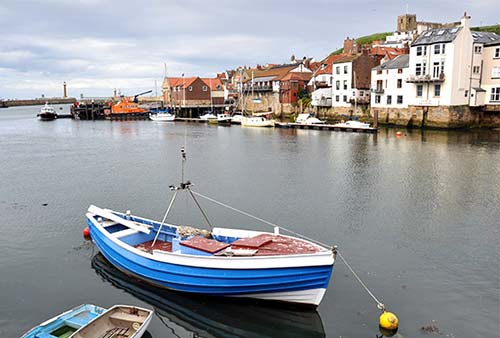
If driving, consider first stopping by the hilltop sights (the abbey on one side of town, and West Cliff on the other). Then drive down into the old town center and park in the lot next to the TI (+44 1723 383 636, www.discoveryorkshirecoast.com) and near the train and bus stations. Walk about five minutes around the harbor to the long bridge spanning it and face the sea to consider your options: On the left is the waterfront promenade called Pier Road/Fish Quay, lined with tacky carnival distractions, as well as the Magpie Café (popular fish-and-chips) and a tacky Dracula exhibit (skip it); above this scene is the West Cliff area, with fine views over town. On the right (across the bridge) is a warren of touristy lanes filled with hard-candy stores, knickknack shops, and the Captain Cook Memorial Museum; overhead (but not quite visible from here) is the ruined abbey.
Hop-On, Hop-Off Bus: The double-decker, open-top Whitby Town Tour bus starts near the whalebone arch on the West Cliff bluff, near the Royal Hotel, and makes an hour-long circuit to local attractions including Whitby Abbey (£8, ticket good for 24 hours, runs April-Sept, +44 1947 602 922, www.coastalandcountry.co.uk).
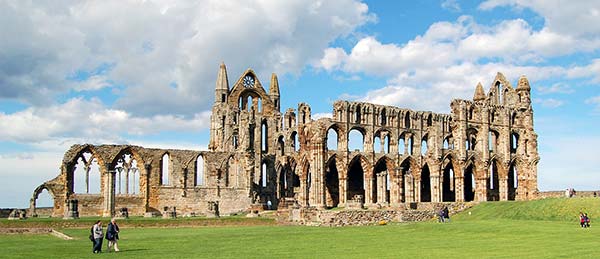
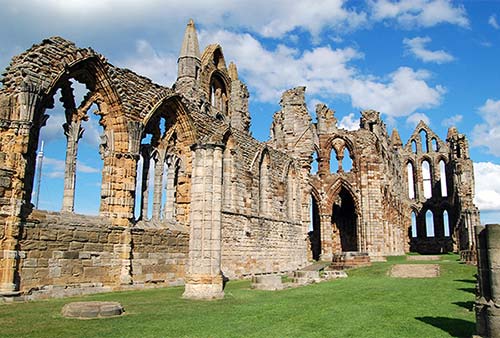
Visiting Whitby: Whitby’s main landmark is its ▲ ruined abbey, set on a bluff overlooking the harbor. Legend holds that a nun named Hilda found a snake-infested headland and drove out the serpents, turning them into flat, spiral stones (the stones are actually fossils of extinct sea creatures called ammonites). Built on the site of Hilda’s monastic settlement, the remains of this 11th-century version echo with the chants of ages past. An app-based interactive tour, the Ammonite Quest, leads visitors around the ruins and explains the artifacts. Many of the stones from this formerly grand abbey were used to build houses in the town (£13, April-Aug daily 10:00-17:00, shorter hours or closed off-season, Ammonite Quest tour included with admission, café, +44 1947 603 568, www.english-heritage.org.uk). The abbey is connected to the streets below by a staircase of 199 steps at the end of the old town. In the olden days, poor people would carry the coffins of the departed up these steps, resting occasionally on broader steps called “coffin rests”...which, for practical reasons, are more frequent near the top. An alternate route up is via the path called Caedmon’s Trod.
The small Captain Cook Memorial Museum, in an old shipowner’s house where Cook lodged for a few years, offers a dull look at the famous hometown sailor and his exotic voyages (£8.50, April-Oct daily 9:45-17:00, Feb-March 10:30-15:00, closed Nov-Jan, +44 1947 601 900, www.cookmuseumwhitby.co.uk). Two of Cook’s boats (Resolution and Endeavour) were built in the Whitby shipyards; a full-size replica of the Endeavour, which has been used in many swashbuckling films, is often moored in Whitby.
Across the harbor from the abbey is West Cliff, a fun little hilltop park, with inviting benches and a lively kids’ area. Supposedly it was from this vantage point that Bram Stoker contemplated Whitby’s abbey...and inspiration bit him in the neck. In Dracula, a boat docks at the long pier, and a black dog—the Count in disguise—jumps off the boat and runs up the 199 steps to the abbey (where he hides out for the next three chapters, until he takes to the sea again). Nearby, the replica whale bones forming an archway over the path recall Whitby’s former status as a major whaling city. When whalers returned to port, they’d prop up bones like these on their ships, as a sign to their wives and mothers (who were anxiously waiting ashore) that the trip had gone safely.
The hop-on, hop-off bus noted earlier leaves from the whalebone arch. Or to go for a walk along the beach, consider strolling to a nearby village (Sandsend to the north is about an hour’s walk away), then catching an Arriva bus back (check schedules at www.arrivabus.co.uk). Before heading out, check the tide tables (ask at TI).
Sleeping in Whitby: Consider the pleasant five-room $$ Crescent Lodge B&B (atop the plateau behind West Cliff, 27 Crescent Avenue, +44 1947 820 073, www.crescentlodgewhitby.com, info@crescentlodgewhitby.com, kind Gwen and Lee) or the ¢ YHA Whitby (one of England’s most impressive hostels, right on the abbey grounds above town—and literally built with bits and pieces of that abbey, +44 8453 719 049, www.yha.org.uk).
Eating in Whitby: In this seaworthy town, fish-and-chips are on everybody’s mind. Options include $$$ Magpie Café (a local institution, so expect lines, 14 Pier Road, +44 1947 602 058), $$ Quayside (nearly next door to the Magpie, +44 7827 388 222), and $$ Mister Chips (across the harbor and simpler, 68 Church Street, +44 1947 604 683; second location, Mister Chips by the Beach, on the opposite side of the harbor).
STAITHES
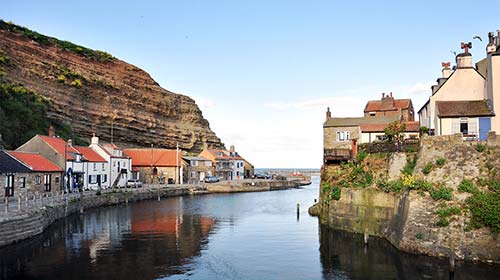
A ragamuffin village where the boy who became Captain James Cook got his first taste of the sea, Staithes (pronounced “staythz,” about 10 miles north of Whitby) is a salty jumble of cottages bunny-hopping down a ravine into a tiny harbor. About a tenth the size of its big sister down the coast, Staithes is the yang to Whitby’s yin. This refreshingly unpretentious town is gloriously stubborn about not wooing tourists (www.staithes-town.info).
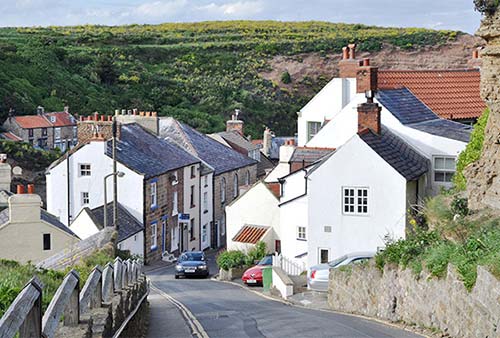
Getting There: Staithes is an easy drive north of Whitby. Don’t even try to drive down into the village—park in the lot at the top of the town and walk down the steep hill. You can take a bus from Whitby to Staithes (30 minutes).
Visiting Staithes: While dead as a doornail today, in 1816 Staithes was home to 70 boats and the busiest fishing station on the northeast coast of England. Decades ago, the town supported 20 fishing boats—today, only a few. But fishermen (who pronounce their town’s name “steers” in the local dialect) still outnumber tourists here. The out-of-towners who do come here rent cottages in the old center and settle in for a long stay as temporary locals. The town has changed little since Captain Cook’s days. Lots of flies and seagulls seem to have picked the barren cliffs raw. There’s nothing to do but stroll the beach and enjoy a harborside beer or ice cream. As you gaze out at the scenery and rich light, imagine Staithes in the early 20th century, when a small artists’ colony called the “Staithes Group” enjoyed painting this same scene.
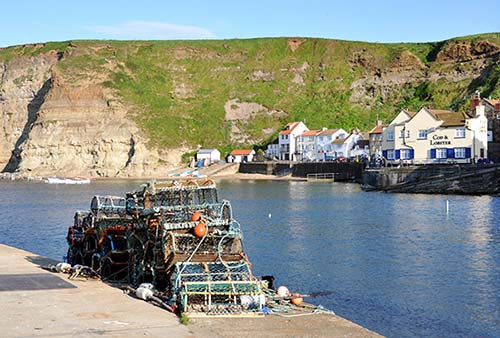
For a bit more activity, drop by the lifeboat station, operated by the Royal National Lifeboat Institution (RNLI)—Britain’s entirely volunteer answer to the Coast Guard. As this organization—England’s sole method for responding to maritime emergencies—is entirely funded by donations, consider supporting the cause with a coin or two (+44 1947 840 001, www.rnli.org.uk).
Eating in Staithes: Staithes has a couple of lowbrow pubs, including $ The Royal George (with well-worn, basic decor, along the main drag, +44 1947 841 432) and $ The Cod & Lobster (scenic outdoor seating, cozy indoor space, and old-time Staithes photos, overlooking the harbor, +44 1947 840 330). Or try the $ Seadrift Café (sweets and basic grub at outdoor tables fronting the harbor, +44 1947 841 345).