THE LAKE DISTRICT
Keswick & the North Lake District • Ullswater Lake • South Lake District
Keswick and the North Lake District
Hikes and Drives in the North Lake District
Map: Derwentwater & Newlands Valley
Sights in the South Lake District
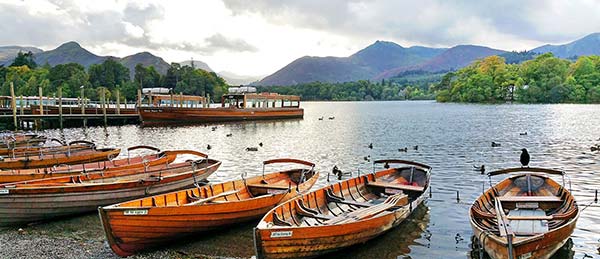
The Lake District is nature’s lush green playground. Here, William Wordsworth’s poems still shiver in trees and ripple on ponds. Nature rules this pristine land and humanity keeps a wide-eyed but low profile. Relax, recharge, take a cruise or a hike, and maybe even write a poem. Renew your poetic license at Wordsworth’s famous Dove Cottage.
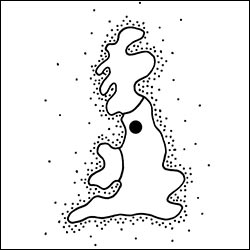
Located in the northwestern county of Cumbria, the Lake District is about 30 miles long and 30 miles wide. Explore it by foot, bike, bus, or car. Locals are fond of declaring that their mountains are older than the Himalayas and once as tall but have been worn down by the ages (Scafell Pike, the tallest peak in England, is only 3,206 feet). There’s a walking-stick charm about the way nature and the culture mix here. Hiking along a windblown ridge or climbing over a rock fence to look into the eyes of a ragamuffin sheep, even tenderfeet get a chance to feel very outdoorsy. The tradition of staying close to the land remains true in the 21st century; restaurants serve organic food and you’ll see stickers in home windows advocating for environmental causes.
Dress in layers, and expect rain mixed with “bright spells” (pubs offer atmospheric shelter at every turn). Drizzly days can be followed by delightful evenings.
Plan to spend the majority of your time in the unspoiled North Lake District. In this chapter, I focus on the town of Keswick, the lake called Derwentwater, and the vast, time-passed Newlands Valley. The North Lake District works great by car or by bus (with easy train access via Penrith), delights nature lovers, and has good accommodations to boot.
The South Lake District—slightly closer to London—is known primarily for its sights related to Wordsworth and Beatrix Potter (of Peter Rabbit fame), and gets the promotion, tour crowds, and tackiness that comes with them. While the slate-colored towns (Ambleside, Windermere, Bowness-on-Windermere, and so on) are cute, they’re also touristy—which means crowded and overpriced. I strongly recommend that you buck the trend and focus on the north.
Ideally, make your home base in or near Keswick and side-trip from there into the South Lake District only if you’re interested in the Wordsworth and Beatrix Potter sights. Dipping into the South Lake District also works well en route if you’re driving between Keswick and points south.
PLANNING YOUR TIME
I’d suggest spending two days and two nights in this area. Penrith is the nearest train station, 45 minutes by bus or car from Keswick. Those without a car will use Keswick as a springboard: Cruise the lake and take a hike in the Catbells area or hop on a minibus tour. If great scenery is commonplace in your life, the Lake District can be more soothing (and rainy) than exciting. If you’re rushed, you could make this area a one-night stand—or even a quick drive-through. But since the towns themselves are unexceptional, a visit here isn’t worth it unless you have time to head up into the hills at least once.
Two-Day Driving Plan: Here’s the most exciting way for drivers coming from the south to max out their time here and see some South Lake District sights en route to the north:
Day 1: Leave the motorway at Kendal by 10:30; drive along Lake Windermere and through the town of Ambleside.
| 11:30 | Tour Wordsworth Grasmere, the site of Dove Cottage. |
| 13:00 | Backtrack to Ambleside, where a small road (Kirkstone) leads up to the dramatic Kirkstone Pass and down (on route A-592) to Glenridding on Lake Ullswater. |
| 15:00 | Catch the next Ullswater boat and ride to Howtown. Depending on the available daylight, you can hike six miles (3-4 hours) from Howtown back to Glenridding. Or, with less time, ride the shuttle boat to Aira Force to hike up to the waterfall (1 hour) or skip the boat and walk to Lanty’s Tarn (2 hours) right from the Glenridding parking lot. |
| 19:00 | Drive to your Keswick hotel or farmhouse B&B near Keswick, with a stop as the sun sets at Castlerigg Stone Circle. |
Day 2: Spend the morning (3-4 hours) splicing the Catbells high-ridge hike into a boat trip around Derwentwater. In the afternoon, make the circular drive from Keswick through the Newlands Valley, Buttermere, Honister Pass, and Borrowdale. You could tour the Honister Slate Mine en route (last tour at 15:30) and/or pitch-and-putt nine holes in Keswick before a late dinner.
GETTING AROUND THE LAKE DISTRICT
By Car
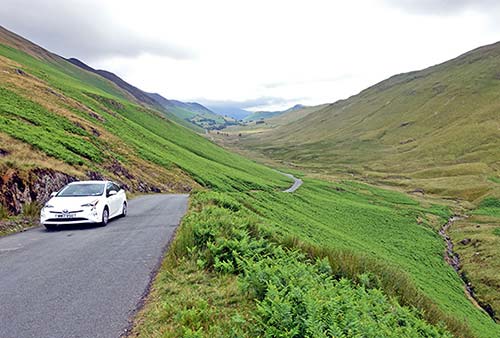
Nothing is very far from Keswick and Derwentwater. Pick up a good map (any hotel can loan you one), get off the big roads, and leave the car, at least occasionally, for some walking. In summer, the Keswick-Ambleside-Windermere-Bowness corridor (A-591) suffers from congestion. Back lanes are far less trampled and lead you through forgotten villages, where sheep outnumber people.
To rent a car here, try Enterprise in Penrith. They’ll transport you between Keswick and their office when you’re picking up and dropping off the car (Mon-Fri 8:00-17:00, Sat 9:00-12:00, closed Sun, requires driver’s license and second ID, reserve a day in advance, Haweswater Road, +44 1768 216 440). Larger outfits are more likely to have a branch in Carlisle, which is a bit to the north but well served by train (on the same Glasgow-Birmingham line as Penrith) and only a few minutes farther from the Keswick area.
Parking is tight throughout the region. It’s easiest to park in the pay-and-display lots (most machines take credit cards, but have some coins handy just in case). If you’re parking for free on the roadside, don’t block vital turnouts. Never park on double yellow lines.
Without a Car
Those based in Keswick without a car manage fine. Because of the region’s efforts to “green up” travel and cut down on car traffic, the bus service can be quite efficient for hiking and sightseeing. (Even with a car, consider leaving it in town and using the bus—that way you don’t need to limit yourself to round-trip hikes.)
By Bus: Keswick has no real bus station; buses stop in front of the Booths supermarket where well-designed maps and posted schedules make your bus options very clear. Local buses take you quickly and easily (if not always frequently) to most nearby points of interest. Check the schedule carefully to make sure you can catch the last bus home. For bus schedules, look for the Lakes by Bus booklet (available at TIs or on any bus) or visit StagecoachBus.com and set your location for Keswick.
Bus Passes/Bus & Boat Passes: On board, you can purchase a North West Explorer pass that lets you ride any Stagecoach bus throughout the area (£12.50/1 day, £29.50/3 days), or you can get one-day passes for certain routes; tickets can also be purchased via the Stagecoach Bus app. Bus & Boat all-day passes combine bus rides with boat cruises on Derwentwater (£14.50, unlimited buses including #77/#77A route, and Derwentwater cruise) or Ullswater (£17.50, unlimited buses and Ullswater cruise).
Bus Routes: Buses #X4 and #X5 connect Penrith train station to Keswick (April-Oct hourly, every 2 hours on Sun, 40 minutes).
Bus #77/#77A, the Honister Rambler, makes the gorgeous circle from Keswick around Derwentwater, over Honister Pass, through Buttermere, and down the Whinlatter Valley (at least 7/day clockwise, 4/day “anticlockwise,” daily Easter-Oct, 1.75-hour loop). Bus #78, the Borrowdale Bus, goes topless in the summer for a wonderful sightseeing experience, heading from Keswick to Borrowdale Hotel, Grange Bridge, Rosthwaite, and Seatoller at the base of Honister Pass (hourly, daily Easter-Oct, 2/hour July-Sept, 30 minutes each way). Both routes are covered by the £9.50 Keswick and Honister DayRider all-day pass.
Bus #508 runs between Penrith and Patterdale Hotel (near the bottom of Ullswater), stopping in Pooley Bridge (6/day, more frequent in summer with open-top buses, 50 minutes). Bus #508 also connects Glenridding and Windermere (1 hour).
Bus #505 connects Windermere with Hawkshead (about hourly, daily Easter-Oct, 35 minutes).
Bus #555 connects Keswick with the south and Windermere (hourly, 2/hour July-Sept, 1 hour to Windermere).
Bus #599, the open-top Lakesider, runs along the main Windermere corridor, connecting the big tourist attractions in the south: Grasmere and Dove Cottage, Rydal Mount, Ambleside, Brockhole (National Park Visitors Centre), Windermere, and lake cruises from Bowness Pier (3/hour June-Sept, 2/hour May and Oct, 50 minutes each way, £9.50 Central Lakes DayRider all-day pass).
By Bike: Keswick works well as a springboard for several fine days out on a bike; consider a three-hour loop trip up Newlands Valley. Ask about routes at the TI or your bike rental shop. You cannot take bikes on local boats or buses.
Several shops in Keswick rent road and mountain bikes (£25-30/day) and e-bikes (£50-55/day); rentals come with helmets and advice for good trips. Try E-Venture (best prices; happy to store bags while you rent for no cost, daily, Elliot Park—facing the Keswick bus stop, +44 1768 721 920, www.e-venturebikes.co.uk) or Whinlatter Bikes (daily, free touring maps, 82 Main Street, +44 1768 773 940, www.whinlatterbikes.com).
By Boat: A circular boat service glides you around Derwentwater, with several hiker-aiding stops along the way (for a cruise/hike option, see the “Derwentwater Lakeside Walk” on here).
By Foot: Hiking information is available everywhere. Don’t hike without a good, detailed map (wide selection at Keswick TI and at the many outdoor gear stores or borrow one from your B&B). Helpful fliers at TIs and B&Bs describe the most popular routes. For an up-to-date weather report, check LakeDistrictWeatherLine.co.uk. Carry essentials, wear suitable clothing and footwear (you can rent boots in town), and plan for rain. Watch your footing—every year, several people die in hiking accidents in the area.
By Tour: For organized bus tours that run the roads of the Lake District, see “Tours in Keswick,” later.
Keswick and the North Lake District
As far as touristy Lake District towns go, Keswick (KEZ-ick, population 5,000) is far more enjoyable than Windermere, Bowness, or Ambleside. Many of the place names around Keswick have Norse origins, inherited from the region’s 10th-century settlers. Notice that most lakes in the region end in either water (e.g., Derwentwater) or mere (e.g., Windermere), which is related to the Dutch word for lake, meer.
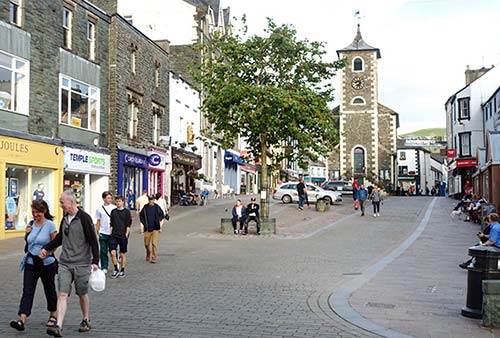
An important mining center for slate, copper, and lead through the Middle Ages, Keswick became a resort in the 19th century. Its fine Victorian buildings recall the days when city slickers first learned about “communing with nature,” inspired by the Romantic poets (Wordsworth, Coleridge) who wandered the trails here. Today, the compact town is lined with tearooms, pubs, gift shops, and hiking-gear shops. The shore of the lake called Derwentwater is a pleasant 10-minute walk from the town center.
Orientation to Keswick
Keswick is an ideal home base, with plenty of good B&Bs, an easy bus connection to the nearest train station at Penrith, and a prime location near the best lake in the area, Derwentwater. In Keswick, everything is within a 10-minute walk of everything else: the pedestrian-friendly town square, the TI, recommended B&Bs, grocery stores, the wonderful municipal pitch-and-putt golf course, the main bus stop, a lakeside boat dock, and a central parking lot. The town square is lively every day throughout the summer, especially on market days—Thursdays and Saturdays.
Keswick town is a delight for wandering. Its centerpiece, Moot Hall (meaning “meeting hall”), was a 16th-century copper warehouse upstairs with a market arcade below (it now houses the TI; most Lake District towns and villages have similar meeting halls). “Keswick” means “cheese farm”—a legacy from the time when the town square was the spot to sell cheese. When the town square went pedestrian-only, locals were all abuzz about people tripping over the curbs. (The English, seemingly thrilled by ever-present danger, are endlessly warning visitors to “watch your head,” “duck or grouse,” “watch the step,” and “mind the gap.”)
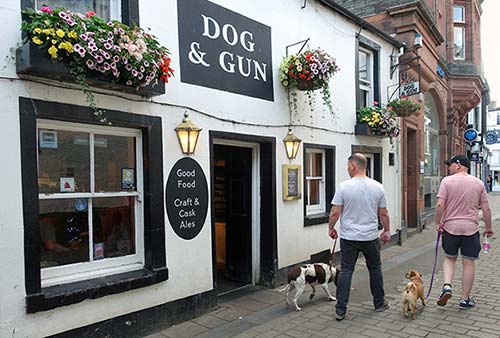
Keswick and the Lake District are popular with English holidaymakers who prefer to travel with their dogs—Keswick hails itself as England’s most dog-friendly town. The town square can look like the Westminster Dog Show (they even have their own silly version in summer), and the recommended Dog and Gun pub, where “well-behaved dogs are welcomed,” is always full of patient pups (as are many restaurants and cafés). If you are shy about connecting with people, pal up to an English pooch—you’ll often find they’re happy to introduce you to their owners.
TOURIST INFORMATION
The National Park Visitors Centre/TI is in Moot Hall, right on the town square (daily 9:30-17:30, Nov-Easter until 16:30, +44 8459 010 845, www.keswick.org; you’ll also find helpful planning info at +44 1539 724 555, www.lakedistrict.gov.uk). Staffers are pros at advising you about hiking routes. They can also help you figure out public transportation to outlying sights and tell you about the region’s various adventure activities.
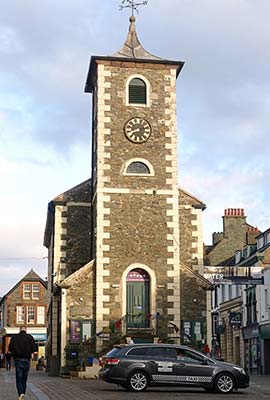
The TI sells Keswick Launch boat tickets (at a £1 discount) and brochures and maps that outline nearby hikes (including a series of Lap Maps featuring sights, walks, and driving/cycling tours). The TI and shops all over town also have books and maps for hikers, cyclists, and drivers. Boards inside the TI’s foyer are filled with posted information (about walks, talks, movies, theater, weather forecasts, and bus schedules).
HELPFUL HINTS
Laundry: The town’s launderette is on Bank Street, just up the side street from the post office (full- and self-service; Mon-Fri 8:00-18:00, Sat-Sun 9:00-17:00, +44 1768 775 448).
Weather Info: Hikers should check the daily forecast by visiting LakeDistrictWeatherLine.co.uk. Note that weather can change instantly here—for better or worse—throughout the day. Pack layers, take advantage of sun breaks, and don’t get discouraged if it starts to rain—it may pass just as quickly as it arrived.
Midges: Tiny biting insects called midges might bug you in this region from late May through September, particularly at dawn and dusk. The severity depends on the weather since wind and sunshine can deter them, and insect repellant fends them off: Ask the locals what works if you’ll be hiking.
Groceries and More: Get handy food-to-go at Booths, a huge, modern supermarket facing the Keswick bus stop. It has a fine cafeteria (with inside and outside seating), a great book and map section, and a public WC (Mon-Sat 7:00-22:00, Sun 10:00-16:00, Tithebarn Street, +44 1768 773 518).
Tours in Keswick
Private Guides
ShowMeCumbria Tours & Transfers, run by Andy Jackson, offers personalized tours around Cumbria and the Lake District. He’s based in Penrith but can pick up in Keswick and other locations (£160/half-day for 2-6 people, +44 7809 026 357, www.showmecumbria.co.uk, andy@showmecumbria.co.uk).
Discover Lakeland guided tours are led by Anna Gray, a friendly, knowledgeable, and experienced Blue Badge guide. She gives customized tours throughout Cumbria, with a particular focus on Hadrian’s Wall and the Lake District (£200/half-day, from £360/full day, +44 7557 915 855, www.discoverlakeland.uk, anna@discoverlakeland.co.uk).
Bus Tours
For those who want to see the area without lots of hiking or messing with public transport, a bus tour can be the answer. Mountain Goat Tours is the region’s dominant tour company and runs half- and full-day minibus excursions nearly every morning and afternoon from Keswick to all the scenic highlights. Customizable private tours are also available (£22-40/half-day, £48/full day, tours run April-Oct, 16 people maximum, book in advance, +44 1539 445 161, www.mountain-goat.com, tours@mountain-goat.com).
Sights in Keswick
▲Derwentwater
One of Cumbria’s most photographed and popular lakes, Derwentwater has four islands, good boat service, and plenty of trails. The pleasant town of Keswick, near the lake’s north end, is a short stroll from the shore. The roadside views aren’t much, and while you can walk around the lake, much of the walk is boring. You’re better off mixing a hike and boat ride, or simply enjoying a boat cruise around the lake.
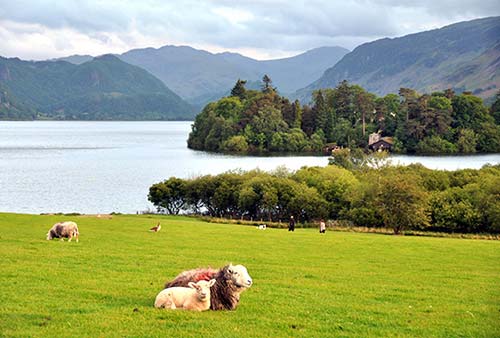
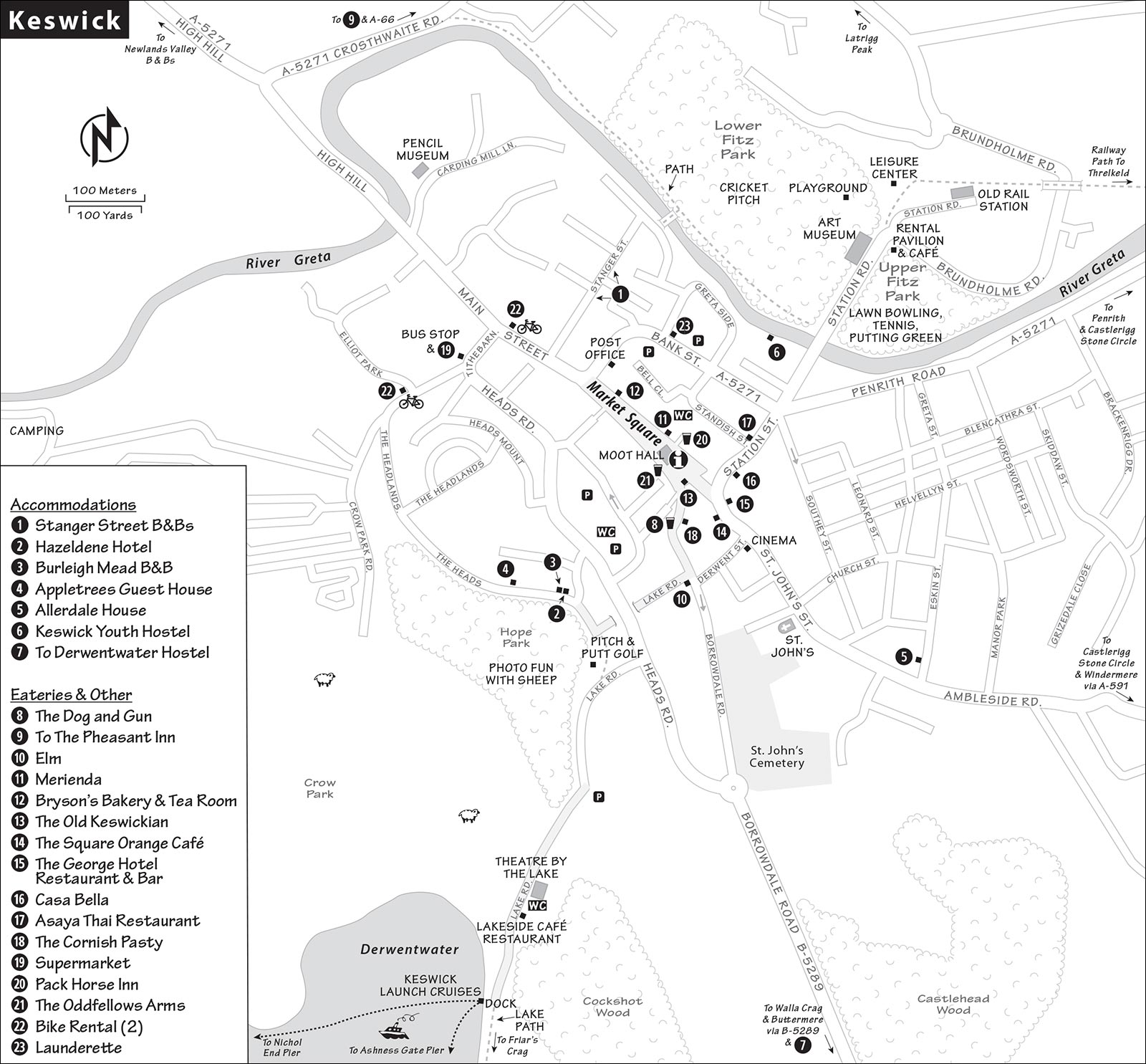
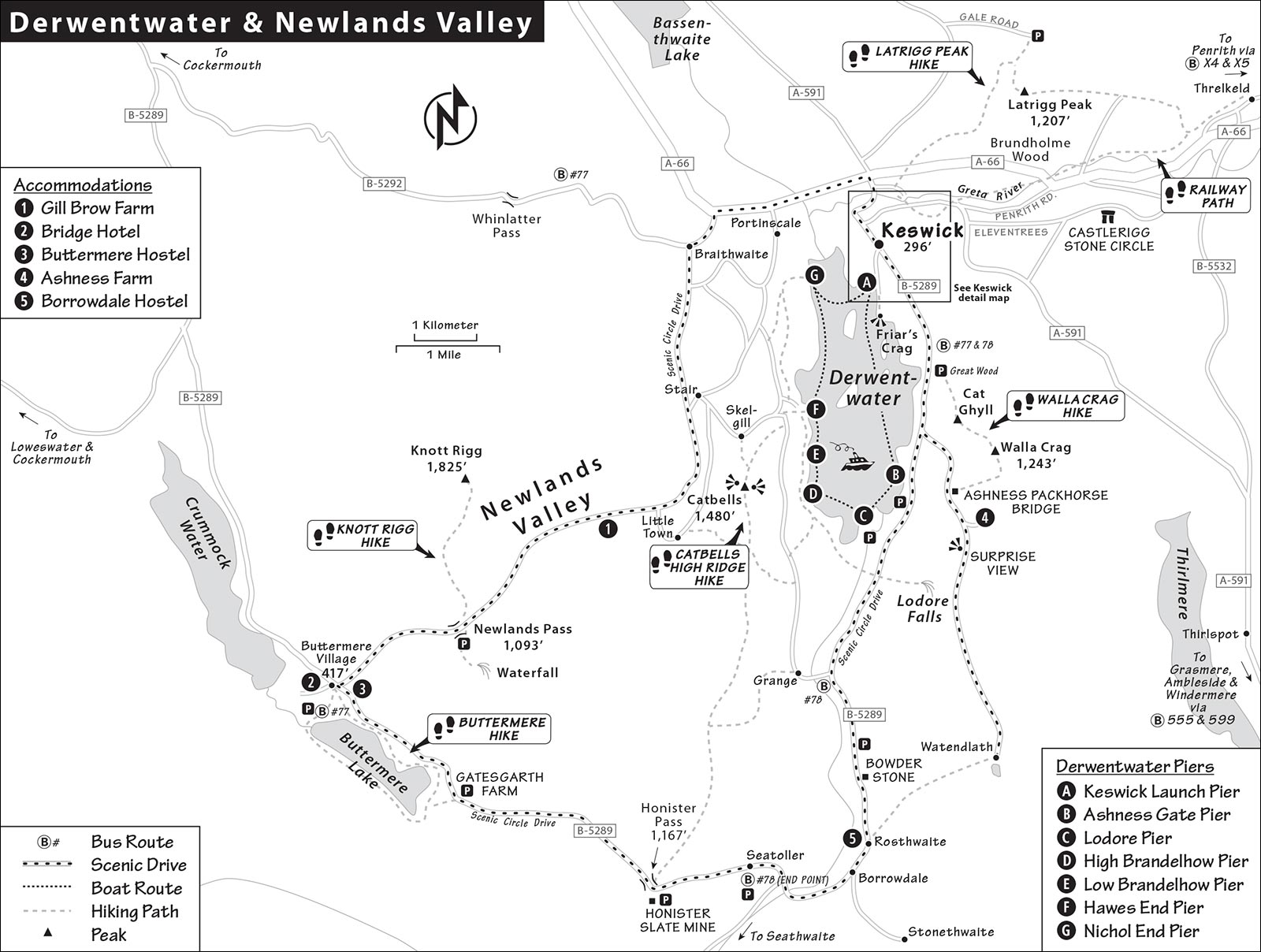
Boating on Derwentwater: The Keswick Launch Company runs two cruises an hour, alternating clockwise and “anticlockwise” (boats depart on the half-hour; daily 10:00-16:30, July-Aug until 17:30, Nov and Feb generally weekends only, closed Dec-Jan; at end of Lake Road, +44 1768 772 263, www.keswick-launch.co.uk). Boats make seven stops on each 50-minute round-trip (may skip some stops or not run at all if the water level is very high—such as after a heavy rain). The boat trip costs £2.75 per segment or £13.50 per round-trip circuit (£1 less if you book through TI) with free stopovers; you can get on and off all you want, but tickets are collected on the boat’s last leg to Keswick, marking the end of your ride. If you want to hop on the scenic #77/#77A bus and also cruise Derwentwater, the Derwentwater Bus & Boat all-day pass covers both (see “Getting Around the Lake District—Without a Car,” earlier). To be picked up at a certain stop, stand at the end of the pier and wave, or the boat may not stop. See the “Derwentwater & Newlands Valley” map, later, for an overview of boat stops.
Keswick Launch also rents rowboats (from £15/30 minutes, £21/hour, open April-Oct, large rowboats and motorboats also available).
Derwentwater Lakeside Walk: A fine, marked trail runs all along Derwentwater (9 miles, 4 hours, floods after heavy rains), but much of it (especially the Keswick-to-Hawes End stretch) is not that interesting. The best hour-long section is the 1.5-mile path between the docks at High Brandelhow and Hawes End, where you’ll stroll a level trail through peaceful trees. This walk works well with the lake boat described earlier.
For a very easy, paved stroll, walk 10 minutes from the Keswick dock clockwise to the Friar’s Crag viewpoint. The Lakeside Restaurant overlooking the Keswick landing can be handy (daily from 10:00; longer hours on show days at the Theatre by the Lake).
Derwent Pencil Museum
Graphite was first discovered centuries ago in Keswick. A hunk of the stuff proved great for marking sheep in the 15th century. In 1832, the first crude Keswick pencil factory opened, and the rest is history (which is what you’ll learn about here). While the factory that made the famous Derwent pencils is closed, a small modern building tells the story in a kid-friendly exhibit filling one small room.
Cost and Hours: £6.25, daily 9:30-17:00, Nov-March closed Mon-Tue, last entry one hour before closing, humble café, 3-minute walk from town center, signposted off Main Street, +44 1768 773 626, www.pencilmuseum.co.uk.
Fitz Park
An inviting grassy park stretches alongside Keswick’s tree-lined, duck-filled River Greta. There’s a playground and plenty of room for kids to burn off energy. Consider an after-dinner stroll on the footpath. You may catch men in white (or frisky schoolboys in uniform) playing a game of cricket. There’s the serious bowling green (where you’re welcome to watch the experts play and enjoy the cheapest cuppa—i.e., tea—in town), and the public one where tourists are welcome to give lawn bowling a go. You can try tennis on a grass court or enjoy the putting green. Find the rental pavilion in a café across the road from the art museum (open daily 9:30-17:00, Station Road, +44 7976 573 785).
Golf and Hope Park
A nine-hole ▲ pitch-and-putt golf course near the lush gardens in Hope Park separates the town from the lake and offers a classy, cheap, and convenient chance to golf near the birthplace of the sport. This is a fun and inexpensive experience—just right after a day of touring (£6.50 for pitch-and-putt, £5 for putting, £5.60 for 18 tame holes of “crazy golf,” £3.50 for boules, daily from 10:00, last round starts around 18:00, possibly later in summer, shorter hours off-season, café, +44 1768 773 445, www.hopeleisure.com).
Even if you’re not a golfer, Hope Park is a fine place to walk among grazing sheep, with great photo ops.
NEAR KESWICK
▲▲Castlerigg Stone Circle
For some reason, 70 percent of England’s stone circles are here in Cumbria. Castlerigg is one of the best and oldest in Britain, and an easy stop for drivers. The circle—90 feet across and 5,000 years old—has 38 stones mysteriously laid out on a line between the two tallest peaks on the horizon. They may have served as a celestial calendar for ritual celebrations. Imagine the ambience here, as ancient people filled this clearing in spring to celebrate fertility, in late summer to commemorate the harvest, and in the winter to celebrate the winter solstice and the coming renewal of light. Festival dates may have been dictated by how the sun rose and set in relation to the stones. The more that modern academics study this circle, the more meaning they find in the placement of the stones. The two front stones face due north, toward a cut in the mountains. The rare-for-stone-circles “sanctuary” lines up with its center stone to mark certain celestial events. (Party!) For maximum “goose pimples” (as they say here), show up at sunset.
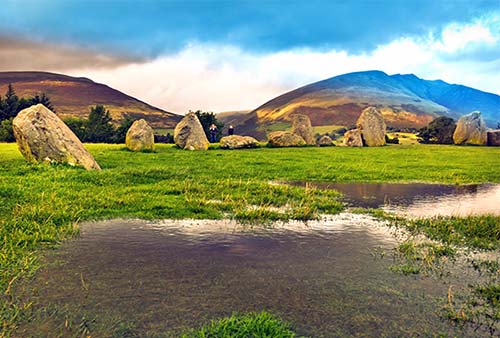
Cost and Hours: Free, always open, located 1.5 miles east of Keswick on Eleventrees Road—see the “Derwentwater & Newlands Valley” map, later; about 30 minutes from town on foot—the last half up a fairly steep hill; by car, follow brown signs—it’s 3 minutes off the A-66, limited but easy parking, www.english-heritage.org.uk.
Hikes and Drives in the North Lake District
FROM KESWICK
For an easy, flat stroll, consider the trail that runs alongside Derwentwater (see “Sights in Keswick,” earlier). More strenuous options are described next (for more detailed hike info, stop in at the Keswick TI).
▲▲Catbells High Ridge Hike
For a great “king of the mountain” feeling, 360-degree views, and a close-up look at the weather blowing over the ridge, take a two-hour hike above Derwentwater from Hawes End up along the ridge to Catbells (1,480 feet) and down to High Brandelhow. Because the mountaintop is basically treeless, you’re treated to dramatic panoramas the entire way up. From High Brandelhow, you can catch the boat back to Keswick or take the easy path along the Derwentwater shore to your Hawes End starting point. (Extending the hike farther around the lake to Lodore takes you to a waterfall, rock climbers, and another boat dock for a convenient return to Keswick—for more about Lodore, see “Hikes and Drives Outside Keswick,” later.) Note: When the water level is very high (for example, after a heavy rain), boats can’t stop at Hawes End—ask at the TI or boat dock before setting out.
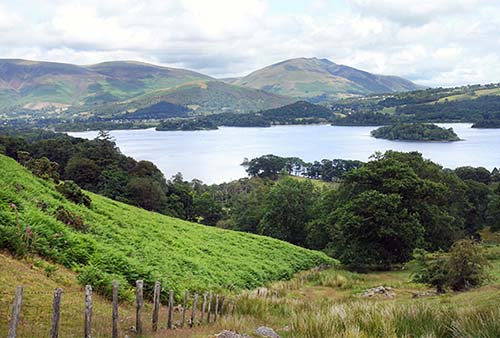
Catbells is probably the most dramatic family walk in the area (but wear sturdy shoes, bring a raincoat, and watch your footing). From Keswick, the lake, or your farmhouse B&B, you can see silhouetted figures—what locals call “crag rats”—hiking along this ridge.
Getting There: To reach the trailhead from Keswick, catch the “anticlockwise” boat (see “Boating on Derwentwater,” earlier) and ride for 10 minutes to the second stop, Hawes End. (You can also ride to High Brandelhow and take this walk in the other direction, but I don’t recommend it—two rocky scrambles along the way are easier and safer to navigate going uphill from Hawes End.) Note the schedule for your return boat ride. If driving, there’s free but limited parking at Hawes End, and the road can be hard to find—get clear directions in town before heading out. (Hardcore hikers can walk to the foot of Catbells from Keswick via Portinscale, which takes about 40 minutes—ask your B&B or the TI for directions.)
The Route: The path is not signposted, but it’s easy to follow and you’ll see plenty of other walkers. From Hawes End, walk away from the lake through a kissing gate to the turn just before the car park. Then turn left and go up, up, up. After about 20 minutes, you’ll hit the first of two short scrambles (where the trail vanishes into a cluster of steep rocks), which leads to a bluff. From the first little summit (great for a picnic break), and then along the ridge, you’ll enjoy sweeping views of the lake on one side and of Newlands Valley on the other. The bald peak in the distance is Catbells. Broken stones crunch under each step, wind buffets your ears, clouds prowl overhead, and the sheep baa comically. To anyone looking up from the distant farmhouse B&Bs, you are but a stick figure on the ridge. Just below the summit, the trail disintegrates into another short, steep scramble. Your reward is just beyond: a magnificent hilltop perch.
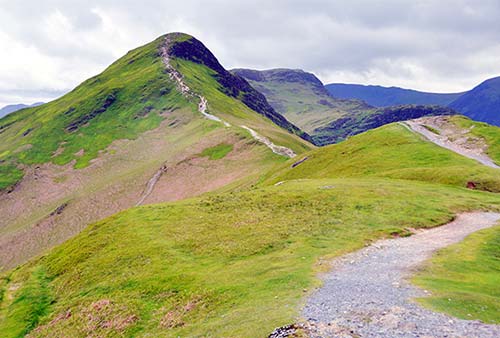
After the Catbells summit, descend along the ridge to a saddle ahead. The ridge continues much higher, and while it may look like your only option, at its base a small, unmarked lane with comfortable steps leads left. Unless you’re up for extending the hike (see “Longer Catbells Options,” next), take this path down to the lake. To get to High Brandelhow Pier, take the first left fork you come across down through a forest to the lake. When you reach Abbot’s Bay, go left through a swinging gate, following a lakeside trail around a gravelly bluff, to the idyllic High Brandelhow Pier, a peaceful place to wait for your boat back to Keswick. (You can pay your fare when you board.)
Note: After coming down from Catbells, rather than return via boat you can carry on to the charming little village of Grange, from where bus #78 travels back to Keswick (2/hour, the stop is over the Grange bridge on the main road).
Longer Catbells Options: Catbells is just the first of a series of peaks, all connected by a fine ridge trail. Hardier hikers can continue for nine miles along this same ridge, enjoying valley and lake views as they arc around the Newlands Valley toward (and even down to) Buttermere. After High Spy, you can descend an easy path into Newlands Valley. The ultimate, very full day-plan would be to take a bus to Buttermere, climb Robinson peak, and follow the ridge around to Catbells and back to Keswick.
Latrigg Peak
For the easiest mountain-climbing sensation around, take the short drive to the Latrigg Peak parking lot just north of Keswick, and hike 15 minutes to the top of the 1,200-foot-high hill, where you’ll be rewarded with a commanding view of the town, lake, and valley, all the way to Bassenthwaite, the next lake over. At the traffic circle just outside Keswick, take the A-591 Carlisle exit, then an immediate right (direction: Ormathwaite/Underscar). Take the next right, a hard right, at the Skiddaw sign, where a long, steep, one-lane road leads to the Latrigg parking lot at the end of the lane. With more time, you can walk all the way from your Keswick B&B to Latrigg and back (it’s a popular evening walk for locals).
Keswick to Threlkeld Railway Path
A recently restored four-mile railway path from downtown Keswick follows an old train track and the river to the village of Threlkeld (with two pubs). You can either walk back along the same path, or loop back via the Castlerigg Stone Circle (described earlier, roughly 8 miles total). The Railway Path starts near Fitz Park behind the leisure center along Station Road (as you face the center, head right and around back).
Walla Crag
From your Keswick B&B, a fine two-hour walk to Walla Crag offers great fell (mountain) and ridge walking without the necessity of a bus or car. Start by strolling along the lake to the Great Wood parking lot (or drive to this lot), and head up Cat Ghyl (where “fell runners”—trail-running enthusiasts—practice) to Walla Crag. You’ll be treated to panoramic views over Derwentwater and surrounding peaks—especially beautiful when the heather blossoms in the summer. You can do a shorter version of this walk from the parking lot at Ashness Packhorse Bridge.
HIKES AND DRIVES OUTSIDE KESWICK
▲▲Buttermere Hike
The ideal little lake with a lovely circular four-mile stroll offers nonstop, no-sweat Lake District beauty. If you’re not a hiker but wish you were, take this walk. If you’re short on time, at least stop here and get your shoes dirty.
Buttermere is connected with Borrowdale and Derwentwater by a dramatic road that runs over rugged Honister Pass. Bus #77/#77A makes a 1.75-hour round-trip loop between Keswick and Buttermere that includes a trip over this pass. The two-pub hamlet of Buttermere has two pay-and-display parking lots and free parking along the roadside by the church. There’s also a pay parking lot at the Honister Pass end of the lake (at Gatesgarth Farm). The Syke Farm Tea Room in Buttermere is popular for its enticing farm-made ice cream (daily, light lunches, box lunches for hikers). See “Eating in the Newlands Valley,” later, for more Buttermere eateries.
While you can circumnavigate the entire lake, the side opposite the road is nicest. You can walk from one end to the other—Buttermere to Gatesgarth Farm—in about an hour (using a pay-and-display lot at either end and/or bus #77). In Buttermere the trail starts at the Buttermere Court Hotel.
▲▲▲Scenic Circle Drive South of Keswick
This hour-long drive, which includes Newlands Valley, Buttermere, Honister Pass, and Borrowdale, offers the North Lake District’s best scenery. (To do a similar route without a car from Keswick, take loop bus #77/#77A and use it as a do-it-yourself, hop-on, hop-off tour.) Distances are short, roads are narrow and have turnouts, and views are rewarding. Get a good map and ask your B&B host for advice. (For an overview of the route, see the “Derwentwater & Newlands Valley” map.)
Keswick to Newlands Pass: From Keswick, leave town on Crosthwaite Road, then, at the roundabout, head west on Cockermouth Road (A-66, following Cockermouth and Workington signs). Don’t take the first Newlands Valley exit (to Grange), but do take the second one (through Braithwaite), and follow signs up the majestic Newlands Valley (also signed for Buttermere).
If the Newlands Valley had a lake, it would be packed with tourists. But it doesn’t—and it isn’t. The valley is dotted with 500-year-old family-owned farms. Shearing day is reason to rush home from school. Sons get school out of the way ASAP and follow their dads into the family business. Neighbor girls marry those sons and move in with them. Grandparents retire to the cottage next door. With the price of wool depressed, many farmwomen supplement the family income by running B&Bs (virtually every farm in the valley rents rooms). The road (six miles to the pass) has one lane, with turnouts for passing. From the Newlands Pass summit, notice the glacial-shaped wilds, once forested, now not.
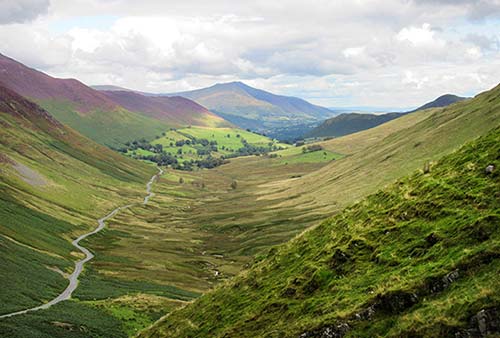
At Newlands Pass (unmarked, but you’ll see a waterfall on the left and a parking pullout), an easy 300-yard hike leads to a little waterfall. On the other side of the road, a one-mile hike climbs up to Knott Rigg, which offers lots of TPCB (thrills per calorie burned). If you don’t have time for even a short hike, at least get out of the car, hike a couple of minutes to your own private bluff, and get a feel for the setting.
Newlands Pass to Honister Pass and Slate Mine: From the pass, descend to Buttermere (scenic lake, tiny hamlet with pubs, a café, and an ice-cream store—see “Buttermere Hike,” earlier), turn left, drive the length of the lake, and climb over rugged Honister Pass—strewn with glacial debris, remnants from the old slate mines, and curious shaggy sheep (the local breed, with their curly horns, look more like goats). The U-shaped valleys you’ll see are textbook examples of those carved out by glaciers. Look high on the hillsides for small “hanging valleys”—they were cut off by the huge flow of the much larger glacier that swept down the main valley floor.
The Honister Slate Mine, England’s last still-functioning slate mine (worth ▲), stands at the summit of Honister Pass. The youth hostel next to it was built to house miners in the 1920s. The mine offers worthwhile tours (perfect for when it’s pouring outside): You’ll put on a hard hat, load onto a bus for a short climb, then hike into a shaft to learn about the region’s slate industry. It’s a long, stooped hike into the mountain, made interesting by the guide and punctuated by the sound of your helmet scraping against low bits of the shaft. Standing deep in the mountain, surrounded by slate scrap and the beams of 30 headlamps fluttering around like fireflies, you’ll learn of the hardships of miners’ lives and how “green gold” is trendy once again, making the mine viable (£17.50, 1.5-hour tour; departs daily at 10:30, 12:30, and 14:30; see website for off-season schedule; reserve online, helmets and lamps provided, wear good walking shoes and bring warm clothing even in summer, café and nice WCs, +44 1768 777 230, www.honister.com). Even if you don’t have time to take the tour, stop here for the slate-filled shop.
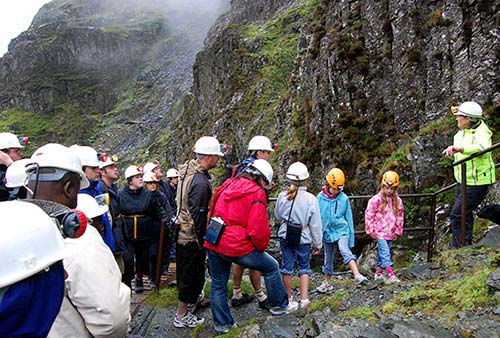
The mine has a pay parking lot for hikers wanting access to nearby high-altitude trails. The slate mine also offers a variety of high-adrenaline activities including Via Ferrata adventures, where you climb/hike with a guide up a cliff while clipped to a safety cable (£60/person, several times daily in high season, 3 hours).
From Honister Slate Mine to Lodore: From the mine, you’ll drop into the sweet and homey Borrowdale Valley, with a few lonely hamlets. Circling past Borrowdale, you’ll turn north onto the B-5289 (a.k.a. the Borrowdale Valley Road), which takes you past the following popular attractions:
The house-size Bowder Stone, thought to have cleaved from the top of a nearby cliff, sits about a 15-minute walk off the main road (signposted); a ladder lets you climb to the top.
Nearby is the village of Grange, which must be the cutest hamlet in the area. It’s built of locally quarried Lakeland Green slate, and mostly by one builder, which adds to the tidy feel. Grange has a couple of inviting cafés and two tiny churches—one vibrant and welcoming; the other is home to the free “Borrowdale Story” history exhibit.
Farther along, Lodore Falls is a short walk from the road, behind the Lodore Falls Hotel (a nice place to stop for tea and beautiful views). Shepherds Crag, a cliff overlooking Lodore, was made famous by pioneering rock climbers as far back as the 1890s. (Their descendants hang from little ridges on its face today.)
From Lodore, with a Detour, to Keswick: A very hard right off the B-5289 at the Ashness Gate Pier (signposted Ashness Bridge, Watendlath) and a steep half-mile climb on a narrow lane takes you to the postcard-pretty Ashness Packhorse Bridge, a quintessential Lake District scene (parking lot just above on right). A half-mile farther up, park the car and hop out (parking lot on left). You’ll be startled by the “surprise view” of Derwentwater—great for a lakes photo op. Continuing from here, the road gets extremely narrow en route to the hamlet of Watendlath, which has a tiny lake and lazy farm animals.
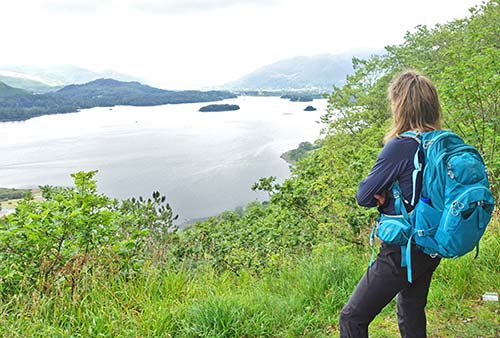
Return to the B-5289 and head back to Keswick. If you have yet to see it, cap your drive with a short detour from Keswick to the Castlerigg Stone Circle (described earlier).
Nightlife in Keswick
For a small and remote town, Keswick has lots going on in the evening. Remember, at this latitude it’s light until 22:00 in midsummer.
▲▲Theatre by the Lake
Keswickians brag that they enjoy “London theater quality at Keswick prices.” Cumbria’s only producing theater offers events year-round on two stages and a wonderful rotation of traveling and home-produced plays from late May through October. Attending a play here is a fine opportunity to enjoy a classy night out.
Cost and Hours: £10-39, discounts for those under 26; shows generally at 19:30, some matinees at 14:00; café, nearby Lakeside Restaurant good for pre-show dinner; located off Lake Road with parking in adjacent lot. It’s smart to buy tickets in advance—book at the box office (generally open Mon-Sat 12:00-19:30 on show days, until 17:00 on non-show days), by phone (+44 1768 774 411), or online (www.theatrebythelake.com).
Pub Events
To socialize with locals, head to a pub for one of their special evenings. Quiz nights are popular at many local pubs, and tourists are more than welcome. Drop in, say you want to join a team, and you’re in. If you like trivia, it’s a great way to get to know people here. The Pack Horse Inn hosts quiz nights most Wed at 21:30, plus live music on many weekends (Packhorse Court, just off the main square). The Oddfellows Arms is a good spot to catch live music (often classic rock) several nights a week (19 Main Street).
Movies
The Keswick Alhambra Cinema, a restored, old-fashioned movie theater a few minutes’ walk from the town center, plays blockbusters and art films (36 St. John’s Street, +44 1768 772 195, www.keswickalhambra.co.uk).
Sleeping in Keswick
The Lake District abounds with attractive B&Bs, guesthouses, and hostels. It needs them all when the summer hordes threaten the serenity of this Romantic-era mecca.
It’s smart to book ahead if you’ll be visiting during the summer or over a festival or bank-holiday weekend (see “Holidays and Festivals” in the appendix). From November through March, you should have no trouble finding a room, but to get a particular place (especially on Saturdays), book ahead. If you have trouble finding a room (or a B&B that accepts small children; most don’t), try Keswick.org to search for available rooms. If you’re using public transportation, sleep in Keswick. Most of my recommended B&Bs and small hotels are within three blocks of the bus station and town square. If you’re driving, staying outside Keswick is your best chance for a remote farmhouse experience.
Many Keswick listings charge extra for a one-night stay and most won’t book one-night stays on weekends. None have elevators and all have lots of stairs—ask about a ground-floor unit if steps are a problem. Owners are enthusiastic about offering advice to get you on the right walking trail. Most accommodations have inviting lounges with libraries of books on the region and loaner maps.
This is still the countryside—expect huge breakfasts (often with a wide selection, including vegetarian options) and shower systems that might need to be switched on to get hot water. Parking is generally easy.
ON STANGER STREET
This street, quiet but just a block from Keswick’s town center, has a few small, family-run B&Bs situated in Victorian slate townhouses. They offer comfortably sized rooms, free parking, and a friendly welcome.
$$ Badgers Wood B&B, at the top of the street, has six modern, bright, unfrilly view rooms, each named after a different tree (4 percent surcharge for credit cards, 2-night minimum, no children under age 12, 30 Stanger Street, +44 1768 772 621, www.badgers-wood.co.uk, enquiries@badgers-wood.co.uk, chatty Scotsman Andrew and his charming wife, Anne).
$$ Abacourt House, with a daisy-fresh breakfast room, has five pleasant doubles (2-night minimum though occasional one-night stays possible—call to check, no children, sack lunches available, 26 Stanger Street, +44 1768 772 967, www.abacourt.co.uk, abacourt.keswick@btinternet.com, John and Heather).
$ Dunsford Guest House rents four updated rooms with a discount for direct bookings. Stained glass and wooden pews give the bright breakfast room a country-chapel vibe (RS%, cash only, 16 Stanger Street, +44 1768 775 059, www.dunsfordguesthouse.co.uk, dunsfordguesthouse@gmail.com, Deb and Keith).
ON THE HEADS
The classy area known as The Heads has B&Bs with bigger and grander Victorian architecture and great views overlooking the pitch-and-putt range and out into the hilly distance. The golf-course side of The Heads has free parking, if you can snare a spot. A single yellow line on the curb means you’re allowed to park for free, but only overnight (16:00-10:00).
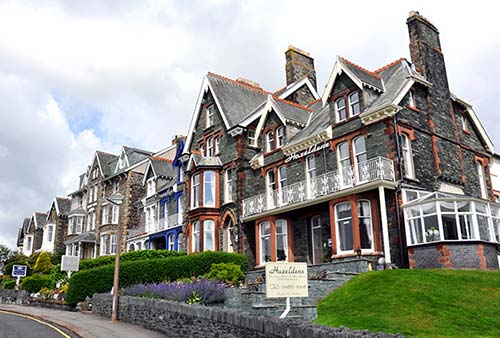
$$$ Hazeldene Hotel, on the corner of The Heads, rents 10 spacious rooms, many with commanding views. Built in 1892, the beautiful Victorian property has an elegant bar downstairs (free parking, +44 1768 772 106, http://thehazeldene.co.uk, info@thehazeldene.co.uk).
$$ Burleigh Mead B&B is a slate mansion from 1892. Gill (pronounced “Jill,” short for Gillian) rents seven lovely rooms, and she and her hard-working daughter Mel offer a friendly welcome, as well as a lounge and peaceful front-yard sitting area that’s perfect for enjoying the view (cash only, discount for longer stays, no children under age 8, +44 1768 775 935, www.burleighmead.co.uk, info@burleighmead.co.uk).
$$ Appletrees Guest House, farther down The Heads, has seven fresh rooms, many with lake (and sheep) views. Relax in the comfortable lounge upstairs where homemade cake is served, or on the spacious patio out front (ground-floor apartment available, +44 1768 780 400, www.appletreeskeswick.com, stay@appletreeskeswick.com; Katherine, Jason, and daughter Grace).
ON ESKIN STREET
Just southeast of the town center, the area around Eskin Street is still within easy walking distance and has stress-free parking.
$$$ Allerdale House, a classy, nicely decorated stone mansion with five rooms and a plush breakfast room, is well run by Mat and Leigh Richards. They like to “bring the outdoors indoors,” with fun climbing-themed decor—Leigh’s grandfather is local mountain-rescue legend George Fisher (RS%, free parking, generally a 3-night minimum, 1 Eskin Street, +44 1768 773 891, www.allerdale-house.co.uk, reception@allerdale-house.co.uk.
HOSTELS IN AND NEAR KESWICK
The Lake District’s inexpensive hostels, mostly located in great old buildings, are handy sources of information and social fun.
¢ Keswick Youth Hostel, with a big lounge and a great riverside balcony, fills a converted mill. Travelers of all ages feel at home here, but book ahead—family rooms book up July through September (breakfast extra, café, bar, office open 7:30-22:00, center of town just off Station Road before river, +44 3453 719 746, www.yha.org.uk, keswick@yha.org.uk).
¢ Derwentwater Hostel, in a mansion built in 1787 on the lakeshore, is two miles south of Keswick (breakfast extra, family rooms; follow the B-5289 from Keswick—entrance is 2 miles along the Borrowdale Valley Road about 150 yards after Ashness exit—look for cottage and bus stop at bottom of the drive; +44 1768 777 246, www.derwentwater.org, contact@derwentwater.org).
IN THE NEWLANDS VALLEY
If you have a car, drive 10 minutes west and south of Keswick into the majestic Newlands Valley (described earlier, under “Scenic Circle Drive South of Keswick”) to find accommodations with easy parking, grand views, and perfect tranquility. Rooms here tend to be plainer and more dated than those in town and come with steep and gravelly roads, plenty of dogs, and an earthy charm. Don’t expect mobile-phone service—even your B&B’s satellite Wi-Fi can be spotty. Traditionally, farmhouses lacked central heating, and while they are now heated, you can still request a hot-water bottle to warm up your bed. For locations see the map on here.
Getting to the Newlands Valley: Leave Keswick via the roundabout at the end of Crosthwaite Road, and then head west on Cockermouth Road (A-66). Take the Newlands Valley exit through Braithwaite (B-5292) and follow signs toward Buttermere and Newlands. You’ll find the recommended B&B on this road, a 10- to 15-minute drive from Keswick. The one-lane road is tight but has turnouts for passing.
$ Gill Brow Farm is a rough-hewn working farmhouse more than 300 years old where Anne Wilson rents two simple but fine rooms, one with an en suite bathroom, the other with a private bathroom down the hall (self-catering cottage that sleeps up to 6 also available, +44 1768 778 270, www.gillbrow-keswick.co.uk, info@gillbrow-keswick.co.uk).
IN BUTTERMERE
For locations see the map on here.
$$$$ Bridge Hotel, just beyond the Newlands Valley at Buttermere, offers 21 beautiful rooms—most of them quite spacious—and a classic Old World countryside-hotel experience. On Fridays and Saturdays, dinner is required (apartments available, minimum 2-night stay on weekends, +44 1768 770 252, www.bridge-hotel.com, enquiries@bridge-hotel.com). There are no shops within 10 miles—only peace and quiet a stone’s throw from one of the region’s most beautiful lakes. The hotel has a dark-wood pub on the ground floor.
¢ Buttermere Hostel, a quarter-mile south of Buttermere village on Honister Pass Road, has good food and a peacefully rural setting (private and family rooms, breakfast extra, inexpensive dinners, office open 7:30-10:00 & 17:00-22:00, reservation +44 3453 719 508, www.yha.org.uk, buttermere@yha.org.uk).
NEAR BORROWDALE
For locations see the map on here.
$$ Ashness Farm, ruling its valley high above Derwentwater, immerses guests in farm sounds and lakeland beauty. On this 750-acre working farm, now owned by the National Trust, people have raised sheep and cattle for centuries. Today, Anne and her family are “tenant farmers,” keeping this farm operating and renting five rooms to boot (2-night minimum, cozy lounge, farm-fresh eggs and locally sourced sausage for breakfast, sack lunches available, just above Ashness Packhorse Bridge, +44 1768 777 361, www.ashnessfarm.co.uk, enquiries@ashnessfarm.co.uk).
¢ Borrowdale Hostel, in the secluded Borrowdale Valley just south of Rosthwaite, is a well-run place surrounded by many ways to immerse yourself in nature. The hostel offers cheap dinners and sack lunches (private and family rooms, breakfast extra, office open 7:30-10:00 & 17:00-22:00, game room, reservation +44 3453 719 624, www.yha.org.uk, borrowdale@yha.org.uk). To reach this hostel from Keswick by bus, take #78, the Borrowdale Bus. Note that the last bus from Keswick departs around 18:00 most of the year (for bus details, see “Getting Around the Lake District—Without a Car,” earlier).
Eating in Keswick
Keswick has a variety of good, basic eateries, but nothing particularly outstanding. Most places stop serving by 21:00. Where reservations are available, it’s best to book ahead on weekends for dinner.
$$ The Dog and Gun serves good pub food (their beef-and-ale pie is a hit) with great pub ambience. Upon arrival, muscle up to the bar to order your drink. You’ll need to have a table to order food: Sip your drink while you wait for one to open up, then place your food order at the bar with your table number. Mind your head and tread carefully: Low ceilings and wooden beams loom overhead, while paws poke out from under tables below, as Keswick’s canines wait patiently for their masters to finish their beer (food served daily from 12:00, famous goulash, dog treats, 2 Lake Road, +44 1768 773 463).
$$ The Pheasant Inn is a walk outside town, but locals trek here regularly for the food. The menu offers Lake District pub standards (fish pie, Cumberland sausage) as well as more inventive choices. Check the walls for caricatures of pub regulars, sketched at these tables by a Keswick artist. There’s a small restaurant section, but I much prefer eating in the bar (daily, bar open until late, Crosthwaite Road, +44 1768 772 219). From the town square, walk past the Pencil Museum, hang a right onto Crosthwaite Road, and walk 10 minutes. For a more scenic (and safer) route, cross the river into Fitz Park, go left along the riverside path until it ends at the gate to Crosthwaite Road, turn right, and walk five minutes.
$ Elm, a little café tucked away on the upper floor of the giant George Fisher outdoor store, serves healthy breakfasts and light lunches, along with cakes and excellent coffee (closed for dinner, closed Tue-Wed, 2 Borrowdale Road, +44 1768 772 178).
$$ Merienda, with a friendly staff and a contemporary space, can be a welcome break from pub grub, serving up an inviting menu of international and vegetarian dishes. The upstairs is more atmospheric (daily, dinner reservations recommended, 10 Main Street, +44 1768 772 024, www.merienda.co.uk).
$$ Bryson’s Bakery and Tea Room has an enticing ground-floor bakery with sandwiches and light lunches. Order your selection to-go from the bakery, or for a few pence more, eat in, either sitting on stools or at a sidewalk table. Upstairs at the popular tearoom, consider their Cream Tea made with local ingredients; it’s a good deal for what most would consider “afternoon tea,” with sandwiches, scones, and little cakes served on a three-tiered platter (daily until 17:00, 42 Main Street, +44 1768 772 257).
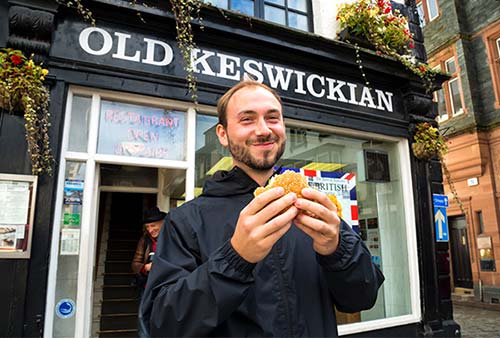
$ The Old Keswickian, a fish-and-chips shop, is a fixture on the main square, with an old-fashioned takeaway bar on the ground floor and 70 seats upstairs in a proper dining room (daily, on Market Square, +44 1768 773 861).
$$ The Square Orange Café—small and very orange—is a quirky place that just makes you want to smile. It’s popular—and they take no reservations, so grab one of their little tables when you can and then order at the bar. The eclectic menu features Spanish tapas, Neapolitan pizzas, fun cocktails, and fine European beers (daily, 20 St. John’s Street, +44 1768 773 888).
$$ The George Hotel Restaurant and Bar, with a good solid pub and a large dining room, is a warm and cozy Old World place. They offer the same extensive and very English menu in both the restaurant and bar (daily, order at the pub’s bar or wait to be served in the restaurant, +44 1768 392 147, 3 St. John’s Street, reservations in dining room only).
Eateries on Station Street: The street leading from the town square to the leisure center has several restaurants, including $$ Casa Bella, a popular and well-priced Italian place that’s good for families—reserve ahead (daily, 24 Station Street, +44 1768 775 575, www.casabellakeswick.co.uk). $ Asaya Thai Restaurant, a hard-working, bright-and-mellow place, is a solid, inexpensive bet (daily from 17:00, 21 Station Street, +44 1768 775 111).
Picnic Food: Find an enticing variety of fresh meat pies to go at $ The Cornish Pasty (daily until 17:00 or when all the pasties are all gone, 3 Lake Road, across from The Dog and Gun, +44 1768 772 205). Or stop by the huge Booths grocery store (see “Helpful Hints,” earlier).
EATING IN THE NEWLANDS VALLEY
The farmhouse B&Bs of Newlands Valley don’t serve dinner, but guests have two good options for an evening meal: Go into Keswick, or take the lovely 10-minute drive to Buttermere. In Buttermere you have three choices: $$ High Stile Kitchen, attached to the Buttermere Court Hotel, has fine indoor and outdoor seating but takes no reservations (daily, +44 1768 770 253). The neighboring $$ Bridge Hotel Pub, a bit cozier and more expensive, takes a modern approach to classic pub grub (pub open daily, +44 1768 770 252). For lunch in Buttermere, also consider the $ Croft House Farm Café, which serves freshly made soups, salads, and sandwiches to eat on their sunny deck or to take away (daily, +44 1768 770 235).
Keswick Connections
The nearest train station to Keswick is in Penrith (no lockers). For train and bus info, check at a TI, visit Traveline.info, or call +44 3457 484 950 (for trains). Most routes run less frequently on Sundays.
From Keswick by Bus: For bus routes and connections, see “Getting Around the Lake District—Without a Car,” earlier.
From Penrith by Bus to: Keswick (hourly, every 2 hours on Sun, 40 minutes, Stagecoach bus #X4 or #X5), Ullswater and Glenridding (6/day, more frequent in summer with open-top buses, 50 minutes-1 hour, bus #508). The Penrith bus stop is just outside the train station (bus schedules posted inside and outside station).
From Penrith by Train to: Blackpool (hourly, 1.5 hours, change in Preston), Liverpool (2/hour, 2 hours, change in Wigan or Preston), Birmingham’s New Street Station (5/day direct, more with transfer, 3 hours), Durham (1-2 hourly, 3 hours, 1-2 transfers), York (roughly 2/hour, 3.5 hours, 1-2 transfers), London’s Euston Station (hourly, 3.5 hours), Edinburgh (10/day direct, more with transfer, 1.5 hours), Glasgow (hourly direct, 1.5 hours), Oban (5/day, 6 hours, transfer in Glasgow).
ROUTE TIPS FOR DRIVERS
From Points South to the Lake District: From Blackpool, Liverpool, or North Wales, the direct, easy way to Keswick is to leave the M-6 at Penrith and take the A-66 motorway for 16 miles to Keswick. For a scenic sightseeing drive through the south lakes to Keswick, exit the M-6 on the A-590/A-591 through the towns of Kendal and Windermere to reach Brockhole National Park Visitors Centre. From Brockhole, the A-road to Keswick is fastest, but the high road—the tiny road over Kirkstone Pass to Glenridding and lovely Ullswater—is much more dramatic.
Coming to or from the West: Only 1,300 feet above sea level, Hardknott Pass is still a thriller, with a narrow, winding, steeply graded road. Just over the pass are the scant but evocative remains of the Hardknott Roman fortress. It can be slow and frustrating when the one-lane road is clogged by traffic. Avoid it on summer weekends.
Ullswater Lake Area
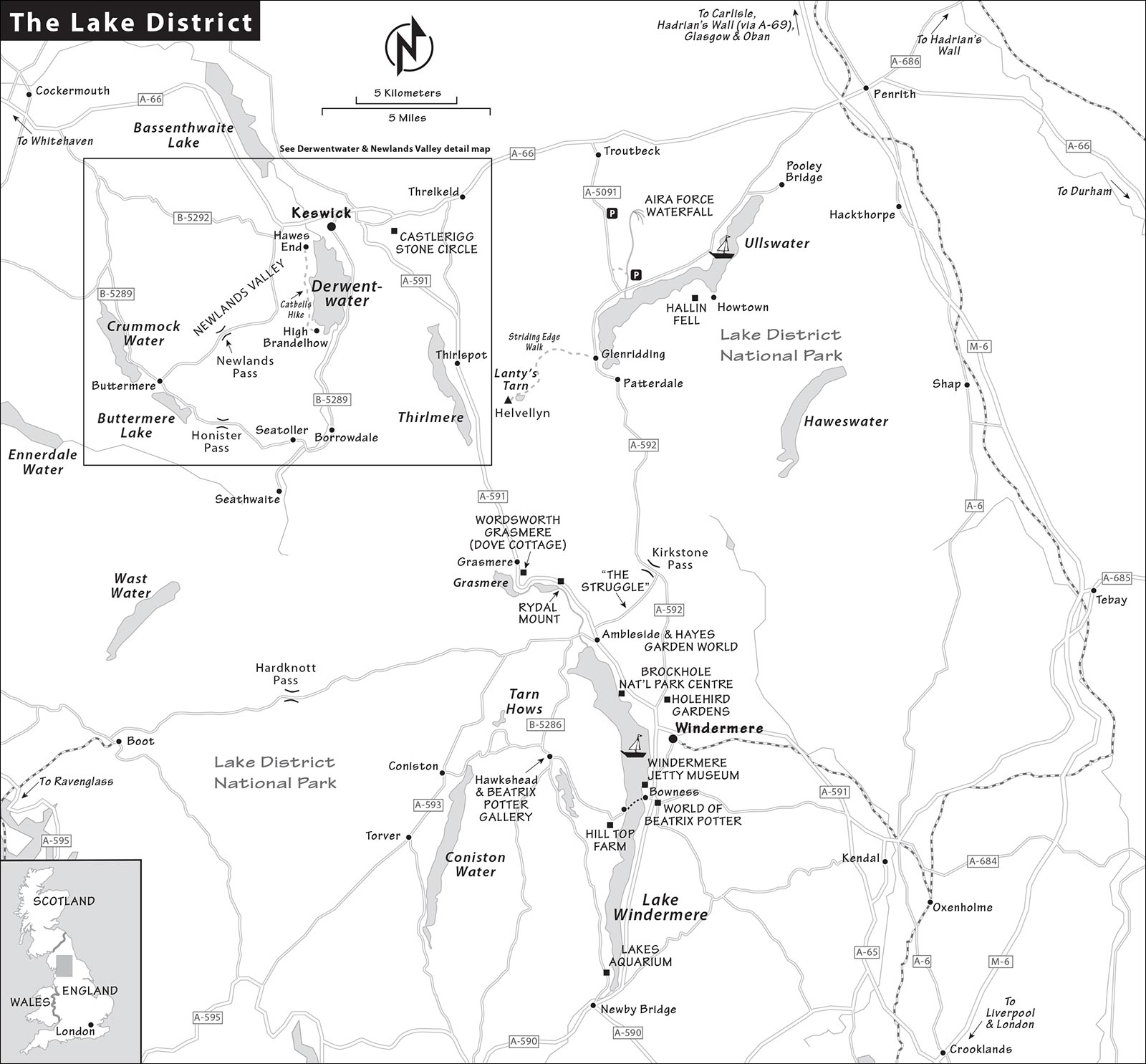
Long, narrow Ullswater, which some consider the loveliest lake in the area, offers miles of diverse and grand Lake District scenery. The main town on Ullswater is the stony village of Glenridding, which is little more than a few pubs and shops along the bank of a spritely stream. Visit the TI there for advice on the area (daily 9:30-17:30, Nov-March weekends only until 15:30, located in the village’s pay parking lot, +44 1768 482 414, www.visiteden.co.uk [URL inactive]). For locations of Ullswater sights, see the “Lake District” map near the beginning of this chapter.
▲▲Ullswater Hike and Boat Ride
While you can drive it or cruise the lake, I’d ride the boat from the south tip halfway up (to Howtown—which is nothing more than a dock) and hike back. Or walk first, then enjoy an easy boat ride back.
Old-fashioned “steamer” boats (actually diesel-powered) leave Glenridding regularly for Howtown and Pooley Bridge with shuttle boats connecting Glenridding and Aira Force (Howtown-Pooley Bridge boats depart daily generally 9:45-16:35, 6-9/day April-Oct, fewer off-season; 35 minutes to Howtown—£9 one-way/£13 round-trip; 60 minutes to Pooley Bridge—£13 one-way/£21 round-trip; Aira Force shuttle runs daily 10:00-16:30, 20 minutes and £9 one-way/£13 round-trip; £17.50 bus/boat combination includes both boats—buy on bus; smart to reserve tickets online a day in advance in high season; drivers should try the pay-and-display parking lot at the dock first—you’ll pass the expensive overflow lot on your way there; by public transit take bus #508 from Penrith, café at dock, +44 1768 482 229, www.ullswater-steamers.co.uk).
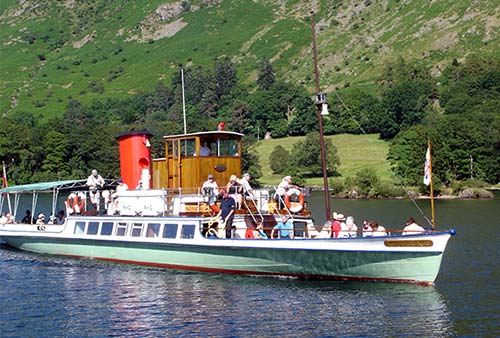
From Howtown, spend three to four hours hiking and dawdling along the well-marked path by the lake south to Patterdale, and then along the road back to Glenridding. This is a serious seven-mile walk with good views, varied terrain, and a few bridges and farms along the way. For a shorter hike from the Howtown pier, consider a three-mile loop around Hallin Fell. A rainy-day plan is to ride the covered boat up and down the lake to Howtown and Pooley Bridge at the northern tip of the lake (2 hours). Boats don’t run in strong winds—call ahead if it looks iffy.
If you’d rather get out on the water on your own, you can rent canoes and kayaks just south of Glenridding—ask locally for details.
▲▲Lanty’s Tarn and Keldas Hill
If you like the idea of an Ullswater-area hike but aren’t up for the long huff from Howtown, consider this shorter (but still moderately challenging and plenty scenic) loop that leaves right from the TI’s pay parking lot in Glenridding (about 2.5 miles, allow 2 hours; before embarking, buy the leaflet at the TI that describes this walk).
From the parking lot, head to the main road, turn right to cross the Glenridding Beck river, then turn right again immediately and follow the river up into the hills. After passing a row of cottages, turn left, cross the wooden bridge, and proceed up the hill through the swing gate. Head steeply up the stone path, pass through another gate, and continue up until you reach the next swing gate (set in a stone wall). Do not go through this gate—yet (you’ll eventually go through it and walk along the lake to finish the loop). Turn left and head to yet another gate. From here you can see the small lake called Lanty’s Tarn.
Continue your detour to the top of the adjacent hill, called Keldas, for sweeping views over the near side of Ullswater (to reach the summit, climb over the step gate and follow the faint path up the hill). Returning to—and passing through—the swing gate, you’ll walk along Lanty’s Tarn on your left, then begin your slow, steep, and scenic descent into the Grisedale Valley. Reaching the valley floor (and passing a noisy dog breeder’s farm), cross the stone bridge, then turn left and follow the road all the way back to the lakefront, where a left turn returns you to Glenridding.
▲Aira Force Waterfall
On the north bank of Ullswater, there’s a delightful little park with parking, a ranger station, a free WC, and easy trails leading a half-mile uphill to a powerful 60-foot-tall waterfall. At the falls a little loop trail takes you over two romantic stone arched bridges, one of which goes right over the raging water (the lower trail may be closed). Wordsworth was inspired to write three poems here...and after taking this little walk, you’ll know why. Park at the pay-and-display lot just where the A-5091 from Troutbeck hits the lake and the A-592 (best to arrive before 10:00 or after 17:00 on holidays and sunny weekends). To get to the falls with a much shorter walk (10 minutes), drivers can find the Park Brow pay-and-display lot above the lake on A-5091 (direction Troutbeck). Or consider taking an Ullswater “steamer” and shuttle boat combination (details at www.ullswater-steamers.co.uk).
Helvellyn
Considered by many the best high-mountain hike in the Lake District, this breathtaking 7.5-mile round-trip route from Glenridding includes the spectacular Striding Edge—about a half-mile knife’s edge along the ridge. (If this is too scary, there is a detour trail.) Be careful; this is a demanding six-hour hike with some scrambling, and should be done only in good weather, since the wind can be fierce. While it’s not the shortest route, the Glenridding ascent is best. Get advice from the Ullswater TI in Glenridding or look for various books on this hike at any area TI.
▲Kirkstone Pass
Heading south from Ullswater to Windermere, you drive over the 1,500-foot Kirkstone Pass. The stark Ullswater Valley is famous for its old, dry stone walls, built without mortar. Back in the 18th century, the British parliament passed a series of “enclosures acts,” which allowed private ownership of what had been communal farmland. Landowners began squabbling about boundaries and set about establishing clear property lines with stone walls. But because the walls were expensive, the feuding landowners began collaborating and sharing the cost...and they began getting along. To this day, these fine walls still define the valley’s family farms. If you look carefully, you can see “sheep creeps”—small holes in the walls to allow sheep to be moved conveniently from one field to the next.
At the summit, stop to enjoy the view. You’ll also see the Kirkstone Pass Inn, a 500-year-old coaching stop and longtime inn that finally closed in 2022. The steep road just across from the inn is called “The Struggle” for the work it took for those long-ago coaches to climb it.
▲Holehird Gardens
South of Kirkstone Pass on the Ullswater-Windermere road, Holehird is a haven for gardeners. Long run by Lakeland Horticultural Society volunteers, it’s one of the most enjoyable gardens in England. Stop first at the reception to take advantage of the info desk and pick up a map. Adjacent are the walled garden and several greenhouses. Of particular interest are several National Plant Collections, a program to systematically gather and preserve particular plant families cultivated in the UK. The Holehird examples are well worth seeking out.
Cost and Hours: Suggested £5 donation, open dawn to dusk, WC, on the A-592 one mile north of Windermere, +44 1539 446 008, www.holehirdgardens.org.uk.
South Lake District
The South Lake District has a cheesiness that’s similar to other popular English resort destinations. Here, piles of low-end vacationers suffer through terrible traffic, slurp ice cream, and get candy floss caught in their hair. The area around Windermere is worth a drive-through if you’re a fan of Wordsworth or Beatrix Potter, but you’ll still want to spend most of your Lake District time (and book your accommodations) up north. For locations, see the “Lake District” map near the beginning of this chapter.
GETTING AROUND THE SOUTH LAKE DISTRICT
By Car: Driving is your best option to see the small towns and sights clustered here; consider combining your drive with the bus trip mentioned next. If you’re coming to or leaving the South Lake District from the west, you could take the steeply winding Hardknott Pass for a scenic introduction to the area (see “Keswick Connections,” earlier, for route tips).
By Bus: Buses #599 and #555 are a fine and stress-free way to lace together the gauntlet of sights in the congested Lake Windermere area. Consider leaving your car at Grasmere and enjoying the breezy and extremely scenic bus #599, hopping off and on as you like (see “Getting Around the Lake District—Without a Car,” earlier, for details).
By Boat: Go by water with Windermere Lake Cruises, which run from Bowness to Ambleside and other points on the lake all year (several itineraries offered, some are seasonal; +44 1539 443 360, www.windermere-lakecruises.co.uk).
Sights in the South Lake District
▲▲Dove Cottage at Wordsworth Grasmere
Hawkshead Grammar School Museum
MORE SIGHTS AT LAKE WINDERMERE
Brockhole National Park Visitors Centre
WORDSWORTH SIGHTS
William Wordsworth was one of the first writers to reject fast-paced city life. During England’s Industrial Age, hearts were muzzled and brains ruled. Science was in, machines were taming nature, and factory hours were taming humans. In reaction to these brainy ideals, a rare few—dubbed Romantics—began to embrace untamed nature and undomesticated emotions.
Back then, nobody climbed a mountain just because it was there—but Wordsworth did. He’d “wander lonely as a cloud” through the countryside, finding inspiration in “plain living and high thinking.” He soon attracted a circle of like-minded creative friends.

The emotional highs the Romantics felt weren’t all natural. Wordsworth’s poet friends Samuel Taylor Coleridge and Thomas de Quincey got stoned on opium and wrote poetry, combining their generation’s over-the-counter painkiller drug with their tree-hugging passions (Coleridge’s opium scale is on view in Dove Cottage). Today, opium is out of vogue, but the Romantic appreciation of the natural world thrives as visitors continue to inundate the region.
▲▲Dove Cottage at Wordsworth Grasmere
For literary types, this visit is the top sight of the Lake District. Take a short tour of William Wordsworth’s humble cottage; get inspired in its excellent museum, which displays original writings, sketches, personal items, and fine paintings; and wander the garden/orchard.
The poet whose appreciation of nature and a back-to-basics lifestyle put this area on the map spent his most productive years (1799-1808) in this well-preserved stone cottage on the edge of Grasmere. After functioning as the Dove and Olive Bow pub for almost 200 years, it was bought by his family. This is where Wordsworth got married, had kids, and wrote much of his best poetry. The place comes with some amazing artifacts, including the poet’s suitcase (he packed light), his walking stick and sandwich box, and his own furniture. Even during his lifetime, Wordsworth was famous, and Dove Cottage was turned into a museum in 1891—it’s now protected by the Wordsworth Trust.

Cost and Hours: £14 for cottage and museum, £11 for museum only; cottage visit only with included guided tour (every 20 minutes); Tue-Sat 10:00-17:00, Oct-March until 16:00, closed Sun-Mon; café, bus #555 from Keswick, bus #555 or #599 from Windermere, +44 1539 435 544, www.wordsworth.org.uk. Pay parking in the Dove Cottage lot off the main road (A-591), 50 yards from the site.
Events: Various events and activities take place daily on the grounds, such as guided tours, poetry readings by volunteers in period costumes, and opportunities to sketch or pen your own poem (check the website).
Visiting the Cottage and Museum: Wordsworth’s appreciation of nature, his Romanticism, and the ways his friends unleashed their creative talents with such abandon are appealing. If you’re visiting the cottage, you’ll start with a short video introducing Wordsworth’s time there, first with his sister Dorothy (a great writer in her own right) and later with his wife Mary. You’ll then be led into the cottage and set free to look around, with your guide standing by to answer questions. Scattered on tables are re-creations of handwritten poems, journal entries, and letters, all telling the story of Wordsworth’s life here. One of the tables and a nearby grandfather clock actually belonged to him.
After your tour, take some time to wander as Wordsworth did around the garden behind the cottage, which you’ll pass through on your way to the adjoining museum. The museum has lots of manuscripts handwritten by Wordsworth and his illustrious friends, and audiovisual displays combining recitations of his poetry with views of the landscapes that inspired him.
▲Rydal Mount and Gardens
Located just down the road from Dove Cottage, this sight is worthwhile for Wordsworth fans. The poet’s final, higher-class home lacks the humble charm of Dove Cottage but still evokes the creative spirit of the literary giant who lived here for 37 years. His family repurchased it in 1969 (after a 100-year gap), and his great-great-great-granddaughter still calls it home on occasion, as shown by recent family photos sprinkled throughout the house.
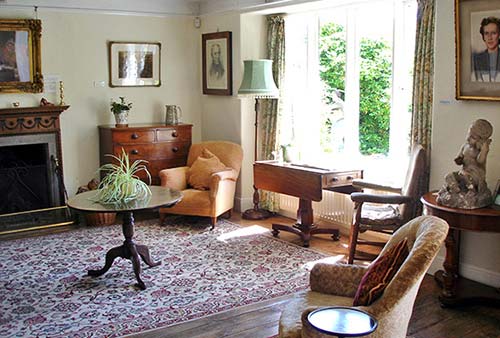
You’re free to roam the house, or you can join one of the free tours that run every hour on the hour. Wander through the lovely garden William himself designed, which has changed little since then. Surrounded by nature, you can imagine the poet enjoying it all with you. “O happy garden! Whose seclusion deep hath been so friendly to industrious hours; and to soft slumbers, that did gently steep our spirits, carrying with them dreams of flowers, and wild notes warbled among leafy bowers.”
Cost and Hours: £11.50, £5 for garden only; daily 9:30-17:00, last tour starts at 16:00, shorter hours off-season and closed Jan; occasionally closed for private functions—check website; tearoom, 1.5 miles north of Ambleside, well signed, free parking, bus #555 from Keswick, +44 1539 433 002, www.rydalmount.co.uk.
BEATRIX POTTER SIGHTS
Author and illustrator Beatrix Potter, of Peter Rabbit fame, lived and worked in the Lake District for years. Of the many attractions in the area that claim a connection to her, there are two serious sights: Hill Top, her farm, and the Beatrix Potter Gallery, filled with her sketches and paintings. The sights are two miles apart: Beatrix Potter Gallery is in Hawkshead, an extremely cute but extremely touristy town that’s a 20-minute drive south of Ambleside; Hill Top Farm is south of Hawkshead, in Near Sawrey village.
Because the number of visitors to Hill Top Farm is strictly limited, booking in advance is all but required in summer. You may be able to snag an afternoon first-come, first-served spot, but it’s equally possible you’ll miss out. Even if you do get a last-minute spot, you may be stuck waiting a while for your timed entry. If you like quaint towns engulfed in Peter Rabbit tourism, the extra time in Hawkshead can be a blessing. Otherwise, you’ll wish you were in the woods somewhere with Wordsworth.
To reach Hawkshead from Windermere, take bus #505 or catch the ferry from Bowness (runs continually except when it’s extremely windy, 10-minute trip). If going straight to Hill Top, it’s a 5-minute drive or 40-minute walk from the ferry landing. Hawkshead doesn’t have a TI, but you may be able to get information from the post office (just down from the Beatrix Potter Gallery).
▲Hill Top Farm
A hit with Beatrix Potter fans (and skippable for others), this dark and intimate cottage, swallowed up in the inspirational and rough nature around it, provides an enjoyable if quick experience. The six-room farm was left as it was when Potter died in 1943. At her request, the house is set as if she had just stepped out—flowers on the tables, fire on, low lights. While there’s no printed information here, guides in each room are eager to explain things. Fans of the classic Tale of Samuel Whiskers will recognize the home’s rooms, furniture, and views—the book and its illustrations were inspired by an invasion of rats when Potter bought this place.
As a girl growing up in London, Beatrix Potter vacationed in the Lake District, where she became inspired to write her popular children’s books. Unable to get a publisher, she self-published the first two editions of The Tale of Peter Rabbit in 1901 and 1902. When she finally landed a publisher, sales of her books were phenomenal. With the money she made, she bought Hill Top Farm, a 17th-century cottage, and fixed it up, living there sporadically from 1905 until she married in 1913. Potter was more than a children’s book writer; she was a fine artist, an avid gardener, and a successful farmer. She married a lawyer and put her knack for business to use, amassing a 4,000-acre estate. An early conservationist, she used the garden-cradled cottage as a place to study nature. She willed it—along with the rest of her vast estate—to the National Trust, which she enthusiastically supported.
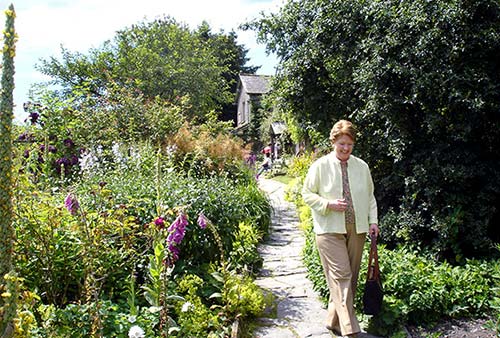
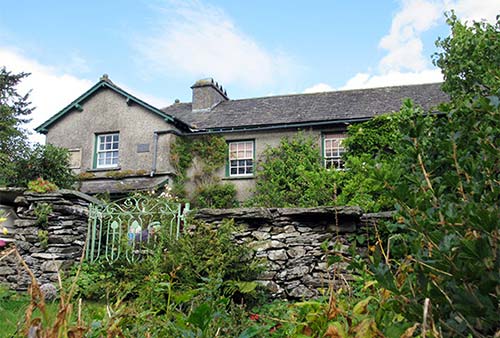
Cost and Hours: Farmhouse and gardens-£15; open June-Aug daily 10:00-17:00, sometimes closed Fri—check online, closes earlier off-season, house generally closed Nov-early March; +44 1539 436 269 or +44 3442 491 895, www.nationaltrust.org.uk/hill-top.
Reservations Recommended: Only 40 people are allowed in every 30 minutes. Admission is by timed ticket, and reservations open up every Thursday for the next two weeks (you can book online up until 8:00 the same day). Big bus or student groups (common in late July and Aug) tend to book up morning slots. Afternoon tickets may be available on a first-come, first-served basis, but if Hill Top is high on your list, it’s best to book in advance.
Getting There: Drivers can take the B-5286 and B-5285 from Ambleside or the B-5285 from Coniston—be prepared for extremely narrow roads that are often lined with stone walls—and no shoulders. You’ll find the free, 30-car museum parking lot and ticket office about 150 yards down the road from the farm. If the lot is full, an attendant can direct you where to go.
▲Beatrix Potter Gallery
Located in the cute town of Hawkshead, this gallery fills the one-time law office of Potter’s husband with the wonderful and intimate drawings and watercolors she made to illustrate her books. Each year the museum highlights a new theme and brings out a different set of Potter’s paintings, drawings, and other items. Unlike Hill Top, the gallery has plenty of explanation about her life and work. Anyone will find this museum rather charming and her art surprisingly interesting. It was closed for repairs during the 2023 season; check the website before you visit for reopening updates.
Cost and Hours: Likely £9; generally open Sun-Thu 10:30-16:00, closed Fri-Sat and Nov-late March; Main Street, drivers use the nearby Hawkshead pay-and-display lot and walk 200 yards to the town center, +44 1539 436 355, www.nationaltrust.org.uk/beatrix-potter-gallery [URL inactive].
Hawkshead Grammar School Museum
This interesting museum, just across from the pay-and-display parking lot, was founded in 1585 and is where William Wordsworth studied from 1779 to 1787. It shows off old school benches and desks whittled with penknife graffiti.
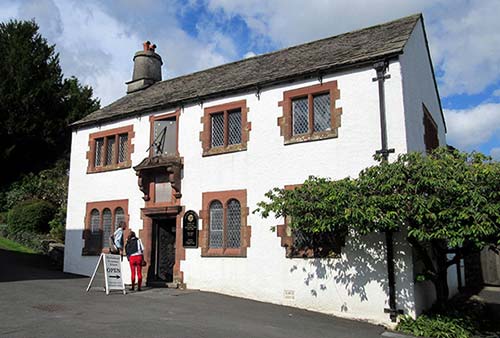
Cost and Hours: £4, Wed-Mon 11:00-16:00, closed Tue and Nov-March; +44 1539 436 674, www.hawksheadgrammar.org.uk.
The World of Beatrix Potter
This exhibit, a hit with children, is gimmicky, with all the historical value of a Disney ride. The experience begins with a five-minute film introducing Potter and her characters. After that, you’ll tour through a series of Lake District tableaux starring Mrs. Tiggy-winkle, Peter Rabbit, Mr. Jeremy Fisher, and company. From July through September, there’s often a daily theater show—check event schedule online and reserve ahead.
Cost and Hours: £9, kids-£5; daily 10:00-17:30, Nov-March until 16:30, last entry one hour before closing; tearoom, on Crag Brow in Bowness-on-Windermere, parking available at the back of the building or use the pay-and-display lots at the pier, +44 1539 488 444, www.hop-skip-jump.com.
MORE SIGHTS AT LAKE WINDERMERE
Brockhole National Park Visitors Centre
This visitors center (between Ambleside and Windermere on the A-591) is set in a lakeside park and surrounded by lots of touristic kitsch. It offers a video on life in the Lake District, an information desk, exhibits, a shop (with maps and guidebooks), gardens, and nature walks. It’s a popular place to bring kids for its free adventure playground with slides, swings, nets, and swinging bridges. Other family activities include an aerial treetop trek, a zip line, and mini golf. Boat and bike rentals are also available.
Cost and Hours: Free entry—but you’ll pay to park and for many activities; visitors center open daily 10:00-17:00, longer summer hours for gardens and playground; Nov-March until 16:00; +44 1539 446 601, www.brockhole.co.uk.
Cruise: For a joyride around famous Lake Windermere, you can catch the Brockhole “Green” cruise here (£12.70, runs daily April-Oct 10:20-17:50, hourly, 50-minute circuit, scant narration, passengers can hop on and off on one ticket, +44 1539 443 360, www.windermere-lakecruises.co.uk).
Windermere Jetty Museum
On the east shore of Windermere, this museum offers a fun opportunity to learn about the boating history of the lake over the past 200 years. Brush up on your maritime vocabulary with the display of mooring warps, splicing fids, fenders, and more. Then view the museum’s collection of 40 boats (about half are exhibited at any one time). You’ll find rowing skiffs (including one belonging to Beatrix Potter), motorboats, and steam launches, including Dolly, a 19th-century example salvaged from the bottom of the lake in 1962. At the adjacent conservation workshop, watch the ongoing restoration of the old boats (there’s a “conservation conversation” daily at 11:30); other vintage boats are berthed in the lakeside boathouse. Kids will enjoy the model boat pond.
Cost and Hours: £9, additional £9 for trip on the steam launch Osprey; daily 10:00-17:00, Nov-Feb until 16:00, last entry one hour before closing, free parking, café, +44 1539 637 940, www.windermerejetty.org.
Getting There: The museum is just off the A-592, near Bowness Pier. Bus #599 from Ambleside (daily mid-July-Aug) stops at Bowness Pier (12-minute walk), where Windermere Lake Cruises also stop (www.windermere-lakecruises.co.uk).
Lakes Aquarium
Get a glimpse of the natural history of Cumbria via exhibits describing the local wildlife living in lake and coastal environments, including otters, eels, pike, and sharks. A rainforest exhibit features reptiles and marmoset monkeys. Experts give various talks throughout the day.
Cost and Hours: £8.95; daily 10:00-17:30, until 16:00 in winter, last entry one hour before closing; in Lakeside, one mile north of Newby Bridge, at south end of Lake Windermere, +44 1539 530 153, www.lakesaquarium.co.uk.
Hayes Garden World
This extensive gardening center, a popular weekend excursion for locals, offers garden supplies, a bookstore, a playground, and gorgeous grounds. Gardeners could wander this place all afternoon. Upstairs is a fine café (open Mon-Sat 9:00-17:30, Sun 10:00-17:00, café open daily until 16:00, at south end of Ambleside on main drag, see Garden Centre signs, located at north end of Lake Windermere, +44 1539 433 434, www.hayesgardenworld.co.uk).