PORTSMOUTH
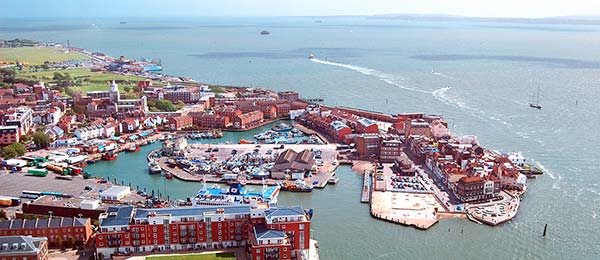
Portsmouth, the age-old home of the Royal Navy and Britain’s second-busiest ferry port after Dover, is best known for its Historic Dockyard and many nautical sights. For centuries, Britain, a maritime superpower, relied on the fleets based in Portsmouth to expand and maintain its vast empire and guard against invaders. When sea power was needed, British leaders—from Henry VIII to Winston Churchill to Margaret Thatcher—have called upon Portsmouth to ready the ships.

As a major military target, the city of Portsmouth was flattened by WWII bombs (ironically, the Historic Dockyard was relatively unscathed). When the Allies gathered their forces in preparation for D-Day, the locals say there were so many ships in the harbor that it seemed you could walk deck to deck all the way to the Isle of Wight. Today, the town still feels deeply scarred by World War II. The cathedral survived because the Nazis used it as a beacon to help guide their bombs. The main drag—High Street—was mostly rebuilt after 1945 and is of almost no tourist interest. Postwar reconstruction was hasty and poorly planned, and the city became infamous for its bad architecture.
But today Portsmouth is changing. Efforts to rejuvenate tourism have included refurbishing Old Portsmouth, building a sprawling new waterfront shopping complex, and adding a sail-like monolith to the skyline. Increasingly, Portsmouth is feeling spiffy and contemporary.
The old nautical sights are impressive. Visitors can tour an array of Royal Navy ships from many eras, including the HMS Victory, which played a key role in Britain’s battles with Napoleon’s navy, and see the remains of the Mary Rose, a 16th-century warship that was a favorite of Henry VIII.
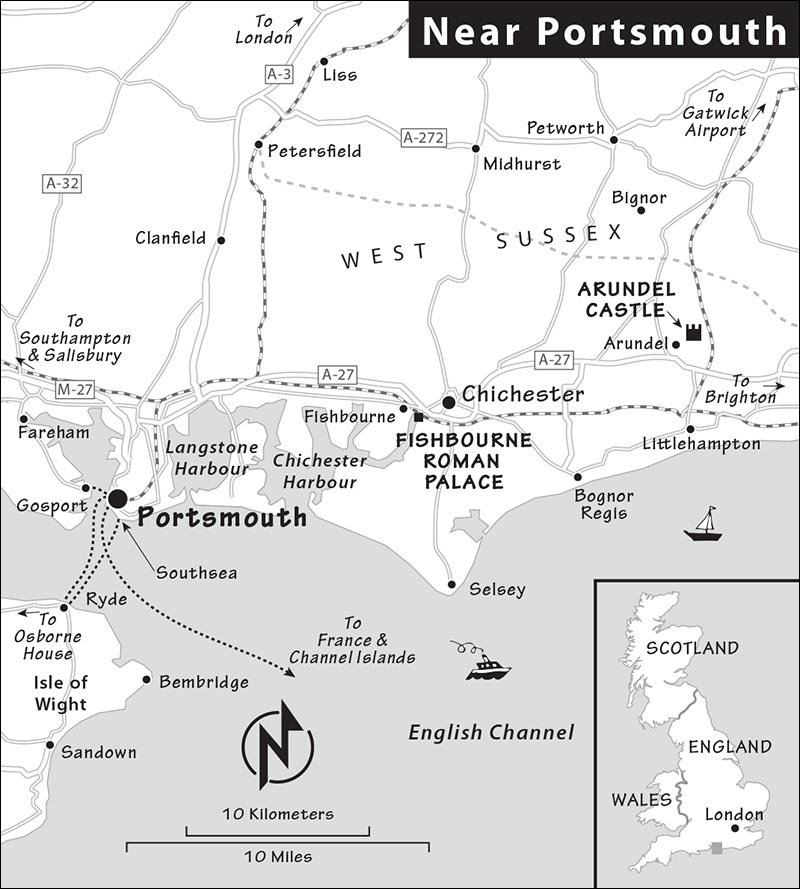
Drivers connecting Portsmouth and Brighton can consider checking out two very different palaces: the ancient remains of Fishbourne Roman Palace, with its striking mosaics; and thriving Arundel Castle, still the proud home of an English duke.
PLANNING YOUR TIME
Portsmouth works well as a day trip from London, Bath, or Salisbury. The city’s top sights, at the Historic Dockyard, can be seen in a few hours. If you add the D-Day Story museum, bustling Gunwharf Quays, and Spinnaker Tower, you’ll have no trouble filling a whole day. Consider spending the night.
Orientation to Portsmouth
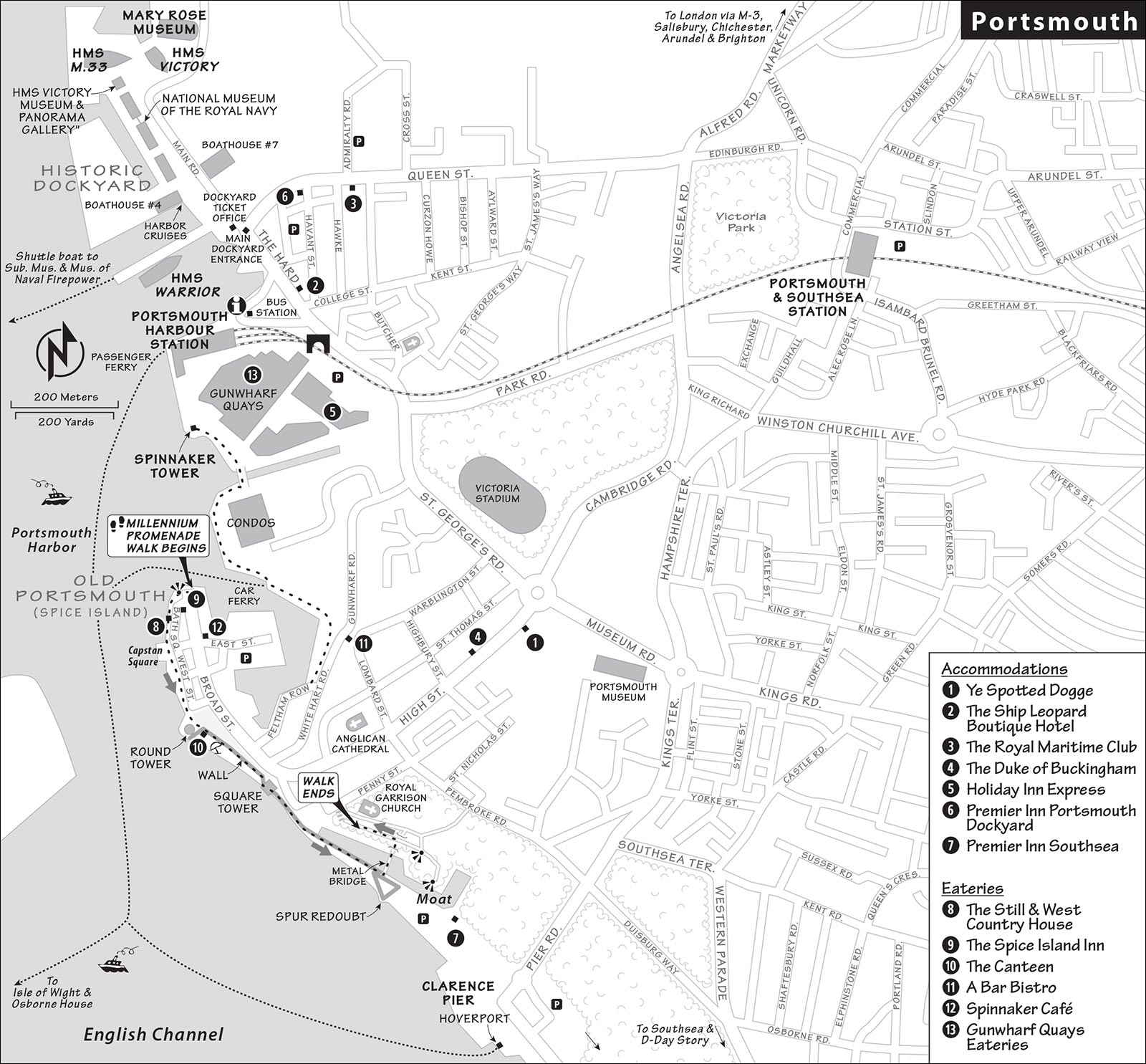
Portsmouth, situated on an island, feels smaller than its population of 200,000. Almost all of its visit-worthy sights line up along a two-mile stretch of waterfront, from the Historic Dockyard in the north to the Southsea neighborhood in the south. The walkable core, in the north, contains the top sights: the Historic Dockyard, Spinnaker Tower (views), Gunwharf Quays (shopping complex), Millennium Promenade Walk, and Old Portsmouth; Southsea’s D-Day Story museum is a 10-minute bus ride or 30-minute walk away.
TOURIST INFORMATION
A convenient tourist information point is at the Hard Interchange bus station next to the Portsmouth Harbour train station (daily 10:00-16:00, Nov-Jan closed weekends, +44 23 9282 6722, www.visitportsmouth.co.uk).
Bus Tours: Southsea Coaster operates an open-top, hop-on, hop-off bus route along the coast between the Hard Interchange bus station and the D-Day Story Museum, including stops in Old Portsmouth and at Clarence Pier (£5, June-Sept daily 9:00-17:00, discount at D-Day Story Museum, www.firstbus.co.uk/adventures-bus [URL inactive]).
ARRIVAL IN PORTSMOUTH
Portsmouth has two train stations. Stay on the train until the final stop at the Portsmouth Harbour Station, conveniently located one long block from the entrance to the Historic Dockyard. The Hard Interchange bus station is just across from the train station.
Drivers approach Portsmouth on the M-27 motorway. First take the Portsmouth (W) exit, then follow signs for Historic Waterfront. As you get closer, individual parking lots are well signposted (the Historic Dockyard garage is just two blocks from the Dockyard).
Sights in Portsmouth
▲▲▲HMS Victory
▲National Museum of the Royal Navy
SOUTH OF THE HISTORIC DOCKYARD
I’ve listed Portsmouth’s sights from north to south.
HISTORIC DOCKYARD COMPLEX
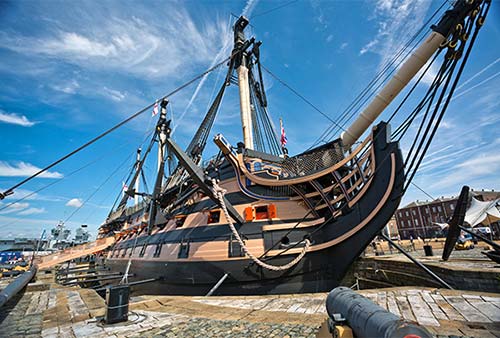
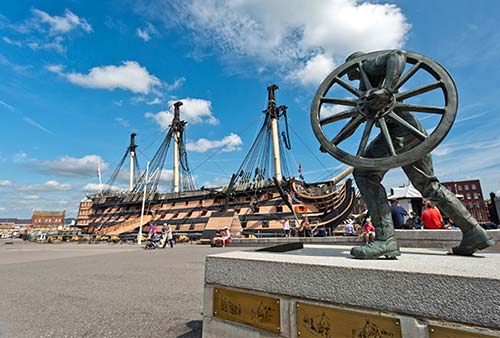
When Britannia ruled the waves, it did so from Portsmouth’s Historic Dockyard. Britain’s great warships, known as the “Wooden Walls of England,” were all that lay between the island nation and invaders from the Continent. Today, this harbor is still the base of the Royal Navy. The shipyard offers visitors a glimpse of maritime attractions new and old. Marvel at the modern-day warships anchored on the docks, then explore the fantastic collection of historic naval memorabilia and well-preserved ships. You can stroll around the Dockyard to see the exteriors of the HMS Victory and HMS Warrior for free, but going inside the attractions requires a ticket (you must pass through bag security at the entrance whether you buy a ticket or not).
Planning Your Time: The Dockyard is a sprawling complex with about 10 different attractions (several are a shuttle-boat ride away). Save most of your time for the HMS Victory, the Mary Rose Museum, and the National Museum of the Royal Navy. Visit the HMS Warrior and the HMS M.33 briefly. If you have extra time, consider the harbor tour (departs from near the entry; drop by the dock to check on times and availability). Upon arrival, locate these priorities on a map to see things in the smartest order. Friendly and knowledgeable docents, many who were once seamen, are found throughout the complex, happily answering questions and telling tales of the sea.
Cost and Hours: £44 Ultimate Explorer ticket (good for a year) covers all Historic Dockyard sights; £39 for three attractions; £29 for one attraction. Dockyard open daily 10:00-17:30, Nov-March until 17:00, individual sights may close earlier (last tickets sold 1.5 hours before closing); +44 23 9283 9766, www.historicdockyard.co.uk.
Eating: The $ Boathouse No. 7 cafeteria has a variety of meal and snack options. There is also a fancier eatery with water views at $$$ Boathouse No. 4 (near HMS Warrior) as well as $ cafés at the Mary Rose and the Dockyard entrance.
▲▲▲HMS Victory
This grand historic warship changed the course of world history. In the early 19th century, Napoleon was terrorizing the Continent. In 1805, he amassed a fleet of French and Spanish ships for the purpose of invading England. The Royal Navy managed to blockade the fleets, but some French ships broke through. Admiral Nelson, commander of the British fleet, pursued the ships aboard the HMS Victory, cornering them at Cape Trafalgar, off the coast of Spain (see sidebar). Today, the dry-docked HMS Victory is so well preserved that it feels ready to haul anchor and pull out of the harbor at any moment. In fact, it’s still a commissioned warship, the world’s oldest. For the British, this ship is more a cathedral than a museum.
Visiting the Ship: Visitors follow a one-way route that spirals up and down through the ship’s six decks, taking at least an hour (possibly longer if you linger with the free audioguide, which gives many details on the battle of Trafalgar). Though a years-long restoration project is underway, the ship remains open. Here are the highlights.
Upper Deck: You’ll see Captain Thomas Hardy’s cabin—not quite as posh as his boss Admiral Nelson’s, but not bad. Up here, there’s also access to the poop deck for more views. Before descending the stairs, notice the small golden plaque on the deck marking the spot where Nelson fell during the fateful Battle of Trafalgar—shot by a sniper. From here, the crew rushed him below deck to care for him in his dying hours.
Upper Gun Deck: This is filled with original cannons. To prevent the ship from tipping, the lightest were placed higher on the ship, with the heavy ones below. It took a well-trained British sailor two minutes to ready a cannon for firing, compared to the eight minutes French gunners needed to fire theirs.
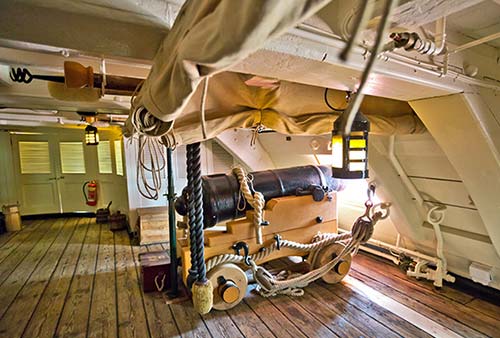
Great Cabin: This was Admiral Nelson’s quarters. Imagine Nelson and his officers dining at the elegant table—or hunched over maps to plan an attack. While it looks like an officer’s stately quarters, this space is also designed for action: All the wood furniture was foldable and could be stowed quickly during battle. The black-and-white checkerboard “tile” flooring—inspired by Nelson’s love of southern Italy—is actually painted canvas, which could, like the carpets, be rolled up at a moment’s notice. It took the crew less than 10 minutes to clear away all the comfortable trappings and turn this space into a fully functional cannon deck. Notice Nelson’s hanging bunk—even the master of this ship slept on a glorified hammock rather than a bed.
Middle and Lower Gundecks: Climbing down, you can see how cramped the living conditions were for the sailors. When not in battle, they strung hammocks between the guns and ate at tables wedged under their strung-up beds. Sailors ate from square plates to save space. When a man died, his hammock was his burial cloth—his body was sewn up into it, with a last stitch through the nose to ensure the man was really dead.
Orlop Deck: Explore the bowels of the ship, where the space becomes smaller and darker. Ask about the medical tools laid out on a table. During the battle nine sailors needed amputations, but the doctor was so skilled that all nine survived (rare in those days). It’s also down here that Nelson died, gasping his final words: “Thank God, I have done my duty.” The painting next to the spot of his death shows the admiral with a saintly glow as sailors look on in grief. (Whether this is an eyewitness account is suspect; check the size of the ship—either people were much smaller back then, or the painter had never been aboard the Victory.) After his death, Nelson was put in a cask filled with brandy to preserve his body. Legend has it that the cask was not quite as full by the time the sailors arrived in London.
HMS Victory Live: During the ship’s restoration, visitors can don hardhats and wander the scaffolding to view the conservation efforts taking place.
▲▲Mary Rose Museum
The Mary Rose warship, King Henry VIII’s favorite, was likely named after his sister Mary and his family emblem, the rose. The ship sank in 1545, and the wreckage was only discovered in the last half of the 20th century. The well-preserved remains now provide the framework for this fine museum that gives a snapshot of life aboard a 16th-century warship. The museum sits right next to the HMS Victory (in the dark, rounded building). A free, downloadable audioguide is available on the website (www.maryrose.org).
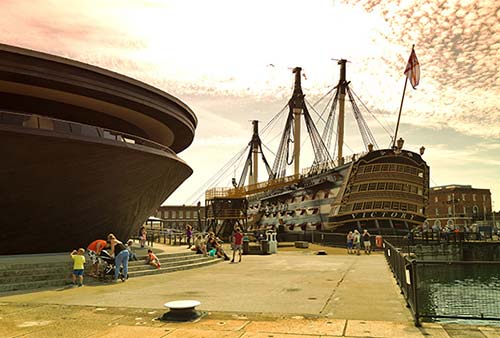
Background: In July 1545, when a French fleet approached the English coastline, the Mary Rose was sent out to engage the enemy. Suddenly, just two miles offshore, the ship tipped over—possibly from a stiff breeze; other theories include human error, a French cannonball, or overloading. Since all the gun bays were open, ready for battle, the water overwhelmed the ship and it began to sink. Netting over the hold was intended to keep out enemy sailors trying to board the ship, but instead it trapped about 400 sailors as they scrambled to escape—only about 30 survived. The ship and its doomed crew settled, stuck in the mud in relatively shallow water, where they rested for about 450 years.
In 1982, about 15 years after the wreck was located, the half of the ship that was encased in mud—and thus protected from voracious shipworms—was raised. To keep the ship from drying out too quickly (which would cause the structure to disintegrate), for 20 years the remains were showered nonstop with a sealing wax solution. Now hard as a rock, what’s left of the Mary Rose is finally on display.
Visiting the Museum: This £35 million museum—shaped like an oval jewel box—was built to reunite the preserved hull with thousands of its previously unseen contents. Strategically placed high-tech information boards bring it all to life.
All sorts of Tudor-era items were found inside the wreck, such as clothes, dishes, weapons, a backgammon board, and an oboe-like instrument. There are even the skeletons of the crew and Hatch, the ship’s dog. It’s a fascinating look at everyday shipboard life from almost 500 years ago.
You’ll walk down three levels of galleries with the Mary Rose’s hull on one side and exhibits containing artifacts on the other, mirroring the original hull to give you a better idea of the ship’s scale. Items are showcased in relation to where they were found. Exhibits at either end focus on crew members’ personal stories and their duties aboard ship. Recent DNA testing of the crew takes a closer look at how diverse Tudor England already was. There are re-creations of different parts of the ship such as the surgeon’s cabin and the gun deck. Don’t miss seeing the only surviving 16th-century crow’s nest.
▲National Museum of the Royal Navy
This museum, situated in three buildings, is packed with model ships, paintings, uniforms, and lots more Nelson hero-worship. The HMS Victory Museum and Panorama Gallery, in the farthest building, commemorate the history and conservation efforts of this iconic ship through artifacts, paintings, and multimedia displays. It culminates with a giant painting (13 x 43 feet), Panorama of the Battle of Trafalgar (by W. L. Wyllie, 1931). Upstairs there are exhibits of figureheads and Nelson’s funeral barge.
The building next door, with a separate entrance, houses the remainder of the museum’s collection. Inside the Sailing Navy Gallery, notice the 18th-century wooden floors, bowed and uneven, repurposed from even older ships. Replicas showcase life on board and the realities of fighting at sea, from provisioning and uniforms to evolving battle technologies. The HMS: Hear My Story exhibit covers the experiences of ordinary sailors over the last 100 years, from the first days of World War I to more recent conflicts. The Horatio Nelson Gallery chronicles the beloved leader’s life and battles through portraits, personal artifacts (including his orders of knighthood), and commemorative items.
▲HMS Warrior
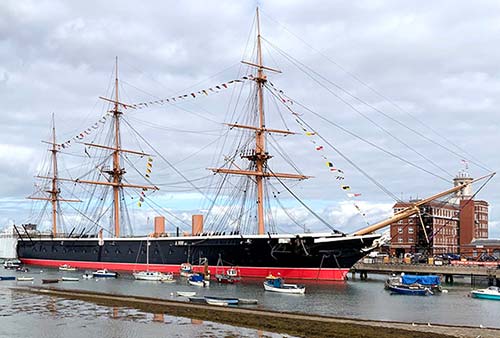
This ship, while very impressive and fun to explore, never saw a day of battle...which explains why it’s still intact, albeit fragile. Launched in 1860, the Warrior was the first ironclad warship, a huge technological advance. The Warrior was unbeatable, and the enemy knew it; its very existence was sufficient to keep the peace. But the Warrior’s invincibility had only a 10-year window. After 1870, with the advent of guns on turrets and stronger steam engines (so sails weren’t needed at all), the HMS Warrior was mothballed.
Other Dockyard Sights
The HMS M.33 is the last surviving WWI ship of the bloody Gallipoli Campaign, and the only WWI warship open to the public in Britain. Exploring this fascinating ship—with battle pockmarks showing under its paint—you see the crude yet state-of-the-art technology of 1915. Imagine it under attack and jammed with 67 sailors.
Boathouse #4 displays more historic boats in a re-creation of a working boatyard. There are daily workshop tours at 14:00, and maritime history buffs will enjoy the rotating exhibit of vessels upstairs and the opportunity to take a 20-minute ride in a landing-craft vehicle (£10, not included with the combo-ticket).
The all-attraction ticket includes two interesting stops that require a quick shuttle-boat ride to reach: a WWII-era Submarine Museum and the Explosion Museum of Naval Firepower.
Portsmouth Harbor Cruise
You can scoot around the harbor and back to the Historic Dockyard in about 50 minutes by boat. The expansive view of the military complex is impressive, but you’ll learn more about the ships from exploring the Dockyard sights on foot. Boats depart from the Dockyard and Gunwharf Quays (included in Historic Dockyard combo-ticket if you depart from there, £12 if you depart from Gunwharf Quays; leaves Historic Dockyard about hourly during the summer starting at 11:15, last cruise usually at 16:15, 14:15 in winter; just inside Dockyard entrance, weather-dependent, +44 1983 564 602, www.portsmouth-boat-trips.co.uk).
SOUTH OF THE HISTORIC DOCKYARD
Gunwharf Quays
Part of the major (and successful) makeover of Portsmouth, the bustling Gunwharf Quays (pronounced “keys”) is an American-style outdoor shopping center on steroids, with restaurants, shops, and entertainment. You’ll find all the top shops here, as well as a casino, a bowling alley, a 14-screen cinema, trendy eateries with good views of the water, and a Holiday Inn Express. Shops are generally open daily 10:00-19:00.
Spinnaker Tower
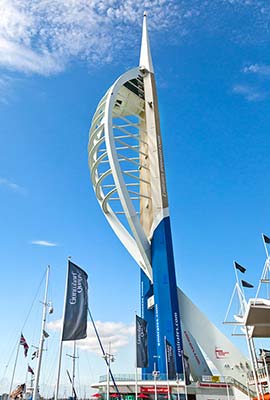
Out at the far end of the shopping zone is this can’t-miss-it edifice. Like Seattle’s vaguely futuristic Space Needle, the 560-foot-tall Spinnaker Tower quickly became an icon of its city after its 2005 opening. You can ride to the 330-foot-high view deck for a panorama of the port and sea beyond, or court acrophobia with a stroll across “Europe’s biggest glass floor” (£15, discounts available online or through TI, daily 10:30-18:00, book ahead in midsummer, booking +44 23 9285 7520, www.spinnakertower.co.uk).
The tower is reminiscent of the billowing ships’ sails that have played such a key role in the history of this city and country. This spinnaker has a sister on the Portsmouth skyline—another skyscraper designed to be its steam-funnel partner, making the harbor district skyline that of a massive ship. But the public didn’t pick up on this and, for obvious reasons, dubbed the sister skyscraper “The Blue Lipstick.”
Old Portsmouth
Portsmouth’s historic district—once known as Spice Island after the precious cargo carried in ships’ holds—is the original medieval town, complete with cobbles and historic pubs. For a long time, the old sea village was dilapidated and virtually empty. But successful revitalization has brought a few inviting pubs and restaurants. From the Old Portsmouth promenade, you can watch a procession of 21st-century ferries as they navigate their way into and out of port. It’s a pleasant place to stroll around and imagine how different this district was in the old days, when it was filled with salty fishermen and sailors.
Getting There: To walk to Old Portsmouth, follow the promenade from Spinnaker Tower over the pedestrian bridge past modern condos, turning inland at the ferry terminal. From there, the path continues through a residential neighborhood. Turn onto Feltham Row, skirting around the marina (see the “Portsmouth” map, earlier). You’ll emerge onto Broad Street, with the old defensive wall in front of you. Head to the right, and in a few blocks you’ll reach the small peninsula of Old Portsmouth. This is a favorite place, like a little park, where locals come for a meal or a drink at sunset.
Old Portsmouth Millennium Promenade Walk: A stylized chain-link pattern in the sidewalk marks the Millennium Promenade (also called the Renaissance Trail on some historical markers). The chain symbol recalls the great steel chain that once spanned the mouth of the harbor and was raised to block invading warships. For a pleasant (but often windy) hour-long after-dinner stroll, walk the portion of the well-marked trail south of Old Portsmouth along the waterfront. Interpretive panels along the way give you insights into Portsmouth’s fascinating history.
From the tip of Old Portsmouth, follow the trail around on the water side and turn right into small Capstan Square, where the harbor-spanning chain was raised to keep out enemy ships. Pass through a narrow arched doorway and climb up the stairs across the courtyard to the top of the 15th-century Round Tower. After taking in the view, follow the top of the old stone fortifications (which include the recommended Canteen restaurant) south to the Square Tower. With the notoriously blustery weather, local kids who hit the beach gather near the base of the wall, nicknamed the “Hot Wall,” as it’s out of the wind and collects warmth from the sun.
The 15th-century Square Tower, originally the residence of the governor of Portsmouth, was later used to store gunpowder. South of the Square Tower on the left is the small, roofless Royal Garrison Church. Founded in 1212 as a hospice, it sheltered overseas pilgrims traveling to Canterbury, Chichester, and Winchester. Later, during WWII, the church garrisoned troops (before the nave lost its roof in a bombing raid).
After walking south about 150 yards, you’ll see a small moat on the left. You’ve reached the Spur Redoubt, part of the outer fortifications. Look for a plaque by the water that identifies the traffic that plies this harbor—from the hovercraft heading for the Isle of Wight to the big ferry sailing to Brittany.
Peer down at the statue in the little square to the left. To avoid the huge crowds that had gathered in town to see him off, Admiral Nelson supposedly passed through this area on September 14, 1805, on his way to the Battle of Trafalgar. From the beach, he was rowed out to the Victory, waiting off the Isle of Wight. He didn’t return to England alive. (The date inscribed on the statue, October 21, is the day of the battle—and of Nelson’s death.)
The Clarence Pier, which is 200 yards beyond, kicks off a Coney Island-type, beach-party zone. Instead of going there, walk toward the pier until you reach the metal bridge that veers left from the chain-link path. Cross the bridge over the moat, pass through a tunnel under the earthen fortifications, and immediately turn right and climb up the short path to the top. Walk back along the top of the grassy fortifications. This is the end of our walk. Benches invite you to stop and watch the many passing ferries and other ships or to simply enjoy the sunset. If the weather’s clear, you can see the Isle of Wight.
SOUTHSEA
Southsea gathers around the remains of beefy Southsea Castle, key to one of the world’s most fortified harbors in the 19th century. On a sunny day, this appealing seafront neighborhood south of Old Portsmouth—with its long, broad, grassy park stretching for miles in front of fine old townhouses—bustles with locals enjoying their city. Just beyond is the entertaining South Parade Pier. But the main reason to venture to Southsea is its interesting D-Day museum.
▲▲The D-Day Story
This museum, worth ▲▲▲ to history buffs, was built to commemorate the 40th anniversary of the D-Day invasions of World War II and was later refurbished in anticipation of 75th-anniversary events. The museum features exhibits on the invasions, including an original landing craft and a tapestry commemorating the events of D-Day.
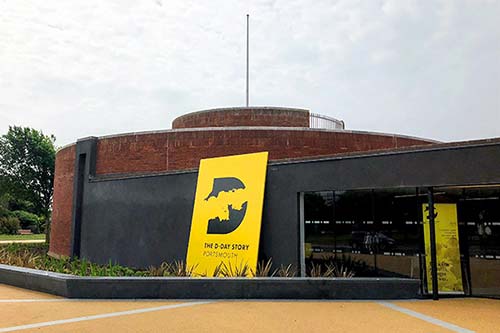
Cost and Hours: £14.50, includes audioguide; daily 10:00-17:30, Oct-March until 17:00, last entry 16:00; café; on the waterfront at Clarence Esplanade, Southsea, +44 23 9288 2555, https://theddaystory.com.
Getting There: From the Royal Garrison Church in Portsmouth, stroll 20 minutes south, following the coast. First Bus #3 and Stagecoach buses #23 and #25 all stop at Southsea Shops on Osborne Road, a 10-minute walk from the museum (£1.50 one-way, £4.20 day pass, 2/hour, 10 minutes; ask at info booth about last return bus times). In summertime, the Southsea Coaster tour bus (see “Orientation to Portsmouth,” earlier) stops at the museum entrance. Drivers can park behind the museum.
Visiting the Museum: Buy your ticket and collect your audioguide, then head outside to start your visit with Landing Craft Tank 7074—the last original landing craft of its kind. Information boards on deck chronicle its journey through the war—on D-Day, the craft’s main deck carried 10 tanks and landed at Gold Beach. Stripped of equipment, it’s hard to imagine the vital role this, and all other landing crafts, played in the Allied invasion of Normandy, transporting men and supplies across the English Channel.
Inside the museum, browse the items from D-Day and the Battle of Normandy, showing how the Allies planned the invasion—how, for example, detailed maps emerged from vacation photos and postcards collected by civilians before the war. Touch screens help visitors connect their knowledge of espionage or battle tactics to the planning done before and during the landings, while displays incorporate first-person stories of those who took part, from both the Allied and German points of view. Toward the back of the room, army vehicles and a replica of the Atlantic Wall put the enormous D-Day invasion undertaking into a scalable perspective.
Continue to the final part of the museum, housing the 272-foot-long Overlord Embroidery (named for the invasion’s code name). The 34 appliquéd panels—handstitched over five years by a team of seamstresses—were inspired by the Bayeux Tapestry that recorded William the Conqueror’s battles during the Norman invasion of England a thousand years earlier. The panels chronologically trace the years from 1940 to 1944, from the first British men receiving their call-up papers to the successful implementation of D-Day. It celebrates everyone from famous WWII figures to unsung heroes of the home front.
ISLE OF WIGHT
Serious royal-family fans can consider a day trip from Portsmouth to the Isle of Wight to see Osborne House, a stunning Italianate palazzo that was Queen Victoria’s beloved getaway for 50 years, until her death there in 1901. Today, the house has been lovingly restored and it seems as if she has just stepped away. Be sure to see the Durbar Room, decorated as an over-the-top homage to India, one of Victoria’s most valued colonial prizes (£24; daily 10:00-18:00, Sept-Oct until 17:00, variable hours in winter—call first or check online; +44 370 333 1181, www.english-heritage.org.uk).
Getting There: Wightlink Ferries’ high-speed, passenger-only catamarans to Ryde Pier on the Isle of Wight depart from the waterfront in front of the train station (1-2/hour, 22 minutes, +44 333 999 7333, www.wightlink.co.uk). From there, you can catch bus #4 to Osborne House. Car ferries for the town of Fishbourne, also run by Wightlink, leave from south of Gunwharf Quays (1-2/hour, 45 minutes, cars and passengers). Hovertravel operates a passenger-only hovercraft from Southsea to Ryde; they sometimes offer a package that includes Osborne House admission and transportation (at least hourly, 10 minutes, +44 1983 717 700, www.hovertravel.co.uk).
Sleeping in Portsmouth
If you just can’t get enough of ships and sea air, Portsmouth is a charming and fairly quiet place to spend the night. Traditional B&Bs are becoming rare in Portsmouth, but some private room and apartment options can be found on Airbnb. Most accommodations listed here are within a few blocks of the waterfront.
$$$ Ye Spotted Dogge is a good splurge in a historical setting. The building dates to 1523, but most of the interior was updated in the 1700s, after a Duke of Buckingham was assassinated here (ask owner Ian for more history). Their six rooms differ in design but each has classical character. Guests enjoy a large lounge area, garden, and a private bar (includes street parking with permit, 11 High Street, +44 23 9242 7154, www.yespotteddogge.co.uk, mail@yespotteddogge.co.uk).
$$ The Ship Leopard Boutique Hotel offers 13 modern, clean rooms in a convenient location, just across from the Harbour train station and a short walk to the Historic Dockyard. Six rooms face the waterfront and offer great views (free parking, 15 The Hard, +44 23 9287 6020, www.shipleopardboutiquehotel.co.uk, enquiries@shipleopardboutiquehotel.co.uk).
$$ The Royal Maritime Club offers a home away from home to sailors in town who don’t want to bunk on the boat. Just two blocks up the road from the Historic Dockyard entrance, it also welcomes tourists, who share its grand public spaces, generous facilities (including a swimming pool, fitness center, game room, self-service laundry, even barbershop), and 100 comfortable, surprisingly newish rooms. The catch: They rent out their ballroom for parties, which can be noisy late—try requesting a quiet room. It’s four blocks from the train station, opposite the oval-shaped Admiralty Tower (family suites, elevator, 16 first-come-first-served parking spots and discounts for parking in the Historic Dockyard lot, Queen Street, +44 23 9282 2182, www.royalmaritimeclub.co.uk, info@royalmaritimeclub.co.uk).
$ The Duke of Buckingham, a few blocks inland from Old Portsmouth, is likely to have rooms when others are full. The 18 basic rooms—some in the main building, some out back in separate cottages—are clean and comfortable (includes street parking with permit, no breakfast, 119 High Street, +44 23 9282 7067, www.dukeofbuckingham.co.uk, info@dukeofbuckingham.co.uk).
Chain Hotels: If other accommodations are full, consider a chain hotel, such as Holiday Inn Express (behind the Gunwharf Quays) or Premier Inn’s Portsmouth Dockyard (on Queen Street, a half-block from the Historic Dockyard) or Southsea (half-mile south of Old Portsmouth along the waterfront, next to the cotton-candy-carnival ambience of Clarence Pier).
Eating in Portsmouth
Dinnertime is the best time to head over to Old Portsmouth, eat at a pub, and then stroll along the Millennium Promenade (described earlier).
$$ The Still & West Country House pub has dining in two appealing zones, both offering the same menu. Eat in the more casual main floor, which includes outside seating on picnic benches with fantastic views of the harbor and its maritime traffic. Or head upstairs to the dining room with a glassed-in conservatory that offers sea views and lovely window seats—especially enticing in cold weather (dining room open daily, bar open late, reservations smart if you want to eat upstairs, 2 Bath Square, +44 23 9282 1567, www.stillandwest.co.uk).
$$ The Spice Island Inn, at the tip of the Old Portsmouth peninsula, has terrific outdoor seating with harbor views, a family-friendly dining room upstairs, and many vegetarian offerings. This eatery is more down-and-dirty and less expensive (daily, bar open late, 1 Bath Square, +44 23 9287 0543). Their crowd spills into The Point, the harborside square.
$$ The Canteen, located in the old stone fortification wall near the Round Tower, is a nice break from pub food. The views of the water are excellent and the dining areas are cozy. You can enjoy their contemporary dishes inside, on their “hidden deck,” or as takeout (daily until 16:00, Point Battery-Broad Street, +44 23 9235 1935).
$$$ A Bar Bistro is a classy but relaxed seafood-and-wine kind of place, between Old Portsmouth and Gunwharf Quays (daily, dinner reservations smart, 58 White Hart Road, +44 23 9281 1585, www.abarbistro.co.uk).
$ Spinnaker Café is great for lunch or a snack (breakfast served all day, daily until 16:00, 96 Broad Street, +44 7434 727 664).
Gunwharf Quays: Eating options abound at this bustling mega-mall, but you’ll pay too much for mostly chain food in this high-rent district. Most restaurants line up along the waterfront by the Spinnaker Tower. Gunwharf Quays connects with a small canal, lined with even more outdoor bars and restaurants.
Portsmouth Connections
From Portsmouth by Train to: London (3/hour, 2 hours, direct to Waterloo or Victoria Station), Gatwick Airport (hourly, 1.5 hours direct, more with transfer), Bath (hourly, 2 hours), Salisbury (hourly direct, 1.5 hours), Oxford (hourly, 2.5 hours, 1 transfer), Brighton (direct trains hourly, 1.5 hours), Exeter (hourly, 3.5 hours, change in Salisbury). Train info: +44 345 748 4950, NationalRail.co.uk.
By Bus: For most connections, the train is faster. National Express buses go to Brighton (6-7/day, 2 hours, change in London), and Bath (6/day, 3 hours, change in London; +44 871 781 8181, www.nationalexpress.com).
By International Ferry: Brittany Ferries (+44 1752 648 000, www.brittanyferries.com) sails to France: Caen (2-3/day, 7 hours), Cherbourg (1/day, 4 hours), St. Malo (night crossing, 1/day, 12 hours), Le Havre (night crossing, 1/day, 9 hours). They also run overnight ferries to northern Spain. Condor Ferries (+44 845 609 1024, www.condorferries.co.uk) sails to the Channel Islands of Guernsey (daily, 7 hours) and Jersey (daily, 8-10 hours).
Near Portsmouth
These sights are very near the main A-27 road that connects Portsmouth with Brighton and worth considering for a stopover.
Fishbourne Roman Palace
In the 1930s, a farmer just outside of Chichester found the remains of an early Roman palace on his land. Wary of archaeologists, he didn’t disclose his find until 1960. The ensuing dig revealed a huge Roman-era villa, probably built around AD 50 by a local tribal chief who was loyal to the Roman Empire. The collection’s impressive centerpiece is its well-preserved floor mosaics, which are still in their original locations (visitors view them from an elevated walkway). A short film introduces you to the site, and exhibits tell the story of the palace and Fishbourne’s Roman era. The garden outside was reconstructed to resemble the original Roman plan. Across the parking lot, the Discovery Centre (open weekdays) lets you peek into the offices and warehouses of the archaeologists at work. You’ll learn how the artifacts are handled on their long journey from the ground to the display case. The palace is likely to fascinate true fans of Roman history. Go early to avoid the crush of field-tripping schoolchildren.
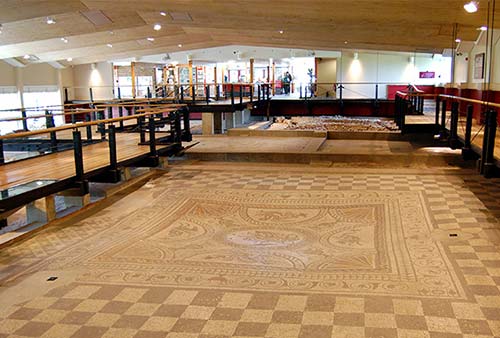
Cost and Hours: £13.00; daily 10:00-17:00, Oct-Feb until 16:00, mid-Dec-Jan Sat-Sun only; café, +44 1243 785 859, www.sussexpast.co.uk/fishbourne.
Getting There: It’s about 2 miles west of the large town of Chichester, well signed from the main A-27 motorway connecting Brighton and Portsmouth. First head for the town of Fishbourne, then follow Roman Palace signs through a residential neighborhood to the museum. From the Fishbourne train station, the palace is a seven-minute walk.
▲Arundel Castle
The striking castle of Arundel graces the valley below with storybook appeal. It feels relatively new because much of it is a Neo-Gothic creation of the late 19th century. The duke of Norfolk—the top dog among all English dukes—still lives here, in what amounts to a museum of his own family (the Fitzalan-Howards, who also own Castle Howard in Yorkshire). Castle buffs will find the gorgeous interior worth visiting, and the themed gardens are a delight—check out the Earl’s Garden, which is based on 17th-century designs and contains an intriguing “stumpery.”
Cost and Hours: Castle interior, chapel, and grounds-£25, private bedrooms-£2 more; grounds and chapel only-£14. The complex is closed most Mondays (except in Aug, check website); it’s also closed Nov-March. While most castle stops are open 9:30-17:00, the main rooms—the reason for the steep entry fee—may not open until noon—check website; last entry at 16:00. Parts of the castle can be unexpectedly closed for private events, +44 1903 882 173, www.arundelcastle.org. There’s a café in the castle and a lovely riverside café across the street.
Getting There: Arundel Castle is right on the A-27 between Brighton and Portsmouth—drivers just follow signs to the castle, and park at the pay lot across from the castle gate. The town of Arundel is connected by train from Portsmouth (2-3/hour, 1 hour, transfer in Barnham) and Brighton (1-2/hour, 1.5 hours, 1 transfer); Stagecoach buses also run from Brighton to Arundel (hourly, fewer on Sun, 2.5 hours).
Background: The castle seems like the perfect medieval fortress. Well, almost. While there’s been a castle here dating back to the 11th century, most of what you see today is a Victorian rebuild (1875-1900). The owners of the castle, the Catholic dukes of Norfolk, weren’t very popular in this Protestant country, and neither was their castle, which endured multiple sieges. The dukes persevered, however, rebuilding their castle in the 18th and 19th centuries along with a large Catholic church. As you explore, posted explanations fill in the story (such as an English Civil War exhibit with a Catholic spin). For a primer before you begin, consider stopping by the little information room at the gate as you enter the castle grounds (across from the ticket booth).
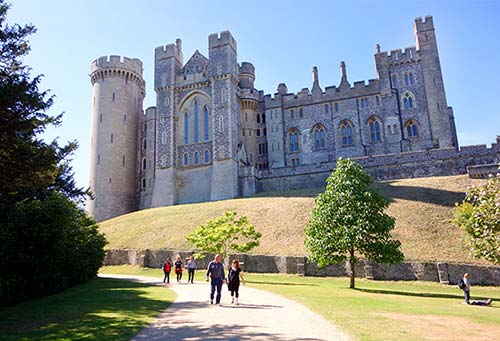
Visiting the Castle: The castle is all about its intimidating bulk and opulent interior—so little explanation is necessary. Notice that various parts of the castle have different opening times.
Castle Keep: This ancient centerpiece of the castle is a classic motte-and-bailey design (originally from 1067—the year after the Normans arrived), with a stout windowless fortress atop a man-made hill—double defense against attackers. Later, as the castle grew around it, the keep became the last resort in case of an attack. It’s connected to the outside only by one bridge and is well defended by strategically placed arrow slits. Inside the keep yard, stairs lead down to a cellar that served as both a dungeon and a storehouse for resources in case of a prolonged siege. The flag flying up top used to mean the duke of Norfolk or his heir (the earl of Arundel) was in. Now—so as not to give bad actors a clue—it flies all the time.
Main Castle Rooms: These rooms are the gorgeously appointed residence of the duke of Norfolk. As you ogle the decor, docents are on hand to tell you about the lineage, heraldry, and personalities of their beloved dukes. You’ll pass through an armory and a spectacular private chapel (19th-century “Catholic Revival”) before entering the Baron’s Hall, with a pair of giant fireplaces and some fine furniture (including a noteworthy inlaid-wood chest). This room is still used for functions and, occasionally, for filming the British version of Antiques Roadshow. A picture gallery displays a Who’s Who of the dukes of Norfolk. Enjoy strolling through the formal state dining room, bedrooms, and drawing rooms. Finally, you’ll reach the highlight: a wonderful old library with rich mahogany woodwork and 10,000 musty leather-bound books on two levels.
Fitzalan Chapel: This family church—across a tree-filled garden from the main castle—is the final resting place of many of the dukes of Norfolk. In the nave of the church, notice the double-decker tomb of a 15th-century earl. An effigy of his virile, healthy self is in full armor on the top level; a grisly skeletal corpse rests on the bottom level—a reflection on the transience of human life. Flanking the aisle, find the plaques dedicated to the most recent dukes: Bernard (who died in 1975) and his cousin Miles Francis (died in 2002). Today’s duke—Edward Fitzalan-Howard—is the 18th to hold the title...and you just walked through his house.
Earl’s Garden: From the chapel, follow the signs and walk uphill into the Earl’s Garden. Beautifully landscaped and maintained, the plantings intrigue and impress with their creativity. The stumpery (fashioned from oak tree stumps), White Garden, and Italianate formal gardens are all lined with herbaceous borders, confirming England’s obsession with all things green.
Arundel Town: If you have time to linger, check out the adjacent village of Arundel, where you’ll find many fine pubs and shops. The little self-service TI is located inside the Arundel Museum, across from the castle entrance (daily in summer 10:00-15:30, Mill Road, +44 1903 885 866, www.sussexbythesea.com).