LONDON
BY HOP-ON, HOP-OFF DOUBLE-DECKER BUS
Map: The City, The Tower & East End
Map: Victoria & Albert Museum Tour
SUMMER EVENINGS ALONG THE SOUTH BANK
Map: Victoria Station Neighborhood
“SOUTH KENSINGTON,” SHE SAID, LOOSENING HIS CUMMERBUND
Map: West London Neighborhoods
Map: North London Neighborhood
Map: Central London Restaurants
BAYSWATER, NOTTING HILL, AND NEARBY
Map: London’s Major Train Stations
Map: Public Transportation near London
CROSSING THE CHANNEL BY EUROSTAR TRAIN
London is more than 600 square miles of urban jungle—a world in itself and a barrage on all the senses. On my first visit, I felt extremely small. The city’s museums and landmarks are just the beginning. It’s the LA, DC, and NYC of Britain—a living, breathing, thriving organism...a coral reef of humanity. It’s quintessentially English, yet worldly. It’s old and traditional, yet wildly new and modern.

The city, which has long attracted tourists, seems perpetually at your service, with an impressive slate of sights, entertainment, and eateries, all linked by a great transit system. Come prepared to celebrate the tradition and fanfare of yesterday while catching the cosmopolitan buzz of today. London truly is where the world comes together.
Blow through the city on a double-decker bus, and take a pinch-me-I’m-in-London walk through the West End. Ogle the crown jewels at the Tower of London, hear the chimes of Big Ben, and see the Houses of Parliament in action. Cruise the River Thames, and take a spin on the London Eye. Hobnob with the tombstones in Westminster Abbey, and visit Leonardo, Botticelli, and Rembrandt in the National Gallery. Enjoy Shakespeare in a replica of the Globe Theatre and marvel at a glitzy, bombastic musical at a West End theater. Ascend the dome of St. Paul’s Cathedral, then rummage through our civilization’s attic at the British Museum. Find your favorite pub and tip a pint with a chatty local, and sip an afternoon tea with pinkie raised and clotted cream dribbling down your scone.
Wherever you go, enjoy the British accents and slang. Part of the fun of visiting this city is the illusion of hearing a foreign language and actually understanding it...most of the time. The city is huge, with 10.3 million people, many of whom trace their roots to former colonies—giving London an international flair. And with Britain’s recent exit from the European Union (“Brexit”), London is redefining itself yet again.
PLANNING YOUR TIME
The sights of London alone could easily fill a trip to England. It’s a great one-week getaway. But on a three-week tour of England, I’d give London three busy days. You won’t be able to see everything, so don’t try. After dozens of visits myself, I still enjoy a healthy list of excuses to return. If you’re flying in to one of London’s airports, consider starting your trip in Bath and making London your English finale. Especially if you hope to enjoy a play or concert, a night or two of jet lag is bad news.
Here’s a suggested three-day schedule:
Day 1
Use my Westminster Walk to link these sights:
| 9:00 | Be in line at Westminster Abbey (opens Mon-Fri at 9:30, Sat at 9:00, closed Sun), or buy a timed-entry ticket to tour it with fewer crowds. |
| 11:00 | Visit the Churchill War Rooms. |
| 13:00 | Lunch at the museum’s café, or finish my Westminster Walk and lunch near Trafalgar Square. |
| 15:00 | Visit the National Gallery and any nearby sights that interest you (National Portrait Gallery or St. Martin-in-the-Fields Church) |
| Evening | Dinner and a play in the West End. |
Day 2
| 8:30 | Take a double-decker hop-on, hop-off London sightseeing bus tour (from Victoria Station or Green Park). |
| 10:00 | Hop off at Trafalgar Square and walk briskly to Buckingham Palace to secure a spot to watch the... |
| 11:00 | Changing of the Guard (nearly daily—confirm online). |
| 14:00 | After lunch, tour the British Museum. |
| 16:00 | Tour the British Library. |
| Evening | Choose from a play, concert, or walking tour, or shopping at one of London’s elegant department stores (Harrods, Liberty, and Fortnum & Mason are often open late). |
Day 3
| 9:00 | Tower of London (opens Sun-Mon at 10:00). |
| 12:00 | Grab a picnic, catch a boat at Tower Pier, and have lunch while cruising to Blackfriars Pier. |
| 13:00 | Tour St. Paul’s Cathedral and climb the dome (closed Sun except for worship). |
| 15:00 | Walk across Millennium Bridge to the South Bank to visit the Tate Modern, Shakespeare’s Globe, and other sights. |
| Evening | Catch a play at Shakespeare’s Globe. |
Day 4 (or more)
Visit London’s remaining top-tier sights: the Victoria and Albert Museum, Tate Britain, or London Eye. Or you can choose one of the city’s many other museums (Natural History Museum, Imperial War Museum, etc.); take a day trip, cruising to Kew Gardens or Greenwich; or hit a street market.
Orientation to London
To grasp London more comfortably, see it as the old town in the city center without the modern, congested sprawl. (Even from that perspective, it’s still huge.)
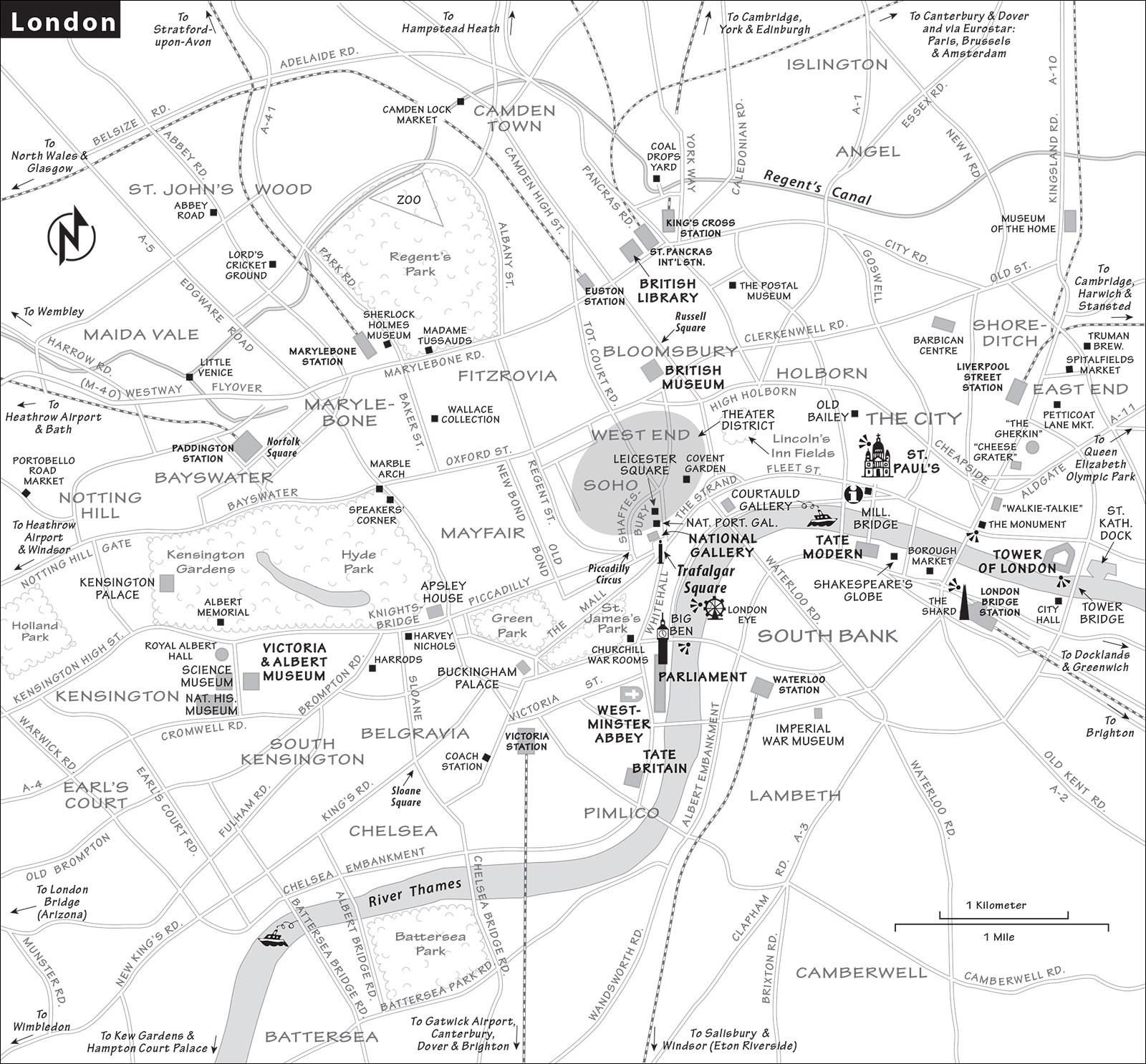
The River Thames (pronounced “tems”) runs roughly west to east through the city, with most sights on the North Bank. The tourist’s London is roughly the area within the Tube’s Circle Line—bordered by the Tower of London (to the east), Hyde Park (to the west), Regent’s Park (north), and the South Bank (south). This four-mile-wide zone between the Tower and Hyde Park (about a 1.5-hour walk) looks like a milk bottle on its side (see map on here) and holds most of the sights covered in this book. The sprawling city becomes much more manageable when you think of it as a collection of neighborhoods.
Central London: This area contains Westminster and the West End. The Westminster district includes Big Ben, Parliament, Westminster Abbey, and Buckingham Palace—the grand government buildings from which Britain is ruled. Trafalgar Square, London’s gathering place, has major museums, including the National Gallery. The West End is the center of London’s cultural life, with bustling squares. Piccadilly Circus and Leicester Square host cinemas, tourist traps, and nighttime glitz. Soho and Covent Garden are thriving people zones with theaters, restaurants, pubs, and boutiques. And Regent and Oxford streets are the city’s top shopping zones.
North London: Neighborhoods in this part of town—including Bloomsbury, Fitzrovia, and Marylebone—contain the exceptional British Museum and overhyped Madame Tussauds Waxworks. Nearby, along busy Euston Road, is the British Library, plus a trio of train stations (one of them, St. Pancras International, is linked to the Continent by the Eurostar “Chunnel” train).
The City: In London’s modern financial district, called simply “The City,” gleaming skyscrapers are interspersed with historical landmarks, such as St. Paul’s Cathedral and legal sights (Old Bailey). The Tower of London and Tower Bridge lie at The City’s eastern border.
East London: Just east of The City is the East End, once the gritty haunt of Jack the Ripper, and now an increasingly gentrified neighborhood of hipsters, pop-up shops, busy markets, and stalls that dish up cuisine from around the world.
The South Bank: The South Bank of the Thames offers major sights—the Tate Modern, Shakespeare’s Globe, and London Eye—linked by a fun riverside promenade. Within this area, Southwark stretches from the Tate Modern to London Bridge. Pedestrian bridges connect the South Bank with The City and Trafalgar Square on the North Bank.
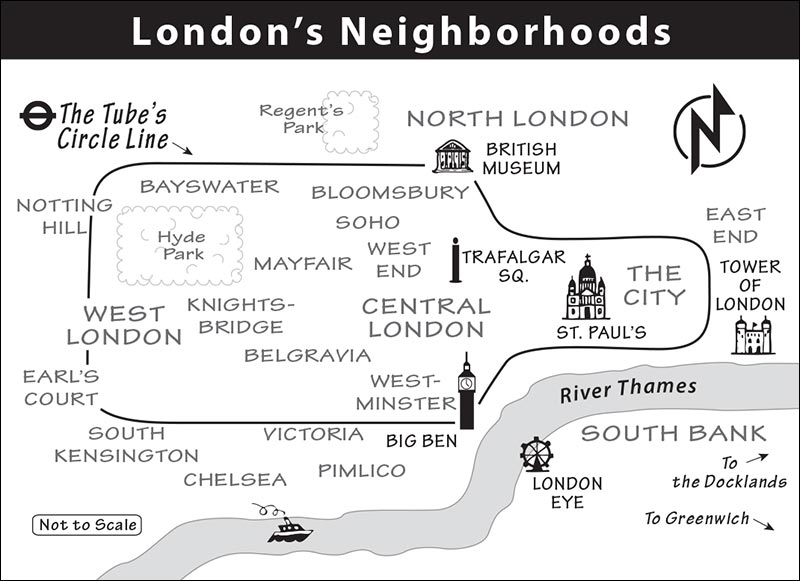
West London: This huge area contains upscale neighborhoods—Mayfair, Belgravia, Chelsea, South Kensington, and Notting Hill—plus excellent museums (Victoria & Albert Museum, Tate Britain, and more), my top hotel recommendations, enticing restaurants, trendy shops, bustling Victoria Station, and the vast green expanses of Hyde Park and Kensington Gardens.
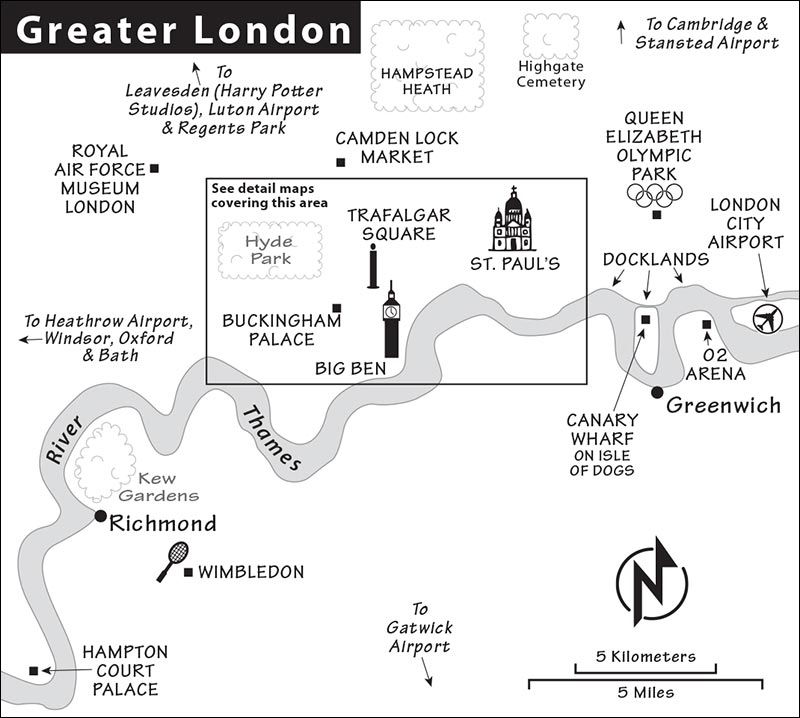
Greater London: Historic Greenwich shows off its naval heritage and fine observatory, and the Docklands is London’s skyscraping Manhattan. Kew Gardens is a lush park with an elegant greenhouse, and Hampton Court Palace was home to royalty. The Warner Bros. Studio Tour thrills Harry Potter fans.
TOURIST INFORMATION
It’s amazing how hard it can be to find unbiased sightseeing information and advice in London. You’ll see “Tourist Information” offices advertised here and there, but most are private agencies that make a big profit selling tours and advance sightseeing and/or theater tickets; others are run by Transport for London (TFL) and are primarily focused on providing public-transit advice.
The City of London Information Centre, on the street just below St. Paul’s Cathedral, is the only publicly funded—and impartial—“real” TI (Tue-Sat 9:30-17:30, closed Sun-Mon; Tube: St. Paul’s, +44 20 7606 3030 or +44 20 7332 3456, www.visitthecity.co.uk, cic@cityoflondon.gov.uk, well run by Inma).
While officially a service of The City (London’s financial district), this office also provides information about the rest of London. It sells Oyster cards and London Passes and stocks various free publications: the London Planner (a monthly brochure that lists sights, events, and hours), the biweekly Official London Theatre Guide, a free Tube map, schedules for Thames boat services, and brochures describing self-guided themed walks in The City (including Dickens, modern architecture, Shakespeare, film locations, and walks for kids). They also have a free sightseeing app that includes small discounts at various points around The City.
The TI gives out a free map of The City and sells several citywide maps (look for the good £1 map, which covers what you’ll want to see and includes a minuscule Tube map and a handy map of key bus routes). Skip their theater box office; you’re better off booking direct.
Visit London, which serves the greater London area, doesn’t have an office you can visit in person—but does have an information-packed website (www.visitlondon.com).
London Pass: This pass, while expensive, may save some money for extremely busy sightseers who will be using it on consecutive days. Among the many sights it includes are the Tower of London, Westminster Abbey, St. Paul’s Cathedral, and Windsor Castle, plus one day on a hop-on, hop-off bus tour. Think through your sightseeing plans, study their website to see what’s covered, and do the math before you buy. Note: Adding an Oyster card to your pass is a needless complication (£84/1 day, £109/2 days, £119/3 days, £134/4 days, £149/5 days; days are calendar days rather than 24-hour periods; +44 20 7293 0972, www.londonpass.com).
ARRIVAL IN LONDON
For more information on getting to or from London, see “London Connections” at the end of this chapter.
By Train: London has nine major train stations, all connected by the Tube (subway). All have ATMs, and many of the larger stations also have shops, fast food, exchange offices, and luggage storage. From any station, you can ride the Tube or taxi to your hotel.
By Bus: The main intercity bus station is Victoria Coach Station, one block southwest of Victoria train/Tube station.
By Plane: London has six airports. Most tourists arrive at Heathrow or Gatwick airport, although flights from elsewhere in Europe may land at Stansted, Luton, Southend, or London City airport.
HELPFUL HINTS
Advance Tickets: By booking sights in advance, even at free sights, you’ll avoid waiting in long ticket lines (though you may still have to wait in a security line). And at some sights, you’ll get a slightly discounted price for prebooking online, too.
Major sights that offer advance tickets include Westminster Abbey, the Houses of Parliament, the Churchill War Rooms, St. Paul’s Cathedral, the Tower of London, and the London Eye. Even some free sights allow reservations (National Gallery, National Portrait Gallery). Basically, if you have a major sight on your list, check the website to see if prebooking is an option.
Sunday Sightseeing: On Sundays, the Houses of Parliament and Old Bailey are closed and the neighborhood called The City is dead. Westminster Abbey and St. Paul’s are open for worship but closed to sightseers (the Queen’s Galleries at the Abbey is closed). Most big stores open late (11:30) and close early (18:00). Most street markets flourish but Portobello Road market is closed and Borough Market is quieter. Many theaters are quiet, as most actors take today off—Shakespeare’s Globe is an exception.
Free Museums and Donations: Many of London’s great museums don’t charge admission—though they do suggest a donation (typically £5 or £10). If you feel like supporting these museums, but don’t want to donate, consider renting an audioguide, using the café, or buying a few souvenirs. Confusingly, some paid sights (which are classified as charities) have two prices: the actual price, and a suggested, inflated price that includes an added donation. I’ve listed only the actual price.
Audio Tour Apps: The free Bloomberg Connects and Smartify apps have replaced handheld audioguides and provide in-depth audio commentary for many London museums, including the Churchill War Rooms, Sir John Soane Museum, Courtauld Gallery, Wallace Collection, National Maritime Museum, National Gallery, National Portrait Gallery, and more. At most museums you can connect to free Wi-Fi to stream the tour.
Theft Alert: Wear a money belt and keep your wallet in your front pocket or deep in your day pack. The Artful Dodger is alive and well in London. Be on guard, particularly on public transportation and in places crowded with tourists, who, considered naive and rich, are targeted. The Changing of the Guard scene is a favorite for thieves.
Pedestrian Safety: Cars drive on the left side of the road—which can be as confusing for foreign pedestrians as for foreign drivers. Before crossing a street, I always look right, look left, then look right again just to be sure. While Londoners are champion jaywalkers, you shouldn’t try it; jaywalking is treacherous when you’re unclear about which direction traffic is traveling.
Medical Problems: Local hospitals have good-quality 24-hour emergency care centers, where any tourist who needs help can be seen by a doctor. Your hotel has details. St. Thomas’ Hospital, immediately across the river from Big Ben, has a fine reputation.
Finding Your Way: In this sprawling city, predictable grid-planned streets are relatively rare, and stepping out of a Tube station into a buzzing neighborhood can be disorienting. Fortunately, London is well signed, with pedestrian-focused maps all over town (especially handy when exiting Tube stations). The Google Maps app works wonderfully in London. In addition to walking directions, it figures out which public-transit connection (by Tube or bus) best suits your journey (if you don’t have a good data plan, download maps to use offline in advance).
Bookstores: Located between Covent Garden and Leicester Square, the very good Stanfords Travel Bookstore stocks a huge selection of guidebooks (including current editions of my titles), travel-related novels, maps, and gear (Mon-Wed 9:00-18:00, Thu-Fri until 19:00, Sat 10:00-19:00, Sun 12:00-18:00, 7 Mercer Walk, Tube: Covent Garden or Leicester Square, +44 20 7836 1321, www.stanfords.co.uk [URL inactive]).
Two impressive Waterstones bookstores have the biggest collection of travel guides in town: on Piccadilly (Mon-Sat 9:00-21:00, Sun 12:00-18:00, café, great views from top-floor bar, 203 Piccadilly, +44 20 7851 2400) and on Trafalgar Square (same hours, café, +44 20 7839 4411).
Daunt Books, in a church-like Edwardian building, is a North London staple known for arranging books by geography, regardless of subject or author; it’s the kind of bookstore you’ll enjoy getting lost in (Mon-Sat 9:00-19:30, Sun 11:00-18:00, 83 Marylebone High Street, Tube: Baker Street, +44 20 7224 2295, www.dauntbooks.co.uk).
Foyles’ flagship store is a world of books (and literary events), between Soho and Covent Garden (Mon-Sat 9:00-21:00, Sun 11:30-18:00, café, 107 Charing Cross Road, Tube: Tottenham Court Road, +44 20 7437 5660, www.foyles.co.uk).
Baggage Storage: Train stations have left-luggage counters where each bag is scanned (just like at the airport); expect a wait (£15/24 hours per item, most stations open daily 8:00-21:00). You can also store bags at the airports (similar rates and hours). Book online in advance at www.left-baggage.co.uk.
GETTING AROUND LONDON
To travel smart in a city this size, you must get comfortable with public transportation. London’s excellent taxis, buses, and subway (Tube) system can take you anywhere you need to go—a blessing for travelers’ precious vacation time, not to mention their feet. And, as the streets become ever more congested, the key is to master the Tube.
For specific directions on how to get from point A to point B on London’s transit, detailed transit maps, updated prices, and general information, check www.tfl.gov.uk or call the info line at +44 343 222 1234.
Tickets and Cards
London has one of the most expensive public transit systems in the world. For most tourists, using a contactless credit card or an Oyster card transit pass is the most economical way to ride the Tube, buses, Docklands Light Railway (DLR), Overground (suburban trains), and new Elizabeth line.
The transit system has nine zones, but almost all tourist sights are within Zones 1 and 2. When using a card, one ride between Zones 1 and 2 during peak time costs £3.40 (£2.80 during off-peak). An automatic price cap guarantees you’ll never pay more than £8.10 in one day for rides within Zones 1 and 2.
Contactless Credit Card: For visitors, the easiest way to pay is a tap-enabled credit card (or a credit card linked to your phone or smartwatch). To use either method, simply tap your card or device to the yellow reader at the turnstile or entrance. It flashes green and the fare is automatically charged to your card. (You must tap the same card or device again to “touch out” as you exit the Tube, but not buses and trams.) Each person must use their own unique credit card number to tap in and out for each journey.
Oyster Card: Buy the card at any Tube station ticket machine or the City of London Tourist Information Centre, or look for nearby shops displaying the Oyster logo, where you can purchase a card or add credit. You’ll pay £7 up front for the card (nonrefundable), then load it with credit. If you think you’ll take more than two rides in a day, £10 of credit will cover you, but it’s smart to add a little more if you expect to travel outside the city center. Oyster card credits never expire, but you can get a refund for any unused balance up to £10 at any ticket machine that gives change (select “Pay as you go refund”).

If you’re staying six or more days, consider adding a 7-Day Travelcard to your Oyster card (details below).
Oyster cards are not shareable among companions for the same ride; all travelers need their own. If your balance gets low, simply add credit—or “top up”—at a ticket machine or authorized shop. You can see how much credit remains on your card by touching it to the pad at any ticket machine.
Individual Tickets: Paper tickets for the Tube are ridiculously expensive (£6.70/Tube ride). At every Tube station, paper tickets are sold at easy-to-use self-service machines (hit “Adult Single” and enter your destination). Tickets are valid only on the day of purchase. But unless you’re literally taking only one Tube ride your entire visit, you’ll save money (and time) with a contactless credit card or an Oyster card.
Passes and Discounts
7-Day Travelcard: Various Tube passes and deals are available, but the only option of use to travelers is the 7-Day Travelcard, which must be loaded onto an Oyster card. This is the best choice if you’re staying six or more days and plan to use public transit at least three times per day (£40.70 for Zones 1-2; £74.40 for Zones 1-6). For most travelers, the Zone 1-2 pass works best. Heathrow Airport is in Zone 6, but there’s no need to buy the Zones 1-6 version if that’s the only ride outside the city center you plan to take—instead you can pay a small supplement to cover the difference. Note that if you are using a contactless card or pay-as-you-go Oyster card, a weekly cap limits how much you pay in a fixed Monday-Sunday period.
Families: A paying adult can take up to four kids (ages 10 and under) for free on the Tube, Docklands Light Railway (DLR), Overground, Elizabeth line, and buses. Kids ages 11-15 get a discount. Explore other child and student discounts at www.tfl.gov.uk/tickets—or ask a Tube station employee.
River Cruises: Using a contactless credit card or an Oyster card gives you roughly a 10 percent discount on Thames Clippers (including the Tate Boat museum ferry). A Travelcard gives you a 33 percent discount on most Thames cruises (described later under “Tours in London: By Cruise Boat”).
By Tube
London’s subway system is called the Tube or Underground (but never “subway,” which, in Britain, refers to a pedestrian underpass). The Tube is one of this planet’s great people-movers and usually the fastest long-distance transport in town (runs Mon-Sat about 5:00-24:00, Sun about 7:00-23:00; Central, Jubilee, Northern, Piccadilly, and Victoria lines also run Fri-Sat 24 hours). Three other commuter rail lines are tied into the network and use the same tickets: the Docklands Light Railway (called DLR), the Overground, and the new Elizabeth line, which connects Reading and Heathrow in the west with Paddington, Bond, Tottenham Court Road, Farringdon, and Liverpool Street Tube stations in central London, before continuing to the city’s outlying eastern neighborhoods.
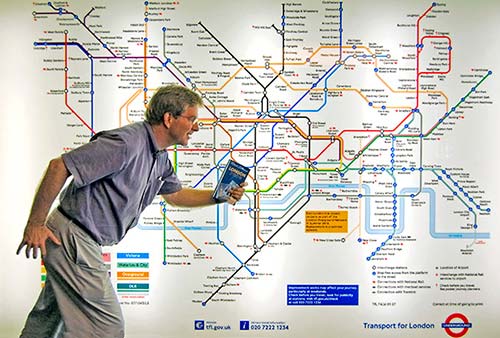
Get your bearings by studying a map of the system at any station. Each line has a name (such as Circle, Northern, or Bakerloo) and two directions (indicated by the end-of-the-line stops). Find the line that will take you to your destination, and figure out roughly which direction (north, south, east, or west) you’ll need to go to get there. You can also use Google Maps or another transit app to plan your journey.
At the Tube station, to pass through the turnstile using contactless pay, hold your credit card or device above the reader, both when you enter and exit the station. With an Oyster card, touch it flat against the turnstile’s yellow card reader. With a paper ticket, feed it into the turnstile, reclaim it, and hang on to it—you’ll need it later.
Find your train by following signs to your line and the (general) direction it’s headed (such as Central Line: Eastbound). Since some tracks are shared by several lines, double-check before boarding: Make sure your destination is one of the stops listed on the sign at the platform. Also, check the electronic signboards that announce which train is next, and make sure the destination (the end-of-the-line stop) is the direction you want. Some trains—particularly on the Circle and District lines—split off for other directions, but each train has its final destination marked above its windshield and on the side of the cars.
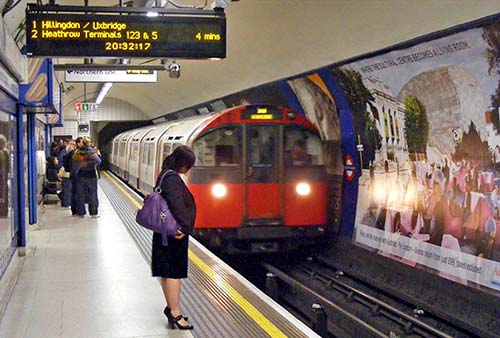
Trains run about every 3-10 minutes. (The Victoria line brags that it’s the most frequent anywhere, with trains coming every 100 seconds at peak time.) As for how long a journey will take, the general rule of thumb is that it takes 30 minutes to travel six Tube stops (including walking time within stations), or roughly 5 minutes per stop.
When you leave the system, “tap out” with your contactless card, device, or Oyster card at the electronic reader on the turnstile, or feed your paper ticket into the turnstile (it will eat your now-expired ticket). Check maps and signs for the most convenient exit.
The system can be fraught with construction delays, breakdowns, and strikes. Pay attention to signs and announcements explaining necessary detours. Rush hours (8:00-10:00 and 16:00-19:00) can be packed and sweaty. If one train is stuffed—and another is coming in three minutes—it may be worth a wait to avoid the sardine routine. Also, the cars closer to the middle of the train are generally more crowded, so if you anticipate crowds, stand closer to the ends of the platform. I’ve often scored a seat on an otherwise packed train using this simple strategy. (But note that at a few shorter stations, the doors of the cars at the very start and end of the train can’t open—listen for announcements and move closer to the middle of the train if necessary.)
For help, check out the “Plan a Journey” feature at www.tfl.gov.uk.
Tube Etiquette and Tips
• When your train arrives, stand off to the side and let riders exit before you board.
• When the car is jam-packed, avoid using the hinged seats near the doors of some trains—they take up valuable standing space.
• If you’re blocking the door when the train stops, step out of the car and off to the side, let others off, then get back on.
• Talk softly in the cars. Listen to how quietly Londoners communicate and follow their lead.
• On escalators, stand on the right and pass on the left. But note that in some passageways or stairways, you may be directed to walk on the left (the direction Brits go when behind the wheel).
• Discreet eating and drinking are fine; drinking alcohol and smoking are banned.
• Be zipped up to thwart thieves.
• Carefully check exit options before surfacing to street level. Signs point clearly to nearby sights—you’ll save lots of walking by choosing the right exit.
By Bus
If you figure out the bus system, you’ll swing like Tarzan through the urban jungle of London (see sidebar for a list of handy routes). Get in the habit of hopping buses for quick little straight shots, even just to get to a Tube stop. However, during bump-and-grind rush hours (8:00-10:00 and 16:00-19:00), you’ll usually go faster by Tube.
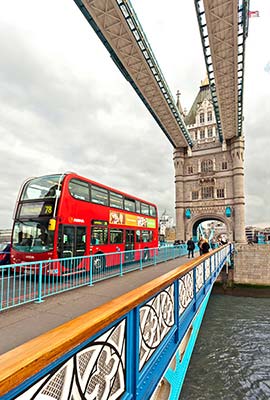
You can’t buy single-trip tickets for buses, and you can’t use cash to pay when boarding. Instead, you must have a contactless credit card or payment-enabled mobile device, an Oyster card, or a one-day Bus & Tram Pass (£6, can only buy on day of travel from ticket machine in any Tube station). With a contactless credit card or Oyster card, any bus ride in downtown London within a given hour costs £1.75 (capped at £5.25/day).
The first step in mastering London’s bus system is learning how to decipher the bus-stop signs. The accompanying photo shows a typical sign listing the buses (the N91, N68, etc.) that come by here and their destinations (Oakwood, Old Coulsdon, etc.). In the first column, find your destination on the list—e.g., to Paddington (Tube and rail station). In the next column, find a bus that goes there—the #23 (routes marked “N” are night-only). In the final column, a letter within a circle (e.g., “H”) tells you exactly which nearby bus stop to use. Find your stop on the accompanying bus-stop map, then make your way to that stop—you’ll know it’s yours because it will have the same letter on its pole.
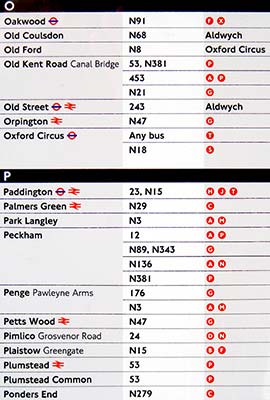
When your bus approaches, it’s wise to hold your arm out to let the driver know you want on. Hop on and confirm your destination with the driver (often friendly and helpful).
As you board, touch your contactless credit card, device, or Oyster card to the card reader, or show your Bus & Tram Pass to the driver. Unlike on the Tube, there’s no need to show or tap your card when you hop off.
To alert the driver that you want to get off, press one of the red buttons (on the poles between the seats) before your stop.
By Taxi
London is the best taxi town in Europe. Big, black, carefully regulated cabs are everywhere—there are about 25,000 of them.
I’ve never met a crabby cabbie in London. They love to talk, and they know every nook and cranny in town. I ride in a taxi each day just to get my London questions answered. Drivers must pass a rigorous test on “The Knowledge” of London geography to earn their license. But don’t take a cab in bad traffic—especially to a destination efficiently served by the Tube.
The best views are upstairs on a double-decker. Check the bus stop closest to your hotel—it could be convenient to your sightseeing plans. For a color version of this map, see the fold-out map at the back of this book. Here are some of the most useful routes:
Route #9: High Street Kensington to Knightsbridge (Harrods) to Hyde Park Corner to Trafalgar Square to Aldwych (near Courtauld Gallery).
Route #11: Victoria Station to Westminster Abbey to Waterloo (near London Eye).
Route #15: Trafalgar Square to St. Paul’s to Tower of London.
Route #23: Paddington Station to Marble Arch to Green Park to Piccadilly Circus to Trafalgar Square to Aldwych.
Route #24: Pimlico to Victoria Station to Westminster Abbey to Trafalgar Square to Warren Street, then all the way north to Camden Town (Camden Lock Market) and Hampstead Heath.
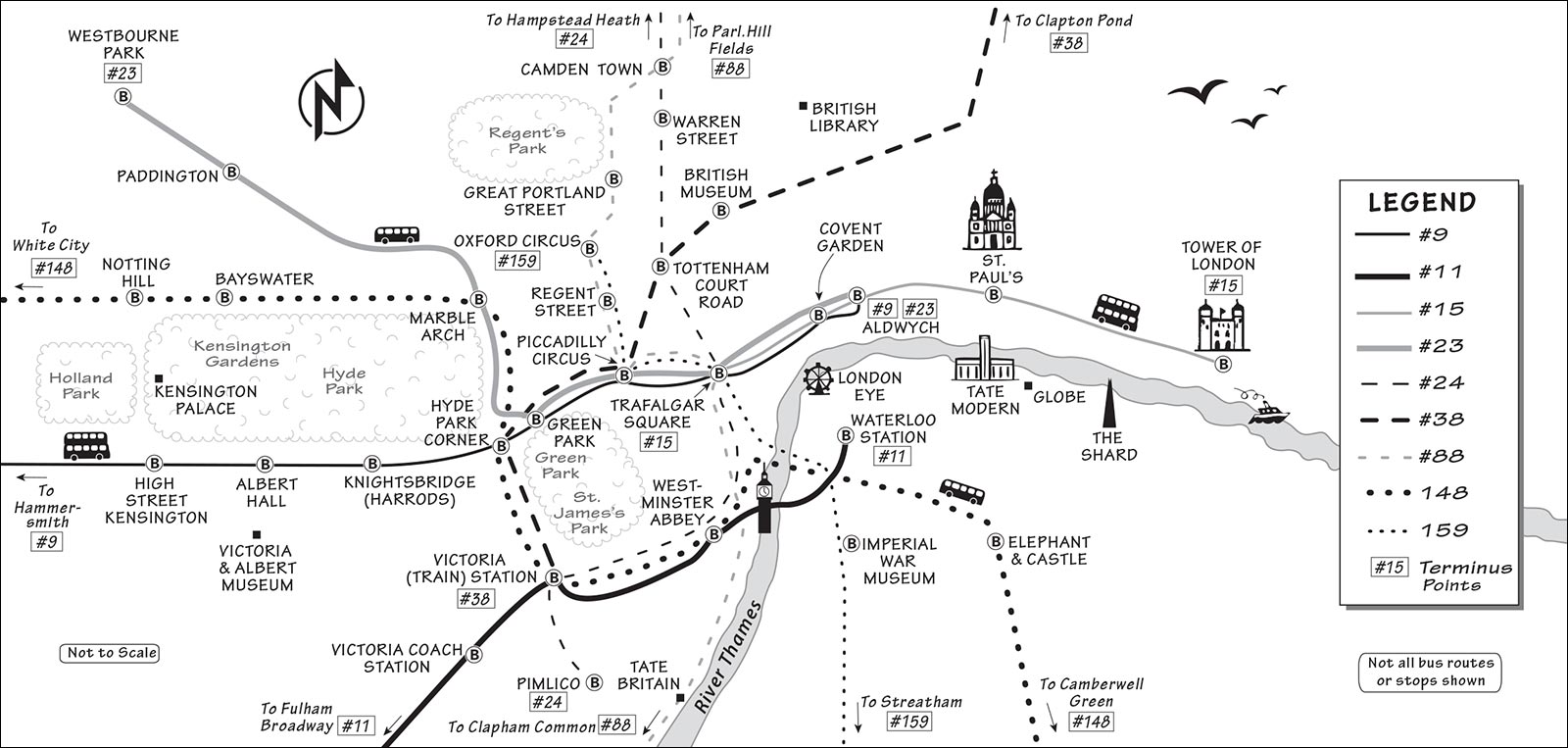
Route #38: Victoria Station to Hyde Park Corner to Piccadilly Circus to British Museum.
Route #88: Tate Britain to Westminster Abbey to Trafalgar Square to Piccadilly Circus to Oxford Circus to Great Portland Street Station (Regent’s Park), then north to Camden Town.
Route #148: Westminster Abbey to Victoria Station to Bayswater and Notting Hill (by way of the east end of Hyde Park and Marble Arch).
Routes #159: Oxford Circus to Piccadilly Circus to Trafalgar Square to Westminster and the Imperial War Museum. Bus #139 also makes the corridor run between Oxford Circus, Piccadilly Circus, and Trafalgar Square.
If a cab’s top light is on, just wave it down. Drivers flash their lights when they see you wave. They have a tight turning radius, so you can hail cabs going in either direction. If waving doesn’t work, ask someone where you can find a taxi stand. Calling a cab will get you one in a few minutes but costs a little more (+44 871 871 8710).
You can also use the Free Now app to hail a taxi. This can be a convenient alternative to calling a dispatcher or finding a taxi stand; prices are fixed up-front, and you can pay with a credit card (through the app).
Rides start at £3.80. The regular tariff #1 covers most of the day (Mon-Fri 5:00-20:00), tariff #2 is during “unsociable hours” (Mon-Fri 20:00-22:00 and Sat-Sun 5:00-22:00), and tariff #3 is for nighttime (22:00-5:00) and holidays. Rates go up about 20 percent with each higher tariff. Extra charges are explained in writing on the cab wall. All cabs accept credit and debit cards. Tip a cabbie by rounding up (maximum 10 percent).
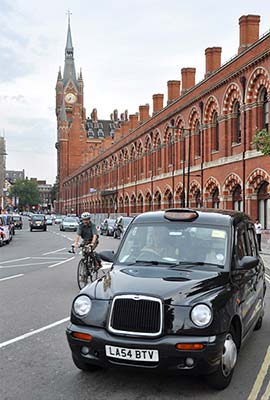
Connecting downtown sights is quick and easy and will cost you about £10-15 (for example, St. Paul’s to the Tower of London, or between the two Tate museums). For a short ride, three adults in a cab generally travel at close to Tube prices—and groups of four or five adults should taxi everywhere. All cabs can carry five passengers, and some take six, for the same cost as a single traveler.
Don’t worry about meter cheating. Licensed British cab meters come with a sealed computer chip and clock that ensures you’ll get the correct tariff. The only way a cabbie can cheat you is by taking a needlessly long route.
If you overdrink and ride in a taxi, be warned: Taxis charge up to £60 for “soiling” (a.k.a., pub puke).
By Uber
Uber can be cheaper than a taxi and can be a handy alternative if there’s a long line for a taxi or if no cabs are available. On the other hand, you won’t get the experience of being in a classic black cab, and Uber drivers generally don’t know the city as well as regular cabbies (and don’t have the access to some fast lanes that taxis do). Still, if you like using Uber, it can work great here.
By Car
If you have a car, stow it—you don’t want to drive in London. A minimum £15 congestion charge is levied on any private car that enters the city center weekdays 7:00-18:00 and weekends 12:00-18:00 (excluding Christmas Day through New Year’s Day). This system has cut down traffic jams, bolstered London’s public transit, and made buses cheaper and more user-friendly. Today, most vehicles in the city center are buses, taxis, and service trucks. If you do need to drive, it’s quick and easy to register your vehicle (including rental cars) using the Transport for London website, where payment options are outlined (www.cclondon.com, +44 343 222 2222; you’ll need the vehicle registration number and country of registration). Penalties are painfully stiff for late payments.
By Boat
It’s easy to connect downtown London sights between Westminster and the Tower of London by boat (see here).
By Bike
London isn’t (yet) ideal for biking. Its network of designated bike lanes is far from complete, and the city’s many one-way streets (not to mention the need to bike on the “wrong” side) can make biking here a bit more challenging. If you’re accustomed to urban biking, it can be a good option for connecting your sightseeing stops, but if you’re just up for a joyride, stick to London’s large parks.
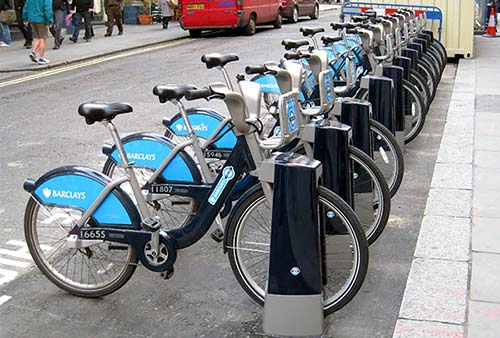
London operates a citywide bike-rental program similar to those in other major European cities. Santander Cycles, intended for quick point-to-point trips, are fairly easy to rent and a giddy joy to use. These cruisers have big, cushy seats, a bag rack with elastic straps, and three gears. Approximately 800 bike-rental stations are scattered throughout the city. Maps showing docking stations are available at major Tube stations, at www.tfl.gov.uk, and via the Santander Cycles app.
Stay to the far-left side of the road and watch closely at intersections for left-turning cars. Be aware that in most parks (including Hyde Park/Kensington Gardens) only certain paths are designated for bike use—you can’t ride just anywhere. Maps posted at park entrances identify bike paths, and non-bike paths are generally clearly marked.
Some bike tour companies also rent bikes (for details, see here).
Tours in London
 To sightsee on your own, download my free Rick Steves Audio Europe app with audio tours that illuminate some of London’s top sights and neighborhoods, including my Westminster Walk, Historic London: The City Walk, and tours of the British Museum and St. Paul’s Cathedral (see the sidebar on here).
BY HOP-ON, HOP-OFF DOUBLE-DECKER BUS
London is full of hop-on, hop-off bus companies competing for your tourist pound—an experience rated ▲▲. These once-over-lightly bus tours drive by all the famous sights, providing a stress-free way to get your bearings and see the biggies: Piccadilly Circus, Trafalgar Square, Big Ben, St. Paul’s, the Tower of London, Marble Arch, Victoria Station, and beyond. With a good guide, decent traffic, and nice weather, I’d sit back and enjoy the entire tour. (If traffic is bad—or you don’t like the commentary—you can hop off and try the next departure.) Routes can vary; some have live (English-only) guides, while others have recorded, dial-a-language narration. Pick up a map from any flier rack (or check online) and study the color-coded system.
Buses run daily about every 10-15 minutes in summer and every 10-20 minutes in winter, starting at about 8:30. The last full loop usually leaves Victoria Station at around 20:00 in summer, and 17:00 in winter. Sunday morning—when traffic is light and many museums are closed—is a fine time for a tour. Traffic is at its peak around lunch and during the evening rush hour (around 17:00).
Big Bus is the most established bus company and the one I’d probably go with (www.bigbustours.com). You’ll also see Tootbus (www.tootbus.com) and Golden Tours (www.goldentours.com).
As an example of pricing, the basic, one-day Big Bus ticket costs £41 (discounts if you book online). This gives you access to two basic overview tours, both with recorded narration in multiple languages (use the free earbuds or bring your own). Red buses offer a 2.5-hour tour with the main sights, while the blue route provides a 1.5-hour tour around Hyde Park and the museum district (includes the Thames boat trip by City Cruises between Westminster and the Tower of London; pricier “Premium” and “Deluxe” multiday tickets include walking tours and other extras). To sort through your options and to book, see BigBusTours.com. You can also buy (full-price) tickets from drivers, or from staff at street kiosks.
BY BUS OR CAR
London by Night Sightseeing Tour
Various bus tour companies offer a 1- to 2-hour circuit after hours, with no extras (e.g., walks, river cruises), at a lower price. While the narration can be lame, the views at twilight are grand—though note that it stays light until late on summer nights, and London just doesn’t do floodlighting as well as, say, Paris. Options include Big Bus (£30, cheaper online, departs at 18:00 from London Eye, 2-hour tour, www.bigbustours.com); Golden Tours (£29, cheaper online, departs from Belvedere Road next to London Eye, +44 20 7233 7030, www.goldentours.com); and See London By Night (£29, live guides, departs from Green Park next to the Ritz Hotel, +44 20 7183 4744, www.seelondonbynight.com). For a memorable and economical evening, munch a scenic picnic dinner on the top deck. (There are plenty of takeaway options near the various stops.)
Driver-Guide
If you’d like a private driver—whether for in-city trips or for day-tripping outside of London—consider David Stubbs (£495 for 1-3 people, from £550 for 4-8 people, also does tours to the Cotswolds, Stonehenge, Stratford, Windsor Castle, and Bath; +44 7775 888 534, www.londoncountrytours.co.uk, info@londoncountrytours.co.uk).
ON FOOT
Top-notch local guides lead (sometimes big) groups on walking tours—worth ▲▲—through specific slices of London’s past. Each company’s website lists their options. For most walking tours, simply show up at the announced location and pay the guide. Then enjoy two chatty hours of Dickens, Harry Potter, the Plague, Shakespeare, street art, the Beatles, or whatever is on the agenda. I’d skip the “free” tours you may see advertised (which aren’t actually free—your guide gets paid only if you tip); the professional companies described below are reasonably priced and high-quality.
London Walks
Just perusing this leading company’s fascinating lineup opens me up to dimensions of London I never considered and inspires me to stay longer. Their two-hour walks are led by top-quality professional guides ranging from archaeologists to actors (£15, exact cash or contactless card, walks offered year-round, private tours and day trips available, +44 20 7624 3978, www.walks.com).
Beatles Walks
Fans of the still-Fab Four can take one of several Beatles walks (London Walks runs one daily).
Jack the Ripper Walks
Each walking tour company seems to make most of its money with “haunted” and Jack the Ripper tours. While almost no hint of the dark and scary London of Jack the Ripper’s time survives, guides do a good job of spinning the gory story.
Two reliably good two-hour tours start every night at the Tower Hill Tube station exit. London Walks leaves nightly at 19:30, plus summer Saturdays at 15:00 (£15, reservations required, +44 20 7624 3978, www.jacktheripperwalk.com). Ripping Yarns, which leaves nightly at 18:40, is guided by off-duty Yeoman Warders—the Tower of London “Beefeaters” (£10, confirm availability online, mobile +44 7858 470 171 or +44 7813 559 301, www.jack-the-ripper-tours.com). After taking both, I found the London Walks tour more entertaining, informative, and with a better route (along quieter lanes, with less traffic), starting at Tower Hill and ending near Liverpool Street Station.
Private Tours with Local Guides
Standard rates for London’s registered Blue Badge guides are about £198 for four hours and £323 or more for nine hours (+44 20 7611 2545, www.guidelondon.org.uk or www.britainsbestguides.org). I know and like these fine local guides: Sean Kelleher, an engaging storyteller who knows his history (+44 20 8673 1624, mobile +44 7764 612 770, sean@seanlondonguide.com); Britt Lonsdale, who’s great with families (£280/half-day, £400/day, +44 20 7386 9907, mobile +44 7813 278 077, brittl@btinternet.com); and Joel Reid, an imaginative guide who breathes life into the major sights but also loves sharing off-the-beaten-track London (+44 7887 955 720, joelyreid@gmail.com).
Nigel Rundstrom, who runs Mirandus Tours, is an experienced Blue Badge guide who can take you all over London and beyond, either on foot or by public transport, or with his van (from £285/half-day, £395/day, extra with van, +44 792 963 4490, www.mirandustours.com, info@mirandustours.com).
These two guides work in London when they’re not on the road leading my Britain tours: Tom Hooper (+44 7986 048 047, tomh1@btinternet.com) and Gillian Chadwick (£300/day, +44 7889 976 598, gillychad21@gmail.com).
If you have a particular interest, London Walks (see earlier) has a huge selection of guides and can likely book one for your exact focus (£250/half-day, privatewalks@walks.com).
BY BIKE
Many of London’s best sights can be laced together with a pleasant pedal through its parks.
London Bicycle Tour Company
Three tours leave from their base next to the Imperial War Museum, south of the Thames. Sunday is the best, as there is less car traffic; optional helmets are included. The following tour times are for peak season (April-Oct); times are different off-season. Always book ahead (Classic Tour—daily at 10:30, 8 miles, £34, 3 hours, includes Westminster, Covent Garden, and St. Paul’s; Love London Tour—daily at 14:15, 8 miles, £39, 3 hours, includes Westminster, Buckingham Palace, Hyde Park, Soho, and Covent Garden; Original Bike Tour—daily at 14:00, 9 miles, £39, 3.5 hours, includes south side of the river to Tower Bridge, the East End, The City, and St. Paul’s). They also rent bikes (office open daily, 74 Kennington Road, +44 20 7928 6838, www.londonbicycle.com).
Fat Tire Bike Tours
These bike tours cover the highlights of downtown London on two different itineraries (RS%—£2 discount with this book): Royal London (£35, daily at 10:30 in peak season, may also run at 15:30 in summer, 7 miles, 4 hours; includes Parliament, Buckingham Palace, Hyde Park, and Trafalgar Square) and River Thames (£39, 3/week in summer at 10:00, 4.5 hours; includes London Eye, St. Paul’s, Tower of London, and Borough Market). Their guiding style is light, mixing history with humor (reserve ahead, off-season tours also available, mobile +44 7882 338 779 or +1 866 614 6218, www.fattiretours.com/london). They also offer a range of walking tours that include an East End market tour, a beer-tasting pub tour, and a VIP tour of the Tower of London.
BY CRUISE BOAT
London offers many made-for-tourist cruises, most on slow-moving, open-top boats accompanied by entertaining commentary (an experience worth ▲▲). Several companies offer essentially the same trip. Generally speaking, you can either do a short city-center cruise by riding a boat 30 minutes from Westminster Pier to Tower Pier (particularly handy if you’re interested in visiting the Tower of London anyway) or take a longer cruise that includes a peek at the East End, riding from Westminster all the way to Greenwich (save time by taking the Tube back).
Each company runs cruises daily, about twice hourly, from morning until dark; many reduce frequency off-season. Boats come and go from various docks in the city center. The most popular places to embark are Westminster Pier (at the base of Westminster Bridge across the street from Big Ben) and London Eye Pier (also known as Waterloo Pier, across the river).
A one-way trip within the city center costs about £13; going all the way to Greenwich costs about £3 more. Most companies charge around £6 more for a round-trip ticket. Others sell hop-on, hop-off day tickets or a two-day river pass (around £24). But I’d rather savor a one-way cruise, then zip home by Tube.
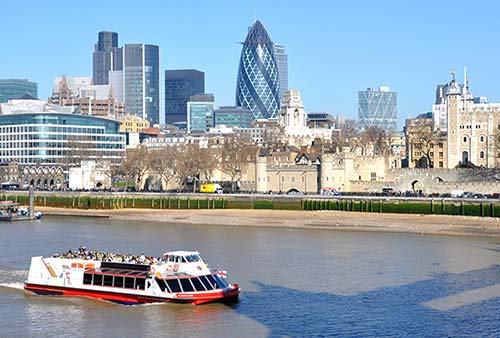
You can buy tickets at kiosks on the docks; always ask about discounts (they vary by company). With a Travelcard, you get a 33 percent discount off most cruises; the Oyster card or a contactless credit card can be used as payment but nets you a 10 percent discount only on Thames Clippers. You can purchase drinks and overpriced snacks on board. Budget travelers can pack a picnic for the cruise.
The three dominant companies are City Cruises (handy 45-minute cruise from Westminster Pier to Tower Pier via London Eye Pier; www.cityexperiences.com), Thames River Sightseeing (Westminster Pier, Tower Bridge Quay, and Greenwich Pier; classic boats, friendlier and more old-fashioned feel; www.thamesriversightseeing.com), and Circular Cruise (Westminster Pier, Embankment, Festival Pier, Bankside, Tower Bridge Quay; full cruise takes about an hour, operated by Crown River Services, www.crownrivercruise.co.uk). I’d skip the London Eye’s River Cruise from London Eye Pier, as it’s more expensive and shorter. The speedy Thames Clippers (described later) are designed more for no-nonsense transport than lazy sightseeing.
To compare your options in one spot, head to Westminster Pier, which has a row of kiosks for all the big outfits.
Cruising Downstream, to Greenwich: Both City Cruises and Thames River Sightseeing head from Westminster Pier to Greenwich. The cruises are usually narrated by the captain, with most commentary given on the way to Greenwich. The companies’ prices are about the same, though their itineraries are slightly different (Thames River Sightseeing makes only one stop en route and takes an hour, while City Cruises makes two stops and adds about 15 minutes). Thames Clippers boats, described later, are cheaper and faster (about 20-55 minutes to Greenwich), but have no commentary and no up-top seating.
Cruising Upstream, to Kew Gardens and Hampton Court Palace: Thames River Boats leave for Kew Gardens from Westminster Pier (£16.50 one-way, £24 round-trip, 2-4/day depending on season, 1.5 hours, boats sail April-Oct, about half the trip is narrated, www.thamesriverboats.co.uk). Most boats continue to Hampton Court Palace for an additional £6 (and another 1.5 hours).
Commuting by Clipper
The sleek, 220-seat catamarans used by Thames Clippers (branded as “Uber Boat by Thames Clippers”) are designed for commuters rather than sightseers. Think of the boats as express buses on the river—they zip through London every 20-30 minutes, stopping at most of the major docks en route. They’re fast: roughly 20-30 minutes from Embankment to Tower, 10 more minutes to Docklands/Canary Wharf, and 15 more minutes to Greenwich. The boats are less pleasant for joyriding than the cruises described earlier, with no commentary and no open deck up top. Any one-way ride in central London (roughly London Eye to Tower Pier) costs £6.35-9.50; a one-way ride to East London (Canary Wharf and Greenwich) costs £7.50-11.20, price depends on how you pay; and a River Roamer all-day, all-zone ticket costs £21 (discounts online and with Travelcard and Oyster card, can also reserve and pay via Uber app or contactless credit card, www.thamesclippers.com).
Thames Clippers also offers two express trips. The Tate Boat ferry service, which directly connects the Tate Britain (Millbank Pier) and the Tate Modern (Bankside Pier), is made for art lovers (£9.50 one-way, covered by River Roamer day ticket; buy ticket at kiosks or self-service machines before boarding—or use contactless payment, Oyster card, or Uber app; for frequency and times, see www.thamesclippers.com). Thames Clippers runs the O2 Post-Show Express only on nights when there are events at the O2 arena (first boat departs 15 minutes after event finishes, service to London Bridge and London Eye piers, reserve online, can sell out in advance).
Westminster Walk
Just about every visitor to London strolls along historic Whitehall from Big Ben to Trafalgar Square. This self-guided walk gives meaning to that touristy ramble (most of the sights you’ll see are described in more detail later). Under London’s modern traffic and big-city bustle lie 2,000 fascinating years of history. You’ll get a whirlwind tour as well as a practical orientation to London.
You can download a free, extended audio version of this walk; see here.
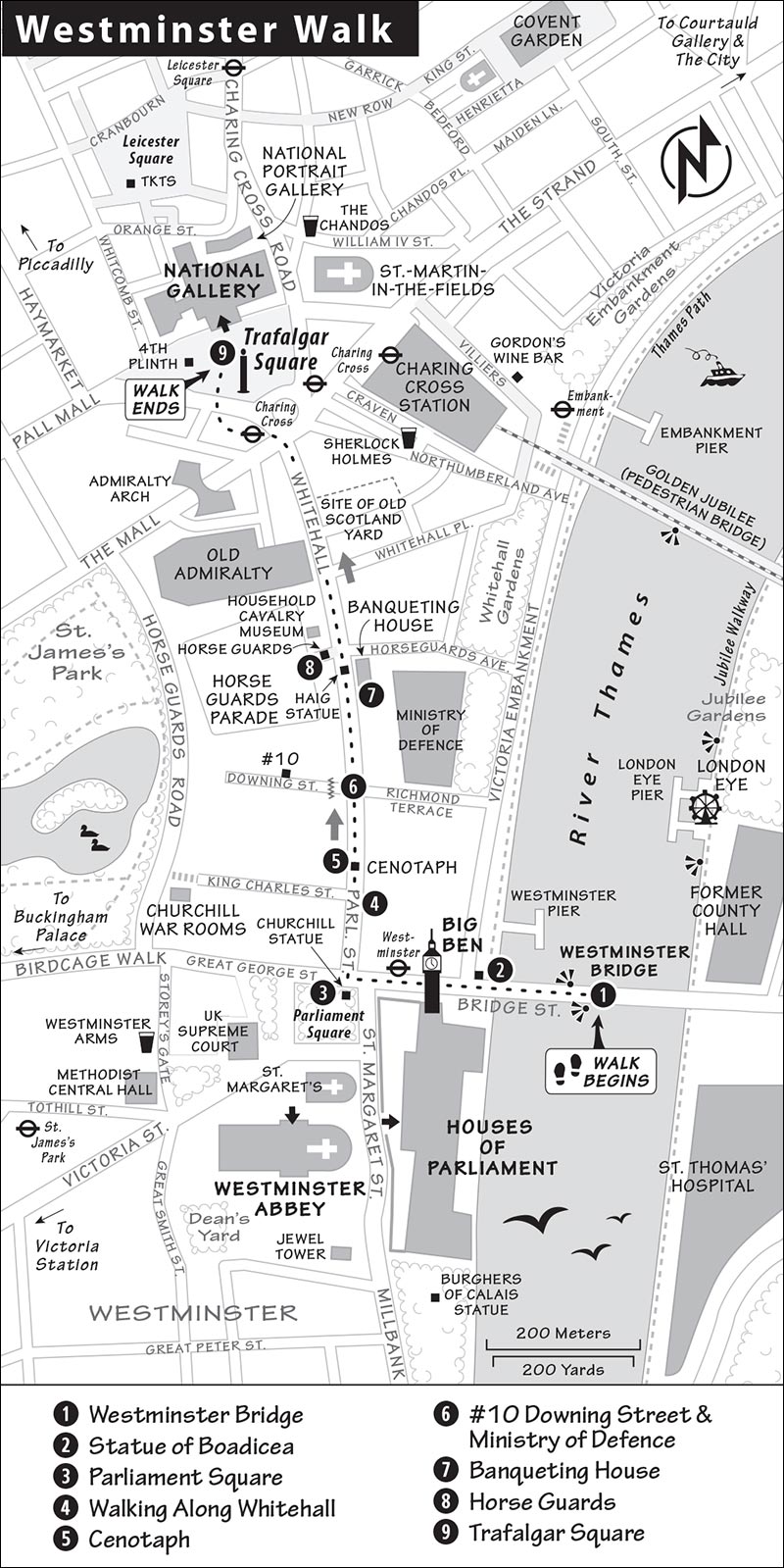
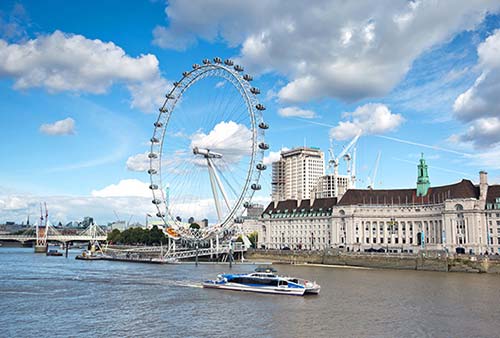
Start halfway across 1 Westminster Bridge for that “Wow, I’m really in London!” feeling. Get a close-up view of the Houses of Parliament and Big Ben (floodlit at night). Downstream you’ll see the London Eye, the city’s giant Ferris wheel. Down the stairs to Westminster Pier are boats to the Tower of London and Greenwich (downstream) or Kew Gardens (upstream).
En route to Parliament Square, you’ll pass a 2 statue of Boadicea, the Celtic queen who unsuccessfully resisted Roman invaders in AD 60. Julius Caesar was the first Roman general to cross the Channel, but even he was weirded out by the island’s strange inhabitants, who worshipped trees, sacrificed virgins, and went to war painted blue. Later, Romans subdued and civilized them, building roads and making this spot on the Thames—“Londinium”—a major urban center.
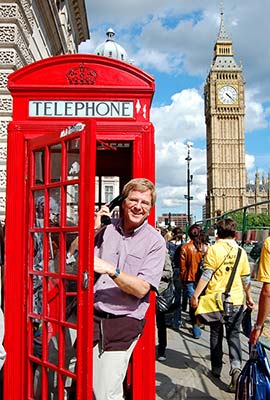
Take in the surrounding sights from 3 Parliament Square and wave hello to Winston Churchill and Nelson Mandela. To Churchill’s right is the historic Westminster Abbey, with its two stubby, elegant towers. The white building (flying the Union Jack) at the far end of the square houses Britain’s Supreme Court. You’ll find red phone booths lining the north side of Parliament Square—great for a phone-box-and-Big-Ben photo op.
Head north up Parliament Street, which becomes 4 Whitehall, and walk toward Trafalgar Square. You’ll see the thought-provoking 5 Cenotaph in the middle of the boulevard, reminding passersby of the many Brits who died in the last century’s world wars. To visit the Churchill War Rooms, take a left before the Cenotaph, on King Charles Street.
Continuing on Whitehall, stop at the barricaded and guarded 6 #10 Downing Street to see the British “White House,” the traditional home of the prime minister since the position was created in the early 18th century. The huge Lego-like building across Whitehall from Downing Street is the Ministry of Defence (MOD), the “British Pentagon.”
Nearing Trafalgar Square, look for the 17th-century 7 Banqueting House across the street, which is just about all that remains of what was once the biggest palace in Europe—Whitehall Palace. If you visit, you can enjoy its ceiling paintings by Peter Paul Rubens, and the exquisite hall itself (though you may need to book a guided tour, see here). Also take a look at the 8 Horse Guards behind the gated fence. For 200 years, soldiers in cavalry uniforms have guarded this arched entrance that leads to Buckingham Palace. These elite troops constitute the monarch’s personal bodyguard.
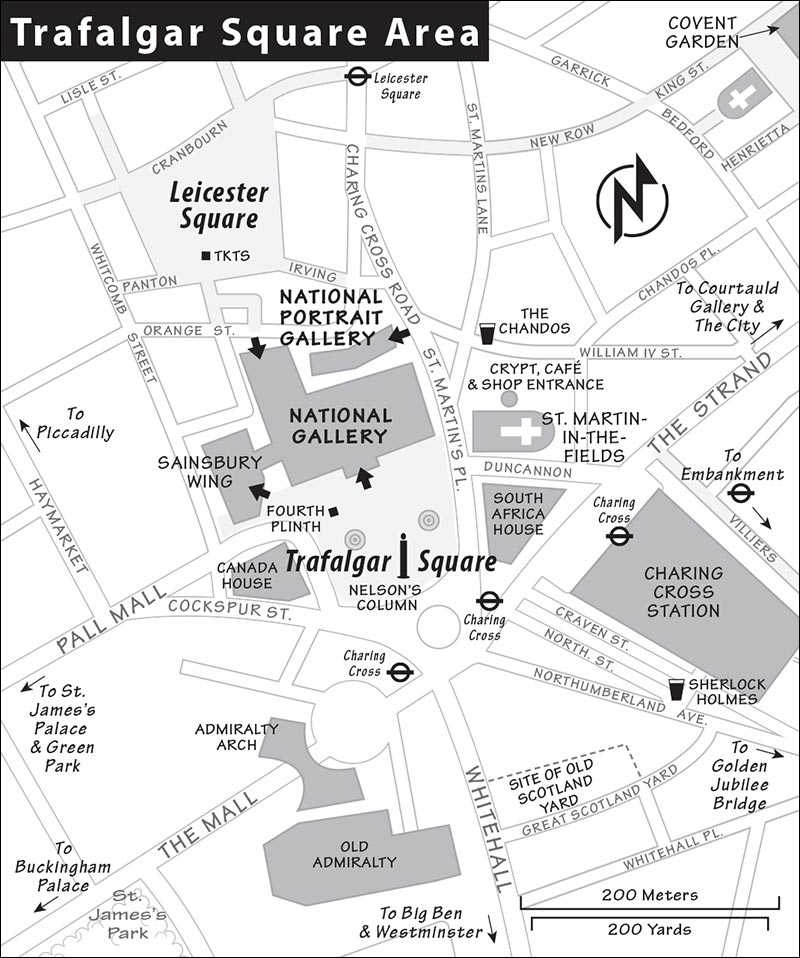
The column topped by Lord Nelson marks 9 Trafalgar Square, London’s central meeting point. The stately domed building on the far side of the square is the National Gallery, which is filled with the national collection of European paintings. To the right of the National Gallery is the 1722 St. Martin-in-the-Fields Church and its Café in the Crypt.
To get to Piccadilly from Trafalgar Square, walk up Cockspur Street to Haymarket and head right a few blocks, then take a short left on Coventry Street to colorful Piccadilly Circus (see map on here).
Near Piccadilly, you’ll find several theaters. Leicester Square (with its half-price TKTS booth for plays—see here) thrives just a few blocks away. Walk through trendy Soho (north of Shaftesbury Avenue) for its fun pubs. From Piccadilly or Oxford Circus, you can take a taxi, bus, or the Tube home.
Sights in Central London
▲▲Houses of Parliament (Palace of Westminster)
▲Soho
▲State Rooms at Buckingham Palace
Queen’s Gallery at Buckingham Palace
▲▲Changing of the Guard at Buckingham Palace
▲The Postal Museum and Mail Rail
Map: The City, The Tower & East End
▲Old Operating Theatre Museum and Herb Garret
▲Apsley House (Wellington Museum)
▲Hyde Park and Speakers’ Corner
Map: Victoria & Albert Museum Tour
The Making of Harry Potter: Warner Bros. Studio Tour London
WESTMINSTER
These sights are listed in roughly geographical order from Westminster Abbey to Trafalgar Square, and are linked in my self-guided Westminster Walk (earlier) and my free audio tour.
▲▲▲Westminster Abbey
The greatest church in the English-speaking world, Westminster Abbey is where England’s kings and queens have been crowned and buried since 1066. Like a stony refugee camp huddled outside St. Peter’s Pearly Gates, Westminster Abbey has many stories to tell. To experience the church more vividly, take a live tour, or attend evensong or an organ concert.
Cost and Hours: £27, £5 more for timed-entry ticket to worthwhile Queen’s Diamond Jubilee Galleries, family ticket available; Abbey—Mon-Fri 9:30-16:30, Wed until 19:00 (main church only), Sat 9:00-16:30 (Sept-April until 14:00), guided tours available; Queen’s Galleries—Mon-Fri 10:00-16:00, Sat 9:30-15:30, stays open later on summer Wed; cloister—Mon-Sat 9:30-17:30; closed Sun to sightseers but open for services; last entry one hour before closing; Tube: Westminster or St. James’s Park, +44 20 7222 5152, www.westminster-abbey.org.
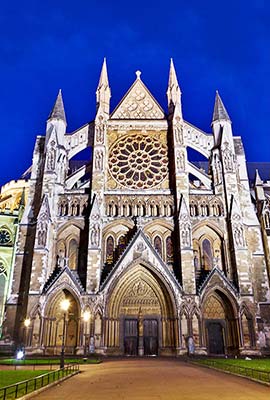
Timed-Entry Tickets: Avoid long ticket-buying lines (especially in summer) by buying a timed-entry ticket on the Abbey’s website (don’t buy tickets from copycat websites; use the official “.org” site). Present the ticket to a staff member, and they will point you to the right entrance. If you add the Queen’s Galleries, book a time about an hour after you’ll start your Abbey visit. Abbey staff are generally lenient if you show up outside of your time slot.
When to Go: It’s most crowded every day at midmorning and all day Saturdays and Mondays. Visit early, during lunch, or late to avoid tourist hordes. Weekdays after 14:30 are less congested; come late and stay for the 17:00 evensong. On summer Wednesdays, the church stays open later for visitors; on these days, ask about live music and a bar that may be set up in the cloister garth (the grassy area in the middle of the cloister).
Church Services and Music: In general, Mon-Fri at 7:30 (prayer), 8:00 and 12:30 (Communion), 17:00 evensong (on Wed it’s spoken, not sung); Sat at 17:00 (evensong; Sept-April at 15:00 instead); Sun services generally come with more music: at 8:00 (Communion), 11:15 (sung Eucharist), 15:00 (evensong), and 18:30 (evening service). Services are free to anyone, though visitors who haven’t paid church admission aren’t allowed to linger afterward. Free organ recitals are usually held Sun at 17:00 (30 minutes). Things can change, so get the latest info for your particular day from posted signs or the Abbey’s website. Additional services take place at St. Margaret’s, the smaller church next door.
Tours: The included multimedia guide is excellent. Vergers (docents) give informative 90-minute guided tours (£10, schedule posted outside and inside entry, up to 5/day April-Sept, 2-4/day Oct-March).
 Self-Guided Tour: You’ll have no choice but to follow the steady flow of tourists through the church, along the route laid out for the audioguide. Here are the Abbey’s top stops.
• Walk straight through the north transept. Follow the crowd flow to the right, passing by a number of...
1 Memorials: Westminster Abbey has become a place where the nation comes to remember its own. You’ll see statues on tombs, stained glass on walls, and plaques in the floor, all honoring illustrious Brits, both famous and not so famous.
• Now enter the spacious nave and take it all in.
2 Nave: Look down the long and narrow center aisle of the church. Lined with the praying hands of the Gothic arches, glowing with light from the stained glass, this is more than a museum. With saints in stained glass, heroes in carved stone, and the bodies of England’s greatest citizens under the floor stones, Westminster Abbey is the religious heart of England.
The king who built the Abbey was Edward the Confessor. Find him in the stained glass windows on the left side of the nave (as you face the altar—look up). He’s in the third bay from the end (marked S: Edwardus rex...), dressed in white and blue, with his crown, scepter, and ring. The Abbey’s 10-story nave is the tallest in England. The sleek chandeliers, 10 feet tall, look small in comparison (16 were given to the Abbey by the Guinness family).
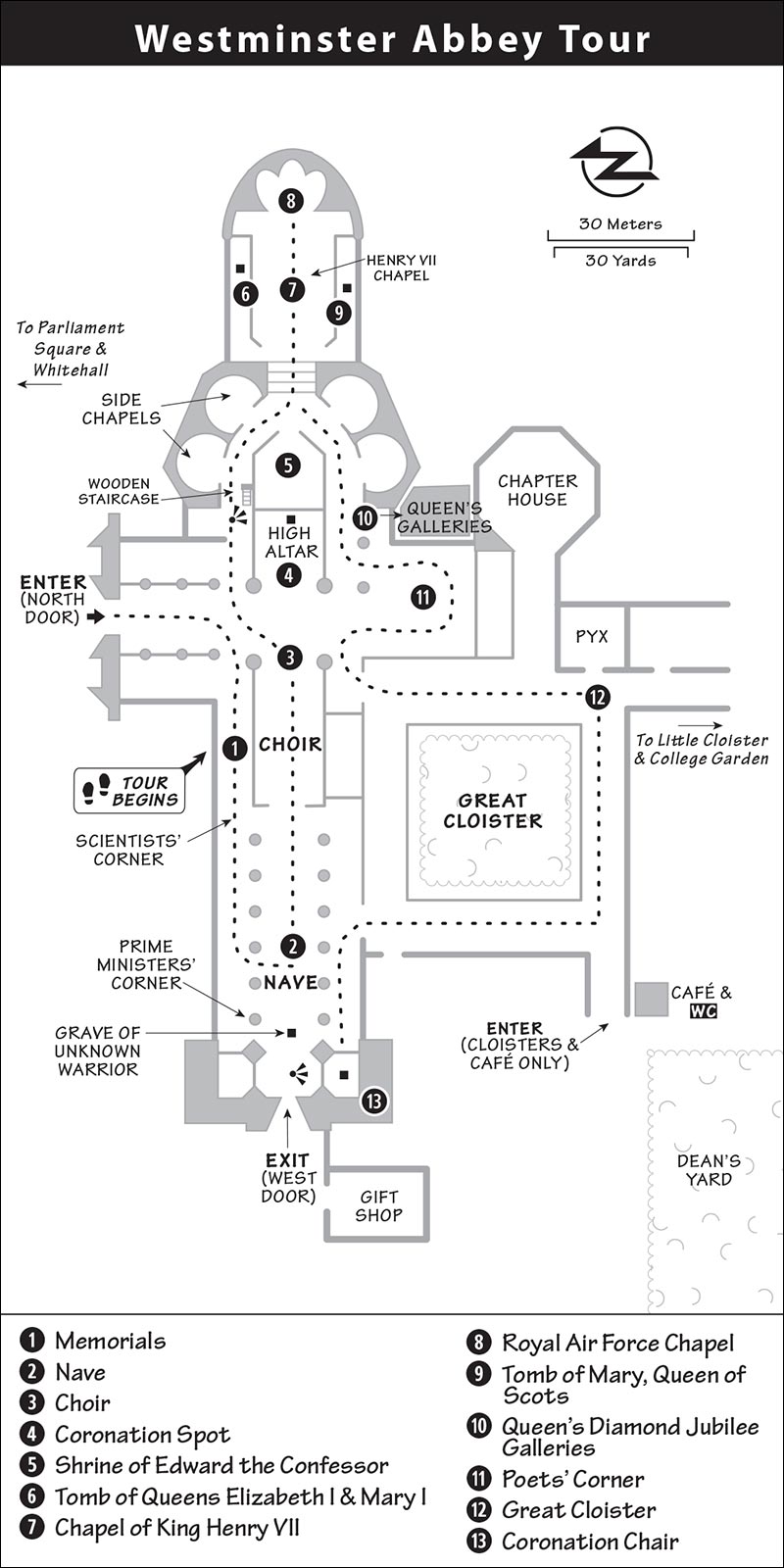
On the floor near the west entrance of the Abbey is the flower-lined Grave of the Unknown Warrior, one ordinary WWI soldier buried in soil from France with lettering made from melted-down weapons from that war. Take time to contemplate the 800,000 men and women from the British Empire who gave their lives. Their memory is so revered that, when Kate Middleton walked up the aisle on her wedding day, by tradition she had to step around the tomb.
• Now walk straight up the nave toward the altar. This is the same route every future monarch walks on the way to being crowned. Midway up the nave, you pass through the colorful screen of an enclosure known as the...
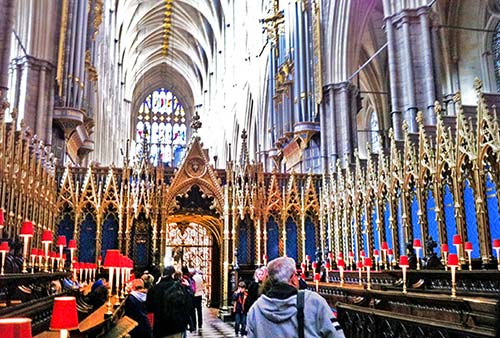
3 Choir: These elaborately carved wood and gilded seats are where monks once chanted their services in the “quire”—as it’s known in British churchspeak. Today, it’s where the Abbey’s boys choir sings the evensong. Up ahead, the “high” (main) altar—which usually has a cross and candlesticks atop it—sits on the platform up the five stairs.
4 Coronation Spot: Though England’s royal marriages and funerals can happen anywhere, only one church can hold a coronation—the Abbey. The area immediately before the high altar is where every English coronation since 1066 has taken place, including that of King Charles III in May 2023. Royalty are also given funerals here, most recently Queen Elizabeth II, in 2022. Before the service, the Abbey’s tenor bell rang out once a minute for 96 minutes—marking each year of the queen’s life.
This is also where many of the last century’s royal weddings have taken place, including the unions of Queen Elizabeth II and Prince Philip (1947) and Prince William and Kate Middleton (2011).
• Now veer left and follow the crowd. Pause at the freestanding wooden staircase on your right. This is the royal tomb that started it all.
5 Shrine of Edward the Confessor: Step back and peek over the dark coffin of Edward I to see the tippy-top of the green-and-gold wedding-cake tomb of King Edward the Confessor—the man who built Westminster Abbey. It was finished just in time to bury Edward and to crown his foreign successor, William the Conqueror, in 1066. After Edward’s death, people prayed at his tomb, and when they got good results, Edward was made a saint. His personal renown began the tradition of burying royalty in this church. Edward’s tall, central tomb (which unfortunately lost some of its luster when Henry VIII melted down the gold coffin case) is surrounded by the tombs of eight other kings and queens.
• At the back end of the church, climb the wide stone staircase and veer left into the private burial chapel holding the...
6 Tomb of Queens Elizabeth I and Mary I: Although only one effigy is on the tomb (Elizabeth’s), there are actually two queens buried beneath it, both daughters of Henry VIII (by different mothers). Bloody Mary—meek, pious, sickly, and Catholic—enforced Catholicism during her short reign (1553-1558) by burning “heretics” at the stake.
Elizabeth—strong, clever, and Protestant—steered England on an Anglican course. She holds a royal orb symbolizing that she’s queen of the whole globe. When 26-year-old Elizabeth was crowned in the Abbey, her right to rule was questioned (especially by her Catholic subjects) because she was considered the bastard seed of Henry VIII’s unsanctioned marriage to Anne Boleyn. But Elizabeth’s long reign (1559-1603) was one of the greatest in English history, a time when England ruled the seas and Shakespeare explored human emotions. When she died, thousands turned out for her funeral in the Abbey. Elizabeth’s face on the tomb, modeled after her death mask, is considered a very accurate take on this hook-nosed, imperious “Virgin Queen” (she never married).
• Continue into the ornate, flag-draped room up three more stairs (directly behind the main altar).
7 Chapel of King Henry VII (The Lady Chapel): The light from the stained-glass windows; the colorful banners overhead; and the elaborate tracery in stone, wood, and glass give this room the festive air of a medieval tournament. The prestigious Knights of the Bath meet here, under the magnificent ceiling studded with gold pendants. The ceiling—of carved stone, not plaster (1519)—is the finest English Perpendicular Gothic and fan vaulting you’ll see (unless you’re going to King’s College Chapel in Cambridge). The ceiling was sculpted on the floor in pieces, then jigsaw-puzzled into place. It capped the Gothic period and signaled the vitality of the coming Renaissance.
• Go to the far end of the chapel and stand at the banister in front of the modern set of stained-glass windows.
8 Royal Air Force Chapel: Saints in robes and halos mingle with pilots in parachutes and bomber jackets. This tribute to WWII flyers is for those who earned their angel wings in the Battle of Britain (July-Oct 1940). A bit of bomb damage has been preserved—the little glassed-over hole in the wall below the windows in the lower left-hand corner.
• Exit the Chapel of Henry VII. Turn left into a side chapel with the tomb (the central one of three in the chapel).
9 Tomb of Mary, Queen of Scots: The beautiful, French-educated queen (1542-1587) was held under house arrest for 19 years by Queen Elizabeth I, who considered her a threat to her sovereignty. Elizabeth got wind of an assassination plot, suspected Mary was behind it, and had her first cousin (once removed) beheaded. When Elizabeth died childless, Mary’s son—James VI, King of Scots—also became King James I of England and Ireland. James buried his mum here (with her head sewn back on) in the Abbey’s most sumptuous tomb.
• Exit Mary’s chapel and head back down the big stone stairs. Continue until you emerge in the south transept. Look for the doorway that leads to a stairway and elevator to the...
10 Queen’s Diamond Jubilee Galleries: In 2018, to mark the 60th anniversary of Queen Elizabeth II’s accession to the throne, the Abbey opened a space that had been closed off for 700 years—an internal gallery 70 feet above the main floor known as the triforium. This balcony—with stunning views over the nave—now houses a small museum of interesting objects related to the Abbey’s construction, the monarchs who worshipped here, royal coronations, and more from its 1,000-year history. (Because of limited space, a timed-entry ticket is required.)
• After touring the Queen’s Galleries, return to the main floor. You’re in...
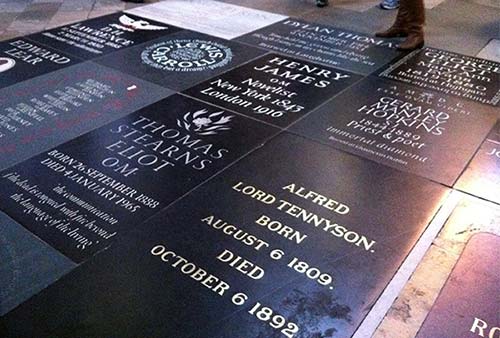
11 Poets’ Corner: England’s greatest artistic contributions are in the written word. Many writers (including Geoffrey Chaucer, Lewis Carroll, T. S. Eliot, and Charles Dickens) are honored with plaques and monuments; relatively few are actually buried here. Shakespeare is commemorated by a fine statue that stands near the end of the south transept, overlooking the others.
• Exit the church (temporarily) at the south door, which leads to the...
12 Great Cloister: You’re entering the inner sanctum of the Abbey’s monastery. The buildings that adjoin the church housed the monks. Cloistered courtyards like this gave them a place to stroll in peace while meditating on God’s creations.
• Go back into the church for the last stop.
13 Coronation Chair: A gold-painted oak chair waits here under a regal canopy for the next coronation. For every English coronation since 1308 (except two), it’s been moved to its spot before the high altar to receive the royal buttocks. The chair’s legs rest on lions, England’s symbol.
▲▲Houses of Parliament (Palace of Westminster)
This Neo-Gothic icon of London, the site of the royal residence from 1042 to 1547, is now the meeting place of the legislative branch of government. Like the US Capitol in Washington, DC, the complex is open to visitors. You can view parliamentary sessions in either the bickering House of Commons or the sleepy House of Lords. Or you can simply wander on your own (through a few closely monitored rooms) to appreciate the historic building itself.
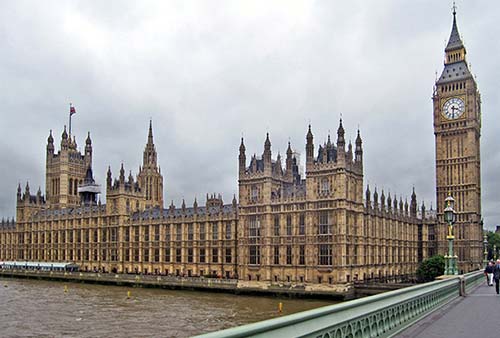
The Palace of Westminster has been the center of political power in England for nearly a thousand years. In 1834, a horrendous fire gutted the Palace. It was rebuilt in a retro, Neo-Gothic style that recalled England’s medieval Christian roots—pointed arches, stained-glass windows, spires, and saint-like statues. At the same time, Britain was also retooling its government. Democracy was on the rise, the queen became a constitutional monarch, and Parliament emerged as the nation’s ruling body. The Palace of Westminster became a symbol—a kind of cathedral—of democracy. A visit here offers a chance to tour a piece of living history and see the British government in action.
Cost and Hours: Free when Parliament is in session, otherwise must visit with a paid tour (see later); nonticketed entry generally Oct-late July; House of Commons—Mon 14:30-22:30, Tue-Wed 11:30-19:30, Thu 9:30-17:30, closed Fri-Sun; House of Lords—Mon-Tue 14:30-22:00, Wed 15:00-22:00, Thu 11:00-19:30, closed Fri-Sun; last entry depends on debates; exact day-by-day schedule at www.parliament.uk.
When to Go: Expect lines—it may take 20-30 minutes to get through security, then another 20-60 minutes to be admitted to the House chambers. You’ll have the best chance of viewing both chambers if you arrive around 14:00. Avoid going at 16:00, when parliamentary functions make things extra busy. Visiting after 18:00 can be efficient, since there are typically almost no lines or crowds, but it’s also much quieter.
Choosing a House: The House of Lords is less important politically, but they meet in a more ornate room, and the wait time is shorter (likely less than 30 minutes). The House of Commons is where major policy is made, but the room is sparse, and wait times are longer (30-60 minutes or more).
Tours: Whenever Parliament is in recess (Sat year-round, late July-Sept, and during school holidays), you can only enter by paying for a guided tour (£32) or a multimedia guide (£25), which lets you sightsee on your own. Book ahead online or by calling +44 20 7219 4114 to secure a time slot, or try booking on the spot at Portcullis House, near Westminster Bridge and Big Ben (ticket office open Mon-Fri 9:00-17:00, Sat 8:30-16:30, closed Sun, enter from Victoria Embankment). For either a guided tour or a multimedia guide, arrive at the visitors entrance on Cromwell Green 20-30 minutes before your tour time to clear security.
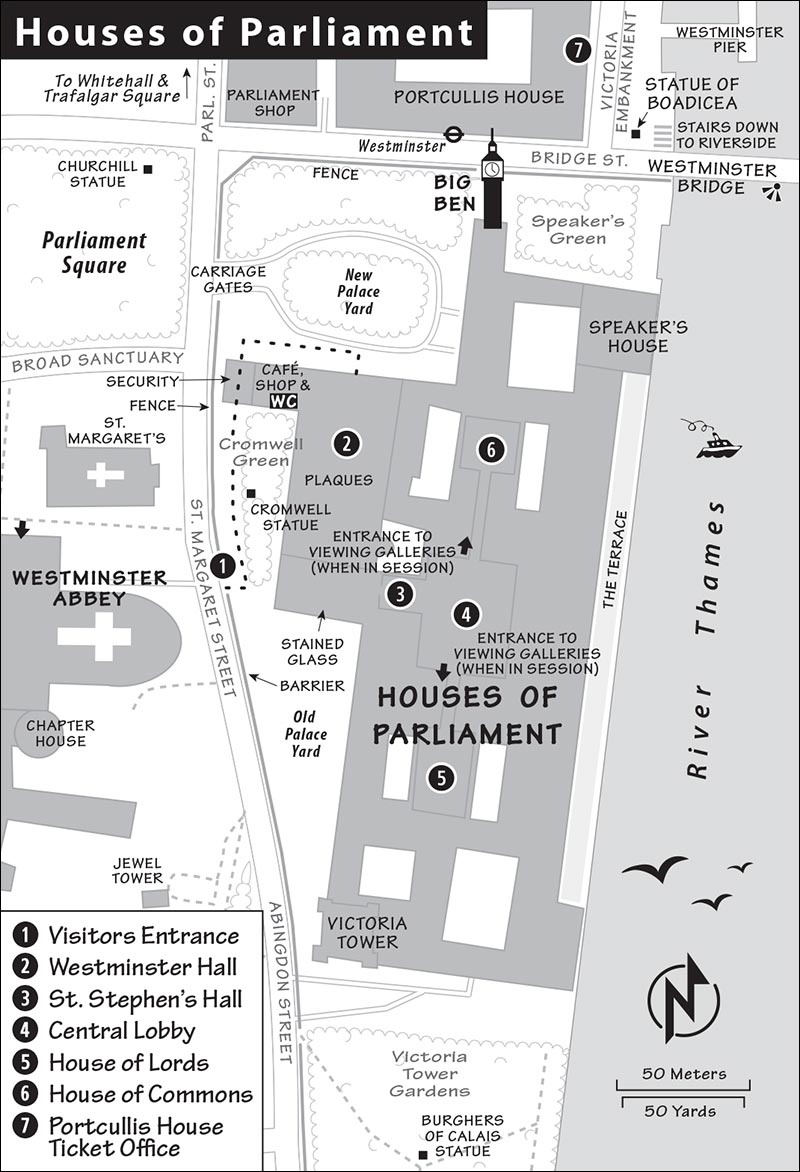
Self-Guided Tour: Enter midway along the west side of the building (across the street from Westminster Abbey), where a tourist ramp leads to the 1 visitors entrance. Line up for the airport-style security check. You’ll be given a visitor badge. If you have questions, the attendants are helpful.
• First, take in the cavernous...
2 Westminster Hall: This vast hall—covering 16,000 square feet—survived the 1834 fire and is one of the oldest and most important buildings in England. England’s vaunted legal system was invented in this hall, as this was the major court of the land for 700 years. King Charles I was tried and sentenced to death here. Guy Fawkes was condemned for plotting to blow up the Halls of Parliament in 1605.
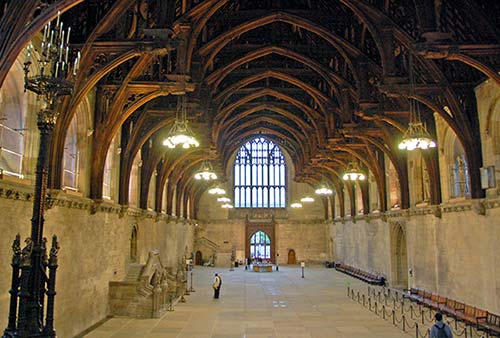
• Continue up the stairs and enter...
3 St. Stephen’s Hall: This long, beautifully lit room was the original House of Commons. Members of Parliament (MPs) sat in church pews on either side of the hall—the ruling faction on one side, the opposition on the other. The room’s murals depict major events in English history.
• Continue into the...
4 Central Lobby: This ornate, octagonal, high-vaulted room is often called the “heart of British government,” because it sits midway between the House of Commons (to the left) and the House of Lords (right). Video monitors list the schedule of meetings and events going on in this 1,100-room governmental hive. This is the best place to admire the Palace’s interior decoration—carved wood, chandeliers, statues, and floor tiles. The room’s decor trumpets the enlightenment of the British governing system. The colorful mosaics over the four doors represent the countries of the United Kingdom.
• This lobby marks the end of the public space where you can wander freely. From here, you’ll visit the House of Lords or the House of Commons. If either house is in session, you’ll go through a series of narrow halls and staircases to reach the upper viewing galleries.
5 House of Lords: When you’re called, you’ll walk to the Lords Chamber by way of the long Peers Corridor—referring to the House’s 800 unelected members, called “Peers.” Paintings on the corridor walls depict the antiauthoritarian spirit brewing under the reign of Charles I. When you reach the House of Lords Chamber, you’ll watch the proceedings from the upper-level visitors gallery. Debate may occur among the few Lords who show up at any given time, but these days, their role is largely advisory—they have no real power to pass laws on their own.
The Lords Chamber is church-like and impressive, with stained glass and intricately carved walls. At the far end is a huge gilded throne, where the current monarch sits once a year when giving a speech to open Parliament. In front of the throne sits the woolsack—a cushion stuffed with wool. Here the Lord Speaker presides, with a ceremonial mace behind the backrest. To the Lord Speaker’s right are the members of the ruling party (a.k.a. “government”) and to his (or her) left are the members of the opposition (the Labour Party). Unaffiliated Crossbenchers sit in between.
6 House of Commons: The Commons Chamber may be much less grandiose than the Lords’, but this is where the sausage gets made. The House of Commons is as powerful as the Lords, prime minister, and king combined. Of today’s 650-plus MPs, only 450 can sit—the rest have to stand at the ends. As in the House of Lords, the ruling party sits on the right of the Speaker, opposition sits on the left.
Keep an eye out for two red lines on the floor, which must not be crossed when debating the other side. (They’re supposedly two sword-lengths apart, to prevent a literal clashing of swords.) Between the benches is the canopied Speaker’s Chair, for the chairman who keeps order and chooses who can speak next. A green bag on the back of the chair holds petitions from the public. The clerks sit at a central table that holds the ceremonial mace, a symbol of the power given Parliament by the monarch, who is not allowed in the Commons Chamber. When the prime minister visits, their ministers (or cabinet) join on the front bench, while lesser MPs (the “backbenchers”) sit behind. It’s often a fiery spectacle, as the prime minister defends their policies, while the opposition grumbles and harrumphs in displeasure. It’s not unheard of for MPs to get out of line and be escorted out by the Serjeant at Arms and his Parliamentary bouncers.
Nearby: Across the street from the Parliament building’s St. Stephen’s Gate, the Jewel Tower is a rare remnant of the old Palace of Westminster, used by kings until Henry VIII. The crude stone tower (1365-1366) was a guard tower in the palace wall, overlooking a moat. It contains an exhibit on the medieval Westminster Palace and the tower (£6.50, April-Oct Wed-Sun 10:00-17:00, closed Mon-Tue, off-season Sat-Sun only until 16:00, +44 20 7222 2219). Next to the tower is a quiet courtyard with picnic-friendly benches.
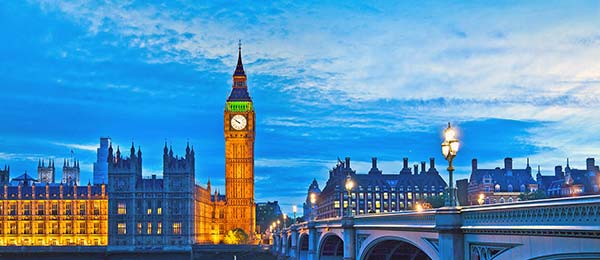
Big Ben, the 315-foot-high clock tower at the north end of the Palace of Westminster, is named for its 13-ton bell, Ben. The light above the clock is lit when Parliament is in session. The face of the clock is huge—you can actually see the minute hand moving. For a good view of it, walk halfway over Westminster Bridge. For tours of Big Ben, see www.parliament.uk.
▲▲▲Churchill War Rooms
This excellent sight offers a fascinating walk through the underground headquarters of the British government’s WWII fight against the Nazis in the darkest days of the Battle of Britain. It has two parts: the war rooms themselves, and a top-notch museum dedicated to the man who steered the war from here, Winston Churchill.
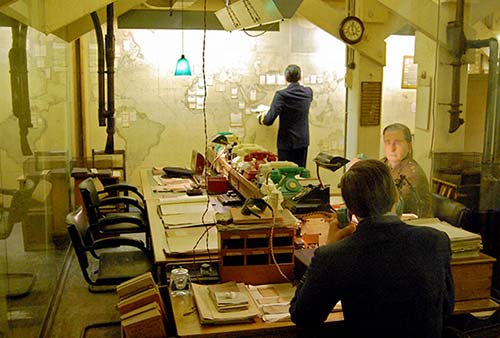
Cost and Hours: £27, buy online in advance, includes essential audioguide; daily 9:30-18:00, last entry one hour before closing; on King Charles Street, 200 yards off Whitehall—follow signs, Tube: Westminster; +44 20 7930 6961, www.iwm.org.uk/churchill-war-rooms. The museum’s gift shop is great for anyone nostalgic for the 1940s.
Advance Tickets Recommended: Ticket-buying lines can be long (1-2 hours), so it’s smart to buy a timed-entry ticket online in advance. You still may have to wait up to 30 minutes in the security line.
Cabinet War Rooms: The 27-room, heavily fortified nerve center of the British war effort was used from 1939 to 1945. Churchill’s room, the map room, and other rooms are just as they were in 1945. As you follow the one-way route, the audioguide explains each room and offers first-person accounts of wartime happenings here. Be patient—it’s well worth it. While the rooms are spartan, you’ll see how British gentility survived even as the city was bombarded—posted signs informed those working underground what the weather was like outside, and a cheery notice reminded them to turn off the lights to conserve electricity.
Churchill Museum: Don’t bypass this museum, which occupies a large hall amid the war rooms. It dissects every aspect of the man behind the famous cigar, bowler hat, and V-for-victory sign. It’s extremely well presented and engaging, using artifacts, quotes, political cartoons, clear explanations, and interactive exhibits to bring the colorful statesman to life. You’ll get a taste of Winston’s wit, irascibility, work ethic, passion for painting, American ties, writing talents, and drinking habits. The exhibit shows Winston’s warts as well: It questions whether his party-switching was just political opportunism, examines the basis for his opposition to Indian self-rule, and reveals him to be an intense taskmaster who worked 18-hour days and was brutal to his staffers (who deeply respected him nevertheless).
A long touch-the-screen timeline lets you zero in on events in his life from birth (November 30, 1874) to his first appointment as prime minister in 1940. When World War II broke out, Prime Minister Neville Chamberlain’s appeasement policies were discredited, and—on the day that Germany invaded the Netherlands—the king appointed Churchill prime minister. Many of the items on display—such as a European map divvied up in permanent marker, which Churchill brought to England from the postwar Potsdam Conference—drive home the remarkable span of history this man influenced. Imagine: Churchill began his military career riding horses in the cavalry and ended it speaking out against nuclear proliferation. Churchill guided the nation through its darkest hour. His greatest contribution may have been his stirring radio speeches that galvanized the will of the British people. It’s all the more amazing considering that, in the 1930s, the man I regard as the greatest statesman of the 20th century was seen as a washed-up loony ranting about the growing threat of fascist Germany.
Eating: Rations are available at the $$ museum café or, better, get a pub lunch at the nearby $$ Westminster Arms (food served downstairs, on Storey’s Gate, a couple of blocks south of the museum).
Horse Guards
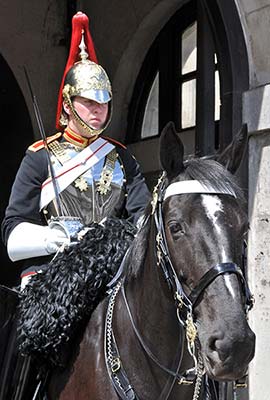
Mounted sentries change at the top of every hour, courtyard guards change Monday-Saturday at 11:00 (Sun at 10:00), and a colorful dismounting ceremony takes place daily at 16:00. The rest of the day, they just stand there—making for boring video (at Horse Guards Parade on Whitehall, directly across from the Banqueting House, between Trafalgar Square and 10 Downing Street, Tube: Westminster, www.changing-guard.com). Buckingham Palace pageantry is canceled when it rains, but the Horse Guards change regardless of the weather.
▲Banqueting House
England’s first Renaissance building (1619-1622) is still standing. Designed by Inigo Jones, built by King James I, and decorated by his son Charles I, the Banqueting House came to symbolize the Stuart kings’ “divine right” management style—the belief that God himself had anointed them to rule. The house is one of the few London landmarks spared by the 1698 fire and the only surviving part of the original Palace of Whitehall. Today it opens its doors to visitors, who enjoy a restful 10-minute audiovisual history, a 45-minute audioguide, and a look at the exquisite banqueting hall itself. As a tourist attraction, it’s basically one big room, with sumptuous ceiling paintings by Peter Paul Rubens. At Charles I’s request, these paintings drove home the doctrine of the legitimacy of the divine right of kings. Ironically, in 1649—divine right ignored—King Charles I was famously executed right here.
Cost and Hours: £7, includes audioguide; daily 10:00-17:00, may have limited hours and close for government functions, sometimes only accessible with a guided tour (see website); immediately across Whitehall from the Horse Guards, Tube: Westminster, +44 20 3166 6155, www.hrp.org.uk.
ON TRAFALGAR SQUARE
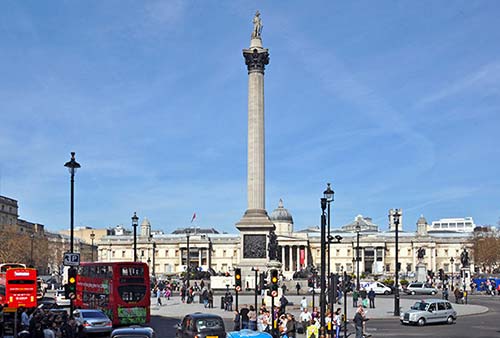
Trafalgar Square, London’s central square worth ▲▲, is at the intersection of Westminster, The City, and the West End. It’s the climax of most marches and demonstrations, and is a thrilling place to simply hang out. At the top of Trafalgar Square (north) sits the domed National Gallery with its grand staircase, and, to the right, the steeple of St. Martin-in-the-Fields, built in 1722, inspiring the steeple-over-the-entrance style of many town churches in New England. In the center of the square, Lord Nelson stands atop his 185-foot-tall fluted granite column, gazing out toward Trafalgar, where he lost his life but defeated the French fleet. Part of this 1842 memorial is made from his victims’ melted-down cannons. He’s surrounded by spraying fountains, giant lions, hordes of people, and—until recently—even more pigeons. A former London mayor decided that London’s “flying rats” were a public nuisance and evicted Trafalgar Square’s venerable seed salesmen (Tube: Charing Cross).
▲▲▲National Gallery
Displaying an unsurpassed collection of European paintings from 1250 to 1900—including works by Leonardo, Botticelli, Velázquez, Rembrandt, Turner, Van Gogh, and the Impressionists—this is one of Europe’s great galleries. You’ll peruse 700 years of art—from gold-backed Madonnas to Cubist bathers.
Cost and Hours: Free, donation suggested, special exhibits extra; daily 10:00-18:00, Fri until 21:00, last entry to special exhibits one hour before closing; on Trafalgar Square, Tube: Charing Cross or Leicester Square, +44 20 7747 2885, www.nationalgallery.org.uk.
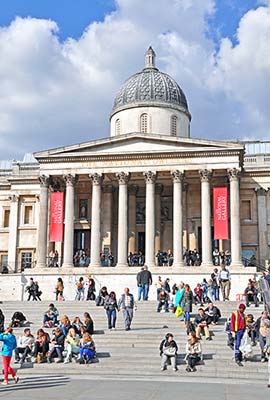
Tours: Free one-hour overview tours leave from the Central Hall (usually Tue-Thu at 15:00). Various in-depth drop-in talks are held throughout the week—ask at the info desk or check the gallery website under “events.”
Cuisine Art: There are three eateries in the National Gallery, all on level 0: $$$ Ochre Restaurant, $$ Muriel’s Kitchen Café, and the $ Espresso Bar.
Visiting the Museum: Climb the stairs to the Central Hall and make your way to Room 25 (and nearby rooms).
Medieval: Shiny gold paintings of saints, angels, Madonnas, and crucifixions float in an ethereal gold never-never land. Art in the Middle Ages was religious, dominated by the Church. The illiterate faithful could meditate on an altarpiece and visualize heaven. It’s as though they couldn’t imagine saints and angels inhabiting the dreary world of rocks, trees, and sky they lived in.
One of the finest medieval devotional paintings, The Wilton Diptych, is in a small glass case all its own (in Room 25; if not there, try looking for it downstairs). This portable altarpiece, made for the personal use of Richard II (king of England from 1377 to 1399), depicts two saints and John the Baptist presenting the kneeling king (left panel) to the Virgin Mary and her rosy-cheeked baby (right panel). Mary and the child are surrounded by angels with flame-like wings and stag emblems pinned to their chests—a symbol of Richard. Despite the gold-leaf background, a glimmer of human realism peeks through. The saints and king have distinct, down-to-earth faces.
Early Italian Renaissance: In painting, the Renaissance meant realism. Artists rediscovered the beauty of nature and the human body. In Room 14, Uccello’s Saint George and the Dragon (c. 1470) is a fantastical scene of a lackadaisical St. George spearing a snorting dragon, who’s been leashed by an elegant princess. While the saint has defeated the dragon, the battle for literal realism is ongoing. This is an early Renaissance attempt at a realistic, nonreligious, three-dimensional scene—Uccello’s perspective (the illusion of real space) is off-kilter, with lines veering off in multiple directions instead of receding to a single distant point.
High Renaissance: The Renaissance was born in Florence, but it flowered in Venice and Rome, before spreading north to the rest of Europe. The “Big Three” of the High Renaissance—Leonardo, Michelangelo, and Raphael—were all Florence-trained and composed their figures on canvas, “building” them into geometrical patterns that reflected the balance and order they saw in nature. Venetian artists revived the classical world in all its pagan glory, creating beautiful scenes of sensuous Nature.
Michelangelo’s (unfinished) The Entombment is inspired by ancient statues of balanced, anatomically perfect Greek gods. Renaissance balance and symmetry reign. Christ is the center of the composition, flanked by two people, leaning equally, who support his body with strips of cloth. They, in turn, are flanked by two others.
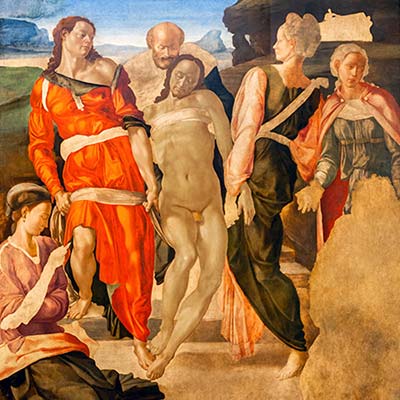
Raphael’s Pope Julius II gives a behind-the-scenes look at this complex leader. On the one hand, the pope is an imposing pyramid of power, with a velvet shawl, silk shirt, and fancy rings boasting of wealth and success. But at the same time, he’s a bent and broken man, his throne backed into a corner, with an expression that seems to say, “Is this all there is?”
Mannerism: Developed in reaction to the High Renaissance, Mannerism subverts the balanced, harmonious ideal of the previous era with exaggerated proportions, asymmetrical compositions, and decorative color. In The Origin of the Milky Way by Venetian painter Tintoretto, the god Jupiter lays his son, baby Hercules, at the breast of his goddess wife in a bid to confer immortality. Juno says, “Wait a minute. That’s not my baby!” Her milk spurts upward, becoming the Milky Way.
Northern Protestant Art: While Italy had wealthy aristocrats and the powerful Catholic Church to purchase art, the North’s patrons were middle-class, hardworking, Protestant merchants. They wanted simple, cheap, no-nonsense pictures to decorate their homes and offices. Greek gods and Virgin Marys were out, hometown folks and hometown places were in—portraits, landscapes, still lifes, and slice-of-life scenes.
Look for Vermeer’s A Young Woman Standing at a Virginal. By framing off such a small world to look at—from the blue chair in the foreground to the wall in back—Vermeer forces us to appreciate the tiniest details, the beauty of everyday things.
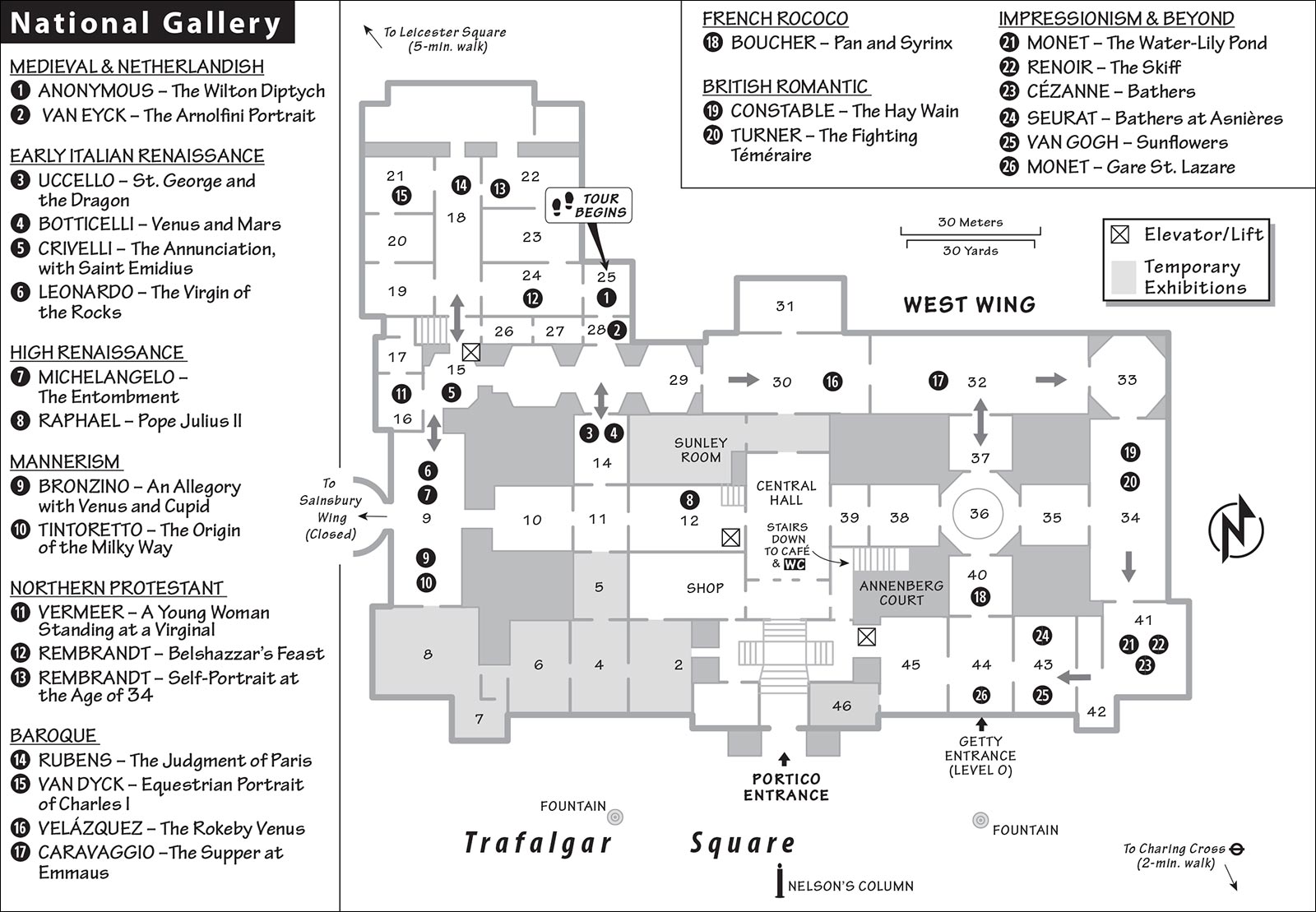
Baroque (1600s): The style popular with Catholic popes and aristocrats, Baroque art took the flashy Mannerist style and made it flashier; what had been dramatic now became downright shocking. In Velázquez’s The Rokeby Venus, Venus lounges diagonally across the canvas, admiring herself in a mirror held aloft by Cupid. Flaring red, white, and gray fabrics highlight her rosy white skin and inflame our passion. This work by the king’s personal court painter is a rare Spanish nude from that ultra-Catholic country.
French Rococo: As Europe’s political and economic center shifted from Italy to France, Louis XIV’s court at Versailles became its cultural hub. The Rococo art of Louis’ successors was as frilly, sensual, and suggestive as the decadent French court. We see their rosy-cheeked portraits and their fantasies: lords and ladies at play in classical gardens, where mortals and gods cavort together.
One of the finest examples of this style is the tiny Pan and Syrinx by Boucher.
British Romantic Art: The reserved British were more comfortable cavorting with nature than with the lofty gods. Come-as-you-are poets like Wordsworth found the same ecstasy just in being outside.
John Constable set up his easel out-of-doors, making quick sketches to capture the simple majesty of billowing clouds, spreading trees, and everyday rural life, as in The Hay Wain. Even British portraits (by Thomas Gainsborough and others) placed refined lords and ladies amid idealized greenery.
Impressionism and Beyond: At the end of the 19th century, a new breed of artist burst out of the stuffy confines of the studio. They donned scarves and berets and set up their canvases in farmers’ fields or carried their notebooks into crowded cafés, dashing off quick sketches in order to catch a momentary...impression. Check out Impressionist and Post-Impressionist masterpieces such as Cézanne’s Bathers, who are arranged in strict triangles. He uses the Impressionist technique of building a figure with dabs of paint (though his “dabs” are often larger-sized “cube” shapes) to make solid, 3-D geometrical figures in the style of the Renaissance. In the process, his cube shapes helped inspire a radical new style—Cubism—bringing art into the 20th century.
Also look for Van Gogh’s Sunflowers. Van Gogh was the point man of his culture. He added emotion to Impressionism, infusing life even into inanimate objects. These sunflowers, painted with characteristic swirling brushstrokes, shimmer and writhe in either agony or ecstasy—depending on your own mood.
▲▲National Portrait Gallery
After a multiyear renovation and expansion, a revitalized National Portrait Gallery has reopened. Creative presentation and a new focus on greater inclusiveness have transformed this once-stuffy place into a genuinely engaging experience, putting faces on major figures from the past 500 years of British history. Well-written signage lets you know why each portrait subject has earned a place on the wall.
The collection of more than a thousand paintings is arranged chronologically from the third floor down, spanning from the Tudors to Shakespeare, Dickens, Churchill, and beyond. The full experience can take up to two hours; for Anglophiles and art lovers, it’s worth the time.
Cost and Hours: Free, donation suggested, special exhibits extra; book online in advance to guarantee an entry time; daily 10:30-18:00, Fri-Sat until 21:00; free audio tour on Bloomberg Connects app; café, bar, and high-end restaurant; entrances at St. Martin’s Place and Charing Cross Road (around the corner from National Gallery, opposite Church of St. Martin-in-the-Fields), Tube: Charing Cross or Leicester Square, +44 20 7306 0055, www.npg.org.uk.
▲St. Martin-in-the-Fields
The church, built in the 1720s with a Gothic spire atop a Greek-type temple, is an oasis of peace on wild and noisy Trafalgar Square. St. Martin cared for the poor. “In the fields” was where the first church stood on this spot (in the 13th century), between Westminster and The City. Stepping inside, you still feel a compassion for the needs of the people in this neighborhood—the church serves the homeless and houses a Chinese community center. The modern east window—with grillwork bent into the shape of a warped cross—was installed in 2008 to replace one damaged in World War II.
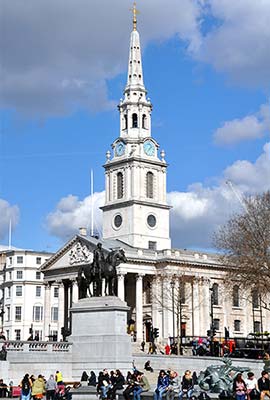
A freestanding glass pavilion to the left of the church serves as the entrance to the church’s underground areas. There you’ll find the concert ticket office, a gift shop, a brass-rubbing center, and the recommended support-the-church Café in the Crypt.
Cost and Hours: Free, donations welcome; Thu-Tue 9:00-17:00, Wed 12:00-19:30 (8:30 morning prayer open to everyone, free tour at 14:30), otherwise closed to visitors during services—listed at the entrance and on the website; Tube: Charing Cross, +44 20 7766 1100, www.stmartin-in-the-fields.org. The church is famous for its concerts, including a free lunchtime concert on Fridays and evening concerts (for details, see the church’s website and here).
THE WEST END AND NEARBY
▲Piccadilly Circus
Although this square is slathered with neon billboards and tacky attractions (think of it as the Times Square of London), the surrounding streets are packed with great shopping opportunities and swimming with youth on the rampage.
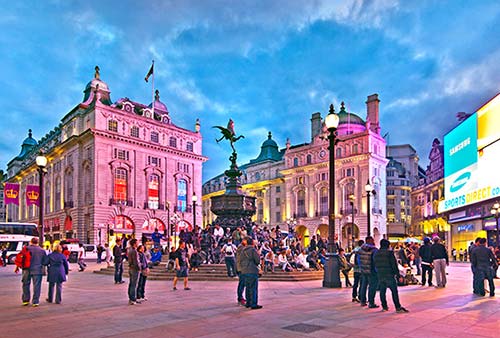
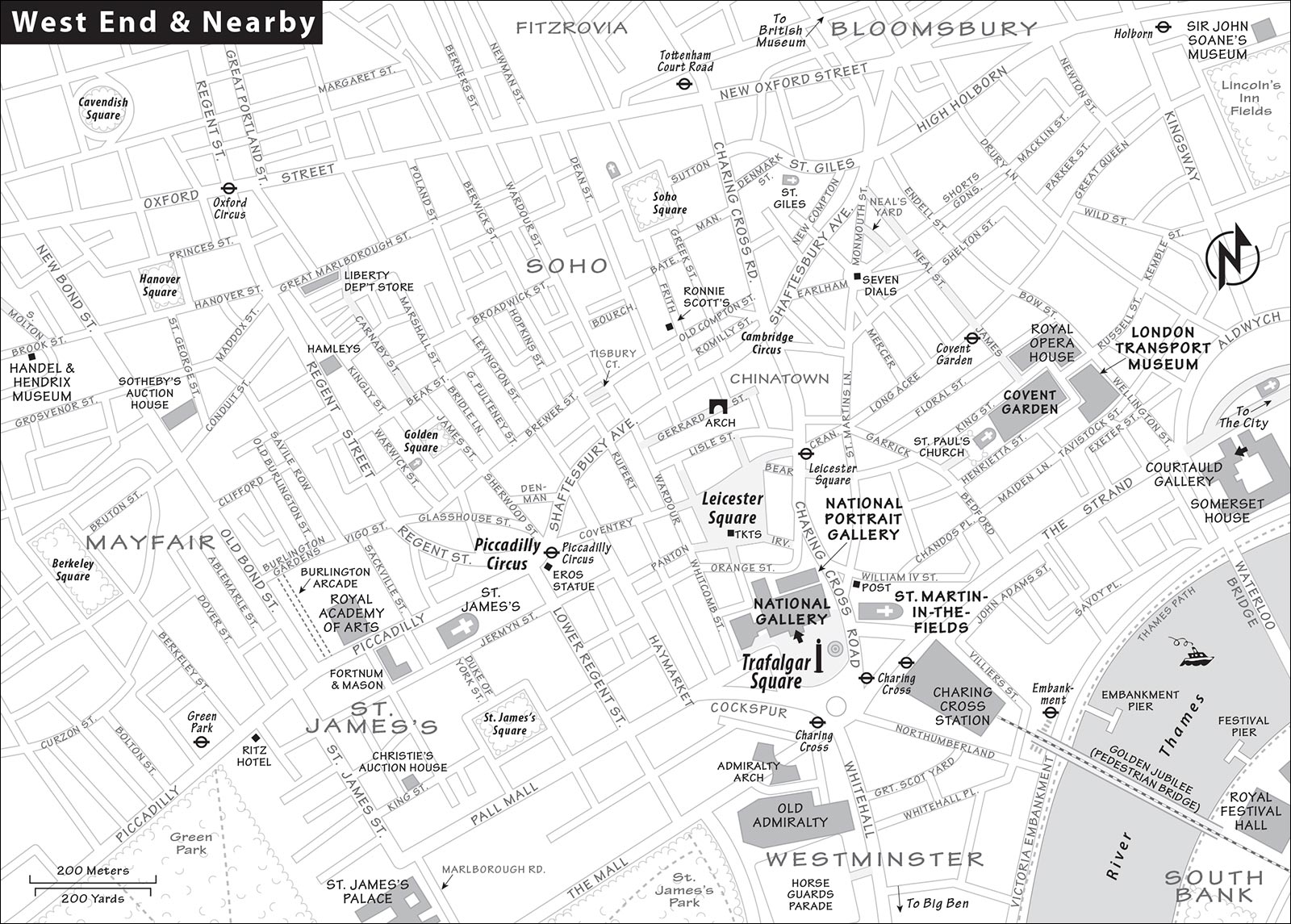
Nearby Shaftesbury Avenue and Leicester Square teem with fun-seekers, theaters, Chinese restaurants, and street singers. To the northeast is London’s Chinatown and, beyond that, the funky Soho neighborhood. And curling to the northwest from Piccadilly Circus is genteel Regent Street, lined with exclusive shops.
▲Soho
North of Piccadilly, once-seedy Soho has become trendy—with many recommended restaurants—and is well worth a gawk. It’s the epicenter of London’s thriving, colorful youth scene, a fun and funky Sesame Street of urban diversity.
▲▲Covent Garden
This large square is filled with people and street performers—jugglers, sword swallowers, magicians, beatboxers, and guitar players. London’s buskers (including those in the Tube) are auditioned, licensed, and assigned times and places where they are allowed to perform.
The square’s centerpiece is a covered marketplace. A market has been here since medieval times, when it was the “convent” garden owned by Westminster Abbey. In the 1600s, it became a housing development with this courtyard as its center, done in the Palladian style by Inigo Jones. Today’s fine iron-and-glass structure was built in 1830 (when such buildings were all the Industrial Age rage) to house the stalls of what became London’s chief produce market. Covent Garden remained a produce market until 1973, when its venerable arcades were converted to boutiques, cafés, and antique shops. A tourist market thrives here today (for details, see here).
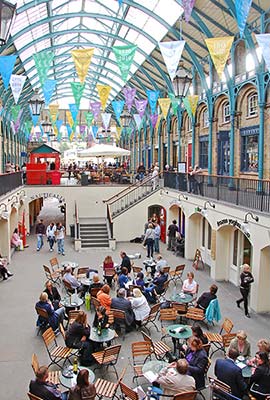
The “Actors’ Church” of St. Paul, the Royal Opera House, and the London Transport Museum (described next) all border the square, and theaters are nearby. The area is a people-watcher’s delight, with cigarette eaters, Punch-and-Judy acts, food that’s not good for you (or your wallet), trendy crafts, and row after row of boutique shops and market stalls. Better Covent Garden lunch deals can be found by walking a block or two away from the eye of this touristic hurricane (check out the places north of the Tube station, along Endell and Neal Streets).
▲London Transport Museum
This modern, well-presented museum is fun for kids and thought-provoking for adults. Whether you’re cursing or marveling at the double-deckers and Tube, the growth of Europe’s fourth-largest city (after Istanbul, Moscow, and Paris) has been made possible by its public transit system.
Cost and Hours: £22, kids under 18 free, daily 10:00-18:00, last entry 45 minutes before closing; pleasant upstairs café with Covent Garden view; in southeast corner of Covent Garden courtyard, Tube: Covent Garden, +44 20 7379 6344, www.ltmuseum.co.uk.
Visiting the Museum: Take the elevator up to the top floor...and the year 1800, when horse-drawn vehicles ruled the road. Next, you descend to the first floor and the world’s first underground Metro system, which used steam-powered locomotives (the Circle Line, c. 1865). On the ground floor, horses and trains are replaced by motorized vehicles (cars, taxis, double-decker buses, streetcars), resulting in 20th-century congestion. How to deal with it? In 2003, car drivers in London were slapped with a congestion charge, and today, a half-billion people ride the Tube every year.
▲Courtauld Gallery
While many London art museums can be overwhelming, the Courtauld is delightfully concise. Here you’ll see medieval paintings and works by Rubens, the Impressionists, Post-Impressionists, and more. The gallery is located within the grand Somerset House, with three easy-to-digest floors.
Floor 3 is the museum’s highlight: The Great Room has one of the best single-room collections of Impressionist and Post-Impressionist works anywhere. It’s an easy-to-appreciate sampling of the greats: Cézanne’s The Card Players; Tahitian works by Gauguin; tiny pointillist paintings by Seurat; Manet’s A Bar at the Foiles-Bergère; portraits by Toulouse-Lautrec and Modigliani; and the gallery’s pièce de résistance, a striking self-portrait of Vincent Van Gogh with a bandaged ear.
Cost and Hours: £9, £11 Sat-Sun, can be more for temporary exhibits, daily 10:00-18:00, free audio tour on Bloomberg Connects app, in Somerset House on the Strand, Tube: Temple or Covent Garden, www.courtauld.ac.uk.
BUCKINGHAM PALACE AREA
The working headquarters of the British monarchy, Buckingham Palace is where the King carries out his official duties as the head of state. He and other members of the royal family also maintain apartments here. The property hasn’t always been this grand—James I (1603-1625) first brought the site under royal protection as a place for his mulberry plantation, for rearing silkworms. The wide boulevard called The Mall was built in 1911 as a ceremonial approach.
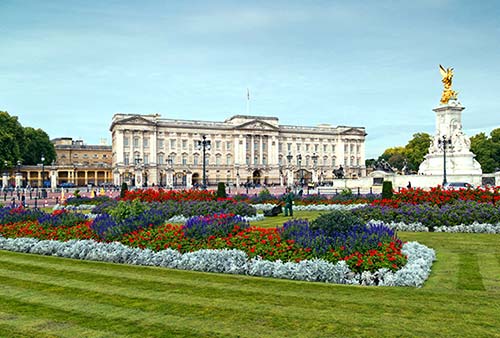
Combo-Tickets: A £58.50 (cheaper in advance) “Royal Day Out” combo-ticket covers the three palace sights that charge admission: the State Rooms, the Queen’s Gallery, and the Royal Mews. You can also pay for each of these sights separately (prices listed later). For more information or to book online, see www.royalcollection.org.uk. Many tourists are more interested in the Changing of the Guard, which costs nothing at all to view.
▲State Rooms at Buckingham Palace
This lavish home has been Britain’s royal residence since 1837, when the newly ascended Queen Victoria moved in. When today’s monarch is at home, the royal standard flies (a red, yellow, and blue flag); otherwise, the Union Jack flaps in the wind. The King opens his palace to the public—but only for a couple of months in summer, when he’s out of town.
Cost and Hours: £45, cheaper in advance; includes State Rooms, throne room, and audioguide; mid-July-Sept Thu-Mon 9:45-14:45, closed Tue-Wed and Oct-mid-July, some winter and spring tours may be available—check online, last entry 75 minutes before closing; limited to 8,000 visitors a day by timed entry—book ahead online or arrive early at the palace’s Visitor Entrance (opens at 9:00); Tube: Victoria, +44 303 123 7300—but His Majesty rarely answers.
Queen’s Gallery at Buckingham Palace
A small sampling of the late Queen Elizabeth II’s collection of art is on display in five rooms in a wing adjoining the palace. Her 7,000 paintings, one of the largest private art collections in the world, are actually a series of collections built upon by each successive monarch since the 16th century. The exhibits change two or three times a year and are lovingly described by the included audioguide.
Because the gallery is small and security is tight (involving lines), visit this gallery only if you’re a patient art lover interested in the current exhibit. Men shouldn’t miss the mahogany-trimmed urinals.
Cost and Hours: Around £17 but can change depending on exhibit, May-Feb Thu-Mon 10:00-17:30, closed March-April and Tue-Wed year-round, Tube: Victoria, +44 303 123 7301.
Royal Mews
A visit to the royal stables is likely to be disappointing unless you follow the included audioguide or the hourly guided tour (45 minutes), in which case it’s fairly entertaining—especially if you’re interested in horses and/or royalty. You may see a few of the late Queen Elizabeth II’s many horses (check ahead), a fancy car, and a bunch of old carriages, finishing with the Gold State Coach (c. 1760, 4 tons, 4 mph). Queen Victoria said absolutely no cars. When she died, in 1901, the mews got its first Daimler. Today, along with the hay-eating transport, the stable is home to five Bentleys and Rolls-Royce Phantoms, with at least one on display.
Cost and Hours: £15; mid-May-Sept Thu-Mon 10:00-16:00, closed Tue-Wed, likely closed off-season but check online; generally busiest immediately after Changing of the Guard, guided tours on the hour in summer; Buckingham Palace Road, Tube: Victoria, +44 303 123 7302.
▲▲Changing of the Guard at Buckingham Palace
This is the spectacle every London visitor must see at least once: stone-faced, bearskin-hatted guards changing posts with much fanfare, accompanied by a brass band. (This is also where you’ll see nearly every tourist in London gathered in one place at the same time.)
The most famous part takes place right in front of Buckingham Palace at 11:00. But before and after that, over the course of about an hour, several guard-changing ceremonies and parades converge within a few hundred yards of Buckingham Palace in a perfect storm of red-coated pageantry, more or less simultaneously. Most tourists just show up near the palace gate and get lost in the crowds, but if you’re savvy, you can catch a satisfying glimpse from less crowded locations with much less wait than if you station yourself at the palace gate (see the “Changing of the Guard Timeline” sidebar). Once it’s all over, unwind with a stroll through nearby St. James’s Park.
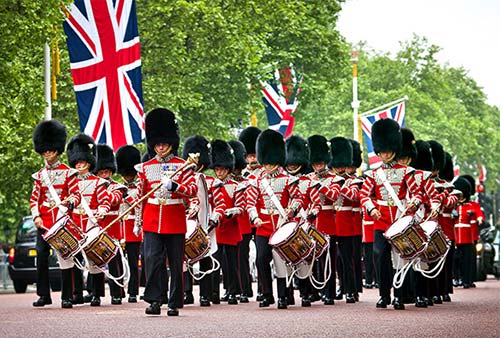
Cost and Hours: Free; confirm hours online but most likely May-July daily at 11:00, Aug-April Sun-Mon, Wed, and Fri, no ceremony in very wet weather; exact schedule subject to change—for the day’s plan, check www.householddivision.org.uk or call +44 20 7766 7300; Buckingham Palace, Tube: Victoria, St. James’s Park, or Green Park. Or hop into a big black taxi and say, “Buck House, please.”
Tips: The only public WC in the area is near St. James’s Palace, just inside the gate to the park from Marlborough Road.
Viewing the Official Ceremony: The center of all this fanfare is the half-hour ceremony that takes place in the forecourt (between the palace and the fence) in front of Buckingham Palace. At 11:00 a batch of fresh guards meets the Old Guard in the courtyard, where the captain of the Old Guard hands over the keys. As the band plays, soldiers parade regimental flags (or “colours”), get counted and inspected—all with a lot of shouting—and finally exchange compliments before the tired guards return to Wellington Barracks, and a subset of the New Guard heads off to take over at St. James’s Palace.
By the Palace Fence: If the actual changing of the Buckingham Palace guards is a must-see for you, show up at least an hour early to get a place front and center, next to the fence (shorter travelers should aim for two hours ahead in high season).
Near the Victoria Memorial: If you can’t get a spot right by the gates, try the high ground on the circular Victoria Memorial, which can give you good (if more distant) views of the palace as well as the arriving and departing processions along The Mall and Spur Road. If grabbing an early spot, think about whether you’ll still have a view once the crowds fill in—balustrades and other raised spots go quickly.
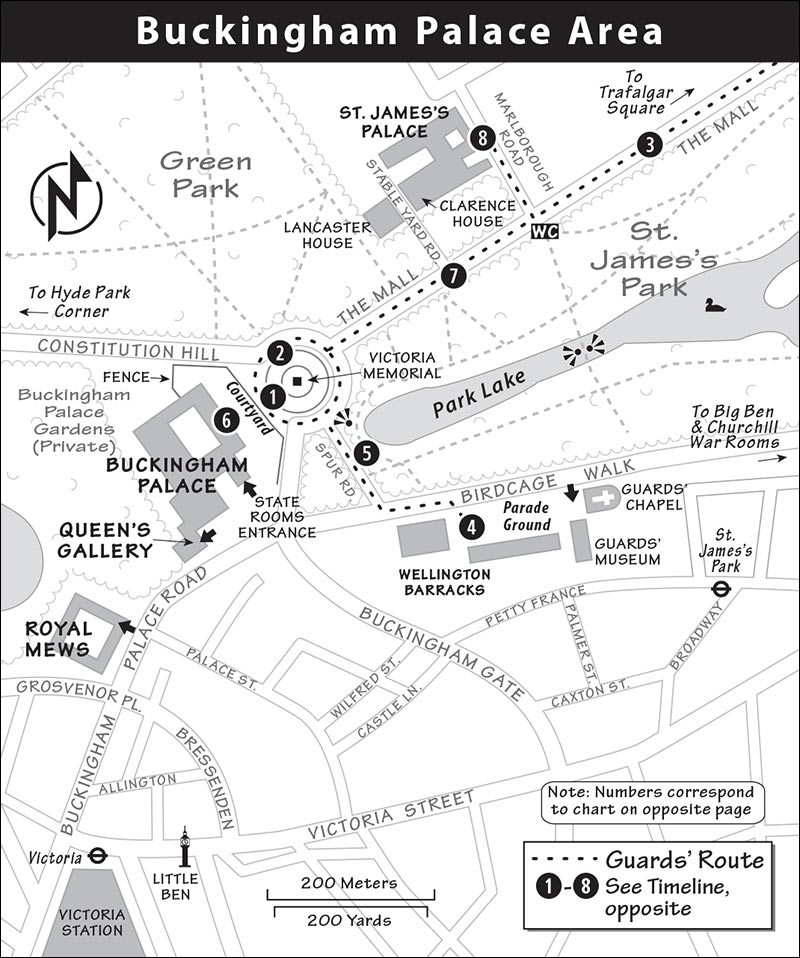
Following the Procession: If the main ceremony doesn’t seem worth all the waiting and jostling, you can still enjoy plenty of fun fanfare—and the thrill of participating in the action—by planting yourself on the route of a string of processions that happen before, during, and after the official guard changing at Buckingham Palace.
To catch as much as possible, here’s what I’d do:
Show up at St. James’s Palace by 10:30 to see its soon-to-be-off-duty guards mobilizing in the courtyard (grab a spot just across Marlborough Road from the courtyard; people grouped on the palace side of the street will be asked to move when the inspection begins).
Just before they prepare to leave (at 10:43), march ahead of them down Marlborough Road to The Mall and pause at the corner to watch them parade past, possibly with a band, on their way to Buckingham Palace.
Then cut through the park and head to the Wellington Barracks—where a fresh batch of guards is undergoing inspection before they leave (at 10:57) for Buckingham Palace.
March along with the New Guard and their full military band, from the barracks to Buckingham Palace.
If it’s too packed to see any of the action behind the palace gates, snap a few photos of the passing guards—and the crowds—before making your way back up The Mall, to where it meets Stable Yard Road, in time to watch several more processions: relief guards coming from Buckingham Palace at 11:10 for a switch of sentries at Clarence House, then other guards heading down The Mall toward Buckingham Palace at 11:25, and, at 11:37, a procession of cavalry guards en route from the Horse Guards to their barracks in Green Park.
Finally, at about 11:45, plant yourself back at the corner of The Mall and Marlborough Road for a great photo op as one last procession, the bulk of St. James’s Palace New Guard, makes its way from Buckingham Palace to start its shift.
Join a Tour: Local tour companies such as Fun London Tours more or less follow the route above but add in history and facts about the guards, bands, and royal family to their already entertaining march. These walks add color and good value to what can otherwise seem like a stressful mess of tourists (£18, £20 on Sun, Changing of the Guard tour starts at Piccadilly Circus at 9:40 Mon-Sat, 9:15 Sun, must book online in advance, www.funlondontours.com).
Sights in North London
▲▲▲British Museum
A visit here is like taking a long hike through Encyclopedia Britannica National Park. The vast British Museum wraps around its Great Court (the huge entrance hall), with the most popular sections filling the ground floor: Egyptian, Assyrian, and ancient Greek, with the famous frieze sculptures from the Parthenon in Athens. The museum’s stately Reading Room—famous as the place where Karl Marx hung out while formulating his ideas on communism and writing Das Kapital—sometimes hosts special exhibits.
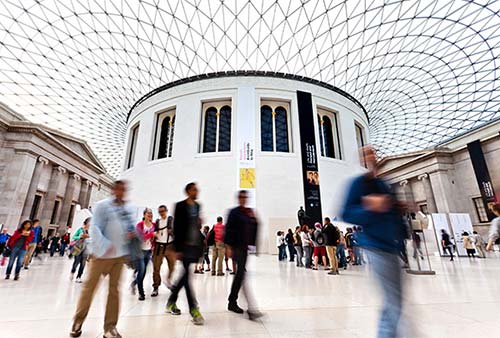
Many criticize the British Museum’s collection for having been built on plunder, at the expense of subjugated, faraway lands. And yet, as a sightseer who’s mindful of this questionable legacy, the collection can still be appreciated for what it is: the chronicle of Western civilization.
Cost and Hours: Free, donation suggested, some temporary exhibits extra (and with timed ticket); daily 10:00-17:30, Fri until 20:30 (select galleries only), least crowded late on weekday afternoons, especially Fri; free guided tours offered; Great Russell Street, Tube: Tottenham Court Road, ticket desk +44 20 7323 8181, www.britishmuseum.org.
Tours: Free 30- to 40-minute EyeOpener tours led by volunteers focus on select rooms (daily 11:15-15:15, generally every 15 minutes). More in-depth 1.5-hour tours (£14) are offered Fri-Sun at 11:30 and 14:00; reserve at least two weeks in advance. Ask at the information desk or browse the website for more gallery talks, tours, and lectures. Download my free British Museum audio tour.
Visiting the Museum: From the Great Court, doorways lead to all wings. To the left are the exhibits on Egypt, Assyria, and Greece—the highlights of your visit.
Egypt: Start with the Egyptian Gallery. Egypt was one of the world’s first “civilizations”—a group of people with a government, religion, art, free time, and a written language. The Egypt we think of—pyramids, mummies, pharaohs, and guys who walk funny—lasted from 3000 to 1000 BC with hardly any change in the government, religion, or arts.
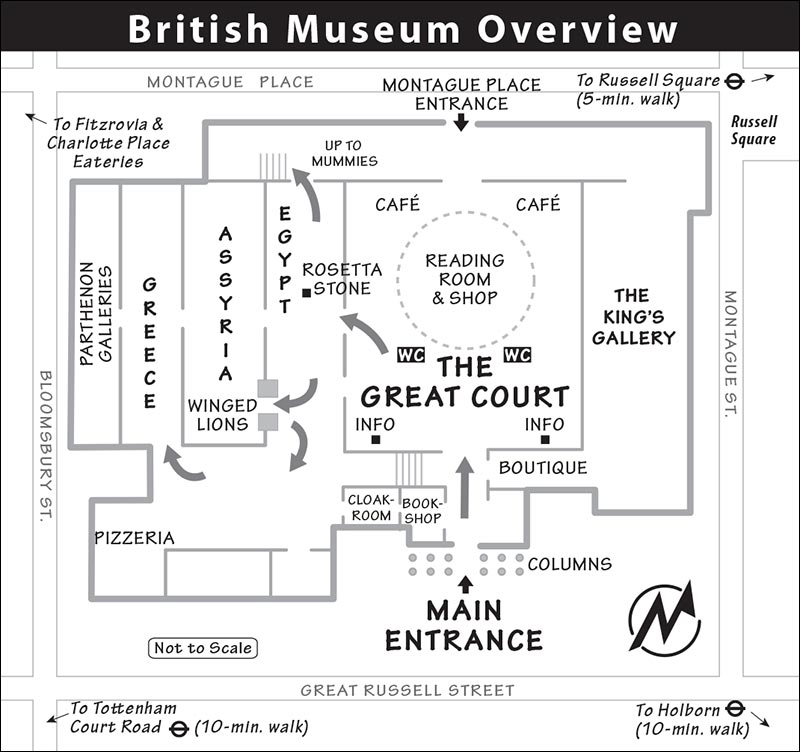
The first thing you’ll see in the Egypt section is the Rosetta Stone. When this rock was unearthed in the Egyptian desert in 1799, it was a sensation in Europe. This black slab dating from 196 BC caused a quantum leap in the study of ancient history. Finally, Egyptian writing could be decoded.
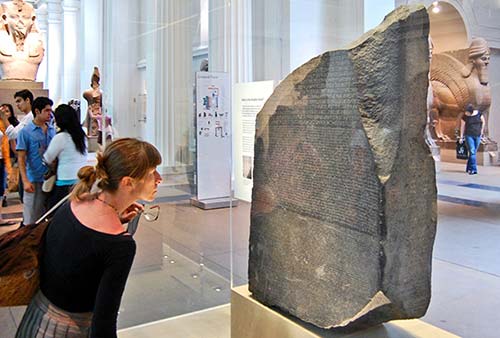
The hieroglyphic writing in the upper part of the stone was indecipherable for a thousand years. Did a picture of a bird mean “bird”? Or was it a sound, forming part of a larger word, like “burden”? As it turned out, hieroglyphics are a complex combination of the two, surprisingly more phonetic than symbolic. (For example, the hieroglyph that looks like a mouth or an eye is the letter “R.”)
The Rosetta Stone allowed linguists to break the code. It contains a single inscription repeated in three languages. The bottom third is plain old Greek, while the middle is medieval Egyptian. By comparing the two known languages with the one they didn’t know, translators figured out the hieroglyphics.
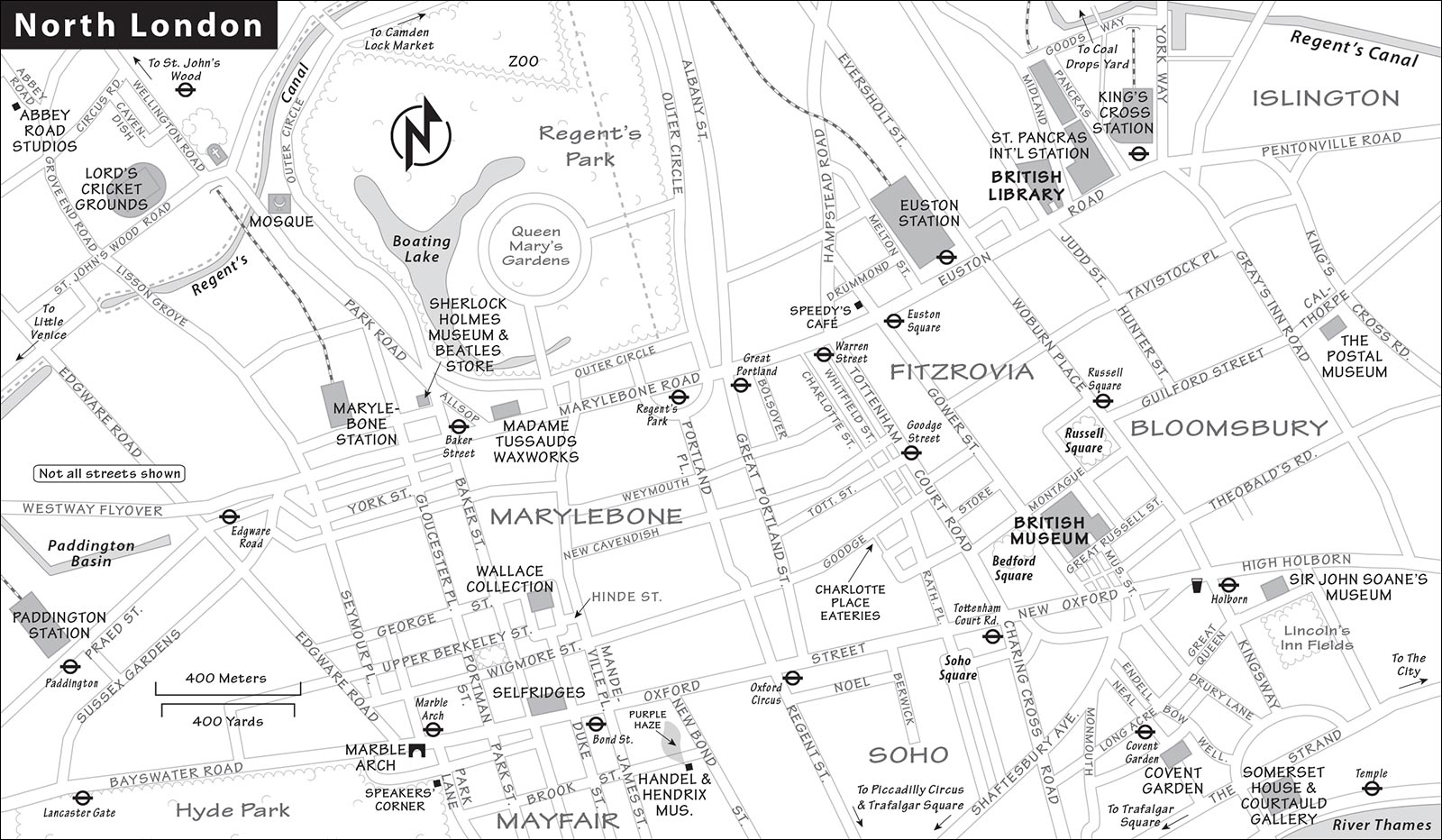
Next, wander past the many statues, including a seven-ton Ramesses, with the traditional features of a pharaoh (goatee, cloth headdress, and cobra diadem on his forehead). When Moses told the king of Egypt, “Let my people go!” this was the stony-faced look he got. You’ll also see the Egyptian gods as animals—these include Amun, king of the gods, as a ram, and Horus, the god of the living, as a falcon.
At the end of the hall, climb the stairs or take the elevator to mummy land. Mummifying a body is much like following a recipe. First, disembowel it (but leave the heart inside), then pack the cavities with pitch, and dry it with natron, a natural form of sodium carbonate (and, I believe, the active ingredient in Twinkies). Then carefully bandage it head to toe with hundreds of yards of linen strips. Let it sit 2,000 years, and...voilà! The mummy was placed in a wooden coffin, which was put in a stone coffin, which was then placed in a tomb. (The pyramids were supersized tombs for the rich and famous.) The result is that we now have Egyptian bodies that are as well preserved as Paul Rudd.
Many of the mummies here are from the time of the Roman occupation, when fine memorial portraits painted in wax became popular. X-ray photos in the display cases tell us more about these people.
Don’t miss the animal mummies. Cats (near the entrance to Room 62) were popular pets. They were also considered incarnations of the cat-headed goddess Bastet. Worshipped in life as the sun god’s allies, preserved in death, and memorialized with statues, cats were given the adulation they’ve come to expect ever since.
Assyria: The Assyrian kingdom in northern Mesopotamia was dominated by palace-building, iron-fisted rulers. They conquered their southern neighbors and dominated the Middle East for 300 years (c. 900-600 BC).
Their strength came from a superb army (chariots, mounted cavalry, and siege engines), a policy of terrorism against enemies (“I tied their heads to tree trunks all around the city,” reads a royal inscription), ethnic cleansing and mass deportations of the vanquished, and efficient administration (roads and express postal service). They have been called the “Romans of the East.”
The British Museum’s valuable collection of Assyrian artifacts has become even more priceless since the recent destruction of ancient sites in the Middle East by terrorists.
Two human-headed winged stone lions guarded an Assyrian palace (11th-8th century BC). With the strength of a lion, the wings of an eagle, the brain of a man, and the beard of an ancient hipster, they protected the king from evil spirits and scared the heck out of foreign ambassadors and left-wing newspaper reporters. (What has five legs and flies? Take a close look. These winged quintupeds, which appear complete from both the front and the side, could guard both directions at once.)
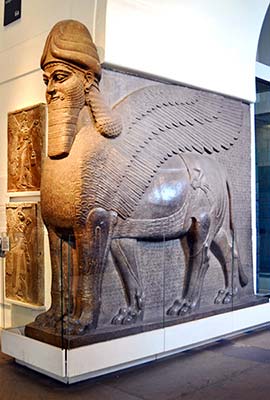
Carved into the stone between the bearded lions’ loins, you can see one of civilization’s most impressive achievements—writing. This wedge-shaped (cuneiform) script is the world’s first written language, invented 5,000 years ago by the Sumerians (of southern Mesopotamia) and passed down to their less-civilized descendants, the Assyrians.
The Nimrud Gallery is a mini version of the throne room and royal apartments of King Ashurnasirpal II’s Northwest Palace at Nimrud (9th century BC). It’s filled with royal propaganda reliefs, 30-ton marble bulls, and panels depicting wounded lions (lion-hunting was Assyria’s sport of kings).
Greece: The history of ancient Greece (600 BC-AD 1) could be subtitled “making order out of chaos.” While Assyria was dominating the Middle East, “Greece”—a gaggle of warring tribes roaming the Greek peninsula—was floundering in darkness. But by about 700 BC, these tribes began settling down, experimenting with democracy, forming self-governing city-states, and making ties with other city-states.
During its golden age (500-430 BC), Greece set the tone for all of Western civilization to follow. Democracy, theater, literature, mathematics, philosophy, science, gyros, art, and architecture as we know them were virtually all invented by a single generation of Greeks in a small town of maybe 80,000 citizens.
Your walk through Greek history starts with pottery—from the earliest, with geometric patterns (8th century BC), to painted black silhouettes on the natural orange clay, and then a few crudely done red human figures on black backgrounds. Later, find a vase painted with frisky figures (Wine Cooler Signed by Douris as Painter), which shows a culture really into partying, as well as an evolution into more realistic and three-dimensional figures.
Next, we’ll see pediment, frieze, and metope decorations from Greece’s greatest temple—the Parthenon. Dedicated to Athena, goddess of wisdom and the patroness of Athens, the Parthenon was the crowning glory of an enormous urban-renewal plan. While the Parthenon building itself remains in Athens, many of the Parthenon’s best sculptures are right here in the British Museum—the so-called Elgin Marbles, named for the shrewd British ambassador who had his men hammer, chisel, and saw them off the Parthenon in the early 1800s.
The marble panels you see lining the walls of this large hall are part of the frieze that originally ran around the exterior of the Parthenon, under the eaves. The statues at either end of the hall once filled the Parthenon’s triangular-shaped pediments and showed the birth of Athena. The relief panels known as metopes tell the story of the struggle between the forces of human civilization and animal-like barbarism.
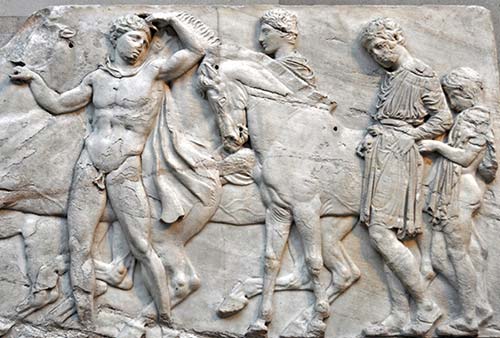
Rest of the Museum: Be sure to venture upstairs to see artifacts from Roman Britain that surpass anything you’ll see at Hadrian’s Wall or elsewhere in the country. Also look for the Sutton Hoo Ship-Burial artifacts from a seventh-century royal burial on the east coast of England (Room 41). A rare Michelangelo cartoon (preliminary sketch) is in Room 90 (level 4).
▲Sir John Soane’s Museum
Architects love this quirky place, as do fans of interior decor, eclectic knickknacks, and Back Door sights. As professor of architecture at the Royal Academy, Soane created his home to be a place of learning, cramming it floor to ceiling with ancient relics, curios, and famous paintings, including several excellent Canalettos and Hogarth’s series on The Rake’s Progress. Soane even purchased the Egyptian sarcophagus of King Seti I (Ramesses II’s father, on display in the basement) after the British Museum turned it down—at the time, they couldn’t afford the £2,000 sticker price.
In 1833, just before his death, Soane established his house as a museum, stipulating that it be kept as nearly as possible in the state he left it. If he visited today, he’d be entirely satisfied by the diligence with which the staff safeguards his treasures.
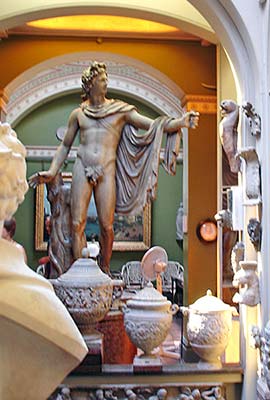
Cost and Hours: Free, donations appreciated; Wed-Sun 10:00-17:00, closed Mon-Tue, can have long lines—especially Sat; advance reservations may be possible online; tours of private apartments are worth considering—get information and prebook online; free audio tour on Bloomberg Connects app; 13 Lincoln’s Inn Fields, quarter-mile southeast of British Museum, Tube: Holborn, +44 20 7405 2107, www.soane.org [URL inactive].
▲The Postal Museum and Mail Rail
This family-friendly museum, suited for kids and adult mail/rail geeks, is actually two museums in one. The Postal Museum presents the 500-year history of the Royal Mail, showing its evolution through time, coping with two World Wars and changing with modern technology to become today’s postal system. Across the street is the highlight of the visit: the Mail Rail. London’s vast tunnel system designed for carrying mail was in use from 1927 until as recently as 2003. You can hop on one of these small mail trains, converted into passenger cars, and take a 15-minute guided ride through some of these small tunnels (may be claustrophobic for some). Along the way you’ll see different mail stations and learn how this system transported up to four million letters every day at its peak. After the ride is over, a small exhibit complements what you learned on the ride.
Cost and Hours: £17, cheaper online and for those under 25, kids under 3 free; daily 10:00-17:00; 15-20 Phoenix Place, Tube: Farringdon or King’s Cross St. Pancras, bus #45 or #46, +44 300 030 0700, www.postalmuseum.org.
▲▲▲British Library
Here, in just two rooms, are the literary treasures of Western civilization, from early Bibles to Shakespeare’s Hamlet to Lewis Carroll’s Alice’s Adventures in Wonderland to the Magna Carta. The British Empire built its greatest monuments out of paper; it’s through literature that England made her most lasting and significant contribution to civilization and the arts. Note that exhibits change often, and many of the museum’s old, fragile manuscripts need to “rest” periodically in order to stay well preserved.
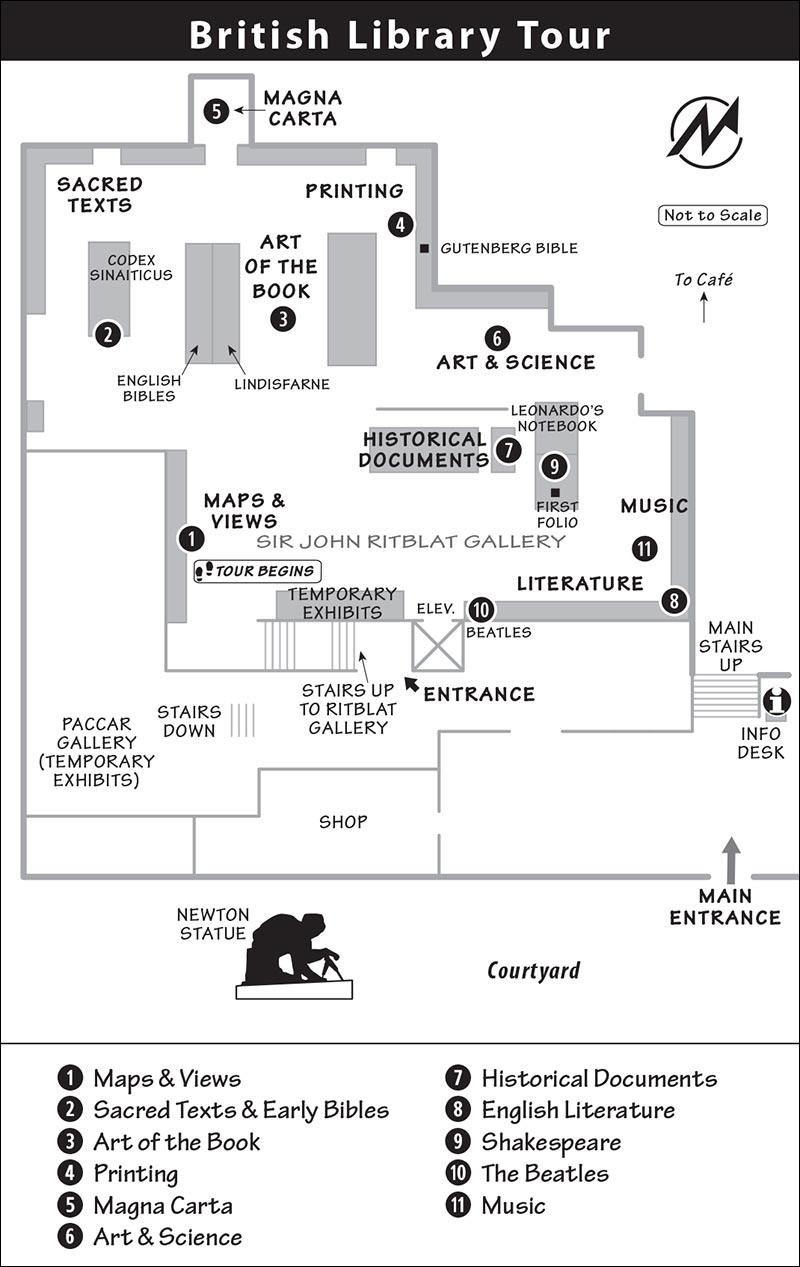
Cost and Hours: Free, donation suggested, special exhibits may have entry fee; Mon-Thu 9:30-20:00, Fri until 18:00, Sat until 17:00, Sun 11:00-17:00; 96 Euston Road, Tube: King’s Cross St. Pancras or Euston, +44 330 333 1144, www.bl.uk.
Tours: Two £10 one-hour tours are offered daily (fewer in winter)—a Treasures Tour (generally in the morning) and a building tour (generally in the afternoon); book online or call +44 19 3754 6546. There are no audioguides for the permanent collection.
Visiting the Library: Entering the library courtyard, you’ll see a big statue of a naked Isaac Newton bending forward with a compass to measure the universe. The statue symbolizes the library’s purpose: to gather all knowledge and promote humanity’s endless search for truth.
Stepping inside, you’ll find in the grand atrium that forms the middle of the building a 50-foot-tall wall of 65,000 books teasingly exposing its shelves. In 1823 King George III gifted his collection to the people under the condition the books remain on display for all to see. The high-tech bookshelf—with moveable lifts to reach the highest titles—sits behind glass, inaccessible to commoners but ever-visible. Likewise, the reading rooms upstairs are not open to the public.
Everything that matters for your visit is in a tiny but exciting area variously called “The Sir John Ritblat Gallery,” “Treasures of the British Library,” or just “The Treasures.” We’ll concentrate on a handful of documents—literary and historical—that changed the course of history. Upon entering the Ritblat Gallery, start at the far side of the room with the display case showing historic 1 maps and views, illustrating humans’ shifting perspective of the world. Next, move into the area dedicated to 2 sacred texts and early Bibles, including the Codex Sinaiticus (or the Codex Alexandrinus that may be on display instead). This bound book from around AD 350 is one of the oldest complete Bibles in existence—one of the first attempts to collect various books by different authors into one authoritative anthology.
In the display cases called 3 Art of the Book, you’ll find various medieval-era books, some beautifully illustrated or “illuminated.” The most magnificent of these medieval British “monk-uscripts” is the Lindisfarne Gospels, from AD 698. The text is in Latin, the language of scholars ever since the Roman Empire, but you may be able to read an electronic copy of these manuscripts on a touch-screen computer, if those are up and running.
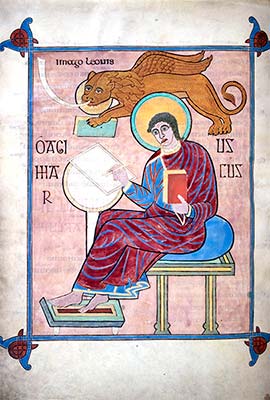
In the glass cases featuring early 4 printing, you’ll see the Gutenberg Bible—the first book printed in Europe using movable type (c. 1455). Suddenly, the Bible was available for anyone to read, fueling the Protestant Reformation.
Through a doorway is a small room with the 5 Magna Carta. Though historians talk about the Magna Carta, several different versions of the document exist, some of which are kept in this room. The basis for England’s constitutional system of government, this “Great Charter” listing rules about mundane administrative issues was radical because of the simple fact that the king had agreed to abide by them as law. Until then, kings had ruled by God-given authority, above the laws of men. Now, for the first time, there were limits—in writing—on how a king could treat his subjects.
Return to the main room to find display cases featuring trailblazing 6 art and science documents by early scientists such as Galileo and Isaac Newton, and some by science-minded artists such as Albrecht Dürer and Michelangelo. Pages from Leonardo da Vinci’s notebook show his powerful curiosity, his genius for invention, and his famous backward and inside-out handwriting. Nearby are many more 7 historical documents. You may see letters by Henry VIII, Queen Elizabeth I, Darwin, Freud, Gandhi, and others.
Next, trace the evolution of 8 English Literature. Check out the AD 1000 manuscript of Beowulf, the first English literary masterpiece, and The Canterbury Tales (c. 1410), Geoffrey Chaucer’s bawdy collection of stories. This display is often a greatest-hits sampling of literature in English, from Brontë to Kipling to Woolf to Joyce to Dickens.
The most famous of England’s writers—9 Shakespeare—generally gets his own display case. Look for the First Folio—one of the 750 copies of 36 of the 37 known Shakespeare plays, published in 1623. If the First Folio is not out for viewing, the library should still have other Shakespeare items on display.
Now fast-forward a few centuries to 10 The Beatles. Look for photos of John Lennon, Paul McCartney, George Harrison, and Ringo Starr. Among the displays, you may find manuscripts of song lyrics written by Lennon and McCartney.
In the 11 music section, there are manuscripts by Mozart, Beethoven, Chopin, and others (kind of an anticlimax after the Fab Four, I know). George Frideric Handel’s famous oratorio, the Messiah (1741), is often on display and marks the end of our tour. Hallelujah.
▲Wallace Collection
Sir Richard Wallace’s fine collection of 17th-century Dutch Masters, 18th-century French Rococo, medieval armor, and assorted aristocratic fancies fills the sumptuously furnished Hertford House on Manchester Square. From the rough and intimate Dutch lifescapes of Jan Steen to the pink-cheeked Rococo fantasies of François Boucher, a wander through this little-visited mansion makes you nostalgic for a different time. This collection would be a big deal in a midsize city, but here in London it gets pleasantly lost. It feels more like visiting a classic English manor estate than a museum. It’s thoroughly enjoyable.
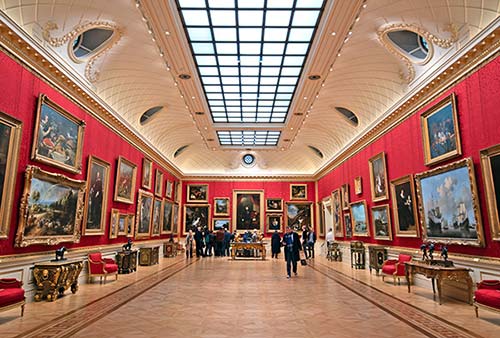
Cost and Hours: Free, donation suggested, special exhibits may have additional charge, daily 10:00-17:00, free audio tour on Bloomberg Connects app, just north of Oxford Street on Manchester Square, Tube: Bond Street, +44 20 7563 9500, www.wallacecollection.org.
▲Madame Tussauds Waxworks
This waxtravaganza is gimmicky, crass, and crazy expensive, but dang fun...a hit with the kind of tourists who skip the British Museum. The original Madame Tussaud did wax casts of heads lopped off during the French Revolution (such as Marie-Antoinette’s). She took her show on the road and ended up in London in 1835. Now it’s all about singing with Lady Gaga and partying with the Beatles. In addition to posing with eerily realistic wax dummies, you’ll have the chance to learn how they created this waxy army, and you can hop on a people-mover for a kid-pleasing “Spirit of London” time trip. You can choose to pay a few pounds extra for a nine-minute Marvel Super Heroes 4-D show—a 3-D movie heightened by wind, “back ticklers,” and other special effects.
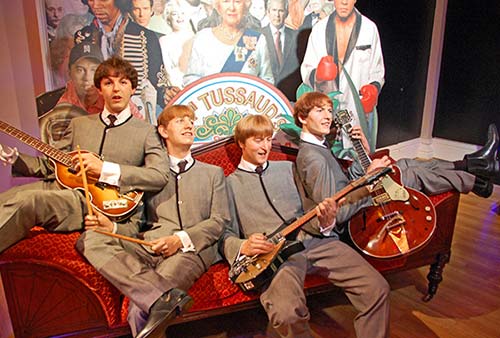
Cost and Hours: £34, kids-£30.50 (free for kids under 3), up to 25 percent cheaper online, £50 for Marvel 4-D experience and Fast Track shorter-line access, combo-deals with the London Eye and related attractions; hours vary (check online) but roughly July-Aug and school holidays daily 8:30-18:00, Sept-June Mon-Fri 10:00-16:00, Sat-Sun 9:00-17:00, these are last entry times—it stays open roughly two hours later; Marylebone Road, Tube: Baker Street, +44 871 894 3000 or +44 20 7487 0351, www.madametussauds.com.
Crowd-Beating Tips: This attraction (like the related London Eye) is always worth booking ahead—both to save money and to save time in ticket lines. Even if you simply buy tickets on your phone on the way to the exhibit, you’ll be glad you did. It tends to be less crowded after about 15:00.
Sherlock Holmes Museum
Around the corner from Madame Tussauds, this meticulous re-creation of the (fictional) apartment of the (fictional) detective sits at the (real) address of 221b Baker Street. The first-floor replica (so to speak) of Sherlock’s study delights fans with the opportunity to play Holmes and Watson while sitting in authentic 18th-century chairs. The second and third floors offer fine exhibits on daily Victorian life, showing off furniture, clothes, pipes, paintings, and chamber pots; in other rooms, models are posed to enact key scenes from Sir Arthur Conan Doyle’s famous books.
Cost and Hours: £16, daily 9:30-17:30, consider prebooking online to avoid ticket line; large gift shop for Holmes connoisseurs, including souvenirs from the BBC-TV series; 221b Baker Street, Tube: Baker Street, +44 20 7224 3688, www.sherlock-holmes.co.uk.
Nearby: Next door to the Sherlock Holmes Museum is the Beatles Store—jammed with Fab Four memorabilia.
Sights in The City
When Londoners say “The City,” they mean the one-square-mile business center in East London that 2,000 years ago was Roman Londinium. The outline of the Roman city walls can still be seen in the arc of roads from Blackfriars Bridge to Tower Bridge. Within The City are 23 churches designed by Sir Christopher Wren, mostly just ornamentation around St. Paul’s Cathedral. Today, while home to only 10,000 residents, The City thrives with around 400,000 office workers coming and going daily. It’s a fascinating district to wander on weekdays, but since almost nobody actually lives there, it’s dull in the evening and on Saturday and Sunday.
You can download my free audio tour of The City, which peels back the many layers of history in this oldest part of London.
▲▲▲St. Paul’s Cathedral
Wren’s most famous church is the great St. Paul’s, its elaborate interior capped by a 365-foot dome. Since World War II, St. Paul’s has been Britain’s symbol of resilience. Despite 57 nights of bombing, the Nazis failed to destroy the cathedral, thanks to St. Paul’s volunteer fire watchmen, who stayed on the dome. Today you can climb the dome for a great city view. The crypt is a world of historic bones and memorials, including Admiral Nelson’s tomb and interesting cathedral models.
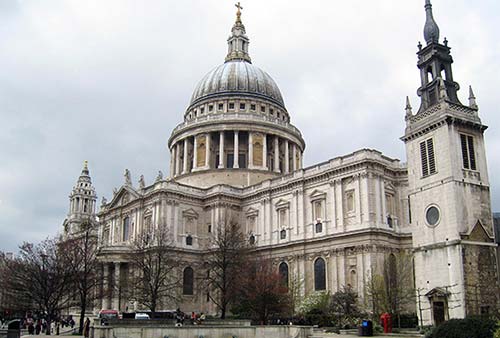
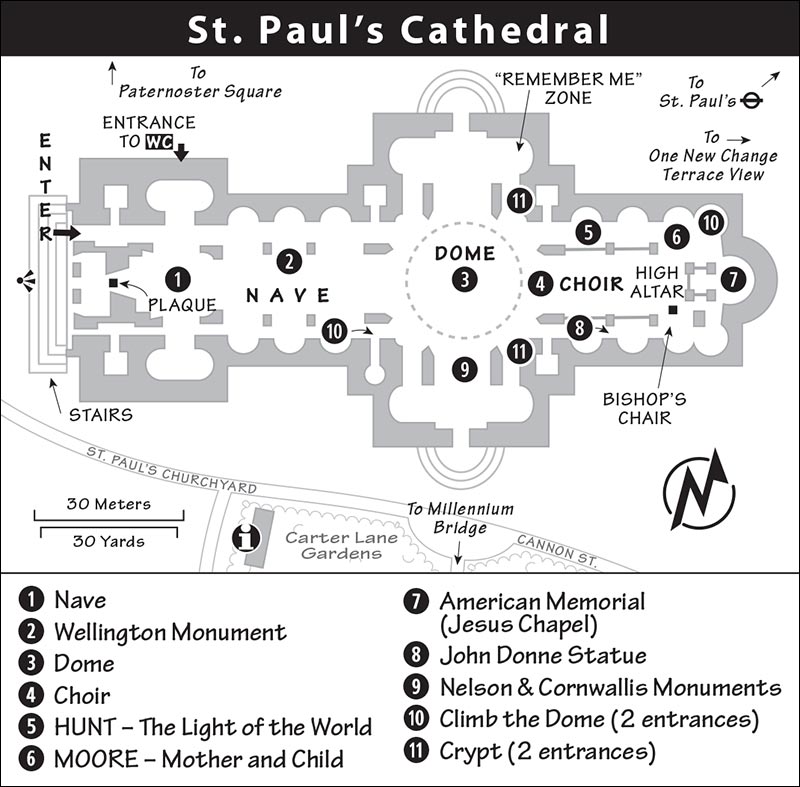
Cost and Hours: £23, cheaper online; includes church entry, dome climb, crypt, tour, and audioguide; Mon-Tue and Thu-Sat 8:30-16:30 (dome opens at 9:30), Wed church and dome from 10:00, closed Sun except for worship; Tube: St. Paul’s, +44 20 7246 8350, www.stpauls.co.uk.
Avoiding Lines: Purchasing tickets online in advance saves a little time (and a little money). To avoid crowds, arrive first thing in the morning.
Music and Church Services: Worship times are available on the church’s website. Morning prayer is at 7:30; Communion is generally Mon-Sat at 8:00 and 12:30. On Sunday, Communion is 8:00 and 17:30, services are held at 10:00 (Matins), 11:15 (sung Eucharist), 15:00 (evensong), and 16:30 (organ recital). The rest of the week, evensong is at 17:00 (Mon evensong is usually spoken, not sung). If you come 20 minutes early for evensong worship (under the dome), you may be able to grab a big wooden stall in the choir, next to the singers.
Tours: There are 1.5-hour guided tours Mon-Sat generally at 10:00, 11:00, 13:00, and 14:00. Free 45-minute, volunteer-led “highlights” tours are offered throughout the day. The audio-guide (included with admission) contains video clips that show the church in action.
Download my free St. Paul’s Cathedral audio tour.
Visiting the Cathedral: Even now, as skyscrapers encroach, the 365-foot-high dome of St. Paul’s rises majestically above the rooftops of the neighborhood. The tall dome is set on classical columns, capped with a lantern, topped by a six-foot ball, and iced with a cross. As the first Anglican cathedral built in London after the Reformation, it is Baroque: St. Peter’s in Rome filtered through clear-eyed English reason. Though often the site of historic funerals (Queen Victoria and Winston Churchill), St. Paul’s most famous ceremony was a wedding—when then-Prince Charles married Lady Diana Spencer in 1981.
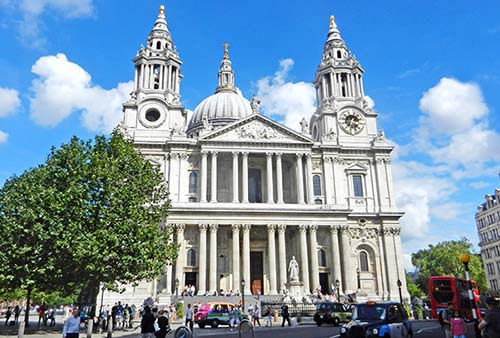
Stand at the far back of the 1 nave, behind the font. This big church feels big. At 515 feet long and 250 feet wide, it’s Europe’s fourth largest, after those in Rome (St. Peter’s), Sevilla, and Milan. The spaciousness is accentuated by the relative lack of decoration. The simple, cream-colored ceiling and the clear glass in the windows light everything evenly. Wren wanted this: a simple, open church with nothing to hide. Unfortunately, only this entrance area keeps his original vision—the rest was encrusted with 19th-century Victorian ornamentation. Ahead and on the left is the towering, black-and-white 2 Wellington Monument. Wren would have been appalled, but his church has become so central to England’s soul that many national heroes are buried here (in the basement crypt). General Wellington, Napoleon’s conqueror at Waterloo (1815) and the embodiment of British stiff-upper-lippedness, was honored here in a funeral packed with 13,000 fans.
The 3 dome you see from here, painted with scenes from the life of St. Paul, is only the innermost of three. From the painted interior of the first dome, look up through the opening to see the light-filled lantern of the second dome. Finally, the whole thing is covered on the outside by the third and final dome, the shell of lead-covered wood that you see from the street. Wren’s ingenious three-in-one design was psychological as well as functional—he wanted a low, shallow inner dome so worshippers wouldn’t feel diminished.
The 4 choir area blocks your way, but you can see the altar at the far end under a golden canopy. In the north transept (to your left as you face the choir), find a new section called “Remember Me,” honoring the UK’s Covid-19 victims, with a space designed for quiet contemplation of those who were lost.
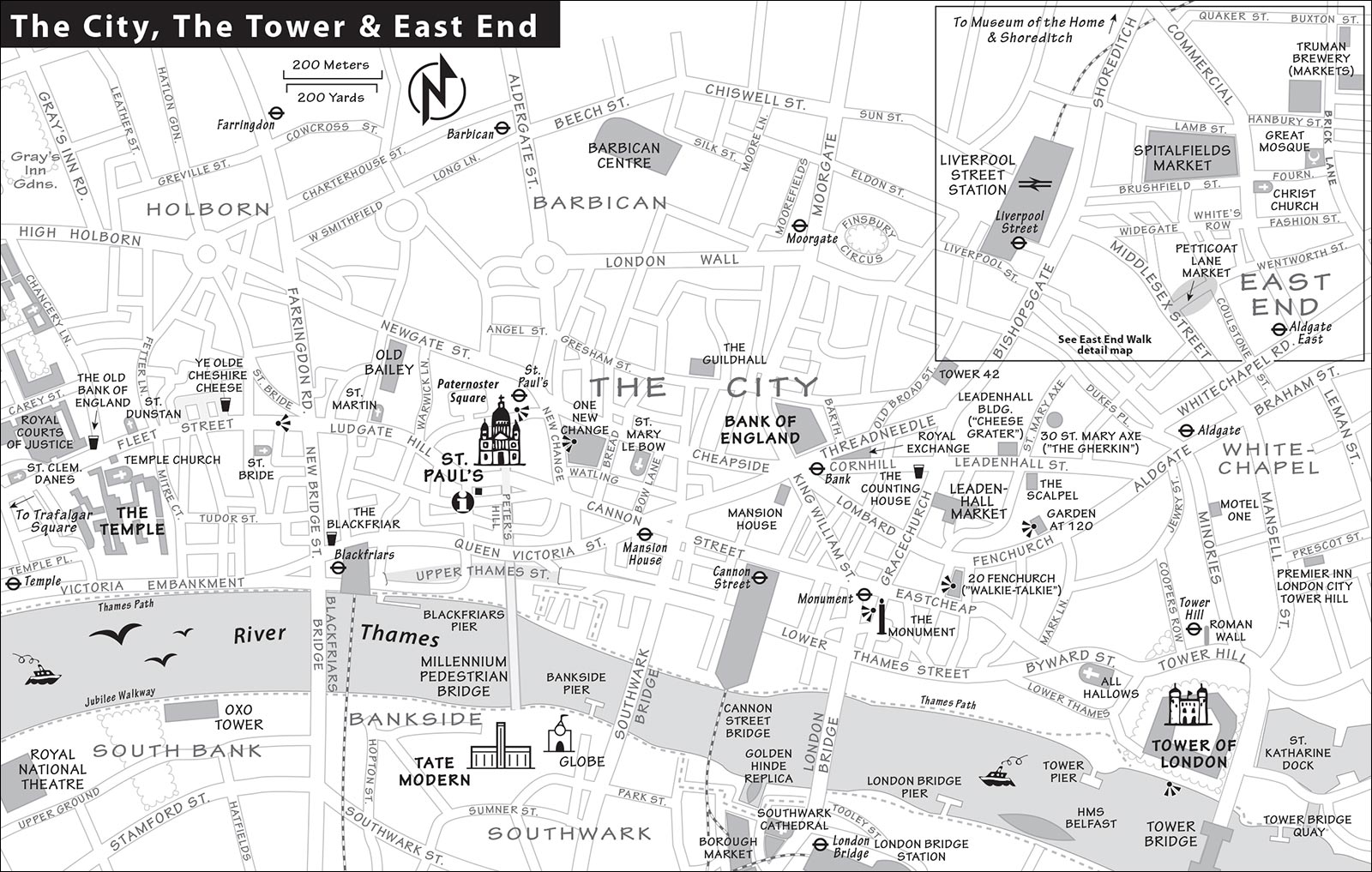
From here head back toward the dome and walk along the left side of the choir, toward the altar. On your right is the big painting 5 The Light of the World (1904), by the Pre-Raphaelite William Holman Hunt. Inspired by Hunt’s own experience of finding Christ during a moment of spiritual crisis, the crowd-pleasing work was criticized by art highbrows for being “syrupy” and “simple”—even as it became the most famous painting in Victorian England.
Farther along the left side at the end of the aisle is the statue 6 Mother and Child (1983), by the great modern sculptor Henry Moore. Typical of Moore’s work, this Mary and Baby Jesus—inspired by the sight of British moms nursing babies in WWII bomb shelters—renders a traditional subject in an abstract, minimalist way.
Behind the high altar at the far end of the church is the 7 American Memorial Chapel, honoring the Americans who sacrificed their lives to save Britain in World War II. In brightly colored panes that arch around the big windows, spot the American eagle (center window, to the left of Christ), George Washington (right window, upper-right corner), and symbols of all 50 states (find your state seal). The Roll of Honor, a 500-page book under glass (immediately behind the altar) lists the names of 28,000 US servicemen and women based in Britain who gave their lives during the war.
Around the other side of the choir is a shrouded statue honoring 8 John Donne (1573-1631), a passionate preacher in old St. Paul’s, as well as a great poet (“never wonder for whom the bell tolls—it tolls for thee”). In the south transept are monuments to military greats 9 Horatio Nelson, who fought Napoleon, and Charles Cornwallis, who was finished off by George Washington at Yorktown.
Climb the Dome: The 528-step climb is worthwhile, and each level (or gallery) offers something different. Partway up, you may be able to walk around the Whispering Gallery (257 shallow steps, with views of the church interior)—or it may be closed while they install safety measures. If you’re able to access it, whisper sweet nothings into the wall, and your partner (and anyone else) standing far away can hear you. For the best effects, try whispering (not talking) with your mouth close to the wall, while your partner stands a few dozen yards away with an ear to the wall.
After another set of (steeper, narrower) stairs, you’re at the Stone Gallery, with views of London. Finally, a long, tight metal staircase takes you to the very top of the cupola, the Golden Gallery, with stunning, unobstructed views of the city. Looking west, you’ll see the London Eye, and you may be able to make out the towers of Westminster Abbey. To the south, across the Thames, is the rectangular smokestack of the Tate Modern, with Shakespeare’s Globe nestled nearby. To the east sprouts a glassy garden of skyscrapers, including the 600-foot-tall, black-topped Tower 42 and the bullet-shaped 30 St. Mary Axe building (nicknamed “The Gherkin”). Farther in the distance, the cluster of skyscrapers marks Canary Wharf and the Docklands. Just north of that was the site of the 2012 Olympic Games, now a pleasant park.
Crypt: The crypt is a world of historic bones and interesting cathedral models. Many legends are buried here—Horatio Nelson, who wore down Napoleon; the Duke of Wellington, who finished off Napoleon; and even Wren himself. Wren’s actual tomb is marked by a simple black slab with no statue, though he considered this church to be his legacy. Back up in the nave, on the floor directly under the dome, is Christopher Wren’s name and epitaph (written in Latin): “Reader, if you seek his monument, look around you.”
▲Old Bailey
To view the British legal system in action—lawyers in little blond wigs speaking legalese with an upper-crust accent—spend a few minutes in the visitors’ gallery at the Old Bailey courthouse, called the “Central Criminal Court.” Don’t enter under the dome; continue up the block about halfway to the modern part of the building—the entry is at Warwick Passage.
Cost and Hours: Free, generally Mon-Fri 10:00-13:00 & 14:00-17:00 depending on caseload, last entry at 12:40 and 15:40 but often closes an hour or so earlier, closed Sat-Sun, fewer cases in Aug; no kids under 14; no big bags—if you have a bag, they can tell you where to check it nearby; 2 blocks northwest of St. Paul’s on Old Bailey Street (down a tunnel called Warwick Passage, follow signs to public entrance), Tube: St. Paul’s, +44 20 7248 3277, www.cityoflondon.gov.uk
The Guildhall
Hiding out in The City, the Guildhall offers visitors a delightful painting gallery for free (daily 10:30-16:00). This served as the meeting spot for guilds in medieval times, and still hosts about 100 professional associations today. The Guildhall Art Gallery gives insight into old London society with mostly Victorian paintings.
▲▲▲Tower of London
The Tower has served as a castle in wartime, a king’s residence in peacetime, and, most notoriously, as the prison and execution site of rebels. You can see the crown jewels, take a witty Beefeater tour, and ponder the executioner’s block that dispensed with troublesome heirs to the throne and a couple of Henry VIII’s wives.
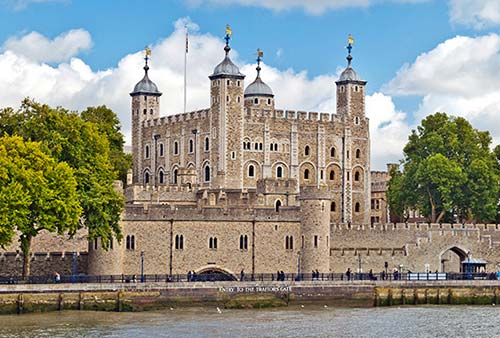
Cost and Hours: £33.60, family ticket available; Tue-Sat 9:00-17:30, Sun-Mon from 10:00, last entry 15:30; Nov-Feb closes one hour earlier; free Beefeater tours available, Tube: Tower Hill, +44 333 206 000, www.hrp.org.uk.
Advance Tickets: To avoid long ticket-buying lines, buy tickets in advance on the Tower website (you’ll be emailed a PDF that you can print out or simply show on your mobile device).
Visiting the Tower: Even an army the size of the security line couldn’t storm this castle. The 1 entrance gate was just part of two concentric rings of complete defenses. As you enter, consult the daily event schedule, and consider catching a Beefeater tour.
Continue through the inner gate and go 50 yards straight ahead to the 2 traitors’ gate. This was the boat entrance to the Tower from the Thames. Princess Elizabeth, who was a prisoner here before she became Queen Elizabeth I, was carried down the Thames and through this gate on a barge, while likely thinking about her mom, Anne Boleyn, who had been decapitated inside just a few years earlier. Many English leaders who fell from grace entered through here—Elizabeth was one of the lucky few to walk out.
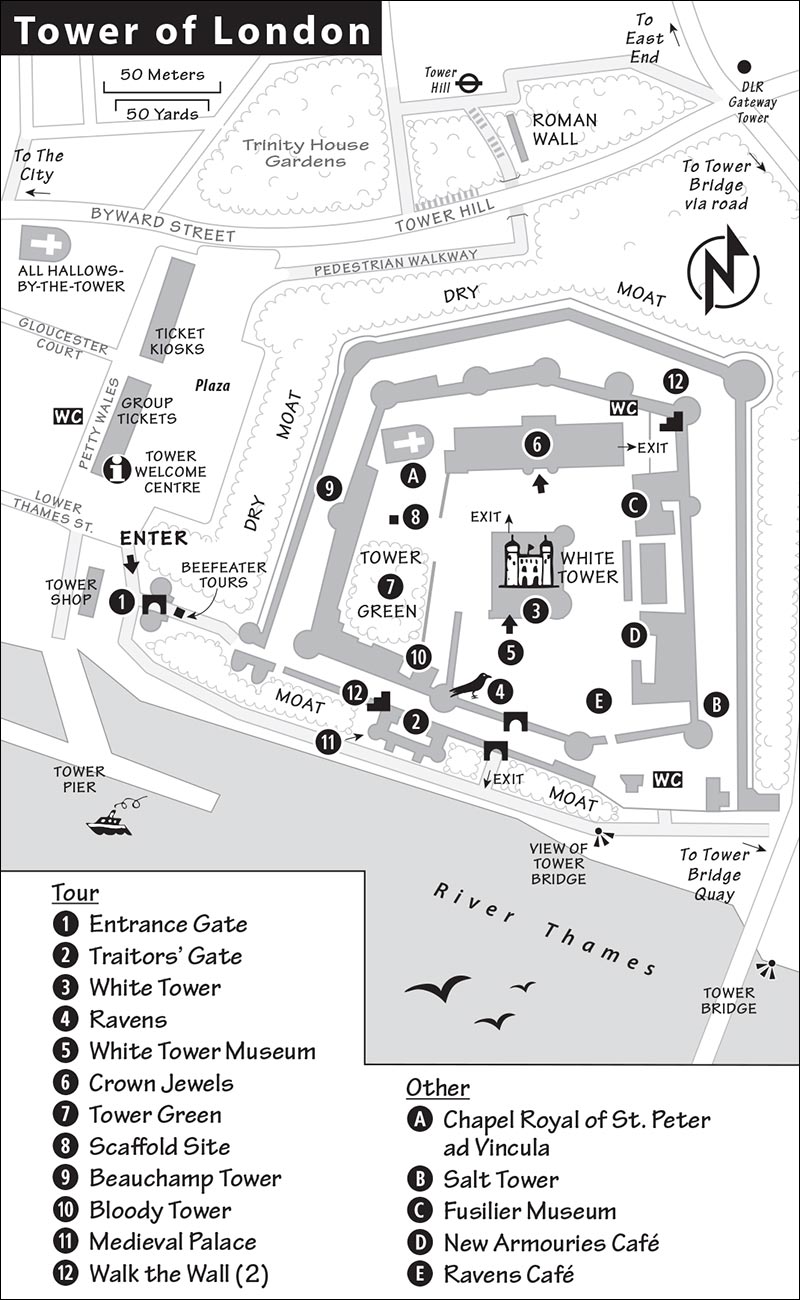
Turn left to pass underneath the archway into the inner courtyard. The big, white tower in the middle is the 3 White Tower, the original structure that gave this castle complex its name. William the Conqueror built it more than 950 years ago to put 15 feet of stone between himself and those he conquered. Over the centuries, the other walls and towers were built around it.
Standing high above the rest of old London, the White Tower provided a gleaming reminder of the monarchy’s absolute power over its subjects. If you made the wrong move, you could be feasting on roast boar in the Banqueting Hall one night and chained to the walls of the prison the next. Torture ranged from stretching on the rack to the full monty: hanging by the neck until nearly dead, then “drawing” (cut open to be gutted), and finally quartering, with your giblets displayed on the walls as a warning.
Before moving on, immediately to your left, look for cages housing 4 ravens, the Tower’s resident mascots. According to goofy tradition, the Tower and the British throne are only safe as long as ravens are present here. These eight impressive birds—the traditionally required six, plus two spares—have clipped wings to keep them close.
Inside the White Tower is a 5 museum with exhibits re-creating medieval life and the Tower’s bloody history of torture and executions. In the display cases, the first suits of armor you see belonged to Henry VIII—on a horse, slender in his youth (c. 1515), then more heavyset by 1540 (with his bigger-is-better codpiece). Upstairs, St. John’s Chapel (1080) is the oldest surviving part of the original Tower—and the oldest church in London. On the top floor are the Tower’s actual execution ax and chopping block.
Across from the White Tower is the entrance to the 6 crown jewels. You’ll be directed through a series of rooms with videos and exhibits that play up the impressive list of kings and queens who have worn the crown jewels. The real exhibit begins in a room with the royal regalia, including the 12th-century coronation spoon, the most ancient object here. The Sovereign’s Scepter is encrusted with the world’s largest cut diamond—the 530-carat Star of Africa, beefy as a quarter-pounder. The orb symbolizes how Christianity rules over the earth, a reminder that even a “divine monarch” is not above God’s law.
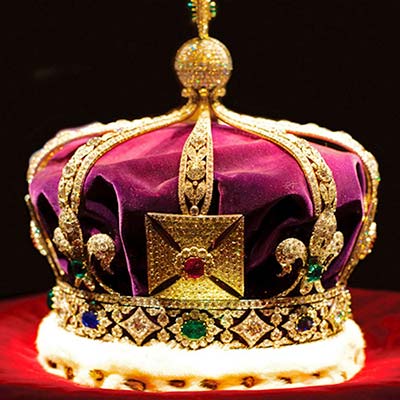
The Imperial State Crown is what Queen Elizabeth II wore for official functions such as the State Opening of Parliament, and it’s one of the crowns—in addition to the heavyweight St. Edward’s Crown—that Charles III wore for his coronation. Among its 3,733 jewels are Queen Elizabeth I’s former earrings (the hanging pearls, top center), a stunning 13th-century ruby look-alike in the center, and Edward the Confessor’s ring (the blue sapphire on top, in the center of the Maltese cross of diamonds).
Exiting the tower, turn right and walk past the White Tower, straight ahead to the grassy field called 7 Tower Green. In medieval times, this was the “town square” for those who lived in the castle. Knights exercised and jousted here, and it was the last place of refuge in troubled times.
Near the middle of Tower Green is a granite-paved square, the 8 Scaffold Site. It was here that enemies of the Crown would kneel before the king for the final time. On the left as you face the chapel is the 9 Beauchamp Tower (pronounced “BEECH-um”), one of several places in the complex that housed Very Important Prisoners.
Down toward the river, at the bottom corner of the green, is the 10 Bloody Tower, where Sir Walter Raleigh was imprisoned for 13 years and wrote the first volume of his History of the World.
Walk under the Bloody Tower, cross the cobbled road, and bear right a few steps to find the stairs up onto the wall to reach the 11 Medieval Palace, built around 1240 by Henry III, the king most responsible for the expansive Tower of London complex we see today.
From the throne room, continue up the stairs to 12 walk the wall for a fine view of the Tower Bridge.
Before departing, you may want to consider the Tower’s other sights, including the Salt Tower, the Fusilier Museum, and the Chapel Royal of St. Peter ad Vincula (available by tour only).
Tower Bridge
The iconic Tower Bridge (often mistakenly called London Bridge) was built in 1894 to accommodate the growing East End. While fully modern and hydraulically powered, the drawbridge was designed with a retro Neo-Gothic look.
The bridge is most interesting when the drawbridge lifts to let ships pass, as it does a thousand times a year (best viewed from the Tower side of the Thames). For the bridge-lifting schedule, check the website or call.
You can tour the bridge at the Tower Bridge Exhibition, with a history display and a peek at the Victorian-era engine room that lifts the span. Included in your entrance is the chance to cross the bridge—138 feet above the road along a partially see-through glass walkway. As an exhibit, it’s overpriced, though the adrenaline rush and spectacular city views from the walkway may help justify the cost.
The notorious king who single-handedly transformed England was a true Renaissance Man—six feet tall, handsome, charismatic, well educated, and brilliant. He spoke English, Latin, French, and Spanish. A legendary athlete, he hunted, played tennis, and jousted with knights and kings. He played the lute and wrote folk songs; his “Pastime with Good Company” is still being performed. When 17-year-old Henry, the second monarch of the House of Tudor, was crowned king in Westminster Abbey, all of England rejoiced.
Henry left affairs of state in the hands of others, and filled his days with sports, war, dice, women, and the arts. But in 1529, Henry’s personal life became a political atom bomb, and it changed the course of history. Henry wanted a divorce, partly because his wife had become too old to bear him a son, and partly because he’d fallen in love with Anne Boleyn, a younger woman who stubbornly refused to be just the king’s mistress. Henry begged the pope for an annulment, but—for political reasons, not moral ones—the pope refused. Henry went ahead and divorced his wife anyway, and he was excommunicated.
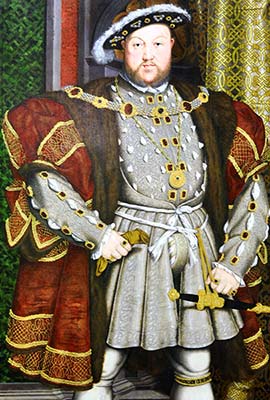
The event sparked the English Reformation. With his defiance, Henry rejected papal authority in England. He forced monasteries to close, sold off some church land, and confiscated everything else for himself and the Crown. Within a decade, monastic institutions that had operated for centuries were left empty and gutted (many ruined sites can be visited today, including the abbeys of Glastonbury, St. Mary’s at York, Rievaulx, and Lindisfarne). Meanwhile, the Catholic Church was reorganized into the (Anglican) Church of England, with Henry as its head. Though Henry himself basically adhered to Catholic doctrine, he discouraged the veneration of saints and relics, and commissioned an English translation of the Bible. Hard-core Catholics had to assume a low profile. Many English welcomed this break from Italian religious influence, but others rebelled. For the next few generations, England would suffer through bitter Catholic-Protestant differences.
Henry famously had six wives. The issue was not his love life (which could have been satisfied by his numerous mistresses), but the politics of royal succession. To guarantee the Tudor family’s dominance, he needed a male heir born by a recognized queen.
Henry’s first marriage, to Catherine of Aragon, had been arranged to cement an alliance with her parents, Ferdinand and Isabel of Spain. Catherine bore Henry a daughter, but no sons. Next came Anne Boleyn, who also gave birth to a daughter. After a turbulent few years with Anne and several miscarriages, a frustrated Henry had her beheaded at the Tower of London. His next wife, Jane Seymour, finally had a son (but Jane died soon after giving birth). A blind marriage with Anne of Cleves ended quickly when she proved to be both politically useless and ugly—the “Flanders Mare.” Next, teen bride Catherine Howard ended up cheating on Henry, so she was executed. Henry finally found comfort—but no children—in his later years with his final wife, Catherine Parr.
In 1536 Henry suffered a serious accident while jousting. His health would never be the same. Increasingly, he suffered from festering boils and violent mood swings, and he became morbidly obese, tipping the scales at 400 pounds with a 54-inch waist.
Henry’s last years were marked by paranoia, sudden rages, and despotism. He gave his perceived enemies the pink slip in his signature way—charged with treason and beheaded. (Ironically, Henry’s own heraldic motto was “Coeur Loyal”—true heart.) Once-wealthy England was becoming depleted, thanks to Henry’s expensive habits, which included making war on France, building and acquiring palaces (he had 50), and collecting fine tapestries and archery bows.
Henry forged a large legacy. He expanded the power of the monarchy, making himself the focus of a rising, modern nation-state. Simultaneously, he strengthened Parliament—largely because it agreed with his policies. He annexed Wales and imposed English rule on Ireland (provoking centuries of resentment). He expanded the navy, paving the way for Britannia to rule the waves. And—thanks to Henry’s marital woes—England would forever be a Protestant nation.
When Henry died at age 55, he was succeeded by his nine-year-old son by Jane Seymour, Edward VI. Weak and sickly, Edward died six years later. Next to rule was Mary, Henry’s daughter from his first marriage. A staunch Catholic, she tried to brutally reverse England’s Protestant Reformation, earning the nickname “Bloody Mary.” Finally came Henry’s daughter with Anne Boleyn—Queen Elizabeth I, who ruled a prosperous, expanding England, seeing her father’s seeds blossom into the English Renaissance.
London abounds with “Henry” sights. He was born in Greenwich (at today’s Old Royal Naval College) and was crowned in Westminster Abbey. He built a palace along Whitehall and enjoyed another at Hampton Court. At the National Portrait Gallery, you can see portraits of some of Henry’s wives, and at the Tower you can see where he executed them. Henry is buried alongside his third wife, Jane Seymour, at Windsor Castle.
Cost and Hours: £12.30, daily 9:30-18:00, last entry one hour before closing, may stay open later in summer, enter at northwest tower, Tube: Tower Hill, +44 20 7403 3761, www.towerbridge.org.uk [URL inactive].