DOURO VALLEY
Vale do Douro
Orientation to the Douro Valley
Tours and Tastings in the Douro Valley
Sights and Tastings in and near Régua
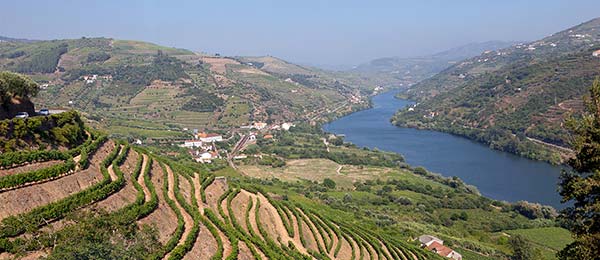
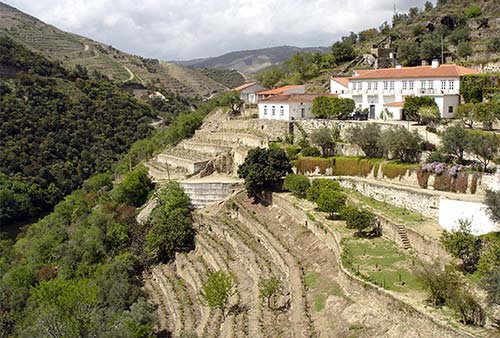
The scenic Douro Valley—the birthplace of port wine—is a vine-draped land of ever-changing terrain sculpted by centuries of hardy farmers. The Douro River’s steep, craggy, twisting canyons have been laboriously terraced to make a horizontal home for grape vines and olive and almond trees. Unlike the Rhine, the Loire, and other great European rivers, the Douro (DOH-roo) was never a strategic military location. So, rather than fortresses and palaces, you’ll see farms, villages...and endless tidy rows of rock terraces, which took no less work—and are no less impressive—than those castles and châteaux. Locals brag, “God made the earth, but mankind made the Douro.”
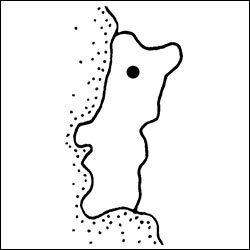
The Douro River begins as a trickle in Spain (where it’s called the Duero), runs west for 550 miles (350 miles of which are in Portugal), and spills into the Atlantic at Porto. The name means “river of gold”—perhaps because of the way the sun shines on the water, or the golden-brown silt it carries after a heavy rain.
In the 17th century, British traders developed a taste for the wines from the Douro region during a trade war with France. “Op-port-unity” knocked in 1756, when the Marquês de Pombal demarcated the region—establishing it as the only place that port wine could be produced. To this day, port remains the valley’s top industry and top tourist draw. The 50-mile stretch on either side of Pinhão is home to some 4,000 vintners and scores of quintas—vineyards that produce port (and, increasingly, also table wine and olive oil). While many quintas are private, others offer tours and tastings and some have accommodations as well.
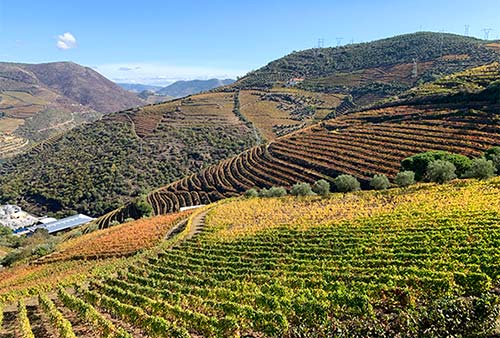
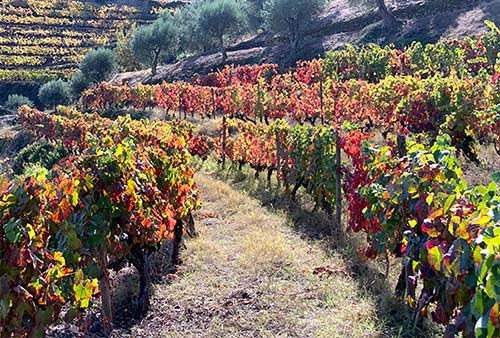
The Douro hillsides change colors throughout the year, from dusty brown in winter, to scrubby green in summer, to glowing red and gold in fall. The 5,000-foot-high Serra do Marão mountain range guards the region, protecting it from the ocean air and creating a microclimate perfect for growing grapes. The temperature varies from snowy in the winter to arid and 100°F in the summer. Much of the Douro’s dramatic ambience changed in the 1970s, when a series of dams were built for hydroelectric power, taming the formerly raging river into the gentle giant seen today.
Although the scenery and the wines are sublime, the towns along the Douro (Peso da Régua and Pinhão) are fairly dull. If you’ve got wheels, consider staying at one of the many quintas that offer accommodations—ranging from simple rooms on family farms to modern country estates with jaw-dropping views. To many, the Douro Valley may feel low-energy and underwhelming (especially outside of September’s harvest time), but some find its charm relaxing.
PLANNING YOUR TIME
This area merits a full day and an overnight along the river. While the valley is pretty, Porto is more interesting—and, unless you’re a port aficionado, more worth your limited vacation time. Note that the valley is packed during the grape harvest (mid-Sept-early Oct).
Drivers should make a beeline for the heart of the valley and explore at will. Without a car, you’re limited as to where you can stay and which quintas you can tour, but you still have enough options to make the trip worthwhile. Using taxis, your choices multiply. With plenty of time and a desire to really slow down, take the meandering boat cruise from Porto to Peso da Régua and tour the museum (no lockers at the train station, so pack light). In the evening, take the train to Pinhão and settle in for the night. In the morning, hike to Quinta de la Rosa for the 11:30 tour and tasting, or take a taxi to wander through the vineyards at Quinta do Panascal. When you’ve had enough of the wine and rugged scenery, hop the train back to Porto (2.5 hours).
For just a glimpse, you can see the Douro as a day trip from Porto on your own (about 2 hours by car or 2 hours by train each way) or with a package tour (see “Getting Around the Douro Valley,” later).
Orientation to the Douro Valley
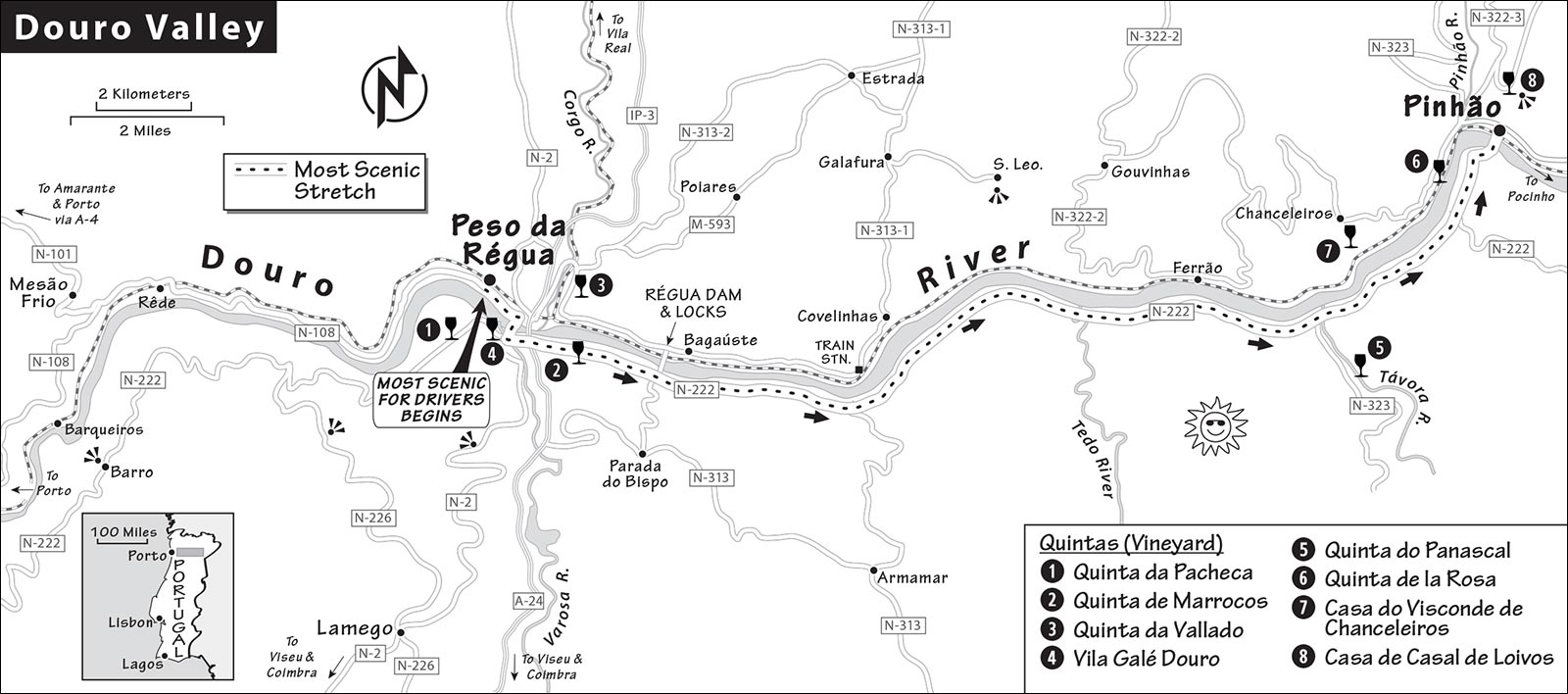
The Douro runs for 350 miles through the northern Portuguese heartland. The most interesting and scenic segment—and the heart of the port wine-growing region—is easily the 17-mile stretch between Peso da Régua and Pinhão.
Coming from Porto, the first 55 miles of the Douro are pretty and lush. When you reach the town of Mesão Frio, the terrain becomes far more arid and dramatic. The prized, demarcated port wine-growing region of the Douro technically begins here and stretches all the way to the Spanish border.
About seven miles beyond Mesão Frio, Peso da Régua (which locals call simply Régua) is the biggest town of the region and a handy home base. Seventeen miles beyond Régua is smaller Pinhão. Each town has a big hotel and one or two cheap residencials, with quintas nearby. Régua has better connections and services but feels urban and functional; Pinhão enjoys more of a small-town ambience and feels more deeply rooted in Douro culture and scenery.
I’ve described the most enjoyable and accessible stretch of the Douro, but there’s much more—vineyards stretch all the way to Spain. The train goes as far as Pocinho. Just south of Pocinho, Vila Nova de Foz Côa sits between the Douro and a fine archaeological park with cave paintings.
GETTING AROUND THE DOURO VALLEY
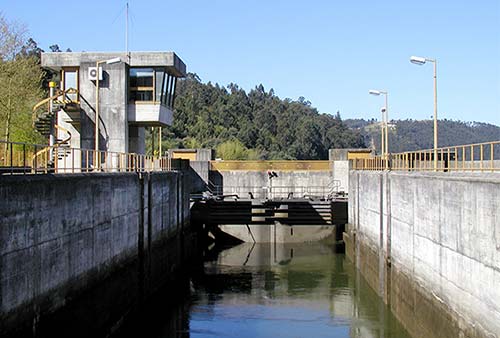
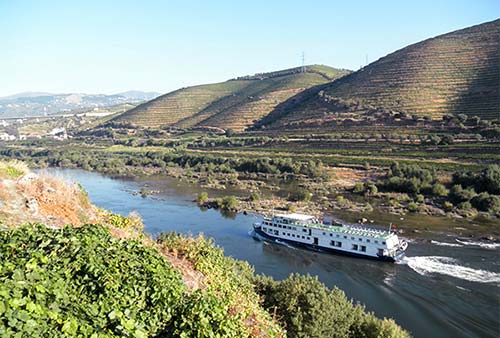
By Boat: Lazy cruise boats float up and down the Douro between Porto, Régua, and Pinhão. (The feisty Douro was tamed in the 1970s by a series of five dams with locks, including the highest one in Europe, the Barragem do Carrapatelo—which inches boats up and down, like a giant elevator, over 140 feet.)
The boat trip takes about seven hours from Porto to the heart of the Douro and comes with lunch and passage through two locks (longer trips include a third lock between Régua and Pinhão). If you’ve got the time and don’t have a car, this is a slow but scenic way to enjoy the Douro Valley.
Boats generally run daily from March through November (no boats Dec-Feb). Most travelers take a train or bus back to Porto from Régua on the same day as part of a package deal. But if you want to spend the night on the Douro, it’s easy to catch a train back on your own (or buy a two-day package, which includes lodging). Seniors should ask about discounts, especially on weekdays.
Several companies based in Porto run cruises up the Douro—from all-day side-trips to multiday cruises—including Douro Azul (+351 223 402 500, www.douroazul.com) and Rota do Douro (+351 223 759 042, www.rotadodouro.pt). Tremdouro has shorter, daily cruises departing from Régua (see the “Peso da Régua” section, later).
By Train: From Porto, regional trains head to Régua (every 2 hours direct from Campanhã station, free connection from São Bento station, 2 hours); half of these trains continue on to Pinhão (2.5 hours total). On Saturdays, a historic diesel train choo-choos visitors between Douro towns—from Régua to Pinhão to Tua, then back again (Sat-Sun only, 3 hours round-trip, €85, +351 259 338 135, www.cenarios.pt).
By Car: The region is easy by car. If you’re going between Coimbra and the Douro Valley, you’ll save time and mileage by coming directly through the mountains (on the A-24 expressway, via Viseu and Lamego), rather than taking the expressway up the coast to Porto and then over.
From Porto, zip on the A-4 expressway to Amarante, then N-101 through the mountains to Mesão Frio (about one hour total). Once in the heart of the Douro, the riverside road follows the north bank from Mesão Frio to Régua in about 30 minutes. From there, you’ll cross to the south bank (in the middle of the three bridges) to continue on N-222 into the valley about 30 more minutes to Pinhão (where you’ll cross back to reach the town). Everything I’ve mentioned is no more than about a 10-minute side-trip from the river and the main road. Note that bridges cross the river at Régua, just upstream at Bagaúste, and at Pinhão, but otherwise are scarce.
When passing through Amarante, it’s an easy and logical pit stop to detour into the town center to check out the old Roman bridge and impressive church and convent of São Gonçalo.
Tours and Tastings in the Douro Valley
QUINTAS
The main attraction of the Douro Valley is touring the quintas, the farms that produce port and table wines. The best quinta (KEEN-tah) experiences on this stretch of the Douro are in or near Régua and Pinhão. For both towns, I’ve noted the best options for nondrivers.
Most quintas have an official program: a one-hour tour, followed by a tasting of three or four wines, for about €15. Some have tours at specific times, while others are by prior arrangement only. Ideally, call ahead and ask when you should show up. That said, it’s fairly informal—drivers could simply pull into any quinta listed in this chapter (or any marked rota do vinho do Porto) and ask for a taste. If they’re not too busy, you can often get a shorter, less-formal tour even outside of the official times.
Each quinta has its own personality. The tours of big companies’ quintas are slick but feel like stripped-down versions of the tours you’ll do in the port wine lodges back in Porto (with the happy exception of Quinta do Panascal, where you’re set loose in the vineyards). The smaller, independent quintas are more intimate and offer a chance to meet the people who have devoted their lives to making the best wine they can. At quintas operated by big companies, it’s fine not to buy. But if a family-run place gives you an in-depth tour, it’s polite to buy at least a token bottle. Prices are surprisingly affordable at the source.
GROWING—AND STOMPING—GRAPES IN THE DOURO VALLEY
Port wine can technically only be grown in the Douro Valley, which is characterized by microclimates. A few miles can make a tremendous difference in terms of temperature, precipitation, humidity, and farming conditions. Even within the same vineyard, each parcel of land has its own characteristics. These subtle changes infuse the grapes with completely different aromas and flavors. Over the years, vintners have learned to micromanage their grapes, fine-tuning specific qualities to get the very best port for their conditions.
Near Porto, the Douro has moderate temperatures and a fair amount of precipitation. The vineyards north of Porto are planted with a different grape—Alvarinho—and produce “green wine” (vinho verde—Portugal’s refreshing light white wine). About 55 miles inland, around Mesão Frio, chains of mountains mark a dramatic change in climate: very hot and dry in summer, with heavy rainfall and extreme cold in winter.
Port is actually a British phenomenon. Because Britain isn’t suitable for growing grapes, its citizens traditionally imported wine from France. But during wars with France (17th and 18th centuries), Britain boycotted French wine and looked elsewhere. At that time Portuguese wines often didn’t survive the longer sea journey to England.
It’s said that the port-making process was invented accidentally by a pair of brothers who fortified the wine with grape brandy to maintain its quality during the long trip. The wine picked up the flavor of the oak, which the English grew to appreciate. The British perfected port production in the succeeding centuries; hence many ports carry British-sounding names (Taylor, Croft, Graham).
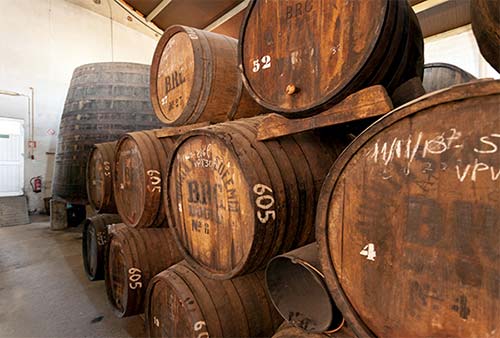
In 1703, the Methuen Treaty reduced taxation on Portuguese wines, making port even more popular. In 1756, Portugal’s Marquês de Pombal demarcated the Douro region—the third such designation in Europe. From that point on, true “port wine” came only from this region, following specific regulations of production, just as “Champagne” technically refers to wines from a specific region of France. Traditionally, farmers and landowners were Portuguese, while the British bought the wine from them, aged it in Porto, and handled the export business. But that arrangement changed in the late 19th century, when an infestation of an American root insect called phylloxera (which smuggled itself to the Old World in the humid climate of speedy steamboats) devastated the Portuguese—and European—wine industry.
In the Douro Valley, you’ll see lasting evidence of the phylloxera infestations in the “dead” terraces, overgrown with weeds and a smattering of olive trees. During the infestations, these particular terraces were treated with harsh chemicals that contaminated the soil, rendering it no longer suitable for grapes. Other terraces were left untouched, as Portuguese vintners simply gave up. Unable to produce usable grapes for over a decade, they sold their land to British companies that were willing to wait until a solution could be found. It was, as phylloxera-resistant American rootstock began to be used throughout Europe. Port production resumed, this time on British-owned land.
Today, Porto and the Douro Valley see many British tourists. Though it’s largely undiscovered by Americans, this region is a real hot spot among wine-loving Brits.
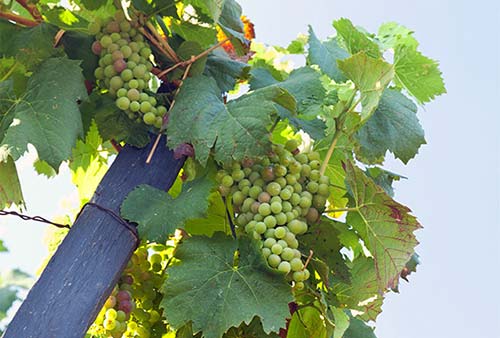
The terrain around the Douro is dominated by sedimentary rocks that have been buried, heated, and deformed into a metamorphic rock called schist (xisto). The easily fractured layers of schist are tilted beneath the soil at an angle, allowing winter rainfall to easily penetrate the earth and build up in underground reserves. The grapevines’ roots plunge deep into the ground—up to 30 feet—to reach this water through the long, dry summer.
Building and maintaining the Douro’s trademark terraces (geios) is expensive, and grapes planted there must be cultivated by hand. More recently, bigger companies have attempted using larger terraces (called patamares) that can be worked by machines or by smoothing out the hillside and planting the vines in vertical rows. Within the demarcated region, farmers are not allowed to irrigate except with special permission.
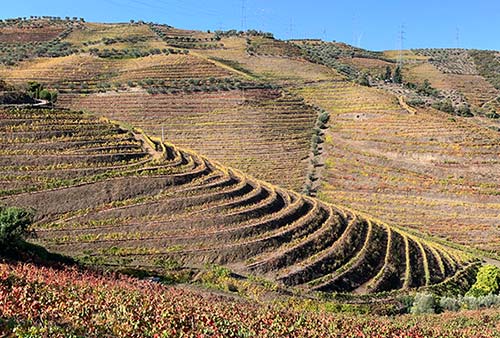
Because the crops here are worked mostly by hand, it can be hard to find good workers (especially for pruning, a delicate and skilled task). Most young people from the Douro move to the cities on the coast. To encourage them to stay, the government offers subsidies and other incentives.
To make the finest port, many quintas along the Douro still stomp grapes by foot—not because of quaint tradition, but because it’s the best way. Machines break the grapes’ seeds, releasing too many tannins and resulting in bitter port. But soft soles against stone keep the seeds intact. During harvest time (mid-Sept-early Oct), the grapes are poured into big granite tubs called lagares. A team of two dozen stompers line up across from each other, put their arms on each other’s shoulders, and march, military-style, to crush the grapes. The stomping can last three to four days, and generally devolves into a party atmosphere—with tourists sometimes joining in...but only later in the evening after the serious work is done.
Port traditionally stays in the Douro Valley for one winter after it’s made, as the cold temperatures encourage the wine and brandy to marry. Then it’s taken to Porto, where the more humid, mild climate is ideal for aging. For centuries, port could technically only be aged, marketed, and sold in Porto. But this was deregulated in 1987, and now any Douro quinta that offers tours can sell its port directly to visitors.
In recent years, vintners have been using their traditional port grapes to make table wines—with great success. These days, most quintas offer you tastes not only of port, but of their vinhos do Douro, which are gaining international acclaim.
The vineyards along the Douro are traditionally separated by olive trees, many of which produce fine olive oil. The farming demands of olives fit efficiently with those of grapes. There are also almond, orange, apple, and cherry trees, which locals use to make jam.
Peso da Régua
Peso da Régua (PAY-zoo dah RAY-gwah)—or simply Régua, as it’s called by locals—is the administrative capital of the Douro Valley. With 22,000 people, Régua feels urban and functional, with modern five- and six-story apartment blocks that seem out of place in these beautiful surroundings. While the town itself isn’t worth the trip, the views and access into the surrounding countryside make it worth considering as a home base—or at least a transportation hub.
Orientation to Régua
The core of Régua consists of two bustling streets that run parallel to the Douro. The businesslike upper street, Rua dos Camilos, is lined with workaday shops; the lower, main road—Avenida João Franco—runs just above the scenic river embankment, along a narrow, nicely manicured promenade. Down below is the wider, mostly pedestrianized embankment itself, where pleasure boats come and go. There are three bridges at the east (upriver) end of town.
Tourist Information: Régua’s clueless TI is inconveniently located a few blocks up from the river at the west end of town (on Rua da Ferreirinha). The staff at the Douro Museum (and at bigger hotels) are more reliable sources of information.
Arrival in Régua: The train station and two recommended hotels are at the eastern edge of the center; buses also stop here. The boat dock is more or less in the middle of town (to reach the train station and hotels, disembark to the right; for the Douro Museum, disembark to the left). Drivers can park for free along Avenida João Franco (squeeze between the trees) or on the angled streets leading down to the embankment. There’s also a large, free lot at the west end of town (as you approach from Mesão Frio). You have to pay to park along the upper street, Rua dos Camilos.
Tours: A company called Tremdouro has a near monopoly on tours here, including a cheesy tourist train (€7.50, 1 hour with two stops: mountaintop viewpoint and wine cellar for tasting, departs hourly in season) and river cruises. You can choose between a two-hour cruise all the way upriver to Pinhão with a return by train (2/week, €27), or a longer five- to six-hour round-trip lunch cruise to Pinhão and back (daily at 12:00, €71). For details, ask at one of the Tremdouro kiosks (at either end of town along the lower road—Avenida João Franco, +351 254-322-858, www.tremdouro.com). A few other companies, which specialize in longer cruises from Porto, may also run local cruises from Régua, including Rota do Douro (www.rotadodouro.pt) and Tomaz do Douro (www.tomazdodouro.pt).
Sights and Tastings in and near Régua
Régua’s few sights are most worthwhile for people without cars (who can’t get into the countryside, where time is better spent). Along the upper street (Rua dos Camilos), you can’t miss the Casa do Douro—the blocky, marble-clad, Fascist-style headquarters of the local port wine industry (ask to see the pretty stained-glass windows inside).
▲Douro Museum (Museu do Douro)
This museum—spanning the lower and upper roads, with a rabelo boat permanently moored on its rooftop garden—serves as a sort of cultural center for this little town. It has a restaurant, wine tastings, temporary exhibits, and an endearing permanent exhibit.
Cost and Hours: €6, daily 10:00-18:00, Nov-Feb until 17:30, Rua Marquês de Pombal, +351 254 310 190, www.museudodouro.pt.
Tastings: Each afternoon, the museum offers four different options for sampling five or six port wines. Reserve at least one day in advance (minimum four people). The price varies based on quality of the wines (€5-15, daily 15:00-17:00, +351 254 310 190, geral@museudodouro.pt). They also have a café and wine bar on the museum terrace where you can sip port while admiring the vineyards...but with no explanation.
Visiting the Museum: The permanent exhibit, “Douro: Matter and Spirit,” explains the landscape, industry, and culture of the Douro Valley. On the ground floor, you’ll get a lesson in the region’s geology, with a 3-D relief map of the Douro Valley and stuffed specimens of local wildlife. Upstairs, the exhibit delves into local winemaking and the folk culture that goes along with it. At the top of the stairs, the gigantic wall of wine bottles is enough to make any port lover envious.
Up until the 1970s, when the Douro was tamed by dams, boats called rabelos navigated the treacherous waters, carrying port from the hillsides to the cellars of Porto. It was a three-day trip to cover the 50-100 miles. A crew of four loaded the barrels onto the 20-foot boats. For the downstream trip, the captain stood on a platform to spy rocks and shallows ahead, using the long rudder to guide the flat-bottomed boat through whitewater and hairpin turns. It was dangerous work, and the river was once lined with shrines where superstitious sailors prayed.
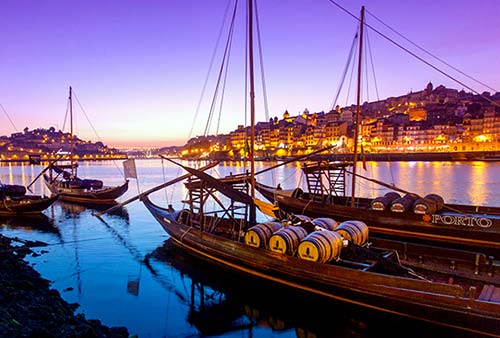
At Vila Nova de Gaia, they unloaded their cargo—a mere eight barrels, typically—and headed back. For the slow trip upstream, the tall, square sail helped them ride the prevailing westerly winds. Otherwise, they were pulled by ropes up the worst stretches by men or oxen on towpaths that used to line the riverbank.
Nowadays, the Douro is quiet, port is shipped via tanker trucks, and the few remaining rabelos are docked by quintas for ambience and advertising.
You’ll see models illustrating the construction of rabelo boats; traditional costumes and musical instruments; items relating to port production (tools, casks, barrels, decanters, and huge wicker grape-picking baskets that are supported on the forehead); and port wine labels and advertising posters. On one wall, squeeze the bulb attached to each bottle to help train your nose to the various bouquets of port: apple, honey, berry, nut caramel, cinnamon, and so on. The 33-minute film Giants of Douro shows the hard work in this land, past and present—including lots of locals with grape-stained hands.
▲Quinta da Pacheca
Perhaps the most elegant tasting experience I list is perched near the top of the hill across the river from Régua (just under the big Sandeman billboard). You’ll drive up the plane-tree-lined driveway to a grand 18th-century manor house nestled in vine-draped hills. Drop by for an impromptu taste in the delightful outdoor wine bar (under a leafy canopy) or call ahead to schedule a one-hour tour of the entire process, including their atmospheric cave. While not one of the more famous labels, Pacheca is upscale and well-respected—making this a nice high-end-feeling option without the impersonal corporate glitz. They also have a fancy hotel (described later).
Cost and Hours: €15 tour and tasting, twice daily at 10:30 and 14:30, Rua do Relógio do Sol 261, +351 254 331 229, www.quintadapacheca.com.
Getting There: It’s across the river from Régua and up the hill in Carneiro—cross the bridge, turn right on N-222, and watch for the signs on the right. You’ll feel like you’re in Sandeman-land until you reach the driveway.
▲Quinta de Marrocos
This is the loosest, most informal quinta that I list—casual, traditional, and family-run. It’s a great place to sample simple ports while chatting with the folks who made them. You’ll wander through the vineyards, check out the stomping and aging rooms, and taste four different ports. They also rent rooms (see “Sleeping in Régua,” later).
Cost and Hours: €10, daily 9:00-12:00 & 14:00-18:00, +351 918 828 785, http://golddrink.pt.
Getting There: It’s easiest to take a taxi (€10 each way).
▲Quinta da Vallado
Although this quinta dates from 1716, they’ve recently gotten away from their rustic roots and gone in a boldly modern direction—with a new facility stylishly decorated with slate-gray schist and bold lines. They’ll take you on a one-hour tour, and then offer a tasting of five types of wines and ports. They also run a fine hotel (see “Sleeping in Régua,” next).
Cost and Hours: €15, more for higher-end ports, daily 8:00-24:00, Vilarinho dos Freires, +351 254 318 081, www.quintadovallado.com.
Getting There: Leave Régua at the eastern end of town (under the tall bridge) and follow N-313 up the narrow Corgo River Valley. Immediately after the road crosses the river, watch for signs on the right.
Sleeping in Régua
You have two basic options for sleeping here: Stay in a hotel or residencial in town, or sleep at a picturesque quinta in the countryside. The in-town hotels are very handy for those using public transportation, but if you’ve got a car, the quintas offer a better value and a more memorable Douro experience. The fancier places serve meals and usually have half-board options (book ahead). If you have a car, get out of town!
If visiting during the grape harvest (mid-Sept-early Oct), book as far ahead as possible. Simpler places charge the same rates year-round; more expensive hotels charge more for weekends and during the busy season (roughly April-Oct).
$$$ Vila Galé Douro, across the river from the town center (about a 20-minute walk), is the most luxurious hotel option within walking distance of Régua. It has 38 stylish rooms (all with river views), an indoor pool, an outdoor terrace with a hot tub, sharp service, and an elegant vibe (air-con, elevator, Lugar dos Varais, Cambres, in village of Lamego, +351 254 780 700, www.vilagale.com, douro.reservas@vilagale.com).
$$ Hotel Régua Douro is big and relatively professional, with a top-floor panoramic breakfast room and 77 business-class, if somewhat, faded rooms—many of them with sweeping river views (air-con, elevator, pool, Avenida Galizia—at the roundabout at the eastern end of town, +351 254 320 700, www.hotelreguadouro.pt, geral@hotelreguadouro.pt).
$ Império Hotel has a convenient, central location in a stark tower a block from the station and across the street from Hotel Régua Douro. Its 33 spartan rooms are a little musty and overlook busy streets, but the price is right (air-con, Rua Vasques Osório 8, +351 254 320 120, www.imperiohotel.com, info@imperiohotel.com).
NEAR RÉGUA
$$$$ The Wine House Hotel, at the recommended Quinta da Pacheca (described earlier), is a classy splurge with 15 rooms filling a meticulously renovated manor house. Or sleep in one of 10 room-sized wine barrels overlooking the estate. The luxurious public spaces—not to mention the stunning vineyard setting—make this a tempting top-end option (air-con, +351 254 331 229, www.quintadapacheca.com). For directions, see the winery listing, earlier.
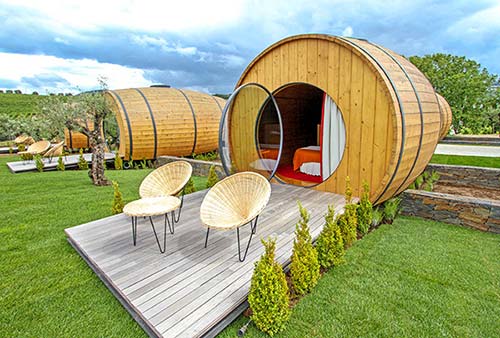
$$$ Quinta da Vallado is two accommodations in one: a sleek, modern, schist-clad design hotel (with eight rooms) and a thoughtfully restored old manor house (with five rooms). The complex, perched on a hill up a little side-valley just northeast of Régua, also has a swimming pool. It’s just the place for young urbanites looking for a bit more contemporary sophistication in their rustic Douro Valley experience (air-con, Vilarinho dos Freires, +351 254 318 081, www.quintadovallado.com). For directions, see the winery listing, earlier.
$$ Quinta de Marrocos is a wonderful option if you want to stay on a real-life family farm. The Sequeira family farmhouse operates a simple shop and a family vineyard making good ports and table wines. The four rooms include a rustic living room, where the port’s always out. Staying here with the dogs and farmhands is a fun, authentic experience—a rare opportunity to spend time with locals who really love what they do (RS%, €25 meals with advance notice, air-con, on N-222 across the river and about 1.5 miles upstream from Régua—about a €10 taxi ride, +351 918 828 785, http://golddrink.pt, info@quintademarrocos.com, sisters Rita and Catarina). They also rent a private two-bedroom family-friendly house on their property.
Eating in Régua
$$$$ Castas e Pratos, next to the train station, turned an enormous railway storage facility into the hippest restaurant in this otherwise sleepy town. The interior comes with lounge tunes and low lighting. If the weather is nice, dine in an open-air freight car permanently attached to the restaurant (facing the train tracks). Their mod wine bar has a nice selection of wines by the glass; if you want a bottle, the wine list is as thick as a phone book (restaurant—daily 12:30-15:00 & 19:30-22:30, wine bar—daily 10:30-24:00; Rua José Vasques Osório at train station, +351 254 323 290, www.castasepratos.com).
$$$ A Companhia, a classy dining room on the second floor of the Douro Museum, offers elegant dishes to pair with local wines (daily 12:30-15:00, Rua Marquês de Pombal, +351 254 323 030).
$$ Restaurante Gato Preto (“Black Cat”), next door to the Douro Museum on the lower street, is polished and affordable (Wed-Mon 12:00-15:00 & 19:00-22:30, closed Tue, Avenida João Franco, +351 254 313 367).
$ Pastelaria Nacional serves great pastries but also doubles as a restaurant popular with locals. Bubbly Paula and her family pride themselves on customer service and on their regional dishes...and her English is fun (lunch specials, Mon-Sat 12:00-20:30, closed Sun, on the upper street between the museum and the train station at Rua dos Camilos 86, +351 254 336 231).
Pinhão
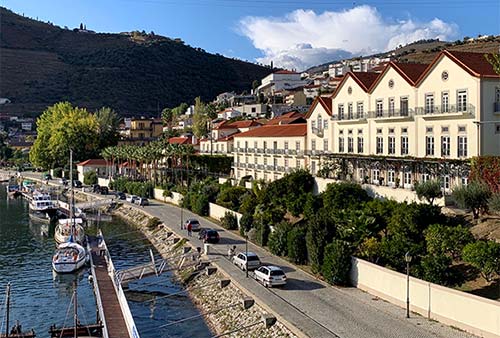
Pinhão (PEEN-yow)—known locally as the “heart of the Douro”—feels like a real small town, where locals remain oblivious to the tourists streaming through their streets. The town—with a cobbled main street and a gorgeous deep-in-the-Douro setting—has a certain dirty-fingernails charm. Inside the big, concrete silos (balões), wine used to spend its first winter awaiting shipment downstream to Porto.
Orientation to Pinhão
Pinhão has virtually no sights, but it makes for a handy home base. The town has a train station along the main road (Rua António Manuel Saraiva), and a boat landing down below on the river. The two residencials are across the street from the station, and Vintage House Hotel is just upriver, next to the bridge. The main road rumbles through the middle of town, past the train station and a mix of practical shops and tourist-oriented wine bars. The handiest ATM is a block from the train station, on the main street, just past the two residencials (exit station to the left, look for CA Bank).
Getting Around: Taxi driver Manuel Anselmo speaks some English and is very knowledgeable about local tourism. He can often be found at the train station. A round-trip visit to the recommended Quinta do Panascal costs around €25 (+351 966 192 904, www.taxipinhao.com).
Sights in Pinhão: Unless you arrive on a boat, it’s easy to miss the broad and manicured river embankment (watch for the steep, downhill road, just west of the train station, near the post office). Here you’ll find boat docks, a few upscale eateries, parks, fishermen, and some public WCs. It’s a pleasant place to simply stroll, with grand views to the vineyards on the opposite banks. At the west end, a modern metal bridge arcs over to another fine embankment for views back on town; if you keep going on this road, you’ll reach the Quinta de la Rosa (wine tasting described later).
A popular activity here are river cruises. The top option is a round-trip cruise that goes up the river—where no roads go (accessible only by boat or train). It’s €10 for a one-hour cruise to a farm and back, or €20 for two hours all the way to the village of Tua (for a port wine tasting) and back. Two fiercely competitive companies both have sales kiosks along the riverfront: Companhia Turística do Douro (daily 9:00-19:00, www.ctdouro.com, +351 254 732 702) and Magnífico Douro (daily 10:00-18:00, www.magnificodouro.pt, +351 913 129 857).
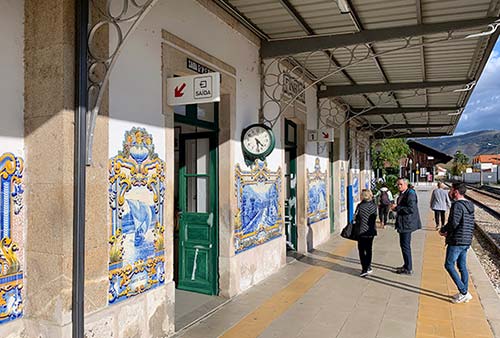
The train station is worth a look even if you arrive by car or boat. It’s adorned with modern tiles illustrating the people and traditions of the countryside.
Tastings in and near Pinhão
▲▲Quinta do Panascal
This wonderful quinta produces Fonseca—a name familiar to port lovers for its high quality. The affordable, tasty Bin No. 27 is their best-known ruby. It’s the only quinta that allows you to roam on your own through the terraced vineyards. From the riverside road you’ll side-trip up the valley of the Távora River. Venturing up the rough gravel road, you’ll feel like you’re discovering a special, hidden gem. Yet upon arrival, you’ll enjoy the slick efficiency of a corporate producer (Fonseca is owned by Taylor, the port wine giant). Because of its delightfully remote location, and because it gets you out among the grapes, it’s among the best quinta tours on the Douro.
The tour is self-guided, so there’s no wait once you arrive. You’ll be given a 30-minute audioguide and set free to wander through the winery, the cellars, and the vineyards—where you can take in the sweeping views (while listening to dry, humorless commentary about the history of port and of the company). Then you’ll return to the lodge to watch a 10-minute video—which brings the otherwise still fields to life—while tasting three ports: a dry white, Bin No. 27, and 10-year-old tawny.
Cost and Hours: €10, daily 10:00-13:00 & 13:30-18:00 except Nov-March Sat-Sun by reservation only; +351 220 133 102, www.fonseca.pt.
Getting There: This place is only accessible by car; it’s well-marked off the Régua-Pinhão road (N-222), up a thrilling little side road that follows the Távora River as it branches off from the Douro (closer to Pinhão). Blind curves make this road dangerous for walking, but a taxi ride is a good value for those without cars (figure around €25 round-trip, including some wait time; see recommended driver, earlier).
▲Quinta de la Rosa
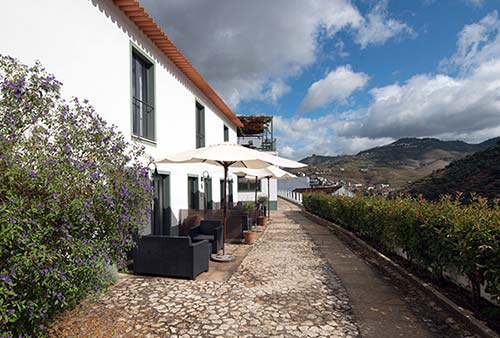
This British-owned, family-run quinta is proud of its wine and eager to show it off on an in-depth, engaging one-hour tour of the facility with a finale of four tastings. I find this a nice middle ground between big and corporate, and tiny and rustic—it’s unpretentious yet rich with tradition. This is perhaps the only family quinta that is close enough to do without a car (20-minute hike from Pinhão). Three-course dinners at 19:00, paired with their wines, cost €25 per person; reserve in advance. Or if the weather cooperates, “Tim’s Terrace” may offer pizza and barbecue that go great with the winery’s own craft beer. They also have a hotel (see “Sleeping in and near Pinhão,” later).
Cost and Hours: €20, daily at 11:30 and 16:30, one mile downstream from Pinhão, +351 254 732 254, www.quintadelarosa.com.
Getting There: Drivers leave Pinhão to the west (downriver), cross the concrete bridge, turn left, and look for the quinta on the left side, up the hill. If walking: From the boat landing, cross the blue pedestrian bridge and continue 20 minutes (or take a €6-8 taxi from Pinhão station).
In Town
Pinhão’s main street is lined with wine shops, eager to sell you a bottle, a glass, or a taste. Do some window-shopping and take your pick. For something more formal, Vintage House Hotel’s lobby wine bar offers expensive, high-end, regularly scheduled Academia do Vinho (“Wine Academy”) tastings, usually in the afternoon—call to check the schedule and reserve a spot (€30 tastings, wine shop open daily 10:00-19:00, +351 254 730 230; see hotel listing, later).
Sleeping in and near Pinhão
Your in-town options are a plush splurge hotel or two humble residencials. The residencials are next door to each other, across from the train station. Both operate fine restaurants, and both have riverview rooms that don’t cost extra but come with some street noise; neither has owners who speak English, but each sometimes has an English-speaking son available.
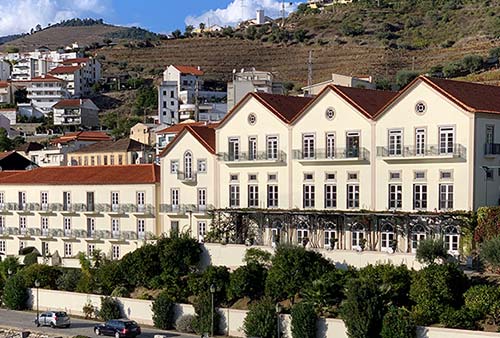
$$$$ Vintage House Hotel is the place if you want to splurge on a fancy, formal hotel on the Douro (as opposed to a hillside manor house). It’s all class, with a wonderfully atmospheric bar (under tree-trunk rafters), a good restaurant with an over-the-top formal interior and riverside terrace outdoor seating, and a wine shop featuring expensive tastings for aficionados. Each of its 50 rooms has a river view and a terrace or balcony, and elegant tile in the bathroom. The halls are lined with 19th-century photos of the Douro (air-con, elevator, pool, between train station and bridge at Lugar da Ponte, +351 254 730 230, www.vintagehousehotel.com, reservations@vintagehousehotel.com).
$ Hotel Douro offers 14 basic, clean, and bright rooms, many with cute riverview balconies. The halls are nicely tiled, and the communal terrace provides a great, lazy-afternoon view of the river (cash only, air-con, Rua António Manuel Saraiva 39, +351 254 732 404, www.hotel-douro.pt, geral@hotel-douro.pt, Oliveira family).
$ Residencial Ponto Grande is your basic budget choice, with 17 small, simple rooms (cash only, some with air-con, Rua António Manuel Saraiva 41A at Largo da Estação, +351 254 732 456, residencialpontogrande@hotmail.com, Vieira family).
OUTSIDE PINHÃO
$$$ Quinta de la Rosa, a mile downstream of Pinhão, is a riverside winery offering 14 comfortable rooms with light, country-cabana furnishings; all but one overlook the river. Stylish but mellow and a bit ragtag, it’s a fine retreat for getting lost in dreamy Douro scenery (ask in advance for the €25 three-course dinner including wine and port; +351 254 732 254, www.quintadelarosa.com, bookings@quintadelarosa.com). For directions, see the tastings listing, earlier.
$$$ Casa do Visconde de Chanceleiros fills a manor house in the village of Chanceleiros, a glorious 15-minute drive through vineyard-covered hills from Pinhão. Stern Ursula and her right-hand woman Adelaide rent 12 rustic, homey rooms scattered over the glorious grounds, with a pristine swimming pool and extravagant views over vineyards, gardens, and the Douro. With a tennis court, hot tub, and sauna, this feels like an exclusive—but not snobby—Old World retreat (air-con, dinner available, +351 254 730 190, www.chanceleiros.com, info@chanceleiros.com).
Getting There: Simply follow the directions to Quinta de la Rosa (see tastings listing, earlier), then keep going past it. The road twists up to Chanceleiros, where you’ll find the house on what looks like the main square.
$$$ Casa de Casal de Loivos hovers on a lofty perch above Pinhão, with perhaps the most dramatic views in the Douro Valley. The warm Sampayo family converted this 17th-century manor house into a six-room hotel with quaintly rustic furnishings and commanding Douro vistas. The family brags that when the BBC filmed a show about the best views in the world, they set up their camera right here (fun family-style dinner-€30/person without wine—reserve ahead, grand-view swimming pool, closed Dec-Feb, +351 927 283 122, www.casadecasaldeloivos.com, casadecasaldeloivos@ip.pt).
Getting There: The house is in the village of Casal de Loivos, atop the mountain overlooking Pinhão. Leaving Pinhão to the west (downriver), first follow signs for Alijó, then for Casal de Loivos, and wind your way up the mountain roads. Once in town, look for the poorly marked villa on your right (with big iron grates on the windows); if you reach the overlook by the cemetery, you’ve gone a block too far. If you don’t have wheels, catch a taxi from Pinhão’s train station (about €10).
Eating in Pinhão
Your choices are limited in this little town. If you’re staying at a quinta outside of town, dining at your accommodations is a tempting option. Along the main drag, several hardworking restaurants vie for your business; decent choices include the old-school but popular $$ Residencial Ponto Grande (at #41, open daily), or the nicely tiled $$ Rufete Restaurante (at #13, daily). Down along the riverbank, $$$ Bar Restaurante Veladouro—with a tempting menu of pricey grill specialties—is popular (daily, Rua da Praia 3).