MODERN LISBON AT PARQUE DAS NAÇÕES
Lisbon celebrated the 500th anniversary of Vasco da Gama’s voyage to India by hosting Expo ’98 here at Parque das Nações. The theme was “The Ocean and the Seas,” emphasizing the global importance of healthy, clean waters. And today, the city has thoughtfully repurposed the fairgrounds into a residential area with parks and a shopping mall. To get out of the quaint, Pombal-esque old town and enjoy a peek at some modern architecture, ride the Metro to Oriente station. From here, you can stroll through an airy shopping mall, explore the sprawling site of the 1998 world’s fair, and promenade with locals along the Rio Tejo riverfront park. It’s worth a visit any day but makes most sense on Monday (when most museums in town are closed). It’s also particularly vibrant when people are out early on summer evenings and weekends.
• Your visit begins when you step off the train, inside...
Oriente Train Station (Gare do Oriente)
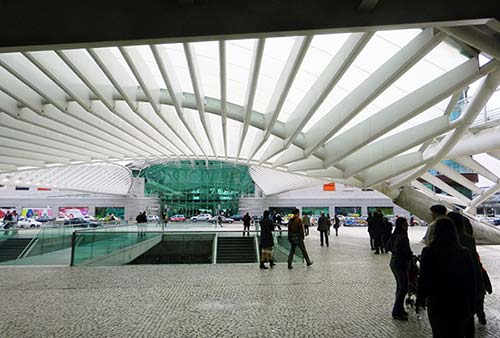
Oriente means “facing east.” This impressive hub ties together trains (to the Algarve and Évora), the Metro, and buses under a swooping concrete roof designed by the Spanish architect Santiago Calatrava.
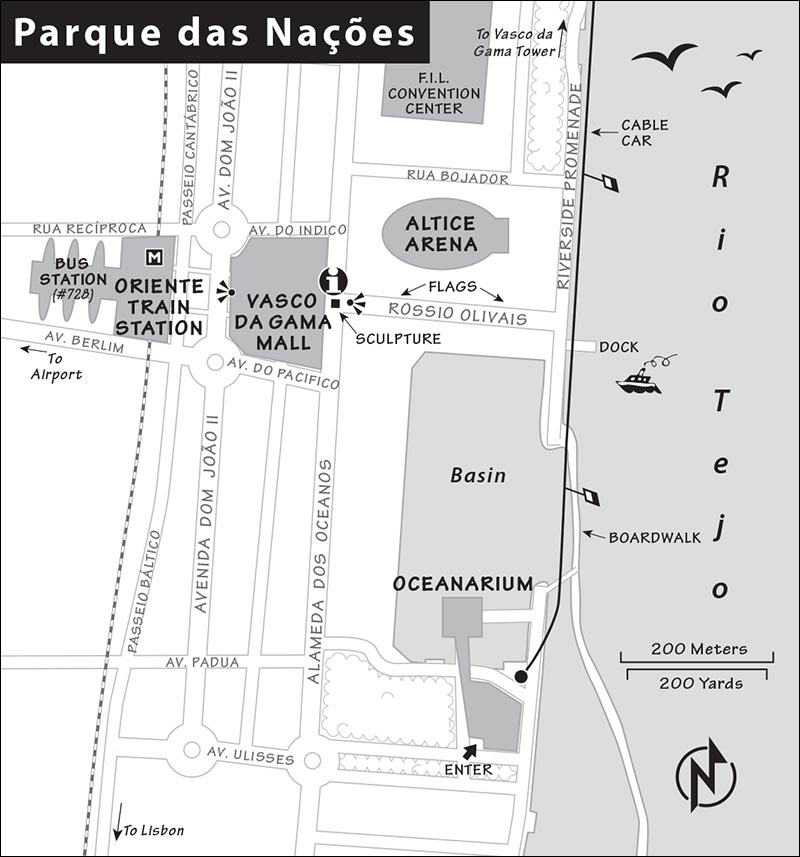
Walk across the street to the Vasco da Gama Mall and look back at Oriente station: It looks like a futuristic sun-bleached fish skeleton. Look left and right and feel the urban energy. Learning from the mistakes of Sevilla’s 1992 Expo, Lisbon made sure that its massive investment and construction for its Expo would plant the seeds for a thriving new neighborhood long after the party was over.
• Now step into the...
Vasco da Gama Mall
The inviting, soaring glass facade of Lisbon’s top shopping mall—originally the grand entrance to Expo ’98—was also designed by Calatrava (daily 10:00-24:00). Inside, its design is reminiscent of a luxury cruise ship’s main hall. Notice the water cascading down the glass roof—a clever and eye-pleasing way to keep things cool and avoid any greenhouse effect. From the mall’s entrance, climb the stairs to a small outdoor terrace for another good view of the train station. Look up at the two skyscraping luxury condo buildings. With fine transportation connections and modern office space, this area holds lots of promise, both for residences and businesses. Microsoft set up its Portuguese headquarters in this area, cell phone giant Vodafone has one of the coolest buildings here, and the Portuguese national court occupies contemporary buildings nearby.
Now stroll through the upper level of the mall to the opposite end, where (just past a big food court) you can step out to another outdoor terrace. From here you can look toward the river and survey Parque das Nações—the grounds for Expo ’98. Straight ahead are the flags lining the Grand Esplanade (described next). The striped oval dome to the left, once the Atlantic Pavilion, is now a privately funded 18,000-seat concert hall (Altice Arena). The oil refinery tower far to the right marks the west end of the park and is a remnant of the industrial wasteland that was here before the fair.
• Exiting the mall at the far end from the train station, you’ll be smack-dab in the middle of...
▲▲Parque das Nações
From the Vasco da Gama Mall, you’re at the top of the Grand Esplanade (Rossio dos Olivais), lined by 155 flags—one for each country represented at Expo ’98. The flags are arranged in alphabetical order, so the first ones are South Africa (Africa dul Sul), Albania, and Germany (Alemanha). In the middle you’ll find the US (Estados Unidos), Spain (Espanha), and Estonia side by side.
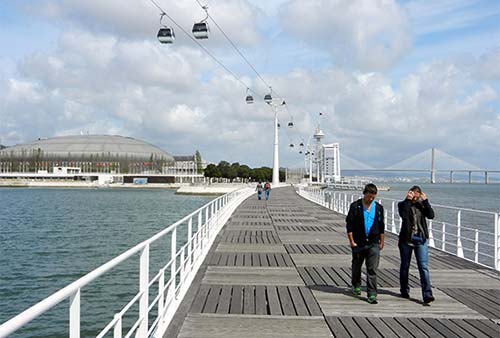
At the far end of the line of flags you’ll reach a basin (on your right) that predates the fair. Back before World War II, this was a watery “parking lot” (just 1.5 yards deep) for seaplanes. Across the basin to your right, the blocky building that resembles an aircraft carrier with a spiky rooftop is the Lisbon Oceanarium (described next)—the big hit of the fair and still the park’s major attraction. From behind that the cable car (€7 one-way, €9 round-trip, nothing special, generally 11:00-19:00, shorter hours in winter) drifts east to the modern Vasco da Gama Tower skyscraper, which marks that end of the park. Two miles away, built as part of the 1998 celebrations, is the Vasco da Gama Bridge. A delightful promenade (Caminho dos Pinheiros; “The Way of the Pine Trees”) runs along the riverfront from the marina all the way to a park at the base of the Vasco da Gama Bridge.
Lisbon Oceanarium (Oceanário de Lisboa)
Europe’s largest aquarium—housed in what looks like a drilling platform or a big, modern ship at sea—simulates four oceanic underwater and shoreline environments, from the Atlantic to the Pacific to the Indian to the Arctic. You’ll circle around the upper level, seeing surface dwellers from each climate (such as otters, puffins, penguins, and other sea birds). Then you’ll head downstairs and do another loop, this time seeing underwater creatures. The centerpiece—which you’ll keep circling back to—is an enormous and mesmerizing central tank crammed full of fascinating fish big and small, including several sharks. Weekday-morning school groups are also happily on display.
Cost and Hours: €19, €13 for kids 3-12; €38.50 combo-ticket with 48-hour Gray Line hop-on, hop-off bus; daily 10:00-20:00, Nov-March until 19:00, last entry one hour before closing, +351 218 917 000, www.oceanario.pt.
Vasco da Gama Bridge (Ponte Vasco da Gama)
Europe’s longest bridge (10.7 miles) was opened in 1998 to connect the Expo ’98 grounds with the south side of the Rio Tejo, and to alleviate the traffic jams on Lisbon’s only other bridge over the river, the 25th of April Bridge. The Vasco da Gama Bridge helped connect north and south Portugal, back when a freeway was a big deal in this late-to-develop European nation. The bridge is built low to the water, and its towers and cables are meant to suggest the sails of a caravel ship.
EAST LISBON
▲National Tile Museum (Museu Nacional do Azulejo)
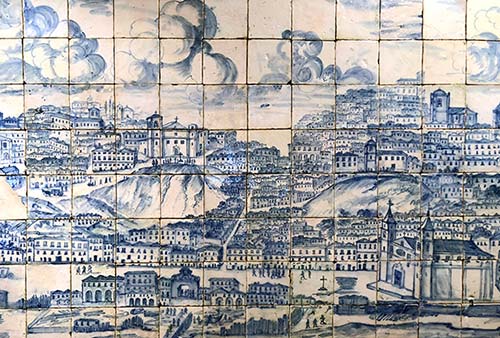
Filling the former Convento da Madre de Deus, the museum features piles of tiles (azulejos), which, as you’ve probably noticed, are an art form in Portugal. The collection occupies a stunning, tile-covered convent that received donations from buildings all over Portugal after the dissolution of religious orders in 1834. They’ve showcased the tiles as they would have originally appeared (note the diamond-shaped staircase tiles) and arranged the visit in chronological order. The presentation is low-tech to keep the focus on the beauty and diversity of this traditional handicraft. For aficionados, this is a handy one-stop survey. And the circa-1700 tile panorama of Lisbon (upstairs) is fascinating, letting you pick out landmarks that were toppled in the 1755 quake. Don’t miss the cafeteria, covered in rescued tiles from a former smokehouse, appropriately painted with food-related themes.
Cost and Hours: €5; Tue-Sun 10:00-13:00 & 14:00-18:00, closed Mon; located about a mile east of Praça do Comércio—15 minutes on bus #794 from Praça do Comércio or bus #742 from near the Gulbenkian Museum (bus leaves around the corner from São Sebastião Metro station—along Rua Marquês de Fronteira), both buses stop right at museum entrance on Rua da Madre de Deus 4, +351 218 100 340, www.patrimoniocultural.gov.pt.
SOUTH OF LISBON, ACROSS THE RIVER
Ferry Ride and Visit to Cacilhas
For an interesting and easy excursion to the small port town of Cacilhas (and a destination fish restaurant), catch the ferry from Lisbon for a 15-minute ride. The well-worn, graffiti-caked utility vessel is completely enclosed, serving thousands of daily commuters.
Getting There: The ferry leaves from the Cais do Sodré terminal (€1.30 each way, covered by public transit tickets/cards; at the ferry terminal, follow signs to Cacilhas, not Montijo; 3-4/hour, more during rush hours, less in evening, www.ttsl.pt). Plan on hitting or missing the rush-hour scene, depending on your taste. Upon arrival in Cacilhas, note when the next ferries return so you can plan your time smartly.
Visiting Cacilhas: The town’s main street, Rua Candido dos Reis, is pedestrianized and charming, with lots of cute shops and eateries. The only “sight” in Cacilhas is the historic Frigate Don Fernando II and Gloria (Fragata Dom Fernando II e Glória), permanently moored at the dock. This was the last Portuguese ship to make the “Indian Run,” which for three centuries connected Portugal with its colony in Goa. Launched in 1843 (and making its maiden voyage in 1845), in 33 years it sailed—defended by its 44 cannons—over 100,000 miles (the equivalent of five times around the world). It made its last trip in 1878, accidentally burned in 1963, and was rebuilt in 1997. Explore three decks for a taste of life on a 19th-century frigate. There’s a guides’ school nearby and you may find students standing by to give free tours as part of their training. The submarine drydocked adjacent was one of the Portugal navy’s last subs (€4, Tue-Sun 10:00-18:00, Oct-April until 17:00, closed Mon year-round; buy booklet for English description, https://ccm.marinha.pt [URL inactive]).
Eating in Cacilhas: $$$ Restaurante Farol is the best restaurant for eating fish—which is the reason most come to Cacilhas. The dining hall (no outside seating) is bright and airy with big view windows, an open kitchen, and an entire wall devoted to a blue-tile depiction of the spot and view in 1870 when this place opened (daily 12:00-23:00, 30 steps from the ferry terminal, on the right facing the river at Largo Alfredo Dinis 1, +351 212 765 248).
During visits to neighboring Spain, King Manuel I not only acquired wives, but he also obtained several thousand tiles to decorate palaces throughout Portugal. Vibrant colors must have attracted the king’s attention, and some examples from his visits can still be seen in the National Palace in Sintra. It wasn’t long before Portuguese artists began producing them for local clients, and the tiles—called azulejos (ah-zoo-LAY-zhoosh, from an Arab word meaning “small polished stone”)—became synonymous with the seafaring empire.
The biggest challenge for early artisans was keeping colors from running together during firing. A number of techniques developed to solve this problem: Alicatados are mosaic pieces, cut after firing, to form intricate geometric patterns; corda seca fills thick outlines of manganese oxide with different colors, like a children’s coloring book; and aresta sculpts color wells directly into the tile. The biggest breakthrough came with the development of majólica, or faiança—the undecorated clay tile is baked first, then covered with an opaque glaze that makes a canvas for the painted design, which is set by a second firing.
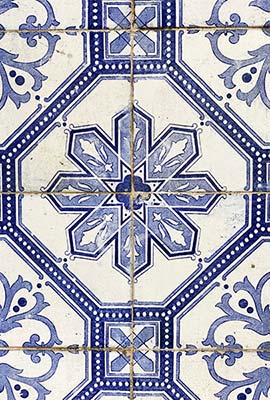
Brazilians loved tilework, too, and after the return of the Portuguese king to European shores, factories began producing tilework for the masses. But tilework began to fall out of fashion by the early 20th century. Then Lisbon’s 1959 Metro system gave tile artists a new playground. While tile was not originally in the budget, artist Maria Keil could not bear to see the walls vacant. Her original designs are still on display, and new artists continue to make the Metro an underground art museum.
Unfortunately, others have noticed the beauty (and profitability) of historic tilework panels. Theft is common—often for resale on the black market—and many of Lisbon’s older panels are at risk. In the past decade, local watch groups have documented several hundred cases of missing panels and helped recover several of them. And the law is changing to help preserve Portugal’s most visible art form; historic tiles can now only be legally purchased via antique dealers. Please don’t purchase tilework at the Feira da Ladra flea market.
To go on your own azulejo scavenger hunt, check out Endless Mile’s tile guide to Lisbon that lists nearly 100 of the city’s best tile panels (www.endlessmile.com).
▲25th of April Bridge (Ponte 25 de Abril)
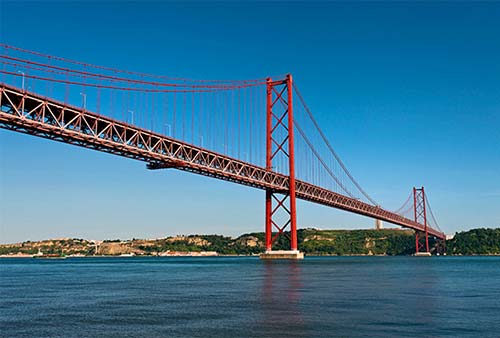
Imagine that before 1966, there was no way across the Rio Tejo except by ferry. This suspension bridge—1.5 miles long (3,280 feet between the towers)—bears an uncanny resemblance to San Francisco’s Golden Gate Bridge (it was built in 1966 by the same company that made its famous cousin—but notice the lower deck for train tracks). The foundations are sunk 260 feet below the surface into the riverbed, making it the world’s deepest bridge. Originally named for the dictator Salazar, the bridge was renamed for the date of Portugal’s 1974 revolution and liberation. For a generation, natives would show their political colors by choosing which name to use. While conservative Portuguese called it the “Salazar Bridge,” liberals referred to it as the “25th of April Bridge” (just as Washington, DC’s airport is still called “National” by some and “Reagan” by others).
Cristo Rei Statue (Christ the King)
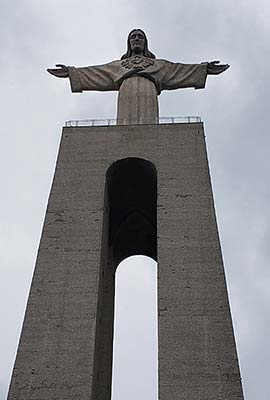
A huge, 330-foot concrete statue of Christ (à la Rio de Janeiro, in the former Portuguese colony of Brazil) overlooks Lisbon from across the Rio Tejo, stretching its arms wide to symbolically bless the city (or, as less reverent Portuguese say, “to dive into the river”). Lisbon’s cardinal, inspired by a visit to Rio de Janeiro in 1936, wanted a replica built back home. Increased support came after an appeal was made to Our Lady of Fátima in 1940 to keep Portugal out of World War II. Portugal survived the war relatively unscathed, and funds were collected to build this statue in appreciation. After 10 years of construction, it opened to the public in 1959. It’s now a sanctuary and pilgrimage site, and the chapel inside holds regular Sunday Mass. The statue was designed to be seen from a distance, and there’s little reason to go to the trouble of actually visiting it. If you do visit, an elevator will take you to the top for a panoramic view: From left to right, see Belém, the 25th of April Bridge, downtown Lisbon (Praça do Comércio and the green Alfama hilltop with the castle), and the long Vasco da Gama Bridge.
Cost and Hours: €5, daily 10:00-19:00, +351 212 751 000, www.cristorei.pt.
Getting There: To get to Cristo Rei, catch the ferry from downtown Lisbon to Cacilhas (described earlier in this section, under “Ferry Ride and Visit to Cacilhas”), then hop on the bus marked 101 Cristo Rei (3/hour, exit ferry dock left into the maze of bus stops to find the #20 stop with the “101 Cristo Rei” schedule under the awning, 15-minute ride). Because of bridge tolls to enter Lisbon, taxis from the site are expensive. For drivers, the most efficient visit is a quick stop on your way to or from Évora or the Algarve.
WEST OF LISBON, ON THE COAST
Cascais
The seafront resort town of Cascais (kahsh-KAYSH), about 17 miles due west of Lisbon, provides a fun and quick escape from the big city of Lisbon. Before the rise of the Algarve, Cascais was the haunt of Portugal’s rich and beautiful. Today it’s an elegant and inviting escape from the city with pleasant beaches and a relaxing ambience.
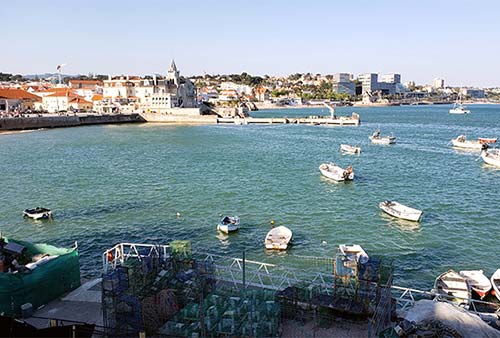
Before the 20th century, aristocrats wanted to avoid the sun and exaggerate their lily-white skin—and a day at the beach made just no sense. But about 1900, the Portuguese queen Maria Pia (daughter of King Victor Emmanuel II of Italy) made Cascais her summer vacation getaway—and Portugal’s high society followed. A train line made Cascais easily accessible from the city, and between the world wars, the area was developed as a kind of Portuguese answer to the French Riviera.
Getting There: Just hop the train at Lisbon’s Cais do Sodré station (M: Cais do Sodré) and you’re in Cascais in 40 minutes or less (3/hour, www.cp.pt).
Visiting Cascais: The Cascais station (the last stop on the Cais do Sodré line) faces the town center. From there, the main cobbled street, Rua Frederico Arouca, parallels the waterfront past shops and eateries to Largo Cidade Vitória, where you’ll find a helpful TI kiosk (daily 10:00-19:00).
Cascais still has a fishing industry. Adjacent to the TI, you’ll find the Serviços de Pescado, a wholesale fish market where most days at 17:00 visitors can witness the quick fish auction as local retailers snap up the day’s catch. Just beyond is the main beach and a palm-lined promenade leading to an old fort. Deeper into town are several little museums; the Museu do Maris is best for the story of the town and its relationship with the sea (free; Tue-Sun 10:00-17:00, closes Sat-Sun 13:00-14:00 for lunch, closed Mon; about 10 minutes from the center at Rua Júlio Pereira de Mello, museumar.cascais.pt). Walk out for dramatic views at Boca do Inferno (a unique rock formation) to see what fishermen have to deal with.
Returning to Lisbon via Estoril: A paved seaside promenade leads from Cascais past several beaches to Estoril, its sister beach resort town (a half-hour stroll away). Of the several small sandy beaches, Praia da Conceição and Praia das Moitas conveniently have showers. If you have time and like seaside strolls, I’d recommend walking this strip and catching the train back to Lisbon from Estoril (all trains stop at both Estoril and Cascais).
Estoril is famous for its casino and many grand hotels. From the Lisbon-Cascais train you can look past the Estoril station and across the park at the modern casino. Ian Fleming hatched his first 007 story here in the early days of World War II, when Portugal was neutral and this area was a hotbed of spies. The Estoril casino where Fleming gambled must have been part of the inspiration for his first James Bond novel, Casino Royale. But Cascais rather than Estoril is clearly the most rewarding stop for today’s traveler.
Shopping in Lisbon
Lisbon is a marvelous shopping city: creative, with a trendy vibe but also respectful of tradition—and it’s affordable. My suggestions below focus on one-off shops that specialize in unique slices of Lisbon life. I’ve also included a few big malls for handy one-stop shopping.
WHAT TO BUY
The shops mentioned here are scattered around central Lisbon, but most are concentrated in the hip and artsy Chiado district.
Cork
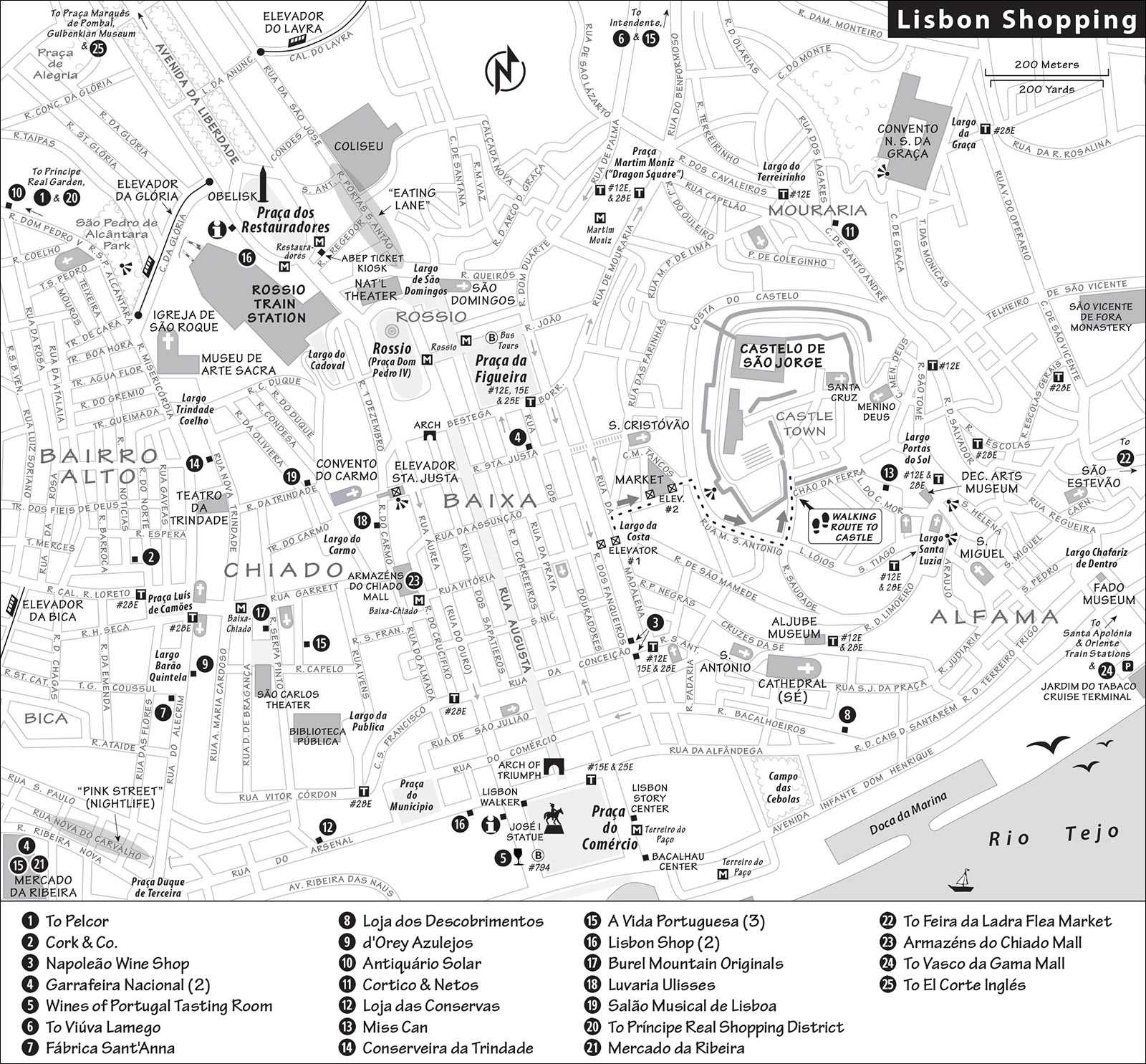
Portugal is famous for its cork, a versatile material that can be put to hundreds of uses (see sidebar on here). Shops all over town show off practical and eye-pleasing items made of cork, from handbags to wallets to umbrellas and even gift wrap. For fashionable, top-end products, head up to the flagship store of the internationally respected Pelcor, in the Príncipe Real shopping zone (Pátio do Tijolo 4, just off Rua Dom Pedro V, www.pelcor.pt). In the Bairro Alto, Cork & Co is a more affordable boutique with a wider array of products—including jewelry (closed Sun mornings, Rua das Salgadeiras 6, www.corkandcompany.pt).
Wine
If you’re in the market to buy fine bottles of wine to enjoy in Portugal or to ship home, consider these two options. While touristy—and with somewhat inflated prices—both have helpful staff who can talk you through your options and arrange shipping. (They may suggest that you make your selection in the shop, then place your order on their website.) Napoleão Wine Shop has free samples of three unique Portuguese options: port, vinho verde, and ginjinha (daily, main branch at Rua da Conceição 16 specializes in Portuguese wines, second branch across the street at Rua dos Fanqueiros 70 also has international booze; www.napoleao.eu). Garrafeira Nacional has a similar set-up in the Baixa (closed Sun, Rua de Santa Justa 18) and a user-friendly location open daily inside Mercado da Ribeira (www.garrafeiranacional.com).
Another place is Wines of Portugal Tasting Room, which sells regional favorites at affordable prices (many also available for tasting, Praça do Comércio; see details on here).
Azulejos (Colored Tiles)
Portugal’s iconic colored tiles make vivid souvenirs—for use as trivets, wall hangings, or even (for the ambitious) a backsplash renovation project. It’s easy to find affordable, basic, painted replicas of classic azulejo designs—many souvenir shops stock a small selection. For better-quality replica azulejos, try Viúva Lamego (closed Sat-Sun, Largo do Intendente 25), Fábrica Sant’Anna (closed Sun, in Chiado at Rua do Alecrim 95), or the more tourist-oriented Loja dos Descobrimentos (daily, below the cathedral at Rua dos Bacalhoeiros 12). If you’re shopping for authentic antique tiles, try d’Orey Azulejos (closed Sun, in Chiado at Rua do Alecrim 64) or the cramped Antiquário Solar (closed Sat afternoon and all day Sun, in the Bairro Alto at Rua Dom Pedro V 70). Discontinued mid-20th-century industrial tiles (think solid colors but in bold relief) can be found at Cortiço & Netos (closed Sun, between Mouraria and the castle at Calçado de Santo André 66).
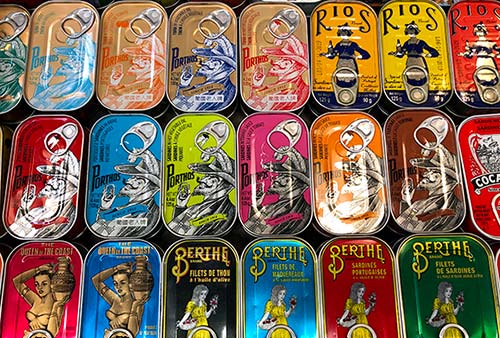
Conservas (Canned Fish)
Canned fish (collectively called conservas) is a Portuguese staple. Far from the harsh, cured-in-salt sardines you might think of back home, this is quality fish in olive oil (sardines, cod, mackerel, and tuna are most common), often mixed with herbs, spices, or infused oils to impart extra flavor. Best of all, colorful packaging turns the cans into great souvenirs or gifts and makes window-shopping a delight. The best conservas place in town—near Mercado da Ribeira—is Loja das Conservas, with shelves upon shelves of attractively decorated cans from all over Portugal. This shop is operated by a local consortium and prides itself on educating its customers (daily, Rua do Arsenal 130). In the upper part of the Alfama, just below the castle, Miss Can sells a small selection of their own production, with clever packaging and a little café where you can enjoy a light meal (see “Eating in Lisbon,” later; daily, Largo do Contador Mor 17). And in Chiado, you’ll find the upscale Conserveira da Trindade, with a carefully curated selection and the option to nibble right there (daily, Rua Nova da Trindade 11).
Other Quality Portuguese Souvenirs
A Vida Portuguesa is the best shop in town for a well-chosen selection of high-quality, artisanal Portuguese products—everything from stationery and toiletries to housewares and decorative objects to toys and jewelry (daily, Rua Anchieta 11, www.avidaportuguesa.com). They have two other locations: a bigger flagship store on the Intendente plaza (daily, Largo do Intendente 23), and a smaller location inside the Mercado do Ribeira.
If you’re in a pinch for souvenirs, local TIs have a small but nicely stocked “Lisbon Shop” with some basic items emblazoned with Lisbon’s trademarks—sardines, fado, or trolleys—as well as fado CDs, at prices typically better than elsewhere in the Baixa (daily, main branch around the corner from Praça do Comércio TI at Rua do Arsenal 13, smaller selection at the TI on Praça das Restauradores).
Woolens: The delightful Burel Mountain Originals boutique showcases fashionable items made from the heavy Portuguese wool called burel. This company took over an abandoned wool factory high in the mountains of northern Portugal and brought back skilled but out-of-work old-timers to revive a dormant industry. Today the factory churns out high-quality blankets, handbags, coats, shoes, and other products with a mix of traditional and contemporary style (daily, Rua Serpa Pinto 15B, www.burelfactory.com).
Leather Gloves: The Lisbon institution Luvaria Ulisses sells top-quality leather gloves (luvas) one pair at a time, with individual attention to help you find just the right style and fit. The shop is nestled into a tiny storefront just a few steps off Rossio. You squeeze into the shop, then the clerks squeeze your hands into the gloves: they’ll nest your elbow on a dainty little pillow, squirt a puff of talcum powder into the glove, then massage your fingers in, one at a time (after a visit here, you’ll better appreciate the expression “fits like a glove”). While popular with tourists from faraway lands (expect to wait at busy times), they’re still cranking out quality gloves at decent prices (many pairs around €50-60, closed Sun, Rua do Carmo 87, www.luvariaulisses.com).
Musical Instruments: If you’re captivated by fado and want to check out a Portuguese guitar, Salão Musical de Lisboa has a fine selection and a handy location, right on Largo do Carmo square (closed Sun, Rua da Oliveira ao Carmo 2, www.salaomusical.com).
WHERE TO SHOP
Consider a shopping spree in one of these areas.
Príncipe Real Shopping District
For cutting-edge fashion and design, and one of Lisbon’s most appealing little green parks, head to the Príncipe Real Garden at the top of Chiado (about a five-minute walk, a speedy bus trip from the top of the Elevador da Glória funicular, or a stop on the #24E trolley route).
The anchor of this area is the Embaixada complex, across the street from the park. Young entrepreneurs have given a grand 19th-century Arabian-style townhouse a modern makeover and filled its two floors with goods from high-end local designers and vendors, attracting hipsters, well-dressed urbanites, and in-the-know tourists. You’ll see fashion, home decor, kidswear, high-end tailors, art galleries, pop-up shops, and much more. Climb the grand old staircase, on scuffed tiles and under peeling plaster ceilings, to feel the artful “ramshackle chic” vibe. In the atrium, the Less café has affordable light meals and a gin bar; there’s also a little garden café out back (daily 12:00-20:00, Praça do Príncipe Real 26).
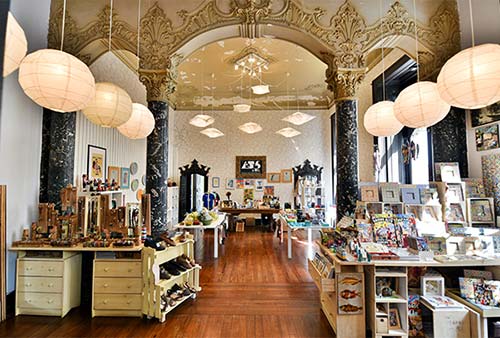
Just a few doors down (walking with the park on your left), at the smaller but similarly chic REAL “Slow Retail” Concept Store, creative local vendors display their wares in a clean, cool, industrial-mod space. You’ll see stacks of coffee-table books, creative housewares, summer dresses, burlap backpacks, colorful shoes and sandals, hipster toddler garb, and horn-rimmed sunglasses (daily 10:30-20:00, Praça do Príncipe Real 20).
A bit farther down are more fun shops, including Corallo, where Bettina and Niccolò make their own chocolates and roast their own coffee (closed Sun, Rua da Escola Politécnica 4), and the old-school Príncipe Real Enxovais, specializing in top-quality linens for the home (closed Sun, Rua da Escola Politécnica 12). And in the opposite direction, a block up Rua Dom Pedro V back toward the heart of Chiado, is the Pelcor cork products flagship store (described earlier).
This is also a great part of town to get a bite; for details, see the Chiado listings in “Eating in Lisbon,” later.
Markets
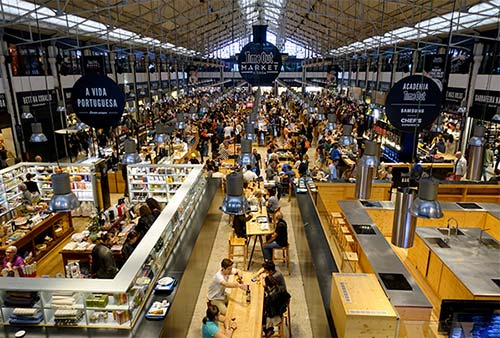
Mercado da Ribeira (a.k.a. Time Out Market) is a renovated market hall offering Lisbon’s best one-stop shopping for culinary souvenirs (it’s described in detail on here). In addition to bottles of wine, chocolates, canned fish, and other edible goodies, it has an outpost of Lisbon’s best souvenir shop, A Vida Portuguesa. And, of course, it’s also great for a meal. Most restaurant stalls are open daily from 12:00 to 24:00. On Sunday mornings, a coin market jingles here. Note that the Loja das Conservas canned-fish shop is just down the street (described earlier).
On Tuesdays and Saturdays, the Feira da Ladra flea market attracts bargain hunters to Campo de Santa Clara in the Alfama (8:00-15:00, best in morning).
Shopping Malls and Department Stores
Lisbon has several malls and huge department stores (all open long hours daily). Most central is Armazéns do Chiado, with six modern floors—and handy elevators connecting the Baixa and Chiado (food court on the sixth floor, www.armazensdochiado.com). North of downtown, Vasco da Gama Mall fills the grand entryway to the Expo ’98 site at the Oriente train/Metro station (described on here). And the Spanish megadepartment store, El Corte Inglés, has a huge branch at the top of Edward VII Park (near Gulbenkian Museum at Avenida António Augusto de Aguiar 31, M: São Sebastião).
Entertainment in Lisbon
NIGHTLIFE
The Baixa is quiet at night, with touristy al fresco restaurants and not much else. Head instead up to the Bairro Alto for fado halls, bars, and the Miradouro de São Pedro de Alcântara (view terrace), a pleasant place to hang out. Nearby Rua Diario de Noticias is lined with busy bars and fun crowds spilling onto the street.
Rua Nova do Carvalho (a.k.a. Pink Street)
This happening, crazy street is a short walk downhill from Chiado in the Cais do Sodré neighborhood (just behind Mercado da Ribeira). Rua Nova do Carvalho, otherwise known as “Pink Street,” was once notorious as the sailors’ red-light zone. Now the prostitutes are just painted onto the walls, and the made-over street is painted a bright pink. After the bars in other neighborhoods close, late-night revelers hike 10 minutes from Chiado down Rua do Alecrim to reach Pink Street. Surrounded by largely uninhabited Pombaline buildings, Pink Street’s four bars are allowed to make noise—and they do—until very late into the night. Many of the nightspots here are rowdy, youthful dance halls with names like Tokyo, Musicbox, Viking, and Sabotage Rock Club, with a few striptease clubs mixed in. But the following places—lively earlier and accessible to a wider clientele—are my Pink Street picks.
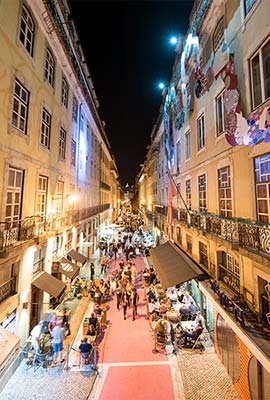
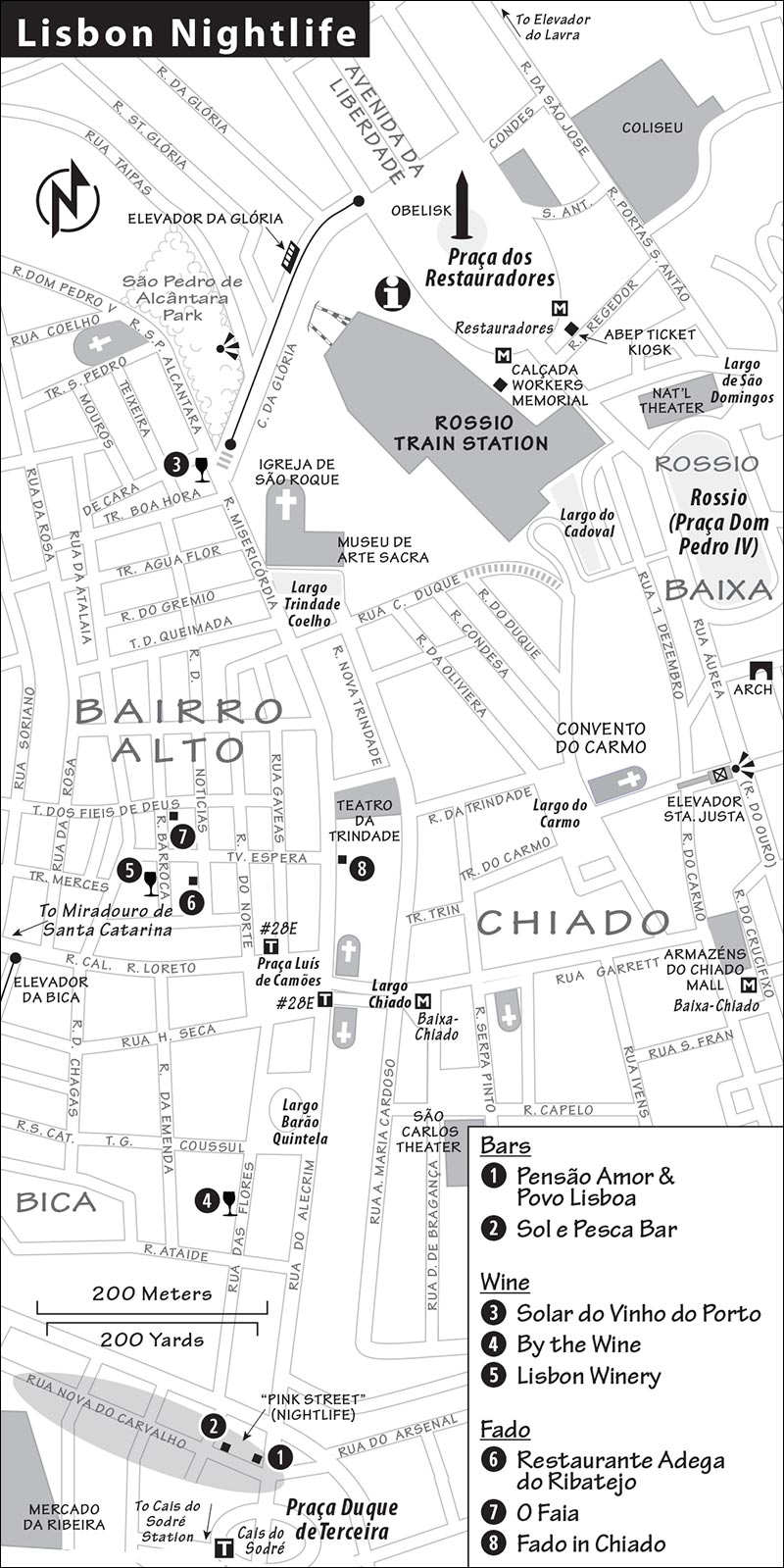
Pensão Amor (“House of Love”) is a velvety place for a cocktail. Wallpapered with sexy memories of the not-long-ago days when it was a brothel, it’s a grungy tangle of corners to hang out in and enjoy a drink (or just stare at the graffiti), often against a backdrop of live jazz. It even has a sexy library if you feel like reading (no food, Rua Nova do Carvalho 38, also possible to enter from along the bridge at Rua do Alecrim 19, +351 213 143 399).
Sol e Pesca Bar, a nostalgic reminder of the sailor-and-fisherman heritage of this street, sells drinks and preserved food in tins. Just browse the shelves of classic tinned seafood—from pâté and sardines to caviar—and wash down your salty seafood tapas with a glass of wine amid the lures and nets (Rua Nova do Carvalho 44, +351 213 467 203).
Povo Lisboa is a trendy little bar serving delightful Portuguese tapas (from 18:00) and enlivening things with fado (Tue-Sun 20:30-23:00, closed Mon, no cover—just buy a drink, light food, Rua Nova do Carvalho 32, +351 213 473 403).
LX Factory
LX Factory is a typical riverside industrial zone gone hippie-chic. Passing through the factory gate (under the 25th of April Bridge), you’ll find a youthful crowd sorting through a collection of restaurants, clubs, shops, and galleries. LX Factory is lively each night and all day on weekends (www.lxfactory.com).
Port Wine Tastings
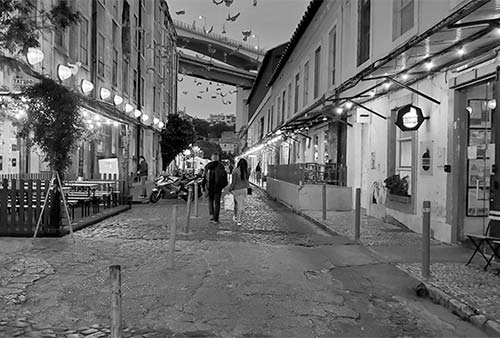
Solar do Vinho do Porto, run by the Port Wine Institute, has a good, tailored selection of port—the famous fortified wine that takes its name from the city of Porto. If you’re not headed to Porto, make a quick stop here to sample what all the hype is about. Wines are kept cool around a circular dispensing station. Take a look at the varieties and the price per pour, then purchase a chip card loaded with a value you determine (around €10 for 2-3 high-quality tastes; €2 refundable deposit for the card). You can always add money to the card if you’d like to try more samples. Seating and snacks are not available—consider this a good sip-and-run opportunity (Mon-Fri 11:00-19:00, closed Sat-Sun, across from top of Elevador da Glória funicular at Rua São Pedro de Alcântara 45). For more on port, see here.
Evening Stroll
In the summer, you’ll find lots of people out strolling. Here are four good places to join them: Rua Augusta through the heart of the Baixa district; along the seaside promenade near Belém Tower; along the fine riverfront promenade at Parque das Nações; and the river walk at Ribeira das Naus (from the water at Praça do Comércio to Cais do Sodré).
FADO MUSIC
Fado is the ▲▲ folk music of Lisbon’s back streets. Since the mid-1800s, it’s been the Lisbon blues—mournfully beautiful and haunting ballads about lost sailors, broken hearts, and bittersweet romance. While generally sad, fado can also be jaunty—in a nostalgic way—and captivating. An aging widow in a mourning shawl singing passionate fado can be as sexy as any performer.
While authentically traditional, most Lisbon fado bars cater to tourists these days. Don’t expect to find a truly “local” scene. Even the seemingly homemade “fado tonight” (fado esta noite) signs are mostly for tourist shows. Still, if you choose well—and can find a convivial restaurant with relatively reasonable prices and fewer tour groups—it’s a very memorable evening. (And be wary of your hotel’s recommendations, which are often skewed by hefty kickbacks.)
The two main areas for fado in Lisbon are on either side of the Baixa: the Bairro Alto and the Alfama. Later, I’ve listed options in each neighborhood. To avoid disappointment, it’s smart to reserve ahead.
Fado songs reflect Portugal’s bittersweet relationship with the sea. Fado means “fate”—how fate deals with Portugal’s adventurers...and the women they leave behind. These are songs of both sadness and hope, a bittersweet emotion called saudade (meaning yearning or nostalgia). The lyrics reflect the pining for a loved one across the water, hopes for a future reunion, remembrances of a rosy past or dreams of a better future, and the yearning for what might have been if fate had not intervened. (Fado can also be bright and happy when the song is about the virtues of cities such as Lisbon or Coimbra, or of the warmth of a typical casa portuguesa.)
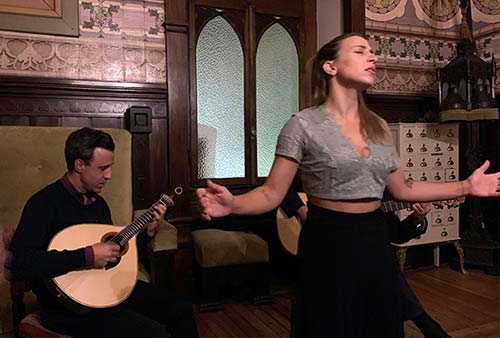
The songs are often in a minor key. The singer (fadista) is accompanied by a 12-string Portuguese guitarra (with a round body like a mandolin) or other stringed instruments unique to Portugal. Many singers crescendo into the first word of the verse, like a moan emerging from deep inside. Though the songs are often sad, the singers rarely overact—they plant themselves firmly and sing stoically in the face of fate.
A verse from a typical fado song goes:
O waves of the salty sea,
where do you get your salt?
From the tears shed by the women in black
on the beaches of Portugal.
Ways to See Fado: Your basic choices are a polished restaurant with a professional-quality staged show; or—my preference—a more rustic place with fado vadio, a kind of open-mic fado evening when suspiciously talented “amateurs” line up at the door of neighborhood dives for their chance to warble. Waiters—hired more for their vocal skills than hospitality—sometimes take a turn entertaining the crowd.
Most people combine fado with a late dinner. The music typically begins between 20:00 and 21:00; arrive a bit earlier to be seated and order. Night owls can have a cheaper dinner elsewhere, then show up for fado when the first round of diners is paying their bills (around 22:30 or 23:00). Both elegant, high-end places and holes-in-the-wall generally let nondiners in late for the cost of an overpriced drink and/or a €10-15 cover charge.
Prices for Fado: Prices for a fado performance vary greatly, but assume you won’t leave any fado experience without spending at least €30 per person—and more like €50-60 per person for the fancier restaurants. Many places have a cover charge, others just expect you to buy a meal, and some enforce a €25-30 per person minimum. Remember, as throughout Portugal, appetizers, bread, or cheese that appear on your table aren’t free—if you don’t want these appetizers, it’s safest to push them aside.
Fado in the Bairro Alto
In the Bairro Alto, wander around Rua Diario de Noticias and neighboring streets.
Restaurante Adega do Ribatejo is a homey and crowded good budget option: Just pay for your meal (main courses around €15) and drinks with no cover or required minimum (daily 17:00-24:00, dinner from 19:00, Rua Diario de Noticias 23, +351 213 468 343). After 22:30, you’re welcome to just buy a drink and enjoy the music.
O Faia is a top-end fado experience, in a classy dining room under heavy, graceful arches. It’s pricey (plan on €60/person for dinner and drinks), but the food and the fado are both professional and top-quality. If you come after dinner (23:00) for just drinks and music, there’s a €25 minimum. Filled with an older, well-dressed, international clientele, it’s a memorable evening (open Mon-Sat for dinner at 20:00, fado begins at 21:30, closed Sun, Rua da Barroca 54, +351 213 426 742, www.ofaia.com).
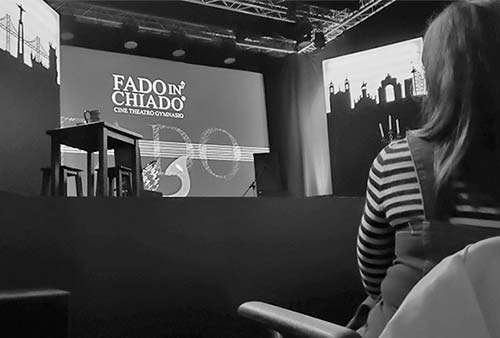
Concert Alternative: Fado in Chiado, a sterile 50-minute performance in a small modern theater, is for tourists who don’t want to stay out late or mess with a restaurant. Sitting with other tourists and without food or drink, you’ll enjoy four musicians: a man and a woman singing, a guitarist, and a man on the Portuguese guitar, which gives fado its balalaika charm (€19.50, daily at 19:00 except Sun, conveniently located at Rua da Misericordia 14, on second floor of in Cine Theatro Gymnasio, +351 961 717 778, www.fadoinchiado.com).
Trendier Alternative: In the hip Rua Nova do Carvalho (a.k.a. Pink Street) nightlife zone, just downhill from the Bairro Alto and Chiado toward the river, Povo Lisboa has fado most nights (see listing earlier, under “Nightlife”).
Fado in the Alfama
While often pretty lonely and dead after dark, the Alfama has several bars offering fado with their meals—just head uphill from the Fado Museum. Some bars are geared for tourists and tour groups, but others feel organic, spontaneous, and part of the neighborhood culture. While schedules at any particular place can be inconsistent, if you hike up Rua São Pedro de Alcântara to the Church of São Miguel, you’ll hear the music wafting out from hole-in-the-wall eateries and be greeted by men hustling business for their fado restaurants. Generally, you simply pay for the meal and enjoy the music as included entertainment. If it’s late and there’s room, you can just buy a drink. For locations, see the “Alfama Restaurants” map, later.
A Baiuca, a tiny fun-loving restaurant, offers my favorite Alfama fado experience. A Baiuca—the name means a very rough tavern—packs people in and serves up spirited fado vadio (open mic for amateurs and waiters) with overpriced, basic food and lots of wine. As the English-speaking manager, Isabel, likes to say, “Fado needs wine.” This intimate place has surround sound—as everyone seems to get into the music (€25 minimum—and be careful with the very pricey appetizers and bottles of wine that can push the bill much higher). If you come very late you can just buy a drink (daily 20:00-24:00, reservations smart, in the heart of the Alfama, just off Rua São Pedro up the hill from Fado Museum at Rua de São Miguel 20, +351 218 867 284). When the door is closed, they’re full, but you can peek at the action through the window around to the left.
Clube de Fado is much classier—one of the best places in town to hear quality fado. While expensive, there’s not a bad seat in the house. Music plays nightly in this formal yet intimate setting. When busy, the musicians switch between two adjacent halls, giving waiters time to serve between sets, and diners get music about half the time (plan on €50/person for dinner with wine, plus €7.50 cover charge; meals from 19:30, dinner reservations required; music 21:30 until after midnight; after 23:00, pay just €10 cover plus cost of a drink; around corner from cathedral at Rua São João da Praça 94, +351 218 852 704, www.clube-de-fado.com).
Casa de Linhares, a block downhill from Clube de Fado, offers similar-quality fado and an even nicer space, with dinner served under the stone vaults of a 16th-century palace (€15 cover for music, plan about €40/person for dinner, music nightly from 20:00, after 22:00 just cover plus drink purchase, Beco dos Armazéns Do Linho 2, +351 218 865 088, www.casadelinhares.com).
Concerts at the Fado Museum: At the base of the Alfama, the Fado Museum hosts occasional live, free concerts that let you focus on the music (check schedule at www.museudofado.pt). Taking in a show here, then having a budget dinner elsewhere, lets you enjoy Alfama fado on the cheap.
BULLFIGHTS, SOCCER, CONCERTS, AND MOVIES
Tickets to bullfights, concerts, and other events are sold at the green ABEP kiosk at the southern end of Praça dos Restauradores (daily 9:00-20:00).
▲Portuguese Bullfight
If you always felt sorry for the bull, this is Touro’s Revenge: In a Portuguese bullfight, the matador is brutalized along with the bull. Lisbon hosts only about a dozen fights a year, but if you’re in town for one, it’s an unforgettable experience.
In Act I, the horseman (cavaleiro) skillfully plants four beribboned barbs in the bull’s back while trying to avoid the leather-padded horns. The horses are the short, stocky Lusitano breed, with excellent balance. In Act II, a colorfully clad eight-man suicide squad (called forcados) enters the ring and lines up single file facing the bull. With testosterone sloshing everywhere, the leader taunts the bull—slapping his knees and yelling, “touro!”—then braces himself for a collision that can be heard all the way up in the cheap seats. As he hangs onto the bull’s head, his buddies pile on, trying to wrestle the bull to a standstill. Finally, one guy hangs on to o touro’s tail and “water-skis” behind him. (In Act III, the ambulância arrives.)

Unlike the Spanish corrida de toros, the bull is not killed in front of the crowd at the Portuguese tourada...but it is killed later. (Some brave bulls with only superficial wounds are spared to fight another day.) Spanish aficionados insist that Portuguese fights are actually crueler, since they humiliate the bull, rather than fight him as a fellow warrior. Animal-rights groups enliven the scene before each fight.
Fights are held at the Campo Pequeno, a spectacular, Moorish-domed brick structure that bears a resemblance to Madrid’s bullring. The ring is small, so there are no bad seats. To sit nearly at ringside, try the cheapest bancada seats, on the generally half-empty and unmonitored main floor. Underneath the ring there’s a shopping mall, and overhead there’s a retractable roof for concerts. It hosts a variety of restaurants inside, including an Argentine steak restaurant. Maybe the beef served was in the ring earlier?
Cost and Hours: Tickets are always available at the door (€30-80); they’re also sold at the ABEP kiosk on Praça dos Restauradores (10 percent surcharge). Fights are generally held from Easter through September, typically on Thursday evenings at 22:00. The bullring is north of the Baixa in the Campo Pequeno district (M: Campo Pequeno, +351 217 932 143, www.campopequeno.com).
Important Note: Half the fights are simply Spanish-type corridas without the killing. For the real slam-bam Portuguese-style fight, confirm that there will be grupo de forcados (“bull grabbers”).
Soccer
Lisbon is home to two major league futebol teams, Benfica and Sporting CP, which means there are lots of games (1-2/week Aug-May, tickets €20 and up) and lots of team spirit. Benfica, with the red jerseys, plays at the 65,400-seat Stadium of Light, north of the city center (Estádio da Luz; M: Colégio Militar/Luz, www.slbenfica.pt). Sporting CP, with the green-and-white jerseys, plays at the 50,000-seat Estádio José Alvalade, which is also north of Lisbon’s center (M: Campo Grande, www.sporting.pt). Tickets are generally available at the stadiums or at the ABEP kiosk on Praça dos Restauradores.
Concerts
The Gulbenkian Museum runs a classical concert season with about 180 events a year (www.gulbenkian.pt/musica). You can hear classical music by national and city orchestras at the cultural center in Belém (www.ccb.pt). Traditional Portuguese theater plays in the National Theater on Rossio, the fancy Teatro Nacional de São Carlos in Chiado, and in theaters along Rua das Portas de Santo Antão (the “eating lane”—described later, under “Eating in Lisbon”) stretching north from Rossio. For popular music, these days you’re more likely to find rock, jazz, Brazilian, and African music than traditional fado (which is more for tourists). The monthly Agenda Cultural provides the most up-to-date listing of world music, arts, and entertainment (free at TI, online at www.agendalx.pt).
Movies
In Lisbon, unlike in Spain, films are shown in the original language with subtitles. (That’s one reason the Portuguese speak better English than the Spanish.) Many of Lisbon’s theaters are classy, complete with assigned seats, ushers, and intermissions. Check the newspaper or online to see what’s playing. Modern options are in malls like Vasco da Gama (M: Oriente), El Corte Inglés (M: São Sebastião), and at the Monumental complex in the ritzy Saldanha neighborhood (M: Saldanha).
Sleeping in Lisbon
Lisbon has a wide variety of accommodations. I’ve focused on a few categories: chic, international-style hotels offering a comfortable refuge at a high price; cheap, dingy, but affordable and safe old guesthouses (often up creaky old staircases in grimy buildings); boutique hotels offering a compromise between cost and comfort; and some famously classy hostels, which welcome travelers of all ages. For some travelers, short-term, Airbnb-type rentals can be a good alternative; search for places in my recommended hotel neighborhoods.
Lisbon has become increasingly popular, and rates have increased accordingly—especially on weekends (Thu-Sun), when many Brits and other Europeans fly in for brief urban vacations. Conventions can clog Lisbon at any time, and the busiest time is during the Festas de Lisboa (mainly the last three weeks of June), when parades, street parties, concerts, and fireworks draw crowds to the city.
I rank accommodations from $ budget to $$$$ splurge. To get the best deal, contact my family-run accommodations directly by phone or email. When you book direct, the owner avoids a commission and may be able to offer you a discount. Book well in advance for peak season or if your trip coincides with a major holiday or festival (see the appendix). For more information on reservations, short-term rentals, and more, see the “Sleeping” section in the Practicalities chapter.
THE BAIXA
Central as can be, the grid-planned, easy-to-navigate Baixa district bustles with shops, traffic, tourists, commuters, street musicians, pedestrian areas, and urban intensity. It’s close to Rossio station, and it’s handy to all of your sightseeing—wedged between the Alfama and the Bairro Alto/Chiado, with vintage trolleys zipping through every few minutes. Many formerly abandoned buildings have been given new life as hotels, turning the Baixa into the most touristy part of the city.
Upscale Hotels
$$$$ Internacional Design Hotel has 55 small, chic rooms centrally located at the southeast corner of Rossio. Each of its four floors has a different theme—pop, Zen, tribal, and urban. Having breakfast in their expansive restaurant overlooking Rossio is a fine way to start the day (air-con, elevator, underground pay parking nearby, Rua da Betesga 3, +351 213 240 990, www.idesignhotel.com, book@idesignhotel.com).
$$$$ Hotel Avenida Palace, the most characteristic five-star splurge in town, was built with Rossio station in 1892 to greet big-shot travelers. Back then, trains were new, and Rossio was the only station in town. The lounges are sumptuous, dripping with chandeliers, and the 82 rooms—while a bit faded—still mix elegance with modern comforts. It has a second-floor breakfast room with fancy avenue views (air-con, elevator, free parking, hotel’s sign is on Praça dos Restauradores but entrance is at Rua 1 de Dezembro 123—down a small alleyway next to Starbucks, +351 213 218 100, www.hotelavenidapalace.pt, reservas@hotelavenidapalace.pt).
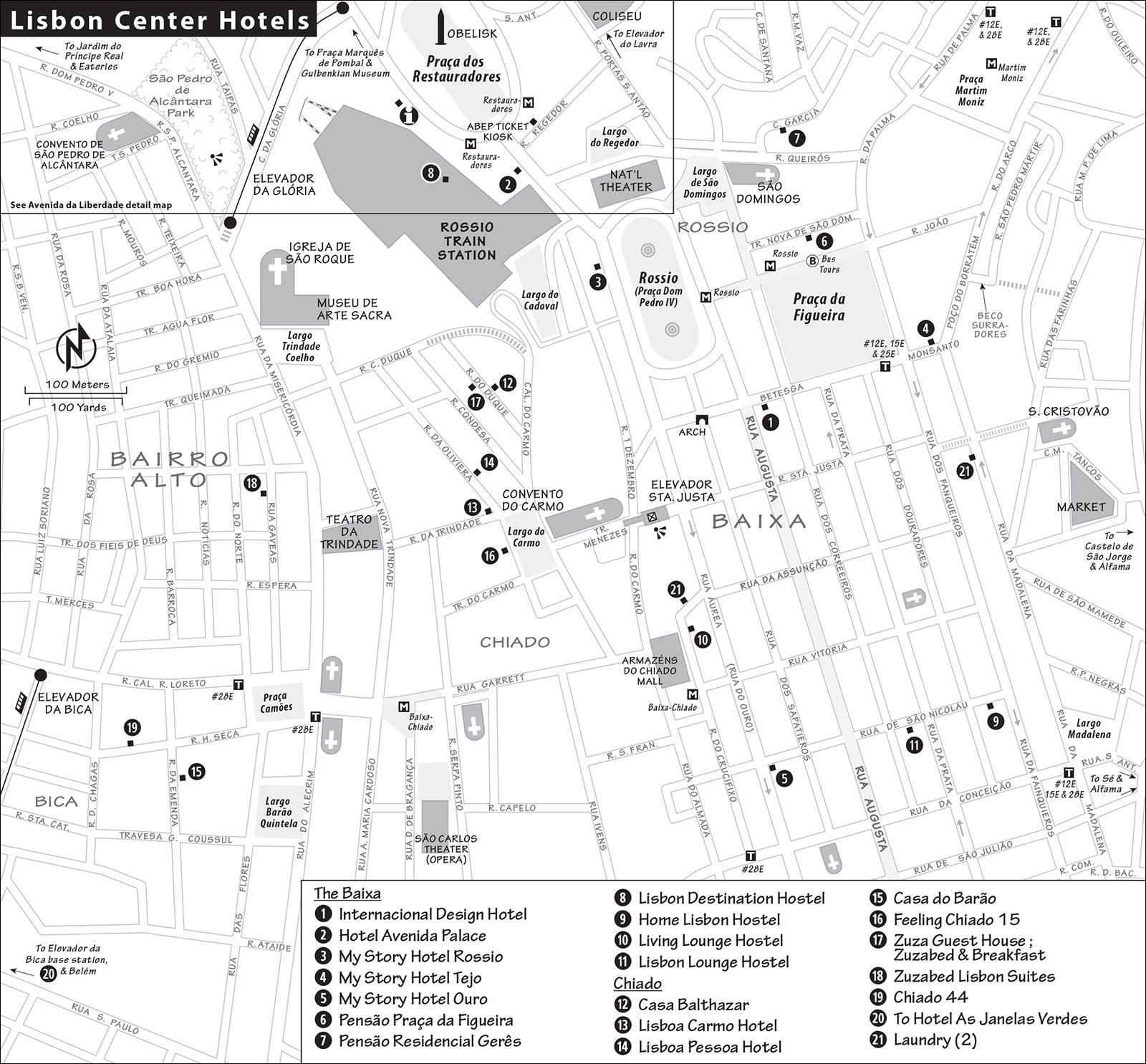
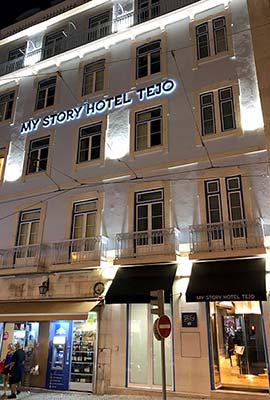
Boutique Chain Hotel: The $$$ My Story chain offers stylish, efficient rooms in the most central part of Lisbon. The combination of smart design plus friendly service makes these branches a reliable choice in the Baixa. All have air-conditioning and elevators and share a website (www.mystoryhotels.com [URL inactive]). My Story Hotel Rossio rents 46 well-equipped rooms in a couldn’t-be-better location, tucked behind a strip of cafés facing bustling Rossio (Praça Dom Pedro IV 59, +351 213 400 380, rossio@mystoryhotels.com). My Story Hotel Tejo occupies two entire buildings with 135 rooms on the site of an old well. Street-side rooms on upper floors have a castle view (Rua Condes de Monsanto 2, +351 218 866 162, tejo@mystoryhotels.com). My Story Hotel Ouro has 51 rooms decorated in gold tones. Outside-facing rooms have great views, with double-paned windows over the busy streets below, but for maximum quiet, ask for an inside or upper-floor room (Rua Áurea 100, +351 213 400 340, ouro@mystoryhotels.com).
Affordable Dives
Basically a notch up from a hostel, these listings are worth considering if you’re on a tight budget and want a handy Baixa location. Keep in mind that you get what you pay for—these are the best I’ve found in this price bracket.
$ Pensão Praça da Figueira is a backpacker place on a quiet back street with youth-hostel prices, a kitchen on every floor, a slick modern lobby overlooking Praça da Figueira, and 34 basic but colorfully updated rooms—some with views on the square (cheaper rooms have shared bath but no air-con, 2 flights up with no elevator, entrance is at Travessa Nova de São Domingos 9, +351 213 426 757, www.pensaopracadafigueira.com, PensaoFigueira@clix.pt).
$ Pensão Residencial Gerês is a throwback, renting 20 well-worn, no-frills rooms with double-paned windows. The sweet Nogueira family speaks some English (RS%, cheaper rooms with private bathroom down the hall, no breakfast, uphill a block off northeast corner of Rossio, Calçada do Garcia 6, +351 215 958 368, no website but book at www.booking.com, infogereslx@gmail.com).
Boutique Hostels in the Baixa
Among hostel aficionados, Lisbon is famous for having the best hostels anywhere. They welcome travelers of any age, come with an artistic flair, and, besides the usual dorm beds, have plenty of double rooms (except Home Lisbon Hostel). These come with extras like bike rental, movie nights, and cheap or “free” (tip-based) city tours and excursions out of town.
¢ Lisbon Destination Hostel feels designed for backpackers—young and old—who appreciate style, peace, and quiet. Located upstairs in the Rossio train station (literally next to the platforms), it provides a wonderful value and experience. The astroturfed lounge—with beanbag chairs and hammocks—sprawls beneath an Industrial Age glass canopy (many private rooms available, movie night in lounge, Largo do Duque de Cadaval 17, +351 213 466 457, www.destinationhostels.com, lisbon@destinationhostels.com).
¢ Home Lisbon Hostel is a little more rough and homey, with a loose camaraderie and friendly management. The hostel is dominated by its classic old wooden bar—an inviting place to socialize (7 private rooms—the rest are dorms, on the second floor at Rua de São Nicolau 13, near corner of Rua dos Fanqueiros, M: Baixa-Chiado, +351 218 885 312, www.homelisbonhostel.com, info@homelisbonhostel.com).
¢ Living Lounge Hostel is clean, modern, and centrally located near the Baixa-Chiado Metro stop. Each room is uniquely decorated (private rooms including singles, some rooms with air-con, Rua Crucifixo 116, second floor, +351 213 461 078, www.livingloungehostel.com, info@livingloungehostel.com).
¢ Lisbon Lounge Hostel, run by the same folks as the Living Lounge Hostel (above), is roughly midway between Praça da Figueira and Praça do Comércio (private rooms but no singles, Rua de São Nicolau 41, +351 213 462 061, www.lisbonloungehostel.com, info@lisbonloungehostel.com).
CHIADO
The Chiado district feels like Lisbon’s uptown. For many, it’s the best of all worlds: It’s handy to the Baixa and Rossio area (just a few steps downhill), and to the artfully seedy Bairro Alto fado zone (just a few steps uphill), but it feels less touristy and congested than either. It’s also a prime location for Lisbon’s up-and-coming foodie restaurants and hipster shopping scene, making this a fun place simply to wander, graze, and window-shop. If I were buying an apartment in Lisbon, I’d look in Chiado. This area specializes in fresher, small, conscientiously run boutique hotels—often upstairs in big buildings without elevators (expect lots of stairs).
$$$$ Casa Balthazar is an enticing splurge—an oasis-like private compound of stately old townhouses tucked amid characteristic, restaurant-lined stepped lanes just above Rossio, on the way up into the heart of Chiado. Classy and modern but still homey, each of its 17 rooms is different—some with views, terraces, and/or private whirlpool baths. There’s an inviting little swimming pool, and breakfast is served in your room (air-con, Rua do Duque 26, +351 917 085 568, www.casabalthazarlisbon.com, reservas@casabalthazarlisbon.com).
$$$$ Lisboa Carmo Hotel is bigger and has less personality than the others listed here, but it’s in an appealing location: a few steps from busy but charming Largo do Carmo. It has 48 sleek, straightforward, business-class rooms, not much in the way of public spaces, and the only elevator among my Chiado listings (air-con, elevator, Rua da Oliveira ao Carmo 1A, +351 213 264 710, lisboacarmohotel.pt, booking@lisboacarmohotel.pt). Their newer sister property, $$$$ Lisboa Pessoa Hotel, has similar rooms and a swimming pool just up the street in a neatly tiled building.
$$$ Casa do Barão is a delightful little refuge on a tame side street just a block below the bustling Praça Luís de Camões in the heart of Chiado. Its 14 tidy, well-appointed, modern rooms share several fine common spaces, including a cozy library, winter-garden breakfast room, gravel patio, and tiny swimming pool. Complimentary coffee, tea, and snacks are available all day. At the lower end of this price range, it’s a terrific value and a comfortable home base in Lisbon. As it’s not staffed 24 hours a day, confirm your arrival details (air-con, Rua da Emenda 84, +351 967 944 143, www.casadobarao.com, casasdobarao@gmail.com).
$$$ Feeling Chiado 15 is a fourth-floor walk-up with eight rooms high above the most appealing little leafy square, Largo do Carmo. Four of the rooms—at the cheaper end of this price range—look down over a residential patio; the pricier, “deluxe” rooms have views over Lisbon’s rooftops and castle (most rooms have air-con, Largo do Carmo 15, +351 213 470 845, www.feelingchiado.com, feelingchiado@gmail.com).
Zuza, run by entrepreneurial Luis Zuzarte, has rooms in three different buildings around Chiado. The main branch, $ Zuza Guest House, has eight basic but neatly outfitted rooms with shared bathrooms in a creaky old building (no air-con, Rua do Duque 41). A few doors down, $$ Zuzabed & Breakfast has four rooms with bathrooms and castle views (air-con, Calçada do Duque 29). And a short walk away, up in the Bairro Alto, $$$ Zuzabed Lisbon Suites has seven classy rooms with vintage furnishings (Rua das Gáveas 81). Let them know when you’ll arrive: Morning check-in is likely at the Rua do Duque location; otherwise it’ll be at the location you’re sleeping at (contact for all: +351 934 445 500, www.zuzabed.com, zuzabed@zuzabed.com).
$$ Chiado 44 is a simple place in a great location, just above Praça Luís de Camões. Its 11 small, basic, but comfortable rooms fill a historic building—expect plenty of stairs (air-con, Rua Horta Seca 44, +351 930 544 457, www.chiado44.pt, reservations@chiado44.pt, Fabian).
ALONG AVENIDA DA LIBERDADE
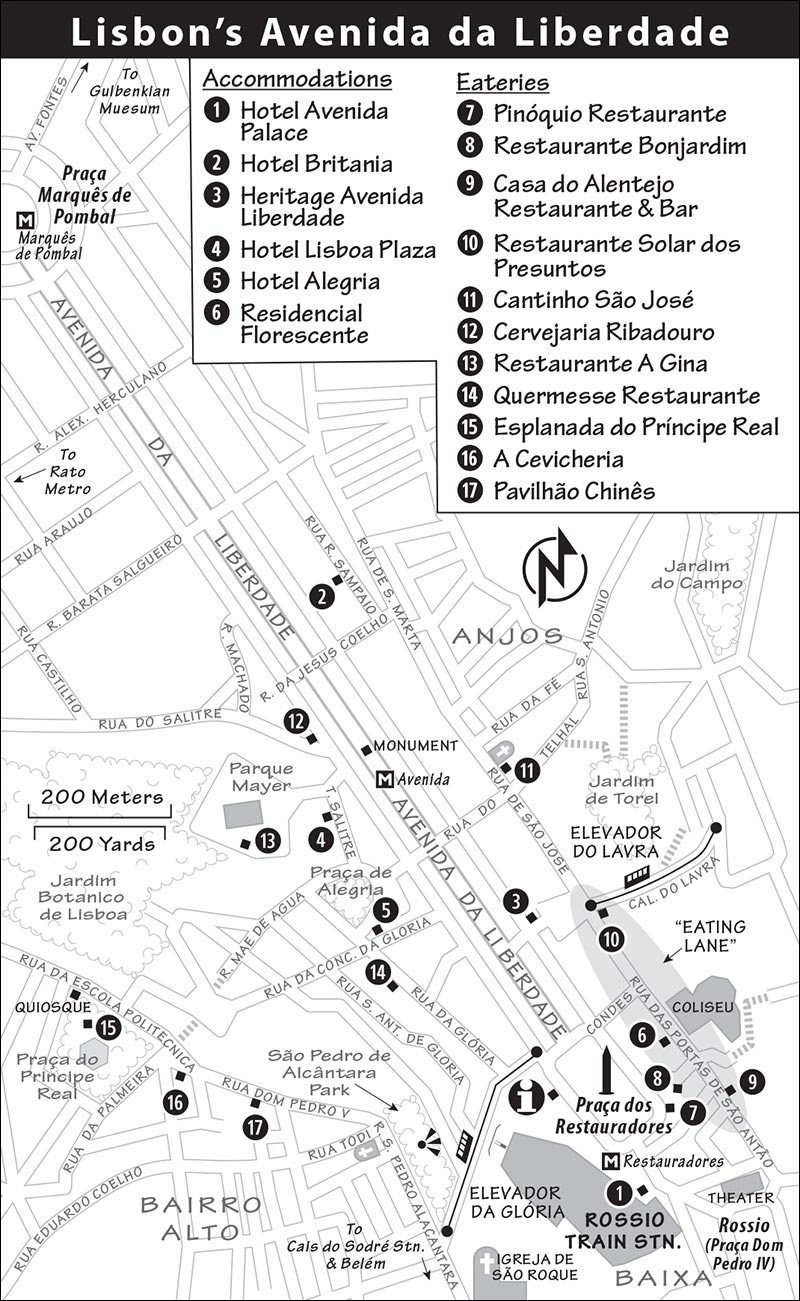
Avenida da Liberdade is an upscale neighborhood facing a broad, tree-lined, very European-feeling boulevard. Most of my listings are a block or so off the main street. While it’s a residential area, there are also lots of upscale hotels—it’s where many of Lisbon’s tourists go to sleep. For this reason, it’s a bit less characteristically “Lisbon” than some other neighborhoods...but for the sake of a quiet night’s sleep, some consider that a good thing. These listings are a 10-minute walk or short Metro ride from the center. Most are near the Avenida Metro stop. And adjacent to Rossio station is the Hotel Avenida Palace, described earlier with the Baixa hotels. For locations, see the “Lisbon’s Avenida da Liberdade” map.
High-End Chain Hotels
The Hoteis Heritage Lisboa chain has several branches, most near Avenida da Liberdade. These hotels distinguish themselves with classy public spaces and rooms, professional staff, and top-notch amenities (air-con, elevator, pay parking); guests are entitled to sightseeing deals—ask for details. Each hotel has its own style and personality, and all offer free port wine after 18:00 (www.heritage.pt).
$$$$ Hotel Britania maintains its 1940s Art Deco charm throughout its 33 spacious rooms, offering a clean and professional haven on a workaday street one block off Avenida da Liberdade. Three top-floor rooms are decorated in a luxurious Mod Deco style (Rua Rodrigues Sampaio 17, +351 213 155 016, britania.hotel@heritage.pt).
$$$$ Heritage Avenida Liberdade is the most contemporary, the only one actually on the leafy boulevard, and the closest to the center (a 5-minute walk from Rossio). Its stylish lobby/breakfast room is inviting, and the 42 rooms feel upscale-urban (Avenida da Liberdade 28, +351 213 404 040, avliberdade@heritage.pt).
$$$ Hotel Lisboa Plaza—a large, plush gem—mixes traditional style with bright-pastel classiness. Its 112 rooms are on a quiet street off busy Avenida da Liberdade, a block from the Avenida Metro station (Travessa do Salitre 7, +351 213 218 218, reservations@heritage.pt).
West of the Center: Another Hoteis Heritage branch is farther out, toward Belém. $$$$ Hotel As Janelas Verdes is next door to the Museum of Ancient Art, filling an 18th-century mansion with 29 cushy rooms and comfortably elegant public spaces. The third-floor library overlooks the river (Rua das Janeles Verdes 7, bus #714 stops nearby, +351 213 968 143, janelas.verdes@heritage.pt).
Other Avenida Liberdade Hotels
$$$ Hotel Alegria faces a quiet, inviting park in a peaceful neighborhood 200 yards from the Avenida Metro station. Its bright, inviting public spaces and 30 comfortable, well-appointed rooms have hardwood floors varnished like a ship’s deck (breakfast extra, air-con, elevator, Praça da Alegria 12, +351 213 220 670, www.hotelalegria.pt, info@hotelalegria.pt).
$$$ Residencial Florescente rents 65 recently refurbished rooms on the thriving, traffic-free “eating lane,” a block off Praça dos Restauradores. Guests get access to the bar terrace with relaxing views of the castle (air-con, elevator, Rua das Portas de Santo Antão 99, +351 213 426 609, www.residencialflorescente.com, geral@residencialflorescente.com).
Eating in Lisbon
Each district of the city comes with fun and characteristic restaurants. Ideally, have one dinner with a fado performance—several good options for music with your meal are listed in this section, with more fado options described earlier, under “Entertainment in Lisbon.” Note that some smaller, family-run places take a few weeks off in the late summer or early fall—don’t be surprised to find a handwritten fechado para férias (closed for vacation) sign taped to the window. For a great fish meal, combine a quick and fun ferry ride across the river to Cacilhas to dine at the grand Restaurante Farol, described on here. (Good eateries in Belém are described on here.)
Snack Bars: Quick, light meals are readily found in Lisbon’s characteristic snack bars. On just about any street, you can belly up to a bar, observe, and order what looks good for a tasty, memorable, and inexpensive meal. You’ll see lots of pastel de bacalao, Lisbon’s ubiquitous and delicious cod cake. Other good standbys are a tosta (panini filled with tuna or ham and cheese), a prego (steak sandwich), and a bifana (pork sandwich), each made with a secret sauce to give them character.
Food Tours in Lisbon: To simultaneously eat good food, learn about Portuguese cuisine, and meet a knowledgeable local guide, consider taking a food tour (see “Tours in Lisbon,” earlier in this chapter). These tours are informative, tasty, and a good value—filling you in while filling you up.
I rank eateries from $ budget to $$$$ splurge. For more advice on eating in Portugal, including ordering, tipping, and Portuguese cuisine and beverages, see the “Eating” section of the Practicalities chapter.
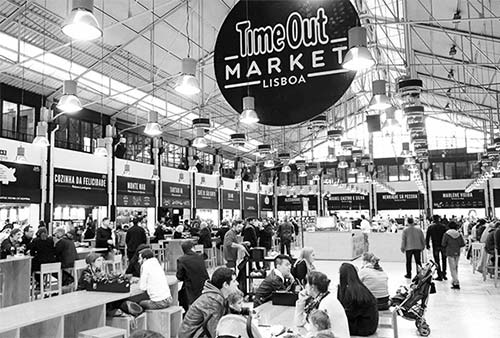
The big news on Lisbon’s eating scene is the transformation of traditional farmers markets into gourmet food circuses. These combine the stalls of traditional food-market vendors (selling produce, meat, fish, spices, etc.) with a food court filled with eateries run by locally respected chefs. If you love food—or even if you don’t—these are fun to explore.
Located at Cais do Sodré (between Chiado and the river), this is two markets in one: The boisterous and venerable Ribeira market survives in one half of the Industrial Age, iron-and-glass market hall, while the other half has become a trendy food court curated by Time Out magazine, which has invited a few dozen quality restaurants to open outposts here. Eating here at long, noisy picnic tables is far from romantic, but the quality and prices are great. The produce and fish market is open from 7:00 to 13:00 (closed Sun and no fish Mon), while the restaurants are open daily from 12:00 to 24:00. This place is no secret—to avoid a mob scene at dinnertime, arrive before 19:00.
Getting There: The Mercado da Ribeira (like many locals, I resist calling this venerable market by its new “Time Out” name) is across the street from the Cais do Sodré train station. It’s conveniently served by the Metro (Cais do Sodré stop) and tram #15E (on the way to/from Belém), and it’s about a 10-minute walk from Praça do Comércio. If you’re here for dinner, note that the crazy Pink Street—lined with clubs and bars—is just two blocks inland and lively late (described in “Entertainment in Lisbon,” earlier). The entire neighborhood around the market is emerging as a lively and trendy food and bar scene.
Eating at Mercado da Ribeira: Entering the market from the main entrance (facing Cais do Sodré), the workaday market stalls are on your right, while the foodie festival is on your left. In the food court, join the young, trendy, hungry, and thirsty crowd grazing among a wide variety of options. Assemble a sampling of local treats, and grab a seat at the big, shared tables in the middle. The north wall is a row of stalls run by big-name Lisbon chefs offering quality dishes at reasonable prices (enticing dinner plates for €10). And there are also branches of Honorato (a local “gourmet burger” chain), O Prego da Peixaria (fish and steak sandwiches), Sea Me (a Chiado institution for seafood—with their notorious “octopus hot dog”), Aloma (in the west outer aisle, for the best pastries), and Santini (the venerable Portuguese gelateria). Get wine and beer from separate stalls in the center. You may find affordable percebes (barnacles) at several seafood stalls. On the west side, an aisle just outside of the main hall is lined with wonderful seafood bars.
Restaurant and a View: Above the main entrance (south side) is a great viewpoint for a wide shot of the market din below, and the quality $$$ Pap’Açôrda Restaurant, a long-respected place for traditional Portuguese cuisine, with a top chef. They serve seasonal specials and a €20 three-course lunch special on weekdays (12:00-18:00) in a modern, spacious dining room with professional service and an inviting menu (daily Tue-Sun 12:00-24:00, closed Mon, +351 213 464 811).
A trendy marketplace fills this 19th-century iron-and-glass market. Compared to Mercado da Ribera, it’s less crowded and more purely local. Produce stalls, fishmongers, and bakeries sell everything from pigs’ ears to fragrant bunches of cilantro (most close in the evening). At lunch and dinner, local diners pick up meals from whichever counter appeals: pork, seafood, Japanese, wine, beer, coffee, meat, produce, artisanal gelato, and so on (most eateries open daily 10:00-23:00).
Getting There: It’s a couple of miles west of Rossio. Take a taxi or Uber, or hop on trolley #25E or #28E and ride to the second-to-last stop (Igreja do Santo Condestável; market is alongside the big church). Lisbon’s most interesting cemetery is one stop farther, at the end of the trolley line.
THE BAIXA AND NEARBY
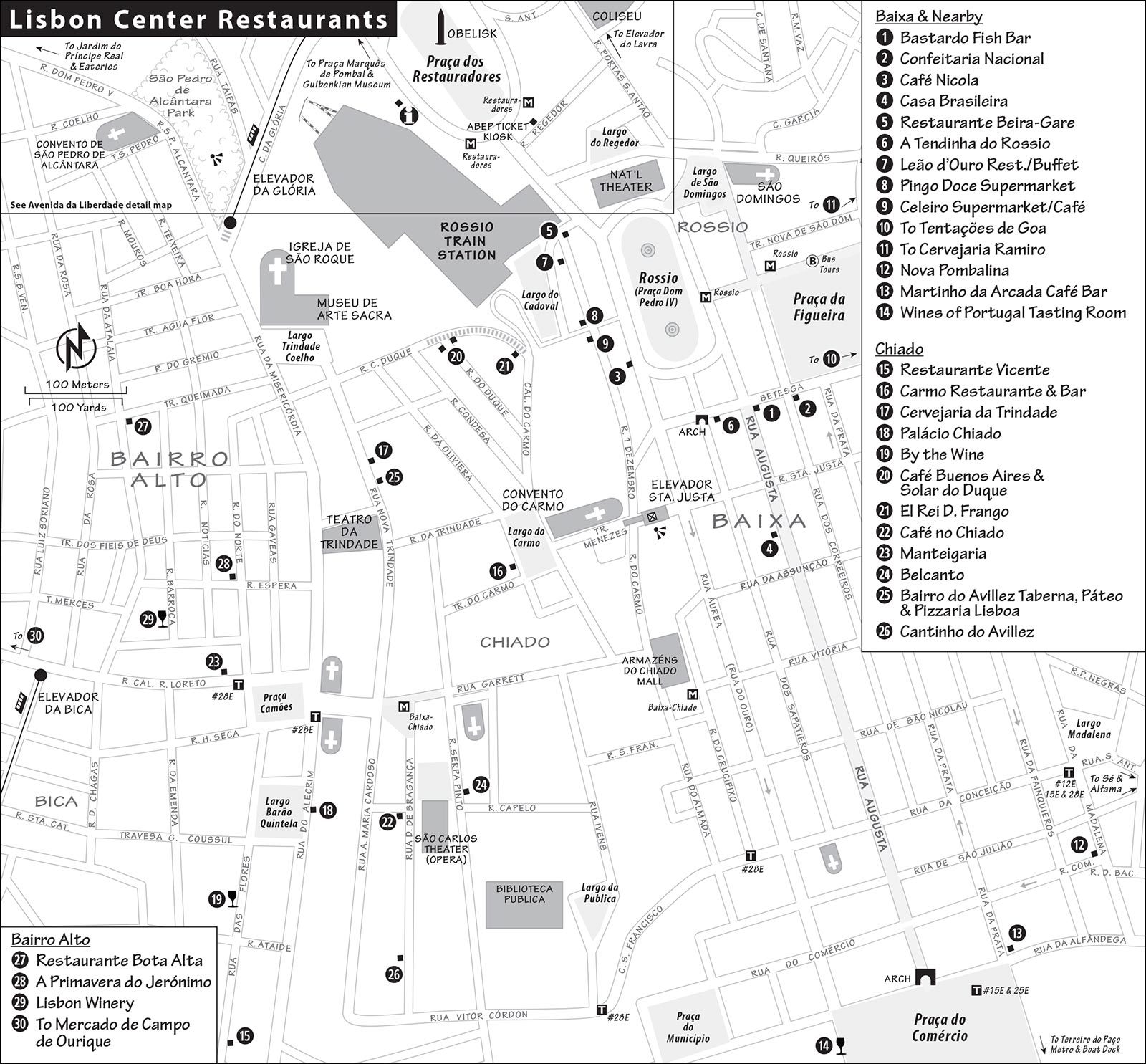
For locations, see the “Lisbon Center Restaurants” map on here.
On or near Rossio
The area around Rossio, with plenty of practical, inexpensive eateries, caters to busy locals commuting in and out by train.
$$$ Bastardo Fish Bar—on two floors of the recommended Internacional Design Hotel—is a simple, solid, no-stress option for Portuguese cuisine with a modern twist overlooking the square. In a fun-loving way, they’ve bastardized traditional dishes, focusing on fresh fish. The space is bright and accessible, like the menu. It can be smart to reserve (vegan options, daily 12:30-22:30, Rua da Betesga 3, facing Rossio, +351 213 240 993, http://restaurantebastardo.com).
$$ Confeitaria Nacional has been proudly satisfying sweet tooths for 180 years, and was once the favorite of Portuguese royalty. Stop in for a tasty pastry downstairs. Or, for a peaceful and inexpensive lunch, go upstairs, where you can enjoy a cheaper meal in the cafeteria or pay a little extra for service and Old World sophistication in the elegant dining room (Mon-Sat 8:30-20:00, pastry counter open Sun but upstairs likely closed, Praça da Figueira 18, +351 213 424 470).
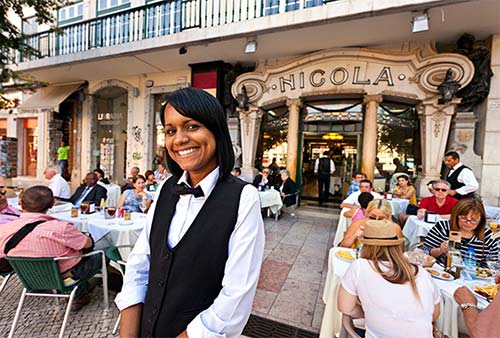
$$ Café Nicola, founded in the 18th century as one of the first coffee shops in town, was long a hangout of cultural elites. You’ll find an Art Deco interior, formal waiters, and lots of locals eating its Nicola pepper steak. It’s a sprawling, venerable café scene with classy seating inside and on the wide sidewalk facing Rossio’s square (daily 8:00-24:00, Praça Dom Pedro IV 24, +351 213 460 579).
$ Casa Brasileira offers a characteristic budget snack or meal in a classic local scene. Fast lunch deals are served only at the bar (see blackboard at back for daily special); good, basic meals are served outside on sidewalk tables. Their pastel de nata (custard tart), made downstairs and in a second thriving kitchen next door, is as tasty as the ones people line up for in Belém (daily 7:00-24:00, 100 yards from Rossio at Rua Augusta 265, +351 213 459 713).
$ Restaurante Beira-Gare is my choice for a quick, cheap meal immediately across the street from Rossio station. A classic greasy-spoon diner, it dishes out cod and vegetables prepared faster than a Big Mac and served with more energy than a soccer team. The house specialty is a pork sandwich (bifana). Consider their soup-and-sandwich special; stand at the bar or grab a table (Mon-Sat 6:00-24:00, closed Sun, Rua 1 de Dezembro, +351 213 420 405). This is a great place for a quick cod cake (pastel de bacalao) at the bar.
Dive Bar with a View: Established in 1840 and run by Calheiros and Carmo, $ A Tendinha do Rossio is a classic ginjinha bar that also sells soups, sandwiches, and fishy snacks. While it’s pretty dumpy, it’s notable because it offers the only tables on Rossio. Prices are high, and the same whether you sit with the drunks at the bar, grab a tiny table inside, or serve yourself and sit outside to people-watch overlooking Rossio (Mon-Sat 7:00-21:00, closed Sun, Praça Dom Pedro IV 6, +351 213 468 156).
Rua 1 de Dezembro: This street, which is active during the workday and dead after hours, is lined with cheap restaurants that make self-service speed a priority for busy office workers who eat here. Walk the street from Rossio station to the Elevador de Santa Justa to determine the prevailing menu of the day. Among your options is the handy self-service cafeteria at #97, $$ Leão d’Ouro, with an affordable lunch or dinner buffet featuring Brazilian grilled meats. It also has a fancy and more expensive sit-down restaurant next door (both daily 12:00-23:00).
There are two grocery stores on this street, both open long hours daily: the straightforward Pingo Doce supermarket (at #73, with very cheap 9-stool cafeteria), and the organic/health-food alternative across the street, Celeiro, which also has a self-service vegetarian lunch joint (called Tasquinha do Celeiro, at #53, Mon-Fri 8:30-18:00, closed Sat-Sun).
Near Praça Martim Moniz
$$ Tentações de Goa, run by Maria and her chef-owner husband from Goa, is a sweet hole-in-the-wall with authentic Goan cuisine and ambience. It’s buried deep in a tangle of lanes in the Mouraria district, a block uphill from Praça da Figueira (Mon-Sat 12:00-16:00 & 19:00-22:00, closed Mon at lunch and all day Sun; from Poço do Borratém follow a lane uphill to Rua de São Pedro Mártir 23; +351 218 875 824).
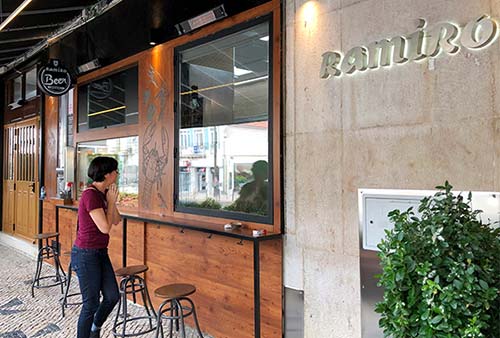
$$$ Cervejaria Ramiro—an old-school restaurant serving well-respected seafood and steak, is hugely popular and becoming quite touristy. It’s a good choice if you like bustle and happy energy with great seafood. Arrive early or late to avoid a very long line (Tue-Sun 12:00-24:00, closed Mon, a couple of blocks north of Praça Martim Moniz at Avenida Almirante Reis 1H, +351 218 851 024).
On or near Praça do Comércio
$ Nova Pombalina, in the southeast corner of the Baixa on the way to the Alfama, is a busy little joint that serves quick sandwiches, soups, and exotic fresh-squeezed juices. It’s famous among office workers for its suckling pig sandwich (sandes de leitão). They have good piri-piri sauce on request. From Praça do Comércio, it’s five blocks toward the castle, on the corner of Rua do Comércio and Rua da Madalena (Mon-Sat 8:00-17:30, closed Sun, Rua do Comércio 2, +351 218 874 360).
In this neighborhood you’ll also find the Martinho da Arcada Café Bar, described on here, and the Wines of Portugal Tasting Room, described on here.
CHIADO
This neighborhood has some of Lisbon’s trendiest restaurants. If you don’t mind paying a bit more to experience the city’s burgeoning food scene, venture up into these inviting streets. Remember that the more traditional Bairro Alto neighborhood—covered in the next section—is just a few minutes’ walk away. For locations, see the “Lisbon Center Restaurants” map, earlier.
$$$ Restaurante Vicente, at the southern edge of Chiado, fills a former brick-arched coal warehouse with rustic-trendy decor and excellent Alentejo cuisine from Portugal’s arid southern heartland. The hearty, delicious meals come with real history: Traditionally, coal cellars like this one kept a crow named “Vicente” to act as an early-warning system for polluted air—like the proverbial canary in a coal mine (Mon-Fri 12:30-15:30 & 19:30-24:00, Sat-Sun 19:30-24:00, Rua das Flores 6, +351 218-066-142).
$$ Carmo Restaurante and Bar offers delicious updated Portuguese cooking. You can share a few petiscos (Portuguese-style tapas), or get well-presented main courses. In good weather, sit out on the inviting square, under a leafy canopy. Otherwise, take advantage of the chic-but-homey setting, with a series of smaller rooms (weekday lunch deals, tempting desserts, daily 12:00-23:00, Largo do Carmo 11, +351 213 460 088).
$$$ Cervejaria da Trindade—a bright, boisterous, beer hall—is full of historic tiles, seafood, and tourists. While overpriced and in all the guidebooks, it’s a historic landmark (see description on here). The seafood is charged by weight—clarify prices when you order (daily 12:00-24:00, liveliest 20:00-22:00, air-con, courtyard, a block down from São Roque Church at Rua Nova da Trindade 20C, +351 213 423 506).
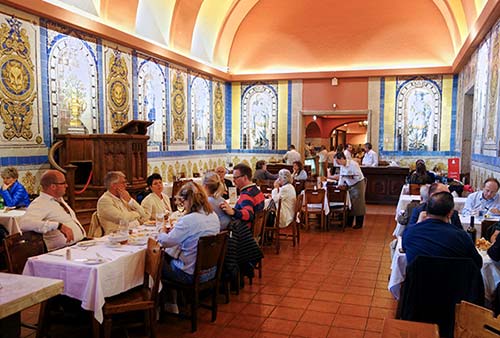
$$$ Palácio Chiado took an abandoned, 18th-century private mansion and turned it into a luxurious but relaxed dining space with two bars and five differently themed restaurants, each occupying a palatial room. Feel like royalty as you ascend the grand staircase to chill with a hanging, winged lion (daily 12:30-24:00, Rua do Alecrim 70, +351 210 101 184).
$$$ By the Wine, a trendy yet accessible wine bar, fills a cellar under a green-bottled vaulted ceiling. They serve a few dozen Portuguese wines by the glass, thoughtfully paired with local cold cuts and cheeses, small plates, and main dishes. It’s less intimate and informative than Lisbon Winery (described later), but busier, more atmospheric, and more food-focused (daily 18:00-24:00, Rua das Flores 41, +351 213 420 319).
$$$ Café Buenos Aires is a friendly place serving Argentinian cuisine (lots of red meat), hearty dinner salads, vegetarian homemade pasta, and famous chocolate cake. Dine in the intimate woody interior, or at fun tables outside on a characteristic, stepped pedestrian lane with views across to the Alfama (Mon-Sat 18:00-24:00, closed Sun, Rua do Duque 31, +351 213 420 739). Above this place and on the same lane is $$ Solar do Duque, a typical Portuguese eatery with romantic tables on the stepped lane (daily, Rua do Duque 67, +351 213 426 901).
$ El Rei D. Frango (“King of Chicken”) is a local favorite for huge portions of affordable, stick-to-your-ribs grilled meat and fish specialties (but, strangely, not much chicken), served in an unpretentious little hole-in-the-wall. It’s on the steep stepped lanes at the very bottom of Chiado, behind Rossio station (Mon-Sat 12:00-22:30, Sun from 18:00, Calçada do Duque 5, +351 213 424 066).
$$$ Café no Chiado is a local favorite for its brief, accessible menu. Perched on an upper street overlooking the square in front of the São Carlos national theater, it has a casual-classy interior, and the outdoor tables—on a tiny square under red-and-black awnings—feel very European (daily 12:00-15:00 & 19:00-23:30, Largo do Picadeiro, +351 213 460 502).
Heavenly Custard Tarts: $ Manteigaria is simply the best place in Lisbon’s downtown for pastel de nata—everyone’s favorite local pastry. They serve only this one treat, constantly churning out the lovable little €1 custard pies so you’ll get them hot from the oven. While here, enjoy a look at the busy kitchen (daily 8:00-24:00, Rua Loreto 2 just off Praça Luís de Camões).
José Avillez Restaurants in Chiado
One of Portugal’s top celebrity chefs, José Avillez, has elevated and modernized Portuguese classics with international influences and techniques. He runs 16 restaurants and, judging by the energy in each and the local buzz, he’s on a roll. While his Belcanto flagship restaurant boasts two Michelin stars (costly tasting menus, Tue-Sat 12:30-15:00 & 19:00-24:00, closed Sun-Mon, book well in advance, Largo de São Carlos 10, +351 213 420 607), his other places are perfectly accessible. They have a common personality: trendy; high-energy; open kitchens; young, smart, English-speaking waitstaff; and, unless eating very early or very late, a reservation is smart.
The Bairro do Avillez building (Rua Nova da Trindade 18) houses three distinct and thriving Avillez restaurants. You can make reservations online for any of the three at www.bairrodoavillez.pt. $$$ Taberna is a casual place serving Portuguese classics as small plates and main courses. Its bar is a hit with well-dressed and mingling locals sharing plates family-style (daily 12:00-24:00, +351 210 998 320). $$$$ Páteo, in the back under a big skylight, is more formal and expensive, offering a full menu of fish and seafood, vegetarian dishes, and salads (daily 12:30-15:00 & 19:00-24:00, +351 215 830 290). Upstairs, $$$ Pizzaria Lisboa serves top-quality pizza in a dressy yet fun setting (daily 19:00-24:00, plus Sat-Sun 12:30-15:00, +351 211 554 945).
$$$ Cantinho do Avillez has a casual vibe and a more international menu. Dining here, you’ll feel like you’re in on a Lisbon foodie secret (daily 12:30-15:00, Rua dos Duques de Bragança 7, +351 211 992 369, www.cantinhodoavillez.pt).
THE BAIRRO ALTO
For a characteristic meal in Old World surroundings, the Bairro Alto is hard to beat. For locations, see the “Lisbon Center Restaurants” map, earlier.
$$ Restaurante Bota Alta (“The High Boot”) is a classic—if a bit touristy—little eatery with a timeless Portuguese ambience, tight seating, and reliably good food. Portions are big, and Paulo offers a fun dessert sampler plate. Reservations are smart (Tue-Fri 12:00-14:30 & 19:00-23:00, Mon and Sat evenings only, closed Sun, at corner of Travessa da Queimada and Rua da Atalaia, +351 213 427 959).
$$ A Primavera do Jerónimo is a quintessential Bairro Alto joint serving traditional home-style plates in a jam-packed, joyfully characteristic scene. Rafael and Helena love serving stuffed squid and Brás-style cod—whipped into a frittata with potatoes and onions (Mon-Sat opens at 19:30, closed Sun; reserve, come early, or wait; at Travessa da Espera 34, +351 213 420 477).
$$$ Lisbon Winery, a modern little wine bar, has a passion for the best wines, cheeses, and meats. With quality local ingredients, cork walls, and fado music playing, it’s a perfect storm of Portuguese culture. Their expert staff knows Portuguese wines and ports and how to complement them with tasty foods (private tastings only, €85/person for 5 wines plus food, typically starts at 17:00 and lasts 2 hours, reservations necessary, Tue-Sat 15:00-22:00, closed Sun-Mon, Rua da Barroca 13, +351 218 260 132, www.lisbonwinery.com).
Fado with Dinner in Bairro Alto: For a most memorable dining experience with live fado music in the Bairro Alto, consider these two options: Restaurante Adega do Ribatejo (more casual, Rua Diario de Noticias 23), or O Faia (top-end splurge with quality food and fado, Rua da Barroca 54). Both are described earlier, under “Entertainment in Lisbon”; for locations see the “Lisbon Nightlife” map on here.
AVENIDA DI LIBERDADE AND NEARBY
For locations, see the “Lisbon’s Avenida da Liberdade” map, earlier.
Lisbon’s “Eating Lane”
Just northeast of Rossio, Rua das Portas de Santo Antão is Lisbon’s “eating lane”—a galaxy of eateries, many specializing in seafood. While the waiters are pushy and it’s all very touristy, the lane—lively with happy eaters—is enjoyable to browse. This is a fine spot to down a beer, snack on some snails, and watch people go by.
Between Rossio and the “eating lane” is $$$ Pinóquio Restaurante, a venerable seafood beer hall famous for its clams (€22 splittable portion). You’ll dine with a smart, local crowd at white-tableclothed tables yet there’s no pretense—the focus is on simple quality (daily 12:00-23:00, big portions, dine inside or outside facing the busy square, Praça dos Restauradores 79, +351 213 465 106).
$$ Restaurante Bonjardim, a family-friendly diner on a small side street, is known for its tasty rotisserie chicken (pour on some spicy piri-piri sauce). Try their wonderful takes on pastéis de bacalhau (codfish fritters) or esparregado (spinach purée with garlic and olive oil), both Portuguese classics (daily 12:00-23:00, Travessa de Santo Antão 11, +351 213 427 424).
$$$ Casa do Alentejo Restaurante specializes in Alentejo cuisine and fills an old, second-floor dining hall. The Moorish-looking building is a cultural and social center for transplants from the Alentejo, the traditional southern province of Portugal (and historically the poorest region in the country). While the food is mainly hearty and simple, come for the ambience. It’s a good place to try regional specialties such as pork with clams, or the super-sweet, eggy almond dessert called charcada. The full-bodied Alentejo red wine is cheap and solid (lunch specials; Tue-Sun 12:00-16:00 & 19:00-22:00, closed Mon; slip into the closed-looking building at Rua das Portas de Santo Antão 58 and climb stairs to the right, +351 213 469 231). They host folk singing in the grand ballroom (often on Sat from 15:00) and ballroom dancing (on many Sun from 15:00 to 19:00), except in summer when it’s too hot (mid-June-mid-Sept).
$ Casa do Alentejo Bar, in the same building, serves cheap bar food and wine, either in the sleek-and-trendy interior or out on the little patio (spicy meat dishes, hearty cheeses, other tapas; daily 12:00-23:00, to the right of the stairs, look for taberna sign on main floor).
$$$$ Restaurante Solar dos Presuntos keeps the theater crowd happily fed with meat and seafood specialties. Its upstairs is more elegant, while the downstairs—with a colorful, open kitchen—is higher energy. Photos of Lisbon’s celebrities and politicians who eat here enliven the walls. This place can take advantage of its popularity and bulldoze tourists into spending a lot—order cautiously and know what you’re paying for. Reservations are smart (big splittable portions, good wine list, see daily suggestions; Mon-Sat 12:00-15:00 & 18:30-23:00, closed Sun; at the top end of Rua das Portas de Santo Antão at #150, +351 213 424 253, www.solardospresuntos.com).
On or near Avenida da Liberdade
These spots are in a residential neighborhood, near my recommended accommodations (Avenida Metro stop).
$ Cantinho São José is a wonderfully untouristy, cheap-and-cheery hole-in-the-wall a block beyond the main restaurant zone. The extremely tight, tiled interior is jammed with tiny tables filled by big locals ordering hearty, splittable portions of Portuguese classics—for far less money than the tourist traps nearby (Sun-Fri 9:00-22:00, closed Sat, Rua São José 94, +351 213 427 866).
$$$$ Cervejaria Ribadouro is a favorite splurge for locals for quality meat and shellfish (daily 12:00-24:00, Avenida da Liberdade 155 at intersection with Rua do Salitre, +351 213 549 411). Seafood prices are listed by weight—the waiter can help you determine the cost of a portion. For a fun, quick, €15-per-person meal, order a small draught beer (uma imperial), 100 grams (about a quarter pound) of percebes (barnacles), and pão torrado com manteiga (toasted bread with butter). They also run a delightful kiosk shaded by the avenue’s sycamore trees.
$$$ Restaurante A Gina, glowing like a mirage in a vacant lot that used to be a theater zone, is a good dinner option. Cloth bibs embroidered with Gina’s name help you appreciate the tasty traditional Portuguese grilled meat and fish with abandon. Gina and her staff scramble to give this wonderful place a genuine friendliness; the son, Rui, speaks English. It’s two minutes from Avenida da Liberdade (directly behind recommended Hotel Lisboa Plaza—look for signs, RS%—free dessert port with this book, daily 12:00-16:00 & 19:00-24:00, reservations recommended, +351 213 420 296).
$$ Quermesse Restaurante is a fun, bright, and creative place serving Mediterranean dishes with plenty of cod and friendly service. Half the seating is in an old-school grocery store—when reserving, request “in the store” (Thu-Tue 19:00-24:00, closed Wed, Rua da Glória 85, +351 211 507 901).
Príncipe Real Garden Eateries (Jardim do Príncipe Real)
This delightful parklike square is just a five-minute hike up Rua Dom Pedro V above the top of the Elevador da Glória funicular and the Bairro Alto. While this area is a shopping mecca (see “Shopping in Lisbon,” earlier), it also has a lovely array of eateries.
The park itself has an unforgettable cedar tree shaped into a canopy over shady benches, and a quiosque that doubles as a trendy, youthful wine and beer hangout. Also below shady branches is $$$ Esplanada do Príncipe Real, with delightful seating—either at outdoor tables or in the glassed-in interior. Skip the pricey, forgettable food—I’d just order a drink and savor the ambience (+351 210 965 699).
$$$ A Cevicheria is the neighborhood’s big foodie draw, where (under a giant stuffed octopus) Chef Kiko serves elegant Peruvian/Portuguese dishes—specializing in flavorfully marinated raw fish and seafood ceviche. This deservedly popular place takes no reservations; arrive early or expect to wait (daily 12:00-23:00, a block toward Bairro Alto from the square at Rua Dom Pedro V 129, +351 218 038 815).
$$ Pavilhão Chinês (“Chinese Pavilion”), a few doors down, is an eccentric, smoky, private museum-like bar with room after room slathered with an enormous collection of esoteric treasures. Come here to settle into a club chair and sip a drink rather than to eat (Mon-Sat from 18:00, Sun from 21:00, Rua Dom Pedro V 89, billiards in back).
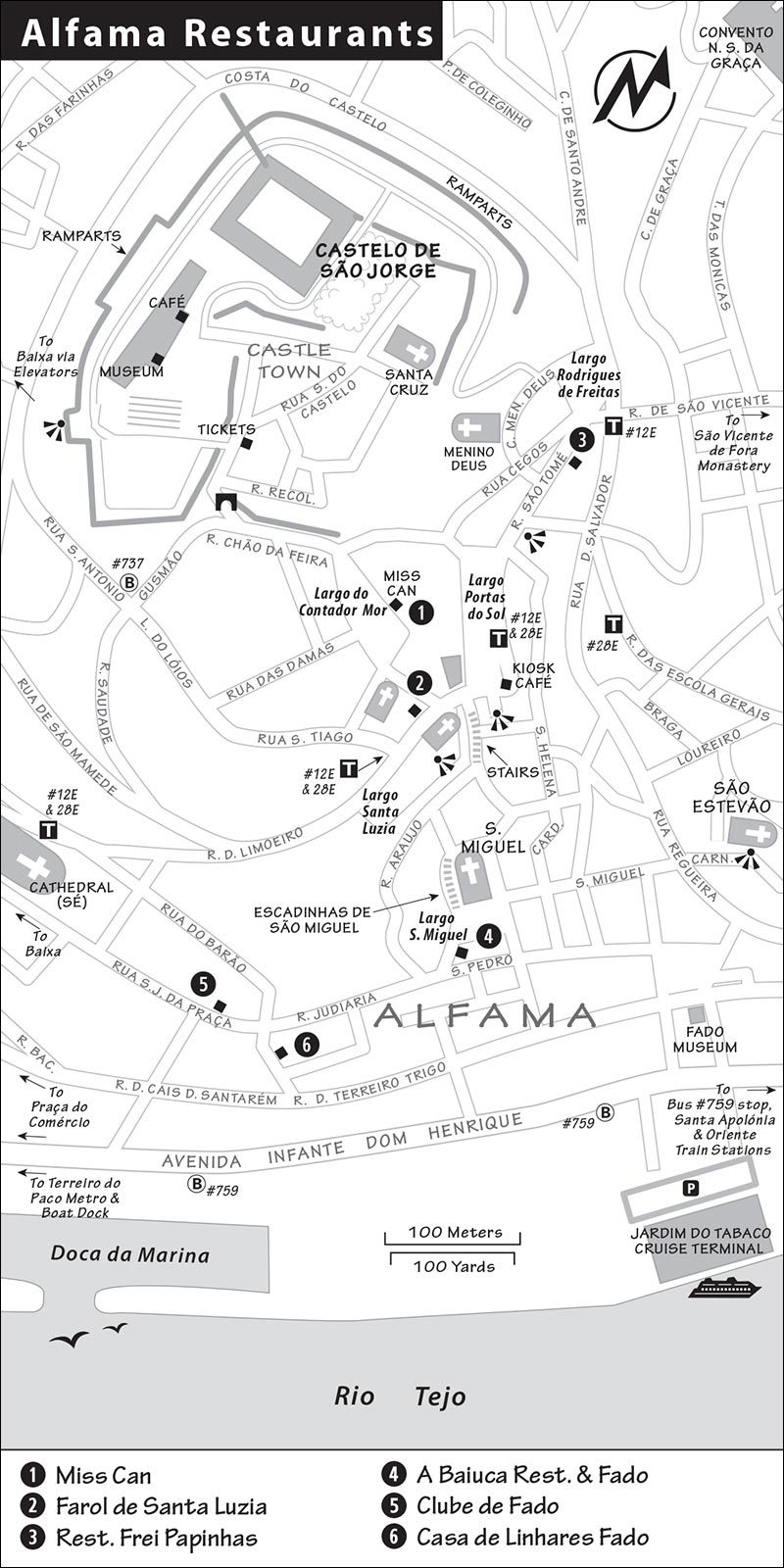
THE ALFAMA
For locations, see the “Alfama Restaurants” map, earlier.
Lunch on Largo do Contador Mor: This leafy and picturesque square, just under the castle, has a few interchangeable $$ restaurants serving up decent plates of grilled sardines (sardinhas grelhadas). But the real star of the square is $ Miss Can, an engaging, colorful, and stylish little shop that’s injecting some contemporary class into the beloved Portuguese tradition of canned fish. Three young, hip Lisboners have returned to their roots (their families have been in the sardine biz for generations) to create fresh new packaging for a variety of canned sardines, mackerel, and cod. Peruse their shop, and pick a can or two to eat with bread, salad, and a drink at one of their inviting little café tables (daily 11:00-19:00, at #17, +351 910 007 004, www.miss-can.com).
Near the Santa Luzia Viewpoint: $$$ Farol de Santa Luzia, which offers a nice seafood feast with a delicate and delightful dining area, is a favorite of mine for dinner at the top of the Alfama. A family-run place with a local clientele, it offers the Algarve cataplana style of cooking—simmered in a copper pot (€30 big cataplana of meat, fish, or shellfish for two; indoor seating only; Mon-Sat 17:30-23:00, closed Sun; look for tiny sign across from Santa Luzia viewpoint terrace at Largo Santa Luzia 5, +351 218 863 884; Andre, Luis, and family).
Near Largo Rodrigues de Freitas: For more of an adventure with your meal, walk past Largo das Portas do Sol and follow the trolley tracks along Rua de São Tomé to a square called Largo Rodrigues de Freitas—if riding trolley #12E, it’s the first stop over the big hill. On this square, $$ Restaurante Frei Papinhas is a classic, family-run hole-in-the-wall where you can feast on fresh seafood with the neighborhood crowd. Dine inside, or at rickety tables across the street in a charming square—where you can watch the trolleys rattle by (daily 12:00-16:00 & 19:00-22:00, Rua de São Tome 13, +351 218 866 471).
Fado Deep in the Alfama: While the Bairro Alto is far livelier at night and has a better energy, the Alfama still has a unique charm. My favorite places for dinner with fado are described earlier, under “Entertainment in Lisbon.”
Lisbon Connections
BY PLANE
Lisbon’s easy-to-manage Portela Airport is five miles northeast of downtown (code: LIS; for airport info, see www.aeroportolisboa.pt or call +351 218 413 700). On arrival, check in at the handy TI—it’s a smart place to buy your LisboaCard.
Getting Between the Airport and Downtown
Getting to and from the airport is a snap. Figure on 20 to 30 minutes by taxi, Uber, or bus (depending on traffic) or 30 to 40 minutes by Metro.
By Taxi or Uber: Taxis line up on the curb at the airport but are notoriously aggressive in gouging arriving travelers. You’re more likely to get a fair price—and skip any line—by going upstairs to the departures curb and hopping into a cab as it drops off its riders. Better yet, request a ride using Uber. Either way, a ride to or from town should cost €10-15 to the center. If taking a taxi, insist on using the meter—it should start at around €4 and be set to Tarifa 1 (or Tarifa 2 for nights, weekends, and holidays). There is no “airport fee” supplement, but there is a legitimate €1.60 fee for your luggage (not per bag).
To return to the airport from downtown, use Uber or hail a cab on the street. Skip the outrageously overpriced “taxi vouchers” sold by the airport TI—these are for rides outside the center and more than double your cost.
If heading for a town other than Lisbon, talk with cabbies about a set “off-the-meter” fare. I recently negotiated a fast and efficient ride from the airport directly to Nazaré by taxi for around €100.
By Bus: While dirt-cheap public buses leave from the airport curb, they are not intended for people with luggage. Skip it.
By Metro: The Metro gets you into town affordably (for the price of a single transit ticket) and avoids traffic. To reach central Lisbon, you’ll have to change from the airport’s suburb-focused red line to the green line (at Alameda) or to the blue line (São Sebastião)—it can be time-consuming (figure 30-40 minutes total), but functions well. To find the Metro, exit the airport arrivals hall to the right and find the escalators going down. Before boarding, buy a reloadable Viva Viagem card and your choice of ticket (zapping, single-ride, or all-day) at the ticket machine (see details under “Getting Around Lisbon” on here).
BY TRAIN
Lisbon has four primary train stations: Santa Apolónia (most points north), Oriente (Algarve, Évora, Sintra, and fast trains to the north), Rossio (Sintra, Óbidos, and Nazaré), and Cais do Sodré (coastal Belém, Estoril, and Cascais). All of Lisbon’s train stations are connected to the Metro system, making departures and arrivals a breeze. For train info, call +351 218 050 653, visit www.cp.pt, or check Germany’s excellent all-Europe website, www.bahn.com.
Santa Apolónia station covers nearly all of Portugal. Located just east of the Alfama, it has ATMs, a morning-only TI, baggage storage, a Pingo Doce supermarket, and good Metro and bus connections to the town center. A taxi or Uber from Santa Apolónia to any of my recommended hotels costs roughly €8. Buses #728, #759, #782, and #794 go to or near Praça do Comércio, and bus #759 continues to Rossio and Praça dos Restauradores. To get to the bus stop from the station, look for the Metro sign, walk past the escalators to exit the station, and go right along busy Avenida Infante Dom Henrique to the bus stop.
Most trains using Santa Apolónia also stop at Oriente station, farther from the center, near Parque das Nações (M: Oriente; for more on this architecturally interesting station, see here).
Rossio station, which is in the town center and an easy walk from most recommended hotels, handles the most convenient trains to Sintra (direct, 2/hour, 40 minutes, buy tickets from machines at track level on second floor). It also has trains to Óbidos and Nazaré (but since both destinations require multiple transfers, the bus is a better option). The all-Portugal ticket office on the ground floor (next to Starbucks) answers questions and sells tickets, but it’s often just as easy to buy online (Mon-Fri 8:00-14:30 & 15:30-20:00, closed Sat-Sun).
Cais do Sodré station, near the waterfront just west of Praça do Comércio (M: Cais do Sodré), is the terminus for a short regional line that runs along the coast from Lisbon, making stops at Belém (10 minutes), Estoril (30 minutes), and Cascais (40 minutes).
Train Connections
Note: Most trains leaving from Santa Apolónia pass through Oriente station a few minutes later.
From Lisbon by Train to: Évora (5/day, 1.5 hours, departs Oriente), Lagos (5/day, 4 hours, departs Oriente, transfer in Tunes), Tavira (5/day, 4.5 hours, departs Oriente, change at Faro), Coimbra (hourly, 2 hours, departs Santa Apolónia), Nazaré/Valado (6/day, 3-4 hours, the most direct routes transfer in Caldas da Rainha or Coimbra-B; bus is better—see next section), Óbidos (12/day, 2.5 hours, departs Santa Apolónia, or departs Rossio with transfer in Melecas or Cacém), Porto (hourly, 3 hours, departs Santa Apolónia or Oriente), Sintra (Mon-Fri 2/hour, Sat-Sun hourly, 40 minutes, departs Rossio; 6/hour, 45 minutes, departs Sete Rios or Oriente).
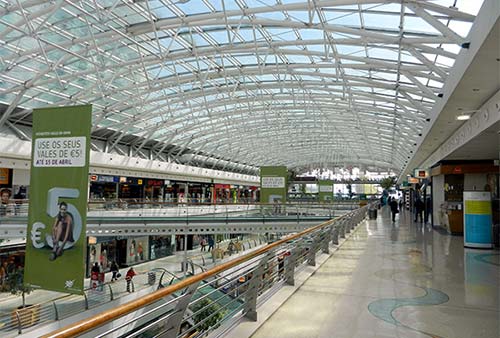
To Salema: To reach Salema, you’ll first need to get to Lagos, which is about 4 hours from Lisbon by train (see above) or bus (see next). Trains from Lisbon to the Algarve leave from Oriente station on the Lisboa-Faro line. At Tunes, a transfer to a local train takes you as far as Lagos. From there, it’s a cheap bus ride or a pricier taxi ride to Salema (see here details).
BY BUS
Lisbon’s efficient Sete Rios bus station is in the modern part of the city, three miles inland. It has ATMs, schedules, and two side-by-side information offices—one for buses within Portugal, the other for international routes (Rede Expressos, which sells tickets for routes—including to Spain—even if operated by other companies like Alsa). If you know your itinerary, purchase tickets online in advance, especially during busy summer months (off-season, a few days in advance is enough). The Vamus company covers the south of Portugal (www.vamusalgarve.pt), RodoTejo (Rodoviária do Tejo) focuses on central Portugal (+351 262 767 676, www.rodotejo.pt), and Rede Expressos does the rest of the country (+351 217 524 524, www.rede-expressos.pt [URL inactive]).
The bus station is across the street from the large Sete Rios train station, which sits above the Jardim Zoológico Metro stop. To get from the bus station to downtown Lisbon, it’s a €6 taxi or Uber ride or a short Metro trip on the blue line (from bus station, walk down stairs and across to enter the Sete Rios train station, then follow signs for Metro: Jardim Zoológico).
From Lisbon by Bus to: Coimbra (hourly, 2.5 hours), Nazaré (9/day, 2 hours), Fátima (1-2/hour, 1.5 hours), Batalha (3/day, 2 hours), Alcobaça (5/day, 2 hours), Óbidos (hourly, 1 hour, departs from near Campo Grande Metro stop), Porto (hourly, 3.5 hours), Évora (hourly, 1.5 hours), Lagos (hourly direct, 4 hours, easier than train, book ahead May-Sept), Tavira (almost hourly, direct, 4 hours), Madrid (2/day, 9 hours, overnight option, www.alsa.com [URL inactive]), Sevilla (3/day, 7 hours, overnight option, fewer off-season, jointly run by Alsa and Rede Expressos, www.alsa.com).
BY CAR
It makes absolutely no sense to drive in Lisbon. Dump your rental car at the airport and connect to your hotel by taxi or Uber (car return clearly marked; the airport is also a good place to pick up a car on your way out of town).
If you must drive and are entering Lisbon from the north, a series of boulevards takes you into the center. Navigate by following signs to Centro, Avenida da República, Marquês de Pombal, Avenida da Liberdade, Praça dos Restauradores, Rossio, and Praça do Comércio. If coming from the east over the Vasco da Gama Bridge and heading for the airport, just follow the signs. There are many safe underground pay parking lots in Lisbon (follow blue P signs; the most central is at Praça dos Restauradores), but they discourage longer stays by getting more expensive by the hour. Expect to pay over €20/day.
BY CRUISE SHIP
Most cruise ships dock at one of three terminals: Jardim do Tabaco (immediately below the Alfama), Santa Apolónia (near the train station of the same name, just beyond the Alfama), or Alcântara (about two miles west of downtown, between the center and Belém).
The taxis that wait here are notoriously dishonest. You may be better off using Uber, walking a block or two away from the terminal and hailing a passing cab on the street (not at a taxi stand), or riding a cruise-line shuttle service to Praça da Figueira. Hop-on, hop-off bus tours, which conveniently link up major sights—stop at the cruise terminals (see “Tours in Lisbon” earlier in this chapter).
Jardim do Tabaco and Santa Apolónia are close enough to walk to the Baixa (15-20 minutes)—just cross busy Avenida Infante Dom Henrique and walk along a mostly pedestrianized row of houses and new hotels, with the river on your left, until you reach Praça do Comércio. Or you could walk along the river most of the way into the city center. Another option is to take bus #728 from near either terminal to Praça do Comércio.