HAMBURG
NEAR THE TRAIN STATION, IN ST. GEORG
NEAR THE TRAIN STATION, IN ST. GEORG
SCHULTERBLATT (“SHOULDER BLADE”) NEIGHBORHOOD
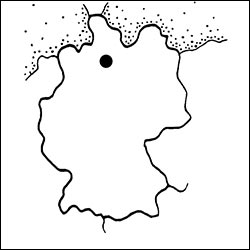
Hamburg is Germany’s second-largest city, the richest judged by per-capita income, and its most important port—even though it is about 60 miles from the North Sea. Like other “second cities”—such as Chicago, Marseille, Glasgow, Antwerp, and St. Petersburg—Hamburg has a special pride. It’s popular with German tourists, who come here to eat fish, watch soccer games, marvel at its mighty port, and experience the fabled nightlife of the Reeperbahn, the German answer to “Sin City” (and famous for launching the Beatles’ career). On weekends year-round—and just about any time the weather is nice—the city comes alive. Foreign visitors are in the minority, and American tourists are rare. Like many port towns, Hamburg can have rough edges, but a short stay can be memorable.
Hamburg (HAHM-boork) lacks a quaint medieval center. Ye Olde Hamburg was flattened by a one-two punch that occurred over a 101-year span: First, a devastating 1842 fire gutted the town center, and then an equally devastating firebombing by Allied forces in 1943 wiped out whole neighborhoods. Today the city center is a people-friendly collection of wide streets, outdoor cafés, office buildings, and shops—not unlike the downtown cores of many American cities. The most charming parts of Hamburg, however, are the neighborhoods outside the center, many of which show off Germany’s economic prosperity in the 19th and 20th centuries.
The name “Hamburg” very loosely derives from “castle on wet ground”—and the city, with nearly 2,500 bridges, is built to accommodate a 13-foot tide. A century ago, Hamburg’s seaport on the Elbe River was the third largest in the world. Today, the city’s fishy maritime atmosphere—with a constant breeze and the evocative cries of seagulls—gives Hamburg an almost Scandinavian, Dutch, or English feel that’s worlds away from the sun-drenched, Baroque joviality of Bavaria.
If you have German ancestors, there’s a good chance they left for America from here: Between 1850 and 1930, more than five million Germans emigrated to the US from Hamburg’s port. After the Iron Curtain cut off trade to the east, port traffic—and the city’s influence—dwindled. But since reunification in 1990, Hamburg has been returning to its former status as one of the biggest trade centers in Central Europe, and the city is expanding rapidly as it focuses on redeveloping its old docklands. The burgeoning HafenCity district and its spectacular Elbphilharmonie concert hall are turning Hamburg back toward its Elbe riverside. No longer content to be famous merely for its lusty sailors’ quarter and as the Beatles’ springboard to stardom, the new Hamburg expects to be seen as a cultural capital rivaling other great cities throughout Europe.
PLANNING YOUR TIME
If you’re passing through on your way between Germany and Denmark, Hamburg is certainly worth a quick stop. At the very least, toss your bag in a train-station locker and enjoy a 1.5-hour hop-on, hop-off bus tour and a harbor cruise before taking an evening train out.
But with its variety of attractions, Hamburg can easily fill a rewarding day (or more) of sightseeing. While you could see the sights in any order, consider this busy all-day plan using public transit (leave by 9:30 if you want to take the worthwhile noon harbor tour):
In the morning, visit the sights in the city center, starting at the City Hall (Rathaus). Have a look at the posh shops around Jungfernstieg and the Binnenalster lakefront. The St. Nikolai Memorial is a short walk in the opposite direction; from there make your way to the distinctive architecture of the Kontorhausviertel neighborhood. From the Mönckebergstrasse U-Bahn stop a few blocks north, the U-3 line will take you to the Landungsbrücken stop, just above the waterfront where the harbor cruise starts.
After the cruise, decide how to spend your afternoon. To visit sights in the Speicherstadt warehouse district and go up to the Elbphilharmonie’s Plaza viewing platform, take the #72 public ferry from the Landungsbrücken harborfront. Alternatively, you could walk from the harbor to the Hamburg History Museum, then return from the adjacent St. Pauli U-Bahn stop to the train station or your hotel via the U-3 line.
The U-3 will also take you to the Sternschanze stop, perfect for an evening stroll and dinner in the happening Schulterblatt neighborhood. Cap off your full day with the self-guided “Reeperbahn Walk” (see here) to see this nightlife area at full-tilt.
Orientation to Hamburg
Hamburg is big (1.8 million people, sprawling to 5 million in the surrounding metropolitan area). You can walk between some of its sights, but you’ll need to use public transit to reach the top ones. The city center sits between the Elbe River to the south and a lake called the Binnenalster to the north, and is surrounded by a ring road that follows the route of the old city walls. Away from the City Hall and the pleasant pedestrian streets of Spitalerstrasse and Mönckebergstrasse, the center is fairly workaday. Most places of interest are just outside this downtown core: The train station and the St. Georg neighborhood (with good hotels and restaurants) are east of the center; the harbor, old Speicherstadt warehouse district, and the new HafenCity zone are to the south along the Elbe; the St. Pauli waterfront district and the red light/entertainment zone along the Reeperbahn lie to the west; and to the northwest is the lively Sternschanze quarter and Schulterblatt (“Shoulder Blade”) neighborhood.
TOURIST INFORMATION
Hamburg’s main TI—in the train station, above the north end of tracks 3-4—is a good place to buy a Hamburg Card (daily 9:00-17:00, +49 40 3005 1701—not answered Sat-Sun, www.hamburg-travel.com). There are also TIs at the St. Pauli Landungsbrücken harborfront (Thu-Sun 11:00-16:00, closed Mon-Wed) and the airport (daily 6:00-23:00). Visit the TI website to download a free Hamburg tourism app with tips and an offline map.
Hamburg Card: If you plan to see at least two or three museums, especially with a travel partner (or two), this card is a sound investment. Sold at TIs and public-transit ticket machines, it covers a full day of public transit plus reduced-priced entry to many sights. While the discounts are modest (10-33 percent), the card costs only a little more than a transit pass (€10.90/day, €18.90/day for groups of up to 5; 2- and 3-day cards available).
ARRIVAL IN HAMBURG
By Train: Hamburg’s main train station (the Hauptbahnhof) has a handsome interior with a classic steel-arch design. The station is within walking distance of Hamburg’s City Hall and recommended hotels in the St. Georg neighborhood. For other destinations, use the subway and buses.
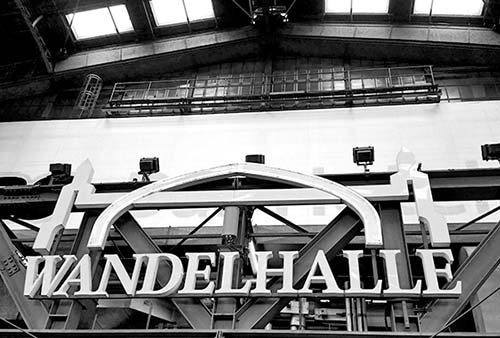
From the platforms, escalators lead up to bridges that span the tracks at the north and south ends of the building; at each end of each bridge is an exit (four exits in all). The northern bridge—look for the giant Wandelhalle sign in the middle—has most services, including ticket counters in the Reisezentrum (long hours daily). You’ll also find the TI (above tracks 3-4), WCs, a left-luggage desk (next to the Reisezentrum, daily 8:00-20:00), and several banks of lockers (one is above tracks 5-6). Exit from here to reach my recommended St. Georg neighborhood hotels.
By Bus: Long-distance buses come and go from the large, covered bus terminal (ZOB) located just around the corner from the southern end of the main train station (across from the Arts and Crafts Museum).
By Plane: Hamburg’s airport (code: HAM, +49 40 50750, www.hamburg-airport.de) is a simple ride from the train station on the S-1 subway line. The journey takes only 30 minutes (6/hour, runs 4:30-24:00). A Hamburg Grossbereich ticket (€3.50) will cover your journey, but consider getting a transit day pass or a Hamburg Card if you’ll be doing more travel that day. Note that if you’re traveling to the airport, S-1 trains from the city divide at Ohlsdorf, one stop before the airport. Generally, the first three cars go to the airport—but pay attention to the signs and ask fellow passengers to be sure.
HELPFUL HINTS
Fischmarkt: If you’re here on a Sunday, it’s worth getting out of bed for this venerable market (about 5:00-9:30). It’s a rich sensory experience: Smell the fresh flowers (and even fresher fish), wander among colorful baskets of produce, hear the stall-keepers shout out closing-time deals, enjoy the fun music-festival vibe, and marvel at the Germans drinking beer this early in the morning (many are wrapping up a night out in St. Pauli).
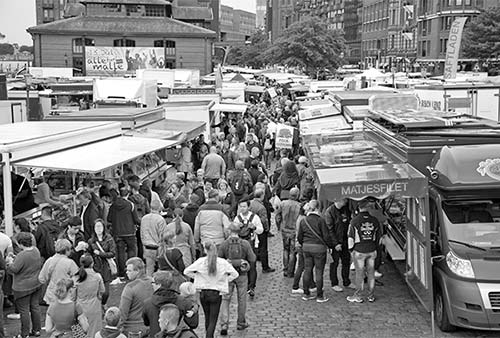
To reach the market from the St. Georg neighborhood, catch bus #112 and ride it to the Hafentreppe stop (leaves from other side of train station, across the street from the end of Spitalerstrasse; 2-3/hour on Sunday mornings, 15 minutes). Otherwise, take the S-1 or S-3 to the Reeperbahn stop, or the U-3 to Landungsbrücken, and walk a few blocks to the market.
Laundry: Near the train station and convenient to St. Georg hotels, Express Wasch-Center offers both self-service and full service (Mon-Sat 9:00-18:00, closed Sun, facing Hansaplatz at Zimmerpforte 6—from Lange Reihe, walk down Baumeisterstrasse until you reach Hansaplatz, then continue left along the north side of the square to the next street, +49 40 280 4655).
Bike Lanes and Pedestrians: The city is a delight to explore on two wheels (see rental info, next). But be alert: Red-brick pavement on the sidewalk means it’s a bike lane. Pedestrians should stay on the gray part of the sidewalk. Bicyclists show little patience for tourists who stray onto the brick.
Bike Rental: StadtRAD stocks distinctive red bikes at 250 automated rental stations scattered across town. The first half-hour is free, but you must pay a €5 registration fee that gives you about an hour of additional credit (+49 40 822 188 100, www.stadtrad.hamburg.de).
Taxi: Try Hansa-Taxi (+49 40 211 211).
GETTING AROUND HAMBURG
Public transport makes sightseeing efficient in this spread-out city. Hamburg’s subway system includes both the U-Bahn (with four lines, U-1 to U-4) and S-Bahn (commuter rail lines). Buses and public ferries, which are both covered by the various transit passes, round out the system.
The Hamburg transport association—known as HVV—has an information office next to the TI in the train station (long hours daily, +49 40 19449, www.hvv.de). Buy tickets from machines marked HVV at any U-Bahn or S-Bahn stop (use coins and small bills). Buy bus tickets from the driver (will make change). Tickets bought from machines or drivers are already validated; you don’t need to stamp them again.
Single ticket prices vary with ride length; the shortest trips cost €1.80, longer trips cost €2.40, and the longest trips (within the Grossbereich—greater city limits, including the airport) cost €3.50. Key your destination into a ticket machine, and it will tell you the price of the ticket.
Day passes pay for themselves quickly and give you the run of the whole system, including ferry rides on the Elbe River. Options include the 9-Uhr-Tageskarte day pass (€6.90) or the 9-Uhr-Gruppenkarte for groups of up to five people (€12.90, neither valid Mon-Fri before 9:00). If you need to use the system before 9:00 on weekdays, buy the full-day pass (Ganztageskarte, €8.20).
Tours in Hamburg
Free Walking Tours
As in most big German cities, you’ll find a variety of “free” walking tours (but guides hope for at least a €5/person tip). They all offer once-over-lightly walks through town with commentary that’s more entertainment than history. Look for brochures or ask at the TI for information.
Do-It-Yourself Orientation Tour: U-3 Subway
For a brief orientation to the city, enjoy a short ride from the train station to the harborfront at Landungsbrücken. Starting at the Hauptbahnhof Süd U-Bahn stop, take the U-3 in the direction of Schlump/Barmbek. The first two stops are underground; then, at the Rödingsmarkt stop, you’ll emerge onto elevated tracks that run past downtown office buildings (at this stop, look right to see the St. Michael’s Church tower, and left to see the St. Nikolai Memorial tower). At the next stop, Baumwall, you can see Speicherstadt (“Warehouse City”), Hamburg’s warehouse district, and the striking Elbphilharmonie concert hall. On the way to the next stop (Landungsbrücken), enjoy the view of the harbor, with its massive port and thriving riverfront. At Landungsbrücken you can detour to the harbor, return to the station, or continue to your destination.
▲▲Hop-On, Hop-Off Bus Tours
With its most interesting sights scattered on the perimeter, Hamburg is well suited to an above-ground orientation. Several companies run circular city bus tours (€17-19 for 1.5 hours, discount with Hamburg Card). The double-decker buses (which go topless when it’s sunny) offer a smooth, high ride with a steady flow of sights and brief multilingual narration, allowing you barely enough time to identify what you’re seeing.
The most logical starting points are at the train station (the double-decker buses park along Kirchenallee) and near the Landungsbrücken pier. Before boarding, make sure that you’re on a bus with English commentary. One company with frequent departures and good English guides is Die Roten Doppeldecker; look for red buses with white Stadtrundfahrt lettering (€18.50 all-day ticket, 20 stops, departs every half-hour 9:30-17:00, less frequent Nov-March, +49 40 7961 3310, www.die-roten-doppeldecker.de). A €32.50 combo-ticket adds the recommended Rainer Abicht harbor boat tour.
Boat Tours
To get out on the river, you can take a tour (in English using downloadable app), a hop-on, hop-off boat with English narration, or one of the less interesting (but cheaper and more frequent) public ferries; see here for more details. Within the city center, canal boats leisurely circle the Binnenalster lake, with a few routes also swinging through the Speicherstadt/HafenCity development (described on here).
Local Guide
Consider Hamburg native Tomas Kaiser (€190/2 hours, €350/half-day, rates are flexible, +49 170 232 7749, info@tomaskaiser.de). The professionals in the Hamburg guide association can cover everything from Hamburg highlights and historical sights to urban districts and boat trips. The association’s website has a list of guides and their contact info; Birgit Scheffner is one of the most experienced (around €135/2 hours, www.hamburger-gaestefuehrer.de, info@hamburger-gaestefuehrer.de).
Sights in Hamburg
▲▲St. Nikolai Memorial (Mahnmal St. Nikolai)
▲Hamburger Kunsthalle (Hamburg Art Gallery)
▲Arts and Crafts Musuem (Museum für Kunst und Gewerbe)
Deichtorhallen (Museum of Photography and Contemporary Art)
Kontorhausviertel Neighborhood and Chilehaus
BETWEEN DOWNTOWN AND THE REEPERBAHN
▲▲Hamburg History Museum (Museum für Hamburgische Geschichte)
ST. PAULI LANDUNGSBRÜCKEN HARBORFRONT
Map: St. Pauli Landungsbrücken
▲Harbor and Port Guided Boat Tour
▲▲Elbphilharmonie Concert Hall
▲▲International Maritime Museum (Internationales Maritimes Museum)
Schulterblatt (“Shoulder Blade”) Neighborhood
▲BallinStadt Emigration Museum
IN THE CITY CENTER
City Hall (Rathaus)
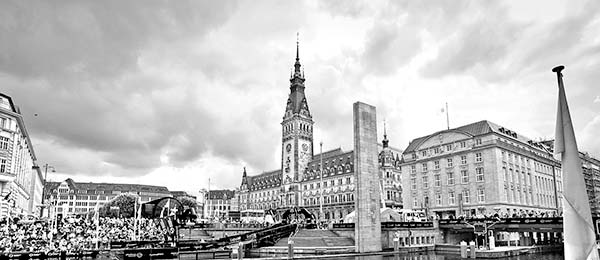
Hamburg’s impressive City Hall, a mix of Historicist styles (from 1897), was designed to showcase the wealth and grandeur of turn-of-the-20th-century imperial Germany. While the building is called a “City Hall,” Hamburg actually forms its own Land (state) within the Federal Republic of Germany, and the council that meets in the City Hall chambers is more like a state legislature.
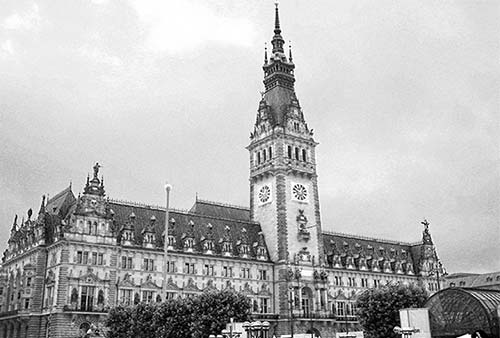
Cost and Hours: Free to enter entrance hall and inner courtyard; Mon-Fri 7:00-19:00, Sat 8:00-18:00, Sun until 17:00; daily €5 English-language tours generally run every 2 hours 11:15-15:15 (45 minutes, canceled for special events, more frequent German-language tours); on Rathausmarkt, +49 40 428 312 064, www.hamburg.de/rathausfuehrung.
Getting There: The City Hall has its own stop on the U-3 subway line (Rathaus); it’s also very near the Jungfernstieg stop on the U-1, U-2, and U-4 lines. Enter under the archway into the lobby, where you’ll find a desk with free info sheets and tour tickets.
Hamburg’s Lakes
Hamburg’s delightful lakes started as one big lake that formed when townsfolk built a mill that dammed the Alster River. During the Thirty Years’ War, the city fortified itself behind a defensive wall that split the millpond in two.
To reach the first of these lakes from the square in front of City Hall, simply walk to the adjacent canal and turn right. From anywhere else in the city, ride the S-Bahn or U-Bahn to the Jungfernstieg stop.
Binnenalster: The smaller and (as its name suggests) inner of the two lakes, the Binnenalster lies a long block from the plaza in front of City Hall. For a good look, head to the little viewpoint at the south corner of the lake (near the canal boat dock). Look left along the waterside Jungfernstieg, the city’s most elegant promenade and home to its top-of-the-line shops, including a huge Apple Store (at #12) and the flagship showroom of Nivea (established in Hamburg in 1911, at #51). Along the shore to the right, you can see the headquarters of Hamburg’s most important shipping company, Hapag-Lloyd. This area gives you a good look at how the city rebuilt after a fire in the mid-19th century, when it turned its back on the Elbe to face this lake. For a better view, have lunch at the fourth-floor $$ self-service restaurant inside the Alsterhaus department store (at #16) or visit the Thalia bookstore (inside the huge Europa Passage shopping mall).
Red-and-white Alsterschippern canal boats leave from the dock on Jungfernstieg for sleepy one-hour tours around the lakes (€18, every 30 minutes daily 10:30-17:00, less frequent Oct-March, guided commentary only in German, +49 40 357 4240, www.alstertouristik.de). A two-hour version adds a trip through the Speicherstadt and HafenCity urban-renewal zone (€23.50; Mon-Thu 10:00 and 13:45; Fri-Sun 10:00, 13:45, and 16:15).
Aussenalster: The “outer Alster” is the bigger, more parklike and residential of Hamburg’s lakes. In the past, when private gardens tumbled down from mansions lining the lake, much of the Aussenalster was off-limits to regular citizens. But a 1953 law guaranteed public lake access for everyone, and walking and biking paths now trace its nearly five-mile-long shore, providing Hamburg—one of Germany’s greenest cities—with sprawling parkland. On a nice day, the lake is jam-packed with sailboats. With extra time, you could take a bike ride (see “Helpful Hints,” earlier) or rent a rowboat or sailboat at the small marina. Tiny arms of the lake stretch scenically into fancy residential neighborhoods at the north end.
▲▲St. Nikolai Memorial (Mahnmal St. Nikolai)
Before the mid-20th century, downtown Hamburg’s skyline had five main churches, each with a bold tower. Today there are still five towers...but only four churches. The missing church is St. Nikolai. It was designed in the Neo-Gothic style by British architect George Gilbert Scott, and for a brief time after its completion in 1874, it was the world’s tallest church (at 483 feet; its spire is still the fifth tallest in the world). The church was destroyed by the Operation Gomorrah firebombing in 1943. Its tower (open to visitors) and a few charred walls have been left as a ruin to commemorate those lost, and museum exhibits in the church cellar detail Hamburg’s wartime destruction. As with similarly ruined churches in Berlin and Coventry (England), a stroll here, between the half-destroyed walls of a once-stunning church, is an evocative reminder of the horrors of war.
Cost and Hours: Ruins—free to explore and always viewable; tower and museum—€5, Wed-Mon 10:00-18:00, closed Tue; Willy-Brandt-Strasse 60, +49 40 371 125, www.mahnmal-st-nikolai.de. It’s a five-minute walk from the Rödingsmarkt U-Bahn station—just follow busy Willy-Brandt-Strasse toward the tower—or a 10-minute walk from the Speicherstadt district or City Hall.
Visiting the Memorial: The footprint of the church has a few information posts as well as some modern memorials. Where the original altar once stood is now a simple concrete altar; behind it is a 1972 mosaic (Ecce Homo) based on a drawing by German Expressionist artist Oskar Kokoschka, showing Jesus on the cross being offered a vinegar-soaked sponge. To the right of the fresco, notice the sculpture (Ordeal) honoring people who died in the Nazi-era concentration camp Sandbostel, west of Hamburg. The bricks at the sculpture’s base came from the camp barracks, and the plaque with the words of the theologian Dietrich Bonhoeffer are an important reminder for troubled political times: “No man in the whole world can change the truth. One can only look for the truth, find it and serve it.” The tower’s 51-bell carillon, funded with local donations in 1993, plays music daily at 9:00, 12:00, 15:00, and 18:00. A live carillonneur plays 30-minute concerts every Thursday at noon.
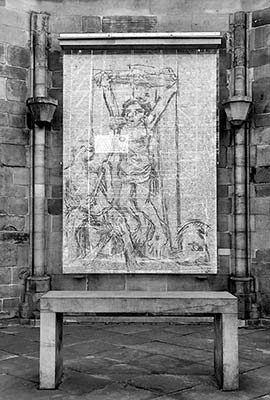
The tower still stands tall above the shell of the former church, and you can ride a speedy elevator 250 feet up to its observation platform. This vantage point provides a good visual orientation to Hamburg, with views of City Hall and lakes in one direction and the Speicherstadt warehouse district in the other (supplemented by a half-dozen informational panels).
With its port, munitions factories, and transportation links, Hamburg was a prime target for Allied bombers during World War II. After studying what the Luftwaffe did to Coventry in 1940, the British decided to use the same techniques against Hamburg on July 27, 1943. They hit targets first with explosive bombs to open roofs, break water mains, and tear up streets (making it hard for firefighters to respond), then followed up with incendiary bombs. Designed to destroy a city known for its licentious ways, the attack was given the codename Operation Gomorrah.
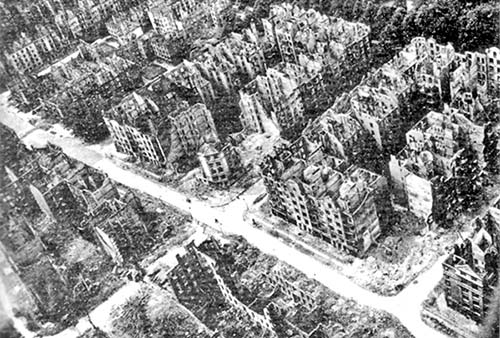
It had been a hot, dry summer, and when 700 RAF bombers concentrated their attack on a relatively small area, the result was an exceptionally intense firestorm. A tornado of flames raged at up to 150 miles per hour, reaching temperatures of 1500°F. Many inhabitants were baked to death huddling inside their air-raid shelters. Some who went outside were sucked off their feet, disappearing up into the super-heated vortex. Roads and sidewalks caught on fire—the shoes of those who tried to run across the roadways became mired in boiling asphalt.
In three hours, the inferno killed an estimated 35,000 people, left hundreds of thousands homeless, and reduced eight square miles of Hamburg to rubble and ashes. At the end of the eight-day bombing campaign, which included US raids, about one million survivors had fled the city and over 40,000 were dead. The firebombing of Dresden two years later is better known, but far more people died in Hamburg. And while the earlier Nazi bombings of London, Rotterdam, and Coventry were deadly, some historians say the firebombing of Hamburg was World War II’s first widespread destruction of a major city.
The underground museum is modest yet effective, depicting the life, death, and resurrection of the church. Photos show the church’s interior in all its pre-WWII glory alongside bits salvaged after the bombing (including some original stained-glass windows). Start in the hallway with a timeline of the church’s history. In the first room, follow the counterclockwise display through a detailed retelling of the devastating firestorm. Then, in the second room, finish with a thoughtful examination of how the city came to grips with its aftermath—logistically, culturally, and morally. Consider that Hamburg’s senior citizens experienced the firebombing firsthand—and yet the museum does not paint the Allied forces as bad guys, and reminds visitors that Hitler had done much the same to other cities (see the photos of a destroyed Warsaw) long before the destruction was visited upon German soil. One display invites visitors to imagine the fear and guilt experienced by the British bombers (many of whom were unaware they’d be attacking a civilian center).
▲Hamburger Kunsthalle (Hamburg Art Gallery)
Though not as renowned as art museums in Berlin or Munich, this sprawling and high-quality collection is worthwhile, especially for its many excellent paintings by German artists. The museum spreads over several buildings just north of the train station, showcasing Old Masters, New Masters, 19th-century artists, and Modern Masters.
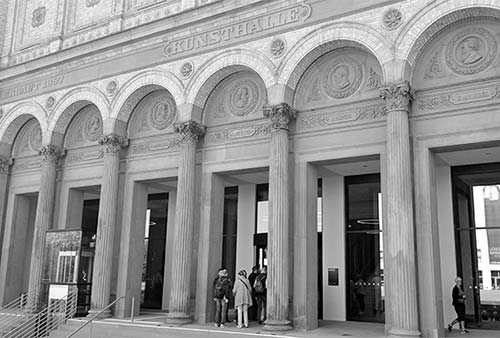
Cost and Hours: €14; Tue-Sun 10:00-18:00, Thu until 21:00, closed Mon; audioguide-€4 or download free app, café, Glockengiesserwall, +49 40 428 131 200, www.hamburger-kunsthalle.de.
Visiting the Museum: In the spacious, light-filled foyer, notice the terrazzo floor from 1869, which had been hidden for many decades under linoleum. The core of the collection is displayed in the Lichtwark Gallery building, where visitors will find fine examples by 20th-century German Expressionists (Max Beckmann, Ernst Ludwig Kirchner) and 19th-century Romantics (Caspar David Friedrich, Philipp Otto Runge). Come appreciate one of the towering masterpieces of German painting, Friedrich’s Wanderer above the Sea of Fog, dating from 1818. The Galerie der Gegenwart (Gallery of the Present) is the contemporary art annex, featuring German heavyweights like Gerhard Richter. The museum also presents excellent special exhibits, which can be reason enough to visit.
▲Arts and Crafts Museum (Museum für Kunst und Gewerbe)
South of the train station, this museum has three floors of decorative and applied arts. The focus is on historical European items (ground floor), with more than 30,000 objects from the Middle Ages and on. The upper floors feature items from other periods and places, including Buddhist and Islamic pieces. Taken together, the sculptures, ceramics, textiles, furniture, jewelry, and musical instruments displayed here are a tangible timeline of human creativity and inventiveness. The temporary exhibits are often excellent.
Cost and Hours: €12, €8 on Thu after 17:00; open Tue-Sun 10:00-18:00, Thu until 21:00, closed Mon; café, Steintorplatz, +49 40 428 134 880, www.mkg-hamburg.de.
Deichtorhallen (Museum of Photography and Contemporary Art)
Farther south from the Arts and Crafts Museum, at the end of Hamburg’s Kunstmeile (“art mile”), you’ll find one of the largest centers in Europe for contemporary art. Art fans will enjoy the often high-profile, changing exhibits, but the exhibition space itself is worth a look. Originally built around 1914 as market halls, the soaring steel-and-glass structure is a rare surviving example of industrial architecture transitioning between 19th-century Art Nouveau and 20th-century styles. Just across from the museum are the offices of Germany’s leading newsmagazine (Der Spiegel), testifying to Hamburg’s status as a media capital.
Cost and Hours: €15, Tue-Sun 11:00-18:00, closed Mon; café, Deichtorstrasse 1, +49 40 321 030, www.deichtorhallen.de.
Kontorhausviertel Neighborhood and Chilehaus
The German name for this small neighborhood (which translates roughly as “office building quarter”) undersells its architectural importance. The area is made up of unique buildings constructed in the “Brick Expressionist” school, mostly between 1920-1930. The finest example is the Chilehaus, an immense flatiron-style building (north of Willy-Brandt-Strasse across the street from the Messberg U-Bahn station). Designed by Henry Sloman in 1922-1924, it’s shaped like a ship, down to the railing-lined balconies on the upper floors that resemble decks, and comes to a razor-sharp point at the corner. The facade is especially impressive when it’s illuminated at night. At the nearby Sprinkenhof building, study the exterior decoration all done in brick, including dozens of individual images of ships, castles, hands, and wheels. While there’s no museum here, you can poke around the buildings’ courtyards (with unpretentious cafés and shops that seem oblivious to the area’s significance) and step into the entrance lobbies, still decorated with the Art Deco-style directories of the original tenants.
Chocoversum Chocolate Museum
This delightfully decadent chocolate universe is the sweet to Hamburg’s salty. Most people find the museum’s free shop—itself a tempting tribute to cocoa—enough of a treat. The museum is an expensive interactive experience: A mandatory 1.5-hour guided tour wraps history, tasting, and creation into one. You’ll leave with your own handmade chocolate bar.
Cost and Hours: Shop free and open daily 10:00-18:00; €21 tours run every 30 minutes in German (ask for English handout), English tours usually offered several times a day—check website for times; Messberg 1—enter on Pumpen street, across from Chilehaus; +49 40 4191 2300, www.chocoversum.de.
BETWEEN DOWNTOWN AND THE REEPERBAHN
St. Michael’s Church
While unexceptional by European standards, Hamburg’s most famous church, known simply as “der Michel,” is worth a look if you have time. The interior is bright and wide; the decoration, unusually ornate for a Protestant church, recalls its Baroque origins (it opened in 1768). A total rebuild after a 1906 fire—started by workers repairing the roof—lent the church a little of the flavor of an early-20th-century movie palace. The church has fine acoustics (a special channel brings the organ’s sound through a latticed grate in the ceiling) and hosts many concerts. You can ascend its 350-foot-high, lantern-shaped tower (452 steps, or 52 steps plus an elevator) to see the clock and bell mechanics. While the views are fine, they’re not spectacular—revealing how dull and modern Hamburg’s urban core is.
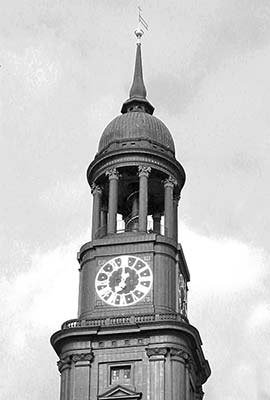
Cost and Hours: Free but €2 requested donation, tower-€6, skippable crypt-€5, combo-ticket-€8; daily 9:00-20:00, Nov-March 10:00-17:30, closed to visitors during services; Englische Planke 1, +49 40 376 780, www.st-michaelis.de. Several U- and S-Bahn stops are about a 10-minute walk away, including Baumwall, Rödingsmarkt, and Stadthausbrücke.
Nearby: At Krayenkamp 10, about 50 yards behind the church, duck through the archway for a glimpse of the Krameramtsstuben—a few half-timbered buildings along a narrow lane that form a rare surviving bit of the 17th-century city. Though today lined with kitschy souvenir shops, these were originally houses built for widows of Hamburg’s guild members.
▲▲Hamburg History Museum (Museum für Hamburgische Geschichte)
Like the history of the city it covers, this museum is long, complex, and multilayered. Filling a giant old building with a staggering variety of artifacts and historical re-creations, the modern, thoughtful exhibits work together to illuminate the full story of Hamburg (with an emphasis on its status as one of the world’s biggest shipping ports). You’ll learn about the city’s industrial growth, devastating 1842 fire, WWII firebombing, development of its excellent infrastructure, and environmental conditions of the Elbe River. A highlight is the preserved bridge of an old steamship showing what life was like for the officers on board. Multiple large models of the city at various points in its history help you track how the place changed over time.
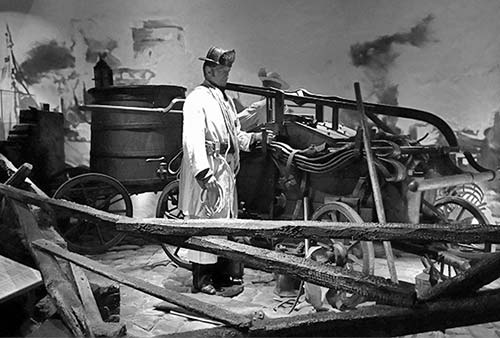
The core of the exhibit is on the first floor; the ground floor has exhibits on the 20th century and a delightful Jugendstil (Art Nouveau) café with seating in the glassed-in courtyard; and the top floor has large exhibits on Hamburg’s Jewish community and beautifully re-created Baroque-era rooms. As the museum is close to the St. Pauli U-Bahn stop, it’s easy to combine with a visit to the Reeperbahn (described later) for a day of contrasts.
Cost and Hours: €9.50; Mon and Wed-Fri 10:00-17:00, Sat-Sun until 18:00, closed Tue; Holstenwall 24, +49 40 428 132 100, https://shmh.de/de/museum-fuer-hamburgische-geschichte.
Nearby: The museum sits within the inviting park around the Grosse Wallanlagen rampart in the Planten un Blomen gardens (described next), which curls around the route of the former moat, through the heart of town to the Binnenalster and Aussenalster lakes. For a nice approach to the museum from the St. Pauli U-Bahn stop, cut through the park and around the back of the museum (see orientation maps at park entrance).
Planten un Blomen
The wide strip of parkland called Planten un Blomen (“plants and flowers”) stretches all the way from the harbor to the Binnenalster lake on the site of Hamburg’s old city wall. Of the park’s varied sections, the most worthwhile is the northern stretch, near the Stephansplatz U-Bahn and Dammtor S-Bahn stops. It’s an oasis of calm ponds, playful fountains, happy bunny rabbits, and colorful gardens (including a rose garden and a Japanese garden). Dotted with cafés, it’s an ideal place to stroll with an ice-cream cone after a day of sightseeing—or sit back in an Adirondack chair under the shadow of the ray-gun TV tower.
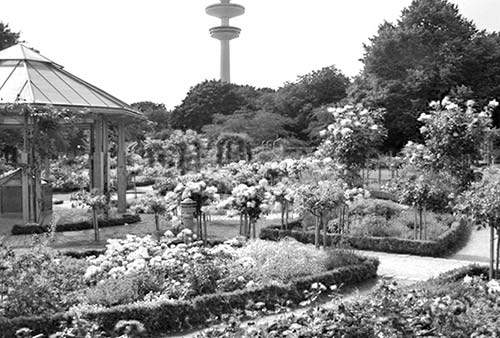
Cost and Hours: Free; daily 7:00-20:00, later in summer, best before dark; S-11, S-21, or S-31 to Dammtor or U-1 to Stephansplatz; www.plantenunblomen.hamburg.de.
Brahms Museum
Although the composer was born in this part of Hamburg, Johannes Brahms’ actual boyhood home is long gone. This museum has a modest collection that would interest only Brahms devotees (€9; Mon-Fri 10:00-17:00, Sat-Sun from 13:00; about a block from Hamburg Museum at Peterstrasse 39, +49 40 4191 3086, www.brahms-hamburg.de).
ST. PAULI LANDUNGSBRÜCKEN HARBORFRONT
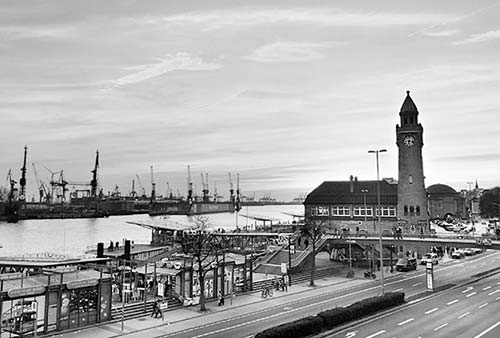
Once Hamburg’s passenger ship terminal, this half-mile-long floating dock, which parallels the waterfront, is now a thriving, touristy, borderline-tacky wharf that locals call “the Balcony of Hamburg.” A visit is worth ▲▲. From here you can inhale the inviting aroma of herring and french fries while surveying the harbor and the city’s vast port.
From the Landungsbrücken S- and U-Bahn stop (or from Davidstrasse, if you’re walking down from the Reeperbahn), head toward the water. As you walk down, you’ll be assailed by employees of the many tour-boat companies, each pitching their trips—ignore them (most are German language-only excursions). You’ll see the venerable light-brown stone former terminal building (now filled with shops, a busy TI, and a Hard Rock Café), with its appropriately grandiose tower meant to evoke the ancient lighthouse in Alexandria, Egypt.
From the landing you can catch a public ferry, hop a guided boat tour, walk a short way to hike under the river, or tour a historic ship. Consider a lunch break at the harbor’s own brewery, the recommended Blockbräu.
Cruising the Harbor
Facing the water behind the terminal building, nine numbered docks—a.k.a. the Landungsbrücken (“landing bridges”)—stretch along the harbor. The numbers get larger from left to right—bridge 1 (with the SS Rickmer Rickmers museum ship and ferry #72) is to the far left; the Landungsbrücken S- and U-Bahn pedestrian overpass and ferry #62 are at bridge 3; and the terminal building and Rainer Abicht cruises are at bridges 1 and 4. Notice how this area, like the rest of Hamburg’s waterfront, is designed to accommodate the Elbe’s 13-foot tides.
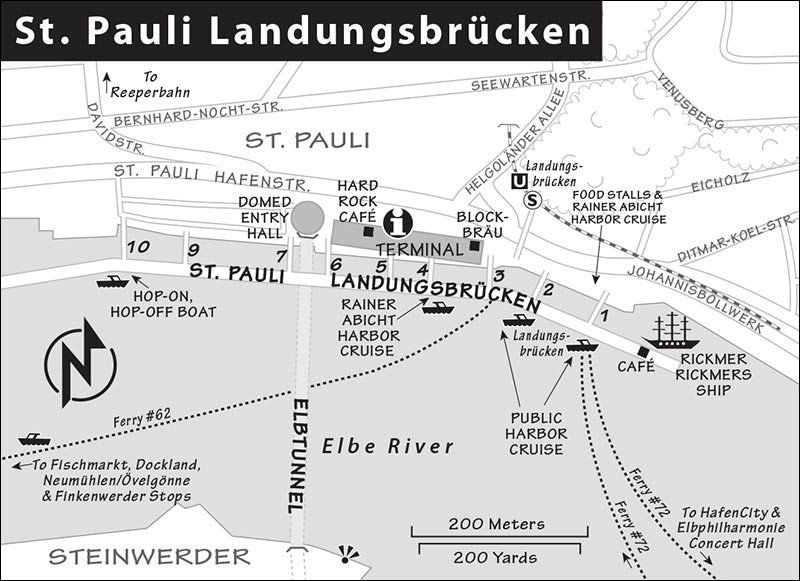
On sunny days and most weekends the harbor swells with tourists eager to get on the water. Public ferries are crowded, and riders scrum at the gangway to fight their way onboard. If you’re short on time or patience, consider taking one of the tour boats listed below instead.
▲Harbor and Port Guided Boat Tour
Of the hundred or so big-boat harbor tours that go daily here, only a few come with English narration. For years the best was Rainer Abicht, but on my last visit they offered English only via a downloadable audioguide. Their tour gives you a view from the water of all the construction in Hamburg. The industrial port is a major focus of the trip, and getting up close to all those massive container ships, cranes, and dry and wet docks is breathtaking. You can order a drink to sip as you take it all in from the deck (bring a sandwich for a discreet picnic).
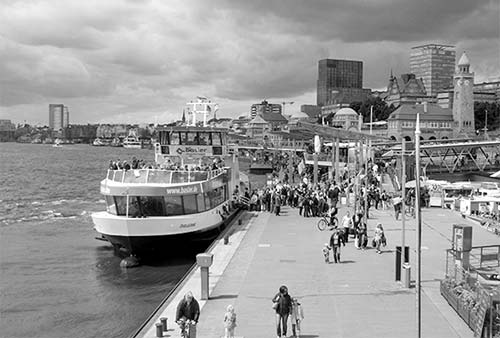
Cost and Hours: One-hour harbor tour—€22 (€32.50 combo-ticket with Roten Doppeldecker bus tour); tours run daily 10:00-18:00 every 30 minutes (shorter hours off-season), download free app for English audioguide; +49 40 317 8220, www.abicht.de. Their waterside ticket windows are by bridge 1 at the promenade and by bridge 4 (look for the blue-and-white boats).
▲Hop-On, Hop-Off Boat Trip
Maritime Circle Line operates a 1.5-hour journey with live English narration three times a day covering the basic harbor highlights. The benefit of choosing this over a harbor tour is the live guide and the freedom to disembark at any of its stops, including the BallinStadt Emigration Museum.
Cost and Hours: €22 (€27 combo-ticket includes BallinStadt, discounts with Hamburg Card); April-Oct daily at 11:00, 13:00, and 15:00; some off-season tours with fewer stops, +49 40 2849 3963, www.maritime-circle-line.de. Ticket windows and departure point are at bridge 10.
Harbor Tour by Public Ferry
Hamburg’s ferries, which take the same tickets and passes as the S-Bahn and U-Bahn, give you a fine look at the harbor and a lot of the port action, but won’t actually take you into the industrial port area—for that, you’ll need to take one of the privately operated tour boats listed earlier. There’s no point in riding this ferry if you’re already taking a privately operated tour. Take ferry line #62 (4-5/hour 7:00-19:00, 2-4/hour 19:00-23:00), and use your transit-system day pass (ticket machines on the docks and on board) or Hamburg Card. The ride described below takes about one hour. Only bigger ferries have WCs and snack booths—but bringing a picnic on board is fully OK.
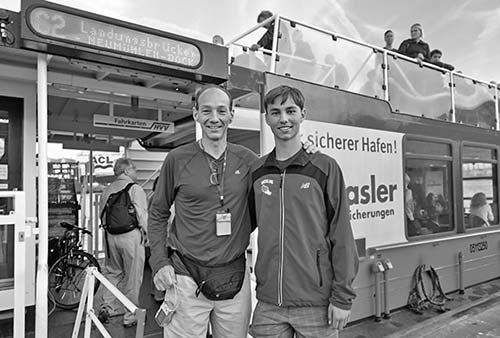
 Self-Guided Tour: From the Landungsbrücken terminal building, go to bridge 3 and find the signs for ferry line #62 to Finkenwerder. With stops, it’s a 28-minute trip downstream and another 28 minutes back—if you like, you can stay on the same ferry, but boats leave often enough for easy hopping on and off.
Riding toward Finkenwerder, the first stop is Fischmarkt, which hosts a popular market (produce, fish, flea market) that’s only open on Sunday morning (see here).
The second stop is Dockland, also the name of the enormous office building designed to look like a gigantic yacht. Its “stern” is a series of climbable terraces that lead to a viewpoint rooftop.
Soon after Dockland, watch on the right for the Schlepper (tugboat) station, with a row of tugs lined up and ready to go. Because Hamburg sits about 60 miles inland from the sea, arriving ships have to traverse a long stretch of river—and at the regulated low speeds, very large ships can’t gain enough momentum to steer, forcing them to rely on this fleet of plucky tugboats. Behind them, notice the red line on the quay. This was the high-water mark of the 1962 flood, which killed more than 300 people and destroyed about 6,000 buildings within the city.
As you pull into Neumühlen, the third stop, consider that you’re cruising right over the eight lanes of autobahn traffic that speed through a tunnel (built in 1975). You could break your journey here, below hillside villas in the posh neighborhood of Övelgönne. You can see the modest “museum harbor” (Museumshafen) of retired boats bobbing near the ferry dock, eat lunch at one of the two reasonably priced cafés nearby (Elbterrassen and Museumshafen Café), or enjoy Hamburg’s beach (a short walk downstream, visible from the ferry pier). Bus #113, which terminates at the Neumühlen pier, runs every 10-20 minutes and is an alternative way to get from Övelgönne back to St. Pauli (via the suburban Altona train station, where you’d catch the S-Bahn to St. Pauli). Or, ride the boat all the way to Finkenwerder, then turn around to sail back to Landungsbrücken.
The Finkenwerder stop, where the ferry turns around, is on an island that’s home to Airbus’ test runway, which was used to develop the superjumbo A380.
Quickie Option: For a shorter ferry ride, try this: At Landungsbrücken, go to bridge 1 and catch line #72 toward the city center to HafenCity and the Elbphilharmonie concert hall (7-minute trip, 2-4/hour, Mon-Sat 6:00-23:00, Sat-Sun from 9:00).
Other Landungsbrücken Sights
St. Pauli Elbtunnel
Continental Europe’s oldest underwater tunnel, completed in 1911, is marked by a green-domed entry hall designed to resemble the Pantheon in Rome (just past the Hard Rock Café at the right end of the terminal building, close to bridge 6). To take a memorable look at some century-old technology, walk down the stairs or ride an elevator—ogling the big wooden industrial elevators that cars use (free entrance). At the bottom, look down the full quarter-mile length of the tunnel and wonder how it can safely lie just 40 feet under the surface of the Elbe (meaning big ships cannot go upstream past here). Inside, it’s 15 feet high—just high enough for a coachman to hold his horse whip upright. For a little exercise, and a great view of Hamburg from across the river, walk or bike through the tunnel to the other side. Once across, ride the elevator or huff up the stairs to the surface. As you exit, turn either right or left and head toward the back of the building and the water to find a terrace with a great panoramic view of Hamburg and a helpful orientation board that identifies the major landmarks.
SS Rickmer Rickmers
Sailboat enthusiasts will enjoy this three-masted, steel-hulled ship (moored near bridge 1). Built in Bremerhaven in 1896, it’s been restored—largely by volunteers—and is now open to the public. You can explore the ship’s four decks, including the crew quarters, engine room, and a handful of exhibits.
Cost and Hours: €6, daily 10:00-18:00, +49 40 319 5959, www.rickmer-rickmers.de.
Nearby: In front of the ship is a café that’s a little quieter than the others along the Landungsbrücken—it’s a pleasant place to eat lunch while watching the ferries come and go.
HAFENCITY AND SPEICHERSTADT
Together, the neighboring port districts of HafenCity and Speicherstadt are worth ▲▲. A century ago, Hamburg’s port was the world’s third largest, and in Europe it’s still second only to Rotterdam’s. The port was built right up next to the city center, as the small city-state of Hamburg couldn’t defend a remote harbor. But with the advent of huge modern container ships, most marine business shifted to a larger and more modern port nearby (you’ll see these big container ships docking under the huge cranes after their North Sea voyage). All this prime real estate, just a half-mile from City Hall, suddenly became available and is now being redeveloped.
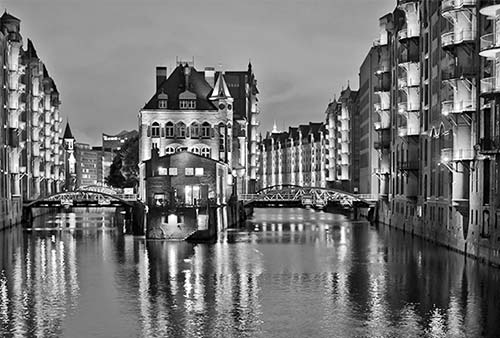
Getting to HafenCity and Speicherstadt: For an atmospheric approach, go to the Landungsbrücken S- and U-Bahn stop and take public ferry #72 one stop upstream (see previous page). You’ll disembark by HafenCity’s landmark Elbphilharmonie concert hall.
You can also take the U-3 subway line to Baumwall, walk across either of the Niederbaumbrücke bridges, and turn left onto Kehrwieder street and into the Speicherstadt district. After strolling between the canal (on your left) and a row of warehouses (on your right) for about five minutes, look for Block D (described later).
HafenCity
HafenCity is Europe’s biggest urban development project (and, they claim, the biggest ongoing project in the world for the next 20 years). When it’s done, downtown Hamburg will be 40 percent bigger, and the city will again face the Elbe River. Planners hope that 45,000 people will eventually work here and 12,000 will call it home. The area feels like a city in itself, with a maritime touch, interesting modern architecture, and a mix of business, culture, and leisure. On weekends locals flock here to take a stroll, bask in the sun, and enjoy a break from the city.
▲▲Elbphilharmonie Concert Hall
The centerpiece of the HafenCity development (and a building that promises to become a symbol of modern Germany) is the jaw-dropping Elbphilharmonie—a combination concert hall, hotel, and apartment complex, all contained in a towering and wildly beautiful piece of architecture. Though it was staggeringly behind schedule and over budget (costing €865 million instead of €77 million), it’s nevertheless a source of pride and excitement among Hamburg’s citizens. Its daring design and huge size fit in well with the massive scale of the port around it—and when approached by water, it calls to mind the looming prows of the steamer ships that first put Hamburg on the world map.
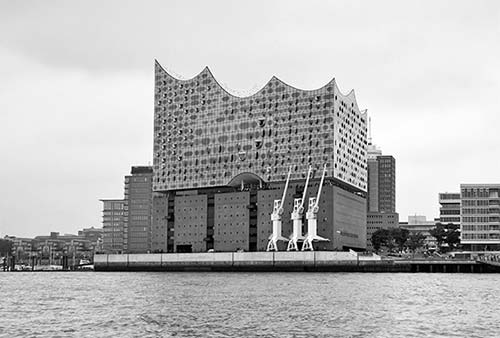
For visitors, the heart of the complex is the Plaza level, which connects the renovated old harbor warehouse below with the modern glass tower above. From the main entrance of the 360-foot-tall, 360-foot-long structure, visitors ride a 270-foot-long escalator (dubbed the “Tube”). At the top you’ll enjoy a spectacular view down the Elbe toward the harbor and docks. A second, shorter escalator takes you to the Plaza level, where you’ll find an outdoor promenade that wraps around the entire level (plus a café and souvenir shop).
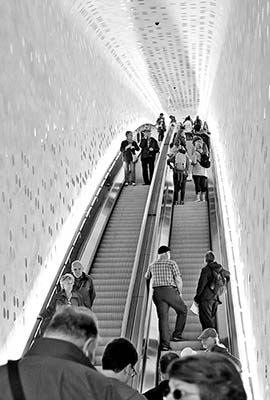
Cost and Hours: The Plaza level is open daily 10:00-24:00 to anyone with a Plaza ticket. Tickets are free for same-day visits but subject to availability. To guarantee you’ll get in, buy timed-entry tickets a day or more in advance (€2, buy online or at the ground-floor ticket office, +49 40 3576 6660, www.elbphilharmonie.de). Anyone with a concert ticket can enter the Plaza for no additional charge up to two hours before the event. It’s at Platz der Deutschen Einheit 1.
Concerts: Tickets for events and concerts at the Elbphilharmonie can be booked by telephone, online, or by email (ticket +49 40 3576 6666, www.elbphilharmonie.de, tickets@elbphilharmonie.de), or in person at the box office.
Guided Tours: English tours of the Plaza (€10, 45 minutes) and of the Plaza plus concert halls (€20, 1.5 hours) run daily. Tickets are released roughly six weeks out and can be purchased online or in person at the ground-floor ticket office (schedule varies with performances, no tours during month-long break in July/Aug, www.elbphilharmonie.de/en/tours).
Speicherstadt and Block D
This “Warehouse City,” between HafenCity and the city center, is a huge stand of red-brick riverside warehouses, and more interesting than the glitzy new buildings near the Elbphilharmonie for fans of historic architecture. It was originally built over a 40-year span, starting in the 1880s. Half of it, however, was destroyed in World War II. The area was rebuilt and officially remained part of Hamburg’s port zone until 2003.
But after container terminals sprung up across the river, it no longer made sense to store goods here. Rather than tear down the warehouses, the city preserved them as part of the urban landscape, with a few museums and theme park-like attractions catering mostly to German visitors. The redevelopment is still a work in progress, and the new buildings are not yet fully occupied, but the project is a great source of pride and interest among locals and German tourists (it’s the best-known waterfront revival effort in this mostly landlocked country).
Wander around. Make sure to cross one of the side bridges to experience the length of the loading canals and to imagine this industrial area when it was full of barges and dockworkers. On the Pickhuben Bridge, at the corner of Pickhuben and Kannengiesserort, a plaque shows photographs of the warehouses after the WWII bombing. Each of the older Speicherstadt warehouses is labeled with a letter—such as Block D, home to the sights listed next.
▲Miniatur Wunderland
The most fun sight within the big Block D complex—and worth its high entry fee—Miniatur Wunderland claims to have the world’s largest model railway, covering over 16,000 square feet with more than 9.5 miles of track. Marvel at the tiny airport (with model planes taking off), and watch night fall every 15 minutes. Visit the Alps, Scandinavia, Italy, and the US in miniature (the latter complete with a shootout and Area 51). Little bits come to life with a press of a green-lit button—bungee jumpers leap, the drive-in plays a movie, and tiny Bavarians hoist teeny beer mugs to their mini mouths. Hamburg’s harbor is lovingly rendered—including the building you’re standing in—with a model of the Elbphilharmonie that lets you peek inside.
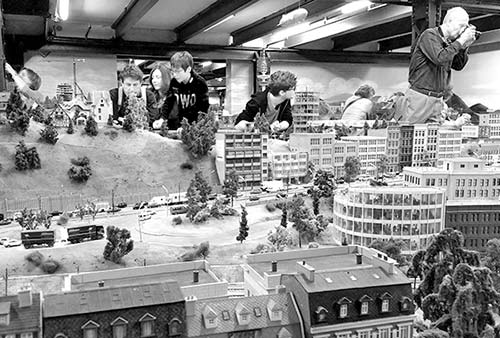
Cost and Hours: €20, daily 9:30-18:00, longer hours in peak season, Kehrwieder 2-4, Block D, +49 40 300 6800, www.miniatur-wunderland.com.
Reservations Recommended: The model railway is wildly popular, so it’s a good idea to reserve online or via phone at least a couple of days in advance (no extra charge). If you haven’t reserved, expect as much as a two-hour wait to get in. Check their website for estimated wait times and recommended arrival times for the day you want to visit. It’s most crowded from midmorning through early afternoon, and swamped on school holidays.
Eating: Next door to the Miniatur Wunderland in Block D is the Speicherstadt Kafeerösterei, a convenient café and coffee roastery. It serves sandwiches, cakes, and desserts, and sells coffee by the bag and other small gifts (Mon-Thu 10:00-17:00, Fri-Sun until 18:00, +49 40 537 998 510). You’ll enter the café through a flood gate—which can be closed in high water. (Tidal bores are a real danger along the Elbe, so all new building in Hamburg is well above water level.) As you leave the café, look straight ahead across the canal into the city center to see a single short row of surviving half-timbered warehouses that still stand along Deichstrasse...and mentally expand this stretch across the harbor area to imagine the industrious, salty charm of 17th-century Hamburg.
▲▲International Maritime Museum (Internationales Maritimes Museum)
This state-of-the-art exhibit fills nine floors of a towering brick ex-warehouse with thousands of maritime artifacts—while reminding visitors that “the sail came before the wheel” and “rowing came before the saddle.” Despite its name, its perspective is more German than international, but that’s part of what makes it interesting (and nearly everything is well described in English).
Ride the lift to the ninth “deck” (floor) to start with the world’s biggest collection of miniature ship models, and then work your way down—each floor has a different military or civilian maritime theme: paintings and ship models; deep-sea research; the history of merchant shipping and cruise ships; exploration, colonization, and warfare (with good exhibits on the naval warfare of World Wars I and II); uniforms, medals, and insignias from around the world; the history of shipbuilding; global seafaring history; and navigation. Between the first and second decks is an enormous model of the RMS Queen Mary 2 (which often sails from just a few blocks away)...made entirely of Legos.
Cost and Hours: €15, daily 10:00-18:00, Koreastrasse 1, Kaispeicher B, +49 40 3009 2300, www.imm-hamburg.de.
REEPERBAHN NEIGHBORHOOD
Take New Orleans’ Bourbon Street, Las Vegas’ Strip, and Amsterdam’s Red Light District, mix them up in a cocktail shaker, and you’ve got a tall glass of Reeperbahn (“roper’s path”—pronounced RAY-pehr-bahn). It’s named after the legions of rope makers who once labored here to supply Hamburg’s shipping industry. Now it’s Germany’s most famous nightlife district, home to some of Hamburg’s musical theaters and a thriving sex work scene.
Many tourists are understandably put off by the area’s sleaziness—but consider that by concentrating all of it here, the Reeperbahn makes the rest of the city that much classier. The Reeperbahn may be less of a big deal in the age of online porn and internet-based sex work, but the street remains a huge destination for Germans. Don’t fear the Reeper...it’s a fascinating look at a facet of German society.
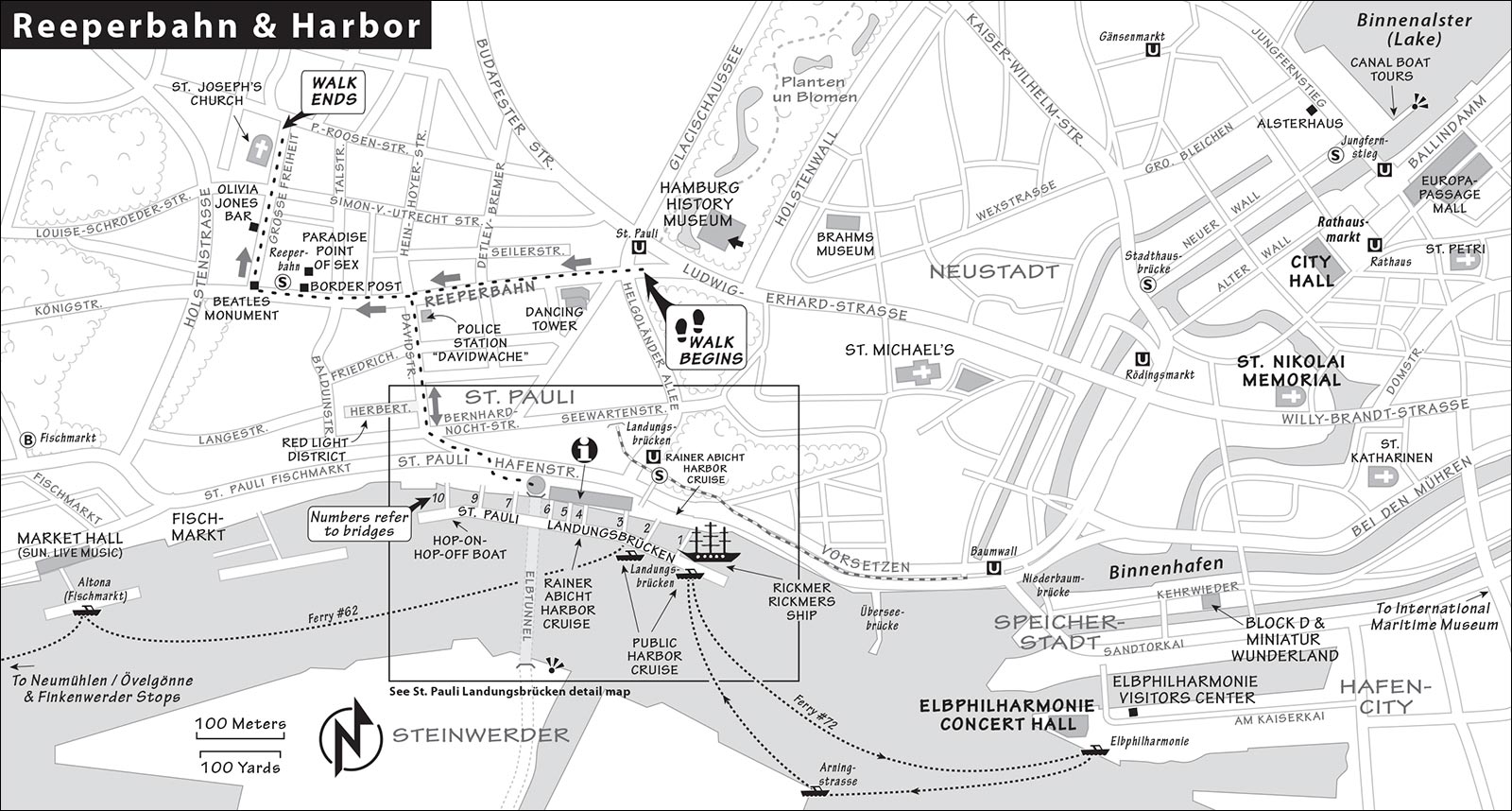
▲▲Reeperbahn Walk
You can do the 30-minute walk described here at any time of day, but you’ll find it much livelier after dark—the later the better. The area is generally safe (as long as you don’t go looking for trouble), with a prominently located police station in the middle of the Reeperbahn.
Self-Guided Walk: Start at the St. Pauli U-Bahn station (after hours, the stop announcement on the loudspeaker says, “Nächste halt: St. Pauli...viel Spass!”—Have fun!). Exit the platform following signs to Reeperbahn.
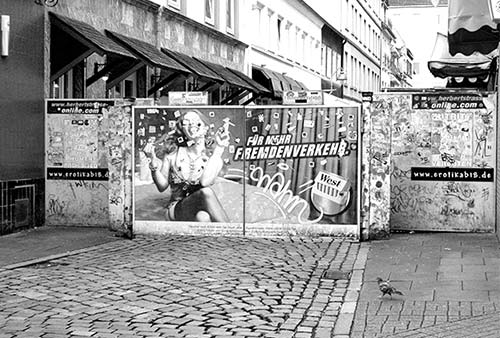
St. Pauli U-Bahn Station to Davidstrasse: Towering above the U-Bahn station is a landmark skyscraper nicknamed “The Dancing Tower” for the way one half of it leans romantically into the other.
Cross the street, keeping the Dancing Tower on your left, and begin walking down the busy Reeperbahn. Most of neighborhood action is along this main drag, a broad avenue with heavy car traffic that runs between the St. Pauli U-Bahn stop and the Reeperbahn S-Bahn stop. The east end of the avenue, which you’ll see first, is gentrifying quickly, with high-rise buildings, chain hotels, and classier coffee shops, restaurants, and clubs going up—along with real-estate prices (this is some of the most expensive land in town). The west end (which you’ll reach later) is more run-down.
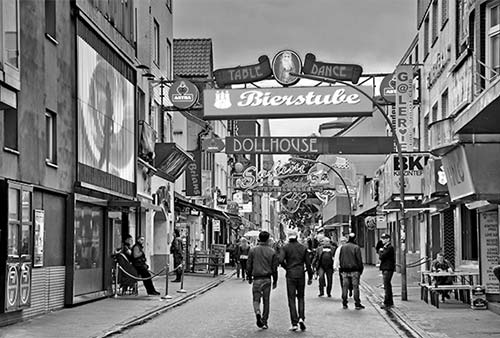
As you stroll down the street, you’ll see nightclubs, casinos, restaurants, fast-food joints, glitzy brothels, erotic theaters, and sex shops displaying toys and gadgets for every persuasion. On weekend evenings, and into the wee hours, this place is hopping with thousands of young partiers from all over north Germany, who’ve converged on Hamburg to dance the weekend away. Dance clubs coordinate in a kind of throbbing relay to keep the beat going from Friday evening straight through to Monday morning.
Daylight makes the area feel seedy—the buildings look bleary-eyed, and the sidewalks, littered with broken glass and puke, need a shower. Nighttime is when it comes to life.
Davidstrasse: After a couple of blocks, on the left, you’ll see the most famous police station in Germany: a cute red-brick building (“Davidwache”) that keeps an eye on things (it’s where the Reeperbahn meets the street called Davidstrasse, to the left, and Hein-Hoyer-Strasse, to the right). Turn left here and follow Davidstrasse a couple of blocks.
Sex workers are allowed to solicit on the streets in a few specific places here (such as the west side of Davidstrasse), and only after 20:00. If you’re a guy, expect aggressive flirtation after dark on the right side of the street. If one of the streetwalkers figures out your language, they’ll whisper it to the next one so they’ll know how to engage you. If you walk on the left side of the street, you won’t be hassled at all.
Except for the streetwalkers and a few brothels nearby, Hamburg’s Red Light District is limited to Herbertstrasse, one small lane set apart by two Nazi-era metal barriers (two blocks up Davidstrasse, on the right). The fascist ideal was a Germany with no sex work, but the Third Reich pragmatically allowed it in Hamburg to accommodate the sailors who’d come ashore here after many lonely weeks at sea. The rest of society, however, was meant to be oblivious to the city’s sex trade, so up went the barricades. Any man who wants to can scoot around them and stroll down the street, which is lined with glass-doored cabins where sex workers try to entice prospective customers. Women, however, are by custom not allowed on Herbertstrasse (except the ones working here, of course), but I’ve seen female tourists walk around the barriers to gaze at the scene. Don’t take photos here. The sex workers are self-employed and run their businesses without pimps. Compared to the sex workers on the streets and in the brothels, these charge more for their services and are considered top-end.
From here you’re a short walk to the St. Pauli Landungsbrücken harborfront (described on here); to visit it now, follow Davidstrasse—and the sound of seagulls—downhill as it curves and empties onto St. Pauli Hafenstrasse (landing you just across from the green-domed St. Pauli Elbtunnel entrance).
Davidstrasse to Grosse Freiheit: To finish this walk, return up Davidstrasse to the Reeperbahn, cross the boulevard, and turn left. A couple of blocks along, the brothel called Paradise Point of Sex is free to enter, open 24 hours—and staffed with security guards. In front you’ll see an old, tall, iron lamppost in the sidewalk that looks like it might be a portal to another dimension; this border post marks the historic border between Denmark and Germany (the long entry corridor leading to the brothel actually traces the old border). Go a few more paces to the next corner, with the round vinyl record-shaped pattern in the pavement and the cheap tin statues of a certain four English rock-n-rollers. This cross street is...
Grosse Freiheit: The street’s name means “Great Freedom”—a reference not to sexual liberation, but the religious and economic freedom of this formerly Danish border zone. For most of the 17th, 18th, and 19th centuries, Denmark was particularly powerful, with borders that extended farther south than they do today (and much, much farther north). What’s now the Altona district (the area just west of the Reeperbahn S-Bahn stop) was, until 1864, the Danish city of Altona. In its heyday, it was Denmark’s second city, a leading port, the southern terminus of the Danish railway system, and a magnet for Germans seeking free trade (unconstrained by the regulations of guilds) and religious tolerance.
Today, Grosse Freiheit is lined with noisy dance clubs and table-dancing bars. A nearby monument memorializes the long-gone Star Club, where the Beatles played a number of gigs (in a courtyard 30 yards before the church—behind the bar at #35 that features famous German drag queen Olivia Jones—go down the brick passage, follow Kiez Alm Hamburg signs, and look left).
For music lovers, the Reeperbahn’s greatest significance is the role it played as the launching pad for the Beatles, who were unknowns when they arrived in Hamburg from Liverpool to play a season’s worth of gigs in 1960. The group consisted of John, Paul, and George, plus drummer Pete Best (later replaced by Ringo Starr) and bassist Stuart Sutcliffe (who gave up music for art school in 1961, and died shortly thereafter).
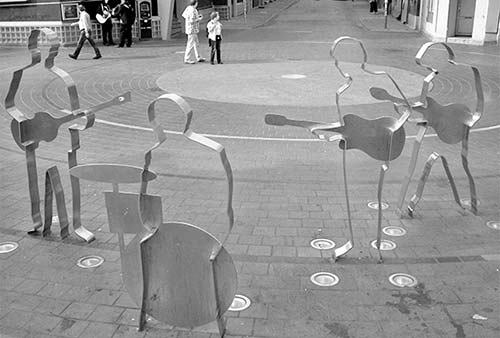
Unpolished amateurs when they arrived, the band members became tight, hard-driving musicians by playing to a tough crowd night after night—they played 98 days straight at one point. While they were here, Ringo joined the band, and Sutcliffe’s German girlfriend gave them their signature haircuts. By the time they left Hamburg for good in 1962, the Beatles had released several hit singles, had made their first TV appearance back in England, and were just months away from international stardom.
Walk down Grosse Freiheit toward a church buried in all this sex and booze. Hamburg was an officially Protestant city, and, as elsewhere in Germany, any Christian denominations other than the locally established one were strongly discouraged. Danes, though also mostly Protestant, had a more tolerant attitude, and the street of “Great Freedom” was home to St. Joseph’s Church, the first Catholic church built in northern Europe after the Reformation (in 1660). A fire destroyed that structure in 1713, so the current Baroque church dates from 1723. Hamburg’s Catholics could sneak over the border to worship here at Grosse Freiheit 41.
The Reeperbahn S-Bahn and St. Pauli U-Bahn stops are nearby, and it’s a quick and easy (around €12) taxi ride back to your hotel any time of day or night. You’re also a short walk north to the youthful Schulterblatt (“Shoulder Blade”) area, described next.
NORTH OF THE REEPERBAHN
Schulterblatt (“Shoulder Blade”) Neighborhood
For a colorful slice of today’s Hamburg and a breath of cultural fresh air (especially after walking the Reeperbahn), walk or ride the U- or S-Bahn to Sternschanze and explore a gentrifying but still funky neighborhood with so many cafés it’s nicknamed “Latte Macchiato Boulevard.” The broader area is known as the Schanzenviertel (for its main drag); the liveliest subsection is at the triangle formed by Susannenstrasse, Schulterblatt, and Schanzenstrasse. This trendy little area has piles of character, unique boutiques, and great places for a meal (for suggestions, see “Eating in Hamburg,” later).
Join the cool young things for a leisurely, people-watching stroll; you’ll find the streets filled with fun eateries and a clientele of hipsters and media/software/publicity-types. At the center of the neighborhood, roughly at the intersection of Schulterblatt and Susannenstrasse, sits Rote Flora, a combination squatter hangout/arts venue/progressive political center. Despite the red (Rote) in its name, the building’s exterior is a changing kaleidoscope of graffiti and street art. Behind Rote Flora is an edgy-yet-charming park with a WWII-era bunker-turned-climbing wall also covered with street art. Look for the archway at Schulterblatt 58, where you’ll see the sign Pianoforte Fabrik. Pop in for a look at the atmospheric courtyards of several well-preserved buildings from Hamburg’s industrial past (including, as the name suggests, a piano factory).
On the southeastern edge of the Schanzenviertel, right next to the Feldstrasse U-Bahn stop, you’ll see a monstrosity of gray concrete. This is one of the largest surviving urban bunkers of the Nazi era, and one of the very few you can freely enter. It was built in 1942 by forced laborers, and was designed to resist Allied air raids, with a roof that’s over 15 feet thick. While not a tourist sight per se—the building now houses a large music store, a smattering of offices, and a nightclub—it’s a rare chance for WWII buffs to peek inside this kind of relic.
OUTSIDE THE CITY CENTER
▲BallinStadt Emigration Museum
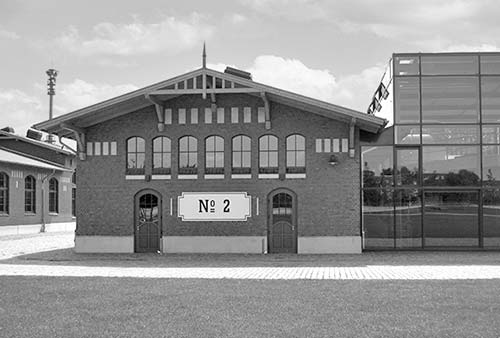
This engaging museum, a German counterpart to Ellis Island, tells the story of emigration to America through Hamburg from the mid-19th century up through World War II. Especially after 1890, many emigrants from the Austro-Hungarian and Russian empires—today’s Eastern Europe—went first to Hamburg, by train or even on foot, before boarding a ship to cross the ocean. The museum has less in the way of actual artifacts and more in the way of big, colorful re-creations of living conditions and interactive exhibits. It offers a dynamic and kid-friendly look at a powerful topic, and can be a moving experience for travelers with emigrant roots.
The museum complex is named after Albert Ballin, who was director of the Hamburg-America Line at the time the former emigration halls were built. Considered the father of the modern cruise industry, Ballin started his career working in his family’s small emigration agency. He committed suicide in November 1918, worried (rightly, as it turned out) that his company’s ships would be confiscated as reparations after World War I.
Cost and Hours: €13, Tue-Sun 10:00-18:00, closed Mon, last entry one hour before closing, +49 40 3197 9160; www.ballinstadt.de.
Getting There: South of the center, BallinStadt is right by the Veddel S-Bahn station, three stops from the train station on the S-3 or S-31 (direction: Neugraben, Stade, Buxtehude, or Harburg Rathaus; about a 7-minute ride). From the S-Bahn platforms, follow the BallinStadt signs for about 200 yards across the parking lot and street to the museum. You can also get here on the Maritime Circle Line hop-on, hop-off boat (see here.
Visiting the Museum: The museum occupies three restored dormitory buildings that opened in 1901 to house and quarantine sick emigrants until they were healthy enough to ship out. Buy your ticket in Haus 1, “Port of Dreams,” where you’ll find the personal history of Albert Ballin on display (there may also be special exhibits).
The core of the museum is in Haus 2, “World in Transit.” Creative themed exhibits give a look at the origins of the five million German emigrants who passed through here, the reasons they chose to leave (from poverty to pogroms), their experiences on the transatlantic ships, their arrival in New York City, and their challenges forging a new life in the new land. Haus 3, “Biographies,” showcases the stories, fates, and personal memories of BallinStadt emigrants. The visit ends with a room where you can search genealogy databases (basically just Ancestry.com).
Eating: The museum’s reasonably priced restaurant, in Haus 3, is a good place to try Labskaus, a Hamburg specialty similar to corned beef hash; see the “Eating in Hamburg” section, later.
Day Trips from Hamburg
Visitors disappointed by Hamburg’s lack of a cute medieval old town could consider an outing to Lübeck, almost on the Baltic, 45 minutes northeast of Hamburg by train; or Lüneburg, a small university town that got rich off local salt mines, 35 minutes to the south. Both have classic, well-preserved old centers with typical North German/Hanseatic brick architecture.
Sleeping in Hamburg
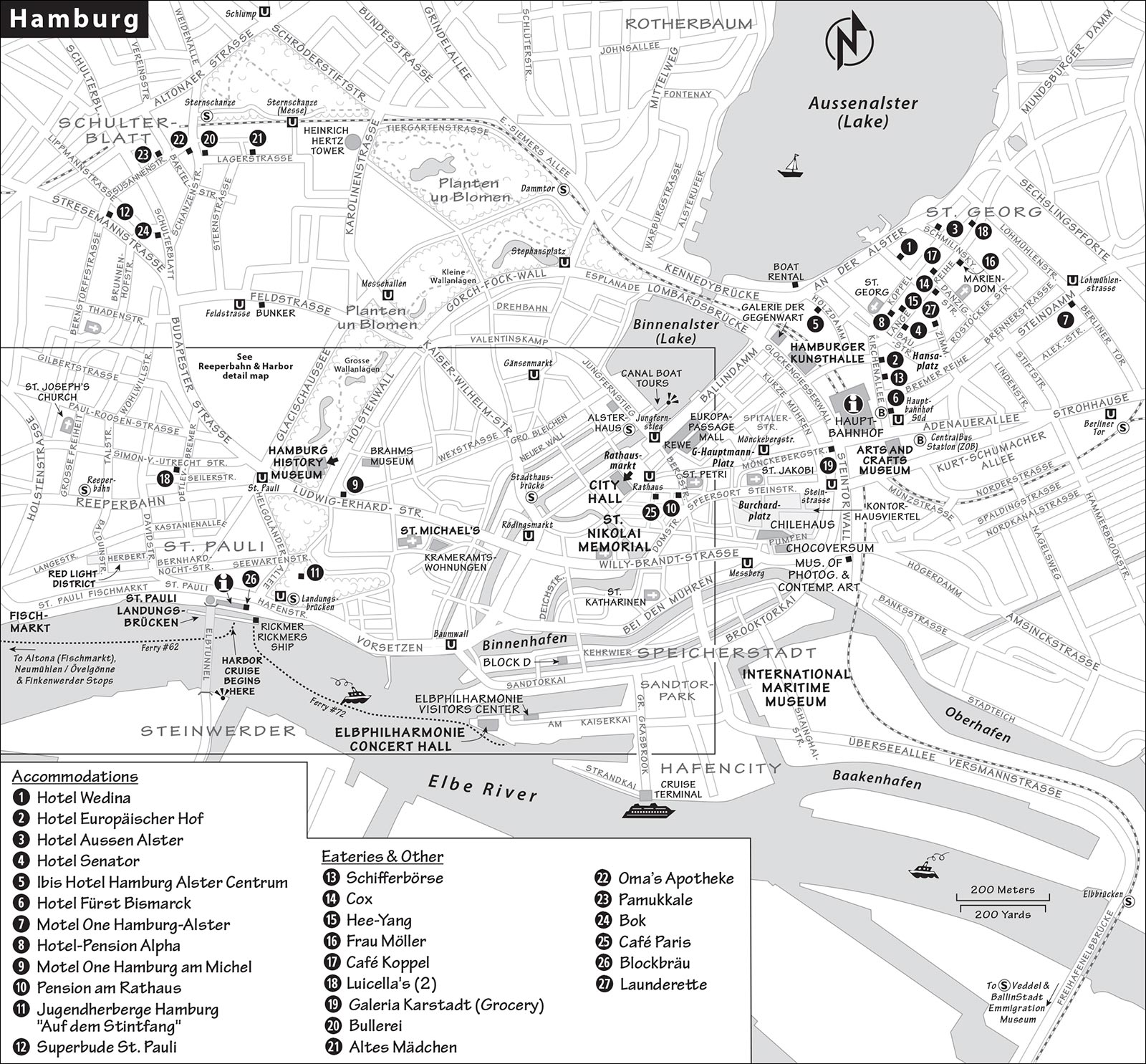
Hamburg has plenty of reasonably priced places to stay and only a few of the special events that send prices skyrocketing in Frankfurt or Cologne. As the city is a popular musical theater destination, Friday and Saturday nights can be more expensive. Staying somewhere with good public transit links is helpful in this well-connected city. If you’ll have a car in Hamburg, ask about parking rates and availability when reserving your room—many hotels in the city have dedicated garages. For hotel locations, see the map on here.
NEAR THE TRAIN STATION, IN ST. GEORG
The St. Georg neighborhood is a convenient place to sleep, thanks to its comfortable midrange hotels, proximity to the train station and walking paths around the Aussenalster, good restaurants, and lively street life. Some neighborhoods around European train stations are seedy at best; somehow St. Georg defies the stereotype. Its main thoroughfare, Lange Reihe, is busy with inviting eateries, cafés, and shops (reach it via the station’s north exit by track 3 onto Kirchenallee). As you walk off Lange Reihe toward the water (the Aussenalster), the buildings become more and more elegant, with an upper-class, diamonds-and-poodles feel. Just a few streets in the other direction is Steindamm, St. Georg’s other major avenue (reached from the station’s south exit); it’s a raucous immigrant boulevard that feels like Queens compared with Lange Reihe’s Manhattan.
$$$$ Hotel Wedina—hip, full of character, and design-conscious—has 54 rooms in four renovated townhouses in a people-friendly neighborhood that’s a 10-minute walk from the station. Each building has a different theme (such as literature, architecture, or Nordic style). Three of the buildings are connected; the fourth, with reception, breakfast room, and a tranquil garden oasis in back, is across the street (family rooms with kitchen, breakfast extra, lots of stairs, bike rental, pay parking; Gurlittstrasse 23, +49 40 280 8900, www.hotelwedina.de, info@hotelwedina.de). From the station, walk up Lange Reihe, then go left on Gurlittstrasse. Or catch bus #6 (stop is across the street from the station, just right of Hotel Fürst Bismarck, direction: U Borgweg, leaves every 5-10 minutes) and hop off at the first stop (Gurlittstrasse). From the top of Gurlittstrasse, the hotel is just down the street on the right.
$$$$ Hotel Europäischer Hof is a business-class place with 275 rooms, a sixth-floor wellness center (complete with a 500-foot waterslide), and a striking resemblance to a casino. Choose between standard, standard-plus, or comfort room categories (includes 3-day transit ticket, elevator; Kirchenallee 45, +49 40 248 248, www.europaeischer-hof.de, info@europaeischer-hof.de).
$$$ Hotel Aussen Alster, in a handsome lakeside townhouse, has 27 pleasant, straightforward rooms over a sometimes-smoky lobby. The hotel has loaner bikes for guests, as well as a sailboat that you can take out on the Aussenalster, just a block away (reserve ahead). The garden in back is a fine place to relax (elevator, pay parking, Schmilinskystrasse 11, +49 40 241 557, www.aussenalsterhotel.de, info@aussen-alster.de). It’s a 10-minute walk from the station up Lange Reihe, then left on Schmilinskystrasse. Or you can hop bus #6 from the station (see above), and get off at the second stop (AK St. Georg), then backtrack a half-block to Schmilinskystrasse and turn right.
$$$ Hotel Senator, on Lange Reihe just down from the station, is a dated but quiet oasis with pastoral decor in each of its 56 airy rooms. Rooms on the fourth and fifth floors come with air-conditioning and a higher price; these “wellness rooms” also have waterbeds (the first I’ve seen in Europe) and some have balconies—though the views aren’t worth the extra money (elevator, Lange Reihe 18, +49 40 241 930, www.hotel-senator-hamburg.de, info@hotel-senator-hamburg.de).
$$$ Ibis Hotel Hamburg Alster Centrum has 165 reliable rooms right by the station. Ask for a front-side, street-facing room—they’re quieter than those in back overlooking the tracks (breakfast extra, air-con, elevator, bike rental, pay parking; Holzdamm 4, +49 40 248 290, www.accorhotels.com, h1395@accor.com). Exit the station at the north end of track 3 to Kirchenallee, then turn left on Ernst-Merck-Strasse and then right onto Holzdamm (a 10-minute walk).
$$ Hotel Fürst Bismarck is old-fashioned and Old World, with regally carpeted halls and a marble lobby. Its 102 bright, contemporary rooms reflect the friendly staff’s care and attention. You’ll find yourself searching for Prince Bismarck himself checking in, as he once did 150 years ago (breakfast extra, includes 3-day transit ticket, elevator, Kirchenallee 49, +49 40 790 251 640, www.fuerstbismarck.de, hotel@fuerstbismarck.de).
$ Motel One Hamburg-Alster, a monstrous, 460-room, inexpensive hotel with cookie-cutter but surprisingly stylish rooms and a friendly staff, is a good-value option especially if cozier places are booked (breakfast extra, air-con, elevator, pay parking; Steindamm 102, +49 40 4192 4970, www.motel-one.com, hamburg-alster@motel-one.com). The hotel is right at the Lohmühlenstrasse U-Bahn stop (one stop from the station) or a 10-minute walk down a humbler sretch of Steindamm.
$ Hotel-Pension Alpha, a decent budget choice, has 19 rooms almost in sight of the station. The rooms are basic but more than adequate, and everything is well kept by kindly Georg (breakfast extra, Koppel 4, +49 40 245 365, www.alphahotel.biz, info@alphahotel.biz). From the station, exit by track 3 north onto Kirchenallee and look for the red-brick church (St. Georg); the hotel is across the street on the right side of the church. Confirm your arrival time in advance (if Georg won’t be there, he’ll give you a code for the door).
ELSEWHERE IN HAMBURG
These budget options are easy to reach from the train station by U-Bahn.
Near the Hamburg Museum: Part of the stylish and affordable chain, $$ Motel One Hamburg am Michel is located on a busy street but right next to the Grosse Wallanlagen area within Planten un Blomen gardens, steps from the Hamburg Museum, St. Pauli, and St. Michael’s Church (breakfast extra, air-con, elevator, guest iPad at front desk, limited pay parking; Ludwig-Erhard-Strasse 26, +49 40 3571 8900, www.motel-one.com, hamburg-am-michel@motel-one.com).
Near City Hall: True to its name, $ Pension am Rathaus is a long block from City Hall, in an appealing downtown neighborhood. The 15 rooms are simple and bright, and many share bathrooms (family room available, no breakfast, no elevator, reception open 9:00-15:00 & 16:00-19:00, Rathausstrasse 14, U-Bahn: Rathaus, +49 40 337 489, www.pension-am-rathaus.de, info@pension-am-hamburg.de).
Near the Landungsbrücken: Located atop a hill right behind the Landungsbrücken S- and U-Bahn station, the ¢ Jugendherberge Hamburg “Auf dem Stintfang” hostel has a super location and commanding view of the Elbe. It’s big, bright, modern, and well run. Choose from bunks in a dorm room or a private room with bath—but note that all the doubles are bunk beds (lunch and dinner available, elevator, Alfred-Wegener-Weg 5, +49 40 570 1590, www.hamburg-stintfang.jugendherberge.de, stintfang@jugendherberge.de). From the train station, take the S-1 or S-3 three stops to Landungsbrücken, then follow the signs up the steep stairway, or—if you have wheeled luggage—take the long way, circling around back.
In the Schulterblatt Neighborhood: Though it has a hostel vibe, $ Superbude St. Pauli is really more of a funky budget hotel, and a good choice for this hip part of town. Its 89 rooms all have bathrooms and minimalist but creative decorative touches; ask for a room facing the courtyard to avoid street noise (breakfast extra, Juliusstrasse 1, U-Bahn: Sternschanze, +49 40 807 915 820, www.superbude.de, stpauli@superbude.de).
Eating in Hamburg
Hamburg’s food traditions have much in common with Scandinavia’s. Fish is a fixture on local menus, even if little of it is actually caught in the nearby North Sea. Herring is common in sandwiches, as a main dish, and at breakfast (often rolled up with pickled vegetables inside and secured with a toothpick, called Rollmops). Labskaus, a traditional northern German dish, is not unlike corned beef hash; it’s typically served with pickles, red beets, a fried egg, and sometimes a herring filet. For eatery locations, see the map on here.
After Dinner: To walk off your dinner, consider a stroll through Reeperbahn area after dark, following my self-guided walk of that neighborhood (see here). Home to Hamburg’s Red Light District, this is one of Germany’s liveliest and most famous nightlife scenes.
NEAR THE TRAIN STATION, IN ST. GEORG
The main street through the St. Georg area, Lange Reihe, is lined with a great variety of shops and eateries. Dine here if you’re sleeping at one of the nearby recommended hotels. Otherwise head to the Schulterblatt (“Shoulder Blade”) neighborhood for a better scene.
$$$ Schifferbörse is right across the street from the train station. It’s touristy and the service is surly, but it cooks up solid northern German food at fair prices. You’ll eat in a fun dining room elaborately decked out like a Cubist take on a ship’s galley (Mon-Fri 17:00-21:30, Sat-Sun 11:30-21:30, Kirchenallee 46 between Bremer Reihe and Ellmenreichstrasse, +49 40 245 240).
$$$ Cox is a well-regarded bistro with an understated classiness. Its menu leans toward culinary fusion, with influences from South Asia, North Africa, and the Mediterranean. Prices are quite reasonable for the quality (Mon-Sat 12:00-14:30 & 18:00-22:00, closed Sun, Lange Reihe 68, +49 40 249 422).
$$ Hee-Yang, at the train-station end of Lange Reihe, is one of the many Asian restaurants in the neighborhood, and appeals to locals with sushi and Thai dishes (daily 11:30-24:00, Lange Reihe 15, +49 40 2805 6227).
$ Frau Möller is a popular neighborhood hangout—a rollicking bar serving up very affordable, hearty Alsatian and Hamburger classics (sandwiches, huge salads, and daily specials that usually include one or two local specialties). The interior can be jammed and the service overwhelmed; try for one of the sidewalk tables, ideal for taking your time while people-watching (daily 8:00-late, Lange Reihe 96, +49 40 2532 8817).
$ Café Koppel, a bright, inexpensive vegetarian café, occupies an art center just off Lange Reihe: through an archway and across a courtyard. Choose between two indoor floors or quiet garden seating; there are a couple of main courses available every day, as well as soups and big salads (Mon-Fri 12:00-18:00, Sat-Sun from 10:00, Lange Reihe 75, +49 40 249 235).
Dessert: $ Luicella’s is a step above other local ice cream joints, with their own homemade flavors produced with milk from local dairies (daily from 12:00, Lange Reihe 113; another branch is a block off the Reeperbahn at Detlev Bremer Strasse 46).
Supermarkets: The Galeria Karstadt department store, a 10-minute walk from the train station, has a popular Asian supermarket in the basement (Mon-Sat 10:00-20:00, closed Sun; exit the south bridge of the train station by track 14 toward Mönckebergstrasse and look for the entrance to your right). REWE, inside the Europa Passage shopping mall, has a good selection of prepared foods at affordable prices (Mon-Thu 7:00-22:00, Fri-Sat until 23:00, closed Sun). The Edeka supermarket inside the train station, on the upper level of the north bridge over the tracks, is smaller (daily 7:00-23:00).
SCHULTERBLATT (“SHOULDER BLADE”) NEIGHBORHOOD
Fun restaurants with good people-watching fill the streets just south and west of the Sternschanze U-Bahn stop. There’s a world of options here: German, Asian, Turkish/Middle Eastern, Italian, Greek, French, Spanish, and more. Many places serve tapas or pizza and have generous outdoor seating. The highest concentration of good eateries is in the cross section between Schulterblatt, Schanzenstrasse, and Susannenstrasse. I’d just wander and browse. But if you’re having a hard time deciding, here are some suggestions.
$$$$ Bullerei, right next to the Sternschanze U-Bahn stop, is the most serious restaurant in this neighborhood. The brainchild of German celebrity chef Tim Mälzer, it fills a gorgeously restored red-brick meatpacking hall with a vast, vibrant dining room and a cozy bistro—both stylish and dressy. There’s also outdoor seating on a tree-lined brick patio. Their bistro is a bit more casual and less pricey. On the menu: meat, of course. Reservations are smart (bistro daily 12:00-23:00, restaurant daily 17:00-23:00, Lagerstrasse 34b, +49 40 3344 2110, www.bullerei.com).
$$$ Altes Mädchen, just around the corner from Bullerei in a repurposed brick warehouse, serves up a short-but-refined menu alongside seemingly unlimited varieties of craft beer, much of it brewed right here at the Ratsherrn microbrewery. Dishes are made with locally sourced ingredients, and the bread’s baked fresh in their wood oven. The expansive, retro-rustic interior houses a fireplace and lots of bare wood; the tables outside buzz on pleasant evenings (Mon-Sat 12:00-late, Sun until 23:00, Lagerstrasse 28, +49 40 800 077 750).
$$ Oma’s Apotheke is a cozy café-bar-restaurant. The decor is vintage, the mood is relaxed, and it’s a good place to connect with locals. Their tasty, mostly German food comes in huge portions for a small price (weekday lunch specials, daily 9:00-late, Schanzenstrasse 87, +49 40 436 620).
$$ Pamukkale serves big portions of fresh, tasty, authentic Turkish food. It’s a good choice for satisfying your craving for döner kebab or pide (Turkish pizza). If you’re in a hurry, order from the takeaway counter—otherwise enjoy the cozy atmosphere and attentive service inside or out (long hours daily, Susannenstrasse 34, +49 40 430 2411).
$$ Bok serves up well-executed Japanese, Thai, and Korean cuisine in an airy, modern space (Wed-Mon 12:00-22:00, closed Tue, Schulterblatt 3, +49 40 4319 0070).
ELSEWHERE
In the Center: A block from the City Hall, $$$ Café Paris boasts a gorgeous, white-tile Art Nouveau interior that’s worth a look even if you’re not eating here—though the très français menu has good options for breakfast, lunch, or dinner (daily 9:30-23:30, Rathausstrasse 4, +49 40 3252 7777).
On the Harbor: $$ Blockbräu, a huge, modern beer hall, features local cuisine and its own beer in the Landungsbrücken terminal building. It has a thousand seats, including a great rooftop terrace with harbor views (daily 11:00-24:00, Landungsbrücken 3, +49 40 4440 5000).
Lining the harborfront is a long row of equally marginal fast-food booths, selling big glasses of beer, paper cones of french fries, gut-bomb Currywurst, and more—to go, to stand up, or to sit down.
Hamburg Connections
From Hamburg by Train to: Berlin (1-2/hour, 2 hours), Dresden (5/day direct, 4.5 hours, otherwise hourly with transfer, 5.5 hours), Erfurt (hourly, 4 hours), Leipzig (hourly, 3 hours, some transfer in Berlin), Cologne (hourly direct, 4 hours), Frankfurt (hourly, 4 hours), Munich (hourly, 5.5 hours), Copenhagen (direct trains almost every 2 hours, 5 hours, requires reservation in summer), Amsterdam (every 2 hours, 5.5 hours, 1 change). Train info: www.bahn.com.