BERLIN
Map: Berlin Sightseeing Modules
Sights in Central Berlin (The Historic Core)
Map: Charlottenburg Palace Area
Map: Prenzlauer Berg Hotels & Restaurants
Map: Old Jewish Quarter Hotels & Restaurants
Map: City West Hotels & Restaurants
Map: Historic Core Hotels & Restaurants
BY CRUISE SHIP AT THE PORT OF WARNEMÜNDE
Berlin is a city of leafy boulevards, grand Neoclassical buildings, world-class art, glitzy shopping arcades, and funky graffitied neighborhoods with gourmet street food. It’s big and bombastic—the showcase city of kings and kaisers, of the führer and 21st-century commerce.
Of course, Berlin is still largely defined by its WWII years, and the Cold War. The East-West division was set in stone in 1961, when the East German government surrounded West Berlin with the Berlin Wall. Since the fall of the Wall in 1989, Berlin has been a constant construction zone. Standing on ripped-up streets and under a canopy of cranes, visitors have witnessed the city’s reunification and rebirth. Today Berlin is a world capital once again—the nuclear fuel rod of a great nation.
In the city’s top-notch museums, you can walk through an enormous Babylonian gate amid rough-and-tumble ancient statuary, fondle a chunk of the concrete-and-rebar Berlin Wall, and peruse canvases by Dürer and Rembrandt. A series of thought-provoking memorials confront Germany’s difficult past. And some of the best history exhibits anywhere—covering everything from Prussian princes to Nazi atrocities to life under communism—have a knack for turning even those who claim to hate history into armchair experts.
Beyond its tangible sights and its enthralling history, Berlin is simply a pleasurable place to hang out. A recent mayor called it “poor but sexy”—a slogan that became a hit on local T-shirts. Berlin is captivating, lively, fun-loving—and easy on the budget. Go for a pedal in a park, or a lazy cruise on the delightful Spree River. Step across what was the Berlin Wall and through the iconic Brandenburg Gate. Nurse a stein of brew in a rollicking beer hall, slurp a bowl of ramen at a foodie hotspot, or dive into a cheap Currywurst. Ponder present-day “street art” (a.k.a. graffiti) on your way to see the famous bust of Nefertiti or a serene Vermeer. Grab a drink from a sidewalk vendor, find a bench along the river, watch the sun set over a skyline of domes and cranes...and simply bask in Berlin.
PLANNING YOUR TIME
On all but the shortest trips through Germany, I’d give Berlin three nights and at least two full days.
Day 1: Begin your day getting oriented to this huge city. For a quick and relaxing once-over-lightly tour, jump on one of the many hop-on, hop-off buses that make two-hour narrated orientation loops through the city. Use the bus to get off and on at places of interest (such as Potsdamer Platz). Then walk from the Reichstag (reservations and passport required to climb its dome), under the Brandenburg Gate, and down Unter den Linden following my “Berlin City Walk.” Explore the the old Jewish quarter, a happening area with shops and bistros, then cap your sightseeing day by catching a one-hour boat tour (or pedaling a rented bike) along the parklike banks of the Spree River.
Day 2: Spend your morning touring the great museums on Museum Island (note that the Pergamon Museum’s famous altar is out of view until about 2025). Dedicate your afternoon to sights of the Third Reich and Cold War: After lunch, hike to the Topography of Terror exhibit and along the surviving stretch of the Wall (on Niederkirchnerstrasse) to Checkpoint Charlie. Head to the Berlin Wall Memorial for a stirring and in-depth survey of that infamous barrier, or to the Gemäldegalerie. Finish your day in the lively Prenzlauer Berg district.
Berlin merits additional time if you have it. And nearby are some very worthwhile day trips (covered in the next chapter): At Potsdam, glide like a swan through the opulent halls of an imperial palace, or, at Oranienburg, ponder the darkest chapter of this nation’s past at the Sachsenhausen Memorial and Museum.
Orientation to Berlin
BERLIN: A VERBAL MAP
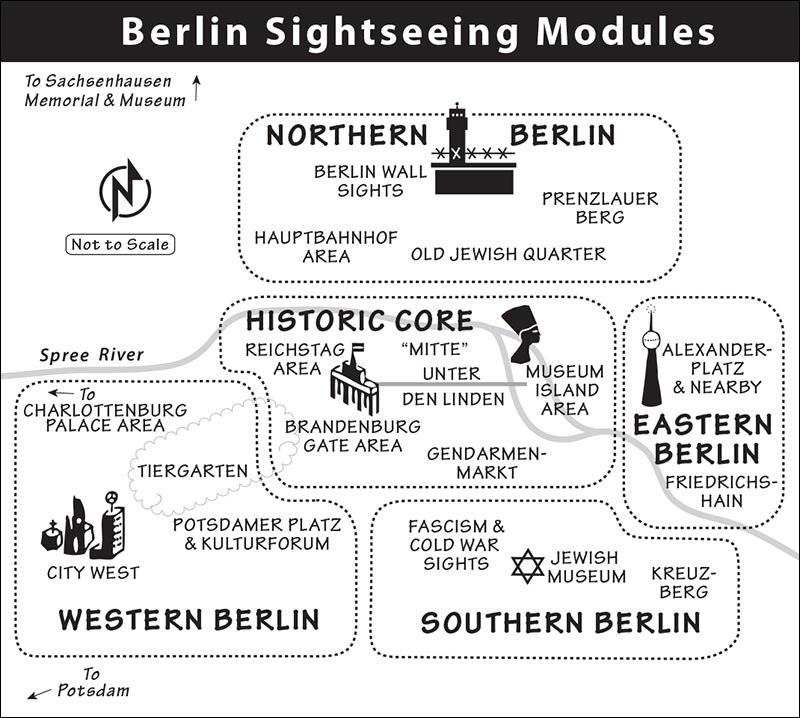
Berlin is huge. Though it’s a major metropolis, it’s not a city of skyscrapers packed into a single, dense urban core. Rather, Berlin is spread out—a series of colorful neighborhoods, with broad boulevards, pleasant parks, long blocks, and low five-story buildings.
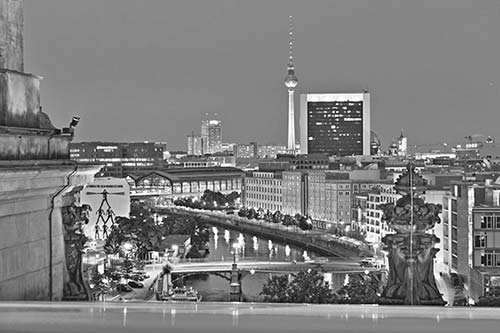
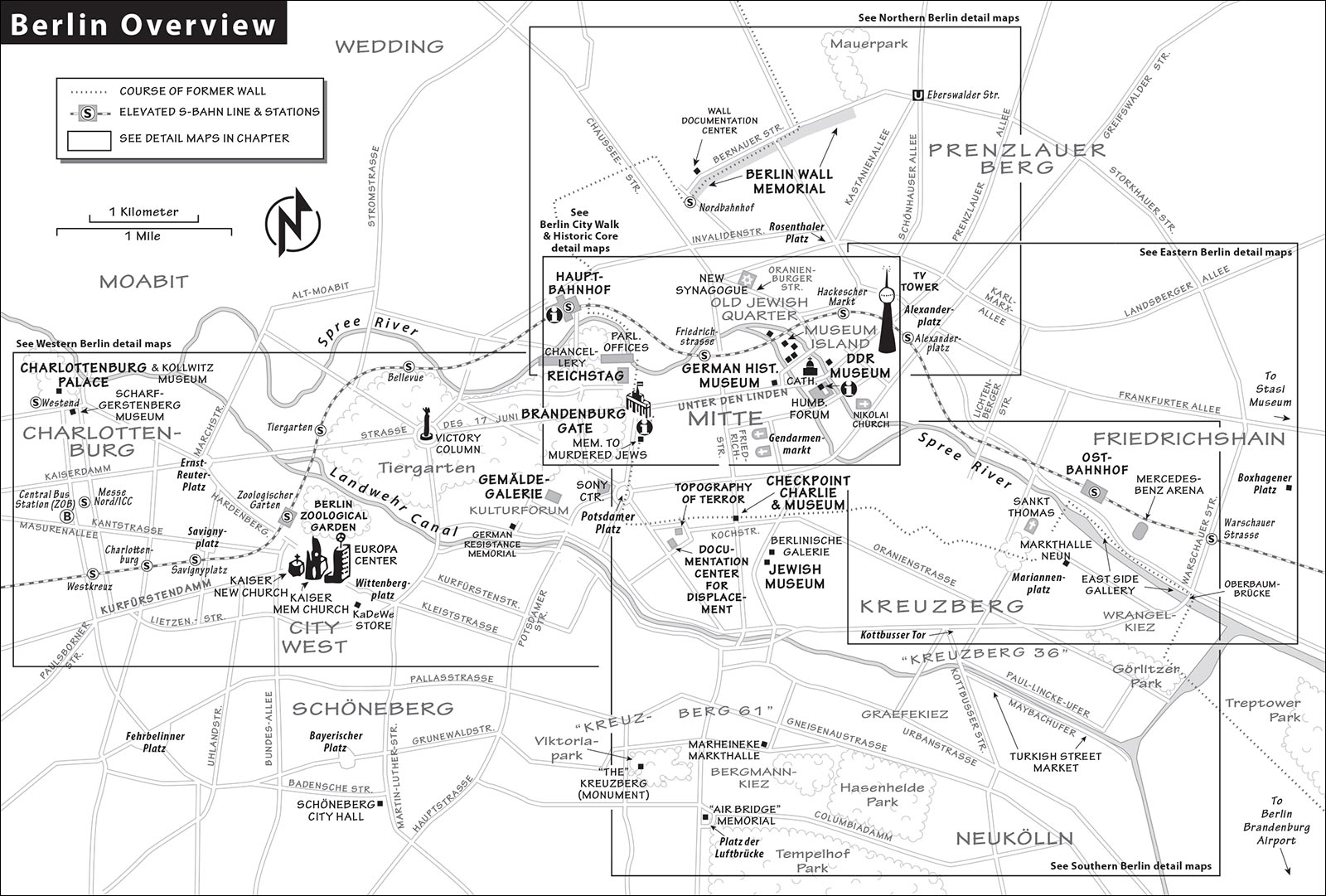
Berlin’s “downtown” alone stretches five miles, following the west-to-east flow of the Spree River. In the center sits the vast park called Tiergarten. Most tourist sights lie east of the park, in the historic core known locally as “Mitte.” To make sprawling Berlin easier to digest, this chapter’s coverage is organized by compass direction, radiating out from the center. (This organization has nothing to do with the old, Cold War-era “East Berlin” and “West Berlin” designations; in fact, virtually everything mentioned here other than “Western Berlin” was in the former East.)
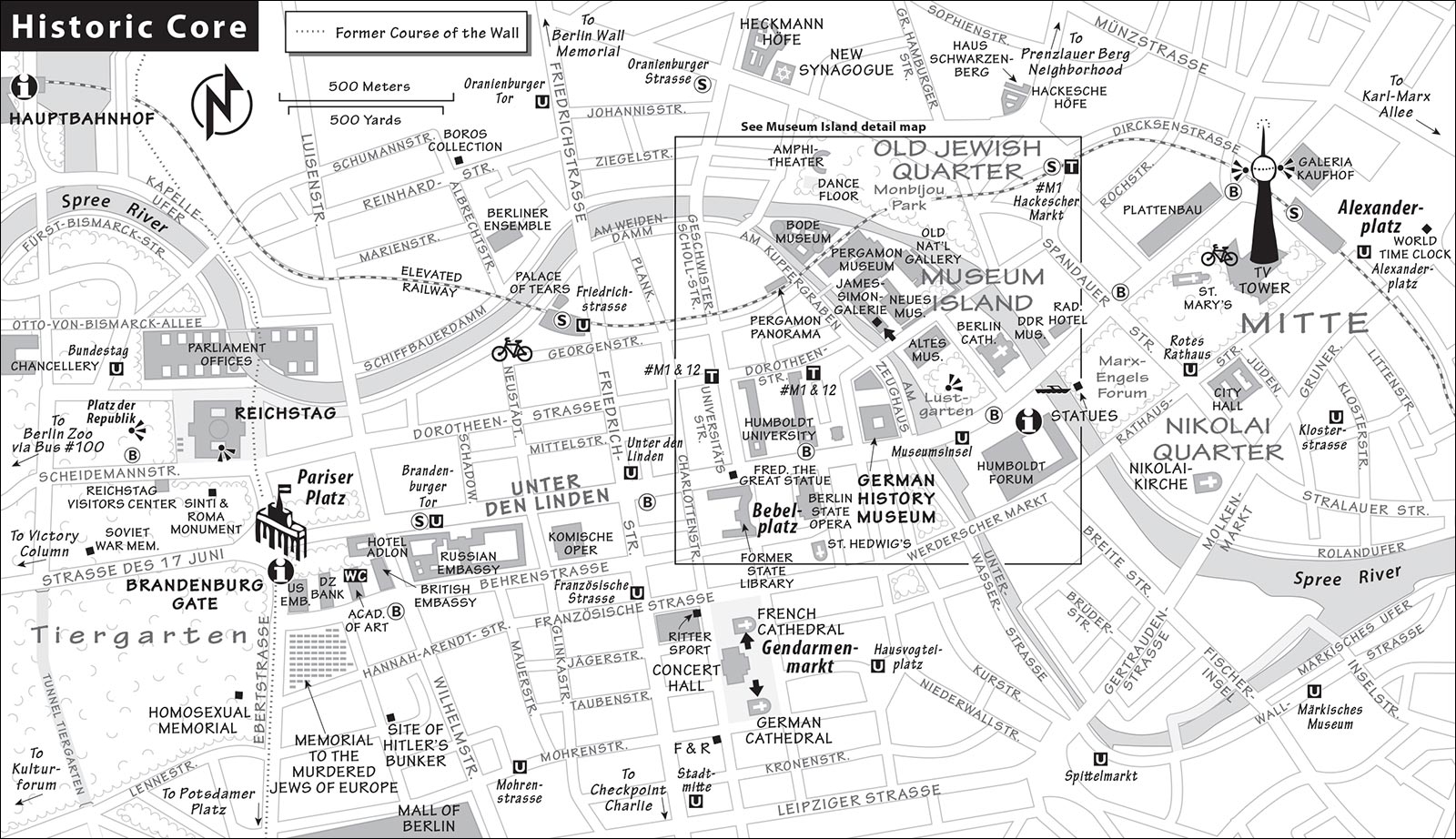
Historic Core: Berlin’s 1.5-mile sightseeing axis runs west-to-east along Unter den Linden boulevard, with a mix of 19th-century Neoclassical grandeur and 21st-century glitz. At the western edge, you’ll find the Reichstag (Germany’s domed parliament), the historic Brandenburg Gate, and a scattering of poignant memorials. Unter den Linden passes the grand squares called Gendarmenmarkt and Bebelplatz before it terminates at Museum Island—the birthplace of Berlin and today home to a cluster of the city’s top museums: the ancient wonders of the Pergamon and Neues museums, and German paintings in the Old National Gallery.
Besides art, within this core are Berlin’s towering Cathedral, the German History and DDR museums, and the re-creation of Berlin’s former royal palace.
Northern Berlin: The trendy old Jewish quarter, near the Hackescher Markt transit hub, is a short walk north of Unter den Linden; here you’ll find eateries, shopping, and Jewish history. Farther out is the even hipper Prenzlauer Berg residential area, with recommended hotels, restaurants, and shopping. Also in this zone are the Berlin Wall Memorial—the best place in town to learn more about the Wall—and the Hauptbahnhof (main train station).
Southern Berlin: South of Unter den Linden, fascism and Cold War sights dominate, anchored by Checkpoint Charlie (the former Wall border crossing), the Topography of Terror (documenting Nazi atrocities), and the Documentation Center for Displacement, Expulsion, Reconciliation. Farther south and east is the diverse and fun-to-explore Kreuzberg neighborhood, with a flourishing Turkish community and the Jewish Museum Berlin.
Eastern Berlin: East of Museum Island, Unter den Linden changes its name to Karl-Liebknecht-Strasse and leads to Alexanderplatz—formerly the hub of communist East Berlin, still marinated in monolithic architecture and marked by its impossible-to-miss TV Tower. Farther east sits the gentrifying Friedrichshain neighborhood, with the East Side Gallery (a graffiti-slathered stretch of surviving Berlin Wall).
Western Berlin: Just west of the Brandenburg Gate is the entrance to Berlin’s huge central park, Tiergarten. South of the gate, Potsdamer Platz is home to Berlin’s 21st-century glitz, with skyscrapers and shopping plazas. Down the street, the Kulturforum is a cluster of museums, including the impressive Gemäldegalerie (starring Rembrandt, Dürer, and more).
West of the park is City West—the former heart of communist-era West Berlin, lined up along the boulevard named Kurfürstendamm (“Ku’damm” for short). This modern area feels like a classy suburb, with a few sights (Kaiser Wilhelm Memorial Church, Berlin Zoological Garden) and several recommended hotels. Finally, to the north of Ku’damm is the mediocre Charlottenburg Palace, with good 20th-century art museums nearby.
TOURIST INFORMATION
Berlin’s TIs are for-profit agencies that are only marginally helpful (+49 30 250 025, www.visitberlin.de). You’ll find them at the Hauptbahnhof (daily 9:00-19:00, by main entrance on Europaplatz), the Brandenburg Gate (daily 9:30-19:00, off-season until 18:00), the Humboldt Forum (daily 11:00-19:00), and Berlin Brandenburg Airport (daily 9:00-18:00, Terminal 1, level E0). A separately run TI—focusing on Prenzlauer Berg, and generally more useful—is at the Kulturbrauerei (daily 11:00-19:00; the free Pankow Entdecken booklet has lots of local insights for those who really want to dig into this neighborhood).
Berlin was a humble, marshy burg until prince electors from the Hohenzollern dynasty made it their capital in the mid-15th century. Gradually their territory spread and strengthened, becoming the powerful Kingdom of Prussia in 1701. As the leading city of Prussia, Berlin dominated the northern Germanic world—both militarily and culturally—long before there was a united “Germany.”
Thanks largely to Frederick the Great (1712-1786), the enlightened despot who was both a ruthless military tactician and a cultured lover of the arts, Prussia was well positioned to lead the German unification movement in the 19th century. And when Germany became a unified modern nation in 1871, Berlin was its natural capital. The city boomed with Germany’s industrialization, quadrupling its population over the next 40 years. After Germany’s humiliating defeat in World War I, Berlin thrived as an anything-goes cultural capital of the Roaring Twenties. During World War II, the city was Hitler’s headquarters—and the place where the führer drew his final breath.
When the Soviet Army reached Berlin in 1945, the protracted fighting left the city in ruins. Berlin was divided by the victorious Allied powers—the American, British, and French sectors became West Berlin, and the Soviet sector, East Berlin. The city became the main battlefield of the nascent Cold War. In 1948, the Soviets tried to starve the 2.2 million residents of the western half in an almost medieval-style siege, which was broken by the Allies’ Berlin Airlift. Later, with the overnight construction of the Berlin Wall in 1961, an Iron (or, at least, concrete) Curtain completely encircled West Berlin—cutting Berlin in half. While East Berliners lived through difficult times, West Berlin became a magnet for artists, punks, squatters, and free spirits.
Finally, on November 9, 1989, the Wall came down. After wild celebrations, Berlin faced a fitful transition to reunification. Two cities—and countries—became one at a staggering pace. Some “Ossies” (impolite slang for Easterners) missed their security. Some “Wessies” missed military deferrals, subsidized rent, and tax breaks for living in an isolated city surrounded by the communist world.
Today, more than 30 years later, the old East-West divisions are a distant memory. Berlin’s local government has been eager to charge forward, with little nostalgia for the past. Big corporations and the national government have moved in, and the dreary swath of land that was the Wall has been transformed. Berlin is a new city—ready to welcome visitors.
Skip the TI’s €1 map, and instead browse the walking tour company brochures—many include nearly-as-good maps for free. Most hotels provide free city maps. If interested in cultural happenings, pick up a copy of the current month’s Exberliner (in English, €6, free at some hotels, www.exberliner.com).
ARRIVAL IN BERLIN
For a detailed rundown of the city’s train stations and airport, see the “Berlin Connections” section at the end of this chapter.
HELPFUL HINTS
Closures: Many museums are closed on Monday, including the Berlin Wall Memorial Visitors Center and Documentation Center, the Museum Island museums (Pergamon, Neues, Old National Gallery, Bode, and Altes), Gemäldegalerie, Palace of Tears, Museum of Decorative Arts, Charlottenburg Palace, and the Documentation Center for Displacement, Expulsion, Reconciliation. The Humboldt Forum and the Deutsche Kinemathek Film and TV Museum are closed on Tuesdays. Some museums stay open late on Thursdays.
Sightseeing Strategies: Visiting the Reichstag dome is free, but you must make a reservation (and bring your passport). It’s also smart to book in advance for the Pergamon and DDR museums. For any sight that interests you, check the website in advance—many are adding timed-entry ticket options.
The €29 Museum Pass Berlin is best for serious museumgoers—it covers nearly all the city sights for three consecutive days (including everything covered by the one-day Museum Island Pass; see details at www.visitberlin.de). It gets you into more than 30 museums, including the national museums and most of the recommended biggies. Covered sights include the five Museum Island museums (Old National Gallery, Neues, Altes, Bode, and Pergamon), German History Museum, and the Gemäldegalerie (and other Kulturforum museums). Buy it at any participating museum or a TI. The pass generally lets you skip the line and go directly into the museum—though at some (including the Pergamon), you’re asked to prebook a time slot on their websites.
The €19 Museum Island Pass (not sold at TIs; see www.smb.museum) covers all sights on Museum Island and is a fine value if you’re touring at least two of the collections (though for just €10 more, the three-day Museum Pass Berlin described above gives you triple the days and many more entries). This pass also does not let you skip the line at the Pergamon—book a time slot in advance.
Festivals: Berlin hosts a near-constant string of events; see the appendix for key dates.
Cold War Terminology: What Americans called “East Germany” was technically the German Democratic Republic—the Deutsche Demokratische Republik, or DDR. You’ll still see those initials around what was once East Germany. The name for what was “West Germany”—the Federal Republic of Germany (Bundesrepublik Deutschland, or BRD)—is now the name shared by all of Germany. Former East or West? Here’s a tip: The former communist sector has more tram tracks in the pavement.
Laundry: You’ll find several self-service launderettes near my recommended hotels (generally daily 6:00-22:00). In Prenzlauer Berg, try Eco-Express Waschsalon (Danziger Strasse 7) or Schnell & Sauber Waschcenter (Oderberger Strasse 1); for locations see the map on here. In the old Jewish quarter, Waschsalon 115 is around the corner from Rosenthaler Platz (Wi-Fi, Torstrasse 115; for location see the map on here).
GETTING AROUND BERLIN
Berlin’s sights spread far and wide. Right from the start, commit yourself to the city’s fine public-transit system. This vast city is committed to bikes, and you’ll notice smart and efficient bike lanes. This can be very dangerous for pedestrians, so be alert.
By Public Transit
Berlin’s transit system uses the same ticket for its many modes of transportation: buses, trams (Strassenbahn), and trains. There are two types of trains: The U-Bahn—like a subway, making lots of short hops around town—is run by the local transit authority (BVG); the S-Bahn, a light rail that goes faster and stops only at major stations, is operated by German Railways (Deutsche Bahn).
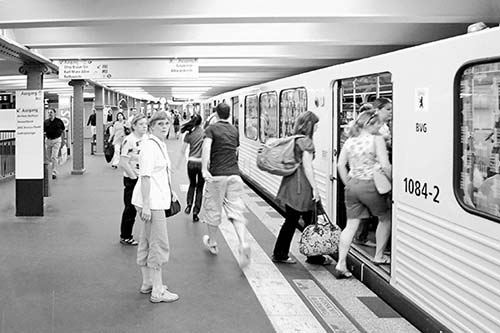
For all types of transit, there are three lettered zones: A, B, and C. Most of your sightseeing will be in zones A and B (the city proper); you may enter zone C if you’re going to Potsdam, Sachsenhausen, Brandenburg airport (formerly Schönefeld airport), or other outlying areas.
Sections of the U-Bahn or S-Bahn sometimes close temporarily for repairs, with a bus route replacing the train (Ersatzverkehr, or “replacement transportation”; zwischen means “between”).
Within Berlin, Eurail passes are good on connections from the train station when you arrive and to the station when you depart on counted rail pass days (both S-Bahn and U-Bahn).
Information: Timetables, prices, and trip planning are available on two helpful websites: BVG (www.bvg.de) and VBB (www.vbb.de). Both offer handy, free apps with on-the-go trip routing for U-Bahn, S-Bahn, tram, and bus connections. For an overview of the transit system, see the color map at the back of this book.
Ticket Options
The €3 basic single ticket (Einzelfahrschein) covers two hours of travel in one direction. It’s easy to make this ticket stretch to cover several rides...as long as they’re in the same direction. A €9.40 four-trip ticket (4-Fahrten-Karte) is the same as four basic single tickets at a small discount.
The €2 short-ride ticket (Kurzstrecke Fahrschein) covers a single ride of up to six bus/tram stops or three subway stations (one transfer allowed on subway). You can save on short-ride tickets by buying them in groups of four (€6).
The day pass (24-Stunden-Karte) is good until 3:00 the morning after you buy it (€8.80 for zones AB, €10 for zones ABC). For longer stays, consider a seven-day pass (Sieben-Tage-Karte; €36 for zones AB, €43 for zones ABC), or the WelcomeCard (described next). The 24-Stunden-Karte Kleingruppe lets groups of up to five travel all day (€25.50 for zones AB, €26.50 for zones ABC).
If you’ve already bought a ticket for zones A and B, and later decide to go to zone C (such as to Potsdam), you can buy an “extension ticket” (Anschlussfahrausweis) for €1.80, which covers two hours of travel in that zone.
If you plan to cover a lot of ground using public transportation during a two- or three-day visit, the WelcomeCard is usually the best deal (available at TIs—including at the airport—and U-Bahn/S-Bahn ticket machines; www.visitberlin.de/welcomecard). It covers all public transportation and gives up to 50 percent discounts off lots of minor and a few major museums, sightseeing tours (including 25 percent off the recommended Original Berlin Walks and Insider Tour), and music and theater events. The Berlin-only card covers transit zones AB (€24/48 hours, €34/72 hours).
Buying Tickets
You can buy U-Bahn/S-Bahn tickets from machines at stations (coins, bills, and cards accepted). Tickets are also sold at BVG pavilions at train stations and at the TI, from machines onboard trams (coins only), and on buses from drivers, who give change.
To use a ticket machine in English, press the British flag icon. Next, select the zone (AB, ABC, or “short trip journey” for a zoneless short-ride ticket) and the type of ticket you want (single, day, or four-trip; for seven-day tickets, select the “other tickets” option), then pay. Most travelers want the AB ticket—either single or all-day ticket. Note that “adult” (Erwachsener) means anyone 14 or older.
Boarding Transit
As you board the bus or tram or enter the subway, validate your ticket in a clock machine (or risk a €60 fine; with a pass, stamp it only the first time you ride). Tickets are checked periodically, often by plainclothes inspectors. You may be asked to show your ticket when boarding the bus. Note that not all tram stops (marked by a sign with a green H in a gold circle) have designated platforms on raised sidewalks, and not all trams pull right up to the curb. When the tram arrives, be ready to step into the road to hop aboard.
Useful Transit Lines
Learning a few key transit lines will help shrink this vast city.
U-Bahn: Line U2 cuts diagonally across the city from Prenzlauer Berg (hotels) to Potsdamer Platz, stopping near Checkpoint Charlie at Stadtmitte. Other handy U-Bahn lines include U6 (runs north-south through downtown, offering a quick connection to Kreuzberg) and U1 (cuts east-west through southern Berlin, connecting City West, Kreuzberg, and Friedrichshain). Line U5 connects the Hauptbahnhof, Reichstag, and strategic stops along the city’s main sightseeing spine: Brandenburger Tor, Unter den Linden (near Bebelplatz), Museumsinsel (Museum Island), Rotes Rathaus (City Hall, near the Nikolai Quarter), and Alexanderplatz.
S-Bahn: Several S-Bahn lines flow like a high-speed river through the heart of Berlin. Lines S3, S5, S7, and S9 zip quickly east-west between key stops: Savignyplatz (hotels in western Berlin), Zoologischer Garten—also known as “Zoo Station” (zoo, City West, Ku’damm), Hauptbahnhof, Friedrichstrasse (near the heart of Unter den Linden), Hackescher Markt (Museum Island, old Jewish quarter, connection to Prenzlauer Berg), and Alexanderplatz (east end of the historic core).
Lines S1 and S2 travel north-south between Nordbahnhof (Berlin Wall Memorial), Friedrichstrasse, Brandenburger Tor, and Potsdamer Platz (Kulturforum).
Trams: Trams connect several of my recommended neighborhoods in East Berlin. #M1 is helpful for getting to and around Prenzlauer Berg—connecting the Hackescher Markt S-Bahn station with key stops along the main drag Kastanienallee; #12 overlaps with parts of #M1, including Kastanienallee; and #M10 is handy for connecting Cold War sights—it starts at the Hauptbahnhof, goes to Nordbahnhof (Berlin Wall Memorial), connects stops along the Berlin Wall Memorial (Mauerpark, Alexanderplatz, and Frankfurter Tor), and finishes at Warschauer Strasse (for the East Side Gallery).
Buses: Bus #100 is the handiest for most tourists, traveling east-west along Unter den Linden and connecting Alexanderplatz with Zoologischer Garten (next to Kaiser Wilhelm Memorial Church; handy for the Zoologischer Garten and Ku’damm). Bus #300 connects Warschauer Strasse with Philharmonie Süd (Kulturforum) via the East Side Gallery, Alexanderplatz, Rotes Rathaus (City Hall), Lustgarten (Museum Island), and Potsdamer Platz. There are stops every few blocks, with buses every 10 minutes or so.
By Taxi and Uber
Cabs are easy to flag down, and taxi stands are common. A typical ride within town costs around €15, and a crosstown trip (for example, Savignyplatz to Alexanderplatz) will run about €30.
Tariff 1 is for a Kurzstrecke ticket (short-stretch ride). This ticket can save you several euros for any ride of less than two kilometers (about a mile). To get this rate, you must flag down the cab on the street—not at a taxi stand—and ask for the Kurzstrecke rate as soon as you hop in. Confidently say “Kurzstrecke, bitte” (KOORTS-shtreh-keh, BIT-teh); your driver will grumble and flip the meter to a fixed €6 rate (for a ride that would otherwise cost €8). If your ride exceeds two kilometers, the meter kicks on and the regular rate takes over.
All other rides are tariff 2 (€3.90 drop plus around €2/km). If a taxi looks empty but doesn’t stop, it’s likely on its way to a pickup requested through one of many ride-sharing apps.
Uber works in Berlin like it does in the US (but rates are tied to taxi fares so you don’t really save any money).
Private Car and Driver: Michael Rogowski is a private chauffeur with a very comfortable eight-seat minivan. He speaks decent English, knows Berlin and environs well, has a knack for finding parking for spontaneous sightseeing, and is a delight to be with (€60/hour, cheaper for longer gigs, m-rogowski@t-online.de).
By Bike
Flat Berlin is a very bike-friendly city, but be careful—motorists don’t brake for bicyclists (and bicyclists don’t brake for pedestrians). Fortunately, many roads and sidewalks have special red-painted bike lanes. Don’t ride on the regular sidewalk—it’s verboten (though locals do it all the time).
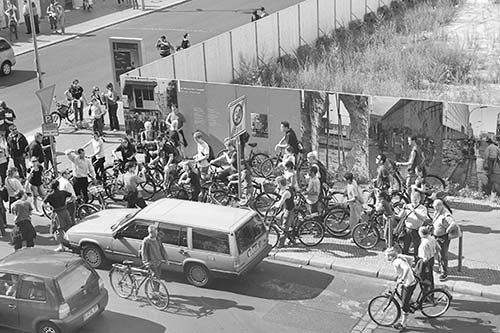
Fat Tire Bikes rents good bikes at the base of the TV Tower near Alexanderplatz (€14/day, cheaper for 2 or more days, trekking bikes available, free luggage storage, daily 9:30-20:00, shorter hours off-season, +49 30 2404 7991, www.fattiretours.com/berlin; for location, see the map on here).
Take a Bike—near the Friedrichstrasse S-Bahn station—is owned by a knowledgeable Dutch-German with a huge inventory (3-gear bikes: €10/4 hours, €14.50/day, €25/2 days, slightly cheaper for longer rentals, more for better bikes, includes helmets, daily 9:30-19:00, Nov-March closed Tue-Thu, Neustädtische Kirchstrasse 8—see the map on here, +49 30 2065 4730, www.takeabike.de). To find it, leave the S-Bahn station via the Friedrichstrasse exit, turn right, go through a triangle-shaped square, and hang a left on Neustädtische Kirchstrasse.
Bike Rental Berlin is a good option in Prenzlauer Berg (€12/day, helmets-€1, kids’ bikes and child seats available, daily 10:00-18:00, often closed off-season—call ahead, Kastanienallee 55—see the map on here, +49 30 7153 3020, www.bike-rental-berlin.de).
Another option is to download an app such as Next Bike, which lets you locate bikes near you and scan the bike’s bar code to release it. Bike hubs are abundant, so you can pick up and drop off almost anywhere (€1 for the first 30 minutes, €1.50 after that, capped at €15/day, www.nextbike.de).
Tours in Berlin
BY BUS
Berlin lends itself to a bus-tour orientation (worth ▲▲). Several companies offer essentially the same circuit of the city with unlimited, all-day hop-on, hop-off privileges for around €25 (two days for a few euros more, check for WelcomeCard discounts). Buses make about a dozen stops at the city’s major tourist spots (Potsdamer Platz, Museum Island, Brandenburg Gate, Kaiser Wilhelm Memorial Church, and so on). For specifics, look for brochures in your hotel lobby or at the TI, or check the websites for the dominant outfits: CitySightseeing Berlin, a.k.a. Berlin City Tour, runs red buses and yellow-and-green buses (www.berlin-city-tour.de). City Circle Sightseeing, a.k.a. BEX, runs yellow-and-black buses marked with a “Gray Line” logo (https://city-circle.de).
Buses come with cursory narration in English and German by a live, sometimes tired guide, or a dry recorded commentary. Try to catch a bus with a live guide (buses generally run daily 10:00-18:00, 4/hour, last departure from all stops around 16:00, 2-hour loop; Nov-March 2/hour, last departure around 15:00). Due to heavy traffic, pickup times are unreliable; you may find yourself waiting on the curb for a good part of your day.
BY BOAT
▲▲Spree River Cruises
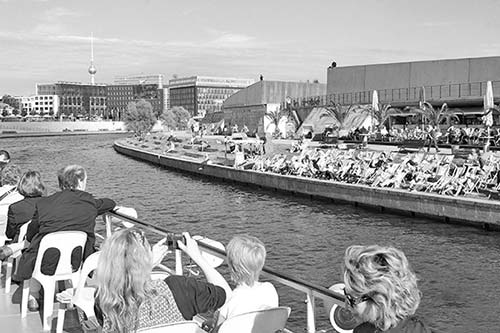
Several boat companies offer trips up and down the river for around €18. In one relaxing hour, you’ll listen to an excellent English audioguide, see lots of wonderful new government-commissioned architecture, and enjoy the lively park action fronting the river. Boats leave from docks clustered near the bridge behind the Berlin Cathedral (just off Unter den Linden, near the DDR Museum). For better views, go for a two-story boat with open-deck seating. While you have many interchangeable options, I enjoyed the Historical Sightseeing Cruise from Stern und Kreisschiffahrt (departures on the half-hour, daily 11:00-17:30 in mid-March-Nov, leaves from Nikolaiviertel Dock—cross bridge from Berlin Cathedral toward Alexanderplatz and look right, audioguide-€2, +49 30 536 3600, www.sternundkreis.de).
ON FOOT
Berlin’s fascinating and complex history can be challenging to appreciate on your own, but a good Berlin tour guide and walking tour make the city’s dynamic story come to life (and can be worth ▲▲▲).
Unlike many European countries, Germany has no regulations controlling who can give city tours. As a result, guide quality is hit-or-miss, ranging from brilliant history buffs who’ve lived in Berlin for years, to new arrivals who’ve memorized a script. To improve your odds of landing a great guide, try one of my recommendations.
Most outfits offer walks that are variations on the same themes: general introductory walk, Third Reich walk (Hitler and Nazi sites), and day trips to Potsdam and the Sachsenhausen Memorial and Museum. Most tours cost about €15 and last 3-4 hours (longer for side trips to Potsdam and Sachsenhausen); public-transit tickets and entrances to sights are extra. For more details—including prices, schedules, and other themes—see each company’s website or pick up brochures at TIs, hotel reception desks, cafés, and shops.
Original Berlin Walks
With a strong commitment to quality guiding, Original Berlin’s “Discover Berlin” walk offers a solid overview with a smart itinerary in four hours (€20; RS%—€2 off, use discount code RS2OFF when booking online; daily at 10:30, May-Sept also daily at 14:00). Tours depart from opposite the Hackescher Markt S-Bahn station, outside Starbucks (+49 30 301 9194, www.berlinwalks.de).
Insider Tour
This well-regarded company runs the full gamut of itineraries, as well as a day trip to Dresden. Tours meet outside the Friedrichstrasse train station, on the square beside the Palace of Tears, or Tränenpalast (+49 30 692 3149, www.insidertour.com).
Food Tours
Many companies offer food tours—a typical offering might start at Hackesche Höfe at 12:00, last 3.5 hours, cost €30, and make five stops (sampling German ravioli, Currywurst, Turkish treats, baked goodies, and some schnapps). Your guide will stoke your appetite with history, jokes, and cultural insights as you walk between stops. A good start is to check Original Berlin Walks’ and Insider Tour’s websites for the latest offerings.
“Free” Tours
You’ll see ads for “free” introductory tours all over town. Popular with students (who’ve yet to learn you get what you pay for), it’s a business model that has spread across Europe: English-speaking students (often Aussies and Americans) deliver a memorized script before a huge crowd lured in by the promise of a free tour. The catch: Guides expect to be “tipped in paper” (€5/person minimum is encouraged).
Local Guides
Berlin guides are generally independent contractors who can be hired privately but also work with tour companies (such as those listed here). Most licensed local guides charge €75/hour or around €300/day (confirm when booking). Guides can get booked up—especially in summer—so reserve ahead.
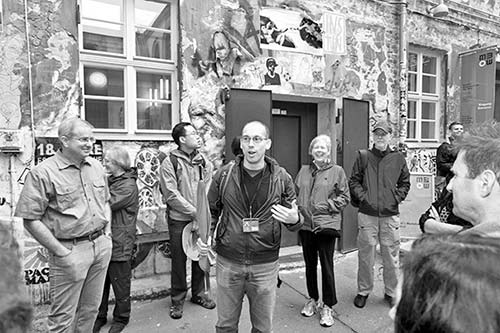
Most of these guides belong to a federation called Bündnis Berliner Stadtführer, which is a great source for connecting with even more guides (www.berlinguidesassociation.com).
I’ve personally worked with and can strongly recommend each of the following guides:
Archaeologist Nick Jackson (+49 171 537 8768, www.jacksonsberlintours.com);
Lee Evans (makes 20th-century Germany a thriller, +49 176 6335 5565, lee.evans@berlin.de);
Torben Brown (a walking Berlin encyclopedia, +49 176 5004 2572, www.berlinperspectives.com);
Holger Zimmer (a cultural connoisseur and public radio journalist, +49 163 345 4427, explore@berlin.de);
Carlos Meissner (a history PhD with a professorial earnestness, +49 175 266 0575, www.berlinperspectives.com);
Caroline Marburger (a sharp historian who has lived and studied abroad, +49 176 7677 9920, caroline.marburger@posteo.de);
Bernhard Schlegelmilch (the only guide listed here who grew up behind the Wall, +49 176 6422 9119, upwards@t-online.de);
Haşim Anik (specializes in Kreuzberg, where he grew up, +49 163 916 2148, hasimanik@hotmail.com);
Jeremy Minsberg (a storyteller who weaves Berlin’s history into an adventure, +49 176 7032 2854, www.theberlinexpert.com).
ON WHEELS
Fat Tire Bike Tours offers guided bike tours from April through October (around €30, 3 hours, 5-10 miles, check schedules at www.fattiretours.com/berlin). Topics include a City Tour, Berlin Wall Tour, Third Reich, evening food tour (from €79), Modern Berlin Tour (countercultural, creative aspects of contemporary Berlin), an all-day Potsdam Gardens and Palaces Tour, and private tours for families and small groups. Meet at the TV Tower at Alexanderplatz (reservations smart, +49 30 2404 7991).
Berlin on Bike offers a 3.5-hour introductory tour daily at 10:00. They also offer several themed tours, including Alternative Berlin, Street Art Berlin, and Nightseeing (most around €30, 8-12 miles, private tours available, all tours leave from the Kulturbrauerei brewery in Prenzlauer Berg, +49 30 4373 9999, https://berlinonbike.de).
Berlin City Walk
PART 1: THE REICHSTAG TO UNTER DEN LINDEN
2 Memorial to Politicians Who Opposed Hitler
3 Berlin Wall Victims Memorial
7 Memorial to the Murdered Jews of Europe
11 Brandenburger Tor S-Bahn Station
PART 2: BEBELPLATZ TO ALEXANDERPLATZ
14 Bebelplatz: Square of the Books
15 Neue Wache
16 Museum Island and Former City Palace
17 Spree River
18 Statues of Karl Marx and Friedrich Engels
19 Karl-Liebknecht-Strasse and Plattenbau
20 Martin Luther Statue and St. Mary’s Church
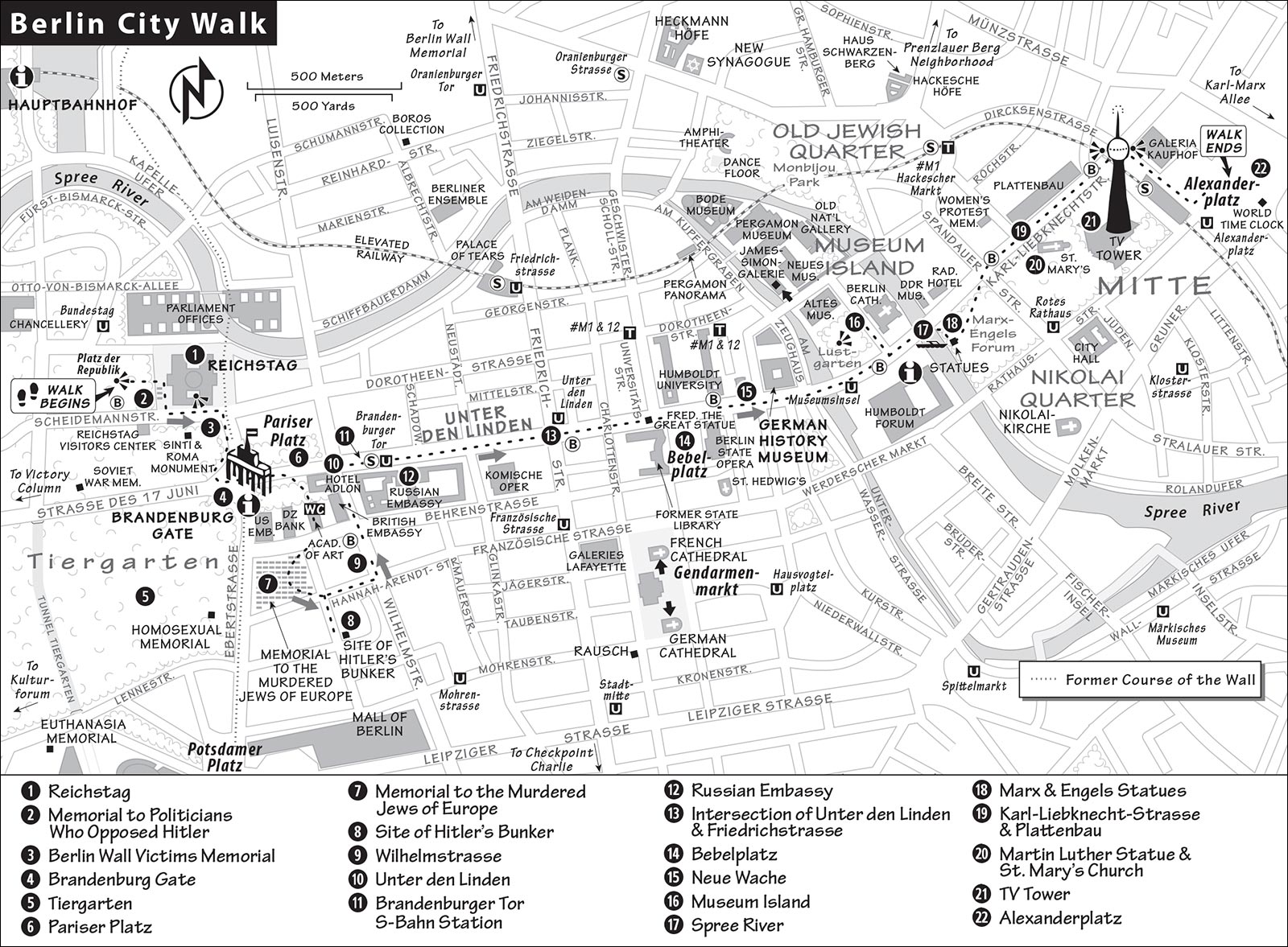
Trace Germany’s turbulent 20th-century history on this two-mile self-guided walk, worth ▲▲▲. We’ll start in front of the Reichstag, pass through the Brandenburg Gate, walk down Unter den Linden, and finish on Alexanderplatz, near the TV Tower. You’ll want to visit some major sights along the route later or by taking a break from the walk. Follow the route on the “Berlin City Walk” map.
Length of This Tour: If you have just one day in Berlin, or want a good orientation to the city, simply follow this walk (allow 2-3 hours at a brisk pace, not counting museum visits). By the end, you’ll have seen the core of Berlin and its most important sights.
If you have more time and want to use this walk as a spine for your sightseeing, entering sights and museums as you go, consider doing Part 1 and Part 2 on different days.
Part 1 goes from the Reichstag and takes you partway down Unter den Linden, with stops at the Brandenburg Gate, Memorial to the Murdered Jews of Europe, and Friedrichstrasse, the glitzy shopping street.
Part 2 continues down Unter den Linden, from Bebelplatz to Alexanderplatz, visiting Museum Island and the Spree River, the Berlin Cathedral, and the iconic TV Tower.
Tours:  Download my free Berlin City Walk audio tour.
PART 1: THE REICHSTAG TO UNTER DEN LINDEN
• Start in Platz der Republik and take in your surroundings. Dominating this park is a giant domed building.
1 Reichstag
The Reichstag is the heart of Germany’s government. It’s where the Bundestag—the lower house of parliament—meets to govern the nation (similar to the US House of Representatives).
When the building was inaugurated in 1895, Germany was still a kingdom. Back then, the real center of power was a mile east of here, at the royal palace. But after the emperor was deposed in World War I, the German Republic was proclaimed. Meanwhile, the storm of National Socialism was growing—the Nazis. Soon the Reichstag had dozens of duly elected National Socialists, and Adolf Hitler seized power. In 1933, the Reichstag building nearly burned down. Many believe that Hitler planned the fire as an excuse to frame the communists and grab power for himself.

With Hitler as führer and real democracy a thing of the past, the Reichstag was hardly used. But it remained a powerful symbol and was a prime target for Allied bombers during World War II. As the war wound down and Soviet troops advanced on the city, it was here at the Reichstag that 1,500 German troops made their last stand. After the war, Berlin was divided and the Berlin Wall ran right behind the Reichstag. The building fell into disuse, and the West German capital was moved from Berlin to the remote city of Bonn.
After the Berlin Wall fell, the Reichstag again became the focus of the new nation. It was renovated by British architect Norman Foster, who added the glass dome. In 1999, the new Reichstag reopened, and the parliament reconvened. To many Germans, the proud resurrection of their Reichstag symbolizes the end of a terrible chapter in their country’s history.
Look now at the Reichstag’s modern dome. The cupola rises 155 feet above the ground. Inside the dome, a cone of 360 mirrors reflects natural light into the legislative chamber below, and an opening at the top allows air to circulate. Lit from inside after dark, it gives Berlin a memorable nightlight. If you make a reservation to visit the interior, you can climb the spiral ramp all the way to the top of the dome for a grand city view (for details on visiting, see the Reichstag listing under “Sights in Berlin,” later).
Facing the Reichstag, do a 360-degree spin to find some other big landmarks. To the left of the Reichstag, at the Bundestag U-Bahn stop, the long, partly transparent building houses parliamentary offices. Beyond that, in the distance, is the tower of the huge main train station, the Hauptbahnhof (marked DB for Deutsche Bahn, the German rail company). Farther left is the mammoth, white, concrete-and-glass Chancellery (nicknamed “the Washing Machine”). This is the office of Germany’s most powerful person, the chancellor. To remind the chancellor who he or she works for, Germany’s Reichstag (housing the parliament) is about six feet taller than the Chancellery.
• Approach the Reichstag, turn right, walk nearly to the street, and find a small memorial next to the shipping-container-like entrance buildings. It’s a row of slate stones sticking out of the ground—it looks like a bike rack. This is the...
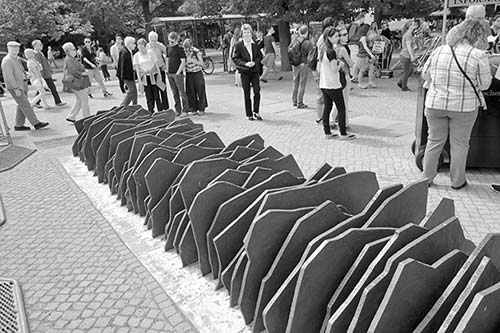
2 Memorial to Politicians Who Opposed Hitler
These 96 slabs honor the 96 Reichstag members who spoke out against Adolf Hitler and the rising tide of fascism. When Hitler became chancellor, these critics were persecuted and murdered. On each slab, you’ll see a name and political party—most are KPD (Communists) and SPD (Social Democrats)—and the date and location of death (KZ denotes those who died in concentration camps).
• Walk east, along the right side of the Reichstag, on busy Scheidemannstrasse, toward the rear of the building. When you reach the intersection at the back of the Reichstag, turn right and cross the street. Once across, on the corner you’ll see a humble row of white crosses that predate the fall of the wall.
3 Berlin Wall Victims Memorial
The Berlin Wall once stood right here, running north-south down what is now busy Ebertstrasse, dividing the city in two. This side (near the crosses) was democratic West Berlin. On the other side was the Soviet-controlled East. The row of white crosses commemorates a few of the many brave East Berliners who died trying to cross the Wall to freedom. (For more, see the sidebar.)
Read some of the crosses. The last person killed was 20-year-old Chris Gueffroy. He died nine months before the Wall fell, shot through the heart just a few steps away from here.
Several other memorials dedicated to groups targeted by the Nazis (from Sinti/Roma to homosexuals) are in the vicinity. For details and where to find them, see here.
• Continue south down Ebertstrasse toward the Brandenburg Gate, tracing the former course of the Berlin Wall. A thin strip of memorial bricks embedded in the street pavement indicates where it once stood. Ebertstrasse spills into a busy intersection dominated by the imposing Brandenburg Gate. To take in this scene, cross the Berlin Wall bricks to the piazza in front of the...
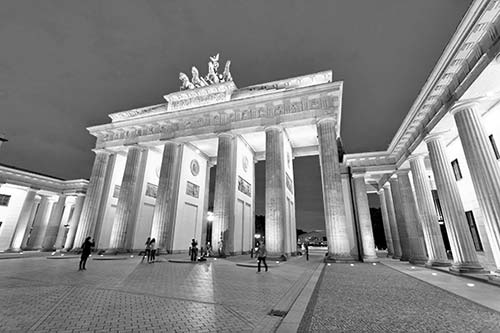
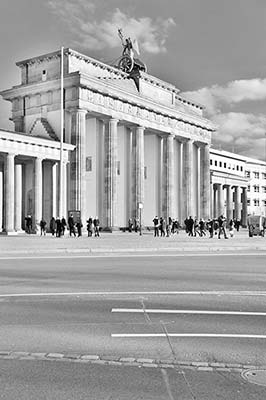
4 Brandenburg Gate
This massive classical-looking monument is the grandest—and last survivor—of the 14 original gates in Berlin’s old city wall. (This one led to the neighboring city of Brandenburg.) The majestic four-horse chariot on top is driven by the Goddess of Peace. When Napoleon conquered Prussia in 1806, he took this statue to the Louvre in Paris. Then, after the Prussians defeated Napoleon, they got it back (in 1813)...and the Goddess of Peace was renamed the “Goddess of Victory.”
West Berlin was a 185-square-mile island of capitalism surrounded by East Germany. Between the establishment of the DDR (East Germany) in 1949 and construction of the Berlin Wall in 1961, an estimated three million East Germans emigrated (fled) to freedom. To stanch their population loss, the DDR erected the 96-mile-long “Anti-Fascist Protective Rampart” almost overnight, beginning on August 13, 1961.
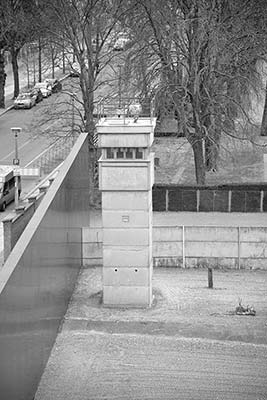
The Berlin Wall (Berliner Mauer) was actually two walls. The outer was a 12-foot-high concrete barrier topped with barbed wire and a rounded, pipe-like surface to discourage grappling hooks. The inner wall was lower-profile. Sandwiched between was a no-man’s-land (“death strip”) between 30 and 160 feet wide.
There were eight points where you could legally cross between West and East Berlin, the most famous of which were Checkpoint Charlie and the Friedrichstrasse train station, with its so-called “Palace of Tears.” In general, Westerners could temporarily enter the East, but not vice-versa.
Even after the Wall went up, people continued to try to escape. During the Wall’s 28 years, there were about 5,000 documented successful escapes—and 565 of those were East German guards. An estimated 136 people were killed at the Wall while trying to escape. Meanwhile, living in West Berlin—surrounded by concrete, barbed wire, and enemy soldiers armed to the teeth—was no picnic.
The Berlin Wall came to symbolize the larger Cold War between East and West. President John F. Kennedy gave a speech of solidarity in West Berlin, declaring, “Ich bin ein Berliner”—I am a Berliner. A generation later, President Ronald Reagan stood in front of the Brandenburg Gate and demanded of his Soviet counterpart, “Mr. Gorbachev, tear down this wall.”
Finally, one November night in 1989, the Berlin Wall came down, as suddenly as it went up.
The gate straddles the major east-west axis of the city. The western segment—behind you—stretches four miles, running through Tiergarten Park to the Olympic Stadium. To the east—on the other side of the gate—the street is called Unter den Linden. That’s where we’re headed. In the distance (if you jockey for position), you can see the red-and-white spire of the TV Tower that marks the end of Berlin’s main axis.
Historically, the Brandenburg Gate was just another of this city’s many stately Prussian landmarks. But in our lifetime, it became the symbol of Berlin—of its Cold War division and its reunification. That’s because, from 1961 to 1989, the gate was stranded in the no-man’s land between East and West. For an entire generation, scores of German families were divided—some on this side of the Wall, some on the other. This landmark stood tantalizingly close to both East and West...but was off-limits to all.
By the 1980s, it was becoming clear that the once-mighty Soviet empire was slowly crumbling from within. Finally, on November 9, 1989, the world rejoiced at the sight of happy Berliners standing atop the Wall. They chipped away at it with hammers, passed beers to their long-lost cousins on the other side, and adorned the Brandenburg Gate with flowers like a parade float. Six weeks later, on December 22, West German chancellor Helmut Kohl led a triumphant procession through the Brandenburg Gate to shake hands with his (soon-to-be-defunct) East German counterpart—the literal opening of a big gateway that marked the symbolic closing of a heinous era.
• Turn 180 degrees and take in the vast, green expanse of the park called...
5 Tiergarten
Look down the long boulevard (Strasse des 17. Juni) that bisects the 500-acre park called Tiergarten (“Animal Garden”). The boulevard’s name comes from the 17th of June, 1953, when brave East Germans rose up against their communist leaders. The rebellion was crushed, and East Berliners had to wait another 36 years for the freedom to walk through the Brandenburg Gate. In the distance is the 220-foot Victory Column, topped with a golden statue that commemorates the three big military victories that established Prussia as a world power in the late 1800s—over France, Denmark, and Austria—and kicked off Berlin’s golden age. (For more on Tiergarten and the Victory Column, see here.)
• Walk through the Brandenburg Gate, entering what for years was forbidden territory. Just past the gate, there’s a small TI on the right, and on the left is the Room of Silence, dedicated to meditation. As you cross through this historic but long forbidden gate, you enter a grand square known as...
6 Pariser Platz
Pariser Platz marks the start of Unter den Linden, the broad boulevard that stretches before you. “Parisian Square” was so named after the Prussians defeated France and Napoleon in 1813. The square was once filled with important government buildings, but all were bombed to smithereens in World War II. For decades, it was an unrecognizable, deserted no-man’s-land, cut off from both East and West by the Wall. But now it’s rebuilt, and the banks and hotels that were here before the bombing have reclaimed their original places, with a few modern additions. And the winners of World War II—the US, France, Great Britain, and Russia—continue to enjoy this prime real estate: Their embassies are all on or near this square.
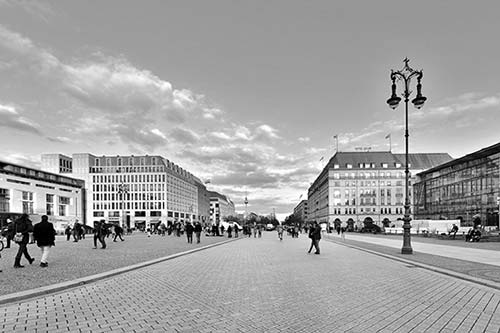
The US Embassy (on the right as you come through the gate) reopened here in its original location on July 4, 2008. To the left of the US Embassy is the DZ Bank Building, built as a conference center in 2001 by Canadian-American architect Frank Gehry (its low-profile exterior was designed so as not to draw attention away from the Brandenburg Gate). To get your fix of wild and colorful Gehry, step into the building’s lobby. The undulating interior is like a big, slithery fish.
Two doors past the bank is the ritzy Hotel Adlon. Over the years, this place has hosted celebrities and VIPs from Charlie Chaplin to Albert Einstein. And yes, this was where pop star Michael Jackson shocked millions by dangling his infant son over the railing (from the second balcony up).
• The most direct route to our next stop is by cutting through the Academy of Arts (Akademie der Künst) building—it’s between Hotel Adlon and the DZ Bank, at Pariser Platz 4. (If the Academy of Arts is closed, loop to the left, circling around the Hotel Adlon to Behrenstrasse.)
Enter the glassy Academy of Arts (WC in basement) and head toward the back. Just past the ground floor café (an oasis of calm) is the former office of Albert Speer, Hitler’s chosen architect. Continue on, passing Speer’s favorite statue, Prometheus (from around 1900). This is the kind of art that turned on Hitler: a strong, soldierly, vital man, defending the homeland.
As you exit out the back of the building, veer right on Behrenstrasse and cross the street. You’ll wind up at our next stop, a sprawling field of stubby concrete pillars.
7 Memorial to the Murdered Jews of Europe
This memorial consists of 2,711 coffin-shaped pillars covering an entire city block. More than 160,000 Jewish people lived in Berlin when Hitler took power. Tens of thousands fled, and many more were arrested, sent to nearby Sachsenhausen concentration camp and eventually murdered. The memorial remembers them and the other six million Jews who were killed by the Nazis during World War II. Completed in 2005 by the Jewish-American architect Peter Eisenman, this was the first formal, German-government-sponsored Holocaust memorial. Using the word “murdered” in the title was intentional, and a big deal. Germany, as a nation, was admitting to a crime.
Inside the information center (in the far-left corner), exhibits trace the rise of Nazism and tell the victims’ stories (for details on visiting the information center, see here).
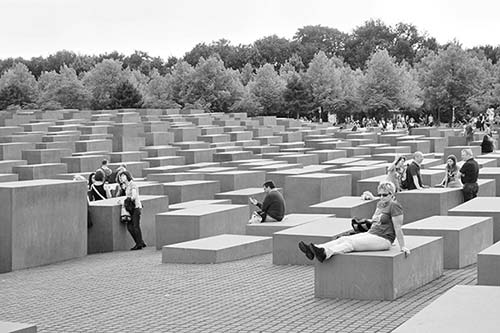
• At the far-left corner, a little beyond the information center, you eventually emerge on the street corner. Our next stop is about a block farther. Carefully jaywalk across Hannah-Arendt-Strasse and continue straight (south) down Gertrud-Kolmar-Strasse. On the left side of the street, you’ll reach a rough parking lot. At the far end of the lot is an information plaque labeled Führerbunker. This marks the...
8 Site of Hitler’s Bunker
You’re standing atop the buried remains of the Führerbunker. In early 1945, as Allied armies advanced on Berlin and Nazi Germany lay in ruins, Hitler and his staff retreated to this bunker complex behind the former Reich Chancellery. He stayed here for two months.
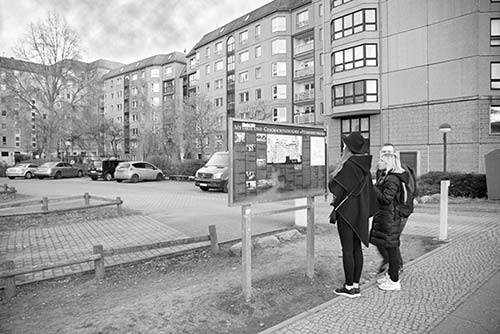
It was here, on April 30, 1945—as the Soviet army tightened its noose on the Nazi capital—that Hitler and Eva Braun, his wife of less than 48 hours, committed suicide. A week later, the war in Europe was over. The information board here explains the rest of the story. Though the site of Hitler’s bunker is part of history, there really isn’t much to see here. And that’s on purpose. No one wants to turn Hitler’s final stronghold into a tourist attraction.
• Backtrack up Gertrud-Kolmar-Strasse, and turn right on Hannah-Arendt-Strasse. Take your first left (at the traffic light) on...
9 Wilhelmstrasse
This street was the traditional center of the German power, beginning back when Germany first became a nation in the 19th century. It was lined with stately palaces housing foreign embassies and government offices. This was the home of the Reich Chancellery, where the nation’s chief executive presided. When the Nazis took control, this street was where Hitler waved to his adoring fans, and where Joseph Goebbels had his Ministry of Propaganda.
During World War II, Wilhelmstrasse was the nerve center of the German war command. From here, Hitler directed the war and ordered the Blitz (the air raids that destroyed much of London). As the war turned to the Allies’ side, Wilhelmstrasse and the neighborhood around it were heavily bombed. Most of the stately palaces were destroyed, and virtually nothing historic survives today.
• The pedestrianized part of the street is home to the British Embassy. The fun purple color of its wall represents the colors of the Union Jack mixed together. Wilhelmstrasse spills out onto Berlin’s main artery, the tree-lined Unter den Linden, next to the Hotel Adlon.
10 Unter den Linden
This boulevard, worth ▲▲, is the heart of imperial Germany. During Berlin’s golden age in the late 1800s, this was one of Europe’s grand boulevards—the Champs-Elysées of Berlin, a city of nearly two million people. It was lined with linden trees, so as you promenaded down, you’d be walking “unter den Linden.” The street got its start in the 15th century as a way to connect the royal palace (a half-mile down the road, at the end of this walk) with the king’s hunting grounds (today’s big Tiergarten Park, out past the Brandenburg Gate). Over the centuries, aristocrats moved into this area so their palaces could be close to their king’s.
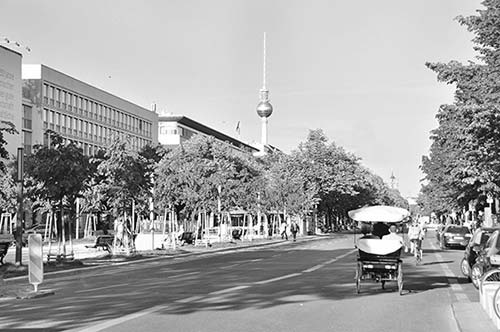
Many of the grandest landmarks we’ll pass along here are thanks to Frederick the Great, who ruled from 1740 to 1786, and put his kingdom (Prussia) and his capital (Berlin) on the map. We’ll also see a few signs of modern times; after World War II, this part of Berlin fell under Soviet influence, and Unter den Linden was the main street of communist East Berlin.
• Turn your attention to the subway stop in front of the Hotel Adlon (labeled Brandenburger Tor). We’ll enter the station and reemerge a block or so farther down the boulevard.
11 Brandenburger Tor S-Bahn Station
For a time-travel experience back to DDR days, head down the stairs into this station (no ticket necessary). Keep to the right as you descend (toward the S-Bahn, not the U-Bahn) to the subway tracks. As you walk along the platform about 200 yards, survey the historic black-and-white photos on the walls and feel the 1950s vibe of the station.
For decades, the Brandenburger Tor S-Bahn station was unused—one of Berlin’s “ghost stations.” While you’re down under, notice how mid-20th-century the station still looks. There’s the original 1930s green tilework on the walls, and harsh fluorescent lighting. Some old signs (on the central kiosks) still have Unter den Linden (the original name of this stop) written in old Gothic lettering. During the Cold War, the zigzag line dividing East and West Berlin meant that some existing train lines crossed the border underground. To make a little hard Western cash, the East German government allowed a few trains to cut under East Berlin on their way between Western destinations. The only catch: No one could get on or off while the train was in East Berlin. For 28 years, stations like this were unused, as Western trains slowly passed through, and passengers saw only East German guards...and lots of cobwebs. Then, in 1989, within days of the fall of the Wall, these stations were reopened.
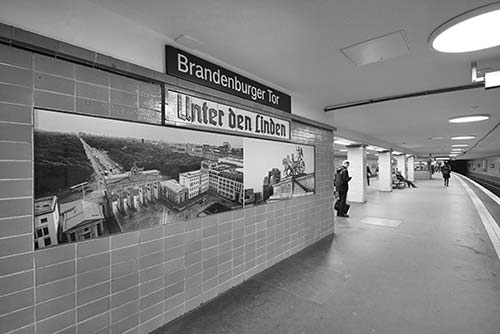
• At the far end of the platform, ascend the escalator, bear right, and head up the stairs to exit. You’ll emerge on the right side of Unter den Linden. Belly up to the bars and look in at the...
12 Russian Embassy
Built from the ashes of World War II, this imposing building—it’s Europe’s largest embassy—made it clear to East Berliners who was now in charge: the Soviet Union. It was the first big postwar building project in East Berlin, built in the powerful, simplified Neoclassical style that Stalin liked. Standing here, imagine Unter den Linden as a depressing Cold War-era cul-de-sac, dead-ending at the walled-off Brandenburg Gate. After the fall of the Soviet Union in 1991, this building became the Russian Embassy, flying the white, blue, and red flag. Find the hammer-and-sickle motif decorating the window frames—a reminder of the days when Russia was part of the USSR.
• Keep walking down the boulevard for two blocks. You’ll pass blocks of dull banks, tacky trinket shops, and a few high-end boutiques, eventually reaching cultural buildings—the university, the opera, and so on. That’s intentional: The Prussian kings wanted to have culture closer to their palace. Pause when you reach the intersection with...
13 Friedrichstrasse
You’re standing at perhaps the most central crossroads in Berlin—named for, you guessed it, Frederick the Great. Before World War II, Friedrichstrasse was the heart of cultural Berlin. In the Roaring Twenties, it was home to anything-goes nightlife and cabarets where entertainers like Marlene Dietrich, Bertolt Brecht, and Josephine Baker performed. And since the fall of the Wall, it’s become home to supersized department stores and big-time hotels.
Consider popping into the grand Galeries Lafayette department store (two blocks down to your right). Inside, you can ogle a huge glass-domed atrium—a miniature version of the Reichstag cupola. There’s a WC and a handy designer food court in the basement—which you can see below the cupola viewpoint. (Note: If you were to continue down Friedrichstrasse from here, you’d wind up at Checkpoint Charlie in about 10 minutes.)
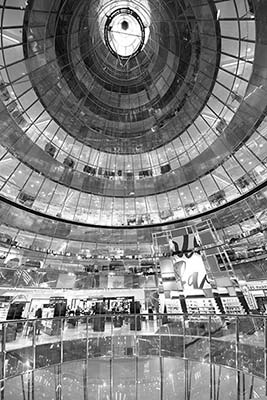
• We’ve reached the end of Part 1 of this walk. This is a good place to take a break, if you’d like, and tackle Part 2 another time. But if you’re up for ambling on, head down Unter den Linden a few more blocks, past the large equestrian statue of Frederick the Great, who ruled as king of Prussia in the mid-1700s. He turned his capital, Berlin, into a world-class city. Frederick is pointing east, toward the epicenter of Prussian imperial power, where his royal palace once stood. We’re now entering the stretch of Unter den Linden that best represents Frederick’s legacy.
Turn right into Bebelplatz.
PART 2: BEBELPLATZ TO ALEXANDERPLATZ
• Head to the center of the square, and find the square of glass window set into the pavement. We’ll begin with some history and a spin tour, then consider the memorial below our feet.
14 Bebelplatz: Square of the Books
Frederick the Great built this square to show off Prussian ideals: education, the arts, improvement of the individual, and a tolerance for different groups—provided they were committed to the betterment of society. This square was the cultural center of Frederick’s capital. In many ways, it still is. Spin counterclockwise to take in the cultural sights, some of which date back to Frederick’s time.
Start by looking across Unter den Linden. That’s Humboldt University, one of Europe’s greatest. Continue panning left. Fronting Bebelplatz is the former state library—which was funded by Frederick the Great. After the library was damaged in World War II, communist authorities decided to rebuild it in the original style...but only because Lenin studied here during much of his exile from Russia. The square’s far end is marked by one of Berlin’s swankiest lodgings—Hotel de Rome, housed in a historic bank building. Their trendy rooftop bar is a treat in good weather.
Next, the green-domed structure is St. Hedwig’s Church (nicknamed the “Upside-Down Teacup”). It stands as a symbol of Frederick the Great’s religious and cultural tolerance. The pragmatic king wanted to encourage the integration of Catholic Silesians into Protestant Prussia.
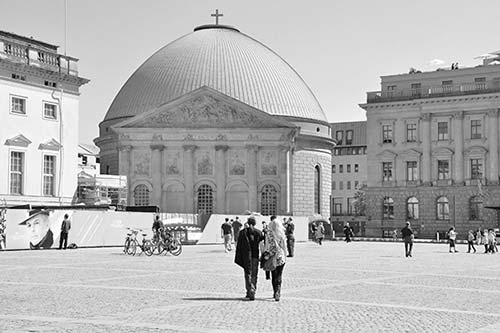
Up next is the Berlin State Opera (Staatsoper)—originally established in Frederick the Great’s time. Frederick believed that the arts were essential to having a well-rounded populace. He moved the opera house from inside the castle to this showcase square.
Look down through the glass window in the pavement at what appears to be a room of empty bookshelves. This book-burning memorial commemorates a notorious event that took place here during the Nazi years. It was on this square in 1933 that staff and students from the university built a bonfire. Into the flames they threw 20,000 newly forbidden books—books authored by the likes of Einstein, Hemingway, Freud, and T.S. Eliot. Overseeing it all was the Nazi propaganda minister, Joseph Goebbels. Hitler purposely chose this square—built by Frederick the Great to embody culture and enlightenment—to symbolically demonstrate that the era of tolerance and openness was over.
• Leave Bebelplatz toward Unter den Linden, cross to the university side, and continue heading east down Unter den Linden. You’ll pass in front of Humboldt University’s main gate. Immediately in front of the gate, embedded in the cobbles, notice the row of square, bronze plaques—each one bearing the name of a university student who was executed by the Nazis. You’ll see similar Stolpersteine (“stumbling stones”) all over Berlin. Just beyond the university on the left, head for a building that looks like a Greek temple set in a small park filled with chestnut trees.
15 Neue Wache
The “New Guardhouse” was built in 1816 as just that—a fancy barracks for the bodyguards assigned to the Hohenzollern palace just ahead (it’s the Neoclassical building across the street, with four tall columns marking the doorway). Over the years, the Neue Wache has been transformed into a memorial for fallen warriors. Check out the pediment over the doorway: The goddess of Victory stands in the center amid the chaos of war, as soldiers fall.
The Neue Wache represents the strong, united, rising Prussian state Frederick created. It was just one of the grand new buildings built to line this stretch of Unter den Linden. The style was Neoclassical—structures that looked like Greek temples, with columns and triangular pediments.
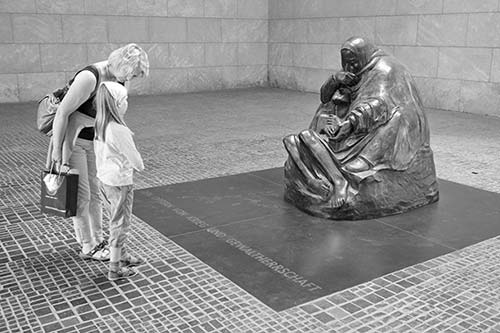
Step inside. In 1993, the austere interior was fitted with the statue we see today—a replica of Mother with Her Dead Son, by Käthe Kollwitz, a Berlin artist who lived through both world wars. It marks the tombs of Germany’s unknown soldier and an unknown concentration camp victim. The inscription reads, “To the victims of war and tyranny.” (It’s complicated to honor your war dead when you started and lost a great war...or two. But you can honor the victims of your tyrant—both foreign and domestic.) The memorial, open to the sky, incorporates the elements—sunshine, rain, snow—falling on this modern-day pietà.
• Continue down Unter den Linden, passing by the pink yet formidable Zeughaus (early 1700s), the oldest building on the boulevard. Built in the Baroque style as the royal arsenal, it later became a military museum, and today houses the excellent German History Museum (main exhibition closed until 2025; see here). When you reach the bridge, cross the Spree and step onto Museum Island.
16 Museum Island and Former City Palace
This island, sitting in the middle of the Spree River, is Berlin’s historic birthplace. Take in the scene: the lazy river, the statues along the bridge, and the impressive buildings all around you.
Berlin was born on this marshy island around the year 1200. As the city grew, this island remained the site of the ruler’s castle and residence—from Brandenburg dukes and Hohenzollern prince-electors, to the kings of Prussia and the kaisers of the German Empire. At its peak under Prussian rulers (1701-1918), it was a splendid and sprawling Baroque palace called the Stadtschloss, topped at one end with a dome (as you see on the right side of Unter den Linden). It was considered the most important secular Baroque building north of the Alps.
After World War I, the last Prussian ruler was deposed, and the palace was gutted in a 1945 air raid in the last days of World War II. In 1950, the East Germans erected in its place the Palace of the Republic—a massive, blocky parliament building. In the early 21st century, that communist building was demolished, and for years this entire city block was a vacant lot—just a big grassy park.
Now, at great expense, Germany has rebuilt a palace on the site, called the Humboldt Forum. This mammoth construction is intended to be a new landmark for Berlin, with various museums and other cultural attractions. The main facade fits with the historic architecture along Unter den Linden. The side facing the Spree River, with its blocky minimalism, is jarringly modern. Along the river a Monument to Freedom and Unity (which may be open by the time of your visit) will include a 164-foot-long bowl (which can be walked in) and two inscriptions: “Wir sind das Volk!” (We are the people), chanted by protesters against communism in 1989, and “Wir sind ein Volk!” (We are one people), which grew out of the first slogan when focus turned to reunification.
• Now turn your attention to the left side of Unter den Linden. There’s a spacious garden, bordered on two sides by impressive buildings.
Museum Island Sights
For 300 years, the Lustgarten has flip-flopped between being a military parade ground and a people-friendly park, depending on the political tenor of the time. In the Nazi era, Hitler enjoyed giving speeches here—from the top of the museum steps overlooking this square. At the far end of the Lustgarten is a cache of grandiose museum buildings that represent the can-do German spirit of the 1800s, when city leaders envisioned the island as an oasis of culture and learning. Today, these impressive buildings host five grand museums. The Altes Museum houses classical antiquities. Just beyond are the Neues Museum (Egyptian, prehistoric, and classical antiquities), the Pergamon Museum (classical antiquities), the Old National Gallery (German Romantic painting), and the Bode Museum (Byzantine art and mosaics).
Dominating the island is the towering, green-domed Berlin Cathedral (Berliner Dom). This is only a century old, built during the reign of Kaiser Wilhelm II—that jingoistic emperor in the spiked helmet who led Europe into World War I. The Wilhelmian style is over the top: a garish mix of Neoclassical, Neo-Baroque, and Neo-Renaissance, with rippling stucco and gold-tiled mosaics.
The church is at its most impressive from the outside. To see the extravagant interior and climb the dome (270 steps, sweeping views), you can pay the pricey admission (for details on visiting, see here).
• Continue down Unter den Linden past the cathedral, and pause on the bridge over the Spree. Look left, past the cathedral.
17 Spree River
The Spree River is people-friendly and welcoming. A parklike promenade leads all the way from here to the Hauptbahnhof. Along it, you’ll find impromptu “beachside” beer gardens with imported sand, BBQs in pocket parks, and lots of locals walking their dogs, taking a lazy bike ride, or jogging. Spree River boat tours depart from near here (for details, see here).
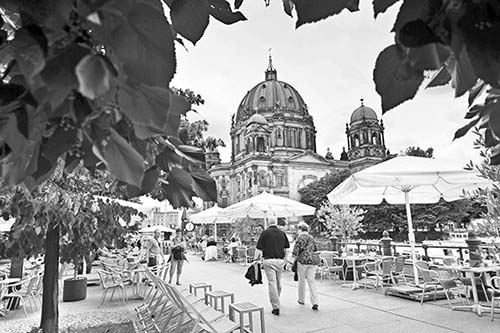
• From here you could return to Museum Island to see the sights there. But we’ll continue toward the TV Tower and Alexanderplatz (where this walk ends). Cross the bridge and find the statues of Marx and Engels, at the river-end of the big park. Note that as the boulevard crosses the river, Unter den Linden becomes Karl-Liebknecht-Strasse.
18 Statues of Karl Marx and Friedrich Engels
These statues of the founders of communism mark the Marx-Engels-Forum, a park dedicated in 1986 by the East German government. During the heady days before the Berlin Wall and the Iron Curtain fell, a half-million Berliners gathered here to call for freedom and an end to the economic and social experiment preached by these two philosophers.
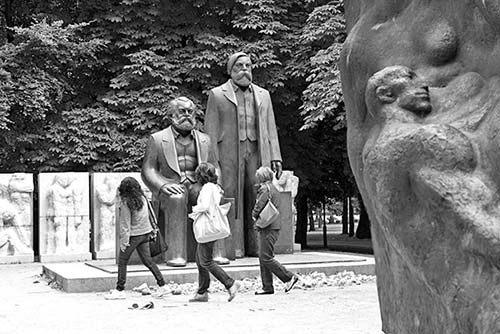
Marx and Engels were economists who studied at Berlin’s Humboldt University in the early 1800s. They co-authored the landmark Communist Manifesto (1948), which ends with the famous line, “Workers of the world, unite!” Preoccupied with the “class struggle” through history—between the haves (bourgeoisie) and the have-nots (proletariat)—Marx and Engels believed that everyday working people should take control of the means of production. Over the next decades, Marx and Engel’s ideas proved enormously influential. They caught on with a Russian named Vladimir Lenin. In 1917, Lenin led the Bolshevik Revolution that toppled the Russian czar and established the communist Soviet Union (USSR). Three decades later, Lenin’s successor Josef Stalin sent the Red Army into Germany to defeat Hitler and the Nazis. After the war, the USSR occupied the eastern half of Germany and established a communist state: the DDR.
• From here, with your back to the river, angle through the park veering left, in the direction of the TV Tower. As you emerge from the park and hit Spandauer Strasse, look right to see the red-brick City Hall, where Berlin’s mayor has an office. It was built after the revolutions of 1848 and was arguably the first democratic building in the city. Later it became the City Hall of communist East Berlin—giving its nickname, “Rotes Rathaus” (Red City Hall), a dual meaning. At the intersection, a cute DDR-era Ampelmann (“traffic-light man”) street light will tell you to stop or walk.
Cross Spandauer Strasse. To your left is...
19 Karl-Liebknecht-Strasse and Plattenbau
This street is named for a founder of Germany’s communist party: Karl Liebknecht, a martyr to the Marxist cause and reminder of the communist regime. As you continue walking toward the TV Tower, notice the uniformity of the high-rise concrete buildings lining the boulevard to your left. These are Plattenbau (“panel buildings”). While the DDR government maintained a few token historic landmarks (like the Rotes Rathaus), their real architectural forte was prefabricated, high-capacity, low-frills housing.
While the buildings’ exteriors and public spaces can be stern and uninviting, residents prided themselves on creating cozy and welcoming little nests inside. Being invited to dinner at one of these apartments in DDR times showed you the stark contrast between cold, paranoid public life and colorful, gregarious private life. In their own homes, people could pursue hobbies and spend time with family.
• Head for the old church up on the right.
20 Martin Luther Statue and St. Mary’s Church
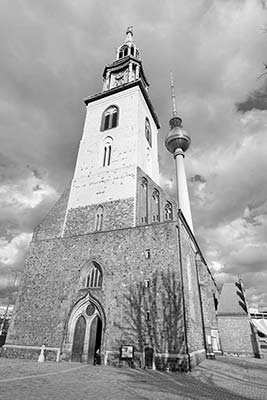
Approaching the church, you see a bold statue of Martin Luther. St. Mary’s Church, like the rest of Europe, was Roman Catholic until about 500 years ago when this solitary German monk rocked European history by kicking off the Protestant Reformation.
St. Mary’s Church, with its prominent steeple, dates from 1270. Just inside the church, an artist’s rendering helps you follow the interesting but very faded old “Dance of Death” mural that wraps around the narthex (dating from about 1470, the generation before Luther). The church’s whitewashed interior is austere, with heavy oak pews. While originally Roman Catholic (like all churches in Europe before the Reformation), St. Mary’s Church has been Lutheran for about 500 years. In true Protestant style, the interior is dominated by the pulpit (for Protestants, it’s all about the word of God) and the pipe organ (Luther said, “When you sing, you pray double”).
• Across the street and a half-block down is another Berlin memorial that’s worth a short detour, up Rosenstrasse—the Women’s Protest Memorial. It commemorates a courageous protest by the Gentile wives of Jewish men who were arrested by the Nazis. Remarkably, the men were released, and the resistance of these brave women stands as a rare example of a mass public protest in Hitler’s Germany against mistreatment of Jews.
Otherwise, gaze up at the 1,200-foot-tall...
21 TV Tower (Fernsehturm)
The communist regime is long gone, but it left this enduring legacy. The TV Tower—built in 1969 to celebrate the 20th anniversary of communist East Germany—was meant to show the power of the atheistic state at a time when DDR leaders were removing crosses from the country’s church domes and spires. But when the sun hit the tower, the reflected light created a huge, bright cross on the mirrored ball. Cynics called it “The Pope’s Revenge.” East Berliners joked that if the TV tower fell over, they’d have an elevator to freedom in the West. (For a steep price you can ride to the top for a grand view.)
• Return to the church side of the boulevard and continue walking east down Karl-Liebknecht-Strasse, passing the TV Tower on your right. You’ll cross under a railway overpass, then make a right on Dircksenstrasse, then a left halfway down the block to arrive at...
22 Alexanderplatz
Alexanderplatz was built in 1805, during the Prussian golden age. Because this was a gateway for trade to Eastern Europe, it was named for a Russian czar, Alexander. In the Industrial Age, it became a transportation hub. In the roaring 1920s, it was a center of cabaret nightlife to rival Friedrichstrasse. And under the DDR, it was transformed into a commercial center. This was the pride and joy of East Berlin shoppers.
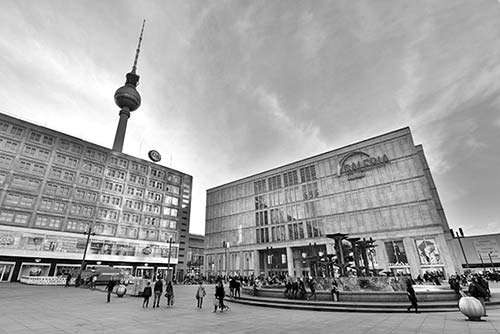
And then, on November 4, 1989, more than a half-million East Berliners gathered on Alexanderplatz to demand their freedom. Protesters chanted, “Wir wollen raus! We want out!” The winds of change were in the air; a week later, the Berlin Wall was history.
Today’s square is a mix of old and new. Stand just beyond the first U-Bahn station entrance for the best view. Take a 360-degree, clockwise spin-tour—starting with Galeria Kaufhof, to the right of the TV Tower. In communist times, the Kaufhof department store was the ultimate shopping mecca...which wasn’t saying much. In front is an abstract-sculpture fountain ringed with a colorful base that attracts sitters. Next, the tall, glassy skyscraper is a DDR-era hotel, now called the Park Inn. Primark, next door, is a major European discount clothing chain. If you see lots of young shoppers here, it’s because of Primark.
Continuing clockwise past the Saturn electronics store, notice the once-futuristic World Time Clock, a nostalgic favorite installed in 1969 that remains a popular meeting point.
• We’ve seen Berlin go from a royal empire to a fascist state, from a country divided by communism to a center of democracy and capitalism, all in the space of one walk. Alexanderplatz is a convenient transportation hub to the rest of Berlin. Or you can take bus #100 or #300 back along Karl-Liebknecht-Strasse and on to Unter den Linden.
Sights in Central Berlin (The Historic Core)
REICHSTAG AND BRANDENBURG GATE AREA
▲▲▲Reichstag
▲▲Memorials near the Reichstag
▲▲Memorial to the Murdered Jews of Europe (Denkmal für die Ermordeten Juden Europas)
▲▲Pergamon Museum (Pergamonmuseum)
▲▲Old National Gallery (Alte Nationalgalerie)
Berlin Cathedral (Berliner Dom)
German History Museum (Deutsches Historisches Museum)
Nikolai Quarter (Nikolaiviertel)
Much of Berlin’s sightseeing is concentrated in this central strip, stretching over a mile-long corridor from the Tiergarten Park to Museum Island.
REICHSTAG AND BRANDENBURG GATE AREA
This area is covered in more detail in my “Berlin City Walk” (earlier; also available as a free audio tour).
▲▲▲Reichstag
Germany’s historic parliament building—completed in 1894, burned in 1933, sad and lonely in a no-man’s-land throughout the Cold War, and finally rebuilt and topped with a glittering glass cupola in 1999—is a symbol of a proudly reunited nation. Visit here to spiral up the remarkable dome and gaze across Berlin’s rooftops, and to watch today’s parliament in action. Because of security concerns, you’ll need a reservation and your passport to enter.

Cost and Hours: Free, reservations required—see below, daily 8:00-24:00, last entry at 22:00, metal detectors, no big luggage allowed, Platz der Republik 1; S- or U-Bahn: Friedrichstrasse, Brandenburger Tor, or Bundestag; +49 30 2273 2152, www.bundestag.de.
Advance Tickets: You must make a free reservation. It’s easy to do online, but book early—spots often fill up weeks in advance. Go to www.bundestag.de, and from the “Visit the Bundestag” menu, select “Online registration.” You have two choices: “Visit to the dome” includes a good audioguide and is plenty for most; the 60-minute guided tour provides more in-depth information. After choosing your preferred date and time, you’ll be sent an email link to a website where you’ll enter details for each person in your party. A final email will contain your reservation (with a letter you must print out or download to your mobile device).
Without a Reservation: Tickets may be available even when online sales are “sold out”—inquire at the tiny visitors center on the Tiergarten side of Scheidemannstrasse, across from Platz der Republik (daily 8:00-20:00, until 18:00 Nov-March; bookings from 3 hours to 2 days in advance, go early to avoid lines). When booking, the whole party must be present and passports are required.
Another option is to have lunch or dinner at the pricey rooftop restaurant, $$$$ Käfer Dachgarten (reserve well in advance at +49 30 2262 9933 or www.feinkost-kaefer.de/berlin).
Getting In: Report 15 minutes before your appointed time to the temporary-looking entrance facility in front of the Reichstag, and be ready to show your passport and confirmation letter. After passing through a security check, you’ll wait with other visitors for a guard to take you to the Reichstag entrance.
Visiting the Reichstag: The open, airy lobby towers 100 feet high, with 65-foot-tall colors of the German flag. See-through glass doors show the central legislative chamber. The message: There will be no secrets in this government. Look inside. Spreading his wings behind the podium is a stylized German eagle, the Bundestagsadler (affectionately nicknamed the “Fat Hen”), representing the Bundestag (each branch of government has its own symbolic eagle). Notice the doors marked Ja (Yes), Nein (No), and Enthalten (Abstain)...an homage to the Bundestag’s traditional “sheep jump” way of counting votes by exiting the chamber through the corresponding door. (For critical votes, however, they vote with electronic cards.)
Germany’s Bundestag (comparable to the US House of Representatives) meets here. Its 631 members are elected to four-year terms. They in turn elect the chancellor. Unlike America’s two-party system, Germany has a handful of significant parties, so they must form coalitions to govern effectively. Bundestag members have offices in the building to the left of the Reichstag.
Ride the elevator to the base of the glass dome (where you’ll pick up the Berlin Panorama flier and your audioguide). The dome is 80 feet high, 130 feet across, and weighs a quarter of a million pounds. It uses about 33,000 square feet of glass, or nearly enough to cover a football field.

Study the photos and read the circle of captions (around the base of the central funnel) telling the Reichstag story. Then study the surrounding architecture: a broken collage of new on old, torn between antiquity and modernity, like Germany’s history. Notice the dome’s giant and unobtrusive sunscreen that moves as necessary with the sun. Peer down through the skylight to look over the shoulders of the elected representatives at work. For Germans, the best view from here is down—keeping a close eye on their government.
Walking up the ramp, you’ll spiral past 360-degree views of the city, including the Tiergarten, the “green lungs of Berlin”; the Teufelsberg (“Devil’s Hill”; famous during the Cold War as a powerful ear of the West—notice the telecommunications tower on top); Potsdamer Platz; the Brandenburg Gate; Frank Gehry’s fish-like roof of the DZ Bank building; the Memorial to the Murdered Jews of Europe; the former East Berlin, with a forest of 300-foot-tall skyscrapers in the works; Berlin’s huge main train station; and the blocky, postmodern Chancellery, the federal government’s headquarters (the audioguide explains what you’re seeing as you walk).
▲▲Memorials near the Reichstag
The area immediately surrounding the Reichstag is rich with memorials. Within a few steps, you’ll find monuments to politicians who opposed Hitler and victims of the Berlin Wall (both described earlier, on the “Berlin City Walk”).
In the park just behind the Berlin Wall Victims Memorial is the Monument to the Murdered Sinti and Roma of Europe, an opaque glass wall, with a timeline in English and German, commemorating the roughly 500,000 Holocaust victims who identified as “Sinti” and “Roma” (the main tribes and culturally sensitive terms for the group often called “Gypsies”); these groups lost the same percentage of their population as the Jews.
Also in the park (in the opposite direction, toward the Victory Column) is the Soviet War Memorial. It honors the Soviet army soldiers who died in the bitter battle for Berlin, which brought World War II to a decisive conclusion.
Across the street from the Memorial to the Murdered Jews of Europe (described earlier, on the “Berlin City Walk”), tucked into a corner of the park, is the Memorial to the Homosexuals Persecuted Under the National Socialist Regime. Access it from the Jewish memorial’s southwest corner, across Ebertstrasse from Hannah-Arendt-Strasse. Through a small window, you can watch a film loop of same-sex couples kissing—a reminder that life and love are precious.
And finally, quite a bit farther south (in front of the philharmonic, facing the Tiergarten), is the Memorial to the Victims of Nazi “Euthanasia.” Hitler sought to rid German society of people with physical and mental disabilities. Over time, the Nazis “euthanized” 300,000 German citizens.
▲▲▲Brandenburg Gate
The icon of Berlin, this majestic gateway has seen more than its share of history. Armies from Napoleon to Hitler have marched under its gilded statues, and for more than 25 years, it sat forlorn in the Berlin Wall’s death strip. Today it’s a symbol of Berlin’s rejuvenated capital.
Just inside (east of) the Brandenburg gate is the tidy “Parisian Square”—Pariser Platz. This prime real estate is ringed by governmental buildings, banks, historic plush hotels, the Academy of Arts, and the heavily fortified US Embassy.
▲▲Memorial to the Murdered Jews of Europe (Denkmal für die Ermordeten Juden Europas)
This labyrinth of 2,711 irregularly shaped pillars memorializes the six million Jewish people who were executed by the Nazis. Loaded with symbolism, it’s designed to encourage a pensive moment in the heart of a big city. Inside the information center (far-left corner), exhibits trace the rise of Nazism and how it led to World War II. Six portraits, representing the six million Jewish victims, put a human face on the numbers, as do diaries, letters, and final farewells penned by Holocaust victims. You’ll learn about 15 Jewish families from very different backgrounds, who all met the same fate. A continually running soundtrack recites victims’ names. To read them all aloud would take more than six and a half years.
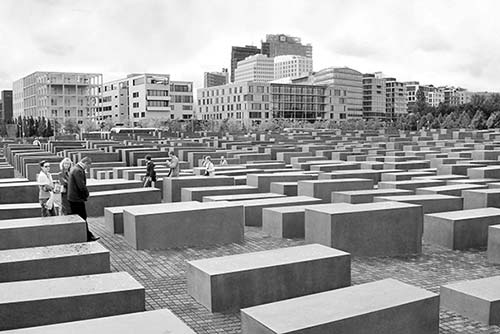
Cost and Hours: Memorial—free and always open; information center—free, open Tue-Sun 10:00-20:00, Oct-March until 19:00, closed Mon year-round, last entry 45 minutes before closing, security screening at entry, audioguide-€3; S-Bahn: Brandenburger Tor or Potsdamer Platz, +49 30 2639 4336, www.stiftung-denkmal.de. Timed reservations may be required for the information center—check website.
UNTER DEN LINDEN
▲▲Strolling Unter den Linden
Berlin’s main boulevard—“Under the Linden Trees”—has been the city’s artery since the 15th century. Today, it’s a well-tended place to stroll. This main drag and its sights are covered in my “Berlin City Walk” earlier (and also available as a free audio tour).
Gendarmenmarkt
Berlin’s finest square sits two blocks south of Unter den Linden (and one block south of Bebelplatz). The square, like its name (“Square of the Gens d’Armes,” Frederick the Great’s French guard), is a hybrid of Prussia and France. The square is bookended by two matching churches: the German Cathedral (with a free exhibit on the German parliamentary system) and the French Cathedral (dedicated to the French Huguenots who found refuge in Prussia). Gendarmenmarkt’s centerpiece is the Concert Hall (Konzerthaus), commissioned by Frederick the Great and built by his favorite architect, Karl Friedrich Schinkel. In summer, Gendarmenmarkt hosts outdoor cafés, beer gardens, and occasional outdoor concerts.
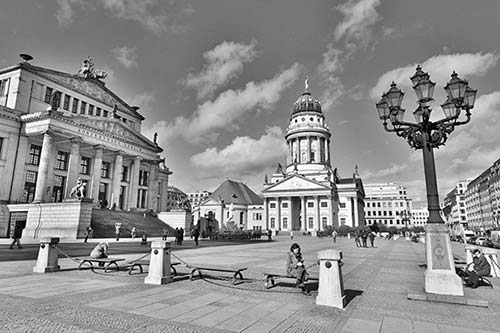
MUSEUM ISLAND AREA
Filling a spit of land in the middle of the Spree River, Museum Island has perhaps Berlin’s highest concentration of serious sightseeing. The island’s centerpiece is the grassy square called Lustgarten, ringed by five museums and the hulking Berlin Cathedral.
This neighborhood is covered in more detail in my free Berlin City Walk audio tour. For cruises on the Spree River from near Museum Island, see “Tours in Berlin,” earlier.
Museum Island (Museumsinsel)
Five of Berlin’s top museums—featuring art and artifacts from around the world—are just a few steps apart on Museum Island.
Cost and Hours: Each museum has a separate admission (€10-12, includes audioguide). If you’re visiting at least two museums here, get the Museum Island Pass (which covers all five), or consider the Museum Pass Berlin (see here for details on both). The museums are open Tue-Sun 10:00-18:00 (occasionally Thu until 20:00), closed Mon; +49 30 266 424 242, www.smb.museum.
Advance Tickets Recommended: To skip ticket-buying lines, purchase a timed ticket for the Pergamon in advance at the museum website. If you have a Museum Island Pass or Museum Pass Berlin, you can book a free timed-entry reservation. The always-busy Pergamon is most crowded in the morning, on weekends, and when it rains; Thursday evenings are the least crowded.
Getting There: Take the U-Bahn U5 line to Museum Island (Museumsinsel) station. The island is a 10-minute walk from the Hackescher Markt or Friedrichstrasse S-Bahn stations. Trams #M1 and #12 connect to Prenzlauer Berg. Buses #100 and #300 run along Unter den Linden, stopping near the museums at the Lustgarten stop.
Renovation: A formidable renovation is underway on Museum Island. The Pergamon is getting a fourth wing. The recently opened James-Simon-Galerie entrance pavilion and visitors center on the west bank of Museum Island connects to the Pergamon and Neues Museums. Eventually there will be underground connections to all the island’s museums, and this will be one of the grandest museum zones in Europe. In the meantime, pardon their dust.
▲▲Pergamon Museum (Pergamonmuseum)
This world-class museum contains Berlin’s Collection of Classical Antiquities (Antikensammlung)—in other words, full-sized buildings from the most illustrious civilizations of the ancient world. Its namesake and highlight—the gigantic Pergamon Altar—is under renovation and off-limits to visitors until 2025 (a nearby pavilion hosts an exhibit about the altar—see the end of this listing). In the meantime, there’s still plenty to see: the massive Babylonian Processional Way and Ishtar Gate (slathered with glazed blue tiles, from the sixth century BC); artifacts from the Assyrians (7th-10th century BC); the full-sized market gate from the ancient Roman settlement of Miletus (first century BC); and, upstairs, an extensive collection of treasures from the Islamic world.
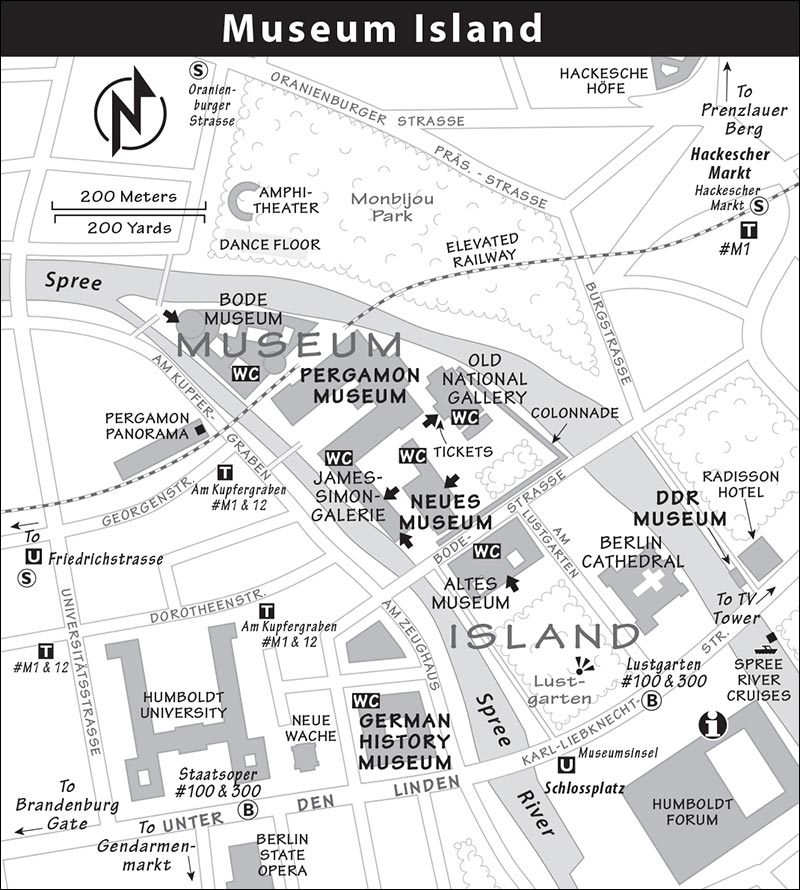
Visiting the Museum: The superb audioguide (included) broadens your experience. From the ticket desk, enter through a large doorway into a room of statues and turn right to find Room 8—a long hallway lined with blue tiles.
Processional Way and Ishtar Gate: The ruler Nebuchadnezzar II made sure that all who approached his city got a grand first impression. His massive blue Ishtar Gate stands 46 feet tall and 100 feet wide (counting its jutting facets). This was the grandest of Babylon’s gates, one of eight in the 11-mile wall that encompassed this city of 200,000. In its day, the Ishtar Gate was famous—one of the original Seven Wonders of the World. All the pieces in this hall—the Ishtar Gate, Processional Way, and Throne Room panels—are made of decorative brick, glazed and fired in the ancient Egyptian faience technique. Decorations like the lions, which project outward from the surface, were carved or molded before the painted glaze went on. The colors—yellow, green, and blue (from rare lapis lazuli)—come from natural pigments, ground to a powder and mixed with melted silica (quartz). The chemicals bonded in the kiln fires, creating a sheen that’s luminous, shiny, and even weather-resistant.
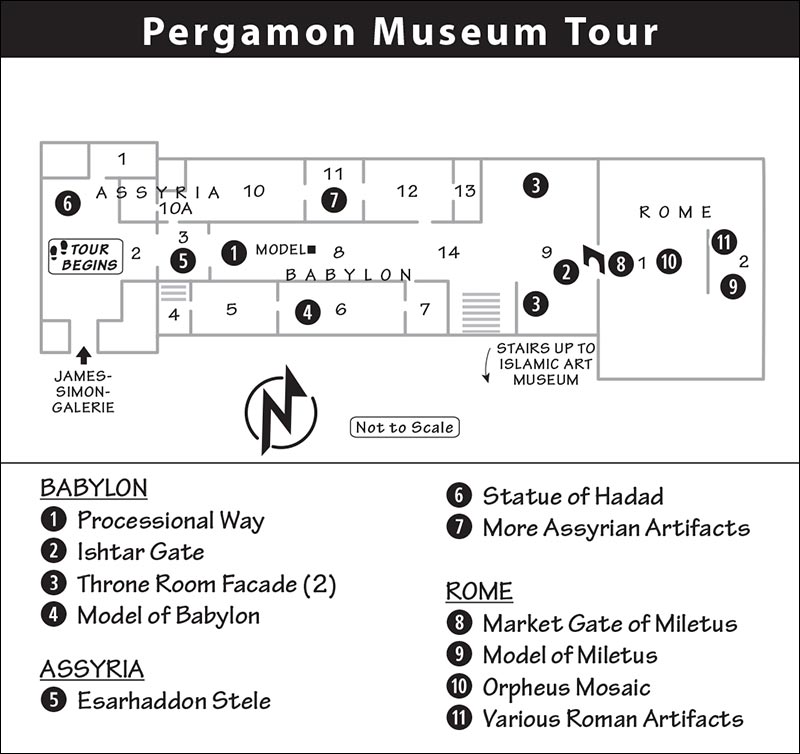
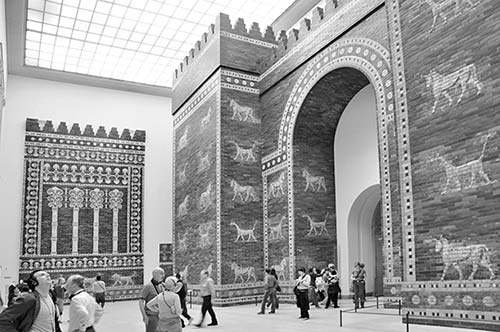
The museum’s Babylonian treasures are meticulous reconstructions. After a Berlin archaeologist discovered the ruins in modern-day Iraq in 1900, the Prussian government financed their excavation. What was recovered was little more than piles of shattered shards of brick. It’s since been augmented with modern tilework and pieced together like a 2,500-year-old Babylonian jigsaw puzzle. (You might peek into Room 6—if it’s open—to see a model of Babylon.)
Assyrian Artifacts: The rooms at the opposite end of the Processional Way (i.e., near the museum entrance) are filled with artifacts from the Babylonians’ northern cousins, the Assyrians. Look for the Esarhaddon Stele, a ceremonial column marking the passing of the baton between the two great Mesopotamian powers, and the 10-foot-tall statue of the weather god Hadad. Browse through these rooms to get a sense of Assyrian grandeur, then return to the Ishtar Gate.
Market Gate of Miletus: You’ve flashed forward 700 years to ancient Miletus—the wealthy, cosmopolitan, Roman-ruled, and Greek-speaking city on the southwest coast of Asia Minor (modern Turkey). Dominating this room is the huge Market Gate of Miletus. This served as the entrance to the town’s agora, or marketplace. Traders from across the Mediterranean and Middle East passed through the three arched doorways into a football-field-sized courtyard surrounded by arcades, where business was conducted.
Miletus was destroyed by an earthquake centuries ago. Around 1900, German archaeologists unearthed the rubble, and the gate was painstakingly reconstructed here in Berlin. This room also displays an exquisite mosaic floor of colored stone and glass from the dining room of a Roman villa in Miletus, c. AD 200, and features the mythical Greek musician Orpheus.
The Rest of the Museum: To complete your tour of civilizations, on floor 1 you can see artifacts from several royal palaces of the Assyrian kings. Then find the stairs in front of the Ishtar Gate and head up to floor 2, which is dedicated to the Museum of Islamic Art. It demonstrates how—after Rome fell and Europe was mired in medievalism—the Islamic world carried the torch of civilization. The impressive Aleppo Room is illustrated with motifs from Christian, Arabic, Persian, and Jewish traditions.
What About the Pergamon Altar? The museum’s namesake and most famous piece—the Pergamon Altar—is being stored out of view while the hall that houses it is slowly modernized. The altar likely won’t be back until around 2025. (The “altar” is actually a temple, a masterpiece of Hellenistic art from the second century BC.) During the restoration, a special exhibit called Pergamonmuseum-Das Panorama is in a pavilion on Am Kupfergraben (directly across from Museum Island). The main attraction here is a huge, wraparound panorama painting of the city of Pergamon in AD 129 by Berlin artist Yadegar Asisi. Some of the original sculpture from the altar, the largest piece of the altar frieze, and digital 3D models help visitors fill in the details (€19 combo-ticket with Pergamon Museum, €6 with Museum Island Pass or Museum Pass Berlin, open same hours as the museum).
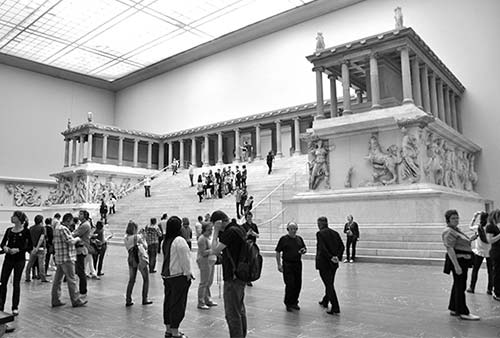
▲▲Neues (New) Museum
This beautiful museum, featuring objects from the prehistoric (i.e., pre-Pergamon) world, contains three collections. Most visitors focus on the Egyptian Collection, with the stunning bust of Queen Nefertiti. But it’s also worth a walk through the Museum of Prehistory and Early History and the Collection of Classical Antiquities (artifacts from ancient Troy). Everything is well described in English (fine audioguide included with admission; for more on the museum, see www.smb.museum/museen-einrichtungen/neues-museum/home.
Visiting the Museum: Ticket in hand, enter and pick up the floor plan. The main reason to visit is to enjoy one of the great thrills in art appreciation—gazing into the still young and beautiful face of Queen Nefertiti. If you’re in a pinch for time, make a beeline to her (floor 2, far corner of Egyptian Collection in Room 210).
To tour the whole collection, start at the top (floor 3), the prehistory section. The entire floor is filled with Stone Age, Ice Age, and Bronze Age items. You’ll see early human remains, tools, spearheads, and pottery.
The most interesting item on this floor (in corner of Room 305)—the tall, conehead-like Golden Hat, made of paper-thin gold leaf—was likely worn by the priest of a sun cult popular among the Celtic people of central Europe around 1,000 BC. Admire the incredible workmanship of these prehistoric people. The hat, 30 inches tall, was hammered from a pound of gold into a single sheet of gold leaf less than a millimeter thick.
On floor 2, in a room all her own (Room 210), is the 3,000-year-old bust of Queen Nefertiti, wife of Akhenaton—the most famous piece of Egyptian art in Europe. Nefertiti has all the right beauty marks: long slender neck, perfect lips, almond eyes, symmetrical eyebrows, pronounced cheekbones, and a perfect spray-on tan. And yet, despite her seemingly perfect beauty, Nefertiti has a touch of humanity. Notice the fine wrinkles around the eyes—these only enhance her beauty. She has a slight Mona Lisa smile, pursed at the corners.
The bust never left its studio, but served as a master model for all other portraits of the queen. (That’s probably why the artist didn’t bother putting the quartz inlay in the left eye.) Stare at her long enough, and you may get the sensation that she’s winking at you.
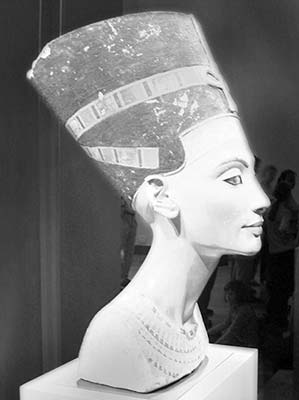
Downstairs on level 1, make your way to Rooms 103-104. Text panels help explain the craze for antiquities that brought us the Neues Museum. Much of it can be traced to the man featured in these rooms: Heinrich Schliemann (1822-1890). Having read Homer’s accounts of the Trojan War, Schliemann set out on a quest to find the long-lost ruins of the city of Troy. He (probably) found the capital of the Trojans (in Turkey), as well as the capital of the Greeks (Mycenae, in the Greek Peloponnese). Displays tell the fascinating story of how Schliemann smuggled the treasures out in fruit baskets, then their long journey until they were donated to the German government.
▲▲Old National Gallery (Alte Nationalgalerie)
Of Berlin’s many top-notch art collections, this is the best for German art—mostly paintings from the 19th century, the era in which “German culture” first came to mean something. For a concise visit, focus on the Romantic German paintings (top floor), where Caspar David Friedrich’s hauntingly beautiful canvases offer an insightful glimpse into German landscapes...and the German psyche. With more time, peruse the French and German Impressionists and German Realists on the first and second floors.
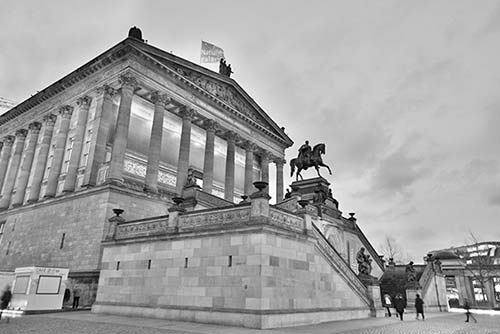
Visiting the Museum: Start on the third floor and work your way down.
Casa Bartholdy Murals (Room 3.02): These frescoes tell the biblical story of Joseph. They were done by idealistic artists of the artistic brotherhood called the Nazarenes. It was the early 1800s, and the German people were searching for their unique national identity. In art, the Nazarenes were seeking a purer form of expression that was uniquely German. This almost religious fervor would inspire the next generation of German artists—the Romantics.
Karl Friedrich Schinkel (Room 3.05): Schinkel is best known as the Neoclassical architect who remade Berlin in the 1820s. But as a painter, Gothic cathedrals and castles dominate his scenes. Foliage grows over the buildings, and animals wander through. Nature rules. Where puny humans do appear, they are dwarfed by the landscape and buildings. Scenes are lit by a dramatic, eerie light, as though the world is charged from within by the power of God. Welcome to Romanticism.
Caspar David Friedrich (Room 3.06): The greatest German artist of the Romantic era was Caspar David Friedrich (1774-1840). A quick glance around this room gives you a sense of Friedrich’s subjects: craggy mountains, twisted trees, ominous clouds, burning sunsets, and lone figures in the gloom. Rather than painting placid, pretty scenes as other landscape artists might, Friedrich celebrated Nature’s awesome power. The few people he painted are tiny and solitary, standing with their backs to us. As they ponder the vastness of their surroundings, we’re invited to see the world through their eyes, and to contemplate humankind’s minuscule place in the grand scheme of things.
Biedermeier Style (Rooms 3.08-3.13): These rooms feature paintings in the so-called Biedermeier style (c. 1815-1848), the conservative flip side to Romanticism’s individualism, turbulence, and political radicalism. Biedermeier landscapes are pretty, not dramatic. The style is soft-focus, hypersensitive, super-sweet, and sentimental. The poor are happy, the middle class are happy, and the world they inhabit is perfectly lit.
French Impressionists (Room 2.03): This one big room is lined with minor works by big-name French artists. Unlike the carefully composed, turbulent, and highly symbolic paintings of the German Romantics, these scenes appear like simple unposed “snapshots” of everyday life. Pan the room to see Renoir’s pink-cheeked girls, Degas’ working girls, Cézanne’s fruit bowls, and Gauguin’s Tahitian girls.
Rest of the Museum: In Room 2.14 are two well-known portraits by Franz von Lenbach of world-changing Germans: Otto von Bismarck (Germany’s first prime minister) and the composer Richard Wagner.
Bode Museum
This fine building—at the northern tip of the island—contains a hodgepodge of collections: Byzantine art, historic coins, ecclesiastical art, sculptures, and medals commemorating the fall of the Berlin Wall and German reunification. While this museum may be dull for casual sightseers, avid museumgoers find plenty to excite here—including the stunning Ravenna Mosaic, transplanted here from the Byzantine world of sixth-century Italy. For a free, quick look at its lavish interior, climb the grand staircase under a sweeping dome to the charming café on the first floor.
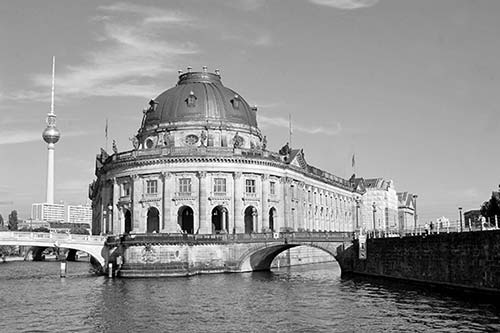
Altes (Old) Museum
Of the five Museum Island collections, this is the least exciting—unless you’re an enthusiast of obscure Etruscan, Roman, and Greek art and artifacts.
Berlin Cathedral (Berliner Dom)
This bulky stone structure, with its rusted-copper dome, looms over Museum Island like the home church of a Prussian kaiser...because it was. It’s a textbook example of Kaiser Wilhelm II’s bigger-is-better aesthetic. While pricey to enter, the lavish interior has some fine details. The great reformers (Luther, Calvin, and company) stand around the brilliant dome like stern saints guarding their theology. King Frederick I rests in an ornate tomb. Those who climb the 270 steps of the dome are rewarded with pleasant, breezy views of the city. The crypt downstairs is not worth your time.
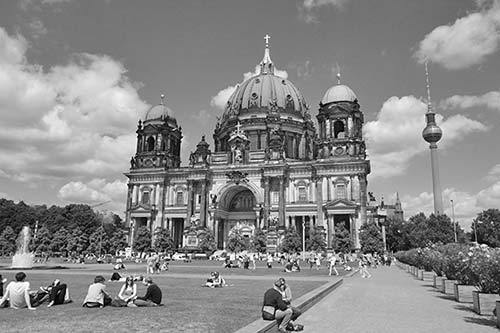
Cost and Hours: €9 includes dome gallery access, not covered by Museum Island Pass; Mon-Sat 9:00-20:00, Sun from 12:00, daily until 17:00 Oct-March, closes around 17:30 on concert days; last entry one hour before closing, audioguide-€4, +49 30 2026 9136, www.berlinerdom.de.
▲Humboldt Forum
The Humboldt Forum is a strange animal. From the outside, it’s a Baroque palace; on the inside, it’s a collection of very modern museums; and all in all, it’s the costliest cultural center in German history. It sits on the site of what was once the Prussian royal family’s palace. That building was severely damaged in World War II, then blown up by the communist regime in 1950. In its place, East Germany built a gargantuan, proletarian palace for arts and government. Once the Wall fell, that palace was torn down, and after much debate, the government of reunified Germany decided to re-create the shell of the old Prussian palace but fill it with various artistic collections.
Those collections include the Ethnological Museum, the Museum for Asian Art, the “Humboldt Lab” science exhibit, and Berlin Global, an interactive exhibition exploring Berlin’s identity. Other attractions include the roof terrace, which offers one of the better free viewpoints in town, and the palace cellar, a small exhibit on the history of the site, scattered amidst the remains of the Baroque foundations (I’d skip it). Don’t go looking for any lavishly reconstructed palatial rooms—there aren’t any.
For all the controversy stirred (rebuilding a symbol of authoritarian aristocracy in a 21st-century democracy), and all the money spent (around €700 million), the final product is rather underwhelming. But if you’re on Museum Island, it’s worth at least a quick visit.
Cost and Hours: Free, except “Berlin Global” (€7) and some special exhibits (around €12); Wed-Mon 10:00-20:00, Fri-Sat until 22:00, closed Tue; Schlossplatz, +49 30 992 118 989, www.humboldtforum.org.
Advance Booking: Book a timed-entry ticket in advance for Berlin Global, Humboldt Lab, the roof terrace, and some special exhibits (check the website). You may be able to get a time if you just show up, but it’s safer to book ahead.
Getting There: It’s an easy walk from all the other Museum Island sights. Buses #100 and #300 stop at the Lustgarten, across the street, and the nearest U-Bahn stop is Museumsinsel, directly in front of the building. The nearest S-Bahn is Hackescher Markt, roughly 10 minutes’ walk.
Eating: The $$ Lebenswelten bistro has soups, burgers, schnitzels, and a good salad bar (daily 10:00-19:00).
Visiting the Forum: This place is sprawling, so pick up a map from the information desk in the foyer.
Berlin Global: This splashy, superficial exhibit takes you on a tour of contemporary Berlin culture. What it lacks in depth, it makes up for in breadth. It looks at the city’s divided history and reconstruction post-1989, its famed musical and design scenes, its hedonistic reputation, and economic connections.
Long on visuals and short on text, the exhibit doesn’t shy away from some tough topics. A section on “boundaries” touches on themes of racism, housing costs, and ongoing disparities between eastern and western parts of the city. Other sections consider Berlin’s role in war and German colonialism. On the lighter end are the fashion section (“Who wears what in Berlin?”) and the section on “Berlin smells.”
Humboldt Lab (Humboldt Labor): This space features changing, science-themed exhibits produced in connection with Humboldt University. Depending on the specific exhibition theme, it’s of limited interest.
Ethnological Museum (Ethnologisches Museum): One of the Humboldt Forum’s many sources of controversy has been its collections of artifacts taken from erstwhile German colonies overseas. That’s what’s on display here—and right at the entrance, the exhibit grapples with the thorny issues surrounding the provenance of its objects. Among the most interesting things to see are several handmade boats from Pacific Island cultures. Particularly impressive is a large, century-old sailboat from an island now part of Papua New Guinea—”the last boat of its kind” because most of the people who built this type of boat subsequently died out from imported European diseases. Other striking artifacts come from colonial Cameroon; look for a throne decorated with glass beads and cowrie shells. Also intriguing is the Listening Room, which plays snippets of songs and chants from the museum’s “Sounds of the World” collection.
Museum for Asian Art (Museum für Asiatische Kunst): This exhibit showcases collections from South Asia, Japan, and China (scan the QR codes for audioguide). You’ll see examples of artistic traditions (statues, clothes, carpets, and more) associated with Buddhism, Jainism, and Hinduism. Visit the section on the Silk Road, displaying unusual paintings from Buddhist prayer caves dating back to the fifth century in western China.
Near Museum Island
The German History Museum is on Unter den Linden, immediately west of Museum Island; and the DDR Museum is (fittingly) just east of Museum Island, on the riverbank facing the back of the Berlin Cathedral. The Nikolai Quarter is a five-minute walk to the south, down the river (facing Museum Island).
German History Museum (Deutsches Historisches Museum)
This impressive museum (worth ▲▲▲) offers the best look at German history under one roof, anywhere. Unfortunately, the main building and permanent collection are closed for renovation until 2025. However, the temporary exhibits can be worth visiting; they’re on display in the modern annex designed by American architect I. M. Pei, famous for the Louvre glass pyramid entry. Check the website for details of what’s on.
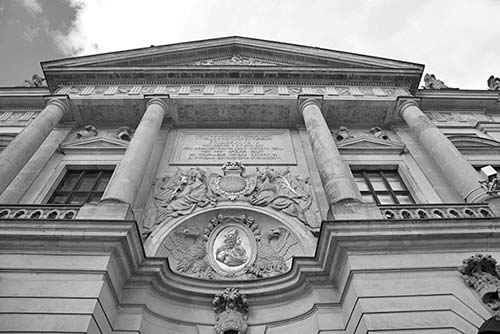
Cost and Hours: €8, covered by Museum Pass Berlin; daily 10:00-18:00, Thu until 20:00; worthwhile €3 audioguide, Unter den Linden 2, +49 30 2030 4751, www.dhm.de.
Getting There: It’s immediately west of Museum Island (just across the river) at Unter den Linden 2. Buses #100 and #300 stop right in front (Staatsoper stop). By tram, the Am Kupfergraben stop (for trams #M1 and #12) is a block behind the museum. The nearest S-Bahn stops are Friedrichstrasse and Hackescher Markt, each about a 10-minute walk away. The U5 Museum Island (Museumsinsel) U-Bahn stop is a short walk to the east.
▲▲DDR Museum
While overpriced, crammed with school groups, and frustrating to local historians, the DDR Museum has a knack for helping outsiders (rather than “Ost-algic” Germans) understand life in communist East Germany (the Deutsche Demokratische Republik, or DDR). The museum is well stocked with kitschy everyday items from the DDR period, plus photos, video clips, and concise English explanations.
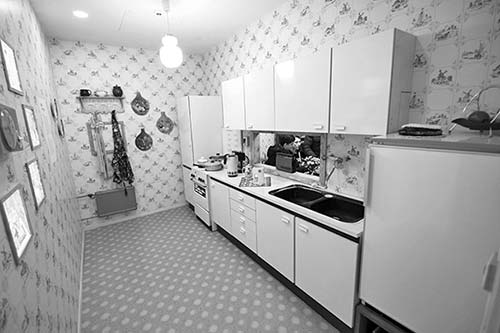
Cost and Hours: €9.80, buy tickets in advance online to avoid lines; daily 9:00-21:00; just across the Spree from Museum Island at Karl-Liebknecht-Strasse 1, +49 30 847 123 730, www.ddr-museum.de.
Visiting the Museum: Inside, you can crawl through a Trabant car (known as a “Trabi”; take it for a virtual test drive) and pick up some DDR-era black humor (“East Germany had 39 newspapers, four radio stations, two TV channels...and one opinion”). You’ll learn how many East Germans—with limited opportunities to travel abroad—vacationed on Hungary’s Lake Balaton or on the Baltic Coast, where nudism was all the rage (as a very revealing display explains). Lounge in DDR cinema chairs as you view a subtitled propaganda film or clips from beloved-in-the-East TV shows, including the popular kids’ show Sandmännchen—“Little Sandman.” The highlight is a tourable reconstructed communist-era home, where you can open drawers and cupboards to find both information panels and the trappings of a typical DDR home. You can even climb into a rickety old “elevator” and get jostled around.
Nikolai Quarter (Nikolaiviertel)
The Nikolai Quarter marks the original medieval settlement of Cölln, which would eventually become Berlin. Huddled around the twin spires of the Nikolaikirche, the area was destroyed during the war, then rebuilt for Berlin’s 750th birthday in 1987. It has a cute and cobbled old-town feel...Middle Ages meets Socialist Realism. Today most of the buildings are occupied by touristy shops and restaurants. Perhaps the best reason to come here is to visit its old-fashioned beer hall—the recommended Brauhaus Georgbräu, with seating along the river.
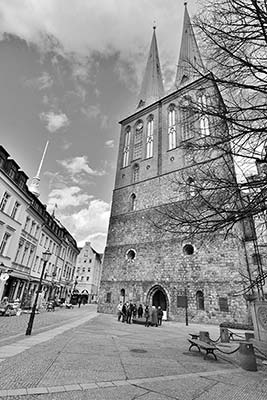
Sights in Northern Berlin
New Synagogue (Neue Synagogue)
▲Palace of Tears (Tränenpalast) at Friedrichstrasse Station
▲Everyday Life in the DDR (Alltag in der DDR)
▲▲▲Berlin Wall Memorial (Gedenkstätte Berliner Mauer)
OLD JEWISH QUARTER
Immediately northeast of the Spree River is the old Jewish quarter, which, in addition to being packed with intriguing shops and fun eateries, is one of the most important areas for Berlin’s historic Jewish community—offering insights into a culture that thrived here until the 1940s.
▲▲Courtyards (Höfe)
The old Jewish quarter is a particularly handy place to explore Berlin’s unique Höfe—interconnected courtyards that burrow through city blocks, today often filled with trendy shops and eateries. Two starkly different examples are nearly next door, and just steps from the Hackescher Markt transit hub: the upscale, Jugendstil Hackesche Höfe (Rosenthaler Strasse 40), with eye-pleasing architectural flourishes and upscale shops; and the funky Haus Schwarzenberg (Rosenthaler Strasse 39), with a museum honoring Otto Weidt—a Berliner who defied the Nazis and saved many lives by employing blind and deaf Jews in his workshop.
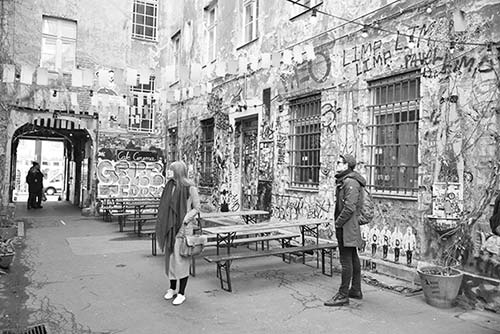
New Synagogue (Neue Synagogue)
Marked by its beautiful golden dome, this large, mid-19th-century synagogue is now a museum memorializing the Berlin Jewish community that was decimated by the Nazis. Berlin was long the center of German Jewry and this small but moving exhibit (with good English descriptions) tells the story of this community through the centuries. You’ll enter through a low-profile door in the modern building to the right of the synagogue facade and go through very tight security. A cutaway model shows the entire synagogue. This model, and the view across the vacant lot out back to the iron columns marking where the apse stood, helps you envision this space that once housed 3,200 worshippers. The upper floor personalizes the Nazi terror with individual stories. Skip the climb to the dome; it’s unimpressive from the inside and has ho-hum views.
Cost and Hours: €7; Mon-Fri 10:00-18:00, Sun until 19:00, closed Sat, shorter hours in winter; audioguide-€3, Oranienburger Strasse 28, S-Bahn: Oranienburger Strasse, +49 30 8802 8300, www.centrumjudaicum.de [URL inactive].
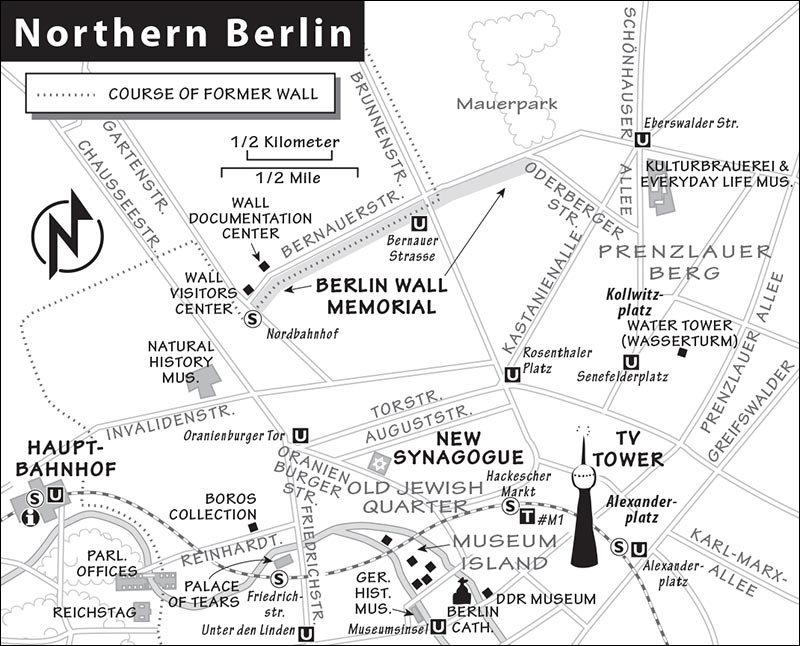
▲Palace of Tears (Tränenpalast) at Friedrichstrasse Station
Just south of the old Jewish quarter (cross the river on Friedrichstrasse at Weidendammer Brücke and bear right) stands this impactful Cold War site. The Friedrichstrasse train station—situated within East Berlin, but accessible by train from West Berlin—was one of the few places where Westerners were allowed to cross into the East. And when crossing back into the free world, this was where they’d take leave of their East German loved ones. The scene of so many sad farewells, it earned the nickname “Tränenpalast” (palace of tears). The 1962 building—an unassuming, boxy, bureaucratic structure that was once attached by a corridor to the station—has now been converted into a museum about everyday life in a divided Germany, with a fascinating peek into the paranoid border-control world of the DDR.
Cost and Hours: Free, includes excellent audioguide; Tue-Fri 9:00-19:00, Sat-Sun 10:00-18:00, closed Mon; on the river side of the Friedrichstrasse station—look for the building with large glass windows and blue trim, Reichstagufer 17, +49 467 777 7911, www.hdg.de/traenenpalast.
PRENZLAUER BERG AND NEARBY
The thriving Prenzlauer Berg district, worth ▲▲, offers an ideal opportunity to see a corner of today’s “real Berlin,” just beyond the core tourist zone but still easily accessible. Prenzlauer Berg (PRENTS-low-er behrk) was largely untouched by WWII bombs, fell into disrepair during DDR days, and has since been completely rejuvenated. Prenzlauer Berg is also a great place to sleep, eat, shop, and enjoy nightlife.
Kulturbrauerei
Prenzlauer Berg was once a wooded hill with dozens of breweries—including this one, the Schultheiss-Brauerei. By the 1920s, this was one of the largest breweries in the world. World War II put an end to that, as Nazis confiscated the brewery, turned it into a factory for the Wehrmacht (armed forces), and, in the closing days of war, barricaded themselves within the brewery grounds. Today the entire site has been renovated to maintain its historic buildings and to provide a venue for the cultural transformation of Prenzlauer Berg.
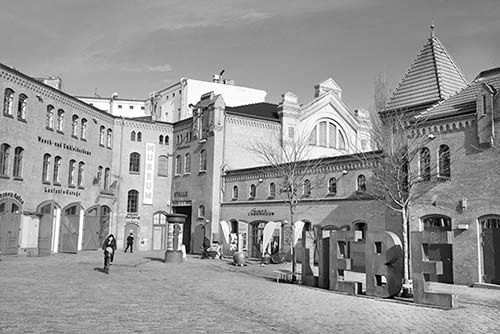
The “Culture Brewery” is a brewery-turned-cultural center that fills an evocative old industrial space with a handful of interesting shops, breezy restaurants, a movie theater, grocery store, and TI, plus a Sunday food market (12:00-18:00), winter Christmas market, and other outdoor events (Schönhauser Allee 36, +49 30 4435 2170, www.kulturbrauerei.de). Of most interest is the museum described next.
▲Everyday Life in the DDR (Alltag in der DDR)
This museum, tucked in a passage at the northern end of the Kulturbrauerei, recounts the reality of communist East Germany. The thoughtful, well-curated collection—organized by theme—displays original artifacts, videos, photos, art, and mock storefronts that rise above the kitsch factor to give a real sense of the disparity between the socialist ideal and the grinding reality. It’s designed not for casual tourists but for aging Germans eager to teach their kids and grandkids about how they once lived. (The DDR Museum near Museum Island—described earlier—is less substantial, but also more tourist-friendly and therefore more crowded.) Although tricky to appreciate, this museum is free and well worth a visit, particularly if you’re well versed in DDR history.
Cost and Hours: Free, Tue-Sun 10:00-18:00, closed Mon, audioguide available, enter at Knaackstrasse 97, +49 30 4677 7790, www.hdg.de.
▲▲▲Berlin Wall Memorial (Gedenkstätte Berliner Mauer)
This is Berlin’s most substantial and educational sight relating to its gone-but-not-forgotten Wall. As you visit the park, you’ll learn about how the Wall went up, the brutal methods used to keep Easterners in, and the stories of brave people who risked everything to be free.
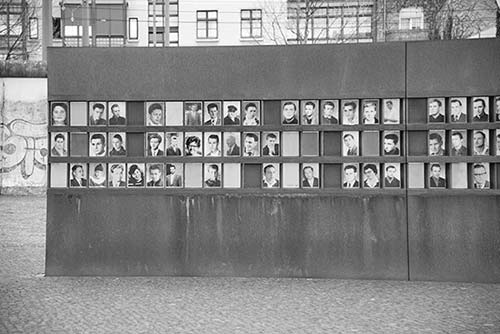
Exhibits line up along several blocks of Bernauer Strasse, stretching more than a mile northeast from the Nordbahnhof S-Bahn station (one of the DDR’s “ghost stations”) to Schwedter Strasse and the Mauerpark. For a targeted visit, focus on the engaging sights clustered near the Nordbahnhof: two museums (the Visitors Center and the Documentation Center)—with films, photos, and harrowing personal stories; various open-air exhibits and memorials; original Wall fragments; and observation tower views into the only preserved, complete stretch of the Wall system (with a Cold War-era “death strip”).
Cost and Hours: Free; outdoor areas accessible daily 24 hours; museums (Visitors Center and Documentation Center) both open Tue-Sun 10:00-18:00, closed Mon, memorial chapel closes at 17:00; on Bernauer Strasse at #119 (Visitors Center) and #111 (Documentation Center); +49 30 4679 86666, www.berliner-mauer-gedenkstaette.de.
Getting There: Take the S-Bahn (line S1, S2, or S25) to Nordbahnhof. Exit by following signs for Bernauer Strasse—you’ll pop out across the street from the memorial. You can also get there on tram #12 or #M10 (from near Prenzlauer Berg hotels).
Overview: Begin at the Nordbahnhof and pick up an informational pamphlet from the Visitors Center (note that there are different brochures for the four sections—A, B, C, and D; be sure to pick up all you’ll need). Head up Bernauer Strasse, visit the exhibits and memorials that interest you, then ride home from the Bernauer Strasse U-Bahn station. For a longer visit, walk several more blocks all the way to the Mauerpark. The entire stretch is lined with informational posts (some with video or audio clips) and larger-than-life images from the Wall, painted on the sides of buildings.
 Self-Guided Walk: Start your visit at the Visitors Center, the rust-colored, blocky building located kitty-corner from the Nordbahnhof (at the far west end of the long Memorial park, at Bernauer Strasse 119).
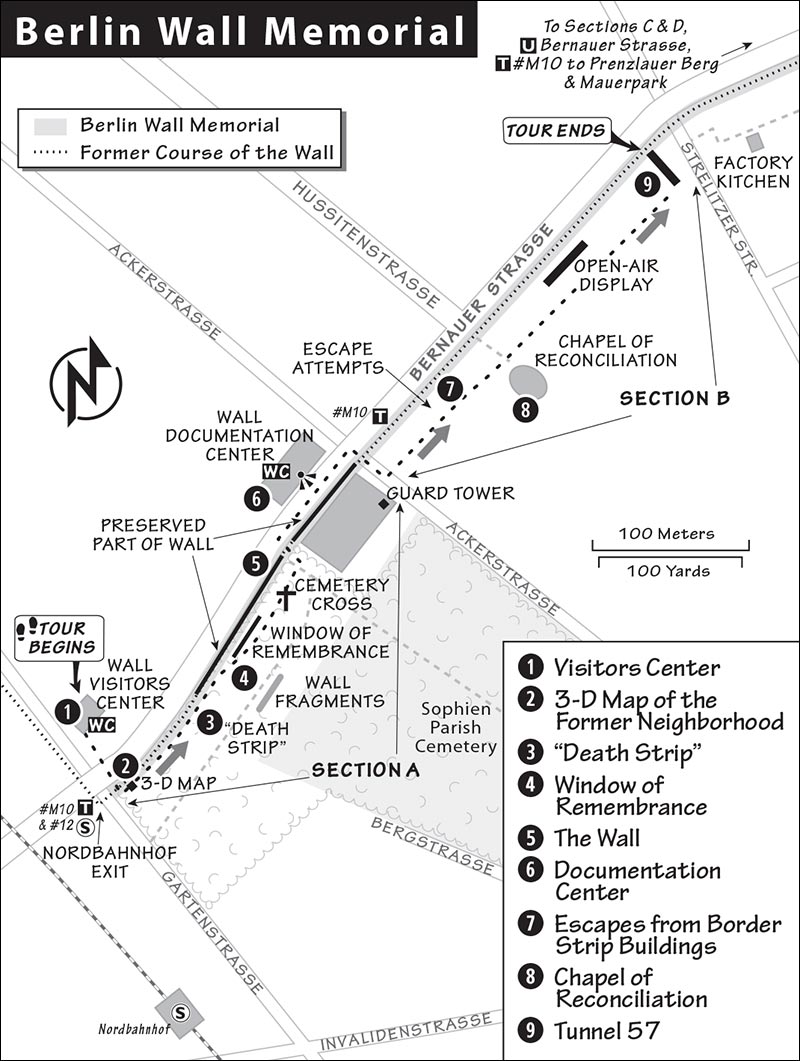
1 Visitors Center (Bezucherzentrum): Check the next showtimes for the two 15-minute introductory films in English (which run once an hour in succession). If you don’t have time to wait for the English versions, the German versions have English subtitles. The film titled The Berlin Wall covers the four-decade history of the Wall. The other film, Walled In!, features a 3-D re-creation of the former death strip, helping you visualize what it is you’re about to walk through.
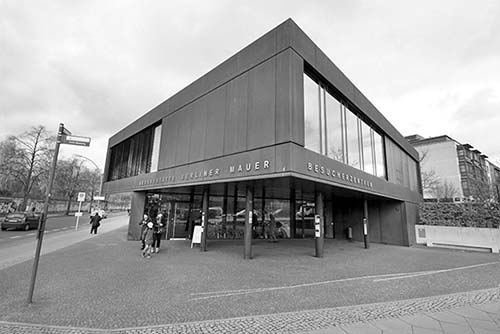
• Exit the Visitors Center, cross Bernauer Strasse, and enter the Memorial park. You’re leaving former West Berlin and entering the no-man’s-land that stood between East and West Berlin. Once in the park, find the rusty rectangular monument with a 3-D map.
2 3-D Map of the Former Neighborhood: The map shows what this neighborhood looked like back in the Wall’s heyday. The shiny metal dot on the left marks where you’re standing. Fifty years ago, you’d be right at the division between East and West Berlin—specifically, in the narrow strip between two sets of walls. One of those walls is still standing—there it is, stretching along Bernauer Strasse. As you gaze down the long park, West Berlin would be to your left (on the north side of Bernauer Strasse), and East Berlin to your right.
Now find the Nordbahnhof, both on the map and in real life—the entrance is across the street on your left. While the Wall stood, the Nordbahnhof station straddled both East and West—one of the “ghost stations” of Cold War Berlin (inside the station, photos compare 1989 with 2009).
• Stroll along the path through this first section of the park (“Section A”). Along the way are small sights, remembrances, and exhibits. As you stroll, you’re walking through the...
3 “Death Strip” (Section A): Today’s grassy park, with a pleasant path through it, was once the notorious “death strip” (Todesstreifen). If someone was trying to escape from the East, they’d have to scale one wall (a smaller one, to your right), cross this narrow strip of land, and climb the main Wall (to your left, along Bernauer Strasse). The death strip was an obstacle course of barbed wire, tire-spike strips to stop cars, and other diabolical devices. It was continually patrolled by East German soldiers leading German shepherds. Armed guards looked down from watchtowers, with orders to shoot to kill.
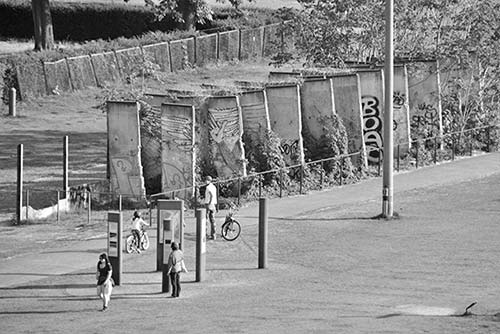
• About midway through this section of the park, find the freestanding rusted-iron wall filled with photos.
4 Window of Remembrance: Find Otfried Reck, just 17 years old (eighth from the left, top row). On November 27, 1962, he and a friend pried open a ventilation shaft at the boarded-up Nordbahnhof, and descended to the tracks, where they hoped to flag down a passing westbound train. The police discovered them, and Reck was shot in the back. There’s a memorial to him now directly across from the Visitors Center. Ernst Mundt (just left of Otfried) died directly behind you, at the cemetery wall. On September 4, 1962, he climbed the death strip’s inner wall and ran across the top, headed in the direction of the Nordbahnhof and freedom. He was shot in the head, and his hat (the one in the picture) flew off. He died, age 40.
Continue walking through Section A. You’re now walking along the original, preserved asphalt patrol path.
• Now, walk across the grass and find a place to get a good close-up look at...
5 The Wall: The Wall here is typical of the whole system: about 12 feet tall, made of concrete and rebar, and capped by a rounded pipe that made it tough for escapees to get a grip. The top would have been further outfitted with coils of barbed wire. This was part of a 96-mile-long Wall that encircled West Berlin, making it an island of democracy in communist East Germany. The West Berlin side of the Wall was typically covered with colorful graffiti by free-spirited West Berliners. A few bits of graffiti remain here.
• Now, exit the park through the hole in the Wall, turn right along Bernauer Strasse, and make your way a short distance to the crosswalk. Across Bernauer Strasse is a modern gray building with a view terrace, located at #119 (labeled Gedenkstätte Berliner Mauer). This is the...
6 Documentation Center (Dokumentationszentrum Berliner Mauer): This excellent museum is geared to a new generation of Berliners who can hardly imagine their hometown split so brutally in two. The two floors of exhibits have photos and displays to explain the logistics of the city’s division and its effects. Listen to the riveting personal accounts of escapees—and of the border guards armed with machine guns and tasked with stopping them.
On the second floor, at the back of the room, be sure to watch the poignant seven-minute film, Peaceful Revolution. The video highlights the power of the people and traces the events that led to the Wall’s collapse. From this floor, stairs lead to the rooftop Tower (Turm), where you’re rewarded with a view. You can look across Bernauer Strasse and down at Berlin’s last preserved stretch of the death strip with an original guard tower. More than 100 sentry towers like this one kept a close eye on the Wall. In the far distance, the communist-built TV Tower overlooks the scene.
• Exit and continue on. Cross Bernauer Strasse (where it intersects with Ackerstrasse) and enter the next section of the Memorial park.
7 Escapes from Border Strip Buildings (Section B): Ahead, you’ll see a group of information panels. The panels tell the story of what happened here: On August 13, 1961, the East German government officially closed the border. People began fleeing to the parts of Berlin controlled by other European powers—like the French, who held the neighborhood on the north side of Bernauer Strasse.
Over the next few weeks and months, bit by bit, the border hardened. Ackerstrasse was closed to traffic as East German soldiers laid down rows of barbed wire. People were suddenly separated from their West Berlin neighbors just across the street. During this brief window of time (summer of ’61 to early ’62), there were many escape attempts, and the residents of West Berlin did all they could to help.
• Keep going up the path through Section B, to the round building up ahead.
8 Chapel of Reconciliation (Kapelle der Versöhnung): This modern chapel stands on the site of the old Church of Reconciliation. Built in 1894, the old Gothic-style church served the neighborhood parish. When the Wall went up, the church found itself stranded in the death strip. Border guards used the steeple as a watchtower. The church became famous in the West as a symbol of how the godless commies had driven out religion and turned a once-great culture into a bleak wasteland. The church itself was finally blown up by the East Germans in 1985.
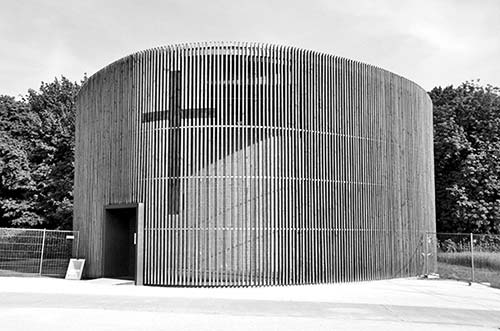
After the Wall came down, this chapel was built to remember the troubled past and to try to heal the memory. Inside the church, the carved wooden altarpiece was saved from the original structure. The chapel hosts occasional prayer services for the victims of the Wall.
• Continue past the chapel into the second portion of Section B.
Tunnels and More: Walk uphill then bear left to a large open-air display under a canopy (amid the ruins of a destroyed Bernauer Strasse home). Photos, info boards, and press-the-button audio clips explain what it was like to live here, so close to the front line of the Cold War. Head back up to the main path, turn left, and continue. You’ll pass two parallel rows of metal slabs, labeled Fluchttunnel 1964. This marks the route of the most famous tunnel of all: 9 Tunnel 57 (named after the 57 people who escaped through it). Its location is marked by rows of metal plates embedded in the ground.
• The main part of our walk is done. From here you have several choices: To experience more of the Memorial, you could continue through more open-air exhibits. Section C focuses on the building of the Wall. Section D—nearly as long as the first three sections combined—covers everyday life in the shadow of the Berlin Wall.
If you’re ready to leave, the Bernauer Strasse U-Bahn station is just a block farther up Bernauer Strasse. Or you can backtrack to the Nordbahnhof. And tram #M10 follows Bernauer Strasse all the way to Eberswalder Strasse, in the heart of Prenzlauer Berg.
Sights in Southern Berlin
FASCISM AND COLD WAR SITES NEAR CHECKPOINT CHARLIE
▲Museum of the Wall at Checkpoint Charlie (Mauermuseum Haus am Checkpoint Charlie)
▲▲Topography of Terror (Topographie des Terrors)
▲Documentation Center for Displacement, Expulsion, Reconciliation (Dokumentationszentrum Flucht, Vertreibung, Versöhnung)
MUSEUMS SOUTH OF UNTER DEN LINDEN
▲Jewish Museum Berlin (Jüdisches Museum Berlin)
The following sights are listed roughly north to south (as you’d reach them from Unter den Linden).
FASCISM AND COLD WAR SITES NEAR CHECKPOINT CHARLIE
A variety of fascinating sites relating to Germany’s tumultuous 20th century cluster south of Unter den Linden.
▲Checkpoint Charlie
Famous as the place where many visiting Westerners crossed into East Berlin during the Cold War, the original Checkpoint Charlie is long gone. But today a reconstructed guard station attracts curious tourists for a photo op. After the wall fell, the area around Checkpoint Charlie became a kind of Cold War freak show and kitschy tourist trap (actors posing for photos as GIs, hustlers charging fees for a Cold War-era stamp in your passport). Much of that has been cleaned up, though traces still exist, such as sidewalk vendors selling Cold War-era memorabilia. The replica checkpoint is free to view and always open.
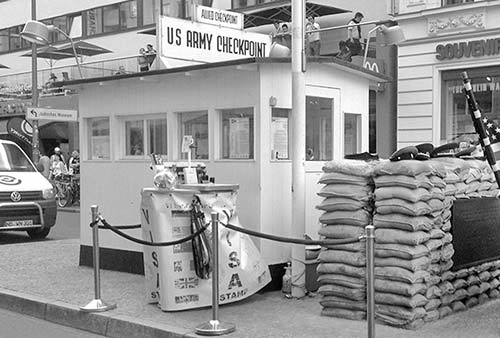
Background: For nearly three decades (1961-1989), this was a border crossing between East and West Berlin. It became known worldwide and stood as a symbol of the Cold War itself. The name “Charlie” came about because it was the third checkpoint in a series. Checkpoint A (Alpha) was at the East-West German border, a hundred miles west of here. Checkpoint B (Bravo) was where people left East Germany and entered the Allied sector of Berlin. This was Checkpoint C (Charlie). Its roots lie in the days immediately after World War II, when this intersection was the border between the US-occupied neighborhood and the Soviet zone. In 1952, the East German state fortified its border with West Germany, blocking its citizens from leaving. But West Berlin—an “island of freedom,” in the words of JFK when he later visited—was open until the Wall went up here in 1961. Afterward, this spot on Friedrichstrasse was one of the few places where people could legally pass between East and West—provided they had the proper documents. That generally meant foreigners and officials from the Allies—not Germans.
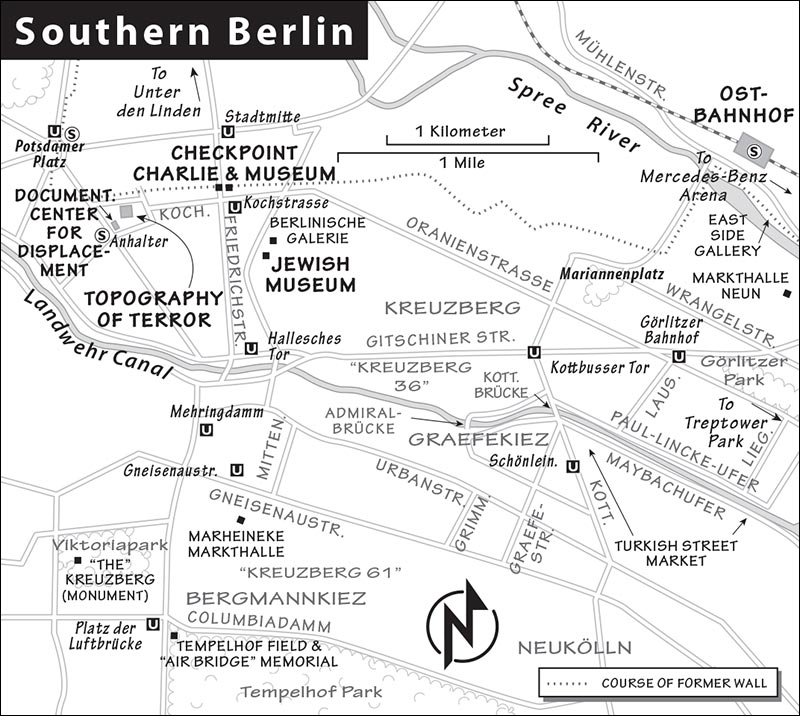
The East Germans fortified their side of the checkpoint heavily. There was the Wall, a watchtower, concrete barriers to prevent cars from speeding through, barbed-wire fences, and even a garage where vehicles could be checked for smuggled goods or people. (None of these structures stand today.)
On the US side, there was...Checkpoint Charlie. This was a humble shack for the document-checking GIs. It sat on a traffic island in the middle of Friedrichstrasse, fortified with a few piles of sandbags. While the actual checkpoint has long since been dismantled, you can see a mock-up, with a guard station, sandbags, and a US flag. Larger-than-life posters show an American soldier facing east and a young Soviet soldier facing west—look at these portraits and consider the decades of armed standoffs here.
▲Museum of the Wall at Checkpoint Charlie (Mauermuseum Haus am Checkpoint Charlie)
This ragtag but riveting celebration of the many ways desperate East Germans managed to slip through the Wall to freedom has stood here since 1963...taunting DDR authorities. Today East Germany and its Wall are long gone, but the museum is still going strong. Some of the displays have yellowed, the place is cramped and confusing, and the ticket price is way too high, but the museum retains a special sense of history. Visiting here, you’ll learn about the creation of the Wall and the many escape attempts (including several of the actual items used by clever escapees). Compared to the soberly academic official Berlin Wall Memorial near the Nordbahnhof, this museum has more personality, buoyed by a still-defiant spirit.
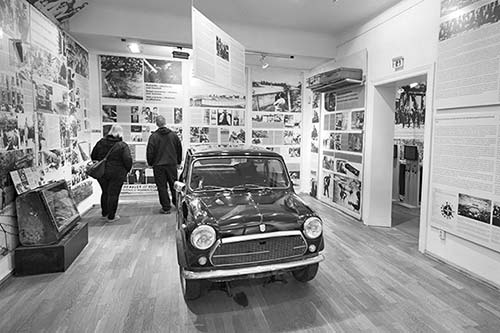
Cost and Hours: €14.50, daily 10:00-18:00, shorter hours in winter, last entry one hour before closing, audioguide-€5, U6 to Kochstrasse or U2 to Stadtmitte, Friedrichstrasse 43, +49 30 253 7250, www.mauermuseum.de.
▲▲Topography of Terror (Topographie des Terrors)
A rare undeveloped patch of land in central Berlin, right next to a surviving stretch of Wall, was once the nerve center for the Gestapo and the SS—the most despicable elements of the Nazi government. Today this site hosts a modern documentation center, along with an outdoor exhibit in the Gestapo headquarters’ excavated foundations. While there isn’t much in the way of original artifacts, the exhibit does a good job of telling this powerful story, in the place where it happened. The information is a bit dense, but WWII historians (even armchair ones) find it fascinating.
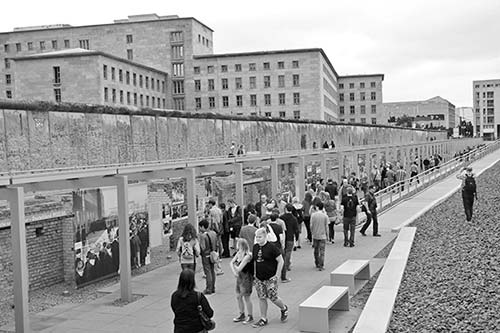
Cost and Hours: Free, daily 10:00-20:00, outdoor exhibit closes at dusk, Niederkirchnerstrasse 8, U-Bahn: Potsdamer Platz or Kochstrasse, S-Bahn: Anhalter Bahnhof or Potsdamer Platz, +49 30 254 5090, www.topographie.de.
Visiting the Museum: Start in the lobby and study a model of the neighborhood showing the home of the German government at the outbreak of World War II. (We’re standing at #20.) Back in the 1930s and ’40s, this was just one of many governmental office buildings along Wilhelmstrasse. Seeing this sprawling bureaucratic quarter gives you a sense of how much mundane paperwork was involved in administering Hitler’s reign of terror in an efficient, rational way. In the small theater nearby, the six-minute film provides context for the exhibit (and can be shown in English upon request).
The ground floor houses the permanent collection. Stepping in, you begin a chronological journey (with a timeline of events, old photographs, documents, and newspaper clippings) through the evolution of Nazism, the reign of terror, the start of World War II, and the Holocaust. Following the numbers, you’ll trace: 1) the Nazi takeover of power; 2) the institutions of terror; 3) the use of concentration camps, racism, and murder in Reich territory; 4) the SS and Reich Main Security Office in the occupied countries; and 5) the end of the war and postwar period.
The displays illustrate how Hitler, Himmler, and their team expertly manipulated the German people to build a broadly supported “dictatorship of consent.” You’ll learn about the web of intersecting organizations whose duties were run from here. And you’ll learn about the Gestapo and SS (Schutzstaffel), and their brutal methods—including their chillingly systematic implementation of the Holocaust.
Some images here are indelible. Gleeful SS soldiers, stationed at Auschwitz, yuk it up on a retreat in the countryside (as their helpless prisoners were being gassed and burned a few miles away). A German woman, head shaved, is publicly humiliated for fraternizing with a Polish prisoner. On a street corner, jeering SS troops cut off the beard of an elderly Jewish man. A Roma woman’s eye color is carefully analyzed by a doctor performing “racial evaluation.” Graphic images show executions—by hanging, firing squad, and so on.
The exhibits end with the conclusion of the war in 1945. A photo shows this former building in ruins. The finale is a wall of colored cards used in collecting data for the postwar trials of the people who worked here. While the Nazi leadership was captured and prosecuted at the Nürnberg trials, the majority of midlevel bureaucrats who routinely facilitated genocide with the flick of a pen...were never brought to justice.
With more time, use the audioguide and posted signs to explore the grounds surrounding the blocky building. Around the corner (to the right facing the museum entrance) are the scant remains of the House Prison outlined in cement. The building was equipped with dungeons, where the Gestapo detained and tortured prisoners. The general public knew what went on here, and its very existence sent a message.
Nearby: Immediately next door is an unusually long surviving stretch of the Berlin Wall. A block beyond that is the looming, very fascist-style Former Air Ministry—built by Hitler to house his Luftwaffe (Nazi air force), later the DDR’s “Hall of Ministries,” today the German Finance Ministry, still adorned with a cheery 1950s communist mural. A short walk away is a surviving DDR watchtower.
▲Documentation Center for Displacement, Expulsion, Reconciliation (Dokumentationszentrum Flucht, Vertreibung, Versöhnung)
Just a short walk from the Topography of Terror, this sight is equally intense, with even more contemporary relevance: It’s the world’s first museum about forced migration. With state-of-the-art exhibits, it considers this phenomenon both in global context and from the German experience. Besides covering high-profile cases of displacement, such as the Yugoslav wars of the 1990s, Syria in 2015, and Ukraine more recently, it also brings to light the less-told story of the millions of Germans expelled from nearby countries after World War II. Everything is well described in English, and an audioguide is available.
Cost and Hours: Free, Tue-Sun 10:00-19:00, closed Mon, Stresemannstrasse 90; U-Bahn: Potsdamer Platz, S-Bahn: Anhalter Bahnhof or Potsdamer Platz; check website for schedule of English-language tours; +49 30 2062 9980, www.flucht-vertreibung-versoehnung.de.
Visiting the Center: The first floor ties diverse cases together through the consistent themes of nation and nationalism, rights and responsibilities, and controversy and memory. Informative short films set the stage while photos, objects, and personal stories highlight the human dimension. On the second floor, the exhibit explores Germans’ role as both perpetrators and victims of expulsions. One poignant display charts population movements through something as simple as names on the buzzers of an apartment building: In 1940s Poznań, Poland, the names were all Polish until the city was conquered by Hitler’s forces, at which point the names all became German—until Nazi defeat, at which point Poles moved back in.
MUSEUMS SOUTH OF UNTER DEN LINDEN
These museums are in a nondescript residential neighborhood (halfway between Checkpoint Charlie and the happening Kreuzberg scene).
▲Jewish Museum Berlin (Jüdisches Museum Berlin)
Combining a remarkable building with a thoughtful permanent exhibit, this is the most educational Jewish-themed sight in Berlin. Designed by American architect Daniel Libeskind (the master planner for the redeveloped World Trade Center in New York), the zinc-walled building has a zigzag shape pierced by voids symbolic of the irreplaceable cultural loss caused by the Holocaust.
Cost and Hours: Free, €8 special exhibitions, ask for discount if also going to Berlinische Galerie; daily 10:00-19:00, closed on Jewish holidays; tight security includes bag check and metal detectors, audioguide app available, +49 30 2599 3300, www.jmberlin.de.
Getting There: Take the U1/U6 to Hallesches Tor, find the exit marked Jüdisches Museum, exit straight ahead, then turn right onto Franz-Klühs-Strasse at the first corner. The museum is a five-minute walk ahead on your left, at Lindenstrasse 9.
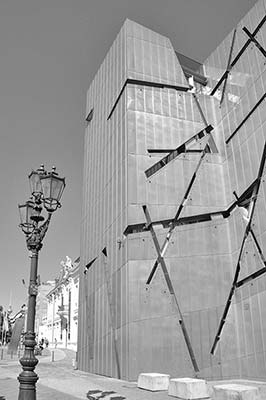
Eating: The museum’s $$ restaurant offers good meals, occasionally inspired by traditional Jewish recipes (albeit not kosher).
Visiting the Museum: Enter the museum via the yellow, 18th-century Baroque building next door. The museum’s layout is somewhat confusing: For the permanent exhibition, you first descend stairs to an underground space with a few small displays organized along “axes” of exile, Holocaust, and continuity. After checking out the unsettling, slanted “garden of exile” with its 49 pillars, take more stairs (or an elevator) to the second floor.
This floor’s permanent exhibition traces the history of Jews in Germany from medieval times until the present day. Fascinating chapters of that story include a short “golden age” in the Middle Ages, a period in the 19th century when “Jews became Germans”—that is, assimilated into the majority culture—and of course the terror of the 1930s and ’40s. One whole wall is covered with a list of anti-Semitic laws and ordinances in Hitler’s Germany, a chilling example of legalized discrimination. Interspersed are insights on wider aspects of Jewish culture, such as the Torah, Kabbalah, and the sounds of worship: a cantor singing, or a shofar horn blown on religious holidays.
Don’t miss the Hall of Fame, featuring portraits of people with Jewish heritage who made major contributions to Western civilization, ranging from the Marx Brothers to Jesus to Hannah Arendt. The exhibition concludes with video stories of Jews living in Germany today.
▲Berlinische Galerie
This gorgeous, well-presented museum (with an oversized word-search puzzle out front) showcases modern and contemporary art created in this eclectic city. The main draw is the permanent exhibit upstairs, offering an intriguing, chronological, and easily digestible look at art generated in Berlin from 1880 to 1980. The collection begins with Conservative (i.e., realistic) art, then gives way to the shimmering Berlin Secession (starting in 1892), and evolves from there. You’ll meet Margarette Kubicka (1891-1984), with her colorful, curvy, Cubist-inspired style; and Klimt-like, avant-garde Expressionism, including works by Otto Dix (the biggest name here). You’ll get a lesson in the Weimar-era “New Objectivity” (where artists focused on everyday scenes, intentionally objectifying their subjects in response to the abstraction trend). And you’ll see how historical events shaped the art: works created under the Nazis (capturing confusion and alienation); scenes of postwar destruction; Cold War-era abstraction; and perspectives on the Wall from West Berlin artists.
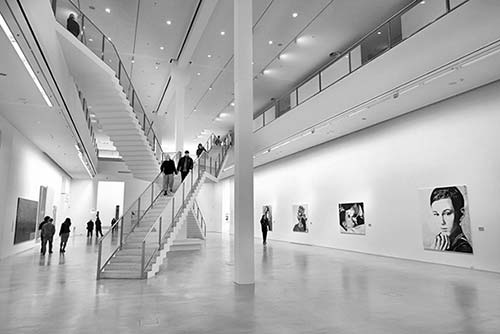
Cost and Hours: €10, ask for discount if also visiting the Jewish Museum, Wed-Mon 10:00-18:00, closed Tue, Alte Jakobstrasse 124, +49 30 7890 2600, www.berlinischegalerie.de.
KREUZBERG
Visitors who find downtown Berlin too tame head to Prenzlauer Berg, and those who find Prenzlauer Berg too tame fall in love with Kreuzberg (worth ▲▲). This huge, sprawling neighborhood (pop. 150,000) sits just south of central Berlin. For a representative look at this multicultural neighborhood, ride the U-Bahn (U1, U3, or U8) to Kottbusser Tor—the intersection at the heart of Kreuzberg—and explore. To the north is down-to-earth Oranienstrasse, lined with hole-in-the-wall shops and cheap eateries. Or wander south, crossing the Landwehr Canal to the increasingly trendy Graefekiez neighborhood. And if it’s Tuesday or Friday, don’t miss the vivid Turkish Market, with bustling street stalls that enliven the Maybachufer embankment near Kottbusser Brücke. All of these are within about a 10-minute walk of Kottbusser Tor. For recommended restaurants in this foodie-heaven neighborhood, see here.
Sights in Eastern Berlin
The first few sights listed here—Karl-Liebknecht-Strasse, Alexanderplatz, and the TV Tower—are also covered earlier, in my “Berlin City Walk” (available as a free audio tour). To delve further into eastern Berlin, consider a walk along Karl-Marx-Allee, which stretches east from Alexanderplatz, or visit the neighborhood of Friedrichshain (just east of the historic core area). This quickly transforming neighborhood is where you’ll find the East Side Gallery and Stasi Museum.
Karl-Liebknecht-Strasse
This wide boulevard—connecting Alexanderplatz to Museum Island, and named for an early German communist pioneer—is lined with DDR-era landmarks, including the TV Tower, St. Mary’s Church (historic church kept open—barely—during communism), Rotes Rathaus (“Red City Hall” of former East Berlin), and the Marx-Engels-Forum, a park with statues of communism founders Karl Marx and Friedrich Engels, who studied in Berlin.
▲Alexanderplatz
Marking the eastern end of the Unter den Linden/Karl-Liebknecht-Strasse thoroughfare, this kitschy-futuristic space was the main square of DDR-era East Berlin. Named (fittingly) for a Russian czar, under communist rule the square was turned into a model of Soviet aesthetics—with stern, blocky facades; a showpiece department store; a transit hub for trams and trains; and a trippy “World Time Clock.” Nearby is the start of the severely socialist-style Karl-Marx-Allee; originally named Stalinallee, it would have been more at home in Moscow than in Berlin.
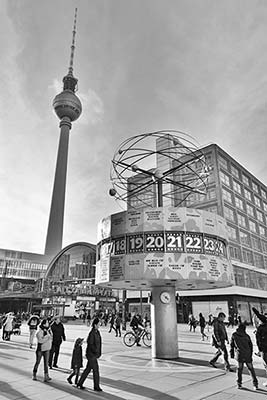
TV Tower (Fernsehturm)
One of Berlin’s landmarks, this 1,200-foot-tall massive spike is topped by a giant glittering disco ball. You’ll see it from just about anywhere in the city, and riding the elevator to the observation deck comes with sweeping (but almost too-high) views (€24.50, daily 9:00-23:00, Nov-Feb from 10:00, Panoramastrasse 1A, www.tv-turm.de). Various walking and bike tours leave from here.
Karl-Marx-Allee
This socialist-style boulevard was built after the original buildings here were leveled by the Red Army in 1945. As an expression of their adoration to the “great Socialist Father” (Stalin), the DDR government decided to rebuild the street better than ever (the USSR provided generous subsidies). They named it Stalinallee and lined it with apartment blocks (“workers’ palaces”) designed in the bold “Stalin Gothic” style so common in Moscow in the 1950s. The grand, showy boulevard was built in just four years and startled the West, as it gave them a peek at the potential future of Euro-Communism. Now renamed after Karl Marx, the street and its restored buildings provide a vivid look at architecture from Berlin’s communist days.
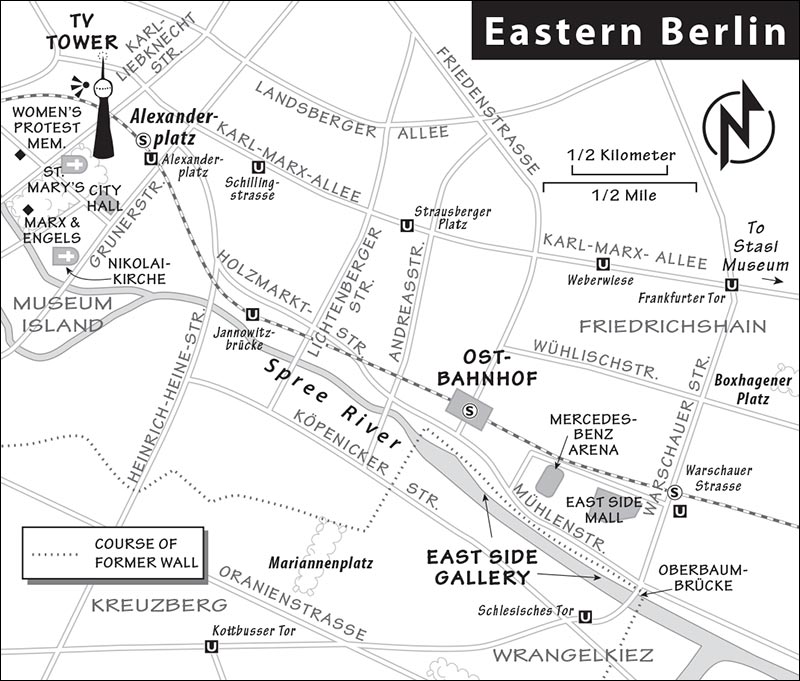
The boulevard runs from Alexanderplatz to Frankfurter Tor. To see it, you can taxi or ride the U-Bahn to Alexanderplatz and hike east for a mile. Or, for a shorter walk, ride the U-Bahn to Weberwiese and walk to Frankfurter Tor (away from TV tower, along the right side). Strolling the boulevard, look for information posts along the way, and notice the Social Realism reliefs on the buildings and the lampposts, which incorporate the wings of a phoenix (rising from the ashes) in their design. From Frankfurter Tor you can ride the tram (#M10, direction: Warschauer Strasse) conveniently to the East Side Gallery, described next.
▲East Side Gallery
The biggest remaining stretch of the Wall is now the “world’s longest outdoor art gallery.” This segment of the Wall makes a memorable walk for those interested in street art and/or Berlin Wall history. The gallery stretches for nearly a mile and is covered with murals painted by artists from around the world. The murals (classified as protected monuments) got a facelift in 2009, when the city invited the original artists back to re-create their work for the 20th anniversary of the fall of the Wall. For the history of the East Side Gallery, see www.eastsidegallery-berlin.de.
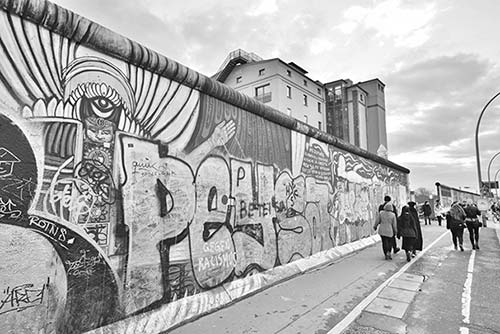
From the Oberbaum Bridge, head along the most interesting stretch of the East Side Gallery. Just walking a hundred yards gives you the essence of the gallery and the tourist scene that enlivens it. Walk along as far as you’d like and return, or trek the entire length, nearly a mile, to the Ostbanhof S-Bahn station.
▲Stasi Museum
This extensive, thoughtfully presented exhibit tells the story of how the communist-era Ministry for State Security (a.k.a. Stasi)—headquartered in these very buildings—infiltrated all aspects of East German life. While the museum is quite dry and out of the way, it’s the best place in Berlin to learn about the Stasi. Exhibits fill three floors of the building where Stasi Minister Erich Mielke had his office. Everything is described in English, with lots of reading and some interesting artifacts. At the entrance, check out the sprawling model of this neighborhood. The Stasi operation filled entire city blocks—essentially creating a city-within-the-city (54 acres, 50 buildings, 7,000 employees) for the sole purpose of surveilling its citizens. On official maps of East Berlin, this area showed up as blank space. For more on the Stasi, see the “Background” section on here.
Cost and Hours: €8, Mon-Fri 10:00-18:00, Sat-Sun from 11:00, audioguide-€2, +49 30 553 6854, www.stasimuseum.de.
Getting There: It’s a long haul from the center, at Ruschestrasse 103. Take the U5 to Magdalenenstrasse and exit toward Ruschestrasse. Up on the street, make a U-turn to the right up Ruschestrasse and look for the yellow sign—the museum is tucked far back in a courtyard.
Sights in Western Berlin
▲Deutsche Kinemathek Film and TV Museum
▲Musical Instruments Museum (Musikinstrumenten Museum)
▲Museum of Decorative Arts (Kunstgewerbemuseum)
▲Kaiser Wilhelm Memorial Church (Gedächtniskirche)
Berlin Zoological Garden (Zoologischer Garten) and Aquarium
▲Charlottenburg Palace (Schloss Charlottenburg)
Map: Charlottenburg Palace Area
▲Scharf-Gerstenberg Collection
TIERGARTEN PARK
Berlin’s “Central Park” stretches two miles from the Reichstag and Brandenburg Gate to Berlin Zoological Garden. This vast, 500-acre park, once a royal hunting ground, is now packed with cycling paths, joggers, and—on hot days—nude sunbathers.
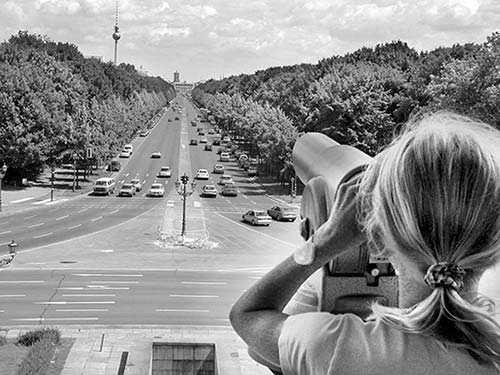
The Tiergarten’s centerpiece—faintly visible in the distance from the Brandenburg Gate—is the striking Victory Column, built to commemorate the Prussian defeat of Denmark in 1864...then reinterpreted after the defeat of France in 1870. The pointy-helmeted Germans rubbed it in, decorating the tower with French cannons and paying for it all with francs received as war reparations. The three lower rings commemorate Otto von Bismarck’s victories (Germany’s first chancellor). I imagine the statues of German military greats—which lurk among the trees nearby—goose-stepping around the floodlit angel at night.
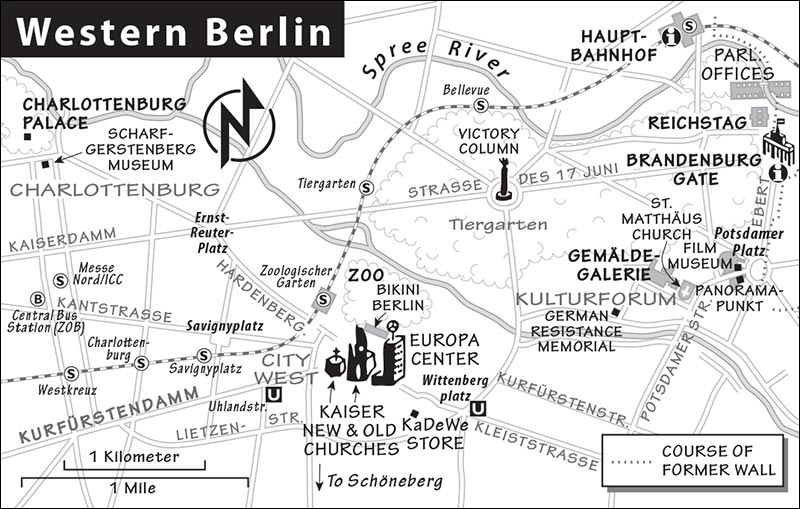
Climbing the Victory Column’s 270 steps earns you a breathtaking Berlin-wide view and a close-up of the gilded bronze statue of the goddess Victoria (€3.50, daily 9:30-18:30, Sat-Sun until 19:00, shorter hours off-season, closes for rain, no elevator). You might recognize Victoria from Wim Wenders’ 1987 art-house classic film Wings of Desire, or the Stay (Faraway, So Close!) video he directed for the rock band U2.
SOUTH OF TIERGARTEN PARK
This area, a 15-minute walk from the Brandenburg Gate, is divided into the skyscraper zone of Potsdamer Platz and the arts-and-culture complex called the Kulturforum. For history buffs, the German Resistance Museum and the Silent Heroes Memorial sit just beyond the Kulturforum.
Potsdamer Platz Area
This immense, 150-acre square is home to sleek skyscrapers, shopping malls, a transportation hub, several major corporate headquarters, upscale restaurants, and a few museums.
▲Potsdamer Platz
The architectural face of Potsdamer Platz has changed drastically over time: Berlin’s busiest intersection before World War II, it was bombed flat and remained a devastated wasteland until the 1990s, then quickly sprouted a forest of glassy skyscrapers, as if to trumpet the victory of capitalism. Visiting today, you’ll see a skyscraper panorama, a replica of Europe’s first traffic light, a boldly modern train station, a few chunks of the Berlin Wall, and the Sony Center shopping/entertainment complex. A good place to view it all is from the intersection of Potsdamer Strasse and Ebertstrasse. (From the S-Bahn or U-Bahn, exit following Leipziger Platz signs.) The next two sights are also nearby. A quick look at Potsdamer Platz also works well in conjunction with the nearby Kulturforum.
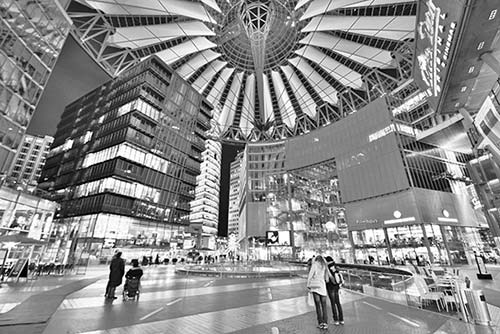
▲Deutsche Kinemathek Film and TV Museum
This slick exhibit is the most interesting place to visit within the Sony Center. Many early pioneers in filmmaking were German (including Fritz Lang, F. W. Murnau, Ernst Lubitsch, and the Austrian-born Billy Wilder)—and many became influential in Hollywood—making this a fun visit for cinephiles from anywhere. Your admission ticket gets you into several floors of exhibits made meaningful by the essential English audioguide. In the film section, you’ll walk back in time to the German film industry’s beginnings, with an emphasis on the Weimar Republic period in the 1920s, when Berlin rivaled Hollywood; study the Nazi use of film as propaganda; and learn about today’s influential German filmmakers. The TV section tells the story of das Idioten Box from its infancy (when it was primarily used as a Nazi propaganda tool) to today.
Cost and Hours: €9; Wed-Mon 10:00-18:00, Thu until 20:00, closed Tue; free downloadable audioguide, Potsdamer Strasse 2, +49 30 300 9030, www.deutsche-kinemathek.de.
Nearby: The Kino Arsenal theater downstairs shows offbeat art-house films in their original language.
Panoramapunkt
Across Potsdamer Strasse from the Deutsche Kinemathek museum, you can ride what’s billed as the “fastest elevator in Europe” to skyscraping rooftop views. You’ll travel at nearly 30 feet per second to the top of the 300-foot-tall Kollhoff Tower in the Potsdamer Platz 1 building. Its sheltered-but-open-air view deck provides a fun survey of Berlin’s changing skyline.
Cost and Hours: €7.50, €11.50 VIP ticket lets you skip the line, daily 10:00-20:00, until 18:00 in winter, in red-brick building at Potsdamer Platz 1, +49 30 2593 7080, www.panoramapunkt.de.
Kulturforum
Berlin’s other ensemble of museums (after Museum Island) fills a purpose-built facility just beyond Potsdamer Platz. Here you’ll find a variety of cultural exhibits, including exquisite European Masters at the Gemäldegalerie, musical instruments, and decorative arts. The New National Gallery, housed in a Mies van der Rohe building, showcases masterpieces of 20th-century art. All Kulturforum sights are covered by the Museum Pass Berlin.
Getting There: Ride the S-Bahn or U-Bahn to Potsdamer Platz, then walk along Potsdamer Platz.
Getting Oriented: Locate the Kulturforum’s various buildings by first finding the green steeple of the St. Matthäus Church. Just to the left and beyond the church is the glass-walled New National Gallery. To the right of the church is the low-lying, sprawling Gemäldegalerie—this area’s highlight. Farther right is the cubical Museum of Decorative Arts. Then comes the golden, angular Philharmonic concert hall and behind it, the Musical Instruments Museum (not really visible).
▲▲Gemäldegalerie
This “Painting Gallery” is one of Germany’s top collections of great works by European masters. The Gemäldegalerie shows off fine works from the 13th through 18th century. While there’s no one famous piece of art, you’ll get a taste of just about all the big names. In the North Wing are painters from Germany (Albrecht Dürer, Hans Holbein, Lucas Cranach), the Low Countries (Jan van Eyck, Pieter Brueghel, Peter Paul Rubens, Anthony van Dyck, Frans Hals, Johannes Vermeer), Britain (Thomas Gainsborough), France (Antoine Watteau), and an impressive hall of Rembrandts. The South Wing is the terrain of Italian greats, including Giotto, Botticelli, Titian, Raphael, and Caravaggio. The museum is undergoing a multiyear, phased renovation, so some areas are likely to be closed when you visit. If there’s one particular section you want to see, double-check that it’s open before buying your ticket.
Cost and Hours: €8 during renovations, otherwise €10, includes audioguide; Tue-Fri 10:00-18:00, Sat-Sun from 11:00, closed Mon; clever little loaner stools, cafeteria upstairs, Matthäikirchplatz 4, +49 30 266 424 242, www.smb.museum.
Visiting the Museum: When you buy your ticket, pick up the current museum map for help locating specific paintings (artwork locations may change from descriptions below). Northern Art is on one side (where we’ll begin) and Italian art is on the other (where we’ll end). Note that inner rooms have Roman numerals (I, II, III), while adjacent outer rooms use Arabic numerals (1, 2, 3). We’ll work counterclockwise (and roughly chronologically) through the collection.
Hans Holbein the Younger, 1497-1543 (Room 1): Holbein’s portrait Merchant Georg Gisze (Der Kaufmann Georg Gisze, 1532) depicts a wealthy 34-year-old German businessman. His black beret and immaculate clothes mark him as a successful dealer in cloth. Around him are the tools of his trade—logbooks, business letters with wax seals, signet rings, scales, and coins. Typical of detail-rich Northern European art, the canvas is bursting with highly symbolic tidbits. The clock (on the table, inside the small gold canister) reminds the viewer that time passes and worldly success fades. The unbalanced scales suggest that wealth is fleeting. Those negative symbols are counterbalanced by the carnations and herbs in the vase, representing Gisze’s upcoming marriage.
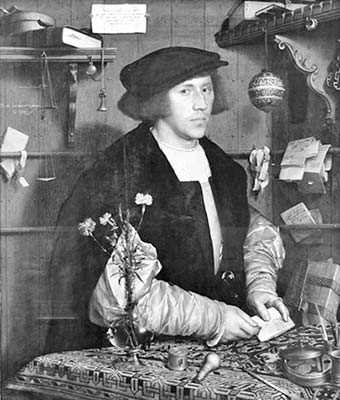
Albrecht Dürer, 1471-1528 (Room 2): In 1494, the young Dürer traveled from Germany to Italy, where he soaked up the technique and spirit of the burgeoning Renaissance movement. In his portrait Hieronymus Holzschuher (1526), Dürer captured the personality of a white-bearded friend from Nürnberg, right down to the sly twinkle in his sidelong glance. Dürer does not gloss over the 57-year-old’s unflattering features like the wrinkles or receding hairline (with the clever comb-over).
Lucas Cranach the Elder, 1472-1553 (Room III): Cranach’s Fountain of Youth (Der Jungbrunnen, 1546) depicts the perennial human pursuit of eternal youth. Ladies flock to bathe in the swimming pool of youth. They arrive (on the left) as old women—by wagon, on horseback, carried by men, even in a wheelbarrow. They strip and enter with sagging breasts, frolic awhile in the pool, rinse and repeat, then emerge (on the right) young again. Newly nubile, the women go into a tent to dress up, snog with noblemen in the bushes (right foreground), dance merrily beneath the trees, and dine grandly beneath a landscape of mountains and towers.
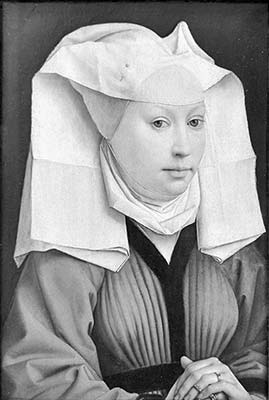
Rogier van der Weyden, 1400-1464 (Room IV): Dutch painters were early adopters of oil paint, and Van der Weyden was a virtuoso of the new medium. In Portrait of a Young Woman (Bildnis einer jungen Frau, 1440-1445), the subject wears a typical winged bonnet, addressing the viewer directly with her fetching blue eyes. In the same room is a remarkable, rare trio of three-panel altarpieces by Van der Weyden showing the life of the Virgin Mary, the life of John the Baptist, and the story of the Nativity. Savor the fine details in each panel.
Peter Paul Rubens, 1577-1640 (Room VIII): We’ve fast-forwarded a hundred years, and it’s apparent how much the Protestant Reformation changed the tenor of Northern European art. Rubens’ paintings represent the Catholic response, the Counter-Reformation. You’ll see huge, brightly-colored canvases of Mary, alongside angels, bishops, and venerated saints (like the arrow-pierced martyr, St. Sebastian). This exuberant Baroque style trumpeted the greatness of the Catholic Church.
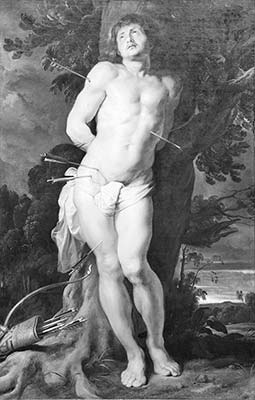
You’ll also catch glimpses of Rubens’ second wife, Helene Fourment, in mythological scenes such as Andromeda (1638). Helene, the amply-figured nymph with a sweetly smiling face, came to define the phrase “Ruben-esque.”
Frans Hals, c. 1582-1666 (Room 13): Hals’ Portrait of Catharina Hooft with Her Nurse (Bildnis der Catharina Hooft mit ihrer Amme, 1619-1620) presents a startlingly self-possessed baby (the newest member of a wealthy merchant family), dressed in the lacy, jeweled finery of a queen and clutching a golden rattle. At the other end of the social spectrum is Hals’ Malle Babbe (1633-1635). The subject, a notorious barfly nicknamed “Crazy” Babbe, was well known in Hals’ hometown. Hals captures her in a snapshot from the local pub, hefting her pewter beer stein and turning to laugh at a joke. The messy brushstrokes that define her collar and cap are as wild and lively as
her over-the-top personality.
Rembrandt van Rijn, 1606-1669 (Room X): The ultimate Dutch master, Rembrandt was propelled to fame in his lifetime by his powers of perception and invention. Browse Room X and the adjoining galleries to get a taste of the range of Rembrandt’s work. There are storytelling scenes, taut with pulse-racing emotion (The Rape of Persephone, 1631, Room 16). There are Bible scenes (Samson and Delilah, 1628-1629, Room 16; Samson Threatens His Father-in-Law, 1635, Room X).
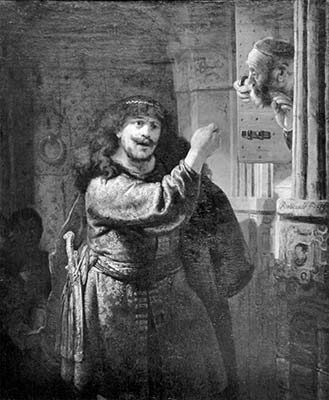
And there are expressive portraits. In Room X, a Self-Portrait (1634) shows Rembrandt wearing a beret. The 28-year-old genius was already famous. He soon married the beautiful Saskia (Portrait of Saskia, 1643, Room 16), and seemed to have it all. But then Saskia died, Rembrandt declared bankruptcy, and his painting style went out of fashion...all of which contributed to his brooding, dark canvases.
Johannes Vermeer, 1632-1675 (Room 18): Vermeer was a master at conveying a complicated story through a deceptively simple scene with a few significant details. Young Woman with a Pearl Necklace (1664) is classic Vermeer. He lets us glimpse an intimate, unguarded moment in the life of an everyday woman. She wears a beautiful yellow coat with an ermine fur lining, ribbons in her hair, and pearl earrings. Vermeer tells us a bit about the woman with objects on the table: her comb, make-up brush, and water bowl.
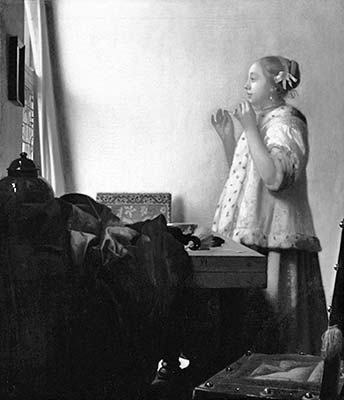
Caravaggio, 1573–1610 (Room XIV): In the year 1600, living in Rome, Caravaggio burst onto the scene with a new and shocking art style. Even religious and allegorical subjects got his uncompromising, gritty, ultrarealistic treatment. In Caravaggio’s Amor Vincit Omnia (1601-1602), “Love Conquers All.” Cupid stands victorious over all the vain accomplishments of ambitious men: Military triumphs (symbolized by the fallen armor), Art (the discarded musical instruments), Literature (paper and pen), Science (a globe), Grand Architecture (compass and square), and Power (the crown). Cupid—a young, naked boy—mocks those grown-up ambitions. He laughs derisively and splays his genitals over the fallen symbols.
Now turn your attention to a painting in Room XIV by a different artist—Giovanni Baglione’s Sacred and Profane Love (1602-1603). Baglione was hired by a conservative cardinal to paint a moralizing response to Caravaggio. Here, the main figure is a more upright incarnation of love—Sacred Love—embodied by a radiant angel. He corners his rascally counterpart, the cowering and “Profane” little Cupid (lower right).
▲Musical Instruments Museum (Musikinstrumenten Museum)
Music lovers appreciate this beautifully displayed collection of 600 different items, going back to the 1500s. The included audioguide brings the collection to life and lets you actually hear a few of the instruments in action (€6; Tue-Fri 9:00-17:00, Thu until 20:00, Sat-Sun from 10:00, closed Mon; Tiergartenstrasse 1—easy-to-miss entrance is down Ben-Gurion-Strasse, facing the back of the Sony Center; www.simpk.de).
Nearby: Berlin’s yellow Philharmonic Concert Hall sits just beyond the Musical Instruments Museum (ticket office open Mon-Fri 15:00-18:00, Sat-Sun 11:00-14:00 except closed July-Aug, +49 30 2548 8999, www.berliner-philharmoniker.de).
▲Museum of Decorative Arts (Kunstgewerbemuseum)
Berlin’s answer to London’s Victoria and Albert Museum shows off a thousand years of applied arts—from shimmering reliquaries (the Guelph Treasure) and delicate porcelain to Art Deco and Jugendstil furnishings, and much more. The highlights are the Dome Reliquary (an elaborately decorated, church-shaped container for saints’ bones) and an appealing collection of women’s fashions over the centuries.
Cost and Hours: €8; Tue-Fri 10:00-18:00, Sat-Sun from 11:00, closed Mon; Matthäikirchplatz 5, www.smb.museum.
CITY WEST
The area now called City West has seen a lot of history. When Berlin’s zoo was built here in the 1840s, this area was farm fields. It developed at a fast clip, and by the advent of the Cold War, Kurfürstendamm boulevard was West Berlin’s main drag. The West German government poured funds into building Europa Center—glittering skyscrapers to house the headquarters of international businesses, a bold outpost of capitalism. The Schöneberg City Hall became the seat of West Berlin government, and the site of JFK’s famous visit. But with the fall of the Wall, West Berlin became passé, and investors focused on developing previously inaccessible swaths of the East.
The following sights are in the heart of the former “West Berlin” (clustering near Kurfürstendamm boulevard). To get here, ride the S-Bahn to Zoologischer Garten. (For locations, see the “Western Berlin” map.)
▲Kurfürstendamm
Nicknamed “Ku’damm,” this boulevard starts at Kaiser Wilhelm Memorial Church and does a commercial cancan for two miles. In the 1850s, when Berlin became a wealthy and important capital, her “new rich” chose Kurfürstendamm as their street. In the 1870s, Bismarck made it Berlin’s Champs-Elysées. In the 1920s, it was a stylish and fashionable drag of cafés and boutiques. During the Third Reich it was home to an international community of diplomats and journalists, and throughout the Cold War, economic subsidies from the West ensured that capitalism thrived here. Today, Berlin’s focus has shifted east and Ku’damm feels more “international-touristy” than “authentic Berlin”—with a Hard Rock Café and a Käthe Wohlfahrt Christmas ornament superstore. But it remains a fine place to enjoy elegant shops (around Fasanenstrasse), department stores, and people-watching.
▲Kaiser Wilhelm Memorial Church (Gedächtniskirche)
This church was originally dedicated to the first emperor of Germany, Wilhelm I. Reliefs and mosaics show great events in the life of Germany’s favorite kaiser, from his coronation in 1871 to his death in 1888. The church is actually an ensemble of buildings: a new church, the matching bell tower, a meeting hall, and the ruins of the old church, with its Memorial Hall. The bombed-out ruins of the old church were left standing as a memorial to Berlin’s destruction in World War II, with a new church constructed next door.
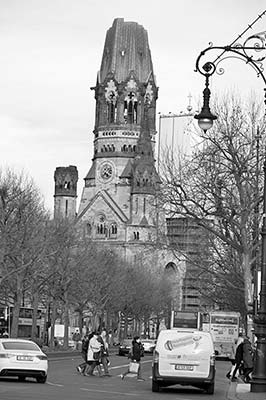
Cost and Hours: Church—free, daily 9:00-19:00 or until 18:00 if there’s a concert; Memorial Hall—free, Mon-Fri 10:00-18:00, Sat until 20:00, Sun 12:00-17:30. Located on Breitscheidplatz, U2/U9 and S-Bahn: Zoologischer Garten or U1/U9: Kurfürstendamm, www.gedaechtniskirche-berlin.de.
Visiting the Church: Start your visit with the ruined church. Bullet holes dot its exterior. After the war, some Berliners wanted to tear down the ruins, but instead the ruins were kept as a Memorial Hall. Inside, under a Neo-Romanesque mosaic ceiling, you’ll find a small photo exhibit and before-and-after models of the church.
To replace the ruined church, the authorities held a competition to design a contemporary annex. The winning entry—the short, modern church (1961) across from the Memorial Hall—offers a meditative world of 11,000 little blue windows. The blue glass was given to the church by the French as a reconciliation gift. As you enter, turn immediately right to find a simple charcoal sketch of the Virgin Mary wrapped in a shawl. During the Battle of Stalingrad, German combat surgeon Kurt Reuber rendered the Virgin on the back of a stolen Soviet map to comfort the men in his care. Though Reuber died in captivity, his sketch was flown out of Stalingrad on the last medical evacuation flight, and postwar Germany embraced it as a symbol of the wish for peace. Copies of the drawing, now known as the Stalingrad Madonna, hang in the Berlin Cathedral, in St. Michael’s Cathedral in Coventry, England, and in the Kozan Cathedral in Russia’s Volgograd (formerly Stalingrad) as a sign of reconciliation among nations.
Nearby: The lively square between the churches and the Europa Center attracts street musicians and performers—especially in the summer. Berliners call the funky fountain the “Wet Meatball.” Overlooking the scene is the renovated Bikini Berlin shopping mall, with a mix of local and international shops, pop-up stores, and an upstairs terrace peering down into the zoo.
As you face the Bikini Berlin mall, look on the sidewalk for a golden crack that stretches from the church toward Budapester Strasse. It commemorates the December 2016 Christmas Market terrorist attack that took the lives of 12 people here; names of the victims are on the steps.
Berlin Zoological Garden (Zoologischer Garten) and Aquarium
More than 1,500 kinds of animals call Berlin’s famous zoo home...or so the zookeepers like to think. The zoo and the world-class adjacent aquarium draw gaggles of school kids and their frazzled chaperones. For a free look into the monkey enclosure, head inside the nearby Bikini Berlin shopping center, where the ground floor windows offer an eye-level glimpse at the playful primates (or for a delightful bird’s-eye view, head to the mall’s rooftop terrace).
Cost and Hours: Zoo and aquarium-€17.50 each, €23.50 for both, kids half-price; daily 9:00-18:30, until 16:30 in winter, aquarium closes at 18:00 year-round; feeding times—Fütterungszeiten—posted just inside entrance and listed on the zoo map (best feeding show is the sea lions—generally at 15:15); enter zoo near Europa Center in front of Hotel Palace or opposite Zoologischer Garten station on Hardenbergplatz, Budapester Strasse 34, +49 30 254 010, www.zoo-berlin.de, www.aquarium-berlin.de.
Kaufhaus des Westens (KaDeWe)
The “Department Store of the West” has been a Berlin tradition for more than a century. With a staff of 2,100 to help you sort through its vast selection of 450,000 items, KaDeWe claims to be the biggest department store on the Continent. You can get everything from a haircut to souvenirs (fifth floor). The sixth floor is a world of gourmet taste treats. The biggest selection of deli and exotic food in Germany offers plenty of classy opportunities to sit down and eat. Ride the glass elevator to the seventh floor’s glass-domed Winter Garden, a self-service cafeteria—fun but pricey.
Hours: Generally Mon-Thu 10:00-20:00, Fri-Sat until 21:00, closed Sun, S-Bahn: Zoologischer Garten or U-Bahn: Wittenbergplatz, +49 30 21210, www.kadewe.de.
Nearby: The Wittenbergplatz U-Bahn station (in front of KaDeWe) is a unique opportunity to see an old-time station. The first subway station in Berlin (1902), its interior still has classic advertisements decorating its venerable walls. On the KaDeWe side of the station, a sign lists sites of Nazi concentration camps—one of many examples of present-day Germans ensuring that the crimes of their ancestors are never forgotten.
The Wittenbergplatz station also marks the boundary of the adjacent Schöneberg district, immediately southeast of the Ku’damm corridor. Here, you’ll find the Schöneberg City Hall, which became the de facto seat of the West Berlin city government. It was on the City Hall’s front steps, on June 26, 1963, that John F. Kennedy stood in solidarity with the people of West Berlin: “Ich bin ein Berliner.”
CHARLOTTENBURG PALACE AREA
Tucked in an upscale residential neighborhood at the northwestern edge of the city sits Charlottenburg Palace—once a suburban residence of Prussian royalty (including Frederick the Great). While there are far better palaces in Germany—including just out of town in Potsdam (see the next chapter)—Charlottenburg offers an easy and accessible look at a royal interior. For art lovers, this area is even more appealing for its cluster of nearby museums, which combine to present a remarkable array of early-20th-century art: Surrealism (Scharf-Gerstenberg Collection); Picasso, Matisse, and Klee (Museum Berggruen); furniture and decorative arts in the Jugendstil and Art Deco styles (Bröhan Museum); and the powerful Expressionism of Käthe Kollwitz (Kollwitz Museum).
Getting There: Ride U7 to Richard-Wagner-Platz or U2 to Sophie-Charlotte-Platz and walk about 10 minutes (from either stop, follow signs to Schloss), or—much faster—catch bus #M45 (direction: Spandau) direct from Zoologischer Garten or bus #109 from along Ku’damm (direction: Tegel). You can also take the S-Bahn to Westend, then ride bus #M45 (or walk 10 minutes). From any bus, you want the Schloss Charlottenburg stop.
Eating: For lunch on Luisenplatz just east of the palace, try the traditional German grub at the Lemke brewpub or sample Russian specialties at Samowar (both open daily).
▲Charlottenburg Palace (Schloss Charlottenburg)
Charlottenburg Palace is the largest former residence of the royal Hohenzollern family in Berlin, and contains the biggest collection of 17th-century French fresco painting outside France. If you’ve seen the great palaces of Europe, this Baroque palace comes in at about number 10. I’d rate it behind Potsdam, too. The palace has several parts: The central “Old Palace” (Altes Schloss) is a mostly reconstructed look at Frederick’s wife, Sophie Charlotte, that falls a bit flat on historic interest; the New Wing (Neue Flügel), with background on Frederick the Great, is the better palace experience. You’ll also find a variety of other royal pavilions and sprawling gardens.
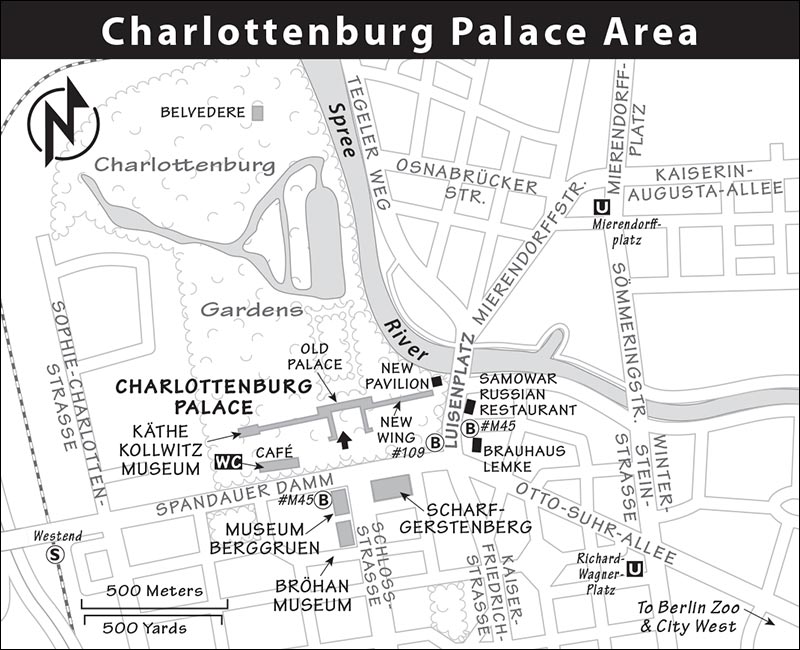
Cost and Hours: New Wing and Old Palace-€12 each, prices include audioguides, smaller buildings-€3-4 each, combo-ticket for everything-€17; all buildings open Tue-Sun 10:00-17:30, Nov-March until 16:30, closed Mon year-round; +49 331 969 4200, www.spsg.de.
Visiting the Palace: The New Wing (Neue Flügel, a.k.a. the Knobelsdorff Wing) features Rococo rooms and fine paintings. You start on the ground floor in the old royal apartments, greeted by the famous Napoleon Crossing the Alps (one of five originals of this scene painted by Jacques-Louis David). Look also for the painting of a huge parade in front of Unter den Linden’s Neue Wache, and various other views of Berlin from the early 19th century—a little time portal to the historic city destroyed in World War II. Upstairs you’ll see Frederick’s chambers, including his study, library, and a concert hall where he played the flute. His sumptuous, gold-encrusted state rooms are the grand finale, including the 105-foot-long Golden Gallery, a real-life Cinderella ballroom with rich green walls, faux marble, gold flourishes, and glittering chandeliers.
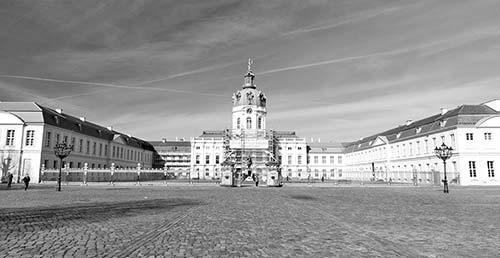
The Old Palace (Altes Schloss) showcases Sophie Charlotte’s state apartments—her portrait adorns most of the rooms and is the main theme of the audioguide—plus a lavish palace chapel that defied strict Protestant starkness in favor of Baroque supremacy befitting the Prussian Empire (an enormous royal crown sits opposite the altar, watching over the congregation). A highlight is the Porcelain Cabinet, with over 2,700 pieces set against mirrored shelves reflecting natural light and a crazy melding of trompe l’oeil painting and 3-D stucco work. Upstairs you’ll find an exhibition on Prussia and the Hohenzollern dynasty, with silver treasures, more porcelain, and the (relatively modest) crown jewels.
Out back are sprawling gardens that are fun and free to wander in good weather, with a few skippable royal pavilions. The one that may be worth considering—past the end of the New Wing—is the New Pavilion, offering a concise and accessible look at paintings by the two big names of German Romanticism: Caspar David Friedrich and Karl Friedrich Schinkel.
▲Käthe Kollwitz Museum
This local artist (1867-1945), who experienced much of Berlin’s stormiest century, conveyed powerful, deeply felt emotions about motherhood, war, and suffering through the stark faces of her art. This small yet fine collection consists of charcoal drawings and woodcuts, dotted with a handful of sculptures.
Cost and Hours: €7, daily 11:00-18:00, in the Theaterbau wing of the palace, +49 30 882 5210, www.kaethe-kollwitz.de.
Visiting the Museum: The museum has recently moved to this location, so its layout may have changed somewhat from this description. The first part of the exhibition focuses on the relatively happy first half of Kollwitz’s life, when she drew from interactions with the poor to create some of her most moving works. You’ll see how she gained confidence and found her artistic voice in her depictions of the Peasants’ Revolt (1520s) and the Weavers’ Revolt (1844).
The second part continues the story, with the turning point in her life: 1914, when Kollwitz’s first-born son died in battle on Flanders Fields. You’ll see her transition to a woodcut technique. Posters from this era show her social conscience—shaming Germans into helping feed their starving compatriots. Her self-portraits from the 1930s are imbued with a world-weariness that will only intensify with the death of her grandson, fighting in Russia, in World War II. (These losses inspired Kollwitz to create her most famous work, the powerful pietà inside Germany’s war memorial at the Neue Wache—described on here.) Kollwitz’s sculptures are spread throughout. While best known during her lifetime for her prints, Kollwitz favored sculpting. But lack of access to materials meant that she produced relatively few works.
▲Scharf-Gerstenberg Collection
This pleasant museum houses more than 250 works of Surrealist and pre-Surrealist art, with works by big names including Joan Miró, Salvador Dalí, Paul Klee, Jean Dubuffet, and Francisco de Goya, juxtaposed with lesser-known German artists, such as Otto Dix, Max Ernst, and George Grosz. The Surreal Worlds exhibit shows just how freaky the world looks to artists—a jumbled existence of subjects and emotions. The collection is thoughtfully organized by theme, as if these great artists are in conversation. Note that these are “deep cuts” rather than “greatest hits,” making this worth ▲▲ for someone with an affinity for this art, but not worth the trip for those with a casual interest.
Cost and Hours: €12 combo-ticket includes audioguide and Museum Berggruen, Tue-Fri 10:00-18:00, Sat-Sun from 11:00, closed Mon, Schlossstrasse 70, +49 30 266 424 242, www.smb.museum.
▲Museum Berggruen
This tidy museum—with lesser-known works by some big-name modern artists (especially Picasso)—is a welcome surprise. The first floor features some of his earlier works: Blue Period, newspaper collages, and early Cubism (including a study for the seminal Les Demoiselles d’Avignon). The second (top) floor shows off how the prolific artist dabbled in virtually every medium: ceramic, mixed media, doodles, pencil sketches, and, of course, painting. The ground floor has a fine rotating collection intermixed with more Picasso sculptures. In the annex are notable works by Henri Matisse and Paul Cézanne, and a huge collection of pieces by Paul Klee. Everything is thoughtfully described in English.
Cost and Hours: €12 combo-ticket includes audioguide and Scharf-Gerstenberg Collection, Tue-Fri 10:00-18:00, Sat-Sun from 11:00, closed Mon, Schlossstrasse 1, +49 30 266 424 242, www.smb.museum.
▲Bröhan Museum
This beautifully understated museum displays decorative arts from the early 20th century on three floors (permanent exhibits on ground floor, temporary exhibits upstairs). This collection makes you wish you were furnishing a Berlin apartment in the year 1900. Wander through a dozen Jugendstil and Art Deco living rooms, a curvy and eye-pleasing organic world of lamps, glass, silver, and posters. English descriptions are posted in some rooms, and the included audioguide does a fair job describing temporary exhibits, featuring various subjects associated with the design history of the Art Deco and Art Nouveau movements.
Cost and Hours: €8, Tue-Sun 10:00-18:00, closed Mon, Schlossstrasse 1A, +49 30 3269 0600, www.broehan-museum.de.
Entertainment in Berlin
Berlin has three opera companies, multiple symphonies and chamber orchestras, and organ concerts in churches nearly every day of the week. But you’ll also find wild dance clubs, hipster ballrooms, dilapidated techno beach bars, and smoky jazz cellars.
Entertainment Info: The TI can provide basic information about what’s on; for classical music, look for the free, monthly Concerti magazine. For good live music listings, see www.askhelmut.com or shell out a few euros for a Berlin magazine (sold at kiosks): Zitty (www.zitty.de) and Tip (www.tip-berlin.de) are the top guides to alternative culture (mostly in German); Exberliner Magazine is colorfully written in English (www.exberliner.com). Also pick up the free 030 schedule in bars and clubs (www.berlin030.de).
Smoking: Berlin bars that don’t sell food may allow smoking (unlike in much of Europe).
Late-Hours Sightseeing: Berlin’s museums typically close at 18:00, but many stay open later at least one day a week. Three of the biggies are open late every day: the Reichstag (until midnight, last entry at 22:00), the Topography of Terror (until 20:00), and the Humboldt Forum (until 20:00 most nights, 22:00 Fri-Sat). Other Museum Island museums may also be open until 20:00 on Thursdays. Outdoor monuments such as the Berlin Wall Memorial and the Memorial to the Murdered Jews of Europe are accessible, safe, and well lit late into the night, though their visitor centers close earlier.
Classical Music
Berlin Philharmonic
Housed in a striking modern building at the Kulturforum cultural complex, the Berlin Philharmonic is among the world’s top ten orchestras. Inexpensive and legitimate tickets are often sold on the street an hour before performances. You can also buy tickets at the box office, by phone, or online (ticket office open Mon-Fri 15:00-18:00, Sat-Sun 11:00-14:00 except closed July-Aug, +49 30 2548 8999, www.berliner-philharmoniker.de). The philharmonic also presents a popular series of free lunch concerts (Wed at 13:00 Sept-June, tickets handed out in person the same day—try to arrive by 12:00).
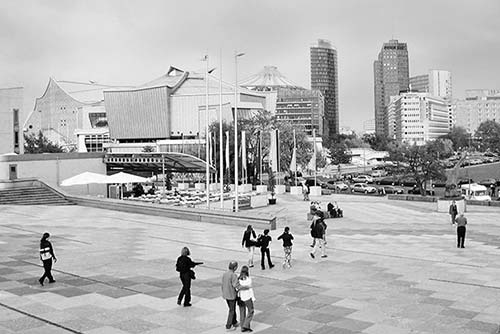
Other Classical Music Venues
In the historic core, these include the gorgeous, Schinkel-designed Konzerthaus Berlin on Gendarmenmarkt (home of the Konzerthausorchester symphony orchestra, popular 45-minute “espresso concert” series Wed at 14:00, +49 30 203 092 101, www.konzerthaus.de) and the cutting-edge, Frank Gehry-designed Pierre Boulez Saal (theater-in-the-round chamber music, not far from Bebelplatz at Französische Strasse 33D, +49 30 4799 7411, www.boulezsaal.de). To enjoy an affordable (sometimes free) recital by talented students, consider the Hochschule für Musik Hanns Eisler, with two venues in the historical center (facing Gendarmenmarkt at Charlottenstrasse 55, and on Museum Island at Schlossplatz 7, +49 30 203 092 101, www.hfm-berlin.de).
Opera
The most historic opera venue is the stately Staatsoper, on Bebelplatz overlooking Unter den Linden (box office located at Unter den Linden 7, +49 30 2035 4555, www.staatsoper-berlin.de). Quite different is Berlin’s famous Komische Oper, with a long tradition for avant-garde, adventurous performances (near Unter den Linden and Friedrichstrasse at Behrenstrasse 55, +49 30 4799 7400, www.komische-oper-berlin.de). The modern Deutsche Oper building (in Charlottenburg, near City West) houses both its own opera company and the Berlin State Ballet (Bismarckstrasse 35, U2: Deutsche Oper, +49 30 3438 4343, www.deutscheoperberlin.de).
Concerts in Churches
Several Berlin churches and other venues offer frequent daytime and early-evening concerts. Even “free” concerts request a donation.
St. Mary’s Church: Along Karl-Liebknecht-Strasse near the TV Tower, free organ concerts (Mon at 14:30, www.marienkirche-berlin.de), as well as a variety of other concerts.
Nikolaikirche: In the Nikolai Quarter, 30-minute organ concerts on Fridays at 17:00 (€3, www.en.stadtmuseum.de/nikolaikirche).
French Cathedral: On Gendarmenmarkt, 30-minute organ concerts on Mondays at 16:00 (€3, www.franzoesische-friedrichstadtkirche.de), plus a variety of other organ and choral worship services.
Berlin Cathedral: On Museum Island, evening weekend concerts ranging from organ to choral (tickets at door—prices vary, starts between 18:00 and 20:00, www.berlinerdom.de).
Kaiser Wilhelm Memorial Church: In City West, quality concerts (some free, sporadic schedule, often choral, www.gedaechtniskirche-berlin.de).
Clärchens Ballhaus: Not a church but the old Jewish quarter’s beloved classic ballroom; concerts are sometimes held in its twinkling upstairs Mirror Room, the Spiegelsaal (https://claerchensball.haus).
Modern Music and Theater
Jazz
Berlin has a lively jazz scene (for schedules, see www.jazzclubsinberlin.com). The following are close to my recommended accommodations; each has live music nightly from 21:00 (doors open at 20:00).
In City West (near Savignyplatz), consider A Trane Jazz Club (great stage and intimate seating, €15-30 cover depending on act, Bleibtreustrasse 1—see map on here, +49 30 313 2550, www.a-trane.de).
Near the TV Tower, B-Flat Acoustic Music and Jazz Club has live shows and jam sessions (from free to €20, near Alexanderplatz at Dircksenstrasse 40—see map on here, +49 30 283 3123, www.b-flat-berlin.de).
Kunstfabrik Schlot, northwest of the old Jewish quarter, is another respected venue (from free to €15, tucked in a cellar, in a courtyard at Invalidenstrasse 117—see map on here, U6: Naturkundemuseum, +49 30 448 2160, www.kunstfabrik-schlot.de).
Theater and Variety Shows
Since the cabaret days, Berlin has had a flair for the dramatic. Most of these offerings are in German only. For the big spectacles, the language matters less.
Bar Jeder Vernunft, in City West, offers modern-day cabaret a short walk from my recommended Savignyplatz hotels (€30-60, performances generally Mon-Sat at 20:00, Sun at 19:00, seating can be cramped, south of Ku’damm at Schaperstrasse 24—see map on here, U3 or U9: Spichernstrasse, +49 30 883 1582, www.bar-jeder-vernunft.de).
Berliner Ensemble—a venerable company made famous under the direction of Bertolt Brecht—stages a dozen or so different productions each month ranging from classic to contemporary. The performances are housed in the majestic Theater am Schiffbauerdamm, across from the Friedrichstrasse Bahnhof, just off the river (€13-60, performances generally daily at 19:30 or 20:00, box office open Mon-Sat 10:00-18:30, Bertolt-Brecht-Platz 1, +49 30 2840 8155, www.berliner-ensemble.de).
The Friedrichstadtpalast just north of Unter den Linden stages glitzy spectacles (Friedrichstrasse 107, www.palast.berlin). Nearby, a bit closer to Unter den Linden, the historic Admiralspalast Theater features lower-key concerts, plays, and musicals (including the Distel Cabaret Theater company—an East Berlin cabaret troupe, Friedrichstrasse 101, www.admiralspalast.theater).
Other venues to consider: Theater RambaZamba, in Prenzlauer Berg’s Kulturbrauerei, highlights performers who are disabled and creatively transforms those “disabilities” into assets (www.rambazamba-theater.de). Chamäleon, inside Hackesche Höfe, channels the creative spirit of 1920s Berlin and bills itself as a contemporary circus, mixing acrobatics, theater, music, and dance (www.chamaeleonberlin.com). Kookaburra, between my old Jewish quarter and Prenzlauer Berg hotels, is a comedy club that regularly presents acts in English (Schönhauser Allee 184, https://comedyclubberlin.com). And the Berliner Festspiele often hosts Off Broadway-type fringe theater (www.berlinerfestspiele.de).
Live Music
Berlin has a staggering array of smaller music venues. Here are two old standbys: Frannz Club, in Prenzlauer Berg’s Kulturbrauerei, was a DDR-era hotspot; today it attracts talented rock and alternative bands (www.frannz.com). And SO36, on Oranienstrasse in Kreuzberg, is Berlin’s most venerable punk venue (www.so36.de).
Big concerts are often held at Olympic Stadium, Mercedes-Benz Arena in Friedrichshain, the Spandau Citadel, and the outdoor Waldbühne (“Forest Stage”).
Nightlife
Al Fresco Summer Fun
Great places to stroll while people-watching Berliners include the Spree riverbank (especially around Monbijoupark and Museum Island); Prenzlauer Berg’s Kastanienallee, Oderberger Strasse, and Helmholtzplatz; and Kreuzberg’s Paul-Lincke-Ufer, a leafy embankment on the Landwehr Canal with upscale homes and a lively boules court. The old Jewish quarter’s Oranienburger Strasse (near the New Synagogue) and City West’s Europa Center/Kurfürstendamm boulevard are packed, but are more tourist oriented.
To nurse a drink, stop by a Biergarten. Big, beloved, and lively choices include Prater Biergarten in Prenzlauer Berg; Schleusenkrug in City West, tucked back in the park near the Zoologischer Garten train station; and Golgatha Biergarten in Kreuzberg’s Viktoriapark.
You can also start or end your evenings in a rooftop bar. Favorites include the posh Hotel de Rome (overlooking Gendarmenmarkt); 25hours Hotel’s Monkey Bar (with views into the zoo residents’ enclosure); and Hugos Restaurant (inside the Intercontinental on the edge of Tiergarten).
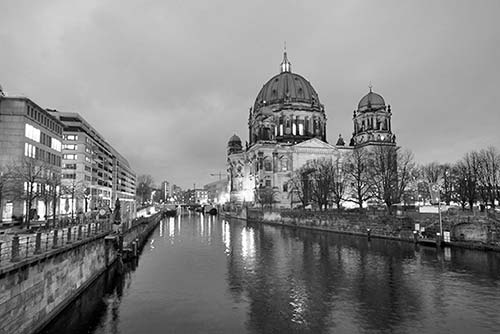
An even more summery variation is Berlin’s beach bar scene—where people grab a drink along the riverfront and watch the excursion boats go by.
Dancing
The old ballroom Clärchens Ballhaus has been a Berlin institution since 1913. Though it has new owners, they have promised to maintain the tradition of regular dance nights, so check the website for what’s on (Auguststrasse 24—see map on here, S-Bahn: Oranienburger Strasse, +49 30 282 9295, https://claerchensball.haus). If you enjoy the Ballhaus scene, consider the campy (and less venerable) Ballhaus Berlin, just west of Prenzlauer Berg (Chausseestrasse 102, U6: Naturkundemuseum, www.ballhaus-berlin.de).
Berlin boasts the largest tango scene outside Buenos Aires (well described at www.tango-argentino-online.com). In summer, it’s easy to get a taste of tango on any balmy night in the riverside Monbijoupark, between Museum Island and Hackescher Markt.