NEAR BERLIN
Potsdam • Sachsenhausen Memorial and Museum
Sachsenhausen Memorial and Museum
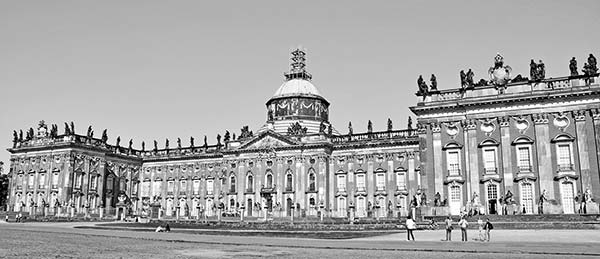
While you could spend days in Berlin and not run out of things to do, a few worthwhile side trips are within an hour of downtown. Frederick the Great’s opulent playground at Potsdam is a hit for its mix of Prussian history and ornate palaces surrounded by pretty parks; the town also has a fun-to-explore center and some interesting Cold War sights. On the opposite side of Berlin—and the sightseeing spectrum—the Sachsenhausen Memorial and Museum commemorates the tens of thousands of prisoners who died at this concentration camp under the Nazis.
Other Berlin day-trip possibilities are covered elsewhere in this book: Wittenberg, with excellent Martin Luther-related sights (45 minutes by train), is covered in the Luther Trail chapter. Dresden and Leipzig also work as day trips from Berlin; each has a separate chapter.
Potsdam
Squeezed between the Wannsee and a lush park strewn with the escapist whimsies of Frederick the Great, the once-important, quaint town of Potsdam has long been Berlin’s holiday retreat. Potsdam’s palaces are your best opportunity to get a taste of Prussia’s Hohenzollern royalty.
Beyond these royal retreats, Potsdam is simply enjoyable—a swanky bedroom community, where, thanks to its aristocratic heritage, everything seems bigger and better than it needs to be. Cold War buffs might focus on Cecilienhof (site of the famous post-WWII Potsdam Conference) and nearby KGB Prison Memorial. And anyone can enjoy Potsdam’s well-manicured town center as a kind of sightseeing eye-candy. Don’t come here just for the palaces—come here to escape the bustle of Berlin, and to spend a sunny day exploring a stately burg and its picnic-friendly park.
GETTING TO POTSDAM
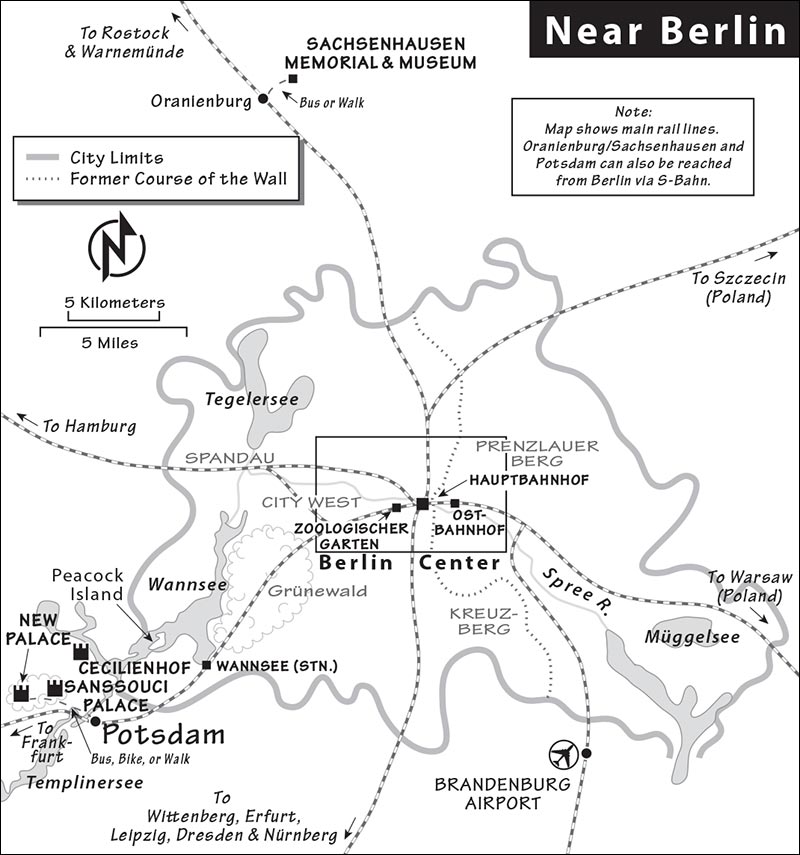
Potsdam is 15 miles southwest of Berlin, easy to reach by train. You have two train options for zipping from the city to Potsdam’s Hauptbahnhof, both covered by a Berlin transit 24-hour pass (€10 with zones ABC; if you have a pass for just zones AB, buy a €1.80 Anschlussfahrausweis—extension ticket—to get here, valid 2 hours).
Regional Express/RE1 trains go direct to Potsdam and depart twice hourly from the following Berlin stations: Zoologischer Garten (20 minutes to Potsdam), Hauptbahnhof (30 minutes), and Friedrichstrasse (35 minutes; any train to Brandenburg or Magdeburg stops in Potsdam). Note: Some RE1 trains continue past the Potsdam Hauptbahnhof to a stop called Park Sanssouci, which is closer to the New Palace.
The S-Bahn is slightly slower (30-50 minutes depending on starting point), but more frequent (at least 4/hour) and handier from some areas of Berlin. The S7 line goes directly to Potsdam from downtown Berlin. Another option is to ride the S1 to the end of the line at Wannsee, cross the platform, and ride the S7 train three more stops to Potsdam.
Avid cyclists can rent a bike in Berlin, take it on the train (small extra fee), and combine a visit to Potsdam with an enjoyable ride along skinny lakes and through green parklands back into the city.
PLANNING YOUR TIME
There are three dimensions to a visit to Potsdam: the garrison town itself (centered near the main train station); Sanssouci Park with its many palaces and imperial delights; and a handful of Cold War sights a mile north of town. To see it all is a very long day with long walks, lots of biking, or plenty of bus rides.
Potsdam’s main draw is vast Sanssouci Park, dotted with frilly palaces. The two main ones are the New Palace (no lines, smart to buy a combo-ticket with a Sanssouci timed-entry here) and the more famous and popular Sanssouci (long lines, requires timed entry). Each takes about an hour to tour. The two palaces are connected by the park—it’s a pleasant 30-minute walk or a 10-minute bus ride/walk.
While Sanssouci is an exquisite little palace with eight unforgettably lavish rooms, the New Palace is much bigger, more historic, and its state rooms are pleasantly plush. If one palace is plenty, you could happily tour the interior of the New Palace and enjoy the views and gardens around Sanssouci without bothering to go into the other palace. Keep in mind that Sanssouci is closed on Monday and the New Palace is closed on Tuesday.
Orientation to Potsdam
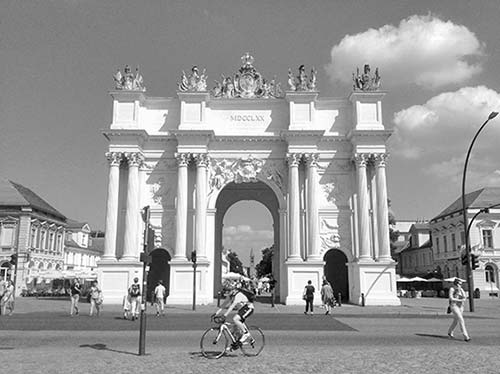
Potsdam (pop. 180,000) borders Berlin, on the lake called Wannsee. (During the Cold War, Potsdam was barely in East Germany, just outside West Berlin—the Wall ran right along the lakeshore.) Sights cluster in three areas, each a long walk or a short bus ride apart: the city center, just across the bridge from the train station; Sanssouci Park, a vast royal park at the western edge of town, peppered with grand Hohenzollern palaces; and, to the north, the park called Neuer Garten, where Cecilienhof Palace looks out over Wannsee and a former KGB prison lurks nearby.
TOURIST INFORMATION
Potsdam has a TI inside the main train station (near the escalators toward the Friedrich-Engels-Strasse exit, Mon-Fri 9:00-18:00, shorter hours on weekends, +49 331 2755 8899, www.potsdamtourismus.de). Another TI is on the old main square, Alter Markt, across the bridge from the station (same opening hours as train station TI, Humboldtstrasse 1).
ARRIVAL IN POTSDAM
Main Station (Potsdam Hauptbahnhof): This station has ample shops and services including a large Kaufland grocery store for picnic supplies (closed Sun). To take the bus or tram to the palaces, head out the exit past track 4, labeled Friedrich-Engels-Strasse; here you’ll find the tram stops, then the bus stops.
To walk into town—or rent a bike—go past track 7, to the exit labeled Babelsberger Strasse. A clean and convenient pay WC is before the exit. Leaving the station, turn left to find the bike-rental office. To walk, keep going, turn right at the traffic light, cross a bridge and head for Alter Markt (with the huge dome).
Sanssouci Park Station: From this smaller station, simply walk straight out (or hop a local bus) and head up the boulevard called Am Neuen Palais, with the big park on your right. In about 10 minutes, you’ll reach the New Palace.
GETTING AROUND POTSDAM
By Bike: Flat Potsdam is ideal by bike, and from the station it’s a pleasant and well-signed 20-minute ride to Sanssouci Palace. Within Sanssouci Park you’re restricted to a single bike path between the palaces; you can’t even walk with a bike anywhere else in the park. At the main train station, Radstation/Pedales rents bikes and provides a map showing recommended routes (Mon-Fri 7:00-19:00, Sat-Sun 9:30-18:00, out the Babelsberg Strasse exit and on the left, +49 331 7480 057).
By Bus or Tram: Potsdam’s public transit efficiently connects most points of interest. Potsdam is covered by a Berlin ticket with zones ABC, but not by one with just zones AB. You can either buy Anschlussfahrausweis/extension tickets (€1.80, valid 2 hours), or individual tickets covering Potsdam transit: €2.30/ride, €4.70 all day (buy tickets from machine on board). These are the buses you’re most likely to take and the lane from which they depart at the main train station:
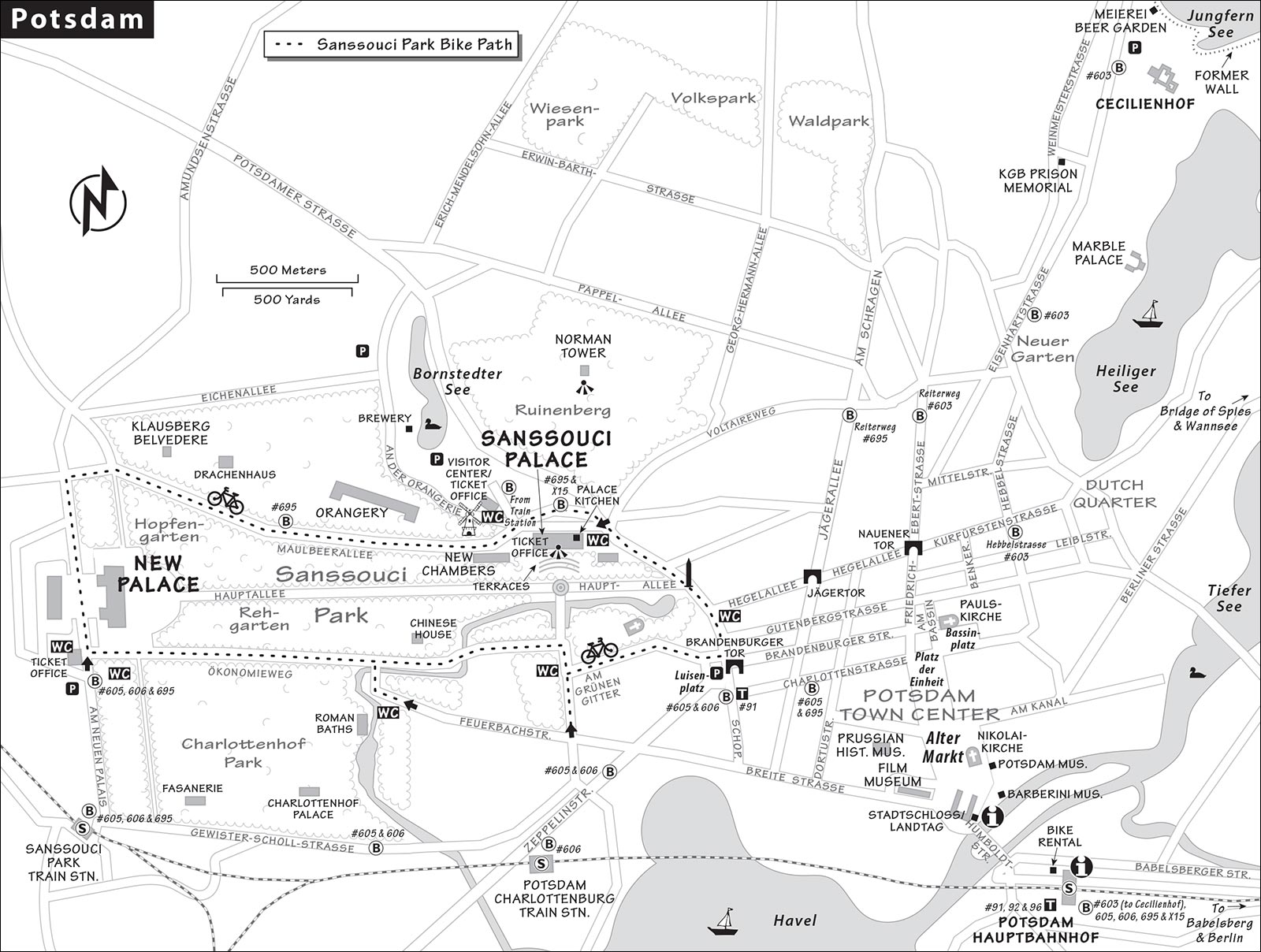
Bus #695—most handy for tourists—goes through the town center to Sanssouci Palace and then to the New Palace (3/hour, from lane 4).
Bus #X15, runs only on summer weekends, makes a beeline to Sanssouci Palace (3/hour, from lane 4).
Buses #606 and #605 go directly to the New Palace (3/hour, lane 4).
Bus #603 runs on summer weekends from the main train station up to Cecilienhof Palace, then loops back down past the KGB Prison Memorial (Persiusstrasse stop) before returning to the station (3/hour, lane 6). If you visit during the week or off-season, catch bus #603 at Platz der Einheit, a 15-minute walk past the Alter Markt (reachable by multiple bus or tram lines from the station).
Tram #91 is good for a scenic walk through the terraced palace gardens: Get off at Luisenplatz, then walk 20 minutes through the park, which lets you enjoy a classic view of Sanssouci Palace (3/hour from lane 2, direction: Bahnhof Pirscheide).
By Foot: It’s a long (but scenic) 45-minute walk from the station to Sanssouci Palace. Tram #91, described above, shaves off the least interesting part of this hike.
By Taxi or Uber: A taxi can help link up otherwise difficult-to-connect sights (for example, €18 between the New Palace and Cecilienhof—avoiding a time-consuming bus connection).
Tours in Potsdam
Local Tours
Various bus tours (including hop-on, hop-off options) conveniently connect this town’s spread-out sights. Most start at the main train station. Pick up brochures at the TI or check their website (www.potsdamtourismus.de).
Tours from Berlin
Original Berlin Walks and Insider Tour offer inexpensive all-day tours from Berlin to Potsdam. They rely on public transit, focus on the park and the palace exteriors, and don’t actually go inside the palaces as a group (€22-25, price does not include admissions and public transportation; for contact info see “Tours in Berlin” in the previous chapter).
Sights in Potsdam
Potsdam’s sights cluster in three areas: the city center; Sanssouci Park; and the Cold War sights near Neuer Garten.
POTSDAM’S TOWN CENTER
The easy-to-stroll town center has pedestrianized shopping streets lined with boutiques and eateries. For a small town, this was once a cosmopolitan place: Frederick the Great imported some very talented people.
▲Alter Markt
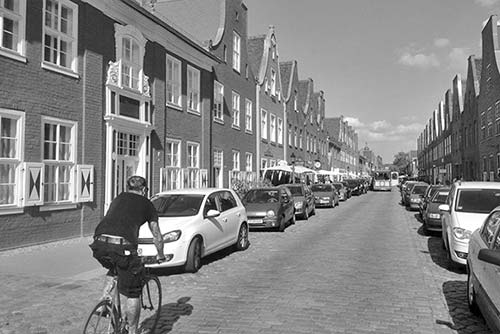
Potsdam’s “Old Market Square” is marked by the massive dome of the Nikolaikirche—visible from all over town. This square, always pleasant, has been further rejuvenated by the opening of the Museum Barberini. It’s worth a quick stroll through here to ogle the striking Hohenzollern architecture.
Stand in the middle of the square, facing the giant church. The obelisk dates from 1753 and is decorated with medallions celebrating Prussian kings. Remember, Potsdam was essentially a garrison town for the Hohenzollern dynasty. Do a clockwise spin-tour starting at the church to get oriented.
The Nikolaikirche, designed by architect Karl Friedrich Schinkel, is an icon of Potsdam. Step inside to see its austere, very Protestant, Neoclassical interior—a well-ordered world of perfectly formed domes and Corinthian columns. The flier explains how this was built following Schinkel’s plans in 1850, destroyed in 1945, and rebuilt in 1981 (€2 donation, daily 10:00-21:00).
To the right sits the Altes Rathaus (Old Town Hall), with its frilly cupola topped by a “Goldfinger” Atlas supporting the world.
Next is the Potsdam Museum (rated ▲▲). This surprisingly interesting museum fills two floors with lots of well-described artifacts that give context to the town, its palaces, and its history. It shows life as a Hollenzollern, and everyday life under the dynasty. It also covers the tragic drama of Potsdam’s bombing in 1945, post-war reconstruction, the Soviet era, and the spy-exchange drama on Glienicke Bridge (permanent exhibit-free, special exhibits-€5, Tue-Sun 12:00-18:00, closed Mon, audioguide-€2, +49 331 289 6868, www.potsdam-museum.de).
The Museum Barberini, a state-of-the-art museum filling a beautifully restored old building, shows off temporary exhibits of world-class artists to the delight of Berlin art snobs. Check what’s on (€16, Wed-Mon 10:00-19:00, closed Tue, www.museum-barberini.com).
Humboldtstrasse, further to the right, leads to the TI (and is the quickest route to the train station).
Next is the stately, salmon-colored Stadtschloss (Brandenburg State Capitol). Germany is made up of 16 states (Länder). The city of Berlin is itself a state. And you’re standing just outside the “state” of Berlin in the state of Brandenburg. Potsdam is the capital of Brandenburg, the Land that completely surrounds Berlin. Step inside the sterile courtyard, rebuilt after 1945, to see Brandenburg’s state capitol and three flags: the EU, Germany, and Brandenburg.
Finally, spinning back toward the church, you see new construction where an ugly, concrete, functionalist building from the DDR once stood. Bit by bit, the ugly communist-era architecture is being replaced by modern buildings designed to fit the historic tone of the city center.
Other Town Center Sights
Potsdam seems to have a museum for every interest, including a good film museum and a museum of Prussian history (both near Breite Strasse). I’d skip Potsdam’s much promoted Wannsee boat rides, which are pretty dull.
FREDERICK THE GREAT’S PALACES AT SANSSOUCI PARK
The dynamic Frederick the Great put Prussia on the map in the 18th century with his merciless military prowess. Yet he also had tender affection for the finer things in life: art, architecture, gardens, literature, and other distinguished pursuits. During his reign, Frederick built an impressive ensemble of palaces and other grand buildings around Sanssouci Park, with the two top palaces located at either end. Frederick’s small, super-Rococo Sanssouci Palace is dazzling, and his massive New Palace was built to wow guests and disprove rumors that Prussia was running out of money after the costly Seven Years’ War.
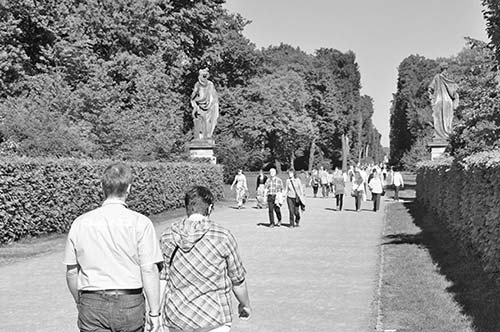
Getting Between the Palaces: It’s about a 30-minute walk between Sanssouci and the New Palace, and about 10 minutes by bike. Otherwise hop on bus #695, which takes you between the palaces in either direction (€1.60 Kurzstrecke ticket). If you do walk, you’ll find the park wilder, more forested, and less carefully manicured than those in other big-league European palace complexes (such as Versailles or Vienna’s Schönbrunn).
Combo-Ticket: A €19 combo-ticket covers nearly all the royal buildings in the park. It’s worthwhile only if you’re visiting both Sanssouci and the New Palace (for most visitors, those two are more than enough). The combo-ticket is sold online and at the ticket offices at Sanssouci Palace and the New Palace and comes with an entry time for Sanssouci Palace.
Audio Tours: All tickets include an audioguide.
Information: +49 331 969 4200, www.spsg.de.
▲▲Sanssouci Palace
Sans souci means “without a care,” and this was the carefree summer home of Frederick the Great (built 1745-1747). Of all the palatial buildings scattered around Potsdam, this was his actual residence. While the palace is small and the audioguide does little to capture the personality of its former resident, the palace is worth seeing for its opulence.
Cost and Hours: €14, covered by combo-ticket, Tue-Sun 9:00-17:30, Nov-March until 16:30, closed Mon year-round.
Crowd-Beating Tips: If you arrive right when it opens, you can generally go right in. Arrive later and you’ll be given an entry time a couple hours later in the day. If you buy a combo-ticket (described earlier), you’ll also book a timed entry for Sanssouci. You can do this online in advance or the same day. A good plan is to go first to the New Palace, buy the combo-ticket with an entry time for Sanssouci later that day, tour the New Palace, and explore the garden until your Sanssouci appointment. If you need to kill time, the palace kitchen and the nearby windmill are both interesting.
Visiting the Palace: This cute little palace was where Frederick the Great spent his summers. You’ll stroll through the classic Rococo interior, where golden grapevines climb the walls and frame the windows. First explore the Royal Apartments, containing one of Frederick’s three libraries (he found it easier to buy extra copies of books rather than move them around), the “study bedroom” where he lived and worked, and the chair where he died. The domed, central Marble Hall resembles the Pantheon in Rome (on a smaller scale), with an oblong oculus, inlaid marble floors, and Corinthian columns made of Carrara marble.
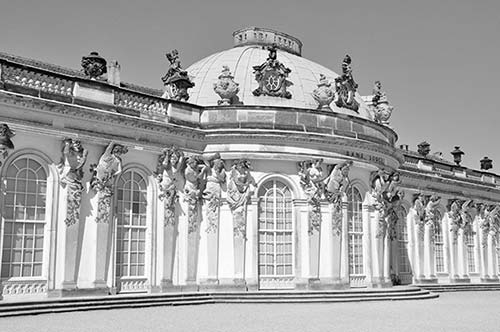
Finally, you’ll visit the guest rooms, most of which empty straight out onto the delightful terrace. Each room is decorated differently: Chinese, Italian, and so on; the niche at the back was for a bed. The happiest is the yellow Voltaire Room, where realistic animals and flowers dangle from the walls and ceiling. As you exit (through the servants’ quarters), keep an eye out for the giant portrait of Frederick by Andy Warhol.
Nearby: The palace kitchen (Schlossküche) gives a peek at a well-preserved and fully equipped mid-19th-century royal kitchen. Hike down the tight spiral staircase to the wine cellar, with an exhibit that includes the grapes that were grown on the terraced vineyards out front (€4, covered by combo-ticket, Tue-Sun 10:00-17:30, closed Mon and Nov-March). The historic windmill was busy from 1787 on grinding grain for the royals. Today it’s filled with a very vertical six-floor exhibit. When the wind turns the sails, you can see the miller at work and feel the entire mill tremble (€4, covered by combo-ticket, daily 10:00-18:00, shorter hours off-season).
▲▲New Palace (Neues Palais)
This gigantic showpiece palace (with more than 200 rooms) is grander than the intimate Sanssouci. Frederick the Great built the New Palace (1763-1769), but he rarely stayed here—it was mostly used to host guests and dazzle visiting dignitaries. But other Prussian kings—and later German emperors—called it home. The highlights are the lavishly decorated Grotto Hall and Marble Hall, and several other fine apartments, each a stunning example of the exuberant Rococo style. Together, they’re an artistic ensemble with the same theme. And unlike at Sanssouci, there’s no concern about a long line.
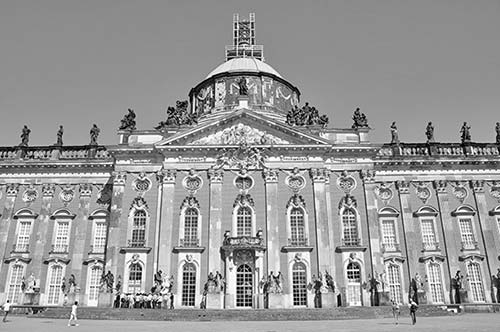
Cost and Hours: €10, covered by combo-ticket, Wed-Mon 10:00-17:30, Nov-March until 16:30, closed Tue year-round.
Getting In: Buy your ticket (which comes with an entry time—generally within 10 or 20 minutes) at the visitors center near the bus stop. I’d skip the eight-minute introductory film—but not the WC here, as there’s none in the palace. Then head to the palace at the appointed time to pick up your audioguide.
Visiting the Palace: The audioguide takes you through the palace’s ornate halls and state rooms. On the main floor, the highlight is the Grotto Hall, whose marble walls are encrusted with a quarter of a million seashells, semiprecious stones, and fossils. From there, continue on through the eight suites of the Lower Princes’ Apartments, which accommodated guests and royal family members. In the 19th and early 20th century, German emperors Frederick III and Wilhelm II (the last kaiser) resided here. The Gentlemen’s Bedchamber holds the red-canopy bed where Kaiser Frederick III died in 1888. The Ladies’ Bedchamber is a reminder that noblemen and their wives slept separately.
Upstairs, the Upper Princes’ Quarters include a small blue-tiled bathroom that was installed for Kaiser Wilhelm II (he lived here until 1918), and a bedchamber shared by a married couple—my, how times have changed. You’ll also find Wilhelm’s bedroom, as well as a small painting gallery with portraits of Frederick the Great and Russia’s Catherine the Great (who was born a German princess). The grand finale is the sumptuous, 52-foot-high Marble Hall, with its dramatic ceiling painting and floors inlaid with Silesian marble. Through the windows, enjoy views of the gardens.
Other Palaces
The two main palaces (Sanssouci and the New Palace) are just the beginning. Sprawling Sanssouci Park contains a variety of other palaces and royal buildings, many of which you can enter: the sprawling Italian-style Orangery, the New Chambers (a royal guesthouse), the Chinese Tea House, and the Norman Tower viewpoint. Each has its own entry fee (€4-10; all covered by the combo-ticket). Some are open weekends and/or in peak season only (get details at Potsdam TI, palace ticket office, or www.spsg.de).
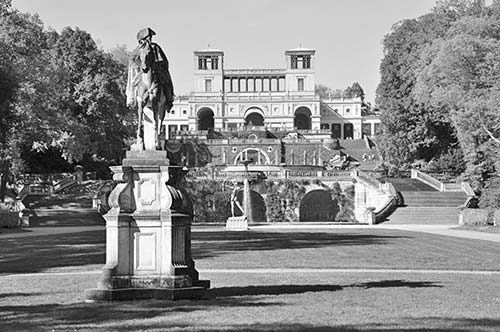
COLD WAR SIGHTS
At the north end of town, another (much more modest) park, called Neuer Garten, is delightfully set on the idyllic Wannsee. This is where you’ll find several stirring sights for those interested in Cold War history, and a fine lakeside brewery.
Getting There: While getting to these sights by public transit is possible, you’ll do better with a bike or taxi. The Neuer Garten area is connected to the center by bus #603 (see “Getting Around Potsdam,” earlier). Tram #93 takes you from the main train station to the Bridge of Spies. It’s about a 20-minute walk between the Neuer Garten sights and the bridge.
▲Cecilienhof
This early-20th-century villa was the site of the historic Potsdam Conference for two weeks in the summer of 1945. For Cold War buffs, it’s worth ▲▲. Touring the rooms with an audioguide, you’ll hear how, during those meetings, Harry Truman, Winston Churchill, and Joseph Stalin negotiated how best to punish Germany for dragging Europe through another devastating war. It was here that the postwar map of Europe was officially drawn, setting the stage for a protracted Cold War that would drag on for more than four decades. There’s no wait, and a stop here pairs well with a drink or meal at the fine Meierei brewery and a visit to the KGB Prison Memorial—each less than a 10-minute walk away.
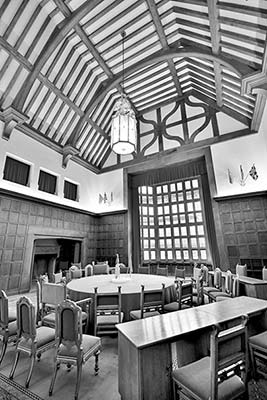
Cost and Hours: €10, includes audioguide, Tue-Sun 10:00-17:30, Nov-March until 16:30, closed Mon year-round, +49 331 969 4200, www.spsg.de. Note: A separate ticket is required to visit the upper floor state rooms (hourly German-language tour).
Visiting the Palace: This Tudor-style villa—designed to appear smaller and more modest than it actually is—was built in 1912 to house Crown Prince Wilhelm and his wife Cecilie, who would have ruled Germany, had Kaiser Wilhelm II not lost World War I. It’s certainly less striking than Potsdam’s other palaces. The draw here is the 1945 history. You’ll tour the palace using an excellent 45-minute audioguide, which does a marvelous job of reanimating history. You’ll hear all about those tense days in July 1945, including sound bites from meeting participants. You’ll see the private offices of Stalin, Churchill, and Truman, as well as the grand meeting hall with the round table where they faced off to negotiate. It’s both chilling and fitting to think that, just 20 years later, the Berlin Wall would run through the park right in front of the palace—cutting off idyllic views of the Wannsee. This was also where Truman told Stalin about the atomic bomb and issued the “Potsdam Declaration”—demanding that Japan unconditionally surrender to end the war once and for all. Japan refused—and the US dropped atomic bombs on Hiroshima and Nagasaki.
Eating: The $ Meierei Biergarten, named for a 19th-century creamery, now functions as a brewery. Delightfully set on the lake under an evocative industrial age chimney, it has two zones: a cheery, self-service beer garden (basic beerhall food and drink, open only in summer and good weather) and a more serious, pricier restaurant (with seating under vaults where cows were once milked, and outside overlooking the lake). It’s a short, thought-provoking walk from Cecilienhof as you pass through what was once the death strip of the Berlin Wall (Wed-Sun 12:00-20:00, Fri-Sat until 22:00, closed Mon-Tue, a 10-minute stroll north of Cecilienhof—follow Meierei signs to Im Neuen Garten 10, +49 331 704 3211).
▲KGB Prison Memorial at Leistikowstrasse (Gedenkstätte Leistikowstrasse Potsdam)
Standing in stark contrast to all of Potsdam’s pretty palaces and Hohenzollern bombast, this crumbling concrete prison has been turned into a memorial and documentation center to the Cold War victims of USSR “counterintelligence.”
Cost and Hours: Free, Tue-Sun 14:00-18:00, Nov-March 13:00-17:00, closed Mon year-round, Leistikowstrasse 1, +49 331 201 1540, www.leistikowstrasse-sbg.de.
Visiting the Memorial: On the nondescript Leistikowstrasse, a few steps from the lakeside park, the KGB established a base in August 1945 (mere days after the Potsdam Conference), which remained active until the fall of the USSR in 1991. The centerpiece of their “secret city” was this transit prison in which enemies of the Soviet regime were held and punished in horrible conditions before entering the USSR “justice” system—to be tried, executed, or shipped off to notorious gulag labor camps. While most prisoners were Russian citizens, until 1955 the prison also held Germans who were essentially kidnapped by the USSR in retribution for their wartime activities.
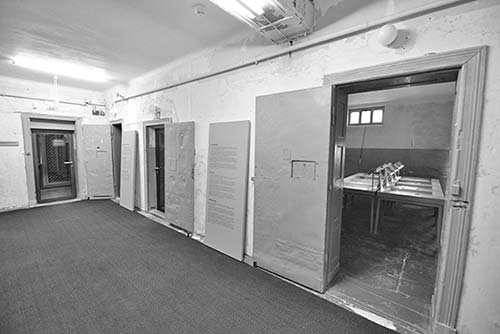
From the blocky modern reception building at the corner, you’ll enter the complex. In the yard find a model illustrating how this was just the inner core of a walled secret city which (until 1991) was technically Soviet territory run by the KGB. Then head inside the prison, where the hallways and cells are an eerie world of peeling paint, faded linoleum, and rusted hinges. The two floors host a well-presented exhibit explaining the history of the building (which was a vicarage before being seized by the Soviets) and profiling several individuals who were held here.
Bridge of Spies
During the Cold War, the Havel River became the border between the US and Soviet sectors. Because this was a handy place to swap prisoners and spies, the Glienicke Bridge became known as the “Bridge of Spies.” The bridge had long been part of a key transportation route between the royal residence in Potsdam and Berlin. A fine brick-and-wood bridge was built here in 1834, then replaced with a modern iron one in 1904. After serious bomb damage, it was rebuilt in 1949. After construction of the Berlin Wall in 1961, the bridge was closed to the public, and guarded as a border crossing.
Spies and dissidents—most famously Gary Powers (who piloted the U-2 spy plane shot down over the USSR in 1960) and Soviet activist Natan Sharansky—were traded on this bridge. The 1962 exchange of KGB agent Rudolf Abel for Powers inspired the Steven Spielberg film Bridge of Spies, starring Tom Hanks (2015). The Villa Schöningen at the west end of the bridge has an exhibit covering the historic border crossing (€9, Fri-Sun 12:00-18:00, closed Mon-Thu, Berliner Strasse 86, +49 331 200 1739, www.villa-schoeningen.de).
Sachsenhausen Memorial and Museum
About 20 miles north of downtown Berlin, the small town of Oranienburg was the site of one of the most notorious Nazi concentration camps. Sachsenhausen’s proximity to the capital gave it special status as the place to train camp guards and test new procedures. It was also the site of the Third Reich’s massive counterfeiting operation to destabilize Great Britain by flooding the monetary system with forged pound notes. Today the Sachsenhausen Memorial and Museum (Gedenkstätte und Museum Sachsenhausen), worth ▲▲, honors the camp’s victims and survivors, and teaches visitors about the atrocities that took place here.
GETTING TO SACHSENHAUSEN
Take a train to the town of Oranienburg (20-50 minutes, covered by zone ABC ticket; if you have a pass for just zones AB, buy a €1.80 Anschlussfahrausweis extension ticket to get here—valid for 2 hours; from there, it’s a quick trip by bus or taxi to the memorial, or a 20-minute walk). The whole journey takes just over an hour each way.
From Berlin Hauptbahnhof, the Regional Express/RE5 train speeds to Oranienburg (hourly, 25 minutes). Or you can take the S-Bahn (S1) line from various stops in downtown Berlin, including Potsdamer Platz, Brandenburger Tor, Friedrichstrasse, and Oranienburger Strasse (3/hour, 50 minutes).
At Oranienburg, the bus to the memorial departs right in front of the train station (on weekdays, hourly bus #804 is timed to meet most regional trains; on weekends it runs only every 2 hours, and doesn’t sync with S-Bahn arrivals; direction: Malz; bus #821 also possible, runs 5/day, no buses Sat-Sun, direction: Tiergarten; €1.80, covered by Berlin transit 24-hour pass for zones ABC or Anschlussfahrausweis, get off at Gedenkstätte stop). You can also take a taxi (€8, ask for the Gedenkstätte—geh-DENK-shteh-teh).
To walk 20 minutes to the memorial, turn right from the train station and head up Stralsunder Strasse for about two blocks. Turn right under the railroad trestle onto Bernauer Strasse, following signs for Gedenkstätte Sachsenhausen. At the traffic light, turn left onto Strasse der Einheit. After two blocks, turn right on Strasse der Nationen, which leads to the memorial.
PLANNING YOUR TIME
You’ll need at least three hours to appreciate the many worthwhile exhibits here. Factoring in transit time, give yourself at least five hours round-trip from central Berlin.
ORIENTATION TO SACHSENHAUSEN
Cost and Hours: Free, daily 8:30-17:00, on Mon off-season only the grounds and visitors center are open (not the museums), Strasse der Nationen 22.
Information: +49 3301 200 200, www.sachsenhausen-sbg.de
Tours and Visitor Information: The map in this book is sufficient, but the map sold at the visitors center is worthwhile for its extra background information. Skip the overlong audioguide and instead use this chapter’s self-guided tour in conjunction with the ample posted information. Guided two-hour tours (€3) are offered on Saturdays at 11:00.
Services: The visitors center has WCs, a bookshop, and a helpful information desk.
Tours from Berlin: A tour helps you understand the camp’s complicated and important story. Virtually all walking-tour companies in Berlin offer side trips to Sachsenhausen (meet in the city, then ride together by train to Oranienburg). The round-trip takes about six hours, much of which is spent in transit—but your time at the memorial is made very meaningful by your guide’s commentary.
Compare walking-tour companies to find an itinerary that fits your schedule (typically €25-29, April-Oct daily at 10:00, less frequent off-season). Options include Original Berlin Walks (www.berlinwalks.de) and Insider Tour (www.insidertour.com).
Eating: Pack a lunch or buy one en route, as dining choices are minimal. The little “Info Café” inside the memorial offers small snacks, and Bistro To Go, just outside the visitors center, serves basic fare (wurst, soup).
BACKGROUND
Completed in July 1936, Sachsenhausen was the first concentration camp built under SS chief Heinrich Himmler. The triangle-shaped grounds, contained by three walls, enabled observation of the entire camp from a single point, the main guard tower. The design was intended to be a model for other camps, but it had a critical flaw that prevented its widespread adoption: It was very difficult to expand without interfering with sight lines.
Sachsenhausen was not, strictly speaking, a “death camp” for mass murder (like Auschwitz); it was a labor camp, intended to wring hard work out of the prisoners. Many toiled in a brickworks, producing materials to be used in architect Albert Speer’s grandiose plans for erecting new buildings all over Berlin.
Between 1936 and 1945, about 200,000 prisoners did time at Sachsenhausen; tens of thousands died here, while numerous others were transported elsewhere to be killed (in 1942, many of Sachsenhausen’s Jews were taken to Auschwitz). Though it was designed to hold 10,000 prisoners, the camp had almost 70,000 prisoners at one point. In the spring of 1945, knowing that the Red Army was approaching, guards took about 35,000 able-bodied prisoners on a death march, leading them into the forest for seven days and nights with no rations. Rather than “wasting” bullets to kill them, SS troops hoped that the prisoners would expire from exhaustion. On the eighth day, after 6,000 had died, the guards abandoned the group in the wilderness. When Soviet troops liberated Sachsenhausen on April 22, 1945, they discovered more than 3,000 prisoners who had been too weak to walk and were left there to die (all but 300 survived).
Just three months after the end of the war in Europe, Sachsenhausen was converted into Soviet Special Camp No. 7 for the USSR’s own prisoners. It was a notorious “silent camp,” where prisoners would disappear—allowed no contact with the outside world and their imprisonment officially unacknowledged. The prisoners included Nazis, anti-Stalin Russians, and Germans who were deemed a threat to the Soviet occupation authorities. By the time the camp closed in 1950, 12,000 more people had died here.
In 1961, Sachsenhausen became the first former concentration camp to be turned into a memorial. The East German government created the memorial mostly for propaganda purposes, to deflect attention from the controversial construction of the Berlin Wall and to exalt the USSR as the valiant antifascist liberators of the camp and all of Germany.
Since the end of the DDR, Sachsenhausen has been redeveloped into a true memorial, with updated museum exhibits and an emphasis on preservation—documenting and sharing the story of what happened here. While difficult to take in, as with all concentration camp memorials, the intention of Sachsenhausen is to share its story and lessons—and prevent this type of brutality from ever happening again.
 SELF-GUIDED TOUR
The memorial’s various exhibits are scattered throughout the grounds in various buildings, and offer more information than you probably have time to absorb. This outline covers the key parts of your visit.
Entrance
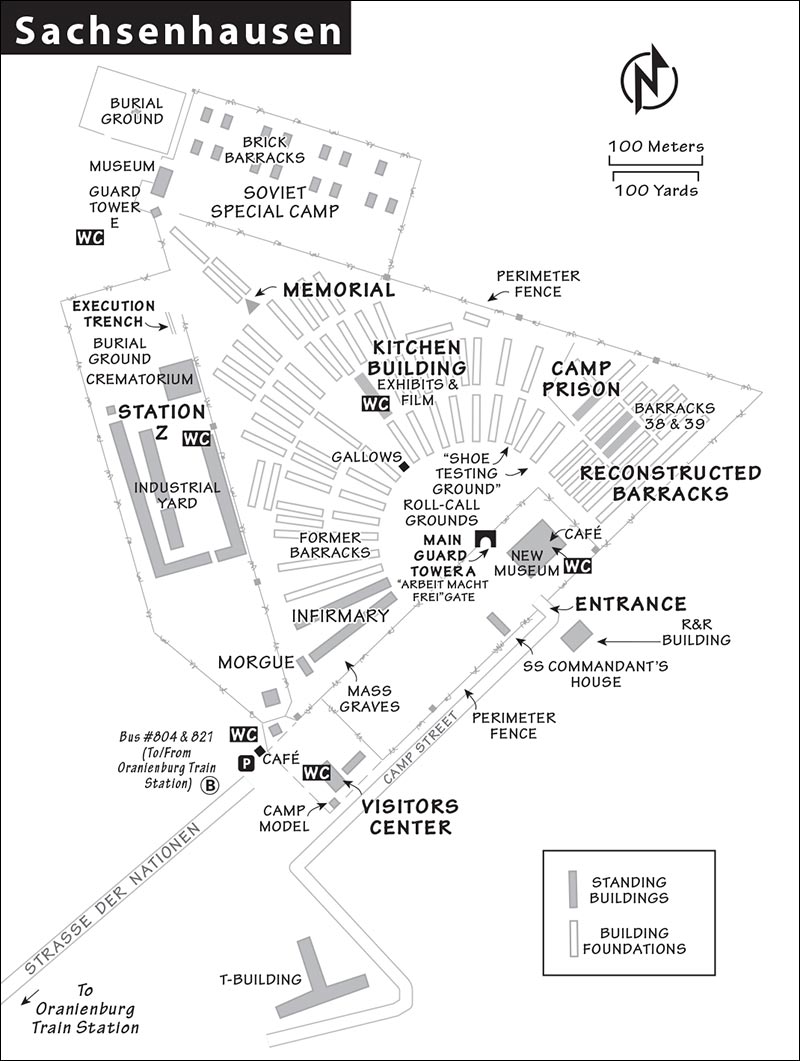
In the courtyard next to the visitors center, a model of the camp illustrates its unique triangular layout. Guards stationed in tower A (at the main gate) could see everything going on inside those three walls. Along the left (west) side of the triangle is the crematorium, called Station Z. Outside the main triangle are the workshops, factories, and extra barracks that were added when the camp ran out of room.
Walk up the dusty lane called Camp Street. On the right is the SS officers’ R&R building, nicknamed the “Green Monster,” where prisoners dressed in nice clothes were forced to wait on their keepers. Officials mostly chose Jehovah’s Witnesses for this duty, because they had a strong pacifist code and could be trusted not to attempt to harm their captors.
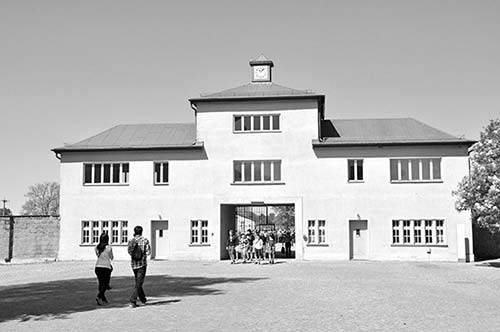
A left turn through the fence takes you into the courtyard in front of guard tower A. The clock on the tower is frozen at 11:07—the exact time that the Red Army liberated the camp. The building on the right—the New Museum—has an interesting DDR-era stained-glass window inside, as well as thoughtful temporary exhibits and a small café.
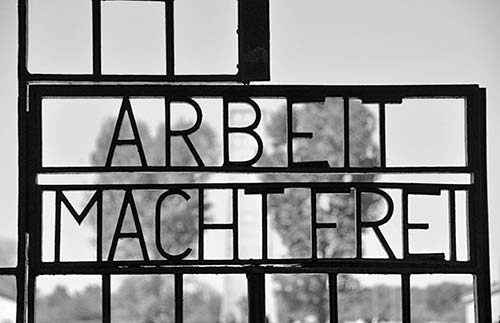
Go through the gate cruelly marked Arbeit Macht Frei—“Work will set you free.”
Main Grounds
Entering the triangular field, you can see that almost none of the original buildings still stand. Following the war, locals salvaged the barracks here for much-needed building materials. Tracing the perimeter, notice the electric fence and barbed wire. A few feet in front of the wall is a gravel track called the neutral zone—any prisoner setting foot here would be shot. This became a common way for prisoners to attempt suicide. Guards quickly caught on: If they sensed a suicide attempt, they’d shoot to maim instead of kill. It was typical upside-down Nazi logic: Those who wanted to live would die, and those who wanted to die would live.
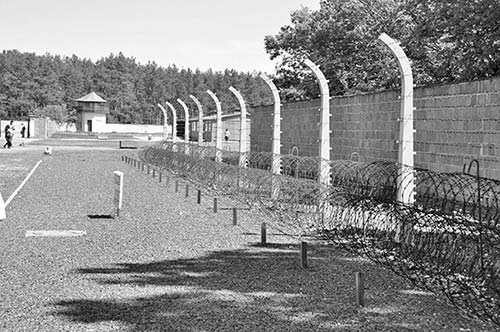
Every morning, after a 4:15 wake-up call, prisoners would scramble to eat, bathe, and dress in time to assemble in the roll-call grounds in front of the guard tower by 5:00. Dressed in their thin, striped pajama-like uniforms and wooden clogs, prisoners would line up while guards, in long coats and accompanied by angry dogs, barked orders and accounted for each person, including those who had died in the barracks overnight. It could take hours, in any weather. A single misbehaving prisoner would bring about punishment for all others. One day, after a prisoner escaped, SS officer Rudolf Höss (who later went on to run Auschwitz-Birkenau) forced the entire population of the camp to stand here for 15 hours in a foot of snow and subzero temperatures. Hundreds of people died.
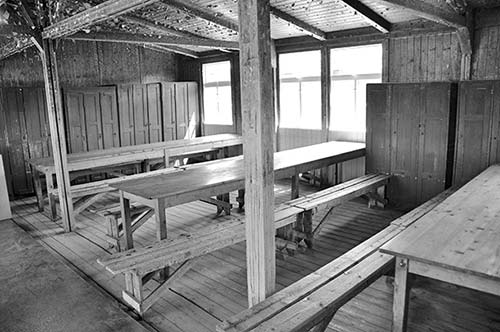
To the far right from the entrance, the wooden barracks (with good museum displays) are reconstructed from original timbers. Barrack 38 focuses on the Jewish experience at Sachsenhausen, as well as the general mistreatment of German Jews under the Nazis (including anti-Semitic propaganda). Barrack 39 explains everyday life, with stories following 20 individual internees. You’ll see how prisoners lived: long rows of bunks, benches for taking paltry meals, latrines crammed wall-to-wall with toilets, and communal fountains for washing. Inmates would jockey for access to these facilities. The SS controlled inmates by psychological (along with physical) means, such as establishing a hierarchy among the prisoners. Senior prisoners were forced to instill discipline on fellow inmates and would be rewarded with privileges (and given greater chances of survival). Like at many other camps, the leaders at Sachsenhausen ran a system of organized rape, whereby they brought in inmates from the women’s-only Ravensbrück concentration camp and forced them to “reward good prisoners” at Sachsenhausen.
Next to the barracks is the camp prison, where political prisoners or out-of-line inmates were sent. It was run not by the SS, but by the Gestapo (secret police), who would torture captives to extract information. Other prisoners didn’t know exactly what went on here, but they could hear screams from inside and knew they did not want to be sent here. The cells contain exhibits about the prisoners and the methods used by their captors.
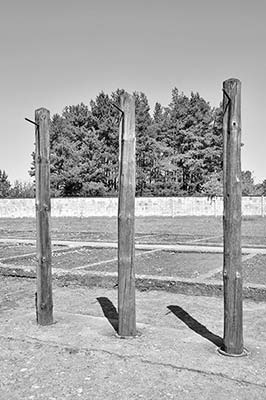
Just outside the back of the building stand three posts (out of an original 15) with iron pegs near the top. Guards tortured people by tying their hands behind their backs, then hanging them on these pegs by their wrists until they died—a medieval method called strappado.
Walk around the inner semicircle toward the buildings in the middle of the camp. On this “shoe-testing ground,” prisoners were forced to put on boots two sizes too small and walk in a circle on uneven ground all day, supposedly to “test” the shoes for fighting at Stalingrad.
The rectangles of stones show where each of the original barrack buildings once stood. At the center, a marker represents the location of the gallows, where prisoners would be publicly executed as a deterrent to others.
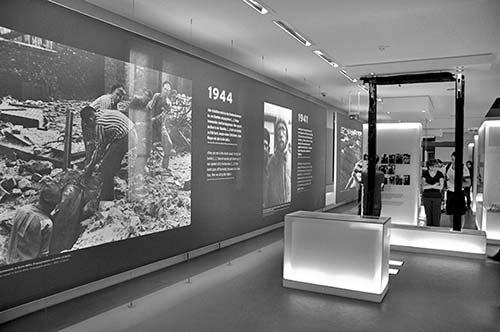
In the middle of the triangle, on the right, is the kitchen building, with exhibits that trace the chronological history of the camp. You’ll learn how Sachsenhausen was built by prisoners and see original artifacts, including the gallows, a bunk from the barracks, uniforms, and so on. There are also photos and quotes.
Memorial and Crematorium
Head back to the far end of the grounds, which is dominated by the towering, 130-foot-tall, 1961 communist DDR memorial to the victims of Sachsenhausen. The 18 triangles at the top are red, the color designated for political prisoners (to the communists, they were more worthy of honor than the other victims who died here). At the base of the monument, two prisoners are being liberated by a noble Soviet soldier. The prisoners are unrealistically robust, healthy, and optimistic (they will survive and become part of the proud proletariat!). The podium in front was used by the East German authorities for speeches and rallies—exploiting Sachsenhausen as a backdrop for their propaganda.
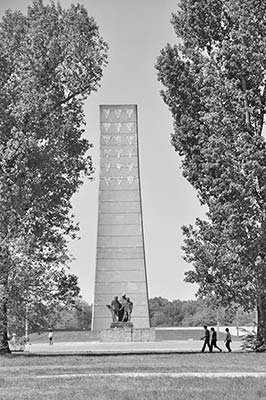
From here, head left and go through the gap in the fence to find the execution trench, used for mass shootings. When this system proved too inefficient, the Nazis built “Station Z,” the nearby crematorium, where they could execute and dispose of prisoners more systematically. Its ruins are inside the white building (prior to the camp’s liberation by Soviet troops, Nazi guards destroyed the crematorium to remove evidence of their crimes).
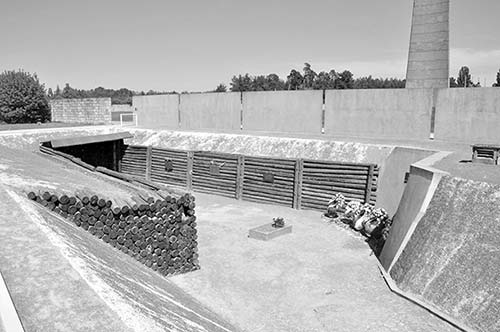
Most of the building’s victims died in the room with the double row of bricks (for soundproofing; the Nazis also blasted classical music to mask noise). Victims would report here for a “dental check,” to find out if they had gold or silver teeth that could be taken. They would then stand against the wall to have their height measured—and a guard would shoot them through a small hole in the wall with a single bullet to the back of the skull. (The Nazis found it was easier for guards to carry out their duties if they didn’t have to see their victims face-to-face.)
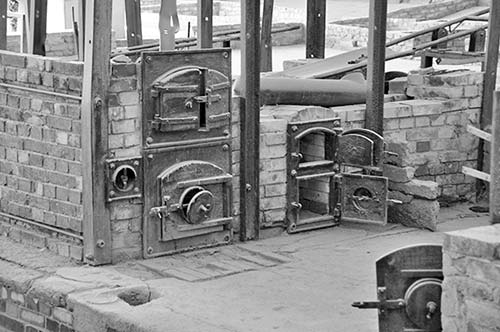
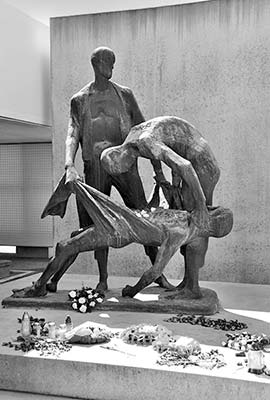
Bodies were taken to be incinerated in the ovens (which still stand). Notice the statue of the emaciated prisoner—a much more accurate depiction than the one at the DDR monument. Outside, a burial ground is filled with ashes from the crematorium.
The Rest of the Memorial
Back inside the main part of the site you can head left, up to the tip of the triangle (behind the big monument) to find a museum about the postwar era, when Sachsenhausen served as a Soviet Special Camp. Nearby is a burial ground for victims of that camp. At this corner of the triangle, the gate in the fence—called tower E—holds a small exhibit about the relationship between the camp and the town of Oranienburg.
Heading back toward the main guard tower, along the wall toward the front corner, are the long, green barracks of the infirmary, used for medical experiments on inmates (as explained by the exhibits inside). This was where Soviet soldiers found the 3,000 remaining survivors when they liberated the camp. The small building in back was the morgue—Nazis used the long ramp to bring in the day’s bodies via wheelbarrows. Behind that is a field with six stones, each marking 50 bodies for the 300 prisoners who died after the camp was liberated.