MOSEL VALLEY
Cochem • Burg Eltz • Beilstein
Sights and Activities in Cochem
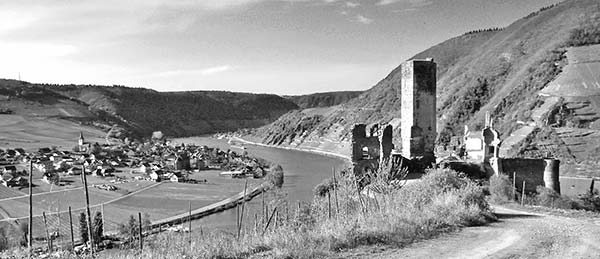
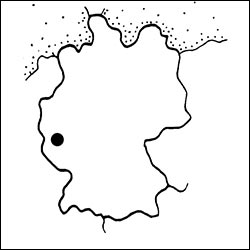
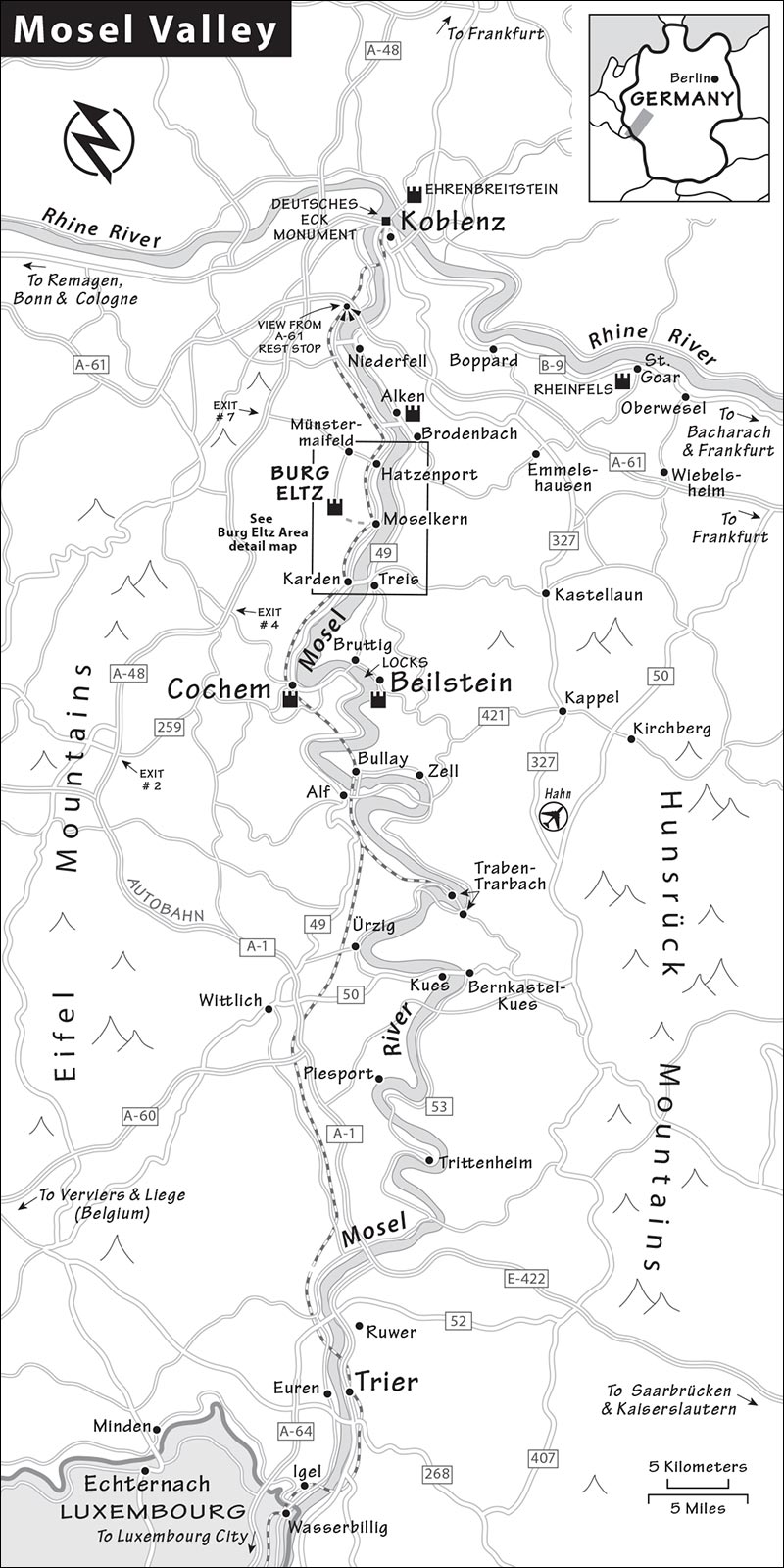
The Mosel (MOH-zehl) is what some visitors hope the Rhine will be—peaceful, sleepy, romantic villages slipped between impossibly steep vineyards and the river; fine wine; a sprinkling of castles (Burg Eltz is tops); and lots of friendly small pensions. Boat, train, and car traffic here is a trickle compared with the roaring Rhine. While the misty Mosel moseys 300 miles from France’s Vosges mountain range (where it’s known as the “Moselle”) to Koblenz (where it dumps into the Rhine), the most scenic piece of the valley lies between the towns of Bernkastel-Kues and Cochem. I’d savor only that section. Cochem and Trier (see next chapter) are easy day trips from each other (an hour by train, 60 miles by car). Cochem is the handiest home base, unless you have a car and want the peace of Beilstein.
GETTING AROUND THE MOSEL VALLEY
By Train and Bus: Fast trains zip you between Koblenz, Cochem, Bullay, and Trier in a snap. Other destinations require changing to a slow train or bus. Beilstein is a 20-minute bus ride from Cochem (see “Getting to Beilstein,” later). Burg Eltz is a one-hour train-then-bus ride from Cochem. For bus times, check the DB Navigator app or www.vrminfo.de, or visit Cochem’s TI, which happily prints out bus schedules.
By Boat: Thanks to the river’s many locks, cruises on the Mosel feel more like canal-boat rides than the trips on the mighty Rhine. Relaxing riverboats connect Cochem with Beilstein (see here) and even Burg Eltz (see here).
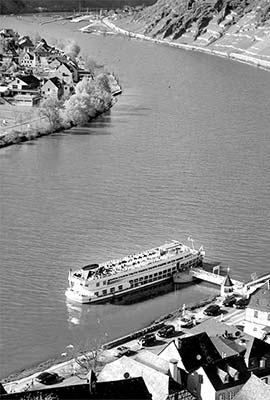
Outside of high season (July-early Oct), riverboat departures operated by Kolb can be cancelled for lack of demand—and without any indication on their website. Outside this time, if you’re counting on a boat to get you from A to B, confirm the specific departure at the boat-ticket kiosk, or call the ferry operator (+49 2673 1515, www.moselrundfahrten.de).
Each year in May or June, the Mosel locks close for 10 days of maintenance, and none of the boats listed here run. This is scheduled for June 12-21 in 2023 and June 3-12 in 2024.
By Car: Two-lane roads run along both riverbanks. While these riverside roads are a delight, the river valley is very windy. Overland shortcuts can save you serious time—especially between Burg Eltz and Beilstein (see here) and if you’re driving between the Mosel and the Rhine (note the Brodenbach-Boppard shortcut). Both Koblenz and Trier have car-rental agencies.
If you’re arriving by car from the west, you may find yourself on the mile-long, 500-foot-high High Mosel Bridge (Hochmoselbrücke), Germany’s second-highest road bridge (near the town of Ürzig, just southwest/upstream of Cochem and Beilstein).
By Bike: Biking along the Mosel is all the rage among Dutch and German tourists. You can rent bikes in most Mosel towns (I’ve listed options in both Cochem and Beilstein). A fine bike path follows the river from Koblenz to Zell (some bits share the road with cars). Allow one hour between Cochem and Beilstein. Many pedal one-way, then relax on a return boat or train ride.
By Ferry: About a dozen small car-and-passenger ferries (Fähre) cross the Mosel between Koblenz and Trier.
By Plane: The confusingly named Frankfurt Hahn Airport, a popular hub for low-fare airlines, is actually located near the Mosel (code: HHN, www.hahn-airport.de). You can ride bus #750 from the airport to Bullay (about €9, runs every 2 hours, 50 minutes), where you can take a train to Cochem (10 minutes).
HELPFUL HINTS
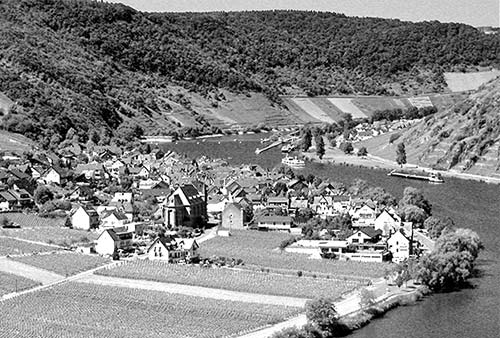
Wine Festivals: Throughout the Mosel region on summer weekends and during the fall harvest, wine festivals with oompah bands, dancing, and colorful costumes are powered by traditional food and local wine. You’ll find a wine festival in some nearby village any weekend, June through September (see calendar at www.mosellandtouristik.de). The tourist season lasts from April through October. Things close down tight through the winter.
Carry Cash: Although more places are accepting credit cards, come prepared to pay cash for many services in the Mosel Valley—including food, hotels, and transportation—especially in smaller villages along the river.
Cochem
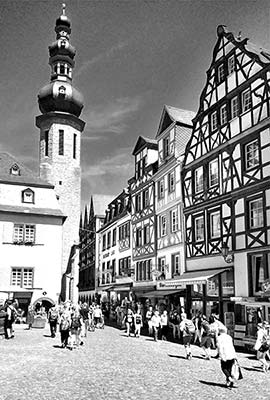
With a majestic castle and picturesque medieval streets, Cochem (KOHKH-ehm) is the hub of the middle Mosel. Home to 5,000 people, it’s a larger town than Beilstein, Bacharach, or St. Goar. Duck into a damp wine cellar to sample the local white wine (Weinprobe means “wine tasting”; Winzer means “vintner”). Stroll pleasant paths along the idyllic riverbank, hike through vineyards for a panoramic view, or just grab a bench and watch Germany at play. River-cruise passengers clog the old town during the day, but evenings are peaceful.
Orientation to Cochem
Long and skinny Cochem stretches along both banks of the Mosel. The main part of town, on the west bank, sits below vineyards and the town’s showpiece castle. From the river, the town bunny-hops up various small valleys.
TOURIST INFORMATION
The friendly, information-packed TI is on Endertplatz, near the central Skagerrak bridge. Find out about special events, wine tastings, and area hikes. Consider the six-foot-long Mosellauf poster/brochure (Mon-Sat 9:00-17:00, Sun 10:00-15:00, May-mid-July Sat until 15:00 and closed Sun; off-season closed 13:00-14:00 and all day Sat-Sun; Endertplatz 1, +49 2671 60040, www.ferienland-cochem.de).
ARRIVAL IN COCHEM
By Train: Cochem’s train station is often unstaffed and has no lockers, but you can pay to leave your bags at the Gleis 9 café off the station hall (Thu-Tue 10:00-19:00, closed Wed).
To reach town, make a hard right out of the station and walk about 10 minutes along cobbled Ravenéstrasse, keeping to the right at the intersection where the arterial makes a right angle. You’ll soon see a safe crosswalk; take it to find the TI and bus station (both on your left, before the bridge). To continue to the colorful medieval old town, continue under the bridge (with pay WC on your left), then stay straight to follow Bernstrasse.
By Car: Drivers can park in a lot behind the train station (€2-5/day); reach it by circling around on Ravenéstrasse and Pinnerstrasse). There’s also a multistory garage just up Endertstrasse from the bridge (€8/day).
HELPFUL HINTS
Festival: Cochem’s biggest wine festival is held the last weekend in August. High season for wine aficionados lasts from August through October.
Laundry: Frau Huntscha at Wäscherei Huntscha will wash, dry, and fold your clothes, and the location is handy, but she speaks no English (Mon-Tue and Thu-Fri 10:00-15:00, closed Wed and Sat-Sun, entrance just down the alley around Ravenéstrasse 31 opposite the bike-rental shop described next, +49 2671 3493).
Bike Rental: Consider taking a bike on the boat or train and pedaling back. Radverleih Schaltwerk, between the station and TI, offers helmets with rentals (€12.50/day, €25/day for e-bike; Mon-Fri 9:00-12:30 & 15:00-18:00, Sat 9:00-13:00, Sun 10:00-12:00—except closed Sun Nov-mid-April; drop-off after 18:00 possible, Ravenéstrasse 33—up a little side street and behind a clothing store—see map on here, +49 2671 603 500). The ticket office at the K-D boat dock also rents bikes (€10/day, €23/day for e-bike, daily May-Sept 9:00-18:00, +49 2671 980 023).
Tours: To explore Cochem town, consider one of the TI’s tour offerings: One-hour walking tours run twice a week at 11:00 (€6, Mon and Sat March-Dec, Sept-Oct also Wed); night watchman tours run on Saturdays (€8, at 20:30; +49 2671 60040, www.ferienland-cochem.de).
Taxi: Taxis usually wait at a stand in front of the church on Moselpromenade; if not, call +49 2671 8080.
Glockenspiel: The old town’s Markt square gets extra charming—and chiming—every day at 12:00 and 18:00.
Sights and Activities in Cochem
Reichsburg Cochem (Imperial Castle of Cochem)
This pretty, pointy castle on a hill above town is the work of overly imaginative 19th-century restorers. Like many castles along the Rhine and Mosel, Cochem’s—dating from the year 1000—was blown up by French troops in 1689. For almost two hundred years it stood in ruins, much like Beilstein’s, until it caught the attention of Louis Ravené, a rich Berliner who’d made a fortune in the steel industry. He bought the Reichsburg dirt-cheap in 1868 and spared no expense in turning it into a luxurious private residence furnished with tasteful antiques. Today, the castle can be visited only on a 40-minute tour. You’ll see seven beautiful rooms, complete with antlers on the wall and hidden doors leading to secret passages. The other 43 rooms are empty, as Ravené’s descendants took most of their stuff with them in 1942 when they were forced to sell the castle to the Nazi government (which then used it as a training center for lawyers). Since 1978 the castle has been owned by the town of Cochem.
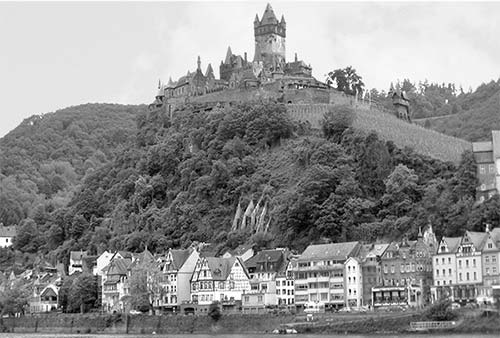
Cost and Hours: €7, daily, hourly English tours 11:30-16:30, German tours run more frequently 9:00-17:00 (guides offer a helpful English info sheet that makes the German tour worthwhile), tours run less regularly Nov-March—see schedule on website, +49 2671 255, www.reichsburg-cochem.de.
Eating: $$ Restaurant Burgschänke offers scenic views of the Mosel Valley with your meal (daily 10:00-18:00, closed Nov-March, +49 2671 255).
Getting There on Foot: Zur Burg signs point the way up. From the old town’s Markt square, with your back to the tower, the quickest way is to walk a block straight ahead on Herrenstrasse and then turn right up Schlossstrasse (10- to 15-minute huff and puff with views of the castle above vineyards). Along the way, you’ll see a gleaming golden mosaic of St. Christopher, the patron saint of travelers, on the main tower’s northwest side.
For a more scenic 25-minute route, skip the right turn onto Schlossstrasse and continue along Herrenstrasse, which changes its name to “Burgfrieden” and then turns into a path winding up to the castle from behind. Even if you ride up to the castle by bus (explained next), I’d recommend following this pretty trail back into town (look for the sign below the castle pointing left to Wilhelmshöhe/Rastplatz Antoniuskopf/Hubertushöhe—it’s a 20-minute walk to town from here).
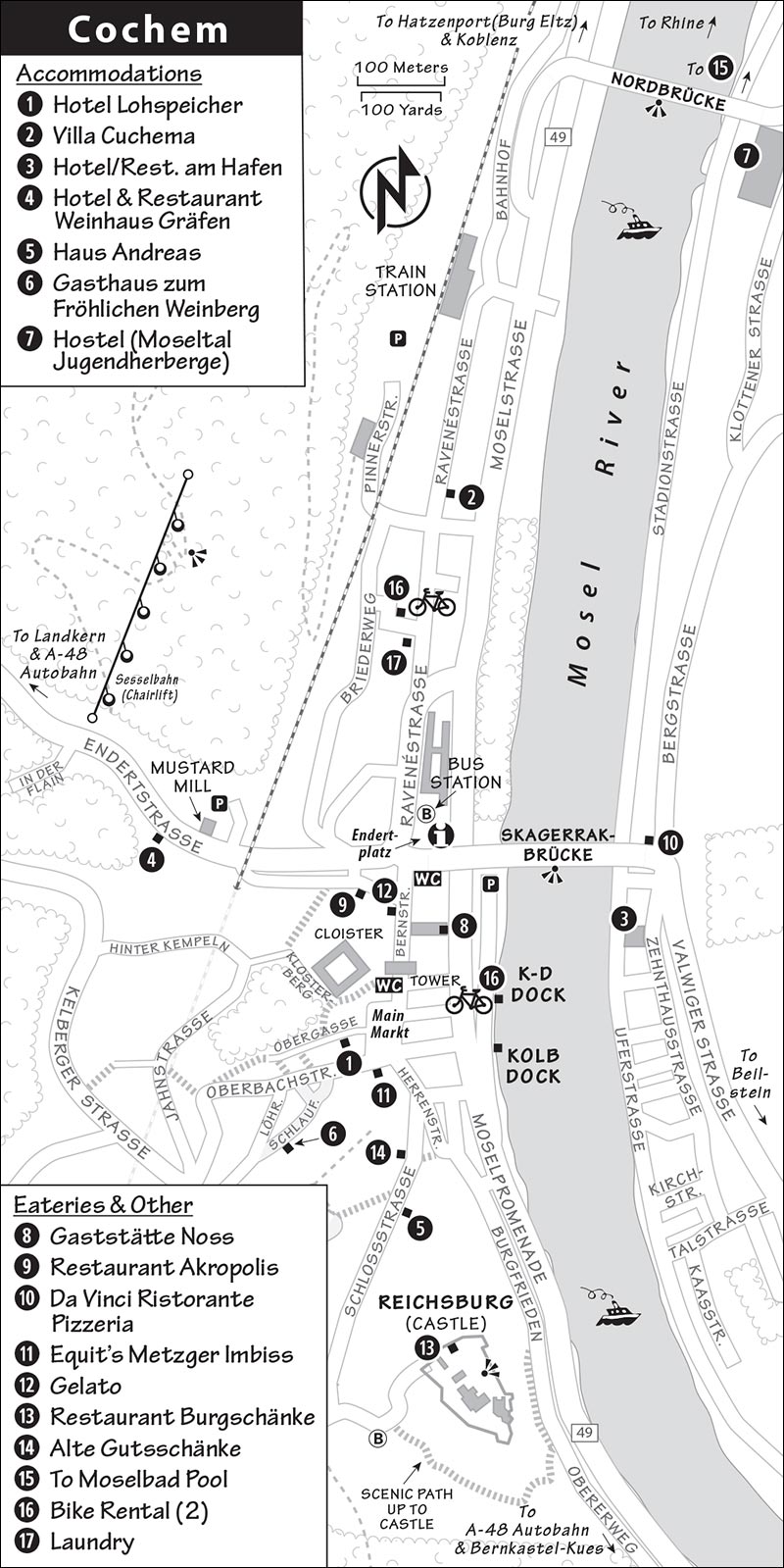
Getting There by Bus: If you’ve already probed a little Wein and would rather ride up, consider the shuttle bus that runs to the castle from the bus station (on Endertplatz, near the TI) or the Markt square—though you still have to walk the last five minutes uphill (bus #781, €3.50 one-way, €6 round-trip, 1-3/hour, May-Oct only, first bus up weekdays at 10:30 and weekends at 10:10, last bus down at 18:00, at bus station look for Reichsburg Shuttle-Bus sign and a bus marked Reichsburg Shuttle in front).
Chairlift and Hikes
For great views, ride the town’s chairlift (Sesselbahn), which ascends the hill on the opposite side of town from the castle (€5 one-way, €7 round-trip, daily 10:00-18:00, July-Aug 9:30-19:00, shorter hours on rainy days, closed Dec-late March, +49 2671 989 065, www.cochemer-sesselbahn.de). There’s a pricey restaurant at the top, along with a short, rocky path that leads to the Pinnerkreuz overlook. Instead of riding to the top, you can scramble up the narrow path under the lift for 20 minutes of heart-pounding, aerobic excitement. Or take the long, winding trail up to the same point from behind the train station (find trailhead just beyond the station parking lot).
Wine
Cochem is full of opportunities for wine appreciation—look for Weinprobe signs indicating where you can drop in for a tasting. The old town even has a Weinautomat—a vending machine offering 24/7 access to a range of locally produced bottles. You’ll find it at the end of Bernstrasse, near the recommended Gelateria Fratelli Bortolot—but your enjoyment will be vicarious only: Its age-verification device can’t read American passports or drivers licenses.
Alte Gutsschänke, better known as “Arthur’s place,” is where locals go for a glass of wine in a cozy candlelit cellar. Seating is at long, wooden, get-to-know-your-neighbor tables (extensive wine list and very basic pub food, Easter-Oct Mon-Fri from 18:00, Sat-Sun from 13:00, closed in winter except Sat and the occasional Sun, just uphill from the old town’s Markt square at Schlossstrasse 6, +49 2671 8950).
Mustard Mill (Historische Senfmühle)
Just down the road from the chairlift, you can see—and smell—one of the oldest mills (c. 1810) of its kind still operating in Europe. The mustard sold here uses only natural spices, following centuries-old recipes, and is some of Germany’s best. You may also want to try their homemade spirits or, for a unique treat, look for the Roter-Weinbergs-Pfirsich Likör—a local cordial made from the small, tart “red peaches” that are unique to the Mosel Valley.
Cost and Hours: Free mustard tasting plus jams and chutney, €2.50 for 30-minute guided tours in German only—4/day; daily 10:00-18:00, Enderstrasse 18, +49 2671 607665, www.senfmuehle.net.
Moselbad Swimming Pool
Cochem’s Moselbad leisure center offers an outdoor pool as well as an indoor wave pool with a fun kids’ area (30 minutes on foot from the center of town, or take bus #702 from bus station on Endertplatz to Freizeitzentrum stop, about 5/day).
Cost and Hours: Indoor pool (Hallen-Wellenbad)-€7/3 hours, generally Tue-Sun 10:00-19:00 but call before heading over, closed Mon; hours and prices vary for other activities; 10 minutes beyond youth hostel at Moritzburger Strasse 1, +49 2671 97990, www.moselbad.de.
Riverboat Rides
K-D and Kolb run similar one-hour “panorama” joyrides on the Mosel for €12 (Kolb: late April-Oct daily 5/day, weekends only early April and Nov, Sat only in Dec, first at 11:00, last at 16:45; K-D: early April-late Oct Tue-Sun 6/day, first at 10:30, last at 18:00, no Mon cruises). On weekends, both offer evening (Abend) versions of their daytime ride; Kolb’s Abendfahrt is a schmaltzy “Tanz Party” dance cruise with live music (Kolb: €20, 1.5 hours, May-Oct Sat at 19:15, also on high-demand Fridays; K-D: €12, 1 hour, June-late Sept Fri-Sat at 19:30). For details, check at the boat docks (www.moselrundfahrten.de; www.k-d.de).
To explore more of the river, hop a boat going farther upstream. In summer, Kolb boats run south to Beilstein several times daily (see “Getting to Beilstein,” later), and as far up the river as Traben-Trarbach, 15 stops and three locks away (3/week first week of May and late May-late Oct, no boats mid-May or off-season, 2 hours to Zell, 4.5 hours to Traben-Trarbach).
Sightseeing “Train”
The little green-and-yellow “Mosel-Wein-Express” leaves from under the bridge near the TI and does a 25-minute sightseeing loop through town with commentary in German and possibly English. Since Cochem is such a pedestrian-friendly town, this is worth it only on a rainy day, or if you’re bored and lazy.
Cost and Hours: €6.50, includes a coupon for a souvenir glass of wine in the train company’s nearby wine shop, 1-2/hour, daily 10:15-16:30, Nov-March weekends only.
Sleeping in Cochem
Cochem is a good base for train travelers. Most of my recommendations are within a 10- to 15-minute walk or a €6 taxi ride from the station. August is very tight on rooms, with various festivals and generally inflated prices.
$$$ Hotel Lohspeicher, an upscale-rustic hotel just off the Markt square on a street with tiny steps, is for those willing to pay a bit extra for quality lodgings in the thick of things. Its 10 high-ceilinged rooms have modern comforts, and the owner is a gourmet chef who offers hiking and biking excursions—book in advance (classy breakfast served in a fine stone-and-timber room, elevator, pay parking, Obergasse 1, +49 2671 3976, www.lohspeicher.de, service@lohspeicher.de, Ingo and Anna Beth).
$$ Villa Cuchema’s 12 fresh and pleasantly decorated rooms fill a handsome 1904 row house just two blocks from the station, along the street leading into town. Its first-floor terrace, with views of the river and castle, is a joy (local wines/beers available, fans, free parking—entrance on Moselstrasse, Ravenéstrasse 34, +49 2671 910 224, www.villa-cuchema.de, info@villa-cuchema.de; energetic Peter and Ann-Kathrin).
$$ Hotel am Hafen, across the bridge from the old town, offers 18 sleek rooms, most with balconies and river/castle views (half-pension options in their riverside restaurant, air-con, free parking, closed mid-Dec-March, Uferstrasse 3, +49 2671 97720, www.hotelamhafen.com, rezeption@hotelamhafen.com).
$$ Hotel & Restaurant Weinhaus Gräfen, run by the friendly and helpful Vatlav family, has a mix of 14 stylish rooms, a nicely decorated terrace, and a recommended restaurant downstairs (cash only, elevator, near chairlift at Endertstrasse 27, +49 2671 4453, www.weinhaus-graefen.de, info@weinhaus-graefen.de).
$ Haus Andreas has 10 clean rooms, some with balconies, at fair prices in the old town (cash only, pay parking but free lot nearby, Schlossstrasse 9, reception is often across the street in shop at #16, +49 2671 1370 or +49 2671 5155, www.pension-haus-andreas.de, info@hausandreas.de, kind Frau Pellny speaks a little English). From the Markt square, take Herrenstrasse; after a block, angle right up the steep hill on Schlossstrasse.
¢ Gasthaus zum Fröhlichen Weinberg, near a quiet, colorful courtyard a short walk above the Markt square, is a relaxed jumble of seven clean, inexpensive rooms, some with low ceilings and tiny bathrooms and most with sunny balconies, all topped by a fun roof garden with a view over town. It’s run by friendly Jutta and her mother, who makes jam from peaches fresh from the garden (cash only, fan available, family room, shared kitchen, lots of stairs, pay parking, Schlaufstrasse 11, +49 2671 4193, www.zum-froehlichen-weinberg.de, weinberg-cochem@t-online.de). From the Markt square, go up Oberbachstrasse (in the far-right corner if coming from the station) and then left up tiny Schlaufstrasse.
¢ Moseltal Jugendherberge is a huge, family-friendly hostel complex just across the river from the train station, with picnic tables, a grill pit, a playground, and a sundeck over the Mosel (private rooms available, box lunches available, game room, bar, restaurant, fills up—reserve in advance, Klottener Strasse 9, +49 2671 8633, www.diejugendherbergen.de/cochem, cochem@diejugendherbergen.de). To reach it from the train station, take an immediate left up the hill and walk parallel to the train tracks until you reach the “new bridge” (a.k.a. the Nordbrücke) on your right; the hostel is to the right immediately after the bridge.
Eating in Cochem
In addition to the following listings, cafés at both Reichsburg castle and the chairlift serve lunch (see “Sights in Cochem,” earlier) and there are plentiful pizza, Turkish, and Asian options in the old town.
$$ Gaststätte Noss, one of several restaurants along the riverside promenade, supplies meat from its own butcher shop. Don’t confuse it with the hotel of the same name (Fri-Tue 11:00-20:30, sometimes later on Fri-Sun, closed Wed-Thu, Moselpromenade 4, +49 2671 7067).
$$$ Hotel am Hafen’s restaurant is a comfortable, well-respected riverfront eatery with a nice range of options. From their terrace you can enjoy gorgeous views of the river and castle (indoor and outdoor seating, Thu-Tue 8:00-20:30, closed Wed, Uferstrasse 3, +49 2671 97720).
$$ Restaurant Akropolis sits hidden away upstairs in a cozy room with a modern take on an old Greek cave house. Their extensive menu ranges from simple gyros and souvlaki to pricier steak, lamb, and seafood dishes. Try to score a seat under the twinkling ceiling that imitates the night sky (Thu-Tue 11:30-14:30 & 17:00-22:00, closed Wed, reservations smart, Liniustrasse 7, +49 2671 915 3780, www.akropolis-cochem.de).
$$ Hotel & Restaurant Weinhaus Gräfen is where you can meet the locals while enjoying freshly prepared traditional food (Fri-Wed 12:00-22:00, closed Thu, below recommended hotel at Endertstrasse 27, +49 2671 4453).
$ Da Vinci Ristorante Pizzeria serves good, reasonably priced Italian fare at its hard-to-miss location just across the bridge from the TI. Grab a seat on the covered terrace for city, river, and castle views while rubbing elbows with locals and fellow travelers (Tue-Sun 17:30-21:00, closed Mon and Nov, reservations smart, Bergstrasse 1, +49 2671 916 195).
$ Equit’s Metzger Imbiss is a great and inexpensive alternative for lunch or an early dinner. Local butcher Thomas Equit offers tasty sausages, schnitzel, and other regional dishes—as well as burgers—for a reasonable price. The interior is modern, clean, and inviting. In summer, with the big front windows opened up, you’ll feel like you’re sitting right on the medieval Markt square (Wed-Mon 10:00-18:00, closed Tue, Markt 10, +49 2671 917 9231).
Gelato: Gelateria Fratelli Bortolot brings a taste of Italy to the Mosel, offering good-quality scoops. They run a sprawling ice-cream parlor on the corner facing the central bridge, but I prefer getting a scoop or two at their to-go counter just inside the old town (cash only, Tue-Sun 12:00-20:30, sometimes until 21:00 on weekends, closed Mon, Bernstrasse 25).
Cochem Connections
From Cochem by Train to: Hatzenport (for bus to Burg Eltz; hourly, 20 minutes), Moselkern (for hike to Burg Eltz; hourly, 16 minutes), Trier (2/hour, 45-60 minutes), Frankfurt Airport (hourly, 2.5 hours, change in Koblenz and sometimes Mainz), Cologne (hourly, 2.5 hours, most change in Koblenz), Bacharach (hourly, 2 hours, change in Koblenz), Rothenburg (every 1-2 hours, 6 hours, 4 changes), Berlin (roughly hourly, 7 hours, 1-2 changes), Paris (roughly every 2 hours, 4-5 hours, transfer in Saarbrücken or in Trier and Luxembourg). Train info: www.bahn.com. Bus info: +49 2671 8976, www.vrminfo.de.
Burg Eltz
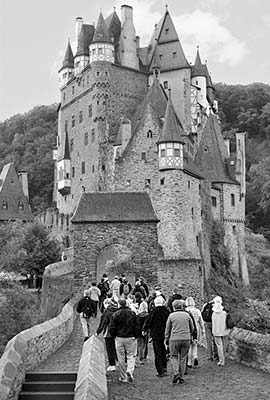
My favorite castle in all of Europe—worth ▲▲▲—lurks in a mysterious forest. It’s been left intact for 700 years and is decorated and furnished throughout much as it was 500 years ago. Thanks to smart diplomacy, clever marriages, and lots of luck, Burg Eltz (pronounced “boorg elts”) was never destroyed (it survived one five-year siege). It’s been in the Eltz family since 1157. The scenic 1.5-hour walk up the Elz Valley to the castle makes a great half-day outing if you’re staying anywhere along the Mosel—and a worthwhile day trip if you’re staying on the Rhine.
GETTING THERE
In summer, the easiest, fastest route to the castle for nondrivers is a train-and-bus connection via Hatzenport.
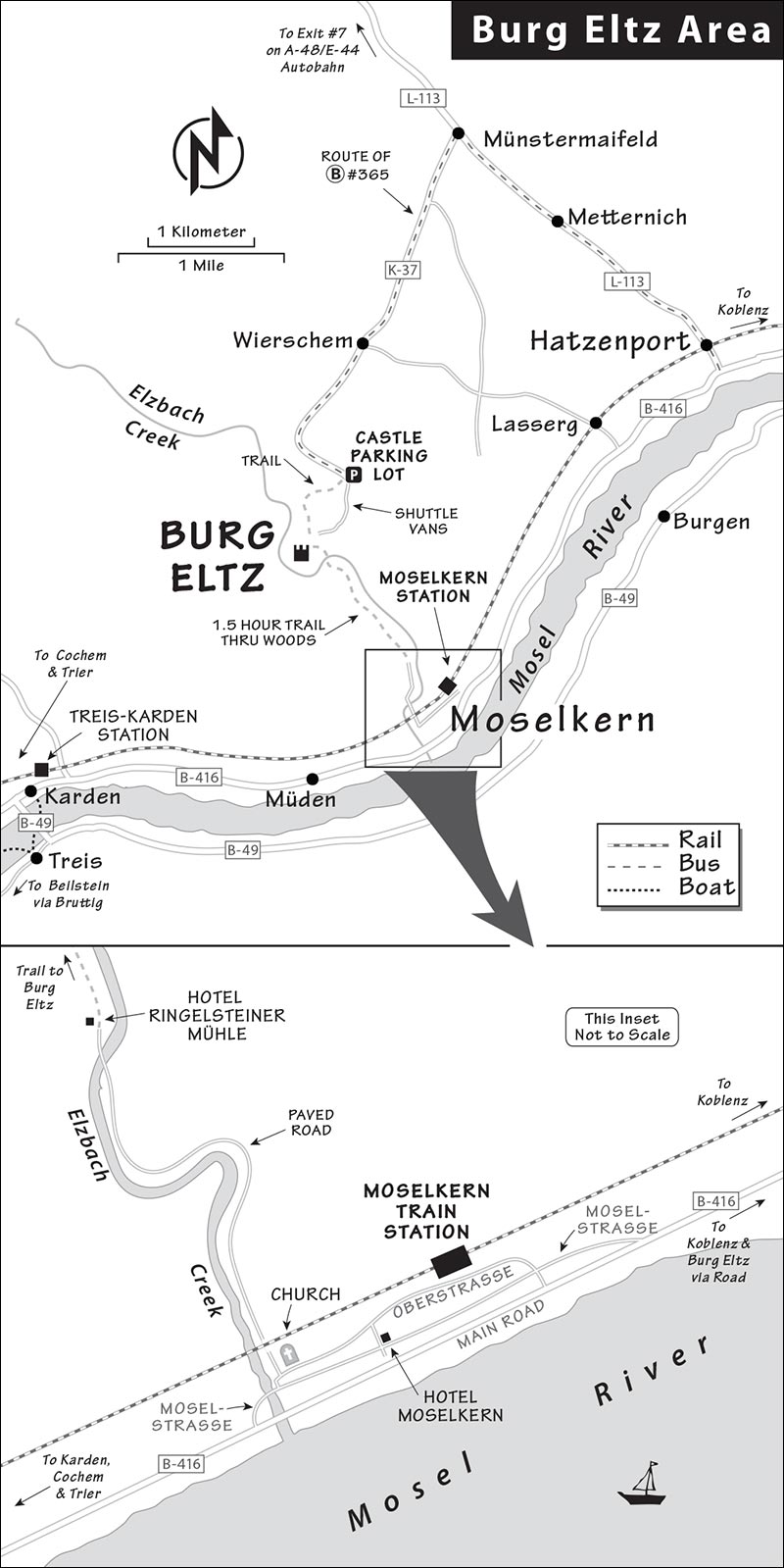
The most fun and scenic way to reach the castle is a 1.5-hour walk along an easy trail from the train station in the little village of Moselkern.
In the off-season, when there’s no bus—and if the weather isn’t conducive for a hike—you can take a taxi from Moselkern (the nearest train station to the castle).
Cars (and taxis) park in a lot near, but not quite at, Burg Eltz. From the lot, hike 15 minutes downhill to the castle or hop the castle shuttle bus.
Each of your options is explained next.
By Train and Bus via Hatzenport
It’s a one-hour journey from Cochem to Burg Eltz via train and bus. The hourly train from Cochem to Hatzenport is timed to meet the bus (€9 ticket covers train and bus). Bus #365 runs between the Hatzenport train station and Burg Eltz’s parking lot twice an hour (€4.10, 24 minutes, April-Oct only). Trains also run hourly from Koblenz to Hatzenport (75 minutes total).
Hiking from Moselkern
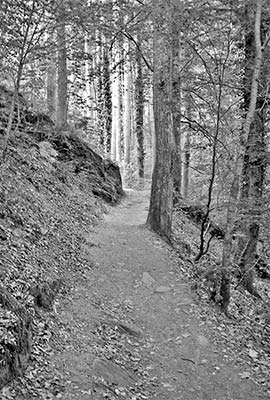
The hike between the Moselkern train station and Burg Eltz runs through a magical pine forest, where sparrows carry crossbows, and maidens, disguised as falling leaves, whisper “watch out.” You can do the hike in 75 minutes at a steady clip, but allow an extra 20 minutes or so to enjoy the scenery. The trail is mostly gentle, except for a few uneven parts that are slippery when wet and the steep flight of stairs leading up to the castle at the end. The overall elevation gain from the river to the castle is less than 400 feet.
Getting to Moselkern: To start the hike, take the slow milk-run train (hourly) to Moselkern from Cochem (16 minutes, €5.20). Groups of at least three can get a €21 Minigruppenkarte (covers round-trips for up to 5 people, not valid weekdays before 9:00). You can reach Moselkern by train from towns on the Rhine (including Cologne and Bacharach) with a change at Koblenz.
Storing Luggage: The Moselkern train station is unstaffed and has no lockers, phones, or taxis. If you call ahead, you can store luggage at Hotel Moselkern, on the river a five-minute walk from the station (+49 2672 1303; see “Sleeping near Burg Eltz,” later). There’s no charge for storage, but consider thanking them by eating at their restaurant (food served 12:00-21:00, reasonable prices) or buying a drink at the hotel bar.
The Hike: The path up to the castle begins at the other end of Moselkern village from the station. Turn right from the station along Oberstrasse, cross the intersection with Weinbergsstrasse, and continue straight along narrow Oberstrasse. In about five minutes, you’ll pass the village church. Keep going straight a few houses past the church; then, as the street ends, turn right through the underpass. On your left is the Elzbach stream that you’ll follow all the way up to the castle. Follow the road straight along the stream through a mostly residential neighborhood. Just before the road crosses the stream on a stone bridge, take either the footpath (stay right) or the bridge—they join up again later.
About 30 minutes into your walk, the road ends at the parking lot of the Hotel Ringelsteiner Mühle. Stay to the right of the hotel and continue upstream along the easy-to-follow trail, which starts out paved but soon changes to dirt. From here, it’s another 45 minutes through the forest to the castle.
By Taxi
You can taxi to the castle from Cochem (30 minutes, about €60 one-way for up to 4 people, Cochem taxi +49 2671 8080) or Moselkern (€35 one-way, taxi +49 2672 1407). Confirm your drop-off point (castle door or shuttle bus stop) with your driver before you take off. If you’re planning to taxi from Moselkern, call ahead and ask the taxi to meet your train at Moselkern station. Consider taxiing up to Burg Eltz and then enjoying the hike downhill back to the station.
By Car
Be Careful: Signs direct drivers to two different “Burg Eltz” parking lots—some deceptively take drivers far from the castle, while others get you right there. From Koblenz, leave the river at Hatzenport, following the white Burg Eltz signs through the towns of Münstermaifeld and Wierschem. From Cochem, follow the Münstermaifeld signs from Moselkern. The castle’s pay parking lot (daily 9:00-18:30) is just over a mile past Wierschem. Note that the Eltz signs at Moselkern lead to Hotel Ringelsteiner Mühle and the trailhead for the hike to the castle—see next. To drive directly to the castle, ignore the Eltz signs until you reach Münstermaifeld.
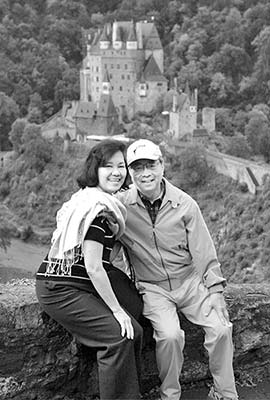
Drive/Hike Combo: If you’re driving but would enjoy walking part of the path from Moselkern up to the castle, drive to Moselkern, follow the Burg Eltz signs up the Elz Valley, park at the Hotel Ringelsteiner Mühle (buy ticket from machine), and hike about 45 minutes up the trail to the castle (full hike described earlier).
Shortcut to Beilstein: If driving from Burg Eltz to Beilstein, you’ll save 30 minutes with this shortcut: Cross the river at Treis-Karden, go through town, and bear right at the swimming pool (direction: Bruttig-Fankel). This overland route deposits you in Bruttig, a scenic three-mile riverside drive from Beilstein.
ORIENTATION TO BURG ELTZ
Cost and Hours: €12 (includes required guided tour and treasury), April-Oct daily from 9:30, last tour departs at 17:30, closed Nov-March. Pick up the free English descriptions at entry. +49 2672 950 500, www.burg-eltz.de.
Tours: The only way to see the castle is with a 40-minute tour. Guides speak English and thoughtfully collect English speakers into tour groups—well worth waiting for (usually a 30-minute wait at most; visit treasury in the meantime).
Eating: The $ castle café, up from the ticket booth, serves lunch, with soups and bratwurst-and-fries cuisine (April-Oct daily 9:30-16:30). The lower-level snack bar is usually open only on weekends.
VISITING THE CASTLE
Elz is the name of the stream that runs past the castle through a deep valley before emptying into the Mosel. The first record of a Burg (castle) on the Elz is from 1157. By about 1490, the castle looked like it does today, with the homes of three big landlord families gathered around a tiny courtyard within one formidable fortification. Today, the excellent tour winds you through two of those homes, while the third is still the residence of the castellan (the man who maintains the castle).
This is where members of the Eltz family stay when they’re not at one of their other feudal holdings. Johann Jakob von und zu Eltz has run the show here since 2018, when his parents handed him the keys, thereby placing the castle in the care of the 34th generation of Eltzes (note the family photo). Note, too, the fresh flowers: The last countess of Eltz, J.J.’s grandmother, enjoyed flowers. Each week for 40 years, she made the grand arrangements that adorned the public castle rooms. Nowadays a local florist continues the tradition.
It was a comfortable castle for its day: 80 rooms made cozy by 40 fireplaces and wall-hanging tapestries. Many of its 20 toilets were automatically flushed by a rain drain. The delightful chapel is on a lower floor. Even though “no one should live above God,” this chapel’s placement was acceptable because it filled a bay window, which flooded the delicate Gothic space with light. The three families met—working out common problems as if sharing a condo complex—in the large “conference room.” A carved jester and a rose look down on the big table, reminding those who gathered that they were free to discuss anything (“fool’s freedom”—jesters could say anything to the king), but nothing discussed could leave the room (the “rose of silence”). In the bedroom, have fun with the suggestive decor: the jousting relief carved into the canopy, and the fertile and phallic figures hiding in the lusty green wall paintings.
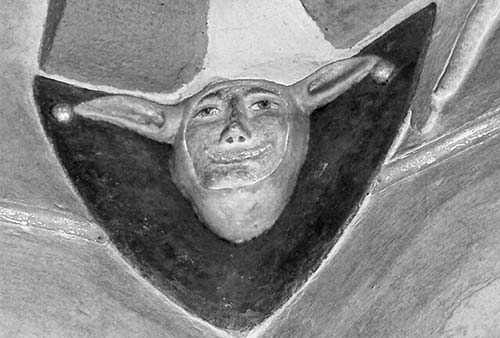
Near the exit, the treasury fills the four higgledy-piggledy floors of a cellar with the precious, eccentric, and historic mementos of this family that once helped elect the Holy Roman Emperor and, later, owned a sizable chunk of Croatia (Habsburg favors). The silver and gold work—some of Germany’s best—is worth a close look with the help of an English flier.
SLEEPING NEAR BURG ELTZ
Although I prefer the charm of Cochem or Beilstein, staying in tiny, sleepy Moselkern is a workable option. You can set off on a walk to Burg Eltz right after breakfast to beat the heat on a warm day. $ Hotel Moselkern, set alongside the river a five-minute walk from the train station, has 25 comfortable rooms in a solid, 1970s-era building. All rooms have balconies, most of them overlooking the river (cash only, elevator, restaurant with outdoor seating, free parking, bowling alley in basement, +49 2672 1303, www.hotel-moselkern.de, hotel-moselkern@t-online.de, Wanda Ketsila).
Beilstein
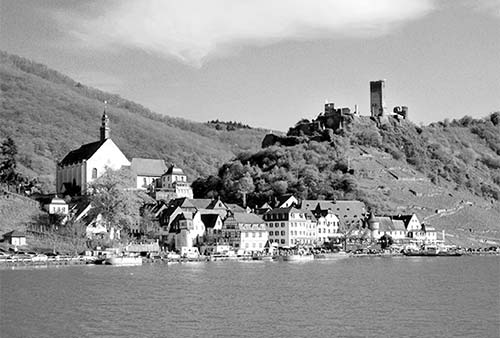
Just upstream from Cochem is the quaintest of all Mosel towns. Cozy Beilstein (BILE-shtine) is Cinderella-land touristy but tranquil, except for its territorial swans. Beilstein has no food shops, ATMs (bring cash), or public restrooms (you’ll have to use a café’s or restaurant’s). It does have one bus stop, one mailbox, and 180 residents who run about 30 guesthouses and eateries. It’s nicknamed the “Sleeping Beauty of the Mosel” because until about 1900, it was inaccessible except by boat. Beilstein also has no TI, but there is an information board by the bus stop, and cafés and guesthouses can give you town info.
PLANNING YOUR TIME
Car travelers use Beilstein as a base, day-tripping from here to Cochem, Trier, Burg Eltz, and the Rhine. Overnighting in Beilstein without a car is doable, as long as you check the bus and boat schedules in advance and plan carefully. If you’re staying in Cochem and using public transportation, you can easily day-trip to Beilstein: Take the bus to Beilstein, follow my self-guided walk up to the castle, have lunch, and then return by boat (if you’re here outside the July-mid-October high season, confirm boat times in advance). While the town is peaceful and a delight in the evening, midday crowds in peak season can trample all its charm and turn it into a human traffic jam. In the winter (mid-Nov until Easter), Beilstein is dead as a doornail.
GETTING TO BEILSTEIN
Beilstein has no train station, but it’s easy to reach from Cochem—either by bus, boat, bike, or car.
Bus: Bus #716A, which connects the towns in just 20 minutes, is especially convenient on weekdays, when it runs roughly hourly (€4.10, 6/day Sat, 4/day Sun, a little less frequent Nov-April; last bus to Beilstein leaves Cochem’s bus station at 18:25). On summer weekends, when bus #716A runs infrequently and the Ellenz ferry is running (see “Beilstein’s Riverfront,” below), you can reach Beilstein from Cochem via bus #711, which runs along the other side of the river (daily, hourly, 13 minutes). If you go this way, take bus #711 to the Ellenz Fähre stop, then ride the ferry across the river to Beilstein, keeping the ferry’s operating hours in mind.
When looking up schedules on the DB Navigator app or Bahn.com, note that Beilstein’s bus stop appears as “Moselstrasse/Fähre, Beilstein (Mosel)”—you may have to scroll a bit to find it on the drop-down menu.
Taxi: Expect to pay about €24 one-way for up to 4 passengers (in Cochem find taxis in front of the church on the Moselpromenade; from Beilstein you’ll probably need to call +49 2671 8080).
Boat: It’s a one-hour ride from Cochem (5/day, 4/day from Beilstein, May-Oct, no boats off-season, first departure from Cochem at 10:30, last departure from Beilstein at 17:30, €14 one-way, €18 round-trip).
Bike: It’s a level one-hour ride along the river; cross the river either by bridge in Cochem or with the Ellenz ferry at Beilstein.
Car: There’s a free parking lot along the river just upstream from town, under the castle hill. Parking spaces closer-in cost €1/hour during the day (4-hour maximum, use coins to buy ticket from Parkscheinautomat machine by town info board).
Beilstein Walk
Explore the narrow lanes, ancient wine cellar, resident swans, and ruined castle by following this short self-guided walk.
• Stand along the riverfront, by the town info board.
Beilstein’s Riverfront
In 1963, the big road and the Mosel locks were built, making the river peaceful today. Before then, access to Beilstein was limited to a tiny one-way lane and the small ferry. Originally, the ferry was motorless and the cables that tethered it allowed the craft to cross the river powered only by the current and an angled rudder. However, since the river was tamed by locks, the current is so weak that the ferry needs its motor. Today, the funky little Ellenz ferry shuttles people, bikes, and cars constantly (€1.50, Easter-Oct daily 9:00-18:00, no ferries off-season, wave to summon ferry if captain has paused on opposite bank).
The campground across the river is typical of German campgrounds—nearly all of its residents set up their trailers and tents at Easter and use them as summer homes until October, when they’re chased away for the winter by the regular floods. If you stood where you are now through the winter, you’d have cold water up to your crotch five times.
Look inland. The town was given market rights in 1310 and was essentially an independent city-state for centuries (back when there were 300 such petty kingdoms and dukedoms in what we now call Germany). The Earl of Beilstein ruled from his castle above town. He built the Altes Zollhaus in 1634 to levy tolls from river traffic. Today, the castle is a ruin, the last monk at the once-mighty monastery (see the big church high on the left) retired in 2009, and the town’s economy is based only on wine and tourists.
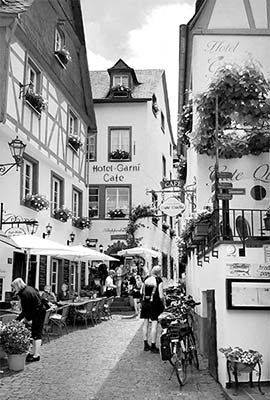
Beilstein is so well preserved because it was essentially inaccessible by road until about 1900. And its tranquility is a result of Germany’s WWI loss, which cost the country the regions of Alsace and Lorraine. (Now part of France, these provinces have flip-flopped between the two nations since the Thirty Years’ War.) Before World War I, the Koblenz-Trier train line—which connects Lorraine to Germany—was the busiest in the country, tunneling through the grape-laden hill across the river in what was the longest train tunnel in Germany. The construction of a supplemental line designed to follow the riverbank (like the lines that crank up the volume on the Rhine) was stopped in 1914. After Alsace and Lorraine went to France in 1918, the new line no longer made any sense, and the plans were scuttled.
• Follow the main “street” up into town. You’ll notice blue plaques on the left marking the high-water (Hochwasser) points of historic floods. At the first corner, right after the Wirtshaus Alte Stadtmauer, go left and find house #13 in the corner.
Former Synagogue
In the 1300s, several Jewish families were invited to Beilstein after being persecuted and expelled from towns on the Rhine. By 1840, a quarter of the town’s 300 inhabitants were Jewish. The synagogue, which dates from 1310, and the adjacent rabbi’s home were at #13. The medallion above the door shows the Star of David embedded in the double-headed eagle of the Holy Roman Emperor, indicating that the Jews would be protected by the emperor. Of the town’s many Jews, most moved away to explore new opportunities—to larger German towns or abroad—after 1871, when a new constitution extended political and civil rights to German Jews. Others assimilated, marrying Gentiles (among these was the Lipmann family, whose descendants run the riverfront hotels). By 1933, only one Jewish family, the Koppels, was left in Beilstein; they were deported and killed at the Treblinka concentration camp. The cemetery above the castle is another interesting Jewish sight (see “Beilstein’s Castle,” later).
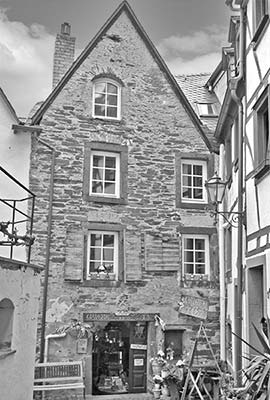
• Continue right (uphill) from the synagogue, and then with the church high above, go right again. You’ll reach a long flight of stairs (marked Klostertreppe) that leads to the monastery. Look up (it’s only worth actually going up the stairs if you like good views, Baroque churches...or you’re a hungry masochist).
Although the last Carmelite monk retired more than a decade ago, Rome maintains a handsome but oversized-for-this-little-town Catholic church that runs a restaurant with a great view.
• Continue back to the main street, called...
Bachstrasse (“Creek Street”)
The town’s main drag continues through the tunnel you see to the left. It covers up the brook that once flowed through town and used to provide a handy 24/7 disposal service. If you head up Bachstrasse a little way, you’ll see that it’s lined with wine cellars. The only way for small local vintners to make any decent money these days is to sell their wine directly to customers in inviting little places like these.
• If you did walk up Bachstrasse a tad, backtrack down and under the tunnel, and follow the left fork to the...
Market Square (Marktplatz)
For centuries, neighboring farmers sold their goods on Marktplatz. The Zehnthaus (tithe house) was the village IRS, where locals would pay one-tenth (Zehnte) of their produce to their landlord (either the Church or the earl). Pop into the Zehnthauskeller. Stuffed with peasants’ offerings 400 years ago, it’s now packed with vaulted medieval ambience. It’s fun at night for candlelit wine-tasting, soup and cold cuts, and schmaltzy music (often live Fri and Sat). The adjacent Bürgerhaus (above the fountain) had nothing to do with medieval fast food. First the village church, then the residence of the Bürger (like a mayor), and later the communal oven and the village grade school, today it’s where locals hold big parties and weddings (upstairs) and a venue for local craftspeople to show their goodies (below). Haus Lipmann (on the riverside, now a recommended hotel and restaurant) dates from 1727. It was built by the earl’s family as a residence after the French destroyed his castle. Haus Lipmann’s main dining hall was once the knights’ hall.
• If you’re not up for a climb to the castle, this is the end of your walk. Otherwise, leave the square going uphill, either via Bachstrasse or by heading up the short set of stairs from the Marktplatz to Schlossstrasse. From the point where Bachstrasse and Schlossstrasse converge, bear right up the stairs (follow signs for Burgruine Metternich) to...
Beilstein’s Castle
Beilstein once rivaled Cochem as the most powerful town on this part of the Mosel. Like so much around here, it was destroyed by the French in 1689. Its castle (officially named Burg Metternich) is a sorry ruin today, but those who make the steep 10-minute climb up 115 steps are rewarded with a postcard Mosel view and a chance to hike even higher to the top of its lone surviving tower for a 360-degree view (€3, cash only, daily 10:00-18:00, last entry 17:30, closed Nov-Easter, view café/restaurant, +49 2673 93639, www.burgmetternich.de).
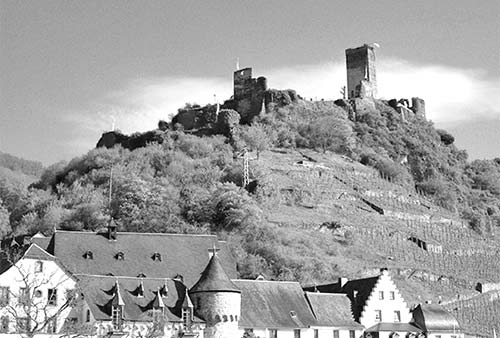
For more exercise and an even better viewpoint, exit through the turnstile at the rear of the castle. Take the uphill (left-hand) road, and after 100 yards, fork right. Here you’ll find the a great “castle/river bend/carpets of vineyards” photo op that’s second only to the one from atop the castle tower. The derelict vineyard in front of you is a sign of recent times—the younger generation is abandoning the family plots, opting out of all that hard winemaking work.
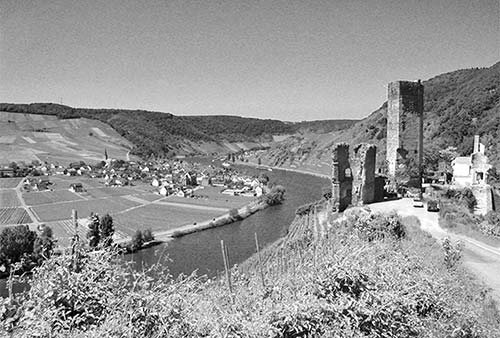
From this viewpoint, continue another 100 yards farther up the road to the small but poignant Jewish cemetery (jüdische Friedhof).
To reach the viewpoint and the cemetery without going through the castle, continue up the road past the castle entrance, then follow the signs for Jüdischer Friedhof.
• From the cemetery, you can return to the castle gate, ring (klingeln) the bell, and show your ticket to get back in and retrace your steps; or continue on the road, which curves and leads downhill (at the next bend, two gravel paths head off to the left; the one on the right leads back into town).
Activities in Beilstein
Biking and Boating
Boats connect Beilstein not just with Cochem (see “Getting to Beilstein,” earlier) but also points upstream (but far less frequently). While scenic, these rides can take longer than you’d like because of the locks. I prefer a riverside bike ride (perhaps combined with a boat trip). Biking is very popular along the Mosel, and roads are accompanied by smooth and perfectly flat bike lanes. The lanes are separate from the car traffic, letting you really relax as you pedal through gorgeous riverside scenery. To rent a quality bike in Beilstein, visit Herr Nahlen (€12/day, daily 9:30-12:00, return bikes between 16:00 and 19:00, no rentals Nov-March, reservations smart for groups, Bachstrasse 47, +49 2673 1840, www.fahrradverleih-in-beilstein.de).
Five-Hour Trip to Zell and Back: You could rent a bike in Beilstein, catch the 9:20 boat to Zell (2.5-hour ride), enjoy that pretty town, and cycle 15 miles back to Beilstein along the sleepy and windy riverside bike path (boats run upstream 3/week first week of May and late May-late Oct, no boats mid-May or off-season, 4 hours to Traben-Trarbach, return trips from Zell and Traben-Trarbach about 30 minutes faster).
Hour-and-a-Half Loop: For a shorter bike trip, ride the little ferry across the river from Beilstein, explore the campground, continue left past Poltersdorf, cycle under vineyards to Senhals, cross the bridge to Senheim, and return to Beilstein on the other side of the river. At the edge of Mesenich, leave the road and take the peaceful bike lane along the river, explore another campground, and head for Beilstein, with its castle in the distance encouraging you home.
Sleeping in Beilstein
Beilstein’s hotels shut down from at least December through mid-March. All the listings here are just steps from the bus stop and boat dock, except for Hotel Lipmann am Klosterberg. All accept credit cards except Gasthaus Winzerschenke an der Klostertreppe.
$$$ Hotel Lipmann Altes Zollhaus is run by Julia, one of two Lipmann sisters carrying on an eight-generation-long tradition in town. The eight bright rooms right on the riverfront feel fresh and cheery (family rooms, free parking at Hotel Lipmann Am Klosterberg, closed mid-Nov-Easter, +49 2673 1850, www.hotel-lipmann.de, lipmann@t-online.de, also has a restaurant—see “Eating in Beilstein,” later).
$$$ Hotel Lipmann Am Klosterberg, also run by Julia and husband Bastian, is a big, modern place with 16 comfortable rooms at the extremely quiet top of town (elevator, air-con in some rooms, rooftop terrace, spa, easy free parking, Auf dem Teich 8, up the main street 200 yards then a sharp left before the stairs to the castle, same contact info as Altes Zollhaus, also closed mid-Nov-Easter).
$$$ Hotel Haus Lipmann is your chance to live in a medieval mansion with hot showers and TVs. A prizewinner for atmosphere, it’s been in the Lipmann family since 1795. The creaky wooden staircase and the elegant dining hall, with long wooden tables surrounded by antlers, chandeliers, and feudal weapons, will get you in the mood for your castle sightseeing, but the riverside terrace may mace your momentum. There are six guest rooms in the main building, six larger rooms in an equally old building next door, and, across the square, four $$$$ spacious, sleek studios with luxe bathrooms and an elevator. David and his wife Anja work hard for their guests (some rooms with Mosel views, family rooms, closed Nov-Easter, Marktplatz 3, +49 2673 1573, www.hotel-haus-lipmann.com, hotel.haus.lipmann@t-online.de).
$ Gasthaus Winzerschenke an der Klostertreppe is welcoming and a great value, with four comfortable rooms right at the bottom of the stairs to the church cloister (cash only, family rooms, closed Nov-Easter, take a few steps up the main street and take second left—after the second building—onto Fürst-Metternich-Strasse, reception in restaurant, +49 2673 1354, www.winzerschenke-beilstein.de, winzerschenke-beilstein@t-online.de, young and eager Stefanie and Christian Sausen).
$ Hotel Gute Quelle, straddling the main street and the square, offers half-timbers, a good restaurant, and 13 inviting rooms up a narrow stairway, plus seven more in an annex across the street (closed Nov-mid-March, Marktplatz 34, +49 2673 1437, www.hotel-gute-quelle.de, info@hotel-gute-quelle.de, helpful Susan speaks Irish). The hotel also has five bigger, very quiet family rooms and an apartment that sleeps up to four in an adjacent building.
Eating in Beilstein
You’ll have no problem finding a characteristic dining room or a relaxing river-view terrace in Beilstein.
$$ Restaurant Haus Lipmann serves good, fresh food with daily specials on a glorious, leafy riverside terrace. For a wonderful trip memory, enjoy a slow meal here while watching the lazy riverside action and the changing light on the distant vineyards (daily 10:00-21:30, last meal order at 20:00, closed Nov-Easter).
The sisters Lippman run two $$$ restaurants and a $$ wine bar all within steps of each other. Hotel Lipmann Altes Zollhaus, run by Julia, serves specialties cooked on a lava-stone grill (Thu-Tue 17:00-21:00, closed Wed). You could toss a dinner roll across to Alte Stadtmauer, run by Kristina, with a relaxed terrace overlooking the river (Wed-Mon 11:00-20:00, closed Tue and mid-Nov-Easter). And Zehnthauskeller on the Marktplatz is the place for wine tasting, a light meal, and lively Schlager music (kitschy German folk-pop). Hang with old locals on holiday, sitting under a dark medieval vault or out in the Marktplatz (try the Flammkuchen—German version of white pizza, Tue-Sun 12:00-22:00, closed Mon and Nov-Easter, run by Sabine).
The recommended $$ Hotel Gute Quelle runs a popular restaurant with classic, well-presented German dishes (Thu-Tue 11:00-20:30, closed Wed and Nov-mid-March, Marktplatz 34).