DRESDEN
OUTER NEW TOWN (ÄUSSERE NEUSTADT)
Map: Old Town Hotels & Restaurants
BUDGET BEDS IN THE OUTER NEW TOWN
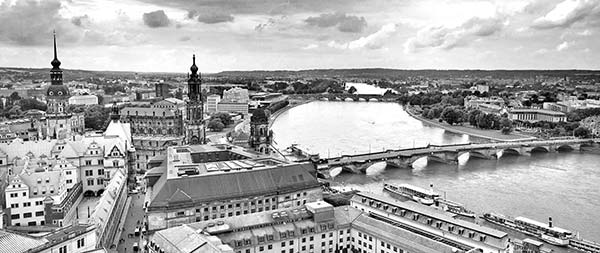
Dresden surprises visitors with fanciful Baroque architecture in a delightful-to-stroll cityscape, a dynamic history that mingles tragedy with inspiration, and some of the best museum-going in Germany—rivaling the sights in Berlin and Munich (and that’s saying something). Today’s Dresden is an intriguing and fun city filled with proud locals, cheery visitors, and students. Although it’s crawling with German tourists, Dresden winds up on far fewer American itineraries than it deserves to. Don’t make that mistake.
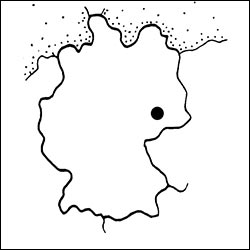
At the peak of its power in the 18th century, this capital of Saxony ruled most of present-day Poland and eastern Germany from the banks of the Elbe River. Dresden’s answer to France’s legendary King Louis XIV was Augustus the Strong. As both prince elector of Saxony and king of Poland, Augustus imported artists from all over Europe, peppering his city with fine Baroque buildings and filling his treasury with lavish jewels and artwork. Dresden’s grand architecture and dedication to the arts earned it the nickname “Florence on the Elbe.”
Outside Germany, Dresden is better known for its nearly complete destruction by Allied firebombing in World War II. In the postwar years under communist rule, Dresden patched up some of its damaged buildings, left many others in ruins, and replaced even more with modern, ugly sprawl. Later, after Germany was reunited, Dresden undertook a more systematic rebuilding, especially of the city’s landmark structures, most notably the Royal Palace and the Frauenkirche.
The transformation over the last generation has been astonishing. Even so, Dresden still suffers somewhat from its wartime flattening. The historic core, while gorgeous, lacks personality—with plenty of hotels and touristy restaurants, but little real local life. The modern, rebuilt areas that fan out from the Old Town are tainted by a severe Soviet aesthetic.
However, the bombs missed most of the New Town across the river. This well-worn area retains its prewar character and has emerged as the city’s most engaging, lively neighborhood—especially the Outer New Town, north of Bautzner Strasse. Most tourists never cross the bridge away from the famous Old Town museums, but a visit to Dresden isn’t complete without a wander through the New Town.
PLANNING YOUR TIME
Dresden merits spending at least one night (though two is better) and makes a good overnight stop between Nürnberg and Berlin. With one day, follow my self-guided walk, and visit your pick of museums. Consider reserving ahead to visit one of Dresden’s top sights, the Historic Green Vault.
More time lets you dig even deeper into the city’s fine museums, explore the thriving Outer New Town after-hours scene, or consider side trips to the “Blue Wonder” bridge or Saxon Switzerland National Park.
Orientation to Dresden
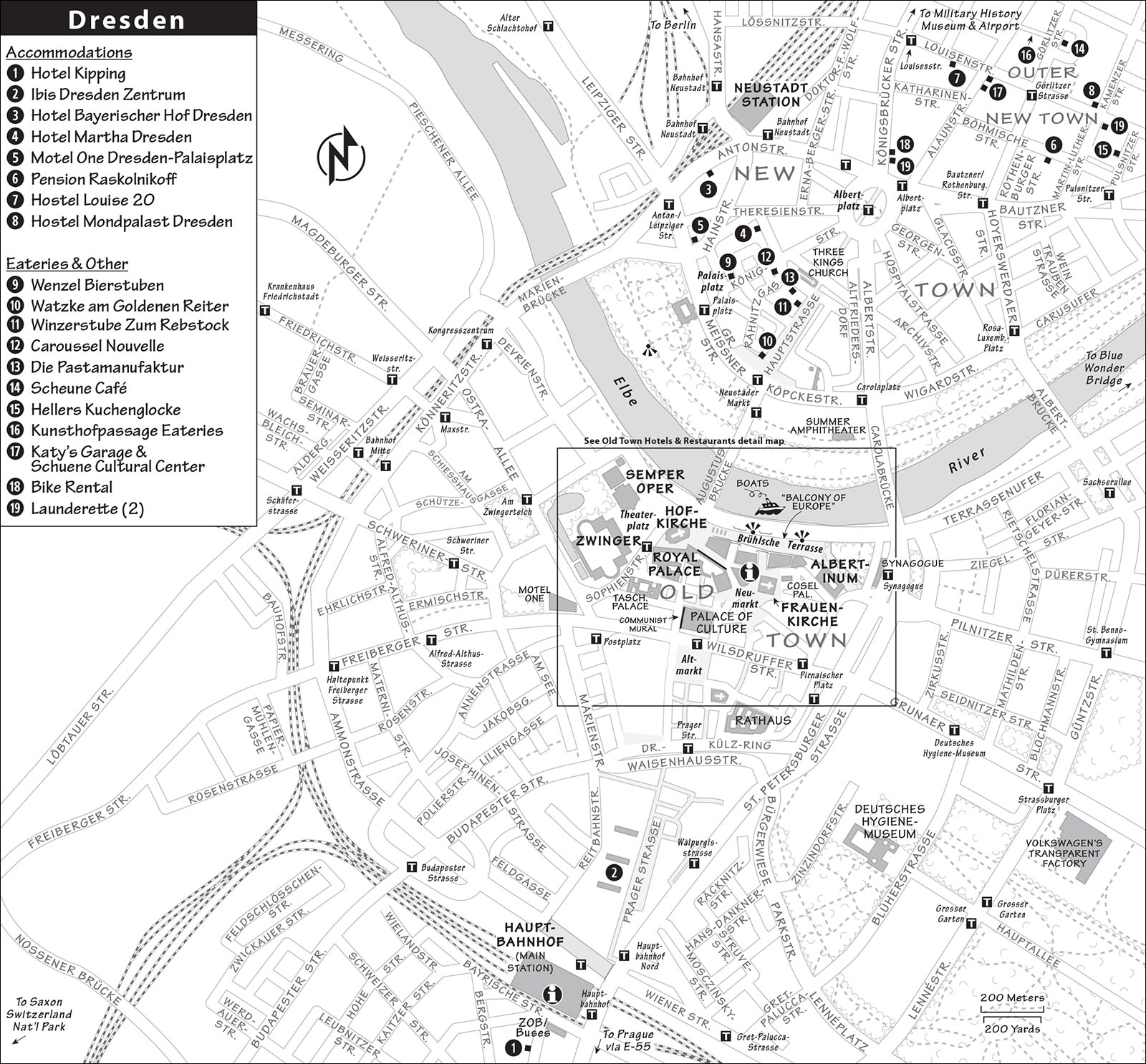
With a half-million residents, Dresden is big. The Old Town (Altstadt) hugs a curve on the Elbe River, so most of its sights are within easy strolling distance along the south bank of the river. South of the Old Town (a 5-minute tram ride or 20-minute walk) is the main train station (Hauptbahnhof). North of the Old Town, across the river, you’ll find the more residential New Town (Neustadt). While the New Town boasts no great sights, it’s energetic, colorful, and fun to explore—especially after dark, when the funky, cutting-edge Outer New Town (Äussere Neustadt) sets the tempo for Dresden’s nightlife scene.
TOURIST INFORMATION
Dresden has a good TI right in the heart of the Old Town (Mon-Fri 10:00-19:00, Sat until 18:00, Sun until 15:00; Neumarkt 2—enter under Passage sign across from door D of Frauenkirche and go down escalators). A smaller TI kiosk is in the main train station (daily 9:00-19:00, under tracks 1-2). The TIs share a phone number and website (+49 351 501 501, www.dresden.de). Both TIs hand out a good transit map, which includes an adequate street map, and a free entertainment guide (“Kulturkalender,” in German only).
Discount Deals: Dresden offers a variety of combo-tickets that cover most of the city’s top museums: the Zwinger, the Royal Palace, and the Albertinum (all operated by Staatliche Kunstsammlungen Dresden). To cram a lot of sightseeing into two days, buy the €22 Dresden Museums Card, which covers most museums—but not the Historic Green Vault—and offers discounts on other attractions (sold at the TI and online, www.dresden.de). A €24.50 combo-ticket including the Royal Palace and timed entry to the Historic Green Vault is available via the state museums website at www.skd.museum; note that their €24 one-day Tageskarte does not include the Historic Green Vault.
The TI also offers a Dresden Welcome Card that includes prepaid bus and tram travel for one to three days (also at www.dresden.de).
ARRIVAL IN DRESDEN
Dresden has two major train stations: Dresden Hauptbahnhof and Dresden-Neustadt. Most trains stop at both stations (coming from Berlin, first at Neustadt, then at Hauptbahnhof). If you’re visiting for the day, use the Hauptbahnhof for the easiest access to Dresden’s sights. S-Bahn trains, as well as trams #3 and #11, connect the two stations (see “Getting Around Dresden,” later).
By Train at the Hauptbahnhof: Dresden’s main train station has a chic roof designed by Norman Foster (of Berlin’s Reichstag Dome fame). In the bright arrivals hall, you’ll find a Reisezentrum (travel desk). Under tracks 1-2 are pay WCs, lockers, and the TI.
To reach the beginning of my self-guided walk by tram, exit the station following Ausgang 1 signs, cross the tram tracks, and take tram #8, 9, or 11 to Postplatz in the Old Town (heading away from the station; three stops) and walk 10 minutes up Sophienstrasse to Theaterplatz. For those who’d rather walk all the way, the 20-minute stroll to the Old Town gives you a look at communist-era architecture as you head down Prager Strasse (described under “More Sights in Dresden,” later): From the station, exit toward Ausgang 2/City/Prager Strasse, and continue straight along Prager Strasse, then Seestrasse and Schlossstrasse until you emerge at the river.
To reach other points from the station by tram, note your line number and ask for help finding your platform. Lines #3, #8, #9, and #11 (linking to the New Town) depart from the Hauptbahnhof Nord tram stop: Exit the arrivals hall via Ausgang 2, cross the tram tracks, then angle right through the passage in the long, glassy building (look for Hbf Nord signs).
By Train at Neustadt: The Neustadt train station serves the New Town north of the river and is near some recommended hotels. It has lockers and WCs, and a Reisezentrum (travel desk). To reach the Old Town from Neustadt Station, take tram #11 (direction: Zschertnitz) four stops to Postplatz.
By Plane: From Dresden’s airport (code: DRS, www.mdf-ag.com), S-Bahn line #2 runs to both train stations for the price of a regular public-transit ticket (€2.70, 2/hour, 20 minutes). A taxi between the airport and the center should cost around €30.
By Bus: Long-distance buses come and go from a cluster of stops just behind the Hauptbahnhof.
By Car: The city center has several well-marked and pricey parking garages (€25/day).
HELPFUL HINTS
Sightseeing Strategies: Note that many of Dresden’s top museums are closed either Monday or Tuesday. If you’re set on seeing the Historic Green Vault (closed Tue), reserve ahead, since a limited number of people are admitted every half-hour. Otherwise, line up early to buy a same-day ticket (ticket office opens at 10:00; see listing later, under “Sights in Dresden”). Once you have your Historic Green Vault visit time, plan the rest of your day around it.
Entertainment, Organ Concerts, and Masses: The city has lots going on. Ask about events across the river at the big amphitheater (concerts, movies, sports broadcasts; almost nightly June-Aug). Both big churches—the Catholic Hofkirche and the Lutheran Frauenkirche—have a worship service or Mass with pipe-organ music every day (check schedule and buy tickets at TI and/or church); the Hofkirche also hosts free pipe-organ concerts (usually Wed and Sat evenings; check schedule at door).
Christmas Market: Dresden’s huge “Striezelmarkt” Christmas market takes over Altmarkt square throughout Advent (www.striezelmarkt.dresden.de).
Laundry: Two coin-operated launderettes are in the New Town (generally Mon-Sat 6:00-23:00, last load at 22:00, closed Sun): Eco-Express Waschsalon is just off Albertplatz (Königsbrücker Strasse 2) and Waschmeister is on the east end of the Outer New Town (Louisenstrasse 2).
Bike Rental: For a small fee, Roll on Dresden will deliver and pick up bikes at your hotel (€10/day; office open in summer Mon-Fri 9:00-15:00, Sat 10:00-14:00 & 18:00-18:30, Sun by arrangement; returns available 24 hours; in New Town, near Albertplatz tram stop at Königsbrücker Strasse 4a; +49 152 2267 3460, www.rollondresden.de).
GETTING AROUND DRESDEN
As soon as you master the trams, you’ll understand why so many Dresdeners never learn how to drive. Trams are cheap, easy, and go every several minutes. Buy the day pass and enjoy the freedom of hopping on and off whenever you like. Tram lines and numbers are clearly marked on city maps, and handy electronic boards at each stop say which trams are on the way and when they’ll arrive. Buy tickets from machines at platforms or on trams. A day ticket is valid for one calendar day (Tageskarte, €6.90). Other options start at €2.70 for a single Einzelfahrkarte ticket for rides up to one hour (€9.40 for a 4-pack of tickets, called a 4er-Karte; €6.20 for a 4-pack of Kurzstrecke tickets for short journeys of 4 stops or fewer; machines on trams don’t accept coins or bills). Validate your ticket by date-stamping it in the little boxes on train platforms and aboard buses and trams (for the day ticket, stamp it only the first time you ride). For transit information, see www.dvb.de.
Taxis are reasonable, plentiful, and generally honest (roughly €8-10 ride in town—get an estimate before you hop in; +49 351 211 211, www.taxi-dresden.de). Riding the trams is so easy, you may not need a taxi.
Tours in Dresden
Walking Tours
Dresden Walks is a cooperative of local English-speaking guides offering a variety of tours; check the website to see what’s on (www.dresdenwalks.com, +49 173 476 6733).
Nightwalk Dresden, a late-night tour of the city’s Outer New Town, is a journey through the unique culture of a less-visited part of the city that just happens to include two or three stops for drinks along the way. More than a pub crawl, this tour brings the prewar (and pre-reunification) Outer New Town to life with fascinating details that you’d otherwise miss (€27, 3.5 hours, call or email to reserve; +49 172 781 5007, www.nightwalk-dresden.de, info@nightwalk-dresden.de, Danilo).
The Slaughterhouse-Five Tour and the Street Art Tour, both run by Nightwalk Dresden, show you Dresden through the prism of the Kurt Vonnegut novel and the city’s graffiti scene, respectively. Both require advance booking (Slaughterhouse-Five-€16; Street Art-€17, 2.5 hours; see contact info above).
Hop-On, Hop-Off Bus Tours
Double-decker buses labeled Stadtrundfahrt connect nearly two dozen of the city’s main sights (including the Blue Wonder bridge) in a two-hour loop (€20, €2 more per extra day; in summer up to 4/hour, Nov-March 2/hour; www.stadtrundfahrt.com/dresden).
Local Guides
Liane Richter (€100/2-hour tour, lianerichter@gmx.net) and Anke Winkler (€80/2-hour tour, info@dresden-citytour.de) are two good local guides who enjoy sharing the story of their hometown and region.
Old and New Dresden Walk
8 Palace of Culture (Kulturpalast)
9 Parade of Nobles (Fürstenzug)
10 Neumarkt
11 Frauenkirche (Church of Our Lady)
15 The Golden Rider and Hauptstrasse
Dresden’s major Old Town sights are conveniently clustered along a delightfully strollable promenade next to the Elbe River. From there, the city’s oldest bridge leads into the energetic New Town. Lace these sights together by taking this self-guided walk, worth ▲▲▲. You’ll get to know the four eras that have most shaped the city: Dresden’s Golden Age in the mid-18th century under Augustus the Strong; the city’s destruction by firebombs in World War II; the communist regime (1945-1989); and the current “reconstruction after reunification” era.
This walk takes about 1.5 hours, not counting museum stops. It passes by three major sights: the Zwinger, the Royal Palace and its Green Vault treasuries, and the Frauenkirche. These three and several other sights on this walk are described in more detail later, under “Sights in Dresden.” If you visit the sights as you go, this walk will fill your day. Your stroll ends in the New Town, a great area for evening exploring or dining.
• Begin at Theaterplatz (a 10-minute walk from the tram stop on Postplatz).
1 Theaterplatz
In the middle of the square, face the equestrian statue of King John, an intellectual mid-19th-century ruler who recognized and preserved Saxon culture—and paid for the opera house behind the statue. The Saxon State Opera House is nicknamed the Semperoper after its architect, Gottfried Semper (visits only with a 45-minute tour-€13, in English generally daily at 15:00, book ahead, www.semperoper-erleben.de). Three opera houses have stood in this spot: The first was destroyed by a fire in 1869, the second by firebombs in 1945. The rebuilt Semperoper continues to be a world-class venue. Notice how the two greatest figures in German literary culture—Goethe and Schiller—flank the entry, welcoming all who enter to German high culture. Tickets for performances go on sale a year in advance and are hard to come by (+49 351 491 1705, www.semperoper.de, or drop by the box office in the Schinkelwache—described next).
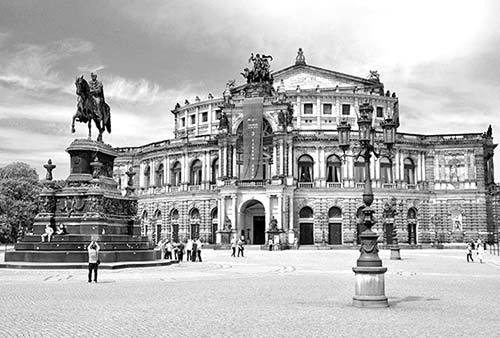
As you face the Opera House, the big building to your left is the vast Zwinger complex (your next stop). The smaller Neoclassical building farther to your left is a former guardhouse called the Schinkelwache. If it looks out of place, that’s because it was designed in a Prussian Classicist style by the architect Karl Friedrich Schinkel, who was also responsible for some of Berlin’s most impressive Neoclassical buildings. Today the Schinkelwache functions as a popular café and the opera’s box office.
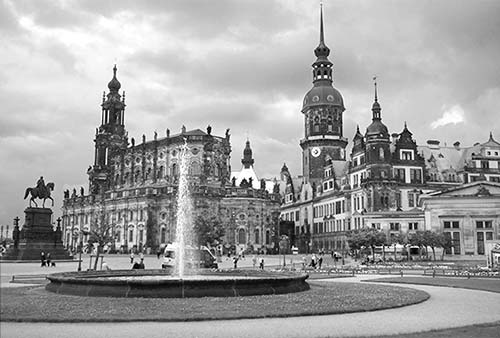
Behind you, across the square from the Opera House, are the Hofkirche (with its distinctive green-copper, onion-domed steeple) and the sprawling Royal Palace, both worth visiting and described later. All the buildings you see here—Dresden’s Baroque treasures—are thorough reconstructions. The originals were destroyed in a single night by American and British bombs, with only walls and sometimes just foundations left standing (see “The Firebombing of Dresden” sidebar, later). Dresden has been rebuilding ever since.
A number of the Old Town’s historical buildings, both original and rebuilt, are made from local sandstone—most of it looking really sooty. It’s not from pollution or firebombing (as many visitors presume), but natural oxidation that turns the stone black in about 50 years. Many facades and statues, once restored, are now given a silicon treatment that lets the stone breathe but keeps it from going black.
• Head to the gap between the Semperoper and the Zwinger. Standing in front of the recommended Alte Meister Café is a statue of Carl Maria von Weber, the composer whose Der Freischütz was the last opera performed in the Semperoper before its destruction in 1945—and the first opera performed when the building reopened in 1985.
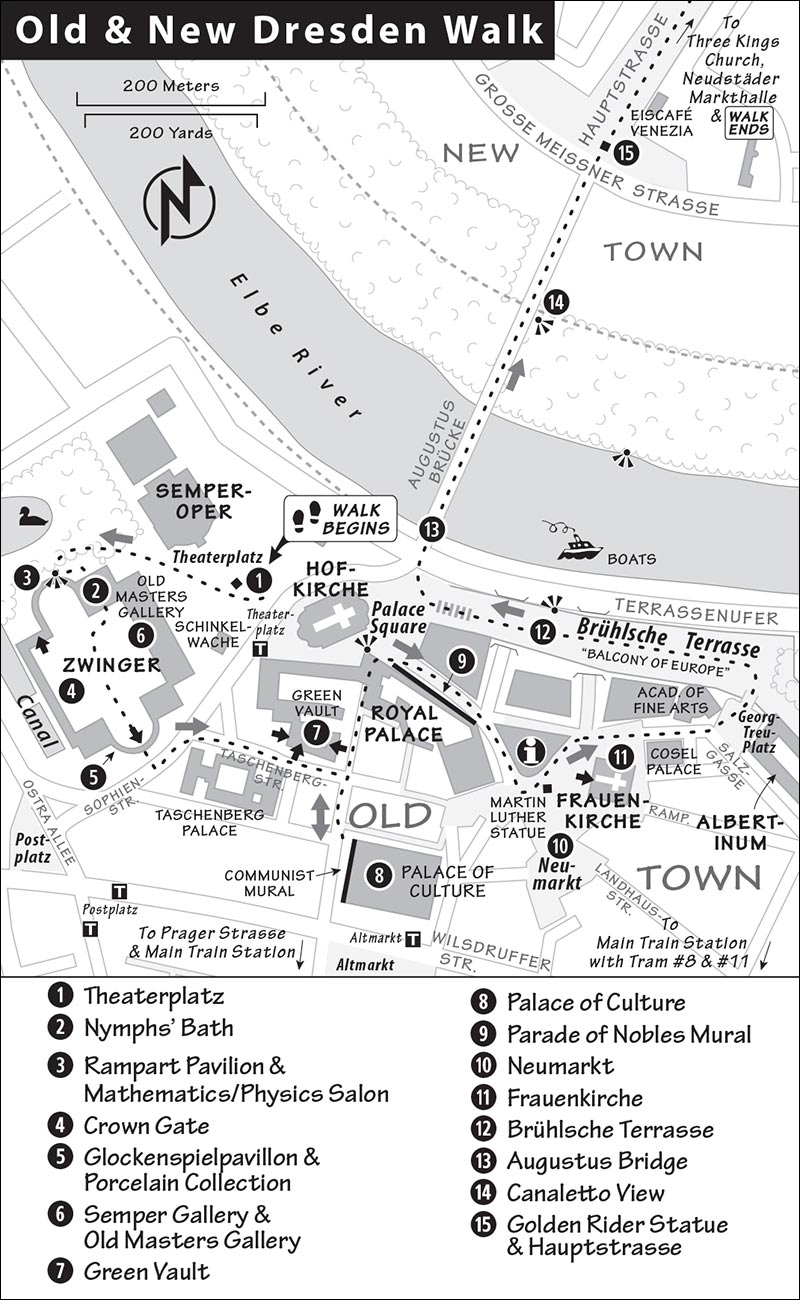
To the right of Weber, go up the stairs and hang a left up the path. Head past the adorable fountain at the top of the path to the balcony with a breathtaking view of the grand...
Zwinger
This Baroque masterpiece, once the pride and joy of the Wettin dynasty, is today filled with fine museums. The Wettins ruled Saxony for more than 800 years, right up until the end of World War I (just like the Romanovs in Russia and the Habsburgs in Austria). Saxony wasn’t ruled by a king, but by a prince elector—one of a handful of nobles who elected the Holy Roman Emperor. The prince elector of Saxony was one of Germany’s most powerful people. In the 18th century, the larger-than-life Augustus the Strong—who was both prince elector of Saxony and king of Poland—kicked off Saxony’s Golden Age.
The word “Zwinger” refers to the no-man’s-land moat between the outer and inner city walls. As the city expanded, the pavilions and galleries you see today were built. Although the Zwinger buildings might look like a palace to us commoners, no one ever lived here—it was solely for pleasurable pursuits. By Augustus’ time, the Zwinger was a venue for Saxon court celebrations (note how the decor—cherubs, wine grapes, comely maidens—is all about royal partying, rather than royal power). Imagine an over-the-top royal wedding in this setting. The courtyard served as a spot for open-air festivities, complete with gardens and orange trees in huge Chinese porcelain pots. Even today, the courtyard hosts the occasional gala or classical concert.
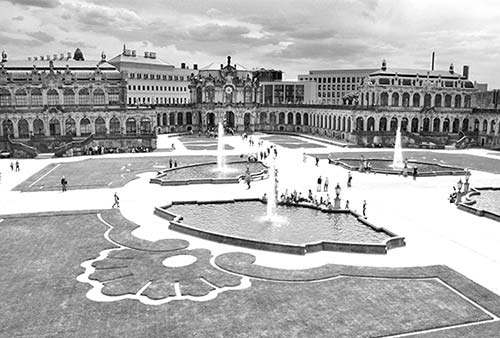
As you stand on the balcony, imagine yourself as an 18th-century Dresden burgher, watching one of Augustus’ wild parties in the courtyard below. If you visit the Old Masters Gallery (described later), you’ll see the 1752 version of this balustrade view in Bernardo “Canaletto” Bellotto’s painting, Zwinger Courtyard in Dresden.
• Cross the balcony to the left to enjoy a view of the enclosed Nymphs’ Bath from above, then take the small stairs at the top down to its pool.
2 Nymphs’ Bath
Here, at what is perhaps the city’s favorite fountain, 18th-century aristocrats relaxed among cascading waterfalls and an open-air grotto, ringed by sexy sandstone nymphs. It’s textbook Baroque, with its pilasters and poolsides evoking falling water and an invisible wind machine conveniently blowing open the robes of eager-to-frolic maidens.
• From the pool, cross through the glassy orangery (housing the Französische Pavillon and a skippable multimedia exhibit) all the way into the middle of the huge...
Zwinger Courtyard
Stand in place here to survey the four wings, starting with the 3 Rampart Pavilion (Wallpavillon)—the one you just came from, marked up top by Hercules hoisting the earth. The first wing of the complex to be built, it includes an orangery capped with a sun pavilion built for Augustus’ fruit trees and parties. Hercules—the ultimate strongman (who happens to have Augustus’ features)—is a fitting symbol for Augustus the Strong. The other side of this wing (on the left) houses the fun Mathematics-Physics Salon.
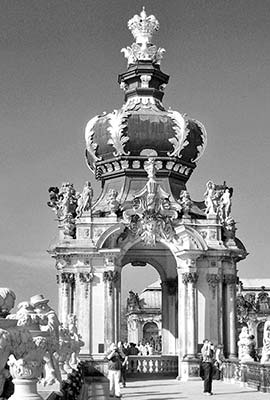
Turn farther to the left, facing the 4 Crown Gate (Kronentor). The gate’s golden crown is topped by four golden eagles supporting a smaller crown—symbolizing Polish royalty (since Augustus was also king of Poland).
Turn again to the left to see the 5 Glockenspielpavillon. The glockenspiel near the top of the gate has 40 bells made of Meissen porcelain (bells chime every 15 minutes and play a sweet 3-minute melody at 10:15, 14:15, and 18:15, plus 20:15 in summer). If you’re here when they play, listen to the delightful chimes of the porcelain—far sweeter than a typical metal bell. Tunes range from Vivaldi to Mozart and Weber. This wing of the Zwinger also houses Augustus the Strong’s Porcelain Collection.
Turn once more to the left (with the Crown Gate behind you) to see the stern facade of the 6 Semper Gallery. This Zwinger wing was added to the original courtyard 100 years later by Gottfried Semper (of Opera House fame). It houses Dresden’s best painting collection, the Old Masters Gallery.
You are surrounded by three of Dresden’s top museums. Anticipating WWII bombs, Dresdeners preserved their town’s art treasures by storing them in underground mines and cellars in the countryside. This saved these great works from Allied bombs...but not from the Russians. Nearly all the city’s artwork ended up in Moscow until after Stalin’s death in 1953, when it was returned by the communist regime to win over their East German subjects.
• Now’s a good time to visit your choice of the Zwinger museums. When you’re ready to move on, exit the courtyard through the Glockenspielpavillon.
Halfway through the corridor, look for the engraved timelines telling the history of the Zwinger in German: to the right, its construction, and to the left, its destruction and reconstruction. It’s got a Soviet spin: On February 13, 1945, Anglo-American bombers “completely destroyed” the city. On May 8, 1945, the Soviet army “liberated” Dresden from “fascist tyranny,” and from 1945 to 1964, the Zwinger was rebuilt with the “power of the workers and peasants.”
Friedrich Augustus I of the Wettin family exemplified royal excess and made Dresden one of Europe’s most important cities of culture. Legends paint Augustus as a macho, womanizing, powerful, ambitious, properly Baroque man—a real Saxon superstar. A hundred years after his death, historians dubbed Augustus “the Strong.” Today, tour guides love to impart silly legends about Augustus, who supposedly fathered 365 children and could break a horseshoe in half with his bare hands.

As prince elector of Saxony, Augustus wheeled and dealed—and pragmatically converted from his Saxon Protestantism to a more Polish-friendly Catholicism—to become King Augustus II of Poland. (You’ll notice the city center features both the fancy Protestant Frauenkirche and the huge, prominent Catholic Hofkirche, as Augustus was finessing it both ways to be acceptable to both realms.) Like most Wettins, Augustus the Strong was unlucky at war, but a clever diplomat and a lover of the arts.
The Polish people blame Augustus and his successors—who were far more concerned with wealth and opulence than with sensible governance—for Poland’s precipitous decline after its own medieval Golden Age. According to Poles, the Saxon kings did nothing but “eat, drink, and loosen their belts” (it rhymes in Polish).
Whether you consider them the heroes of history, or the villains, Augustus and the rest of the Wettins—and the nobles who paid them taxes—are to thank for Dresden’s rich architectural and artistic heritage.
• As you exit the corridor, cross the street and the tram tracks and turn left, then curve right, walking down the street called Taschenberg, with the yellow Taschenberg Palace on your right. Built for Augustus’ mistress, it eventually housed the crown prince. This building was ruined until 1990, but today it’s a five-star hotel. The yellow-windowed sky bridge ahead connects the Taschenberg with the prince electors’ Royal Palace. The gate on your left is one of several entrances to the palace, with its 7 Green Vault treasuries and other sights.
Continue along Taschenberg and under the sky bridge. Ahead of you and to the right, the blocky modern building is the...
8 Palace of Culture (Kulturpalast)
Built by the communist government in 1969, today this hall is used for concerts. The building’s exterior mural depicts communist themes: workers, strong women, well-cared-for elders, teachers and students, and—of course—the red star and the seal of the former East Germany. Check out the bronze doors on the street side that give a Marxist interpretation of the history of Dresden. Little of this propagandist art, which once inundated the lives of locals, survives in post-communist Germany (what does survive, like this, is protected). The refurbished concert hall inside is home to the Dresden Philharmonic.
• Now turn left, leaving the Palace of Culture behind you. Walk along Schlossstrasse, with the Royal Palace on your left, noticing the postwar construction on your right—a mix of new and old. After passing through a tunnel (likely with musicians taking advantage of the fine acoustics), you’ll emerge onto Palace Square. Ahead and to the left is the Katholische Hofkirche and another elevated passage, designed to allow royalty to go to church without the hassle of dealing with the public. (For a description of the interior, see “Sights in Dresden,” later.)
Now turn around and face the gate you just came through. You’re looking at the palace complex entry, with the Watchman’s Tower above on the right. To the left, next to one of the palace’s entrances, walk toward the long, yellow mural called the...
9 Parade of Nobles (Fürstenzug)
This mural is painted on 24,000 tiles of Meissen porcelain. Longer than a football field, it illustrates seven centuries of Saxon royalty. It was created to commemorate Saxon history and heritage after Saxony became a part of Germany in 1871.
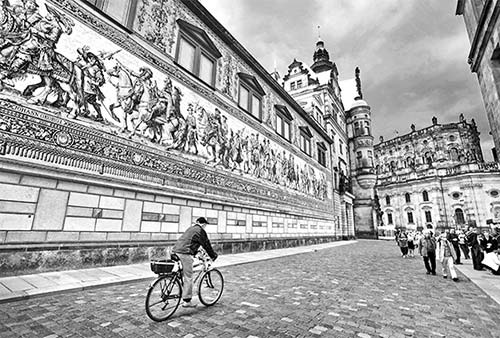
The very last figure in the procession (the first one you see, coming from this direction) is the artist himself, Wilhelm Walther. In front of him are commoners (miners, farmers, carpenters, teachers, students, artists), and then the royals, with 35 names and dates marking more than 700 years of Wettin rule. Walk the length of the mural to appreciate the detail. The artist carefully studied armor and clothing through the ages, accurately tracing the evolution of weaponry and fashions for seven centuries.
Before you get too far along, stop at 1694. That’s Augustus the Strong (August II), the most important of the Saxon kings. His horse stomps on the rose (symbol of Martin Luther, the Protestant movement, and the Lutheran church today) to gain the Polish crown. The first Saxon royal, still farther along, is Konrad der Grosse (“the Great”). And waaay up at the very front of the parade, an announcer with a band and 12th-century cheerleaders excitedly herald the arrival of this wondrous procession. The porcelain tiles are originals (from 1907)—they survived the Dresden bombing. They were fired three times at 2,400 degrees Fahrenheit when created...and then fired again during the 1945 firestorm, at only 1,800 degrees.
• When you’re finished looking at the mural, dogleg right and walk into the big square, where a statue of Martin Luther stands tall.
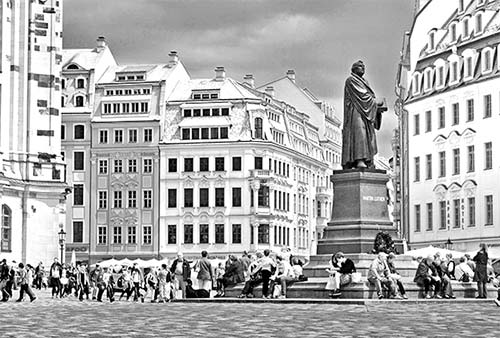
10 Neumarkt
This “New Market Square” was once a central square ringed by the homes of rich merchants. After many years of construction, it is once again alive with people and cafés, and even a few frilly facades that help you picture what the square looked like in its heyday. The statue of Martin Luther shows him holding not just any Bible, but the Word of God in German, which he personally translated from Hebrew and ancient Greek so that regular people could wrestle with it directly (this is, in a sense, what the Protestant Reformation was all about). When translating, Luther used colloquial, everyday German, forming the basis for what’s now considered “High German.” So besides being the Great Reformer, Luther is considered the father of the modern German language. (For more on Luther—who came from this part of Germany and spent most of his life in nearby Erfurt and Wittenberg—see the Luther Trail chapter.) Toppled in 1945, Luther was cleaned up and is now back on his feet again.
• The big church looming over the square is the...
11 Frauenkirche (Church of Our Lady)
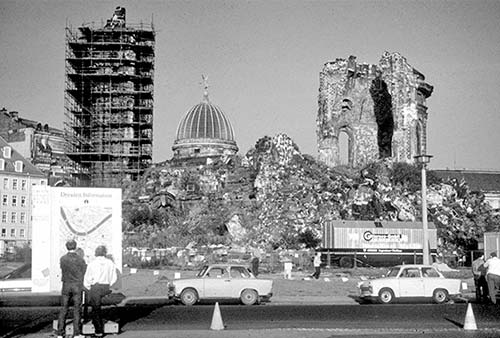
This church is the symbol and soul of the city. When completed in 1743, this was Germany’s tallest Protestant church (310 feet high). Its unique central-stone-cupola design gave it the nickname “the stone bell.” While it’s a great church, this building garners the world’s attention primarily because of its tragic history and phoenix-like resurrection: On the night of February 13, 1945, the firebombs came. When the smoke cleared the next morning, the Frauenkirche was smoldering but still standing. It burned for two days before finally collapsing. After World War II, the Frauenkirche was left a pile of rubble and turned into a peace monument. Only after reunification was the decision made to rebuild it completely. It reopened to the public in 2005.
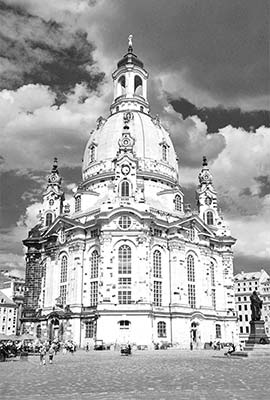
Circle around the left side of the church to find a big hunk of the bombed rubble (near door E, river side of church). Notice the small metal relief of the dome that shows where this piece came from.
• With your back to the rebuilt church, head right to find the nearby dome nicknamed “the lemon juicer.” This caps the exhibition hall of the Academy of Fine Arts. Walk past that and hook left into the small, grassy Georg-Treu-Platz, which is surrounded by imposing architecture. The grand Neo-Renaissance building to the right is the Albertinum. Long the home of the Saxon armory, it was rebuilt in the 1880s in Neo-Renaissance style. Today it’s an art gallery with the city’s best collection of 19th- and 20th-century art.
Walk through the square and climb the steps to the ramparts, now a park. Head through the park toward the banister for an Elbe River view. Each summer, the city sets up a popular amphitheater on the bank directly across the Elbe (offering nearly nightly events—such as concerts and movies). Now continue along the walkway back towards the tower of the Katholische Hofkirche and the Royal Palace to stroll the length of the...
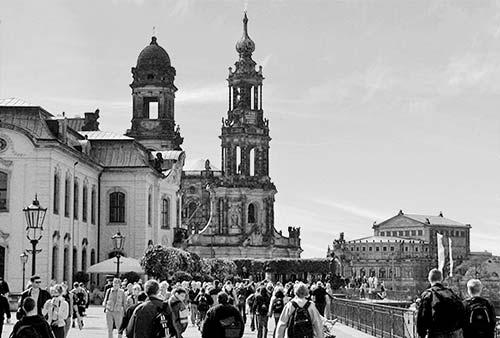
12 Brühlsche Terrasse
This delightful promenade overlooking the river was once a defensive rampart—look along the side of the terrace facing the Elbe River to see openings for cannons. Later, it was given as a reward to a Saxon minister named Brühl, who had distinguished himself as a tax collector, raising revenue for Frederick Augustus II’s state treasury. In the early 1800s, it was turned into a public park, with a leafy canopy of linden trees, and was given the nickname “The Balcony of Europe.”
On the night of February 13, 1945, during the final months of World War II, American and British bomber crews firebombed Dresden to near-ruin. More than 3,500 tons of explosives decimated the city over three waves of attacks. Hot hurricane-force wind tunnels tore through the streets.
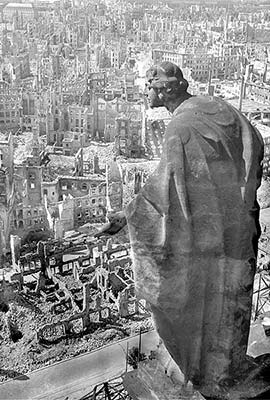
With few air-raid shelters in the city, civilians had little place to take cover: More than 25,000 people were killed in just one night, and 75 percent of the historical center was destroyed. American Kurt Vonnegut, who was a POW in Dresden during the firebombing, later memorialized the event in his novel Slaughterhouse-Five. The ruthlessness of the civilian firebombing made it one of the war’s most controversial attacks.
Why Dresden was targeted is debated. The city had no obvious strategic military importance. The Allies claimed the bombing was an effort to disrupt Nazi communication and to facilitate a Soviet invasion. More likely, the bombing was an act of vengeance and an attempt to demoralize the German population.
As you walk through Dresden, look for circa-1946 photos showing the devastation. An inscription on Altmarkt square calls Dresden “a place of remembrance” and asks passersby to recall that “thousands of victims’ bodies were burnt here” in the raids. It concludes: “Thus the horrors of war, unleashed by Germany upon the whole world, came back to be visited upon our city.”
Reconstruction under the communists was lackluster. But after the Berlin Wall fell and Germany was reunited, new funding became available for Dresden to restore its historic center. The city rebuilt the Royal Palace and Frauenkirche. Bombed-out blocks and derelict parking lots became huge department stores and apartment complexes with deep underground garages. The transition into a thriving cultural center is well underway, but the city remains a poignant reminder of the destruction caused by war.
Look out over the Elbe River. Dresden claims to have the world’s largest and oldest fleet of historic paddleboat steamers: nine riverboats from the 19th century. The hills in the distance (to the left) are home to vineyards, producing some of Germany’s northernmost wine. Because only a small amount of land is suitable for grape growing, the area’s respected, expensive wine (mostly white) is consumed almost entirely by locals.
• At the far end of the terrace, stop at the grove of linden trees with a fountain at the center, and look out at the...
13 Augustus Bridge
The Augustusbrücke has connected Dresden’s old and new towns since 1319, when it was the first stone bridge over the river. During massive floods in August 2002, the water reached nearly to the top of the arches. Under the arches, you can see the distinct edge of the discoloration showing the high-water mark.
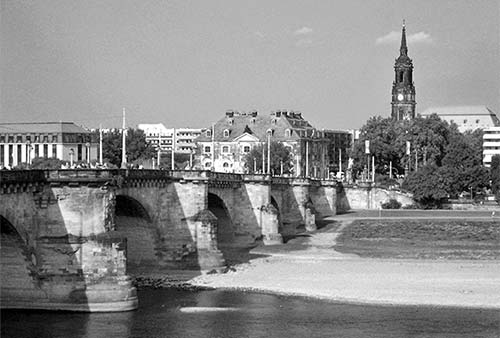
At the far end of the Augustus Bridge is a golden equestrian statue, a symbol of Dresden. It’s Augustus the Strong, nicknamed the “Golden Rider” (Goldene Reiter). Beyond that is the spire of the Three Kings Church.
• We’re back near where we started, which makes this a good stopping point if you want to end this walk here. But for a balanced Dresden visit, you need to cross the river. Don’t worry about having to walk all the way back; we’ll wrap up at a tram stop from where you can effortlessly whisk back to the Old Town or the main train station.
To continue, walk across the bridge (on its right side), enjoying the Elbe scene. Before leaving the bridge, stop at the last pedestrian turnout.
14 Canaletto View
Enjoy the grand city view from the bridge: the glass “lemon juicer” dome of the Academy of Fine Arts, capped by a trumpeting gold angel, and the other venerable facades, domes, and spires of regal Dresden. This is known as the “Canaletto view” for the Italian painter Bernardo Bellotto, who spent 12 years here immortalizing city vistas while on the Wettin payroll as a court painter; you can see his canvases at the Old Masters Gallery. Bellotto sometimes goes by the nickname “Canaletto”: His uncle and teacher was Antonio Canal (a.k.a. the more famous Canaletto), who painted similar landscapes of Venice. The broad riverbank below, called the Elbe Meadow, provides flood protection.
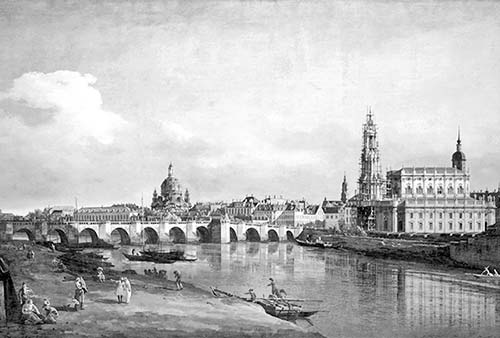
Downstream (far right), the interesting mosque-shaped building in the distance is called Yenidze. Originally a tobacco factory designed to advertise Turkish cigarettes, today it’s an office building with restaurants.
• At the end of the bridge, cross the street toward the stone building with five arched windows, then cross Grosse Meissner Strasse and head toward the golden statue.
15 The Golden Rider and Hauptstrasse
Since its construction in 1736, the gleaming statue of Augustus the Strong—the Golden Rider—has faced east, toward Augustus’ kingdom of Poland and trade routes to Warsaw and Kiev.
The broad, inviting, and tree-lined Hauptstrasse stretches from here into the New Town (Neustadt). On the left is Watzke, a popular (and recommended) peoples’ brewery/restaurant. On the right is Eiscafé Venezia, an ice-cream parlor since 1979 and a reminder of the communist heritage here. A monument in the wall (just past the ice-cream palace) marks the 30th anniversary of the creation of the communist “German Democratic Republic” (or DDR) in 1949. On that important anniversary, in 1979, Hauptstrasse was opened as a showpiece of DDR urban design—a landscaped utopian workers’ district with the best shops, affordable apartments, and delicious ice cream—everything a communist worker could want.
Stroll down Hauptstrasse a few blocks (past more recommended restaurants) until you see the towering Three Kings Church (Dreikönigskirche) on the left. Immediately across Hauptstrasse from the church stands the Neustädter Markthalle. This busy neighborhood market, a 19th-century iron-and-steel structure, is filled with fun shops selling local handicrafts and pleasant eateries (Mon-Sat 8:00-20:00, closed Sun).
While three-quarters of Dresden’s Old Town was decimated by Allied firebombs, much of the New Town survived. Some of Dresden’s 18th-century apartment buildings still stand, such as those facing the charming square that lies under the church’s tower, a few steps down An der Dreikönigskirche from where you’re standing (several recommended restaurants face this square).
This walk ends where Hauptstrasse ends: at the grand Albertplatz (flanked by twin Art Nouveau fountains).
• Just beyond Albertplatz lies the Outer New Town, a bohemian district of swap shops, pubs, cafés, and galleries (described under “Nightlife in Dresden,” later).
From Albertplatz you can stop for a meal or hop on a handy tram (for a quick return to the Frauenkirche or main train station, take tram #3 or #7; tram #8 goes near the Albertinum and Frauenkirche before also heading to the main station; tram #11 stops at the Neustadt train station, then the Zwinger on its way to the main station).
Sights in Dresden
▲▲Old Masters Gallery (Gemäldegalerie Alte Meister)
▲Mathematics-Physics Salon (Mathematisch-Physikalischer Salon)
▲Porcelain Collection (Porzellansammlung)
Royal Palace (Residenzschloss)
▲▲Historic Green Vault (Historisches Grünes Gewölbe)
▲▲New Green Vault (Neues Grünes Gewölbe)
▲Turkish Chamber (Türkische Cammer)
▲State Apartments (Paraderäume)
Watchman’s Tower (Hausmannsturm)
▲▲Frauenkirche (Church of Our Lady)
▲Katholiche Hofkirche (Catholic Church of the Royal Court)
German Hygiene Museum (Deutsches Hygiene-Museum)
Volkswagen’s Transparent Factory (Gläserne Manufaktur)
▲New Town (Neustadt) and Outer New Town (Äussere Neustadt)
▲▲Military History Museum (Militärhistorisches Museum der Bundeswehr)
MUSEUMS IN THE OLD TOWN
Dresden’s most established museums are in the center of the Old Town: the Zwinger, the Royal Palace, and the Albertinum. For discounts, see “Tourist Information,” earlier in this chapter. For timed ticketing at the Historic Green Vault, see its listing under the Royal Palace.
Zwinger Museums
Three museums are located off the Zwinger courtyard: the Old Masters Gallery (with the stern facade), Mathematics-Physics Salon (under Hercules holding the earth), and Porcelain Collection (under the clock). All exhibits are well described in English, but their audioguides will enrich your visit. At each museum you’ll need to show your ticket and check large bags.
Cost: €14 combo-ticket covers all three museums; €6 to visit either the Mathematics-Physics Salon or the Porcelain Collection; Old Masters Gallery requires the €14 combo-ticket (whether you visit the others or not).
Hours: Tue-Sun 10:00-17:00, closed Mon.
Information: +49 351 4914 2000, www.skd.museum.
▲▲Old Masters Gallery (Gemäldegalerie Alte Meister)
Dresden’s best collection of paintings, housed in the Zwinger’s Semper Gallery, features works by Raphael, Titian, Rembrandt, Rubens, Vermeer, and more. It is particularly enjoyable for its “quality, not quantity” approach to showing off great art. The Old Masters Gallery was Dresden’s first big public building to be reopened after World War II, in 1956.
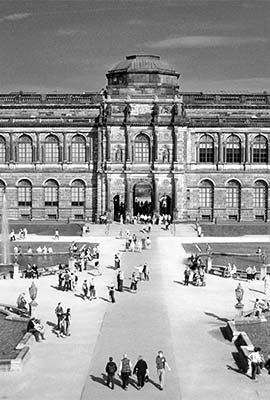
Visiting the Museum: Before you enter, ask about the audioguide app and a map to help you navigate. Note that the building recently completed an extensive years-long renovation; while most of the major works mentioned here should be on display, they may have moved around. The ground floor houses classical antiquity; the next two levels have artworks up to 1800. The gallery wall colors let you know where the paintings are from: Italian art is shown against red walls; Spanish and French on blue; and Dutch and German on green.
Augustus the Strong and his son, Augustus III, supported much of the purchasing of the art for this collection. Their agents traveled across Europe to add to their holdings, but they also systematically included German works of the late Gothic and early Renaissance periods (15th and 16th centuries). Look also for lesser-known works by big Italian names, from Botticelli to Mantegna to Correggio, as well as works by Albrecht Dürer. Be sure to seek out the Netherlandish rooms, with walls of paintings by Lucas Cranach, father and son, including Cranach the Younger’s matching Adam and Eve portraits (after 1537).
Among the collection’s highlights from the 16th through 18th century is a prized Renaissance piece. Augustus charged his agents with finding a good painting by the genius Raphael, and they succeeded. In Room 206, the masterful Sistine Madonna (1513) features the Madonna and Child, two early Christian martyrs (Saints Sixtus and Barbara), and wispy angel faces watching from the clouds. Mary is in motion, offering the Savior to a needy world. Note Mary’s pensive gaze—this Madonna was originally part of a larger altarpiece, and her eyes were once directed at a painting of the Crucifixion. These days, the gaze of most visitors is directed at the pair of whimsical angels in the lower foreground—Raphael added them after finishing the painting just to fill the empty space. These lovable tykes—of T-shirt and poster fame—are bored...just hanging out, oblivious to the exciting arrival of the Christ Child just behind them. They connect the heavenly world of the painting with you and me.

In another big hall, you’ll enter the Baroque world of Peter Paul Rubens—everything is richly textured, vividly colored, and lushly emotional. Belgian Baroque works are also on display, as well as the work of Venetian master Giorgione, who died in 1510 while in the middle of painting his sumptuous Sleeping Venus (Titian stepped in to finish it). Giorgione’s idealized Venus sleeps soundly, at peace with plush nature (Room 104).
In Room 207, the star is a locally beloved Italian artist named Bernardo Bellotto, nicknamed “Canaletto” like his more well-known uncle. Bellotto’s paintings of mid-18th-century Dresden offer a great study of the city, showing the Hofkirche (still under construction) and the newly completed Frauenkirche. Compare them with how the city appears today—it’s especially amazing how familiar it looks when you consider how heavily the city was bombed.
The mood shifts with the humbler, quieter art of the Dutch Masters, including Rembrandt. Among the fine examples of his works is a jaunty self-portrait—with wife Saskia on his lap and a glass of ale held aloft (Room 129). Nearby are fine works by Anthony van Dyck, Rubens’ talented apprentice who brought a focus and refinement to his master’s sloppy brushstrokes.
Among works from the 17th and 18th centuries, you’ll see Venetian landscapes by the “original” Canaletto (Antonio Canal); small-scale Northern European works; gauzy aristocratic portraits; and Johann Alexander Thiele’s two Caroussel Comique paintings depicting fanciful celebrations in the Zwinger. But the real highlight of this period is Johannes Vermeer’s pristine and rare Girl Reading a Letter at an Open Window. This pensive scene, executed with Vermeer’s characteristic touch, is a fine way to wrap up this museum.
▲Mathematics-Physics Salon (Mathematisch-Physikalischer Salon)
This fun collection (at the end of the courtyard with the Hercules-topped pavilion; ascend the staircase in the left corner) features scientific gadgets from the 16th to 19th century, including measuring, timekeeping, and surveying instruments, as well as globes and telescopes—all displayed like dazzling works of art. Anyone with even a modest scientific bent will find something of interest. An audioguide app is available to download using the museum’s Wi-Fi.
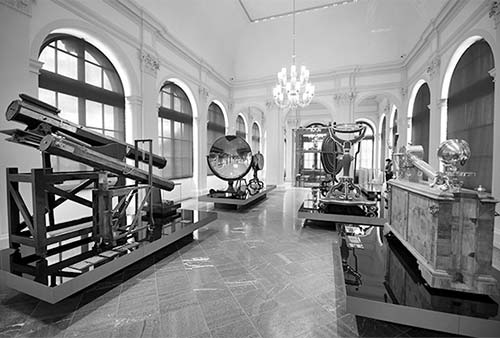
Visiting the Museum: As you enter, most of the exhibits are in long halls to the left (measurement) and right (timekeeping). Start in the left hall, with its collection of automatons, including an elaborate music box and a mechanical bear who plays the drums—pretty exciting stuff in 1625 (a video shows the wind-up action). This wing also has compasses, rulers, protractors, primitive encoding devices, scales, an astrolabe, and Augustus the Strong’s elaborate astronomical clock.
In the right hall—amidst a wide variety of clocks—look for the mechanical adding machine devised by French mathematician Blaise Pascal, which could do sums like a modern calculator back in 1650. A clever touch-screen replica lets you try it out and shows how the machine “carried the tens.” The side room (Neuer Saal) has a large collection of old globes.
The small upper floor, reached only by the glass elevator in the atrium, displays “Instruments of the Enlightenment”: telescopes (the salon was originally part of the Saxon state observatory); an early-18th-century vacuum pump; and “burning mirrors” that were valued for their ability to focus the sun’s rays and, like a magnifying glass, create high-temperature light beams for use in scientific experiments. (I imagine a few 18th-century bugs were burnt along the way.)
▲Porcelain Collection (Porzellansammlung)
Every self-respecting European king had a porcelain works, and the Wettins had the most famous one, at Meissen (a charming town 10 miles north of here on the Elbe River). They inspired other royal courts to get into the art form. They also collected porcelain from around the world—from France to Japan and China.
Augustus the Strong was obsessed with the stuff...he liked to say he had “porcelain sickness” (for more on his porcelain fixation, see “Saxony’s White Gold” sidebar). Here you can enjoy some of his symptoms, under chandeliers in elegant galleries flooded with natural light from the huge windows over the Zwinger courtyard. Today it’s the largest specialist ceramics collection in the world.
Visiting the Museum: The royal porcelain collection fills the end of the Zwinger marked by the clock tower. Before entering, look closely at the clock with 40 white porcelain bells, which ring out classical music several times a day. Just above the clock is Augustus’ coat of arms, with the two crossed swords in the center that eventually became the famous trademark (one of the world’s oldest) of the royal Meissen porcelain factory. The collection is in two wings (some to the left, but with the lion’s share to the right). Upstairs, behind the clock, is a pricey café with fine courtyard view tables.
Peruse the long halls of vases, tracing porcelain’s development through the outstanding collection of locally produced Meissen wares. A special attraction is the hall of white Meissen porcelain animals: life-size (or near-life-size) peacocks, eagles, emoting lions, monkeys, rhinos, and lapdogs.
Royal Palace (Residenzschloss)
This palace, the residence of the Saxon prince electors and kings, was one of the finest Renaissance buildings in Germany before its destruction in World War II. It’s currently being rebuilt in a years-long project, with galleries opening to the public as they are completed. The palace is highlighted by the Saxon treasuries: the Historic Green Vault (Augustus’ goodies displayed in reconstructed Baroque halls) and the New Green Vault (more royal treasures in contemporary display cases). Other attractions include the Royal Armory, showing off sumptuous armor for horse and rider; the State Apartments, where Augustus did his pompous preening; and the Turkish Chamber, one of the oldest collections of Ottoman art outside Turkey.
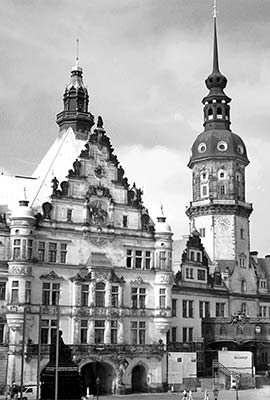
Cost: All sights in the palace—except the Historic Green Vault—are covered by a €14 ticket (or the two-day €22 Dresden Museums combo-ticket for all state museums—a better value, but it also excludes the Historic Green Vault). A €24.50 combo-ticket covers the Historic Green Vault and all palace sights (timed entry for Historic Green Vault; buy online in advance).
Without the combo-ticket, the Historic Green Vault requires a separate €14 timed-entry ticket (€2 surcharge to book in advance).
Hours: The entire complex is open Wed-Mon 10:00-17:00, closed Tue. The Historic Green Vault and New Green Vault may stay open until 20:00 on Fri. (Look for the “Blue Hour” ticket on these evenings.)
Information: +49 351 4914 2000, www.skd.museum.
Historic Green Vault Reservations: To protect these priceless items, the number of visitors each day is carefully controlled. To ensure your first choice of entry times, or during a busy period (weekend, holiday, or any time in December), it’s best to book in advance on the museum website. You’ll be given a 15-minute entry window (strictly enforced; once inside, you can stay as long as you like). Book online (www.skd.museum) or reserve by email (besucherservice@skd.museum).
If you haven’t booked ahead, your chances of getting a same-day slot are usually good, especially if you show up in the morning (90 tickets are available every half-hour). The number of spots still available (Karten) and for what entry times (Einlasszeit) are indicated on screens over each ticket desk.
Tours: The sights are all well explained by good, included audioguides—one covering the Historic Green Vault, and a different one for the rest of the complex. Be sure to ask for these (leave ID in exchange). Ask about a palace map to navigate the sprawling complex, and inquire about guided tours in English.
Orientation: The palace complex has three entrances, each leading to a glass-domed inner courtyard, where you’ll find the ticket windows and restrooms. Inside, the ground floor is home to the Baroque halls of the Historic Green Vault (where bag check is required); the first floor up has the New Green Vault, and the next floor up houses the Turkish Chamber, the Giant’s Hall (with the bulk of the Royal Armory), and the State Apartments.
▲▲Historic Green Vault (Historisches Grünes Gewölbe)
This famed, glittering Baroque treasury collection was begun by Augustus the Strong in the early 1700s. Over the years it evolved into the royal family’s extravagant trove of ivory, silver, and gold knickknacks, displayed in rooms as opulent as the collection itself. Damaged in the firebombing, the Green Vault has been painstakingly restored—including re-engineering the mirrors using the original methods, with tin and mercury. And despite a high-profile heist in 2019, the vast majority of its treasures are still on display and eminently worth a visit.
Visiting the Historic Green Vault: Your visit is designed to wow you in typically Baroque style—starting easy and crescendoing to a climax, taking a quick break, and finishing with a second climax. Following the included audioguide, you’ll spend about an hour progressing through the exhibition’s rooms. Most of the treasures are not behind glass. Inside, it feels like an almost sacred space, with people speaking in no more than whispers.
Your audioguide also describes treasures in the foyer (where you pick up and drop off the audioguide). Don’t miss the photos of the vault before the war and the small room in the corner with Reformation treasures, including Martin Luther’s signet ring.
Before entering the vault, cross to the end of the foyer and duck into the octagonal Room 1a. Here you’ll glimpse finely detailed wood reliefs, including Peter Dell the Elder’s 16th-century Resurrection of Christ (perhaps the first depiction of Jesus Christ Superstar). The rest of your visit is a one-way route through the vault’s lavish rooms.
The Amber Cabinet serves as a reminder of just how many different things you can do with fossilized tree sap (in a surprising range of colors), and the Ivory Room does the same for elephant tusks, with some strikingly delicate hand-carved sculptures. The White Silver Room, painted its original vermillion color, holds a goblet carved from a rhino horn. During the firebombing of Dresden, much of this room survived thanks to the iron grates encasing the windows. The Silver-Gilt Room displays tableware and gold-ruby glass.
The wide variety of items in the largest room—the aptly named Hall of Precious Objects—includes mother-of-pearl sculptures, ostrich-egg and conch-shell goblets, and old portraits of Saxon rulers.
The oak cupboards that line the Coats-of-Arms Room are emblazoned with copper-and-gold coats-of-arms boasting of the various territories in Augustus the Strong’s domain.
The vault’s highlight is the grandly decorated Jewel Room—essentially, Saxony’s crown jewels. The incredible pieces in here, collectively, are considered a Gesamtkunstwerk—an artwork whose perfection comes from the coordinated sum of its parts. The two statues titled Moor with Emerald Tier—a “Moor” clad in jewels and gold (and a Native American headdress)—were designed to carry a chunk of rock embedded with large gems. Nearby, an ornately decorated obelisk trumpets the greatness of Augustus the Strong.
The exhibit concludes in the relatively subdued Room of Bronzes, with its equestrian statue of Augustus the Strong (designed to compete with similar depictions of his rival, the French Sun King Louis XIV), as well as a statue of Apollo surrounded by six women. The last room is filled with Renaissance bronze statues, including Giambologna’s Mercury.
• The rest of the Royal Palace museums are upstairs. Before heading up, return downstairs to pick up the second essential and included audioguide.
Directly upstairs from the Historic Green Vault, on level 1, is the...
▲▲New Green Vault (Neues Grünes Gewölbe)
If you consider only the objects on display—not the setting—this is even more impressive than the Historic Green Vault. The collection is arranged in a modern museum space, chronologically from the Renaissance to the 19th century, in nine rooms in a clockwise route.
Visiting the New Green Vault: In the Hall of Works of Art (the first room you enter), look for the gilded rolling ball clock, an engineering delight from about 1600. One rock crystal ball twists down and around 16 bends of the tower-like clock in precisely 60 seconds, while a second ball is raised inside the clock case. As this happens, the minute hand advances, and Saturn strikes a bell with his mighty hammer. Nearby, the Drinking Vessel in the Shape of Daphne has a magnificent coral crown. Farther into the room, an ivory column from 1589 (which looks like Berlin’s TV Tower) is another elaborate clock: The golden Cupid on top points to the hour with a wand. It also incorporates a music box featuring a dining scene carved inside an ivory sphere, ship-in-a-bottle-style. In the Micro-Cabinet in the corner, a magnifying glass helps you marvel at an earring from 1589 featuring a cherry pit carved with 185 minuscule faces.
The precious centerpiece of the Crystal Cabinet is a serving bowl in the shape of a galley ship, with intricate scenes carved on the side—it’s hard to imagine anyone filling it with gravy (and they probably never did; items like this were made just for showing off).
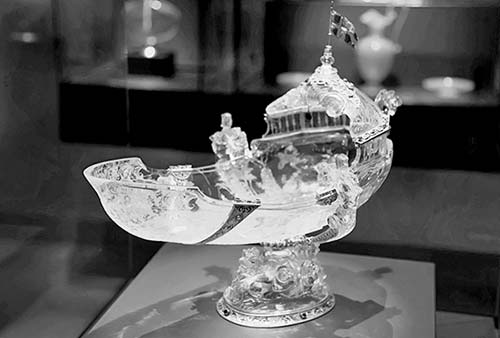
The First Elector’s Room features Renaissance treasures, such as an ivory frigate with delicately carved, nearly transparent sails and golden rigging, all of it supported by a heroic Neptune riding his sea horses.
Past the Second Elector’s Room, the Room of Royal Precious Objects holds a collection of irregular pearls fashioned into amusing figures, such as a fat fiddler and an ice skater. The nobles of this era were fascinated with gems and precious stones, which they prized much more than the craftsmanship exhibited in the Renaissance items we saw earlier.
The Dinglinger Hall features the masterpieces of court jeweler Johann Melchior Dinglinger. His 145-piece golden coffee set is pure gold (circa 1700), iced with enamel to imitate porcelain and crusted with thousands of precious stones. At the other end of the room is his ornate, captivating ensemble from 1708 depicting the Grand Mogul Aurengzeb, who sits enthroned on his birthday awaiting his presents (including a white elephant). Like a royal dollhouse, the 132 figurines and 32 gift items—all of pure gold glazed with enamel—are movable for the king’s pleasure.
The Traveling Treasures Room contains the custom leather cases the king used to pack his favorite playthings to Poland. A few rooms farther, in the Watzdorf-Kabinett, the Dresden Green diamond sparkles all on its own—one huge green stone decorated with more than 400 twinkling white diamonds.
• The next stops are on floor 2. If you head upstairs directly from the New Green Vault, you’ll find them in this order.
▲Turkish Chamber (Türkische Cammer)
From the 16th through 19th century—as Ottomans pecked away at the southeastern corner of Europe—Western European elites were crazy about all things Turkish, and Augustus the Strong was no exception. (Clearly people are fascinated by what they fear.) Augustus collected Ottoman art with a passion, even dressing up as a sultan in his own court. This exceptional (if dimly lit) collection of Ottoman art started as war booty from the Habsburgs—given as thanks for Saxon support in holding off invasions—and then grew over several centuries through diplomatic gifts, trades, and shopping trips to Constantinople.
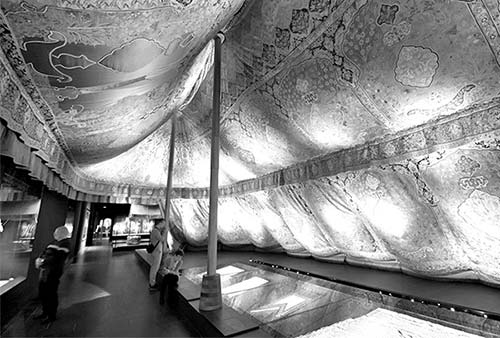
Among the armor, swords, guns, saddles, and tapestries, one highlight is a 60-foot-long, three-poled ornamented silk tent from the 17th century—the most complete three-masted Ottoman tent on display in Europe. In the adjoining room, look for the Relief of Vienna 1683 painting, showing the epic battle when, for the first time, Ottoman forces were turned back from Christian lands—with the help of the Saxons, of course.
• Continue directly into the Giant’s Hall (Reisensaal), which holds the...
▲▲Royal Armory (Rüstkammer)
Dazzling, original, centuries-old armor fills the biggest space in the palace—once the scene of medieval war games. Today, its exhibits recall those breathtaking pageants of the 16th century with jousting models (something rich boys did when there was no war to fight). This is the largest collection of armor by 16th-century Europe’s leading designer, Anton Peffenhauser, and it’s an unusual chance to see armor displayed in dynamic fighting stances (instead of stiffly standing). The parade armor of King Erick XIV of Sweden (on horseback, with red-and-yellow plume)—from 1565, slathered in Herculean symbolism and coordinated perfectly with his horse—is considered the “Sistine Madonna” of the collection. Stand before it and imagine this coming at you. The black, no-nonsense, Darth Vader suits at the end of the hall were actually used in the Thirty Years’ War (around 1620). Near the back of the room, check out the wee training suits of armor for little electoral princes.
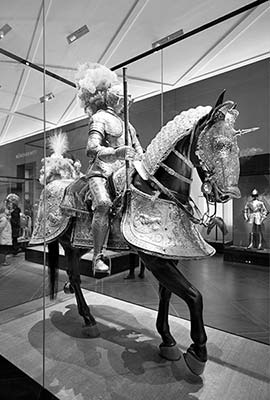
• A doorway in the corner at the far end of the room leads to the...
Coin Cabinet (Münzkabinett)
This beautifully presented collection of historical coins is one of the best and largest in Europe, smartly organized to tell the story of how money as we know it came to be. If you have any interest in seeing a huge collection of coins, this is the one to visit—but these rooms are easily skippable for all but the most numismatically inclined.
• Though the route may change as reconstruction continues, look for the door leading on to the...
▲State Apartments (Paraderäume)
One of the most important jobs of a Baroque ruler, believe it or not, was simply showing off, so Augustus wanted this part of the palace to be a stage set for his wealth and prestige. You’ll traipse through a series of lavishly outfitted rooms, all originally constructed for the 1719 celebration in which Augustus married his son to a Habsburg archduchess. These rooms were later rebuilt based on historic engravings and pre-war photos. Besides the fancy furnishings, the displays include some truly fancy duds, such as the outfit Augustus wore for his coronation as king of Poland.
If you visited in Baroque times, you could tell how much Augustus liked you by which rooms he let you into. Entry-level aristocrats might be limited to the Corner State Room, where banquets were held. Farther on are the First and Second Antechambers, with thread-by-thread replicas of the original tapestries. Because such fabrics were so expensive to produce, covering your walls with them told everyone the size of your fortune. The mirrors, red-and-gold palette, and low light here are all in keeping with 18th-century customs. The rooms culminate in the Audience Chamber, filled with silver furniture, silk on the walls, and your chance to grovel before Augustus’ throne. Only the innermost circle ever got to see the bedroom next door, including the official “state bed”—which was just for display, not for sleeping in.
• Look for signs to find...
The Renaissance Wing
This part of the palace includes the Fürstengalerie (“Gallery of Princes,” with portraits of many rulers from the Wettin dynasty) as well as a somewhat interesting hodgepodge of artifacts from the 16th and 17th centuries. There’s yet more armor, plus some curiosities such as a sword made from the snout of a sawfish, and board games elaborately carved out of ivory and amber. Worth seeking out is the Langer Gang (“Long Corridor”), considered one of the finest Renaissance interiors in Saxony, now displaying a gallery of firearms.
• All the way down on the ground floor you’ll find the entrance for the...
Watchman’s Tower (Hausmannsturm)
This palace tower (closed in winter) is completely rebuilt and feels entirely modern. You can see the refurbished medieval clock mechanism from behind, peruse an extensive series of dome-damage photos, and earn a good city view after a long climb. In bad weather, the view terrace is closed, and you’ll peer through small windows—a big disappointment. If you’ll be climbing the Frauenkirche dome (which affords the best view in town), skip this.
▲▲Albertinum
This museum’s excellent collections feature artwork from the Romantic period (late 18th and early 19th centuries) to the present. The downloadable audioguide does a beautiful job of explaining the art. The museum’s ticket desk is in the building’s old courtyard, which has been roofed over into a cavernous, minimalist, white atrium.
Cost and Hours: €12, Tue-Sun 10:00-18:00, closed Mon, +49 351 4914 2000, albertinum.skd.museum.
Visiting the Museum: Entrances are on the Brühlsche Terrasse and on Georg-Treu-Platz. Most visitors come to see the New Masters Gallery on the museum’s top floor (elevator and stairs are behind the ticket desk). Moving down from there, contemporary and turn-of-the-20th-century art is on the first floor, and sculpture is on the ground floor.
New Masters Gallery (Galerie Neue Meister): On the top level (floor 2), take a counterclockwise walk around this chronologically organized collection, showcasing mostly German (and some French) paintings from the Romantic era, 20th-century Modernism, and contemporary art.
In Caspar David Friedrich’s 19th-century landscapes, notice that people are small and are overwhelmed by the background: German Romanticism is all about man’s place as a small part of nature—not its dominating force. Friedrich’s Norwegian counterpart and friend, Johan Christian Dahl—who moved to Dresden later in life—captures his adopted hometown in his lovely View of Dresden at Full Moon, which seems not so different from today’s reconstructed city. (The buildings across the river aren’t on fire; the glow is from the hearths inside these rooms.)
Take a breather with Ludwig Richter’s bucolic scenes of the Italian countryside, then move into the top-notch Modernist wing, which proceeds with late-19th- and early-20th-century works by artists including Edgar Degas (Little Dancer Aged Fourteen—one of 29 bronzes cast from the wax original), Paul Gauguin (Polynesian women), Vincent van Gogh (Still Life with Quinces), Max Liebermann (insightful portraits and landscapes), Oskar Kokoschka (vibrantly colored, almost garish portraits), Claude Monet, and Edouard Manet. You’ll also spot pieces by modern masters Pablo Picasso, Paul Klee, and Marc Chagall. Some of the lesser-known works are also worth a good look, such as Max Slevogt’s evocative paintings of North Africa.
Give yourself a moment to really take in Otto Dix’s haunting, frank images—particularly his stirring triptych The War, rooted in his firsthand experience fighting in the trenches of France and Flanders during World War I. This vision, modeled after a medieval altarpiece, has a circular composition that’s kept moving by the grotesque pointing skeleton. In this fetid wasteland, corpses are decomposing, and helmets and gas masks make even the intact bodies seem inhuman. Dix painted this in the 1930s, when Adolf Hitler was building a case for war (ostensibly to reclaim territory Germany lost after World War I). The führer didn’t care for Dix’s pacifist message, dismissing the artist from his teaching job at Dresden’s art academy and adding Dix’s works to his collection of “degenerate art.”
The collection wraps up with a quick fast-forward through mid-century modernism and contemporary works. New media (sound and video) are also represented.
Mosaiksaal and Klingersaal: Head down the stairs, to floor 1, where the Mosaiksaal features sculpture from the Classicist era on up to Ernst Rietschel’s mid-19th-century depictions of historically important Germans. Pop into the library-like room showcasing a vast collection of ancient pottery and sculpture, including several Egyptian sarcophagi.
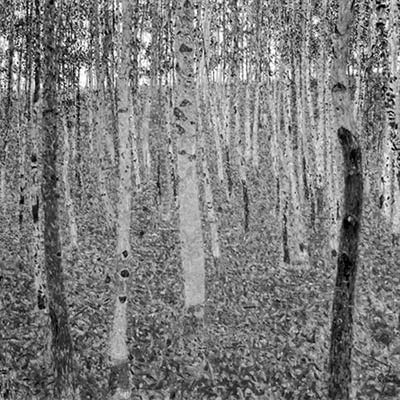
The Klingersaal shows slinky fin-de-siècle paintings and sculptures. Look for Gustav Klimt’s atmospheric Buchenwald, a tranquil beech forest that shimmers with color. Next to it, in Ferdinand Hodler’s Portrait of Madame de R., the subject regards us with a steely gaze; nearby, Oskar Zwintscher’s Lady with Cigarette is equally unfazed by our presence.
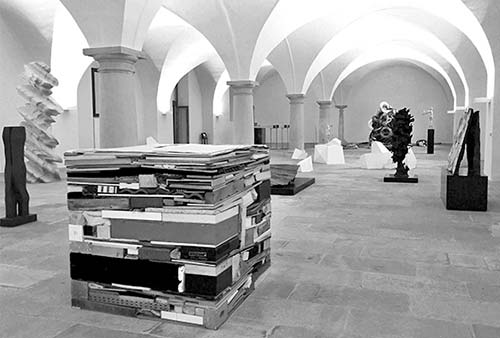
Sculpture Collection (Skulpturensammlung): Gathered in one huge Skulpturhalle on the ground floor, this easy-on-the-eyes collection covers 5,000 years of Western sculpture, with a special focus on the last 200 years. There are several plaster casts by Auguste Rodin, including a Thinker. Towards the center, find local sculptor Helmut Heinze’s Giacometti-esque bronze Nude Boy Standing (1976). At the contemporary end of the spectrum is Tony Cragg’s Ever After (2010), a 10-foot-tall wooden sculpture that appears to be melting; look closely (particularly interesting seen from the bottom, up) to see profiles of human faces emerge on the left side.
CHURCHES IN THE OLD TOWN
▲▲Frauenkirche (Church of Our Lady)
When this landmark Lutheran church was first built in the 18th century, it was financed largely by local donations expressive of Protestant pride. Destroyed by Allied firebombing in World War II, it sat in ruins for decades. Rebuilding of the church finally began in 1992, following carefully considered guidelines: Stay true to the original design; use as much original material as possible; avoid using any concrete or rebar; maximize modern technology; and make it a lively venue for 21st-century-style worship. The remnants of the destroyed church were fitted together like a giant jigsaw puzzle, with about a third of the darker original stones placed lovingly in their original spots. The reconstruction cost more than €100 million, 90 percent of which came from donors around the world.
Cost and Hours: Free but donation requested, hours vary but generally Mon-Fri 10:00-12:00 & 13:00-18:00, Sat-Sun hours depend on services and concerts, 45-minute audioguide-€2.50 (includes English commentary; available inside and to the left), +49 351 6560 6701, www.frauenkirche-dresden.de.
Climbing the Dome: Get a great view over the city by hiking to the top of the dome. After an elevator takes you half the way, you still have a long ramp to climb (€10—consider it a donation to the church, Mon-Sat 10:00-18:00, Sun from 13:00, Nov-Feb until 16:00 daily, enter through door G, follow signs to Kuppelaufstieg).
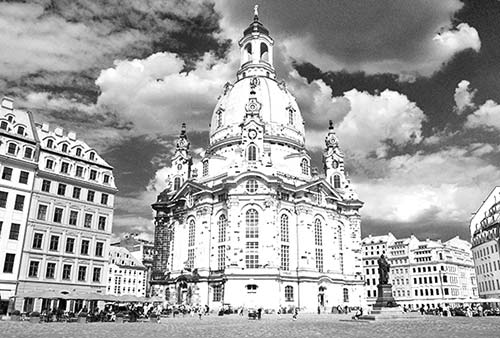
Film: A 25-minute movie (€3) called Fascination Frauenkirche tells the story of the church and its reconstruction. It plays in German at :15 after the hour (10:15-17:15); they’ll play the English-language version after the German showing (only until 16:45) if you ask at least 10 minutes ahead at the audioguide desk.
Visiting the Church: The Frauenkirche is as worthwhile for its glorious interior as for its tragic, then uplifting, recent history. Stepping inside, you’re struck by the shape—not so wide (150 feet) but very tall (inner dome 120 feet, under a 225-foot main dome). The color scheme is pastel, in an effort to underline the joy of faith and enhance the festive ambience of the services and ceremonies held here. The curves help create a feeling of community. The seven entrances are perfectly equal (as people are, in the eyes of God). When the congregation leaves, the seven exits point to all quarters—a reminder to “go ye,” the Great Commission to spread the Word everywhere. The glassed-in “box seats” are just that. Like the rich get their own sections in a stadium, generous patrons of the church got their own VIP worship areas.
The Baroque sandstone altar shows Jesus praying in the Garden of Gethsemane the night before his Crucifixion. Soldiers, led by Judas, are on their way, but Christ is firmly in the presence of God and his angels. Eighty percent of today’s altar is from original material—in the form of 2,000 individual fragments that were salvaged and pieced back together by restorers. If this feels more ornate than your typical Lutheran church, it’s because of the taste of the king—who had to be Catholic to rule Poland.
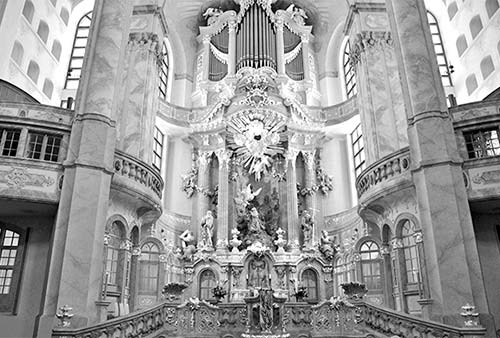
The Cross of Nails at the high altar is from Coventry, England—Dresden’s sister city. Two fire-blackened nails found in the smoldering rubble of Coventry’s bombed church are used as a symbol of peace and reconciliation. Coventry was flattened as thoroughly as Dresden (so thoroughly, it gave the giddy Luftwaffe a new word for “bomb to smithereens”—to “coventrate”). From the destroyed town of Coventry was born the Community of the Cross of Nails, a worldwide network promoting peace and reconciliation through international understanding.
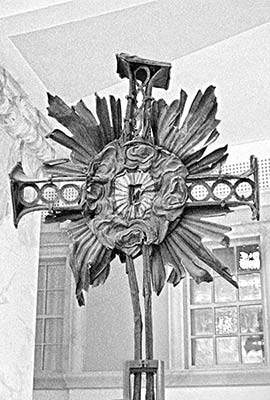
Near the exit stands the church’s twisted old cross, which fell 300 feet and burned in the rubble. Lost until restorers uncovered it from the pile of stones in 1993, it stands exactly on the place it was found, still relatively intact. A copy—a gift from the British people in 2000 on the 55th anniversary of the bombing—crowns the new church. It was crafted by an English coppersmith whose father had dropped bombs on the church on that fateful night. Visitors are invited to light a candle before this cross and enter a wish for peace in the guest book.
Before you leave the church, go downstairs to the cellar, which is a maze of rooms and exhibits. In a separate room (on the left as you climb into the crypt) is a modest exhibit about the history of the building. In the center is a modern-feeling, very stark chapel under vaulted ceilings. In each stairwell, plaques list the names of donors who helped resurrect this church from the rubble.
▲Katholische Hofkirche (Catholic Church of the Royal Court)
Why does Dresden, a stronghold of local boy Martin Luther’s Protestant Reformation, boast such a beautiful Catholic church? When Augustus the Strong died, his son wanted to continue as king of Poland, like his father. The pope would allow it only if Augustus Junior built a Catholic church in Dresden. Now, thanks to Junior’s historical kissing-up, the mere 5 percent of locals who are Catholic get to enjoy this fine church.
Cost and Hours: Free; Mon-Thu & Sat 10:00-17:00, Fri from 13:00, Sun 12:00-16:00; Mass daily at 18:00 and several times on Sun—check at church for complete schedule and for pipe-organ concert times, enter through side door facing palace, +49 351 315 630, www.kathedrale-dresden.de.
Visiting the Church: Inside the cathedral, on the right side of the main nave, is the fine Baroque pulpit, carved from linden wood and hidden in the countryside during World War II. The church was designed with a grand ambulatory that kept ritual Roman Catholic processions within the church, to avoid provoking the Lutheran populace.
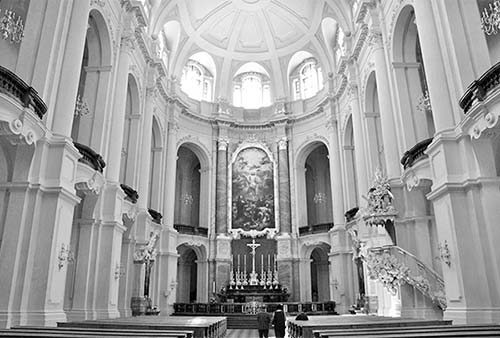
The glorious 3,000-pipe organ filling the back of the nave is played for the public for free on Wednesdays and Saturdays at 11:30 (and occasionally at other times as well, posted at door).
The Benno Chapel (on the right as you face the organ) recalls the only Saxon saint (that’s his 11th-century bishop’s hat on the altar). It’s the only part of the church that still survives from the architect’s original vision and the style of the day—helpful in imagining the intended, initial look of the entire place.
The Memorial Chapel (on the left as you face the organ) is dedicated to those who died in the WWII firebombing and to all victims of violence. Its evocative, abstract pietà altarpiece (reminiscent of Picasso’s Guernica) was constructed in 1976 of white Meissen porcelain. Mary offers the faithful the crown of thorns made from Dresden’s rubble, as if to remind us that Jesus—on her lap, head hanging lifeless on the left—died to save humankind. Jesus’ open heart shows us his love, offers us atonement for our sins, and proves that reconciliation is more powerful than hatred. The sculpture sits on an altar with the dates 30-1-33 and 13-2-45, marking the dark period between Hitler’s rise to power and the night Dresden was destroyed. Another altar (freestanding, in front) shows multiple abstract, flaming heads. It seems to symbolize how Dresdeners suffered...in the presence of their suffering savior.
MORE SIGHTS IN DRESDEN
Prager Strasse
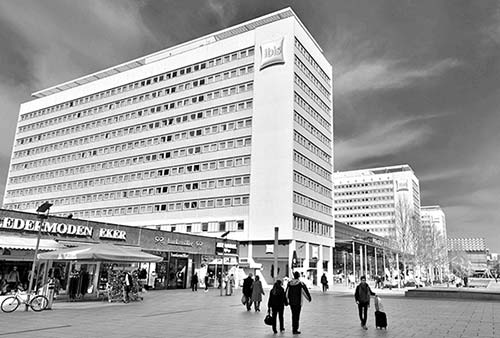
This street, connecting the main train station and the historic center, is worth wandering to see its fusion of 20th-century communist town planning with 21st-century consumer capitalism. Historically the main thoroughfare leading to Prague, it was in ruins until the 1960s, when the communist regime redeveloped it as a pedestrian mall. The design is typical of Eastern bloc architecture—there are similar streets in Moscow—and reflects communist ideals: Buildings are big, uniform, and functional, without extraneous ornamentation. As you stroll down Prager Strasse, imagine these buildings without much color or advertising (which were unnecessary back in the no-choices days of communism). Today, the street is filled with corporate logos, shoppers with lots of options, and a fun summertime food circus. The street has developed into exactly what the communists envisioned for it but never quite achieved: a people-friendly shopping area where Dresdeners can stroll and relax, with residential and office space above. The huge department stores, like the vast Altmarkt-Galerie, charge the German norm, which means things here are expensive for locals, who still earn only about 80 percent of what Germans farther to the west make. However, the gender pay gap here is much smaller, thanks to a socialist past that had most women working outside the home far earlier than in the west.
German Hygiene Museum (Deutsches Hygiene-Museum)
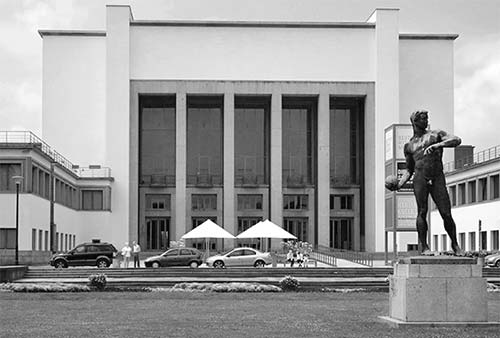
This curious museum is devoted to the wonders of the human body (don’t take the word “hygiene,” its historical title, too literally). It brings a frank, Germanic approach to anatomy...warts and all. Visitors with strong stomachs get a kick out of this highly interactive museum, but those easily grossed out should stay away—or at least plan mealtimes accordingly. File this under “Europe’s offbeat sights.”
Cost and Hours: €10, €15 family ticket, 16 and under free, Tue-Sun 10:00-18:00, closed Mon; Lingnerplatz 1, take tram #1, #2, or #4 to the Deutsches Hygiene-Museum stop or tram #10 or #13 to Grosser Garten, then walk five minutes; +49 351 484 6400, www.dhmd.de.
Visiting the Museum: The massive building was completed in 1930; a few years later, it briefly became a center for Nazi eugenics and “racial studies.” The permanent exhibit on the upper floor is loaded with exhibits on various aspects of life, health, and death—from sexuality to cognition to eating and drinking. Displays include cutaway models of organs, faces showing skin ailments, a housefly magnified 500 times, little wooden anatomical figures with removable parts (complete with strategically placed fig leaves), X-ray machines from the 1930s, wax models of venereal diseases, and the “transparent woman” (Gläserne Frau)—a life-size plastic model with bones, veins, and interior organs visible. The museum offers sparse English explanations, but most exhibits speak (or shriek) for themselves. While this all sounds extremely graphic by American standards, the museum is designed for German families. Seeing local parents earnestly introducing their young kids to this stuff offers a chance to reflect on why we Americans are so squeamish about our own bodies.
Your ticket also gets you into good temporary exhibits on the main floor; and Dresden’s children’s museum, in the basement, which stays with the general theme by focusing on the five senses.
Volkswagen’s Transparent Factory (Gläserne Manufaktur)
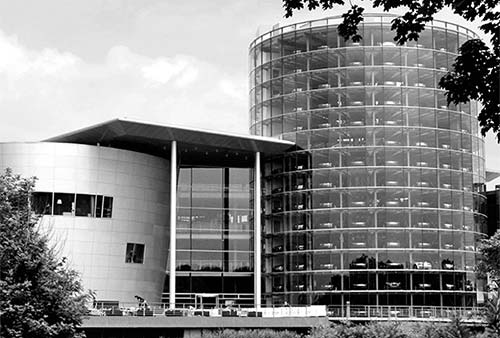
Two floors of this transparent building are open to visitors interested in the assembly of VW’s latest line of electric vehicles (especially the e-Golf). During weekday working hours, it’s free to gaze at the slowly moving assembly line from the building’s atrium, or you can pay to take a tour, which lets you see the process at close range, get a first look at futuristic “concept cars,” and use touchscreens to learn more.
Cost and Hours: Atrium—free, Mon–Sat 9:00–17:00, closed Sun. Guided 65-minute tour—€9, confirm English tour times in advance. Expensive onsite café, +49 351 420 4411, info@glaesernemanufaktur.de, www.glaesernemanufaktur.de.
Getting There: Take tram #1, #2, or #4 (from the Old Town) or tram #10 (from the Hauptbahnhof) to the Strassburger Platz stop. Look for the plant on one corner of the intersection; enter off Lennestrasse.
▲New Town (Neustadt) and Outer New Town (Äussere Neustadt)
Many tourists never cross the river into Dresden’s New Town and Outer New Town. Don’t be one of them: While there are no famous sights here, it’s the only part of Dresden that looks as it did before World War II. Today, it’s thriving with cafés, shops, clubs, and—most important—actual Dresdeners. On a warm summer evening, experiencing the vibe here is a must. A fine destination is the Kunsthofpassage, a lovely, fun, inviting series of courtyards with shops and eateries. For more on this neighborhood, see “Nightlife in Dresden,” later.
▲▲Military History Museum (Militärhistorisches Museum der Bundeswehr)
This huge museum covers more than 800 years of German military history and focuses on the causes and consequences of war and violence. At over 180,000 square feet, it’s the largest museum in Germany. The museum is housed in Dresden’s Neoclassical former arsenal building, forcefully severed by a Daniel Libeskind-designed wedge of glass and steel (signaling the break from Germany’s militaristic past and its hope for a transparent government and peaceful future). For a complete visit, you could spend the better part of a day; allow a couple of hours for a “quick” visit.
Cost and Hours: €5; Thu-Tue 10:00-18:00, closed Wed; onsite café; take tram #7 or #8 to Stauffenbergallee stop (beyond the New Town), then follow the diagonal, tree-lined path through the park to Olbrichtplatz 2; +49 351 823 2803, www.mhmbw.de.
Visiting the Museum: The museum is long on design and uses creative juxtapositions to get visitors thinking in critical ways about war. Rather than glorifying soldiers and their bravery, the museum dissects our ideas about war, asks where those ideas come from, encourages us to question them, and ultimately sends a pacifist message.
The exhibits demand a thorough visit; they’re well-described in English, but you can scan QR codes at many displays for additional audio context. Most of the exhibits are loosely organized into two categories: a chronological look at Germany’s military history since the Middle Ages; and themed exhibits that try to provoke deep thought about various aspects of war and peace.
Start by taking the elevator to the fourth floor, which has a distant view of Dresden’s Old Town and two visually arresting, thought-provoking pieces commemorating similarly war-damaged cities.
Next, walk down the stairs to the third floor to the first of the themed exhibits—“War and Memory,” which considers how people remember and commemorate war (whether to glorify it, or to push it into the background). The second floor has further themed exhibits on politics, music (Marlene Dietrich’s military uniform for entertaining Allied troops), fashion, language (find out what “08/15” means to Germans—and why), and toys and games (see the East German and Soviet dolls who famously “got married” on an international space mission in 1978).
On the first floor are the topics of suffering and animals (with a menagerie of taxidermied beasts who have been recruited into military service since Hannibal crossed the Alps on his elephants). The ground floor looks at technology (including a test tube of Pervitin, the meth-like performance-enhancing drug dispensed by the Nazi military) and the “Protection and Destruction” exhibit—a sobering reminder that the stated aims of military intervention are often sidetracked. You’ll also see the first German submarine (the people-powered Brandtaucher, from 1850), a Nazi-era V-2 rocket (the first capable of entering space), and the Russian Soyuz manned space capsule that carried the first German into space (Sigmund Jähn).
But wait—there’s more. If you prefer a more linear approach, you can follow extensive chronological exhibits telling the story of German military activity from 1300 to 1914 (ground floor, skippable for most visitors), from 1914 to 1945 (first floor up), and after 1945, including the founding of the Bundeswehr (German armed forces, also on the first floor). With tons of uniforms, portraits, vintage weapons, tanks, and much more, it’s a lot to get through. Plus there’s an outdoor collection of military vehicles, with even more filling the adjacent buildings.
DAY TRIPS NEAR DRESDEN
The sights listed in this chapter can keep you busy for (at least) two full days. With more time, consider getting out of the city. The TI can provide information on either of these trips.
One popular excursion is to bike downriver to the Blue Wonder bridge (a.k.a. Loschwitzbrücke)—a classic old Industrial Age bridge, untouched by WWII bombs, with a beloved local biergarten (Schiller Garten, unfiltered Zwickel beer, self-service buffet and full-service restaurant, www.schillergarten.de). The 3.5-mile path gives you a great slice-of-life glimpse of Germans at play as you hug the riverbank. The bridge is also connected to the Old Town by steam-powered paddleboats, by tram #12 (Schillerplatz stop), and hop-on, hop-off buses.
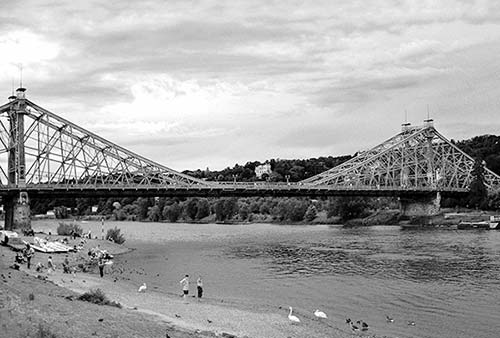
For a longer excursion that really gets you out into nature, ride a train into Saxon Switzerland National Park (Sächsische Schweiz Nationalpark). Twenty miles southeast of Dresden, the Elbe River cuts a scenic swath through beech forests and steep cliffs. Take S-Bahn line 1 to the Kurort Rathen stop (runs at least hourly, 35 minutes), where you’ll walk downhill through the town, hop on a ferry for the two-minute crossing over the Elbe, and hike 30 minutes uphill to the Bastei Bridge and stunning views of gray sandstone sentries rising several hundred feet above forest ridges. (This sandstone was used to build Dresden’s finest buildings, as well as Berlin’s famous Brandenburg Gate.) Higher up are the scant remains of the 13th-century Felsenburg Neurathen fort, and a hotel with a panoramic restaurant. Another lunch option is the $$ Sonniges Eck Restaurant (at the far end of town from the ferry dock, near the base of the trail up to the bridge).
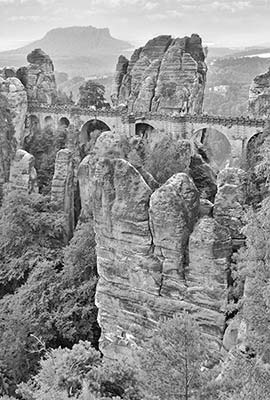
Nightlife in Dresden
OUTER NEW TOWN (ÄUSSERE NEUSTADT)
To really connect with Dresden, you need to go to the Outer New Town—a popular neighborhood for young people and progressive families, reminiscent of Berlin’s Prenzlauer Berg in its pre-gentrified days. This is a fun place to eat dinner, then join the action, which picks up after 22:00. Eateries range from the merely creative to the truly unconventional. You’ll find lots of cheap international food, mini beer gardens (but not your grandfather’s oompah bands), and young adults hanging out on the curb, nursing beer bottles. The neighborhood generally feels more exuberant than rough.
One of the best ways to experience this scene—and to learn a bit more about the neighborhood’s history—is to take the Nightwalk Dresden Tour (listed under “Tours in Dresden,” earlier). I’ve sketched out a few highlights below for those exploring on their own. For locations, see the “Dresden” map, earlier.
Getting There: From the Old Town, take tram #7 or #8 to Louisenstrasse, or #11 to Bautzner/Rothenburger Strasse. Night trams bring you back to the center even in the wee hours.
Background: This area was built, with elegant facades, in the 19th century to accommodate workers of the Industrial Age. Despite the devastation wrought upon the area south of the river, this neighborhood wasn’t bombed in World War II—but during communist times it became so dilapidated that officials made plans to just tear it all down. Today locals recall a time when no one ventured out on balconies fearing they’d fall off. A popular slogan for people disillusioned with the DDR was, “We create ruins without any weapons.”
After the end of the DDR in 1989, the area sprouted its first entrepreneurial cafés and bistros. Now it’s a bohemian-chic mix of cheap apartments, galleries, cafés, bars, and swap shops, filled with a clientele that’s young, hip, pierced, and tattooed. While gentrification has set in, you’ll find no chain stores, brick-and-mortar banks (only ATMs), or corporate-run businesses. Everything is independently run.
Visiting the Outer New Town: Get to the epicenter—at the corner of Görlitzer Strasse and Louisenstrasse—and enjoy wandering. If you arrive a little before nightfall, begin at the Kunsthofpassage while you still have light for photos. Then explore the nearby streets to feel the real vibe of Dresden’s alternative neighborhood. Here are a few places and bars worth checking out:
The Kunsthofpassage is a series of five fanciful, imaginatively decorated courtyards surrounded by boutiques, eateries, and art galleries (see “Eating in Dresden,” later, for recommendations). This is a delightful fantasy world, tucked improbably between lively urban streets (enter at Görlitzer Strasse 21, 23, or 25, or at Alaunstrasse 70; www.kunsthof-dresden.de). The Elements Courtyard (enter at Görlitzer Strasse 25) features artwork representing earth, wind, fire, and water. On one wall the downspouts have been reworked into a fountain made of musical-instrument shapes (water). The opposite wall sports large golden aluminum shavings, designed to reflect the ambient light (fire). The Animals Courtyard (enter at Görlitzer Strasse 21) feels whimsical, with its Noah’s ark-like balconies, monkeys swinging from the windows, and gentle giraffe stretching its neck to join the fun. Nearby, look for a sculpture titled Mensch und Artensterben (Man and Species Extinction). Animal silhouettes are integrated into the shape of a human body, a reminder that all creatures must coexist.
Another major nightlife zone here is along Alaunstrasse, specifically near the Scheune cultural center, a big orangeish building with all kinds of events (musical and otherwise) for the cool kids (open long hours daily, Alaunstrasse 36, +49 351 3235 5640, www.scheune.org). Nearby, across a little plaza with food trucks, Katy’s Garage is a funky Biergarten speckled with eclectic art. It really was once a garage—and “Katy” wasn’t a woman but a Land Rover (long hours daily, corner of Alaunstrasse and Louisenstrasse at Alaunstrasse 48, +49 351 656 7701).
A half-block off Lutherplatz at Böhmische Strasse 34, $$$ Raskolnikoff, in the same building as the recommended Pension Raskolnikoff, is a charmingly funky pub/bistro serving a small menu with some Russian specialties...and lots of drinks (Wed-Sat 12:00 until late, Mon-Tue from 17:00, closed Sun, www.raskolnikoff.de, +49 351 804 5706).
Sleeping in Dresden
Hotels in Dresden tend to be big chains (particularly near the Old Town). Characteristic, family-run places are rare. Peak season for hotels is May, June, September, and October. Prices soften at midsummer and drop in winter. Rates shoot up in December when the Christmas market (Striezelmarkt) is on. Ask your hotelier about a Dresden Welcome Card that may be included with your stay, offering discounts for some sights, tours, and local transit.
IN AND NEAR THE OLD TOWN
$$$ Heinrich Schütz Residenz enjoys a prime location on the Neumarkt square facing the Frauenkirche. They rent a dozen well-equipped apartments—each with a kitchen and separate bedroom—that feel luxurious but are reasonably priced (elevator, no parking, Frauenstrasse 14, +49 351 263 5960, www.heinrich-schuetz-residenz.de, info@heinrich-schuetz-residenz.de).
$$$ Star G Hotel fills a stately old building on the Altmarkt (a short walk from the Old Town) with 123 modern rooms featuring American-style comforts (breakfast extra, air-con, elevator, pay parking nearby, Altmarkt 4, +49 351 307 110, www.starghotels.com, dresden.altmarkt@starghotels.com).
$$ Aparthotels an der Frauenkirche rents 120 units in five restored houses (many with views) in the heart of the Old Town. Designed for longer stays but also welcoming one- or two-nighters, these comfortable if somewhat dated apartments come in various sizes with kitchens and lots of amenities. Two buildings (“Neumarkt” and “Altes Dresden”) overlook the pleasant Neumarkt square in front of the Frauenkirche, another is on the touristy Münzgasse restaurant street, a fourth is on Schössergasse, and the fifth is on less-interesting Altmarkt square (breakfast extra, elevator in all buildings, pay parking at nearby garage, reception for Neumarkt and Altmarkt units is in gift shop at Neumarkt 7, reception for Münzgasse apartments is at Münzgasse 10, reception for Schössergasse at Schössergasse 16/Sporergasse 7; +49 351 438 1111, www.aparthotels-frauenkirche.de, info@aparthotels-frauenkirche.de).
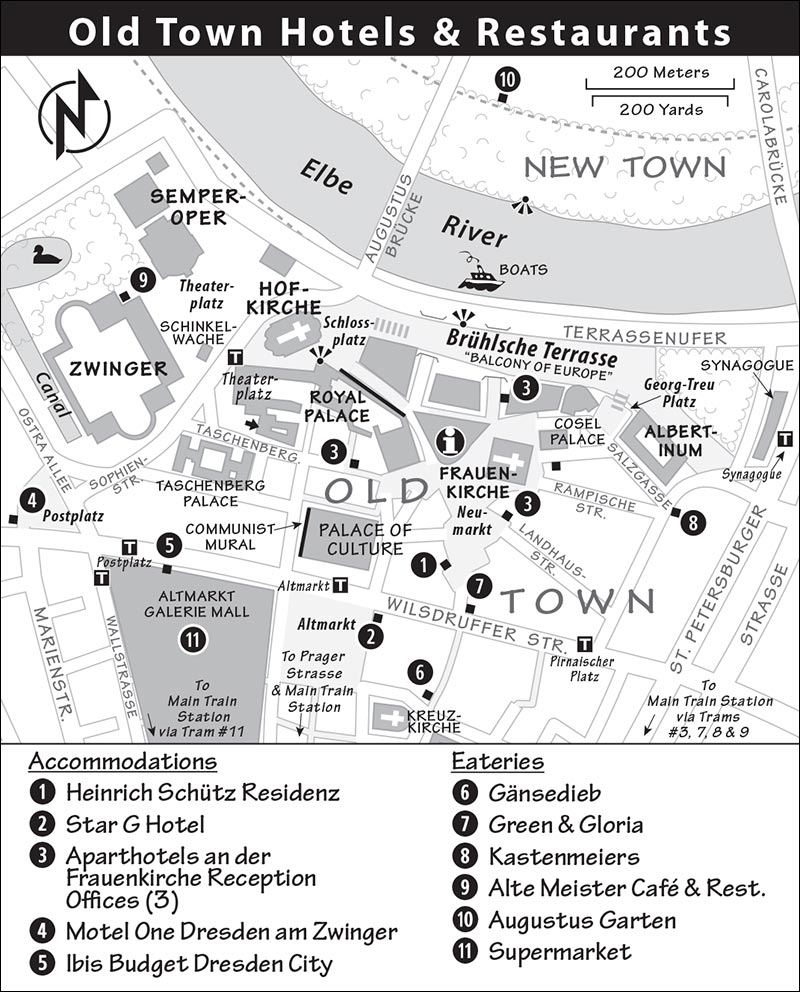
$ Motel One Dresden am Zwinger looms over a corner of Postplatz, within cherub-fountain-spitting distance of the Zwinger. Decorated in aqua and brown tones, some of its 288 posh-feeling but small rooms peek right into the palace’s courtyard. Outside you’ll find mini fountains, swing-chairs, and the hotel’s motto emblazoned across its roofline: “A life without joy is like a long trip without an inn” (breakfast extra, air-con, elevator, pay parking; Postplatz 5—from left side of main station hop tram #11 to Postplatz, direction: Bühlau; for a slightly longer walk take tram #3, #7, #8, or #9 to Kaditz Riegelplatz; +49 351 438 380, www.motel-one.com, dresden-am-zwinger@motel-one.com).
$ Ibis Budget Dresden City, with 203 small, simple rooms, is conveniently situated right by the Postplatz tram stop, steps from the major sights. The oddly designed, hospital-like rooms provide only minimal bathroom privacy (breakfast extra, air-con, elevator, pay parking, rental bikes, Wilsdruffer Strasse 25—hop tram #3, #7, #8, #9, or #11 from main station—see tram details for Motel One, above; +49 351 8339 3820, www.all.accor.com, h7514@accor.com).
NEAR THE TRAIN STATION
For locations, see the “Dresden” map, earlier.
$$ Hotel Kipping was one of very few buildings in this area to survive the 1945 firebombing—in fact, people took shelter here during the attack. Now it offers 20 dated but quiet and tidy rooms, a homey and convenient choice 100 yards behind the Hauptbahnhof (elevator, free parking, air-con in most rooms; exit station following signs for Bayerische Strasse near track 1 to Winckelmannstrasse 6; from here trams #3, #8, and #11 whisk you to the Old Town; +49 351 478 500, www.hotel-kipping.de, information@hotel-kipping.de).
$ Ibis Dresden Zentrum spreads across three buildings goose-stepping single-file up Prager Strasse. With 918 cookie-cutter rooms, nobody will pretend this place has charm, but it’s fairly priced and handy to the Hauptbahnhof (a longish walk from the Old Town). It’s historic, too—a chance to experience communist designers’ vision of urban life (breakfast extra, elevator, air-con, pay public parking, +49 351 2739 0309; www.ibis-dresden.de, reservierung@ibis-dresden.de).
IN THE NEW TOWN
These hotels are in the tidy residential neighborhood between the Neustadt train station and the Augustus Bridge (figure a 15-minute walk or quick tram ride to the historical center). For locations, see the “Dresden” map, earlier.
$$$ Hotel Bayerischer Hof Dresden, 100 yards toward the river from the Neustadt train station, offers 56 spacious rooms with antique decor. While a bit old-fashioned, its inviting public spaces and quaint courtyard fill a grand old building on a busy street—be sure to ask for a room facing the courtyard (elevator, pay parking, apartments available, Antonstrasse 33, yellow building to the right and across from station, +49 351 829 370, www.bayerischer-hof-dresden.de, info@bayerischer-hof-dresden.de).
$$ Hotel Martha Dresden is well run and a better value than the Bayerischer Hof. Its 40 neatly maintained rooms are in a quiet location a five-minute walk from Neustadt train station. The two buildings that make up the hotel have been smartly renovated and connected in back with a glassed-in winter garden and a pleasant outdoor breakfast terrace (family apartments, elevator, pay parking; Nieritzstrasse 11; +49 351 81760, www.hotel-martha.de, rezeption@hotel-martha.de).
$$ Motel One Dresden-Palaisplatz stands on a busy but convenient street a short walk from the prettiest part of the New Town and right on a tram line to the Old Town. This hotel’s 228 rooms share the same stylish design sense as its sister hotel on Postplatz (breakfast extra, pay parking; Palaisplatz 1—a 6-minute level walk from Neustadt station, or ride tram #9 in direction: Leutewitz or tram #11 in direction: Zschertnitz one stop to Anton-/Leipziger Strasse; +49 351 655 7380, www.motel-one.com, dresden-palaisplatz@motel-one.com).
BUDGET BEDS IN THE OUTER NEW TOWN
For locations, see the “Dresden” map.
$ Pension Raskolnikoff is your chance to sleep in relative comfort amid the Neustadt alternative scene. Eight basic rooms—all different and creatively designed—are on the top floors and in the back building of this café and art-gallery complex on a quiet side street. Slated for demolition at the end of the DDR years, the building was taken over by an artists’ cooperative, two of whose members are the current owners (lots of stairs, no breakfast on weekdays but bakery around corner and good breakfast served a few doors down at Lloyd’s; take tram #11 from Hauptbahnhof Nord or #11 or #6 from Neustadt Station to Bautzner/Rothenburger Strasse, then walk one block up Rothenburger Strasse and turn right to reach Böhmische Strasse 34; +49 351 804 5706, www.raskolnikoff.de, pension@raskolnikoff.de).
¢ Hostel Louise 20 is in the middle of the Outer New Town action. Though located in this wild-and-edgy nightlife district, it feels safe, solid, clean, and comfy. The bright, IKEA-furnished rooms, guest kitchen, cozy common room, friendly staff, and 78 cheap beds make it a good budget choice, even for those older than the backpacker crowd (private rooms available, restaurant below, in courtyard at Louisenstrasse 20, +49 351 889 4894, www.louise20.de, info@louise20.de).
¢ Hostel Mondpalast Dresden is young and laid-back, above a trendy bar in a historic building (it’s the city’s oldest hostel) in the heart of the Outer New Town. Its super-groovy vibe—each room is named for a constellation—is good for backpackers with little money and an appetite for late-night fun (private rooms available, communal kitchen, rental bikes, near Kamenzer Strasse at Louisenstrasse 77, take tram #11 from Hauptbahnhof or Neustadt Station to Pulsnitzer Strasse stop, +49 351 563 4050, www.mondpalast.de, info@mondpalast.de).
Eating in Dresden
Dresden’s Old Town restaurants tend to be nice but touristy, and quite expensive. For cheaper prices and authentic local character, leave the famous center, cross the river, and wander through the New Town.
Many Dresden restaurants serve a Russian-style soup called Soljanka, which usually includes finely chopped meat and pickled vegetables in a light tomato-based broth. A special local dessert sold all over town is Dresdner Eierschecke, an eggy cheesecake with vanilla pudding, raisins, and almond shavings.
IN THE OLD TOWN
For locations, see the “Old Town Hotels & Restaurants” map, earlier.
$$$ Gänsedieb (“Goose-thief”) nestles on a leafy, restaurant-lined square behind the Kreuzkirche. Serving up generous portions of Saxon specialties like wild boar stew and namesake roast goose, it’s a reliable gastro-pub alternative to the touristy “traditional” eateries in the Old Town (daily 11:00-23:00, Weisse Gasse 1, +49 351 485 0905).
$$ Green & Gloria, with a range of salads, bowls, and smoothies, aims for light and healthy rather than heavy and Germanic. Centrally located close to the Neumarkt, it’s efficient for lunch if you’re aiming to maximize sightseeing time—though it’s an appealing no-dumpling-zone dinner option, too (daily 9:00-21:00, Wilsdruffer Strasse 10, +49 351 8212 5961).
$$$$ Kastenmeiers is a good bet if you’re fond of fish and don’t mind paying for an elegant, near-Michelin-star dining experience in the old town center. Located in the Taschenberg Palace (an ultra-luxe hotel), in a stylish space surrounded by modern artwork, it can all add up to a romantic evening (Mon-Sun 17:00-23:00, reservations smart, Taschenberg 3, +49 351 4848 4801, http://kastenmeiers.de/).
$$$$ Alte Meister Café and Restaurant, with delightful garden seating, is pricey but convenient for your Zwinger sightseeing—it’s built right into the wall of the royal courtyard (daily 11:00-21:00, facing the Opera at Theaterplatz 1, +49 351 481 0426). They also have a small, cozy winter-garden branch facing the Zwinger’s main courtyard.
Groceries: A REWE supermarket is in the bottom level of the Altmarkt-Galerie shopping center. Enter the mall off Altmarkt, take the escalator down, and head left to the end of the corridor (Mon-Sat 9:00-20:00, closed Sun).
IN THE NEW TOWN
Venture to these eateries—across the Augustus Bridge from the Old Town—for lower prices and a more local scene. Unless otherwise noted, for locations see the “Dresden” map, earlier.
$$ Augustus Garten is a lazy, crude yet inviting beer garden open only in good weather with super-cheap self-service food (pork knuckle, wurst, kraut, cheap beer, and lots of mustard). You’ll eat among big bellies—and few tourists—with a good view back over the river to the Old Town (daily 11:00-23:00, Fri-Sat until 24:00, closed in bad weather, +49 351 404 5531). For location, see the “Old Town Hotels & Restaurants” map, earlier.
$$ Wenzel Bierstuben serves country Bohemian cuisine in a woodsy bar that spills out into an airy, glassed-in gallery—made doubly big by its vast mirror. Stepping inside, you’ll be immediately won over by the interior. There’s also peaceful streetside seating. The menu is fun and Bohemian, with several Czech beers on tap (daily 11:30-22:00, stays open later Fri-Sat, Königstrasse 1, +49 351 804 2010).
$$ Watzke am Goldenen Reiter, just over the Augustus Bridge and facing the Golden Rider statue, is run by a local brewery, with seating that pours out into the square. A hit with Dresdeners (and a world away from the touristy kitsch of the Old Town), it serves German and Saxon beer-hall fare, including pork knuckle (Haxe), lots of kraut, and its own unfiltered beer (daily 11:00-23:00, Hauptstrasse 1, +49 351 810 6820).
$$$ Winzerstube Zum Rebstock is a popular pub serving Saxon cuisine with seasonal specials in a small romantic interior or in a leafy and quiet “Baroque garden” courtyard (daily 11:30-23:30, enter through passageway at Hauptstrasse 17, +49 1525 430 078).
Near the Three Kings Church: At the top of Hauptstrasse, in an 18th-century zone that survived World War II intact, several good eateries cluster around the towering spire of the Three Kings Church (Dreikönigskirche). $$$$ Caroussel Nouvelle, in the fancy Hotel Bülow Palais, is a worthy splurge. Its elegantly presented dishes boast Michelin-star quality—but the atmosphere is more high-end bistro than fussy white tablecloth (daily 12:00-14:00 & 18:00-22:00, reservations smart, Königstrasse 14, +49 351 800 3140, www.buelow-palais.de/restaurants-bar). $$ Die Pastamanufaktur, a fun and romantic little place for pasta lovers, has a minimalist interior and nice seating out back with its own little fountain (daily 11:00-22:00, Karl-Liebknecht-Strasse 56, +49 351 323 7799).
OUTER NEW TOWN
The trendy Outer New Town is thriving with creative and youthful places to eat and drink. It’s fun to explore this ever-changing scene any time of day, but it’s most hopping in the evening (see “Nightlife in Dresden”; for locations, see the “Dresden” map).
$$ Scheune Café, not to be confused with the Scheune cultural center a few blocks away, is a cozy space serving an eclectic menu of vegetarian dishes—German, Indian, Mexican, and Italian (Mon-Fri 12:00-21:00, Sat from 9:00, Sun 9:00-14:00, Görlitzer Strasse 20, +49 351 802 6619).
$ Hellers Kuchenglocke is a classy gathering space on the pleasant square called Martin-Luther-Platz. They serve teas, fresh-baked pastries, salads, Flammkuchen, and sandwiches on rustic bread. It’s popular with the new-parent crowd during the week (Tue-Sun 8:00-18:00, closed Mon, Pulsnitzer Strasse 1, +49 341 8996 2500).
In the Kunsthofpassage
In this exuberantly decorated courtyard (enter at Görlitzer Strasse 21, 23, or 25, or at Alaunstrasse 70), you’ll find a handful of eateries, including these options.
$$$ Lila Sosse serves junge Deutsche Küche (“young German cooking”) at rustic wooden tables in a mellow setting. Most of their dishes—a trendy, updated take on German classics—are served in mason jars (Mon-Fri 16:00-23:00, Sat-Sun from 12:00, in the “Courtyard of Legendary Creatures”—Fabelwesen—closest to entrance at Alaunstrasse 70, +49 351 803 6723).
$ Tiki im Kunsthof serves a range of snacks, but most people pop in for the authentic seasonal gelato (in both standard and eclectic flavors) and their shakes (made with or without alcohol; Mon-Thu 9:00-20:00, Fri-Sat until late, Sun 10:00-20:00, street-front access at 21 Görlitzer Strasse).
Dresden Connections
From Dresden by Train to: Leipzig (1-2/hour, 1.5 hours), Berlin (direct every 2 hours, 2 hours; more with transfer in Leipzig, 3 hours), Erfurt (hourly, 2 hours; some with transfer in Leipzig), Wittenberg (hourly, 2.5 hours, transfer in Leipzig), Hamburg (5/day direct, 4.5 hours; otherwise hourly with transfer, 5 hours), Frankfurt (hourly, 4.5 hours, half with change in Leipzig), Nürnberg (hourly, 3.5 hours, transfers vary), Munich (every 2 hours, 5 hours, change in Leipzig), Prague (every 2 hours, 2.5 hours), Vienna (4/day, 7.5 hours with change in Prague; or catch night train in Prague), Budapest (2/day, 9 hours, 1 direct and 1 via Prague; or catch night train in Prague). Train info: www.bahn.com.