MUNICH
München
BEER HALLS, BEER GARDENS, AND BAVARIAN FOOD
▲▲▲DACHAU CONCENTRATION CAMP MEMORIAL (KZ-Gedenkstätte Dachau)
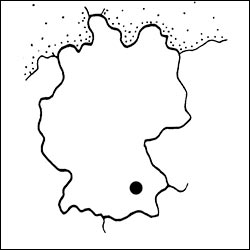
Munich (“München” in German), often called Germany’s most livable city, is also one of its most historic, artistic, and entertaining. While another nickname is “Germany’s biggest village,” it’s big and growing, with a population of 1.5 million. Until 1871, it was the capital of an independent Bavaria. Its royal palaces, jewels, and grand boulevards remind visitors that Munich has long been a political and cultural powerhouse. Meanwhile, the concentration camp memorial in nearby Dachau reminds us that a century ago, Munich provided a springboard for Nazism.
Orient yourself in Munich’s old center, with its colorful pedestrian zones. Immerse yourself in the city’s art and history—crown jewels, Baroque theater, Wittelsbach palaces, great paintings, and beautiful parks. Spend your Munich evenings in a frothy beer hall or outdoor Biergarten, prying big pretzels from buxom, no-nonsense beer maids amidst an oompah, bunny-hopping, and belching Bavarian atmosphere.
If you’re impressed by how a big city like Munich can feel so inviting and friendly, thank a city government whose passion is nurturing and protecting a people-friendly culture. The big Viktualienmarkt is only possible because the city subsidizes rent for mom-and-pop stalls over corporate chains. Oktoberfest, the world’s biggest beer party, is not corporate run but city run—leaving it free, easygoing, and hell-bent on having fun rather than making money. Public transit is designed to encourage big corporate offices to locate away from the center, as is a zoning law that allows buildings taller than the cathedral domes only in the outskirts. Bikes have priority over cars. Even Munich’s venerable circus tent—which has housed backpackers for 40 years—is held up with city support. Munich is a rich and capitalistic city, but its populace knows the free market needs a referee: a smart and caring local government.
PLANNING YOUR TIME
Munich is worth two days, including a half-day spent at the Dachau Concentration Camp Memorial (45 minutes from the center by public transportation). If all you have is one day, follow my “Munich City Walk” (visiting museums along the way), tour one of the royal palaces (the Residenz or Nymphenburg), and drink in the beer-hall culture for your evening’s entertainment. With a second day, choose from the following: Tour the Dachau memorial, rent a bike to enjoy the English Garden, or—if you’re into art—visit the Alte Pinakothek. The city could easily fill three days, with its numerous worthwhile sights and activities. And many visitors spend an entire day side-tripping south to “Mad” King Ludwig’s castles (covered in the Bavarian Alps chapter). Salzburg, Austria (less than 2 hours away by direct train), is also within day-trip distance.
Orientation to Munich
Despite its large population, Munich feels small—without skyscrapers and with streets that are friendly to pedestrians and bikers.
MUNICH: A VERBAL MAP
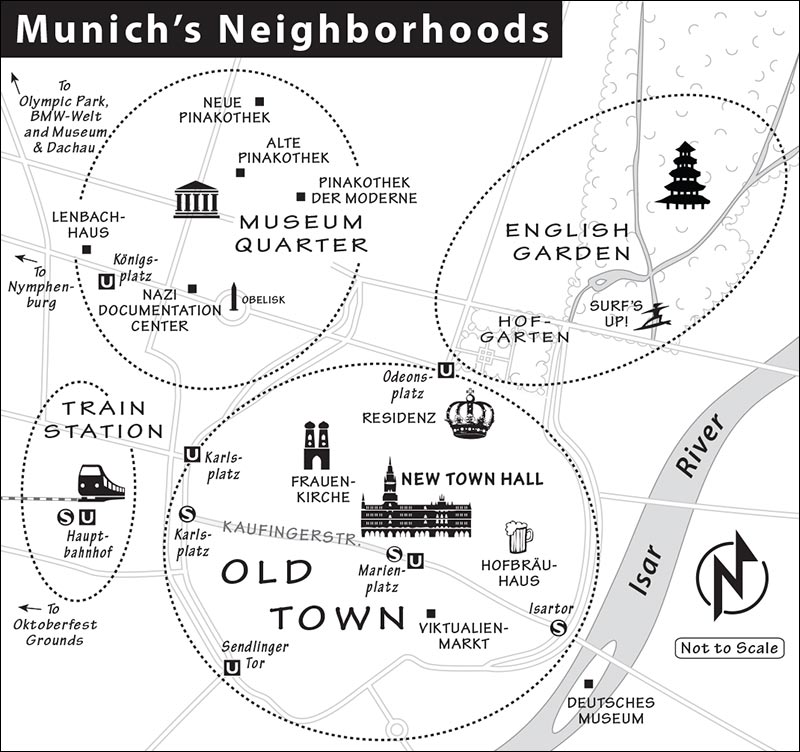
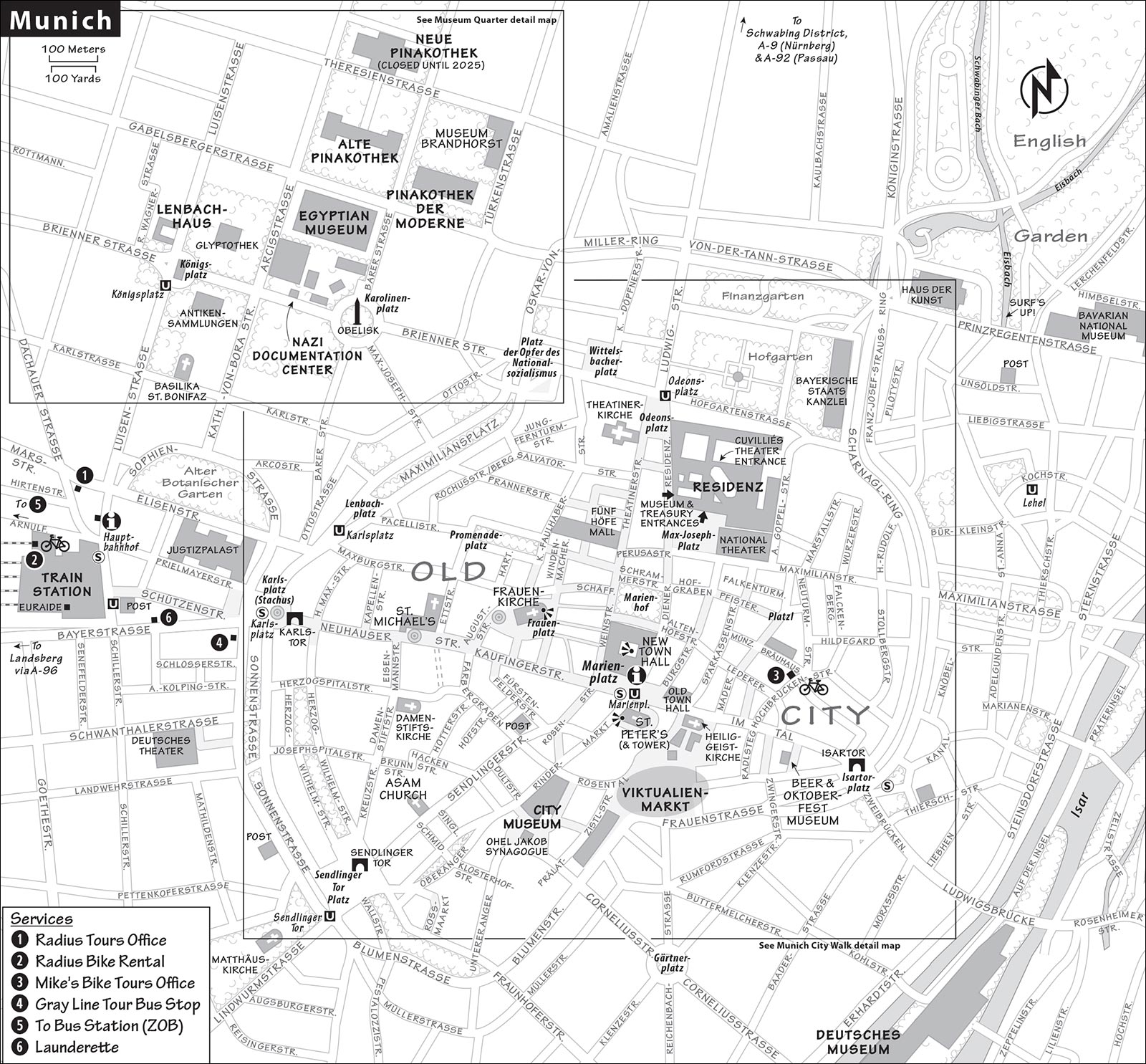
The tourist’s Munich is circled by a ring road (the former path of the Old Town wall), with the bull’s-eye being the city center—Marienplatz. Most of the sights and hotels I recommend are within a 20-minute walk of Marienplatz and each other. The excellent public transportation system makes even sights outside the inner ring accessible. Think of Munich as a series of neighborhoods, cradling major landmarks.
Old Town—Inside the Ring: Marienplatz, in the middle of the ring, is a lively pedestrian zone of sights, shopping, and restaurants. Slicing west-to-east through the ring is a mostly pedestrianized street that changes names as it runs from the train station through Marienplatz to the Isartor gate (a 20-minute walk). The main S-Bahn line runs underground along this same east-west corridor. Around the ring, three gates survive from the city walls: Karlstor (west), Isartor (east), and Sendlinger Tor (south). North of Marienplatz, your landmark is the Residenz palace. South of Marienplatz are the Viktualienmarkt open-air market and some recommended hotels.
Train Station: A five-minute walk west of the ring is the main train station (Hauptbahnhof), home to many services (lockers, bike rental). Many recommended hotels and restaurants are nearby.
Museum Quarter: Several art museums (and other sights) cluster together in this neighborhood of broad leafy boulevards (north of the train station, near the Königsplatz U-Bahn stop).
English Garden: To the northwest of the ring stretches this vast expanse of parkland and trails dotted with beer gardens and naked sunbathers.
Away from the Center: Within a short ride on public transit are many major sights, such as the BMW complex and Dachau Concentration Camp Memorial (north) and Nymphenburg Palace (northwest). The Oktoberfest grounds are a 15-minute walk southwest of the train station.
TOURIST INFORMATION
Munich’s helpful city-run TI is on the main square, Marienplatz, below the glockenspiel (Mon-Fri 10:00-18:00, Sat 9:00-17:00, Sun 10:00-14:00, +49 89 2339 6500, www.muenchen.de). A second TI is located outside the main train station at Luisenstrasse 1 (Tue-Sat 9:00-17:00, closed Sun).
At the TI, buy the inexpensive city map (more helpful than the free map in your hotel lobby—especially for public transit) and the €1 booklet describing the city sights, and confirm your sightseeing plans. Their free monthly magazine, In München, lists movies and entertainment (in German, organized by date).
ARRIVAL IN MUNICH
By Train: Travelers usually arrive at the main train station, München Hauptbahnhof. A vast, L-shaped underground shopping concourse hugs the station on the north and east sides and funnels travelers into the city’s subway system. The station building is in the midst of a massive, multiyear renovation: Services mentioned here may be suspended or relocate as construction progresses.
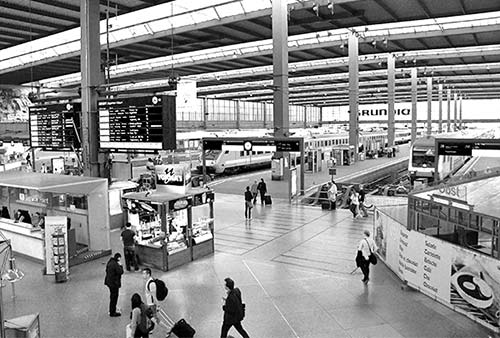
Look for the Reisezentrum (travel center, with ticket counters) near track 11. Clean, high-tech, pay WCs and showers are downstairs near tracks 11 and 26. For sandwiches and salads to bring on board, I shop at Yorma’s (several branches: the biggest are by track 26 and in the underground concourse). You’ll find lockers opposite track 26. Bike rental is by track 32.
EurAide Train Information Service: In the train station’s Reisezentrum, the hardworking, eager-to-help EurAide desk is a wealth of info and a godsend for Eurailers and budget travelers. EurAide staff answer train-travel and day-trip questions in English, make reservations, and sell tickets at the same price you’d pay at the other counters (Mon-Fri 10:00-17:00, mid-May-mid-Aug also Sat 10:00-13:00, closed Sun). They also sell an inexpensive city map and discounted tickets (with cash and this book) for Gray Line city bus tours and day trips to nearby destinations.
Changing to Local Transit: Suburban trains, subway lines, trams, and buses connect the station to the rest of the city (though many of my recommended hotels are within walking distance). For the S-Bahn or U-Bahn, take the escalators by track 26 down into the underground concourse, turn right, and follow the signs. Buses depart from the streets on both the north and south sides of the station. The station has tram stops on three sides (Hauptbahnhof Nord, Hauptbahnhof Süd, and at the east end, just plain Hauptbahnhof). The useful #16, #17, and #18 trams all use the plain Hauptbahnhof stop, which you can reach via escalators up from the underground concourse.
Watch out for gateways with blue ticket-stamping machines in the middle of the concourse—these lead to the U-Bahn (subway), where you could be fined if you don’t have a validated ticket. For information on buying tickets, see “Getting Around Munich,” below.
The Lufthansa airport bus leaves from the north side of the train station (exit by track 26 and cross the street).
Other Train Stations in Munich: Many long-distance trains also stop at two smaller stations, München Ost (a.k.a. the Ostbahnhof) and München-Pasing. Sometimes it makes sense to transfer to the S-Bahn or local transport at these stations rather than the main Hauptbahnhof.
By Bus or Plane: See “Munich Connections” on here.
HELPFUL HINTS
Museum Tips: Most museums close on Mondays (except on holidays); remaining open are the Residenz, Nymphenburg Palace, and the Deutsches Museum (including the Transport Museum and the Aviation Museum in Schleissheim). My self-guided Munich Walk works on Mondays. The art museums are generally open late one night a week.
Half-Price Tickets: Your ticket to the Jewish History Museum, Munich City Museum, Lenbachhaus, or Villa Stuck (all city-run) gets you half-price admission to any of the others up to two days later (e.g., show your €4 Munich City Museum ticket to get €5 off your €10 Lenbachhaus ticket).
Palace Sightseeing Passes: The Bavarian Palace Department offers a 14-day ticket (the Mehrtagesticket) that covers admission to Munich’s Residenz and Nymphenburg Palace complexes, as well as other castles and palaces in Bavaria (for details, see here; purchase at participating sights, www.schloesser.bayern.de). For avid castle-goers planning to visit castles beyond Munich, this can be a good deal.
Festivals: It’s hard to visit Munich without running into at least one festival. For a complete list, look under “Events” on the TI website (www.muenchen.de), or ask at the TI. Oktoberfest lasts about two weeks, starting the Saturday after September 15 and usually ending on the first Sunday in October (Sept 16-Oct 3 in 2023, Sept 21-Oct 6 in 2024, www.oktoberfest.de). The same fairgrounds host a Spring Festival (Frühlingsfest, two weeks in late April-early May, www.fruehlingsfest-muenchen.de). Tollwood, an artsy, multicultural event, happens twice a year—in summer (late June-July) and winter (alternative Christmas market, late Nov-Dec, www.tollwood.de).
Concerts: Check the München Ticket website to see what’s on (www.muenchenticket.de), or try calling +49 89 5481 8181.
WCs: Munich had outdoor urinals until the 1972 Olympics and then decided to beautify the city by doing away with them. What about the people’s needs? By law, any place serving beer must admit the public (whether or not they’re customers) to use the WCs. Be bold and find relief.
Laundry: A half-block from the train station, City Dry Clean is a big, new, staffed self-service launderette (daily 6:00-24:00, drop-off service available from about 7:00, Bayerstrasse 6, +49 160 825 4178).
Bikes and Pedestrians: The strip of pathway closest to the street is usually reserved for bikes. Pedestrians wandering into the bike path may hear the cheery ding-ding of a cyclist’s bell just before being knocked unconscious. Look for blue-and-white street signs showing which lanes are for pedestrians and cyclists (or, sometimes, shared between them). The city’s vision for the old center is one with no cars—just service vehicles, scooters, bikes, and pedestrians.
Taxi: Call +49 89 21610.
Private Driver: Reliable Johann Fayoumi speaks English and can take up to eight passengers (€80/hour, +49 174 183 8473, www.firstclasslimousines.de, johannfayoumi@gmail.com).
Great Views in the Town Center: Downtown Munich’s best city viewpoints are from the towers of St. Peter’s Church (stairs only), New Town Hall (elevator, fast and easy), and the Frauenkirche towers (mostly by elevator). Each comes with a fee.
What’s with Monaco? People walking around with guidebooks to Monaco aren’t lost. “Monaco di Baviera” is Italiano for “Munich.” Both Munich and Monaco were founded by monks—monaci in Italian.
GETTING AROUND MUNICH
Much of Munich is walkable, but for trips beyond the historic core, it’s worth learning the public transit system and probably getting a day pass. Taxis are honest and professional, and Uber works just like at home, but both are generally unnecessary.
By Public Transit
Munich’s transit system includes buses, trams, and two types of trains: The U-Bahn is a subway (think U for “underground”); the S-Bahn is a network of suburban trains that accept local transit tickets (but are technically part of the national rail system). To find either train, look for its logo: The U-Bahn uses a white U on a blue background; the S-Bahn has a green circle with a white S.
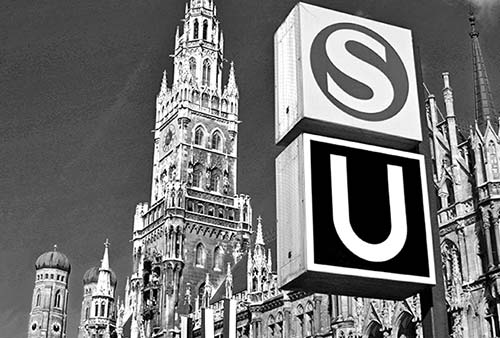
Transit lines are numbered (for example, S-3 or U-5). There are seven concentric fare zones (Zone M and Zones 1-6). You’ll spend most of your time in Zone M (central Munich). You might also travel to Zone 1 (Dachau) and Zone 5 (the airport).
Information: Pick up a transit map at the TI or station, use the English-language journey planner at www.mvv-muenchen.de, or download the MVV app. Underground at the train station, and at Marienplatz, real people are waiting to help at Munich Transit Corporation customer service centers (look for the MVG sign; Mon-Fri 8:00-20:00, Sat 9:00-16:00, closed Sun, www.mvg.de [URL inactive]).
Ticket Options
Transit tickets are sold at any ticket machine that has an MVG (blue machines) or DB (red machines) logo. Though operated by different companies, the machines work much the same way, use English, and accept coins, bills, and credit cards. At DB machines, select the “MVV” option to switch to local-transit mode.
A regular ticket (Einzelfahrkarte) for Zone M costs €3.50 and is good for three hours in one direction, including changes and stops. For short rides (four stops max, only two of which can be on the subway), buy the €1.80 short-stretch ticket (Kurzstrecke), good for one ride. The €8.20 day ticket (Single-Tageskarte) for Zone M pays for itself if you take three regular trips, and can be a great deal for a busy traveler. If you’re going to Dachau, buy the M-1 version of the Single-Tageskarte (€9.30, covers Zones M and 1). For the airport (Flughafen), you need an M-5 ticket for zones M through 5 (€12.30/single ride; €13.70/all-day pass).
All-day small-group passes (Partner-Tageskarte) are even more generous. They cover all public transportation for up to five adults (or up to two adults and six kids). A Partner-Tageskarte for Zone M costs €15.60. An M-1 group ticket (covering Zones M and 1, which includes Dachau) costs €17, and an M-5 group ticket valid out to the airport (Flughafen) costs €25.70. These partner tickets—while seemingly impossibly cheap—are for real. Read it again and do the math. Even two people traveling together save money, and for groups, it’s a real steal. The only catch is that you’ve got to stay together.
A variety of passes add free or discounted sightseeing on top of public transit, but they are harder to make pay off (for details, see https://ticketshop.mvv-muenchen.de).
Using the System
Tickets must be validated—that is, stamped with the date and time—prior to using them. (For an all-day or multiday pass, stamp it only the first time you use it.) Some machines issue prevalidated tickets, or ask you to choose whether to validate at the time of purchase—if you say “yes” to validation, you’re all set.
If you have an unvalidated ticket, on the S-Bahn and U-Bahn, punch it in the blue machine before going down to the platform. For buses and trams, stamp your ticket once on board. Plainclothes ticket checkers enforce this honor system, rewarding freeloaders—even jet-lagged travelers—with stiff €60 fines.
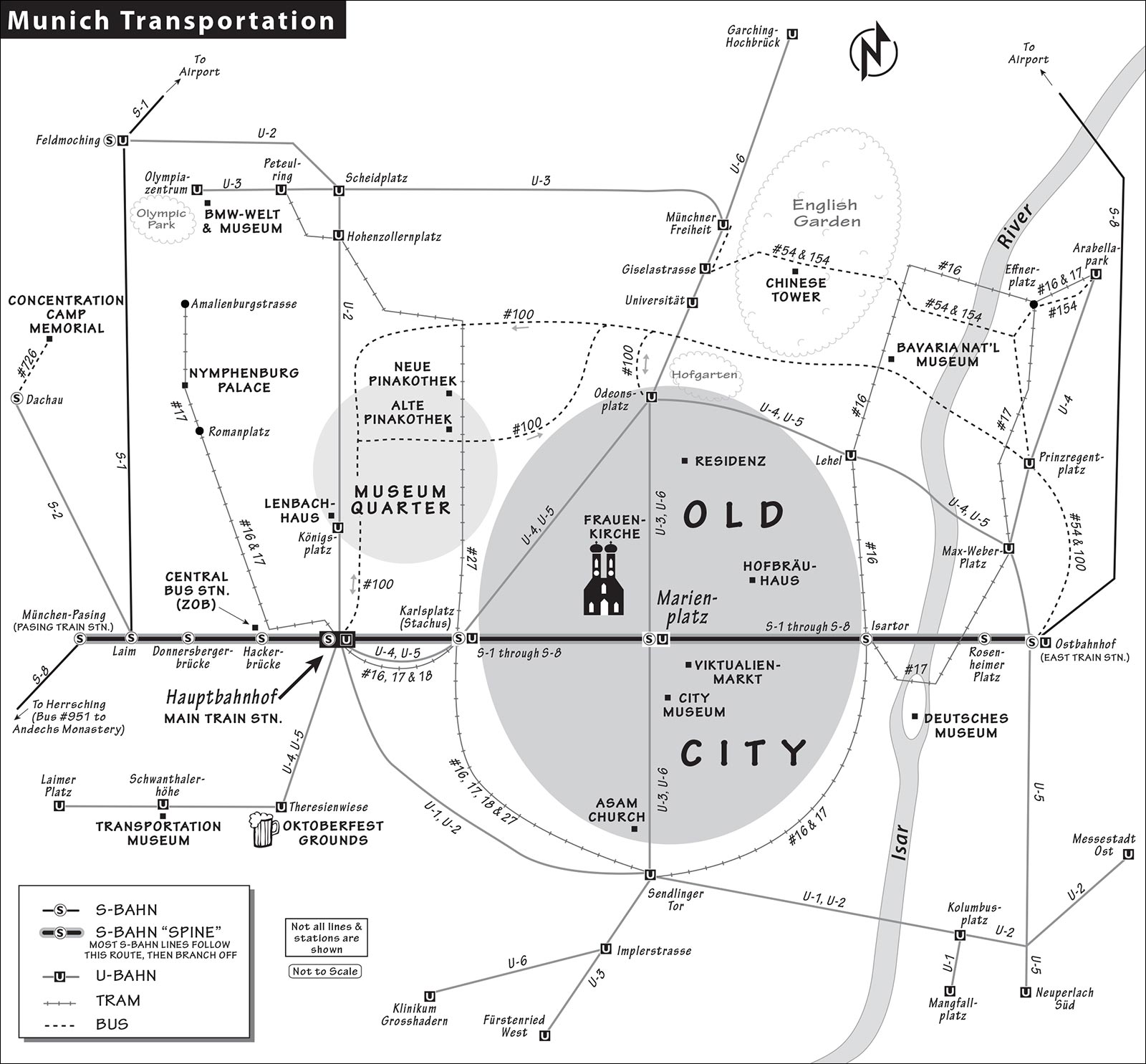
To find the right platform, first look for Richtung signs that helpfully orient you toward major city-center stops (Richtung means “direction”). A Richtung: Marienplatz sign means that every train from that platform will pass through Marienplatz on the way to its end station. Sometimes, you’ll want to check the map and note the name of the last station in the direction you want to travel, then look for that name on the monitors. For example, S-8 trains are called either S-8 Herrsching (westbound) or S-8 Flughafen (eastbound).
Admire the smart design: At busy underground stations there’s a smooth flow as doors open on both sides, so the crowds flow in from one side and out the other.
Useful Transit Lines
All S-Bahn lines (S-1 through S-8) run east-west along the same main axis between the Hauptbahnhof, Marienplatz, and the Ostbahnhof, peeling off to various destinations at either end. If you’re traveling within this central zone, it doesn’t matter which S-Bahn line number you take. One track (Gleis) will be headed east to the Ostbahnhof, the other west to the Hauptbahnhof. Hop on any train going your direction.
The U-3 goes to Olympic Park and the BMW sights, and the S-2 goes to Dachau. Bus #100 runs from the train station past most of the art museums, as well as the English Garden. Tram #17 goes to Nymphenburg Palace (from the train station and Sendlinger Tor). Tram #16 whisks you from the train station around the south edge of the old center and up to the English Garden.
By Bike
Level, compact, and with plenty of bike paths, Munich feels made for those on two wheels. When biking in Munich, follow these simple rules: Walk your bike through pedestrian zones; feel free to take your bike on the U- and S-Bahn, but not during rush hour (Mon-Fri 6:00-9:00 & 16:00-18:00) and only if you buy a €3.10 bike day pass (Fahrrad-Tageskarte); and follow the rules of the road, just like those driving cars.
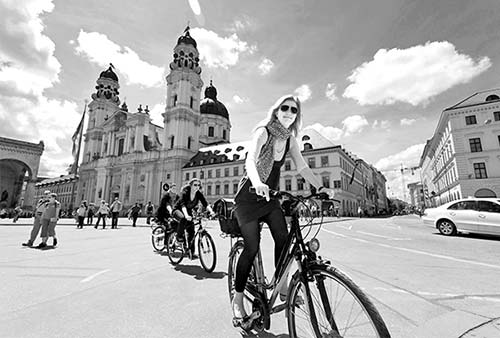
You can rent bikes quickly and easily from the places listed below. Each has an extensive selection; provides helmets, maps, and route advice; and offers bike tours. For locations see the “Munich” map on here.
Radius Tours (Rad means “bike” in German) rents bikes in the train station, in front of track 32 (3- to 7-speed city bikes-€4/hour, €16/day, €30/2 days, RS%, fancier bikes cost more, leave credit-card number as deposit, daily 9:30-19:00, May-Aug until 20:00, closed Nov-March, +49 89 543 487 7730, www.radiustours.com).
Mike’s Bike Tours is conveniently located in the old center (€10 for first hour, €2/additional hour, €18/day, RS%; daily 10:00-19:30, shorter hours Oct-mid-April, closed mid-Nov-Feb; Bräuhausstrasse 10—enter around corner on Hochbrückenstrasse; +49 89 2314 0263, www.mikesbiketours.com).
Suggested Ride: For a great city ride, consider this day on a bike: Rent from Radius at the train station, and take the bike path along Arnulfstrasse, pedaling out to Nymphenburg Palace. Then head to Olympic Park and the BMW sights, and finish at the English Garden (for the late-afternoon or early-evening scene) before returning to the center. Or go for the Isar River bike ride described on here.
Tours in Munich
 To sightsee on your own, download my free Munich City Walk audio tour (see sidebar on here for details).
“Free” Tours: On Marienplatz you may see tour guides jockeying to gather groups for “free” walking or biking tours. These tours aren’t really free: Tips are expected, and the guides actually have to pay the company for each person who takes the tour—so unless you tip more than the guide owes the company, they don’t make a penny. The tours tend to be light on history (typically just a memorized script by someone who’s not even from Germany), and the guides work hard to promote the company’s other tours (which are not free). As is so often the case, you get what you pay for.
Tours Beyond Munich: For day trips to Dachau, Neuschwanstein Castle, and other destinations around Bavaria, see the “Daytrips from Munich” section, later.
Walking Tours
Munich’s largest conventional tour company, Radius Tours, runs two city walking tours with reliably good guides: a daily city tour (€16, at 10:15, 2.5 hours) and a “Third Reich Tour” (€23, April-Oct daily at 15:00, off-season daily at 11:30, 2.5 hours). They also offer an educational “Munich Bavarian Beer Tour” (€47; April-Oct Mon-Sat 18:00, off-season Tue, Thu, and Sat at 18:00; 3.5 hours). During Oktoberfest, they run an Oktoberfest tour instead—reserve well in advance). All tours depart from the Radius office near the train station at Dachauer Strasse 4 (RS%—use the “student rate” when booking online; run by Gaby Holder and son Daniel, office open daily 8:30-18:00, Nov-March until 14:00, +49 89 543 487 7740, www.radiustours.com). Advance booking is recommended and easiest online. For office location, see the “Munich” map, earlier.
Local Guides
A guide can be a great value—especially if you assemble a small group. Six people splitting the cost can make the luxury of a private guide affordable. Each of these guides can meet you at your hotel and tailor a visit to your interests. They are so good, they could wander aimlessly around town and enthrall you with historic and cultural insights.
Michael and Birgit Borio are a brother-and-sister guide team with a thoughtful and smart approach to the city and its history, and they take great joy in sharing it (€170/3 hours, email to make a plan or explore a longer tour; Michael: +49 173 700 4633, michbo@web.de; Birgit: +49 173 319 1565, bborio@yahoo.de).
Georg Reichlmayr is a leader among Munich’s guides and has helped me generously with this chapter (€210/3 hours, +49 8131 86800, mobile +49 170 341 6384, www.muenchen-stadtfuehrung.de, info@muenchen-stadtfuehrung.de).
Birgit Stempfle is a smart and delightful local guide (€210/3 hours, +49 171 718 1465, www.sightseeing-munich.de, info@sightseeing-munich.de).
Paul Riedel is another good guide who also enjoys doing food tours (€280/half-day, €390/full day, has a car for up to six, +49 089 747 47493, www.paul-riedel.de, info@paul-riedel.de).
Bike Tours
Munich lends itself to bike touring. Both of these outfits offer discounts to my readers. Prices include bike rental (you’ll pick up your bike after meeting your guide). Tours often fill, so reservations are smart. For locations, see the “Munich” map, earlier.
Radius Tours offers a three-hour bike tour around the city for €33 (RS%—select the “student rate” when booking online; April-Oct daily at 10:00, no tours off-season, www.radiustours.com). Tours leave from the Radius office at Dachauer Strasse 4, near the train station.
Mike’s Bike Tours packs four hours of “edutainment” on wheels into its €34 “Classic” bike tour (RS%, 1-hour break in Chinese Tower beer garden, daily at 11:30, more tour options in summer, meet under tower of Old Town Hall at east end of Marienplatz—near toy museum at Marienplatz 15, +49 89 2554 3987, www.mikesbiketours.com).
Hop-On, Hop-Off Bus Tour
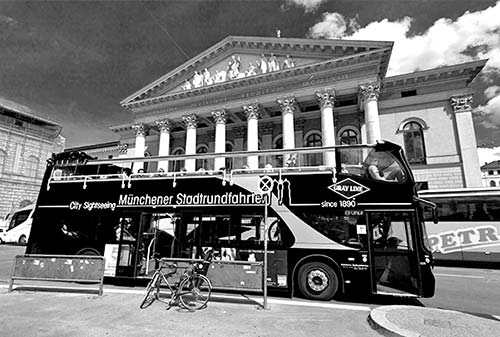
Gray Line hop-on, hop-off tours leave from Karlsplatz 21. Choose between a basic, one-hour “Express” route that heads past the Pinakotheks and Marienplatz (€20, departs daily 10:00-16:00) and the “Grand” route that lasts 2.5 hours (€25, departs daily 10:00-16:30). This longer route adds Nymphenburg and the BMW center, and it’s a very efficient way to see both—just plan your visits around the tour schedule. The live narration is delivered as stiffly as a recording, but the tour is worthwhile: Sitting upstairs on the topless double-decker bus, you’ll see lots of things missed by the typical visitor wandering around the center. Booking online or at the train station Euraide office gets you a small discount (+49 89 5490 7560, www.stadtrundfahrten-muenchen.de).
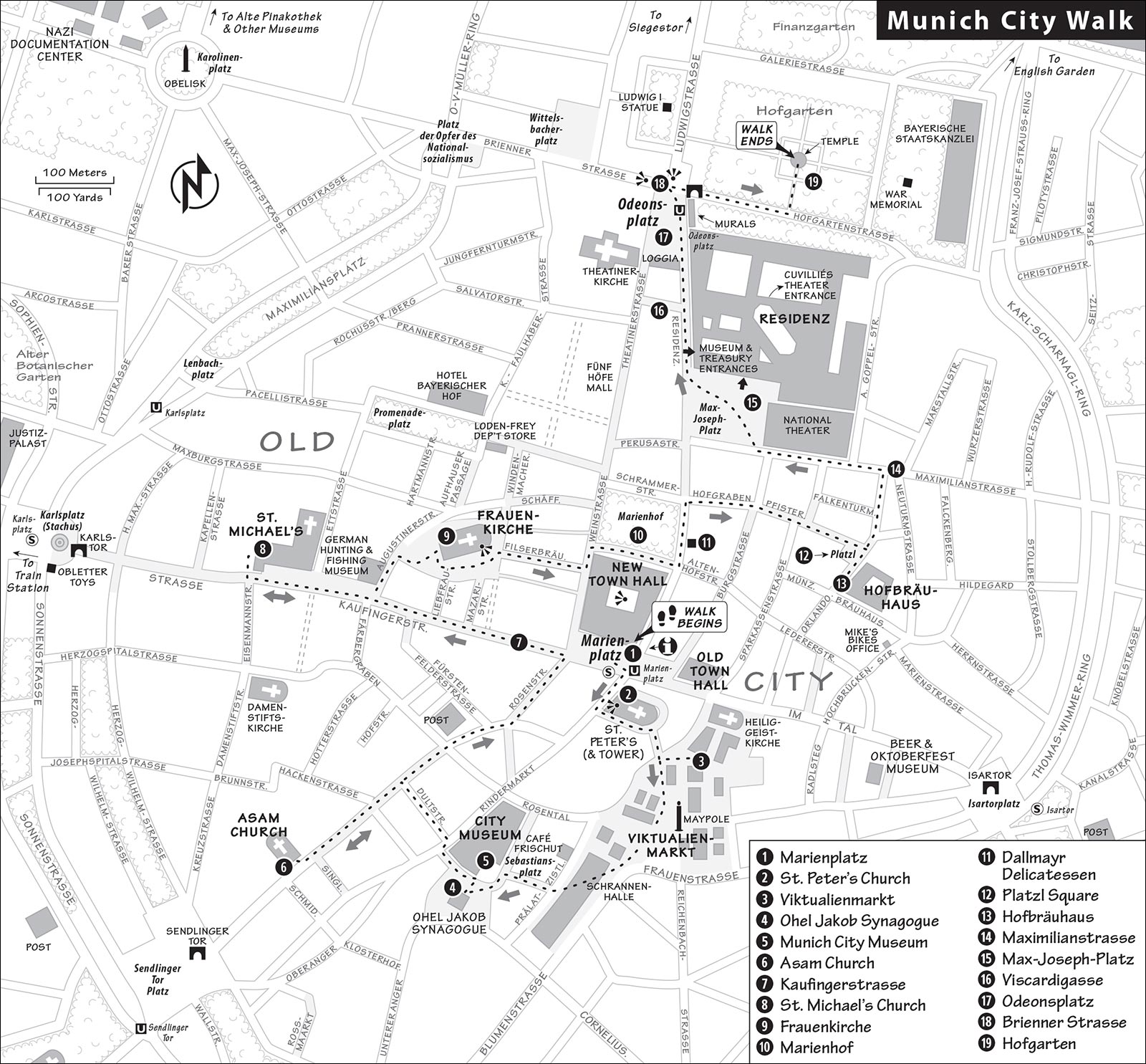
Munich City Walk
5 Munich City Museum (Münchner Stadtmuseum)
8 St. Michael’s Church (Michaelskirche)
10 Marienhof
13 Hofbräuhaus
17 Odeonsplatz
19 Hofgarten
Munich is big and modern, with a million and a half citizens, but, with its pedestrian-friendly historic core, it feels a lot like an easygoing Bavarian town. On this self-guided walk, rated ▲▲▲, we’ll start in the central square, see its famous glockenspiel, stroll through a thriving open-air market, and visit historic churches with lavish Baroque decor. We’ll sample edibles at a venerable gourmet deli and take a spin through the world’s most famous beer hall. Allow two to three hours for this walk through a thousand years of Munich’s history. Allow extra time if you tour museums along the way (details on visiting the sights are given later, under “Sights in Munich”).
Download my free Munich City Walk audio tour and use the “Munich City Walk” map to find your way.
• Begin your walk at the heart of the old city, with a stroll through...
1 Marienplatz
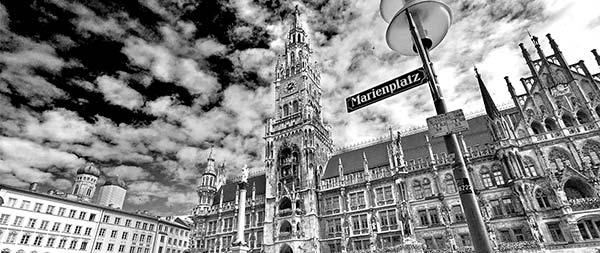
Riding the escalator out of the subway into sunlit Marienplatz (mah-REE-en-platz, “Mary’s Square,” rated ▲▲) gives you a fine first look at the glory of Munich: great buildings, outdoor cafés, and people bustling and lingering like the birds and breeze with which they share this square.
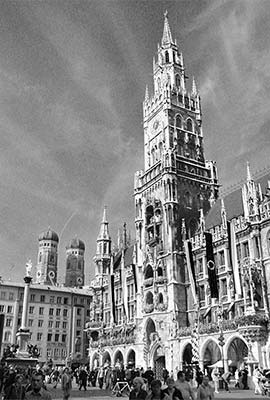
The square is both old and new: For a thousand years, it’s been the center of Munich. It was the town’s marketplace and public forum, standing at a crossroads along the Salt Road, which ran between Salzburg and Augsburg.
Lining one entire side of the square is the impressive facade of the New Town Hall (Neues Rathaus), with its soaring 280-foot spire. The structure looks medieval, but it was actually built in the late 1800s (1867-1908). The style is Neo-Gothic—pointed arches over the doorways and a roofline bristling with prickly spires. The 40 statues look like medieval saints, but they’re from around 1900, depicting more recent Bavarian kings and nobles. This medieval-looking style was all the rage in the 19th century as Germans were rediscovering their historical roots and uniting as a modern nation.
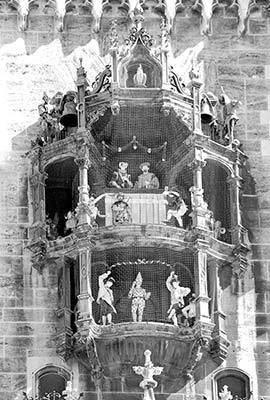
The New Town Hall is famous for its glockenspiel. A carillon in the tower chimes a tune while colorful figurines come out on the balcony to spin and dance. It happens daily at 11:00 and 12:00 all year (also at 17:00 March-Oct) and lasts about 10 minutes. The Spiel of the glockenspiel tells the story of a noble wedding that took place on the market square in 1568. You see the wedding procession and the friendly joust of knights on horseback. The duke and his bride watch the action as the groom’s Bavarian family (in Bavarian white and blue) joyfully jousts with the bride’s French family (in red and white). Below, the barrelmakers—famous for being the first to dance in the streets after a deadly plague lifted—do their popular jig. Finally, the solitary cock crows.
At the very top of the New Town Hall is a statue of a child with outstretched arms, dressed in monk’s garb and holding a book in its left hand. This is the Münchner Kindl, the symbol of Munich. The town got its name from the people who first settled here: the monks (Mönchen). You’ll spot this mini monk all over town, on everything from the city’s coat of arms to souvenir shot glasses to ad campaigns (often holding not a book but maybe a beer or a smartphone). The city symbol was originally depicted as a grown man, wearing a gold-lined black cloak and red shoes. By the 19th century, artists were representing him as a young boy, then a gender-neutral child, and, more recently, a young girl.
These days, a teenage girl dressed as the Kindl kicks off the annual Oktoberfest by leading the opening parade on horseback, and then serves as the mascot throughout the festivities.
New Town Hall Tower Views: Enter the New Town Hall and take an elevator to the fourth floor (where you purchase your ticket), then ride another elevator to the top of the New Town Hall tower—where, from a small perch, you can enjoy a commanding 360-degree city view (€3, elevator located under glockenspiel; daily 10:00-19:00, Oct-April until 17:00 and closed Sat-Sun).
The golden statue at the top of the column in the center of Marienplatz honors the square’s namesake, the Virgin Mary. Sculpted in 1590, it was a rallying point in the religious wars of the Reformation. Back then, Munich was a bastion of southern-German Catholicism against the heresies of Martin Luther to the north. Notice how, at the four corners of the statue, cherubs fight the four great biblical enemies of civilization: the dragon of war, the lion of hunger, the rooster-headed monster of plague and disease, and the serpent. The serpent represents heresy—namely, Protestants. Bavaria is still Catholic country, and Protestants weren’t allowed to worship openly here until about 1800.
To the right of the New Town Hall, the gray pointy building with the green spires is the Old Town Hall (Altes Rathaus). On its adjoining bell tower, find the city seal. It has the Münchner Kindl (symbolizing the first monks), a castle (representing the first fortifications), and a lion (representing the first ruler—Henry the Lion, who built them). It was in this building, on November 9, 1938, that Hitler called for Germans to rise up and ransack everything Jewish. On what came to be called Kristallnacht, synagogues were burned and shops were trashed. (Inside the tunnel under the building is a memorial plaque recalling this horrible event, which foreshadowed the Holocaust.)
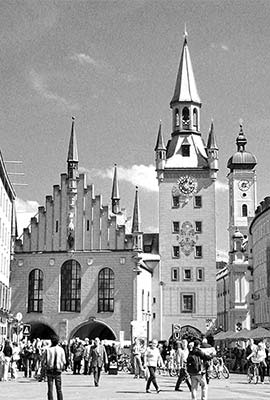
As you look around, keep in mind that the Allies bombed Marienplatz and much of Munich during World War II. Most of the buildings had to be rebuilt; the question was whether to do so in a way that matched their original design or in a modern style. The Old Town Hall looks newer now because it was destroyed by bombs and was rebuilt after the war. The New Town Hall survived the bombs, and served as the US military headquarters after the Americans occupied Munich in 1945.
Orientation Spin: Before moving on, face the New Town Hall one more time and get oriented. Straight ahead is north. To the left is the pedestrian shopping street called Kaufingerstrasse, which leads to the old gate called Karlstor and the train station. To the right, the street leads to the Isartor gate and the Deutsches Museum. This east-west axis cuts through the historic core of Munich.
• Turn around and notice the small street to the left leading a short block to St. Peter’s Church, with its steeple poking up above a row of buildings.
2 St. Peter’s Church
The oldest church in town, St. Peter’s stands on the hill where Munich’s original monks probably settled—perhaps as far back as the ninth century (though the city marks its official birthday as 1158). Today’s church (from 1368) replaced the original monastery church. St. Peter’s (“Old Peter” to locals) is part of the soul of the city. There’s even a popular song about it that goes, “Munich is not Munich without St. Peter’s.”
Cost and Hours: Church-free, tower climb-€5, daily 12:00-16:30.
Visiting the Church: Step inside. (If there’s a Mass in progress, visitors are welcome, but stay in the back. If there’s no Mass, feel free to explore.) Typical of so many Bavarian churches, it’s whitewashed and light-filled, with highlights in pastel pinks and blues framed by gold curlicues. The ceiling painting opens up to the heavens, where Peter is crucified upside down.
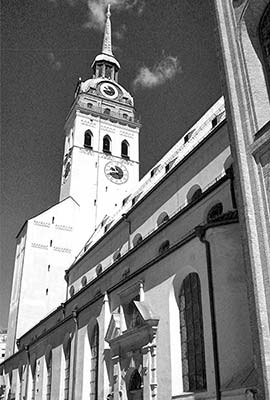
Photos (on a pillar near the entrance) show how St. Peter’s was badly damaged in World War II: The roof caved in, and the tower was demolished during an air raid. But the beloved church was rebuilt and restored, thanks to donations—half from the Augustiner brewery, the rest from private donors. (The accuracy of the restoration was possible thanks to Nazi catalog photos—see “The History of Munich” sidebar later in this chapter.) For decades after World War II, the bells played a popular tune that stopped just before the last note, reminding locals that the church still needed money to rebuild.
Explore further. The nave is lined with bronze statues of the apostles, and the altar shows a statue of St. Peter being adored by four Church fathers. The finely crafted, gray iron fences that line the nave were donated after World War II by the local blacksmiths of the national railway. The precious and fragile sandstone Gothic chapel altar (to the left of the main altar) survived the war only because it was buried in sandbags.
Find the second chapel from the back on the left side. Now there’s something you don’t see every day: a skeleton in a box. As the red Latin inscription says, this is St. Munditia. In the fourth century, she was beheaded by the Romans for her Christian faith. Munich has more relics of saints than any city outside Rome. That’s because it was the pope’s Catholic bastion against the rising tide of Protestantism in northern Europe during the Reformation. In 1675, St. Munditia’s remains were given to Munich by the pope as thanks for the city’s devoted service. It was also a vivid reminder to the faithful that those who die for the cause of the Roman Church go directly to heaven without waiting for Judgment Day.
• Leave St. Peter’s out the door opposite the one you entered. Then, head to the right to the tower entrance.
Visiting the Tower: It’s a long climb to the top (306 steps, no elevator, can be hot and sweaty in summer), much of it with two-way traffic on a one-lane staircase—but the view is rewarding. Try to be two flights from the top when the bells ring at the top of the hour. Then, when your friends back home ask you about your trip, you’ll say, “What?”
• After your tower climb, head downhill to join the busy commotion of the...
3 Viktualienmarkt
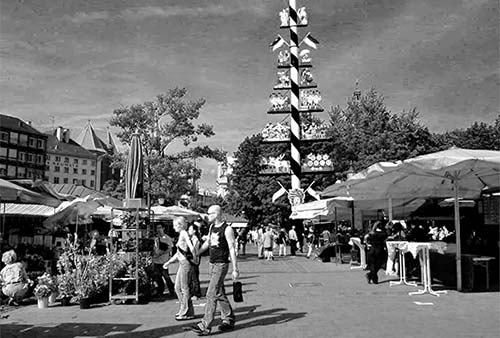
The market (rated ▲▲, closed Sun) is a lively world of produce stands and budget eateries. Browse your way through the stalls and pavilions, as you make your way to the market’s main landmark, the white-and-blue-striped maypole. Early in the morning, you can still feel small-town Munich here. Remember, Munich has been a market town since its earliest days as a stop on the salt-trade crossroads. By the 1400s, the market bustled, most likely beneath a traditional maypole, just like you see today.
Besides salt, Munich gained a reputation for beer. By the 15th century, more than 30 breweries pumped out the golden liquid, brewed by monks, who were licensed to sell it. They stored their beer in cellars under courtyards kept cool by the shade of bushy chestnut trees—a tradition Munich’s breweries still stick to.
Today, the market’s centerpiece seems to be its beer garden (daily 10:00-22:00, weather permitting). Its picnic tables are filled with hungry and thirsty locals, all in the shade of the traditional chestnut trees.
As this beer garden is city owned and needs to be equitable, the beverage selection rotates week to week to feature beer from Munich’s six leading brewers. Step up to the beer kiosk, where you’ll see a sign explaining which beer is on tap.
Shoppers often pause here for a late-morning snack of Weisswurst—white sausage—served with mustard, a pretzel, and a beer. Here, you can order just a half-liter—unlike beer gardens that only sell by the full liter. This is handy for shoppers who want just a quick sip. As is the tradition at all the city’s beer gardens, some tables—those without tablecloths—are set aside for patrons who bring their own food; they’re welcome here as long as they buy a drink. The Viktualienmarkt is ideal for a light meal (see “Eating in Munich,” later in this chapter).
Now make your way to the towering maypole. Throughout Bavaria, colorfully ornamented maypoles decorate town squares. Many are painted, like this one, in Bavaria’s colors, white and blue. The decorations are festively replaced every year on the first of May. Traditionally, rival communities try to steal each other’s maypole. Locals guard their new pole day and night as May Day approaches. Stolen poles are ransomed only with lots of beer for the clever thieves. When they recover the pole, traditionally the unmarried men work together to get it back up...as the women stand around swooning. (I love how the courting rituals of medieval Europe survive today in the most popular tourist clichés.)
As was standard in any village, the decorations that line each side of the pole explain which merchants are doing business in the market. Munich’s maypole gives prominence (on the bottom level) to a horse-drawn wagon bringing in beer barrels. And you can’t have a kegger without coopers—find the merry barrelmakers, the four cute guys dancing. Today, traditional barrel making is enjoying a comeback, as top breweries like to have real wooden kegs.
The bottom of the pole celebrates the world’s oldest food law. The German Beer Purity Law (Reinheitsgebot) of 1487 actually originated here in Munich, was later adopted in Bavaria, and eventually spread throughout the rest of Germany. It stipulated that beer could consist only of three ingredients: barley, hops, and water, with no additives. (Later they realized that a fourth ingredient, yeast, is always present in fermentation.) Why was beer so treasured? Back in the Middle Ages, it was considered liquid food.
From the maypole, take in the bustling scene around you. The market was modernized in the 1800s as the city grew. Old buildings were torn down and replaced with stalls and modern market halls. Now, in the 21st century, it’s a wonder such a traditional place survives—especially because it sits on the most expensive real estate in town. But locals love their market, so the city protects these old-time shops, charging them only a small percentage of their gross income, enabling them to carry on. The city also bans most fast-food chains. This keeps the market classy and authentic. Münchners consider the produce here to be top quality, if on the expensive side.
• For a quick and memorable bite, see the several market food stalls recommended under “Eating in Munich.” At the far end of the Viktualienmarkt, across the street and to the right of Der Pschorr at Prälat-Zistl-Strasse 8, spot Café Frischhut, Munich’s favorite place for fresh Schmalznudel—traditional fried-dough treats best enjoyed warm with a sprinkling of sugar.
Continue straight to a modern glass-and-iron building.
Schrannenhalle: This 1800s grain exchange has been renovated into a high-end paradise for foodies. Eataly’s presence here is a reminder of Munich’s affinity for Italy, which is just a couple of hours’ drive to the south. In fact, locals joke that theirs is the northernmost Italian town. Stroll through Eataly, past enticing bottles of olive oil and delectable pasta. Pause to watch bakers tending to the day’s bread, and make your way to the far end, where wine connoisseurs could detour downstairs for a vast wine collection (and a good WC).
• Exit the Schrannenhalle midway down on the right-hand side. You’ll spill out into Sebastiansplatz, a small square lined with healthy eateries. Continue through Sebastiansplatz and veer left, where you’ll see a cube-shaped building, the...
4 Ohel Jakob Synagogue
This modern synagogue anchors a revitalized Jewish quarter. In the 1930s, about 10,000 Jews lived in Munich, and the main synagogue stood near here (on Karlsplatz). Then, in 1938, Hitler demanded that the synagogue be torn down. By the end of World War II, Munich’s Jewish community was gone. But thanks to Germany’s later acceptance of religious refugees from former Soviet states, the Jewish population (while mostly secular) has now reached its prewar size. The new synagogue was built in 2006. There’s also a kindergarten and day school, playground, fine kosher restaurant (at #18), and bookstore. Notice the low-key but efficient security.
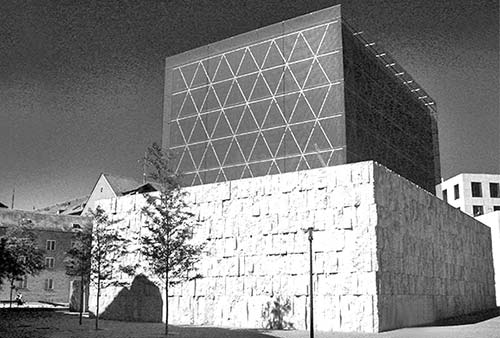
While the synagogue is shut tight to nonworshippers, its architecture is striking from the outside. Lower stones of travertine evoke the Wailing Wall in Jerusalem, while an upper section represents the tent that held important religious wares during the 40 years of wandering through the desert. The synagogue’s door features the first 10 letters of the Hebrew alphabet, symbolizing the Ten Commandments.
The cube-shaped Jewish History Museum (behind the cube-shaped synagogue) is stark, windowless, and as inviting as a bomb shelter. While the museum’s small permanent collection is disappointing, good temporary exhibits might justify the entry fee (€6; ticket gets you half-price admission to Munich City Museum, Lenbachhaus, or Villa Stuck—or use any of those tickets to get half-price admission here; Tue-Sun 10:00-18:00, closed Mon, St.-Jakobs-Platz 16, +49 89 2339 6096, www.juedisches-museum-muenchen.de).
• Facing the synagogue, on the same square, is the...
5 Munich City Museum (Münchner Stadtmuseum)
The highs and lows of Munich’s history are covered in this surprisingly honest municipal museum (rated ▲). It covers the cultural upheavals of the early 1900s, Munich’s role as the birthplace of the Nazis, and the city’s renaissance during Germany’s postwar “economic miracle.” There’s scant information posted in English, but an included audioguide can fill in the gaps.
• You can stop and tour the museum now (see listing on here). Otherwise, continue through the synagogue’s square, past the fountain, across the street, and one block farther to the pedestrianized Sendlinger Strasse. Take a left and walk 100 yards until you see a fancy facade on your right (at #32), which marks the...
6 Asam Church (Asamkirche)
This tiny church (rated ▲) is a slice of heaven on earth—a gooey, drippy Baroque-concentrate masterpiece by Bavaria’s top two Rococonuts—the Asam brothers. Just 30 feet wide, it was built in 1740 to fit within this row of homes. Originally, it was a private chapel where these two brother-architects could show off their work (on their own land, next to their home and business headquarters—to the left), but it’s now a public place of worship.
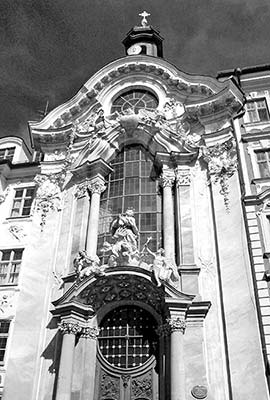
Cost and Hours: Free, Sat-Thu 9:00-19:00, Fri from 13:00, +49 89 2368 7989. Visitors are asked not to enter this tiny church during Mass.
Visiting the Church: This place of worship served as a promotional brochure to woo clients and is packed with every architectural trick in the books. Imagine approaching the church not as a worshipper but as a shopper representing your church’s building committee. First stand outside: Hmmm, the look of those foundation stones really packs a punch. And the legs hanging over the portico...nice effect. Those starbursts on the door would be a hit back home, too.
Then step inside: I’ll take a set of those over-the-top golden capitals, please. We’d also like to order the gilded garlands draping the church in jubilation, and the twin cupids capping the confessional. And how about some fancy stucco work, too? (Molded-and-painted plaster was clearly an Asam brothers specialty.) Check out the illusion of a dome painted on the flat ceiling—that’ll save us lots of money. The yellow glass above the altar has the effect of the thin-sliced alabaster at St. Peter’s in Rome, but it’s within our budget! And, tapping the “marble” pilasters to determine that they are just painted fakes, we decide to take that, too. Crammed between two buildings, this narrow church has limited light inside, so there’s a big, clear window in the back for maximum illumination—we’ll order one to cut back on our electricity bill.
Visiting the Asam Church, you can see why the prolific Asam brothers were so successful. (Black-and-white portraits of the two Asams in oval frames flank the altar.) On the way out, say goodbye to the gilded grim reaper in the narthex (above, on the left side, as you’re leaving) as he cuts the thread of life—reminding all who visit of our mortality...and, by the way, that shrouds have no pockets.
• Leaving the church, look to your right, noticing the Sendlinger Tor at the end of the street—part of the fortified town wall that circled Munich in the 14th century. Then turn left and walk straight up Sendlinger Strasse. Walk toward the Münchner Kindl, still capping the spire of the New Town Hall in the distance, and then up (pedestrian-only) Rosenstrasse, until you hit Marienplatz and the big, busy...
7 Kaufingerstrasse
This car-free street leads you through a great shopping district, past cheap department stores, carnivals of street entertainers, and good old-fashioned slicers and dicers. As far back as the 12th century, this was the town’s main commercial street. Traders from Salzburg and Augsburg would enter the town through the fortified Karlstor. This street led past the Augustiner beer hall (opposite St. Michael’s Church to this day), right to the main square and cathedral.
Up until the 1970s, the street was jammed with car traffic. Then, for the 1972 Olympics, it was turned into one of Europe’s first pedestrian zones. At first, shopkeepers were afraid that would ruin business. Now it’s Munich’s living room. Nearly 9,000 shoppers pass through it each hour. Merchants nearby are begging for their streets to become traffic-free, too. Imagine this street in Hometown, USA.
The 1972 Olympics transformed this part of Munich—the whole area around Marienplatz was pedestrianized and the transit system expanded. Since then, Munich has become one of the globe’s greenest cities. Skyscrapers have been banished to the suburbs, and the nearby Frauenkirche is still the tallest building in the center.
Born from Salt and Beer (1100-1500): Munich began in the 12th century, when Henry the Lion (Heinrich der Löwe) established a lucrative salt trade near a monastery of “monks”—München. After Henry’s death, an ambitious merchant family, the Wittelsbachs, took over. By the 1400s, Munich’s maypole-studded market bustled with trade in salt and beer, the twin-domed Frauenkirche drew pilgrims, and the Wittelsbachs made their home in the Residenz. When the various regions of Bavaria united in 1506, Munich (pop. 14,000) was the natural capital.
Religious Wars, Plagues, Decline (1500-1800): While Martin Luther and the Protestant Reformation raged in northern Germany, Munich became the ultra-Catholic heart of the Counter-Reformation, decorated in the ornate Baroque and Rococo style of its Italian Catholic allies. The religious wars and periodic plagues left the city weakened. Now the Wittelsbachs took their cultural cues from more-powerful France (Nymphenburg Palace is a miniature Versailles), England (the English Garden), and Italy (the Pitti Palace-inspired Residenz). While the rest of Europe modernized, Munich remained behind the times.
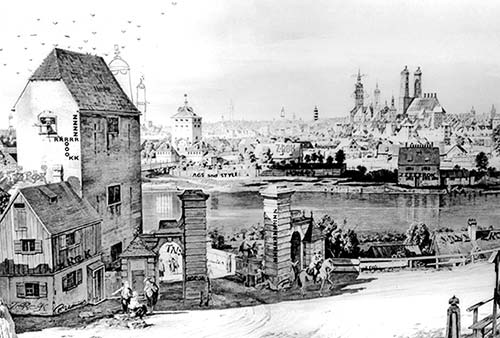
The Golden Age of Kings (1806-1886): When Napoleon invaded, the Wittelsbach dukes surrendered hospitably and were promptly rewarded with an even grander title: King of Bavaria. Munich boomed. Maximilian I (r. 1806-1825), a.k.a. Max Joseph, rebuilt in Neoclassical style—grand columned buildings connected by broad boulevards. Ludwig I (r. 1825-1848) turned Munich into a modern railroad hub, budding industrial city, and fitting capital (pop. 90,000). But the skirt-chasing Ludwig was brought down in a sex scandal with the notorious Irish dancer Lola Montez. His son Maximilian II (r. 1848-1864) continued Ludwig’s modernization program, while studiously avoiding dancers. In 1864, 18-year-old Ludwig II (r. 1864-1886) became king. Ludwig didn’t much like Munich, preferring to build castles in the Bavarian countryside. (For more on Ludwig, see the Bavarian Alps chapter.)
End of the Wittelsbachs (1886-1918): When Bavaria became part of the newly united Germany, Berlin overtook Munich as Germany’s power center. Turn-of-the-century Munich was culturally rich, giving birth to the abstract art of the Blue Rider group. But World War I devastated Munich. After the war, mobs of poor, hungry, disillusioned, and angry Münchners roamed the streets. In 1918, they drove the last Bavarian king out, ending 700 years of Wittelsbach rule.
Nazis, World War II, and Munich Bombed (1918-1945): In the power vacuum, a fringe group emerged—the Nazi Party, headed by charismatic war veteran Adolf Hitler. Hitler rallied the Nazis in a Munich beer hall, leading a failed coup d’état known as the Beer Hall Putsch (1923). When the Nazis eventually took power in Berlin, they remembered their roots, dubbing Munich “Capital of the Movement.” In World War II, nearly half the city was leveled by Allied air raids. The once-grand city lay in waste.
Munich Rebuilds (1945-Present): After the war, with generous American aid, Münchners rebuilt. Nazi authorities had taken care during the early war years to create a photographic archive of historic sights, which now came in handy. The city faced a choice—rebuild in the old style or go with modern skyscrapers. Munich chose to preserve the low-rise, medieval feel, but with a modern infrastructure. For the 1972 Olympic Games, they built a futuristic stadium, a sleek new subway system, and one of Europe’s first pedestrian-only zones—Kaufingerstrasse. In 1990, when Germany reunited, Berlin once again became the country’s focal point, relegating Munich to the role of sleepy Second City.
These days, Munich seems to be comfortable just being itself rather than trying to keep up with Berlin. Though rich and modern—home to BMW and Siemens, and a producer of software, books, movies, and the latest fashions—it remains safe, clean, and cultured. It’s a university town, built on a human scale, and close to the beauties of nature.
• Stroll a few blocks away from Marienplatz toward the Karlstor, until you arrive at the imposing church on the right.
8 St. Michael’s Church (Michaelskirche)
This is one of the first great Renaissance buildings north of the Alps. The ornate facade, with its sloped roofline, was inspired by the Gesù Church in Rome—home of the Jesuit order. Jesuits saw themselves as the intellectual defenders of Catholicism. St. Michael’s was built in the late 1500s—at the height of the Protestant Reformation—to serve as the northern outpost of the Jesuits. Appropriately, the facade features a statue of Michael fighting a Protestant demon.
Cost and Hours: Church—free, generally daily 8:00-19:00, until later on Sun and summer evenings; crypt—€2, Mon-Fri 9:30-16:30, Sat until 14:30, closed Sun; frequent concerts—check schedule posted outside; +49 89 231 7060.
Visiting the Church: Inside, admire the ornate Baroque interior, topped with a barrel vault, the largest of its day. Stroll up the nave to the ornate pulpit, where Jesuit priests would hammer away at Reformation heresy. The church’s acoustics are spectacular, and the choir—famous in Munich—sounds heavenly singing from the organ loft high in the rear. Notice the monochrome Baroque of the all-white interior (with only shadows to “color” the surfaces) and the lavish chapels lining each side (some of which were built by and for local leading families and came with a promise from the priests that their privileged loved ones would get special prayers daily).
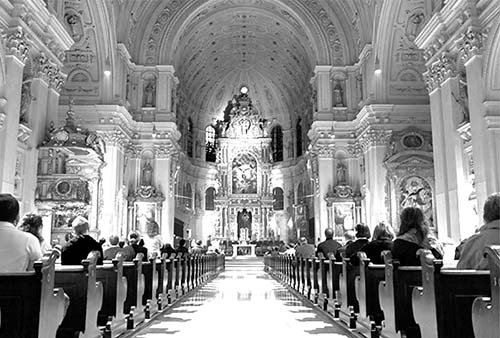
The crypt (Fürstengruft, down the stairs to the right by the altar) contains 40 stark, somewhat forlorn tombs of Bavaria’s ruling family, the Wittelsbachs. The most ornate tomb (center of back wall, facing altar) holds the illustrious Ludwig II, known for his fairy-tale castle at Neuschwanstein. Ludwig didn’t care much for Munich. He escaped to the Bavarian countryside, where he spent his days building castles, listening to music, and dreaming about knights of old. His excesses earned him the nickname “Mad” King Ludwig. But of all the Wittelsbachs, it’s his tomb that’s decorated with flowers—placed here by romantics still mad about their “mad” king.
Also on the back wall are the tombs of Wilhelm V (right), who built this church, and Maximilian I (left), who saved Munich from Swedish invaders during the Thirty Years’ War. Finally (center of right wall as you enter) there’s Otto, who went insane and was deposed in 1916, virtually bringing the Wittelsbachs’ seven-century reign to an end.
• Our next stop, the Frauenkirche, is a few hundred yards away. Backtrack a couple of blocks up Kaufingerstrasse to the wild boar statue, which marks the German Hunting and Fishing Museum (with kid-friendly exhibits and the infamous Wolpertinger—a German “jackalope” created by creative local taxidermists). At the boar statue, turn left on Augustinerstrasse, which leads to Munich’s towering, twin-domed cathedral.
9 Frauenkirche
These twin onion domes are the symbol of the city. They’re unusual in that most Gothic churches have either pointed steeples or square towers. Some say Crusaders, inspired by the Dome of the Rock in Jerusalem, brought home the idea (first to St. Mark’s in Venice and then north of the Alps). Or it may be that, due to money problems, the towers weren’t completed until Renaissance times, when domes were in vogue. Whatever the reason, the Frauenkirche’s domes may be the inspiration for the characteristic domed church spires that mark villages all over Bavaria.
Cost and Hours: Church—free, generally open daily 7:00-20:30, +49 89 290 0820. You can ride an elevator and take about 60 steps to the top of a tower for a commanding city view (€6).
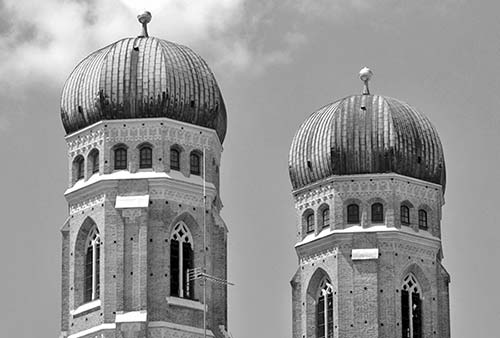
Visiting the Church: The church was built in just 22 years, from 1466 to 1488. Note that it’s made of brick, not quarried stone—easy to make locally, and cheaper and faster to build with than stone. Construction was partly funded with the sale of indulgences (which let sinners bypass purgatory on the way to heaven). It’s dedicated to the Virgin—Our Lady (Frau)—and has been the city’s cathedral since 1821.
Step inside and remember that much of this church was destroyed during World War II. The towers survived, and the rest was rebuilt essentially from scratch.
Near the entrance is a big, black, ornate, tomb-like monument honoring Ludwig IV the Bavarian (1282-1347), who was elected Holy Roman Emperor—a big deal. The Frauenkirche was built a century later with the express purpose of honoring his memory. His monument was originally situated in front at the high altar, right near Christ. Those Wittelsbachs—always trying to be associated with God. This alliance was instilled in people through the prayers they were forced to recite: “Virgin Mary, mother of our duke, please protect us.”
Nearby, a relief (over the back pew on the left) honors one of Munich’s more recent citizens. Joseph Ratzinger was born in Bavaria in 1927, became archbishop of the Frauenkirche (1977-1982), then moved to the Vatican, where he later served as Pope Benedict XVI (2005-2013).
Now walk slowly up the main aisle, enjoying stained glass right and left. This glass is obviously modern, having replaced the original glass that was shattered in World War II. Ahead is the high altar, under a huge hanging crucifix. Find the throne—the ceremonial seat of the local bishop. From here, look up to the tops of the columns, and notice the tiny painted portraits. They’re the craftsmen from five centuries ago who helped build the church.
Now walk behind the altar to the apse, where the three tall windows still have their original 15th-century glass. To survive the bombs of 1944, each pane was lovingly removed and stored safely away.
Leaving the church, walk up its right side. Notice the 16th- and 17th-century tombstones on the wall. Originally, people were buried in the holy ground around the church. But in the Napoleonic age, the cemeteries were dug up and relocated outside the city walls for hygienic and space reasons. They kept a few tombstones here as a reminder of this heritage.
Also take a closer look at the towering church’s patchwork of old and new bricks. After World War II, legions of “rubble women” cleaned up the devastation in bombed-out Munich. Here, they’d sort through the bricks. Broken bricks were set aside and used to build the city’s Schuttberge, or “debris hills,” which are now grassy parks at the edge of town. Intact bricks were cleaned and reused in rebuilding. Notice the church’s original bricks and think for a moment of the rubble women and the cost of war. Then imagine the rooftop, a forest of old fir beams, which burned and crashed to the floor in the bombings. Musicians salvaged this wood—500 years old and beautifully aged—and made an orchestra of precious stringed instruments. Nicknamed “the cathedral violins,” they play angelic music to this day.
• At the rear of the church, go down Filserbräugasse and cross Weinstrasse. Look left, and you’ll see a construction zone, which is normally a green park called the Marienhof.
10 Marienhof
This square, tucked behind the New Town Hall, was left as a green island after the 1945 bombings. For now, the square’s all dug up while Munich builds an additional subway tunnel. With virtually the entire underground system converging on nearby Marienplatz, this new tunnel will provide a huge relief to the city’s congested subterranean infrastructure. Billboards on the site show what’s going on underground; in a few years the massive new subway station will open and this will once again be a park.
• On the far side of Marienhof, the stately yellow building is...
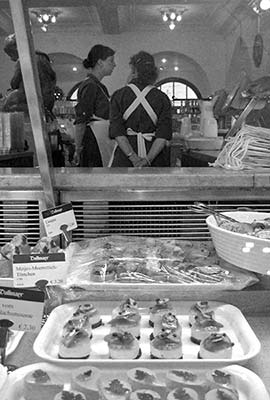
11 Dallmayr Delicatessen
When the king wanted take-out, he called Alois Dallmayr. This place became famous for its exotic and luxurious food items: tropical fruits, seafood, chocolates, fine wines, and coffee (there are meat and cheese counters, too). As you enter, read the black plaque with the royal seal by the door: Königlich Bayerischer Hof-Lieferant (“Deliverer for the King of Bavaria and his Court”). Catering to royal and aristocratic tastes (and budgets) since 1700, it’s still the choice of Munich’s old rich. Today, it’s most famous for its sweets, chocolates, and coffee—dispensed from fine hand-painted Nymphenburg porcelain jugs (Mon-Sat 9:30-19:00, closed Sun; Dienerstrasse 13, www.dallmayr.com). Imagine picking up a royal picnic to munch in the grassy park out front.
• Leaving Dallmayr, turn right and then right again to continue along Hofgraben. Walk straight three blocks, gently downhill, to Platzl—“small square.” (If you get turned around, just ask any local to point you toward the Hofbräuhaus.)
12 Platzl Square
As you stand here—admiring classic facades in the heart of medieval Munich—recall that everything around you was flattened in World War II. Here (and throughout the city), reconstruction happened in stages: From 1945 to 1950, they removed 12 million tons of bricks and replaced roofs to make buildings weather-tight. From 1950 to 1972, they redid the exteriors. From 1972 to 2000, they refurbished the interiors. Today, the rebuilt Platzl sports new—but old-looking—facades.
Officials estimate that hundreds of unexploded bombs still lie buried under Munich. As recently as 2012, a 550-pound bomb was found in Schwabing, a neighborhood just north of the old city center. They had to evacuate the neighborhood and detonate the bomb, which created a huge fireball—a stark reminder of Munich’s scary past.
Today’s Platzl hosts a lively mix of places to eat and drink—chains like Starbucks and Hard Rock Café alongside local spots like Schuhbecks Eissalon, a favorite for ice cream (Pfisterstrasse 11).
• At the bottom of the square (#9), you can experience the venerable...
13 Hofbräuhaus
The world’s most famous beer hall (rated ▲▲) is a trip. Whether or not you slide your lederhosen on its polished benches, it’s a great experience just to walk through the place in all its rowdy glory (with its own gift shop).
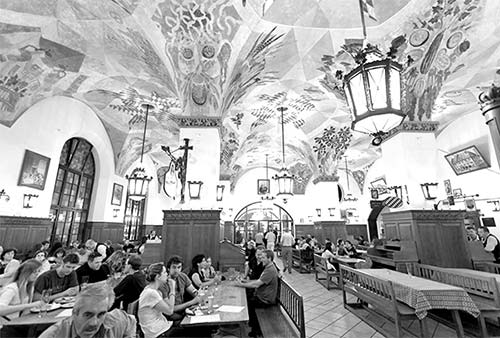
Cost and Hours: Free to enter, daily 9:00-late, live oompah music at lunch and dinner; a 5-minute walk northeast of Marienplatz at Platzl 9, +49 89 2901 36100, www.hofbraeuhaus.de. For details on eating here, see the “Beer Halls, Beer Gardens, and Bavarian Food” section, later.
The 1810 marriage reception of King Ludwig I was such a success that it turned into an annual bash. These days, the Oktoberfest lasts just over two weeks, starting on a Saturday in September and usually ending on the first Sunday in October (www.oktoberfest.de).
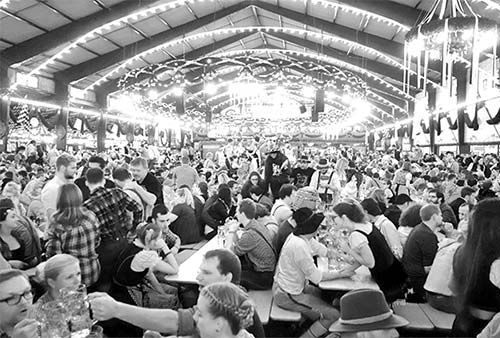
Oktoberfest is held at the Theresienwiese fairground south of the main train station, in a meadow known as the “Wies’n” (VEE-zen). Huge tents are set up that together can seat nearly 120,000 beer drinkers. The festivities kick off with an opening parade of about 9,500 participants. Then, for the next two weeks, it’s a frenzy of drinking, dancing, music, and food. There’s a huge Ferris wheel, and the triple-loop roller coaster must be the wildest on earth (best before the beer-drinking). Total strangers stroll arm-in-arm down rows of picnic tables amid a carnival of beer, pretzels, and wurst, drawing visitors from all over the globe. A million gallons of beer later, they roast the last ox.
If you’ll be here during the festivities, it’s best to reserve a room early, but if you arrive in the morning (except Fri or Sat) and haven’t called ahead, the TI may be able to help. During the fair, the city functions even better than normal, but is admittedly more expensive and crowded. It’s a good time to sightsee, even if beer-hall rowdiness isn’t your cup of tea.
Even though the beer tents are enormous, they’re often full, especially on weekends—if possible, avoid going on a Friday or Saturday night. If you find yourself inside a tent with nowhere to sit, be bold—find an underused table and ask some potential new friends to scoot (or at least keep your elbows sharp). For some cultural background with your Wies’n visit, consider hiring a local guide or going with a group (Radius Tours, for example, offers a €140 tour that includes two beers, half a chicken, and guaranteed seating, Sun-Fri at 10:00, none on Sat, reserve ahead, www.radiustours.com; The Local Experience runs Oktoberfest tours for €129-209 that include breakfast, lunch, four beers, and reserved seating, www.the-local-experience.com).
If you’re not visiting while the party’s on, don’t worry: You can still dance to oompah bands, munch huge pretzels, and show off your stein-hoisting skills any time of year at Munich’s classic beer halls, including the venerable Hofbräuhaus. See the “Beer Halls, Beer Gardens, and Bavarian Food” section, later, for descriptions of my favorites.
In the city center, the humble Beer and Oktoberfest Museum (Bier- und Oktoberfestmuseum) offers its take on beer history. Exhibits and artifacts outline the centuries-old quest for the perfect beer (apparently achieved in Munich) and the origins of the city’s Oktoberfest celebration (€4, Tue-Sat 13:00-18:00, closed Sun-Mon, between the Isartor and Viktualienmarkt at Sterneckerstrasse 2, +49 89 2423 1607, www.bier-und-oktoberfestmuseum.de).
Visiting the Hofbräuhaus: Before going in, check out the huge arches at the entrance and the crown logo. The original brewery was built here in 1589. As the crown suggests, it was the Wittelsbachs’ personal brewery, to make the “court brew” (Hof Brau). In 1880, the brewery moved out, and this 5,000-seat food-and-beer palace was built in its place. After being bombed in World War II, the Hofbräuhaus was one of the first places to be rebuilt (Bavarian priorities).
Now take a deep breath and go on in. Dive headlong into the sudsy Hofbräu mosh pit. Don’t be shy. Everyone’s drunk anyway. The atmosphere is thick with the sounds of oompah music, played here every night of the year.
You’ll see locals stuffed into lederhosen and dirndls, giant gingerbread cookies that sport romantic messages, and kiosks selling goofy postcards. Notice the quirky 1950s-style painted ceiling, with Bavarian colors, grapes, chestnuts, and fun “eat, drink, and be merry” themes. You’ll see signs on some tables reading Stammtisch, meaning they’re reserved for regulars, and their racks of old beer steins made of pottery and pewter. Beer halls like the Hofbräuhaus sell beer only by the liter mug, called a Mass (mahs). You can get it light (helles) or dark (dunkles). A slogan on the ceiling above the band reads, Durst ist schlimmer als Heimweh—“Thirst is worse than homesickness.”
You can explore upstairs, too. Next to the entrance, a grand staircase leads up to the big folk-show hall on the top floor. If you don’t mind eating with 20 big-bus tours, this can be a cheap and fun way to see a slap dancing and yodeling show.
• Leaving the Hofbräuhaus, turn right and walk two blocks, then turn left when you reach the busy street called...
14 Maximilianstrasse
This broad east-west boulevard, lined with grand buildings and exclusive shops, introduces us to Munich’s golden age of the 1800s. In that period, Bavaria was ruled by three important kings: Max Joseph, Ludwig I, and Ludwig II. They transformed Munich from a cluster of medieval lanes to a modern city of spacious squares, Neoclassical monuments, and wide boulevards. At the east end of this boulevard is the palatial home of the Bavarian parliament.
The street was purposely designed for people and for shopping, not military parades. And to this day, Maximilianstrasse is busy with shoppers browsing Munich’s most exclusive shops. Many are wealthy visitors from the Middle East, places like Dubai and the United Arab Emirates. These families often come here for medical treatment. And they make a vacation out of it, bringing the whole family and often even their own car and driver. The shopping is great, there’s no stress (like they might feel in a more frenetic city, like London), security is excellent, the weather is cool, and they’re free of the societal constraints that keep them on the straight and narrow back home. Germans just politely provide the services, happy to make back some of the money that pours eastward every time they pull up to a gas station.
• Maximilianstrasse leads to a big square—Max-Joseph-Platz.
15 Max-Joseph-Platz
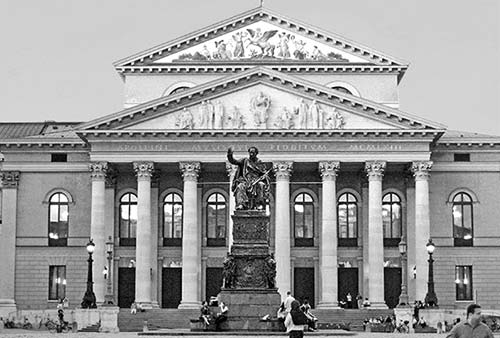
The square is fronted by two big buildings: the National Theater (with its columns) and the Residenz (with its intimidating stone facade).
The Residenz, the former “residence” of the royal Wittelsbach family, started as a crude castle (c. 1385). Over the centuries, it evolved into one of Europe’s most opulent palaces. The facade takes its cue from Pitti Palace in Florence. Today, you can visit the Residenz for its lavish Rococo interior, crown jewels, and exquisite Cuvilliés Theater (all described under “Sights in Munich,” later in this chapter).
The square’s centerpiece is a grand statue of Maximilian I—a.k.a. Max Joseph. In 1806, Max was the city’s duke, serving in the long tradition of his Wittelsbach family...until Napoleon invaded and deposed him. But then Napoleon—eager to marry into the aristocracy—agreed to reinstate Max, with one condition: that his daughter marry Napoleon’s stepson. Max Joseph agreed, and was quickly crowned not duke but king of Bavaria.
Max Joseph and his heirs ruled as constitutional monarchs. Now a king, Max Joseph was popular; he emancipated Protestants and Jews, revamped the Viktualienmarkt, and graced Munich with grand buildings like the National Theater. This Neoclassical building, opened in 1818, celebrated Bavaria’s strong culture, deep roots, and legitimacy as a nation; four of Richard Wagner’s operas were first performed here. It’s now where the Bavarian State Opera and the Bavarian State Orchestra perform. (The Roman numerals MCMLXIII in the frieze mark the year the theater reopened after WWII bombing restoration—1963.)
• Leave Max-Joseph-Platz opposite where you entered, walking alongside the Residenz palace on Residenzstrasse for about 100 yards to the next grand square. But before you get to Odeonsplatz, pause at the first corner on the left and look down Viscardigasse at the gold-cobbled swoosh in the pavement.
16 Viscardigasse
The cobbles in Viscardigasse recall one of Munich’s most dramatic moments: It was 1923, and Munich was in chaos. World War I had left Germany in shambles. Angry mobs roamed the streets. Out of the fury rose a new and frightening movement—Adolf Hitler and the Nazi Party. On November 8, Hitler launched a coup, later known as the Beer Hall Putsch, to try to topple the German government. It started with a fiery speech by Hitler in a beer hall a few blocks from here (the beer hall no longer exists). The next day, Hitler and his mob of Nazis marched up Residenzstrasse. A block ahead, where Residenzstrasse spills into Odeonsplatz, stood a hundred government police. Shots were fired. Hitler was injured, and 16 Nazis were killed, along with four policemen. The coup was put down, and Hitler was sent to a prison outside Munich. During his nine months there, he wrote down his twisted ideas in his book Mein Kampf.
Ten years later, when Hitler finally came to power, he made a memorial at Odeonsplatz to honor the “first martyrs of the Third Reich.” Germans were required to raise their arms in a Sieg Heil salute as they entered the square. The only way to avoid the indignity of saluting Nazism was to turn left down Viscardigasse instead. That stream of shiny cobbles marks the detour taken by those brave dissenters.
• But now that Hitler’s odious memorial is long gone, you can continue to...
17 Odeonsplatz
This square links Munich’s illustrious past with the Munich of today. It was laid out by the Wittelsbach kings in the 1800s. They incorporated the much older (yellow) church that was already on the square, the Theatinerkirche. This church contains about half of the Wittelsbach tombs. The church’s twin towers and 230-foot-high dome are classic Italian Baroque, reflecting Munich’s strong Catholic bent in the 1600s.
Overlooking the square from the south is an arcaded loggia filled with statues. In the 1800s the Wittelsbachs commissioned this Hall of Heroes to honor Bavarian generals. It was modeled after the famous Renaissance loggia in Florence. Odeonsplatz was part of the Wittelsbachs’ grand vision of modern urban planning, designed to connect the historic core with the expanding metropolis.
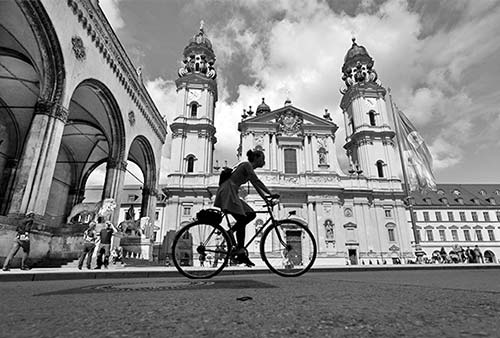
At the far end of the square, several wide boulevards lead away from here. Look west (left) down 18 Brienner Strasse (watch out for bikes). In the distance, and just out of sight, a black obelisk commemorates the 30,000 Bavarians who marched with Napoleon to Moscow and never returned. Beyond the obelisk is the grand Königsplatz, or “King’s Square,” with its Neoclassical buildings. Back in the 1930s, Königsplatz was the center of the Nazi Party. Remember, Munich was the cradle of Nazism. (For more on the Nazi sights in Königsplatz, see here). Today, the Nazi shadow has largely lifted from that square (only two buildings from that era remain) and Königsplatz is home to Munich’s cluster of great art museums. A few miles beyond Königsplatz is the Wittelsbachs’ impressive summer home, Nymphenburg Palace.
Now turn your attention 90 degrees to the right. The boulevard heading north from Odeonsplatz is Ludwigstrasse. It stretches a full mile, flanked by an impressive line of uniform 60-foot-tall buildings in the Neo-Renaissance style. In the far distance is the city’s Triumphal Arch, the Siegestor, capped with a figure of Bavaria, a goddess riding a lion-drawn chariot. She’s looking out, away from the city, to welcome home returning soldiers. The street is named for the great Wittelsbach builder-king Ludwig I, the grandfather of “Mad” King Ludwig. It was Ludwig I who truly made Munich into a grand capital. (“I won’t rest,” he famously swore, “until Munich looks like Athens.”) The street that bears his name, Ludwigstrasse, was used for big parades and processions, as it leads to that Roman-style arch.
Beyond the arch—and beyond what you can see—lie the suburbs of modern Munich, including the city’s modern skyscrapers, Olympic Park, and the famous BMW headquarters.
As you enjoy the busy scene on Odeonsplatz, let’s bring Munich’s 850-year history up to the present. Munich today, with a population of 1.5 million, is Germany’s third-largest city, after Berlin and Hamburg. It’s the capital of the independent-minded German state of Bavaria, and proudly waves two flags: the white-and-blue diamonds of Bavaria and the black-and-gold of the city of Munich. Munich is home to more banks and financial firms than any German city besides Frankfurt. It’s a center for book publishing and TV production. Information technology is big, as well: Munich is home to electronics giant Siemens and the German branch of Microsoft. And, of course, Munich is home to the manufacturer of some of the world’s finest cars—BMW (Bayerische Motoren Werke, “Bavarian Motor Works”). Yes, Munich is a major metropolis, but you’d hardly know it by walking through the pleasant streets and parks of “Millionendorf.”
• We’ll finish our walk in the pleasant Hofgarten. Its formal gate is to your right as you’re facing up Ludwigstrasse. Step through the gate and enter the...
19 Hofgarten
The elegant “garden of the royal court” is a delight. Built by the Wittelsbachs as their own private backyard to the Residenz palace, it’s now open to everyone. Just inside the gate is an arcade decorated with murals commissioned by Ludwig I in the early 1800s. While faded, they still tell the glorious story of Bavaria from 1155 until 1688. The garden’s 400-year-old centerpiece is a Renaissance-style temple with great acoustics. (There’s often a musician performing here for tips.) It’s decorated with the same shell decor as was popular inside the Residenz.
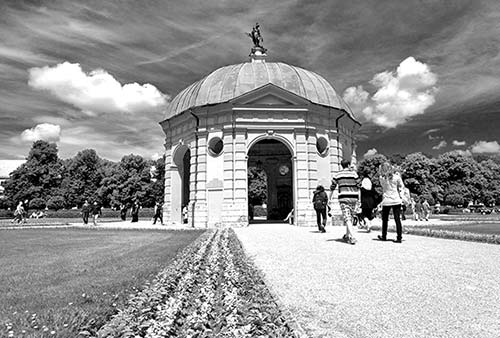
• You’ve seen the essential Munich and are within easy reach of the city’s top sights. From here, a path leads to the government offices of Bavaria (Bayerischen Staatskanzlei), housed in an impressive Neoclassical building flanked by modern glass halls. Look for the war memorial in front, which honors the “fallen heroes” of World War I, but only the “fallen” of World War II.
To reach the English Garden (described later), angle downhill to the northeast, walk under a bridge, and then make your way to Von-der-Tann-Strasse, the main street that runs just north of the Hofgarten.
Sights in Munich
Residenz Treasury (Schatzkammer)
Residenz Museum (Residenzmuseum)
▲Munich City Museum (Münchner Stadtmuseum)
MUNICH’S MUSEUM QUARTER (KUNSTAREAL)
▲▲Egyptian Museum (Staatliches Museum Ägyptischer Kunst)
▲▲Nazi Documentation Center (NS-Dokumentationszentrum München)
▲English Garden (Englischer Garten)
Bavarian National Museum (Bayerisches Nationalmuseum)
▲Deutsches Museum (Main Branch)
▲Museum of Transportation (Verkehrszentrum)
SIGHTS OUTSIDE THE CITY CENTER
Royal Stables Museum (Marstallmuseum)
Olympic Park (Olympiapark München) and TV Tower (Olympiaturm)
Aviation Museum (Flugwerft Schleissheim)
CITY CENTER
The other top sights in the city center are covered earlier, on my self-guided walk.
▲▲The Residenz
For 500 years, this was the palatial “residence” and seat of power of the ruling Wittelsbach family. It began (1385) as a crude castle with a moat around it. The main building was built from 1550 to 1650 and decorated in Rococo style during the 18th century. The final touch (under Ludwig I) was the grand south facade modeled after Florence’s Pitti Palace. In March 1944, Allied air raids left the Residenz in shambles, so much of what we see today—like much of historic Munich—is a reconstruction.
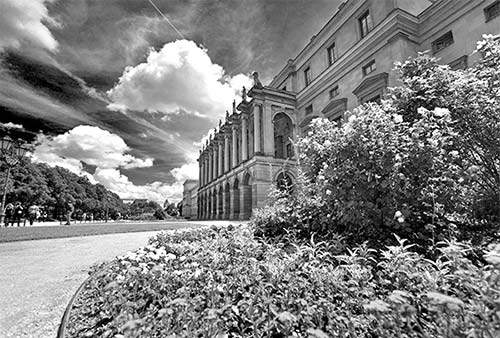
The vast Residenz complex is divided into three sections: The Residenz Museum is a long hike through 90 lavishly decorated rooms. The Residenz Treasury shows off the Wittelsbach crown jewels. The Cuvilliés Theater is an ornate Rococo opera house. While each has its own admission, the combo-ticket saves money if you’re doing all three.
If you’re unsure about which of Munich’s top two palaces to visit, the Residenz is much more central, but Nymphenburg (described on here), which didn’t need to be rebuilt after World War II, has the finest staterooms, a wonderful coach museum, and a vast and delight-filled park. The highlight for me here at the Residenz complex is the treasury.
Planning Your Time: Pick up a map as you enter, and start your visit with the Residenz Treasury—small, manageable, and dazzling. Then hike through the sprawling palace called the Residenz Museum. The Cuvilliés Theater is a quick dollop of architectural whipped cream at the end. The entrances on Max-Joseph-Platz and Residenzstrasse both lead to the ticket office, gift shop, and start of the treasury and Residenz Museum tours.
Cost and Hours: Residenz Museum-€9, Residenz Treasury-€9 (both include essential audioguides), Cuvilliés Theater-€5; the combo-ticket gives you all three for €17; museum and treasury open daily 9:00-18:00, mid-Oct-March 10:00-17:00; theater generally open Mon-Sat 14:00-18:00, Sun from 9:00, longer hours Aug-mid-Sept; last entry one hour before closing for all three sights, mandatory bag check, +49 89 290 671, www.residenz-muenchen.de.
Residenz Treasury (Schatzkammer)
The treasury shows off a thousand years of Wittelsbach crowns and knickknacks. You’ll see the regalia used in Bavaria’s coronation ceremonies, the revered sacred objects that gave the Wittelsbachs divine legitimacy, and miscellaneous wonders that dazzled their European relatives. It’s the best treasury in Bavaria, with fine 13th- and 14th-century crowns and delicately carved ivory and glass.
Visiting the Treasury: Take full advantage of the included audioguide (just punch in the number for whichever treasures catch your eye for the commentary) to make this one of the historic and artistic highlights of the city.
Room 1: The oldest jewels are 200 years older than Munich itself. Treasures of particular interest line the left wall. The gem-studded Crown of Kunigunde is associated with the saintly Bavarian queen who was crowned Holy Roman Empress in 1014 by the pope in St. Peter’s Basilica in Rome. The pearl-studded prayer book of Charles the Bald (Charlemagne’s grandson) allowed the book’s owner to claim royal roots dating all the way back to that first Holy Roman Emperor crowned in 800. The spiky Crown of an English Queen (a.k.a. the Palatine Crown, c. 1370) is actually England’s oldest crown, brought to Munich by an English princess who married a Wittelsbach duke. In the last case, the angel-and-gilt-embellished Crown of Henry II (c. 1270-1280) dates from Munich’s roots, when the town was emerging as a regional capital.
Along the right side of the room are religious objects such as reliquaries and portable altars. The tiny mobile altar allowed a Carolingian king (from Charlemagne’s family of kings) to pack light in 890—and still have a little Mass while on the road. Many of the precious and very old objects in this room came from various prince-bishops’ collections when they were secularized (and their realms came under Bavarian rule in the Napoleonic era, c. 1800).
Room 3: Study the reliquary with St. George killing the dragon—sparkling with more than 2,000 precious stones. Get up close (it’s OK to walk around the rope posts)...you can almost hear the dragon hissing. A gold-armored St. George, seated atop a ruby-studded ivory horse, tramples an emerald-green dragon. The golden box below contained the supposed relics of St. George, who was the patron saint of the Wittelsbachs. If you could lift the minuscule visor, you’d see that the carved ivory face of St. George is actually the Wittelsbach Duke Wilhelm V—the great champion of the Catholic Counter-Reformation—slaying the dragon of Protestantism.
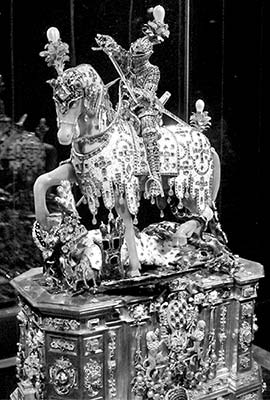
Room 4: The incredibly realistic carved ivory crucifixes from 1630 were done by local artist Georg Petel, who was inspired by his friend Peter Paul Rubens’ painting (now in the Alte Pinakothek). Look at the flesh of Jesus’ wrist pulling around the nails. In the center of the room is the intricate portable altarpiece (1573-74) of Duke Albrecht V, the Wittelsbach ruler who (as we’ll see in the Residenz Museum) made a big mark on the Residenz.
Room 5: The freestanding glass case (#245) holds the impressive royal regalia of the 19th-century Wittelsbach kings—the crown, scepter, orb, and sword that were given to the king during the coronation ceremony. (The smaller pearl crown was for the queen.) They date from the early 1800s when Bavaria had been conquered by Napoleon. The Wittelsbachs struck a deal that allowed them to stay in power, under the elevated title of “king” (not just “duke” or “prince-elector” or “prince-archbishop”). These objects were made in France by the same craftsmen who created Napoleon’s crown. For the next century-plus, Wittelsbach kings (including Ludwig II) received these tokens of power. However, during the coronation ceremony, the crown you see was not actually placed on the king’s head. It was brought in on a cushion (as it’s displayed) and laid at the new monarch’s feet.
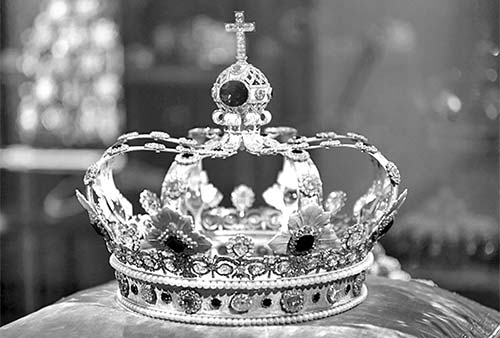
Rooms 6-10: The rest of the treasury has objects that are more beautiful than historic. Admire the dinnerware made of rock crystal (Room 6), stone (Room 7), and gold and enamel (Room 8). Room 9 has a silver-gilt-and-marble replica of Trajan’s Column. Finally, explore the “Exotica” of Room 10, including an ancient green Olmec figure encased in a Baroque niche and a Chinese rhino-horn bowl with a teeny-tiny Neptune inside.
• After the micro-detail of the treasury, it’s time to visit the expansive Residenz Museum. Stop by the audioguide desk to have your wand reprogrammed for the museum, cross the hall, and enter the...
Residenz Museum (Residenzmuseum)
Though it’s called a “museum,” what’s really on display here are the 90 rooms of the Residenz itself: the palace’s banquet and reception halls, a couple of chapels, lots of paintings and porcelain, and the Wittelsbachs’ lavish private apartments. While they did a valiant job of redecorating the rooms with period (but generally not original) furniture—chandeliers, canopied beds, Louis XIV-style chairs, old clocks, tapestries, and dinnerware of porcelain and silver—it feels like a place that was destroyed in a war and then rebuilt and gilded. But even without the patina of age, it’s still a good place to glimpse the opulent lifestyle of Bavaria’s late, great royal family.
(The Wittelsbachs are still around, but they’re no longer royalty, so most of them have real jobs now. You may well have just passed one on the street—or shopping at Dallmayr.)
Visiting the Residenz: The place is big. Your visit is basically a long, one-way, follow-the-arrows hike through a massive old palace on two floors. Each room has a very brief description in English posted. The audioguide describes individual items and works of art throughout.
As you follow the arrows, at one point you’ll likely be given the “long route” and “short route” options. The long route gives you a dozen or so additional apartments (not much different from what you’ll have already seen). Here’s brief coverage of the highlights, in the likely order of your visit.
Shell Grotto: This artificial grotto is made of volcanic tuff and covered completely in Bavarian freshwater shells. In its day, it was an exercise in man controlling nature—a celebration of the Renaissance humanism that flourished in the 1550s. Mercury—the pre-Christian god of trade and business—oversees the action. Check out the statue in the courtyard. In the Wittelsbachs’ heyday, red wine would have flowed from the mermaid’s breasts and dripped from Medusa’s severed head.
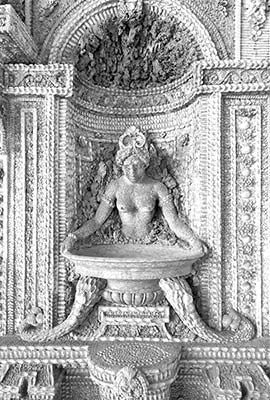
The grotto courtyard is just one of 10 such courtyards in the complex. Like the rest of the palace, this courtyard and its grotto were destroyed by Allied bombs. After World War II, Germans had no money to contribute to the reconstruction, but they could gather shells; all the shells you see here were donated by small-town Bavarians. The grotto was rebuilt using Nazi photos as a guide.
Antiquarium: This long, low, arched hall stretches 220 feet end to end. It’s the oldest room in the Residenz, built around 1550. The room was, and still is, a festival banquet hall. The ruler presided from the dais at the near end (warmed by the fireplace). Two hundred dignitaries can dine here, surrounded by allegories of the goodness of just rule on the ceiling.
The hall is lined with busts of Roman emperors. In the mid-16th century, Europe’s royal families (such as the Wittelsbachs) collected and displayed such busts, implying a connection between themselves and the enlightened ancient Roman rulers. There was such huge demand for these classical statues in the courts of Europe that many of the “ancient busts” were fakes cranked out by crooked Romans. Still, a third of the statuary you see here is original.
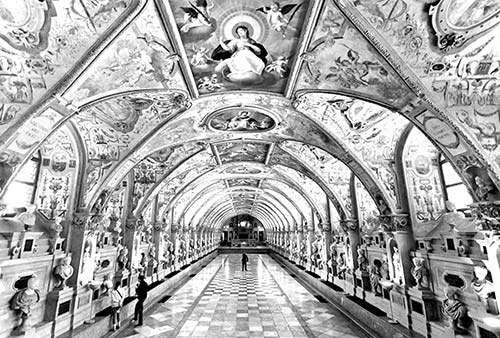
The small paintings around the room (which survived WWII bombs because they were painted in arches) show 120 Bavarian villages as they looked in 1550. Even today, when Bavarian historians want a record of how their village once looked, they come here.
Upper-Floor Apartments: Royal marriages were generally “arranged,” and as these bluebloods typically led their own private lives (with no need to be monogamous), the men and women had a royal tradition of separate living quarters. Consequently, you’ll walk through several different strings of “royal apartments.”
You’ll see lots of elegance...and lots of the Residenz Museum’s forte: chandeliered rooms decorated with ceiling paintings, stucco work, tapestries, parquet floors, and period furniture. Because the bombs destroyed the roofs, and firefighters and rain ruined what survived, most ceilings—once ornately painted—are now just white.
Glance down into the All Saints’ Chapel. This early-19th-century chapel, commissioned by Ludwig I, sustained severe damage in World War II, finally reopened in 2003, and now hosts popular concerts in the evening.
The Court Chapel was dedicated to Mary. This late-Renaissance/early-Baroque gem was the site of “Mad” King Ludwig’s funeral after his mysterious murder—or suicide—in 1886. Though Ludwig II was not popular in political circles, he was beloved by his people, and his funeral drew huge crowds. About 75 years earlier, in 1810, his grandfather and namesake (Ludwig I) was married here. After the wedding ceremony, carriages rolled his guests to a rollicking reception, which turned out to be such a hit that it became an annual tradition—Oktoberfest.
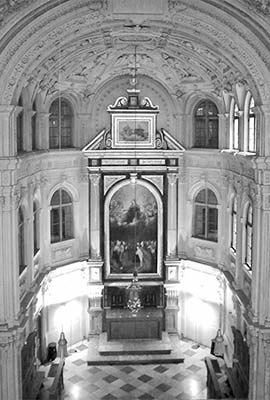
Don’t miss the Private Chapel of Maximilian I (Room 98). Duke Maximilian I, the dominant Bavarian figure in the Thirty Years’ War, built one of the most precious rooms in the palace. The miniature pipe organ (from about 1600) still works. The room is sumptuous, from the gold leaf ceiling and the fine altar with silver reliefs to the miniature dome and the walls made of scagliola (fake marble), a special mix of stucco, applied and polished. Designers liked it because it was less expensive than real marble and the color could be controlled.
Ornate Rooms (Rooms 55-62): As the name implies, these are some of the richest rooms in the palace. The Wittelsbachs were always trying to keep up with the Habsburgs, and this long string of ceremonial rooms—used for official business—was designed to impress. The decor and furniture are over-the-top Rococo. The family’s art collection—which once decorated these walls—now makes up the core of the Alte Pinakothek (you may see minor originals or copies of the famous masterpieces here).
The rooms were designed in the 1730s by François de Cuvilliés. The Belgian-born Cuvilliés first attracted notice as the clever court dwarf for the Bavarian ruler. He was sent to Paris to study art and returned to become the court architect. Besides the Residenz, he went on to also design the Cuvilliés Theater and Amalienburg at Nymphenburg Palace. Cuvilliés’ style, featuring incredibly intricate stucco tracery twisted into unusual shapes, defined Bavarian Rococo. The stucco work frames paintings and mirrors. His assistant in the stucco department was Johann Baptist Zimmermann, who also did the Wieskirche (in southern Bavaria, near Füssen). As you glide through this section of the palace, be sure to appreciate the gilded stucco ceilings above you.
The Green Gallery (Room 58)—named for its green silk damask wallpaper—was the ballroom. Imagine the parties they had here—aristocrats in powdered wigs, a string quartet playing Baroque tunes, a card game going on, while everyone admired the paintings on the walls or themselves reflected in the mirrors.
The State Bedroom (Room 60), though furnished with a canopy bed, wasn’t an actual bedroom—it was just for show. Rulers invited their subjects to come at morning and evening to stand at the railing and watch their boss ceremonially rise from his slumber to symbolically start and end the working day.
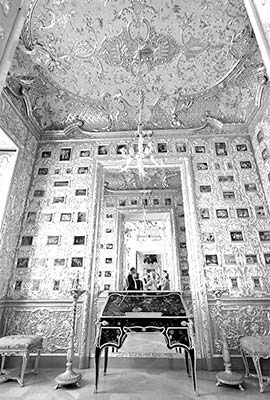
Perhaps the most ornate of these Ornate Rooms is the Cabinet of Mirrors (Room 61) and the adjoining Cabinet of Miniatures (Room 62) from 1740. In the Cabinet of Mirrors, notice the fun visual effects of the mirrors around you—the corner mirrors make things go on forever. Then peek inside the coral red room and imagine visiting the duke and having him take you here to ogle miniature copies of the most famous paintings of the day, composed with one-haired brushes.
You can’t get out of the palace without seeing lots of Porcelain china. In the 18th century the Wittelsbachs, like many royal families, bolstered their status with an in-house porcelain works: Nymphenburg porcelain. (The family, while no longer in politics, owns the factory to this day.) See how the mirrors enhance the porcelain vases, creating the effect of infinite pedestals.
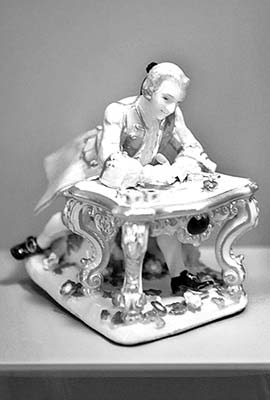
Ancestral Gallery (Ahnengalerie, Room 4): This was built in the 1740s to display portraits of the Wittelsbachs. All official guests had to pass through here to meet the duke (and his 100 Wittelsbach relatives). The room’s symbolism reinforced the Wittelsbachs’ claims to being as powerful as the Habsburgs of Vienna. Standing here, you’re essentially surrounded by a scrapbook covering centuries of royal family history.
Midway down the hall, find the family tree labeled (in Latin) “genealogy of an imperial family.” The tree is shown being planted by Hercules, to boost the family’s royal street cred. Opposite the tree are two notable portraits: Charlemagne, the first Holy Roman Emperor, and to his right, Louis IV (wearing the same crown), the first Wittelsbach H.R.E., crowned in 1328. For the next 500 years, this lineage was used to substantiate the family’s claim to power as they competed with the Habsburgs. (After failing to sort out their differences through strategic weddings, the two families eventually went to war.)
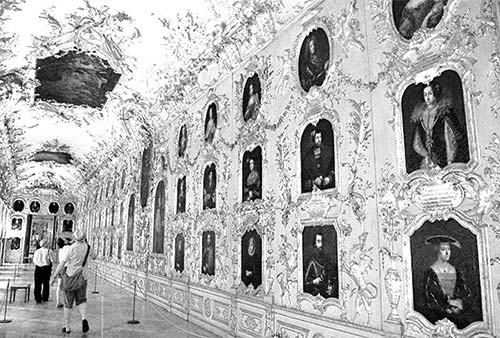
The central ceiling painting has been restored, but since there were no photos documenting the other two ceiling paintings, those spots remain empty. Looking carefully at the walls, you can see how each painting was hastily cut out of its frame. That’s because, though most of Munich’s museums were closed during World War II, the Residenz remained open to instill confidence in local people. It wasn’t until 1944, when bombs were imminent, that the last-minute order was given to hide the paintings away.
Halls of the Nibelungen (Nibelungensäle, Rooms 74-79): At the end of the long route, on the ground floor, these rooms feature mythological scenes that later became the basis of Richard Wagner’s opera Der Ring des Nibelungen. Wagner and “Mad” King Ludwig were friends and spent time hanging out here (c. 1864). The images in this hall could well have inspired Wagner to write his Ring and Ludwig to build his “fairy-tale castle,” Neuschwanstein.
• Your Residenz Museum tour is over. The doorway at the end of the hall leads back to the museum entrance. If you missed either the Ancestral Gallery (Ahnengalerie) or the Halls of the Nibelungen—part of separate routes, ask an attendant for a peek: They’re both just steps away from the finish.
If you’re visiting the Cuvilliés Theater, exit the museum, return to Residenzstrasse, and take two rights. You’ll enter the Chapel Courtyard by passing between the green lions standing guard. At the end of the lane (past the arch, before the fountain, on the left) you’ll see the nondescript Cuvilliés sign.
Cuvilliés Theater
In 1751, this was Germany’s ultimate Rococo theater. Mozart conducted here several times. Designed by the same brilliant architect who did the Amalienburg (see here), this theater is dazzling enough to send you back to the days of divine monarchs.
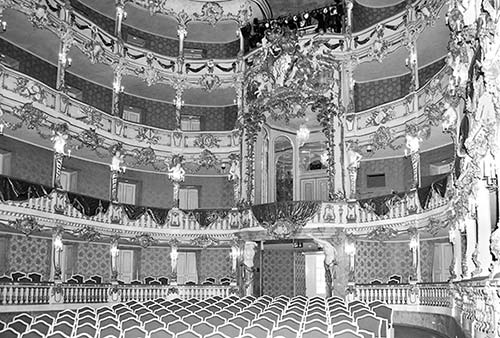
Your visit consists of just one small-but-plush theater hall. It’s an intimate, horseshoe-shaped performance venue, seating fewer than 400. The four tiers of box seats were for the four classes of society: city burghers on bottom, royalty next up (in the most elaborate seats), and lesser courtiers in the two highest tiers. The ruler occupied the large Royal Box directly opposite the stage (i.e., over the entrance doorway). “Mad” King Ludwig II occasionally bought out the entire theater to watch performances here by himself.
François Cuvilliés’ interior is exquisite. Red, white, and gold hues dominate. Most of the decoration is painted wood, even parts that look like marble. Even the proscenium above the stage—seemingly draped with a red-velvet “curtain”—is actually made of carved wood. Also above the stage is an elaborate Wittelsbach coat of arms. The balconies seem to be supported by statues of the four seasons and are adorned with gold garlands. Cuvilliés achieved the Rococo ideal of giving theatergoers a multimedia experience—uniting the beauty of his creation with the beautiful performance on stage. It’s still a working theater.
WWII bombs completely obliterated the old Cuvilliés Theater, which originally stood at a different location a short distance from here. Fortunately, much of the carved wooden interior had been removed from the walls and stored away for safekeeping. After the war, this entirely new building was built near the ruins of the old theater and paneled with the original decor. It’s so heavily restored, you can almost smell the paint.
▲Munich City Museum (Münchner Stadtmuseum)
The museum’s permanent exhibit on Munich’s history (called “Typically Munich!”) is interesting, but it’s an exhaustive and confusing maze, and there’s no posted English information. Use the following mini tour for an overview, then supplement it with the audioguide and English booklet.
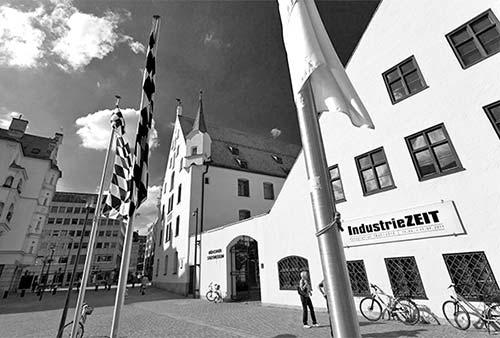
Cost and Hours: €4, includes good audioguide, €7 includes temporary exhibits; ticket gets you half-price admission to Jewish History Museum, Lenbachhaus, or Villa Stuck—or use any of those tickets to get half-price admission here; open Tue-Sun 10:00-18:00, closed Mon; no crowds, St.-Jakobs-Platz 1, +49 89 2332 2370, www.muenchner-stadtmuseum.de.
Eating and Shopping: The museum’s recommended Stadt Café is handy for a light meal (and the Servus Heimat gift shop in the courtyard is fun and worth a quick look).
Visiting the Museum: Start in the ticketing hall with the wooden model showing Munich today. Find the Frauenkirche, Isar River, New Town Hall, Residenz...and no skyscrapers. The city looks remarkably similar in scale to the model (in the next room) from 1570. From here, you follow the one-way tour, clearly marked with signs, working your way one floor at a time up the building.
Ground Floor (Medieval): An imposing gray statue of Henry the Lion introduces us to the city’s 12th-century founder. The eight statues of Morris dancers (1480) became a symbol of the vibrant market town (and the tradition continued with the New Town Hall glockenspiel’s dancing coopers). On the rest of the ground floor, paintings, swords, and cherubs clad in armor (these are the original statues that stood under the Virgin Mary’s column on Marienplatz) capture more medieval ambience.
First Floor (1800s): The “New Munich” was created when the city was expanded beyond the old medieval walls (see the illuminated view of the city from 1761 in the “Canaletto-Blick” opposite the top of the stairs). The city was prosperous, as evidenced by the furniture and paintings on display. In the center of the room, find big paintings (“Effigies”) of the century’s magnificent kings—Maximilian I, Maximilian II, and Ludwig I (as well as Lola Montez, Ludwig I’s most famous mistress).
Second Floor (Munich 1900): As Munich approached its 700th birthday, it was becoming aware of itself as a major capital. The Münchner Kindl logo was born. It was a city of artists (Wagner operas, Lenbach portraits, Von Stuck soirées), Jugendstil furniture, beer, and a cosmopolitan outlook (see the “Kaiser-Panorama,” the big barrel-shaped 3-D peep show of Indian and Asian peoples). Posters illustrate a Munich forte during this period: graphic design. But after World War I, Munich became a hotbed of discontent. The “revue” room shows the city’s clash of ideas: communists, capitalists, Nazis, and the anarchic theater of comedian Karl Valentin and early works by playwright Bertolt Brecht. A nearby display gives some background on Munich’s role as the birthplace of Nazism (much more thoroughly covered in the museum’s National Socialism wing).
Third Floor (Puppetry and Fairground Art): Consider a trip to the third floor to see the puppetry exhibit (though not part of the “Typically Munich!” exhibit, it’s fun and included with your ticket). The collection of objects from the 19th century onward highlights Germany’s long tradition of puppetry. You’ll see everything from rod-and-shadow puppets to glove puppets to marionnettes—along with the reconstructed Munich workshop of puppet maker Walter Oberholzer and traveling marionette theaters from southern Germany. Fair and Oktoberfest items such as carousel animals may attract children, but beware that horror-house displays may scare the daylights out of them (and you).
Video Finish: End your visit back on the first floor with a kaleidoscope of video images capturing the contemporary Munich scene—rock music, World Cup triumphs, beer gardens, and other things that are...“typically Munich.”
National Socialism Wing: Your permanent-exhibit ticket includes this small but worthwhile exhibit (in a separate building across the courtyard) of photos and uniforms that takes you chronologically through the Nazi years, focused on Munich: the post-WWI struggles, Hitler’s 1923 Beer Hall Putsch, his writing of Mein Kampf, the mass rallies in Königsplatz and Odeonsplatz, establishment of the Dachau concentration camp, the destruction rained on Munich in World War II, and postwar reconstruction.
MUNICH’S MUSEUM QUARTER (KUNSTAREAL)
This quarter, northwest of the city center, has an impressive cluster of fine museums displaying art spanning from 3000 BC up to the present: the Egyptian Museum, Glyptothek, Alte Pinakothek, Neue Pinakothek (currently closed for renovation), Lenbachhaus, Pinakothek der Moderne, and Museum Brandhorst. Most people don’t come to Munich for the art, but this group of museums makes a case for the city’s world-class status. The Alte Pinakothek is the best of the bunch, but modern art is also surprisingly well represented. Also in this area is the excellent Nazi Documentation Center.
Getting There: The neighborhood feels distant from the city-center action but is just a brisk 10-minute walk from the old center and from the train station. The Glyptothek and Lenbachhaus are near the Königsplatz stop on the U-2 subway line. The three Pinakothek museums, the Egyptian Museum, and the Brandhorst are a few blocks to the northeast. From Karlsplatz (between the train station and Marienplatz), handy tram #27 whisks you right to the Pinakothek and Karolinenplatz stops. You can also take bus #100 from the train station to any of the museums.
Day Pass and €1 Sundays: A €12 day pass covers the Pinakotheks, plus the Brandhorst and Schack Collection (more 19th-century German Romanticism), on a single day. On Sundays, these museums let you in for just a token €1 but charge €5 for the useful audioguides (normally included).
▲▲Alte Pinakothek
The Alte Pinakothek (“Old Art Gallery”) is truly one of Europe’s great collections of paintings. It shows off European masterpieces from the 14th to 19th century, starring the two tumultuous centuries (1450-1650) when Europe went from medieval to modern. See paintings from the Italian Renaissance (Raphael, Leonardo, Botticelli, Titian) and the German Renaissance it inspired (Albrecht Dürer). Through the art displayed here, you can follow along as the Reformation of Martin Luther split Europe into two subcultures—Protestant and Catholic—with two distinct art styles (exemplified by Rembrandt and Rubens, respectively).
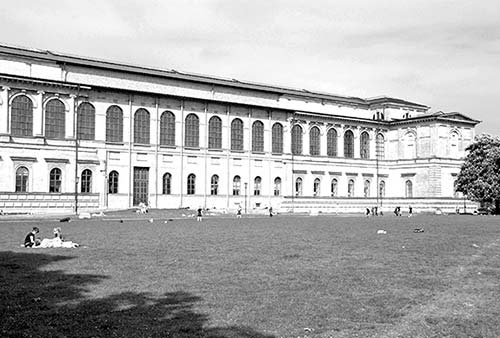
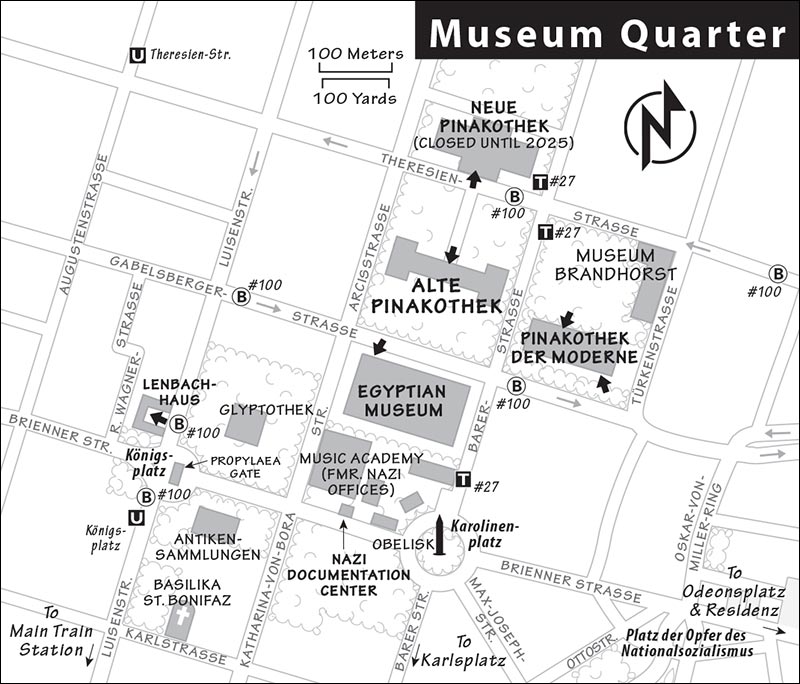
While the Neue Pinakothek across the street is closed, the greatest hits of its collection (1800-1920, including Impressionists and Van Gogh) are in a special ground floor exhibit at the Alte Pinakothek (included in your ticket).
Cost and Hours: €7; Wed-Sun 10:00-18:00, Tue until 20:30, closed Mon; excellent audioguide is free, mandatory lockers for big bags, pleasant Café Klenze; U-2: Theresienstrasse, tram #27, or bus #100; Barer Strasse 27, +49 89 2380 5216, www.pinakothek.de/alte-pinakothek.
Visiting the Museum: Pick up a map and get your bearings. The paintings we’ll see are all on the upper floor, which is laid out like a barbell. Start at one fat end and work your way through the “handle” to the other end. From the ticket counter, head up the stairway to the left to reach the first rooms. I’ve listed the highlights, but as you walk, let your audioguide explain any painting that catches your interest.
German Renaissance (Room II): Albrecht Altdorfer’s The Battle of Issus (Schlacht bei Issus) shows a world at war. Masses of soldiers are swept along in the currents and tides of a battle completely beyond their control, their confused motion reflected in the swirling sky. We see the battle from a great height, giving us a godlike perspective. Though the painting depicts Alexander the Great’s history-changing victory over the Persians (find the Persian king Darius turning and fleeing), it could as easily have been Germany in the 1520s. Christians were fighting Muslims, peasants battled masters, and Catholics and Protestants were squaring off for a century of conflict. The armies melt into a huge landscape, leaving the impression that the battle goes on forever.
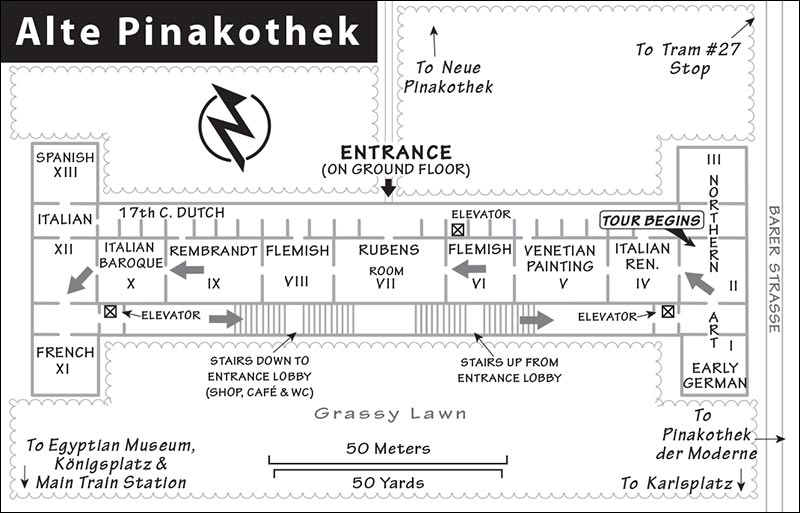
Albrecht Dürer’s larger-than-life Four Apostles (Johannes und Petrus and Paulus und Marcus) are saints of a radical new religion: Martin Luther’s Protestantism. Just as Luther challenged Church authority, Dürer—a friend of Luther’s—strips these saints of any rich clothes, halos, or trappings of power and gives them down-to-earth human features: receding hairlines, wrinkles, and suspicious eyes. The inscription warns German rulers to follow the Bible rather than Catholic Church leaders. The figure of Mark—a Bible in one hand and a sword in the other—is a fitting symbol of the dangerous times.
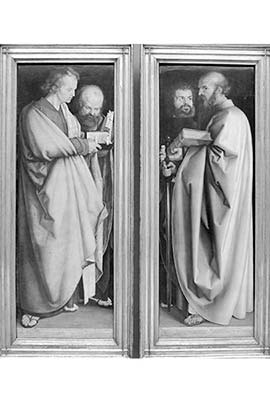
Dürer’s Self-Portrait in Fur Coat (Selbstbildnis im Pelzrock) looks like Jesus Christ but is actually 28-year-old Dürer himself (per his inscription: “XXVIII”), gazing out, with his right hand solemnly giving a blessing. This is the ultimate image of humanism: the artist as an instrument of God’s continued creation. Get close and enjoy the intricately braided hair, the skin texture, and the fur collar. To the left of the head is Dürer’s famous monogram—“A.D.” in the form of a pyramid.
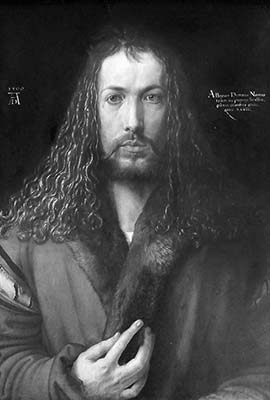
Italian Renaissance (Room IV): With the Italian Renaissance—the “rebirth” of interest in the art and learning of ancient Greece and Rome—artists captured the realism, three-dimensionality, and symmetry found in classical statues. Twenty-one-year-old Leonardo da Vinci’s Virgin and Child (Maria mit dem Kinde) need no halos—they radiate purity. Mary is a solid pyramid of maternal love, flanked by Renaissance-arch windows that look out on the hazy distance. Baby Jesus reaches out to play innocently with a carnation, the blood-colored symbol of his eventual death.
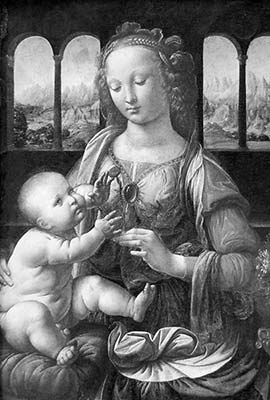
Raphael’s Holy Family at the Canigiani House (Die hl. Familie aus dem Hause Canigiani) takes Leonardo’s pyramid form and runs with it. Father Joseph forms the peak, with his staff as the strong central axis. Mary and Jesus (on the right) form a pyramid-within-the-pyramid, as do Elizabeth and baby John the Baptist on the left. They all exchange meaningful eye contact, safe within the bounds of the stable family structure.
In Botticelli’s Lamentation over Christ (Die Beweinung Christi), the Renaissance “pyramid” implodes, as the weight of the dead Christ drags everyone down, and the tomb grins darkly behind them.
Venetian Painting (Room V): In Titian’s Christ Crowned with Thorns (Die Dornenkrönung), a powerfully built Christ sits silently enduring torture by prison guards. The painting is by Venice’s greatest Renaissance painter, but there’s no symmetry, no pyramid form, and the brushwork is intentionally messy and Impressionistic. By the way, this is the first painting we’ve seen done on canvas rather than wood, as artists experimented with vegetable oil-based paints.
Rubens and Baroque (Room VII): Europe’s religious wars split the Continent in two—Protestants in the northern countries, Catholics in the south. (Germany itself was divided, with Bavaria remaining Catholic.) The Baroque style, popular in Catholic countries, featured large canvases, bright colors, lots of flesh, rippling motion, wild emotions, grand themes...and pudgy winged babies, the sure sign of Baroque. This room holds several canvases by the great Flemish painter Peter Paul Rubens.
In Rubens’ 300-square-foot Great Last Judgment (Das Grosse Jüngste Gericht), Christ raises the righteous up to heaven (left side) and damns the sinners to hell (on the right). This swirling cycle of nudes was considered risqué and kept under wraps by the very monks who’d commissioned it.
Rubens and Isabella Brant in the Honeysuckle Bower shows the artist with his first wife, both of them the very picture of health, wealth, and success. They lean together unconsciously, as people in love will do, with their hands clasped in mutual affection. When his first wife died, 53-year-old Rubens found a replacement—16-year-old Hélène Fourment, shown in an adjacent painting (just to the left) in her wedding dress. You may recognize Hélène’s face in other Rubens paintings.
The Rape of the Daughters of Leucippus (Der Raub der Töchter des Leukippos) has many of Rubens’ most typical elements—fleshy, emotional, rippling motion; bright colors; and a classical subject. The legendary twins Castor and Pollux crash a wedding and steal the brides as their own. The chaos of flailing limbs and rearing horses is all held together in a subtle X-shaped composition. Like the weaving counterpoint in a Baroque fugue, Rubens balances opposites.
Notice that Rubens’ canvases were—to a great extent—cranked out by his students and assistants from small “cartoons” the master himself made (displayed in the side room).
Rembrandt and Dutch (Room IX): Rembrandt van Rijn’s Six Paintings from the Life of Christ are a down-to-earth look at supernatural events. The Holy Family (Die Heilige Familie) is set in a carpenter’s workshop (with tools on the wall). The canvases are dark brown, lit by strong light. The Holy Family’s light source is the Baby Jesus himself—literally the “light of the world.” In the Raising of the Cross (Kreuzaufrichtung), a man dressed in blue is looking on—a self-portrait of Rembrandt.
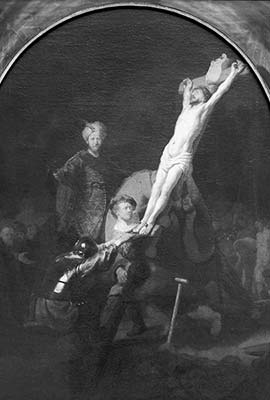
In the Deposition (Kreuzabnahme), the light bounces off Christ’s pale body onto his mother Mary, who has fainted in the shadows, showing how his death also hurts her. The drama is underplayed, with subdued emotions.
▲Neue Pinakothek
The Alte Pinakothek’s younger sister across the street—an easy-to-like collection of paintings from 1800 to 1920—is closed for renovation through 2025. During construction, the museum’s highlights (world-class Impressionist paintings and one of Van Gogh’s Sunflowers) are on display at the Alte Pinakothek, listed above (+49 89 2380 5195, www.pinakothek.de/neue-pinakothek).
▲Pinakothek der Moderne
This museum picks up where the other two Pinakotheks leave off, covering the 20th and 21st centuries. The museum’s impressive permanent collection is shown according to various themes that come and go a couple of times a year, rather than in periods or by artist. These rotating displays are supplemented by often worthwhile temporary exhibits. The design wing, in the basement, is also worth a quick look. From chairs to bikes to blenders to cars and computers, these are everyday objects that work efficiently but also have a sleek artistic flair. It’s free to step into the atrium of the striking, white, high-ceilinged building.
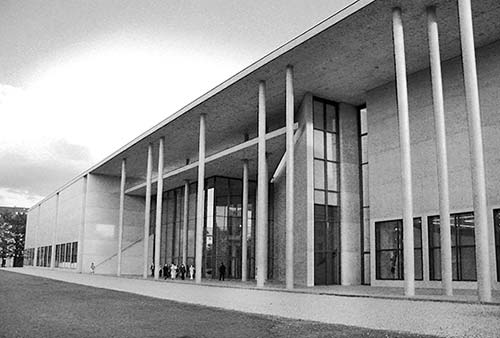
Cost and Hours: €10; Tue-Sun 10:00-18:00, Thu until 20:00, closed Mon; mandatory bag check for big bags, café in atrium with outdoor patio; U-2: Theresienstrasse, tram #27, or bus #100; Barer Strasse 40, +49 89 2380 5360, www.pinakothek.de/pinakothek-der-moderne.
▲Egyptian Museum (Staatliches Museum Ägyptischer Kunst)
To enjoy this museum, you don’t need a strong interest in ancient Egypt (but you may have one by the time you leave). This modern space was custom-made to evoke the feeling of being deep in an ancient tomb, from the wide, easy-to-miss staircase outside that descends to the narrow entry, to the twisty interior rooms that grow narrower and more catacomb-like as you progress. The art here is beautifully lit, explained well in English, and accompanied by touch-screen terminals that give the curious more background. The museum’s clever design creates a low-stress visit (just follow the one-way route marked by brass arrows in the floor).
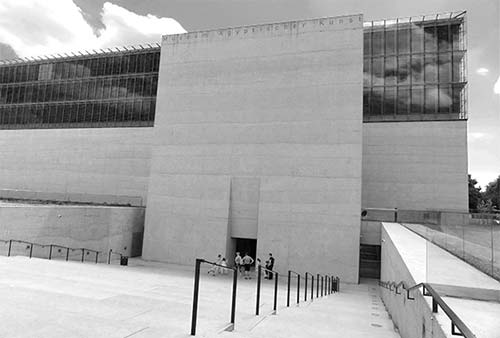
Cost and Hours: €7; Tue 10:00-20:00, Wed-Sun until 18:00, closed Mon; free audioguide (€1 on Sun); U-2 or U-8: Königsplatz, tram #27 to Karolinenplatz, or bus #100; Gabelsbergerstrasse 35—enter at corner of Arcisstrasse and look for the stairs leading down, +49 89 2892 7630, www.smaek.de.
▲▲Lenbachhaus
A saying goes that “Berlin had generals, Munich had artists.” That was particularly true in the decades before World War I. Munich blew the art world’s mind when a bunch of art-school cronies got fed up with being told how and what to paint, and together as the revolutionary “Blue Rider” (Blauer Reiter) group galloped toward a brand-new horizon—abstract art. In the series of pleasant galleries at the Lenbachhaus, you can witness the birth of Modernist nonrepresentational art, with paintings by Kandinsky, Klee, and Marc, then stroll the rest of the building’s offerings (including the apartments of painter Franz von Lenbach, whose original villa and studio are now largely enclosed by the modern museum building).
Cost and Hours: €10, includes well-done audioguide; ticket gets you half-price admission to Jewish History Museum, Munich City Museum, or Villa Stuck (or use any of those tickets to get half-price admission here); Tue-Sun 10:00-18:00, Thu until 20:00, closed Mon; Luisentrasse 33, +49 89 2339 6933, www.lenbachhaus.de.
Cuisine Art: The museum has a good, upscale Italian restaurant, Café Ella (same open days and hours as museum, kitchen closes at 17:00, museum entry not required, +49 89 7008 8177).
Visiting the Museum: The permanent collection includes art from three distinct periods: the 19th century (conservative, colorful, optimistic); the Blue Rider movement (emotional, inspired, modern); and post-1945 (abstract).
Start out by taking the elevator to the second floor, where you’ll see how the Blue Rider revolution began with seemingly innocuous paintings of the cute Bavarian town of Murnau. It was here in 1908 that two Munich couples—Wassily Kandinsky and Gabriele Münter, and Alexej Jawlensky and Marianne von Werefkin—came for vacation. The four painted together—it’s hard to tell their work apart—employing intense colors, thick paint, and bold black outlines. Over the next few years (c. 1911-1914), they gathered into a group of Munich-based artists calling themselves the Blue Rider, which included Paul Klee and Franz Marc. They were all devoted to expressing the spiritual truths they felt within by using intense colors and geometric shapes.
The Blue Rider School was blown apart by World War I. The artists who survived the Great War went on to pioneer abstract art. Over time, they paid less attention to re-creating the physical world realistically on canvas and more attention to the colors and lines alone. Russian expat Kandinsky’s “Improvisations”—like a jazz musician improvising a new pattern of notes from a set scale—eventually became the art world’s first purely abstract canvases. Soon Kandinsky was teaching at the famous Bauhaus school in Weimar, and his style spread everywhere. Jawlensky and Klee also went on to develop a simpler and more abstract style. Such artists infuriated Hitler, who termed their work “degenerate.”
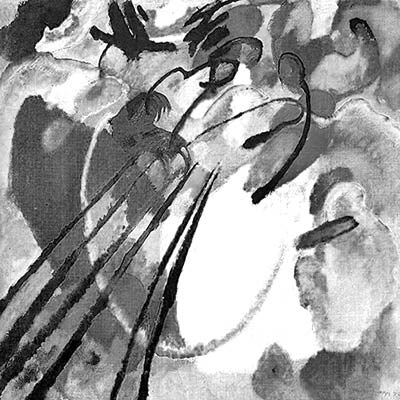
Below, the first floor has temporary exhibitions, as well as two permanent sections. One displays several oddball installations by 20th-century German artist Joseph Beuys. (Is that art, or did the janitor just leave a broom here?) The other, in the far wing, is a stash of 19th-century paintings that provides a nice contrast to all the abstract stuff.
Finally, back on the ground floor, next to the ticket desk, walk into the mustard-colored villa of Franz von Lenbach himself (encapsulated within the museum building). Of modest means and from a small town, Lenbach turned his childhood passion for painting into a successful career, executing portraits of 19th-century notables and doing well enough to build this lavish home (sold to the city by his widow in the 1920s). Head up the stairs, where four ornate rooms, with views over the garden, have been preserved; Lenbach’s own paintings cover the walls.
More Art Museums
The museum quarter has several more highly regarded museums, but for the typical tourist on a quick visit they don’t merit a stop.
The Museum Brandhorst (closed Mon) covers the end of the 20th century and the beginning of the 21st, with a particular emphasis on Andy Warhol and Cy Twombly. The building is striking, with thousands of colored cylinders lining the outside. The Glyptothek is an impressive collection of Greek and Roman sculpture started by Ludwig I (closed Mon).
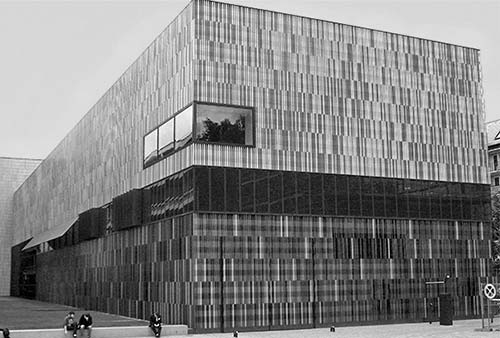
▲▲Nazi Documentation Center (NS-Dokumentationszentrum München)
This center—housed in a stark, airy, cube-shaped building—documents the rise and fall of Nazism with a focus on Munich’s role and the reasons behind it, as this city, like the rest of Germany, is determined to keep learning from its 20th-century nightmare. While there are no actual artifacts here, the experience is moving and a worthwhile companion to visiting the Dachau Concentration Camp Memorial.
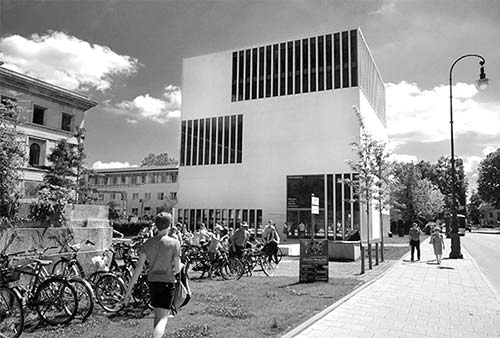
Cost and Hours: Free, includes well-done and techie audioguide; Tue-Sun 10:00-19:00, closed Mon; U-2: Königsplatz, tram #27, or bus #100; along Brienner Strasse near the corner of Arcisstrasse at Max-Mannheimer-Platz 1, +49 89 2336 7000, www.ns-dokuzentrum-muenchen.de.
Background: Munich was the birthplace of the National Socialist German Workers’ Party (NSDAP—or Nazi Party), and even after the Nazis took power and moved to Berlin, it remained the official Nazi Party headquarters. It was in Munich that Hitler and other disillusioned World War I veterans first gathered to lick their wounds. The Nazi Party was founded here in 1919, and this is where Hitler staged his attempted coup (the Beer Hall Putsch). He was imprisoned in nearby Landsberg, where he wrote his Mein Kampf manifesto.
Once in power, Hitler officially proclaimed Munich as the “Capital of the Movement.” In 1933, the Nazi government opened its first concentration camp outside Munich, in Dachau.
Königsplatz was ground zero for Nazi activities. (Remember that Hitler fancied himself an artist, and with its world-class museums, art academies, and artists’ villas, this square was at the heart of the German art world—making it a perfect stage for Hitler’s ego; the monumental Neoclassical buildings that surround the square were also right up his alley.) Mass rallies were held here, and forbidden books were burned. Some 68 buildings in the neighborhood housed dozens of Nazi departments and 6,000 employees.
Most of the Nazi-built architecture is gone now. The Documentation Center occupies the site of the official Nazi Party headquarters (called the Brown House), which was destroyed by Allied bombing in 1943. One Nazi building that does survive is next door: Arcisstrasse 12, once the Führerbau (“Führer building”). It’s now used as a music and theater academy. You can still see the window of Hitler’s personal office above the entrance porch. The infamous Munich Agreement of 1938 was signed in this building, as Britain’s prime minister tried to avoid war by appeasing Hitler and letting him annex parts of Czechoslovakia.
Visiting the Center: The exhibits are arranged chronologically and begin on the top floor. (Take the elevator to avoid confusion.) The top floor (1918-1933) covers the end of World War I and the beginning of Hitler’s movement in Munich. It includes gripping biographies of the early opponents of the Nazi Party.
The third floor (1933-1939) documents the establishment of the “racially pure” Volksgemeinschaft (“people’s community”) and the effect of Nazi domination on everyday life, including a timeline that illustrates the progressively tighter restrictions on Jews.
The second floor (1939-1945) covers the horrors of war, the Holocaust, and the “denazification” period after the end of Nazi rule. Find the video showing Munich in ruins immediately following the war and compare the footage to what you see today.
The first floor (after 1945) examines the faith people put in the Nazi regime and their difficulty in coming to terms with the past.
In the basement, the Learning Center encourages reflection, with a library where you can delve into topics of interest, and a collection of books banned during Nazi rule. Touch-screen computer terminals let you sit and page through the center’s exhibits in full. As walking around the center’s main displays can feel a bit like reading a book while standing up, it’s nice to have this option to learn while taking a load off your feet.
NEAR THE RIVER
▲English Garden (Englischer Garten)
Munich’s “Central Park,” the largest urban park on the Continent, was laid out in 1789 by an American. Thousands of locals commune with nature here on sunny summer days (including lots of students from the nearby university). The park stretches three miles from the center, past the university and the trendy Schwabing quarter. For the best quick visit, take bus #100 or tram #16 to the Nationalmuseum/Haus der Kunst stop. Under the bridge, you’ll see surfers. (The surf’s always up here—even through the night; surfers bring their own lights.) Follow the path, to the right of the surfing spot, downstream until you reach the big lawn. The Chinese Tower beer garden (described along with the more romantic lakeside Seehaus in the “Beer Halls, Beer Gardens, and Bavarian Food” section, later) is just beyond the tree-covered hill to the right. Follow the oompah music and walk to the hilltop pagoda, with a postcard view of the city on your way. Afterward, instead of retracing your steps, you can walk (or take bus #54 a couple of stops) to the Giselastrasse U-Bahn station and return to town on the U-3 or U-6.
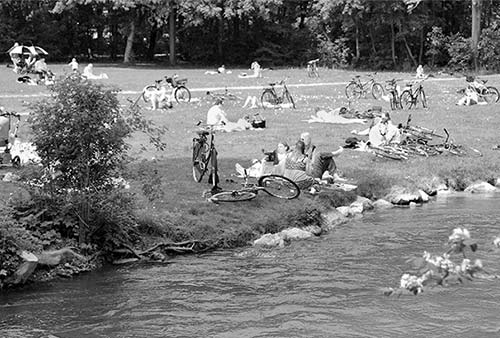
A rewarding respite from the city, the park is especially fun—and worth ▲▲—on a bike under the summer sun and on warm evenings (unfortunately, there are no bike-rental outfits in or near the park; to rent some wheels, see here). Caution: While local law requires sun worshippers to wear clothes on the tram, the park is sprinkled with buck-naked sunbathers—quite a shock to prudish Americans (they’re the ones riding their bikes into the river and trees).
Haus der Kunst
Built by Hitler as a temple of Nazi art, this bold and fascist building—a rare surviving example of a purpose-built Nazi structure—is now an impressive shell for various temporary art exhibits, usually well explained in English. Ironically, the art now displayed in Hitler’s “house of art” is the kind that annoyed the führer most—modern. Its cellar, which served as a nightclub for GIs in 1945, is now the extremely exclusive P-1 nightclub.
Cost and Hours: €14; Wed-Mon 10:00-20:00, Thu until 22:00, closed Tue; at south end of English Garden, tram #16 to Nationalmuseum/Haus der Kunst or bus #100 to Königinstrasse, Prinzregentenstrasse 1, +49 89 2112 7113, www.hausderkunst.de.
Cuisine Art: The Goldene Bar, where a 1930s atmosphere survives—on the back side of the building, overlooking the English Garden—is one of Germany’s most interesting cafés (Wed-Sat 12:00-22:00, Sun from 13:00, museum entry not required).
Nearby: Just beyond the Haus der Kunst, where Prinzregentenstrasse crosses the Eisbach canal, you can get another view of surfers in the rapids created as the small river tumbles underground.
Bavarian National Museum (Bayerisches Nationalmuseum)
You could spend weeks in this vast museum, which focuses on decorative arts but really has a bit of everything—musical instruments and games, arms and armor, an entire wing of Nativity scenes, a huge dining table with silver service, and traditional German woodcarving—not to mention a big collection of fine art spanning centuries. A roomful of 16th-century wooden models of Bavarian towns includes one of Munich—see if you can pick out the Frauenkirche and Marienplatz.
The impressive building, from the 1890s, was designed in a historicist style to look much older. With its 160 rooms on three levels, and the tremendous breadth of its valuable collections, you’ll want to get the map and focus on what you like best.
Cost and Hours: €7, €1 on Sun, audioguide free except €2 on Sun; Tue-Sun 10:00-17:00, Thu until 20:00, closed Mon; tram #16 or bus #100 from station to Nationalmuseum/Haus der Kunst, Prinzregentenstrasse 3, +49 89 211 2401, www.bayerisches-nationalmuseum.de.
▲Villa Stuck
Franz von Stuck, Munich’s top Art Nouveau artist and fin-de-siècle tastemaker, designed this mansion for himself, then lived and worked (and partied) here from 1898 until his death in 1928. Within Munich’s cutting-edge art scene, you were nobody until you were invited to an evening here. Fortuitously, a good part of the house’s interior has been preserved. The rooms’ original dark-wood/gold-leaf decor dazzle Jugendstil fans; upstairs in Von Stuck’s former studio is his “Sin Altar” with a version of his most famous (and perhaps most erotically charged) painting, The Sin (Die Sünde).
Cost and Hours: €9; ticket gets you half-price admission to Jewish History Museum, Munich City Museum, or Lenbachhaus—or use any of those tickets to get half-price admission here; Tue-Sun 11:00-18:00, closed Mon; tram #17 or bus #100 to Friedensengel/Villa Stuck—just a short ride across the river from the city center, Prinzregentenstrasse 60, +49 89 455 5510, www.villastuck.de.
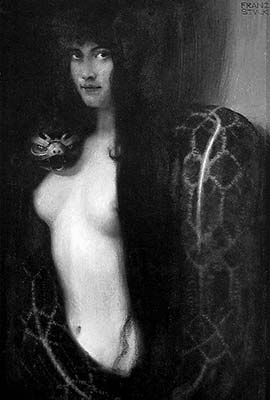
▲Deutsches Museum (Main Branch)
Germany’s answer to our Smithsonian Institution, the Deutsches Museum traces the evolution of science and technology. The main museum is centrally located on an island in the Isar River. Two smaller branches—the Museum of Transportation and the Aviation Museum—are outside the city center and have separate tickets (both described later).
The Isar River location is halfway through a complete, multiyear overhaul. The first of two new wings opened in July 2022 with fully redesigned exhibits. Themes include robotics, aviation, agriculture, health, film and imaging, motors, nuclear physics, hydraulic engineering, musical instruments, and more—the museum’s collections are tremendously broad. Even those on roller skates will need to be selective. Study the floor plan and choose which sections interest you. Several exhibits are geared toward children, and there is a separate “Kids’ Kingdom” for children ages 3-8. The museum is bilingual, with everything described in both English and German.
The other half of the museum’s exhibits are currently closed but will open after a second stage of renovation, projected to end in 2028.
Cost and Hours: €14, €29 family ticket, €3 extra for planetarium show, daily 9:00-17:00, ask for the English map, several small cafés in and around the museum, nice gift shop, +49 89 217 9333, www.deutsches-museum.de.
Getting There: Take the U-1, U-2, or tram #18 to Fraunhoferstrasse, then walk down to the river and turn left down a long block to the corner of Corneliusstrasse. Enter from the bridge (Corneliusbrücke). You can also take bus #52 or #62 to the Baaderstrasse stop, which is just across the intersection from the museum gate.
NEAR THE OKTOBERFEST GROUNDS
▲Museum of Transportation (Verkehrszentrum)
While it veers a little toward the wonky, this fun museum has enough to interest the casual visitor—and is heaven for any driving enthusiast. You’ll see all aspects of transport, from old big-wheeled bikes to Benz’s first car (a three-wheeler from the 1880s) to sleek ICE super-trains (serious train buffs going to Nürnberg will be more excited by the German Railway Museum there). The museum asks what our lives would be like without transportation, and the engaging exhibits (well explained in English) show how modes of transportation developed from Neolithic “bone” skates (predecessors to today’s in-line skates) to 19th-century Lapland skis, to today’s snowboards and fast cars. It’s housed in three giant hangar-like exhibition halls just beyond the Oktoberfest grounds, a.k.a. Theresienwiese. The museum is part of the Deutsches Museum but has a separate ticket.
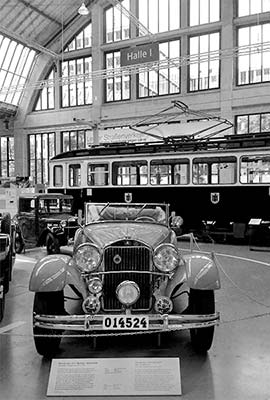
Cost and Hours: €7, €15 family ticket, daily 9:00-17:00, Am Bavariapark 5, +49 89 217 9333, www.deutsches-museum.de/verkehrszentrum.
Getting There: Take the U-4 or U-5 to Schwanthalerhöhe (two stops from the main train station). From the platform, follow signs for Deutsches Museum. The museum is just a few steps from the station exit.
Visiting the Museum: Hall I focuses on urban transport, with special attention to Munich. Climb into a 1927 Berlin S-Bahn car, marvel at a cross-section of the intricate and multilayered subway system, learn about the history of the bicycle, and admire the vintage cars—including a deluxe 1930s Mercedes-Benz 370—arrayed into mock traffic jams. Twice a day (10:00 and 15:30—confirm times as you enter) they fire up an S-Bahn simulator and let visitors pretend to drive the train.
Hall II gives you a look at the development of long-distance overland travel. The focus here is on trains and bus travel. Don’t miss the Maffei S3/6, a.k.a. “The Pride of Bavaria” (in its heyday the fastest steam engine, at nearly 80 miles per hour); climb aboard the clever old postal train car (complete with a mail slot on the side); and check out the 1950s panorama bus that shuttled eager tourists to fashionable destinations such as Italy. If your timing is right, be sure to take a ride in the old carriage (offered at 10:30 and 15:00). The metal track simulates what it would have felt like to travel in the 18th century over different terrain (grass and cobblestones—pretty uncomfortable).
Hall III is all about fun: motorcycles, bicycles, skis, and race cars. Famous prewar models include the Mercedes-Benz SS and the Auto Union Type C “Grand Prix” race car. Other tiny racers—which resemble metal pickles to the uninitiated—include the 1950s Mercedes-Benz 300 SLR and the famous Messerschmitt 200. You’ll also find early 18th-century bicycles based on Leonardo da Vinci’s drawings. Before the invention of the pedal crank, bikes were just silly-looking scooters for adults.
SIGHTS OUTSIDE THE CITY CENTER
The following sights are 30 minutes or less from the city center.
▲▲Nymphenburg Palace Complex
For 200 years, this royal retreat of palaces and gardens was the Wittelsbach rulers’ summer vacation home, a getaway from the sniping politics of court life in the city. Their kids could play, picnic, ride horses, and frolic in the ponds and gardens, while the adults played cards, listened to music, and sipped coffee on the veranda. It was at Nymphenburg that a seven-year-old Mozart gave a widely heralded concert, that 60-year-old Ludwig I courted the femme fatale Lola Montez, and that “Mad” King Ludwig II (Ludwig I’s grandson) was born and baptized.
Today, Nymphenburg Palace and the surrounding one-square-mile park are a great place for a royal stroll or discreet picnic. Indoors, you can tour the Bavarian royal family’s summer quarters and visit the Royal Stables Museum (carriages, sleighs, and porcelain). If you have time, check out playful extras such as a hunting lodge (Amalienburg), bathhouse (Badenburg), pagoda (Pagodenburg), and fake ruins (Magdalenenklause). The complex also houses a humble natural history museum and a Baroque chapel. Allow at least three hours (including travel time) to see the palace complex at a leisurely pace.
Cost and Hours: €8 for the palace; €6 for the Royal Stables Museum; €15 combo-ticket (€12 off-season) covers the palace, Royal Stables Museum, and outlying sights. All are open daily 9:00-18:00, mid-Oct-March 10:00-16:00—except for Amalienburg and the other small palaces in the park, which close in winter; park open daily 6:00-dusk and free to enter; palace audioguide-€3.50, mandatory bag check for big bags, +49 89 179 080, www.schloss-nymphenburg.de.
Getting There: The palace is three miles northwest of central Munich. Take tram #17 (direction: Amalienburgstrasse) from the train station or Karlsplatz. In 15 minutes you reach the Schloss Nymphenburg stop. From the bridge by the tram stop, you’ll see the palace—a 10-minute walk away. The palace is a pleasant 30-minute bike ride from the main train station (find Nymphenburger Strasse 3 blocks north of the train station and follow it all the way to the palace grounds, turning left at the canal that stretches to the palace). Be aware that biking is not permitted within the palace grounds.
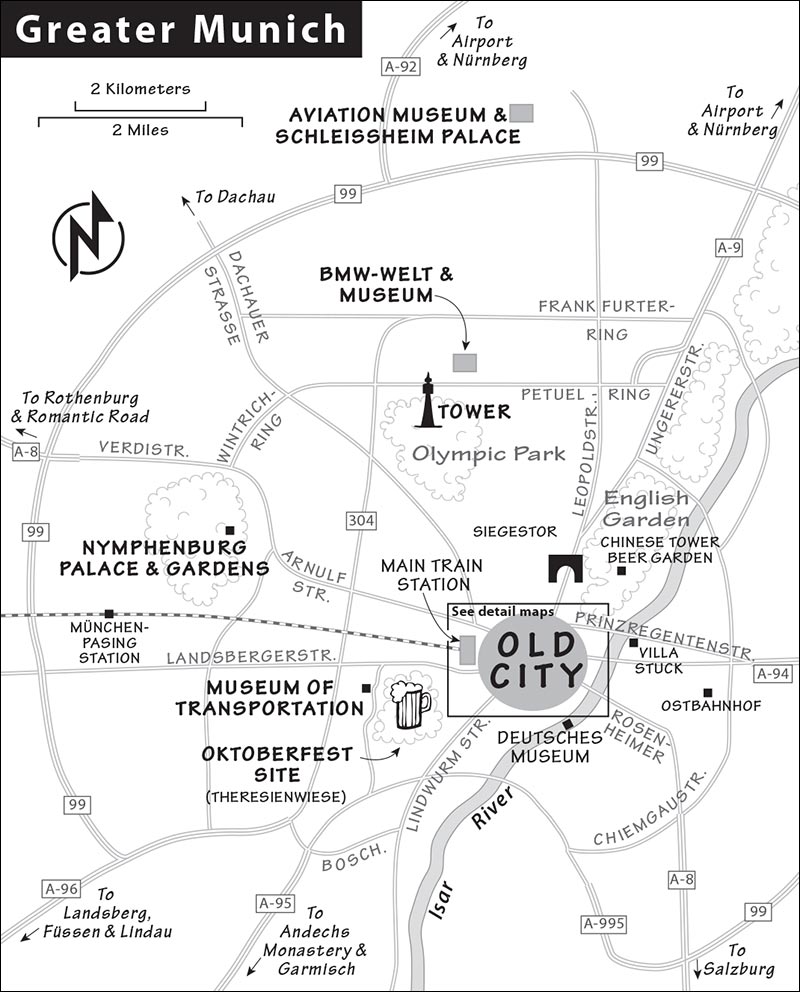
Eating: A café serves lunch and snacks in a winter garden or on a nice terrace, a five-minute walk behind and to the right of the palace (open year-round). More eating options are near the Schloss Nymphenburg tram stop (including the Backspielhaus, a good sandwich shop).
Nymphenburg Palace
In 1662, after 10 years of trying, the Bavarian ruler Ferdinand Maria and his wife, Henriette Adelaide of Savoy, finally had a son, Max Emanuel. In gratitude for a male heir, Ferdinand gave this land to his Italian wife, who proceeded to build an Italian-style Baroque palace as their summer residence. Their son expanded the palace to its current size. (Today’s Wittelsbachs, who still refer to themselves as “princes” or “dukes,” live in one wing of the palace.)
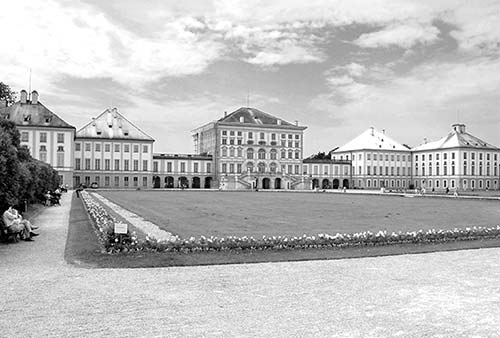
The palace interior, while less extensive than Munich’s Residenz, was never bombed and feels more real. You’ll trace the art and architecture through three centuries: built Baroque, later decorated Rococo, and—with the arrival of Napoleon—further decorated in the Neoclassical or “Empire” style. The place is stingy on free information; you’ll need the audioguide if you’d like more info than what I’ve provided below.
 Self-Guided Tour: Start your visit in the Schlossgeschichte (palace history) room at the entry for a good intro. Then make your way to the Great Hall (a.k.a. Stone Hall). As the central room of the palace, this light and airy space was the dining hall, site of big Wittelsbach family festivals. One of the grandest and best-preserved Rococo rooms in Bavaria (from about 1760), it sports elaborate stucco work and a ceiling fresco by Johann Baptist Zimmermann (of Wieskirche fame). Imagine the feasts and celebrations held in this room; you can practically hear the musicians playing from the balcony. With three big windows on either side, both morning and afternoon sunlight gloriously fill the room.
Zimmermann’s fresco opens a sunroof to the heavens, where Greek gods cavort. In the sunny center, Apollo drives his chariot to bring the dawn, while bearded Zeus (astride an eagle) and peacock-carrying Juno look on. The rainbow symbolizes the peace brought by the enlightened Wittelsbachs. Around the borders of the painting, notice the fun optical illusions: For example, a painted dog holds a stucco bird in its mouth. The painting’s natural setting and joie de vivre reflect the pastoral pleasures enjoyed here at the Wittelsbachs’ summer home. Find the woman with the crescent moon above her head: That’s Princess-Electress Maria Amelia, depicted as the Greek goddess Diana (you can visit the hunting lodge her husband, Prince-Elector Karl Albrecht, built for her nearby). And at one end of the fresco (away from the windows) lounges a lovely maiden with flowers in her hair: It’s Flora, the eponymous nymph who inspired this “nymph’s castle”—Nymphenburg.
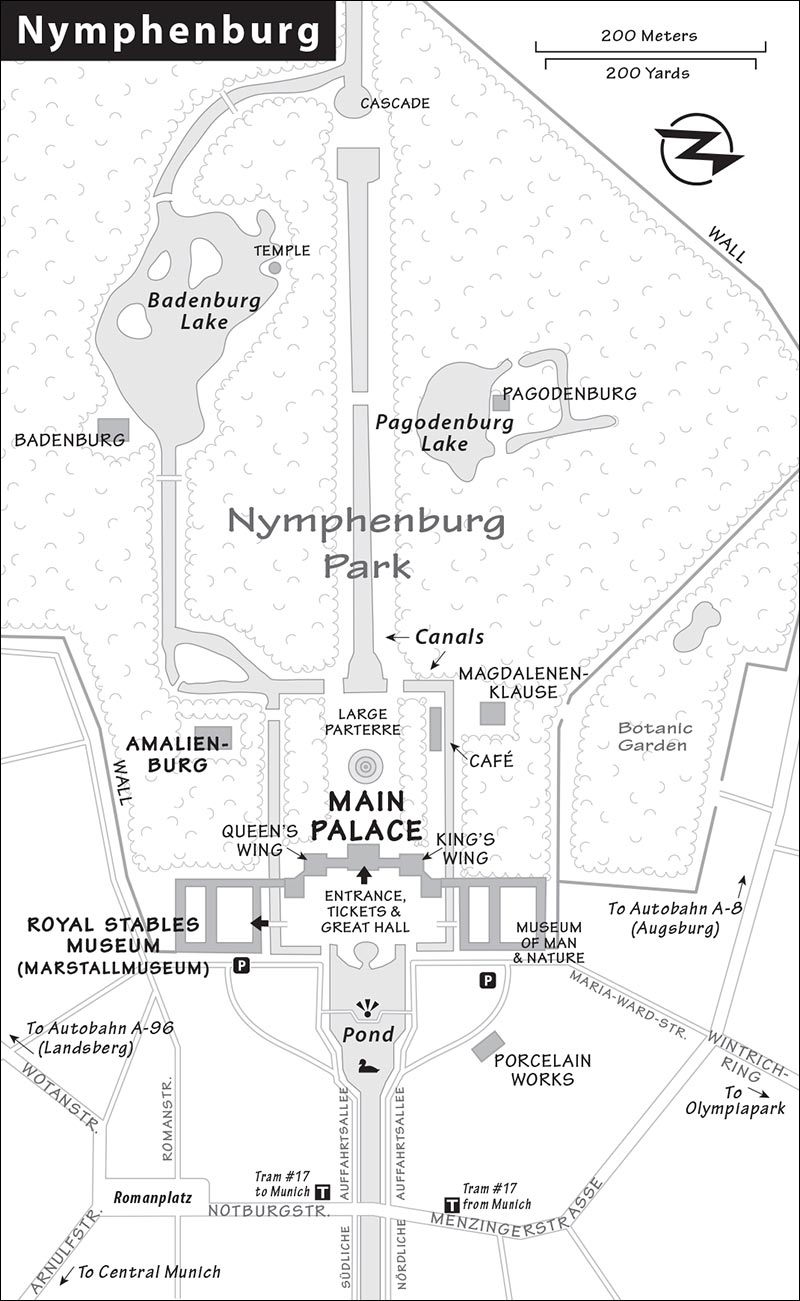
From here, two wings stretch to the left and right. They’re mirror images of one another: antechamber, audience chamber, bedchamber, and private living quarters. Guests would arrive here in the Great Hall for an awe-inspiring first impression, then make their way through a series of (also impressive) waiting rooms for their date with the Wittelsbach nobility.
• The tour continues to the left.
North Wing (Rooms 2-9): Breeze quickly through this less interesting wing, filled with tapestries and Wittelsbach portraits (including curly-haired Max Emanuel, who built this wing). Pause in the long corridor (the North Gallery) lined with paintings of various Wittelsbach palaces. The names of each are labeled on gilded plaques. The ones of Nymphenburg show the place around 1720, back when there was nothing but countryside between it and downtown (and gondolas plied the canals). Imagine the logistics when the royal family—with their entourage of 200—decided to move out to the summer palace. Find the painting of Fürstenried Palace (in another Munich suburb) and look for the twin onion domes of the Frauenkirche in the distance. Of the countless paintings you’ll see, many depict palaces the family owned throughout their realm...just showing off.
Take a short detour into the North Apartment Antechamber (Room 3), where audiences would patiently wait to meet with the Bavarian ruler. Notice the portraits of his children that adorn the wall and the exquisite black marble table, inlaid with expensive gemstones, given to Max Emanuel’s oldest son (Prince-Elector Karl Albrecht, later Holy Roman Emperor Charles VII, seated in the center portrait) upon a visit to the Medicis in Florence. Next, the former bedroom has a group portrait of the Wettin family of Saxony and the Wittelsbachs of Bavaria gathered at a grand garden party. Notice the nobleman using a wheelchair—likely the first such portrayal of a royal in history. You’ll also see portraits of ladies of the court and mistresses.
• Return to the Great Hall and enter the other wing.
South Wing (Rooms 10-20): Pass through the gold-and-white Room 10 and turn right into the red-walled South Apartment Antechamber. The room calls up the exuberant time of Nymphenburg’s founding couple, Ferdinand and Henriette. A portrait on the wall shows them posing together in their rich courtly dress. The large painting on the left depicts the family in a Greek myth: Henriette (as the moon goddess) leads her youngest son Joseph Clemens by the hand, while her first son Max Emanuel (as Hercules) receives the gift of a sword. On the right side of the room, Ferdinand is represented as Endymion, a mortal loved by the moon goddess. The ceiling painting (of the earth goddess Cybele) also dates from the time of Nymphenburg’s first family.
After admiring the Queen’s Bedroom and Chinese lacquer cabinet, head back down the long hall to King Ludwig I’s Gallery of Beauties. The room is decorated top to bottom with portraits of 36 beautiful women (all of them painted by Joseph Stieler between 1826 and 1850). Ludwig I was a consummate girl-watcher.
Ludwig prided himself on his ability to appreciate beauty regardless of social rank. He enjoyed picking out the prettiest women from the general public and, with one of the most effective pickup lines of all time, inviting them to the palace for a portrait. Who could refuse? The portraits were on public display in the Residenz and catapulted their subjects to stardom. The women range from commoners to princesses, but notice that they share one physical trait: Ludwig obviously preferred brunettes. The portraits are done in the modest and slightly sentimental Biedermeier style popular in central Europe, as opposed to the more flamboyant Romanticism (so beloved of Ludwig’s “mad” grandson) also in vogue at that time.
Most of these portraits have rich stories behind them (each of the following is at eye level): With the door you entered as your “6 o’clock,” work your way counterclockwise, starting from “7 o’clock.” There you’ll find Helene Sedlmayr, a humble cobbler’s daughter who caught Ludwig’s eye; she poses in a blue-and-gray dress way beyond her budget. Though poor, she was considered Munich’s comeliest Fräulein, and she eventually married the king’s valet and had 10 children. Back near the door is Lady Jane Ellenborough—an elegant English baroness who went through four marriages and numerous affairs, including one with Ludwig (and, much later, with his son Otto, after Otto had become king of Greece). She was fluent in nine languages, including Arabic, after marrying a Syrian sheik 20 years her junior.
Continuing to your left near another door is Lola Montez, the king’s most notorious mistress, who led him to his downfall. The portrait shows her the year she met Ludwig (she was 29, he was 60), wearing the black-lace mantilla and red flowers of a Spanish dancer. This Irish beauty (born Maria Gilbert) lived in India for a time, became Franz Liszt’s lover in Paris, and eventually made her way to Munich. Ludwig was so bedazzled that he gave her a title—Countess of Landsfeld—along with a hefty annual income. Near Lola, the woman half-cloaked in a red-and-ermine robe is Princess Marie of Prussia—Ludwig’s daughter-in-law—who once lived in the last rooms we’ll visit. (And where in the Gallery of Beauties is the portrait of Ludwig’s wife, Queen Therese? She’s not here...you’ll have to duck into the elegant, green Queen’s Study to see her portrait.)
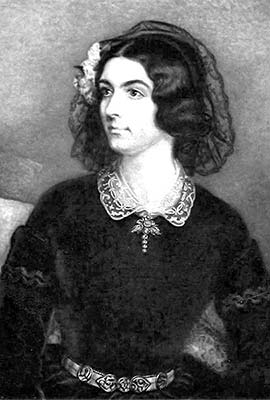
Pass through the blue Audience Room (with elaborate curtain rods and mahogany furniture in the French-inspired Empire style—what we’d call Neoclassical) and into the Queen’s Bedroom (her other one). The room has much the same furniture it had on August 25, 1845, when Princess Marie gave birth to the future King Ludwig II. Little Ludwig (see his bust, next to brother Otto’s) was greatly inspired by Nymphenburg—riding horses in summer, taking sleigh rides in winter, reading poetry at Amalienburg. The love of nature and solitude he absorbed at Nymphenburg eventually led Ludwig to abandon Munich for his castles in the remote Bavarian countryside. By the way, note the mirror in this bedroom. Royal births were carefully witnessed, and the mirror allowed for a better view. While Ludwig’s birth was well documented, his death was shrouded in mystery (see here).
Palace Grounds
The wooded grounds extend far back beyond the formal gardens and are popular with joggers and walkers. Find a bench for a low-profile picnic. The park is laced with canals and small lakes, where court guests once rode on Venetian-style gondolas.
Royal Stables Museum (Marstallmuseum)
These former stables (to the left of the main palace as you approach the complex) are full of gilded coaches worthy of a Cinderella dream. Upstairs, a porcelain exhibit shows off some of the famous Nymphenburg china.
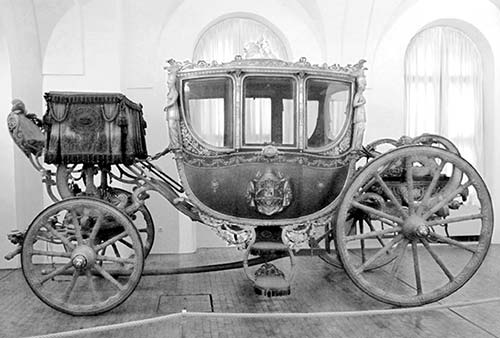
Visiting the Museum: Wandering through the coach collection (both wings), you can trace the evolution of 300 years of coaches—getting lighter and adding better suspension as they were harnessed to faster horses.
In the big entrance hall is a golden carriage drawn by eight white horses. In 1742, it carried Karl Albrecht Wittelsbach to Frankfurt to be crowned Holy Roman Emperor. As emperor, he got eight horses—kings got only six. The event—with all the king’s horses and all the king’s men—is depicted in a frieze stretching the length of the museum wall; Karl’s carriage is #159. Look closely at the carriage’s ornamentation. It’s pure Rococo (a term that comes from the word “shell”). Along with shells, C-shaped decorations hint that it’s Rococo.
Next are more royal carriages, including the carriage of the first king of Bavaria (crowned by Napoleon in 1806). Then come Wittelsbach sleighs from the 1600s.
Around the corner, it’s all Ludwig II. Though his 20-year reign (until 1886) occurred long after the end of the Rococo period, Ludwig was a Rococo nut and commissioned work to be done in Neo-Rococo, proving that even Rococo can be outdone. Lining the wall are the king’s “beauties”—his favorite horses, each with a pet name. The king poses at the end of the hall (as if gazing longingly at his bevy of steeds).
The last rooms, starting with the 1866 portrait of Ludwig in the saddle, are a celebration of Ludwig’s love of riding. Paintings show the king’s horses being served almost like humans. The carriage collection continues in the other wing (just across the lane from where you entered the museum).
After seeing the coaches, head upstairs to a collection of Nymphenburg porcelain. In the 1700s, tea, coffee, and hot chocolate were new and sparked a mania among society’s elites. But what to serve it in? Something more elegant than a mug was needed, and “china” was ideal. Rather than importing teacups from China, royal families such as the Wittelsbachs commissioned their own porcelain factories to make fit-for-a-king plates, vases, and so on. With the advent of Europe’s royal porcelain works, “a proper cup of tea” was finally possible. (The Nymphenburg Palace porcelain works is still in operation but not open to the public.) You’ll see plates and cups painted in various styles, from ancient Greek to Old Masters, Romantic, and Art Nouveau. Don’t miss the porcelain copies of 17th-century Old Masters’ paintings from the Wittelsbach art collection (now at the Alte Pinakothek). Ludwig I had these paintings copied onto porcelain for safekeeping into the distant future. This was a very tricky process to get right, as the color of the paint would change when baked in. Take a close look—these are exquisite.
Amalienburg
Three hundred yards from Nymphenburg Palace, hiding in the park (head into the sculpted garden and veer to the left, following signs), you’ll find a fine little Rococo hunting lodge, which takes just a few minutes to tour. In 1734, Prince-Elector Karl Albrecht had it built for his wife, Maria Amalia.
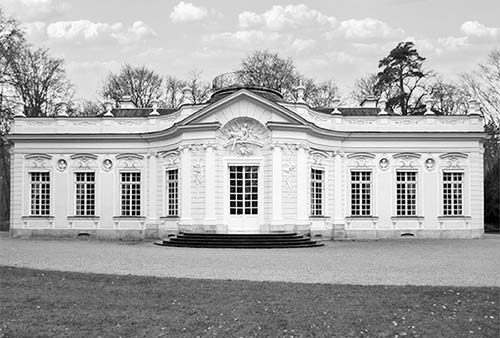
Amalienburg was designed by François de Cuvilliés (of Residenz fame) and decorated by Johann Baptist Zimmermann. It’s the most worthwhile of the four small “extra” palaces buried in the park that are included on the combo-ticket. The others are the Pagodenburg, a Chinese-inspired pavilion; Badenburg, an opulent bathing house and banquet hall; and the Magdalenenklause, a mini palace that looks like a ruin from the outside but has an elaborate altar and woody apartments inside.
Visiting Amalienburg: As you approach, circle around and notice the facade. Above the pink-and-white grand entryway, Diana, goddess of the chase, is surrounded by themes of the hunt and flanked by busts of satyrs. The queen would shoot from the perch atop the roof. Behind a wall in the garden, dogs would scare nonflying pheasants. When they jumped up in the air above the wall, the sporting queen—as if shooting skeet—would pick the birds off.
Tourists now enter this tiny getaway through the back door. Doghouses under gun cupboards fill the first room. In the fine yellow-and-silver bedroom, the bed is flanked by portraits of Karl Albrecht and Maria Amalia—decked out in hunting attire. She liked her dogs. The door under her portrait leads to stairs to the rooftop pheasant-shooting perch. The relief on the door’s lower panel shows Vulcan forging arrows for amorous cupids.
The mini Hall of Mirrors is a blue-and-silver commotion of Rococo nymphs designed by Cuvilliés. In the next room, paintings depict court festivities, formal hunting parties, and no-contest kills (where the animal is put at an impossible disadvantage—like shooting fish in a barrel). Finally, the sparse kitchen is decorated with Chinese-style drawings on Dutch tile.
▲BMW-Welt and Museum
At the headquarters of BMW (“bay-em-VAY,” to Germans), Beamer dreamers can visit two space-age buildings to learn more about this brand’s storied heritage (worth ▲▲ to enthusiasts). This vast complex—built on the site of Munich’s first airstrip and home to the BMW factory since 1920—has four components: the headquarters (in the building nicknamed “the Four Cylinders”—not open to the public), the factory (tourable with a reservation), the showroom (called BMW-Welt—“BMW World”), and the BMW Museum. Everything comes with fine English translations.
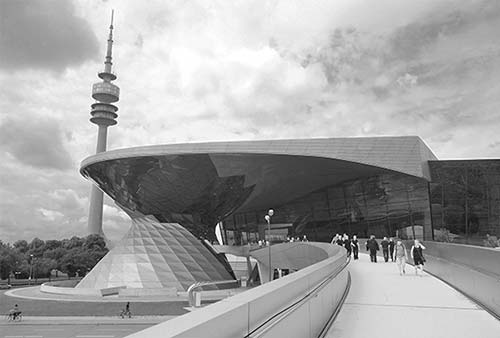
Cost and Hours: Museum—€10, online ticket purchase encouraged, €3 discount with Olympic Park or Gray Line ticket—also applies to tours, open Tue-Sun 10:00-18:00, closed Mon; BMW-Welt showroom—free, building open Mon-Sat 7:30-24:00, Sun from 9:00, exhibits staffed 9:00-20:00; +49 89 125 016 001, www.bmw-welt.com.
Tours: English tours are offered of the museum (€13, 1 hour), BMW-Welt showroom (€8, 40 minutes), and factory (€14, 1.5 hours, ages 6 and up, best to book well in advance). Reservations must be made by phone at +49 89 125 016 001 or email at infowelt@bmw-welt.com; see the website for details.
Getting There: From the city center, ride the U-3 to Olympia-Zentrum. From the platform, follow signs for BMW-Welt/BMW Museum. As you exit, get oriented: Ahead is the BMW-Welt (showroom) entry, the massive multicornered building across the street to your left is the BMW factory, the quadruple “piston” towers are the corporate offices, and the BMW Museum is in the half-visible gray “soup bowl.” Around the BMW-Welt to your right is a footbridge to the Olympic Park and stadium.
Visiting the BMW Complex: Start your visit in the BMW-Welt showroom. The building itself—a cloud-shaped, glass-and-steel architectural masterpiece—is reason enough to visit. At heart it’s a sales showroom, so it’s free to enter, and filled with exhibits designed to enthuse car lovers so they’ll find a way to afford a Beamer (also on display are Mini Coopers and Rolls-Royces—and BMW motorbikes). You’ll see the newest models and get a breathtaking look at the future. With touch-screen stations, high-powered videos, an inviting cafeteria, and lots of horsepower, it’s like no showroom I’ve ever seen. There’s even a two-room learning “campus” for kids and adults, and a BMW merchandise shop. The upper level is where customers come to pick up their new Beamers (make sure to climb the stairs and stand on the sky bridge viewpoint to watch in envy).
At the far end of BMW-Welt, exit and cross the swoopy bridge to the futuristic, bowl-shaped museum. It encloses a world of floating walkways linking exhibits on BMW design and technology through the years. Dozens of real cars and motorcycles of every era and type are on display. The museum traces the Bavarian Motor Works’ history since 1917, when the company began making airplane engines. Motorcycles came next, followed by the first BMW sedan in 1929. You’ll see how design was celebrated here from the start. Stand on an E for English to hear the chief designer talk about his favorite cars in the “treasury.” The 1956 BMW 507 is enough to rev almost anyone’s engine.
At basement level, a worthwhile Remembrance exhibit focuses on the Nazi period, when BMW produced weapons and used forced labor, and the company’s ongoing efforts to make amends.
Olympic Park (Olympiapark München) and TV Tower (Olympiaturm)
After the construction of Munich’s Allianz Arena for the 2006 World Cup, the city’s great 1972 Olympic stadium and sports complex were left in the past, and they have since melded into the neighborhood as simply a huge park and swimming pool. You can get a good look at the center’s striking “cobweb” style of architecture while enjoying the park’s picnic potential. In addition, there are plenty of activities at the park, including a TV tower, minigolf, paddleboats, and an excellent swimming pool, the Olympia-Schwimmhalle. The hill here (a “rubble hill”—Schuttberg—built from the debris of bombed-out buildings) comes with an inviting beer garden (Olympia Alm, aptly named for an alpine meadow) and a commanding city view.
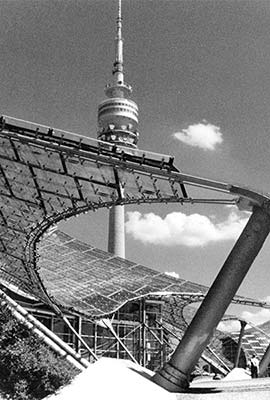
The TV tower has higher views from 620 feet. Walk completely around, enjoying the vista, with sights identified on the windows. You can see the Alps on a good day. The strange little rock-and-roll museum (with Freddie Mercury’s black leather pants) is a bonus for some. Two floors higher is the open rooftop. And downstairs is the revolving Restaurant 181 (named for its altitude).
Cost and Hours: Tower-€11, €10 with BMW Museum ticket; daily 9:00-23:00, +49 89 3067 2750, www.olympiapark.de; pool-€6, daily 7:00-23:00, +49 89 2361 5050, www.swm.de.
Getting There: The U-3 runs from Marienplatz directly to the Olympia-Zentrum stop. Emerging from the station, you’ll face the BMW-Welt (described earlier). Turn right and follow the path closest to BMW-Welt to a bridge over the highway and into Olympic Park. From this bridge, from left to right, you can see the ice rink and sports center, the TV tower, the swimming facility, the Olympiahalle arena and concert venue, and Olympic Stadium. In the distance you’ll see the grassy rubble hill, likely with people on top enjoying the view.
▲Schleissheim Palace
Tucked just outside central Munich, Schleissheim Palace (completed in 1726) is a hidden gem of High Baroque architecture and Wittelsbach wealth. Showing off his political power, Bavarian ruler Max Emanuel commissioned French and Italian artists to create a mini-Versailles here (the New Palace) to house his impressive art collection and show off his beautifully manicured Baroque garden. Porcelain collectors shouldn’t miss the Meissen porcelain exhibit in the Lustheim Palace at the far end of the gardens—about a 30-minute walk. Rarely visited, this expansive palace is worth a stop, especially for those with a car.
Cost and Hours: New Palace-€6, gardens-free; €10 combo-ticket covers New Palace, Old Palace (skippable), and porcelain collection; covered by Bavarian Palaces ticket; Tue-Sun 9:00-18:00, Oct-March 10:00-16:00, closed Mon year-round; nice beer garden, +49 89 315 8720, www.schloesser-schleissheim.de.
Getting There: It’s easiest by car, or you can ride the S-1 about 20 minutes from Marienplatz (direction: Freising or Flughafen) and get off at Oberschleissheim (buy an M-1 day pass). Walk over the bridge, then follow Museen signs for 15 minutes until the street turns into Effnerstrasse.
Aviation Museum (Flugwerft Schleissheim)
Fans of all things winged will enjoy this museum with more than 50 planes, helicopters, gliders, and an original Europa rocket housed in a historical aerodrome on a former military airfield. Inside the museum, try a helicopter simulator (for an extra charge, usually available on weekends) and watch antique planes being restored in the glass-walled workshop. The museum is well conceived and has some English explanations, but probably only those interested in the history of flight will find the trek to this out-of-the-way museum worthwhile.
Cost and Hours: €7, €15 family ticket, daily 9:00-17:00, tiny café, Effnerstrasse 18 in Oberschleissheim, +49 89 217 9333, www.deutsches-museum.de/flugwerft-schleissheim.
Getting There: The Aviation Museum is a two-minute walk from Schleissheim Palace (see previous listing).
▲Isar River Bike Ride
Munich’s river, lined by a gorgeous park, leads bikers into the pristine countryside in just a few minutes. From downtown (easy access from the English Garden or Deutsches Museum), follow the riverside bike path south (upstream) along the east (left) bank. You can’t get lost. Just stay on the lovely bike path. It crosses the river after a while, passing tempting little beer gardens and lots of Bavarians having their brand of fun—including gangs enjoying Munich’s famous river-party rafts. Go as far as you like, then retrace your route to get home. The closest bike rental is Mike’s Bike Tours (see “Tours in Munich,” near the beginning of this chapter).