NEAR PARIS
Versailles • Chartres • Giverny
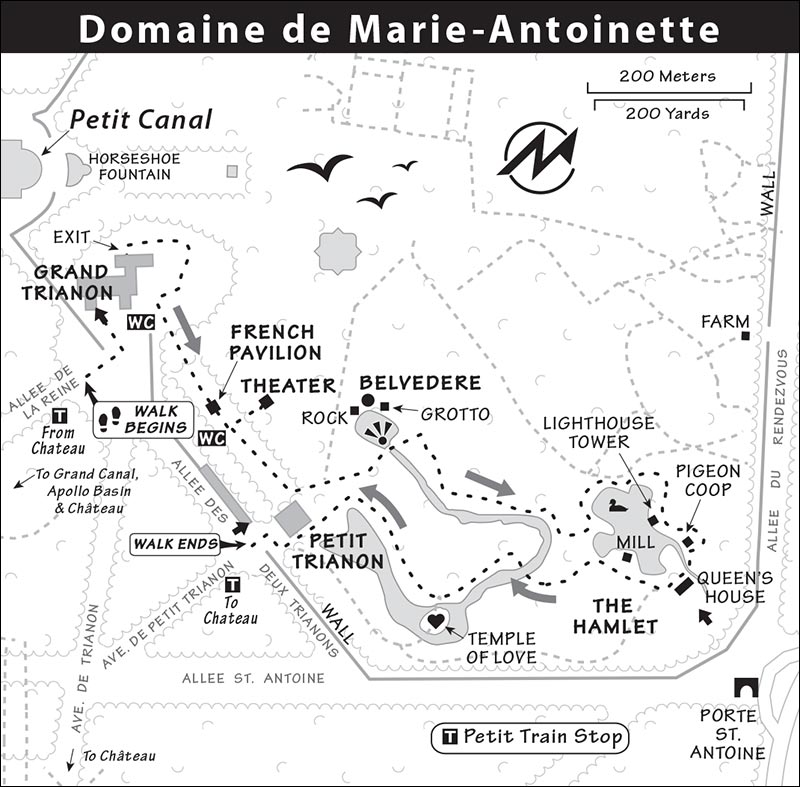
Map: Domaine de Marie-Antoinette
Sleeping and Eating in Giverny
Efficient trains bring dozens of day trips within the grasp of temporary Parisians. Europe’s best palace at Versailles, the awesome cathedral of Chartres, and the flowery gardens at Giverny that inspired Monet await the traveler looking for a refreshing change from urban Paris.
Versailles
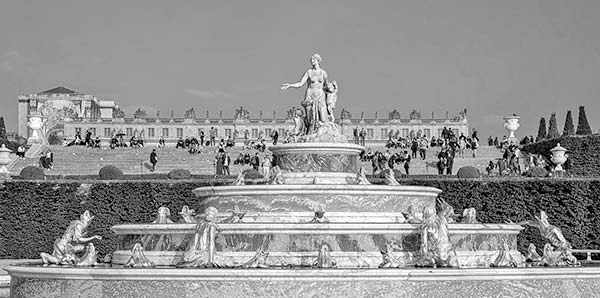
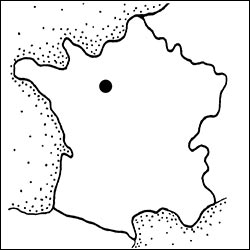
Every king’s dream, Versailles (vehr-sī) was the residence of French monarchs and the cultural heartbeat of Europe for about 100 years—until the Revolution of 1789 changed all that. The Sun King (Louis XIV) created Versailles, spending freely from the public treasury to turn his dad’s hunting lodge into a palace fit for the gods (among whom he counted himself). Louis XV and Louis XVI spent much of the 18th century gilding Louis XIV’s lily. In 1837, about 50 years after the royal family was evicted by citizen-protesters, King Louis-Philippe (then a constitutional monarch rather than a divine one) opened the palace as a museum. Today you can visit parts of the huge palace and wander through acres of manicured gardens sprinkled with fountains and studded with statues. Europe’s next-best palaces are just Versailles wannabes.
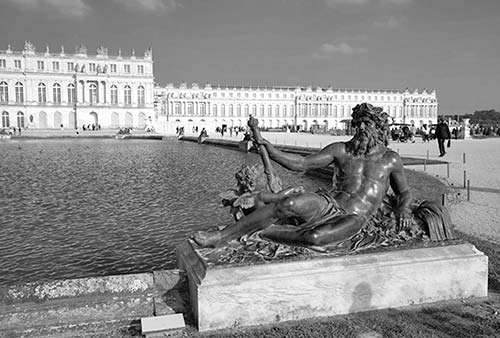
Worth ▲▲▲, Versailles offers three blockbuster sights. The main attraction is the palace itself, called the Château. Here you walk through dozens of lavish, chandeliered rooms once inhabited by Louis XIV and his successors, starring the magnificent Hall of Mirrors. Next come the expansive Gardens behind the palace, a landscaped wonderland crossed with footpaths and dotted with statues and fountains. Finally, at the far end of the Gardens, is the pastoral area called the Trianon Palaces and Domaine de Marie-Antoinette (a.k.a. Trianon/Domaine), a vast walled enclosure designed for frolicking blue bloods and featuring several small palaces and Marie’s Hamlet—perfect for getting away from the mobs at the Château.
Visiting Versailles can seem daunting because of its size and hordes of visitors. The online reservation system is a work in progress (book well ahead, and expect lines and waits even with a reservation). But if you follow my tips, a trip here during even the busiest times is manageable.
GETTING THERE
By Train: You have two good rail options: Take the handy RER-C to the Versailles Rive Gauche/Château station, starting from any of these Paris stations: Gare d’Austerlitz, St. Michel, Musée d’Orsay, Invalides, Pont de l’Alma, or Champ de Mars (about a 35-minute train ride regardless of where you start, 15-minute walk to the Château). Or take the much faster SNCF train from Gare Montparnasse to Versailles-Chantiers station (12-minute train, then 25-minute walk or frequent 10-minute bus, Navigo passes valid). For either train option, use your Navigo Découverte pass, buy a four-zone all-day Navigo Easy card, or, if paper tickets are still available, buy a round-trip ticket from a ticket machine or ticket window (about €8 round-trip).
If you take the RER-C, note that not all trains go to Versailles: Check the departure monitor over the tracks, which will list the next train to “Versailles Rive Gauche/Château.” To reach the Château from the Rive Gauche station, follow the flow: Turn right out of the station, then left at the first boulevard, and walk 10 more minutes.
To walk to the Château from the Chantiers station, exit straight out of the station and join Rue des Chantiers, then turn left on Avenue de Paris. Buses #40 and #401 stop outside the station and run near the Château.
Returning to Paris: To return to Paris on the RER-C line from the Versailles Rive Gauche/Château train station, just hop on the next train—all trains departing this station zip back to the city, stopping at all stations along line C. A video monitor shows how soon the next train leaves and from which track. Remember, your RER/Train-C ticket covers any connecting Métro ride once you’re back downtown. Returning via SNCF is straightforward: Make the trip back to the Chantiers station and take the next train to Gare Montparnasse.
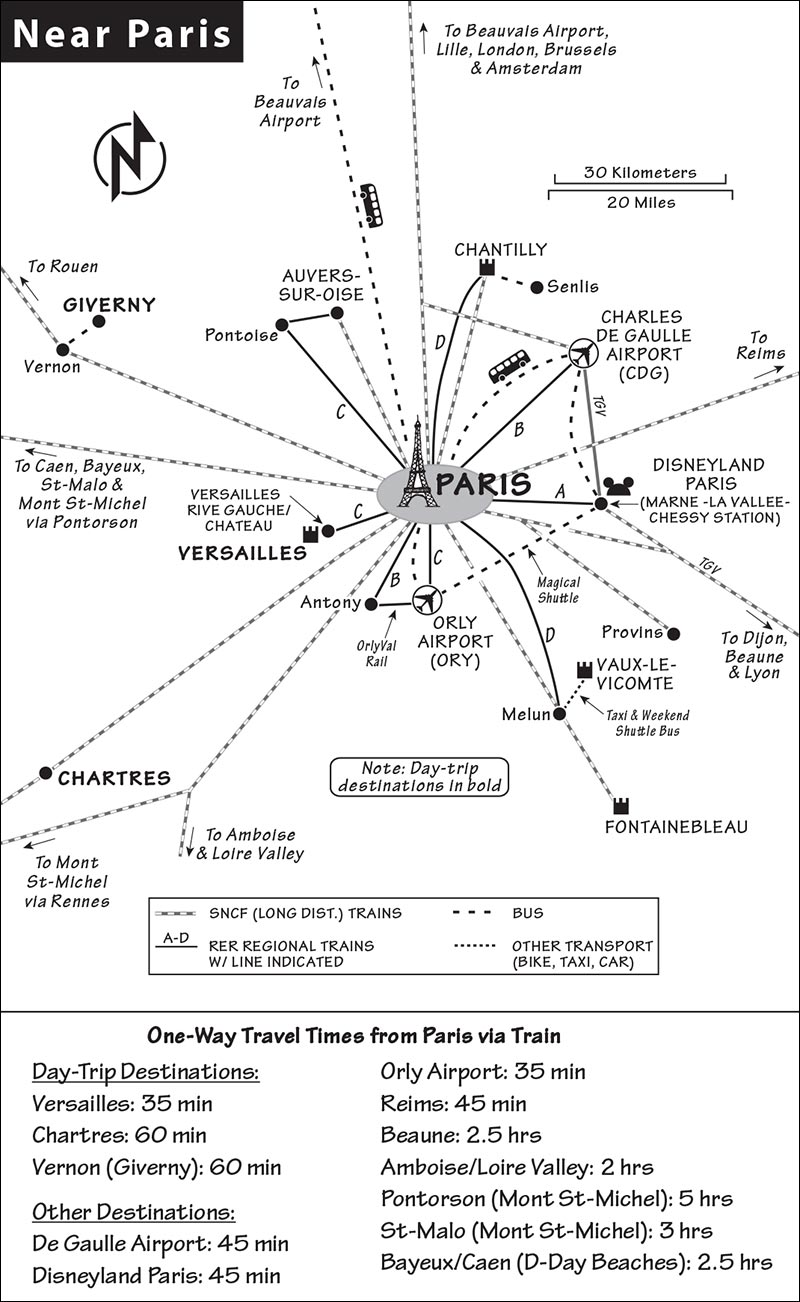
By Taxi: The 30-minute ride (without traffic) between Versailles and Paris costs about €65.
By Tour: Minivan tours will pick you up at your hotel and whisk you painlessly to the Château and back. Paris Webservices tours are reliably good (around €120/person, RS%—see here for details). Big bus tour companies offer Versailles day trips from Paris for around €35/person (transportation only) or about €90/person with guided tour and entry (get details at your hotel or www.pariscityvision.com).
By Car: Get on the périphérique freeway that circles Paris, and take the toll-free A-13 autoroute toward Rouen. Exit at Versailles, follow signs to Versailles Château, and avoid the hectic Garden lots by parking in the big pay lot at the foot of the Château on Place d’Armes (about €5/hour, €36/11 hours).
PLANNING YOUR TIME
Versailles merits a full sightseeing day. In general, allow 1.5 hours each for the Château, the Gardens (includes time for lunch), and the Trianon/Domaine. Add another two hours for round-trip transit, and you’re looking at nearly an eight-hour day.
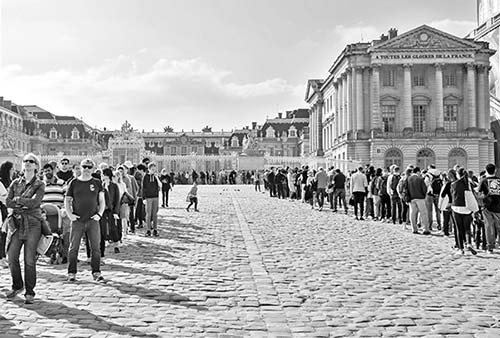
Versailles is all about crowd management; a well-planned visit can make or break your experience. Take this advice to heart. Versailles is much more enjoyable with a relaxed, unhurried approach. Here’s what I’d do on a first visit to avoid the worst lines and crowds:
• Get an individual ticket or Le Passeport pass in advance and choose your Château entry time (see next). If you have a Paris Museum Pass, you have several options—see “Using the Paris Museum Pass,” later.
• Avoid holidays, Sundays, Tuesdays, and Saturdays—in that order—when crowds smother the palace interior. Thursdays and Fridays are best.
• Book an entry as close to opening time (9:00) as possible. Follow my self-guided tour of the Château interior, have lunch, then spend the afternoon touring the Gardens and the Trianon Palaces/Domaine de Marie-Antoinette. To shorten your visit, skip the Trianon/Domaine—beyond the 1.5 hours needed to see it, it’s a 30-minute walk each way.
• An alternate plan is to book a midafternoon Château entry and visit the Gardens and Trianon/Domaine first. The Gardens open at 8:00, but the Trianon/Domaine doesn’t open until noon. If you arrive at around 10:00 or 10:30, you can devote some time to exploring the Gardens and hit the Trianon/Domaine just as it opens. You’ll then have the half-hour walk back to the Château, though you can take the petit train tram back if seats are available (see the “Getting Around the Gardens” sidebar later in this chapter).
ORIENTATION TO VERSAILLES
Cost and Reservations: A timed-entry ticket is required to enter the Château. Reserve ahead and book your entry time on the Versailles website. If you have a Paris Museum Pass, see “Using the Paris Museum Pass,” later. Expect to wait in line even with a timed-entry reservation.
Château: €19.50 (Château only) or €21.50 Le Passeport ticket (includes Trianon/Domaine; €28 on Garden Spectacle days), both tickets come with timed entry. Free for kids 17 and under, and free on the first Sun of the month Nov-March.
Trianon Palaces and Domaine de Marie-Antoinette: €12, covers all the buildings within this walled enclosure. Free for kids 17 and under, and free on the first Sun of the month Nov-March.
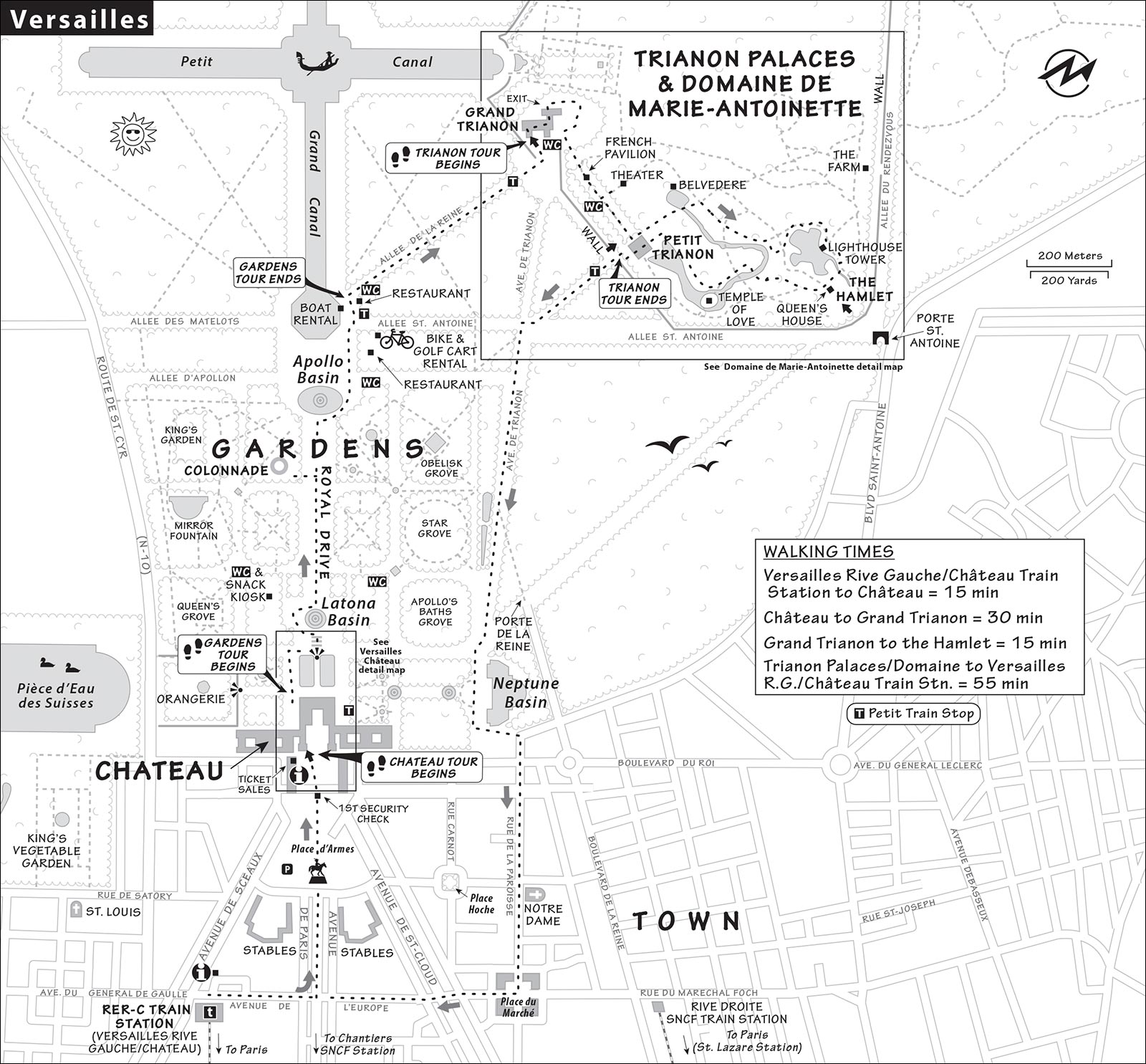
Gardens: Free on weekdays April-Oct if there are no events in the Gardens (events require admission on weekends and most Tue and Fri—see “Spectacles in the Gardens,” later). The Gardens are free every day Nov-March. You can enter the Gardens directly from the passageway to the left of the main Château entrance (see the “Versailles Château” map).
Hours: The Château is open Tue-Sun 9:00-18:30, Nov-March until 17:30, closed Mon year-round.
The Trianon Palaces and Domaine de Marie-Antoinette are open Tue-Sun 12:00-18:30, Nov-March until 17:30, closed Mon year-round (off-season only the two Trianon Palaces and the Hamlet are open, not other outlying buildings), last entry 45 minutes before closing.
The Gardens are open daily 8:00-20:30, Nov-March until 18:00, but may close earlier for special events.
Information: Use the excellent website to book your entry and check for updates—www.chateauversailles.fr. The free Versailles app includes interactive maps. The palace’s general contact number is +33 1 30 83 78 00. At the Château, an information office is to the left as you face the palace.
Using the Paris Museum Pass: The Paris Museum Pass covers the most important parts of the complex (Château and Trianon/Domaine); it does not include the Gardens on Spectacle days. To enter the Château using the pass, you must book an entry time (“Palace Ticket”—free) on the Versailles website.
Buying Tickets in Versailles: If you arrive in Versailles without a pass or ticket, you’ll have to wait (sometimes hours or days) to enter the Château. You can try booking an entry time on the spot, using your phone. Otherwise, try these options:
The Versailles TI sells tickets (10 percent fee; across from the Rive Gauche station on Place Lyautey, open Tue-Sun 10:00-17:00, closed Mon).
Get Your Guide usually has space on its guided tours (€59—twice the price of booking your own tickets and touring yourself), which include entry to the Château but not the Domaine de Marie-Antoinette or Gardens if it’s a fee day. Their office is across from the Rive Gauche station, under the stone arch at #10, www.getyourguide.co.uk).
Your last option is the busy Château ticket-sales office (to the left as you face the palace). Ticket windows accept American credit cards. Once you know your entry time, you can kill time by wandering the gardens.
Security Checkpoints: There are two security checkpoints: at the Château’s courtyard entry and again at the Château entrance (longest lines 10:00-12:00).
Pickpockets: Assume pickpockets are working the tourist crowds.
Tours: The 1.5-hour English guided tour of the Château gives you access to a few extra rooms (the itinerary varies) and lets you skip the security line at the Château entrance (€10, generally at least 3 tours in English between 9:00 and 15:00 April-Oct; off-season likely only at 9:30 and 14:00). Book in advance on the palace website.
Instead of paying €5 for the audioguide, download it in advance onto your phone for free using the “Palace of Versailles” app.
 Download my free Versailles audio tour. (Note that my tour and the official audioguide complement each other—“A” students enjoy listening to both.)
Spectacles in the Gardens: The Gardens and fountains at Versailles come alive at selected times, offering a glimpse into Louis XIV’s remarkable world. The Sun King had his engineers literally reroute a river to fuel his fountains and feed his plants. Even by today’s standards, the fountains are impressive. Check the Versailles website for current hours and to find out what else might be happening during your visit.
The Gardens’ fountains are in full squirt during a production called Les Grandes Eaux Musicales, with 55 fountains gushing for an hour in the morning and up to two hours in the afternoon; individual fountains run periodically throughout the day (the impressive Neptune fountain runs every 15 minutes); it’s all accompanied by loud classical music (€10.50; April-Oct Sat-Sun 11:00-12:00 & 15:30-17:00, also Tue May-June 11:00-12:00 & 14:30-16:30). On varied weekdays April-Oct, you get the music but no fountains (called Les Jardins Musicaux, €10). For all garden events, check www.chateauversailles.fr. Pay or show proof of payment at the entrance to the Gardens.
And finally, on Saturday nights in summer, Les Grandes Eaux Nocturnes lets you meander past a thousand lights, illuminated groves, and shimmering pools while the fountains play to the sound of the Sun King’s music. Your experience ends with a fireworks show over the largest fountain pool (€31, Sat early June-mid-Sept 20:30-23:00, fireworks at 22:50). On these nights, the Royal Serenade option lets you go into the palace with costumed characters (€44 combo-ticket).
Baggage Check: Free and located by the ticket sales office (left of the Château entry). You have to drop your bag off before entering the Château and must retrieve it one hour before closing (maximum size is the same as airline carry-on bags). Large bags and baby strollers are not allowed in the Château and the two Trianons.
Services: WCs are plentiful and well signed in the Château, but fewer and farther between in the Gardens.
Eating: Near the Château entry, the $ Grand Café d’Orléans offers good-value self-service meals (sandwiches and small salads, great for picnicking in the Gardens). In the Gardens, you’ll find several cafés and snack stands with fair prices. One is located near the Latona Fountain (less crowded) and others are in an atmospheric cluster at the Grand Canal (more crowds and more choices, including two restaurants).
Across from the train station, there’s a McDonald’s and a Starbucks.
In the Versailles town center, the best choices are along traffic-free Rue de Satory (veer right as you leave the Château) or on the lively Place du Marché (a 15-minute walk from the Château; veer left as you leave), with a supermarket nearby.
Starring: Luxurious palaces, endless gardens, Louis XIV, Marie-Antoinette, and the ancien régime.
 SELF-GUIDED TOUR
On this self-guided tour, we’ll see the Château (the State Apartments of the king as well as the Hall of Mirrors), the landscaped Gardens in the “backyard,” and the Trianon Palaces and Domaine de Marie-Antoinette, located at the far end of the Gardens. If your time is limited or you don’t enjoy walking, you have my permission to skip the Trianon/Domaine, which is a hefty 30-minute hike (each way) from the Château.
The Château
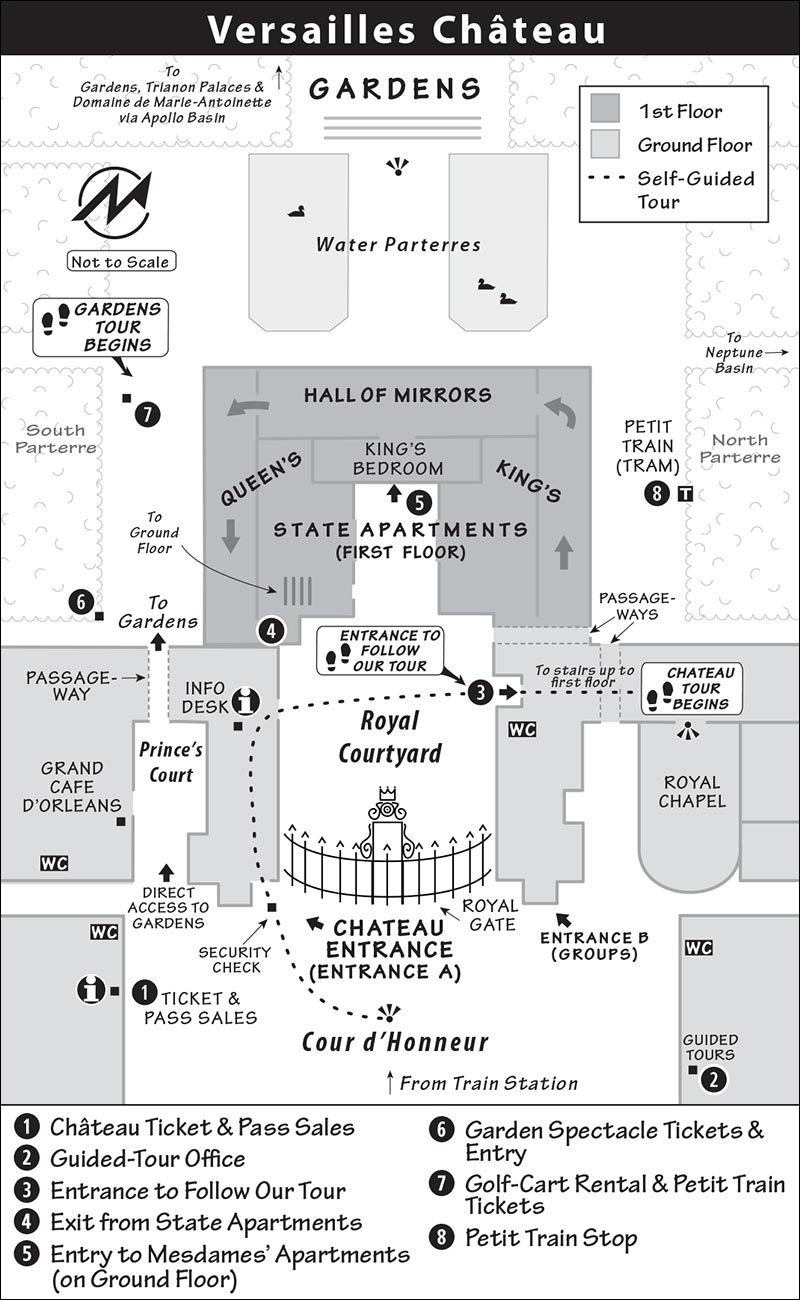
• Stand in the huge courtyard and face the palace. The golden Royal Gate in the center of the courtyard—nearly 260 feet long and decorated with 100,000 gold leaves—is a replica of the original. The entrance to the Château is marked Entrance A (where the line usually is). Before entering (or while standing in line), take in the Château and the open-air courtyard on the other side of the golden Royal Gate.
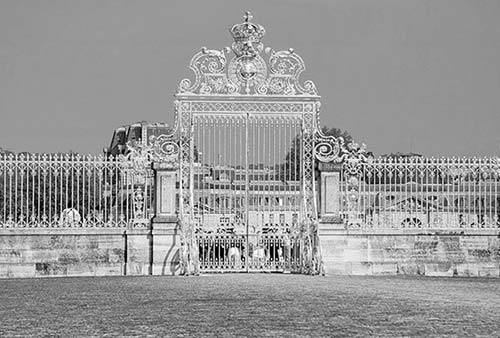
The section of the palace with the clock is the original château, once a small hunting lodge where little Louis XIV spent his happiest boyhood years. Naturally, the Sun King’s private bedroom (the three arched windows beneath the clock) faced the rising sun. The palace and grounds are laid out on an east-west axis.
Once king, Louis XIV expanded the lodge by attaching wings, creating the present U-shape. Later, the long north and south wings were built. The total cost of the project has been estimated at half of France’s entire GNP for one year.
• As you enter the Château, you’ll find an information desk (get a map). Follow the crowds across the courtyard, where you’ll go back inside (the audioguide is available here). Now make your way to the start of our tour.
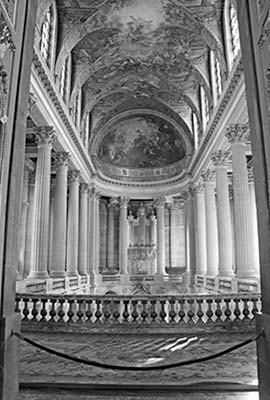
On the way, you’ll pass through a dozen ground-floor rooms. The first offers a glimpse through a doorway at the impressive Royal Chapel, which we’ll see again upstairs. The next rooms have interesting videos of palace history and models of Versailles at different stages of growth. The second floor has skippable paintings of Louis XIV, XV, XVI, and more. Climb the stairs and keep following the flow. You’ll eventually reach a palatial golden-brown room, with a doorway that overlooks the Royal Chapel. Let the tour begin.
Royal Chapel: Dut-dutta-dah! Every morning at 10:00, the organist and musicians struck up the music, these big golden doors opened, and Louis XIV and his family stepped onto the balcony to attend Mass. While Louis looked down on the golden altar, the lowly nobles on the ground floor knelt with their backs to the altar and looked up—worshipping Louis worshipping God. Important religious ceremonies took place here, including the marriage of young Louis XVI to Marie-Antoinette.
• Enter the next room, an even more sumptuous space with a fireplace and a colorful painting on the ceiling.
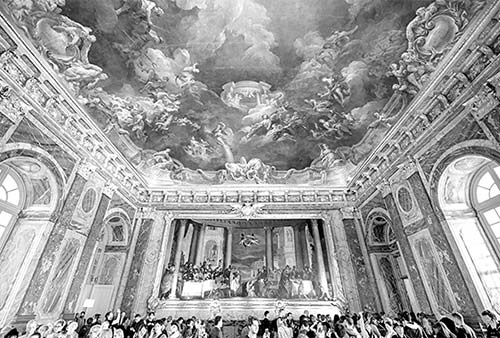
Hercules Drawing Room: Pleasure ruled. The main suppers, balls, and receptions were held in this room. Picture elegant partygoers in fine silks, wigs, rouge, lipstick, and fake moles (and that’s just the men) as they dance to the strains of a string quartet.
On the wall opposite the fireplace is an appropriate painting showing Christ in the middle of a Venetian party. The work—by Paolo Veronese, a gift from the Republic of Venice—was one of Louis XIV’s favorites, so the king had the room decorated around it.
• From here on it’s a one-way tour—getting lost is not allowed.
The King’s Wing: The names of the rooms generally come from the paintings on the ceilings. For instance, the Venus Room was the royal make-out space, where couples would cavort beneath the goddess of love floating on the ceiling. In the Diana Room, Louis and his men played pool on a table that stood in the center, while ladies sat surrounding them on Persian-carpet cushions, and music wafted in from next door. Louis was a good pool player, a sore loser, and a king—thus, he rarely lost.
Also known as the Guard Room (as it was the room for Louis’ Swiss bodyguards), the red Mars Room is decorated with a military flair. On the ceiling is Mars, the Greek god of war, in a chariot pulled by wolves. The Mercury Room may have served as Louis’ official (not actual) bedroom, where the Sun King would ritually rise each morning to warm his subjects. The Apollo Room was the grand throne room. Louis held court from a 10-foot-tall, silver-and-gold canopied throne on a raised platform placed in the center of the room (the platform is there, though not the throne). Even when the king was away, passing courtiers had to bow to the empty throne.
The final room of the King’s Wing is the War Room, depicting Louis’ victories—in marble, gilding, stucco, and paint.
• Next you’ll visit the magnificent...
Hall of Mirrors: No one had ever seen anything like this hall when it was opened. Mirrors were still a great luxury at the time, and the number and size of these monsters was astounding. The hall is nearly 250 feet long. There are 17 arched mirrors, matched by 17 windows letting in that breathtaking view of the Gardens.
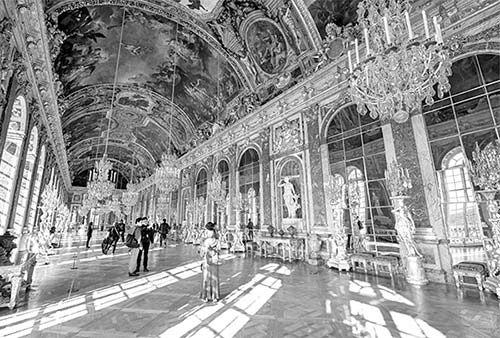
Imagine this place lit by the flames of thousands of candles, filled with ambassadors, nobles, and guests dressed in silks and powdered wigs. At the far end of the room sits the king, on the canopied throne moved in temporarily from the Apollo Room. Servants glide by with silver trays of hors d’oeuvres, and an orchestra fuels the festivities. The mirrors reflect an age when beautiful people loved to look at themselves.
In another age altogether, Germany and the Allies signed the Treaty of Versailles, ending World War I (and, some say, starting World War II) right here, in the Hall of Mirrors.
• Backtrack a few stops to find the door that leads into the heart of the palace, to the...
King’s Bedroom and Council Rooms: Louis XIV’s bedroom is elaborately decorated, and the decor changed with the season. Find an uncovered window and notice how this small room is at the exact center of the immense horseshoe-shaped building, overlooking the main courtyard and—naturally—facing the rising sun in the east. It symbolized the exact center of power in France.
• Return to the Hall of Mirrors, continue to the end, and enter the...
Queen’s Wing: The King’s Wing was mostly ceremonial and used as a series of reception rooms; the Queen’s Wing is more intimate.
The Queen’s Bedchamber was where the queen rendezvoused with her husband. Two queens died here, and this is where 19 princes were born.
Louis XIV made a point of sleeping with the queen as often as possible, regardless of whose tiara he tickled earlier in the evening. This room looks just like it did in the days of the last queen, Marie-Antoinette, who substantially redecorated the entire wing. That’s her bust over the fireplace, and the double eagle of her native Austria in two of the corners. The big mahogany chest to the left of the bed held her jewels.
After several more rooms, you’ll end up in the Queen’s Guard Room, where Louis XVI and Marie-Antoinette surrendered to the Revolution, followed by Napoleon’s Coronation Room. In the huge canvas, we see Napoleon crowning himself emperor of a new, revived “Roman” Empire. (The original by Jacques-Louis David now hangs in the Louvre; this is a later but lesser-quality copy.)
• This ends our tour of the Château. From here, head down the stairs and follow signs to the exit, skipping the long gallery of famous French battles.
The Gardens
Louis XIV was a divine-right ruler. One way he proved it was by controlling nature like a god. These lavish grounds—elaborately planned, pruned, and decorated—showed everyone that Louis was in total command. Louis loved his gardens and, until his last days, presided over their care. He personally led VIPs through them and threw his biggest parties here. With their Greco-Roman themes and incomparable beauty, the Gardens further illustrated his immense power.
The Gardens are vast. For some, a stroll through the landscaped shrubs around the Château and quick view down the Royal Drive is plenty. But it’s worth the 10-minute walk down the Royal Drive to the Apollo Basin and back (even if you don’t continue farther to the Trianon/Domaine). To trace the route of this tour, see the “Versailles” map earlier in this chapter.
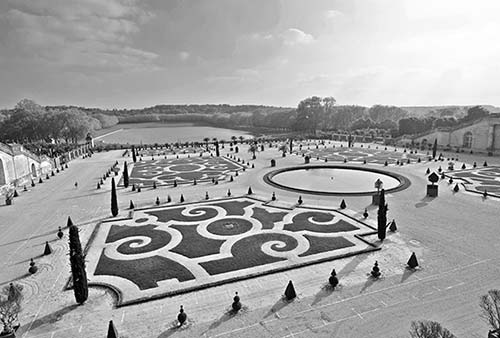
As you walk, consider that a thousand orange trees were once stored beneath your feet in greenhouses. On sunny days, they were wheeled out in their silver planters and scattered around the grounds. The warmth from the Sun King was so great that he could even grow orange trees in chilly France.
With the palace behind you, it seems as if the grounds stretch out forever. Versailles was laid out along an eight-mile axis that included the grounds, the palace, and the town of Versailles itself, one of the first instances of urban planning since Roman times and a model for future capitals, such as Washington, DC, and Brasilia.
A promenade leads from the palace to the Grand Canal, where France’s royalty floated up and down in imported Venetian gondolas.
Trianon Palaces and Domaine de Marie-Antoinette
Versailles began as an escape from the pressures of kingship. But in a short time, the Château became as busy as Paris ever was. Louis XIV needed an escape from his escape, so he built a smaller palace out in the boonies. Later, his successors retreated still farther from the Château and French political life, ignoring the real world that was crumbling all around them. They expanded the Trianon area, building a fantasy world of palaces, ponds, pavilions, and pleasure gardens—the enclosure called Marie-Antoinette’s Domaine.
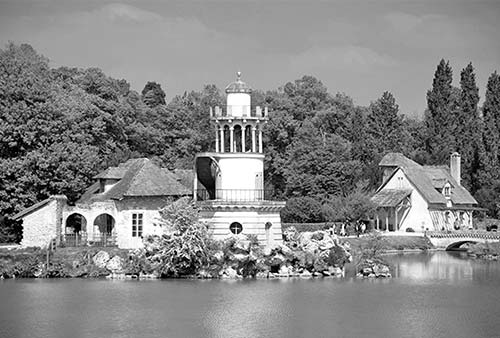
Grand Trianon: Delicate, pink, and set amid gardens, the Grand Trianon was the perfect summer getaway. This was the king’s private residence away from the main palace. Louis XIV usually spent a couple of nights a week here (more in the summer) to escape the sniping politics, strict etiquette, and 24/7 scrutiny of official court life.
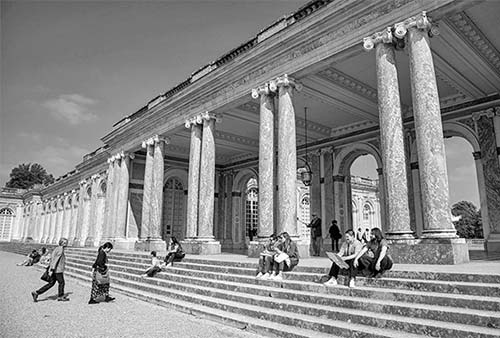
Louis XIV built the palace (1670-1688) near the tiny peasant village of Trianon (hence the name) and faced it with blue-and-white ceramic tiles. When those began disintegrating almost immediately, the palace was renovated with pink marble. It’s a one-story structure of two wings connected by a colonnade, with gardens in back.
• To enter the Grand Trianon, you must first pass through its security checkpoint. Pick up the free palace brochure and follow the simple one-way route through the rooms.
The rooms are a complex overlay of furnishings from many different kings, dauphins, and nobles who lived here over the centuries. Louis XIV alone had three different bedrooms. Concentrate on the illustrious time of Louis XIV (1688-1715) and Napoleon Bonaparte (1810-1814). Consult your map to find the Mirrors Salon, the Bedroom of the Empress, the Emperor’s Family Drawing Room, and the Malachite Room (Napoleon’s living room).
Domaine de Marie-Antoinette: Near the Grand Trianon are the French Pavilion (small cream-colored building where Marie-Antoinette spent summer evenings with family and a few friends), Marie-Antoinette’s theater, and the octagonal Belvedere Palace.
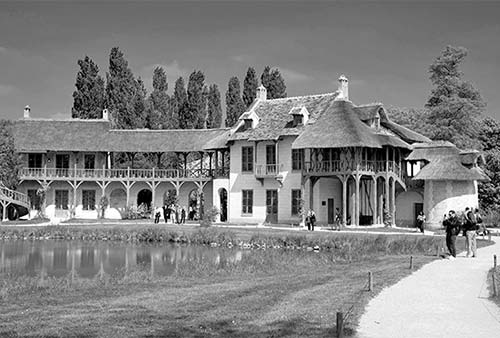
The Hamlet is 10 minutes past the Belvedere Palace. Marie-Antoinette longed for the simple life of a peasant—not the hard labor of real peasants, who sweated and starved around her, but the fairy-tale world of simple country pleasures. She built this complex of 12 thatched-roof buildings fronting a lake as her own private “Normand” village.
The main building is the Queen’s House—actually two buildings connected by a wooden skywalk. It’s the only one without a thatched roof. Like any typical peasant farmhouse, it had a billiard room, a library, an elegant dining hall, and two living rooms.
After touring the Hamlet, head back toward the Petit Trianon. Along the way (in about five minutes), you’ll see the white dome of the Temple of Love.
The gray, cubical Petit Trianon from the 1760s is a masterpiece of Neoclassical architecture, built by the same architect (Ange-Jacques Gabriel) who created the Opera House in the main palace. It has four distinct facades, each a perfect and harmonious combination of Greek-style columns, windows, and railings.
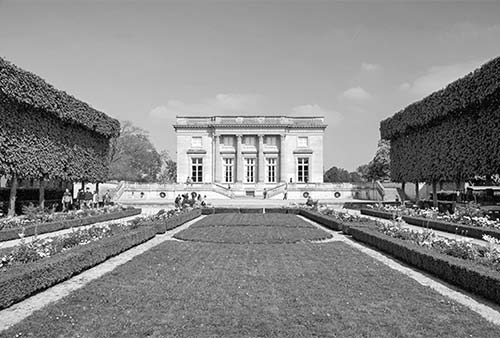
Louis XV built the Petit Trianon as a place to rendezvous with his mistress Madame de Pompadour. He later gave it to his next mistress, Countess du Barry. After the crown passed to Louis XVI, it became the principal residence of Marie-Antoinette, who was uncomfortable with the court intrigue in the big Château. As you tour the Petit Trianon, you’ll see portraits and historical traces of this intriguing cast of characters.
Marie-Antoinette made the Petit Trianon her home base. On the lawn outside, she installed a carousel. Despite her bad reputation with the public, Marie-Antoinette was a sweet girl from Vienna who never quite fit in with the fast, sophisticated crowd at Versailles. At the Petit Trianon, she could get away and re-create the charming home life that she remembered from her childhood. Here she played, while in the cafés of faraway Paris, revolutionaries plotted the end of the ancien régime.
Chartres
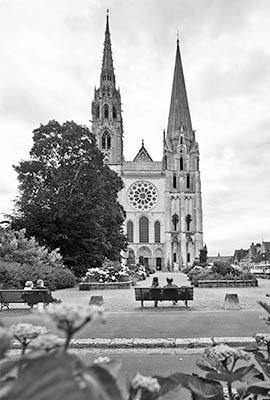
Chartres, about 50 miles southwest of Paris, gives travelers a pleasant break in a lively, midsize town with a thriving, pedestrian-friendly old center. But the big reason to come to Chartres (shar-truh) is to see its famous cathedral—arguably Europe’s best example of pure Gothic. And with the interior of Paris’ Notre-Dame Cathedral off-limits, the cathedral at Chartres is your best chance to experience a glorious Gothic church as a day trip from Paris.
Chartres’ old church burned to the ground on June 10, 1194. Some of the children who watched its destruction were actually around to help rebuild the cathedral and attend its dedication Mass in 1260. That’s astonishing, considering that other Gothic cathedrals such as Notre-Dame took literally centuries to build. Having been built so quickly, the cathedral has a unity of architecture, statuary, and stained glass that captures the spirit of the Age of Faith like no other church.
PLANNING YOUR TIME
Chartres is an easy day trip from Paris (even if you leave Paris in the afternoon and return later in the evening). But Chartres also makes a worthwhile overnight stop; hotels and restaurants are a steal compared to Paris, and there’s the dazzling light show—Chartres en Lumières—when dozens of Chartres’ most historic buildings are colorfully illuminated (early April-Dec). Chartres’ historic center is quiet Sunday and Monday, when most shops are closed.
Chartres is a one-hour ride from Paris’ Gare Montparnasse (14/day, about €18 one-way; see the “Paris Connections” section of the previous chapter for Gare Montparnasse details). Jot down return times to Paris before you exit the Chartres train station (last train generally departs Chartres around 21:00; verify for your day of travel).
Upon arrival in Chartres, head for the cathedral. Allow an hour to savor the church on your own as you follow my self-guided tour. Try to make the cathedral tour at noon, led by Anne-Marie Woods (details later). Take another hour or two to wander the appealing old city. On Saturday a small outdoor market sets up a few short blocks from the cathedral on Place Billard. On Wednesday mornings, there’s a market south of Place des Epars.
Orientation to Chartres
Tourist Information: The TI is in the historic Maison du Saumon building (Mon-Sat 10:00-13:00 & 14:00-18:00, Sun 10:00-17:00, Oct-March closed Sun-Mon, April closed Mon; 8 Rue de la Poissonnerie, +33 2 37 18 26 26, www.chartres-tourisme.com). It offers specifics on cathedral tours. The TI has a small map that shows the floodlit Chartres en Lumières sites, and information on the petit train you can take to see them all (ask at the TI for details). An additional smaller TI opens in high season near the cathedral, on the right as you face it. They sell cathedral tour tickets, and have pay WCs and a bag check—maximum size same as airplane carry-ons (May-Sept daily 10:00-18:00).
Arrival in Chartres: Exiting Chartres’ train station, you’ll see the spires of the cathedral dominating the town. It’s a 10-minute walk up Avenue Jehan de Beauce to the cathedral. The free Filibus minibus runs to near the cathedral (line: Relais des Portes, 3/hour, Mon-Sat 7:00-23:00, no service Sun), or you can take a taxi for about €7.
If arriving by car, you’ll have fine views of the cathedral and city as you approach from the A-11 autoroute. Pay underground parking is on Place des Epars and Place Châtelet, both a short walk from the cathedral.
Helpful Hints: If you need to call a taxi, try +33 2 37 36 00 00.
Eating: Dining out in Chartres is a good deal—particularly if you’ve come from Paris. Troll the places basking in cathedral views, and if it’s warm, find a terrace table. If you’re here for the evening, linger cathedral-side with a post-dinner hot or cold drink.
Sights in Chartres
CHARTRES CATHEDRAL
The church, worth ▲▲▲, is (at least) the fourth one on this spot dedicated to Mary, the mother of Jesus, who has been venerated here for some 1,700 years. There’s even speculation that the pagan Romans dedicated a temple here to a mother-goddess. In earliest times, Mary was honored next to a natural spring of healing waters (not visible today).
In 876, the church acquired the torn veil (or birthing gown) supposedly worn by Mary when she gave birth to Jesus. The 2,000-year-old veil (now on display) became the focus of worship at the church. By the 11th century, the cult of saints was strong. And Mary, considered the “Queen of All Saints,” was hugely popular. God was enigmatic and scary, but Mary was maternal and accessible, providing a handy go-between for Christians and their Creator. Chartres, a small town of 10,000 with a prized relic, found itself in the big time on the pilgrim circuit.
When the fire of 1194 incinerated the old church, the veil was feared lost. Lo and behold, several days later, townspeople found it miraculously unharmed in the crypt (beneath today’s choir). Whether the veil’s survival was a miracle or a marketing ploy, the people of Chartres were so stoked, they worked like madmen to erect this grand cathedral in which to display it. Thinkers and scholars gathered here, making the small town with its big-city church a leading center of learning in the Middle Ages (until the focus shifted to Paris’ university).
By the way, the church is officially called the Cathédrale Notre-Dame de Chartres. Many travelers think that “Notre-Dame” is in Paris. That’s true. But more than a hundred churches dedicated to Mary—“Notre-Dames”—are scattered around France, and Chartres Cathedral is one of them.
Cost and Hours: Free, daily 8:30-19:30, July-Aug until 22:00 on Tue, Fri, and Sun. Mass usually Mon-Sat at 11:45 (in crypt), daily at 18:15, Sun also at 9:00 (Gregorian) and 11:00. Confirm times by phone or online, +33 2 37 21 59 08, www.cathedrale-chartres.org (select “Cathedral,” then “Celebrations,” then “Masses”).
Tours: Malcolm Miller, a beloved English scholar who moved here about 60 years ago, dedicated his life to studying this cathedral and sharing its wonder. While he is now retired, his very capable American understudy, Anne-Marie Woods, leads 1.25-hour tours, worthwhile even if you’ve taken my self-guided tour. No reservation is needed, but you can book the tour at the TIs or online on Chartres-Tourisme.com (€18, cash only, €12 for students, includes headphones, Easter-mid-Oct Tue-Sat at 12:00; no tours on religious holidays, +33 2 37 21 75 02, annemariechartres@gmail.com). Tours begin just inside the church at the Visites de la Cathédrale sign. Consult this sign for changes or cancellations.
You can rent a videoguide to the right as you enter the cathedral, a good way to get a closer look at the window details (€10, 70 minutes). Binoculars are a big help for studying the cathedral art. Also, consider Malcolm Miller’s guidebook, which provides a detailed look at Chartres’ windows, sculpture, and history (sold at cathedral).
Rooftop Climb: The “Upper Parts” guided tour (in French only) climbs 200 steps to the rooftop. Stops along the way include a view of the graceful flying buttresses, a walk along the copper roof with an expansive panorama of the town, and a look at the church’s 130-yard-long cast-iron frame, which replaced the wooden one that burned in an 1836 fire (€6, 4-5/day Mon-Sat, 2/Sun; book ahead online or buy ticket at cathedral; +33 2 37 21 22 07, https://tickets.monuments-nationaux.fr).
Crypt: Beneath the cathedral are extensive remnants of earlier churches, a modern copy of the old wooden Mary-and-baby statue, an amazing 2,000-year-old well, and frescoes from the 12th and 13th centuries.
The only way to see the crypt is on a tour. There’s a 45-minute tour in French with an English handout (€9, daily at 14:00, book at cathedral gift shop, +33 2 37 21 75 02), and Anne-Marie Woods’ tour (see above) may include the crypt.
Restoration: A multiyear restoration is underway, but you should see few signs of it when you visit.
Self-Guided Tour: Historian Malcolm Miller calls Chartres a picture book of the entire Christian story, told through its statues, stained glass, and architecture. In this “Book of Chartres,” the text is the sculpture and windows, and its binding is the architecture. The complete narrative can be read—from Creation to Christ’s birth (north side of church), from Christ and his followers up to the present (south entrance), and then to the end of time, when Christ returns as judge (west entrance). The remarkable cohesiveness of the text and the unity of the architecture are due to the fact that nearly the entire church was rebuilt in fifty or so years (a blink of an eye for cathedral building). The cathedral contains the best and most intact library of medieval religious iconography in existence. Most of the windows date from the early 13th century.
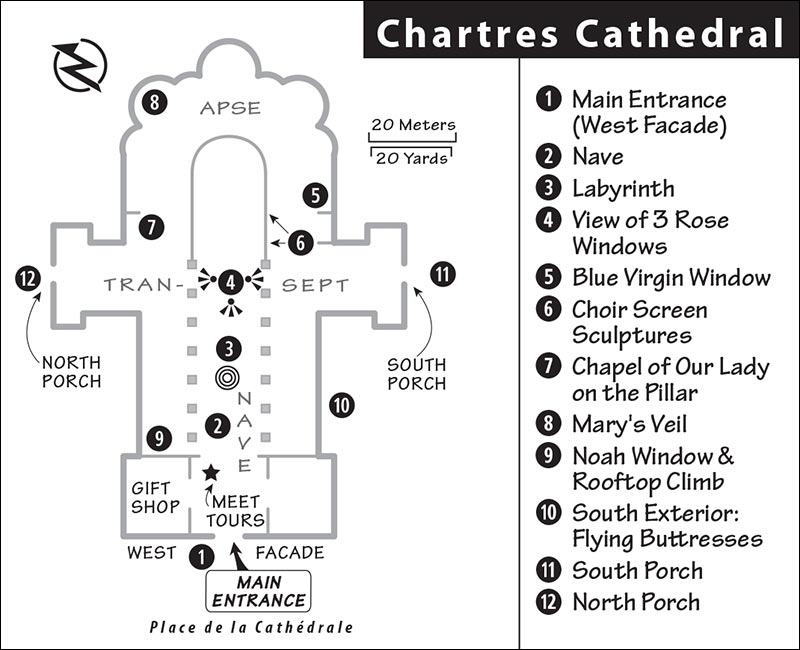
• Start outside, taking in the...
1 Main Entrance (West Facade): Chartres’ soaring (if mismatched) steeples announce to pilgrims that they’ve arrived. Compare the towers. The right (south) tower, with a Romanesque stone steeple, survived the fire, but the left (north) tower lost its wooden steeple. In the 1500s, it was topped with the flamboyant Gothic steeple we see today.
• Enter the church (from a side entrance if the main one is closed) and wait for your pupils to adjust to the dimmer light.
2 Nave: The place is huge—the nave is 427 feet long, 20 feet wide, and 120 feet high. Try to picture the church in the Middle Ages—painted in greens, browns, and golds (like colorful St. Aignan Church in the old town). It was packed with pilgrims, and was a rough cross between a hostel, a soup kitchen, and a flea market.
Taking it all in from the nave, notice that, as was typical in medieval churches, the windows on the darker north side feature Old Testament themes—awaiting the light of Christ’s arrival. And the windows on the brighter south side are New Testament.
• On the floor, midway up the nave, find the...
3 Labyrinth: The broad, round labyrinth inlaid in black marble on the floor is a spiritual journey. Labyrinths like this were common in medieval churches. Pilgrims enter from the west rim, by foot or on their knees, and wind around, meditating, on a metaphorical journey to Jerusalem. About 900 feet later, they hope to meet God in the middle.
• Walk up the nave to where the transept crosses. As you face the altar and gleaming choir, north is to the left.
4 Rose Windows: The three big, round “rose” (circular) windows over the north, south, and west entrances receive sunlight at different times of day. All three are predominantly blue and red, but each has different “petals,” and each tells a different part of the Christian story in a kaleidoscope of fragmented images.
The brilliantly restored north rose window charts history from the distant past up to the birth of Jesus. The south rose window, with a similar overall design, tells how the Old Testament prophecies were fulfilled. Christ sits in the center (dressed in blue, with a red background), setting in motion radiating rings of angels, beasts, and instrument-playing apocalyptic elders who labor to bring history to its close. In the center of the west rose window, a dark Christ rings in history’s final Day of Judgment. Around him, winged angels blow their trumpets and the dead rise, face judgment, and are sent to hell or raised to eternal bliss.
• Walk around the altar to the right (south) side and find the window with a big, blue Mary (second one from the right).
5 Blue Virgin Window: Mary, dressed in blue on a rich red background, cradles Jesus, while the dove of the Holy Spirit descends on her. This very old window (mid-12th century) was the central window behind the altar of the church that burned in 1194. It survived and was reinserted into this frame in the new church around 1230. Mary’s glowing dress is an example of the famed “Chartres blue,” a sumptuous color made by mixing cobalt oxide into the glass (before cheaper materials were introduced).
6 Choir Screen: The choir (enclosed area around the altar where church officials sat) is the heart (coeur) of the church. A stone screen rings it with 41 statue groups illustrating Mary’s life.
The plain windows surrounding the choir date from the 1770s, when the dark mystery of medieval stained glass was replaced by the open light of the French Enlightenment.
• Do an about-face and find the chapel with Mary on a pillar.
7 Chapel of Our Lady on the Pillar: A 16th-century statue of Mary and baby—draped in cloth, crowned and sceptered—sits on a 13th-century column in a wonderful carved-wood alcove. This is today’s pilgrimage center, built to keep visitors from clogging up the altar area.
• Double back a bit around the ambulatory, heading toward the back of the church. In the next chapel you encounter (Chapel of the Sacred Heart of Mary), you’ll find a gold frame holding a fragment of Mary’s venerated veil. These days it’s kept—for its safety and preservation—out of the light and behind bulletproof glass.
8 Mary’s Veil: This veil (or tunic) was supposedly worn by Mary when she gave birth to Jesus. In the frenzy surrounding the fire of 1194, the veil mysteriously disappeared, only to reappear three days later (recalling the Resurrection). This was interpreted by church officials and the townsfolk as a sign from Mary that she wanted a new church, and thus the building began.
• Return to the west end and find the last window on the right (near the tower entrance).
9 Noah Window and Rooftop Climb: Read Chartres’ windows in the medieval style: from bottom to top. In the bottom diamond, God tells Noah he’ll destroy the earth. Next, Noah hefts an ax to build an ark, while his son hauls wood (diamond #2). Two by two, he loads horses (cloverleaf, above left), purple elephants (cloverleaf, right), and other animals. The psychedelic ark sets sail (diamond #3). Waves cover the earth and drown the wicked (two cloverleafs). The ark survives (diamond #4), and Noah releases a dove. Finally, up near the top (diamond #7), a rainbow (symbolizing God’s promise never to bring another flood) arches overhead, God drapes himself over it, and Noah and his family give thanks.
To ascend from here to the church’s upper reaches, you’ll need to join a tour (see “Rooftop Climb,” earlier).
• Next, exit the church through the main entrance, or to view its south side, use the door in the south transept.
10 South Exterior—Flying Buttresses: Six flying buttresses (the arches that stick out from the upper walls) push against six pillars lining the nave inside, helping to hold up the heavy stone ceiling and sloped, lead-over-iron-and-wood roof. The result is a tall cathedral held up by slender pillars buttressed from the outside, allowing the walls to be opened up for stained glass.
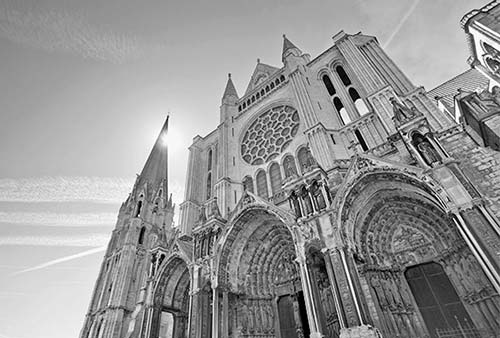
11 South Porch: The three doorways of the south entrance show the world from Christ’s time to the present, as Christianity triumphs over persecution. On the center door, Jesus holds a book and raises his arm in blessing. He’s a simple, itinerant, bareheaded, barefoot rabbi, but underneath his feet, he tramples symbols of evil: the dragon and lion. Christ is surrounded by his apostles, who spread the good news to a hostile world.
The final triumph comes above the door in the Last Judgment. Christ sits in judgment, raising his hands, while Mary and John beg him to take it easy on poor humankind. Beneath Christ the souls are judged—the righteous on our left, and the wicked on our right, who are thrown into the fiery jaws of hell.
• Circle around to the north side (go around the front of the church, or if the park is open, around the back).
12 North Porch: In the “Book of Chartres,” the north porch is chapter one, from the Creation up to the coming of Christ. Imagine all this painted and covered with gold leaf in preparation for the dedication ceremonies in 1260, when the Chartres generation could finally stand back and watch as their great-grandchildren, carrying candles, entered the cathedral.
OTHER SIGHTS IN CHARTRES
Chartres Town
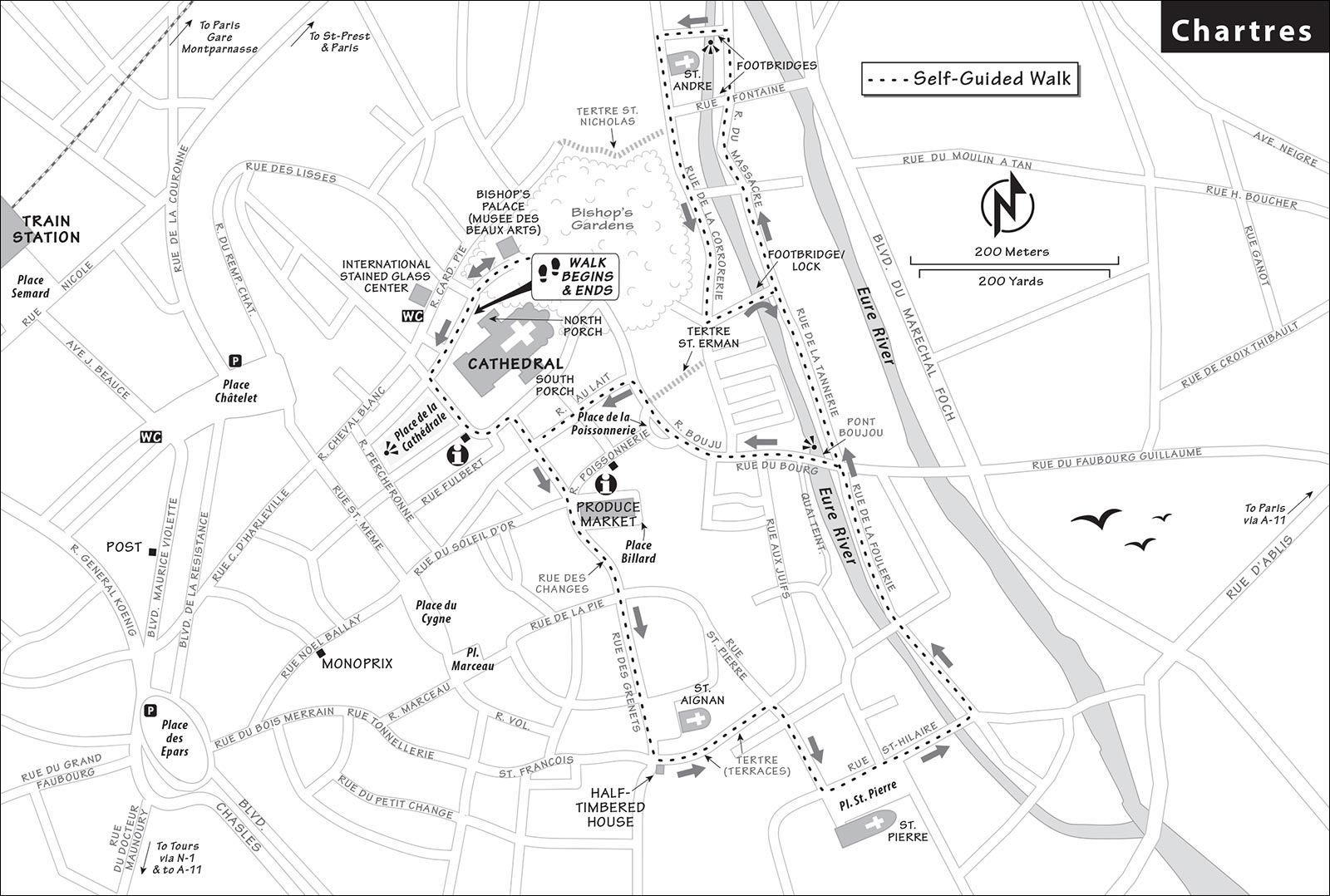
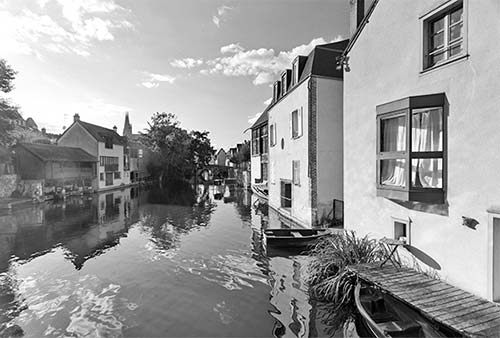
Chartres’ old town bustles with activity (except Sun and Mon) and merits exploration (follow the route shown on the “Chartres” map).
In medieval times, Chartres was actually two towns—the pilgrims’ town around the cathedral, and the industrial town along the river, which was powered by watermills. An easy one-hour loop takes you around the cathedral, through the old pilgrims’ town, down along the once-industrial riverbank, and back up to the cathedral. Along the way you’ll discover a picnic-perfect park behind the cathedral, see the colorful pedestrian zone, and wander quiet alleys and peaceful lanes.
International Stained Glass Center (Centre International du Vitrail)
This low-key center on the north side of the cathedral is worth a visit to learn about the techniques behind this fragile but enduring art. Here you’ll gaze into the eyes of original stained-glass windows from the 12th to the 17th century, gathered from several parish churches around Chartres that were destroyed during the French Revolution. Finish your visit in the 12th-century vaulted wine cellar, which has contemporary windows made using modern techniques. Ask at the entrance about the 10-minute French-only video explaining how stained-glass windows are made (easy to follow for non-French speakers).
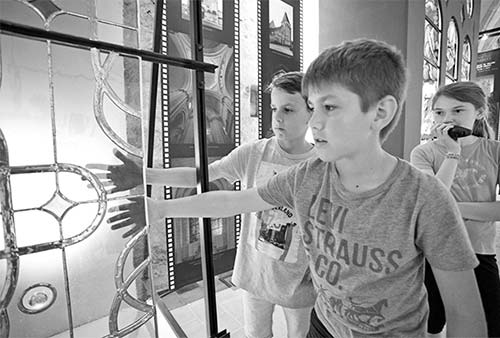
Cost and Hours: €7, Mon-Fri 10:15-12:15 & 13:45-17:45, Sat-Sun afternoon only, 5 Rue du Cardinal Pie, 50 yards from cathedral, +33 2 37 21 65 72, www.centre-vitrail.org.
Giverny
Claude Monet’s gardens at Giverny are like his paintings—brightly colored patches that are messy but balanced. Flowers were his brushstrokes, a bit untamed and slapdash, but part of a carefully composed design. Monet spent his last (and most creative) years cultivating his garden and his art at Giverny (zhee-vayr-nee), the spiritual home of Impressionism. Visiting the Marmottan and/or the Orangerie museums in Paris before your visit here heightens your appreciation of these gardens.
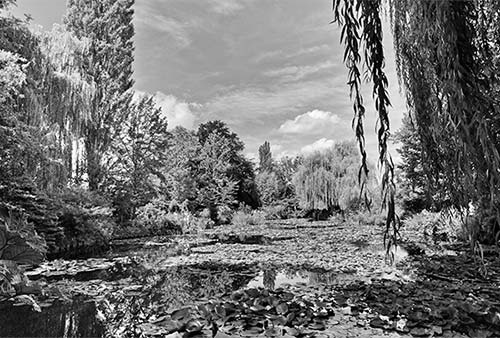
In 1883, middle-aged Claude Monet, his wife Alice, and their eight children from two families settled into this farmhouse, 50 miles northwest of Paris. Monet, already a famous artist and happiest at home, would spend 40 years in Giverny, traveling less with each passing year. He built a pastoral paradise complete with a Japanese garden and a pond full of floating lilies.
GETTING THERE
Minivan and big-bus tours take groups to Giverny. The trip is also doable in a half-day by car or by train (with a connection by bus, tram, taxi, bike, or hike). This website gives a clear explanation of your options: Giverny.org/transpor.
By Tour: Minivan tours will pick you up at your hotel and whisk you painlessly there and back. Paris Webservices tours are good, with informative drivers and ample time to savor the experience (figure $100-130/person for groups of 4 or more; see here). Big-bus tour companies do a Giverny day trip from Paris for around €80 (5 hours, includes entry, get details at your hotel or www.pariscityvision.com).
By Car: From Paris’ périphérique ring road, follow A-13 toward Rouen, exit at Sortie 14 to Vernon, and follow Centre Ville signs, then signs to Giverny. Park right at Monet’s house or at one of several nearby lots. Romantics can take the scenic route from the exit before Vernon and follow tiny D-201 through Bennecourt, then over the river and through the woods.
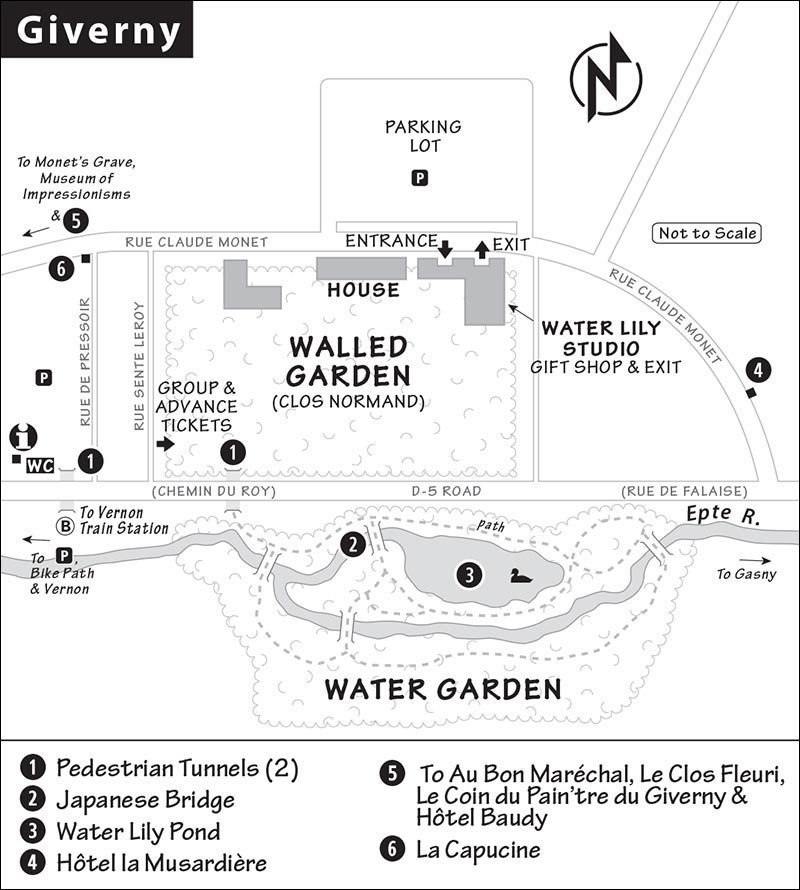
By Train: This option is less expensive than a tour and puts you in charge of your own time (allow about 6 hours round-trip). Take the Rouen-bound train from Paris Gare St. Lazare Station to Vernon, about four miles from Giverny (normally leaves from tracks 20-25, 1 hour, about €26 round-trip). Trains run almost every hour—there’s usually one leaving Gare St. Lazare at about 13:00, which puts you at Giverny at about 14:30, when the gardens are less busy. Before boarding, get return times from Vernon to Paris (from info desk at the station, or check the SNCF website).
Getting from Vernon’s Train Station to Giverny: From the Vernon station to Monet’s garden, you have multiple options. The Vernon-Giverny bus generally departs hourly for the 20-minute run to Giverny (9:15-17:15, €10 round-trip, pay driver). A bus-and-train timetable is available at the bus stops, on the bus, and online (www.giverny.org/transpor)—note return times. To find the bus stop, walk through the station and keep straight, passing to the right of the bus shelter in front of the station, then find the small stop across from the L’Arrivée de Giverny café. Don’t dally—the bus may leave soon after your train arrives.
The bus drops you off near a pedestrian underpass by the gardens (see map; TI and good WCs on north side of underpass). Return buses run from the same stop, generally hourly in the morning and afternoon (at about :25 after the hour, no bus at 14:25, last departure 19:25 weekdays, 18:30 weekends—confirm times locally).
The Petit Train—actually a tram—travels from the Vernon station to Giverny in about 20 minutes (€10 round-trip, hourly departures from the station in the morning and from Giverny in the afternoon—confirm times in advance, https://petittrain-vernon.fr).
Taxis usually wait in front of the station in Vernon (allow €20 one-way for up to 4 people; to order a taxi call +33 6 37 10 90 03, +33 6 08 63 04 85, +33 6 77 49 32 90, or +33 6 50 12 21 22).
Or, rent a bike and take a 35-minute ride from Vernon along a pastoral and well-signed bike path (piste cyclable). Rental Station, across from the station, has good bikes (book ahead in summer, daily 9:00-19:00, pedal bikes €10, e-bikes €20, +33 7 66 44 82 22, https://location-velo-vernon.fr). L’Arrivée de Giverny café also rents bikes (closed Mon, +33 2 32 21 16 01).
Hikers can go on foot to Giverny, following the bike path (4 level miles, about 1.5 hours one-way), and take a bus or taxi back.
Extension to Rouen: Consider combining Giverny with an excursion to nearby Rouen—together they make an efficient and memorable full-day trip from Paris. Note that Rouen’s museums are closed on Tuesdays. From Vernon (the halfway point between Rouen and Paris), it’s about 40 minutes by train to Rouen; the train trip from Rouen back to Paris takes 80 minutes. Plan to arrive at Monet’s garden when it opens (at 9:30) so you can be back to the Vernon train station by 13:00. You’ll be in Rouen by 14:00 and have ample time to see the cathedral and surrounding medieval quarter. If you leave Rouen around 18:00, you’ll pull into Paris about 19:20, having spent a wonderful day sampling rural and urban Normandy. For more on Rouen, see the Normandy chapter.
Orientation to Giverny
Giverny is a tiny village about four miles from the town of Vernon. All of Giverny’s sights and shops string along a traffic-free section of Rue Claude Monet, which runs in front of Monet’s house. The TI is located by the WCs in the parking lot near the road to Vernon (see map, daily April-Sept, closed off-season, 80 Rue Claude Monet, +33 2 32 64 45 01).
Sights in Giverny
▲Monet’s Garden and House
There are two gardens, split by a busy road, plus the house, which displays Monet’s prized collection of Japanese prints. The gardens are always flowering with something; they’re at their most vibrant April through July, though fall is surprisingly colorful as well.
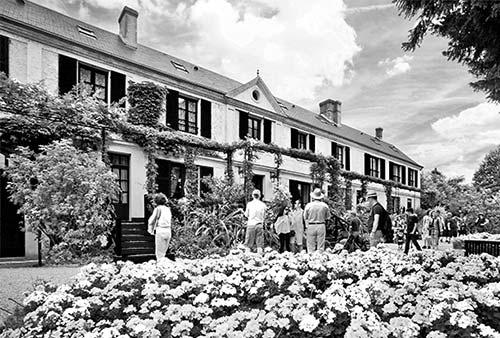
Cost and Hours: €11, not covered by Paris Museum Pass, €21 combo-ticket with nearby Museum of Impressionisms, €25 with Paris’ Marmottan Museum; daily April-Oct 9:30-18:00, closed Nov-late March; +33 2 32 51 90 31, http://fondation-monet.com.
Crowd-Beating Tips: Though lines can be long and tour groups may trample the flowers (worse in the mornings, particularly on Sunday), true fans still find magic in the gardens. Minimize crowds by arriving in the afternoon (the later the better—16:00 is ideal) and staying until closing time. The busiest months are mid-April through June; fall is quieter.
Advance ticket and combo-ticket holders skip the ticket-buying line and use the nifty entrance near where groups enter (see map), a huge advantage in high season. You can buy advance tickets online or at any FNAC store in Paris (www.fnactickets.com). Alternately, buy combo-tickets with the Marmottan Museum in Paris, or Giverny’s Museum of Impressionisms.
Visiting the House and Gardens: There are two parts to the gardens: the Walled Garden (below the house) and the Water Garden (across the road). Most visitors use the main entry and start in the Walled Garden (Clos Normand). Those able to use the group entrance should start with the Water Garden and end with the Walled Garden and house. The house gets easily overrun and claustrophobic, as hallways are tight (expect to wait in line as you work your way through).
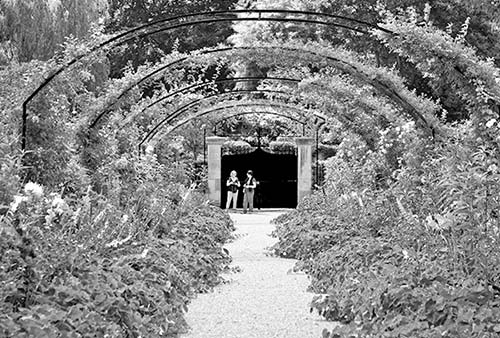
Walled Garden: Smell the pretty scene. Monet cleared this land of pine trees and laid out symmetrical beds, split down the middle by a “grand alley” covered with iron trellises of climbing roses. He did his own landscaping, installing flowerbeds of lilies, irises, and clematis. In his carefree manner, Monet throws together hollyhocks, daisies, and poppies. The color scheme of each flowerbed contributes to the look of the whole garden.
Water Garden: In the southwest corner of the Walled Garden (near the group entrance), you’ll find a pedestrian tunnel that leads under the road to a garden with Monet’s famous pond and lilies. Follow the meandering path to the Japanese bridge, under weeping willows, over the pond filled with water lilies, and past countless scenes that leave artists aching for an easel. Find a bench and stop for a while, then walk to the very end. Monet landscaped like he painted—he built an Impressionist pattern of blocks of color. After he planted the gardens, he painted them, from every angle, at every time of day, in all kinds of weather.
House: End your visit with a wander through Monet’s charming, I-could-retire-here home, with period furnishings, Japanese prints, old photos, and rooms filled with copies of his and other artists’ paintings. The tempting gift shop at the exit is the actual sky-lighted studio where Monet painted his masterpiece water-lily series (displayed at the Orangerie Museum in Paris).
Village of Giverny
The village is a sight in itself, with flowery lanes home to a few souvenir shops, art galleries, and cozy cafés. Cars are not allowed to enter the center of the village.
Museum of Impressionisms (Musée des Impressionnismes)
This bright, modern museum, dedicated to the history of Impressionism and its legacy, houses temporary exhibits of Impressionist art. Check its website for current shows or just drop in. Meander through its colorful, picnic-friendly gardens for more color.
Cost and Hours: €10, €21 combo-ticket with Monet’s Garden and House, free first Sun of month; daily 10:00-18:00, Nov-Dec Thu-Sun only, closed Jan-March, can have weeks-long closures between exhibitions—check website; audioguide-€4; to reach the museum, turn left after leaving Monet’s place and walk 200 yards; +33 2 32 51 94 00, www.mdig.fr.
Claude Monet’s Grave
Monet’s grave is a 15-minute walk from his door. Turn left out of his house and walk down Rue Claude Monet, pass the Museum of Impressionisms and the Hôtel Baudy, and find it in the backyard of the white church Monet attended (Eglise Sainte-Radegonde). Look for flowers, with a cross above. The inscription says: Here lies our beloved Claude Monet, born 14 November 1840, died 5 December 1926; missed by all.
Vernon Town
If you have extra time at Vernon’s train station, take a five-minute walk into town and sample the peaceful village. From the station, pass Café de l’Arrivée on your left, follow the street as it curves left, and keep straight, following the Centre-Ville signs. You’ll find a smattering of half-timbered Norman homes near Hôtel de Ville (remember, you’re in Normandy), several good cafés and shops, and the town’s towering Gothic church.
Sleeping and Eating in Giverny
Sleeping: $$ Hôtel la Musardière,*** just two blocks from Monet’s home, has 10 comfortable rooms, a pleasant garden, and a fine $$ restaurant serving beautifully presented dishes in a modern dining room—or better, on the sun-dappled terrace (hotel and restaurant open Thu-Mon April-Oct, closed Nov-March; 123 Rue Claude Monet, +33 2 32 21 03 18, www.lamusardiere.fr, hotelmusardieregiverny@wanadoo.fr).
$$ Au Bon Maréchal is a central and comfy B&B a few minutes from Monet’s home. Marie-Claire rents four traditional country-French rooms with a large, private garden (cash only, 1 Rue du Colombier, +33 2 32 51 39 70, www.giverny.fr, boscher.marie-claire@orange.fr).
$ Le Clos Fleuri is a family-friendly B&B with two spacious and very comfortable rooms, each with a king-size bed and a private terrace facing the grassy garden. The rooms also share handy cooking facilities. It’s a 15-minute walk from Monet’s place and is run by charming, English-speaking Danielle (with Australian heritage), who serves up a good included breakfast (cash only, 5 Rue de la Dîme, +33 2 32 21 36 51, www.giverny-leclosfleuri.fr, leclosfleuri27@gmail.com).
Eating: You’ll find various snack places just outside the main entrance to Monet’s home. A good budget lunch option is a block away at $ La Capucine’s self-serve restaurant. Eat tasty, cheap soups, salads, and quiches at a table in the warm interior or the welcoming garden (Wed-Sun 12:00-18:00, closed Mon-Tue). A few blocks farther along, Le Coin du Pain’tre du Giverny Boulangerie-Café attracts a local crowd to its charming setting, serving simple but tasty baked goods and a limited menu (daily 8:00-19:00, 73 Rue Claude Monet). Locals say the best lunch in town is at the Museum of Impressionisms (see earlier).
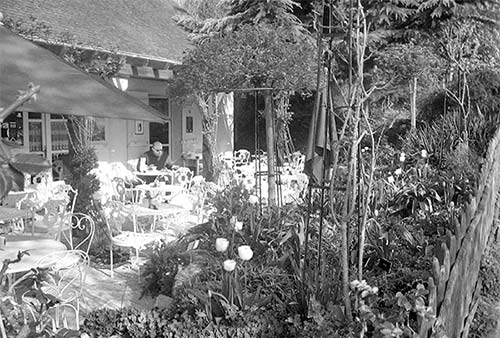
Rose-colored $$ Hôtel Baudy, once a hangout for American Impressionists, offers an appropriately pretty setting for lunch or dinner. The décor looks as though it has not changed since painters hung their brushes here (outdoor tables in front, good-value menus, popular with tour groups at lunch, daily, 5-minute walk past Museum of Impressionisms at 81 Rue Claude Monet, +33 2 32 21 10 03). Don’t miss a stroll through the artsy gardens behind the restaurant.
For finer dining, consider the restaurant at Hôtel la Musardière, listed earlier.