FRANCE
Map: France’s Top Destinations
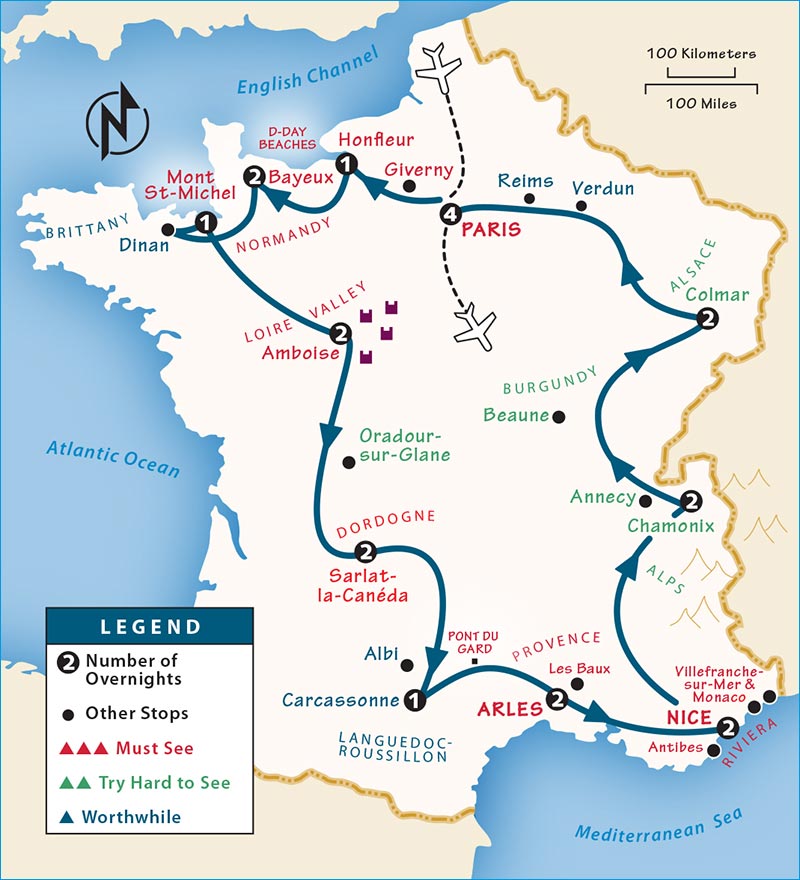
Map: Whirlwind Three-Week Tour of France by Car
Map: Whirlwind Three-Week Tour of France by Train (and Bus)
Bienvenue! You’ve chosen well. With its distinctive regions and renowned cuisine, France is Europe’s most diverse, tasty, and exciting country to explore. It’s a cultural bouillabaisse that surprises travelers with its varied, complex flavors.
A delightful blend of natural and man-made beauty, France offers chandeliered châteaux, forever coastlines, soaring cathedrals, Europe’s highest mountain ranges, and museums showcasing cultural icons of the Western world.
In many ways, France is a yardstick of human achievement. Here, travelers can trace the path of European history, from magnificent prehistoric cave paintings to dazzling Roman ruins. In medieval times, France cultivated Romanesque and Gothic architecture—erecting towering cathedrals and inspiring copycat trends throughout Europe. With revolutionary zeal, French philosophers refined modern thought and politics. In the 16th and 17th centuries, the châteaux of the Loire and the grand palace of Versailles announced France’s emergence as the first European superpower and first modern government. Later France gave birth to Impressionism and with that, the foundations of modern art. And the country remains at the forefront of technology, architecture, fashion, and cuisine.
France is a big country by European standards—and would be one of the biggest states if it ever joined the US (unlikely). It’s a bit smaller than Texas, but has 66 million people (Texas has 26 million). This country features three mountain ranges, two very different coastlines, several cosmopolitan cities, and countless sleepy villages.
There are two Frances: Paris...and the rest of the country. France’s government and cultural heart have always been centered in Paris, resulting in an overwhelming concentration of world-class museums, cutting-edge architecture, historic monuments, trendy energy, and famous cafés. Travelers can spend weeks in France and never leave Paris. Many do.
The other France venerates land, tradition, and a slower pace of life. Romantic hill towns and castles, meandering river valleys, and oceans of vineyards carpet this country’s landscape. Wheat farms flourish in the north, dairy farms in the west, fruit orchards and lavender fields in the south...and vineyards and sunflowers just about everywhere. Even city dwellers reverethe soil (le terroir) that brings the flavor to their foods and wines.
France has more geographical diversity than any other nation in Europe. Paris and the land around it (called Ile de France) is the modern, bustling center. To the west are the dramatic D-Day beaches and thatch-roofed homes of Normandy; to the southwest lie the river valleys of the Loire and Dordogne, with elegant châteaux, medieval castles, and riverfront villages. In the far southwest, the Spanish-tinged Languedoc-Roussillon is home to colorful Mediterranean villages and the overlooked Pyrenees. Closer to Italy, windswept Provence nurtures Roman ruins and rustic charm, while the Riviera celebrates sunny beaches and modern art. And to the east are Europe’s highest snowcapped Alps, the vineyards and canals of Burgundy, and the Germanic culture of Alsace.
French cuisine is sightseeing for your taste buds. You’re not paying just for the food—a good meal is a three-hour joyride for the senses, as rich as visiting an art gallery and as stimulating as a good massage.
Fine French restaurants may seem intimidating, but many servers speak English and are used to tourists. Here’s an experience I shared with my co-author, Steve Smith, at a fine restaurant in Amboise, in the Loire Valley.
French restaurants open for dinner at about 19:00 and are most crowded at about 20:30—it’s smart to reserve ahead for your splurge meal, which we did the day before. In France, you can order off the menu, which is called la carte and offers more selection, or you can order a multi-course, fixed-price meal, which, confusingly, is called a menu (a great value if you’re hungry). Steve ordered a three-course menu and I ordered off la carte.
Aurore, our waitress, smiled as I ordered escargot (snails) for my first course. Getting a full dozen escargot rather than the typical six snails doubles the joy. Eating six, you’re aware that the supply is limited. Eating twelve, for the first eight it seems like there’s no end to your fun. Add a good white wine and you’ve got a full orchestral accompaniment.
In France, slow service is good service (fast service rushes diners and digestion). After a pleasant pause, my main course arrived: tender beef with beans wrapped in bacon. Slicing through a pack of beans in their quiver of bacon, I let the fat do its dirty deed. A sip of wine, after a bite of beef, was like an incoming tide washing the flavor ashore.
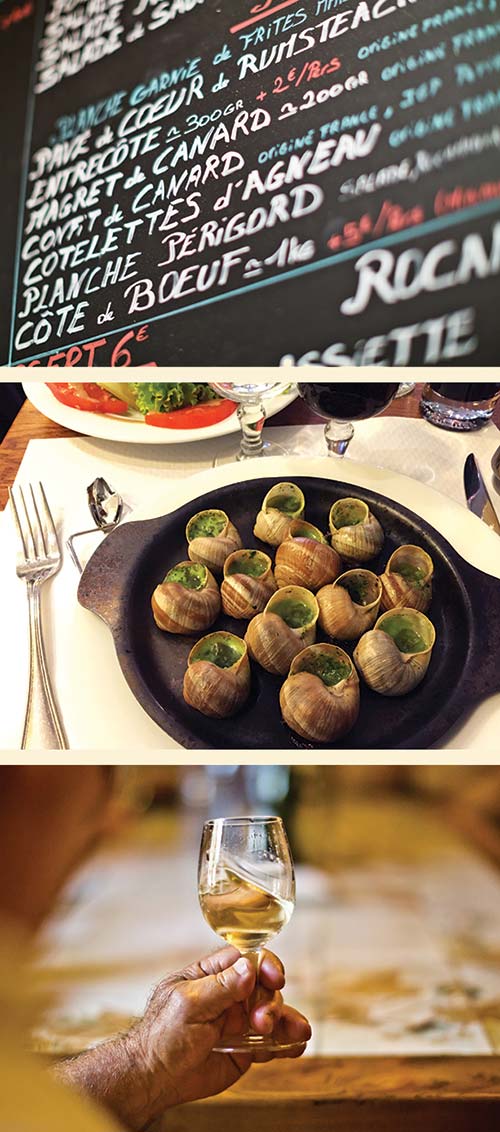
A handwritten menu (a good sign), the perfect number of escargot, and a glass of wine to top it off
My crust of bread, a veteran from the escargot course, was called into action for a swipe of sauce. The French treasure fresh products and fine sauces. If the sauce is the medicine, the bread is the syringe. Thanks to the bread, I enjoyed one last encore of the meat and vegetables I’d just savored.
The next course was a selection of tasty cheeses. (It sounds like a lot of food but portions are smaller in France—what we cram onto one large plate they spread out over many courses.) Our cheese platter was a festival of mold on a rustic board. The vibrant-yet-mellow colors promised an array of tastes that made me want to sing with joy (out of consideration for Steve, I didn’t).
Then came dessert. Mine was a café gourmand, an artfully presented assortment of five small desserts, including cinnamon-baked apple with butterscotch ice cream. That didn’t keep me from reaching over for a snip of Steve’s lemon tart with raspberry sauce.
Even after dessert, Aurore didn’t rush us. Your server won’t bring your bill until you ask for it. If you’re in a hurry, here’s a good strategy: As you finish dessert, your server will ask if you’d like coffee. This gives you the perfect opening to ask for the bill.
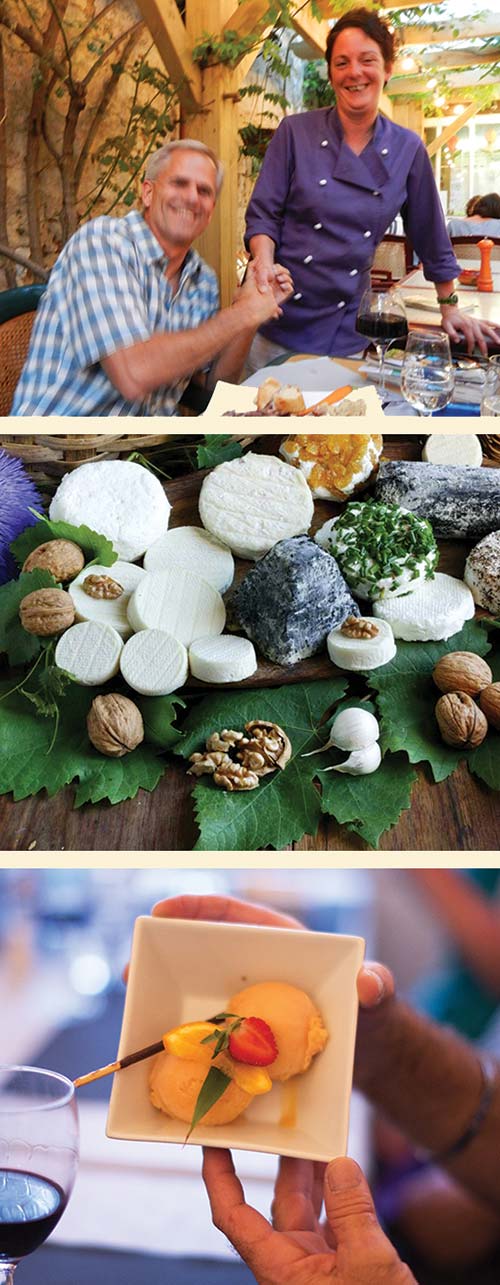
Your server brings you courses that can include your choice of cheeses or desserts.
Even if you’re not a “foodie,” I can’t imagine a richer French sightseeing experience, one that brings together an unforgettable ensemble of local ingredients, culture, pride, and people.
The country is famous for its pâtés, foie gras, escargot, fine sauces, cheese (more than 350 different kinds), and delectable pastries. But the forte of French cuisine lies in its regional variety. You’ll enjoy Swiss-like fondue in the Alps, Italian-style pasta on the Riviera, crêpes in Brittany, Spanish paella in Languedoc-Roussillon, seafood in Normandy, and sausage and sauerkraut in Alsace.
L’art de vivre—the art of living—is not just a cute expression; it’s the foundation for good living in France. With five weeks of paid vacation, the French are obligated to slow down and enjoy life. It’s no accident that the country is home to pastimes like café lounging, bike touring, barge cruising, and ballooning—all benefit from a slower pace. You’ll run headlong into that mindful approach to life at mealtime. The French insist on quality food and conversation. They don’t rush lunch, and an evening’s entertainment is often a meal with friends.
The socially minded French are proud of their cradle-to-grave social security system. On the other hand, French taxes are among the highest in Europe. The country sees more than its share of strikes, demonstrations, and slowdowns as workers try to preserve their hard-earned rights in a competitive global economy. Mainly Catholic, the French are not very devout, and are quick to separate church from state. France also has Europe’s largest Muslim population. The influx of Muslim immigrants and their integration in French society is one of France’s thorniest issues.
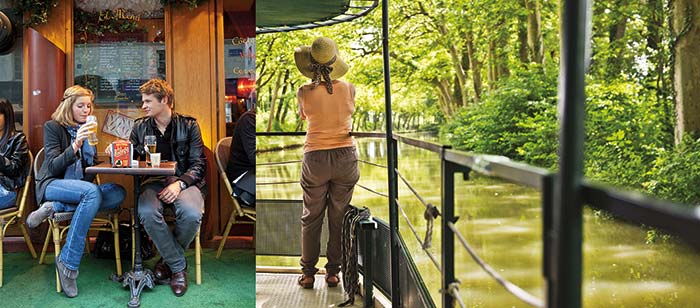
Whether meeting a friend or cruising on a barge, the French cultivate the art of living.
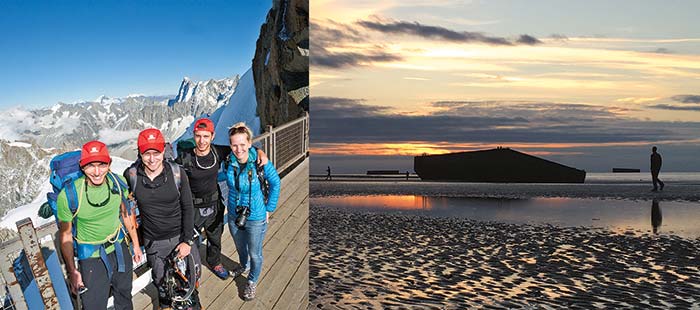
France has Alps to inspire and D-Day beaches to ponder.
French people can come across as moody and complicated, though most will welcome you with a smile. Still, think where they’ve come from: In just a few generations, they’ve seen two debilitating world wars destroy their cities, villages, landscapes, and self-respect. But proud and resilient, they have risen from the ashes of the wars to generate the world’s sixth-largest economy. Wine, agriculture, tourism, telecommunications, pharmaceuticals, cars, and Airbus planes are big moneymakers. Productivity is nothing new to a people who invented the metric system, pasteurization, bullet trains, and the Concorde jet.
Highly cultured yet down to earth, France is fascinating. From the Swiss-like Alps to the molto Italian Riviera, and from the Spanish Pyrenees to das German Alsace, you can visit France and feel like you’ve sampled much of Europe—and never be more than a short stroll from a bon vin rouge.
France’s Top Destinations
Mon Dieu! There’s so much to see in France and so little time. This overview categorizes the country’s top destinations into must-see places (to help first-time travelers plan their trip) and worth-it places (for those with extra time or special interests), listed in book order. I’ve also suggested a minimum number of days to allow per destination.
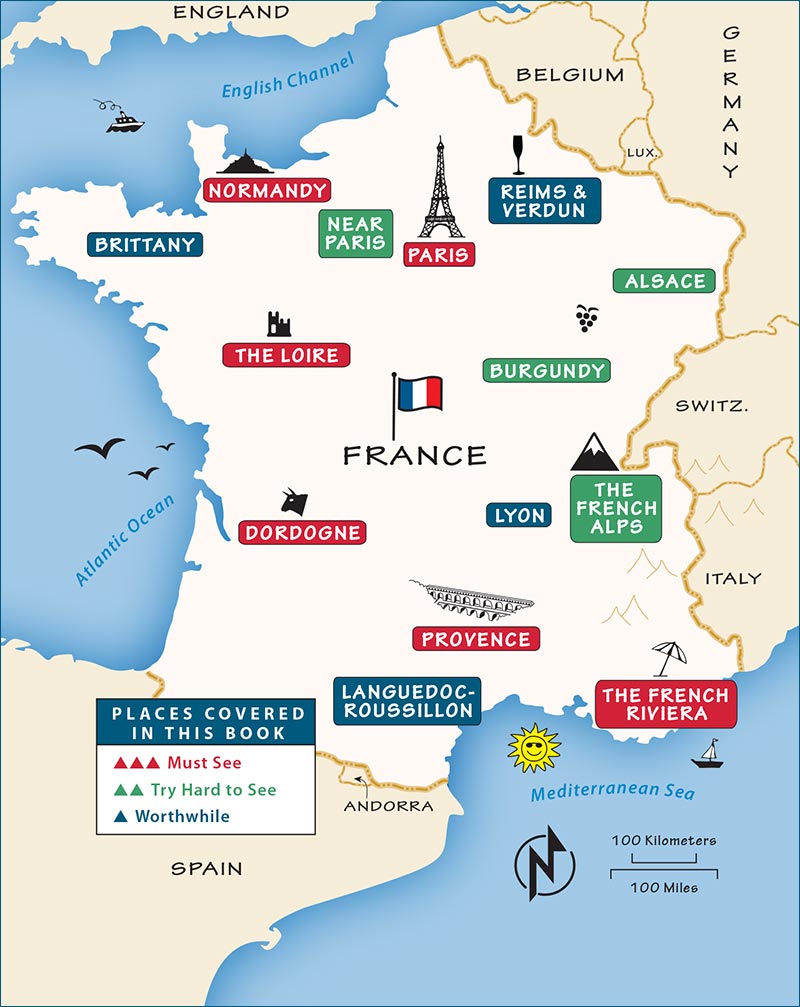
MUST-SEE DESTINATIONS
The magical city of Paris, historic Normandy, the sun-dappled region of Provence, and the breathtaking Riviera coastline offer an excellent sampler of France. With more time, add the river valleys of the Loire (castles) and Dordogne (caves).
▲▲▲Paris (allow 3 days)
The City of Light is not only the capital of France, but also the world capital of art, fashion, food, literature, and ideas, offering historic monuments, grand boulevards, corner cafés, chic boutiques, avant-garde architecture, and top-notch art galleries, including the Louvre (Venus de Milo and Mona Lisa) and the Orsay (Impressionists and more).
▲▲▲Normandy (2-3 days)
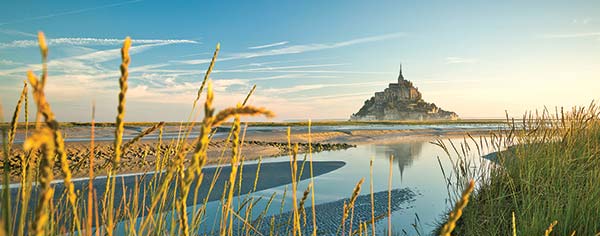
This region offers a pastoral mix of sweeping coastlines, half-timbered towns, and intriguing cities, including bustling Rouen (Gothic architecture and Joan of Arc sites), the cozy port town of Honfleur, and historic Bayeux (with its remarkable tapestry of the Battle of Hastings). Normandy’s D-Day beaches and museums are profoundly moving, while the almost surreal island-abbey of Mont St-Michel seems to float above it all.
▲▲▲The Loire (2 days)
The river valleys of the Loire region host appealing towns (such as Amboise and Chinon) and hundreds of castles and palaces, including Chenonceau (arching across its river), the massive Château de Chambord, Villandry (wonderful gardens), lavishly furnished Cheverny, and many more.
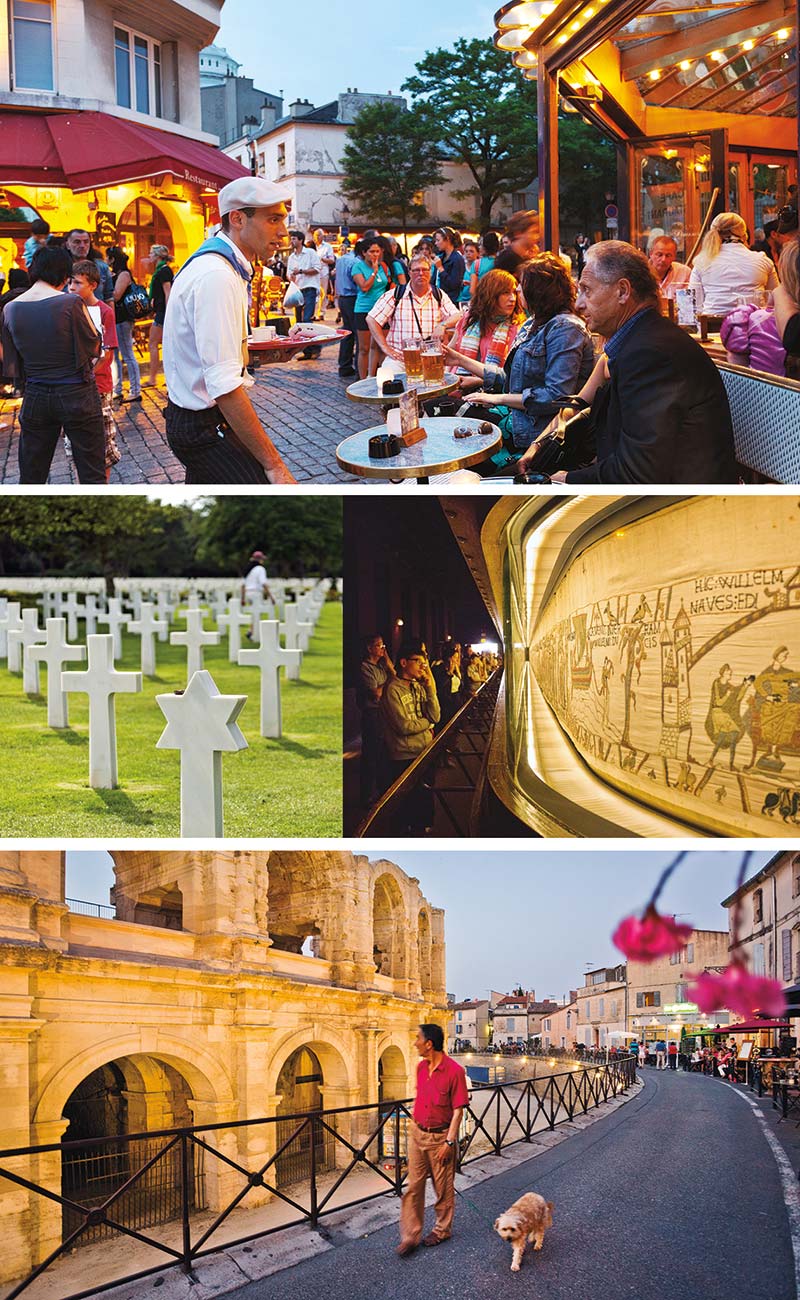
Montmartre café scene in Paris; historic Bayeux tapestry; Roman Arena in Arles; American Ceme-tery and Memorial at Omaha Beach
▲▲▲Dordogne (2-3 days)
Prehistoric caves, rock-sculpted villages, lazy canoe rides past medieval castles, and bustling market towns such as pedestrian-friendly Sarlat-la-Canéda are among this region’s charms. Just east is the spectacular pilgrimage village of Rocamadour, and to the west is St-Emilion, with vineyards and tastings.
▲▲▲Provence (2 days)
This beloved, hilly region is home to the cities of Arles (with Van Gogh sights and the evocative Roman Arena), Avignon (with the famous bridge and Palace of the Popes), and Orange (Roman theater), plus photogenic rock-top villages (such as Les Baux, Roussillon, and Vaison-la-Romaine). Attractions include the simply awe-inspiring Roman aqueduct of Pont du Gard and the inviting wine road of the Côtes du Rhône.
▲▲▲The French Riviera (2 days)
Along the Riviera lies a string of coastal pearls, starring Nice (big city with a lively seafront promenade, Italianesque old town, and art museums), romantic Villefranche-sur-Mer, glitzy Monaco (casino and Prince’s Palace), and yacht-crazy Antibes (silky-sandy beaches and seafront hikes). Intriguing inland villages are Vence, St-Paul-de-Vence, and sky-high Eze-le-Village, with marvelous Mediterranean views.
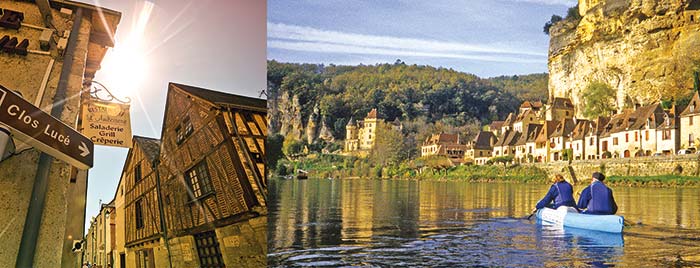
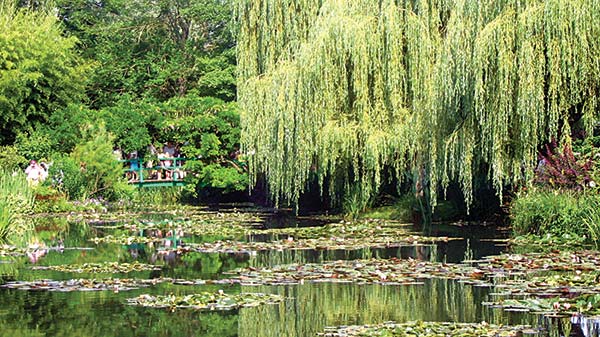
Beautiful Amboise; canoeing on the Dordogne; Giverny’s masterpiece-inspiring gardens (opposite)
WORTH-IT DESTINATIONS
You can weave any of these destinations—rated ▲ or ▲▲—into your itinerary. It’s easy to add some destinations based on proximity (if you’re going to Paris, Versailles is next door), but some out-of-the-way places can merit the journey, depending on your time and interests.
▲▲Near Paris (1 day)
Three very different sights make good day trips from Paris: Europe’s grandest palace at Versailles, the radiant cathedral of Chartres, and Monet’s flowery gardens at Giverny.
▲Brittany (1 day)
Windswept, rugged Brittany has an untouristed interior, gorgeous coast, Celtic ties, and two notable towns—Dinan (with Brittany’s best medieval center) and the bustling beach resort of St-Malo—plus the sea-swept castle of Fort la Latte.
▲Languedoc-Roussillon (1 day)
This sunny region with a Spanish flair boasts the medieval, walled town of Carcassonne (with towers, turrets, and cobblestones) and the lovely Mediterranean village of Collioure. Albi makes a good stop for its fortress-like cathedral and the appealing Toulouse-Lautrec Museum.
▲▲The French Alps (2 days)
These majestic mountains feature the beautiful lakefront city of Annecy, Mont Blanc (the Alps’ highest peak), and the world-famous resort of Chamonix at its base, with lifts to stunning alpine views and hikes galore.
▲▲Burgundy (1-2 days)
An aged blend of vineyards and spirituality, Burgundy is home to the compact town of Beaune, renowned vineyards and wine roads, the well-preserved medieval abbey of Fontenay, the magnificent Romanesque church of Vézelay, and a medieval castle under construction at Guédelon.
▲Lyon (1 day)
This metropolitan city, wedged between Burgundy and Provence, features delicious yet affordable cuisine, a made-for-wandering old town, two Roman theaters, a terrific Gallo-Roman museum, the riveting French Resistance Center, and an impressive fine arts museum.
▲▲Alsace (1-2 days)
The Franco-Germanic region is dotted with adorable and colorful wine villages, half-timbered Colmar with a wonderful pedestrian-only center and world-class art, and the high-powered Euro-capital city of Strasbourg with its sensational cathedral.
▲Reims and Verdun (1 day)
Two very different sights, paired by proximity, are the champagne-soaked city of Reims with its historic cathedral and cellars serving the sparkling brew, and nearby Verdun, the site of horrific WWI fighting, with unforgettable battlefield memorials and museums.
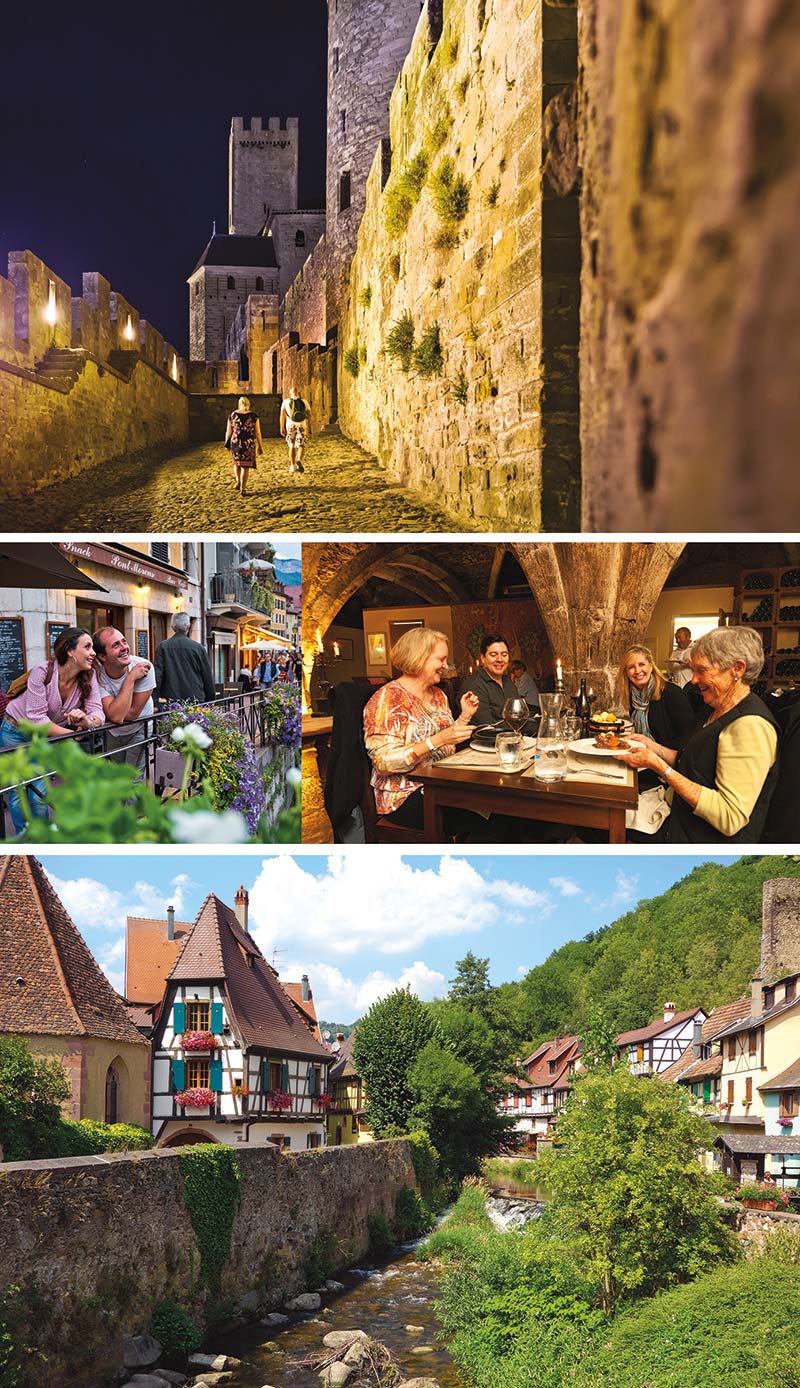
(Clockwise from top) Carcassonne’s castle walls; dining under medieval arches in Beaune; cute wine village along Alsace’s Route du Vin; lovely Annecy
Planning Your Trip
To plan your trip, you’ll need to design your itinerary—choosing where and when to go, how you’ll travel, and how many days to spend at each destination. For general advice on sightseeing, accommodations, restaurants, and more, see the Practicalities chapter.
DESIGNING AN ITINERARY
As you read this book and learn your options...
Choose your top destinations.
The recommended whirlwind trip (see the sidebar on the next page) gives you an idea of how much you can reasonably see in three weeks, but you can adapt it to fit your own interests and time frame.
Nearly every destination in this book can enjoyably fill a week or more of a focused trip, especially Paris, Normandy, the Dordogne, Provence, and the French Riviera. Linking any two or three of these destinations would make a terrific trip.
France has something for everyone. Art lovers and museum-goers linger in Paris. Cyclists pedal between châteaux in the Loire, and canoeists paddle between castles in the Dordogne. Connoisseurs of wine and villages meander along the wine roads of Burgundy, Alsace, and the Côtes du Rhône.
Historians are at home in France. The Dordogne’s prehistoric cave paintings literally rock. For ancient Roman ruins, roam through Provence. Medievalists marvel at the walled town of Carcassonne and the island-abbey of Mont St-Michel. Revolutionaries and monarchists alike appreciate Paris and Versailles. WWII historians make a pilgrimage to Normandy’s D-Day sites, while WWI students ponder Verdun.
Sun worshippers simmer on the Riviera while hikers love to go a-wandering in the Alps. If hill towns and sunny skies appeal, Provence and Languedoc deliver. Germanophiles think Alsace is wunderbar, foodies are fond of Lyon and Burgundy (but aren’t disappointed elsewhere), and photographers and wine lovers want to go everywhere.
Decide when to go.
Spring and fall are best, with generally good weather and fewer crowds, though summer brings festivals, livelier villages, reliable weather, and long hours at sights.
Weekends in May—with its many holidays—can be busy anywhere, but June is generally quiet outside of Paris. In July and August, vacationing Europeans jam the Riviera, the Dordogne, and the Alps. And although many businesses close in August, you’ll hardly notice.
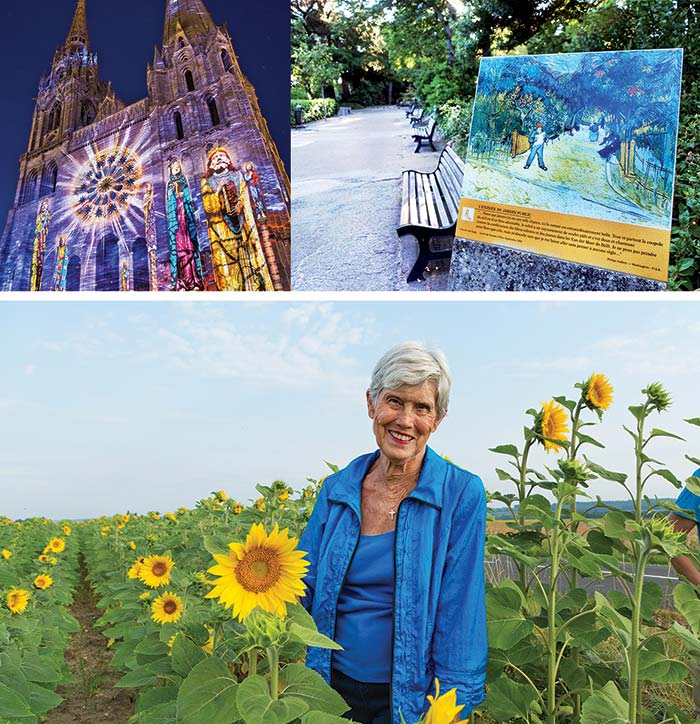
A sound-and-light show at Chartres; a Van Gogh easel in Arles; sunflowers in summer
While this trip is doable in 22 days, most travelers will appreciate adding an extra day here and there to rest their engines.
| Day | Plan |
| 1 | Fly into Paris (but save Paris sightseeing for your trip finale), pick up your car, and visit Giverny en route to Honfleur (stay 1 night). |
| 2 | Morning in Honfleur, afternoon in Bayeux to see its tapestry and cathedral. Overnight in Bayeux (2 nights). |
| 3 | Spend today touring D-Day sights: Arromanches, American Cemetery, and Pointe du Hoc (and Utah Beach Landing Museum, if you’re moving fast). |
| 4 | Drive to Dinan and see its sights. In late afternoon, drive to Mont St-Michel and visit its abbey. Or, early risers can visit Mont St-Michel first and end the day in Dinan. Sleep on/near Mont St-Michel or in Dinan (1 night). |
| 5 | Head for château country in the Loire Valley. Tour Chambord, then settle in Amboise (2 nights) and take the self-guided town walk in this book. |
| 6 | Day trip to Chenonceau and Cheverny or Chaumont—or all three if you don’t need more time for Amboise. |
| 7 | Leave early and head south to the Dordogne region, stopping en route at Oradour-sur-Glane. End in Sarlat-la-Canéda (2 nights) or a nearby riverside village. |
| 8 | If it’s market day in Sarlat, start there (early), then take a relaxing canoe trip and tour a prehistoric cave. If it’s not market day, start with a cave, then canoe and browse Sarlat late. |
| 9 | Head to Languedoc-Roussillon, lunch and sightsee in Albi, then overnight in Carcassonne (1 night). Walk the city wall ramparts after dark. |
| 10 | Morning in Carcassonne, then on to Arles, with a stop at the Pont du Gard. Stay in or near Arles (2 nights). |
| 11 | All day for Arles and Les Baux (visit Les Baux early or late). |
| 12 | Make a beeline for the Riviera, staying in Nice, Antibes, or Villefranche-sur-Mer (2 nights). Explore your home base in the afternoon. |
| 13 | Sightsee in Nice and Monaco. |
| 14 | Make the long drive north to the Alps and stay in Chamonix (2 nights). |
| 15 | If the weather is even close to clear, take the mountain lifts up to Aiguille du Midi and beyond. |
| 16 | Spend the morning in the Alps (in Chamonix or Annecy). Then move on to the Alsace city of Colmar (2 nights). |
| 17 | Enjoy Colmar and the Route du Vin villages. |
| 18 | Return to Paris, visiting Verdun or Reims en route (consider dropping your car in Reims and taking a train to Paris). Collapse at your hotel in Paris (4 nights). |
| 19 | Sightsee Paris. |
| 20 | More time in Paris. |
| 21 | Finish your sightseeing in Paris, with a possible side trip to Versailles. |
| 22 | Fly home. |
With Limited Time: Slice France into sections. If you only have 8-10 days, consider a loop linking Paris, Normandy, and the Loire. Or do a one-way trip, such as flying into Nice and out of Paris, seeing the Riviera, Provence, the Alps, and Burgundy (staying in Beaune) along the way.
Winter travel is fine for Paris, Nice, Avignon, and Lyon, but small cities are buttoned up tight. The weather is gray, milder in the south (unless the wind is blowing), and colder and wetter in the north. Sights keep shorter hours and some tourist activities (such as English-language tours) disappear, though hotels and restaurants are much calmer. For weather specifics, see the climate chart in the appendix.
Connect the dots.
Link your destinations into a logical route. Determine which cities you’ll fly into and out of (Paris and Nice can make good bookends). Begin your search for transatlantic flights on Google Flights.
Decide if you’ll travel by car or public transportation, or both. A car is useless in big cities, but a godsend for just about everywhere else. Normandy, the Dordogne, Languedoc, and Provence have limited public transportation. Trains are faster and more expensive than buses, though buses reach some places that trains don’t. Train travelers can arrange baggage storage in advance for places you’ll visit between overnight stops. Well-run minivan tours are listed for every region in this book.
To determine approximate travel times between destinations, study the driving map in the Practicalities chapter or check Google Maps; visit SNCF.com for train schedules. Budget flights can be an alternative to long train rides; check Skyscanner.com for intra-European flights (but keep in mind air travel’s larger carbon footprint).
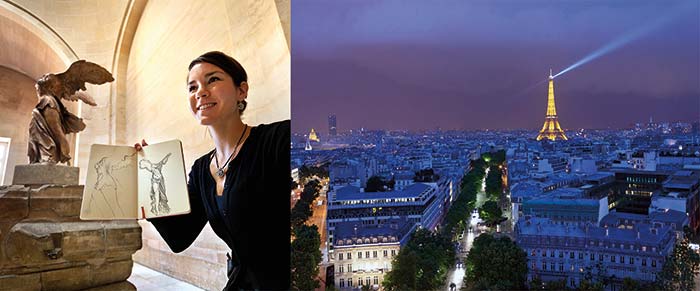
From ancient to modern, a trip to the City of Light is illuminating.
Write out a day-by-day itinerary.
Figure out how many destinations you can comfortably fit in your time frame. Don’t overdo it—few travelers wish they’d hurried more. Allow enough days per stop (see estimates in “France’s Top Destinations,” earlier). Minimize one-night stands. It can be worth taking a late-afternoon drive or train ride to settle into a town for two consecutive nights—and gain a full uninterrupted day for sightseeing. Staying in a home base (such as Nice or Amboise in the Loire) and making day trips can save time over changing locations and hotels.
Take sight closures into account. Avoid visiting a town on the one day a week its must-see sights are closed. Check if any holidays or festivals fall during your trip—these attract crowds and can close sights (for the latest, visit France’s tourist website, Us.france.fr). Note major sights where advance tickets are required (or recommended) and a free Rick Steves audio tour is available.
Give yourself some slack. Every trip, and every traveler, needs downtime for doing laundry, picnic shopping, people-watching, and so on. Pace yourself. Assume you will return.
Run a reality check on your dream trip. You’ll have major transportation costs in addition to daily expenses.
Flight: A round-trip flight from the US to Paris or Nice costs about $900-2,000, depending on where you fly from and when.
Public Transportation: For a three-week trip, allow $800 for buses and second-class trains ($900 for first class). Buying train tickets as you go can be fine for short rides, but expensive for long ones (travelers 60 and older should consider the Carte Avantage Senior card for sizable train discounts). To save money, buy a rail pass and make seat reservations (note that rail passes must be purchased outside of Europe), or lock in reserved tickets with advance-purchase discounts. In some cases, a short flight can be cheaper than taking the train. Make good use of BlaBlaCar buses and FlixBus.
Car Rental: Allow $350-500 per week (booked well in advance), not including tolls, gas, parking, and insurance. If you need the car for three weeks or more, leasing can be cheaper.
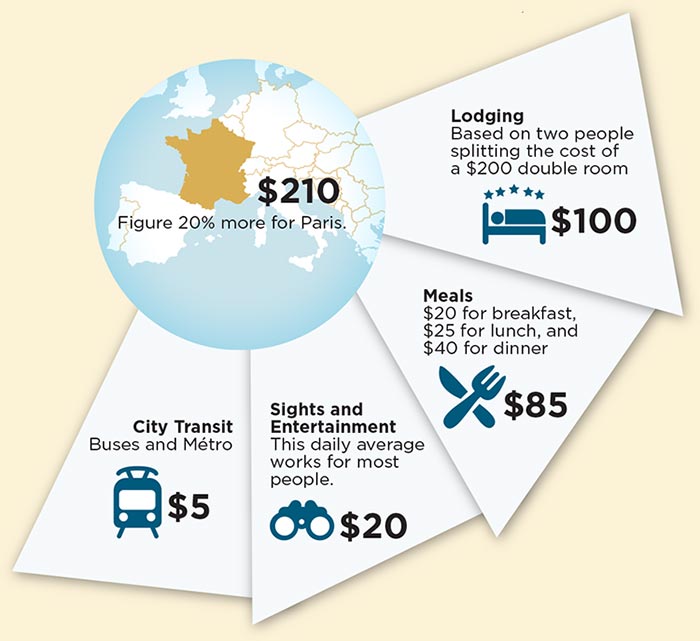
To cut your daily expenses, take advantage of the deals you’ll find throughout France and mentioned in this book.
Some businesses—especially hotels and walking-tour companies—offer discounts to my readers (look for the RS% symbol in the listings in this book).
Reserve your rooms directly with the hotel. Some hotels offer a discount if you stay three or more nights (check online or ask). Or check Airbnb-type sites for deals.
It’s no hardship to eat inexpensively in France. You can get tasty, affordable meals at bakeries (sandwiches, quiche, and mini pizzas), cafés, crêperies, department-store cafeterias, and takeout stands. Cultivate the art of picnicking in atmospheric settings.
City transit passes (for multiple rides or all-day usage) decrease your cost per ride in Paris: Buy a Navigo pass, load it with euros, and use it to cover transit within Paris as well as to outlying châteaux and airports.
Avid sightseers buy combo-tickets or passes that cover multiple museums (like the worthwhile Paris Museum Pass). If a town doesn’t offer deals, visit only the sights you most want to see, and seek out free sights and experiences (people-watching counts).
When you splurge, choose an experience you’ll always remember, such as a concert in Paris’ Sainte-Chapelle or an alpine lift to panoramic views. Minimize souvenir shopping; focus instead on collecting wonderful memories.
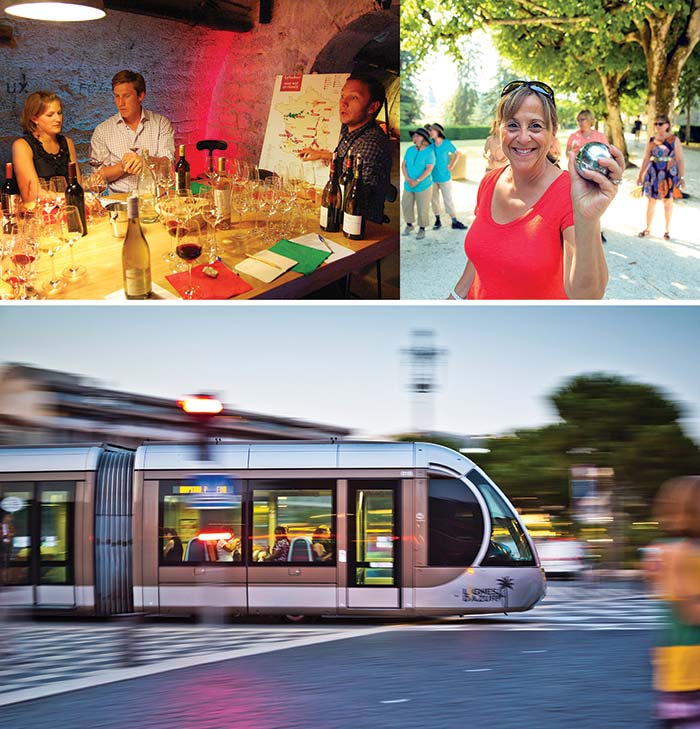
Tasting wine; playing boules; riding public transportation
BEFORE YOU GO
You’ll have a smoother trip if you tackle a few things ahead of time. For more details on these topics, see the Practicalities chapter and RickSteves.com, which has helpful travel-tip articles and videos.
Make sure your travel documents are valid. If your passport expires within six months of your return date, you need to renew it (allow 12-plus weeks). Be aware of entry requirements; you may need to register with the European Travel Information and Authorization System (ETIAS; quick and easy process, https://travel-europe.europa.eu/etias_en). Get passport and country-specific travel info at Travel.State.gov.
Arrange your transportation. Book your international flights. Overall, Google Flights is the best place to start searching for flights. Consider buying train tickets online in advance, getting a rail pass, renting a car, or booking cheap European flights. Train travelers are required to make seat reservations for high-speed trains (your only option on some routes); book these as early as possible, as trains can fill up and pass-holder reservations are limited.
Book rooms well in advance, as well as important restaurants you want to visit, especially if your trip falls during peak season or any major holidays or festivals.
Reserve ahead for key sights. Buy tickets in advance for major sights. In Paris, advance tickets are required for the Louvre, Sainte-Chapelle, and the Palace of Versailles; reservations are also smart for the Eiffel Tower and Orangerie museum. Some prehistoric caves in the Dordogne region require reservations. For the greatest cave, Font-de-Gaume, you must book a tour as far ahead as possible.
Hire guides in advance. Popular guides can get booked up. If you want a specific guide, reserve by email as far ahead as possible—especially important for Paris, the D-Day beaches, Provence, and Burgundy’s wine country.
Consider travel insurance. Compare the cost of insurance to the cost of your potential loss. Understand what protections your credit card might offer and whether your existing insurance (health, homeowners, or renters) covers you and your possessions overseas.
Manage your money. “Tap-to-pay” or “contactless” cards are widely accepted and simple to use. You may need your credit card’s PIN for some purchases--request it if you don’t have one. Alert your bank that you’ll be using your debit and credit cards in Europe. It’s easy to withdraw euros from ATMs in Europe (and less expensive than changing money).
Use your smartphone smartly. Sign up for an international service plan, or rely on Wi-Fi instead. Download any apps you’ll want on the road, such as maps, translators, and Rick Steves Audio Europe (see sidebar).
Pack light. You’ll walk with your luggage more than you think. I travel for weeks with a single carry-on bag and a day pack. Use the packing checklist in the appendix as a guide.
Rick Steves Audio Europe, a free app, makes it easy to download my audio tours and listen to them offline as you travel. For this book (look for the  ), free audio tours cover sights and neighborhoods in Paris and Versailles. The app also offers my public radio show interviewswith travel experts from around the globe. Scan the QR code to find it in your app store, or visit RickSteves.com/AudioEurope.


Rick Steves Classroom Europe, a powerful tool for teachers, is also useful for travelers. This video library contains about 600 short clips excerpted from my public television series. Enjoy these videos as you sort through options for your trip and to better understand what you’ll see in Europe. Check it out at Classroom.RickSteves.com.

Travel Smart
If you have a positive attitude, equip yourself with good information (this book), and expect to travel smart, you will.
Read—and reread—this book. To have an “A” trip, be an “A” student. Note opening hours of sights, closed days, crowd-beating tips, and whether reservations are required or advisable. Check the latest at RickSteves.com/update.
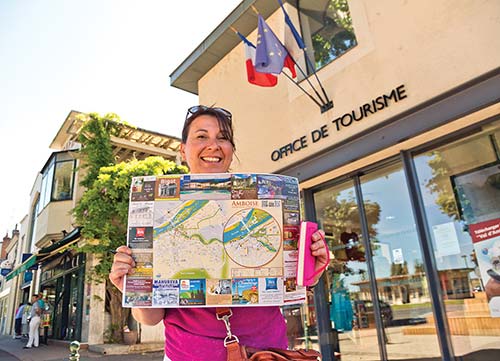
Be your own tour guide. As you travel, get up-to-date info on sights, reserve tickets and tours, reconfirm hotels and travel arrangements, and check transit connections. Visit local tourist information offices (TIs). Upon arrival in a new town, lay the groundwork for a smooth departure; confirm the train, bus, or road you’ll take when you leave.
Outsmart thieves. Pickpockets abound in crowded places where tourists congregate. Treat commotions as smokescreens for theft. Keep your passport and backup cash and cards secure in a money belt tucked under your clothes; carry only a day’s spending money and a card in your front pocket or wallet. Don’t set valuable items down on counters or café tabletops, where they can be quickly stolen or easily forgotten.
You may have heard that French people are cold and refuse to speak English. In my experience, the French are as friendly as other people (though a bit more formal) and many Parisians speak English well. But be reasonable in your expectations: French waiters are paid to be efficient, not chatty.
The best advice? Slow down. Impatient travelers unaware of the joys of people-watching from a café often misinterpret French attitudes. With beaucoup paid vacation and a 35-hour work week, the French don’t understand why anyone would rush through their time off.
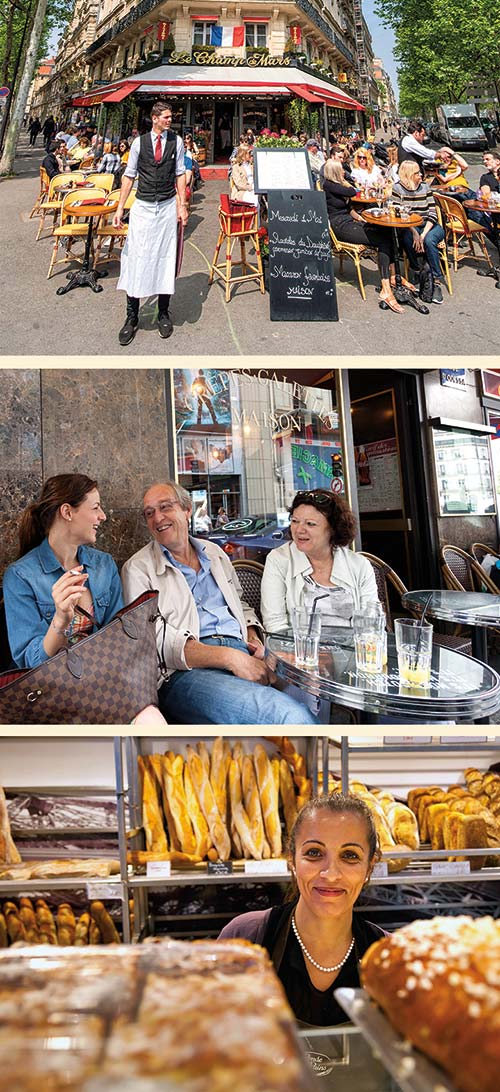
It’s très French: At sidewalk cafés, people take their time. At small shops (like this bakery), say, “Bonjour, madame (or monsieur).”
The French view formality as being polite, and prefer to avoid eye contact with strangers.
You’ll get positive reactions if you use pleasantries. Learn these five phrases: bonjour (good day), pardon (pardon me), s’il vous plaît (please), merci (thank you), and au revoir (goodbye). Begin every encounter (for instance, when entering a shop) with “Bonjour, madame (or monsieur),” and end every encounter with “Au revoir, madame (or monsieur).”
The French take language seriously. To ask a French person to speak English, say, “Bonjour, madame (or monsieur). Parlez-vous anglais?” They may say “non” (because they don’t speak English fluently), but you may soon find out they speak more English than you speak French.
Practice French survival phrases (see the appendix), and have a phrase book or translator app handy. In transactions, a notepad and pen can help; have vendors write down the price.
Minimize potential loss. Keep expensive gear to a minimum. Bring copies or take photos of important documents (passport and cards) to aid in replacement if they’re lost or stolen. Back up photos and devices to the cloud as you travel.
Guard your time and energy. Taking a taxi can be a good value if it saves you a long wait for a cheap bus or an exhausting walk across town. To avoid long lines, follow our crowd-beating tips, such as buying tickets in advance or sightseeing early or late.
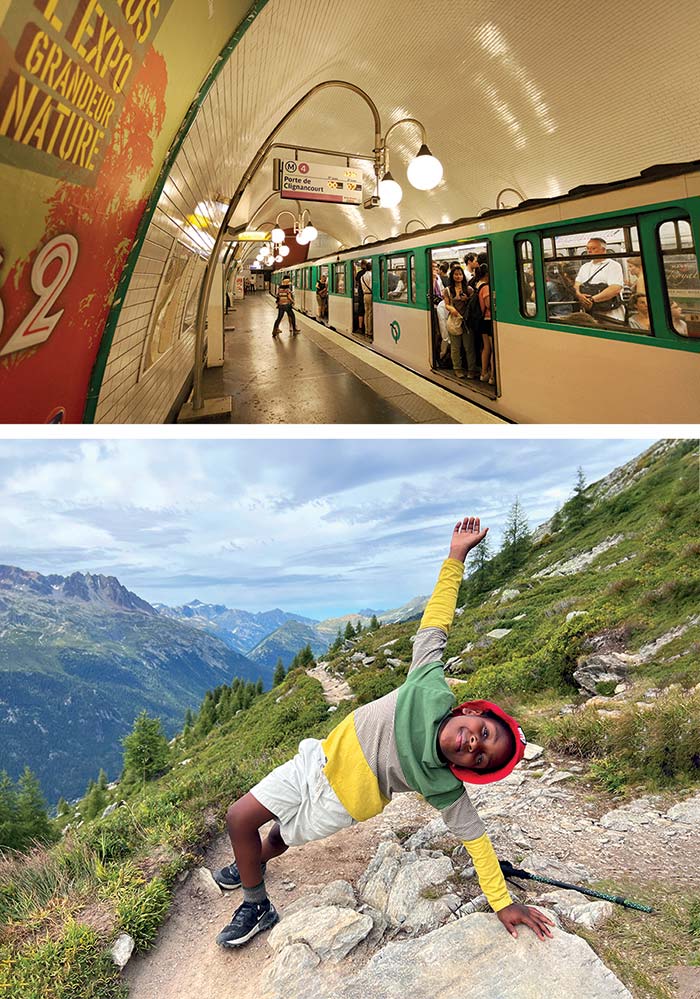
Underground in Paris; on top of the world in the French Alps
Be flexible. Even if you have a well-planned itinerary, expect changes, strikes, closures, sore feet, bad weather, and so on. Your Plan B could turn out to be even better.
Attempt the language. The French appreciate your effort. If you learn some French, even just a few phrases, you’ll get more smiles and make more friends. See the sidebar on here for tips.
Connect with the culture. Interacting with locals carbonates your experience. Enjoy the friendliness of the French people. Ask questions; most locals are happy to point you in their idea of the right direction. Set up your own quest for the best croissant, sidewalk café, or hill town, or choose the château you’d like to call home. When an opportunity pops up, make it a habit to say “yes.”
France...here you come!