LUGANO
CRUISING LAKE LUGANO WITH A STOP IN GANDRIA
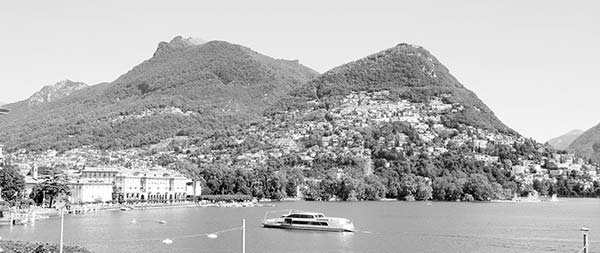
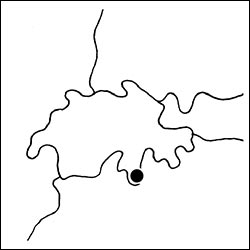
Lugano, the leading city of the Italian-speaking Swiss canton of Ticino, gives you Switzerland with an Italian accent. The town—which feels bigger than its population of 60,000 (metropolitan area 140,000)—sprawls luxuriously along the shores of Lake Lugano. Just a short, scenic train ride over the Alps from the German and French regions of Switzerland, Lugano has a splashy, zesty, Mediterranean ambience. It attracts vacationers from the rainy north with its sunshine, lush vegetation, inviting lake, and shopping. (When the Swiss couldn’t travel abroad due to Covid restrictions, Lugano boomed as their very own exotic, good-weather escape.) While many travelers come here for the fancy boutiques, others make this a base for hiking, cruising the lake, and passing lazy afternoons in its many gardens. Its mountains aren’t mighty, its beaches are lousy, and the cityscape is nothing thrilling. But Lugano is the best spot to enjoy palm trees in Switzerland, and its charm merits at least a short visit.
PLANNING YOUR TIME
Lugano lies conveniently at the intersection of the Gotthard Panorama Express and the Bernina Express—two of Switzerland’s famous scenic train rides. Blitz sightseers arrive along the Gotthard Panorama route one day and take off on the Bernina Express the next.
If relaxing is on your itinerary, spend two nights and a full day here, arriving and departing on the scenic trains. With a day, spend the morning exploring the old town with my self-guided walk, then do a boat cruise and ascend a mountain lift in the afternoon. For something a bit more active, consider my half-day Gandria and Monte Brè plan. Any extra time you have can be spent relaxing in the gardens and along the lakefront.
Orientation to Lugano
The old town is on Lake Lugano, which is bordered by promenades and parks. A funicular connects the old town with the train station above. Nearly everything in this chapter (with the exception of the mountain lifts and other excursions) is within a five-minute walk of the base of the funicular. The town of Lugano fades into other, smaller waterfront communities all around the lake (much of which lies in Italy).
Italian is the language of Lugano and its region (Ticino), which is surrounded on three sides by Italy (see “Italian Survival Phrases” in the appendix). In this corner of Switzerland, a Strasse (street) becomes a Via, and a Platz (square) becomes a Piazza.
TOURIST INFORMATION
Lugano’s main TI is in the City Hall building facing the main square (Mon-Fri 9:00-18:00, Sat until 17:00, Sun 10:00-16:00, shorter hours and closed Sun off-season, Palazzo Civico, Piazza della Riforma 1, +41 58 220 6506, www.luganoregion.com). There’s also a branch at the train station, at the far end of the old, pink station hall (Mon-Fri 9:00-18:00, Sat until 13:00, closed Sun, shorter hours off-season). Stop by either one to pick up a city map, a bus and boat schedule, and to inquire about any special events.
The TI offers a free city walk (Mon from the main TI, Sat from the train station branch, departs at 10:00, 2 hours) as well as various excursions, such as to the fishing village of Gandria; to the top of San Salvatore; and to the top of Monte Brè, including a short boat ride (all tours well described on the website). As each of these costs just 15 CHF and includes transport or lift tickets worth much more, it can be an exceptional value. The catch: Excursions run in two languages at the same time, and depending on who signs up, the commentary may lean much more heavily toward one or the other (excursions run about once weekly, reservations required, all tours leave from the TI).
Ticino Ticket: All Lugano hotel guests get a free Ticino Ticket, which covers all public transit in the city and entire Ticino region for the duration of your stay. Note that this does not include the lake boats, and lifts are discounted just 20-30 percent. Still, this opens up some fun options for exploring the area.
ARRIVAL IN LUGANO
The train station is on a hill above downtown. You’ll find lockers near the escalators in the underground passage. As you exit toward the city, you’ll enjoy a grand view (across the street) of rooftops and bell towers, the lake, and the mountains beyond. To the right you’ll find a long-hours grocery, with a taxi stand in the little park just beyond. To the left is the old, pink station building—with ticket offices, the TI, and a surprisingly genteel restaurant (Buffet della Stazione, with affordable pizzas and a salad bar). Beyond this end of the building, you’ll find long-distance buses (such as the Bernina Express bus to Tirano; note that this area may be torn up due to construction).
The easiest way to get to the town below is by funicular (look for funicolare sign—it’s in the lower level, near the escalators leading up to street level; 1.30 CHF, free with Ticino Ticket or Swiss Travel Pass, daily 5:00-24:00, departs every 5 minutes). The funicular deposits you right in the heart of the old town, at Piazza Cioccaro, also the start of my self-guided Lugano walk. You can also walk (but not with wheeled luggage) down the hill.
HELPFUL HINTS
Laundry: Self-service launderette Il Girasole has English instructions. It’s a 15-minute walk away from the lake—or take bus #7 (direction: Pregassona) three stops from Lugano Centro to Piazza Molino Nuovo, then walk a block onward (daily 7:00-22:00, Via Giuseppe Bagutti 8, +41 76 503 7964, www.lavanderiaselfservice.ch).
Local Guide: Lovely Christa Branchi teaches enthusiastically about her city and its history (200 CHF/1-3 hours, 250 CHF/half-day, 370 CHF/day, +41 79 413 6402, christabranchi@hotmail.com).
GETTING AROUND LUGANO
The town center is easily walkable, and the two nearby hilltop excursions, San Salvatore and Monte Brè, start from funicular stations that are each a 20-minute lakeside stroll (in opposite directions) away from the center.
Buses can save time, though. All lines converge at the Lugano Centro terminal on the north edge of downtown. Bus #2 (2-4/hour) is the one to know: It conveniently links the Paradiso neighborhood (for San Salvatore), the train station, Lugano Centro, Cassarate (for Monte Brè), and Castagnola (where the path to Gandria starts). Buses are free with the Ticino Ticket or Swiss Travel Pass; otherwise, buy tickets from machines at most bus stops (2.30-CHF regular “Area 100” ticket valid for one hour; 4.60-CHF day pass—to buy, choose “Further Tickets,” then “Day Pass,” then select “Lugano”; www.tplsa.ch).
Lugano Walk
Resorty Lugano hides some interesting history, but let’s face it: You’re here to relax. Consider taking this short self-guided stroll to get yourself oriented...or just grab a gelato and wind your own way through the city center’s arcades and lakeside promenade.
Start on Piazza Cioccaro, at the base of the funicular that connects the train station with the town center.
• With your back to the funicular, go down the narrow street that angles to the right of the building at the bottom of the square.
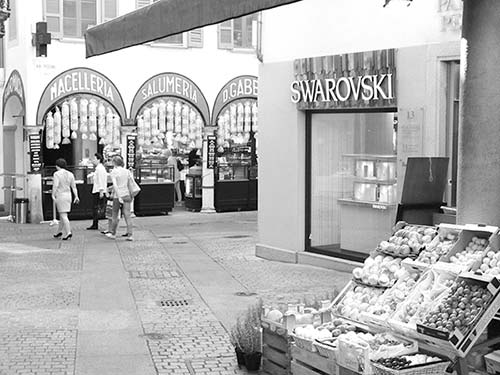
Via Pessina: In this tangled, colorful little corner are several small delicatessen-type shops run by Signor Gabbani. Venture in if you’d like to be tempted by some of the best local cheese, bread, salami, and/or wine.
• Bear right (at the Gabbani salamis), and about a block down on your right, at Via Pessina 3, find the...
Grand Café al Porto: This venerable, elegant institution is the most historic café in town. Inside, the 1803 above the fireplace is the date it opened—and also when Ticino joined the Swiss Federation. Once a convent (notice the fine sgraffito facade), the café evokes the 19th-century days when Giuseppe Mazzini and fellow Italian patriots would huddle here—safely over the border—planning their next move to unify Italy. Much later, as World War II wound down, US intelligence officer Allen Dulles (future head of the CIA) met right here with Nazi and Italian representatives to organize a graceful end to the war and prevent the Germans from ruining Italy with a scorched-earth retreat. And in more carefree times, this is where Clark Gable and Sophia Loren dipped cookies in their coffee.
• Just past Grand Café al Porto, take a left at the fountain into...
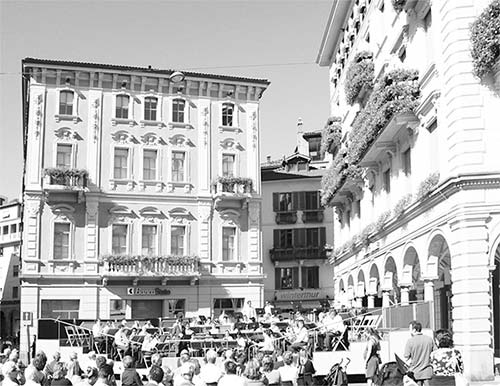
Piazza della Riforma: This square is Lugano’s living room. With geraniums cascading on all sides, the square hosts an open-air cinema, markets (Tue and Fri mornings), and local festivals. The stately yellow building is the City Hall (municipio, with the TI at its right corner).
• Facing the City Hall, make a 90-degree left turn and walk (between the farmacia and the white bank building) down...
Via Canova: This pedestrianized street leads directly to the city park. Follow it for a few blocks, watching for the elegant gallery that burrows through a block (on your left after the second crosswalk). Just after that, on your right, you’ll pass the Lugano Art Museum of Italian Switzerland (one of several MASILugano venues), which displays ever-changing exhibits of primarily 19th- and 20th-century art (main collection-8 CHF, covered by Swiss Travel Pass, Tue-Fri 11:00-18:00, Thu until 20:00, Sat-Sun 10:00-18:00, closed Mon, Via Canova 10, www.masilugano.ch).
Next is the creamy little Church of San Rocco. Inside, its rich frescoes celebrate the saint responsible for protecting the city from the plague. In Switzerland, you grow accustomed to stark, austere, Protestant church interiors. But Lugano has some exuberant Baroque decor, like this one (and another church we’ll see later on this walk)—thanks, in part, to the influence of nearby Italy.
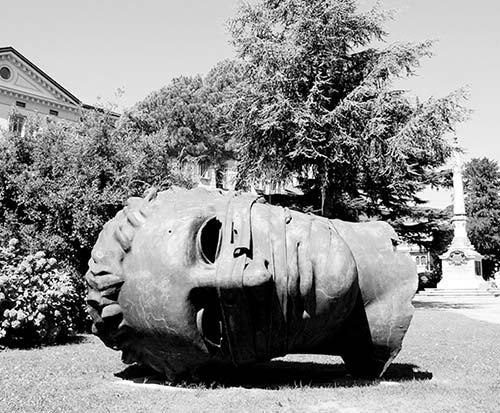
A block beyond the church on your left is the parklike Piazza Indipendenza. The giant head on its side is the work of Polish sculptor Igor Mitoraj, who has decorated squares all over Europe with similar sculptures. On your right is the vast, sterile casino building.
• Continuing straight across the street from Piazza Indipendenza, pass through the gate to come face-to-face with the pink palace in the...
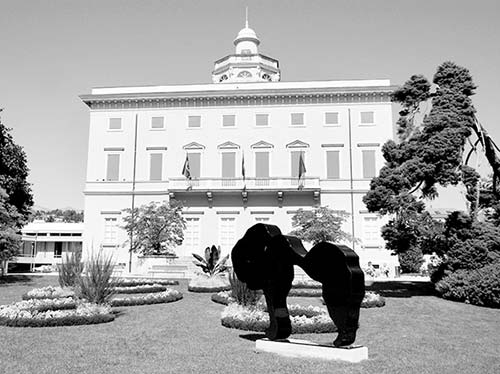
City Park (Parco Civico Villa Ciani): Lugano lacks the over-the-top villas and gardens that people flock to see just over the border at Lake Como. But this park captures some of that lakefront elegance. The park’s centerpiece is the Villa Ciani, now an events venue. Sprawling from here along the lake is a lush park filled with modern art and exotic trees from around the world. Its water gate—a stony gateway that leads nowhere—evokes the 19th century, when this was the private domain of aristocrats. Farther along are fine, yellow pavilions on a little island, with a wonderful statue nearby depicting Socrates taking a snooze. Throughout the park, the flower beds are organized to show off maximum color all year long. If the weather’s nice, stow your guidebook and remember you’re on vacation as you explore this ingeniously landscaped, people-friendly space. Go ahead—walk all the way to the little beach near the marina. The park is nicely lit at night and particularly good for a late, romantic stroll (open long hours daily).
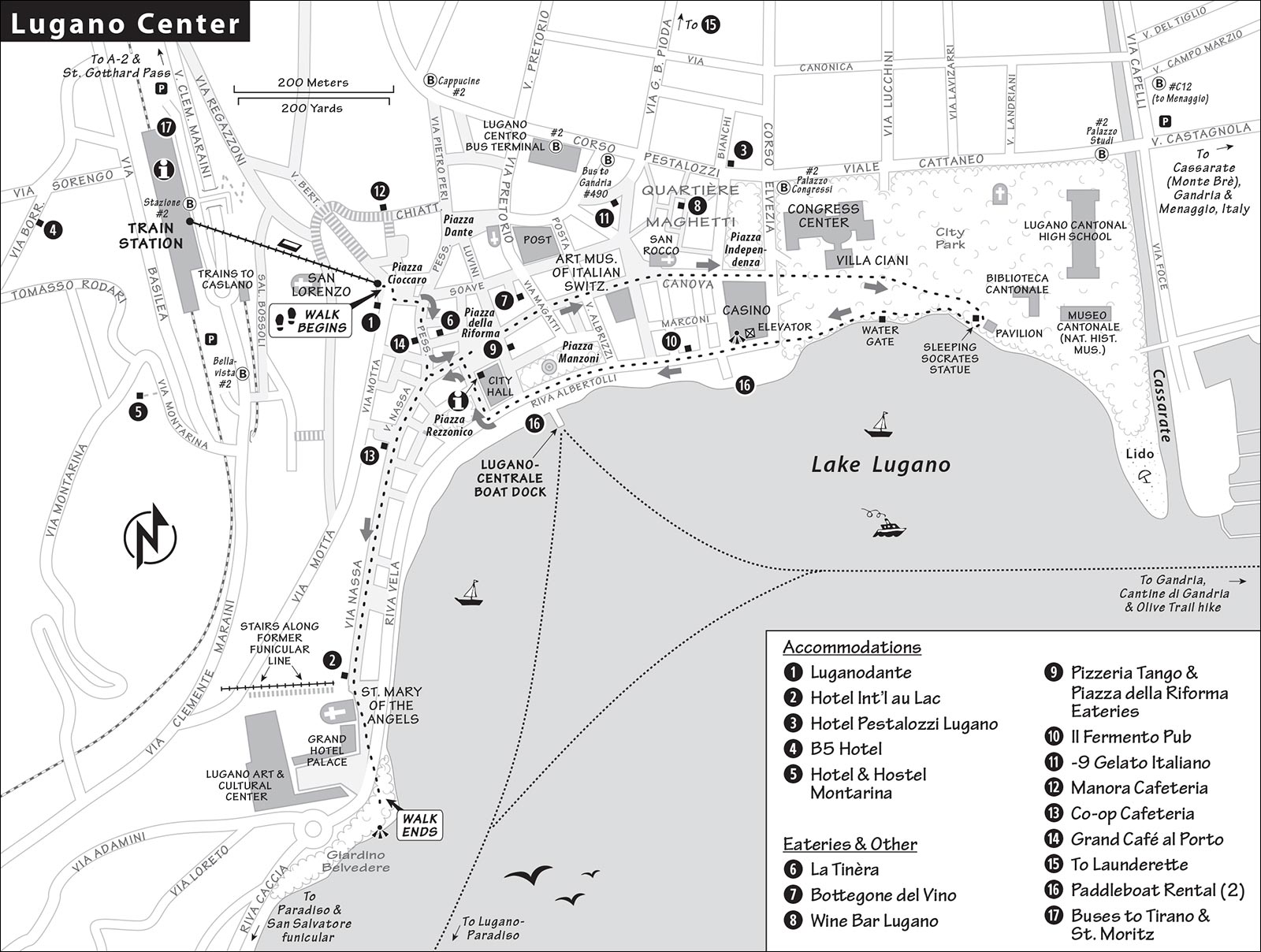
• From the city park, walk back to the town center along the...
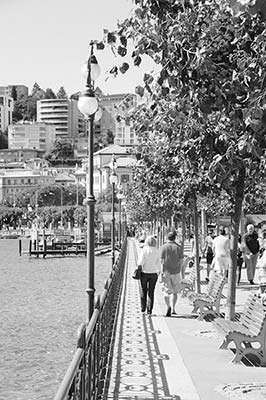
Waterfront: This lovely promenade gets even nicer on Friday and Saturday evenings from June through August (after 20:30), when the busy street is closed off to traffic and you’ll find concerts and other events in full swing.
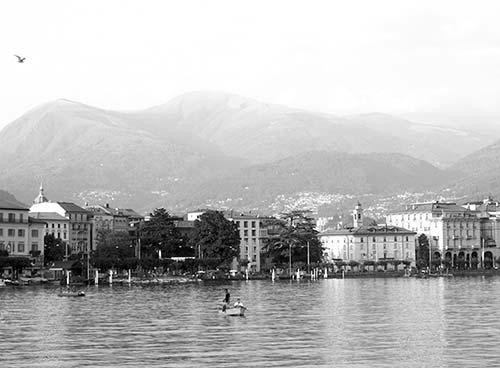
On the right, the casino’s top-floor restaurant overlooks the lake. If it’s open, ride the glass elevatore up and down for a fun and free view. Then continue strolling through the arcade (passing Il Fermento, a fun spot with Ticino craft beers) or under the mulberry trees (a favorite of silkworms, dating from the time when silk was a local industry). Slow down and saunter—remember, you’re in Italian Switzerland—and do the passeggiata. You’ll pass a couple of places where you can rent paddleboats, and eventually you’ll come to the boat dock, where you can peruse options for a lazy lake cruise (for details, see “Cruising Lake Lugano,” later). Just beyond, a small lakefront park has sand and inviting slingback chairs.
Look across the lake for the village clustered around a huge, blocky, sand-colored building (lit up in bright colors at night; it’s just to the left of the pointy San Salvatore hill). That’s the Casinò di Campione, the largest casino in Europe, which enjoys special legal privileges, granted by Mussolini when he saw what casino tourism had done for nearby Lugano. The casino dominates Campione d’Italia—a tiny enclave of Italy that’s surrounded by Switzerland on all sides; residents use Swiss francs, have Swiss phone numbers and license plates, and pay Swiss taxes...but carry Italian passports.
• At the yellow City Hall building, use the crosswalk to cross the busy road. A block inland is Piazza della Riforma again—you’ve come full circle. But let’s keep going. The first left off the square is...
Via Nassa: This is one of Lugano’s main shopping streets. For the next several blocks, just enjoy the wandering, window shopping, and people-watching along this gauntlet of high-end boutiques and jewelry shops under typical Lombardi arcades. This street is reminiscent of Milan’s fashion drags. You’ll see Hermès, Gucci, Prada, Rolex, and Louis Vuitton. But it’s not all luxury goods. After a couple of blocks, on the right at #22, the Co-op department store has a good selection of chocolates (just inside the door on the left), a basement supermarket, and a handy top-floor cafeteria. The small square you pass between Via Nassa and the lake has a dramatic statue honoring Carlo Battaglini, an influential 19th-century city president (mayor) of Lugano.
• Follow Via Nassa until it dead-ends at the small but historic...
Church of St. Mary of the Angels (Chiesa Santa Maria degli Angioli): This lakefront church, which dates from 1499, was part of a monastery (next door). Inside the church are the city’s best frescoes—worth ▲ and a quick look.
The Passion and Crucifixion of Christ, the artistic highlight of all Ticino and the finest Renaissance fresco in Switzerland, is on the wall that separates the nave from the altar area. Milanese Bernardino Luini, who painted it in 1529, is sometimes called the “Raphael of the North” for the gentle expressions and calm beauty of his art. Follow the action as the scenes from Christ’s passion are played out, from Jesus being crowned with thorns (left) to the doubting apostle Thomas touching Jesus’ wound after his Resurrection (right). The dominating theme is the Crucifixion. The work is full of symbolism. For instance, at the base of the cross, notice the skull and femur of Adam, as well as his rib (from which Eve was created). Worshippers saw this and remembered that without Adam and Eve’s first sin, none of the terrible action in the rest of the fresco would have been necessary. Luini spent a decade working on this fresco, applying his paints day by day, a section at a time, over thin layers of wet plaster.
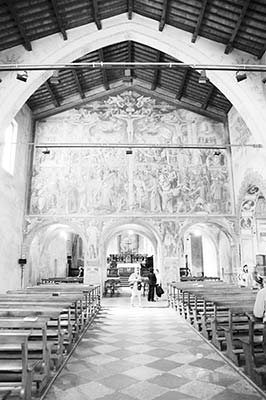
Facing the giant fresco, look to your left to find the three smaller frames. This is Luini’s Last Supper, which was sliced off a wall of the monks’ dining hall and put on canvas to be hung here.
Finally, wander up to the front of the church. The altar is rich and unusual with its wooden inlay work.
Near the Church: Back outside, notice the old funicular track running up the right side of the church, alongside a long staircase (and next to the Hotel International au Lac). This was built in 1913 to connect two burgeoning hotel zones—high on the hill and here on the lakefront. It ran until 1987.
The building just beyond the church was once a monastery, then the Grand Hotel Palace. This first grand hotel on the lake was radical in that it actually faced the lake.
Just beyond the former hotel, you can’t miss the big and bold Lugano Art and Cultural Center (LAC). Featuring a changing array of contemporary art exhibits, this is a magnet for art lovers and helps raise the cultural bar in this already very proud city (20 CHF, Tue-Fri 11:00-18:00, Thu until 20:00, Sat-Sun 10:00-18:00, closed Mon, www.masilugano.ch).
• Along the lakefront across from the church is the...
Giardino Belvedere: This delightful little garden park is an open-air modern-art museum. From here, survey the scene. Paradiso, the big hotel zone with its 80-foot-high fountain, is a 15-minute walk along the lakeside. From there, the San Salvatore lift zips sightseers to the summit. The ridge across the lake marks the border of Italy.
• Our walk is finished. If you’ve got energy left, continue along the lakefront on the pleasant path to Paradiso; there you can summit San Salvatore, hop on a lake cruise, or do both.
Sights near Lugano
MOUNTAIN LIFTS
Two handsome mountains (San Salvatore and Monte Brè) flank Lugano’s city center, and you can conquer either one, sweat-free, by lifts. At about 3,000 feet, Lake Lugano’s mountains are unimpressive compared with the mightier Alps farther north; if you’ve done some of the higher lifts in the Berner Oberland, Zermatt, or Upper Engadine regions, nothing here will thrill you. Still, the commanding mountaintop views over the lake are enjoyable. Doing more than one is overkill. San Salvatore is best and relatively handy to Lugano town; Monte Brè works better with a Gandria visit. Monte Generoso is a higher mountain that’s a little farther from town.
▲San Salvatore
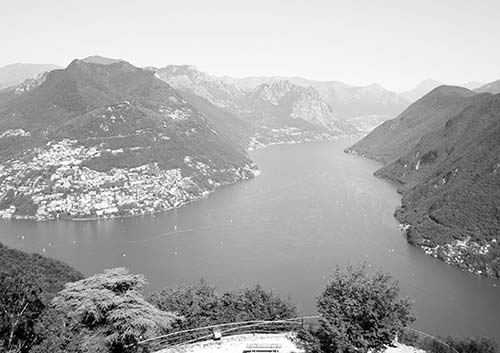
The easiest and most rewarding peak on the lake, thanks to its fine panoramic views, San Salvatore (2,990 feet) rockets up from the Lugano suburb of Paradiso. You can reach it by funicular.
Cost and Hours: 30 CHF round-trip, half-price with Swiss Travel Pass; daily mid-July-Aug 9:00-23:00; rest of year until 17:00 or 18:00, Fri-Sat until 23:00, closed Nov; these are last-ascent times—last descent generally 30 minutes later; 2/hour—departs on the hour and the half-hour, 12-minute ride, transfer to another funicular midway up; +41 91 985 2828, www.montesansalvatore.ch.
Getting There: To reach the base of the funicular, either walk along the water (about 20 minutes south of the city center; keep your eye out for brown funicolare signs), or take bus #2 (direction: Paradiso, get off at Paradiso/Geretta stop, rather than staying on until the Funicolare San Salvatore stop). Alternatively, bus #1—which stops near Piazza della Riforma—runs along the lakefront to the Scuole Paradiso stop.
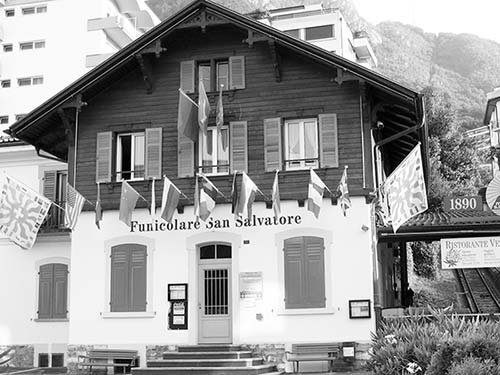
At the Summit: You’ll find good viewpoints, a playground, and a restaurant (reasonably priced if you buy the daily special with your funicular ticket—menu posted at valley station, food served 11:00-15:00, in high season also 19:00-23:00).
From the lift, be sure to climb five more minutes to the actual summit. On the way up, pop into the Salvatore Museum, with its small collection of religious art and exhibits on local geology (included in funicular ticket, closed Mon-Tue). At the top of the mountain, there’s a small church surrounded by a view terrace. For the best panorama, climb to the rooftop of the church (entrance around the right side) for a sweeping, nearly 360-degree view. Unfortunately, the bay directly in front of Lugano is just about the only thing you can’t see from up here.
▲Monte Brè
Departing from the other end of Lugano, in the suburb of Cassarate, this funicular takes you to arguably the best view down on Lugano itself (3,005 feet).
Cost and Hours: 25 CHF round-trip, 16 CHF one-way, discount with Ticino Ticket, half-price with Swiss Travel Pass; runs daily 9:00-19:00 plus July-Aug Fri-Sat until 23:00, off-season until 18:00 or 17:00, closed Jan-Feb; these are last-ascent times—last descent generally 30 minutes later; first stage from Cassarate to Suvigliana runs 4/hour and takes 5 minutes, you may wait a bit for the second stage to Monte Brè, which runs 2/hour and takes 10 minutes; +41 91 971 3171, www.montebre.ch.
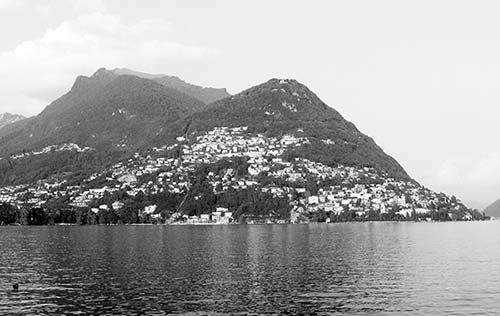
Getting There: From Lugano’s old town, you can take bus #2 (direction: Castagnola) to the Cassarate/Monte Brè stop. Getting off the bus, walk a little farther along the water, then follow brown funicolare signs uphill to the right. Don’t dawdle—the automatic turnstile gate closes with little warning shortly before the funicular departs. You can also reach Cassarate via the lake boat from downtown Lugano.
At the Summit: You’ll find two restaurants good for a drink or a snack up top. Ristorante Vetta, farther down from the lift station, has better views and a nice shaded playground nearby (daily 10:00-19:00, until 23:00 Fri-Sat—reservations required, +41 91 971 2045, www.vetta.ch).
Monte Generoso
The tallest mountain but farthest from Lugano, Monte Generoso (5,590 feet) is high enough that you can see some of the more distant cut-glass peaks. Enjoy the striking panorama as a cogwheel train climbs up from the station at Capolago (at the south end of Lake Lugano) in 40 minutes, leaving you at Generoso Vetta, a 10-minute walk below the summit. You’ll be right on the Italian border, with great views of Lugano in one direction and Lake Como in the other.
Cost and Hours: 68 CHF round-trip, half-price with Swiss Travel Pass, roughly hourly 9:25-16:35, off-season until 15:35, few or no trains Nov-March, restaurant and cafeteria, +41 91 630 5111, www.montegeneroso.ch.
Getting There: From Lugano, take a regular train (15 minutes) to Capolago. You can also get there by boat, though it’s slower and only runs once a day at 9:55.
CRUISING LAKE LUGANO WITH A STOP IN GANDRIA
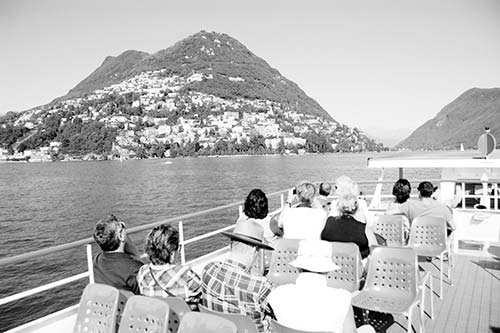
Lake Lugano is made to order for a boat trip. In fact, getting out on the water here is a ▲▲ experience (and makes up for the lack of other big-league sightseeing in this sleepy city). The lake boats serve as regular public transport to a couple of car-free spots on the lake. You can either ride the boat around the lake or hop on and off the boat to explore. There’s also a dizzying array of more elaborate excursions to choose from (such as a lunch trip, a grand tour, a shopping excursion into Italy, and an evening dinner cruise).
Boats and Schedules
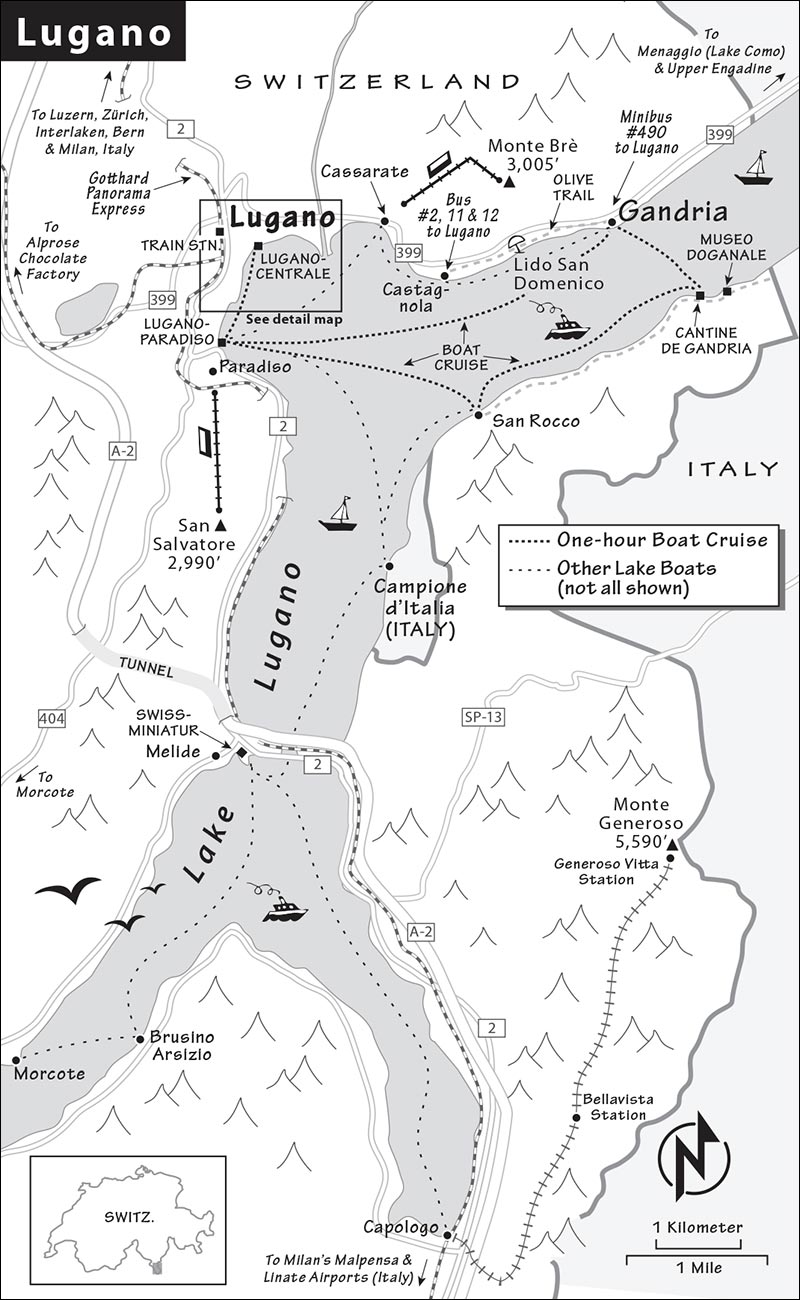
The basic one-hour boat cruise does a loop from Lugano. It stops at a few desolate restaurants and hamlets along the far side of the lake, visits Gandria (a peaceful and picturesque little fishing town with several romantic view restaurants), then returns to Lugano (27.40 CHF round-trip including stopovers, 16.60 CHF for one segment, free with Swiss Travel Pass).
You can get off at any point, look around, and wait for a later boat; from Gandria, you can also return to Lugano by foot or bus (explained later). Note that if you’re hopping on and off the boat, you’ll actually cobble together the trip from various longer cruises, each with different itineraries. Some circle the lake clockwise, others counterclockwise, and not every boat makes every stop (the boat serves only parts of the lake within Swiss borders). Pick up the boat schedule (orario) or find it online or with the SBB Mobile app. Note when the next boat comes and exactly where it stops. The schedule can be confusing, so ask at the TI or one of the boat docks if you need planning help. If you plan to spend all day on the water, consider the day pass (49 CHF, 20 percent discount with Ticino Ticket, +41 91 222 1111, www.lakelugano.ch).
Stops on the Lake
The following stops make memorable excursions off the boat.
On the Far Side of the Lake: Cantine di Gandria and Museo Doganale
One good place to break your journey is at the adjacent stops of Cantine di Gandria and Museo Doganale, which are a quick walk from each other (boats dock at just one of these stops, not both). Cantine di Gandria has two traditional trattorias and wine grottos—great for a rustic meal or just a snack and a drink (daily, closed Oct-April, Grotto Teresa: +41 91 923 5895, Grotto Descanso: +41 91 922 8071). A five-minute walk from Cantine di Gandria takes you to the bright orange Museo Doganale, right on the Italian border, with underwhelming exhibits on customs and smuggling (free, no English but worth a quick visit, daily 13:30-17:30, closed mid-Oct-March, +41 79 512 9907, www.zollmuseum.ch).
▲Gandria
This town on the Lugano side of the lake is the most popular stop. A dense cluster of houses hangs over the lake with a few lazy, romantic hotels and several inviting restaurants. The approach by water is simply dramatic: As you cruise toward sheer alpine peaks, the cluster of rooftops and a church bell tower slowly come into view around a wooded bluff. Once off the boat here, the only “streets” are stairways and cool, narrow passageways between the lake below and the road above. Go for a circular stroll, climbing up, up, up through town. Eventually you’ll find your way to the church; the little parking lot just beyond it has WCs and the bus stop for the minibus back to Lugano.
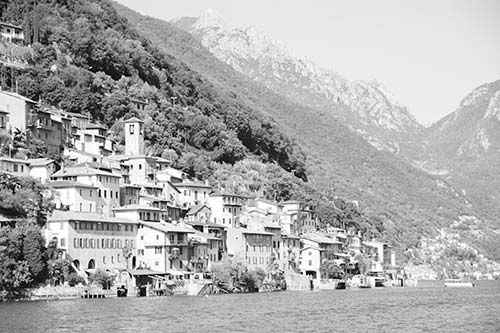
Eating in Gandria: This is a popular spot to have a lunch break. Either of the two restaurants by the boat dock will do for a meal or drink ($$ Ristorante Roccabella: +41 91 971 2722; and just up the stairs to the left, $$ Ristorante Antico: +41 91 971 4871). For something more memorable, try $$$ Locanda Gandriese, which has better food and a smaller, quieter terrace (pasta and polenta dishes, a short walk farther into town past Ristorante Antico, just below the church; +41 91 971 4181).
Reaching Gandria by Bus: You can also connect Gandria and downtown Lugano by minibus (#490, 4.60 CHF, free with Ticino Ticket, about hourly Mon-Fri—but there are gaps so check schedule carefully, fewer on weekends, timetables at www.lakelugano.ch). The bus stop in Lugano, called Al Forte, is across the street from Lugano Centro bus station, in front of Via Giovanni Nizzola 2. In Gandria, buses stop in the small parking lot just beyond the church. Note that this bus also stops in Cassarate, at the base of the Monte Brè funicular.
Returning to Lugano from Gandria: You can walk back to Lugano along the scenic, mostly lakeside Olive Trail, through restored olive groves, with multilingual signposts telling you all about olive cultivation. Exploring Gandria, you’ll see green Sentiero dell’Olivo signs posted throughout town. When you’re ready to leave town, follow these to the left to find the trail (also marked for the town of Castagnola). It’s about a 45-minute walk to Castagnola and your bus back to Lugano. Along the way you’ll pass the inviting Lido San Domenico—a nice place for a swim and a snack. Eventually you’ll stray from the lake and intersect with a parking lot. Take the stairs up, up, up past some private homes to the town of Castagnola, a suburb of Lugano. From the Castagnola post office, catch bus #2, #11, or #12 back into Lugano. It’s also possible to walk another 40 minutes back to town and the Monte Brè funicular—simply continue down busy Via Rivera. After crossing a bridge, you’ll see brown signs pointing to the funicolare on the right.
You can also return from Gandria to Lugano via boat or the minibus described above. Note that the last boat and bus depart from Gandria around 18:05 (boat runs later in high season; confirm locally). If you miss these, you’ll have to walk or pay about 50 CHF for a taxi.
▲▲Half-Day Gandria and Monte Brè Plan
A pleasant way to spend half of your Lugano day is this fun, active circuit: Catch the boat to Gandria and have lunch. Then hike from there on the Olive Trail (Sentiero dell’Olivo, 1.5 hours) back to Lugano’s Monte Brè funicular (described above). Ride the lift to Monte Brè, where you can enjoy the summit and an aperitivo at the terrace restaurant. Then, with the playground to your left and the lake to your right, follow the wooden fence into the shaded forest—within 20 minutes you’ll reach the tiny village of Brè. Wander through the town and then ride bus #12 from the parking lot next to the church back to Lugano Centro (20 minutes).
CHOCOLATE EXCURSION
Alprose Chocolate Factory
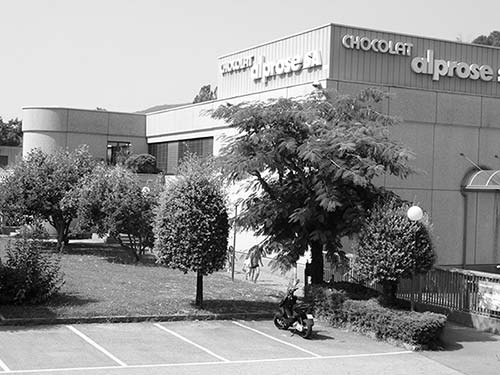
A visit to this factory in Caslano, a small town near Lugano, makes a fun excursion. Alprose is one of Switzerland’s smaller, less-well-known chocolate producers, but their factory is geared up for visitors and generous with free samples.
Cost and Hours: 5 CHF, daily 9:00-17:00, Via Rompada 36, Caslano, +41 91 611 8856, www.alprose.ch.
Getting There: The S60 suburban train runs from Lugano to Caslano (covered by rail passes, Mon-Fri 4/hour, Sat-Sun 2/hour, 20 minutes, direction: Ponte Tresa). The train leaves from the cute yellow antique train station across the street from Lugano’s main station (marked Ferrovie Luganesi; go down the stairs). Machines and windows sell tickets. From Caslano station, cross the tracks and go one block downhill along Via Stazione, then turn right on Via Rompada (passing Museo del Cioccolato signs).
Visiting the Factory: The machines are in operation Monday to Friday from 9:00 to 14:00, but you’re always allowed a look at the factory. An elevated, enclosed, air-conditioned walkway lets you watch as big dollops of chocolate are dropped into plastic molds, cooled and popped out onto a conveyor belt, wrapped (mechanically), and packed (manually) into boxes. Next to the factory is a modest museum. A 10-minute film describing the chocolate-making process runs continuously (ask for the English soundtrack). The shop sells fresh factory seconds for a reduced price.
MORE LAKE LUGANO EXCURSIONS
If you have a Ticino Ticket (and a little surplus energy), take advantage of its free transportation privileges to explore the region. Ask about your options at the TI: trains, buses, and boats make it easy to get around.
One popular choice is a side trip to the charming town of Morcote, which was voted “Switzerland’s most beautiful village” in 2016 (www.visitmorcote.ch). Similar to Gandria, but even more appealing and fun to explore, it has a row of historic houses along the lakefront. On the hilltop above is the Church of Santa Maria del Sasso and a terraced cemetery, and Parco Scherrer has some fine lakeview gardens. The bus from Lugano to Morcote takes about 30 minutes; it’s also reachable, more slowly, by lake boat (50-90 minutes).
Other options include visiting the charming village of Montagnola and its Hermann Hesse museum (www.hessemontagnola.ch); touring the Swissminiatur park in Melide (www.swissminiatur.ch); side-tripping to the city of Locarno on the shores of Lake Maggiore (www.ascona-locarno.com); or venturing even farther north to hike or mountain bike in the picturesque, rugged Valle Verzasca.
Sleeping in Lugano
Lugano’s hotel rooms are even more in demand than in other Swiss destinations; prices are generally highest between April and October. Hotels in the city center are easily reachable by a funicular from the train station to Piazza Cioccaro.
IN THE CITY CENTER
$$$ Luganodante, a sleek, trendy-feeling hotel with 84 stylish, well-equipped rooms, sits right at the base of the train station funicular on Piazza Cioccaro (air-con, elevator, pay parking garage, Piazza Cioccaro 5, +41 91 228 0429, www.luganodante.com, info@luganodante.com).
$$ Hotel International au Lac is a classic, elegant hotel with 74 rooms, old-school furnishings, some Lake Lugano views, and relics from the hotel’s Victorian past. It’s conveniently and scenically located where pedestrian-only Via Nassa hits the lake. Four generations of Schmids have maintained the early-20th-century ambience since 1906, with old photos, inviting lounges, antique furniture, and, it seems, many of their original guests (family-friendly, air-con, elevator, cozy bar with fun view seats on balcony, swimming pool, pay parking, closed Nov-March, Via Nassa 68, +41 91 922 7541, www.hotel-international.ch, info@hotel-international.ch). From the train station take the funicular down and walk (5 minutes), or take bus #4 from the station (direction: Lugano Centro) to Piazza Luini, right at the hotel’s front door.
$$ Hotel Pestalozzi Lugano, near the city park, is plain and vaguely institutional (it’s run by a nonprofit foundation), but a good value. It offers 54 fresh but somewhat sterile rooms (family rooms, some rooms with lake view and/or air-con—ask when you reserve, elevator, +41 91 921 4646, www.pestalozzi-lugano.ch, info@pestalozzi-lugano.ch). From the station, you can reach the hotel quickly by taking bus #2 (direction: Castagnola) four stops to Palazzo Congressi.
NEAR THE TRAIN STATION
$$$ B5 Hotel, a wonderful little oasis that should be reopen after renovation by the time this book is in print, sits between office buildings just behind the train station. It has 20 rooms, a garden, and an emphasis on sustainability. Owners Daniel and Alexandra Hahne are caring, hands-on, and committed to giving guests a great experience. The name is a play on words—both an abbreviation of the address, and the idea that this is the fifth track (binario) of the train station (RS%, air-con, elevator, Via Francesco Borromini 5, +41 91 966 3370, www.b5hotel.ch, info@b5hotel.ch). From the station, find track 4 and walk to the end of the platform (keeping the station building on your right), turn left to cross the street by the big willowy tree, head uphill for a few yards, then turn left up Via Francesco Borromini.
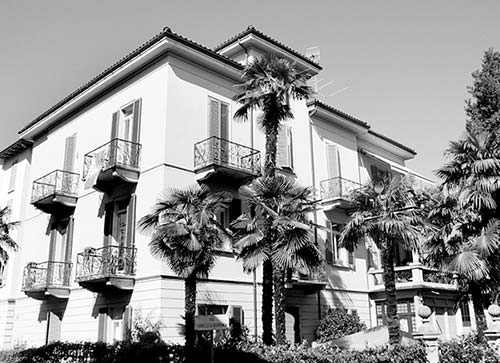
$ Hotel & Hostel Montarina, a creaky pink mansion in a palm garden overlooking the lake, has to be one of Europe’s most appealing hostels, with 124 ¢ dorm beds. It’s a great hotel option as well, with 24 private rooms; half of these are antique rooms with classic furniture and shared bathrooms, and the other half are modern “comfort” rooms, with private bathrooms and air-conditioning. Surrounded by lush tropical gardens and an extremely inviting swimming pool, and with a helpful staff, this place is well worth considering, even for those who usually don’t stay in hostels (breakfast buffet extra, reception open 7:00-23:00, late-night train noise, lockers, small kitchen, pay laundry, free parking, closed Nov-Feb, Via Montarina 1, +41 91 966 7272, www.montarina.com, info@montarina.com). At the train station, head to track 4, then walk along the platform with the station and lake on your left, and go through the parking lot toward the Continental Parkhotel sign. Just before the sign and a stone wall, take the sharp uphill turn to the right; halfway up the hill, go left through the gate marked #1.
Eating in Lugano
My recommended restaurants are all in the old town. You’ll pay a premium to dine on Piazza della Riforma, but it can be worth the expense. Lugano is not the best place for lakeside dining—instead, cross the lake to the remote little grotto restaurants, or visit the town of Gandria (both options described earlier, under “Cruising Lake Lugano”).
Lugano is a good place to sample Swiss wines. And, conveniently, most places let you order a little one-deciliter glass (about 3.5 oz) for the same price, per liter, as the big half-liter (about 17 oz) carafes—so go with a succession of small glasses and try several different wines. Experiment. The Ticino merlot is great.
This is the only corner of Switzerland that embraces the Italian aperitivo ritual, where a predinner drink comes with heavy snacks—so keep an eye out for places with that happy-hour tradition of offering a small plate of meats and cheeses with your drink in the early evening.
IN THE OLD TOWN
$$ La Tinèra, in an old wine cellar decorated with wine bottles and antique copper cookware, is filled with locals and a few tourists enjoying big portions of rustic, traditional Ticinese cuisine. The presentation is basic, but the food—including seasonal and nightly specials (such as bollito misto, a beef stew offered every Tuesday)—is simply satisfying (Mon-Sat 11:30-15:00 & 18:30-23:00, closed Sun, Via dei Gorini 2, just a block behind Piazza della Riforma, +41 91 923 5219).
$$$ Bottegone del Vino is a quality wine bar with indoor and outdoor ambience and a small but enticing menu (just a few top-end dishes). Sitting here, you feel in the know—but order carefully, as prices really add up (Mon-Sat 11:30-24:00, closed Sun, a block off Piazza della Riforma at Via Magatti 3, +41 91 922 7689).
$$ Wine Bar Lugano is a low-key place to sample wines both from this part of Switzerland and from international wineries. They have a huge variety of bottles, but the staff enjoys talking you through the chalkboard list of what they’re pouring today. They also have a few straightforward food items, including a selection of salumi (cold cuts) and cheeses from around Switzerland. The bar is hidden in a fun and very local-feeling indoor/outdoor shopping zone a five-minute walk from the touristy core (Mon-Sat 11:00-23:00, closed Sun, Quartiere Maghetti 10, +41 91 921 0186).
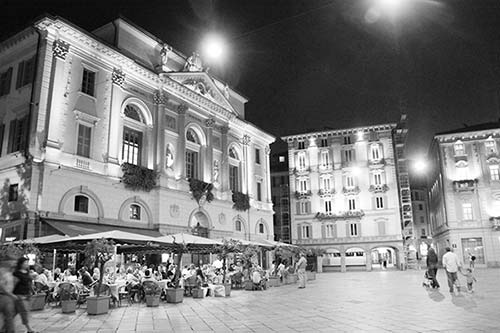
Around Piazza della Riforma: Various restaurants offer decent but pricey food and great people-watching from outdoor tables on Lugano’s main piazza. The ambience here is delightful at twilight. At $$$ Pizzeria Tango, a helpful waitstaff serves Italian cuisine with a Ticino influence. While many of its tables face the busy main piazza, its interior and the tables facing a quiet little square in the back are also inviting (daily 11:00-23:00, +41 91 922 2701).
Microbrews and Pub Grub Facing the Lake: Named the best bar in Switzerland a few years back, $$ Il Fermento Pub has a fun and welcoming ambience that’s more rock n’ roll than hip-hop. The staff enjoy their work, and the seven Ticino craft beers on tap are great. Peanuts in the shell are free, or if you’re here for a meal it’s Flammkuchen (German-style pizzas, both savory and sweet), burgers, and salads (daily 12:00-24:00, ask for a quieter table outside, facing the lake at Via Marconi 91, +41 91 923 4545).
Ice Cream: Find a nice variety of creamy gelato at -9 Gelato Italiano (that’s “Minus Nine”). The interesting flavors are served from covered metal tins—which, any gelato aficionado will tell you, is a sign of fresh-made quality. It’s across the street from the Quartiere Maghetti shopping zone (and the Lugano Wine Bar, described above), offering another excuse to wander to this relatively untouristed part of town (daily 11:00-23:00, Via al Forte 4).
CHEAP EATS
Self-Service Cafeterias: Part of a chain, $$ Manora offers affordable, healthy food—a salad bar, pasta bar, main-dish counter where meat or fish is cooked in front of you, and lots more. Sit inside or outside on the covered terrace (with a playground). As it has its own entrance (on Salita Chiattone, up the stairs 100 yards from the bottom of the train-station funicular), it stays open later than the Manoras in other Swiss cities. During Manor department store business hours, you can also enter via the bridge from its third floor (Mon-Sat 7:30-22:00, last orders at 21:00, closed Sun, Piazza Dante 2).
The Co-op’s fourth-floor cafeteria, midway along the Via Nassa pedestrian mall, has a pretty rooftop terrace but is otherwise a poor second to Manora, with a smaller selection and shorter hours (Mon-Sat 8:00-17:00, closed Sun, Via Nassa 22).
Supermarkets: Try the midrange Co-op on Via Nassa, or the more upscale Manor off Piazza Dante. Both share the same hours (Mon-Fri 8:00-19:00, Thu until 20:00 or 21:00, Sat 8:00-18:30, closed Sun) and are in the basements of their similarly named department stores. On Sunday, your only option is the small Piccobello at the train station.
Lugano Connections
The opening of the world’s longest railway tunnel—the over-35-mile-long Gotthard Base Tunnel—has shortened travel times between Lugano and Zürich, Luzern, and the rest of northern Switzerland.
If you’re not in a hurry, though, knit Lugano into your Swiss itinerary with scenic trains—take the 5.5-hour Gotthard Panorama Express train-and-boat combination to Luzern, or the Bernina Express bus-and-train combination to eastern Switzerland. More details about these trips are in the Scenic Rail Journeys chapter. Train info: www.rail.ch.
Long-distance buses—including Bernina Express and St. Moritz buses—generally leave Lugano from a parking lot beyond the north end of the train station (that’s to the right, as you face it). However, this area may be under construction, so ask around if you can’t find it—and allow extra time when departing.
From Lugano by Train to: Luzern (every 2 hours direct, 1.75 hours), Zürich (1-2/hour, 2 hours), Interlaken Ost (1-2/hour, 4 hours, 2 changes, more with additional transfers), Bern (hourly, 3 hours, change in Zürich or Luzern), Milan (1-2/hour, 1.5 hours).
From Lugano by Bus and Train to the Upper Engadine: The Bernina Express bus (#731) leaves from outside Lugano’s train station at 10:00 (daily April-late Oct only), connecting in Tirano with trains heading over the scenic Bernina Pass to Pontresina, Samedan, St. Moritz, and Chur (reservations required, +41 81 288 6565, www.berninaexpress.ch; see the Scenic Rail Journeys chapter). A less scenic but quicker option with no changes is the Palm Express bus to St. Moritz (#631), which leaves Lugano’s train station at 15:31 (daily mid-June-late Oct, Fri-Sun only off-season, 4 hours to St. Moritz; reservations required by 8:30 the same day, +41 58 341 3492, www.postauto.ch). You can always reach St. Moritz from Lugano via regular train to Bellinzona, then bus to Thusis, then train to St. Moritz (almost hourly, 4 hours total).
From Lugano by Bus to Italy’s Lake Como: An Italian-run local bus (#C12) goes from Lugano to Menaggio on Lake Como (nearly hourly, fewer on Sun, 1 hour, www.asfautolinee.it). From Menaggio, you can take a ferry across the lake to Varenna. This bus leaves Lugano from Stazione Nord near the train station and, less frequently, from a stop on Via Campo Marzio, by the corner of Via Pietro Capelli. This is near the Lido stop of bus #2, in the Cassarate neighborhood a little east of downtown. Tickets are sold at the Lucini Store a few minutes’ walk from the park (at Viale Carlo Cattaneo 21) or by the driver for a surcharge.
From Lugano to Milan’s Airports: The closest major airports to Lugano are actually in Italy, near Milan: Malpensa Airport and the smaller Linate Airport (www.milanomalpensa-airport.com and www.milanolinate-airport.com). A handy train runs from Lugano’s train station to Malpensa (hourly, 1.5 hours, www.rail.ch). To reach Linate, take the train to Milano Centrale train station, then catch a shuttle bus from there (€5, roughly hourly, 30 minutes, www.airportbusexpress.it). At Milano Centrale, buses for Linate leave from the east side of the station (Piazza Luigi di Savoia).