SWITZERLAND
Switzerland’s Top Destinations
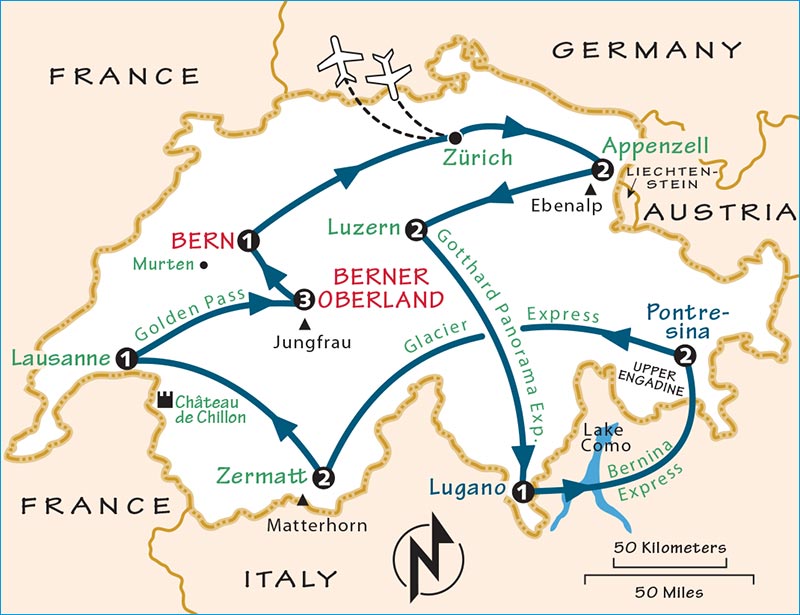
Map: Switzerland’s Best Two-Week Trip by Train
Little, mountainous, efficient Switzerland is one of Europe’s most appealing—and most expensive—destinations. It’s an enjoyable mix of bucolic peace and daring adventure: Around every alpine turn, you feel you could get a glimpse of Heidi milking a cow or James Bond schussing past on skis.
Wedged neatly between Germany, Austria, France, and Italy, Switzerland melds the best of all those worlds—and adds a healthy dose of chocolate, cowbells, and cable cars.
While landlocked, Switzerland has more than its share of clear rivers and big, beautiful lakes with a striking mountain backdrop. Nearly half of Switzerland consists of uninhabitable rocks and rugged Alps, with its flat land (and many hills) cultivated into tidy farms.
Despite the country’s small size, its geography has historically kept people apart, helping regions maintain their distinct cultures and languages—German, French, Italian, and Romansh. Even with its substantial regional differences, though, the entire country is unmistakably Swiss, dedicated to order and organization. Like the Boy Scouts, the Swiss count cleanliness, neatness, punctuality, tolerance, independence, thrift, and hard work as virtues...and they love pocketknives. If you find the people to be a little buttoned-up, remember that the payoff is a beautiful country where the trains run on time, the streets are clean, and every flower petal seems perfectly in place.
While it’s one of Europe’s most progressive “big-government” countries—with high taxation, ample social services, and liberal drug policies—Switzerland also has a conservative streak. Traditional mindsets persist in the remote mountain hamlets—for example, women weren’t guaranteed the right to vote in federal elections until 1971 (and were still barred from local elections in one region until 1990).
Switzerland is one of Europe’s oldest democracies. Born when three states (cantons) united in 1291, over time the Swiss Confederation grew to the 26 cantons of today. With the exception of the Protestant Reformation and an almost bloodless civil war in 1847, Swiss history has been pretty quiet. The Swiss are happy watching from above the fray as the tides of history swirl around them.
Stubbornly independent, or maybe just smart, Switzerland stayed out of both world wars. But it’s far from lax when it comes to national defense: The Swiss are legendary for their military readiness, with a vast reserve army and a countryside embedded with hidden fortresses. Through the tumult of the 20th century, no foreign invaders dared to try cracking this alpine nut.
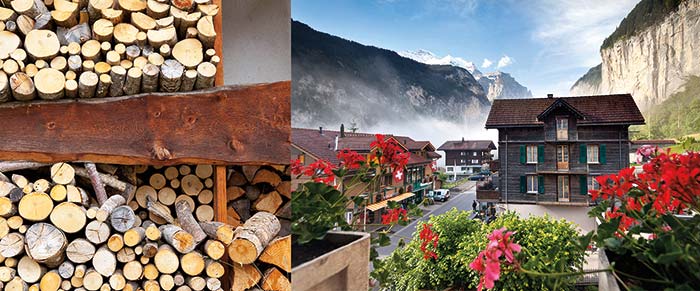
A winter’s supply of neatly stacked firewood; Lauterbrunnen Valley, at the base of sheer cliffs
You’d be forgiven for thinking of Switzerland as a “German” country. The heart of Switzerland, with about three-fifths of the population and most of the famous cities and sights, is linguistically (as well as culturally) Germanic. But even here, Germans and Austrians don’t feel quite at home. As if keeping alive an archaic code for insiders, the Swiss speak to each other in the lilting, fun-to-listen-to Swiss German, a.k.a. Schwyzer-dütsch, then switch seamlessly to standard German (or English) when interacting with outsiders.
Surrounding the German-speaking core is a more colorful Romance language-speaking fringe—French (to the west), Italian (to the south), and Romansh (tucked in the southeastern mountains). Switzerland’s biggest canton, officially trilingual, is its linguistic melting pot: the southeastern region called Graubünden (in German), Grigioni (in Italian), and Grischun (in Romansh).
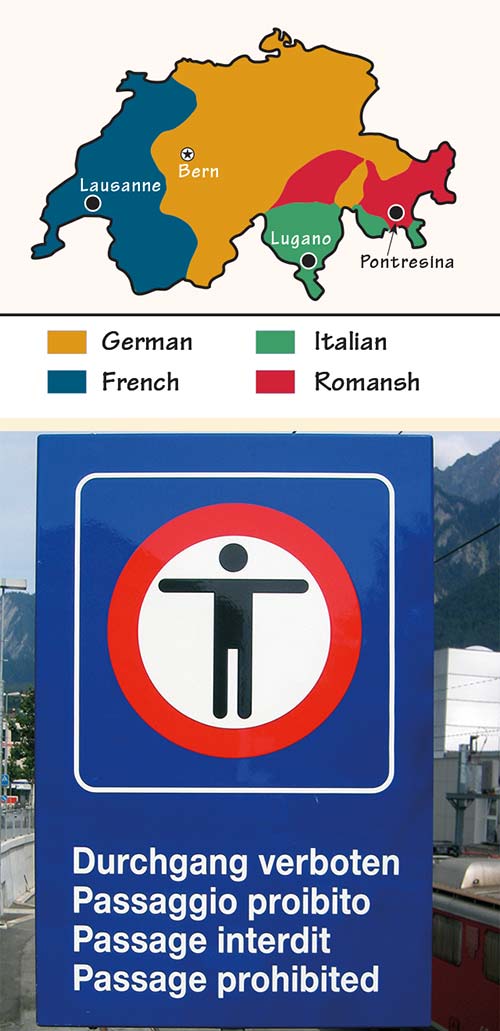
Subtle differences in cuisine, climate, and landscape seem to match the linguistic boundaries. German-speaking Switzerland enjoys a vigorous efficiency reminiscent of Germany’s. The pace in genteel French-speaking Switzerland is a bit mellower, and the cuisine and lifestyle are more refined, resembling France’s. And the relatively balmy Italian-speaking canton of Ticino comes with a touch of chaos and lust for life that’s not far removed from Italy proper (which surrounds it on three sides). You can spend a week in Switzerland and feel almost as if you’ve traveled from Paris to Munich to Rome...without ever crossing a border.
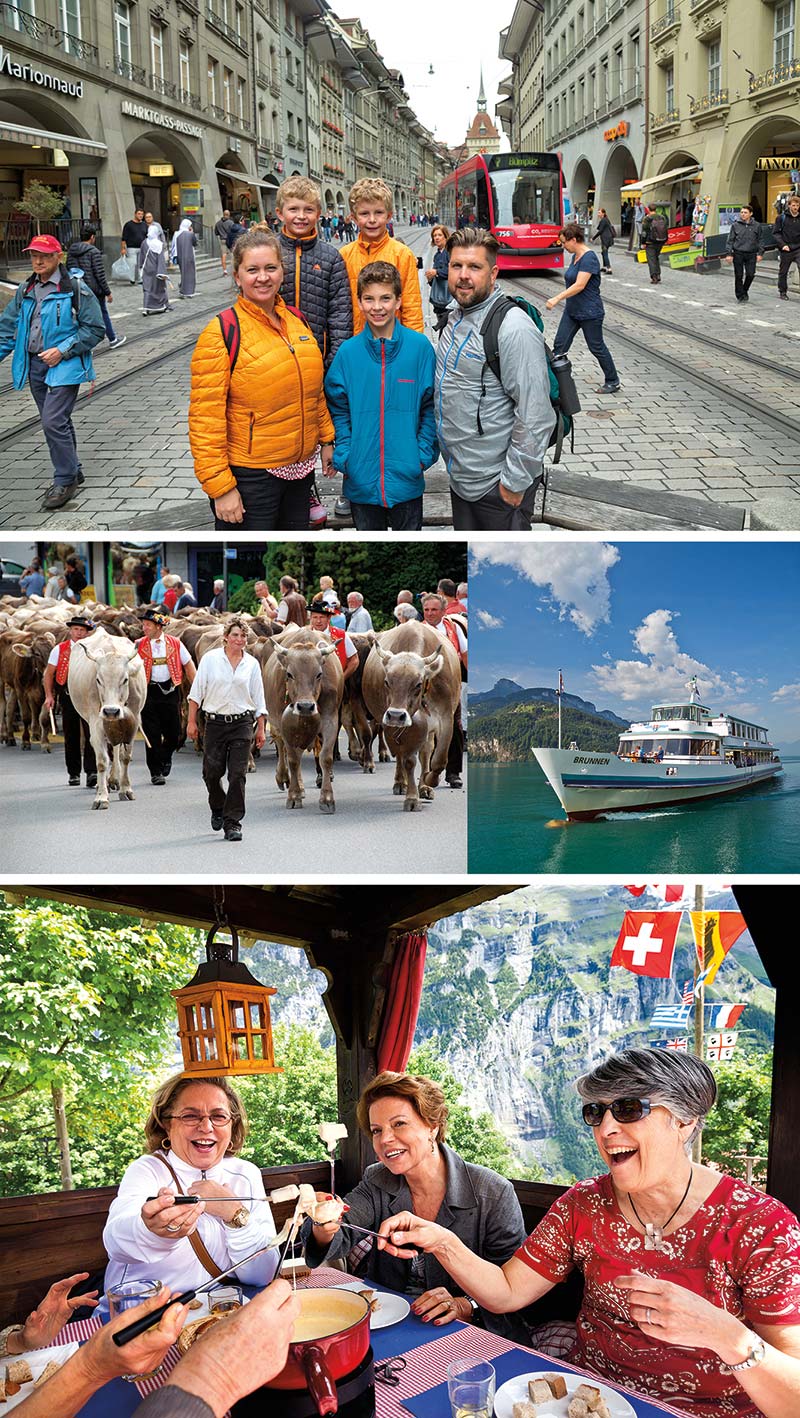
Compact and charming Bern; mountain-encircled Lake Luzern; convivial and delicious cheese fondue; a parade of cows in Appenzell
Though not a European Union member—in part because its agricultural lobby doesn’t want competition from more efficiently produced EU products—Switzerland still conforms to EU standards to be able to conduct business easily. Major Swiss moneymakers include banking, insurance, watches, chemicals and pharmaceuticals, tourism, precision instruments, and chocolate (Nestlé is the biggest producer).
Switzerland’s cosmopolitan cities offer an enticing, I-could-live-here glimpse of the Swiss urban quality of life: efficient trams and buses gliding around town, manicured pedestrian zones teeming with locals enjoying their cities, scenic boats cruising crystal-clear rivers and lakes, eclectic restaurants offering a tasty range of both Swiss and international cuisine, and low-key but thoughtful museums telling compelling stories.
But let’s face it: Travelers don’t flock to Switzerland for its cities. Spend most of your time getting high in the Alps. You can climb onto a train in one of Switzerland’s most bustling stations and, within an hour or two, step off into an idyllic time-warp world where traditional culture still thrives. Alpine villages (such as Gimmelwald) and towns (such as Appenzell) give you a taste of rural Switzerland, and are the perfect base for pastoral countryside hikes or riding lifts to dramatic cut-glass alpine panoramas.
If you’re in the countryside on a Sunday, you’ll most likely enjoy traditional music, clothing, and culture. At the end of a day of hiking, you can retreat to a village enclave preserving a colorful, rustic, rural way of life. In spring and fall, you might be lucky enough to see a parade of cows on their way up to or back down from the high-mountain pastures.
Cows have also had a big impact on Swiss cuisine—especially cheese. Two of the most revered Swiss cheeses are the smooth Gruyère (from the town of Gruyères) and the stinky Appenzeller (from the region of Appenzell). Shops sell a fragrant festival of mold, perfect for picnicking or for making two famous Swiss culinary specialties: fondue (a pot of cheese melted into wine) or raclette (cheese melted over potatoes and other vegetables).
Switzerland’s best attraction might just be traveling through its flat-out spectacular scenery. The country is crisscrossed with fine autobahns and arguably Europe’s most efficient rail system. Buses fill in the gaps, while boats ply the many tranquil lakes. Try the variety of fun cogwheel trains, funiculars, and cable cars that deliver you—no matter the season—from sunny valleys up to dizzying heights and snowy vistas.
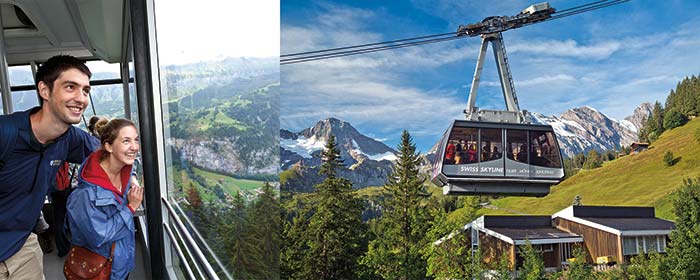
Gondolas in Mürren and Gimmelwald offer views along with transportation.
The Swiss railway system markets several scenic journeys, many with special panoramic trains designed to maximize views (for details, see the Scenic Rail Journeys chapter). But don’t let the tourist hype give you tunnel vision: A sunny day spent on a train just about anywhere in Switzerland can rank as a memorable trip-capper.
Enjoy Switzerland’s famous efficiency and unique mingling of the modern and the traditional. Join cheesemakers in a high valley, call the shepherds on an alphorn, and hike through some of the world’s most stunning mountain scenery. Just thinking about a Switzerland trip makes me want to yodel.
Switzerland’s Top Destinations
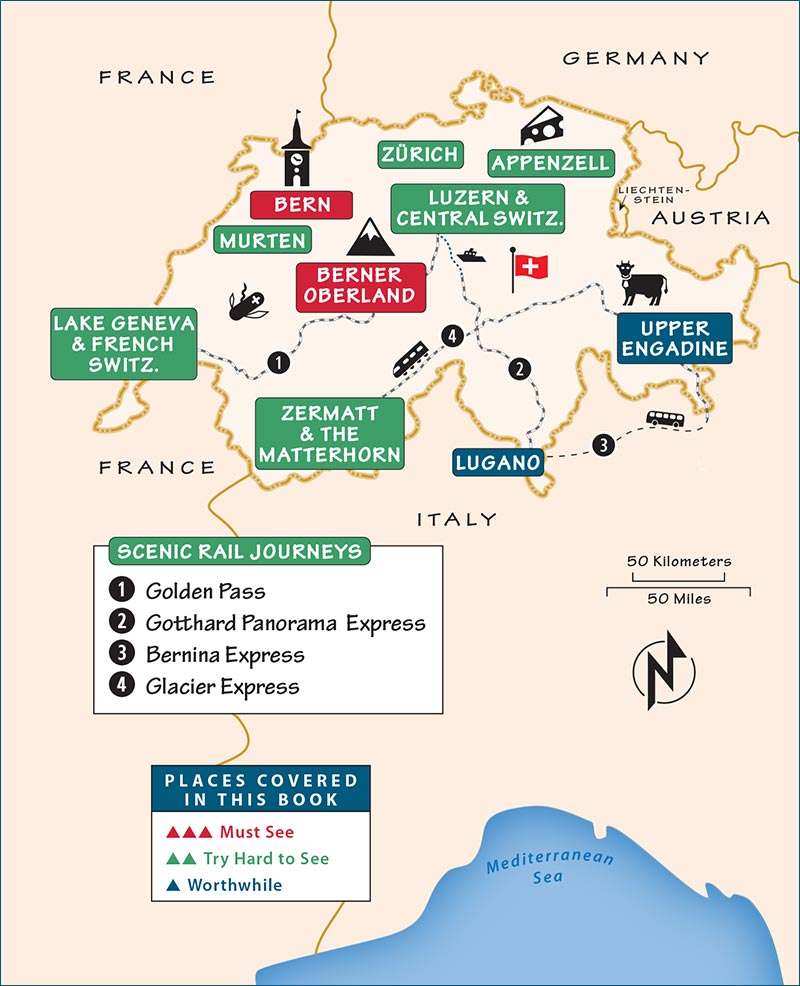
It’s a small country, but there’s a lot to see in Switzerland. This overview categorizes the country’s top destinations into must-see places (to help first-time travelers plan their trip) and worth-it places (for those with extra time or special interests). I’ve also suggested a minimum number of days to allow per destination.
MUST-SEE DESTINATIONS
Switzerland’s capital Bern is its most charming and fun city, with one of Europe’s finest surviving, fun-to-stroll medieval cores. Bern makes a convenient stop on the way to or from the stunningly scenic Berner Oberland and to other parts of the country. On a short trip, I’d prioritize these two areas.
▲▲▲Bern (allow 1 day)
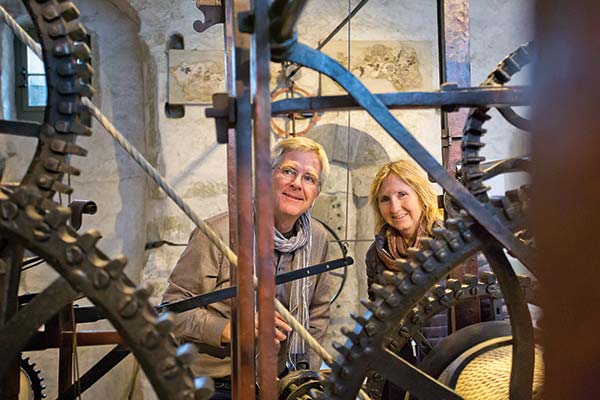
The cozy capital, tucked in a sharp river bend, is my favorite Swiss city. It’s urban but easygoing, with arcaded shopping promenades, medieval clock towers, colorful statue-topped fountains, and museums devoted to Albert Einstein and artist Paul Klee. In summer, join the locals at the Marzilibad (an outdoor bathing complex) and see a carefree side to the serious Swiss.
▲▲▲Berner Oberland (3 days)
This mountainous region, highlighted by the Jungfrau and Schilthorn peaks, is worth taking time to savor. It’s popular for its traditional alpine villages (such as rustic Gimmelwald and the resort town of Mürren, both on the Schilthorn cable-car line). Scenic hikes, lifts, and train rides ring the valley hub of Lauterbrunnen. Easy trails and pleasant walks on the valley floor, plus the nearby Trümmelbach Falls, are ideal for a cloudy day, as is the nearby Swiss Open-Air Museum at Ballenberg. Touristy Interlaken is the gateway to this area.
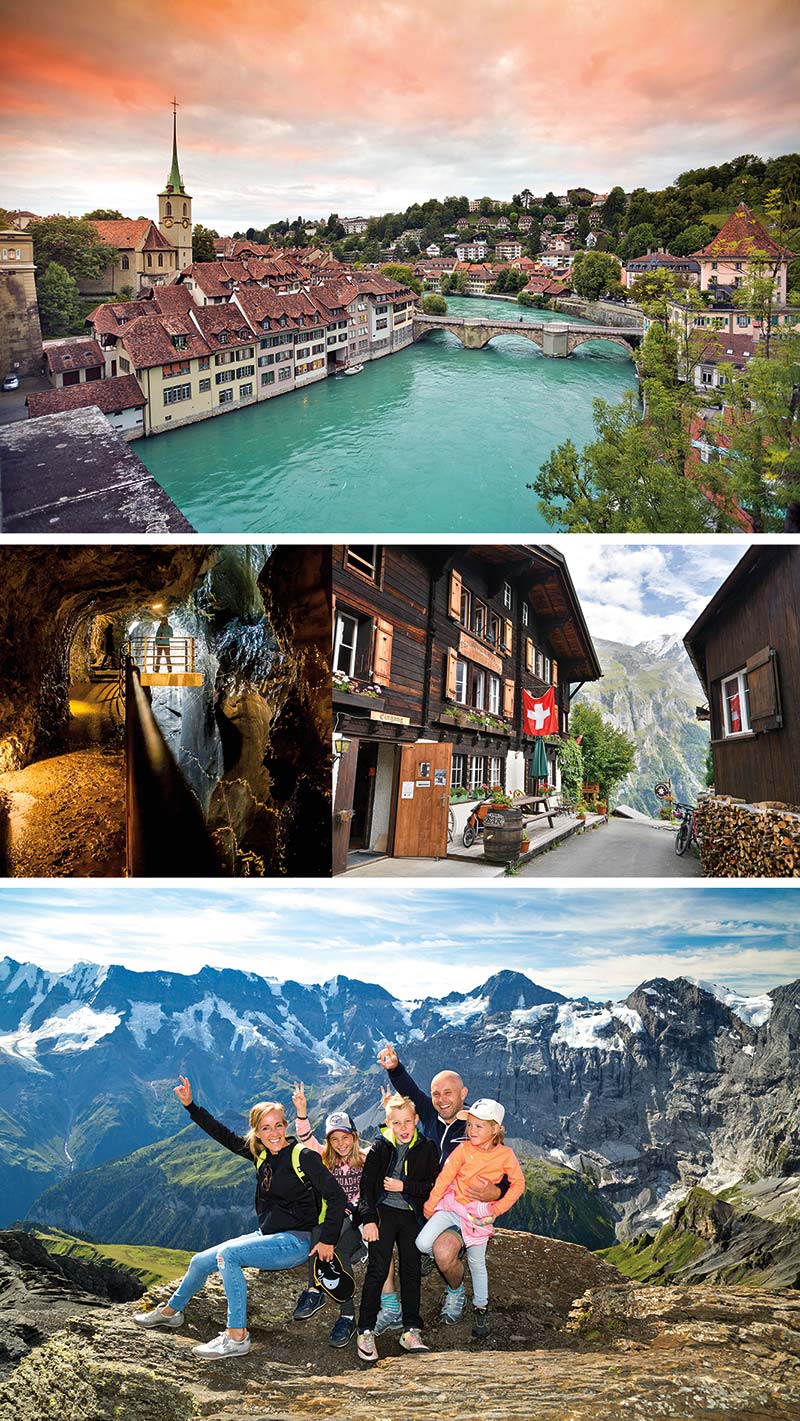
Medieval mechanics in Bern’s clock tower (opposite); Bern’s Aare River; rustic Gimmelwald; hiking in the Berner Oberland; exploring Trümmelbach Falls
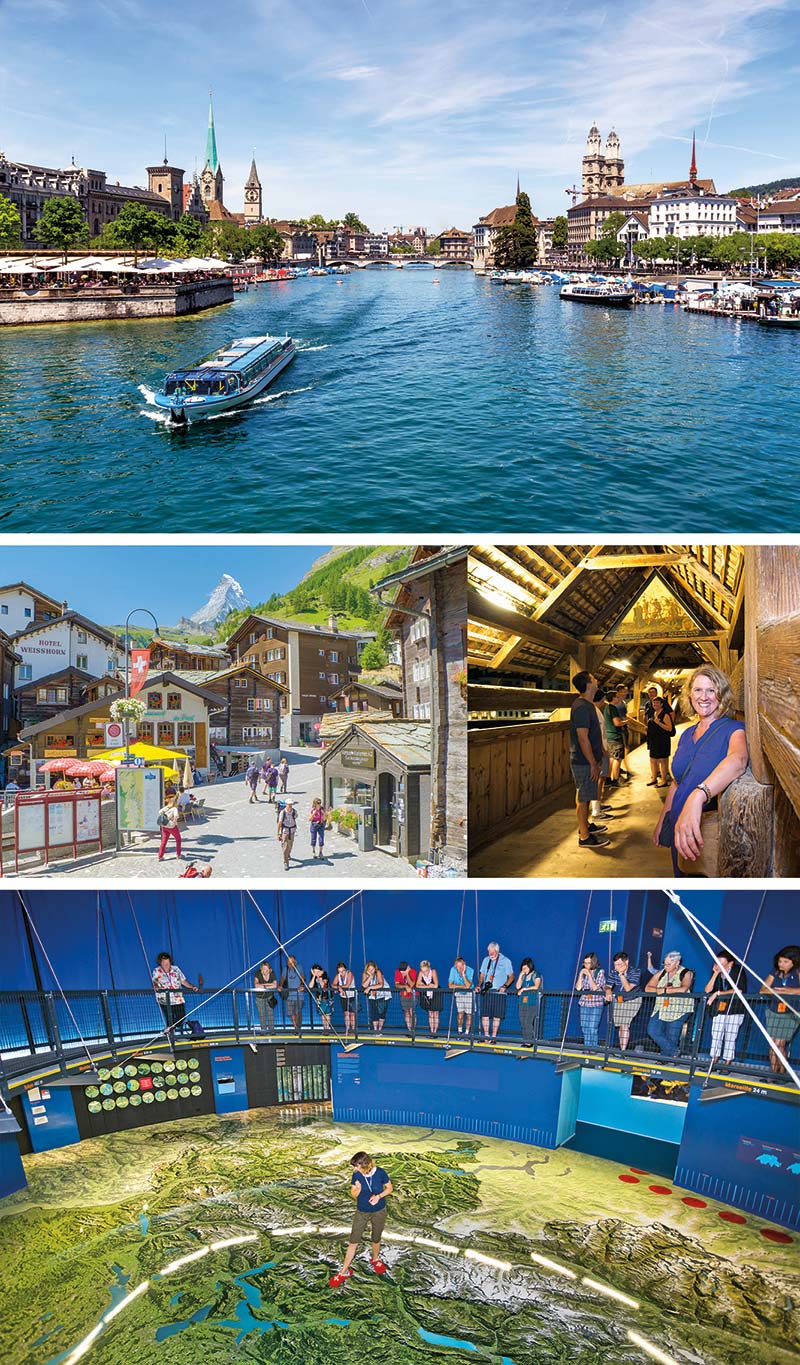
Urban-but-quaint Zürich; wooden bridge in Luzern; Luzern’s Swiss Transport Museum; Zermatt and its Matterhorn view
WORTH-IT DESTINATIONS
You can weave any of these destinations—rated ▲ or ▲▲— into your itinerary. It’s easy to add some destinations based on proximity (if you’re going to Bern, Murten is next door), but other out-of-the-way places can merit the journey, depending on your time and interests. I’ve included scenic rail trips on this list: In this land of dramatic mountains and picture-perfect farms, the journey is the destination.
▲▲Zürich (1 day)
Bustling cosmopolitan Zürich is a transportation center and Switzerland’s largest city by far. Along with upscale shops and a charming riverside old-town quarter full of pointy church spires and pealing bells, it’s home to the insightful National Museum Zürich, art-packed churches, and the country’s top fine-art collection at Kunsthaus Zürich.
▲▲Luzern and Central Switzerland (1-2 days)
Touristy yet lovely Luzern is famous for its historic wooden bridges, picturesque streets, and vintage steamships that ply Lake Luzern. Ringed by mountains with stunning vistas accessible by high-altitude lifts, Luzern’s sights include the Swiss Transport Museum, an impressive Picasso exhibit at the Rosengart Collection, and the underground bunker at nearby Fortress Fürigen. And it’s a handy hub for easy excursions to nearby Mount Pilatus and Mount Rigi.
▲▲Murten and Avenches (1/2 day)
Quaint, small, walled Murten—an easy half-hour trip from Bern—sits next to the German/French linguistic fault line, with nearby Roman ruins and museum in Avenches.
▲▲Zermatt and the Matterhorn (2 days)
Zermatt, a glitzy ski resort with old-fashioned touches surrounded by an array of mountain lifts, is a gateway to fine hikes and views—which get even better when that iconic pointy peak of the Matterhorn emerges from the clouds.
▲▲Appenzell (1 day)
The very traditional Swiss region around Appenzell is known for pastoral green hills and carved chalets, cozy small towns (including Appenzell town), cows, folk museums, and, just a cable-car ride away, a rustic cliffside retreat at Ebenalp.
▲▲Lake Geneva and French Switzerland (1 day)
Elegant Lake Geneva is lined with vineyards and resort towns. The region boasts Switzerland’s best castle experience at Château de Chillon; the sophisticated, multilevel city of Lausanne, with its engaging Olympic and Art Brut museums; the cute and cheesy medieval town of Gruyères; and a pleasantly scenic countryside.
▲▲Scenic Rail Journeys
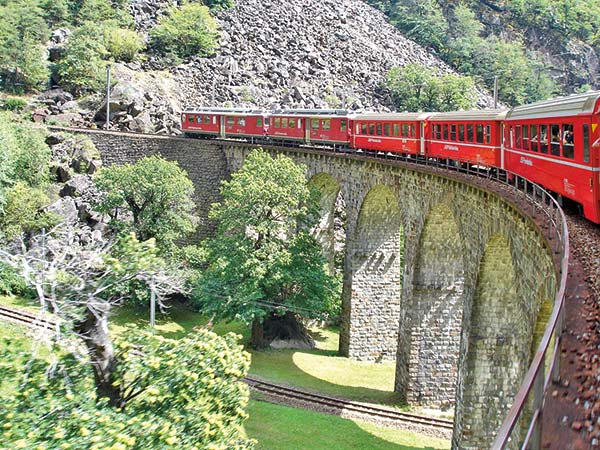
Enjoy panoramic views while crisscrossing the country on one of four famous train rides. The Golden Pass route connects Luzern with Lake Geneva; the Gotthard Panorama Express runs from Luzern to Lugano (half by boat and half by train); the Bernina Express connects Lugano with eastern Switzerland (by bus via Italy’s Lake Como, plus a train through the mountains); and the Glacier Express travels between Zermatt and eastern Switzerland’s resort towns (St. Moritz/Davos).
▲Lugano (1 day)
A hub for two scenic train rides, Lugano is the leading city of Italian-speaking Switzerland, with a tidy urban core, scenic boat trips on its lake, relaxing strolls, and mountain lifts to lakeside peaks.
▲Upper Engadine (1-2 days)
This Romansh-speaking mountain resort region nestles in Switzerland’s southeast, with high-altitude viewpoints, tempting hikes, and a rugged landscape. It’s anchored by three towns: likeable Pontresina, sleepy Samedan, and swanky St. Moritz. The region makes an easy stopover for travelers on the Bernina Express or Glacier Express scenic train rides.
Planning Your Trip
To plan your trip, you’ll need to design your itinerary—choosing where and when to go, how you’ll travel, and how many days to spend at each destination. For my best general advice on sightseeing, accommodations, restaurants, and more, see the Practicalities chapter.
DESIGNING AN ITINERARY
As you read this book and learn your options...
Choose your top destinations.
My recommended itinerary (see the sidebar on here) gives you an idea of how much you can reasonably see in two weeks, but you can adapt it to fit your own interests and time frame.
Decide when to go.
The summer “tourist season” runs roughly from May through September, though in mountainous areas, it doesn’t start until sometime in June.
High summer (July-Aug) has its advantages: the best weather, snow-free alpine trails, very long days (light until after 21:00), and the busiest schedule of tourist fun. But prices and crowds are at their peak.
June and especially September are, for many visitors, the “sweet spot”: less crowded but (if you’re fortunate) still decent weather. If you’re coming to hike, fall is better than spring (when higher trails can still be snow-covered, and some lifts may not yet be running).
In late May and early October, travelers enjoy even fewer crowds, mild but riskier weather, and the ability to grab a room almost whenever and wherever they like. In fact, small mountain towns may feel downright deserted.
During the Zwischenzeit (“between time”—that is, between summer and ski seasons, roughly April, early May, late Oct, and Nov), Swiss cities are pleasantly uncrowded, but mountain resort towns such as Zermatt and Mürren are completely dead (most hotels and restaurants are closed, and the weather is iffy).
During ski season (Dec-March), mountain resorts are crowded and expensive, while cities are quieter (some accommodations and sights are either closed or run on a limited schedule). The weather can be cold and dreary, and nighttime will draw the shades on your sightseeing before dinner.
No matter when you go, pack warm clothing for the Alps—the weather can change suddenly. For weather specifics, see the climate chart in the appendix.
Connect the dots.
Link your destinations into a logical route. Determine which cities you’ll fly into and out of. Begin your search for transatlantic flights at Kayak.com.
Decide if you’ll travel by public transportation, car, or a combination. Switzerland’s public transportation system is tops, whether you want to go across the country or straight up into the mountains, and its breathtakingly scenic rail journeys are an experience in themselves. PostBuses (operated by the post office) pick you up in the rare cases where trains let you down. You can even go through the mountains, thanks to long tunnels (but you’ll miss the views). A car can be helpful for exploring the French Swiss countryside and the Appenzell area.
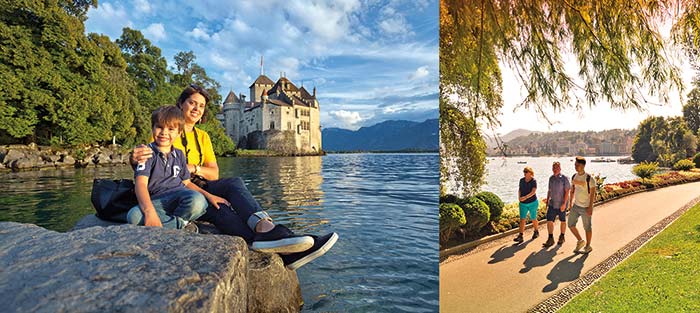
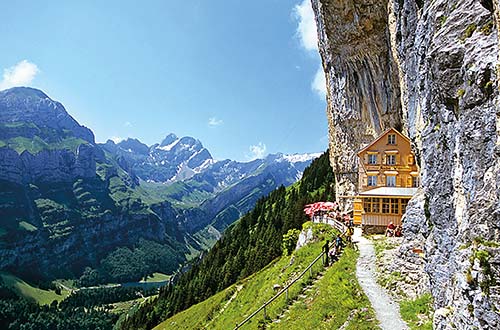
Cliffside dining at Ebenalp (opposite); Château de Chillon on Lake Geneva; strolling along Lake Lugano
To determine approximate travel times between destinations, study the driving map in the Practicalities chapter or check Google Maps; visit Rail.ch for train schedules. Compare the cost of any long train ride in Europe with a budget flight; check Skyscanner.com for intra-European flights.
Write out a day-by-day itinerary.
Figure out how many destinations you can comfortably fit in your time frame. Don’t overdo it—few travelers wish they’d hurried more. Allow enough days per stop (see estimates in “Switzerland’s Top Destinations,” earlier). Minimize one-night stands. It can be worth taking a late-afternoon train ride or drive to settle into a town for two consecutive nights—and gain a full uninterrupted day for sightseeing. Include sufficient time for transportation; many Swiss cities are just a quick hop apart, but reaching the high-mountain areas can take longer.
Staying in a home base (like Gimmelwald in the Berner Oberland) and making day trips can be more time-efficient than changing locations and hotels. Connect destinations, such as Bern and the Lake Geneva area, with a scenic rail trip, even if it adds an hour or two of transit time: In Switzerland, the views along the journey are a highlight.
| Day | Plan | Sleep |
|---|---|---|
| 1 | Arrive Zürich Airport, head to Appenzell | Appenzell or Ebenalp |
| 2 | All day in Appenzell and Ebenalp | Appenzell or Ebenalp |
| 3 | Leave early for Luzern | Luzern |
| 4 | Luzern | Luzern |
| 5 | Boat, then train to Lugano along Gotthard Panorama Express route | Lugano |
| 6 | Bernina Express to Upper Engadine | Pontresina |
| 7 | Upper Engadine (Pontresina, St. Moritz, and Samedan) | Pontresina |
| 8 | Take Glacier Express; if weather’s good, head for Zermatt; if weather’s bad, consider going straight to Lau-sanne (see Day 10) | Zermatt |
| 9 | Zermatt and hikes, Matterhorn-view lifts | Zermatt |
| 10 | If weather’s good, spend more time in Zermatt and go late to Lausanne; if weather’s bad, leave early for Lausanne (to visit its fine museums and nearby Château de Chillon) | Lausanne |
| 11 | Take the Golden Pass to the Berner Oberland. If weather’s good, go early; if weather’s bad, linger in Lausanne/Lake Geneva area and leave late | Gimmelwald or Mürren |
| 12 | All day for lifts and hikes in the Berner Oberland | Gimmelwald or Mürren |
| 13 | More time in the Berner Oberland | Gimmelwald or Mürren |
| 14 | On to Bern | Bern |
| 15 | Morning in Bern, then train to Zürich Airport to fly home |
Alternative: Zermatt isn’t worth the trip in bad weather. If your reservations are flexible, consider skipping that leg and going straight to Lausanne (take the Glacier Express only to Brig, then change for Lausanne).
With More Time: In order of priority, spend extra time in: Murten and Bern, Zürich (add a day at the beginning or end of your trip), Lausanne and the Lake Geneva area, Lugano (relaxing), or the Luzern area (day trips).
With Less Time: For a trip of a week or so, focus on the Berner Oberland, Bern, and Luzern.
Rail Pass: A Swiss Travel Pass for 15 consecutive days is typically best for this itinerary; see here for details and confirm the latest prices at RickSteves.com/rail.
By Car: This itinerary works by car with a few modifications. From Appenzell, drive straight to the Upper Engadine, then continue through Tirano and on to Lugano (via Lake Como in Italy). From Lugano, drive to Zermatt (crossing again through Italy) and resume the above itinerary, visiting Luzern at the end before returning to Zürich. The French Swiss countryside and the area around Murten merit more time if you have a car.
Beyond Switzerland: Switzerland splices neatly into a multicountry trip by car or train. For instance, the Appenzell region is a likely gateway to Germany’s Bavaria or Austria’s Tirol. Italy’s Lake Como is a stone’s throw from Lugano (the Bernina Express bus drives right alongside it)—and Milan is not much farther. If you’re in Lausanne, you’re literally looking at France (across Lake Geneva), and a handy train ride whisks you to Lyon or Chamonix. And big Swiss cities are efficiently connected by fast trains to destinations in all these countries and beyond.
Take sight closures and weather into account. It’s not worth visiting some places if visibility will be low or hiking will be unpleasant.
While Switzerland lacks a world-class metropolis, the cities I recommend are engaging—especially if bad weather keeps you from heading for the hills. Check if any holidays or festivals fall during your trip—these attract crowds and can close sights (for the latest, visit Switzerland’s tourist website, www.myswitzerland.com). Consider whether to buy a Swiss Travel Pass or reserve a scenic train ride in advance.
Give yourself some slack. Every trip, and every traveler, needs downtime for doing laundry, picnic shopping, people-watching, and so on. Pace yourself. Assume you will return.
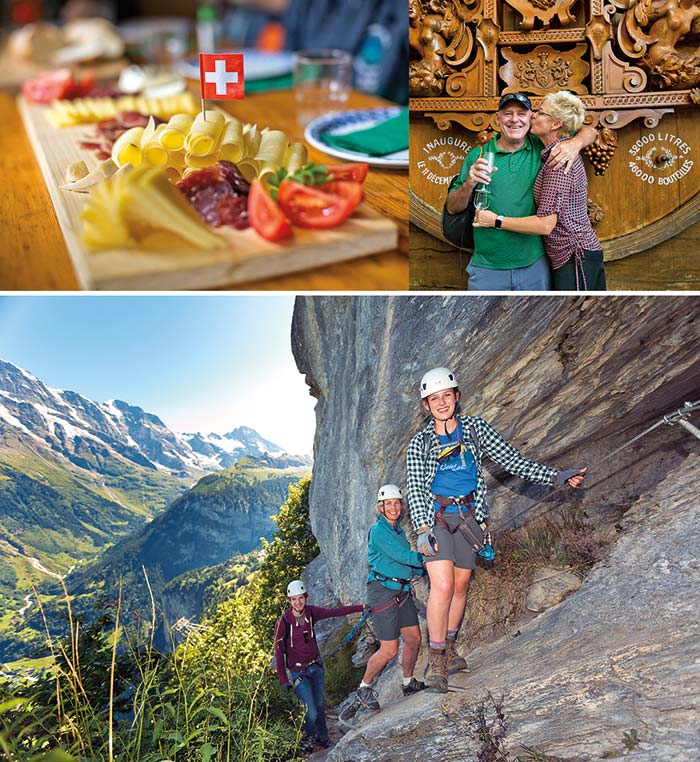
Swiss thrills: cheese plate; winery near Lake Geneva; via ferrata cliffside trail in Mürren
Run a reality check on your dream trip. You’ll have major transportation costs in addition to daily expenses.
Flight: A round-trip flight from the US to Zürich costs about $900-1,500, depending on where you fly from and when.
Public Transportation: Allow $750 per person. This covers a second-class, 15-day consecutive Swiss Travel Pass, plus high-mountain trains and lifts, and reservation fees for scenic trains. You can purchase a Swiss Travel Pass before you leave home or wait until you arrive in Switzerland—they’re also sold at local train stations.
Car Rental: Allow roughly $350-500 per week (booked well in advance), not including tolls, gas, parking, and insurance.
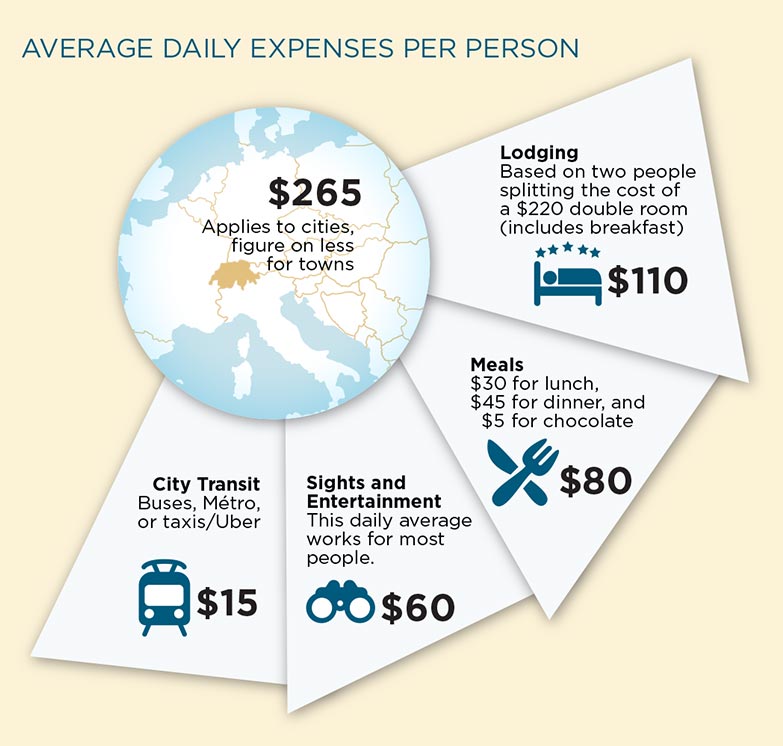
To cut your daily expenses, take advantage of the deals you’ll find throughout Switzerland and mentioned in this book.
The Swiss Travel Pass is a swinging deal for most travelers. It offers consecutive-day or flexipass coverage of Switzerland’s trains, boats, and buses, and a 50 percent discount off most lifts, including the cable car to the Schilthorn from Mürren (about $430 for 15-day consecutive pass in second class).
The Swiss Travel Pass also doubles as a Swiss Museum Pass (which otherwise costs about $180), covering admission to 500 museums or so on the days your pass is valid. To get the most out of a flexipass, use it to visit a museum, ride a lake boat, or take a lift either on the same day you arrive at that destination or on the day you depart. For a list of sights in this book covered by the Swiss Travel Pass and the Swiss Museum Pass, see the Practicalities chapter (also noted in individual listings).
Avid sightseers without the Swiss Travel Pass can buy local passes that cover multiple museums. If a town doesn’t offer deals, visit only the sights you most want to see, and seek out free sights and experiences (people-watching counts).
Many expensive alpine lifts offer discounted “early bird” tickets for the first (and sometimes last) trip of the day. Train trips get cheaper when you choose the right rail pass (for help, see here).
Some businesses—especially hotels and walking-tour companies—offer discounts to my readers (look for the RS% symbol in the listings in this book).
Reserve your rooms directly with the hotel. Some hotels offer a discount if you pay in cash and/or stay three or more nights (check online or ask).
Rooms can cost less in spring and fall (May, June, Sept, and Oct). And even seniors can sleep cheaply in hostels (most have private rooms) for under $100 per person. Keep your eyes peeled for Matratzenlagers (mattress dorms). Or check Airbnb-type sites for deals.
It’s no hardship to eat inexpensively in Switzerland. You can get tasty, affordable meals at buffets or self-service cafeterias (often attached to department or grocery stores). Cultivate the art of picnicking in atmospheric settings.
When you splurge, choose an experience you’ll always remember, such as a scenic train journey or a mountain lift. Minimize souvenir shopping; focus instead on collecting wonderful memories.
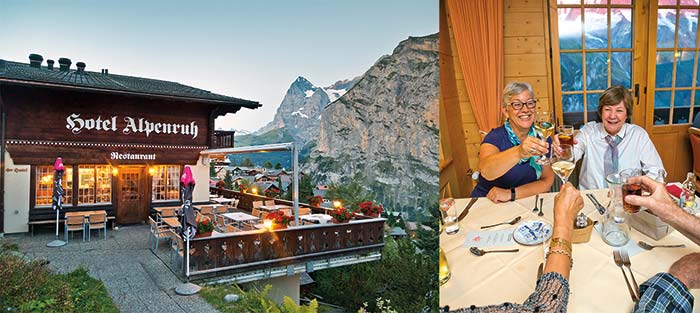
A deal on accommodations can give you the flexibility to splurge on memorable experiences.
BEFORE YOU GO
You’ll have a smoother trip if you tackle a few things ahead of time. For more details on these topics, see the Practicalities chapter and RickSteves.com, which has helpful travel-tip articles and videos.
Make sure your travel documents are valid. If your passport is due to expire within six months of your ticketed date of return, you need to renew it. Allow six weeks or more to renew or get a passport (www.travel.state.gov). Check for current Covid entry requirements, such as proof of vaccination or a negative Covid-19 test result.
Arrange your transportation. Book your international flights. Overall, Kayak.com is the best place to start searching for flights. It’s worth thinking about buying essential train tickets online in advance, getting a rail pass, renting a car, or booking cheap European flights. (You can wing it once you’re there, but it may cost more.)
Book rooms well in advance, especially if your trip falls during peak season or any major holidays or festivals.
Reserve or buy tickets in advance for scenic trains and mountain lifts. In summer, book ahead for the Jungfraubahn train ride described in the Berner Oberland chapter and the rail trips detailed in the Scenic Rail Journeys chapter.
Consider travel insurance. Compare the cost of insurance to the cost of your potential loss. Check whether your existing insurance (health, homeowners, or renters) covers you and your possessions overseas.
Call your bank. Alert your bank that you’ll be using your debit and credit cards in Europe. Ask about transaction fees, and, if you don’t already have one, get a “contactless” credit card (request your card PIN too). You don’t need to bring Swiss francs for your trip; you can withdraw currency from cash machines in Europe.
Use your smartphone smartly. Sign up for an international service plan to reduce your costs, or rely on Wi-Fi in Europe instead. Download any apps you’ll want on the road, such as maps, translators, transit schedules, and Rick Steves Audio Europe (see sidebar).
Pack light. You’ll walk with your luggage more than you think. I travel for weeks with a single carry-on bag and a day pack. Use the packing checklist in the appendix as a guide.
Travel smarter with these free, fun resources:
Rick Steves Classroom Europe, a powerful tool for teachers, is also useful for travelers. This video library contains about 500 short clips excerpted from my public television series. Enjoy these videos as you sort through options for your trip and to better understand what you’ll see in Europe. Check it out at Classroom.RickSteves.com (just enter a topic to find everything I’ve filmed on a subject).

The Rick Steves Audio Europe app makes it easy to download audio content to enhance your trip. Use the app to listen to audio tours of Europe’s top sights, plus interviews (organized by country) from my public radio show with experts from Europe and around the globe. Find it in your app store or at RickSteves.com/AudioEurope.
Travel Smart
If you have a positive attitude, equip yourself with good information (this book), and expect to travel smart, you will.
Read—and reread—this book. To have an “A” trip, be an “A” student. Note opening hours, closed days, crowd-beating tips, and whether reservations are required or advisable. Check the latest at RickSteves.com/update.
Be your own tour guide. As you travel, get up-to-date info on sights, reserve tickets and tours, reconfirm hotels and travel arrangements, and check transit connections. Visit local tourist information offices (TIs). Upon arrival in a new town, lay the groundwork for a smooth departure; confirm the train, bus, or road you’ll take when you leave.
Outsmart thieves. Pickpockets abound in crowded places where tourists congregate. Treat commotions as smokescreens for theft. Keep your cash, credit cards, and passport secure in a money belt tucked under your clothes; carry only a day’s spending money in your front pocket or wallet. Don’t set valuable items down on counters or café tabletops, where they can be quickly stolen or easily forgotten.
Minimize potential loss. Keep expensive gear to a minimum. Bring copies or take photos of important documents (passport and cards) to aid in replacement if they’re lost or stolen. Back up photos and files frequently.
Guard your time and energy. Taking a taxi can be a good value if it saves you a long wait for a cheap bus or an exhausting walk across town. To avoid long lines, follow my crowd-beating tips, such as making advance reservations, or sightseeing early or late.
Be flexible. Even if you have a well-planned itinerary, expect changes, strikes, closures, sore feet, bad weather, and so on. Your Plan B could turn out to be even better.
Attempt the language. Most Swiss people—especially in the tourist trade and in cities—speak English, but if you learn just a few pleasantries in the local language, you’ll get more smiles and make more friends. Apps such as Google Translate work for on-the-go translation help, but you can get a head start by practicing the survival phrases near the end of this book.
Connect with the culture. Interacting with locals carbonates your experience. Enjoy the friendliness of the Swiss people. Ask questions; most locals are happy to point you in their idea of the right direction. Set up your own quest for the richest hot chocolate, cheeriest window box, or tastiest mountain cheese. When an opportunity pops up, make it a habit to say “yes.” And, of course, more cowbell.
Switzerland...here you come!