LUZERN & CENTRAL SWITZERLAND
Luzern and Central Switzerland at a Glance
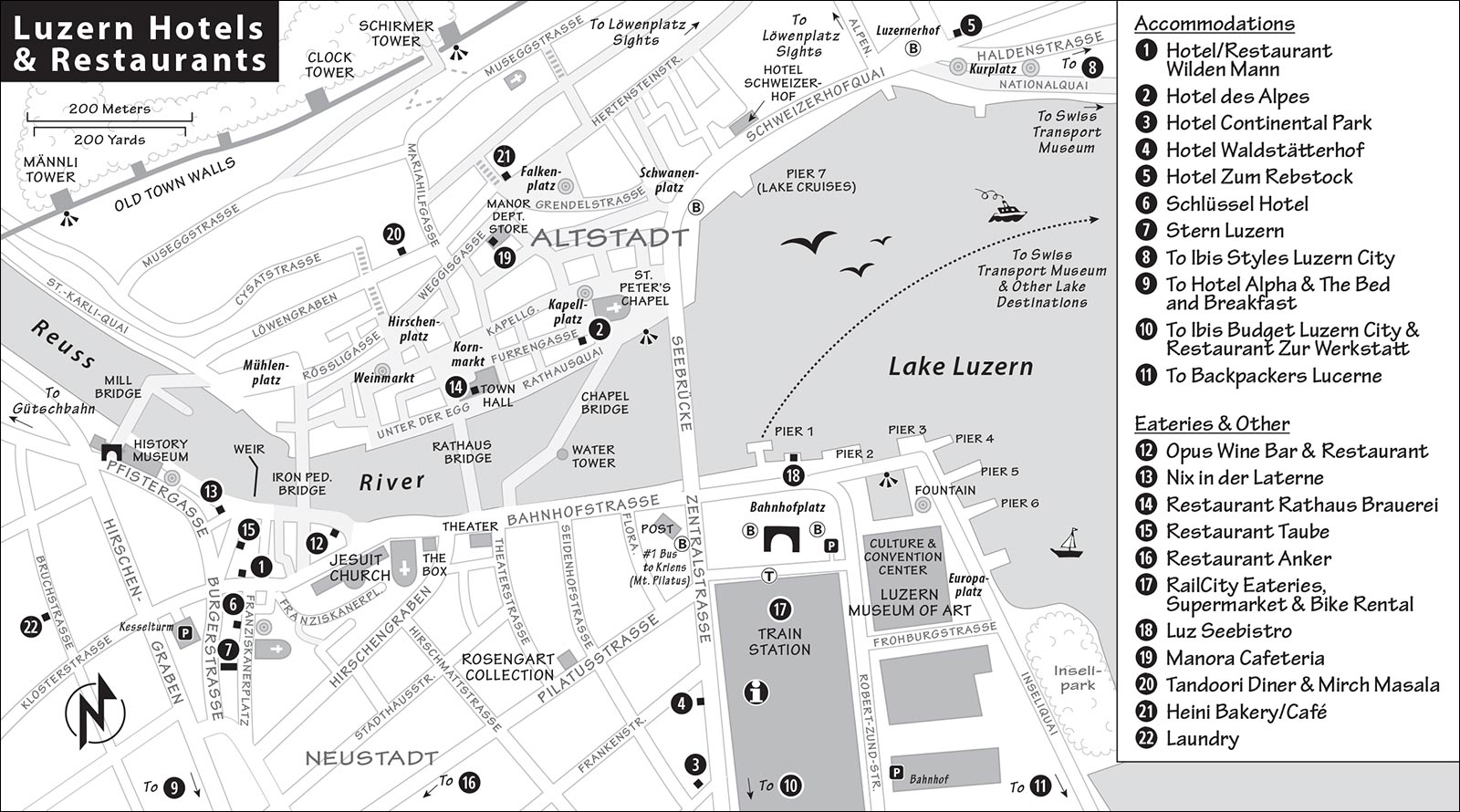
Map: Luzern Hotels & Restaurants
Luzern has long been Switzerland’s tourism capital. Situated on the edge of its namesake lake, with a striking alpine panorama as a backdrop, Luzern was a regular stop on the Grand Tour route of Europe during the Romantic era, entertaining visitors such as Mark Twain, Goethe, and Queen Victoria. And with a charming old town, a pair of picture-perfect wooden bridges, a gaggle of fine museums, and a famous weeping lion, there’s enough in Luzern to earn it a place on any Swiss itinerary. Beyond the town itself, several spots in the surrounding region (known as Central Switzerland or Zentralschweiz) make for great day trips.
PLANNING YOUR TIME
Luzern is worth at least a full day and two nights. To get the most from a full day in Luzern, begin with the TI’s two-hour walking tour, or follow the self-guided walk in this chapter. Then hit the museums that interest you most. In the early evening, take a peaceful boat trip on Lake Luzern, then wander the town’s scenic bridges at sunset.
With more time, consider the many fun and well-coordinated excursions within easy reach: boating on Lake Luzern; riding cog railways to mountain summits—the world’s steepest (up Mount Pilatus) and Europe’s oldest (up Mount Rigi); and exploring Swiss military history at Fortress Fürigen.
Luzern
Luzern (loot-SAIRN, “Lucerne” in English) is Switzerland’s touristic darling—an urban hub for visitors seeking easy access to the Alps. Famous for its historic wooden bridges, the city grew up around a monastery. According to legend, it was founded here because an angel shone a heavenly spotlight on the site (the name “Luzern” resembles lucerna, Latin for “lamp,” but the actual derivation isn’t clear).
Today Luzern is a compact, charming, well-organized destination. It boasts an atmospheric old town of vividly decorated buildings, more than its share of watch and pocketknife shops, and a variety of exceptional museums: Art buffs flock to the Rosengart Collection for its Picasso exhibit, historians enjoy the History Museum, and gearheads have a ball at the Swiss Transport Museum. All in all, Luzern is a delightful place. Just be prepared to share it—the city and its nearby mountaintops are jammed with visitors from every corner of the globe. Make a point to find a quiet little corner of Luzern all to yourself...in this fine city, it’s not hard to do.
Orientation to Luzern
Midsize Luzern has about 80,000 residents (and a metropolitan area sprawling to more than 200,000). It sits where the Reuss (pronounced “royce”) River flows out of Lake Luzern (a.k.a. the Vierwaldstättersee). South of the river is the train station and the bustling new town (Neustadt), and north of the river is the quaint, traffic-free old town (Altstadt). Pedestrian bridges span the river, including two classic wooden ones: the Chapel Bridge, with its famous stone Water Tower, and the Mill Bridge. The riverfront is lively, with restaurants, hotels, and museums lining both sides of the Reuss.
TOURIST INFORMATION
Luzern’s helpful, modern TI is inside the train station (Mon-Fri 8:30-17:00, Sat from 9:00, Sun 9:00-14:00, shorter hours off-season, Zentralstrasse 5, +41 41 227 1717, www.luzern.com). Pick up or download the free, informative City Guide. The TI sells the Swiss Travel Pass, public transport tickets, and tickets to activities around town, including boat trips.
Sightseeing Passes: The Swiss Travel Pass covers most of Luzern’s attractions. Without it, consider the Lucerne Museum Card, sold through the TI, which covers entry to all Luzern museums over a two-day period (36 CHF); it pays for itself if you visit the Swiss Transport Museum and at least one other museum.
When you check into your hotel, get your free Visitor Card, which covers all in-city transit, gives you access to city-run Wi-Fi, and provides 10-20 percent discounts at most Luzern sights and activities (including some lake boats and mountain lifts). Some Airbnbs also provide Visitor Cards. (The “card” is actually a sheet of paper with an ID number and a QR code.)
ARRIVAL IN LUZERN
Luzern’s waterfront train station is user-friendly, with three levels. The tracks are on the middle (street) level; the TI is along track 3, as are pay lockers. Upstairs you’ll find the SBB ticket counters—take the escalator by track 10 (Mon-Fri 7:00-21:00, Sat-Sun until 20:00; international-travel windows close two hours earlier); a serene Tibits vegetarian cafeteria overlooks the tracks. Most other important services are downstairs in the underground RailCity shopping mall. There you’ll find pricey WCs (with showers), ATMs, and shops and eateries (including a Co-op grocery store)—particularly convenient on Sundays, when many shops are closed.
From the bustling plaza directly out front (with the historic arch), buses fan out in every direction; Luzern’s lake-boat dock is at the far end of this area.
For a quick exit on foot to the old town and Chapel Bridge, with the tracks to your back, go downstairs and head to the far end of the underground shopping zone, then escalate up—you’ll pop out close to the river and main Seebrücke bridge.
HELPFUL HINTS
Medical Help: The welcoming Permanence MedCenter drop-in clinic is located downstairs in the train station (daily 7:00-23:00, +41 41 211 1444, www.medcenter.ch [URL inactive]).
Festivals: Central Switzerland’s biggest Mardi Gras celebration, Luzerner Fasnacht, begins on the Thursday before Ash Wednesday (exact date depends on Easter, https://luzerner-fasnacht.ch). The biggest parades are that day (called Dirty Thursday), but things stay noisy and busy well into the morning of Ash Wednesday. Book accommodations well in advance for this time.
The Lucerne Festival draws classical musicians and fans each year from early August to mid-September (www.lucernefestival.ch).
Markets: On Tuesdays and Saturdays, a farmers market borders both sides of the river near the main Seebrücke bridge (6:00-12:00). On Saturdays from May through October, a flea market fills the Vögeligärtli, a park near the train station (7:00-14:00), and on the first Saturday of the month from April to December, craft stalls set up on Weinmarkt in the old town.
Laundry: A 10-minute walk from the train station, Jet Wasch can pick up or deliver to your hotel for an extra fee (full service only; Mon-Fri 8:00-12:00 & 14:00-18:00, closed Sat-Sun, Bruchstrasse 28, +41 41 240 0151, www.jetwasch-luzern.ch). For location, see the “Luzern Hotels & Restaurants” map, later.
Bike Rental: Luzern has delightful lakeside cycling paths. The train station participates in the Swiss rail system’s bike rental system (see here).
Parking: The best downtown parking garage is Parkhaus Kesselturm at Burgerstrasse 20 (25 CHF/day if you prepay, go to payment machines after entry and follow instructions, +41 41 410 3117, www.parking-luzern.ch). Avoid the train-station garages, which are much more expensive (unless your hotel can get you a deal).
Water Fountains: Luzern is proud of its clean drinking water and its more than 200 public fountains—each with a fun design—that spout potable water. Take full advantage of these fountains to refill water bottles.
GETTING AROUND LUZERN
Except for the Swiss Transport Museum, Luzern’s main attractions are within an easy walk of the station. However, buses can be handy time-savers.
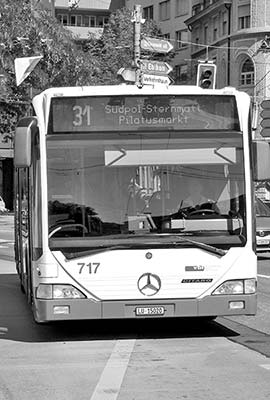
All public transit is included in a Swiss Travel Pass. If you’re staying at a Luzern hotel, you’ll get a Visitor Card that covers transit in the city center (zone 10—this includes everything in this chapter except the train to Alpnachstad, with the Pilatus cogwheel train). Otherwise, you’ll need either a short-stretch ticket (Kurzstrecke, 2.50 CHF, good for up to 6 stops), a single ticket (Einzelbillett, 4.10 CHF, good for one hour), or a day pass (8.20 CHF). Buy tickets from machines at stops or at the TI. Transit info: www.vbl.ch.
Tell-Pass: If you’re home-basing in Luzern for several days without a rail pass, consider the Tell-Pass. It covers up to 10 consecutive days of free rides on lifts, boats, and several area train lines (190 CHF/2 days, 220 CHF/3 days, more for longer durations, cheaper Nov-March when schedules are sparser; buy online or at TIs, train stations, and boat docks, www.tellpass.ch).
Tours in Luzern
For info on boat tours, see here.
Walking Tour
The TI offers a two-hour English-only tour several mornings each week in peak season. It covers the same route as my “Reuss River Stroll” below, but with more stories (20 CHF, discount with Visitor Card, May-Oct generally Tue, Thu, and Sat at 10:15, departs from train station TI, confirm days at www.luzern.com).
Tourist Train
This tacky little train does a 40-minute circuit of the city’s sights, departing from Hotel Schweizerhof (15 CHF, runs daily April-Oct, hourly 11:00-19:00 in summer, less frequent in spring and fall, www.citytrain.ch [URL inactive]).
Reuss River Stroll
This self-guided orientation walk, worth ▲▲, gives you a brief overview of the town. You’ll walk up along the Reuss River, see both of Luzern’s famous wooden bridges, and wander through the old town with its colorfully painted buildings. It takes about an hour at a leisurely pace.
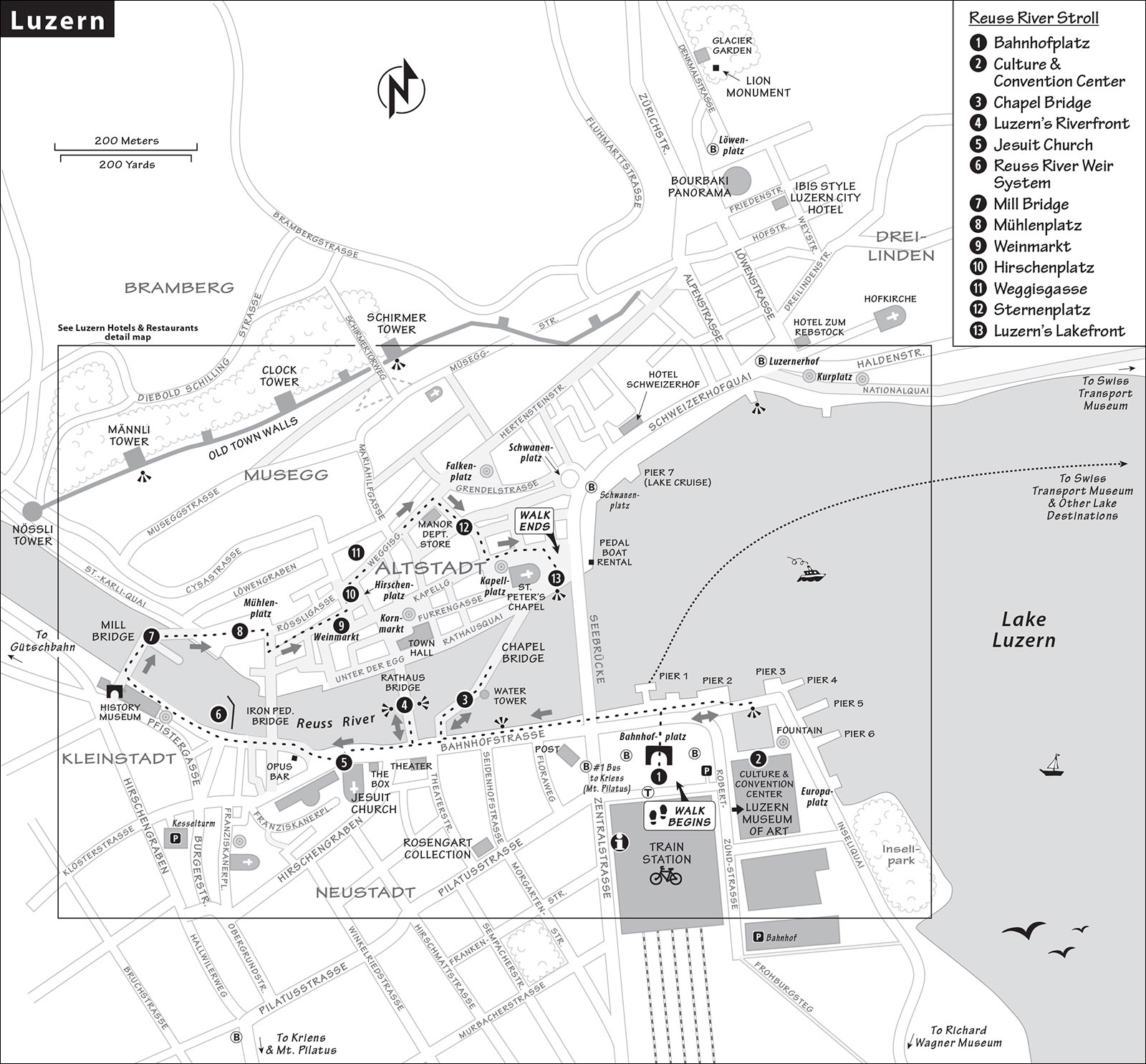
• Begin at Bahnhofplatz, the busy zone between the lake and the train station. Stand in front of the big stone arch.
1 Bahnhofplatz: This is the transportation hub of Luzern—and all of Central Switzerland. From the area in front of the station, buses zip you anywhere in town. And underneath you is the extensive RailCity shopping mall, honeycombed with pedestrian passageways leading to different parts of town.
The big stone arch was the entrance of the venerable old train station—built in the late 19th century when Switzerland became a top tourist spot, thanks to the advent of steam-powered trains (and a stay by Queen Victoria). But it burned down in 1971 and was replaced with the modern station.
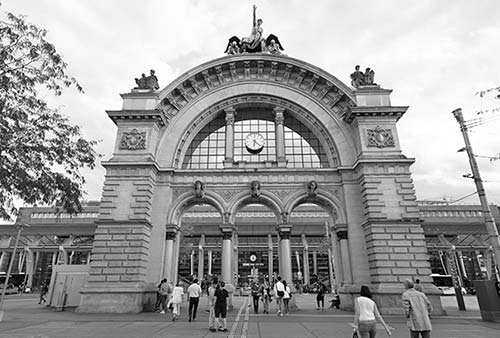
Cross the street to the lakefront, where you’ll reach Pier 1. (German-speaking Swiss call the lake the Vierwaldstättersee—“Lake of the Four Forest Settlements,” since it lies at the intersection of Switzerland’s four original “forest” cantons.) Here you can catch boats to various points around Lake Luzern, including Alpnachstad (cogwheel train to Mount Pilatus) and Vitznau (cogwheel train to Mount Rigi). For details on these excursions, see the “Central Switzerland Day Trips” section later in this chapter.
• Turn right, and—with the lake on your left—stroll a few steps toward the huge modern building with the big overhanging roof. This is the...
2 Culture and Convention Center (Kultur- und Kongresszentrum): This building, finished in 1998 by Parisian architect Jean Nouvel, features a concert hall that hosts the Luzern Festival, one of Switzerland’s biggest music events. It also holds the Luzern Museum of Art (Kunstmuseum Luzern), which is of interest mainly to serious art lovers (described later, under “Sights in Luzern”).
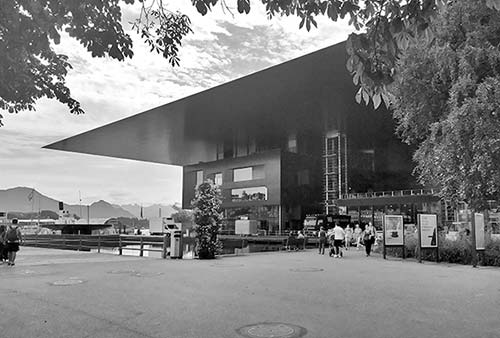
Lake water is pumped up, through, and out of this building; if you were to wander around its far side, you’d see open channels that go right through the middle of the structure, as well as a big pond. The architect claims the design recalls earlier times, when this area was swampland...but it more likely recalls his own original plans. Nouvel wanted to put the building out in the middle of the lake. When he was voted down by the people of Luzern, he decided to surround it with water anyway. The plaza under the roof (which reflects the lake and weather, further incorporating the building into the surrounding environment) is a busy community space popular for open-air concerts. Heaters keep the big, flat roof clear of snow.
• Now turn 180 degrees and follow the lakeshore away from the conference center. Carry on straight across the busy street and keep following the waterline. Soon you’ll have magnificent views of Luzern’s most famous landmark, the wooden...
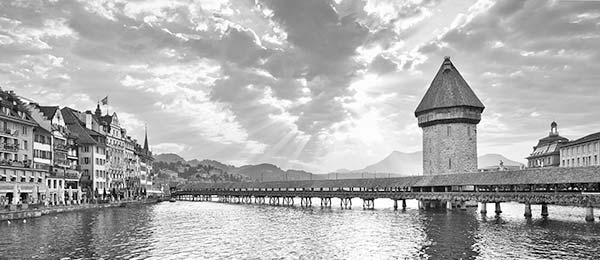
3 Chapel Bridge (Kapellbrücke): Luzern began as a fishing village. By the 13th century, with traffic between northern and southern Europe streaming through nearby Gotthard Pass, Luzern became a bustling trading center. In the first half of the 14th century, this covered bridge was angled across the river as part of the town’s medieval fortifications. Originally this wooden gallery stretched from the Jesuit Church and St. Peter’s Chapel all the way to the pointy twin steeples of the Hofkirche, far to the right. The octagonal stone Water Tower (Wasserturm, pictured here), built around 1300, also housed a prison—in the below-water-level cellar.
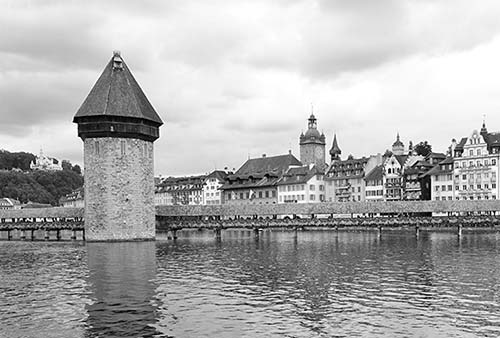
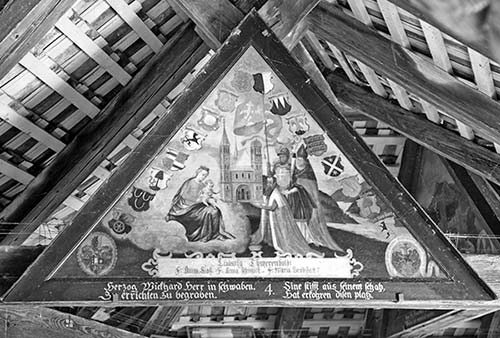
In the 17th century, the bridge was decorated with paintings depicting the development of the town, starring its two patron saints—St. Leodegar and St. Mauritius. In 1993, a leisure boat moored under the bridge caught fire, and before long, Luzern’s wooden landmark was in flames. (A plaque before the start of the bridge tells the story.) The bridge was painstakingly rebuilt—when you venture onto it, you’ll notice the lighter colored, newer wood in the middle. But many of its famous paintings were lost. Those remaining under the wooden roof at the ends of the bridge are restorations of the 17th-century originals; those in the middle were in storage at the time of the fire and therefore spared. Some burnt and charred paintings are still in their original spots. Boats are no longer allowed under the bridge, it’s now strictly nonsmoking, and tiny security cameras are everywhere.
• Wander out onto the bridge.
Study the colorful paintings overhead. Coats of arms on the paintings tell you which aristocratic families sponsored them. Painting #1—immediately above the stairs as you enter—features a legendary and formidable giant, an icon of Luzern. This big boy (sometimes called the Wild Man) dates back to the Middle Ages, when mammoth bones discovered locally were mistakenly identified as the remains of a 15-foot-tall human giant.
Painting #2 shows an angel shining a divine light on the place where the town would be born, and where, in the eighth century, a monastery was founded. Painting #3 shows Luzern circa 1400—see how the bridge was already part of the city fortifications. Painting #6 shows a bigger city, as it looked in 1630. Paintings #9 and #10 remain charred black—a reminder of the bridge fire. In the middle of the bridge (just after the shop), painting #48 features St. Mauritius (a plaque nearby explains why he matters to Luzern).
As you stroll, notice that the “window” openings facing the lake are smaller than those on the inland side. As part of the city defensive system, this design gave defenders more cover from lakeside attacks.
• Head back over the bridge the way you came, and turn right along the water. Very soon you’ll reach another bridge (with great views of the Chapel Bridge). Step out onto this bridge and take a look around at...
4 Luzern’s Riverfront: You’re surrounded by Luzern’s colorful town center, its beautiful river, and the grand hotels that line its banks. The stately stone building at the end of this bridge is Luzern’s historic Town Hall (Rathaus), dating from the early 1600s.
Look out to the Chapel Bridge, with the mountains just beyond. You’ll see how Luzern is supremely well-placed as a launch pad for alpine adventures: It sits where the flat, easy-to-traverse central plateau of Switzerland meets the wild and woolly Alps.
But it wasn’t until a very famous tourist came here that Luzern really took off. Turn 180 degrees—with your back to the Chapel Bridge—and look up to the fanciful castle-like building, Château Gütsch, on the ridge above. Just to the right is a much lower-profile gray building. This was where a grief-stricken Queen Victoria holed up for a month in 1868. She was still mourning her beloved Prince Albert—who had died seven years before—and came here partly to honor his memory (he had climbed Mount Rigi, the peak across the lake, in 1837, and one of Victoria’s treasured keepsakes was a pressed rose he had collected there). Victoria and her ensemble determinedly reached nearby mountain summits by riding donkeys and ponies.
Victoria’s subjects were inspired by their intrepid monarch, and English aristocrats began to plan their own trips to Luzern. Mark Twain followed (in 1878 and 1897). As Luzern became a magnet for international visitors, the lakefront promenade filled in and fancy resort hotels went up.
• Return to the train-station end of the bridge, turn right, and continue along the river. Pause at the big, white church.
5 Jesuit Church (Jesuitenkirche): This was the first major Baroque church in Switzerland, built around 1670 and similar to others in Catholic parts of Central Europe (free, Tue-Sun 6:30-18:30 except Mon and Thu from 9:30, www.jesuitenkirche-luzern.ch). It’s dedicated to the great missionary Francis Xavier, a co-founder of the Jesuit order, who’s shown in a niche on the facade blessing a convert. Although surrounded by Protestant strongholds like Bern and Zürich, Luzern withstood the Reformation and remains predominantly Catholic. (I once heard a local put it like this: “North of Luzern, everyone is Protestant all the way to Norway. South of Luzern, everyone is Catholic all the way to Rome.”) Luzern’s music school uses the church’s pipe organ for practice—if you’re lucky, you may catch an impromptu concert.
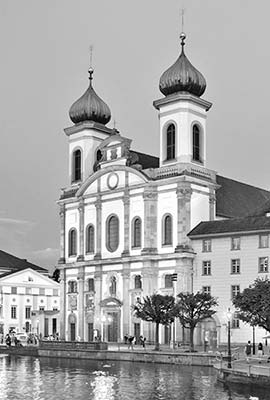
Step inside the church. The interior once dripped with Baroque decoration, but it was later redone in a lighter Rococo style (c. 1750). Rich as it looks, there’s no real marble here—what you see on the altar, pulpit, and side-chapel altars is stucco marble made from ground-up stone laid smoothly and economically over wood.
The decorations on the ceiling celebrate the life (and afterlife) of Xavier. In the biggest, central panel, you see the missionary traveling heavenward, in an exuberant setting that depicts both this church and Luzern’s landmark Chapel Bridge. The pope’s representative and townsfolk gather to wish Xavier Godspeed. His cart is pulled by an elephant, leopard, and camel, recalling his mission trips to the exotic Far East.
In the second side chapel on the right, you can meet the patron saint of Switzerland: Brother Klaus, a 15th-century hermit who lived in the nearby mountains after leaving his wife (with her consent) and 10 children to pursue a spiritual calling. He was a great peacemaker between the cantons and is considered the original Swiss isolationist. Since Klaus’ time, Switzerland has avoided entanglement in foreign squabbles (an ethic that continues today—see the “Swiss Military Readiness” sidebar, at the end of this chapter). The statue wears Klaus’ original robe. His walking stick is in a case just beneath.
Back outside, you’ll likely see a huge, wooden structure to the side of the church. Called simply “The Box,” this is a performance venue (and sometimes a café) for the local Luzern Theater (to see what’s on, check www.luzernertheater.ch).
• Continue strolling downriver toward Luzern’s other wooden bridge, the Mill Bridge. You’ll pass the recommended Opus wine bar/restaurant and an iron pedestrian bridge (at the narrowest crossing spot, marking the location of Luzern’s first bridge in the 12th century). Carrying on about 50 more yards, stop at the spiky fence partially damming the river.
6 Reuss River Weir System: This big river flowing out of the lake may seem wild, but it’s been tamed. Lake Luzern’s main source of water is snowmelt, which trickles in from streams coming off the surrounding mountains. The water drains from the lake here on its way to the Rhine. To prevent the flooding of lakeside villages, in the mid-19th century the city devised and built a simple yet ingenious dam (Nadelwehr, “spiked weir”) to control the flow of water and the lake level. When the water is highest (in the spring), spikes are removed to open the flow; as the summer wears on and the water level drops, spikes are gradually added to keep the flow steady. In winter, the dam is closed entirely to keep the lake level high enough for boats. It’s a dangerous process as workers, tethered by safety cables, hoist the spikes into position.
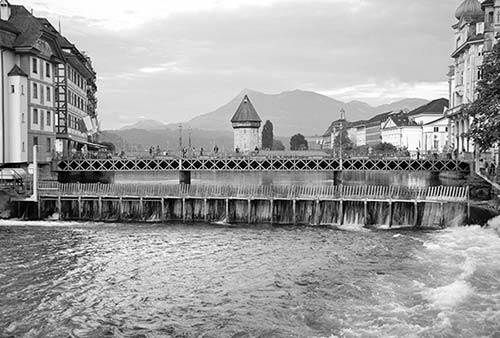
• Continuing down the river, you’ll pass the History Museum on your left (described later, under “Sights in Luzern”) before coming to the wooden...
7 Mill Bridge (Spreuerbrücke): Unlike the rebuilt Chapel Bridge, this 16th-century bridge is original—and the city is determined to keep it that way. Before you cross the bridge, pause to appreciate the first of its fine 17th-century paintings, which shows Luzern’s favorite giant again, with the blue-and-white city and cantonal banners under the double eagle of the Holy Roman Empire (of which the Swiss lands were a part during the Middle Ages). The flip side shows Judgment Day, with some going to heaven and others to hell.
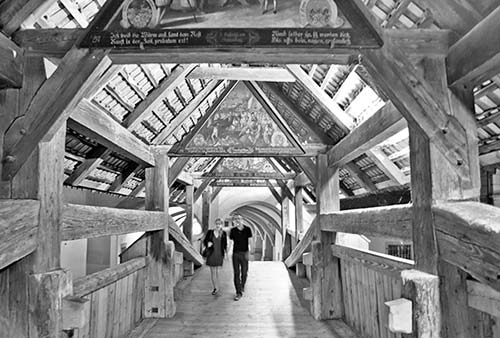
As you cross the bridge, notice that each painting includes a Grim Reaper-like skeleton lurking near people in every walk of life. Townsfolk crossed the bridge daily, and these scenes, painted during a time of war and plague, and based on the medieval allegory called the danse macabre—or dance of death—provided vivid reminders that, regardless of social standing or status, we must all face death.
Part way across is a little 16th-century chapel, built to ensure divine protection against destruction by flood. While you’re paused here, notice the serious woodwork of the bridge construction. Like the Chapel Bridge, this one was part of the city fortifications; its downstream defensive wall is higher.
The far end of the bridge was designed to accommodate wagons delivering grain or whatever else was to be milled. Once upon a time, three mills churned here—this was the medieval industrial center of Luzern. The “Spreu” in the bridge’s name means “chaff” (the sheath surrounding the wheat), which was separated from the wheat at the mill. You can see sketches of the mills as you leave the bridge (on the red wall on the left). A big turbine that generated power in 1889 sits here quietly now, but the tradition of harnessing water power continues. Beneath you, underwater, a modern hydroelectric plant creates enough power for 1,000 households.
• After crossing the bridge, turn right to find yourself in...
8 Mühlenplatz: This traffic-free square marks the entrance to the old town. Riverside benches make a good place for a picnic lunch or snack. On the left side of the square, at #11 (the Fischer-Stube—look above the first row of windows), a mural shows the city back when the water mills were hard at work.
• At the top of the square (under the Swiss Marilyn Monroe), head right on Kramgasse, then take the first left onto Weinmarktgasse, which leads to...
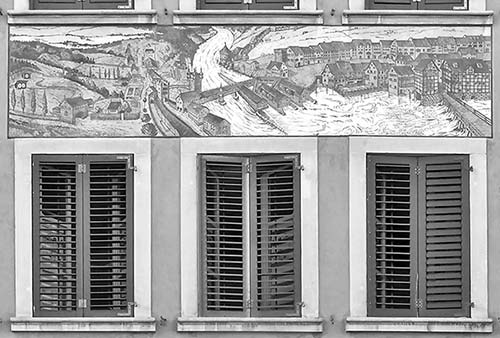
9 Weinmarkt: As the name implies, in medieval Luzern, this square served as a marketplace for wine. The soldiers on the fine 15th-century fountain (which flies the blue-and-white flag of the Luzern canton) remind visitors that this town is tough and strong. Enjoy the fine painted facades all around—a typical feature of Luzern’s medieval and Renaissance architecture. Off the bottom right of the square (near where you entered) is the ornate facade of the Hotel Waage/Hôtel des Balances. This was once the court of justice (hence the “scales” theme); the condemned were hanged from a linden tree just in front (about where a contemporary replacement tree is today).
Head higher up in the square, past the fountain. At first glance, the big mural on the green building at the top of the square seems to depict the Last Supper, but it’s actually the Wedding Feast at Cana, where Jesus turned water into wine. The wine theme continues on the left side of the square, where a secret message hides in the strange zigzags on the modern shutters of a building. Start at the top left and read: W-E-I-N-M-A-R-K-T.
• Leave the square on the far left side, which brings you straight into...
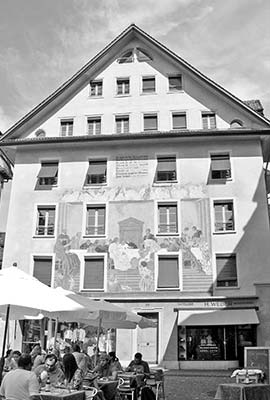
10 Hirschenplatz: History lingers long after things change—especially on this square. Its namesake, the Hirschen (“Deer”) Hotel, is gone but its elaborate golden sign will always hang here. Across from that, guess who used to have a shop in the big green building? Yep—the jeweler. (See all the rings?) Notice the until-death-do-us-part ring at far left, and that high above, Cupid has shot his arrow.
To the right of the jeweler, a painted inscription on the corner building declares “Goethe logierte hier 1779.” Goethe—the “German Shakespeare”—visited Luzern and stayed in a hotel on this corner. It was the city’s top hotel at the time...I bet it was named the Golden Eagle. To the left of the jeweler, the grand facade on the Dornach House, from 1899, celebrates the 400th anniversary of the last battle against the Habsburgs. Switzerland has enjoyed a durable understanding that it can have disagreements—but no wars—with its historically aggressive and militaristic neighbors.
Just down the little lane to the right of the golden deer, on the left side, notice the Rent-a-Box shop. A clever variation on a consignment store, the shop invites people to rent display boxes to try to sell old watches and jewelry.
Continue out of the square (diagonally opposite from where you entered) onto the busy 11 Weggisgasse. As you stroll, you’ll pass many international chain stores. However, every building in the old town—whether new or rebuilt—is required to offer residential apartments to prevent this historic zone from becoming only office space and touristy shops. This street is a real community.
• After two blocks, you’ll come to the Manor department store, with the recommended, tasty, and convenient Manora self-service cafeteria on the top floor (with great, free city views from its rooftop terrace). Turn right after Manor and walk one block, then hook left around the corner to...
12 Sternenplatz: This tiny square is dominated by the colorful facade of the Restaurant Fritschi. The paintings feature characters and symbols from Luzern’s annual Mardi Gras (Fasnacht) celebration—the city’s biggest event. Pictured near the top of the building are Mr. and Mrs. Fritschi—the festival cheerleaders, celebrating Fasnacht by wearing masks and throwing oranges. Flanking them are their trusty servants, a nanny and a jester. Below is the story of Fasnacht: The cock calls at 5:00 in the morning the Thursday before Ash Wednesday (on the left), and the people get up to frighten winter away. Mr. and Mrs. Fritschi arrive on their wagon to kick off the festivities (on the right). Flying around the scene are oranges—traditionally tossed by the Fritschis to their adoring fans. Once rare here in winter, oranges are special to the festivities, as they mark the beginning of spring.
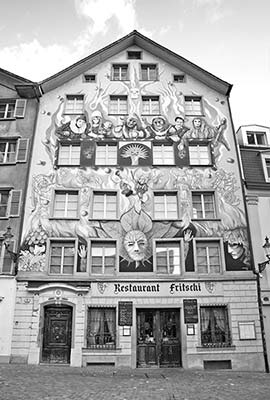
• Continue down the street at the bottom of the square (Hans-Holbein-Gasse), and you’ll come upon a colorful fountain with more Fasnacht fun. Notice the colorful masks...and the oranges. This is where the locals gather, often more than 10,000 strong, at five in the morning to kick off the biggest party of the year—six days long. Continue to the riverfront, walking around St. Peter’s Chapel, traditionally the church for Luzern’s poor.
13 Luzern’s Lakefront: You’re back at the wooden Chapel Bridge, having made the full circle. Enjoy the classic Luzern view: the Chapel Bridge and Water Tower, with Mount Pilatus hovering in the background. From here, cross over to the lakeside and stroll to the left.
Any swans out? Residents say they originated as a gift from French King Louis XIV in appreciation for the protection he got from his Swiss Guards. Today, local children (and tourists) make sure the swans get their daily bread.
• Your town walk is finished. From here you have several options: You can catch a lake cruise (described later under “On Lake Luzern”). You can cross the street and peruse ritzy Swiss watches at the flagship Bucherer store (selling envy since 1888). You can walk along the lake to the Swiss Transport Museum. Or you can cut inland to the Lion Monument. Everything is described in the next section.
Sights in Luzern
▲Rosengart Collection (Sammlung Rosengart)
▲History Museum (Historisches Museum)
Luzern Museum of Art (Kunstmuseum Luzern)
Glacier Garden (Gletschergarten)
▲Swiss Transport Museum (Verkehrshaus)
If you’ll be doing a lot of sightseeing here, first review your options for saving money on admissions (see “Tourist Information—Sightseeing Passes,” earlier).
MUSEUMS IN THE CENTER
Luzern is charming enough that simply strolling its streets and bridges and cruising the lake is enough for a happy day of sightseeing. But the city also offers some fine museums, all within walking distance.
▲Rosengart Collection (Sammlung Rosengart)
In the 1930s and 1940s, wealthy resident and art dealer Siegfried Rosengart palled around with all-star modern artists, financing and collecting their works. At an early age his daughter Angela took an interest in her father’s work and eventually became his business partner. This museum displays the fruits of their labor. Angela, now over 90, still visits the museum daily. Worth ▲▲▲ for art lovers, this may be Switzerland’s most user-friendly collection of modern art.
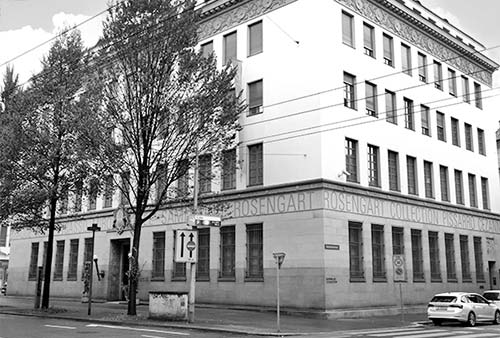
Cost and Hours: 18 CHF, covered by Swiss Travel Pass, daily 10:00-18:00, Nov-March 11:00-17:00, mandatory bag check; at the ticket desk, either buy the well-written little English booklet, get the sheet of QR codes to scan with your phone, or borrow the excellent English printouts that describe the collection; a few blocks from the train station in the new town up Pilatusstrasse at #10, +41 41 220 1660, www.rosengart.ch.
Visiting the Museum: The building’s three floors boast works from the big names of the late 19th and early 20th centuries, with an emphasis on the art of Pablo Picasso and Paul Klee. The ground and first floors feature an extensive Picasso collection focusing on his later works, including 32 paintings and some 100 drawings, watercolors, and graphic and sculptural works. Rosengart was Picasso’s leading Swiss art dealer and helped place a number of works in national and international museums.
On the upper floor are black-and-white candid photographs of Picasso (from a rotating collection of 200) by American David Douglas Duncan. Documenting the last 17 years of Picasso’s life, Duncan’s intimate photos of the artist and his family capture the very human personality of this larger-than-life genius, while providing insight into his artistic process and lifestyle. The first floor also has some Impressionist and Modernist works by Braque, Monet, Renoir, Miró, Chagall, Cézanne, Matisse, Modigliani, and Pissarro.
Don’t miss the basement, which displays 125 small works by Paul Klee, displayed chronologically so you can follow the evolution of his career. Watch as Klee discovers colors and blossoms from a doodler and, at times, watercolor artist into a mature painter.
▲History Museum (Historisches Museum)
This cluttered old museum is a repository for the accumulated bric-a-brac of Luzern’s past. It’s housed in one of the town’s oldest surviving buildings, which was long used to store military weapons and uniforms. The exhaustive collection is displayed on three crowded floors, in an approach reminiscent of a 21st-century cabinet of curiosities. You’ll wander through shelves of old weapons, stained-glass windows, church paintings and sculptures, costumes from Baroque times up to the present, folk art, and old-fashioned tourism posters. Each shelf (sometimes each item) has a barcode—scan it with an iPad you’ll borrow at the entry to learn more. Don’t miss the chilling guillotine on the ground floor—last used in 1940.
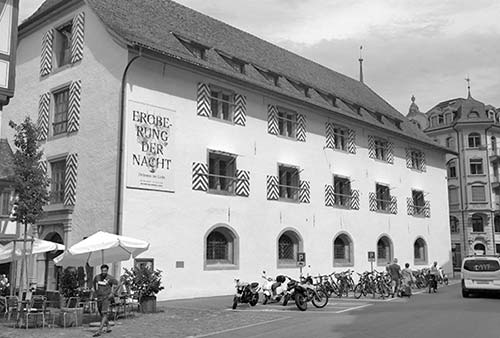
Cost and Hours: 10 CHF, covered by Swiss Travel Pass, Tue-Sun 10:00-17:00, closed Mon, Pfistergasse 24, +41 41 228 5424, www.historischesmuseum.lu.ch.
Luzern Museum of Art (Kunstmuseum Luzern)
Located in the lakefront cultural center by the train station, this museum features ambitious special exhibits of contemporary art as well as displays drawn from its permanent collection, which focuses on historical and contemporary works by Central Swiss artists.
Cost and Hours: 15 CHF, covered by Swiss Travel Pass, Tue-Sun 10:00-17:00, closed Mon, Europaplatz 1, +41 41 226 7800, www.kunstmuseumluzern.ch.
LÖWENPLATZ
North of the old town, Löwenplatz was a big deal back in the Romantic Age of tourism, when its three main sights (the lion sculpture, Bourbaki Panorama, and Glacier Garden) made it a destination. It remains a bucket-list stop for large groups but has the tired air of a tourist trap. Drop by for a peek at old-time tourism; behind the tacky souvenir shops, the sights do retain some of their Victorian-era charm.
Getting There: It’s a 10-minute walk from the old town or a short bus ride across the river from the station (take bus #1 or #19 three stops north from the train station to the Löwenplatz stop). By the bus stop is the round Bourbaki Panorama (as well as the Löwencenter mall, with eateries and a Co-op supermarket). The lion and the Glacier Garden are one long block farther up the hill.
▲Lion Monument (Löwendenkmal)
This free, famous monument remains an essential stop if you’re visiting Luzern—if only because when you get back home, everyone will ask you, “Did you see the lion?” Open from sunrise to dusk, the huge sculpture (33 feet long by 20 feet tall) is carved right into a cliff face, over a reflecting pool in a peaceful park—the site of a sandstone quarry when it was carved in 1821. Though it’s often overrun with tour groups, a tranquil moment here is genuinely moving: The mighty lion rests his paws on a shield, with his head cocked to one side, tears streaming down his cheeks. In his side is the broken-off end of a spear, which is slowly killing the noble beast. (Note the angle of the spear, which matches the striations of the rock face, subtly suggesting more spears raining down on the lion.)
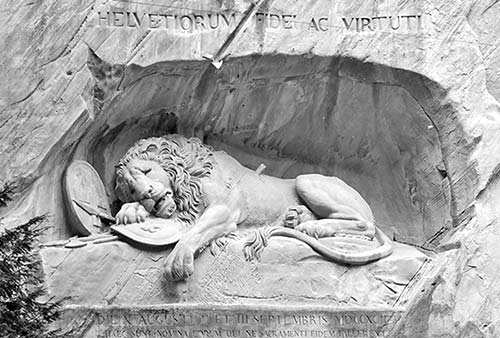
The lion memorializes a 1792 episode from the French Revolution, during which more than 600 Swiss Guards—hired to protect the French king—were killed or massacred when revolutionaries stormed the Tuileries Palace (the king managed to escape...for a while). The inscription reads, Helvetiorum fidei ac virtuti—“To the loyalty and bravery of the Swiss.” While a local artist carved it (in 14 months), it was designed by the great Danish Neoclassical sculptor Bertel Thorvaldsen.
Bourbaki Panorama
Here’s your chance to get right in the middle of a great painting—literally. In the 19th century, before the dawn of cinema, people were hungry for visual entertainment. Panorama theaters like this were built all over Europe and hosted various gigantic paintings, which were rolled up and taken on road trips.
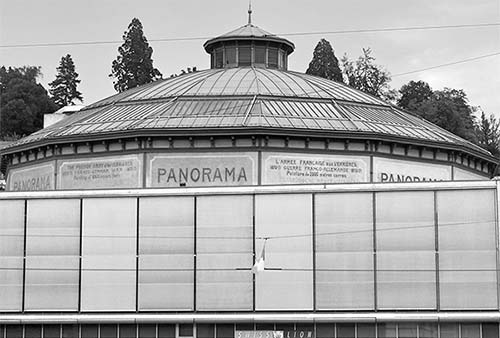
This 360-degree painting (a 33-foot-tall wraparound canvas with a circumference of 360 feet) tells the story of one of the culminating events of the 1870-1871 Franco-Prussian War, when French forces—routed by the Prussians—withdrew over the Swiss border. Though this was a minor episode in European history, the museum describes it so movingly that it makes for a satisfying sight.
Cost and Hours: 12 CHF, covered by Swiss Travel Pass; daily 9:00-18:00, Nov-March 10:00-17:00; Löwenplatz 11, +41 41 412 3030, www.bourbakipanorama.ch.
Background: After Prussia prevailed, some French soldiers were determined to surrender to the neutral Swiss rather than the enemy. For three days in February 1871, a hungry, weary 87,000-man army led by the panorama’s namesake, General Charles-Denis Bourbaki, trudged through the snow and across the Swiss border, near Neuchâtel. Once in Switzerland, they gave up their weapons and surrendered to the Swiss—who, as the story goes, took excellent care of them, nursing them back to health before sending them home with a hefty bill for their stay. Edouard Castres, who painted the panorama, actually witnessed the retreat as a Red Cross volunteer.
Visiting the Panorama: At the ticket office, you’ll get a free accordion-style booklet that fills you in on the history and makes for a good souvenir. Ask to borrow the iPad guide (which helps you zoom in and identify details); you’ll also want to request the English version of the 10-minute historical soundtrack. Then head up to the second-floor viewing platform to savor all 360 degrees of drama.
After you’ve viewed the panorama, visit an additional exhibit one floor down. The building also houses the Luzern city library, including a café and other cultural facilities.
Glacier Garden (Gletschergarten)
This complex is a strange sort of miniature theme park with an eclectic hodgepodge of exhibits, most loosely relating to alpine geology. The regular cost is expensive for what you get, but if you have a pass that includes admission here, it’s worth a quick look.
Cost and Hours: 22 CHF, covered by Swiss Travel Pass, daily 10:00-18:00, Nov-March until 17:00, Denkmalstrasse 4, +41 41 410 4340, www.gletschergarten.ch. You could buy the inexpensive guidebooklet or install an app that lets you download a free audioguide, but neither is essential.
Visiting the Garden: First you’ll walk through the glacier-grinded grounds that give the garden its name. While geologists might get a thrill out of this, it was just a bunch of holes to me. Then you can visit the museum, in a classic old chalet where the family that founded the garden once lived. Exhibits (labeled in German only) describe glacial processes. There are huge 3-D reliefs of late-18th-century Luzern, the Alps, and the lakes of Central Switzerland, plus bits of local and military history.
Behind the museum is the Sandstein Pavilion, showing a 20-minute movie about the Alps. Next to the museum, a Felsenwelt sign leads you into a maze of cool, dark, damp tunnels, ending in a stairway (or elevator) up to a clifftop observation area where you can look around at the neighborhood and distant peaks. From there, outdoor stairs lead back down to the museum past several more exhibits.
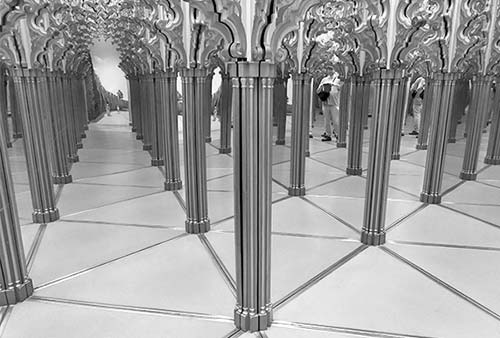
You’ll finish with the Hall of Mirrors (enter by the Labyrinth sign). Made in 1896 for a national exhibition in Geneva, it’s a delightfully low-tech fun house. You’ll grope your way through twisting corridors—with mirrors on all sides—decorated like a Disneyfied Alhambra. It’s confusing, dizzying, and claustrophobic, but goofy fun. As you run into yourself (literally) again and again, you’ll lament the poor sap who has to clean the smudge marks off all those mirrors. As you leave, giggling and nauseated, you may find yourself wondering, “So, what exactly did that have to do with glaciers?”
FARTHER FROM THE CENTER
▲Swiss Transport Museum (Verkehrshaus)
This “Swiss Smithsonian,” across the lake from the train station, includes hundreds of hands-on, kid-friendly exhibits in an enormous complex covering virtually all modes of transportation. It’s pricey and a little overwhelming, but it’s an amazing display of Swiss ingenuity and craftsmanship. If you’re in Luzern for only one day, skip this and enjoy the museums and ambience in the old town. But with a second day or younger kids in tow, or if you’re obsessed with trains, planes, and automobiles, this museum is worth ▲▲▲—and hours of entertainment.
Cost and Hours: 32 CHF, 14 CHF for kids 6-15, free under 6, half-price with Swiss Travel Pass; more for planetarium, IMAX cinema, and chocolate exhibit; daily 10:00-18:00, Nov-March until 17:00, café, Lidostrasse 5, +41 41 375 7575, www.verkehrshaus.ch [URL inactive].
Getting There: From downtown, it’s a 30-minute walk to the museum, most of it along a beautiful promenade. To make a beeline to the museum, take bus #6, #8, or #24 from the station and get off at the Verkehrshaus stop. For a more scenic approach in summer, catch a boat in front of the train station to Verkehrshaus-Lido (1-2/hour, 10 minutes, 6.40 CHF, www.lakelucerne.ch).
Visiting the Museum: The museum’s five main halls are arranged in a circle around a huge central plaza, with full-size airplanes and other attractions. Pick up a map and use the white line on the floor to navigate the full clockwise loop through the complex. Most exhibits are at least partly translated into English. As you enter, check the schedule of demonstrations (ranging from car-crash tests to airport X-ray machines; usually in English on request).
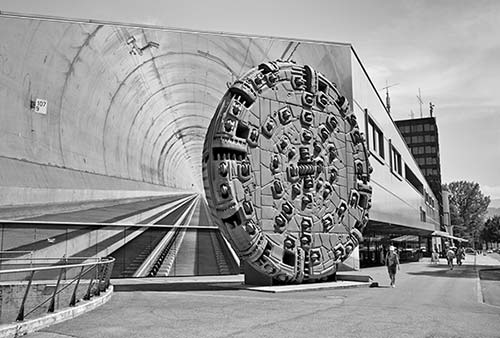
The first building is a long shed packed with train engines and tram cars. You’ll learn that hydropower generates 90 percent of the electricity for Swiss trains, and you’ll appreciate the evolution of Swiss trains and tunnels over the last century.
The second hall is a car enthusiast’s dream, with two floors devoted to road transport. One wall is stacked floor to ceiling with 80 vehicles dating from 1860 to 2005, mostly cars and motorcycles. Interactive screens let you zoom in on any vehicle for insights into its design and history.
The third building covers boats and submarines on the lower two floors and shows off some Swiss cable cars. Be sure to seek out (on the top floor) the “Livemap Switzerland”—an enormous (more than 2,000 square feet), up-to-date aerial photograph of Switzerland. Spread out on the floor like laminated linoleum, this photo map is detailed enough to show virtually every single building within the country’s borders. Slide on the Swiss-flag slippers, borrow a map and magnifying glass, and glide across Switzerland, looking for the places you’ve visited so far.
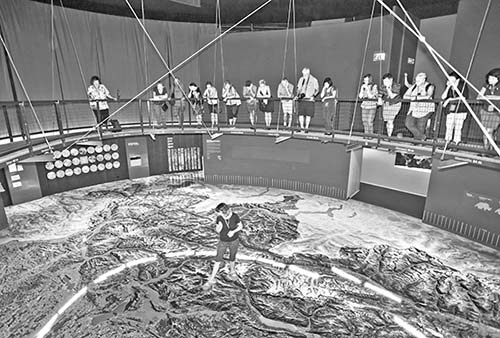
The next hall is the Hans Erni Museum, showcasing works of a well-known local 20th-century painter and illustrator (they have nothing to do with transport, but are worth a quick peek).
The fifth and final building covers flight (airplanes below, space travel above). The helicopter and airplane simulations are included in your entry price (expect lines). There’s also a relaxing parasailing simulator, where you can lie on a smoothly gliding platform and peer down at the countryside below.
Two vintage Swissair planes are parked in the central courtyard (a DC-3 and a Convair 990). You’ll also find a miniature train that little kids can ride (small fee), and a high-tech swing set. Simulators, games, giant slides, and interactive exhibits can easily keep children busy all day.
More Sights: Three other attractions share the same grounds and hours as the Transport Museum: a planetarium, the Swiss Chocolate Adventure, and the IMAX Filmtheater. Each costs 16 CHF to enter (or get the 56-CHF ticket that covers everything; see website for showtimes). The Swiss Chocolate Adventure, a chocolate museum structured as a 20-minute amusement-park ride, is entertaining for chocoholics.
Gütschbahn
On a nice day, ride the Gütschbahn funicular up to Chateau Gütsch, the hotel perched in fairy-tale style up the mountain slope west of downtown. At the top is a free panoramic viewpoint with a red heart statue visible from downtown, as well as a picnic-perfect park with trails and a water fountain.
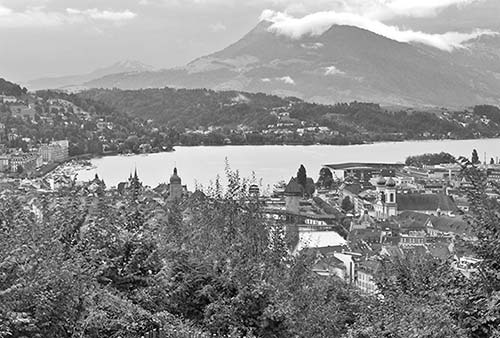
Note that the pricey restaurant at Chateau Gütsch is owned by a Russian oligarch. The unstaffed funicular runs on demand, like an elevator; it’s covered by a regular Luzern public transport ticket.
Getting There: You can walk from the Luzern train station to the base of the funicular in less than 20 minutes, but it’s easier to take frequent bus #2 from the station five stops to Gütsch, then cross the street and walk back 50 yards through the underpass.
Richard Wagner Museum
This museum is about a 30-minute walk along the lakefront, south of the train station and housed in a building where the 19th-century German composer once lived. It’s worth a visit only for enthusiasts.
Cost and Hours: 10 CHF, covered by Swiss Travel Pass, Tue-Sun 11:00-17:00, closed Mon and Dec-March, café, Richard-Wagner-Weg 27, +41 41 360 2370, www.richard-wagner-museum.ch.
ON LAKE LUZERN
Encircled by mountains, the almost fjord-like Lake Luzern is the most touristed in Switzerland, with great scenic variety. With many boat routes and destinations (35 stops in all), you can take a spin around the lake any time of the year.
Lake Cruises
Round-trip cruises from Luzern range from a one-hour zip across the lake (to Bürgenstock and back) to a full-blown, 5.5-hour exploration (to Flüelen, at the far end of the lake, and back). A few round-trip dinner or sightseeing cruises are available, but most boats have scheduled stops and are designed for you to get out, explore, and then take the next boat back. Romantics will want to hitch a ride on one of the old-fashioned paddleboat steamers.
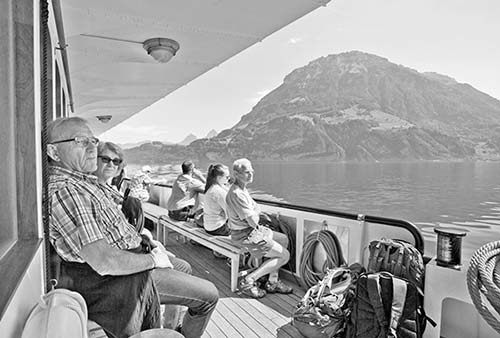
Most boats are operated by the Lake Lucerne Navigation Company (+41 41 367 6767, www.lakelucerne.ch). Buy tickets from the dockside offices (Piers 1 and 7), ticket machines, the TI, or online. Ask for advice on which trip best fits your schedule and current weather conditions. Tickets can be purchased onboard as well.
Regular departures are free with a Swiss Travel Pass and half-price with a Eurail Global Pass (it can be smart to do the lake cruise on the day you arrive or depart—when you’re already using a flexi-day for your train transportation). Skip a lake cruise if you’re planning to take the Gotthard Panorama Express to Lugano (see here): You’ll be boating the entire length of the lake, so there’s little point in doing another lake excursion.
Round-trip cruise options vary by season and day of the week. Visit LakeLucerne.ch, select English, then “Round Trip,” then enter “Lucerne” and the date you’ll be sailing for a list of suggestions. Or pick up the boat company’s Roundtrips from Lucerne brochure, which describes all the different routes. A one-hour circuit runs about 20-40 CHF per person; the longest cruise, to Flüelen and back, costs 77 CHF. You can create your own cruise by sailing out on a regular departure and then back the same way.
Consider mixing boat and train: For example, sail one-way to Flüelen, then catch the hourly train back. Or sail to Vitznau, ride the cogwheel train to the Rigi summit, and return via Weggis or Arth-Goldau (see the “Mount Rigi” section, at the end of this chapter).
Pedal Boats
Pricey pedal boats can be rented at Schwanenplatz, just across the bridge from the Luzern train station (20 CHF/30 minutes, 30 CHF/hour; 5 CHF more on weekends, +41 41 368 0808, www.sng.ch).
Sleeping in Luzern
Luzern is busiest—and most expensive—in summer. Spring and fall bring lower prices, and winter has rock-bottom rates. Air-conditioning is rare; to sleep with the window open but avoid nighttime street noise, ask for a room high up.
IN THE CENTER
$$$$ Hotel Wilden Mann, a local institution near the river on the new town side, fills a characteristic old house with 48 colorful rooms, each one different. While the prices are high, guests come here for the warm welcome and the history rather than cookie-cutter comfort (air-con in some rooms, elevator, Bahnhofstrasse 30, +41 41 210 1666, www.wilden-mann.ch, mail@wilden-mann.ch).
$$$$ Hotel des Alpes is a good bet if you want to sleep right on the river in the old town, next door to Luzern’s iconic Chapel Bridge and Water Tower. The 45 classic rooms are bright and well equipped; pricier riverfront rooms, some with balconies, come with beautiful views. The reception entrance is on the back of the building, or you can enter through the contemporary restaurant on the promenade and ride up the elevator, which also accesses the guest rooms (fans, discounts at train station parking garage, Furrengasse 3, +41 41 417 2060, www.desalpes-luzern.ch, info@desalpes-luzern.ch).
$$$$ Hotel Continental Park, facing a park alongside the train station, feels fresh and stylish, with prices to match. Its 88 rooms sit over an appealing contemporary lobby and a restaurant featuring Ticinese cuisine—from the Italian-speaking part of Switzerland (family rooms, air-con, elevator, pay parking, Murbacherstrasse 4, +41 41 228 9050, www.continental.ch, hotel@continental.ch).
$$$ Hotel Waldstätterhof fills a fine 19th-century building across the street from the train station. Its 96 bright, spacious, and modern rooms have all the amenities, and its rates are reasonable for the level of comfort (can be noisy—ask for a quieter courtyard room, family rooms, elevator, pay parking—reserve ahead, Zentralstrasse 4, +41 41 227 1271, www.hotel-waldstaetterhof.ch, info@hotel-waldstaetterhof.ch).
$$$ Hotel Zum Rebstock, a bit simpler, sits a bit farther from the river—on the way to Löwenplatz, across the lake from the train station, at the base of the steps to the twin-spired Hofkirche. Its 32 idiosyncratic rooms come with artistic flourishes (elevator, St. Leodegarstrasse 3, +41 41 417 1819, www.rebstock-luzern.ch, hotel@rebstock-luzern.ch).
$$$ Schlüssel Hotel, well run by Marija, offers 10 tastefully decorated rooms with personal touches that make you feel at home. This recently renovated building, first opened as a hotel in 1545, takes pride in its long history. It’s well located on a small square near the river and houses several restaurants (cheaper if you skip breakfast, a few rooms have balconies, elevator, Franziskanerplatz 12, +41 41 210 1061, www.schluessel-luzern.ch, welcome@schluessel-luzern.ch).
$$ Stern Luzern, located in the old shell of a building over a popular restaurant, is a solid value, offering 15 small and basic rooms. They also have eight newer, pricier rooms in an annex closer to the river (family rooms, tiny elevator, check-in at restaurant entrance at Franziskanerplatz 4, +41 41 227 5060, www.sternluzern.ch, info@sternluzern.ch).
OUTSIDE THE CENTER
$$ Ibis Styles Luzern City has 115 modern rooms with colorful accents. It’s near the action, but away from much of the noise (breakfast extra, air-con, family rooms, elevator, Friedenstrasse 8, +41 41 418 4848, www.ibis.com, h8549@accor.com). It’s a 15-minute walk from the train station, or take bus #1—direction: Maihof, get off at Löwenplatz and walk down Friedenstrasse; the hotel faces the Bourbaki Panorama.
$ Hotel Alpha, once a convent-run boarding house for village girls, is now a respectable hotel for value-minded travelers who don’t mind being away from the center. It offers 47 big, bright, dorm-style rooms, most with the toilet down the hall, though some have private baths. It’s located in a nice residential area but has some street noise from the nearby school and playing field (many doubles are twins, family rooms, elevator, fans available, comfy lounges and TV room, pay parking—reserve ahead, Zähringerstrasse 24, at intersection with Pilatusstrasse, +41 41 240 4280, www.hotelalpha.ch, info@hotelalpha.ch). It’s a 10-minute walk or an easy two-stop bus ride from the train station: Take bus #1, #2, or #12, get off at Pilatusplatz, and continue down Pilatusstrasse.
$ The Bed and Breakfast, lovingly run by Isabelle in her grandmother’s former home, offers 13 bright, spacious rooms. Three rooms have private bathrooms, while the other 10 share eight bathrooms. This is a perfect spot for those looking for a more personal experience and who don’t mind being a bit away from the center. The kind staff and cozy garden will make you wish you were staying longer (closed Nov-Feb, family rooms, pay parking, Taubenhausstrasse 34, +41 41 310 1514, www.thebandb.ch, info@thebandb.ch). It’s a 15-minute walk from the train station, or take bus #1—direction: Kriens-Obernau, get off at Eichhof and walk 100 yards down Taubenhausstrasse.
$ Ibis Budget Luzern City’s 128 tight, cookie-cutter rooms are worth considering if you’re on a budget and don’t mind a soulless neighborhood near the train tracks. You get a narrow double bed, sometimes with a bunk bed above it, plus an opaque shower cabinet that opens straight into the room (air-con, breakfast extra, pay parking, Kellerstrasse 6, +41 41 367 8000, www.ibis.com, h6782@accor.com). It’s a 10- to 15-minute walk from the train station, or take bus #4 three stops to Brünigstrasse.
¢ Backpackers Lucerne is calm and well run, sharing a modern, blocky building with student dorms (Studentenheim) in a peaceful residential area a 15-minute walk south of the train station. The place has 39 rooms (each with a balcony), shared toilets and showers, two guest kitchens, a welcoming lounge, and no curfew. The walk to the center is mostly along the lake, through pretty parks and next to a fine beach (no breakfast, elevator, full-service pay laundry, reception open 8:30-14:00 & 17:00-21:00, Alpenquai 42, +41 41 511 8241, www.backpackerslucerne.ch, info@backpackerslucerne.ch). By bus, take #6, #7, or #8 from the station four stops to Weinbergli, then walk left five minutes to the hostel.
Eating in Luzern
Eateries along the river are pricey and a bit touristy, but that’s where you’ll make the best memories. Reservations are smart. A good way to eat well but affordably here is to visit a high-end restaurant for lunch, when you can get a filling multicourse meal for around 20-25 CHF (typically weekdays only). For a memorable evening on a budget, consider catching a late one-hour sightseeing boat on the lake (around 19:00) and enjoying a picnic dinner while you cruise.
NEAR THE RIVER
$$$ Opus, next to the big Jesuit Church, is both a trendy wine bar and a good restaurant. Pair your wine with meat, fish, pastas, and vegetarian dishes with Italian and international flair; the lush and varied “antipasti buffet”; or your choice of dried meats and cheeses (sold by weight). They always have a couple dozen bottles of wine open and available by the glass. Sit in the upscale, colorful interior; in the extremely romantic wine cellar with candlelight reflecting in the bottle-lined walls; or out front, under the church and next to the river (long hours daily, Bahnhofstrasse 16, +41 41 226 4141, www.restaurant-opus.ch).
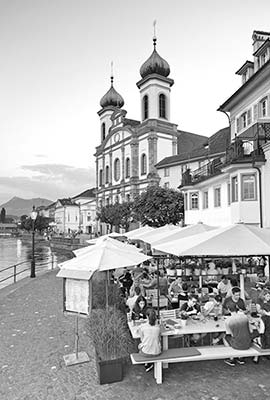
$$$ Nix in der Laterne has a romantic, dressy interior and great outside seats right on the fast-rushing river. Nikki is Swiss-Austrian, and so is his cuisine. Daily options are listed on a chalkboard; their budget option is tarte flambée—a savory tart with mix-and-match toppings. Their nice variety of 22-CHF weekday lunches attracts a sophisticated local business crowd. This is a fine spot in a central location that thrives even without tourists (daily 11:30-24:00, Reusssteg 9, +41 41 240 2543, www.nixinderlaterne.ch [URL inactive]).
$$$ Wilden Mann, the recommended hotel in a historic building just off the river, has two very different restaurants, each serving well-regarded food in atmospheric surroundings. The very traditional, wood-clad Burgerstube offers traditional Swiss cooking, while Sauvage, filling a nondescript dining room and a delightful winter garden, is a more French/Mediterranean experience. The menus overlap—review both before choosing (daily 11:30-14:00 & 18:00-22:00, Bahnhofstrasse 30, +41 41 210 1666, www.wilden-mann.ch).
$$ Restaurant Rathaus Brauerei is a lively microbrewery on the river under the Town Hall. While the beer hall is plain, there are plenty of outdoor seats—both under arches and on the river. It’s a local favorite for its unfiltered, cloudy Seidel Rathausbier, which you can only get here. Special seasonal brews are on the menu, along with salads, “gourmet” pretzel sandwiches (a light and affordable option), and Germanic main dishes (long hours daily, Unter der Egg 2, +41 41 410 6111, www.rathausbrauerei.ch).
$$$ Restaurant Taube, popular for serving “grandma’s cooking,” is known for its ham-and-cheese Rösti. The food is fine, and the interior is a simple, cozy cellar, but I’d eat here mostly to take advantage of their amazing riverside seating (24-CHF two-course weekday lunches, daily 11:30-23:00, Burgerstrasse 3, +41 41 210 0747, www.taube-luzern.ch).
NEW TOWN
These places are in a more workaday district, closer to the train station than the river and away from the tourist zone. Each is patronized by a smart local clientele.
$$$$ Restaurant Zur Werkstatt has a fun, inventive approach to eating. The seating is semi-communal (big tables), and you choose one of two three-course fixed-price meals, which change each week: the 59-CHF meat option or the 48-CHF vegetarian option. The open kitchen allows you to watch the action and take in the enticing aromas. It’s a suitable splurge for the adventurous eater (26-CHF lunch specials, Mon-Sat 11:30-13:30 & 17:00-24:00, closed Sun, Waldstätterstrasse 18, +41 41 979 0303, www.zurwerkstatt-lu.ch [URL inactive]).
$$$ Restaurant Anker fills an old ballroom of the once-venerable Hotel Anker with an eclectic blend of old and new—mixing crystal glassware with exposed concrete, hip music, and low lighting. It’s a fun and youthful place with an open kitchen and a diverse menu focused on fresh, local ingredients, tasty grilled meats, and pastas (25-CHF two-course weekday lunch specials, daily 11:30-22:00, Pilatusstrasse 36, +41 41 220 8800, www.hotel-restaurant-anker.ch).
FAST AND AFFORDABLE
Train Station’s “RailCity”: As in every big Swiss city, Luzern’s train station comes with a mall bursting with bright, efficient chain eateries. The following are all open long hours daily. Near the TI, a Migros Daily serves prepared food. Just down the escalator you’ll find a string of creative fast-food places with small standup tables (kebabs, salads, burgers, and currywurst) and a big Co-op supermarket. Upstairs is $$ Tibits, with a self-serve, pay-by-weight salad bar nestled in a modern, peaceful spot overlooking the tracks.
On the Lakefront: Tucked between boat docks directly in front of the train station, $ Luz Seebistro has glassed-in indoor seating, a big deck out on the lake, and a takeout window. It’s appealingly unpretentious and rough around the edges—a refreshing change in ostentatious Luzern. They serve drinks and a simple menu of burgers, sandwiches, sausages, and salads (long hours daily, Schifflandungsbrücke 1).
Self-Service Cafeteria: For a tasty, efficient lunch, head to $ Manora, a cafeteria on the fifth floor of the Manor department store in the old town. In good weather, climb the stairs to the outdoor terrace, with great views over the rooftops of Luzern to the lake and Mount Pilatus. This place can get crowded during peak times—eat early or late, and send your travel partner up top to claim an outdoor table while you buy the food (Mon-Sat 9:00-17:00, closed Sun, Weggisgasse 5).
Indian Food: In the old town, $ Tandoori Diner sells budget Indian meals (meat or vegetarian). Choose one of eight combos, and they’ll dish it up immediately (cash only, Mon-Sat 11:30-21:30, closed Sun, Löwengraben 4, +41 41 340 5296). $$ Mirch Masala, two doors away and run by the same folks, is a bit more elegant (17-CHF lunch buffet, pricier à la carte dinners, Mon-Sat 11:30-14:00 & 17:30-22:00, Sun 16:30-23:00, Löwengraben 8, +41 41 410 6308).
Bakery: Popular with the local lunch crowd, $ Heini Bakery/Café, on Falkenplatz a half-block down from the Manor department store, has a weekday salad bar, sandwiches, quiches, and delectable pastries. There are two sprawling indoor seating areas, plus outdoor tables in good weather (air-con, Mon-Fri 8:00-18:30, Sat until 17:00, closed Sun, Hertensteinstrasse 66, +41 41 412 2020).
Luzern Connections
Luzern is well situated, with convenient connections to anywhere in the country. Note that Luzern is on both the Golden Pass and the Gotthard Panorama Express scenic rail routes (see the Scenic Rail Journeys chapter). Train info: Rail.ch.
From Luzern by Train to: Zürich (2/hour direct, 40-50 minutes), Zürich Airport (2/hour direct, 70 minutes), Bern (hourly, 1 hour), Interlaken (hourly, 2 hours, trains run to Interlaken Ost, change there for Interlaken West), Lausanne (hourly, 2 hours), Appenzell (2/hour, 3 hours, change in Herisau or Gossau), Lugano (every 2 hours direct, 1 hour 40 minutes, more with transfer in Arth-Goldau, scenic route via the old Gotthard Tunnel and Airolo takes 3 hours with change in Bellinzona), St. Moritz (1-2/hour, 4.5 hours, at least 2 changes; or go by Glacier Express route, 7.5 hours with changes in Göschenen and Andermatt), Zermatt (hourly, 3 hours, changes in Bern and Visp).
Central Switzerland Day Trips
Perched on the edge of its scenic lake and ringed by family-friendly mountain peaks, Luzern is a perfect springboard for alpine excursions. Three side trips are especially popular and worthwhile: two famous and accessible mountains—Mount Pilatus and Mount Rigi—and the hidden military fortress of Fürigen. All three can be reached by boat and mountain lifts from Luzern.
Planning Your Time
Mount Pilatus is a jagged pinnacle with a “top of the world” feeling that makes for a fun, relaxed day (especially in good weather). Mount Rigi is lusher and lower, with a range of scenic trails. For either peak, allow the better part of a day for a round-trip.
Note that Fortress Fürigen is open only on weekends from April through October. It’s possible to combine Mount Pilatus and the fortress into one jam-packed day trip, although it requires a bit of backtracking (or a taxi)—get an early start to fit it all in.
For any of these side trips, you can go out and back by train, or travel one way by boat. The boat is slower (and more expensive), but adds a scenic, romantic component to your day.
The connections outlined below are well coordinated but don’t always leave lots of time between legs; confirm all schedules and logistics locally before embarking.
MOUNT PILATUS
Looming behind Luzern, Pilatus (7,000 feet), worth ▲▲, is a dramatic backdrop to the city and an enjoyable destination. While legend dictates that it’s named for Pontius Pilate—whose body is supposedly in one of its lakes, kicking up a fuss if disturbed—it more likely comes from a Latin word meaning “cloudy.” It’s also said to be infested with dragons (which local marketing relies on heavily—you’ll see red dragons everywhere). Pack a picnic before leaving town and spend a glorious day here with the marmots and ibex for company.
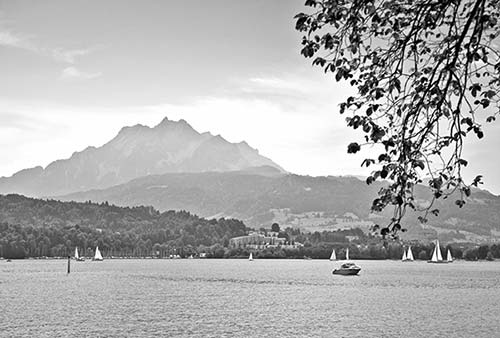
Ascending Mount Pilatus
There are two approaches from the base of the mountain to the summit, called Pilatus Kulm. A cogwheel train runs up to the top from the town of Alpnachstad, on the south side of the peak. The other ascent—by gondola and then cable car—runs from Kriens up the north side, with a chance to stop for a luge ride or the ropes course at Fräkmüntegg.
For maximum views, go up one way, down the other—in good weather, the view’s spectacular on both sides in both directions. I’d take the cogwheel train up (the uphill ride is a bit more dramatic), and the gondola ride down (to catch more afternoon light).
However you travel, figure at least 4-5 hours for the total round-trip from Luzern (more for serious hikers)—though when it’s busy, you may lose some time waiting for the various connections. Leave extra time if you want to do the luge at Fräkmüntegg on the way down.
Cost: 72 CHF round-trip, whether by cogwheel train or gondola/cable car (does not include transportation between Luzern and the mountain). Swiss Travel Pass and Eurail Global pass holders get a 50 percent discount. Keep track of your ticket, as you’ll need to scan it several times, up and down, until you exit at the last station.
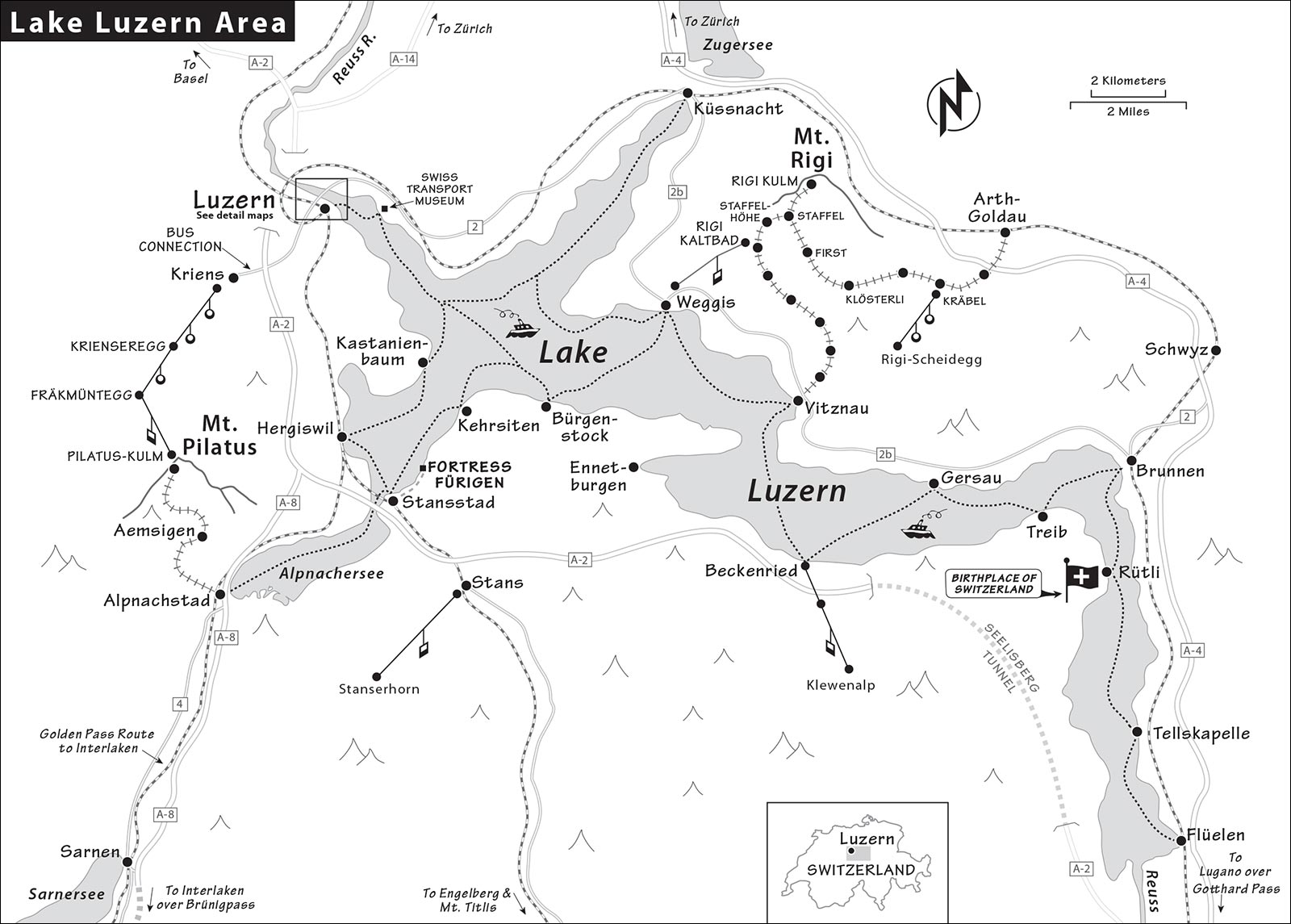
Two combo-tickets cover all transportation, including between Luzern and the mountain: the Golden Round Trip (using a boat for the first leg) and the Silver Round Trip (using a train). These tickets don’t save money, but they do simplify your journey with just one ticket.
Crowd-Beating Tips: The top of Mount Pilatus is popular and very crowded in summer and on sunny spring and fall weekends. You may have to wait to go up (between 9:00-12:00) and to get back down (15:00-closing time). Reservations are not available.
Information: www.pilatus.ch.
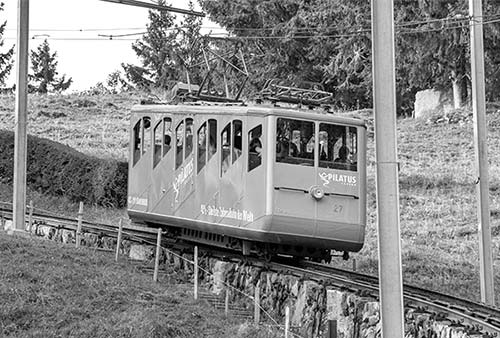
By Cogwheel Train from Alpnachstad: The cogwheel train, with old wooden cabins and red-velvet seats, leaves from the lakeside town of Alpnachstad. To reach Alpnachstad from Luzern, take either the S5 train (2/hour, 17 minutes, 8.60 CHF one-way, part of this journey not covered by the Visitors Card—before boarding, buy a 5.80-CHF ticket to cover the stretch from Hergiswil to Alpnachstad) or the boat, which leaves from opposite the train station (6/day, 1-1.5 hours, 28 CHF one-way). The cogwheel train runs late May-mid-Nov only (daily, 30 minutes up, 40 minutes down; first train up at 8:10; last train up at 17:10, last train down at 17:45; shorter operating times in Nov, does not run off-season).
The ride up is dizzying—you’ll be keenly aware that this is the steepest cog railway in the world (the grade, marked by signs, maxes out at 48 percent). For the best views, take a downhill-facing seat with your left shoulder against the window. You’ll slowly trundle up through thick forest on a skinny stone track, with peek-a-boo views of the lakes below, occasionally passing through chunky-walled tunnels. The train stops halfway up at Ämsigen to let other trains pass—stay on board.
By Gondola/Cable Car from Kriens: The gondola/cable car combination to Pilatus starts from Kriens, a suburb of Luzern.
To reach Kriens, catch city bus #1, which departs frequently from the Luzern train station; the stop is on the other side of the street from where most of the bus platforms are located (15-minute ride, direction: Kriens, stop: Zentrum Pilatus). Exiting the bus in Kriens, cross the busy street and follow Pilatus signs 10 minutes uphill to the gondola station. (To return to Luzern from the gondola station, carefully follow blue-and-white signs for Luzern bus Nr. 1 downhill for several minutes through a pleasant residential area to find bus #1; you don’t want the bus stop in front of the gondola terminal.)
The gondola runs continuously from Kriens to Fräkmüntegg (30-minute trip; stay on the gondola at the Krienseregg midstation). At Fräkmüntegg, leave the gondola and line up for the cable car to the summit (7 minutes, 4/hour). The gondola and cable car run year-round, except for two weeks’ maintenance in fall (first ascent from Kriens at 8:30, mid-April-mid-Oct last descent from Pilatus at 17:30, off-season last descent at 16:30).
At the Pilatus Summit
The centerpiece of the Pilatus-Kulm summit—where both cable cars and cogwheel trains arrive—is a vast, underground visitors center. Here you’ll find a good information office, souvenir shop, snack bars, and, at busy times, long lines of people waiting to head back down the mountain.
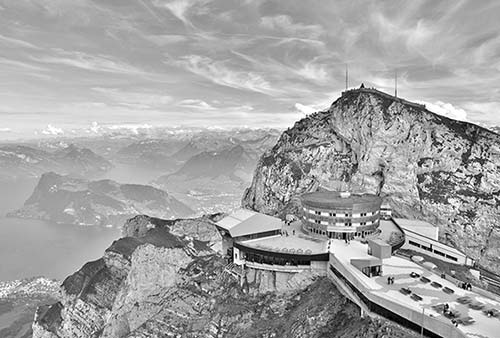
Get oriented by heading out to the big panoramic terrace, filling the area between the round, modern Hotel Bellevue and the old-school Hotel Pilatus-Kulm. (The visitors center is beneath your feet.)
Head over to the north (Luzern) side, overlooking the cable car. You’re looking at Switzerland’s vast central plateau, where more than two-thirds of the Swiss people live (many in the cities of Luzern, Zürich, Bern, and Basel). Immediately below, you can see the city of Luzern clustered around its little corner of the meandering, multifingered Lake Luzern (Vierwaldstättersee). For an even better view over the lake, go to the little gap between the boxy cable-car station and Hotel Bellevue. (The trail up to Esel—described later—begins right here.) Notice how Pilatus forms the first high, jagged peak of the mountains that fan out to the south.
Cross the terrace to the cogwheel-train side and survey the cut-glass peaks of the Swiss Alps—which stretch from this point all the way to Italy. Looking out over this impenetrable wall of granite, it’s easy to understand how Switzerland planned to essentially seal off its mountainous interior in case of invasion during World War II. Pilatus and the nearby peaks mark the boundary of the high-altitude fortress system called the Swiss National Redoubt. Exploring the Pilatus area, you’ll see signs of hidden Swiss military installations, and the tourable stronghold of Fortress Fürigen is nearby (described later in this chapter).
Sleeping and Eating at the Summit
Sleeping: Two $$$$ hotels at the summit offer a total of 50 rooms; the information office in the visitors center serves as the reception desk for both. The hotels book as “half-board,” meaning room rates include breakfast and dinner. Hotel Pilatus-Kulm is in a historic building from 1900; the modern Hotel Bellevue is clean and bright, with Nordic-style furniture. The hotels share contact information: +41 41 329 1212, www.pilatus.ch, hotels@pilatus.ch.
Eating: Inside the visitors center is a basic $ self-service cafeteria; outside you’ll find the cheaper $ Panorama Grill. The table-service $$ restaurant at the Hotel Pilatus-Kulm has both indoor and outdoor dining areas.
Hiking on Mount Pilatus
Many hiking opportunities—from easy to challenging—lead from the summit to great viewpoints. Review your choices below, and stop by the information office to pick up a map. For a representative sample, I’d ascend Esel, then head up to Oberhaupt and down around the other side.
Easy Hikes: From the outdoor terrace, the peak called Oberhaupt (marked with a cross) looms above you and is just a five-minute climb. From there, you can continue on a 15-minute loop that goes along the ridge above Hotel Pilatus-Kulm (toward the biggest radar station in Switzerland, housed in an off-limits military zone), down some steep stairs, and around to the other side of the mountain. From here, you’ll follow the “Dragonpath”—carved through tunnels and viewpoints in the rock—and eventually return to the visitors center. On the way, you’ll look out over a tiny church (and its graveyard) clinging to the sharp crest of a ridge—this is the Klimsenkapelle, built in 1861.
Taking a wild ride on a summer luge is a quintessential alpine experience. In German, it’s called a Sommerrodelbahn (“summer toboggan run”). To try one of Europe’s great accessible thrills, take the lift up to the top of a mountain, grab a wheeled sled-like go-cart, and scream back down the mountainside on a banked course. Then take the lift back up and start all over again.
Luge courses are highly weather-dependent and can close at the slightest hint of rain. If the weather’s questionable, call ahead to confirm that your preferred luge is open. Stainless-steel courses are more likely than concrete ones to stay open in drizzly weather.
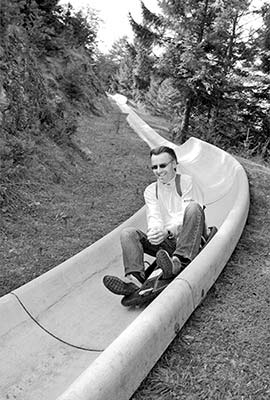
Operating the sled is simple: Push the stick forward to go faster, pull back to apply brakes. Even a novice can go very, very fast. Most are cautious on their first run, speed demons on their second...and bruised and bloody on their third. A woman once showed me her travel journal illustrated with her husband’s dried five-inch-long luge scab. He had disobeyed the only essential rule of luging: Keep both hands on your stick. To avoid a bumper-to-bumper traffic jam, let the person in front of you get as far ahead as possible before you start. You’ll emerge from the course with a windblown hairdo and a smile-creased face.
| Lenkstange | lever |
| drücken / schneller fahren | push / go faster |
| ziehen / bremsen | pull / brake |
| Schürfwunde | scrape |
| Schorf | scab |
On the other side of the platform, a steep 10-minute hike above Hotel Bellevue takes you up to Esel (“Donkey,” commemorating the days before cable cars, when Queen Victoria came up to Pilatus on the back of a donkey). From up here, savor 360-degree views over the entire area. Below Esel hides an impressive part of Switzerland’s anti-aircraft defense system. Patches of imitation rock in the mountainside hide modern missiles that point to the skies.
Harder Hikes: Hiking to Tomlishorn (35 minutes one-way), you’ll spot more camouflaged military installations. Stop at the yellow Echo sign and shout your message out to the world. Somebody out there keeps yelling it back.
A 1.5-hour hike leads to the 6,700-foot cross-capped summit of Matthorn (not Matterhorn). This hike is moderately strenuous—generally uphill, with lots of ups and downs. A visitors’ book invites you to sign and leave your impressions on this breathtaking spot.
Activities at Fräkmüntegg
This spot, on the north slope of Pilatus, is a summer-fun zone. If the weather’s good, stop here to zip down the nearly mile-long Fräkigaudi, Switzerland’s longest luge ride (9 CHF/ride, daily mid-April-Oct 10:00-17:00, closed if rainy, mandatory bag check, expect lines on sunny weekends, a 5-minute walk below the cable-car station, +41 41 630 3321, www.rodelbahn.ch).
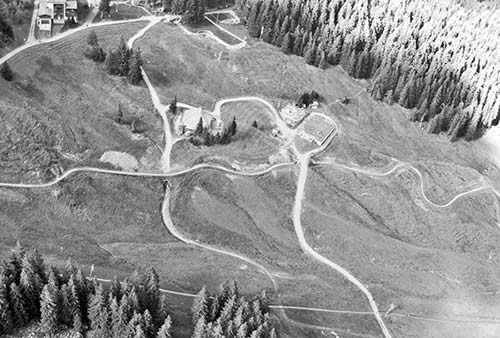
At the fun Suspension Rope Park (Seilpark), you can test your agility on 10 ropes courses with varying degrees of difficulty (28 CHF includes instruction and three hours on the courses, family discounts—separate course for kids under age 8; late April-late Oct daily 10:00-17:00, until 17:30 in July-Aug; next to the cable-car station, www.pilatus.ch).
FORTRESS FÜRIGEN
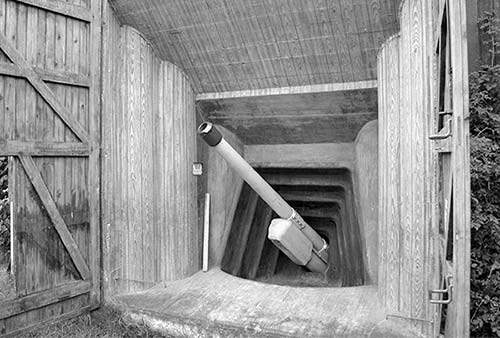
Fortress Fürigen (Festung Fürigen), built during World War II when Hitler threatened Switzerland, shows you another face of the country. Part of the reason Switzerland has been able to remain peaceful and neutral is its elaborate and secret system of defensive bunkers and fortresses. This fascinating exhibit, worth ▲ (or ▲▲▲ for military history buffs) is open only on weekends April through October. Visitors explore the facility with the help of audioguides, interactive displays, and short films. It’s even possible to fiddle with—and even aim—heavy guns, knowing the ammo is now imaginary.
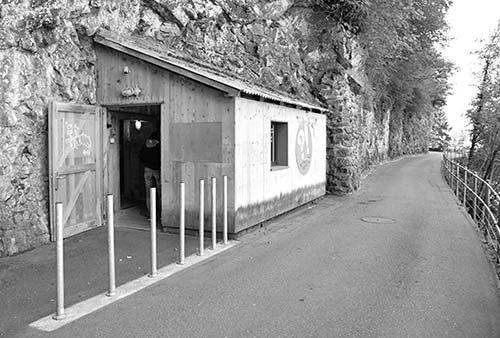
Strolling through the charming pastoral greenery of a peaceful Swiss village, my friend walked with me to the door of a nondescript barn. He said, “Stand here,” and slid open the door to reveal a solitary, mighty gun—pointing right at me. Crossing a field, kicking a stray soccer ball back to a group of happy grade-schoolers, we came to another barn. This time I noticed the “wooden” door was actually metal, with a clever paint job. Inside was a military canteen, now selling snacks to civilians, and a steel ladder leading down into a military-gray world that felt like a vast submarine. A network of passages, just big enough for heavily armed soldiers to race down single file, led to a series of gun barns and subterranean command rooms.
Switzerland may be famous for its neutrality, but it’s anything but lax defensively. Travelers marvel at how Swiss engineers have conquered the Alps with the world’s most-expensive-per-mile road system. But no one designs a Swiss bridge or tunnel without also designing its destruction. Each comes with built-in explosives, so, in the event of an invasion, the entire country can be blasted into a mountain fortress.
Even today, you can’t get a building permit without an expensive first-class bomb shelter worked into the plan. Old tank barriers (nicknamed “Toblerones” for their shape) stand ready to be dragged across the roads to slow any invasion. Sprawling hospitals are dug into mountains, still ventilated to be kept dry and ready for use. And halfway up alpine cliffs, Batcave-type doors slide open to allow fighter jets to zoom into action from hidden airstrips cut out of solid rock.
The end of the Cold War in 1989 brought changes even to neutral Switzerland. With deep cuts in its defense budget, Switzerland closed many of its 15,000 hidden fortresses. Some of the forts, such as Fürigen, are now tourist attractions that are no more formidable than medieval castles.
Cost and Hours: 7 CHF, cash only, covered by Swiss Travel Pass, April-Oct Sat-Sun 11:00-17:00, closed Mon-Fri and Nov-March, +41 41 618 7340, www.nidwaldner-museum.ch (click on “Festung Fürigen”).
Getting There: Fortress Fürigen is just outside the lakefront town of Stansstad, not far from Luzern. It’s an easy trip from Luzern on the S4 train (8.60 CHF, 2/hour, 16 minutes). From the train station in Stansstad, walk 15-20 minutes, following brown signs to Festungsmuseum or yellow hiking signs to Kehrsiten (down Bahnhofstrasse to Stanserstrasse, cross and follow signs, turn right on Achereggstrasse—where you’ll pass a grocery and bakery that are handy for lunch—and then go left on Kehrsitenstrasse). You’ll wind up walking along the lakefront, passing through a nice little park with free WCs and a beach, then cutting inland to circle behind the Aiola restaurant and a marina. Finally, you’ll wind along the lake, on the shoulder of a narrow road, under cliffs for a few hundred yards. Watch for the low-profile shed burrowed into the cliff on your right: That’s the entrance.
You can also get to Stansstad from Luzern by boat (21 CHF, 4/day, 40-80 minutes). From Stansstad’s boat dock, walk 10 minutes up to the main street (Achereggstrasse) and keep left, following the brown signs for Festungsmuseum.
Drivers arriving in Stansstad should follow white signs to Kehrsiten and the lakeside parking lot. From here it’s a 5-minute walk along the lake (behind the marina and along the cliffs) to the museum entrance.
Combining the Fortress with Mount Pilatus: The fortress is in the same direction from Luzern as Mount Pilatus, making it possible to combine both sights in one well-organized day. Stansstad (where you’ll walk to the fortress) and Alpnachstad (where you’ll take the cogwheel train to Pilatus) are on different rail lines, which fork at Hergiswil, so you’ll have to backtrack there to change trains. Or consider taking a 10-minute taxi between the fortress and Alpnachstad for about 30 CHF (call ABC Taxi Nidwalden, based near the fortress, +41 41 620 0303, www.abc-taxi-nidwalden.ch [URL inactive]).
Background
Fortress Fürigen was built in 1941, at a time when Switzerland found itself surrounded by hostile enemies: Nazi Germany, Nazi-controlled France, and Mussolini’s Italy. The Swiss saw themselves as hedgehogs—if threatened, they were ready to curl up into a ball, spines out. In case of an invasion, the Swiss government would retreat to a secret bunker near Brünig in the Berner Oberland, and Swiss troops would abandon the central plateau (and the cities of Luzern, Zürich, Basel, and Bern) and fall back around the alpine stronghold known as the Swiss National Redoubt. The fortress at Fürigen, located at the boundary of that fortified zone (and one of nine such fortresses that ringed Lake Luzern), was meant to protect roads and rail lines that led from Luzern and Zürich along the lake into the mountains. This fortress came equipped with two cannons that could hurl huge artillery shells in the direction of Mount Pilatus. Fürigen (the name comes from a village and former grand hotel on top of the cliff) was one of the smaller fortresses of its type.
After World War II, these fortresses were retooled with a new focus: the threat of the Soviet Union and nuclear war. Fürigen could house and feed 100 people for three weeks. But in 1990, with the end of the Cold War, the practical Swiss decommissioned the fortress, refit it with vintage WWII and early Cold War gear, and opened it to the curious public. It’s now administered by the local historical museum.
Visiting the Fortress
The fortress consists of an underground bunker that’s invisible from the outside. Enter through an innocent-looking wooden shed. At the entrance, ask for the brochure (with map) and included English audioguide (which tells the story well). The bunker is always chilly (about 55 degrees Fahrenheit), but no worries: Visitors without jackets are loaned original Swiss Army coats. Allow an hour to visit the various parts of the bunker.
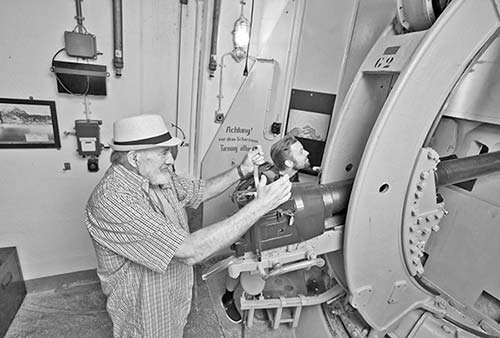
Just inside the entrance, you’ll pass a machine-gun emplacement—aimed right at the front door. Then make your way down the 200-yard-long main tunnel. You’ll pass the radio room—located near the entrance to assure clear reception—and reach a second machine-gun emplacement, guarding the inner door. Soon after, a detour leads to one of the two heavy artillery emplacements. The giant cannons, each operated by a half-dozen troops, could launch shells more than six miles. You can grab the wheels to aim the massive gun.
Continue deeper down the main tunnel, through heavily fortified doors, to the fresh-air tunnel, which provided exactly that—creating a buffer in case of atomic attack (you can see the “atom filter” installed in 1960). Beyond that is the second big artillery emplacement. The main tunnel ends at the engine room, which provided electricity and ventilation for those stationed inside, even when shut off from the outside world.
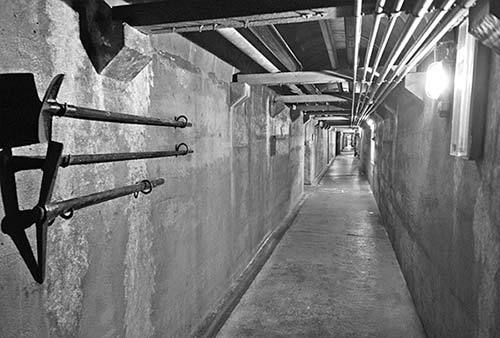
On your way back out the main tunnel, two more worthwhile detours are on the left. First are the living quarters for the troops stationed here. Step into the WC (to see the one shower shared by all 100 men), then into the dining hall, kitchen, and storage rooms. Nearby is the hospital and a rack of guns, all lined up and ready to grab. Upstairs is the big bunk room for the enlisted men (their standard-issue gear is displayed in the cabinets), and the more private officers’ quarters and offices.
Farther along—on the way out—step into the former munition magazine, which now houses a well-presented small museum. You’ll see one of those huge shells that the big cannons could fire, and watch an informative video about the Swiss plan to use their National Redoubt in case of invasion. Nearby, a cheery cartoon implores homemakers to stockpile food—since they could never be sure when it might be cut off.
MOUNT RIGI
This long, shelf-like mountain, across the lake from Luzern, provides sweeping views of Central Switzerland (and, on a clear day, Germany and France, too). Even though it’s at a lower altitude (5,900 feet) than Pilatus, this so-called Queen of the Mountains boasts the oldest cog railway in Europe (from 1870) and claims to offer the best vistas in the area. Like Pilatus, the top can be busy between 10:00 and 15:00—especially in summer and on good-weather weekends.
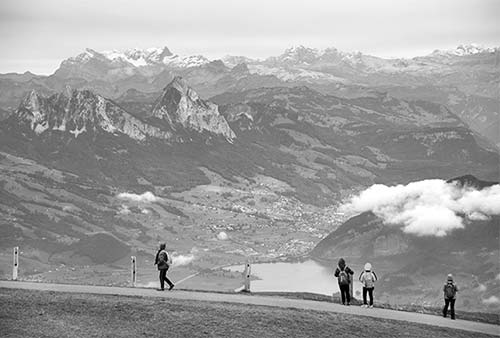
Ascending Mount Rigi
You can reach the top of Rigi, called Rigi Kulm, from either its “front” (west, lake-facing) or “back” (east) side. Hourly cogwheel trains chug up to the summit from base stations on both sides (hikers can hop off partway up or down). The west side also has a cable-car option to the lakefront.
The schedules and prices listed here are for April through mid-October (boats and the Vitznau-Rigi Kulm train run less frequently in winter). Trains run hourly, so a missed connection can be a big waste of time; check schedules locally before you go.
Cost: 121 CHF round-trip—that’s 49 CHF for the boat ride from Luzern to Vitznau and back from Weggis to Luzern, and 72 CHF for a day pass on the cogwheel train and cable car. With a Swiss Travel Pass, the entire trip is free; with a Eurail Global pass, it’s half-price (but you’ll have to use one of your flexi-days). To simplify things, buy your Rigi Kulm ticket at the boat dock.
Information: www.rigi.ch.
From the West: From Luzern, coming up the west side makes the most sense, as it gives you an excuse to take a scenic boat ride to the base of the mountain. My recommended round-trip from Luzern: boat to Vitznau; cogwheel train to Rigi Kulm; mountaintop fun up top; cable car back down to Weggis; boat back to Luzern. You could do it the other way around—cable car up, cogwheel train back—but the train is more impressive on the way up, and doing it this way lets you walk downhill from the cable car to the boat. Figure 5-6 hours for the total round-trip from Luzern.
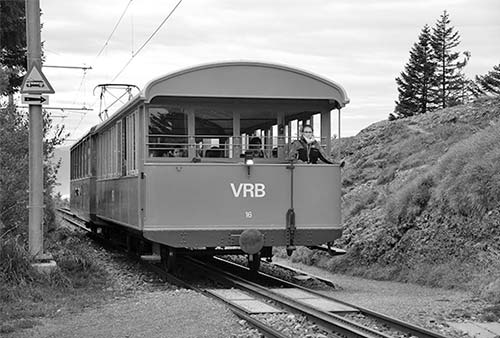
From Pier 1 in front of Luzern’s train station, hourly boats leave for Weggis (45 minutes), then continue to the cogwheel train station at Vitznau (one hour). From Vitznau, the cogwheel train chugs to Rigi Kulm, the mountain’s summit (hourly, 30 minutes up, 40 minutes down, daily 8:15-16:15, later in summer). The train departs from right in front of the boat dock. For the best views up, sit on the side closest to the station, ideally facing downhill. The train makes several stops on the way up, including Rigi Kaltbad (with the cable-car station to Weggis). Stay on the train until it reaches the top, Rigi Kulm. There you’ll find a small information office, souvenir shop, snack bar, and WCs.
Have fun up top! Enjoy the views, maybe go for a hike (options described later). Eventually, you’ll want to wind up at the Rigi Kaltbad station (a 15-minute train ride or one-hour downhill hike from Rigi Kulm).
At Rigi Kaltbad, find the cable car (Seilbahn), just toward the lake from the train station. It carries you down in 10 minutes to Weggis on the lakefront (2/hour, Mon-Fri 6:30-19:25, Sat-Sun from 8:10). From here you’ll walk about 10 minutes downhill to the boat dock (follow Schiffstation signs) for your cruise back to Luzern (hourly, 45 minutes). In summer, the last boat departs at 20:57 (earlier off-season); if you miss it, you can get back to Luzern by taking the bus to Küssnacht, then the train to Luzern from there.
From the East: If you’re visiting Rigi from Zürich, Lugano, or other points to the north, east, and south, it makes sense to ascend the “back” side of the mountain from the Arth-Goldau station, on Switzerland’s main north-south rail line. From Arth-Goldau, a cogwheel train takes you up to the summit (about hourly, first train at 7:55, last train at 17:23, runs later in summer, 45-minute ride).
Sleeping and Eating at the Summit
Stay overnight and watch the sun rise, accompanied only by the sounds of the wind and the ringing of a few cow bells.
$$$ Rigi Kulm Hotel is set just below the summit, with 33 rooms, stunning views, and a basic $ cafeteria and pricier restaurant (+41 41 880 1888, www.rigikulm.ch, hotel@rigikulm.ch, Käppeli family).
$$$ Rigi Kaltbad Mineral Bath & Spa, at the point where the cable car from Weggis meets the Vitznau-Rigi Kulm train line, has 50 rooms and is a nice place to rejuvenate with its indoor and outdoor pools and bathing areas (+41 41 399 8181, www.hotelrigikaltbad.ch, info@hotelrigikaltbad.ch).
Hiking on Mount Rigi
The mountain is laced with more than 60 miles of hiking trails and other attractions to while away an afternoon. All are well described in the Rigi Explorer Guide, available at Luzern’s TI, at lift and cogwheel train stations, and on the Rigi website.
Easy Summit Hike: The obvious choice is the easy, uphill hike to the summit at Rigi Kulm (5,899 feet), at the base of a giant Swisscom communications tower. It’s directly above the Rigi Kulm station, about 10 minutes if you huff up the steep path, or 20 minutes if you loop around on the more scenic, gentler path (both paved). Up top, you have sweeping views in every direction. The big lake below you is the Zugersee, with the town of Zug on its right side (behind the hill). In the opposite direction the snow-covered peaks of the Swiss Alps recede and overlap all the way to Italy.
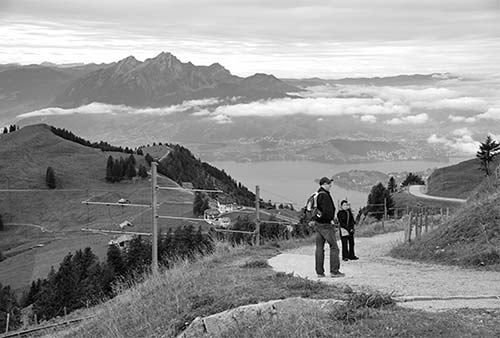
Classic Rigi Kulm to Rigi Kaltbad Hike: The lovely downhill ramble from the summit at Rigi Kulm to the cable-car station at Rigi Kaltbad takes about one hour. You can also go partway, to the scenic Staffel train station (about 20 minutes), and take the train from there.
If you opt for the whole hike, carry on past Staffel, following the blue Staffelhöheweg signs along the train tracks—enjoying a slow-motion look at the same grand views you saw from the train. At the fork, stay right for the 30-minute route to Rigi Kaltbad (the left fork takes 50 minutes). When you reach the next little station, at Staffelhöhe, keep along the trackside trail another 15 minutes to Rigi Kaltbad.
Chänzeli Detour: This detour from the station at Staffelhöhe adds 10 minutes to your Rigi Kaltbad travel time but is well worth it: From the station, veer off to the right, hiking out along one last ridge—flanked by fingers of Lake Luzern and with vistas in all directions. After passing a hilltop crucifix, you’ll twist down on switchbacks to the concrete Chänzeli viewpoint (4,800 feet), with excellent views over Pilatus and Luzern. From here it’s an easy and level 10-minute walk to Rigi Kaltbad’s cable-car station.
Alpkäserei Chäserenholz Route: With a little more time, consider the fun Alpkäserei Chäserenholz (alpine dairy) route from Rigi Kulm down to Rigi Kaltbad (about 1.5 hours), which offers a chance to sample some mountain cheese at a working farm. From the Rigi Kulm train station, walk in the opposite direction from the restaurant—alongside the long barn-like structure at the head of the tracks. From here, follow the unpaved road steeply downhill about 15 minutes, following Alpkäserei Chäserenholz signs.
You’ll reach a fork in the road, pointing right to the Staffel train station, or left down to the cheese hut. The alpine dairy has a simple menu of drinks and cheese specialties—which taste that much better a mile high, where they’re made (cash only, usually open daily in season 9:00-18:00—off-season, confirm it’s open before hiking down; also has a few rooms; +41 41 855 0206, chaeserenholz@bluewin.ch). After visiting the hut, hike a steep 5-10 minutes back up to the crossroads and turn left, following Staffel signs another 20 minutes to Staffel—on a gravel road, passing through bucolic farmland with mountain views. At the big white tents, fork off to the right to head up to the Staffel station. From here, you can either hop on the train, or walk the rest of the way to Rigi Kaltbad and the cable-car station (follow directions above, under “Classic Rigi Kulm to Rigi Kaltbad Hike”). If you’re ambitious, add in the Chänzeli detour from Staffel on your way back to the cable car.
Alpkäserei Chäserenholz Extension: For a longer hike from the alpine dairy, continue down Rigi’s “back” ridge to the alpine hut Obere Schwändihütte, then across the mountain to the Klösterli stop, where you can visit the cute Chapel of Maria-of-the-Snow before hopping on the cogwheel train (1.5 hours from the summit to Klösterli stop). You can also hike along sections of the Mark Twain trail, which traces his route up the mountain (as described in A Tramp Abroad), with excerpts from his account signposted along the way.