SCOTLAND: PAST & PRESENT
PREHISTORY, CELTS, AND ROMANS (Origins to AD 500)
EARLY MEDIEVAL CHAOS (500-1000)
SCOTTISH INDEPENDENCE, WILLIAM WALLACE, AND ROBERT THE BRUCE (1000-1500)
REFORMATION TROUBLES: MARY, QUEEN OF SCOTS AND JOHN KNOX (1500s)
JAMES VI AND CHARLES I: ENTANGLEMENTS WITH ENGLAND (1600s)
JACOBITE RISINGS AND ENLIGHTENMENT (1700s)
INDUSTRIAL REVOLUTION AND HIGHLAND REVIVAL (1800s)
Rugged and remote, Scotland has had a particularly hard-fought history. Split by the Highland Boundary Fault, which separates the flatter, more Anglo-Saxon Lowlands in the south from the craggy, deeply Celtic Highlands in the north, the two halves of Scotland have distinct cultural characters. Since ancient times, Highlanders and Lowlanders alike have fought to preserve their unique identity. Scotland’s rabble-rousing national motto is Nemo me impune lacessit—“No one provokes me with impunity.” In Scottish history, legends and heroes abound.
PREHISTORY, CELTS, AND ROMANS (Origins to AD 500)
Millions of years ago, natural forces shaped the Scotland visitors marvel at today: a primeval land of deep lochs, rocky bluffs, jagged coastlines, and Loch Ness monsters.
We know little of Scotland’s early inhabitants (4500-2000 BC), but they left us fascinating stone circles, ingenious burial chambers, and igloo-shaped islands that continue to fascinate.
The first glimmers of the Scotland we know appeared around 500 BC, when Celtic tribes moved in from mainland Europe, bringing the language that would become Gaelic.
In AD 80, Roman legions—having already conquered England—marched north and prepared to conquer the land they dubbed “Caledonia.” But when they encountered the fierce Celtic locals, whom they dubbed “Picts” (for their war paint), they decided Scotland was just too dangerous to mess with. The Romans sealed off Caledonia with their 70-mile-long Hadrian’s Wall, near today’s border with England. From then on, while England was forever stamped with a Roman/European perspective, Scotland remained more isolated and Celtic.
Sights
• Geologic wonders like Fingal’s Cave (Staffa), and Kilt Rock and Fairy Glen (Isle of Skye)
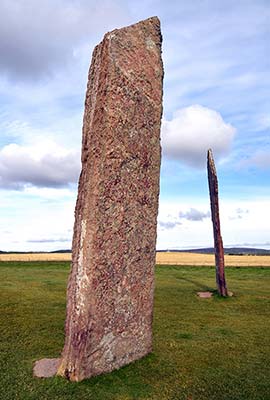
• Stone Age ruins (3000 BC) at Orkney: Stones of Stenness, Barnhouse Village, Ring of Brodgar, and Skara Brae
• Artifacts from the Stone Age, Iron Age, and Vikings at the Orkney Museum
• Iron Age ruins (500 BC) like Dun Beag Broch (Skye), Clava Cairns, and the Scottish Crannog Centre
• Edinburgh’s National Museum of Scotland features the prehistoric world...as well as everything else in Scotland’s 5,000-year history
EARLY MEDIEVAL CHAOS (500-1000)
Medieval Scotland began as a rough haggis of different peoples: Picts in the northern Highlands, Anglo-Saxons in the south, and Scots (Celtic cousins from Ireland) on the west coast. When the Vikings attacked, a Norwegian flavor was added to the mix.
Scotland slowly took shape. Gaelic became the chief language, and Christianity—brought from Ireland by St. Columba in the sixth century—became the dominant religion. Even at this early date, Scotland’s geographical and cultural boundary was already set: Celtic culture in the Highland north, and English-friendly Anglo-Saxons in the Lowland south.
Medieval life was crude. People survived as subsistence farmers. They banded together for security in what would eventually come to be called clans—tribes of people (not necessarily related by blood) sharing land, led by a chieftain who protected their interests. They wore similar tartan patterns and colors. Over the centuries, rival clans—the MacDonalds, Mackenzies, MacLeods, and so on—battled for land and power.
In 843, a chieftain named Kenneth MacAlpin united many of the region’s warring peoples and was crowned atop the ceremonial Stone of Scone: The fledgling Kingdom of Scotland was born.
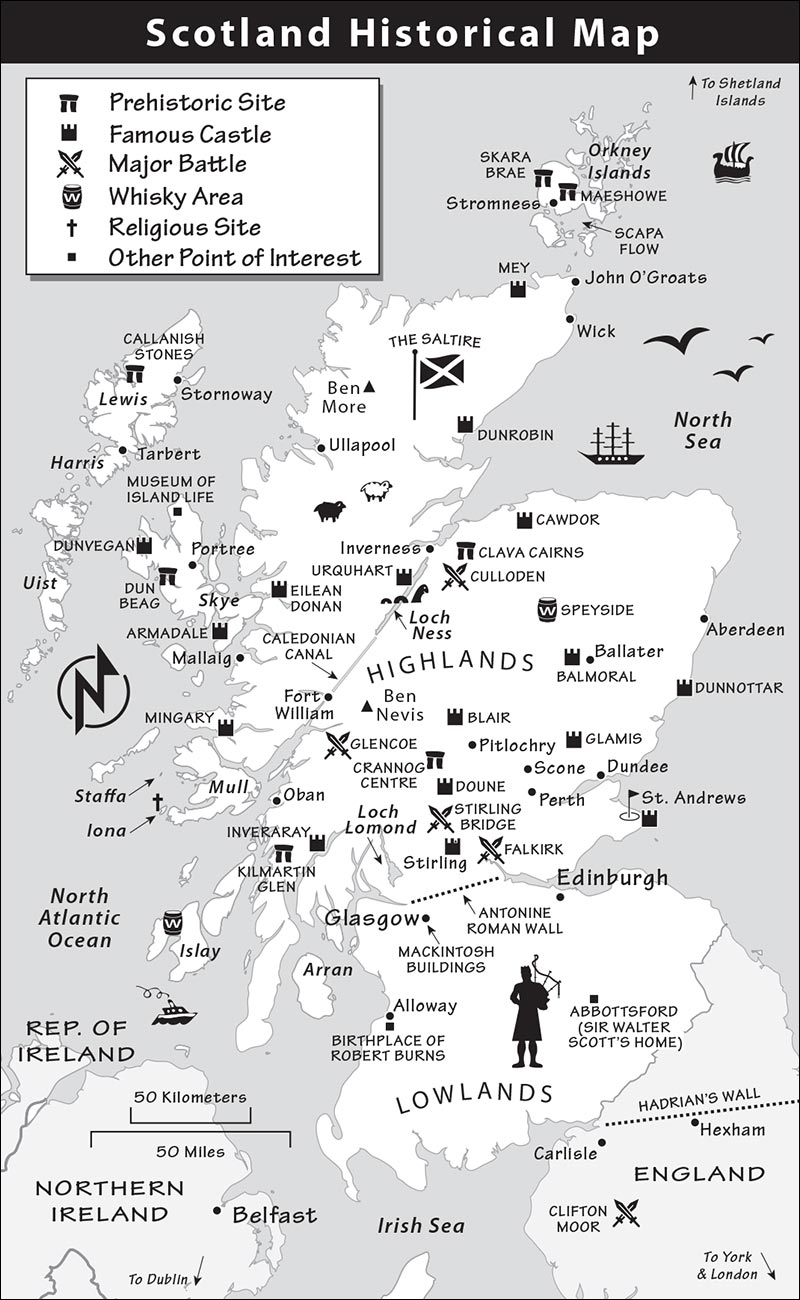
Size: 30,400 square miles, about the size of South Carolina. The population is about 5.5 million.
Geography: Scotland’s flatter southern portion is the Lowlands; the Highlands to the north are wilder and hillier. The country boasts over 6,000 miles of coastline and more than 790 islands (only about 130 are inhabited). Ben Nevis in western Scotland (at 4,406 feet) is Great Britain’s highest peak.
Latitude and Longitude: 57°N and 4°W. The Shetland Islands are Scotland’s northernmost point, at 60°N (similar to Anchorage, Alaska).
Biggest Cities: About three-quarters of Scotland’s population lives along the nation’s 75-mile-long “Central Belt.” Glasgow near the west coast has 630,000 people, and Edinburgh on the east coast has 500,000.
Economy: The gross domestic product is about $220 billion, and the GDP per capita is around $40,300. Natural resources remain important, but the Scottish service sector (including retail and financial services), renewable energy, and technology have become increasingly significant parts of its economy.
Scotland’s main exports include food and drink, as well as chemicals and petroleum products. Scotch whisky comprises a quarter of all UK food and drink exports; exports to the US represent the biggest market for Scotch by value, though France is the biggest market by volume.
Government: King Charles III officially heads the country. Humza Yousaf is Scotland’s first minister.
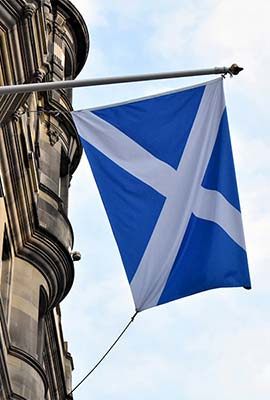
Flag: The Saltire, with a diagonal, X-shaped white cross on a blue field, is meant to represent the crucifixion of Scotland’s patron saint, the apostle Andrew.
Language: Scotland is primarily English-speaking, though about 1.5 million people also use the Scots “language,” and about 60,000 speak Scottish Gaelic.
The Average Scot: The average Scottish person will live to age 79 and doesn’t identify with an organized religion. He or she has free health care, gets 28 vacation days a year (about double the average American), lives within a five-minute walk of a park or green space, and spends time outdoors at least once a week.
Sights
• Edinburgh Castle, with its Crown Jewels and Stone of Scone, symbolizes the long history of Scotland’s monarchy
• Iona Abbey, birthplace of Scottish Christianity
• Celtic culture lives on in everything from street signs in Gaelic to Celtic-inspired jewelry
SCOTTISH INDEPENDENCE, WILLIAM WALLACE, AND ROBERT THE BRUCE (1000-1500)
In the 11th century, remote Scotland stepped onto the world stage. King Malcolm III murdered his rival Macbeth (of Shakespeare fame), married Margaret (the princess of England), and settled in Edinburgh. Almost overnight, they’d united the Highland farmers of the north with the Lowlanders of the south.
Now one, the Scots were prepared to stand up against their more-powerful neighbor to the south, England. In 1286, King Edward I of England (“Longshanks”) invaded Scotland, toppled the king, and stole the revered Stone of Scone, taking it back to London (where it remained until 1996).
Enraged, the Scots rallied around the heroic nobleman William Wallace (see here). He thrashed the English at the Battle of Stirling Bridge (1297) before suffering defeat at Falkirk (1298). Though Wallace was eventually arrested and brutally executed, his brave heart inspired the Scots to fight on.
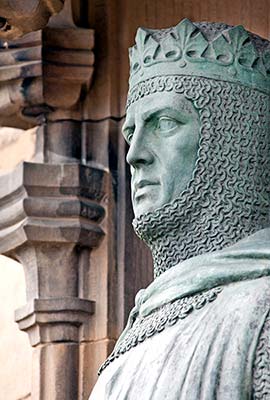
The torch was passed to Robert the Bruce (see here), who united Scotland’s clans to throttle the English at the tide-turning Battle of Bannockburn (1314). Bruce was crowned king, and Scotland had secured its independence.
Bruce’s heirs—the Stuart family—ruled Scotland from their castle at Stirling. Under the Stuarts, the country expanded to its modern borders. England was kept at bay, preoccupied with its wars with France. Left alone, Scotland thrived as a strong, united nation-state. The Highland culture we know (kilts, clans, bagpipes) took shape in these late-medieval times.
Sights
• Stirling Castle, strategically located between the Highlands and Lowlands, is where major battles were fought, and where early Stuart monarchs established their capital
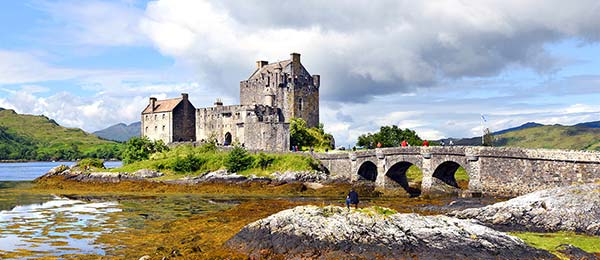
• Rugged, picturesque castles abound in Scotland, such as Eilean Donan, Cawdor, and Inverness
• St. Andrews—with its castle, cathedral, and university—thrived
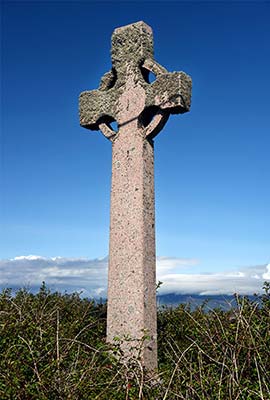
• Mercat crosses, denoting towns with market-day privileges, still dot the landscape
REFORMATION TROUBLES: MARY, QUEEN OF SCOTS AND JOHN KNOX (1500s)
Everything changed when Scotland began to face strife from within. New Protestant ideas were entering the Catholic country; the Reformation had arrived in Scotland (c. 1540-1560).
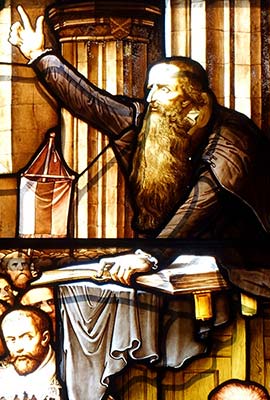
The Protestant leader was John Knox (1514-1572), a preacher in Edinburgh. Knox, who’d studied under John Calvin, converted much of the Lowlands. In his zeal, he tried to effectively outlaw Catholicism throughout Scotland.
The Reformation split the country in two, pitting Scot against Scot. The Lowlands grew increasingly Protestant (and urban), while the Highlands remained Catholic, rural, traditional, and full of clan rivalries.
The religious divide became a political one. Because Scottish Protestants were Presbyterians (who championed self-governing congregations), in politics they tended to be pro-parliament and anti-monarchy.
At the height of Reformation fever, in 1559, a staunchly Catholic queen assumed the throne: Mary, Queen of Scots. Though Mary compromised with Knox (maintaining her right to say Mass in private, despite the national ban on the Catholic faith), many Scots were still horrified by her messy personal life. Rumors flew she was getting fresh with her secretary. The secretary was found murdered, then her husband, too...while Mary fled the country with a different man altogether.
In 1567, the Scots forced Mary to abdicate. But amid all the drama, Mary had given birth to a son—whether her husband’s or the secretary’s, no one knows—and that baby boy, James, would become Scotland’s new king, King James VI.
Sights
• Edinburgh’s St. Giles’ Cathedral (where Knox preached) and the nearby John Knox House have many reminders of the man who turned Scotland Protestant
• The Isle of Skye’s Dunvegan Castle evokes the fierce clan feuds of the day
JAMES VI AND CHARLES I: ENTANGLEMENTS WITH ENGLAND (1600s)
King James VI brought a tentative peace to religiously divided Scotland. With the 1592 Golden Act, Scotland essentially became a Protestant nation. But soon, events in England would greatly complicate Scotland’s future.
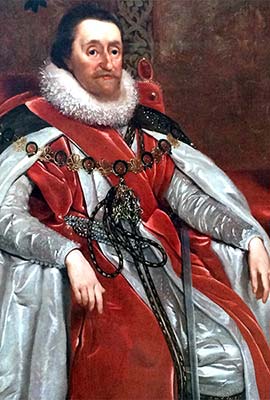
In 1603, James’s distant cousin Queen Elizabeth I—England’s “virgin queen”—died childless. James became the heir to the English throne. So, in 1604, James Stuart was crowned in London, making him both England’s King James I and Scotland’s King James VI. Just like that, mortal enemies Scotland and England became a united nation. The two countries have been tied together, however fitfully, ever since.
Scotland was increasingly dragged into English affairs. When England was torn apart by its Civil War, Scotland was, too. Catholic Highlanders supported King Charles I (a Stuart, of course), while Lowlanders backed Oliver Cromwell and parliament. When the English replaced the Catholic King James II with the Protestant William III (in the Glorious Revolution, 1688), Scots took similar sides.
As the century drew to a close, England was a colonial superpower on the rise, while Scotland was suddenly facing bankruptcy over failed overseas investments. The desperate Scots made a shortsighted decision that would change their country forever. They accepted a bailout from England in exchange for agreeing to the Act of Union. In 1707, Scotland’s parliament voted itself out of existence, and the Scottish nation was officially joined with England, becoming part of “Great Britain.” Almost overnight, the centuries-long independence of the Scottish nation—led by the Stuart family since the days of Robert the Bruce—was over.
Sights
• Dunnottar Castle is where the Crown Jewels were saved when Cromwell invaded Scotland
• Edinburgh’s Palace of Holyroodhouse captures the refined spirit of later Stuart monarchs
• Scotland’s thatched-roof village lifestyle can be found at the Highland Folk Museum (north of Pitlochry) and in the town of Culross
JACOBITE RISINGS AND ENLIGHTENMENT (1700s)
Or was it? While Lowland Scots welcomed closer ties with prosperous England, Highlanders longed for the days when Scotland was independent and ruled by their Catholic Stuart kings.
A resistance movement was growing. They called themselves “Jacobites”—named for the last Stuart king, the Catholic James II, who’d been ousted by Britain’s parliament (1688) and replaced by the Protestant William III.
History comes to life when you visit a centuries-old church. Even if you wouldn’t know your apse from a hole in the ground, learning a few simple terms will enrich your experience. Note that not every church has every feature, and a “cathedral” isn’t a type of church architecture, but rather a designation for a church that’s a governing center for a local bishop.
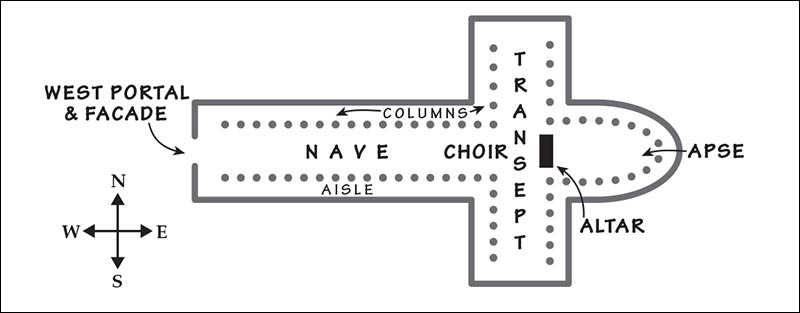
Aisles: Long, generally low-ceilinged arcades that flank the nave
Altar: Raised area with a ceremonial table (often adorned with candles or a crucifix), where the priest prepares and serves the bread and wine for Communion
Apse: Space behind the altar, sometimes bordered with small chapels
Barrel Vault: Continuous round-arched ceiling that resembles an extended upside-down U
Choir (“quire” in British English): Intimate space reserved for clergy and choir, located within the nave near the high altar and often screened off
Cloister: Covered hallways bordering a square or rectangular open-air courtyard, traditionally where monks and nuns got fresh air
Facade: Exterior of the church’s main (west) entrance, usually highly decorated
Groin Vault: Arched ceiling formed where two equal barrel vaults meet at right angles
Narthex: Area (portico or foyer) between the main entry and the nave
Nave: Long central section of the church (running west to east, from the entrance to the altar) where the congregation sits or stands during the service
Transept: One of the two parts forming the “arms” of the cross in a traditional cross-shaped floor plan; runs north-south, perpendicularly crossing the east-west nave
West Portal: Main entry to the church (on the west end, opposite the main altar)
Castles were fortified residences for medieval nobles. Castles come in all shapes and sizes, but knowing a few general terms will help you understand them.
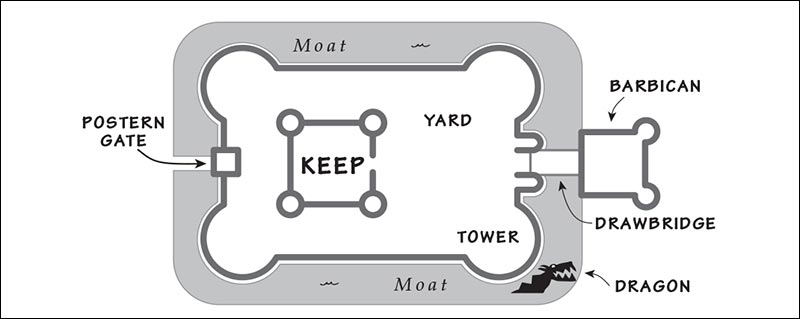
Barbican: Fortifed gatehouse, sometimes a standalone building located outside the main walls
Crenellation: Gap-toothed pattern of stones atop the parapet Drawbridge: Bridge that could be raised or lowered using counterweights or a chain and winch
Great Hall: Largest room in the castle, serving as throne room, conference center, and dining hall
Hoardings (or Gallery or Brattice): Wooden huts built onto the upper parts of the stone walls; served as watchtowers, living quarters, and fighting platforms
Keep (or Donjon): High, strong stone tower in the center of the complex; the lord’s home and refuge of last resort
Loopholes (or Embrasures): Narrow wall slits through which soldiers could shoot arrows
Machicolation: Stone ledge jutting out from the wall, with holes through which soldiers could drop rocks or boiling oil onto wall-scaling enemies below
Moat: Ditch encircling the wall, sometimes filled with water
Motte-and-Bailey: Type of early English castle, with a hilltop fort (motte) and an enclosed, fortified yard (bailey)
Parapet: Outer railing of the wall walk
Portcullis: Iron grille that could be lowered across the entrance
Postern Gate: Small, unfortified side or rear entrance; in wartime, became a sally port used to launch surprise attacks or as an escape route
Towers: Square or round structures with crenellated tops or conical roofs serving as lookouts, chapels, living quarters, or the dungeon
Turret: Small lookout tower rising from the top of the wall
Wall Walk (or Allure): Pathway atop the wall where guards could patrol and where soldiers stood to fire at the enemy
Yard (or Bailey): Open courtyard inside the castle walls
The fires of rebellion were stoked by the infamous Glencoe Massacre (1692), when pro-William Scots slaughtered those who refused to pledge allegiance to the new king. Enraged, the Jacobites rose up in 1715 but were quickly put down.
Finally, in 1745, a major “Rising” erupted, led by James II’s grandson—“Bonnie Prince Charlie.” The charismatic, baby-faced prince arrived in Scotland near Glenfinnan, raised an army of kilted, bagpipe-bolstered Highlanders, and set out to reclaim the throne. Within months, the brave band of 6,000 had taken most of Scotland and even northern England. But their ragtag army would prove no match for the British Redcoats, and he had little popular support in the Lowlands.
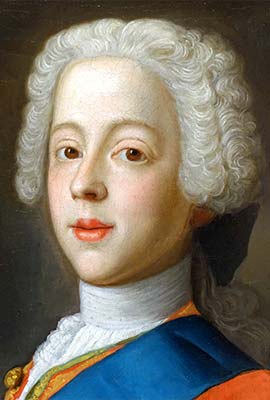
As British troops advanced, the Bonnie Prince pulled back to the Highlands to make one final stand: at Culloden Moor (1746). There, Bonnie Prince Charlie’s troops were routed and massacred (for more on Culloden, see here). Charles himself escaped, dressed as a woman, but his days were over, and the rebellion was finished. To this day, patriotic Scots remember this Scottish Alamo and the heroic deeds of “The Forty-Five.”
The aftermath was brutal. Jacobites were hunted down. The Highland clans were dismantled. Kilts were banned, homes were burned, and farmers were evicted. Highland culture all but died out.
Though the 1700s were grim years for traditional Highland culture, at the same time, Lowlands Scotland was on the rise. Edinburgh was becoming one of Europe’s most intellectual and Enlightened cities. With its university, a strong Protestant work ethic, an educated middle class, and business connections with England, it was a city of secular, rational thinkers who embraced the scientific method. Adam Smith was pioneering capitalism. David Hume applied cool rationality to philosophy. Robert Burns rhapsodized about Scotland’s natural beauty and proud individualism (for more on Burns, see the sidebar, later in this chapter). And James Watt’s steam engines would soon propel Scotland into its next exciting chapter.
Sights
• Culloden Battlefield and Exhibit evoke Bonnie Prince Charlie’s rise and tragic end
• Glencoe is the site of the bloody Glencoe Massacre, while nearby Glenfinnan Monument honors “The Forty-Five”
• Fort William and Fort Augustus were founded by the British to suppress the rowdy Highlanders
• Edinburgh’s Royal Mile still reflects its heyday as Europe’s most Enlightened city. Gladstone’s Land was one of many impressive “skyscrapers,” and numerous statues honor local greats
• Edinburgh’s New Town (and its Georgian House) show off the rational grid plan and Neoclassical Georgian architecture of this Age of Enlightenment
• The Scottish National Gallery and National Portrait Gallery feature genteel portraits and scenes by Allen Ramsay and David Wilkie
INDUSTRIAL REVOLUTION AND HIGHLAND REVIVAL (1800s)
As Europe’s Industrial Revolution dawned, Scotland became a powerhouse: Textiles were woven in large factories fueled by Scottish coal, then exported on Scottish-built ships. Cities boomed with recently displaced farmers who now took up factory work. Landowners turned tiny farms into vast sheepherding enterpises. Whisky—once just homemade moonshine—was now cranked out in big-name distilleries. Industrial Glasgow overtook genteel Edinburgh as Scotland’s biggest city.
Across the country, new roads, bridges, and the Caledonian Canal were constructed. The train turned a patchwork of once-isolated glens into a united, modern nation.
This was an era when great Scottish writers went global, as Sir Walter Scott popularized local legends and Robert Louis Stevenson spun imaginative tales. And some two million Scots spread across the planet, emigrating mainly to North America. (Around 15 percent of today’s Canadians cite Scottish heritage.)
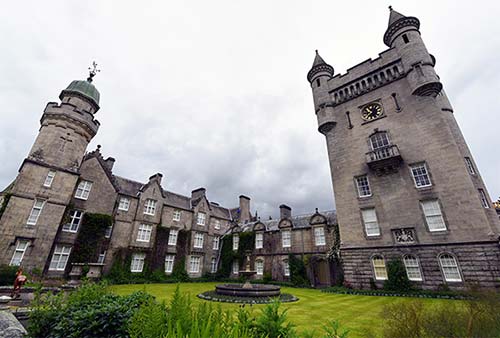
Meanwhile, Highland culture was enjoying a renaissance. During this Age of Romanticism, yesteryear’s tartans, kilts, and bagpipes became popular again. Queen Victoria refurbished Balmoral Castle in a fanciful Highland style. Tourism revived rundown towns like Inverness. And Scottish people everywhere felt free to once again embrace their cultural roots with pride.
Sights
• Glasgow epitomized the dynamic Industrial Age: home to shipbuilding, the Tenement House, and the curvaceous-yet-simple Art Nouveau of Charles Rennie Mackintosh
• Dundee’s Verdant Works Jute Museum highlights the town’s jute-processing history
• Whisky distilleries come into their own: Oban, Talisker, Highland Park, best-selling Glenfiddich, and Glenlivet (with the nearby Speyside Cooperage)
• Edinburgh’s Camera Obscura exemplifies new technology, and its Writers Museum showcases the age’s intellect
• The 1800s Highland revival lives on today in the Highland Games (with games like the caber toss), Highland dancing, working sheepdog demonstrations, and golf
• The Scottish Baronial architectural style—of stout sandstone, pointy turrets, crenellations, and narrow windows—can be found from the streets of Glasgow to remote castles to a fictional school for witchcraft and wizardry.
THE 20TH AND 21ST CENTURIES
Scotland—the industrial workhorse of Great Britain—soon became the workhorse of the British military.
In the devastation of World War I, Scottish lads were disproportionately massacred on the battlefields of Europe, double the per-capita deaths of other parts of Britain. One out of every four Scottish soldiers never came home.
Robert Burns, Scotland’s national poet, holds a unique place in the heart of the Scottish people—a heart that still beats loud and proud, thanks, in large part, to Burns himself.
Born on a farm in southwestern Scotland, Robbie (or “Rabbie,” as Scots affectionately call him) was the oldest of seven children. His early years were full of backbreaking farm labor, which left him with a lifelong stoop. Though much was later made of his ascendance to literary acclaim from a rural, poverty-stricken upbringing, he was actually quite well educated (per Scottish tradition), equally as familiar with Latin and French as he was with hard work.
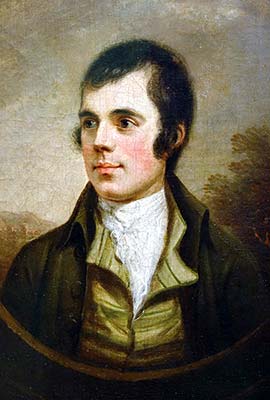
He started writing poetry at 15, but didn’t have any published until age 28—to finance a voyage to the West Indies. When that first volume, Poems, Chiefly in the Scottish Dialect, became a sudden and overwhelming success, he reconsidered his emigration. Instead, he left his farm for Edinburgh, living just off the Royal Mile. He spent a year and a half in the city, schmoozing with literary elites, who celebrated this “heaven-taught” farmer from the hinterlands as Scotland’s “ploughman poet.”
His poetry, written primarily in the Scots dialect, drew on his substantial familiarity with both Scottish tradition and Western literature. By using the language of the common man to create works of beauty and sophistication, he found himself wildly popular among both rural folk and high society. Hearty poems such as “To a Mouse,” “To a Louse,” and “The Holy Fair” exalted the virtues of physical labor, romantic love, friendship, natural beauty, and drink—all of which he also pursued with vigor in real life. This further endeared him to most Scots, though considerably less so to Church fathers, who were particularly displeased with his love life (of Burns’ dozen children, nine were by his eventual wife, the others by various servants and barmaids).
After achieving fame and wealth, Burns never lost touch with the concerns of the Scottish people, championing such radical ideas as social equality and economic justice. Burns bravely and loudly supported the French and American revolutions, which inspired one of his most beloved poems, “A Man’s a Man for A’ That,” and even an ode to George Washington—all while other writers were being shipped off to Australia for similar beliefs. While his social causes cost him some aristocratic friends, it cemented his popularity among the masses, and not just within Scotland (he became, and remains, especially beloved in Russia).
Intent on preserving Scotland’s rich musical and lyrical traditions, Burns traveled the countryside collecting traditional Scottish ballads. If it weren’t for Burns, we’d have to come up with a different song to sing on New Year’s Eve—he’s the one who found, reworked, and popularized “Auld Lang Syne.” His championing of Scottish culture came at a critical time: England had recently and finally crushed Scotland’s last hopes of independence, and the Highland clan system was nearing its end. Burns lent the Scots dialect a new prestige, and the scrappy Scottish people a reinvigorated identity. (The official Burns website, www.robertburns.org, features a full collection of his works.)
Burns died at 37 of a heart condition likely exacerbated by hard labor (all the carousing probably hadn’t helped, either). By that time, his fortune was largely spent, but his celebrity was going strong—around 10,000 people attended his burial. Even the Church eventually overcame its disapproval, installing a window in his honor at St. Giles’ Cathedral. In 2009, his nation voted Burns “Greatest Ever Scot” in a TV poll. And every January 25 (the poet’s birthday), on Burns Night, Scots gather to recite his songs and poems, tuck into some haggis (“chieftain o’ the puddin’ race,” according to Burns), and raise their whisky to friendship, and to Scotland.
With World War II, Scotland was somewhat less impacted, though it still played a key role in protecting Europe on its northern flank.
As Scotland recovered from the war and faced a new world, many Scots revived an issue that had been bubbling under the surface for centuries: independence from Britain.
After the crushed Jacobite uprisings, outright independence was rarely taken seriously. But now there was a growing push for “devolution”—to transfer some measure of governing authority from London to Scotland. The independence-minded Scottish National Party (SNP) began winning seats in the UK parliament. The discovery of North Sea oil gave Scotland some serious clout. In 1979, the UK agreed to a referendum on devolution; it failed, but the movement gained steam.
Finally, in a 1997 referendum, three out of every four Scots voted “yes,” there should be a Scottish parliament. So, in 1999, a Scottish parliament convened in Edinburgh. (Parliament would eventually move to a sparkling-new building, opened in 2004). For the first time since the Act of Union in 1707, Scotland once again had—at least in part—its own government.
Sights
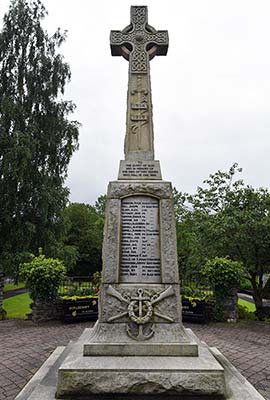
• World War memorials are everywhere: Fort Williams’ Commando Memorial, Portree, Pitlochry, and in many small villages...etched with unsettlingly long lists of local boys who sacrificed the utmost for Britain
• Scapa Flow (Orkney Islands) was the remote headquarters of the British navy in both World Wars
• Edinburgh’s Military Tattoo continues the military tradition
• Edinburgh’s striking Scottish parliament building symbolizes the country entering the new millennium
• Glimpse 21st-century ingenuity at The Kelpies sculpture and ship-lifting Falkirk Wheel, near Stirling
SCOTLAND TODAY
After centuries of bloody wars and dark turmoil, Scotland has emerged as one of the planet’s most forward-looking nations.
Its 5.5 million citizens are educated, productive, green-minded, and at peace. Four in five Scots identify as Scottish/British, though recent immigration (e.g., from Pakistan and Poland) is changing the ethnic makeup. The majority of Scots live in the Lowlands (which includes Edinburgh and Glasgow). In religion, some 40 percent are nominally Church of Scotland (Presbyterian), 20 percent are Catholic, and more than a third are areligious. Everyone speaks English (though it may not sound like it to American ears). Thousands of people still speak Gaelic, while many more can converse in the local language (a distant dialect of English) called Scots.
Once rural and industrial, Scotland’s economy is now largely service-oriented. Edinburgh has the banks (Lloyds, RBS), and Glasgow the factories (ships, steel). North Sea oil has enriched tiny Scotland. With some of the oldest and best universities in the world, Scotland is a major exporter of knowledge and scientific research. Tourism contributes 5 percent of GDP, while some 10,000 Scots owe their paycheck to whisky.
With devolution, Scotland is a self-governing nation, at least in part. The head of state is the Prime Minister, who is elected by Parliament. The (unicameral) Scottish Parliament legislates on internal matters like education, health and social services, housing, and so on.
Nevertheless, despite devolution, Scotland remains a member of the United Kingdom, which is governed from London. So, Scotland does not control UK matters such as foreign policy, defense, or social security. Scots have two sets of Members of Parliament: one for the Scottish Parliament (to handle internal affairs) and another set of MPs who travel to London to participate in the House of Commons.
Scotland is a crucial pillar of the UK. Militarily, it contributes stout soldiers and strategic naval bases. Scotland has long had a special connection with Britain’s royal family. Monarchs are crowned with Scotland’s Stone of Scone, crown, and scepter. Prince William and Kate Middleton met at St. Andrews University. And King Charles has a fondness for kilt-wearing and spending summers at the royal getaway at Balmoral.
And what of Scotland’s dream of independence? The movement is still alive, though Scots are also wary of the implications. In 2014, they rejected an independence referendum 55 percent to 45 percent. But then came Brexit—the UK’s decision to leave the European Union—which once again fanned the flames of independence. Many Scots miss being in the EU, convinced their nation’s future lies more with Europe than with London. So—as The Clash so elegantly put it—“Should I stay (in the UK) or should I go?” Time will tell.
Meanwhile, perhaps as much as any other nation, Scotland embraces its proud national identity. Locals follow sports with Scottish roots like shinty (Scottish field hockey) as well as soccer and rugby—both of which were developed here and in England in the 19th century. And of course Scotland is known as the home of golf, which has been played here since at least the 1500s. Today there are more than 500 courses, including the world’s most iconic course, the Old Course at St. Andrews.
Scotland celebrates its timeless Celtic culture. Highland Games aren’t just for tourists. Kilt-wearing Scots drinking Irn-Bru (the local soft drink) come for bagpipe playing, caber tossing, and sheepdog demonstrations. As the Celtic folk band plays a lively jig, and young dancing girls raise one hand and skip to the beat, it’s easy to see that Scotland’s rich culture will live on for many generations to come.