EASTERN SCOTLAND
Pitlochry • Near Pitlochry • Speyside & Royal Deeside
Along the A-9, North and South of Pitlochry
On Loch Tay, West of Pitlochry
Balmoral Castle and Royal Deeside
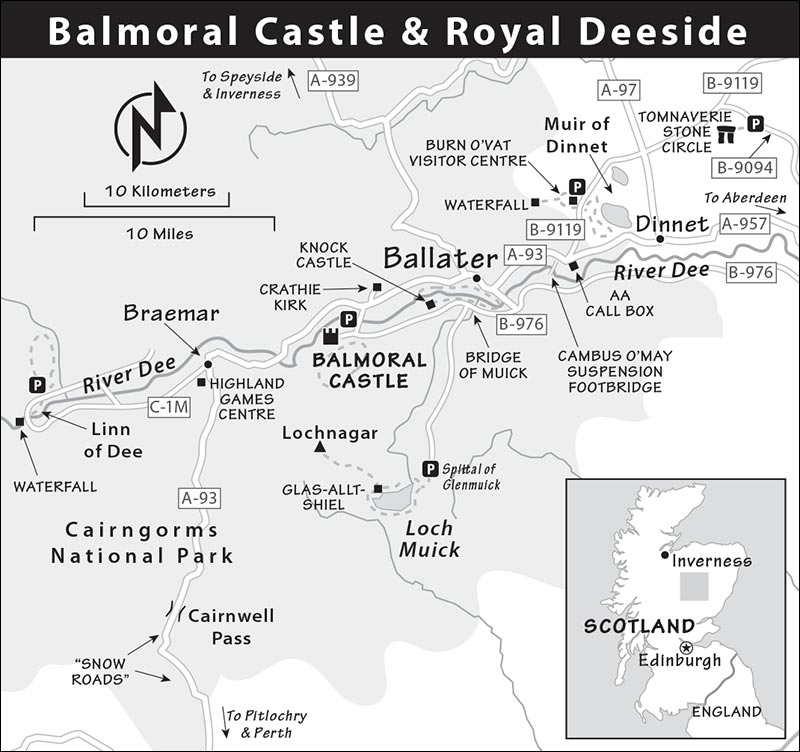
Map: Balmoral Castle & Royal Deeside
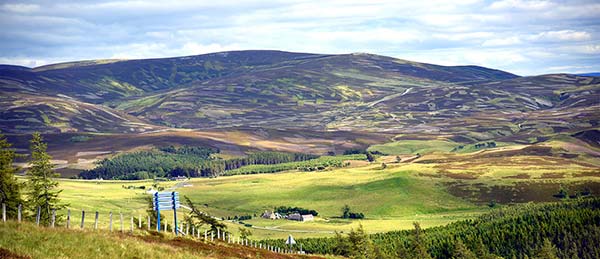
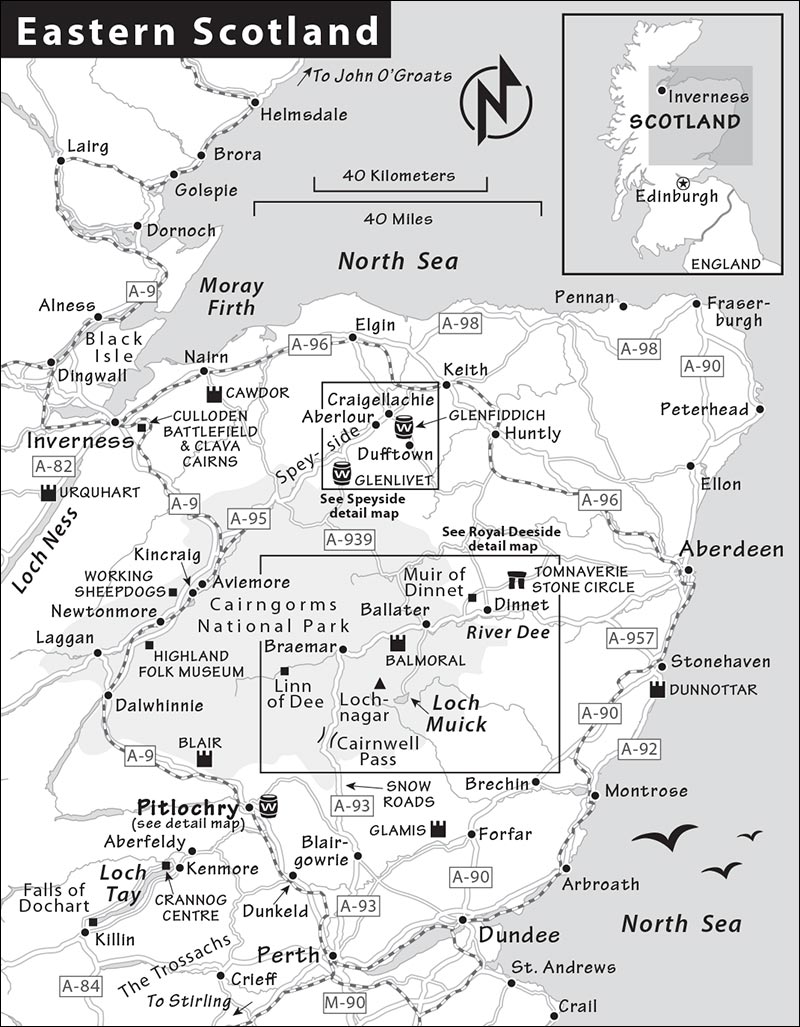
Between Inverness and Edinburgh, the eastern expanse of Scotland bulges out into the North Sea. The main geological landmark is Cairngorms National Park, with gently rugged Highland scenery and great hiking terrain. And surrounding the Cairngorms on all sides are worthwhile stopovers. This region is easily accessible—you’ll likely pass through at some point—and has a lot to offer.
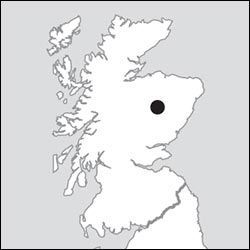
Those in a hurry should focus on the sights lined up along the busy A-9 corridor, which traces the western boundary of the Cairngorms between Inverness and the Lowlands (Edinburgh, Glasgow, Stirling, etc.). Welcoming Pitlochry has a green-hills-and-sandstone charm and good distilleries, making it a fine overnight stop. Nearby, you’ll find a fascinating trip back into prehistory (at the Scottish Crannog Centre on Loch Tay), an open-air folk museum, and a fun sheepdog show.
The northern and eastern edges of the Cairngorms, farther off the beaten path, offer a closer look at rural Scotland and some worth-the-effort treasures: Whisky connoisseurs flock to Speyside (also doable as a day trip from Inverness); royalists visit Balmoral Castle; hikers enjoy exploring the mountains and moors around Ballater; and ruined-castle fans favor Dunnottar on the Aberdeenshire Coast. These stops are handy for those heading between Inverness and St. Andrews, but they’re also ideal for anyone wanting to linger over a slightly longer, far more scenic drive between Inverness and the Lowlands—ideally with an overnight or two along the way (best in Ballater).
Pitlochry
This likable tourist town, famous for its whisky and its hillwalking (both beloved by Scots), makes an enjoyable overnight stop while exploring attractions along the busy A-9 highway. Just outside the craggy Highlands, Pitlochry is set amid pastoral rolling hills that offer plenty of forest hikes and riverside strolls. It seems that tourism is the town’s only industry—with perhaps Scotland’s highest concentration of woolens shops and outdoor outfitters. But Pitlochry also has the feel of a real community. People here are friendly and bursting with town pride: They love to chat about everything from the high-quality local theater to the salmon ladder at the hydroelectric dam. It’s also a restful place, where—after the last tour bus pulls out—you can feel your pulse slow as you listen to gurgling streams.
Orientation to Pitlochry
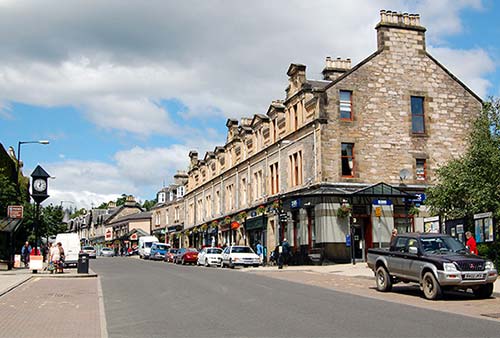
Plucky little Pitlochry (pop. 4,000) lines up along its tidy, tourist-minded main street, Atholl Road, which runs parallel to the River Tummel. The train station is on Station Road, off the main street. Its two distilleries are a walk—or short drive—out of town (see my self-guided walk). Navigate by following the black directional signs to Pitlochry’s handful of sights.
TOURIST INFORMATION
The helpful TI, at one end of town, sells maps for local hill walks and scenic drives. Their good Pitlochry Path Network brochure is handy (daily 9:30-17:00, shorter hours and closed Sun Nov-March; 22 Atholl Road, +44 1796 472 215, www.visitscotland.com, also see www.pitlochry.org).
HELPFUL HINTS
Special Events: Every Monday evening in summer, a pipe band marches through town and locals fall in line behind as they parade down to the weekly Highland Nights festival (band marches around 19:00, traditional music and dance performances begin at 19:30 in the big field just before the footbridge; www.pitlochry.org/events/pitlochry-highland-night). From May through August, the salmon ladder at the dam comes to life (described later, under “Sights in Pitlochry”). Pitlochry’s Highland Games are in early September (www.pitlochryhighlandgames.co.uk). And in October, thousands come to see the Enchanted Forest light-and-water show. Set to music, it illuminates Faskally Wood, just outside town (www.enchantedforest.org.uk).
Laundry: TLC Laundry offers self-serve and drop-off service (Mon-Sat 9:00-17:00, closed Sun, behind the hardware store at 34 Atholl Road, Unit 7, +44 1796 470 118, www.tlcpitlochry.co.uk).
Bike Rental: Across the street and a block from the TI (away from town), Escape Route Bikes rents e-bikes and offers suggestions for local rides (Tue-Sat 9:00-17:00, closed Sun-Mon, 3 Atholl Road, +44 1796 473 859, www.escape-route.co.uk).
Parking: Drivers who aren’t spending the night can park in the large pay-and-display lot next to the TI, in the center of town (card or RingGo app).
Sights in Pitlochry
TOWN CENTER
Strolling the High Street
Pitlochry’s main street, Atholl Road, is a pleasant place to wander and window-shop. As you stroll, consider this: The town exists thanks to the arrival of the train, which conveniently brought Romantic Age tourists from the big cities in the south to this lovely bit of Scotland. Queen Victoria herself visited three times in the 1860s, putting Pitlochry on the tourist map. The postcard-perfect Victorian sandstone architecture on the main street makes it clear that this was a delightful escape for city folks back in the 19th century.
Here are some things to look for, listed in order of how you’ll reach them from the TI. Just past the recommended Victoria’s restaurant, the flower-bedecked memorial park with the Celtic cross honors men from the local parish whose lives were lost fighting in World War I—a reminder of Scotland’s disproportionate sacrifices in that conflict. Artful metal benches echo the theme of military service. Throughout Scotland, even many tiny villages have similar monuments.
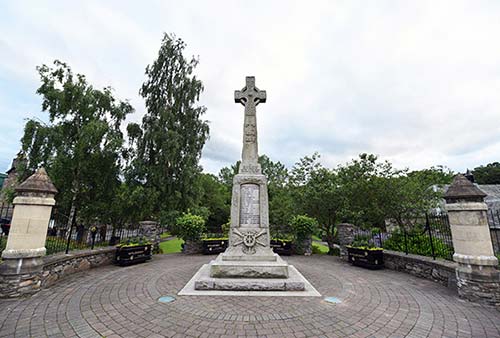
Ferry Road, next to the park, branches off beyond the rail bridge; the left branch circles down to a footbridge that takes you to the other side of the river—home to Pitlochry’s spunky Festival Theatre, as well as a power station with a salmon ladder (described later).
On Atholl Road, pop into Robertsons of Pitlochry whisky shop, stocked with over 400 whiskies, gins, and other Scottish spirits. The collection is fun to peruse, and if you don’t make it to one of Pitlochry’s distilleries, ask Ewan for a wee dram here. You can book tastings of five drams in their bar (£30, Mon-Sat 10:00-18:00, Sun 11:00-16:00, +44 1796 472 011, www.robertsonsofpitlochry.co.uk).
A few doors down, the Love Your Sweets shop, with a purple awning, stocks a staggering variety of uniquely Scottish candies in bulk. Step in to buy a mixed bag of some unusual flavors of hard candies, such as clove, rhubarb, or Irn-Bru. At the next little park on the right, a surging stream angles away from the main road and to the recommended Old Mill Inn restaurant. In the next block, notice the Victorian-era steel-and-glass arcade protecting shoppers from the rain.
On the corner with Station Road is the headquarters and visitor center of the John Muir Trust. John Muir (1838-1914) was born in Scotland, moved to the US when he was 10, and later helped establish the world’s first national park system in his adopted country. Inside is a free tiny exhibit called Wild Space, with a feel-good nature video and a small art gallery. They also sell books, maps, and other conservation-themed souvenirs (closed Tue, +44 1796 470 080, www.johnmuirtrust.org).
Lawn Bowls
The Pitlochry Bowling Club lets outsiders rent shoes and bowls (a.k.a. balls) and try their hand at the game (May-Sept generally daily 10:00-12:00 & 14:00-16:00, 24 West Moulin Road, +44 1796 473 459).
Pitlochry Golf Course
A 10-minute walk from the town center, the pleasant Pitlochry Golf Course and driving range offers a delightful way to spend an afternoon in Pitlochry, with views of the Tummel Valley (£50-65, £45 for club rentals, £10 for six-hole pitch & putt, daily 8:00-18:00, Golf Course Road, +44 1796 472 792, www.pitlochrygolf.co.uk).
ACROSS THE RIVER
The first two sights—the theater and dam/salmon ladder—lie along the largely undeveloped riverbank opposite Pitlochry’s town center. While neither are knockouts, they’re a fine excuse for a pretty stroll or drive. Walkers can reach this area easily in about 15 minutes: Head down Ferry Road (facing the memorial park, it’s to the left), follow the sidewalk past the Recreation Ground, then watch for signs to the footbridge (on the left). At the end of the footbridge, turn right.
The Stone of Dunfallandy is 1.5 miles southeast of town and best for cyclists or drivers.
Pitlochry Festival Theatre
This theater company makes good use of its three stages to rotate its productions, putting on a different play every few nights. The main auditorium and outdoor amphitheater host classics, musicals, and Sunday night concerts in summer, while the smaller studio space is home to more intimate performances (£16-35; plays generally run May-Oct Mon-Sat, purchase tickets online or at the theater on Port-na-Craig Road—box office open daily 10:00-20:00, +44 1796 484 626, www.pitlochryfestivaltheatre.com).
Nearby: Just above the theater’s parking lot, the six-acre Explorers Garden features plants and wildflowers from around the world (may be closed for restoration).
Pitlochry Dam Visitors Centre and Salmon Ladder
Pitlochry’s dam on the River Tummel provides a nice place to go for a stroll, and comes with a salmon ladder—a series of chambers that allow salmon to “step” their way upstream next to the dam (salmon generally run May-Aug).
The sleek, modern visitors center is well-designed and family-friendly, and celebrates hydroelectric power in the Highlands. Its fine nine-minute video, “Power from the Glens,” explains the epic vision of generating clean power from—and for—the Highlands. In 1943 only 1 in 100 area crofts had electricity—dams like this one improved living conditions throughout the Highlands. You can also walk all the way across the top of the dam, pausing to read informational plaques and to peer through windows into the hydroelectric plant (free, Tue-Sun 10:00-16:30, closed Mon, https://pitlochrydam.com). The visitors center cafeteria is delightful, with a nice river view. From the visitors center, you can follow a path along the river back to the footbridge and Ferry Road.
Stone of Dunfallandy
Set above a field of sheep and cows, this well-preserved stone slab with Pictish carvings dates to about AD 600. The stone itself is encased in glass; use the adjacent info boards to help pick out figures, including a finely carved horse and two monstrous fish. To reach it by car or bike, from Pitlochry head southeast on A-924 and turn right onto Bridge Road. Cross Aldour Bridge, then turn left onto single-track Foss Road and watch for a sign and small parking area on the right.
DISTILLERIES
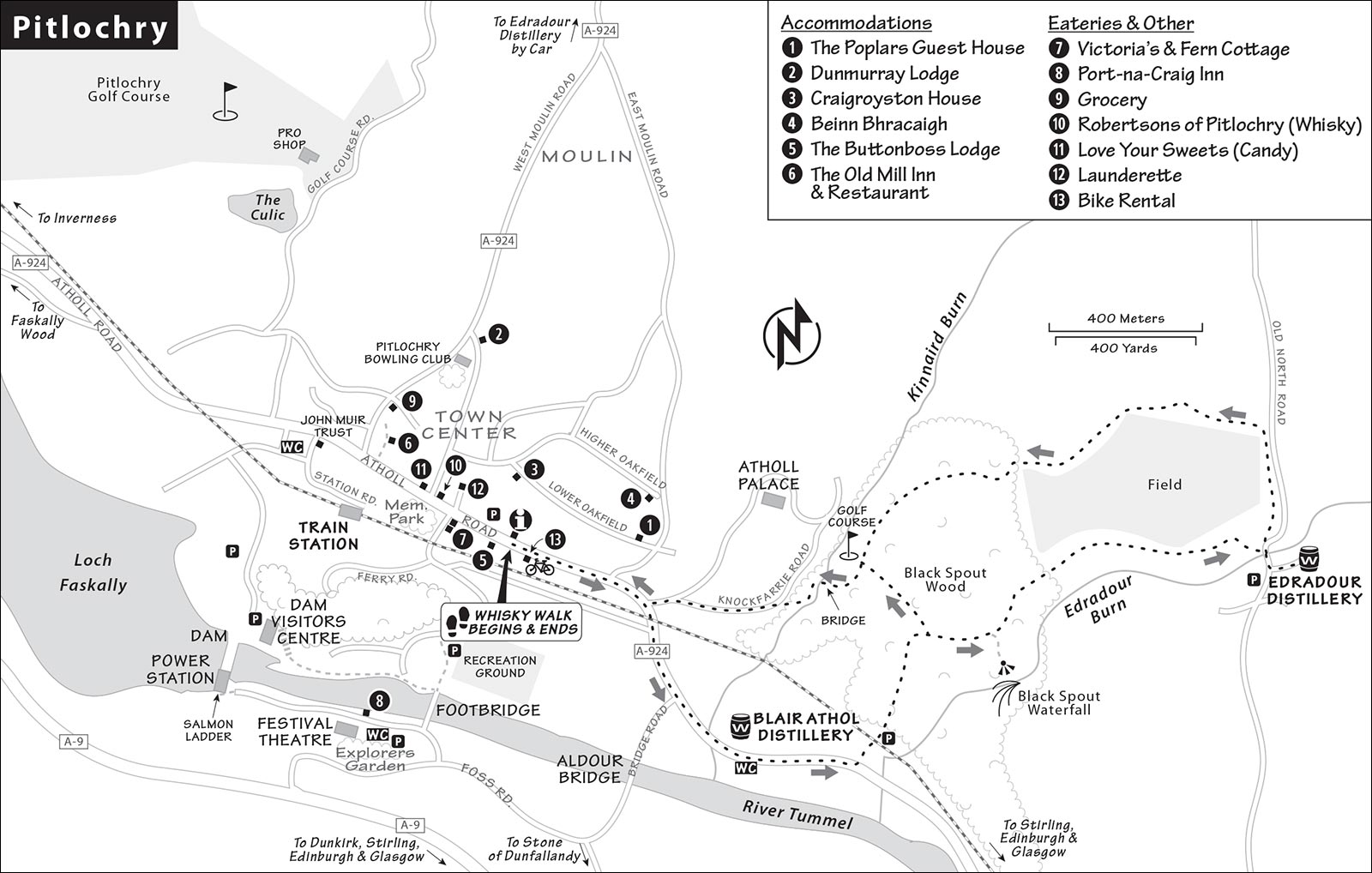
Pitlochry’s two distilleries can be linked by a relaxing two-hour hike (see the “Black Spout and Whisky Walk,” later). For background on types of whiskies, how whisky is made, and tasting it like a pro, see here.
▲Blair Athol Distillery
This big, ivy-covered facility is conveniently located an easy half-mile walk from the town center. While now part of a large conglomeration, it has retained some of its small-distillery charm. Its original old stone buildings flank the clear, cool stream that is the distillery’s water source, while the modern whisky bar features a steam-punk-esque counter fashioned from an upcycled copper mash tun.
Cost and Hours: £17 tour includes three tastes; daily 10:00-18:00, shorter hours Nov-April, tours depart roughly hourly, last tour departs one hour before closing, fewer tours and shorter hours off-season; +44 1796 482 003, www.malts.com [URL inactive]—click on “Tours” then “Blair Athol.”
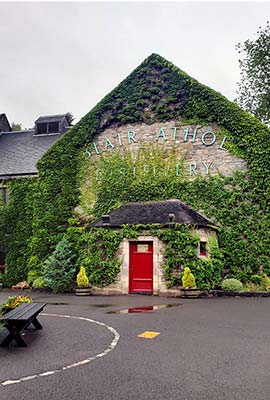
Visiting the Distillery: Tours begin in the shady courtyard, where you’ll learn about the history of the distillery, including its opening in 1798 and renaming as Blair Athol in 1892 (reportedly to annoy the landowner at the similarly named Blair Atholl estate). Then you’ll visit the facility, from the malting floor (where the barley was once germinated and dried) to the mash tuns (where the dried barley is mixed with water and fermented), and from the stillhouse (where giant copper stills separate the alcohol) to the warehouse (where the whisky lies sleeping as it ages). Take a deep whiff of the rich aroma—you’re smelling the so-called “angels’ share,” the tiny percentage of each cask that’s lost to evaporation. The tour ends with three tastes (tastes can be packed as a takeaway to enjoy later).
Edradour Distillery
This cute distillery (pronounced ED-rah-dower)—the smallest historic distillery in Scotland (est. 1825)—takes pride in making its whisky with a minimum of machinery, and maintains a proud emphasis on tradition. Unfortunately, the tours, shop, and bar may be closed when you visit (if it’s open, a visit here is worth ▲▲; check www.edradour.com for updates). Edradour’s small white-and-red buildings are nestled in a delightfully green Scottish hillside. (“Edradour”—also the name of the stream that gurgles through the complex—means “land between two rivers.”) With its idyllic setting and gregarious spirit, when open it’s one of the most enjoyable distillery tours in Scotland.
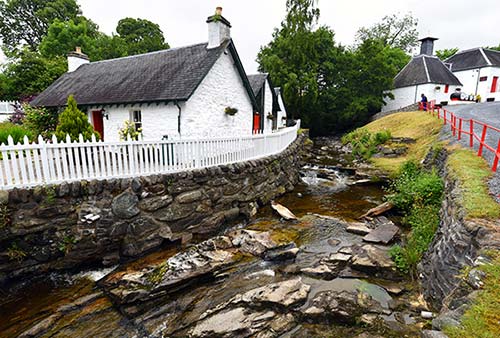
Getting There: Most come to the distillery by car—follow signs from the main (A-924) road, 2.5 miles into the countryside—but you can also get there on a peaceful hiking trail (follow my “Black Spout and Whisky Walk,” below).
Black Spout and Whisky Walk
Pitlochry is a hillwalkers paradise. A fun way to join in is to walk from downtown Pitlochry through lush forest to the Black Spout waterfall, with an optional stop at a distillery (or two, if Edradour Distillery is open).
The Pitlochry-Black Spout loop takes about 45 minutes and passes by the Blair Athol Distillery along the way. Allow 2-3 hours for the entire Pitlochry-Edradour loop, which passes Blair Athol and the waterfall en route to Erdradour (which may be closed—see listing earlier). The walk is largely uphill on the way to the Spout and Edradour. Wear good shoes and bring a rain jacket just in case.
At the TI, pick up the Pitlochry Path Network brochure and follow along with its map. You’ll be taking the Edradour Walk (marked on directional signs with yellow hiker icons; on the map it’s a series of yellow dots). The walk can be done in either direction, but I’ll describe it counterclockwise.
Leave the TI and head left on the broad sidewalk along the busy A-924, passing tidy homes and B&Bs. Notice the clever pedestrian railroad crossing on your right, and the carefully tended gardens. As the road begins to curve, cross over to use the pedestrian tunnel to pass beneath the railroad tracks. Soon you’ll see the Blair Athol Distillery on your left (with a whisky bar, tours, and shop; see listing, earlier).
To continue to the Black Spout carry on past a gas station (on your right), watching for the parking sign for Black Spout Woods pointing to your left. Just after the sign, turn left, walking away from the main road and under another stone rail overpass. Passing a small parking area, follow the path as it continues uphill with a golf course visible on your left. At the next junction, stay right to reach the Black Spout (this is also the way to Edradour). Signs will direct you to the right, 50 yards off the main path to a viewing platform overlooking the Black Spout—a scenic 190-foot waterfall well worth the extra climb.
(If Edradour is still closed, or you’ve had enough hiking, backtrack to the junction and turn right to follow signs to Pitlochry. You’ll pass under a power line before rejoining the Edradour path just before the footbridge described below.)
To continue to Edradour, from the Black Spout carry on uphill to a clearing, where a narrow path hugs a huge field on your left. From here it’s an easy 20 minutes tracking Edradour signs to the distillery. Leaving the distillery, to complete the loop, head right, following the paved Old North Road. In about 50 yards, just before a driveway punctuated with stone lions, pass through a farm gate onto a path that runs along the left side of the road. Follow Pitlochry signs along the far side of the same huge field and downhill through the forest, until you cross a footbridge and make a left. You’ll soon hear traffic noises and emerge from the forest at Knockfarrie Road—take this downhill back to the main road and the center of town.
Sleeping in Pitlochry
All of these have free parking and offer a full breakfast.
$$ The Poplars Guest House, perched regally on a meticulously landscaped hill high above the main road, is a high-ceilinged labor of love for charming Jason and Nathalie. Their attention to detail shows throughout the huge home, with a spacious lounge, a cheery sunroom with glorious views, and six rooms that combine modern comforts with a respect for tradition. Start the day off right with their whisky porridge (family room, laundry service available, closed in winter, at the end of Lower Oakfield at #27, +44 1796 472 129, www.poplars-pitlochry.com, info@poplars-pitlochry.com).
$$ Dunmurray Lodge is a calming place to call home, with four springtime-colored rooms, a beautiful guest lounge, and friendly hosts (family room, no kids under 5; breakfast includes gluten-free, vegetarian, and other options; 5-minute walk from town at 72 Bonnethill Road, +44 7783 462 625, www.dunmurray.co.uk, info@dunmurray.co.uk, Lorraine and Mike). They also rent a studio apartment with a kitchenette and private entrance.
$$ Craigroyston House is a quaint Victorian country house with eight large bedrooms, including one on the ground floor. Their terraced yard is a great place to sip some wine or play croquet (family rooms, no kids under 7, right above the TI parking lot at 2 Lower Oakfield, +44 1796 472 053, www.craigroyston.co.uk, reservations@craigroyston.co.uk, Danielle and Shona). Drivers can reach it on Lower Oakfield Road; walkers can hike up from the huge parking lot next to the TI on Atholl Road (find the small gate at the back of the lot).
$$ Beinn Bhracaigh (pronounced “benny vrackie,” meaning “speckled mountain”) is a long, gray stone guesthouse with a hotel feel. The 13 rooms are modern and tasteful (each named after a different salmon river), and you can serve yourself a dram of Scottish whisky or gin at the well-stocked communal honesty bar. The guesthouse sits two streets above the main road, a steep 10-minute walk from the center (easier by car). Most rooms come with fine views across the town center and the Tummel Valley beyond (minimum 2-night stay, room-only rates available, no kids under 8, no elevator, 14 Higher Oakfield, +44 1796 470 355, www.beinnbhracaigh.com, info@beinnbhracaigh.com, James and Kirsty).
$ The Buttonboss Lodge is right along the busy main road across from the TI (expect some traffic noise). But it’s affordable and a level walk from the train station for those without cars. The nine rooms are straightforward, and the picnic tables on the manicured front lawn are inviting (cottage with kitchenette and private entry, 25 Atholl Road, +44 1796 472 065, +44 7902 074 309, best to book by phone or email, www.buttonbosslodge.co.uk, info@buttonbosslodge.co.uk).
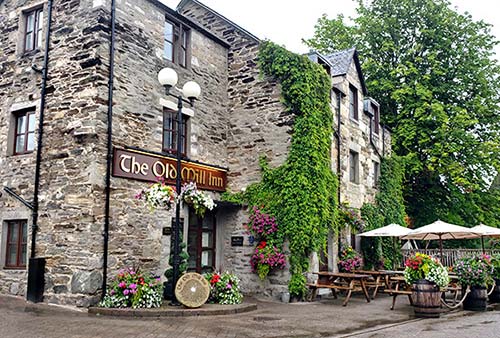
Hotel: $$$ The Old Mill Inn, a block behind the main drag in an actual old mill, has 13 plush rooms. It’s comfy and convenient, but note that rooms on the first and second floor can be noisy on weekends when live music plays outdoors at the recommended restaurant below (2-night minimum on weekends, Mill Lane, +44 1796 474 020, www.theoldmillpitlochry.co.uk, admin@theoldmillpitlochry.co.uk).
Eating in Pitlochry
Pitlochry may be small and touristy, but its restaurants offer quality local flavor. Several options line the main drag, including a couple of bakeries selling picnic supplies. If you’re here on a Monday evening, a seat outside at Victoria’s or Fern Cottage offers the perfect vantage point to watch the pipe band parade by.
$$ Victoria’s restaurant and coffee shop, a local favorite, feels like a dressed-up diner, serving up an eclectic menu of comfort food and gourmet dishes—including a hearty baked goat cheese salad (reservations smart for dinner, daily, patio seating, at corner of memorial park, 45 Atholl Road, +44 1796 472 670, www.victorias-pitlochry.co.uk).
$$$ Fern Cottage, just behind Victoria’s, has a darker, cozy lodge ambience and puts a Mediterranean spin on their more upmarket menu (reserve ahead for dinner, closed Mon-Tue, patio seating, Ferry Road, +44 1796 473 840, www.ferncottagepitlochry.co.uk).
$$$ The Old Mill Inn, in the recommended hotel a block off the main drag, has good Scottish food, plus some pastas and salads. It’s a lovely place to while away the time, with expansive outdoor seating on both sides of a burbling stream and a covered stage area that hosts music on summer weekends. Inside you can sit in their popular, high-energy pub or the calmer restaurant in back (daily, +44 1796 474 020, www.theoldmillpitlochry.co.uk). No reservations are taken, but the wait is usually short.
$$$ Port-na-Craig Inn, on the river just downhill from the theater, is a fancier option catering to theatergoers. For a calmer experience, go at 20:00, after the show has started. In good weather, their outdoor patio makes a nice riverside hangout (soup-and-sandwich lunch specials, reservations smart, daily until late, +44 1796 472 777, www.portnacraig.com). They also rent three rooms, one with views over the river, and a small cottage.
Supermarket: A well-stocked Co-op grocery has everything for a healthy picnic (daily, West Moulin Road, +44 1796 474 088).
Pitlochry Connections
The train station ticket office is open Monday to Saturday 8:00-18:30 and Sunday 10:30-18:00 (no baggage storage at station).
From Pitlochry by Train to: Inverness (nearly hourly, 1.5 hours), Stirling (5/day direct, 1 hour, more with transfer in Perth), Edinburgh (6/day direct, 2 hours, more with transfer), Glasgow (almost hourly, 4/day direct, 2 hours, some transfer in Perth). Train info: +44 8457 484 950, www.nationalrail.co.uk.
By Bus to: Glasgow (5/day on #M10, 2 hours), Edinburgh (8/day on #M90, 2.5 hours).
Near Pitlochry
The A-9 highway, connecting Inverness, Stirling, and Edinburgh, may be Scotland’s most touristy road—and it’s scenic, too. Heading south soon after leaving Inverness, the highway begins to skirt around the curved west edge of Cairngorms National Park, which it follows almost all the way to Pitlochry. These bald, heather-covered hills are what many people picture when they imagine Highland scenery.
The first section here lists sights along the A-9 corridor; the “On Loch Tay, West of Pitlochry” section explores attractions southwest of Pitlochry. Note that most of these—especially the sheepdog show—are also reachable as a day trip from Inverness.
Along the A-9, North and South of Pitlochry
As you follow the A-9, it seems every exit is stacked with brown “tourist attraction” signs. For the most part, the options along here are more convenient than must-see; they tend to pale in comparison to alternatives elsewhere in the country. But if your trip to Scotland isn’t taking you beyond this Highland corridor, some of these may be worth a stop.
NORTH OF PITLOCHRY
▲▲Working Sheepdogs
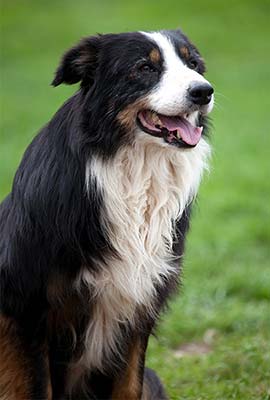
Several times a day, Neil Ross—a salt-of-the-earth farmer who was born and raised right on this property—presents a 45-minute demonstration of his well-trained border collie sheepdogs. As Neil describes his work, he’ll explain why shepherds have used a crook for thousands of years, why sheep and cows are actually “man’s best friends,” and why farmers get frustrated when “fancy people with numbers after their names” try to tell them how to manage their land. Then the dogs get to work: With shouts and whistles, each dog follows individual commands, demonstrating an impressive mastery over the sheep. Neil explains that for the dogs, the work is their reward: They need no encouragement or treats, just the chance to go again. (Watching in awe, you can’t help but think: Sheepdogs are smart...and sheep are idiots.) Neil may also demonstrate shearing a sheep—using old-fashioned metal shears, cleanly trimming off the wool in one long piece that he then efficiently wraps into a ball, all while managing the dogs with his voice alone. (Volunteers are welcome to try a few snips.) Neil’s passion for the survival of small-scale farming and the humane treatment of the animals in his care is inspiring. After the presentation, you’ll meet (and pet) the border collie stars of the show, and may have the chance to feed some lambs. The entire show is outdoors, so come prepared for all types of weather.
Cost and Hours: £15, cash only; Neal generally offers several demos a day May-Oct, depending on interest—call or email in advance to confirm the schedule and driving directions; closed to the public at other times, no demonstrations Nov-April, no WC except the bushes, +44 788 831 4412, https://workingsheepdogs.uk, neil@workingsheepdogs.uk.
Getting There: Heading south on A-9 from Inverness, exit at Kincraig, then follow B-9152 for several miles as it parallels A-9 south. Continue through Kincraig, and watch on the right for a brown Working Sheepdogs sign. Head up this access road (going under the highway) and track Welcome to Working Sheepdogs—Leault Farm signs. You’ll rumble over red cattle grates, then immediately take the (unmarked) left fork and drive another mile or so through the hills to the farm. If you’re traveling north on A-9, exit for Kingussie and Kincraig, get on B-9152 northbound, and watch for the Working Sheepdogs sign on the left, then follow the above directions.
▲Highland Folk Museum
Scotland doesn’t have a top-notch open-air folk museum—but this is close enough. Just off the highway on the outskirts of Newtonmore, the museum features re-creations of traditional buildings from the surrounding area from the 1700s through the 1930s. The buildings are a bit spread out, and it’s quiet outside of frequent “activity days” (check the schedule online).
Cost and Hours: Free but donations strongly encouraged; daily 10:00-17:00, Sept-Oct 10:30-16:00, closed Nov-March; helpful £5 guidebook, Kingussie Road, +44 1349 781 650, www.highlifehighland.com/highlandfolkmuseum.
Getting There: Exit the A-9 in Newtonmore, then follow brown signs for about five minutes through the village to the museum (parking-£2, pay with card or coins).
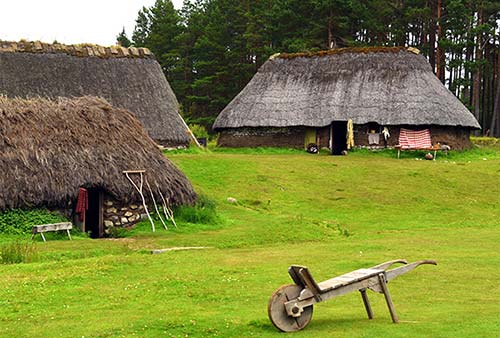
Visiting the Museum: The highlight of the museum is a circa-1700, thatched-roof Highland township called Baile Gean, a gathering of four primitive stone homes and three barns, each furnished as it would have been in the Jacobite era (it’s a 15-minute walk from the entry—go to the right through a pine forest and up a small hill). This re-creation was closely based on an actual settlement a few miles away that was populated until the 1830s. Costumed docents can explain traditional Highland lifestyles, and you’ll likely see—and smell—a peat fire filling one of the homes with its rich smoke. (Because peat doesn’t spit or spark, it was much safer to burn than wood—which was too valuable to feed fires anyway, as most tools were made of wood.) Outlander fans may recognize the township, which provided an ideal backdrop for some of the rural-life Scotland scenes in the TV production.
With more time, visit the other structures in the rest of the open-air museum, such as the tweed shop; the schoolhouse, where you’ll learn about early-20th-century classrooms; or the Lochanhully House (look for the house with red eaves, past the playground), which depicts a 1950s Scottish home. At the far end of the complex, you may see some hairy coos.
▲Blair Castle
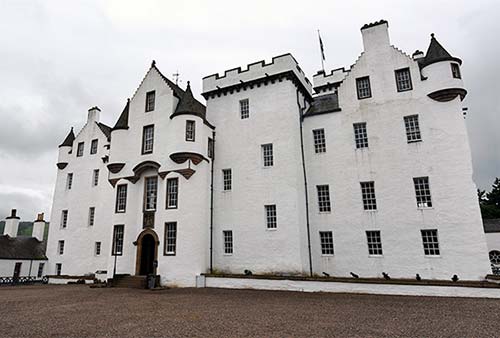
If you like Scottish history, aristocratic furnishings, and antlers, you’ll like Blair Castle. It’s a convenient stop for those zipping past on the A-9. In Gaelic, a “blàr” or “blair” is a flat bit of land surrounded by hills. And sure enough, this stately white palace rises up from a broad clearing. A stout fortress during the Jacobite wars, it was later renovated and expanded as a mansion in the Scottish Baronial style.
Cost and Hours: £17, £8 for gardens only; daily 10:00-17:00, closed Nov-March, last entry one hour before closing; free audio tour on Smartify app, good cafeteria, +44 1796 481 207, https://blair-castle.co.uk [URL inactive].
Getting There: From the town of Blair Atholl (just off of the A-9), drive down the long, tree-lined driveway to the free parking lot. From Pitlochry, you can take the more scenic B-8019/B-8079 instead of the A-9. Bus #87 runs from Pitlochry (5/day in summer, fewer off-season, 15 minutes, www.elizabethyulecoaches.co.uk).
Visiting the Castle: The former residence of the Dukes of Atholl (a.k.a. Clan Murray) is now owned and run as a business by a trust led by the 10th duke’s half-sister, who lives on-site in the castle’s south wing. Filled with art, historic artifacts, and Clan Murray mementoes, it offers a fine look at 19th-century upper-crust life. Follow the self-guided, one-way route up the creaky “picture staircase” and try to spot the portrait of the cross-eyed forebear. Other highlights include the truly palatial main drawing room, where you can imagine the elite soirées that once took place, and the wood-paneled ballroom at the end, bristling with antlers. In contrast, the WWI room recalls how the house was used as a hospital during that conflict, and a display just before you exit explores the life of Duchess Katharine Stewart-Murray (1874-1960), a suffragette and humanitarian who was the first woman from Scotland elected to the British parliament.
If time allows, explore the grounds—especially the walled Hercules Garden, where rugged plantings surround a lily-padded pond, overlooked by a statue of Hercules (accessed via the trail near the parking lot).
Nearby: The Atholl Country Life Museum is a humble, volunteer-run museum literally across the street from the entrance to Blair Castle. A local teacher created these exhibits, filling an old school to show the other side of the social and economic coin (£5, Mon and Thu-Sat 10:00-16:00, Tue and Sun 13:00-16:00, closed Wed and Nov-March, also can close when no volunteers are available, www.facebook.com/athollcountrylifemuseum).
SOUTHEAST OF PITLOCHRY
▲Dunkeld
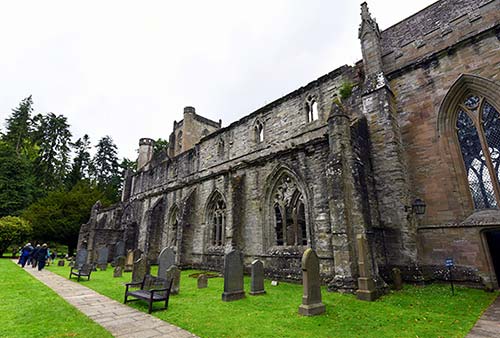
This appealing wee town, 20 minutes southeast of Pitlochry just off the A-9, is worth a stretch-your-legs break. While the town center is pleasant—with flower boxes, cleverly named shops, folk music, and a growing foodie scene—its claim to fame is its partially ruined cathedral on the banks of the River Tay.
Pay-and-display parking is at both ends of town (the north end has a WC). The TI and cathedral are just down High Street from the main drag, Atholl Street.
The Cathedral of St. Columba was actually Scotland’s leading church for a brief time in the ninth century, when that important saint’s relics were being stored here during Viking raids. Later it blossomed into a large cathedral complex in a secluded riverside setting. But it was devastated by the one-two punch of Reformation iconoclasts (who tore down most of the building) and Jacobites (who fought the Battle of Dunkeld near here). Duck inside to see the stony interior and its one-room museum (pick up the free info sheet or consider borrowing the good audioguide for a small donation). Outside, as you circle the entire complex, you’ll discover that the current church is merely the choir of the original structure—a huge, ruined nave stretches behind it.
Eating: $ The Taybank Gardens, across the street from the Taybank Hotel at the south end of town, is a pleasant riverside beer garden with Telford bridge views and an outdoor kitchen serving wood-fired pizza, salads, and light bites (daily, also indoor dining options, +44 1350 677 123, www.thetaybank.co.uk).
On Loch Tay, West of Pitlochry
A 30-minute drive southwest of Pitlochry, Loch Tay is worth visiting mostly for its excellent Scottish Crannog Centre—the best place in Scotland to learn about early Iron Age life. You can also drive along Loch Tay (and past the thundering Falls of Dochart) to connect Pitlochry and the A-9 corridor with the Trossachs and Loch Lomond to the southwest.
Kenmore
Located where Loch Tay empties into the River Tay, Kenmore is a sleepy, one-street, black-and-white village with a big hotel, a church, and a post office/general store. There’s not much to do here, other than visit the nearby Scottish Crannog Centre and enjoy the Loch Tay scenery, and perhaps get a meal on your way through. The $$ Courtyard Brasserie & Bar is a decent option (daily until 19:30, +44 1887 830 886, www.taymouth.co.uk/restaurant). The landmark Kenmore Hotel and nearby Taymouth Castle are closed while being redeveloped as a luxury golf resort.
▲▲Scottish Crannog Centre
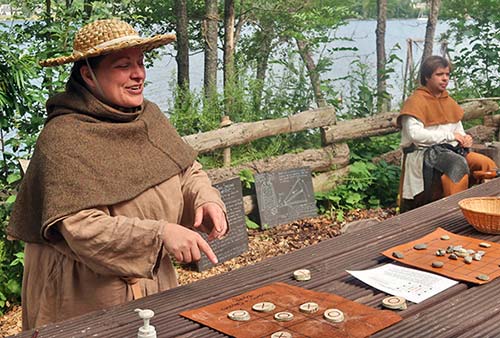
Across Scotland, archaeologists know that little round islands on the lochs are evidence of crannogs—circular houses on stilts, dating to 500 years before the Christian era. It’s not exactly clear why Iron Age Scots built homes on the water. It may be because people traveled by boat, or because waterways were easily defended against rampaging animals (or people). Scientists have found evidence of 17 such crannogs on Loch Tay alone. Families of up to 20 people, along with their livestock, lived in just one crannog.
A 2021 fire destroyed the center’s original replica crannog; by the time you visit they should be well on their way toward rebuilding it and two more at a new location on the north shore of Loch Tay. The crannogs are the highlight of a replica Iron Age village, where hands-on demonstrations bring the past to life.
Cost and Hours: Confirm details before you go; likely £12, includes 1.5-hour guided tour; open daily 10:00-17:30, closed Dec-Jan, last tour at 16:00; café; well marked just beyond Kenmore, +44 1887 830 583, www.crannog.co.uk.
Visiting the Crannog Centre: At the new location, a museum will set the stage with a collection of Iron Age artifacts and exhibits explaining the history of crannogs and how people lived and worked some 2,500 years ago. Then you’ll enter the reconstructed Iron Age village, with a dry-stone, thatched-roof round house at its core and a replica crannog just offshore. A woodland garden showcases plants that would have been used for Iron Age cooking, medicine, and dyes. Nearby buildings host hands-on living history demonstrations of ancient crafts and technologies such as turning a lathe, grinding flour, spinning yarn, making pottery, or weaving cloth. And if one of the crannogs is still under construction, you may be invited to put your new Iron Age skills to work and lend a hand.
Falls of Dochart
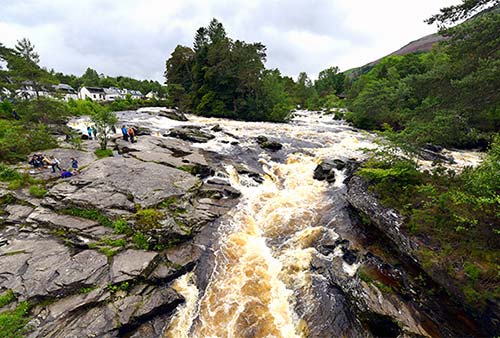
At the far end of Loch Tay, about 30 minutes from Kenmore, in the village of Killin, the road passes on a stone bridge over a churning waterfall where the peat-brown waters of the River Dochart tumble dramatically into the loch. The romantic bridge is busy with passing motorists enjoying a photo op; eateries and gift shops surround the scene. You can clamber down onto the flat stones for a closer look. From the bridge, notice the stone archway marking the burial ground of the Clan Macnab. The wood-beamed $$ Falls of Dochart Inn is directly across the street; its bar/restaurant offers good lunch options, including a tasting plate with cheese, oatcakes, and locally smoked salmon (daily, +44 1567 820 270, www.fallsofdochartinn.co.uk).
Speyside and Royal Deeside
The region north and east of the Cairngorms (while hardly undiscovered) feels more rugged than the A-9 corridor and lets you dig deeper into the countryside. In this area, I’ve focused on two river valleys with very different claims to fame. Speyside, curling along the top of the Cairngorms, is famous for its many whisky distilleries. Royal Deeside, cutting through the middle of the Cairngorms, is the home of the late Queen Elizabeth II’s country retreat at Balmoral and the neighboring village of Ballater. Overnighting in Ballater is an ideal way to linger in this region and sleep immersed in Cairngorms splendor, a land rich with hiking opportunities—from easy to challenging.
Speyside Whisky Trail
Of the hundred or so distilleries in Scotland, half lie near the valley of the River Spey—a small area called Speyside. The abundant waters of the river, along with generous peat deposits, have attracted distillers here for centuries. While I prefer some of the smaller, more intimate distillery tours elsewhere in Scotland (such as Oban Distillery and Talisker on the Isle of Skye), Speyside is convenient to Inverness—about a 1.5-hour drive—and practically a pilgrimage for aficionados. The distilleries here feel bigger and more corporate, but they also include some famous names (including the world’s two best-selling brands of single malts, Glenfiddich and Glenlivet). And for whisky lovers, it’s simply enjoyable to spend time in a region steeped in such reverence for your favorite drink.
PLANNING YOUR TIME
A quick car tour of Speyside takes about a half-day, and it’s a scenic way to connect Inverness to Royal Deeside (it also works as a side trip from Inverness). Whisky aficionados will have their own list of distilleries they want to hit. But, for the typical traveler, here is an easy plan for the day:
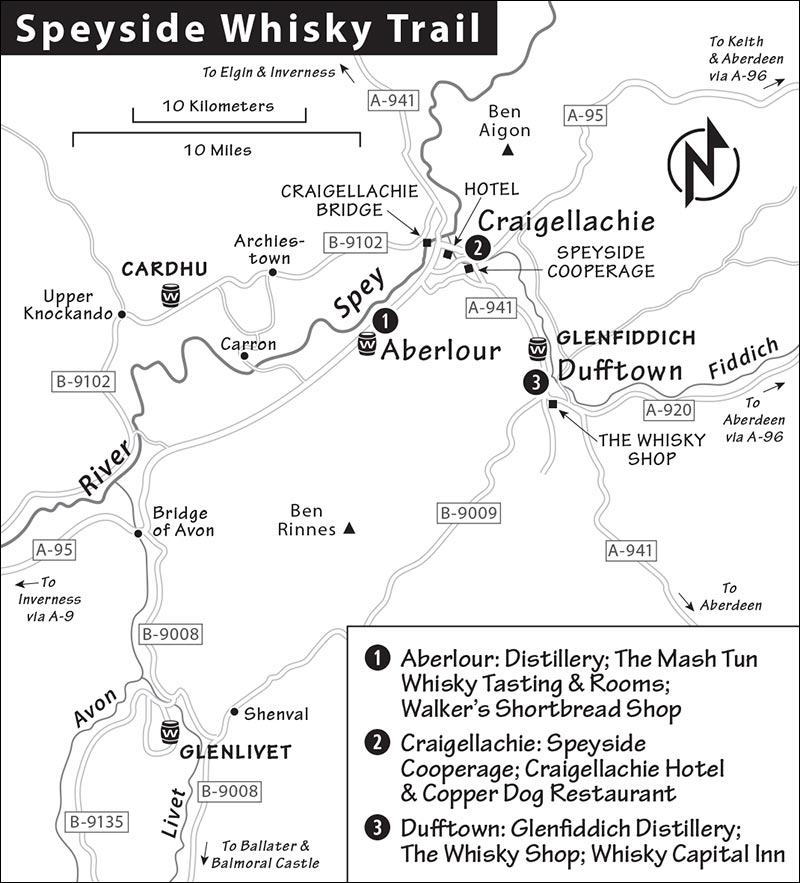
Enjoy the scenic drive to Aberlour, tour the Speyside Cooperage and the Glenfiddich distillery, and finally have a short stop in Dufftown. All are within about five miles of each other. With an early start, you could easily do these stops and then drive down to Balmoral Castle to tour it and sleep nearby in Ballater. Or, if you have more time and a special interest, you could add on a visit to Glenlivet and/or Cardhu.
Orientation to Speyside
The A-95, which parallels the River Spey, is the region’s artery (to reach it, take the A-9 south from Inverness and turn off toward Grantown-on-Spey). Brown Malt Whisky Trail signs help connect the dots. While several distilleries lie along the main road, even more are a short side trip away. Three humdrum villages form the nucleus of Speyside: Aberlour (the biggest), Craigellachie (a wide spot in the road), and Dufftown (with a clock tower and a good dose of stony charm).
Because public transit connections aren’t ideal, Speyside works best for drivers—though if you’re determined, you could take the train from Inverness to Elgin and catch the “whisky bus” from there (Stagecoach bus #36, stops in Craigellachie and at the Glenfiddich Distillery on the way to Dufftown, about hourly, none on Sun).
Each distillery is a working facility with a tasting room, shop, and lounge/bar. If you’re making the long trip here, most visitors enjoy taking a tour, which typically costs around £20, lasts an hour and a half, and includes some background information on the distillery’s history, a walk through the production facilities, and a tasting of three or four whiskies. Most also offer pricier in-depth experiences for aficionados, with higher-quality whiskies. Tours fill up—weeks in advance at busy times—so book online well ahead.
It’s interesting to see the reverence each distillery has for its founders—you’ll see cast-bronze statues of them, as if they’re saints, and their personal belongings are displayed as if holy relics.
While each distillery has a bar, most don’t serve food. Keep an eye out for roadside restaurants between the stops; I’ve noted a few good options, too.
A word of caution: In Scotland, DUI standards are very low (0.05 percent) and strictly enforced. Go easy on the tastings or bring a designated driver. Distilleries are often happy to give drivers their dram “to go” so they can enjoy it safely later.
Which Distillery to Tour? The two big distilleries of Speyside—Glenfiddich and Glenlivet—each offer good-quality tours and tastings. Glenlivet is more of an “innovator,” with a fancier campus, glitzier facilities, and an upscale, corporate vibe. But I prefer Glenfiddich, which feels more historic and is closer to other sights. There’s also Cardhu, which supplies Johnnie Walker; it feels more “countryside” and is the most casual of the bunch.
Helpful Resource: The Spirit of Speyside website lists details on the area’s more than 50 distilleries, local festivals, things to do in Speyside beyond whisky tasting, and recommendations for eating and sleeping (www.spiritofspeyside.com).
Sights in Speyside
ALONG THE MALT WHISKY TRAIL
I’ve listed these roughly west to east, as you’ll reach them approaching Speyside on the A-95 from the Inverness area (or the A-9).
Aberlour
Officially named “Charlestown of Aberlour” for its founder, this attractive sandstone town is famous both for its namesake whisky distillery (www.aberlour.com) and as the home of Walker’s Shortbread, which you’ll see sold in red-tartan boxes all over Scotland. (You can stop off at the factory store—the giant complex is at the east end of town—or just drop into the Joseph Walker’s shop on the cute main street.)
Eating in Aberlour: Just off the main road toward the river, $$ The Mash Tun is an atmospheric whisky bar that serves good lunches and dinners, and rents rooms upstairs (+44 1340 881 771, www.mashtun-aberlour.com).
Craigellachie
The blink-and-you’ll-miss-it village of Craigellachie (craig-ELL-a-kee) is home to the landmark $$$ Craigellachie Hotel. This classic, grand old hotel, a handy home base for whisky pilgrims, is famous for its whisky bar—stocking more than 800 bottles (opens daily at 17:00, the receptionist may let you in for a peek at other times, 26 rooms, +44 1340 881 204, www.craigellachiehotel.co.uk). Downstairs, the hotel’s $$ Copper Dog restaurant is handy for lunch.
Just past the hotel on the A-941, keep an eye out on the left for the picturesque, multi-turreted Craigellachie Bridge, built by the great Scottish industrial architect Thomas Telford.
Note that the A-95 takes a sharp turn to the right in Craigellachie (just before the hotel), becoming the A-941 and leading to the cooperage described next, and beyond that, to the Glenfiddich Distillery and Dufftown.
▲Speyside Cooperage
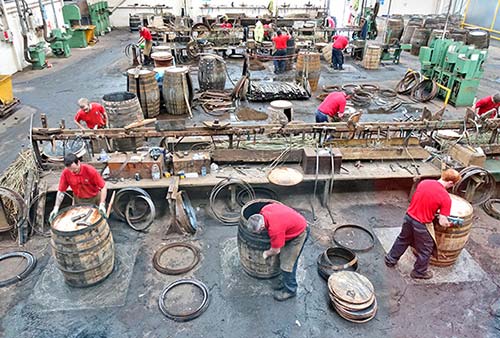
Perhaps the single biggest factor in defining whisky’s unique flavor is the barrel it’s aged in. At this busy workshop on the outskirts of Craigellachie, you can watch master coopers build or refurbish casks for distilleries throughout Scotland. The coopers who work here—who must first complete a four-year apprenticeship to get the gig—are some of the last of a dying breed; while just about everything used to be transported in barrels, today it’s just booze. The place can be visited only on guided tours, which often sell out; call a day or two ahead to confirm the schedule and sign up.
Cost and Hours: £10, tours depart hourly Mon-Thu 9:00-15:00, Fri until 14:00, closed Sat-Sun, Dufftown Road, Craigellachie, +44 1340 871 108, www.speysidecooperage.co.uk.
Visiting the Cooperage: First you’ll view an engaging short film in an immersive mini-cinema room, then you’ll follow your guide to an observation deck peering down over the factory floor. Oak timber is shaped into staves, which are gathered into metal hoops, then steamed to make them more pliable. Finally the inside is charred with a gas flame, creating a carbonized coating that helps give whisky its golden hue and flavor. Because the vast majority of casks used in Scotland are hand-me-downs from the US (where bourbon laws only allow one use per barrel), you’re more likely to see reassembly of old casks (with new ends) rather than from-scratch creation of new ones. But the process is equally fascinating. Apart from observing the barrel-making, it’s also interesting to see the intensity of the workers—who are paid by the piece. The tour ends in the “Toasting Room” with a dram of single malt and more Q&A time with your guide.
▲Glenfiddich Distillery
Before you enter Dufftown, keep an eye out on the left for the home of Scotland’s top-selling single malt whisky—with a name that means “Valley of the Deer” (Note: The -ch at the end is pronounced like “loch,” not like “itch”). This sprawling yet charming factory offers excellent tours and tastings, which are a good all-around choice for curious visitors. After a 15-minute promotional video, your guide will walk you through the impressive plant, which includes a busy bottling hall. Your tour finishes with an extensive tasting session. While it’s smart to prebook, they tend to hold back a few slots for walk-ins as well.
Cost and Hours: Standard £20 visit includes 1.5-hour tour and 4 tastings (departs every 45 minutes), more expensive options available, Wed-Sun 9:30-15:30 (last tour), closed Mon-Tue, +44 1340 822 373, www.glenfiddich.com.
Dufftown
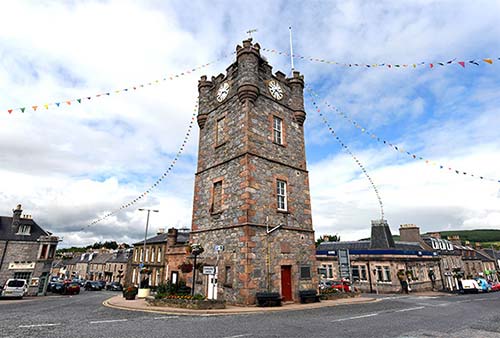
This charming, sleepy town has a characteristic crossroads street plan radiating from its clock-tower-topped main square. The Whisky Shop, directly behind the tower, is a serious place selling 650 types of whisky (daily 10:00-18:00, shorter hours and closed Sun in winter, 1 Fife Street, +44 1340 821 097, www.whiskyshopdufftown.com). Around the corner, the contemporary bar/restaurant at the $$ Whisky Capital Inn offers standard pub fare (daily, Church Street, +44 1340 820 313, www.whiskycapitalinn.co.uk).
DISTILLERIES FARTHER FROM THE HIGHWAY
These two options require a 10- to 15-minute drive from the main Whisky Trail artery on A-95. While each of these is well signposted, it’s easiest to use GPS.
Glenlivet Distillery
Sitting five miles south of the A-95 (turn off at Bridge of Avon), or 13 miles southwest of Dufftown, Glenlivet is the most posh and polished—and one of the biggest and most famous—of the area’s many distilleries. The sprawling visitors center feels rich and glitzy: a cozy fireplace drawing room displaying lore from founder George Smith (including the pistols he was given to defend his fledgling business); a wall of cinematically lit bottles filled with amber liquid; a well-stocked and luxuriously displayed shop; and the Drawing Room bar, which invites visitors to relax and sip a dram or a cocktail in surroundings that are both lavish and cozy.
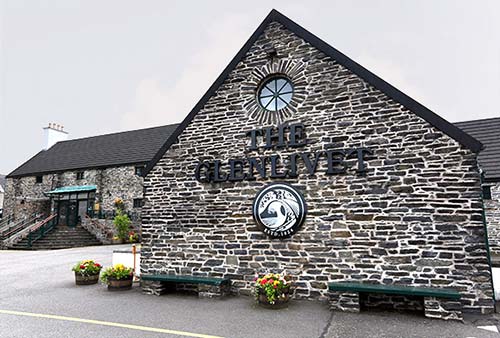
Glenlivet brags that their tour isn’t just about their own whisky, but about Speyside production generally, and makes a point to highlight workers who participate every step of the way—from barley farmers to the people who manage the cask-aging process. Glenlivet also prides itself on innovation; for example, the bar dispenses “cocktail capsules” that dissolve in your mouth with explosive flavors. This place is very popular, which means its tours tend to sell out well in advance; book as far ahead as possible on their website. Even if they’re already booked up, the rest of the facility is enjoyable enough that fans may still enjoy stopping by just for a browse and dram in the bar.
Cost and Hours: £20 for “The Original” 1.5-hour distillery tour and three-whisky tasting; other pricier experiences available—review options on website and book ahead as far as possible; Mon-Sat 10:00-17:00, shorter hours and closed Mon off-season, closed Sun year-round; +44 1340 821 720, www.theglenlivet.com. Note: This is just a short detour for those connecting Speyside to Ballater on the scenic route through the mountains (B-9008/A-939).
Cardhu Distillery
This smaller, countryside spot has two claims to fame: First, it was founded by two women (Helen Cumming, who made whisky illegally before it was legit; and her daughter-in-law, Elizabeth, who carried on the tradition). And second, it’s the “Speyside home of Johnnie Walker,” sending 70 percent of its mature spirit to that big, famous producer. Because Cardhu is a short drive—on twisty, scenic roads—from the main Whisky Trail highway, it feels a bit calmer and more personal. Just above the parking lot, a short walk leads past hairy coos to a statue of Elizabeth Cumming and the Striding Man from the Johnnie Walker logo.
Cost and Hours: £19 includes 1.5-hour tour and three whiskies, plus a cocktail; daily 10:00-17:00, shorter hours in winter; in the village of Cardow, +44 1479 874 635, www.malts.com [URL inactive].
Balmoral Castle and Royal Deeside
Royal Deeside—the forested valley of the River Dee—is two sights in one: the Scottish home of the British royal family, wrapped in some of the most gorgeous scenery of Cairngorms National Park. The central spine of this area—a 30-minute stretch between the towns of Ballater and Braemar, with Balmoral Castle right in the middle—feels far from the congestion of the A-9 highway on the other side of the park, yet still fully accessible. It’s a splendid place for a walk or a hike.
Driving through the Cairngorms, you’ll see pockets of Scots pine (Scotland’s national tree). While no longer widespread, these once blanketed the Scottish countryside. In fact, 2,000 years ago, the Romans must have been impressed. They called this land “Caledonia Silva,” meaning “wooded land.” Driving on, closer to Balmoral, you’ll enter a high, treeless moorland with lots of broom plants (what we’d call Scotch broom) and wild thistles (Scotland’s national flower).
As you drive, cresting hills to meet vast views, you can imagine royals out on the hunt. (In fact, you’ll spot wee huts used by hunters to hide out while they await the stag of their dreams.) The only game you’ll likely see is hairy coos and lots of roadkill—mostly rabbit.
For those who enjoy exploring ruins and coastal scenery, it’s worth a speedy detour to Dunnottar Castle on your way south from Ballater and Balmoral.
Getting There: The Royal Deeside works best for drivers. Getting here requires a twisty, picturesque mountain drive, either from points south (Edinburgh, Glasgow, Stirling via the summer-only “Snow Roads”) or from the north (Inverness and Speyside)—for details, see “Route Tips for Drivers,” near the end of this chapter. If you are determined, carless, and patient, Stagecoach North Scotland bus #201 departs about twice an hour (less on weekends) from Aberdeen and makes frequent stops on its approximately two-hour journey to Ballater; about half of the buses carry on 15 minutes to Balmoral Castle (Crathie stop), then 15 minutes farther to Braemar.
BALMORAL CASTLE
This 50,000-acre private estate, located within Cairngorms National Park, was Queen Elizabeth II’s home for several months of the year, and where she passed away in September 2022. Outside of royal visits, the grounds and the castle’s ballroom are open to visitors. While royalists will enjoy this glimpse into the place where royals unwind, be aware that it’s a mainly outdoor visit of the grounds, gardens, and palace exterior; only one room (the ballroom) is open to the public, and that room is rather modest. But for those who enjoy royal sights as well as beautiful nature, it’s worth ▲▲.
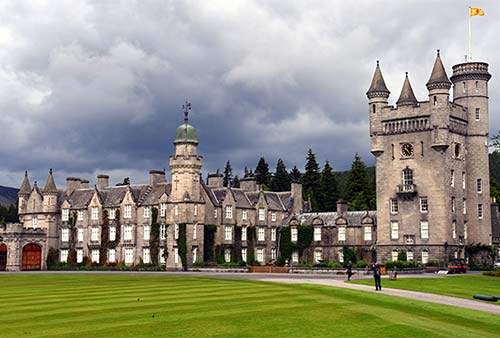
Cost and Hours: £16.50, includes audioguide if ticket booked online (otherwise £5 extra); April-July daily 10:00-17:00, closed Aug-March, arrive at least an hour before closing; café on site, +44 1339 742 534, www.balmoralcastle.com.
Getting There: Balmoral is in the country near the village of Crathie, between the towns of Ballater and Braemar (about 15 minutes’ drive from each one). The parking lot is just off the A-93 near the castle entrance (£5; parking lot also has a handy post office/visitor information center with WCs downstairs).
Luxury Land Rover Expedition Tours: The royals famously move about their sprawling estate in beefy Land Rovers. If you’d like to follow their example, you can invest in a (very pricey) ranger-led Land Rover “safari” through the grounds; book well in advance (£330/carload—up to 6, 2/day during the open season, 2 hours, www.balmoralcastle.com).
Background: Queen Victoria and Prince Albert purchased the Balmoral estate in 1848. The thickly forested hills all around reminded Albert of his Thuringian homeland, but Victoria adored it as well—calling it her “Highland paradise.” Balmoral Castle was built in the Scottish Baronial style—a romantic, faux-antique look resembling turreted Scottish Renaissance castles from the 16th century—helping to further popularize that look. Victoria felt a particularly strong connection to Scotland—spending a total of eight years of her life here, particularly while she was mourning after Albert’s untimely death—and the Scots loved her for it. Ever since, each British monarch has enjoyed retreating to this sprawling property, designed for hunting (red deer) and fishing (salmon). Queen Elizabeth II spent each August through October here, and it was here that she passed away in 2022 at age 96, the realm’s longest-reigning monarch. Today Balmoral has a huge staff (including ranger-like fishing and hunting assistants called “ghillies”), 80 miles of roads, a herd of Highland cattle, and a flock of Highland ponies—stout little miniature horses useful for hauling deer carcasses over the hills.
Visiting the Castle: Touring the grounds and ballroom takes about an hour and a half, with audioguide narration, and requires a good bit of level walking.
From the parking lot, walk across the River Dee to reach the ticket booth. You’ll receive your audioguide and map, which will lead you on the 10-minute walk to the heart of the palace grounds. When you reach the round deer larder building, you can either follow the audioguide for the full tour around the grounds (produce garden, conservatory, garden cottage—all with great palace views—then around the left side of the palace, past the sunken garden, to the ballroom). Or, if the weather’s bad, you can cut to the chase and head straight for the palace.
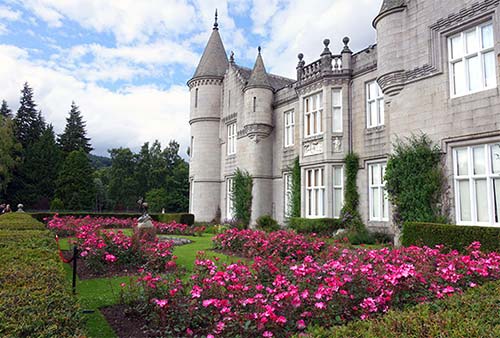
As you walk through the produce and flower gardens, ponder the unenviable challenge of trying to time all of the flowers to bloom and the produce to ripen at the same time, coinciding with the royal family’s arrival the first week of August (especially difficult given Scotland’s notoriously uncooperative climate).
Finally you’ll reach the single room in the palace open to the public: the ballroom. Its humbleness is a reminder that Balmoral is a private vacation home rather than a state residence designed for pomp and circumstance. And yet, it has a certain understated, rustic charm, with historic paintings and photographs of fond royal vacation memories, and many stag heads mounted on the walls. When the monarch visits, they pull up the carpets (which are here only to protect the hardwoods from the soiled soles of us commoners) and kick off the season with a “Ghillies Ball,” in honor of the rugged Scots outdoorsmen who “help” the royals hunt and fish. The ballroom is filled with rotating exhibitions about the palace. You’ll likely see some clothing worn by the royals, and there’s often a display of the miniature automobiles that future kings and queens have enjoyed driving around (such as the miniature 1966 Austin Martin—James Bond-style—and an “American Style Imperial 1” from 1955).
You’ll exit out back and head to the sprawling $ café (with lots of outdoor tables, and indoor seating under wood rafters). Beyond that you’ll reach the mews, or stables, with a gigantic gift shop and a couple of small exhibits in the garages—often including a vintage royal Land Rover, as if to remind us that Queen Elizabeth was trained as an auto mechanic during World War II, before she took the throne.
You can walk back to the parking lot the way you came. Or—for a more scenic return—follow the river back.
Nearby: Two more royal landmarks hide out a short walk from the parking lot.
First, just up the hill and across the road (head up the driveway with the red telephone box) is Crathie Kirk, the small stony parish church where the royal family worships when they are at Balmoral (interior is often closed).
If you’re interested in the story of John Brown—the ghillie who became Queen Victoria’s trusted companion for decades after Prince Albert’s death (as depicted in the film Mrs. Brown)—you can see his grave in the kirkyard that surrounds the ruins of St. Manire’s Church (which was replaced by the Crathie Kirk in 1804). To find it, head along the small lane (on the Balmoral side of the highway) that curves down just past the post office/shop at the end of the parking lot. John Brown’s grave is in the second of the two graveyards. It’s roughly in the middle—look for the tall, gray headstone, with a pointed top, that’s taller than most others, immediately next to the similarly shaped headstone of his relatives. The inscription reads: “In affectionate and grateful remembrance...the devoted and faithful personal attendant and beloved friend of Queen Victoria.” It’s said that the queen came here to mourn frequently. In order to do so in privacy, she asked the upper windows of the neighboring house to be frosted...and they still are today.
BALLATER
Ballater (BAH-lah-tur) is the place where you’ll feel as much royalist sentiment as anywhere in Scotland. For the people of Ballater (many of whom work, either directly or indirectly, with Balmoral Castle), the Windsors are, simply, their neighbors. Royal connections aside, Ballater is a pleasant, unpretentious, extremely tidy little town. Just big enough to have all the essential tourist services—but neatly nestled in the wooded hills of the Cairngorms, and a bit more “away from it all” than Pitlochry—Ballater, worth ▲▲, is an ideal home base for those wanting to spend a night in this part of Scotland.
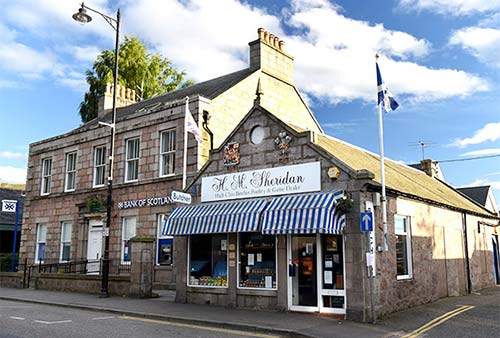
It was local springs—which bubbled up supposedly healing waters—that first put Ballater on the map. But the town is what it is today thanks to Queen Victoria and Prince Albert, who bought the nearby Balmoral Castle in 1848, then built a train station in Ballater to access it. Today, the town’s best attraction may be its residents, who revel in telling tales of royal encounters. King Charles III, who maintains a private residence at Birkhall (not open to the public), has a particular affection for this part of the Cairngorms. He supports Ballater charities and has been known to show up unannounced at town events...and locals love him for it. (“King Charles is a really nice guy,” one of them told me. “Not at all like the chap you see on TV.”)
Sights in Ballater
The town’s only real sight—the old train station built by Queen Victoria to more easily commute to her new summer home at Balmoral Castle—was rebuilt after a fire in 2015. Inside is a space shared by the TI and the town library. In the back is a fine photographic exhibit telling the story of Victoria and Albert’s presence here, and an actual royal train car, permanently parked at the platform. (The line stopped running in 1966.) You can peek in the windows to see the plush sofa, writing desk, and upholstered walls and ceiling.
The other part of the train station is occupied by the Rothesay Rooms Restaurant, sponsored by then-Prince Charles as a charity project after the town suffered devastating floods. They use Queen Victoria’s royal waiting room as a private dining hall. Consider eating here if you’re in town when it’s open (lunch only, closed Mon-Tue, http://rothesay-rooms.co.uk).
The town is also fun for a wander. Facing the station are two stately sandstone buildings honoring the couple that put this little village on the map: the Prince Albert Hall and the Victoria Hall. To the left, tucked at the end of the street, find the sweet little Dee Valley Confectioners, which produces fudge, chocolate, and all manner of very traditional Scottish candies: clove and rhubarb rock, soor plooms, granny sours, and brandy balls. The shop originally opened in Aberdeen in 1965, but has “only” been here since 1980.
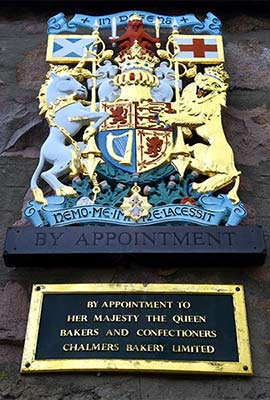
Head out to the main street (Bridge Street) and do some window shopping. It’s like a British Mayberry. The one block that runs from the train station to the church has virtually everything you could need: cafés, bookstore, clothing, deli, hardware store, optician. Notice that several shops in town boast the coveted seals (pictured right) announcing that they’re authorized to sell their wares directly to the gang at Balmoral.
Follow Bridge Street one block to the left—past the Balmoral Bar, with its turrets that echo its namesake castle—to the unusually fine parish church surrounded by an inviting green, with benches, flower gardens, and royal flourishes...like everything in Ballater.
Sleeping in Ballater
The town has several fine B&Bs; given the royal proximity and generally touristy nature of Ballater, prices are high...but so is quality. Many places have “drying rooms” where hikers and hunters can hang up their sopping-wet gear.
$$ The Auld Kirk—in, you guessed it, an old church (from 1843) right along the main drag into town—has seven rooms, which mingle traditional woodwork and modern flourishes (nicely renovated bathrooms) above a popular café that serves afternoon tea, with sprawling outdoor seating. Forthright Helen runs a very tight ship (family rooms, 31 Braemar Road, +44 1339 755 762, www.theauldkirk.com, info@theauldkirk.com).
$$ No. 45, well and warmly run by Alison and Les, has eight rooms in a classic stone hotel building (from 1880) along the main road into town. The lounges and public spaces feel big and inviting, with Cairngorms charm, and their great breakfast is served in a glassed-in conservatory surrounded by the lovely garden (family rooms, 45 Braemar Road, +44 1339 755 420, +44 7377 342 901, www.no45.co.uk, mail@no45.co.uk).
$$ Gordon Guest House is smack-dab in the center of town. Filling the former home of a bank manager, it sits upstairs over storefronts facing the historic train station and main street. Steve and Beth offer a warm welcome, four rooms, lots of helpful advice, and a great breakfast. Steve parks his classic Morris cars in the side yard—a great conversation starter (family room, Station Square, +44 1339 755 996, www.thegordonguesthouse.com, info@thegordonguesthouse.com).
Eating in Ballater
This little town has a nice variety of eateries. For a quick bite, consider one of the cafés along the main drag, Bridge Street (good options include old-school $ The Bothy and the more modern $$ Orka). There’s also a handy, long-hours Co-op grocery store facing the parish church, and nice tables on the green.
$$$$ Clachan Grill is the town’s “destination restaurant” for a high-quality meal. In their smart, classy dining room or out on their inviting patio, they serve modern Scottish cuisine; the menu brags about the provenance of each ingredient. It’s worth reserving ahead (closed Mon-Tue, look down a side lane near the bridge at 5 Bridge Square, +44 1339 755 999, www.clachangrill.com).
$$ Lochnagar Indian Brasserie, specializing in balti but offering a wide variety of Indian dishes, is far better than a small-town curry house deserves to be (on the corner at the back of the church green).
Other places in town solid for a meal include the $$ Alexandra Hotel (at the bridge end of town) and $$ The Balmoral Bar (right in the center).
BRAEMAR
Deeper in the mountains of the Cairngorms, the town of Braemar (bray-MAR) is known for hosting Scotland’s most famous Highland Games—called the Braemar Gathering—held the first Saturday in September (www.braemargathering.org). The royals are usually in attendance.
At other times of year, Braemar is also worth a quick wander if you’re passing through. Turn off the main road (onto Old Military Road) and cross the bridge over a jagged gorge to discover Braemar’s cute, if slightly Disney-esque, town center. The road—lined with over-the-top pubs and Highland swag—leads to the Braemar Highland Games Centre. You’ll see the various playing fields, surrounded by a giant green grandstand; looking across the field, find the small but lavishly decorated royal box. The Highland Games Pavilion and Exhibition Hall is shared by a café and a small museum about the history of the Braemar Gathering (£5, daily 10:00-16:00, closed in winter, www.highlandgamescentre.org). You’ll see exhibits on each type of activity—bagpiping, footraces, Highland dancing, and the famous “heavy events”—as well as full Highland regalia from various areas. It’s all well described, and may be of interest if you can’t see an actual Highland Games.
Braemar Castle, on the edge of town toward Balmoral and Ballater, generally isn’t worth a visit.
Note that the Linn of Dee hiking area, described in the next section, is near Braemar.
WALKS AND HIKES IN THE ROYAL DEESIDE
The main reason many people visit this area is for the royal connection. But once here, they realize why the royals love it so much: It’s a beautiful landscape, ideal for communing with nature. When the weather cooperates, hiking here is a ▲▲ experience. I’ve suggested a few easy, scenic hiking areas below, all within a 15- to 20-minute drive of either Ballater or Braemar. In many cases, the drive is nearly as nice as the hike. Each of these has parking, but you may have to pay (some machines accept credit cards, others only cash). The TIs and shops sell maps, and locals love to give advice. Remember: Weather can change in a hurry. Bring along gear for rain or sun, plus food, water, and, of course, midge spray. As elsewhere in Scotland, Walkhighlands (www.walkhighlands.co.uk) is a great resource for hiking tips.
Seven Bridges Hike (Ballater)
This hike, starting in Ballater, rambles up and down the River Dee, and comes with a short detour up to Knock Castle (mostly level, figure about six miles and three hours—or do just part of the walk). Or drive a few minutes out of town for one of the options below.
Muir of Dinnet National Nature Reserve (near Ballater)
A 10-minute drive east of Ballater takes you to this nature reserve, with some easy and pleasant (if not quite spectacular) nature walks. And it comes with a fun little roadside stopover: Leave town on the A-93 (Ballater Road). After four miles, you’ll approach the turnoff on the left for B-9119 to the nature reserve. But just before turning off, watch on the right side of the road for an old AA call box. Pull over here and open the door to the call box to discover a fun and whimsical mini-museum of AA roadside assistance (Britain’s equivalent of the AAA). Back in the day, AA members had a little emblem affixed to their automobile. And if an AA employee saw that emblem drive by, they were required to stop and salute.
Turning off on B-9119, it’s just another mile or so to the Muir of Dinnet parking lot. For an easy, rewarding hike, take the Burn O’Vat trail (a less than one-mile loop, only a short uphill stretch): Follow the burn (brook) up to the waterfall, where you can (carefully) continue on over some big rocks and through a big hole in the cliff to reach the “vat”—a nearly enclosed space tucked back away from the trail. Then backtrack to the bridge, cross it, climb up to the ridge, and circle back to your car; along the way, a viewing platform overlooks a nearby loch.
For a more ambitious walk at Muir of Dinnet, you can try the Parkin’s Moss Trail, a two-mile, 1.5-hour loop that follows a boardwalk over a bog—offering a close-up look at this distinct ecosystem.
Tomnaverie Stone Circle (near Ballater)
A visit to this stone circle, capping a hill overlooking Cairngorms scenery, combines well with the Muir of Dinnet. (It’s not much of a “hike,” but the views are grand). You’ll find it on the B-9094, a scenic back road about a 15-minute drive northeast of Ballater (from Muir of Dinnet, continue on the B-9119, and then turn right onto the B-9094). Driving past, keep a close eye out for the official parking lot. From here, you can walk up the gravel path to see an evocative stone circle on the summit of a wee hill. Notice that the main stone is “recumbent” (lying on its side, almost like an altar)—which is typical for stone circles only in this northeastern part of Scotland. It lines up with Lochnagar peak on the horizon, surrounded by heather, rolling hills, and cute villages. On the adjacent hill, you may notice a modern structure. This is venting for an underground nuclear bunker.
Loch Muick and Lochnagar (above Ballater)
This is the granddaddy of area hikes, and the place that really has you feeling above it all. Lochnagar, at 3,789 feet, is the peak that you can see (sometimes) on the horizon from Ballater; Loch Muick is the two-mile-long loch that sits at its base. While officially part of the sprawling Balmoral Estate, this area is just a 15- to 20-minute drive above Ballater’s town center.
The drive can be worthwhile for the scenery alone: At the east end of town, go over the bridge, turn right on the B-976, and head into the settlement called Bridge of Muick. Here the main road bends right, but you’ll carry on straight, following Glen Muick signs. From here, the road follows the River Muick, narrows to single-track, and heads up, up, up for seven miles. The last half is through classic, remote Cairngorms moorland, a wild landscape with scrubby heather fringing bald mountains. You’ll arrive at a parking lot near the settlement called Spittal of Glenmuick. As you’re on Balmoral Estate property, the parking is pricey. Note that the parking lot can fill up; on busy days, try to arrive early.
From the parking lot, you have a few hiking choices. The simplest option is the Lochend hike (about 3 miles and 1.5 hours), which loops along the edge of Loch Muick and past the small hunting settlement called Allt-na-guibhsaich (with the trailhead to Lochnagar).
For a longer walk, the Loch Muick Circuit—all the way around the loch—is about eight miles (figure 3.5 hours). En route, you’ll pass the remote stone hunting lodge called Glas-Allt-Shiel. After Prince Albert’s death, Queen Victoria wanted to escape into nature but couldn’t bear staying at Allt-na-guibhsaich...so this became her Loch Muick home.
For an ambitious hike, you could do the demanding summit of Lochnagar, which requires 12 miles and about seven hours (with a gain of about 3,000 feet)—with commanding views over Loch Muick and this scenic stretch of the Cairngorms.
Balmoral Cairns Walk
Because the area around Balmoral Castle is a private estate, there’s less hiking here than you might hope. One good option is this six-mile, three-hour, moderately strenuous hike that connects various cairns (stone-stacked monuments)—each one dedicated to important events in the lives of Queen Victoria, Prince Albert, or their children. As this is not well marked, it’s important to get clear instructions before heading out (check Walkhighlands.com for tips and map).
Linn of Dee (near Braemar)
While farther from Ballater, this thickly forested, riverside natural area offers a nice excuse to also check out the town of Braemar (which you’ll pass through to get here). From the big roundabout just below the Braemar Highland Games Centre, follow brown signs to Linn of Dee and follow the country road about six miles (15 minutes) to the nature reserve. The road takes you over a beautiful stretch of the River Dee as it runs through a wide valley. The landscape grows rocky and you cross a stone bridge over a narrow and very scenic gorge where the Dee squeezes between jagged cliffs. Just beyond is the pay parking lot at the Mar Lodge Estate. From here, two handy walks are well-signposted: Yellow signs outline an easy, half-mile loop down to the riverside for a view of the gorge and bridge, then back up again; blue signs send you on a longer, 1.75-mile loop that follows the river farther, and detours up along a smaller stream. For a quick, satisfying visit, you could start out on the shorter trail and then follow the longer one along the river, as long as time and stamina permit, before heading back to your car. This is a popular area to look for wildlife, from birds to red squirrels (which don’t sound all that exciting...until you spot one).
ROUTE TIPS FOR DRIVERS
If connecting south to Stirling, Edinburgh, or Glasgow, you’ll take the super-scenic “Snow Roads”—the highest public road in Great Britain (A-93 via Perth; the Braemar-Blairgowrie stretch is particularly striking). You’ll notice roadside ski centers with lifts designed to get Scots high into the mountains for winter sports. Red-and-white striped poles along the side of the road help measure snowfall. The highest point, at 2,199 feet, is Cairnwell Pass; a nearby old road, with a treacherous hairpin turn, is called the “Devil’s Elbow”—thankfully, the main road has been straightened out.
If connecting north to Inverness, it makes sense to go by way of the Speyside whisky country—take A-939 north from Ballater (following signs to Tomintoul), then turn off on B-9008 to Dufftown. The Glenlivet distillery is just a short detour from this route.
Either of these routes takes you over high-altitude moor scenery, with views of distant, sleepy valleys, castles, and manor houses—vintage Cairngorms.
If you’re traveling along Scotland’s east coast—between Aberdeen and Dundee (or St. Andrews) on A-90—you’ll go right past Dunnottar Castle (described next) near the town of Stonehaven. From here, it’s a one-hour drive to Ballater.
Aberdeenshire Coast
▲Dunnottar Castle
The mostly ruined and empty castle of Dunnottar (duh-NAW-tur) owns a privileged position: clinging to the top of a bulbous bluff, flanked by pebbly beaches and surrounded nearly 360 degrees by the North Sea. It’s scenic and strategic. From the parking lot, you’ll walk five minutes to a fork: To the right, you’ll come to a ridge with a panoramic view of the castle’s fine setting; to the left, you’ll hike steeply down (almost all the way to the beach), then steeply back up, to the castle itself. Inside, there’s not much to see. The only important thing that happened here was the Battle for the Honours of Scotland, when the Scottish crown jewels were briefly hidden away in the castle from Oliver Cromwell’s army, which laid siege to Dunnottar (unsuccessfully) for three days. But don’t worry too much about the history, or the scant posted descriptions—just explore the stately ruins while enjoying the panoramic views, sea spray, and cry of the gulls.
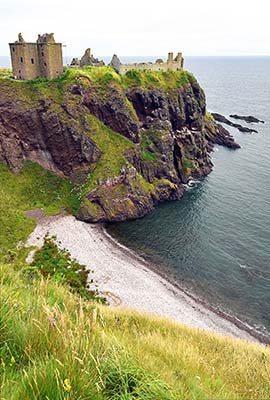
Cost and Hours: The photo-op view is free (and enough for many); entering the castle costs £9.50, daily 9:00-18:00, shorter hours Oct-March, +44 1569 766 320, www.dunnottarcastle.co.uk.
Getting There: It’s just off the busy A-90 expressway, which runs parallel to the coast between Aberdeen and Dundee; exit for Stonehaven, and you’ll find Dunnottar well signed just to the south.
Nearby: Dunnottar sits just beyond Stonehaven, a pleasant, workaday seafront town that’s a handy place to stretch your legs or grab lunch (big pay parking lot right in the town center, ringed by eateries and grocery stores; free parking just to the north along the beach promenade).