ST. ANDREWS
St. Andrews • Dundee • Glamis Castle • The East Neuk
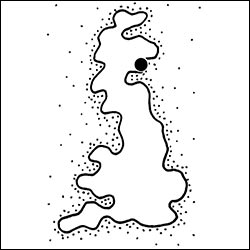
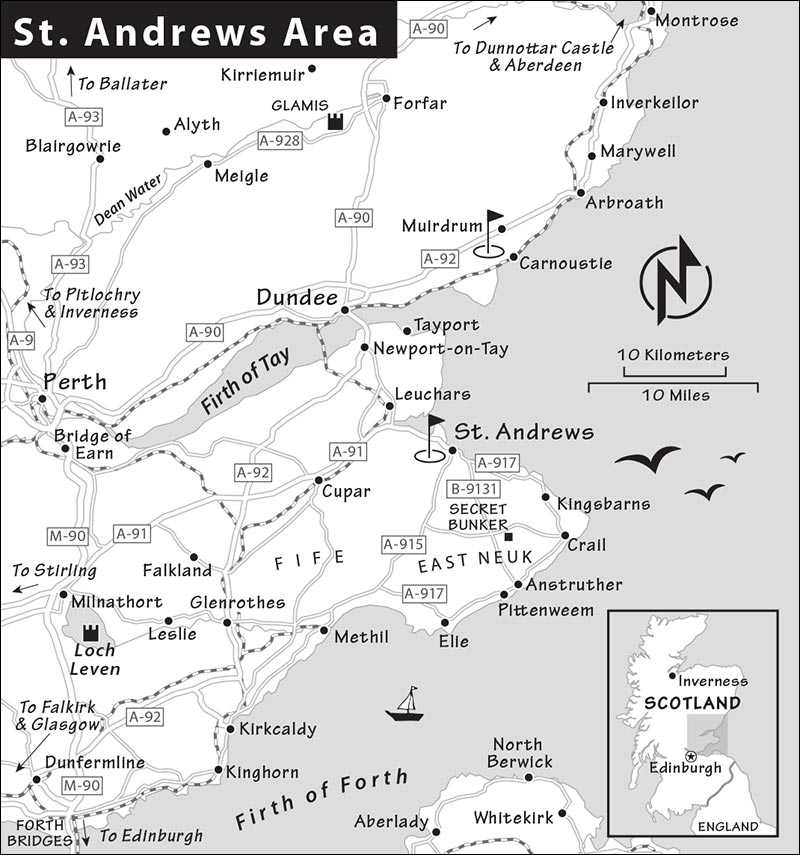
St. Andrews may be synonymous with golf, but there’s much more to this charming town than its famous links. Dramatically situated at the edge of a sandy bay, St. Andrews is the home of Scotland’s most important university—think of it as the Scottish Cambridge. And centuries ago, the town was the religious capital of the country.
In its long history, St. Andrews has seen two boom periods. First, in the early Middle Ages, the relics of St. Andrew made the town cathedral one of the most important pilgrimage sites in Christendom. The faithful flocked here from all over Europe, leaving the town with a medieval all-roads-lead-to-the-cathedral street plan that survives today. (St. Andrews University was founded during this period, in the 15th century.) But after the Scottish Reformation, the cathedral rotted away and the town became a forgotten backwater. A new wave of visitors arrived in the mid-19th century, when a visionary mayor (with the on-the-nose surname Playfair) began to promote the town’s connection with the newly in-vogue game of golf. Many buildings in town date from this Victorian era.
Today most pilgrims to St. Andrews are golf devotees (from amateurs to professional golfers to celebrities). The university remains one of Europe’s best, and occasionally royal couple William and Kate (college sweethearts, U. of St. A. class of ’05) will visit. And with vast sandy beaches, golfing opportunities for pros and novices alike, evocative castle and cathedral ruins, and a fun-loving student vibe, St. Andrews is an appealing place to take a vacation from your busy vacation. It’s also a handy home base for a variety of worthwhile side trips: interesting museums in the industrial city of Dundee, the castle home of the late Queen Mother, and a string of relaxing fishing villages (the East Neuk).
PLANNING YOUR TIME
Hugging the east coast of Scotland, St. Andrews is a bit off the main tourist track. But it’s well connected by train to Edinburgh (via bus from nearby Leuchars), making it a worthwhile day trip from the capital. Better yet, spend a night (or more, if you’re a golfer) to enjoy this university town after dark.
If you’re not here to golf, this is a good way to spend a day: Follow my self-guided walk, which connects the golf course, the university quad, the castle, and the cathedral. Dip into the R&A World Golf Museum, watch the golfers on the Old Course, and play a round at “The Himalayas” putting green (reserve ahead). With more time, walk along the West Sands beach, take a spin by car or bus to the nearby East Neuk, or drive up to the museums in Dundee. Dundee and Glamis Castle are also fine stops for drivers connecting St. Andrews to points north.
Orientation to St. Andrews
St. Andrews (pop. 16,000, plus several thousand more students during term) is situated at the tip of a peninsula next to a broad bay. The town retains its old medieval street plan: Three main streets (North, Market, and South) converge at the cathedral, which overlooks the sea at the tip of town. The middle street—Market Street—has the TI and many handy shops and eateries. North of North Street, the seafront street called The Scores connects the cathedral with the golf scene, which spreads along the West Sands beach at the base of the old town. St. Andrews is compact: You can stroll across town—from the cathedral to the historic golf course—in about 15 minutes.
TOURIST INFORMATION
St. Andrews’ helpful TI is on Market Street, about two blocks in front of the cathedral (Mon-Sun 9:30-17:00, July-Aug until 18:00; 70 Market Street, +44 1334 472 021, www.visitscotland.com).
ARRIVAL IN ST. ANDREWS
By Train and Bus: The nearest train station is in the village of Leuchars, five miles away. A taxi from Leuchars into St. Andrews costs about £14. Or take a 10-minute bus ride right into St. Andrews (bus #99, direction: St. Andrews, £3.50, use contactless card to pay fare as you board; buses meet most trains—see schedule at bus shelter or at www.stagecoachbus.com; while waiting, read the historical info under the nearby flagpole). St. Andrews’ bus station is near the base of Market Street—a short walk from most B&Bs and the TI.
By Car: For a short stay, drivers can park anywhere along streets in the town center (pay-and-display, coins or Ring Go parking app, 2-hour limit, free overnight and Sun morning). For longer stays, you can park for free along certain streets near the center (such as the small lot near the B&B neighborhood around Murray Place, and along The Scores), or use one of the pay-and-display lots near the entrance to town. Parking near the Murray Place B&Bs tends to be full until midafternoon—if so, pay for parking nearby, then move your car to a free spot near your guesthouse for the night.
HELPFUL HINTS
Golf Events: Every five years, St. Andrews is swamped with about 100,000 visitors when it hosts one of golf’s biggest events, the British Open (officially called The Open Championship). The town also fills up every year in early October for the Alfred Dunhill Links Championship. Unless you’re a golf pilgrim, avoid the town at these times (as room rates skyrocket).
School Term: The University of St. Andrews has two terms: spring semester (“Candlemas”), from mid-January through May; and fall semester (“Martinmas”), from mid-September until December. St. Andrews has a totally different vibe in the summer, when most students leave and are replaced by upper-crust golfers and tourists.
Sand Surfing and Adventure Activities: Nongolfers who want to stay busy while their travel partners play the Old Course may enjoy some of the adventure activities offered by Blown Away—including “land yachting” (zipping across the beach in wind-powered go-carts), kayaking, and stand-up paddle boarding. Brothers Guy and Jamie McKenzie set up shop at the northern tip of the West Sands beach (hours vary—call first, +44 7784 121 125, www.blownaway.co.uk).
Baggage Storage: The bus station has pay lockers.
Theater: The Byre Theatre regularly hosts concerts, shows, dance, and opera. Check their website or stop in to see what’s on (tickets free to about £25, Abbey Street, +44 1334 475 000, www.byretheatre.com).
Walking Tours: Town and golf historian Richard Falconer offers informative daily walks with themes including the Old Course (with lots of anecdotes from his days as a caddy and a photo on the course), a history-packed town walk...and ghosts (£14-16; daily at 10:00, 12:00, 14:00, 16:00, and 17:30; tours vary in length, must book ahead, https://standrewstours.com, richard@standrewstours.com). From July through September, Richard also leads a “free” walking tour at 14:00 (tips appreciated).
Walking Tours in St. Andrews offers a daily 11:00 town tour for £12; a private £40 evening walk at 17:00 culminates with a cocktail at a rooftop bar with a view of the Old Course (+44 141 474 0746, www.walkingtoursin.com/standrews).
Volunteers from the St. Andrews Heritage Museum lead guided town walks (arrange in advance, donation requested, email museum@stapt.org.uk or call +44 1334 477 629).
St. Andrews Walk
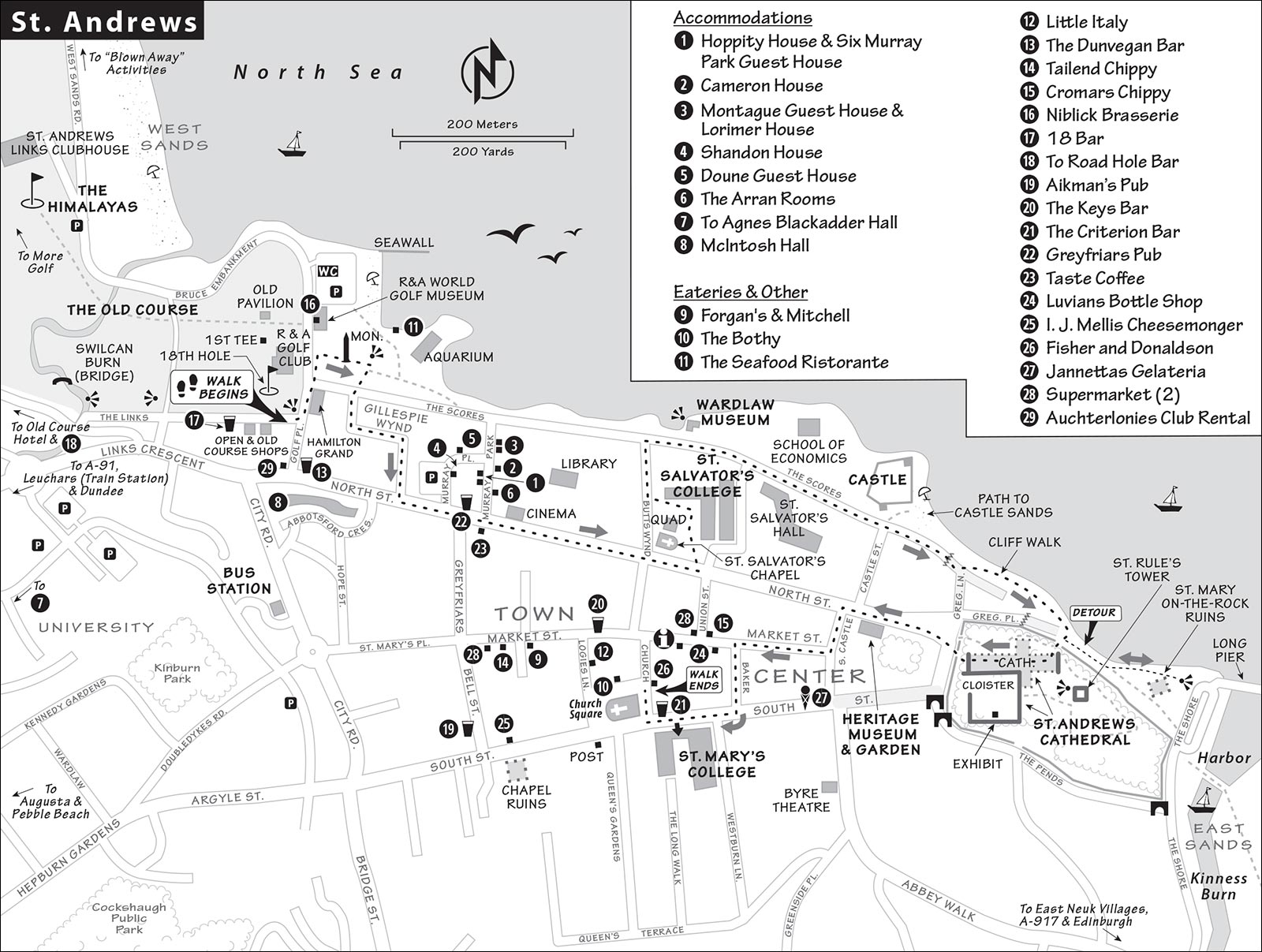
This walk links all of St. Andrews’ must-see sights and takes you down hidden medieval streets. Allow a couple of hours, or more if you detour for the sights along the way.
• Start at the corner of Golf Place and The Links, on the terraced patio overlooking the famous golf course.
▲The Old Course
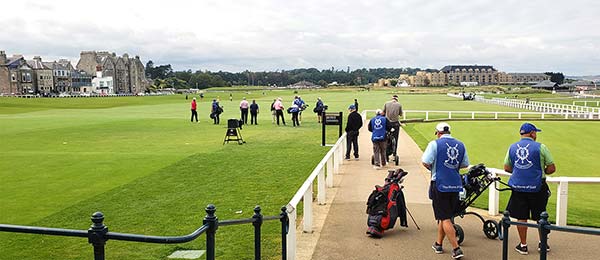
You’re looking at the mecca of golf. The 18th hole of the world’s first golf course is directly in front of you.
The game we now know as golf may have come to St. Andrews with the early Christian pilgrims and has been played here for at least 600 years—likely starting on the West Sands, as the land in front of you was covered in gorse bushes and favored only by sheep. Those natural features—sandy soil and bunker-like depressions where sheep sheltered from the wind—later became standards for golf courses across the world. Even the name “links” is derived from an old Scots word for sand dunes.
The land itself has belonged to the people of St. Andrews since 1123, a fact they still take advantage of: On Sundays there’s no golf, and the course is busy with townspeople strolling and picnicking between the greens.
The Old Course originally was the only course, developed over many years. It became “the old course” only after the New Course, in the distance beyond the St. Andrews Links Clubhouse at right, opened in 1895.
The gray Neoclassical building to the right of the 18th hole is the clubhouse of the Royal and Ancient Golf Club—“R&A” for short. In contrast to the egalitarian history of the Old Course, R&A is a private club with membership by invitation only. It was men-only until 2014, but now—finally!—women are also allowed to join. But it wasn’t until 2021 that the club began a project to add bathrooms and locker rooms for women—it may still be under construction when you visit. To preserve the building’s iconic look, the new facilities are all underground. The Old Course Shop (to your left, across the street from the 18th hole, next to The Open—the oldest golf shop in the world) is a great spot to buy a souvenir for the golf lover back home. Even if you’re not golfing, watch the action for a while. (Serious fans can walk around to the low-profile stone bridge across the creek called the Swilcan Burn, with golf’s single most iconic view: back over the 18th hole and the R&A Clubhouse.)
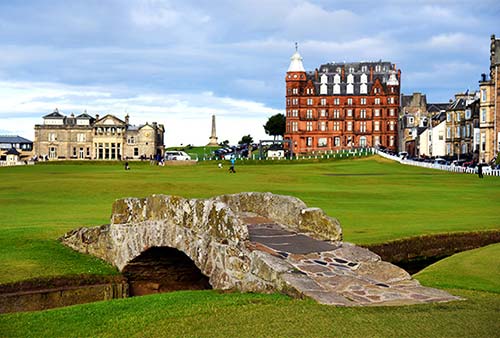
Overlooking the course at the base of the seaside street called The Scores is the big red-sandstone Hamilton Grand, an old hotel. According to town legend, the Hamilton Grand was originally built to upstage the R&A Clubhouse by an American upset over being denied membership to the exclusive club. Since then it’s been university dorms and swanky apartments; it may be reborn as a luxury hotel by the time you visit.
Between Hamilton Grand and the beach is the thoughtfully presented R&A World Golf Museum (described later, under “Golfing in St. Andrews”), topped by the recommended glassy Niblick Brasserie.
• Now turn your back to the golf course and walk up through the park toward the obelisk (along The Scores). Stop at the top of the bluff.
Beach Viewpoint
The broad, two-mile-long sandy beach that stretches below the golf course to your left is the West Sands. It’s a wonderful place for a relaxing and/or invigorating walk (beware the aggressive seagulls). Or do a slo-mo jog, humming the theme to Chariots of Fire—this is the beach on which the characters run in the movie’s famous opening scene.
From the bluff, look at the cliffs on your right. The sea below was once called “Witches’ Lake” because of all the women and men pushed off the cliff on suspicion of witchcraft.
The big obelisk is a martyrs’ monument, commemorating all those who died for their Protestant beliefs during the Scottish Reformation. (We’ll learn more about that chapter of St. Andrews history farther along this walk.)
The Victorian bandstand gazebo (between here and the Old Course) recalls the town’s genteel heyday as a seaside resort, when the train line ran all the way to town.
• Just opposite the obelisk, across The Scores, look for the Gillespie Terrace sign on the rock wall and walk down the tiny alley called...
Gillespie Wynd
St. Andrews’ street plan typifies that of a medieval pilgrimage town: All main roads lead to the cathedral; only tiny lanes, hidden alleys, and twisting “wynds” (rhymes with “minds”) such as this one connect the main east-west streets. Follow Gillespie Wynd as it winds through the back gardens of the city’s stone houses. If you’re tall enough, peek over the walls and notice how the medieval platting gave each landowner a little bit of street front and a long back garden.
• The wynd pops you out onto North Street. Head left, and walk past the cinema toward the church tower with the red clock face on the corner of North Street and Butts Wynd. For some reason, the metal street sign often goes missing.
St. Salvator’s College
The tower with the red clock marks the entrance to St. Salvator’s College, a centerpiece of St. Andrews University. If you’re a student, be careful not to stand on the “PH” initials in the reddish cobbles in front of the gate. These mark the spot where 24-year-old St. Andrews alum and professor Patrick Hamilton—the Scottish Reformation’s most famous martyr—was burned at the stake. According to student legend, as he suffered in the flames, Hamilton threatened that any students who stood on this spot would fail their exams.
Now enter the grounds by walking through the arch under the tower. (If the entrance is closed, you can go halfway down Butts Wynd and enter, or at least look, through the gate to the green square.) This grassy square, known to students as Sally’s Quad, is the heart of the university. As most of the university’s classrooms, offices, and libraries are spread out across the medieval town, this quad is the one focal point for student gatherings. It’s where graduation is held every July, where the free-for-all shaving-cream fight of Raisin Monday takes place in November (see sidebar on here), and where almost the entire student body gathered on the wedding day of their famous alumni couple Prince William and Kate Middleton for a celebration complete with military flybys.
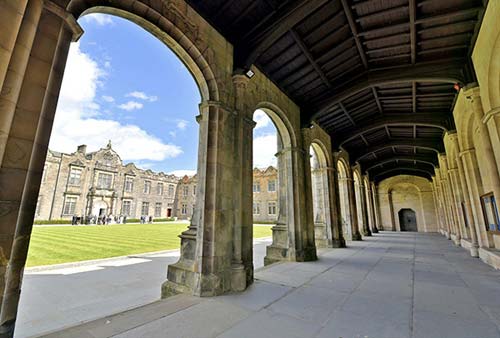
To your right, on the outside wall of St. Salvator’s Chapel, under the arcade, are display cases holding notices and university information; if you’re here in spring, you may see students nervously clustered here, looking to see if they’ve passed their exams.
Go through the simple wooden door and into the chapel. Dating from 1450, this is the town’s most beautiful medieval church. It’s a Gothic gem, with a (re-created) wooden ceiling, 19th-century stained glass, a glorious organ, and what’s supposedly the pulpit of reformer John Knox. Banners at the back recount the chapel’s history.
Stroll around Sally’s Quad counterclockwise. On the east (far) side, stop to check out the crazy faces on the heads above the second-floor windows. Find the university’s shield over the door marked School 6. The diamonds are from the coat of arms of the bishop who issued the first university charter in 1411; the crescent moon is a shout-out to Pope Benedict XIII, who gave the OK in 1413 to found the university (his given name was Peter de Luna); the lion is from the Scottish coat of arms; and the X-shaped cross is a stylized version of the Scottish flag (a.k.a. St. Andrew’s Cross). On the next building to the left, facing the chapel, is St. Andrew himself (above the door of the building labeled Lower & Upper College Halls). In the corner, find the tree planted by William and Kate.
• Exit the square and make your way back to Butts Wynd. Walk to the end; you’re back at The Scores. Across the street and a few steps to the right is the...
Wardlaw Museum
This free, recently updated museum is worth a stop. Four galleries explore the history of the university and its collections. In “Scotland’s First University” you’ll see the 1413 papal bull (document) founding the university and exhibits on student life, including some of the traditions described in the “Student Life in St. Andrews” sidebar. The “Enquiring Minds” gallery focuses on scientific equipment and specimens; try your hand at wave modulation and examine the wooden chest holding a display of butterflies. “Reformers and Innovators” introduces the people and ideas inspired by St. Andrews, from photography to the Scottish Reformation. And “Expanding Horizons” uses maps, astrolabes, and artifacts from other cultures to highlight the university’s global reach. For a great view of the West Sands, climb to the rooftop terrace.
Cost and Hours: Free; Mon-Fri 11:00-19:00, Sat-Sun 12:00-17:00; free audio tour on Smartify app; 7 The Scores, +44 1334 461 660, www.st-andrews.ac.uk/museums.
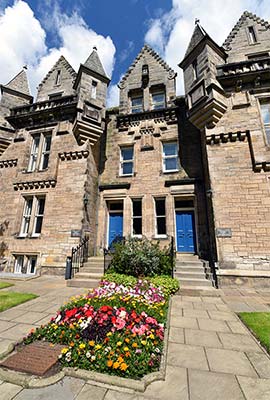
• Leaving the museum, walk left toward the castle. The turreted stone buildings along here (including one fine example next door to the museum) are built in the Neo-Gothic Scottish Baronial style, and most house academic departments. About 100 yards farther along, the grand building on the right is St. Salvator’s Hall, the most prestigious of the university residences and former dorm of Prince William.
Just past St. Salvator’s Hall on the left are the remains of...
St. Andrews Castle
Overlooking the sea, the castle is an evocative empty shell—another casualty of the Scottish Reformation. With a small museum and good descriptions, it offers a quick king-of-the-castle experience in a striking setting.
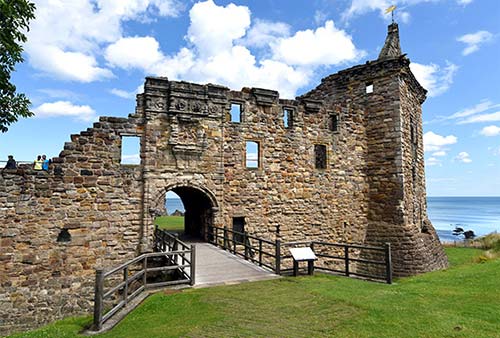
Cost and Hours: £10, includes audioguide; daily 9:30-17:30, 10:00-16:00 in winter; +44 1334 477 196, www.historicenvironment.scot.
Tours: The included audioguide (scan a QR code or borrow a headset) is more entertaining than informative as it explains the story of the castle and the siege (as told by several of the castle’s historical figures).
Visiting the Castle: Your visit starts with a colorful, kid-friendly exhibit about the history of the castle. Built by a bishop to entertain visiting diplomats in the late 12th century, the castle was home to the powerful bishops, archbishops, and cardinals of St. Andrews. In 1546, the cardinal burned a Protestant preacher at the stake in front of the castle. In retribution, Protestant reformers took the castle and killed the cardinal. In 1547, the French came to attack the castle on behalf of their Catholic ally, Mary, Queen of Scots. During the ensuing siege, a young Protestant refugee named John Knox was captured and sent to France to row on a galley ship. Eventually he traveled to Switzerland and met the Swiss Protestant ringleader, John Calvin. Knox brought Calvin’s ideas back home and became Scotland’s greatest reformer.
Next, head outside to explore. The most interesting parts are underground: the “bottle dungeon,” where prisoners were sent, never to return (peer down into it in the Sea Tower—at the far-left end of the complex facing the water); and the tight “mine” and even tighter “counter-mine” tunnels (follow the signs; crawling is required to reach it all—go in as far as your claustrophobia allows). This shows how the besieging pro-Catholic Scottish government of the day dug a mine to take (or “undermine”) the castle—but was followed at every turn by the Protestant counter-miners.
St. Andrews is first and foremost a university town. Scotland’s most prestigious university, founded in 1411, is the third oldest in the English-speaking world (after Oxford and Cambridge). While St. Andrews has a high concentration of English students—as numerous as the Scots—a quarter of the 8,000 undergrads and 2,000 grad students hail from overseas.
Some Scots resent the preponderance of upper-crust English students, but these southerners pay the bills—they are on the hook for tuition, unlike Scots and most EU citizens. And no one seems to mind that the school’s most famous graduates, Prince William and Kate Middleton (class of ’05), are the definition of upper class.
As with any venerable university, St. Andrews has its share of quirky customs. Most students own traditional red academic gowns to wear on special occasions, such as graduation. In medieval times they were the daily uniform—supposedly so students could be easily identified in brothels and pubs. (In a leap of faith, divinity students—apparently beyond temptation—wear black.) The way the robe is worn indicates the student’s status: First-year students (called “bejants”) wear them normally, on the shoulders; second-years (“semi-bejants”) wear them slightly off the shoulders; third-years (“tertians”) wear them off one shoulder (right for “scientists,” left for “artists”); and fourth-years (“magistrands”) wear them off both shoulders.
The best time to see these robes is during the Pier Walk on Sundays during the university term. After church services (around noon), gown-clad students parade out to the end of the lonesome pier beyond the cathedral ruins. The tradition dates so far back that no one’s sure how it started. Today, students just enjoy being a part of the visual spectacle of a long line of red robes flapping in the North Sea wind. A more formal procession called the Gaudie happens in April, when robe-clad students carrying candles follow a piper to the beach in commemoration of an 1800 shipwreck.
Another age-old custom is a social-mentoring system in which underclass students choose an “academic family.” On Raisin Monday, in mid-November, students give their upper-class “parents” treats—traditionally raisins, but these days more often indulgences like wine and lingerie. Then the “parents” dress up their “children” in outrageous costumes and parade them through town. The underclass students are obliged to carry around “receipts” for their gifts—written on unlikely or unwieldy objects like plastic dinosaurs, microwave ovens, or even refrigerators—and to sing the school song in Latin on demand. Shenanigans end with a spirited shaving-cream fight.
Nearby: Just below the castle is a small beach called the Castle Sands, and an often-submerged concrete “swimming pool” frequented by university students.
• Leaving the castle, turn left and continue along the bluff on The Scores, which soon becomes a pedestrian lane leading directly to the gate to the cathedral graveyard. For a quick detour, you could continue along the cliffside path, passing the ruins of St. Mary on the Rock, for a view of the...
Pier and East Sands
Ahead of you is the pier where university students parade in their robes (see the “Student Life in St. Andrews” sidebar). Beyond the pier are the East Sands, where students take a traditional and chilly morning dip on May 1. Supposedly, doing this May Day swim known as the “May Dip” is the only way to reverse the curse of having stepped on Patrick Hamilton’s initials (explained earlier). If you were to walk down to the pier, you’d enjoy views of the harbor and (behind it) the cathedral and castle ruins.
• Backtrack and enter the cathedral graveyard to stand amid the tombstone-strewn ruins of...
▲St. Andrews Cathedral
Between the Great Schism and the Reformation (roughly the 14th-16th centuries), St. Andrews was the ecclesiastical capital of Scotland—and this was its showpiece church. Today the site features the remains of the cathedral and cloister (with walls and spires pecked away by centuries of scavengers), a graveyard, and a small museum and climbable tower.
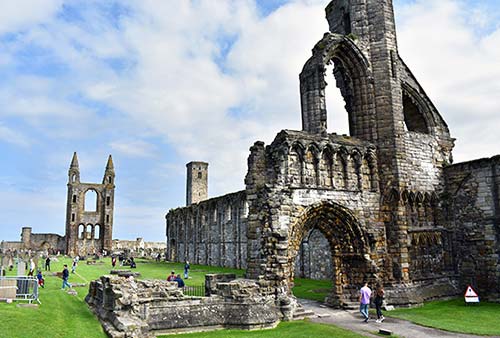
Cost and Hours: Cathedral ruins—free, exhibit and tower—£7.50, daily 9:30-17:30, museum opens at 10:00; Oct-March 10:00-16:00; +44 1334 472 563, www.historicenvironment.scot.
Access: Some parts of the site may be enclosed in fences for safety reasons. You’re free to walk anywhere that’s not fenced off.
Background: It was the relics of the Apostle Andrew that first put this town on the map and gave it its name. There are numerous legends associated with the relics. According to one version, in the fourth century, St. Rule was directed in a dream to bring the relics northward from Constantinople. When his ship wrecked offshore from here, it was clear that this was a sacred place. Andrew’s bones (an upper arm, a kneecap, some fingers, and a tooth) were kept on this site, and starting in 1160, the cathedral was built and pilgrims began to arrive. Since St. Andrew had a direct connection to Jesus, his relics were believed to possess special properties, making them worthy of pilgrimages on par with St. James’ relics in Santiago de Compostela, Spain (of Camino de Santiago fame). St. Andrew became Scotland’s patron saint; in fact, the white “X” on the blue Scottish flag evokes the diagonal cross on which St. Andrew was crucified (he chose this type of cross because he felt unworthy to die as Jesus had).
Visiting the Cathedral: You can stroll around the cathedral ruins—the best part of the complex—for free. First, walk between the two ruined but still-towering ends of the church, which used to be the apse (at the sea end, where you entered) and the main entry (at the town end). Visually trace the gigantic footprint of the former church in the ground, including the bases of columns—like giant sawed-off tree trunks. Plaques identify where elements of the church once stood.
Looking at the one wall that’s still standing, you can see the architectural changes that were made over the 150 years the cathedral was built—from the rounded, Romanesque windows at the front to the more highly decorated, pointed Gothic arches near the back. Try to imagine this church in its former majesty, when it played host to pilgrims from all over Europe.
The church wasn’t destroyed all at once, like all those ruined abbeys in England (demolished in a huff by Henry VIII when he broke with the pope). Instead, because the Scottish Reformation was more gradual, this church was slowly picked apart over time. First just the decorations were removed from inside the cathedral. Then the roof was pulled down to make use of its lead. Without a roof, the cathedral fell further and further into disrepair and was quarried by locals for its handy precut stones (which you’ll still find in the walls of many old St. Andrews homes). The elements—a big storm in the 1270s and a fire in 1378—also contributed to the cathedral’s demise.
The surrounding graveyard, dating from the post-Reformation Protestant era, is much more recent than the cathedral. In this golf-obsessed town, the game even infiltrates the cemeteries: Many notable golfers from St. Andrews are buried here, including four-time British Open winner Young Tom “Tommy” Morris.
Go through the surviving wall into the former cloister, marked by a gigantic grassy square in the center. You can still see the cleats up on the wall, which once supported beams. Imagine the cloister back in its heyday, its passages filled with strolling monks.
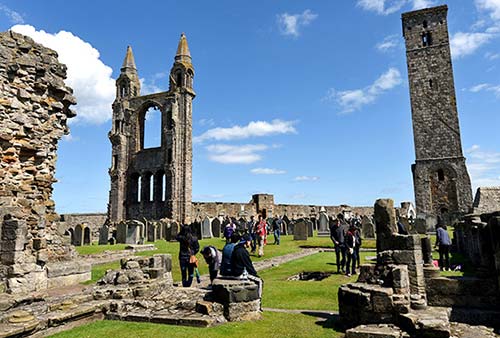
At the end of the cloister is a small museum, with a relatively dull collection of old tombs and other carved-stone relics that have been unearthed on this site. Your ticket also includes entry to the surviving tower of St. Rule’s Church (the rectangular tower beyond the cathedral ruins that was built to hold the precious relics of St. Andrew about a thousand years ago).
Hiking up the tower’s 157 very claustrophobic steps for the view over St. Andrews’ rooftops is worth the effort. Up top, you can also look out to sea to find the pier where students traditionally parade in their robes (see the “Student Life in St. Andrews” sidebar).
• Leave the cathedral grounds on the town side of the cathedral. Angling right, head down North Street. Just ahead, on the left, is the adorable...
▲St. Andrews Heritage Museum and Garden
Filling a 17th-century fishing family’s house that was protected from developers, this charming little museum is a time capsule of an earlier, simpler era. It shows the lifestyles of the “other side” of St. Andrews—the everyday people and fisherfolk of the 1700s. The house itself seems built for Smurfs, but it once housed four fishing families—about 20 people. The ground floor features replicas of a grocer’s shop and a “chemist’s” (pharmacy), using original fittings from actual stores. Upstairs are temporary exhibits. Out back is a tranquil garden (dedicated to the memory of a beloved professor) with a washhouse and smithy. Lovingly presented, this quaint, humble house provides a nice contrast to the big-money scene around the golf course at the other end of town.
Cost and Hours: Free, donation requested; Wed-Sun 12:00-16:00, closed off-season and Mon-Tue year-round; 12 North Street, +44 1334 477 629, https://standrewsmuseum.com.
• From the museum, hang a left around the next corner to South Castle Street. Soon you’ll reach...
Market Street
As you approach the top of Market Street—one of the most atmospheric old streets in town—look left for the tiny white house with the cute curved staircase. What’s that chase scene on the roof?
Now turn right on Market Street (which leads directly to the town’s center, but we’ll take a curvier route). Notice how the streets—and even the buildings—are smaller at this oldest end of town, as if the entire city is shrinking as the streets close in on the cathedral. Homeowners along Market Street are particularly proud of their address, and they pooled their money to spiff up the cobbles and sidewalks.
Passing an antique bookstore on your right, take a left onto Baker Lane, a.k.a. Baxter Wynd. You’ll pass a tiny and inviting public garden on your right before landing on South Street.
• Turn right and head down South Street. After 50 yards, cross the street and enter a gate marked by a gray facade and a university insignia.
St. Mary’s College
This is the home of the university’s School of Divinity (theology). If the gate’s open, enter the peaceful quad. To get a feel of student life from centuries past, try poking your nose into one of the old classrooms. Walk past the gnarled oak tree in the center to find the scrubby hawthorn tree to the right, purportedly planted by Mary, Queen of Scots.
• Back on South Street, if you need a bite, a string of eateries is just across the street, including the recommended Criterion Bar. Or end this walk at charming Church Square—perhaps while enjoying a decadent pastry from the recommended Fisher and Donaldson bakery. Or if you continue a few more yards down Church Street, you’ll spill onto Market Street and the heart of town.
Golfing in St. Andrews
St. Andrews is the Cooperstown of golf. While St. Andrews lays claim to founding the sport (the first record of golf being played here was in 1553), nobody knows exactly where and when people first hit a ball with a stick for fun. In the Middle Ages, St. Andrews traded with the Dutch; some historians believe they picked up a golf-like Dutch game played on ice and translated it to the bonnie rolling hills of Scotland’s east coast. Since the grassy beachfront strip just outside St. Andrews was too poor to support crops, it was used for playing the game—and, centuries later, it still is. Why do golf courses have 18 holes? Because that’s how many fit at the Old Course—golf’s single most famous site.
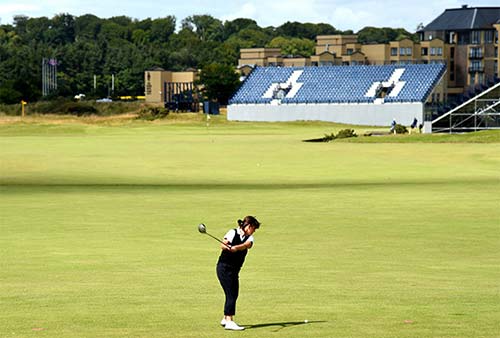
The Old Course
The Old Course hosts the British Open every five years. At other times it’s open to the public for golfing. The famous Royal and Ancient Golf Club (R&A) doesn’t actually own the course, which is public and managed by the St. Andrews Links Trust. Drop by the St. Andrews Links Clubhouse, overlooking the beach near the Old Course (open long hours daily). They have a well-stocked shop, a restaurant, and a rooftop garden with nice views over the Old Course.
Old Course Tours: 75-minute guided tours visit the 1st, 17th, and 18th holes (£15, daily April-Sept at 11:00 and 14:00, March and Oct-Nov daily at 11:00, leaves from the St. Andrews Links Clubhouse, +44 1334 466 666, www.standrews.com).
Teeing Off at the Old Course: Playing at golf’s pinnacle course is pricey (£295/person, less off-season) but open to the public—subject to lottery drawings for tee times and reserved spots by club members. You can play the Old Course only if you have a handicap of 36 or better; bring along your certificate or card. If you don’t know your handicap—or don’t know what “handicap” means—you’re not good enough to play here (they want to keep the game moving). If you play, you’ll do nine holes out, then nine more back in—however, all but four share the same greens.
Reserving a Tee Time: To ensure a specific tee time at the Old Course, reserve a year ahead during a brief window between late August and early September (fill out form at www.standrews.com). Otherwise, some tee times are determined each day by a lottery called the “daily ballot.” Enter your name on their website, in person, or by calling +44 1334 466 666 by 14:00 two days before (2 players minimum, 4 players max). Lottery results are posted online the same afternoon. Note that no ballots are taken on Fridays, as the course is closed on Sundays—which is traditionally the day reserved for townspeople to stroll.
Singleton Strategies: Single golfers aren’t eligible to reserve or ballot. If you’re golfing solo, you could try to team up with someone (ask your B&B for tips). Otherwise, each day, a few single golfers fill out two- or three-golfer groups by showing up in person at the Old Pavilion (in front of the R&A Clubhouse). It’s first-come, first-served, and a very long shot, so get there early. The starter generally arrives at 6:00, but die-hard golfers start lining up several hours before or even camp out overnight (especially in peak season). Swing by the day before, when they should have a sense of how likely a spot is to open up and can recommend just how early to arrive.
Bagpipes, haggis, and whisky are Scottish icons—but for golfers, Scotland is first and foremost the birthplace of the sport. Over 550 golf courses dot the landscape, from the Borders region in the south to John O’Groats in the north, offering pleasure and challenges for experts and duffers alike. While Mark Twain famously dismissed golf as a “good walk spoiled,” a round can be a memorable part of a trip to Scotland.
While versions of golf existed in ancient times, the modern game was invented in Scotland in the 15th century and received the royal stamp of approval shortly afterward when King James IV picked up primitive clubs and whacked at a lopsided wooden ball. The Old Course at St. Andrews dates to 1553, but golf’s golden age didn’t take shape until the 19th century, when many courses were established and the sport was introduced to the US—by two Scotsmen. The first British Open (officially The Open Championship) was held in Prestwick, Scotland, in 1860, and winner Willie Park was awarded the red leather Challenge Belt, worth £25 (the 2023 winner, American Brian Harman, took home $3 million).
While golf courses are as common as kilts in Scotland, the best are concentrated near Glasgow and Edinburgh. Besides St. Andrews—which for golf aficionados is the course of a lifetime—Scotland’s other prestigious courses include Carnoustie (on the east coast), Royal Troon (near Glasgow), and Gleneagles (near Edinburgh). Famous venues are often pricey and crowded, so it’s worth seeking out less-renowned courses where you’re more likely to rub elbows with locals.
Popular courses require reservations well in advance—especially from May through September. Testing your skills on the Old Course at St. Andrews requires careful planning and some luck (see here). The majority of Scottish courses are private, but most welcome nonmembers on a limited basis. As in the US, greens fees vary widely depending on the time of year and the course’s reputation. Costs for a round start at £20 at a public course and soar to £295 at the Old Course—but that’s still only half the cost of top courses in the US like Pebble Beach. (Use the excellent FergusonGolf.com website to help you do some homework).
Most Scottish courses are links courses, meaning they lie amid treeless coastal dunes, putting you at the mercy of the elements. Lining up a putt while being buffeted by rain and sea spray in a howling gale is part of the experience. Good rain gear is a must. But weather does change—often rapidly—and minutes after a downpour you may find yourself gazing at blue skies and wonderful views. Rain or shine, that 19th-hole meal and wee dram in the clubhouse are a welcome reward.
Other Courses: Two of the seven St. Andrews Links courses are right next to the Old Course—the New Course and the Jubilee Course. And the modern cliff-top Castle Course is just outside the city. These are cheaper, and it’s much easier to get a tee time (£130 for New and Jubilee, £160 for Castle Course, much less for others). It’s usually possible to get a tee time for the same day or next day (if you want a guaranteed reservation, make it at least 2 weeks in advance). The Castle Course has great views overlooking the town, but even more wind to blow your ball around.
Club Rental: You can rent decent-quality clubs around town for £40. The Auchterlonies shop has a good reputation (on Golf Place—a few doors down from the R&A Clubhouse, +44 1334 473 253, www.auchterlonies.com); you can also rent clubs from the St. Andrews Links Clubhouse.
▲The Himalayas
The St. Andrews Ladies’ Putting Club, better known as “The Himalayas” (for its dramatically hilly terrain), is basically a very classy (but still relaxed) game of minigolf. Tucked between the famous Old Course and the West Sands, the course presents the perfect opportunity for nongolfers (female or male) to say they’ve played the links at St. Andrews—for about the cost of a Coke. It’s remarkable how this cute little patch of undulating grass can present even more challenging obstacles than the tunnels, gates, and distractions of a miniature golf course back home. Flat shoes are required. You’ll see it on the left as you walk toward the St. Andrews Links Clubhouse from the R&A Clubhouse.
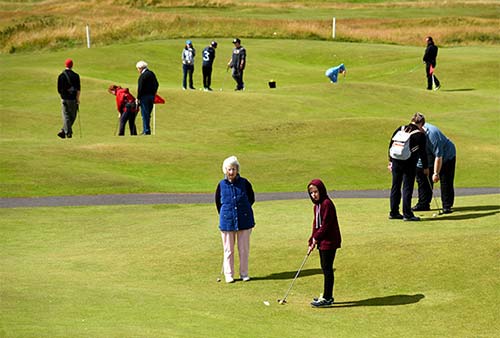
Cost and Hours: £4 for 18 holes. The putting green is open to nonmembers daily April-Oct with variable hours (check website and book online 1-2 days in advance), weekends only in March, closed in winter, +44 1334 466 666, www.standrewsputtingclub.com.
R&A World Golf Museum
This museum, which started as a small collection in the R&A Clubhouse across the street, is the best place in Britain to learn about the Scots’ favorite sport. Its interactive exhibits are fascinating for golf lovers and an interesting overview for the casual tourist.
Cost and Hours: £15, cheaper off-season; open Mon-Sat 9:30-17:00, Sun from 10:00; daily 10:00-16:00 in winter; café upstairs; Bruce Embankment—in the blocky modern building squatting behind the R&A Clubhouse by the Old Course, +44 1334 460 046, www.worldgolfmuseum.com. Tickets are sold online in advance, but it’s just as easy to buy at the door.
Visiting the Museum: The six galleries present the evolution of golf—from the monarchs who loved and hated the sport (including the king who outlawed it because it was distracting men from church and archery practice), to Tom Morris and Bobby Jones, all the way through the “Golden Bear” and Tiger Woods. Along the way, you’ll see plenty of old clubs, balls, medals, and trophies, and learn about how the earliest “feathery” balls and wooden clubs were made. Films and immersive experiences invite you into the world of championship golf and allow you to explore courses in remote locations. Finally, you’ll have a chance to design your own environmentally friendly golf course and test your nerve on a winning putt.
Sleeping in St. Andrews
Owing partly to the high-roller golf tourists flowing through the town, St. Andrews’ accommodations are quite expensive. During graduation week in June, hotels often require a four-night stay and book up quickly. All of the guesthouses I’ve listed are on the streets called Murray Park and Murray Place, between North Street and The Scores in the old town, and include breakfast unless noted. If you need to find a room on the fly, look around in this same neighborhood, which has options beyond the ones I’ve listed below.
$$ Hoppity House is a bright and contemporary place, with attention to detail and fun hosts Heather and Valerie, who are helpful and generous with travel tips. There’s a lounge and kitchen for guest use and a storage closet for golf equipment. You may find a stuffed namesake bunny or two hiding out among its four impeccable rooms (fridges in rooms, 4 Murray Park, +44 7967 044 801, www.hoppityhouse.co.uk, enquiries@hoppityhouse.co.uk).
$$ Cameron House has five clean and simple rooms around a beautiful stained-glass atrium. Its common area feels like a refurbished Victorian lounge (2-night minimum in summer, 11 Murray Park, +44 1334 472 306, www.cameronhouse-sta.co.uk, info@cameronhouse-sta.co.uk, Donna).
$$ Montague Guest House has richly furnished public spaces—with a dark, cozy, leather-couch-filled lounge/breakfast room—and eight decently sized rooms with tartan accents (21 Murray Park, +44 1334 479 287, www.montaguehouse.com, info@montaguehouse.com, Raj and Judith).
$$ Lorimer House has seven tastefully decorated rooms, including one on the ground floor. Some doubles are less expensive and more compact than others (2-night minimum preferred, no kids under 12, 19 Murray Park, +44 1334 476 599, www.lorimerhouse.com, info@lorimerhouse.com, Scott and Ashley).
$$ Shandon House is a refreshing and breezy retreat with six bright and comfortable rooms kept shipshape by helpful and welcoming Liz and Stuart. Two rooms have private bathrooms across the hall (2-night minimum preferred, 10 Murray Place, +44 1334 472 412, www.shandonhouse.co.uk, info@shandonhouse.co.uk).
$$ Six Murray Park Guest House has eight comfortable rooms and a shoes-off, refined atmosphere (2-night minimum, 6 Murray Park, +44 1334 473 319, info@sixmurraypark.co.uk, www.sixmurraypark.co.uk, Tony and El).
$$ Doune Guest House’s seven rooms are simpler than some but provide a fine place to stay (breakfast extra, 2-night minimum preferred in summer, single with private bath, 5 Murray Place, +44 1334 475 195, www.dounehouse.com, info@dounehouse.com, diligent Ilya and Yufei). They also run the luxury Ailim House, with detached cottages near the bus station (no kids, private parking, 11 Windmill Road).
Serviced Rooms: $$$$ The Arran offers 22 turnkey, upscale rooms and suites in an impersonal setting. I’d stay here only if you want expensive anonymity (April-Oct rates include breakfast at Bibi’s café, 5 Murray Park, +44 7897 024 680, www.andreanlinks.com/thearran).
UNIVERSITY ACCOMMODATIONS
In the summer (early June-Aug), some of the University of St. Andrews’ student-housing buildings are tidied up and rented out to tourists. I’ve listed the most convenient options below (website for both: https://ace.st-andrews.ac.uk; pay when reserving). Both include breakfast and Wi-Fi. Because true single rooms are rare in St. Andrews’ B&Bs, these dorms are a good option for solo travelers.
$ Agnes Blackadder Hall has double beds and private bathrooms; it’s more comfortable but also more expensive and less central (family rooms, North Haugh, +44 1334 467 000, agnes.blackadder@st-andrews.ac.uk).
$ McIntosh Hall is cheaper and more central, but it has only twin beds and shared bathrooms (Abbotsford Crescent, +44 1334 467 035, mchall@st-andrews.ac.uk).
Eating in St. Andrews
RESTAURANTS
$$$ Forgan’s, occupying a former golf club factory, is tempting and popular. It’s done up country-kitschy, with high ceilings, cool lanterns, a fun energy, and a little taxidermy. It serves up refined Scottish dishes and offers a tempting steak selection (daily, reservations strongly recommended, 110 Market Street, +44 1334 466 973, www.forgans.co.uk). On Friday and Saturday nights after 22:30, they have live ceilidh (traditional Scottish) music, and everyone joins in the dancing; consider reserving a booth for a late dinner, then stick around for the show.
$$ Mitchell, with a rustic-chic dining room next door to Forgan’s, is a simpler alternative to the upscale restaurants in town. The menu features breakfast, hearty salads, creative sandwiches, burgers, and “sharing boards.” The attached deli serves locally made meats, cheeses, and other organic products for takeaway. The attic cocktail bar, called The Hide, hosts music on Saturday nights (restaurant and deli—long hours daily, The Hide—Fri-Sat nights only, 111 Market Street, +44 1334 466 970, www.mitchellsstandrews.co.uk).
$$$ The Bothy serves dressed-up Scottish cuisine in a stone-and-wood interior or at tables on the square in front (closed Mon-Tue, Sat-Sun brunch from 10:00, across from Holy Trinity Church at 3 Church Square, +44 1334 477 422, bothystandrews.co.uk).
$$$$ The Seafood Ristorante, in a modern glassy building overlooking the beach near the Old Course, is like dining in an aquarium. They serve high-end, Italian-inspired seafood in a formal space with floor-to-ceiling windows providing unhindered views (minimum £20/person food order at dinner, closed Sun-Tue, reservations a must Fri-Sat and in summer, Bruce Embankment, +44 1334 479 475, www.theseafoodrestaurant.com, dine@theseafoodristorante.com).
$$ Little Italy is a crowded Italian joint with all the clichés—red-and-white checkered tablecloths, replica Roman busts, a frenetic energy, and even a moped in the wall. But the food is authentically good and the menu is massive. It’s the town favorite—call ahead to reserve (daily, 2 Logies Lane, +44 1334 479 299, https://littleitaly.has.restaurant).
$$$ The Dunvegan Bar (a.k.a. “Golfers Corner”), part of the hotel of the same name and just around the corner from the Old Course, has billed itself as the 19th hole of St. Andrews for a quarter-century. It serves overpriced, unexciting pub grub, but you’re coming for the atmosphere—and the walls (and ceiling) covered with golf memorabilia (daily, 7 Pilmour Place, +44 1334 473 105, www.dunvegan-hotel.com). Their simple $$ restaurant, Claret Jug, named for the distinctive Open Championship golf trophy, is in the back, with a calmer ambience.
Fish-and-Chips: Two places battle for the “best chippy in town” crown. $ Tailend is a local favorite, with a fish-and-chips counter up front and a $$ restaurant with a bigger selection in the back (daily, 130 Market Street, +44 1334 474 070). $ Cromars is also reliable and serves burgers as well as fish. At the counter, you can order yours to go, or—in good weather—enjoy it at the sidewalk tables; farther in is a small $$ sit-down restaurant with more choices (both open daily, at the corner of Union and Market, +44 1334 475 555, https://cromars.co.uk).
VIEW BARS
Even non-golfers may enjoy a drink at one of St. Andrews’ view bars. The Niblick is most convenient, 18 Bar at Rusacks has outdoor seating, and the Road Hole Bar at the Old Course Hotel makes you feel like golf royalty. The Niblick and 18 take reservations; the Road Hole Bar is walk-in only (but because most of the hotel’s guests are golfers, it’s also most likely to have room while golf is in play).
$$ Niblick Brasserie, the glassy pub atop the R&A Museum, is named for a golf club used to get out of bunkers and offers reasonably priced drinks and elevated pub food with good views of the first tee and West Sands (Sun-Thu 9:00-17:00, Fri-Sat 9:00-21:30, +44 1334 460 191, www.theniblick.com).
The busy rooftop $$$$ 18 Bar, above the modern extension to Rusacks Hotel, offers views over both the first tee and 18th hole. If you can get a reservation—and a table on the glass-lined terrace—the up-close view is worth the cost of your overpriced drink (Mon-Thu 17:00-late, Fri from 15:00, Sat-Sun from 13:00, mini putting green, Pilmour Links, +44 1334 466 899, www.18standrews.co.uk). To reach the bar, you’ll pass through the 18 Restaurant; it serves afternoon tea and carnivore-friendly dinners with similar views.
$$$$ Road Hole Bar, on the fourth floor of the Old Course Hotel, overlooks one of the most notoriously challenging holes in all of golf—the Old Course’s 17th, nicknamed the Road Hole. As you sip a drink within the traditional wood-paneled bar, it’s easy to imagine trading tips with golf’s greats about how to navigate the fairway below (daily, views of Old and New Courses plus Himalayas, Old Station Road, www.oldcoursehotel.co.uk). The hotel’s mod Swilcan Loft restaurant offers views back to Swilcan Bridge to those with deep pockets (reservations required).
BEER, COFFEE, AND WHISKY
Pubs: There’s no shortage in this college town. These aren’t “gastropubs,” but they all serve straightforward pub fare and are open long hours daily. All but Aikman’s have outdoor seating.
Aikman’s, run by Barbara and Malcolm (two graduates from the university who couldn’t bring themselves to leave), features a cozy wood-table ambience, a focus on German beers, live music on Sat, and simple soups, sandwiches, and snacks (daily, 32 Bell Street, +44 1334 477 425). The Keys Bar is a lively family-run pub in the middle of Market Street. It’s a good time any night of the week (daily, 87 Market Street, +44 1334 472 414). The Criterion faces St. Mary’s College, with ample outside seating and high tables hugging a gleaming curved bar inside. Their meaty “Cri-Pie” is justifiably famous (daily, 99 South Street, +44 1334 474 543). Greyfriars, with forgettable food, is in a classy, modern hotel near my recommended Murray Park B&Bs (daily, 129 North Street, +44 1334 474 906).
Coffee: $ Taste, a little café just across the street from the B&B neighborhood, has the best coffee in town and a laid-back ambience that feels like a big-city coffeehouse back home. It also serves cakes and light food (daily 7:00-17:00 in summer, open later when class is in session, 148 North Street, +44 1334 477 959).
Whisky: Luvians Bottle Shop—run by three brothers (Luigi, Vincenzo, and Antonio)—is a friendly place to talk, taste, and purchase whisky. Distilleries bottle unique single-cask vintages exclusively for this shop to celebrate the British Open every five years. With nearly 50 bottles open for tastings, a map of Scotland’s whisky regions, and helpful team members, this is a handy spot to learn about whisky. They also sell fine wines and a wide range of microbrews (Mon-Thu 10:00-19:00, Fri-Sat 10:00-20:00, Sun from noon, 66 Market Street, +44 1334 477 752).
PICNIC FOOD AND SWEETS
Cheese: I.J. Mellis Cheesemonger, the excellent Edinburgh cheese shop with a delectable array of Scottish, English, and international cheeses, has a St. Andrews branch. On Friday and Saturday nights, the shop stays open late as a wine bar (daily 9:00-17:30, 149 South Street, +44 1334 471 410).
Pastries: Fisher and Donaldson is beloved for its rich, affordable pastries and chocolates. Listen as the bakers chat with their regular customers, then try their Coffee Tower—like a giant cream puff filled with lightly coffee-flavored cream. Their number-one seller, the fudge doughnut, is filled not with chocolate but with a wonderfully sweet cream (Mon-Sat 8:00-17:00, Sun 11:00-16:00, just around the corner from the TI at 13 Church Street, +44 1334 472 201).
Gelato: You’ll see many people walking around licking cones from Jannettas Gelateria, which has been around for more than a century. While waiting in line in the cute pastel parlor, ponder what you want from their range of 50-plus gelato flavors (daily 9:00-22:30, café, 31 South Street, +44 1334 473 285).
Supermarkets: You can stock up for a picnic at Tesco Express or Sainsbury’s Local on Market Street.
St. Andrews Connections
Trains don’t go into St. Andrews—instead, use the Leuchars station (5 miles from St. Andrews, connected by buses coordinated to meet most trains, see “Arrival in St. Andrews” at the beginning of this chapter). To head back to the train station, take any #99 bus (direction: Dundee), but confirm with the driver that it’s going straight to Leuchars. Some routes make stops through town first (extending your travel time by 20-30 minutes).
From Leuchars by Train to: Edinburgh (2/hour, 1 hour), Glasgow (2/hour, 2 hours, transfer in Haymarket or Edinburgh Waverley), Inverness (roughly hourly, 3.5 hours, 1-2 changes). Trains run less frequently on Sundays. Train info: +44 345 748 4950, www.nationalrail.co.uk. To reach Dundee, take bus #99 from St. Andrews bus station near the base of Market Street (every 10 minutes, 25 minutes).
Near St. Andrews
A handful of starkly different destinations are within a half-hour’s drive of St. Andrews, in opposite directions. To the north is the up-and-coming city of Dundee, with three interesting museums; just beyond it is Glamis Castle, the childhood home of Queen Elizabeth II’s mother, known as the Queen Mother. To the south is the charming string of seaside villages called the East Neuk. Heading in either direction makes for a good half-day side trip, or you can squeeze in these destinations on your way into or out of St. Andrews.
DUNDEE
The once-prosperous, then decrepit, and now steadily rejuvenating city of Dundee (Scotland’s fourth-largest, with about 150,000 people) sits at the mouth of the River Tay. In its heyday, Dundee was known for the “Three J’s”: jute (turning the raw fiber into rope, burlap, and canvas), jam (importing that orange marmalade that’s on every B&B breakfast table), and journalism (being the home of D. C. Thomson & Co., the respected publishing company responsible for the Sunday Post, and for creating many beloved Scottish cartoon characters).
Like many Industrial Age British boomtowns, Dundee fell on hard times in the 20th century. Today Dundee is working to reinvent its downtown core and its waterfront, which now hosts an architecturally stunning branch of the Victoria and Albert Museum, with the TI in the museum lobby. But the city still has a ways to go, and for now it merits only a quick stop for its interesting museums.
Getting There: Drivers can take advantage of nearby parking for a strategic visit to one or more of Dundee’s museums. The Discovery Point and V&A museums along the waterfront are well signed and easy to find, with pay parking nearby. The Verdant Works Jute Museum is buried in a mostly deserted industrial area higher up in town (look for brown signs or use a mapping app). Train travelers find that Discovery Point is easy (it’s right across the street from the train station), but the Verdant Works Jute Museum, just under a mile away, isn’t well connected by public transit; take a taxi from Discovery Point.
▲Discovery Point and the RRS Discovery
At the turn of the 20th century, Antarctica was the world’s last great mystery. With a fervor matched a half-century later in the Space Race, ambitious countries set out to learn more about the unexplored continent. This museum tells the story of the Royal Research Ship (RRS) Discovery, which was built in Dundee and set sail for Antarctica in 1901. It was one of the most successful scientific expeditions of its time. A one-way route through the museum shows how the Discovery was built and provisioned, and how the crew (led by Commander Robert Falcon Scott, who died a decade later in a race to the South Pole) planned and perilously executed their icy journey. Then you’ll climb aboard the actual ship, restored to how it was in 1924, where you can walk across the decks and delve below to see the engine room, galley, sick bay, mess deck, and living quarters. The photographic darkroom, drawing table, and vials for scientific samples illustrate the ship’s mission: opening up a new continent to human understanding. Before leaving, climb to the newly added Discovery Dome above the museum for a 360-degree view over the River Tay.
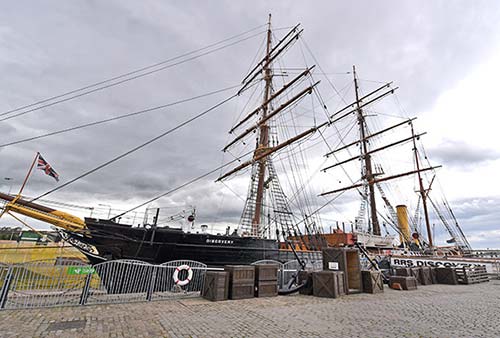
Cost and Hours: £17, £24.50 combo-ticket with Verdant Works Jute Museum; open Mon-Sat 10:00-18:00, Sun from 11:00, off-season daily until 17:00, last entry one hour before closing; café, Riverside Drive, closest parking is next door at Discovery Car Park, +44 1382 309 060, www.rrsdiscovery.co.uk.
V&A Museum of Design Dundee
Next to the RRS Discovery along the River Tay is a dramatic structure hosting a branch of London’s eclectic Victoria and Albert Museum, this one focusing on Scottish design, with a priceless example of the work of architect Charles Rennie Mackintosh at its heart.
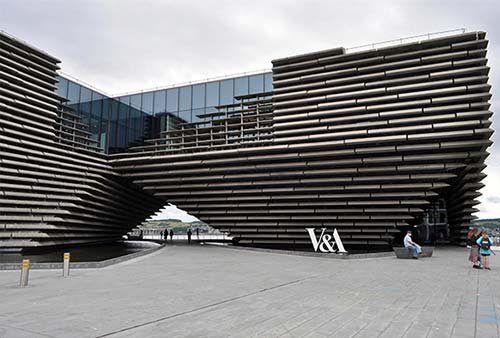
Cost & Hours: Free but suggested donation, daily 10:00-17:00, café open same days and hours as museum; 1 Riverside Esplanade, +44 1382 411 611, www.vam.ac.uk/dundee; +44 1382 411 633.
Visiting the Museum: Designed by renowned Japanese architect Kengo Kuma, the ark-like V&A building is meant to resemble a Scottish cliff face. Inside the soaring lobby, angled wood panels surround a gift shop and the Dundee TI. A broad, visually unsupported staircase leads up to the exhibits, café, and view terrace.
The highlight of the permanent exhibit is the stunning two-story Oak Room, an original Art Nouveau interior crafted by Mackintosh for a Glasgow tearoom in 1907. After languishing in storage for half a century, its 1,500 pieces—the dark wood panels, the lattice-like glass lamps—were carefully restored and installed here, rivaling the replica Mackintosh tearoom you’ll see in Glasgow.
The rest of the small but worthwhile permanent exhibit celebrates Scotland’s contributions to design, from tartan to Hunter “wellies” to Clyde-built ships. Good descriptions place each piece within the greater context of Scotland’s history.
All of this serves as a prequel to the rotating temporary exhibits across the hall (often with paid entry). Since the museum’s 2018 opening, these have ranged from video-game design to robotics to 1960s fashion.
▲Verdant Works Jute Museum
Hardworking, industrious Scotland has several fine museums about how things are made—and this is one of the best. Filling a former jute-processing factory called Verdant Works, it’s located in a gentrifying zone of brick factories. This museum explores every facet of the jute industry that put Dundee on the map. Especially worthwhile for those with a healthy interest in engineering, the well-presented museum accomplishes the remarkable task of making jute interesting even to those less mechanically inclined.
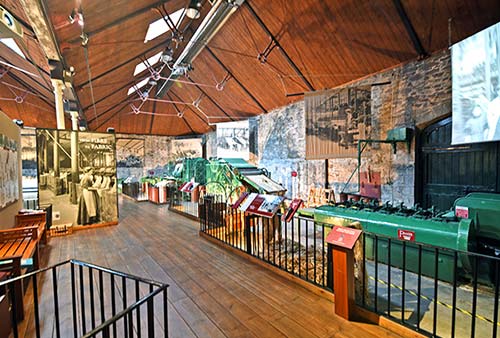
Cost and Hours: £14, £24.50 combo-ticket with Discovery Point; same hours as Discovery Point; café, West Henderson’s Wynd, free parking lot in back, +44 1382 309 060, www.verdantworks.com.
Background: Starting in the 1830s, Dundee businessmen—who came to be known as “jute barons”—developed a local industry around importing and processing the fiber of a tropical plant called jute, which could be used to make rope, burlap sacks, sails, canvases, carpeting, and even clothing. In an age before plastics, versatile jute was a prized material...and most of the jute grown in India and Bangladesh was shipped to Dundee. Great Britain’s nautical expansion further boosted the industry: Dundee-made materials sailed to every corner of the earth. Coinciding with the Highland Clearances and the decline of traditional rural lifestyles, the jute boom lured many floundering farmers and peasants into urban factories. By century’s end, Dundee’s population had tripled.
In Dundee, as in other Industrial Age cities, rapid changes created a sharply stratified society, with a tiny and obscenely wealthy upper class and a huge, desperately poor lower class. But in 1875, a jute factory opened in India. By locating production closer to where the raw materials were harvested, India could manufacture jute products more cheaply; by 1900, Calcutta had surpassed Dundee as the new jute capital. The rise of plastics and other synthetic fibers in the 1970s drove the final nail into the industry’s coffin; Dundee’s last remaining jute factory closed in 1999.
Visiting the Museum: Your visit may begin with a volunteer-led introduction to the first few stops. Otherwise, start with the 15-minute Juteopolis film, which sets the stage for the museum and helps explain why you’re spending your vacation learning about jute. (If you catch it midway, keep going with your tour—you’ll pass the theater again later.)
Head across the courtyard to the Works Office and follow the one-way route through the exhibit. The highlight is the machine hall, where you’ll see working (but in some cases, smaller) versions of the machinery used for each of the steps required to turn this tropical fiber into practical products. Docents may be standing by to explain more and demonstrate some of the equipment. Feel the jute fibers at each station as they go from rough to fine to thread to a finished product.
Upstairs (access from outside, in the courtyard) is an exhibit about the social history of the city, showing different walks of life relating to the jute industry. The cavernous High Mill has more exhibits delving into different facets of the industry and a huge Boulton and Watt steam engine from 1801, still in working order.
Downtown Dundee
With a little time to spare, it’s worth walking 10 minutes from Discovery Point to the town center. In front of the city’s landmark Caird Hall concert venue, you’ll find a bustling, traffic-free people zone, with cafés, public tables, fountains, and a glitzy shopping mall. Find the life-size statues of Desperate Dan and Minnie the Minx (Dundee-born cartoon characters who are as beloved among Scots as they are unknown to Americans). A quick walk here offers a peek into the Dundee of the future.
North of Dundee
▲Glamis Castle
A 20-minute drive north of Dundee (or 45 minutes north of St. Andrews) is the residence of the Earls of Strathmore—best known as the childhood-home castle of the Queen Mother (a.k.a. Elizabeth Bowes-Lyon, 1900-2002). Glamis (pronounced “glahms”) is a proper castle inside and out: You’ll drive down a grand, tree-lined driveway to a majestic palace bristling with turrets and filled with elaborately decorated rooms that drip with history and blue-blood quirk. Coming here just seems the right way to pay respects to the Queen Mother, who supported her husband, King George VI, as he rallied Britain through World War II. Their first daughter would become Elizabeth II, the longest-reigning monarch in British history. Their second daughter, Princess Margaret, was born right here at Glamis—the first royal baby born in Scotland in 300 years. The “Queen Mum” always had a deep affection for her home at Glamis and was often clad in a distinctive hue that she liked to call “Strathmore blue.”
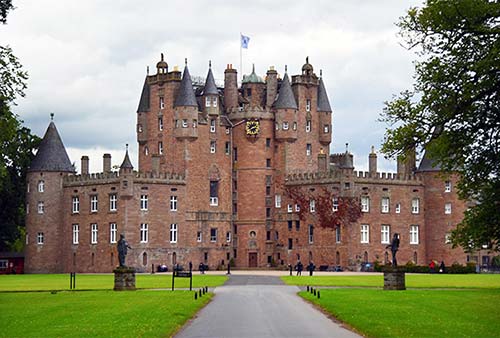
Cost and Hours: £16 for 50-minute guided castle tour plus access to grounds and gardens, £7.50 for exteriors only; open daily 10:00-17:00, Nov-mid-Dec closed Mon-Wed, closed mid-Dec-mid-March, last tour departs one hour before closing; +44 1307 840 393, www.glamis-castle.co.uk.
Getting There: From Dundee, head north on the A-90 expressway (toward Aberdeen); the exit is well marked with brown Glamis Castle signs (also marked for Kirriemuir). From the exit, follow the A-928 seven miles to the castle.
Visiting the Castle: You can only visit the interior on a guided tour. You’ll see both grand state rooms and intimate quarters—including the private rooms of the Queen Mother, which her parents installed after she married the prince to ensure she’d keep coming home for visits. The tour is packed with fun insights into aristocratic eccentricities, from the paintings of one earl who simply adored his leather body armor (painted to resemble a sculpted Greek god), to a rare painting of Jesus wearing a hat, to a stuffed bear named Freddy. Glamis also loves to tout its title as the “most haunted castle in Scotland”—though the ghost tales your guide imparts are more silly than scary. (Even more suspect are boasts that Glamis inspired Shakespeare as the setting for Macbeth—a claim also made by Cawdor Castle.) After your tour, you can visit a few more exhibits and explore the grounds on your own—a handout suggests several walking routes.
THE EAST NEUK
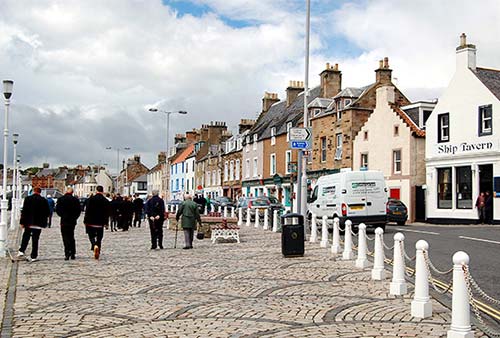
On the lazy coastline meandering south from St. Andrews, the cute-as-a-pin East Neuk (pronounced “nook”) is a collection of tidy fishing villages that makes a pleasant detour if you’ve got the time. The villages of Crail and Pittenweem have their fans, but Anstruther is worth most of your attention. The East Neuk works best as a half-day side trip (by either car or bus) from St. Andrews, though drivers can use it as a scenic detour between Edinburgh and St. Andrews.
Getting There: It’s an easy drive from St. Andrews. For the scenic route, follow the A-917 south of town along the coast, past Crail, on the way to Anstruther and Pittenweem. For a shortcut directly to Anstruther, take the B-9131 across the peninsula (or return that way after driving the longer coastal route there). Several buses connect St. Andrews to the East Neuk; the fastest is the hourly #X60, which goes directly to Anstruther, then on to Edinburgh (20 minutes to Anstruther, 2 hours more to Edinburgh). Bus info: +44 141 465 1878, www.travelinescotland.com.
▲Anstruther
Stretched out along its harbor, colorful Anstruther (AN-stru-ther; pronounced ENT-ster by locals) is the centerpiece of the East Neuk. The main parking lot and bus stop are both right on the harbor. Stroll the harborfront to the end, detouring inland around the little cove (or crossing the causeway at low tide) to reach some colorful old houses, including one encrusted with seashells.
Anstruther’s Scottish Fisheries Museum is true to its slogan: “We are bigger than you think!” The endearingly hokey exhibit sprawls through several harborfront buildings, painstakingly tracing the history of Scottish seafaring from primitive dugout dinghies to modern vessels. You’ll learn the story of Scotland’s “Zulu” fishing boats and walk through vast boat-filled rooms. For a glimpse at humble fishing lifestyles, don’t miss the Fisherman’s Cottage, hiding upstairs from the courtyard (£11, Mon and Wed-Sat 10:00-16:30, Sun from 11:00, closed Tue, last entry one hour before closing, tearoom, Harbourhead, +44 1333 310 628, www.scotfishmuseum.org).
Eating in Anstruther: Anstruther’s claim to fame is its fish-and-chips. Though there are several good chippies in town, the famous one is the Anstruther Fish Bar, facing the harbor just a block from the Fisheries Museum (take out or dine in for a few pounds more, open long hours daily, 42 Shore Street, +44 1333 310 518).
Scotland’s Secret Bunker
Among the rolling farm fields between St. Andrews and the East Neuk, a blink-and-you’ll-miss-it stone farmhouse conceals a sprawling network of secret corridors: 24,000 square feet, 100 feet under the ground, protected by 10-foot-thick reinforced concrete walls. The exhibit itself is overpriced and frustratingly hokey—a jumble of 1970s technology, scarcely explained other than by the melodramatic audioguide. But for those interested in the Royal Air Force and Cold War, simply exploring this space can be a powerful experience.
Cost and Hours: £14.95, daily 10:00-17:00, closed Nov-Jan, last entry one hour before closing, audioguide—£3, café, +44 1333 310 301, www.secretbunker.co.uk.
Getting There: Head out of St. Andrews toward Crail, but just outside of town, turn off on the right toward Dunino and Anstruther (on the B-9131). Then follow brown Secret Bunker signs about six miles through farmland.
Visiting the Bunker: You’ll climb down the stairs and hike through a long tunnel to explore a warren of Cold War-era control rooms, dormitories, and telecommunications centers, plus a chapel and the office of the minister of state of Scotland (who would command the military in the event of an attack). Black-and-white films calmly explain to homeowners how to prepare for—and cope with—a nuclear attack.
The most striking part of the experience is watching the 46-minute BBC-produced film The War Game, a harrowing dramatization of what would happen in the event of a nuclear attack. Its “Keep Calm and Carry On,” pull-no-punches straightforwardness is a haunting reminder of an age when global nuclear holocaust seemed not only possible, but likely. (Produced in 1965, the film was immediately branded too disturbing to broadcast, and was not shown on the BBC for 20 years.)